


Connect with us
DAPA Banner
DAPA Coin
DAPA
COIN PAYMENT ASSET
PRIVACY · BLOCKDAG · HOMOMORPHIC ENCRYPTION · RUST
ElGamal Encrypted MINE DAPA
🚫 GENESIS SOLD OUT
DAPAPAY COMING

NewsBeat

One in three in Yorkshire rarely go outdoors, poll finds

Published

on

One in three in Yorkshire rarely go outdoors, poll finds

A NEW poll published today has found that one in three people in Yorkshire and nearly half of UK adults spend just three hours or less outdoors a week.

The survey commissioned by The Wildlife Trusts and carried out by Savanta, also found that 6.2 per cent of people said they now spent an hour or less per week outside.

The trend appears to have grown over time, as 92 per cent of respondents had positive memories of spending time outside as a child. The survey revealed deep connections between childhood and nature in Yorkshire:

Enjoying being outside – Photo by Leia Morrison

· Nearly two thirds (65 per cent) of people spent more than half of their time outside as a child

Advertisement

· 66 per cent of the people questioned said they were more likely to reconnect with nature after thinking about their childhood memories

· 89 per cent of the parents asked to recall their childhood memories said they now wished to encourage their own children to have more natural childhoods

One in three in Yorkshire rarely go outdoors

There is already a wealth of evidence to show that spending time in nature boosts happiness, health and wellbeing, and The Wildlife Trusts now plan to tap into the power of positive childhood memories to help adults to venture outdoors more. They are calling on people to ‘rewild your inner child’ by taking part in the 30 Days Wild challenge in the month of June.

The annual challenge to take time out to notice nature during June happens when wildlife is in peak performance mode.

Advertisement

People can ‘re-wild their inner child’ by making use of the free 30 Days Wild guides, wildflower seeds, activity packs and inspiring community events – and reconnect with everyday wildlife found in gardens, local greenspaces and beyond.

Tom Wright, director of fundraising and engagement at Yorkshire Wildlife Trust, says: “Whether you were a mud-pie enthusiast, liked building dens in your local woodland, playing tag on the grass or hunting for bugs and beasties in your garden border, nature has left its green mark on all of us – even if we struggle now to make time for it.

“The number of people who spend so little time outdoors is deeply alarming. Being outdoors in nature has so much joy to offer us all – fresh air, sunlight, birdsong and so many proven health benefits – and it is clear many of us hold a deep nostalgia for our wilder years.

“Given how strongly community areas like town parks featured in reported childhood memories, this survey highlights the vital need to maintain and provide more precious urban green spaces to offer access to nature for everyone. We must recall the wilder and greener years of our childhoods and create opportunities for young people to experience the same: because without that connection to nature, there will be no drive to help us create a wilder future.”

Advertisement

Take the challenge

The Trust is urging people to spend a few minutes recalling a childhood memory of being outside and then to venture outdoors and experience nature once more. Taking a moment this June to rewild yourself can be as simple as stopping for a few deep breaths at your local park, scattering free wildflower seeds in your garden or window box, or lying on the ground looking up through the trees to the birds above.

Having fun outdoors.. Photo -Evie and Tom Photography

30 Days Wild has attracted more than three million participants across the UK and, with thanks to players of the Postcode Lottery, has helped people to enjoy and connect with nature for over a decade.

This year The Wildlife Trusts have teamed up with Acamar Films and Bing to create a new range of fun, inspiring activity resources, designed especially for the next generation of young nature explorers. With much-loved children’s TV character Bing by their side, children can enjoy simple outdoor adventures, spot wildlife, use their imagination and make their own lasting memories of being in nature.

To take part in this year’s 30 Days Wild challenge visit www.wildlifetrusts.org/30dayswild

Advertisement

Source link

Continue Reading
Click to comment

You must be logged in to post a comment Login

Leave a Reply

NewsBeat

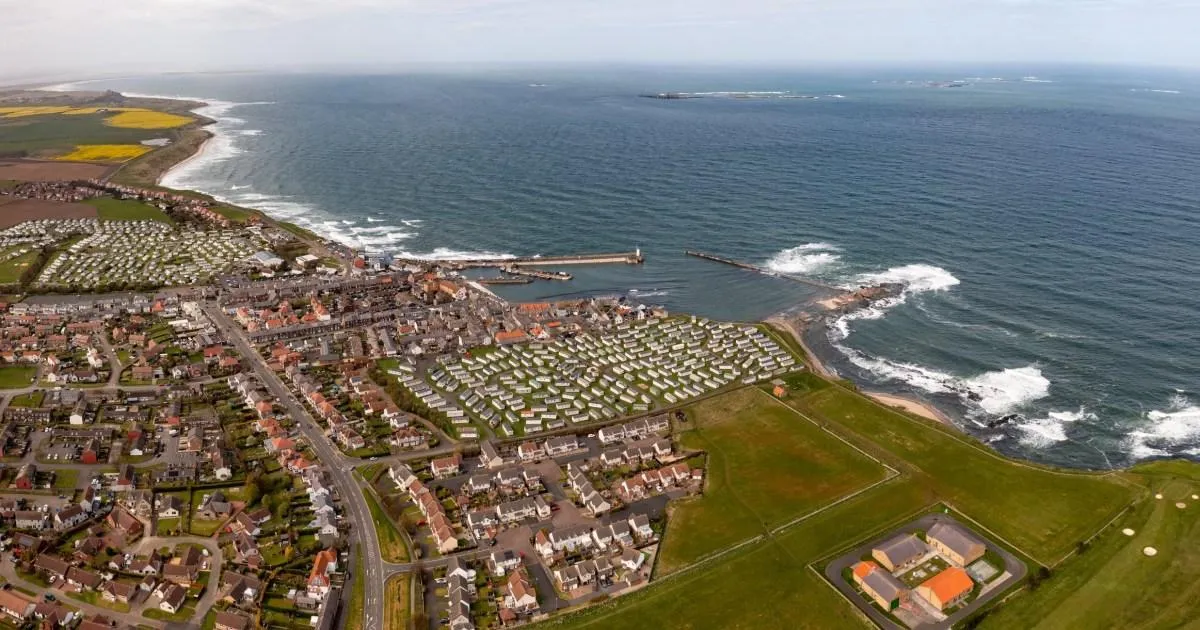
The ‘stunning’ UK seaside town where house prices fell by 38% last year

Published

on

The 'stunning' UK seaside town where house prices fell by 38% last year
Property prices in Seahouses dropped more than any UK coastal region in the past year (Picture: Getty Images)

While seaside living is a goal for the majority of Brits, a new report has revealed some locations are more sought-after than others.

Research by estate agent Yopa found that while many coastal hotspots continue to command hefty premiums, others have seen house prices tumble as the post-pandemic property boom cools.

And nowhere has the drop been steeper drop than in Seahouses, Northumberland, where the average property price has plunged 38% year-on-year – the largest decline of the towns analysed.

Although other beachfront locations have also followed this downward trend — with Portmeirion, Wales, next on the list with a 20.2% decline, followed by Cornwall’s Fowey at 18.3% — demand from buyers is resilient overall.

Advertisement

In fact, homes in Sandbanks, Dorset, command an average of 75.6% more than the wider local authority average, while those in Padstow in Cornwalland Salcombe in Devon come in at around 70% higher.

So what’s causing this fall in Seahouses, and is it still considered a desirable place to live?

Ready to start your homebuying journey?

You can access completely fee-free mortgage advice with London & Country (L&C) Mortgages, a partner of Metro. Customers benefit from:

– Award winning service from the UK’s leading mortgage broker

Advertisement

– Expert advisors on hand 7 days a week

– Access to 1000s of mortgage deals from across the market

Unlike many mortgage brokers, L&C won’t charge you a fee for their advice.

Find out how much you could borrow online

Advertisement

Mortgage service provided by London & Country Mortgages (L&C), which is authorised and regulated by the Financial Conduct Authority (registered number: 143002). The FCA does not regulate most Buy to Let mortgages. Your home or property may be repossessed if you do not keep up repayments on your mortgage.

The small Northumberland fishing village of Seahouses on a sunny day
The fishing village is a popular spot with holidaymakers (Picture: Getty Images)

Property prices in Seahouses

According to Yopa, the average property price in Seahouses now sits at £259,346, down from £418,476 in March 2025.

Verona Frankish, the firm’s chief executive, says this is likely a ‘price correction’, as ‘many of Britain’s coastal hotspots enjoyed exceptional levels of house price growth during the pandemic’, but ‘the market has normalised’ in the years since.

Advertisement

Nathan Khider, founder of Nathan K Real Estate tells Metro that Londoners leaving the city for a seaside retirement created an ‘artificial market’, which has collapsed as people look towards spending their later years in areas with better ‘access to transport, hospitals and doctors.’

Seahouses , UK, 05/21/2015 Seahouses harbour with moored boats and pier on a sunny summers day.
Sellers have to work extra hard to get the price they want (Picture: Getty Images)

Saif Derzi, founder at Property Buyers Today, also notes that while seaside locations still attract some interest, ‘weaker or overpriced stock is having to be reduced to meet today’s more cautious buyer demand.’

In terms of this region more specifically, he tells Metro: ‘Northumberland remains a very location-specific market, with stronger demand for good-quality homes in desirable rural, commuter and coastal spots, but more pressure on properties that are dated, overpriced or harder to mortgage.

‘I would not see this as a blanket market crash, but as a sign that buyers are being more selective.’

Things to do in Seahouses

Despite the recent dip in house prices, it’s easy to see why Seahouses remains one of Northumberland’s most popular seaside destinations.

Advertisement

The bustling fishing village is the gateway to the Farne Islands, where visitors can hop on a boat trip to spot grey seals, puffins and a wealth of other seabirds.

Back on land, the harbour is lined with fish and chip shops — including the top-rated Neptune Fish Restaurant or Lewis’s Fish & Chips — along with an array of pubs, cafés and independent shops.

Meanwhile, the long sandy beach offering spectacular views of Bamburgh Castle and plenty of space for dog walks, picnics, and sunbathing (when the British weather plays ball, of course).

Seahouses also makes an ideal base for exploring the wider Northumberland coastline, an Area of Outstanding Natural Beauty famed for its dramatic castles and windswept bays.

Advertisement
A dog and one person on beach, Northumberland Coast between Seahouses and Bamburgh.
Seahouses beach stretches along the Northumberland coast to Bamburgh (Picture: Getty Images)

History lovers can explore nearby Bamburgh Castle or visit Lindisfarne, the tidal island known as the cradle of English Christianity, while outdoorsy types can tackle the Northumberland Coast Path or head to the watersports hub of Beadnell for kitesurfing, windsurfing, surfing, and wakeboarding.

What locals say about living in Seahouses

As with many parts of the UK, residents of Seahouses have a wide range of opinions about what it’s like to live there.

Having recently relocated to the area, Hayley Norris said in a local Facebook group: ‘I can hand on heart tell you you’d never regret moving here. It’s a stunning place, friendly locals, close to other towns, great pubs and restaurants too.’

Exterior view of National Trust information and shop located in Seahouses Northumberland, England, 19 August 2025.
Some love its quaint streets, but others see it as too quiet (Picture: Getty Images)

Elsewhere, Rachelle Watson commented that they ‘absolutely love it’ in Seahouses, in particular due to the ‘warm, friendly people’, a sentiment echoed by Marina Hayfield who added: ‘Best move we ever made… Really good community spirit here that you don’t get in big towns anymore.’

There are some criticisms though. On an r/AskUK thread about the best Northern seaside towns to relocate to, GrumpyOldFart74 called Seahouses and neighbouring Bamburgh ‘coastal and nice’, but warned they’re ‘very small and even further from anywhere.’

Some on Facebook also lamented the lack of public transport options and distance from amenities like a hospital, while Reddit user, SparklePenguin24, recommended Amble instead, writing: ‘Seahouses is a ghost town in the winter, and when the tourists arrive it’s terrible.’

Advertisement

This viewpoint is backed up slightly by Liveable, which scored it a C for transport and schools. However, with B+ ratings for amenities and outdoor space, as well as a low crime rate, it was deemed a ‘nice place to live’ — particularly for retirees or young professionals.

Advertisement
Advertisement

Source link

Continue Reading

NewsBeat

Filey – One person taken to hospital after cliff fall

Published

on

Filey - One person taken to hospital after cliff fall

It happened last night (Sunday, June 14) near Filey Brigg Country Park.


Recommended reading:


HM Coastguard rescue teams were called to the scene, along with the ambulance service.

Advertisement

A spokesperson for Yorkshire Ambulance Service NHS Trust said: “We received an emergency call at 9pm to report a person who had fallen from cliffs in Filey, close to Filey Brigg Country Park.

“An emergency ambulance and a team leader were dispatched to the scene, and one patient was conveyed to hospital.”

An HM Coastguard spokesperson said: “At 8.55pm HM Coastguard was called to an incident at Filey, North Yorkshire.

“Coastguard Rescue Teams from Filey and Bridlington were sent, along with an HM Coastguard Search and Rescue Helicopter.”

Advertisement

“The incident concluded at 1am this morning.”

Source link

Advertisement
Continue Reading

NewsBeat

what the ‘peace deal’ really means

Published

on

what the ‘peace deal’ really means

The announcement of a new agreement between the United States and Iran has been greeted with relief across global markets. Oil prices have eased, shipping insurers have relaxed and politicians have rushed to hail a diplomatic breakthrough.

The memorandum of understanding, which both sides have agreed to and are expected to formally sign in Switzerland on June 19, has even been described by some as a peace deal that will formally end the conflict. Yet that risks overstating what has actually been achieved.

What has reportedly been agreed is a diplomatic framework intended to guide future negotiations, not a peace treaty or a comprehensive settlement of the disputes that brought the two countries to the brink of a wider regional war. The most contentious issues – including Iran’s nuclear programme, sanctions and broader regional security arrangements including Israel’s war and occupation in Lebanon – remain unresolved and subject to further talks.

The distinction is more than semantic. International diplomacy operates on a spectrum. A ceasefire halts fighting; a peace agreement resolves the disputes that caused it. The US-Iran arrangement falls somewhere in between. The core issues remain unresolved and have been deferred to future negotiations, while the wider pattern of “grey-zone” confrontation — proxy activity, economic pressure and limited military escalation below the threshold of full-scale war — remains largely intact.

Advertisement

There is another reason to be cautious about calling this peace. The war interrupted diplomatic talks that were already underway. This agreement will largely restore a negotiating process that existed before the conflict rather than creating a new political settlement. If the central disputes remain unresolved, in what sense has peace actually been achieved?

One indication of the agreement’s limitations comes from Washington itself. The US president, Donald Trump – even in the latest “peace deal” announcement – has continuously suggested that future military action against Iran cannot be ruled out. That is not the language normally associated with a definitive peace settlement.

Nor does the agreement fully address the broader regional dimensions of the conflict. Israel, one of the principal actors in the confrontation with Iran, is not a party to the framework. Nor does the arrangement resolve continuing tensions on Israel’s northern border with Lebanon, which remains a major source of instability. With Israel’s prime minister, Benjamin Netanyahu, maintaining a hardline position towards Lebanon and reserving the right to act independently, the agreement looks less like a regional peace settlement than a narrowly focused US-Iran de-escalation mechanism.

Perhaps the clearest evidence that the deal is being exaggerated, however, lies in what it actually delivers. Strip away the diplomatic fanfare and the financial benefits to Iran and the agreement largely restores conditions that existed before the conflict escalated, particularly when it comes to reopening the Strait of Hormuz.

Advertisement

This may help explain why financial markets responded so enthusiastically. Markets are often described as reacting to peace. In reality, they tend to react to stability.

Oil traders, shipping companies and insurers are not primarily concerned with whether longstanding political disagreements have been resolved. They care about whether oil can move through chokepoints, whether tankers can be insured and whether supply chains can continue functioning.

The economics of de-escalation

That risk was considerable. The Strait of Hormuz carries roughly one-fifth of globally traded oil. Any prolonged disruption would have had profound consequences for the world economy. Although oil prices never reached the US$200 (£149) per barrel levels that some commentators feared, this should not be interpreted as evidence that markets were comfortable with the situation.

Part of the reason prices remained contained was that governments and businesses were drawing upon buffers built for precisely such emergencies. Strategic petroleum reserves were released, existing stockpiles were called upon and some countries reduced imports and relied more heavily on stored supplies. These measures bought time. But they could never have continued indefinitely, especially as global strategic oil reseves were running out fast.

Advertisement

Had instability in the Gulf continued for several more months, governments would likely have faced increasingly difficult trade-offs between inflation, economic growth and energy security. Seen from this perspective, the diplomatic urgency becomes easier to understand.

For the US, sustained disruption in global energy markets risked feeding inflationary pressures that remain politically sensitive. For Europe and Asia, higher shipping and energy costs threatened already fragile economic recoveries. For many developing countries, another energy shock would have imposed severe economic hardship.

The agreement therefore reflects not only diplomatic calculation but economic necessity. In this sense, the biggest beneficiaries may not be Washington or Tehran at all. They may be consumers, businesses and central banks around the world that have avoided another potentially destabilising energy shock.

Reasons to be cheerful: Iranians celebrate news of an agreement in the conflict with the US and Israel.
EPA/Abedin Taherkenarah

Peace or pause?

None of this is to dismiss the significance of the agreement. Preventing further escalation is a genuine achievement. Reopening critical maritime routes is beneficial for the global economy. Replacing military confrontation with diplomacy is undoubtedly preferable to the alternative.

Advertisement

If the deal holds, Iran could enter the next round of negotiations with the upper hand: sanctions relief under discussion, diplomacy back on track – and Washington increasingly reluctant to contemplate renewed military action as November’s midterm elections draw nearer.

But diplomacy is still best served by precision rather than exaggeration. Historically, peace agreements have settled disputes, created institutions and established durable frameworks for coexistence. This arrangement does none of those things – at least not yet.

The war’s underlying disagreements remain unresolved. Iran’s nuclear future remains uncertain. Sanctions remain contested. Regional rivalries persist. The possibility of renewed confrontation has not disappeared.

What has been achieved is not peace in any comprehensive sense. It is a ceasefire framework, an economic stabilisation mechanism and a diplomatic holding pattern.
That may prove to be an important first step. But it is not, at least for now, a peace deal.

Advertisement

If anything, the real story is not that Washington and Tehran have resolved their differences. It is that both sides had compelling reasons to step back from the brink.


Source link

Advertisement
Continue Reading

NewsBeat

Trump announces July 4 rally for DC National Mall

Published

on

Trump announces July 4 rally for DC National Mall

President Donald Trump will host “the most spectacular Trump rally” at the Lincoln Memorial and Washington Monument on July 4, complete with a massive fireworks show and military band performance.

Monday morning, the president announced, via Truth Social, he would add another rally to the lineup of activities in celebration of America’s 250th anniversary – this time on Independence Day. It comes after Trump said he would make himself the headliner for a rally on June 24, the day before the Great American State Fair.

The July 4 rally will feature “Patriotic Melodies,” “American Classics,” and the president’s personal playlist, which he insisted will have “none of those people that put you to sleep and constantly complain.”

In addition to music, performed by military bands, orchestras and ceremonial units, the president promised the rally would include military flyovers and airshow as well as the “LARGEST FIREWORKS SHOW IN HISTORY.”

Advertisement

The rally will begin at 7 p.m. ET on July 4 against the backdrop of the Lincoln Memorial Reflecting Pool. The president has consistently boasted about the clairty and beauty of the pool because he ordered construction on it to clear it of a green tint from algae blooming. Although, “residual” algae re-emerged on the pool this past weekend.

President Trump said he would hold a ‘tribute to America’ rally on July 4 that will feature patriotic music and a massive fireworks show
President Trump said he would hold a ‘tribute to America’ rally on July 4 that will feature patriotic music and a massive fireworks show (AFP/Getty)

Trump’s July 4 rally announcement is the just latest example of the president using America’s 250th anniversary to host events for himself or make himself the center of public celebrations.

In addition to the rally for the Great American State Fair, the president held a UFC Freedom 250 cage match on the White House lawn Sunday, the same day as Trump’s 80th birthday. Trump framed the cage fight as a 250 celebration, though the fight was invite-only and closed to most of the press.

Last year, Trump made a similar move when he held a military parade to celebrate the Army’s 250th anniversary as well as his 79th birthday.

This is a breaking news story, more follows…

Advertisement

Source link

Continue Reading

NewsBeat

Cooling ingredients in vapes might cause irregular heartbeats

Published

on

Cooling ingredients in vapes might cause irregular heartbeats

For years, flavour additives in e-cigarettes have been largely viewed as a secondary concern compared with nicotine. Research and regulation have focused on addiction, nicotine delivery and, more recently, the respiratory effects of vaping. But as evidence accumulates researchers are increasingly asking whether certain flavouring ingredients have health effects of their own.

Among the compounds attracting attention are menthol and synthetic cooling agents that create the refreshing sensation associated with popular “ice” flavours. These additives now appear in everything from mint-flavoured products to fruit and confectionery blends – and research suggests they may be doing more than simply enhancing the vaping experience.

The cooling sensation is often created by menthol or menthol-inspired synthetic compounds such as WS-3 and WS-23. These substances do not actually cool the air entering the lungs. Instead, they activate a receptor called TRPM8 – the body’s cold sensor – tricking the brain into registering cold even though the temperature of the inhaled aerosol is unchanged. The effect can make vaping feel smoother and less irritating, potentially encouraging deeper inhalation and more frequent use.

Scientists once assumed these compounds acted only within the sensory system, but TRPM8 receptors are found throughout the body. A recent study in mice found that menthol-containing e-cigarette aerosols raised heart rate and blood pressure and increased the occurrence of ventricular premature beats — usually harmless irregular heartbeats that can signal stress on the heart’s electrical system.

Advertisement

The study also found higher levels of epinephrine, the hormone behind the fight-or-flight response. Some of these effects persisted after exposure ended, with changes in heart rhythm regulation still detectable weeks later.

Researchers are now asking whether similar effects extend to the blood vessels themselves.

Blood vessels are lined with cells that help control blood flow, inflammation and clotting. Laboratory studies suggest that some chemicals used to flavour e-cigarettes can damage these cells, increasing inflammation and other forms of cellular stress while making the cells more likely to die. Some of these effects have been seen even in the absence of nicotine.

Damage to the cells that line blood vessels is considered one of the earliest signs of cardiovascular disease. This suggests that cooling agents could affect not just the heart but the entire circulatory system.

Advertisement
Damage to the endothelial cells is one of the first markers of cardiovascular disease.
Dragana Gordic/Shutterstock.com

A market moving faster than science

The concern is growing as manufacturers increasingly use synthetic cooling chemicals that create a strong cooling sensation without a minty taste. This allows fruit-, candy- and beverage-flavoured vapes to deliver the icy feeling many users enjoy, even though the health effects of some of these compounds remain poorly understood.

Being safe to eat does not mean something is safe to inhale. Chemicals absorbed through the lungs reach the bloodstream far more directly, and new formulations can reach the market long before comprehensive safety studies are completed.

This does not mean cooling flavours have been proved to cause heart disease – that would require larger studies in humans. But growing evidence suggests these compounds are not biologically inactive, as was once assumed. What started as research into flavour has become a wider effort to understand how these additives affect the body, and the findings are more complex than expected.

Advertisement

Source link

Continue Reading

NewsBeat

Some patients are waiting 21 years for a diagnosis in Wales

Published

on

Wales Online

New research also found people sometimes have to travel outside of Wales to be diagnosed

Some patients in Wales with certain conditions are waiting up to 21 years to be diagnosed, according to a new study. The study has found that people with hypermobility conditions are waiting longer to be diagnosed in Wales compared to elsewhere in the UK.

A large proportion of people who took part in the research reported having to travel outside of Wales to get their diagnosis. The study also found that people with hypermobile Ehlers-Danlos syndrome (hEDS) and hypermobility spectrum disorders (HSD) face fragmented healthcare, while it can have a major impact on their mental health, education and employment.

The conditions affect connective tissue throughout the body and are associated with joint hypermobility, chronic pain and fatigue, alongside neurological, gastrointestinal and psychological symptoms.

Advertisement

The Welsh Government said NHS Wales is working to improve the experience of people with hypermobility spectrum disorders.

The University of Edinburgh-led study of more than 2,000 people, said to be the largest of its kind in the UK, found patients waited an average of 19 to 21.7 years for diagnosis, while many respondents travelled outside of their home nation to be diagnosed.

More than a third of Welsh respondents (37.3%) and 39% of those in Northern Ireland reported leaving their country for diagnosis, as did 17.4% of people in Scotland. People in England were most likely to receive a diagnosis within their country of residence, at 97.6%.

Respondents from Wales reported the longest “diagnostic journey”, waiting on average 21.7 years between symptom presentation and diagnosis by a healthcare professional, while it was 21.1 years for Northern Ireland, 19.5 for Scotland and 19 for England.

Advertisement

The study was conducted using an online survey co-developed with patients, clinicians and Ehlers-Danlos Support UK between September 2023 and January 2024.

It found 83.9% of patients reported chronic pain, while 73.8% experienced partially dislocated joints and 66.3% had gastrointestinal symptoms. Researchers found 70.8% reported anxiety, while depression was reported by 63.3%, and migraines by 53.5%.

Almost half of respondents (45.6%) were unemployed, 55.9% reported disrupted education, and 47.9% received disability-related benefits. The study also found 20.4% of respondents reported having autism spectrum disorder, 18.1% ADHD, and 15.3% dyslexia.

Experts said their findings suggest low awareness of the conditions among healthcare professionals and limited care pathways are leaving patients without timely diagnosis or co-ordinated support. Stay informed on the latest health news by signing up to our newsletter here

Advertisement

Kathryn Berg, trial and research manager at the university’s Institute of Genetics and Cancer, said: “This study highlights the profound impact hEDS and HSD can have across every aspect of life. Our findings show the urgent need for equitable, multidisciplinary care pathways that recognise the complex and multisystemic nature of these conditions.”

Researchers said hEDS and HSD should be understood as complex multisystem conditions rather than disorders defined only by joint hypermobility.

They are now calling for formalised care pathways, better professional awareness, and multidisciplinary services integrating rheumatology, pain management, physiotherapy, occupational therapy and psychological support, alongside co-designed approaches reflecting neurodivergent needs.

A Welsh Government spokesperson said: “NHS Wales is working to improve the experience of people with hypermobility spectrum disorders and Ehlers-Danlos syndrome, who can face long and complicated journeys to diagnosis.

Advertisement

“A draft community health pathway has been developed with clinical experts across rheumatology, physiotherapy, and primary care, alongside Ehlers-Danlos Support UK, to help people receive more consistent care, closer to home, with access to specialist expertise where needed.

“Work is ongoing with partners to secure formal agreement so the pathway can be put into place with the appropriate clinical endorsement.”

A UK Government spokesperson said: “People living with hypermobile Ehlers-Danlos syndrome and hypermobility spectrum disorders deserve to have their symptoms recognised and taken seriously, and we know long waits for a diagnosis can have a significant impact on patients and their families.

“A toolkit developed by the Royal College of General Practitioners, in partnership with EDS Support UK, has been made available to clinicians to support them to recognise and manage these complex conditions by improving awareness and consistency of care.

Advertisement

“To improve access to care for patients, we have recruited 2,000 more GPs and will open 250 neighbourhood health centres by 2035, as we shift care from hospital to community as part of our 10-Year Health Plan.”

Get daily breaking news updates on your phone by joining our WhatsApp community here. We occasionally treat members to special offers, promotions and ads from us and our partners. See our Privacy Notice

Source link

Advertisement
Continue Reading

NewsBeat

The mysterious tooth condition affecting millions of children

Published

on

The mysterious tooth condition affecting millions of children

Your child’s small, delicate, chalk-white baby teeth fall out. In their place grow yellowish-brown, fragile teeth – much to everyone’s surprise.

This is the dental condition molar incisor hypomineralisation (MIH), a condition that is almost as common as tooth decay, though hardly known about outside of dentistry – and even then it can often be misdiagnosed.

The condition affects how certain adult teeth form in early childhood. It isn’t caused by lack of brushing, sugar or poor dental habits, but by something that disrupts the enamel formation before the teeth even erupt.

In our work at the teaching clinic at the University of Copenhagen dental hospital, we see many children and young people needing help for this condition.

Advertisement

It affects around 28% of children in Scandinavia and is one of the most widespread dental conditions. Studies show that it’s very common across Europe, while it appears to be less of an issue across Africa and Asia.

Researchers are still trying to figure out why this is the case, though it’s suspected to be largely due to differences in diagnosis and reporting, along with the prevalence of early childhood illnesses and genetic factors.

Teeth with MIH.
Department of Dentistry, University of Copenhagen, Author provided (no reuse)

At the moment, MIH is still something of a puzzle for dentistry. We know it affects a significant number of children and can leave their adult teeth permanently weakened and discoloured.

But we don’t fully understand why some children develop it while others don’t. What is clear, though, is that it’s more common than many people realise.

Advertisement

Here’s what we know so far based on the current research.

What is MIH?

Enamel is the thin outer layer of our teeth and the hardest material in the body. But in children with MIH, the development of the tooth enamel has been disrupted, leaving it with fewer minerals.

This disruption occurs early in a child’s life, while the teeth are forming inside the jaw. Typically, this happens from around birth until about the age of two.

Advertisement

Molar tooth with MIH.
Department of Dentistry, University of Copenhagen, Author provided (no reuse)

As a result, the teeth look different and can break more easily.

Most often, the enamel on the first permanent molars, the so-called six-year molars, and the front teeth are affected.

As well as the visible signs, children may also avoid brushing their teeth because it hurts – and can find that cold and hot food or drinks cause tooth sensitivity.

Research points to five possible causes of MIH. This includes:

What can parents do?

First off, it’s important to know that, with the knowledge we have today, MIH itself cannot be prevented. So, as parents, there’s nothing you can actually do to stop the condition from occurring.

Advertisement

That said, there are things you can do to help. The most obvious one is tooth brushing and the use of fluoride toothpaste. This is extremely important because the tooth enamel is softer in young children, so the teeth are harder to keep clean and are at greater risk of cavities.

Molar teeth with brown and yellowish markings from MIH.
Department of Dentistry, University of Copenhagen, Author provided (no reuse)

It’s also important to help your child develop a good relationship with the dentist. It helps to speak positively about what dentists do for teeth: namely, helping to protect them better so they do not hurt or break. It’s also important to tell your child that they should say where and how a tooth hurts, if it does.

What can the dentist do?

If your child does have MIH, the dentist will assess how extensive the condition is and classify the affected teeth as mild, moderate or severe.

A molar that has crumbled away.
Department of Dentistry, University of Copenhagen, Author provided (no reuse)

Molars with mild MIH are treated with concentrated fluoride gel or sealed with a transparent plastic coating to help protect them from cavities, or both.

Molars with moderate MIH will receive temporary fillings and because the tooth is very sensitive, anaesthesia is needed.

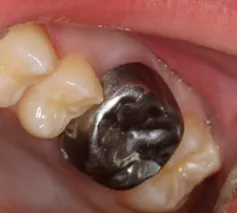
Molars with severe MIH receive fillings and, in the most serious cases, a stainless steel crown. This is a kind of foil cap that protects the tooth from breaking and from cavities and pain.

Advertisement

In rare cases, the dentist may suggest removing the tooth altogether if its long-term prognosis is too poor. This typically happens between the ages of eight and ten.

Steel crown, which is intended to protect a vulnerable tooth.
Department of Dentistry, University of Copenhagen, Author provided (no reuse)

Front teeth usually only have mild to moderate MIH and so are often not treated initially.

When children with MIH get a little older, they often ask for a more aesthetic treatment. This will typically involve whitening combined with a newer type of treatment in which a thin, fluid resin can be infiltrated into the enamel.

The resin will fill the empty spaces in the enamel structure and so the apparent discolouration will disappear, leaving a tooth with a normal, smooth crown colour.

In adulthood, severely affected molars may benefit from a crown or a porcelain inlay.

Advertisement

What now?

To really tackle this condition and its effect on children’s teeth, we first need a clearer picture of how widespread it actually is. That means stronger, more consistent studies — and a better agreement across the profession on how the condition is diagnosed and recorded.

At the same time, researchers are still working to answer some of the most basic questions: what are the key triggers? And why do some children develop it while others don’t?

In the long run, more research will not only improve treatment but also help prevent the condition from causing long-term dental problems, thus reducing the need for repeated, often difficult dental care in children (and adults).


This article was commissioned as part of a partnership between Videnskab.dk and The Conversation, where articles are also published in Danish.

Advertisement

Source link

Continue Reading

NewsBeat

Cara Delevingne live: A new musical artist finding her feet

Published

on

Cara Delevingne live: A new musical artist finding her feet

Having played her first ever festival show at Barcelona’s Primavera Sound at the weekend (the perks of an already-famous name), Delevingne is back on home turf tonight for the second of two debut London shows. She might have switched up her medium, but the crowd that populates Waterloo’s pop-up railway arch venue 26 Leake Street have clearly been lured by her established credentials. In the blue-lit, smoke machine-blasted live room, a mix of quirky influencer types, a few excited young girls and a hefty whack of celebrity peers (Lola Young, Little Simz, Paris Paloma) all turn the space into a sort of off-grid London Fashion Week party, only with a louder soundtrack.

Source link

Continue Reading

NewsBeat

Social media ban: Key points, when will it start and what platforms are affected?

Published

on

Social media ban: Key points, when will it start and what platforms are affected?

Sir Keir Starmer has announced under-16s will be banned from social media in a “big moment for our country”.

The Prime Minister said earlier today that the UK will follow Australia in prohibiting teenagers from using apps like TikTok, Instagram and Snapchat.

Source link

Advertisement
Continue Reading

NewsBeat

Leading GAA boss praises referee after crazy stat in Championship clash

Published

on

Belfast Live

With referees under as much scrutiny as ever with a number of high profile incidents throughout the 2026 season, the performance of one official has been praised

Gabriel Bannigan hailed the performance of referee Paul Faloon after his side coasted to a nine-point victory over Roscommon in Clones on Saturday.

With referees under as much scrutiny as ever with a number of high profile incidents throughout the 2026 season, Paul Faloon drew praise from Bannigan for letting the game flow as much as possible.

Indeed, Jack McCarron’s free on 66 minutes was the first and only free scored in the entire game with just two yellow cards issued.

Advertisement

When asked if he preferred Faloon’s no-nonsense style, Bannigan replied: “100 per cent.

“This is Championship football. We’re all reared on Championship football.

“The players want the game to flow. I think Paul is an excellent referee. Paul will pull what has to be pulled, but he’s not going to be whistling every little thing and he’s consistent.

“He does the same for both teams. That’s what players want, that’s what management want, that’s what supporters want. So fair play to Paul.

Advertisement

“I didn’t know he (Jack McCarron) was the only one. Monaghan and Roscommon are two footballing teams. There’s not much need to blow the whistle too much.”

The Farney raced into a five-point lead playing with the wind with Stephen Mooney finding the net.

After becoming accustomed to chasing games, Monaghan were controlled and assured in possession as they closed the game out in ruthless fashion as a Roscommon fightback never materialised.

“Look, we targeted getting off to a better start than we did against Mayo,” added Bannigan.

Advertisement

“We were very disappointed with our first half performance against Mayo. I think we definitely brought a lot of the learnings from that game out there today, particularly the way we defended in the second half against the breeze, because that was the problem in our first half performance against Mayo the last day.

“We didn’t defend well against the breeze and Mayo kicked six two-pointers in the first half. “That gave us a mountain to climb in the second half, which we nearly climbed because of the character that we have in that dressing room and the quality we have in the team. But we were unlucky not to get over the line the last day.

“So we took that hurt out there today and we targeted a 70-minute performance. I was very happy we got a 70-minute performance.”

Want to see more of the stories you love from Belfast Live? Making us your preferred source on Google means you’ll get more of our exclusives, top stories and must-read content straight away. To add Belfast Live as a preferred source, simply click here .

Advertisement

Click here to sign up to our sport newsletter, bringing you the latest sports news, headlines and top stories

Source link

Continue Reading

Trending

Copyright © 2025