EXCLUSIVE: Some everyday food items have risen in price nearly four times as fast as wages since the last Holyrood election in 2021.
12:01, 22 Apr 2026Updated 12:12, 22 Apr 2026
Scots have been hammered by soaring food prices over the last five years as sluggish wage growth has been outstripped by the rising costs of everyday items like sugar, beef and eggs.
Research published by the independent think-tank Future Economy Scotland found that median earnings in Scotland have increased by 31 per cent since voters went to polls at the last Holyrood election in May 2021.
But the price of goods including sugar and beef has risen more than twice as fast as wages in that time, with consumers seeing price rises of over 65 per cent. The price of olive oil, which topped the list, has risen nearly four times as fast as wages, with prices up a staggering 119 per cent since May 2021.
Advertisement
The price of eggs and chocolate has also far outstripped wage growth, rising by 61 per cent and 54 per cent respectively.
While the price of many household essentials has soared, other goods – notably consumer electronics – have become cheaper. Since 2021, personal computers and mobile phones have fallen in price by around 25 per cent and 10 per cent respectively.
Laurie Macfarlane, Future Economy Scotland co-director, said: “Polling shows the cost of living is a top concern among voters this election, and it’s obvious why.
“For the past five years, Scots have been squeezed by a pincer movement of weak wage growth on the one hand, and rising prices on the other.
Advertisement
“Our analysis shows that the price of essentials like beef and sugar have risen more than twice as fast as wages, while olive oil has risen nearly four times as fast. It’s little wonder voters are feeling the pinch.
“That computers and phones have become cheaper will be little consolation to those struggling to feed their kids and heat their homes.”
Macfarlane added: “While global factors have contributed to price rises, the Scottish Government is not powerless to act. After nearly two decades of flatlining living standards, more of the same simply won’t cut it.
Advertisement
“Political parties must move beyond empty rhetoric and put forward credible plans to raise wages and improve affordability. Scotland simply cannot afford another five years of stagnation.”
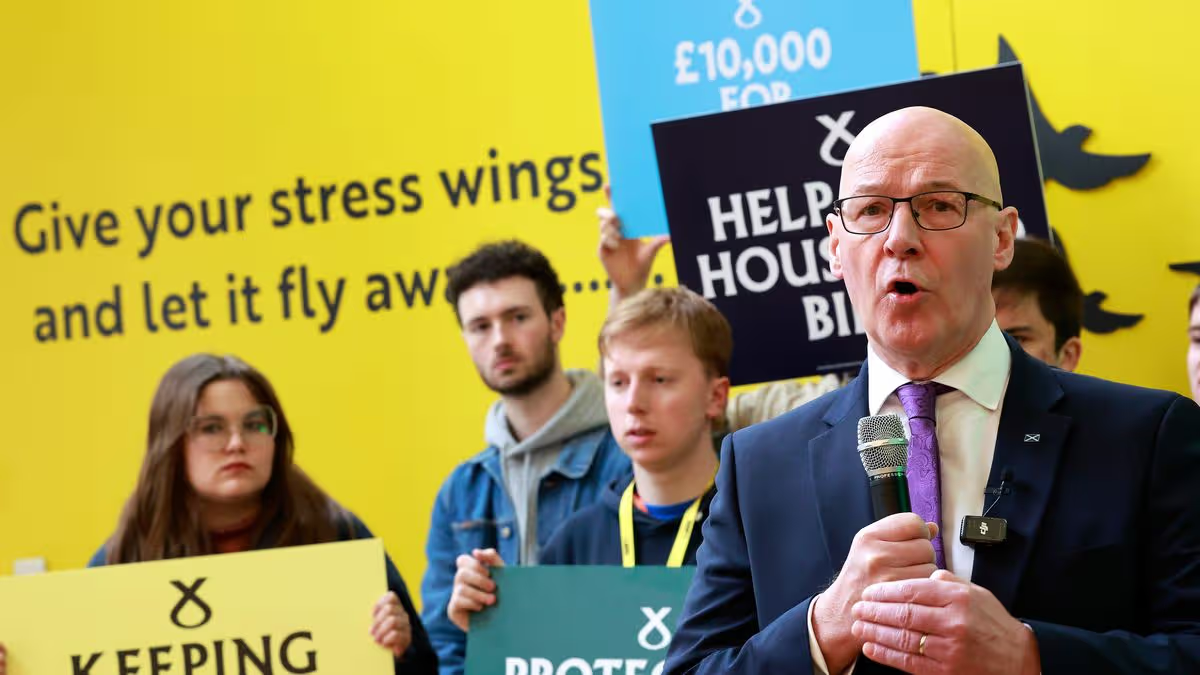
It comes as John Swinney last week pledged to use the Scottish Government’s powers to intervene on public health matters to impose price caps on basic items such as bread and milk.
But the promise was met with with a backlash from retailers and warnings from economists that such a huge intervention by the state in the grocery market could lead to shortages of certain items in shops.
It is also far from clear if the Scottish Government has the legal ability to dictate prices in shops, given it is bound by the UK Internal Market.
Advertisement
Speaking today, the First Minister admitted the scheme could only be introduced in the immediate term – and avoid lengthy legal challenges in the courts – if retailers agreed to sign-up on a voluntary basis.
The SNP has pointed to the introduction of minimum unit pricing (MUP) on alcohol as an example of the Government using public health powers to intervene in domestic markets.
But that policy was held up for years after it was repeatedly challenged by distillers.
Asked if his price cap vow could realistically be introduced by next year, Swinney said: “The steps on food prices could, if we got voluntary agreement on that.
Advertisement
“I’ve got public health powers I can use, but there’s a lot of ways we can make progress by agreement. And I think it’s in everyone’s interests to do that.”
It comes as the wider arts community in Northern Ireland continues to deal with historic levels of underfunding
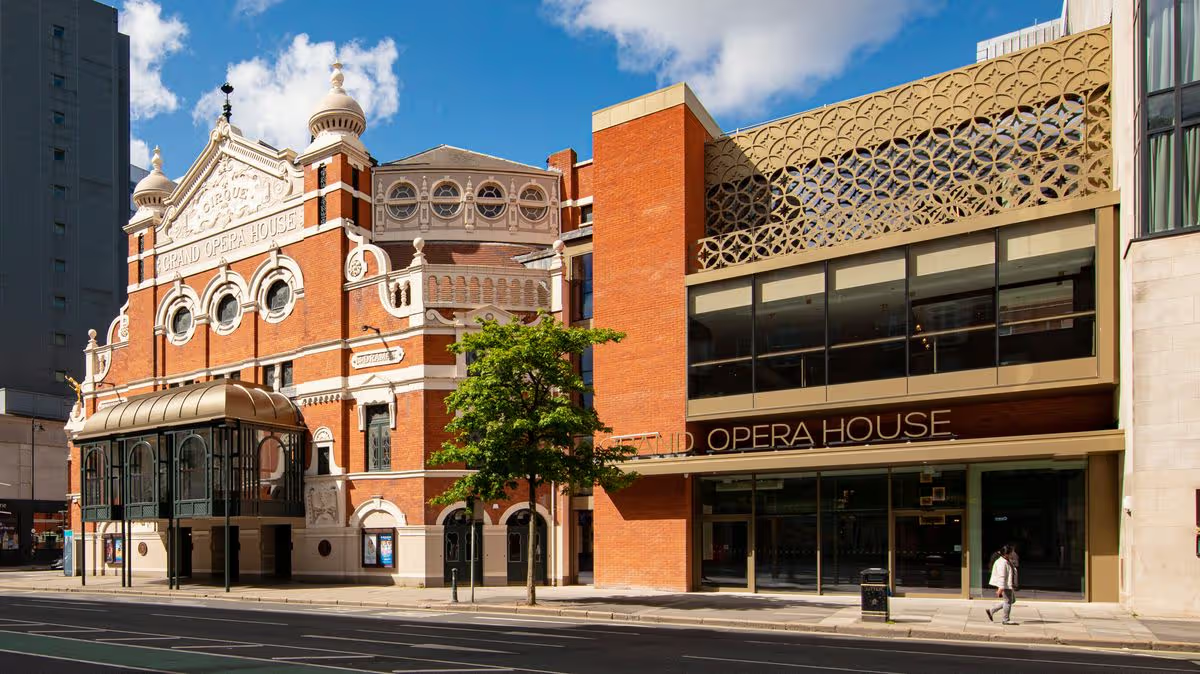
The Arts Council NI has withdrawn funding from the Grand Opera House for the first time in over 30 years, it has been revealed. The iconic Belfast city centre theatre did not receive funding from the Arts Council’s 26-27 Annual Funding Programme.
Advertisement
The renowned Victorian theatre first opened its doors to the public in December 1895, and was designed by architect Frank Matcham. Over the years, it has survived bombings and threats of demolition, and in 2021 went through a major refurbishment. The venue remains a top venue for musicals, opera, and drama, attracting performers from around the world.
It comes as the wider arts community in Northern Ireland continues to deal with historic levels of underfunding, including the lowest per-capita arts spend in the UK and Ireland. At £5.07 per head, it is half of the investment seen in Scotland.
In news first reported by The Stage, the removal of funding contrasts with the Arts Council’s role in supporting the theatre over the years. The organisation played a role in saving the venue from the threat of demolition in the 1970s, and also contributed to its £12.2 million refurbishment in 2021.
Advertisement
Funding for the Grand Opera House from the Arts Council has fallen sharply in recent years, from a high of £675,000 a year over a decade ago, to £156,880 in 2025.
Despite ceasing support for the theatre’s performance programme three years ago, the Arts Council maintained funding for some operational costs of the historic building, anhd the venue’s creative learning programme which last year engaged with over 5,000 people.
The popular theatre, which marked its 130th anniversary last year, reported attendances in the last financial year of nearly 335,000 for 355 performances and a record average attendance of 90% capacity.
In a statement, a spokesperson for the Arts Council Northern Ireland said: “The Grand Opera House did not receive funding from the Arts Council’s 26-27 Annual Funding Programme. The Arts Council is proud of its historical funding of the commercially successful and iconic Grand Opera House for over 30 years now, including key support for the building’s extension and refurbishment.
“The Grand Opera House will have other opportunities to apply for ACNI funding which the GOH Trust may be eligible for, and we are happy to provide any information and guidance when and if requested.”
The Grand Opera House Trust said as guardians of the theatre, it will continue to invest in the building, spending £1 million in the next sixteen months on projects including cleaning and protecting decorative features of the auditorium, redecorating the external façade, and improving the technical infrastructure of their 123-seat Studio space.
In a statement, a spokesperson for the Grand Opera House Trust added: “The Arts Council of Northern Ireland’s decision not to fund the Grand Opera House Trust through its 2026/2027 Annual Funding Programme ends over 30 years of support to the Trust since it was formed and took over the management of the Theatre in 1994.
Advertisement
“As the Grand Opera House celebrates its 130th year, the Arts Council’s decision not to support the Theatre through its annual funding programme affords independence for the Grand Opera House Trust, its Chief Executive, and our dedicated and brilliant staff to continue to present a programme aimed at all tastes, ages and pockets, and which attracts people from diverse backgrounds and all communities.
“The Grand Opera House Trust and its Chief Executive look forward to engaging with the Arts Council of Northern Ireland in the months ahead to consider ways as to how it and Northern Ireland’s largest arts organisation can work together in the future.”
The incidents allegedly happened during school rugby trip
Husna Anjum Senior Reporter and Bryana Francis
13:22, 22 Apr 2026
A PE teacher has resigned after facing multiple allegations of inappropriate behaviour on a school trip.
Claims heard at a hearing include how she ignored concussion protocol, showed pupils her underwear and allowed them to come to her hotel room.
Advertisement
Lowri Williams was also a rugby coach at Llandovery College in Carmarthenshire. She is currently facing a week-long EWC disciplinary hearing over her conduct at a sevens tournament at Rosslyn Park in London.
It is alleged that during the tournament Ms Williams allowed pupils to continue playing rugby despite hitting their heads. WalesOnline reports she did not follow WRU concussion protocol and did not maintain professional boundaries.
Ms Williams is also alleged to have encouraged a pupil to lie to their housemistress about having taken another pupil to a match, discussed personal relationships with pupils, discussed and showed pupils what underwear she was wearing the next day, allowed them to come into her hotel room, answered her hotel room door to a pupil when not fully dressed, asked pupils if they were seeing anyone, talked to pupils about her weekend, and showed pupils videos of her on nights out.
The teacher, who used to be a semi-professional player, has nine allegations against her at the hearing due to end on Friday. As well as the London tournament, the allegations also relate to alleged conduct at a match at the Principality Stadium in Cardiff and a netball game at Christ College Brecon.
Advertisement
All events happened between September 2023 and March 2024. The EWC panel heard how the school’s under-16s side travelled to London on March 17 to take part in the Rosslyn Park tournament.
They stayed overnight in a hotel and played in the tournament on March 18 before returning to the school late that evening. Both Ms Williams and Sophie Witt (now Sophie Hands), former head of girls’ sport, were on the trip.
Simon Bodley, former medical centre manager at the school, told the panel that with such away games the usual protocol would be that he would receive a message or email from physios telling him about any injuries. However he said that hadn’t happened and yet he said five girls presented to him as injured after the tournament including with head injuries.
Advertisement
The panel has heard how one pupil, referred to as pupil F, had told him she’d been kicked in the head during the game. Mr Bodley recalled the girl had felt she “had almost been made to play on”.
He said she should’ve come off the pitch and been assessed but that during his check-ins with her she said, after she’d been encouraged by other girls, she had been told by Ms Williams not to tell anyone about her injury and to keep playing. He said she was one of the best players and he was “furious”.
But it was also heard from Andrew Faux, representing Ms Williams at the hearing, how pupil F had said herself that she wasn’t injured from the kick to the head but had come off “to make sure I was okay”.
Advertisement
Mr Faux also raised that Mr Bodley’s recollection of dates couldn’t have been accurate, to which Mr Bodley agreed and said emails actually indicated he saw pupil F on Thursday, March 21, rather than the morning after the tournament.
Johanna Edwards, the former deputy head at Llandovery, told the EWC she started an internal investigation about injuries having allegedly not being correctly reported. The EWC heard that during that investigation Ms Williams resigned from her role at Llandovery.
Ms Hands, who was also at the tournament, said Ms Williams “cared deeply about her role and was passionate about girls’ rugby”. “I’m shocked that any allegations has been brought to be here. I hear nothing but praise for her and as far as I’m concerned I’m at a loss as to how this has escalated to this point,” she told the panel.
During the games at the sevens tournament in London Ms Hands said she was only aware of a head injury to pupil B and she said she had been properly brought off despite her parents wanting her to play on.
Advertisement
She said that at the time the college didn’t have their own concussion protocol but followed the WRU one which Ms Williams was familiar with.
Ms Hands explained how all the girls seemed in high spirits on the minibus home and were singing all the way. The panel were shown a video of them singing on the minibus and Ms Hands said they didn’t behave like that if they were injured.
The next day she said she saw some girls sat outside the medical centre complaining they were tired and had headaches. It was the first she knew about them having any problems and she said she believed they were just tired from the trip.
Ms Hands recalled how on March 19 she was told Ms Williams wouldn’t be coming on the trip back to the Rosslyn Park tournament where the under-18s were playing on March 20. She said she didn’t want to go without her.
Advertisement
She said Ms Williams had “good relationships with pupils”. “She did everything I asked and more and would put the girls first. Formed her role with good humour and dedication,” she added.
The panel heard evidence from a pupil who was referred to as pupil E. Pupil E recalled how the evening before the tournament her and two other girls went into Ms Williams’ hotel room for around 15 minutes to talk about the tournament because they were nervous and didn’t know what to expect.
Pupil E said as they walked in Ms Williams was wearing a t-shirt and shorts and they sat on a sofa in the room. She said while they were there Ms Williams was folding clothes she was going to wear the next day on her bed, including her underwear.
Pupil E said another pupil said the underwear was “nice” and there being a discussion about their relationship statuses. She said Ms Williams told them she was speaking to someone but didn’t go into anymore detail.
Advertisement
Pupil E said: “I don’t believe she liked me and was randomly nice to me. She was fine as a teacher but many of the girls felt she didn’t like us and we felt like we didn’t want to play rugby anymore.”
She said she was disappointed she hadn’t played more at the tournament because she had paid £300 for the trip, but said Ms Williams would rather pick other players over her.
Ms Hands said during the overnight stay in London her and Ms Williams both had their own hotel rooms on a different floor to the pupils. She said their rooms were opposite each other and she was not aware of any pupils going into her room or her wearing anything other than a college tracksuit.
The hearing also heard from a former Llandovery College pupil who attended the tournament. She said Ms Williams had a “banterful relationship” with the pupils and she felt as though Ms Williams saw the year 13s as her mates and wanted to get on with them.
Advertisement
She recalled how during the tournament she’d suffered a head clash in the game with someone on her side but the former pupil said it was just part of the game to have those knocks and that Ms Williams was persistent in checking her and the others were okay. “If someone mentioned they weren’t feeling too well she would check up on them specifically, as well as the whole team,” she added.
She said during the game pupil F, one of the best players and the captain, “caught a stud” and she recalled Ms Williams asked her if she was okay. After she said she was okay to continue, the pupil said Ms Williams replied “good” and told her to “carry on”.
The pupil said she felt the substitutes were less experienced and that sports teachers, like Ms Williams, didn’t want to be embarrassed and therefore didn’t want pupil F to come off.
The day after the tournament she told the panel she had gone to the medical centre with a friend because she felt sore with muscle tension. She admitted she had held a grudge with Ms Williams since a match at the Principality Stadium when a player she thought was worse then her started instead.
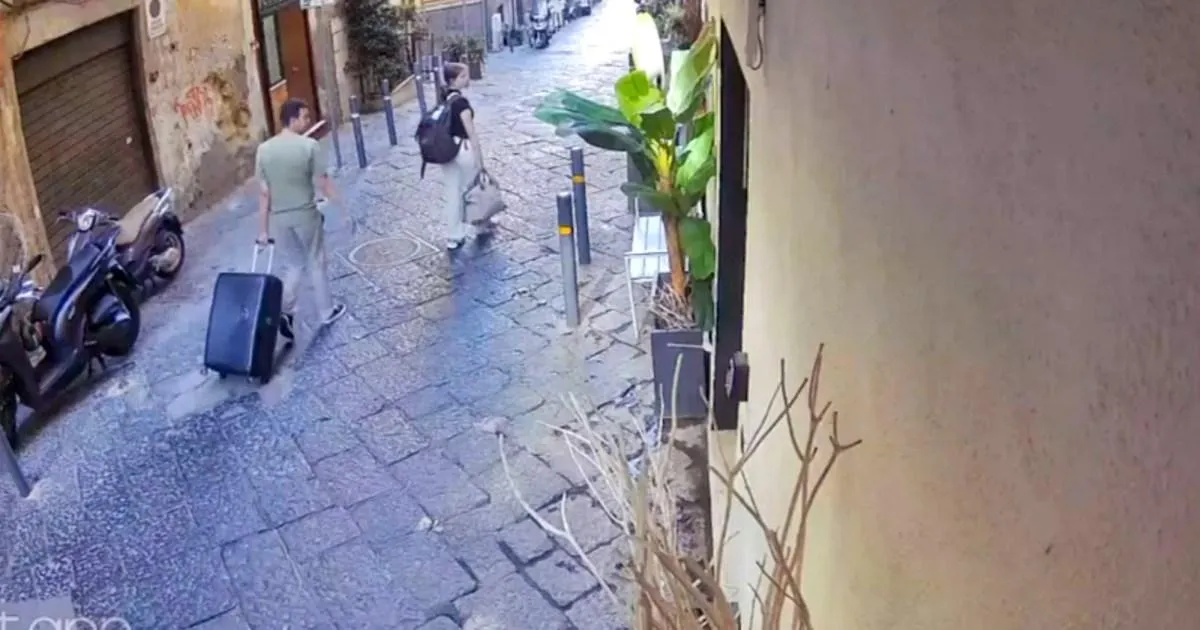
CCTV captured the moment Chiara was struck (Picture: Newsflash)
A woman on holiday in Naples was killed after being struck in the head with a heavy statuette thrown from a balcony.
Chiara Jaconis, 30, was walking with her boyfriend through the Spanish Quarters of Naples on September 15, 2024, when she was killed.
CCTV footage from a nearby cafe caught the moment Chiara collapsed, as her partner Livio screamed for help.
According to investigators, the boy threw a black statuette weighing around 4.4 pounds from a third-floor balcony, striking Chiara as she walked below.
Advertisement
She was rushed to the hospital with severe head injuries, but died just hours later despite emergency surgery.
Chiara was walking with her boyfriend when she was fatally injured (Picture: Newsflash)
Sign up for all of the latest stories
Start your day informed with Metro’s News Updates newsletter or get Breaking Newsalerts the moment it happens.
Now, the parents of the 13-year-old boy accused of her death have rejected blame for the boy’s behaviour and are demanding that, even though he is too young to be charged, he also be officially cleared of wrongdoing.
Advertisement
Italian prosecutors have requested that the boy’s mother and father be charged with negligent manslaughter, arguing the tragedy could have been prevented if they had kept a closer watch on their son.
The teenager has already been cleared by a juvenile court because he is under the age of 14 and cannot be held criminally responsible under Italian law.
A preliminary hearing to decide whether the case will go to trial is scheduled for 26th June.
Prosecutors say the parents bear responsibility because they did not supervise their son, who is believed to have carried out similar dangerous acts in the past.
Advertisement
Chiara worked for Prada before her death (Picture: Newsflash)
However, the couple, both professionals in Naples, aged 65 and 54, have strongly denied any wrongdoing.
Through their lawyers, they insist they had no involvement in the incident and claim the statuette did not belong to them.
They have also bizarrely appealed the court’s decision to clear their son because of his age, arguing he should be acquitted based on the facts of the case rather than simply because of his age.
The case has drawn widespread attention in Italy, raising questions about parental responsibility and safety in densely populated urban areas.
Marsh took Uttlesford District Council to court after being refused a wild animal licence, but she has now been given approval to keep 12 marmosets at her rescue centre in Essex
12:56, 22 Apr 2026Updated 13:06, 22 Apr 2026
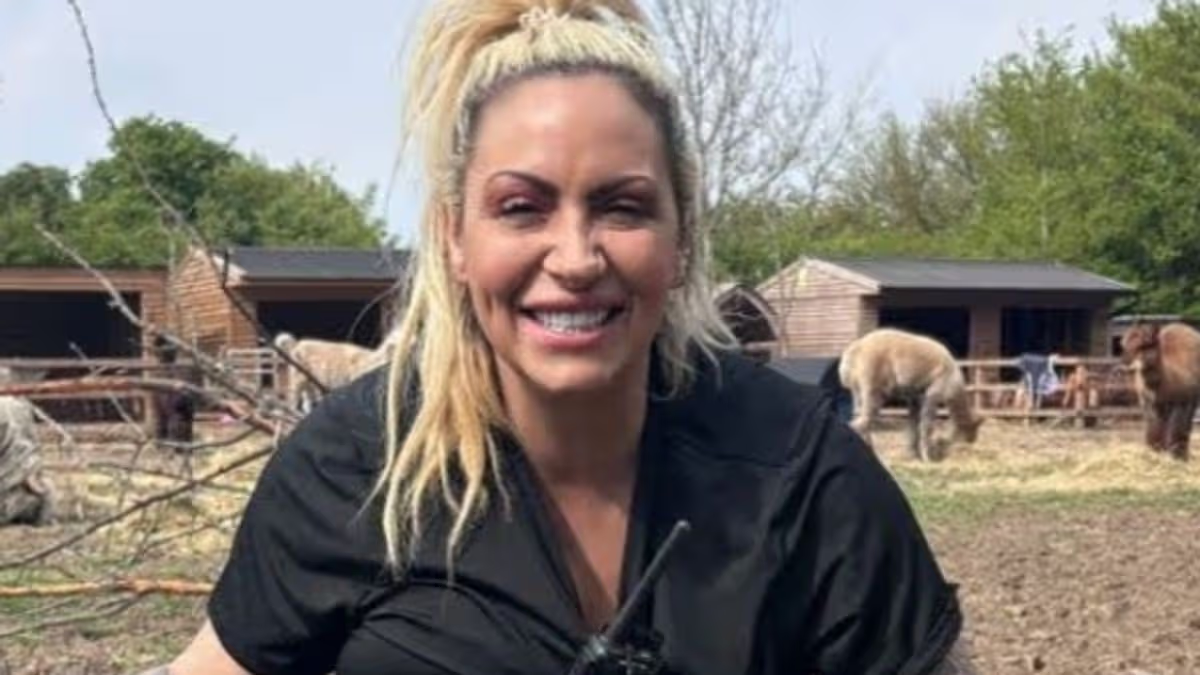
Former glamour model Jodie Marsh has been granted a new license to keep monkeys after a drawn-out legal battle.
The 47-year-old has been given the green light to keep 12 marmosets at her rescue centre at Fripps Farm in Lindsell, near Great Dunmow, Essex. Marsh took Uttlesford District Council to court after it previously refused to grant a wild animal licence, meaning she could not legally adopt eight ring-tailed lemurs, but she won her case in June.
She said she was “elated” and “completely over the moon” after Uttlesford District Council approved her latest application. She told the BBC: “I knew we would get the licence because we’d done everything correctly. With the new primate law coming into effect, many people won’t be able to keep their marmosets, and thousands will need homes. It is so crucial that those of us who can, do have the licence, so we can rescue more if needed.”
Advertisement
The Animal Welfare (Primate Licences) (England) Regulations 2024 introduced a licensing regime to protect the welfare of primates kept in England. The council confirmed that Marsh’s primate licence was effective from April 6, until April 5 2029. She said the new regulations were “higher than zoo standards” and feared many small monkeys would be put down or abandoned if their owners were unable to get a new licence.
Marsh rose to fame in the ITV series Essex Wives in 2002 and became a regular face in the tabloid newspapers. Alpacas, emus and reptiles are among the animals she keeps at the private 3.5-acre (1.4-hectare) Fripps Farm, which she founded in 2020 and used OnlyFans to partly fund.
Advertisement
Last week Marsh appeared at Chelmsford Magistrates’ Court accused of assaulting a man at the farm in January. She is alleged to have grabbed Christopher Hynes by the neck at the animal sanctuary she runs. She appeared at Chelmsford magistrates’ court on Friday where she denied assault and using threatening and abusive words against Mr Hynes and Susan Hammond.
Marsh was bailed and will face trial in May next year.
Liverpool supporter Mark Mogan appeared in Liverpool Magistrates’ Court on Wednesday morning, accused of racially abusing Antoine Semenyo during a match in August
13:01, 22 Apr 2026Updated 13:02, 22 Apr 2026
The trial of a Liverpool supporter accused of racially abusing Antoine Semenyo has been pushed back to later this year. Mark Mogan appeared in Liverpool Magistrates’ Court on Wednesday where the judge decided to adjourn the case until October.
Mr Mogan allegedly abused Semenyo while he was preparing to take a throw-in while playing for Bournemouth against Liverpool at Anfield in August. The match was halted after Semenyo reported the incident to the referee.
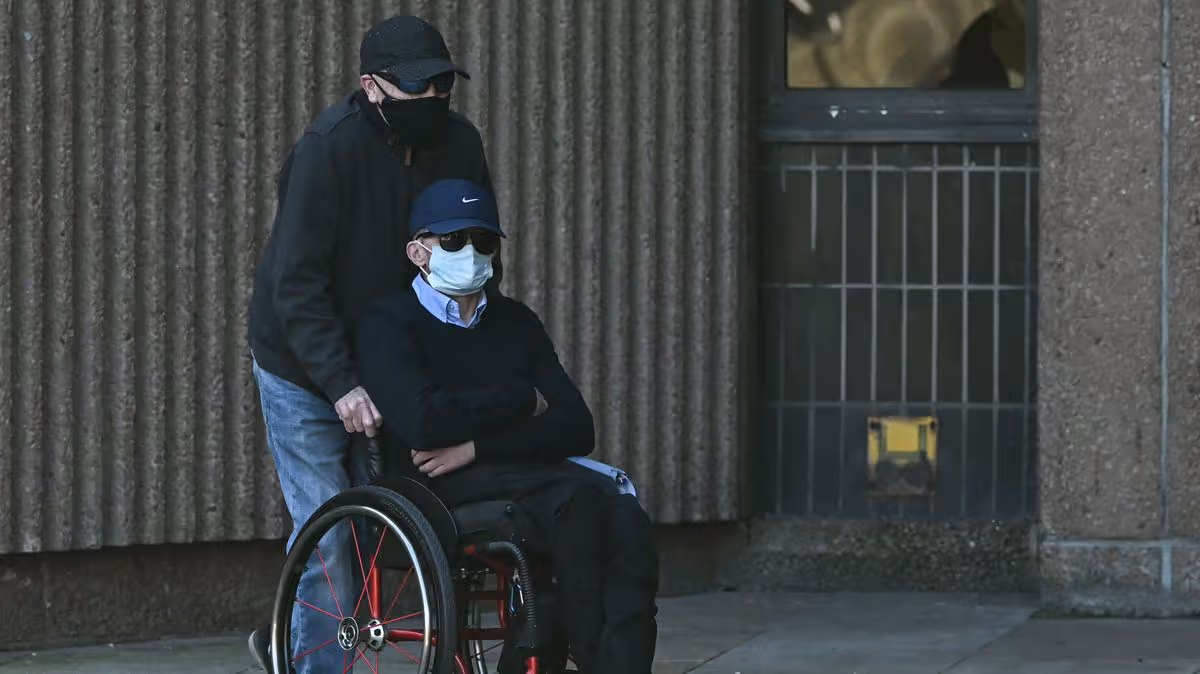
Mr Mogan was subsequently arrested and banned from every stadium in the country. The 47-year-old pleaded not guilty to the charge in December and attended court on Wednesday in a wheelchair with a Liverpool FC badge on the back.
Advertisement
His lawyer appealed for the case to be pushed back on the grounds that Mr Mogan is unfit to stand trial. District Judge James Hatton said that a fitness to plead hearing will be held on September 7 ahead of a new trial on October 14.
“This matter is listed for trial today, one matter of a racially aggravated section five offence where the complainant in the matter is Mr Semenyo,” defence lawyer Olivia Belle said. “No witnesses have attended court today.
“In short it is the defence’s application this morning to vacate the trial as a consequence of Mr Mogan being assessed that he is unfit to plead and stand trial.”
In a statement posted after the incident, a spokesperson said: “Liverpool Football Club is aware of an allegation of racist abuse made during our Premier League game against Bournemouth. We condemn racism and discrimination in all forms.
Advertisement
“It has no place in society, or football. The club is unable to comment further as tonight’s alleged incident is the subject of an ongoing police investigation, which we will support fully.”
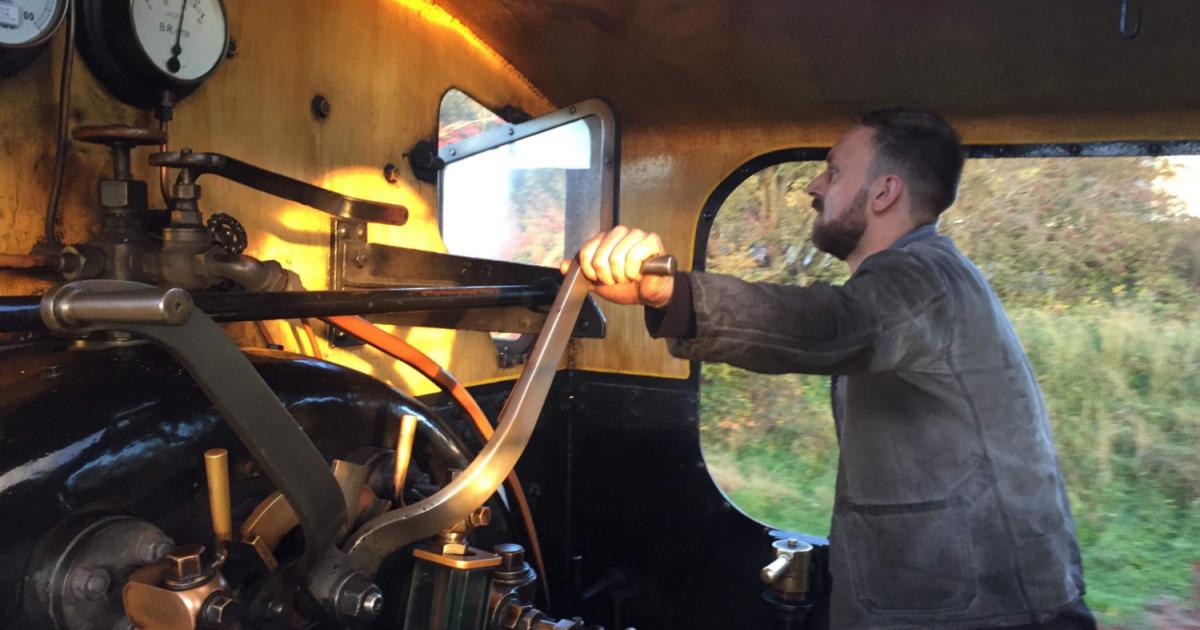
Tanfield Railway, known as the world’s oldest railway, has launched its new Steam Driver Experiences, offering a rare opportunity to operate one of its historic industrial locomotives.
Under the guidance of a qualified crew, participants will spend 40 minutes on the footplate learning how to drive the powerful engines, including models like Sir Cecil A Cochrane and Keighley Corporation Gas Dept No.2.
Tanfield Railway in County Durham, the world’s oldest railway, has launched new Steam Driver Experiences, allowing visitors to operate historic industrial locomotives and enjoy a unique hands-on heritage attraction. (Image: Tanfield Railway)
Euan Sharp, visitor experience lead at Tanfield Railway, said: “Our experience packages have been incredibly popular over the past few years, and the response from the public has been nothing short of fantastic.
“However, the Steam Driver Experience is the one we’ve been working so hard to offer, and I’m thrilled it’s finally here.
Advertisement
“It provides a true, hands-on experience of our industrial railway heritage, and you never know, we might even get a few more volunteers out of it too.”
These rugged locomotives, built for industrial work rather than speed, were manufactured by historic Tyneside firms Robert Stephenson and Hawthorn Leslie, capturing a piece of the North East’s industrial legacy.
Participants will wear traditional footplate attire, including a flat cap and boiler suit, and will be taught how to master the regulator and tackle the steep 1-in-40 gradients that have tested engine crews for generations.
Tanfield Railway in County Durham, the world’s oldest railway, has launched new Steam Driver Experiences, allowing visitors to operate historic industrial locomotives and enjoy a unique hands-on heritage attraction. (Image: Tanfield Railway)
The experience also includes a complimentary day of unlimited train travel for the participant and a guest, plus a Tanfield Railway goody bag.
Advertisement
Sessions are currently scheduled for May 25, July 5, August 1, and August 31.
Participants must be aged 21 or over and meet basic fitness requirements to safely enter and operate the locomotive cab.
The Next Kit Table Lamp has amassed hundreds of 5/5 star reviews with many shoppers praising the ‘gorgeous’ design and wide range of colours
This article contains affiliate links, we will receive a commission on any sales we generate from it. Learn more
Advertisement
A well-chosen lamp can quietly transform a room, adding both warmth and character without the need for a full redesign. It can be placed on a bedside table or tucked into a cosy corner and it’s one of the simplest ways to effortlessly elevate your home.
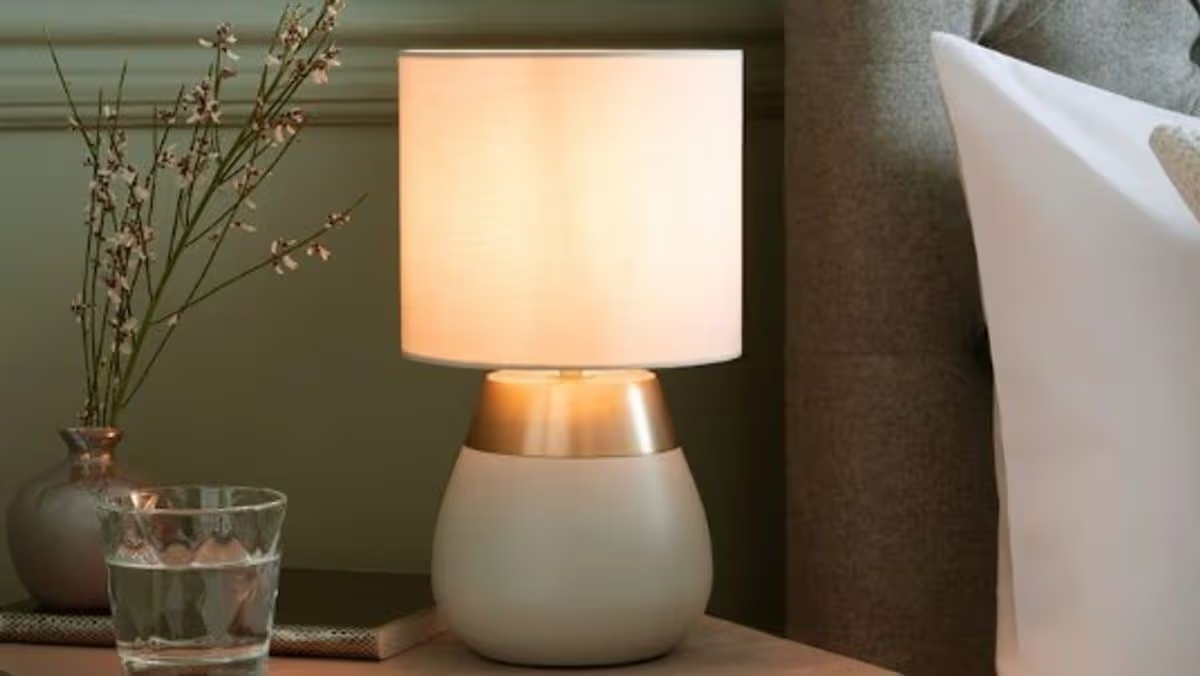
The Next Kit Table Lamp does exactly that, blending practicality with a clean, contemporary look. The table lamp is priced at £22 and is designed with a 50% metal and 50% textile construction.
What sets it apart is its touch functionality – no switches to fumble for in the dark, just a simple tap to turn it on or off. It’s a small detail, but one that makes a noticeable difference in everyday use, especially in bedrooms where ease and comfort matter most.
The table lamp is available in 10 different colours, it’s easy to find a version that complements your space, whether you lean towards neutral tones or something a little bolder. The lamp is described as an accessible way to refresh your décor without overthinking it.
Advertisement
The champagne gold version has amassed hundreds of five-star reviews praising its lightweight feel, stylish design and convenience, it’s clear why this lamp has become a popular choice.
One shopper said: “Beautiful lamp. Lightweight, modern and stylish, just right for my bedside tables. No fumbling around in the dark trying to find the switch, just gently tap to light up. Highly recommended.”
Another said: “I am pleased with this touch on/off lamp. The colour matches the scheme in the bedroom that has been decorated. It is exactly the right shade.”
Advertisement
Whereas one thought: “Really nice lamp but would have preferred a taller base small dumpy lamp colour great.”
Regardless, another review of the Next lamp said: “I bought two of these lamps a few weeks ago. They look very nice in my freshly decorated bedroom. The lamps are easy to turn on and off, all you do is touch the rim. They look more expensive and really smart in person.”
Welsh rugby’s soap opera has taken another turn following the WRU’s announcement on Wednesday
Swansea Council leader Rob Stewart has claimed the Ospreys’ future is secure beyond the end of the current decade – despite the Welsh Rugby Union once again reiterating their intention to cut the number of professional teams to three by 2028.
As such, the failure for that deal to get over the line has been treated as a victory by the council – with Cllr Stewart claiming the Ospreys‘ future is now secure beyond 2030.
“This is a major win for the campaign to save the Ospreys that I’m proud to have been a part of,” read a statement from Cllr Stewart. “This is the outcome we have been working for and it’s amazing to see it happen.
“This now secures the Ospreys future into the 2030s and allows four professional regions to continue to play in Wales – which is what the fans players and public wanted.
Advertisement
“The Ospreys playing at a redeveloped St Helen’s from the start of next season will be fantastic for the city our local economy and the supporters.
“I’d like to thank the team at Swansea council, the supporters, fans, players and public who have supported the campaign – this win is for all of you.”
As well as Y11’s deal for Cardiff collapsing, the WRU also announcing that both the Ospreys and Scarlets would be offered the chance to enter the existing PRA25 agreement – almost a year after the west Wales clubs had refused to sign it.
“We could have been in this position a year ago had the WRU not presided over chaos and confusion,” added Cllr Stewart. “The clubs and the union have suffered financially and fans and our game have faced unnecessary uncertainty.
Advertisement
“This was completely avoidable and the leadership of the WRU have to take responsibility for the crisis they caused. I’m pleased they have now offered PRAs to all four clubs and provided much-needed certainty for professional rugby in Wales.”
As conflict intensifies in the Middle East, energy markets swing wildly and the cost of living keeps climbing, a pressing question is emerging for anyone who is tied in to the fluctuating energy and food markets: how do we build resilience?
Big political and economic solutions still matter. But they take time. Increasingly, attention is turning closer to home, and to communities themselves.
Among these, intentional communities – once seen as niche – stand out as an increasingly viable option. Intentional communities are groups of people that share land and resources collectively. They can include cohousing and housing cooperatives as well as other projects. These communities do not constitute an escape from the world, but a way of coping with it. In some cases, they are already softening the shocks of global instability.
One of the most visible consequences of conflict in the Middle East is felt in energy bills at home. Disruptions to oil and gas supply chains push up fuel prices. That ripples through everything like transport, food and heating. In the UK, households feel it quickly.
Advertisement
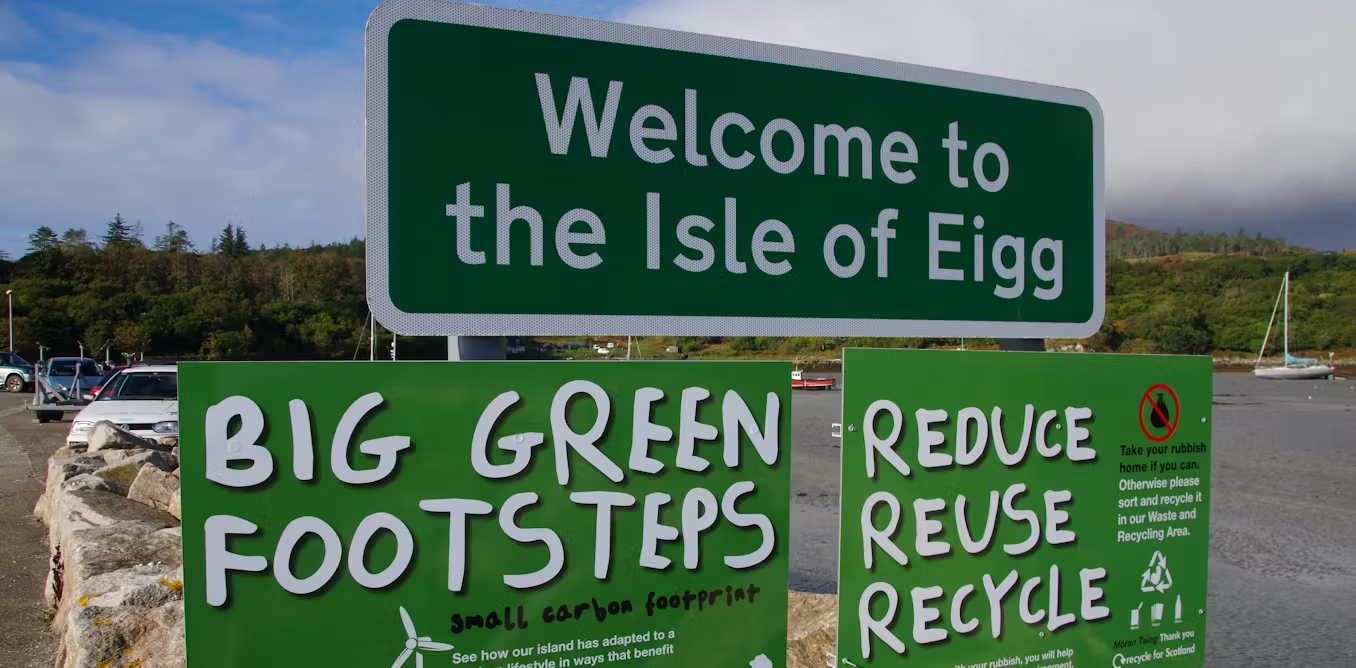
But some intentional communities are less exposed. They have changed how they produce and use energy. At Bridport Cohousing in Dorset, residents share heating systems and generate solar power. On the Isle of Eigg in the Scottish Inner Hebrides, the entire island runs on a community-owned electricity system powered by wind, water and sun.
Of course, these systems don’t make communities immune to wider pressures. But they can cushion the blow by lowering bills and reducing dependence on volatile global markets.
Rising energy prices feed directly into food, housing and everyday costs. For many households, the pressure is relentless. Intentional communities respond differently. They pool resources. Food is often bought in bulk or grown collectively. Meals are shared. Housing is organised cooperatively, which can help to bring down rents and mortgages.
While pooling resources doesn’t eliminate costs, it can spread them. And that makes a difference, especially for those on tight or fixed incomes.
Advertisement
Social resilience in uncertain times
Resilience isn’t just financial. Intentional communities can also help buffer the psychological and social effects of living in times of conflict or uncertainty.
The pandemic offered a glimpse of this. While many people experienced isolation, collaborative housing communities often mobilised quickly because support networks were already in place.
A 2023 study of 18 intentional communities in England and Wales found they were able to quickly build on their existing and well-established social infrastructure. Regular contact, shared decision-making and mutual support helped people cope. In uncertain times, that kind of connection matters. It reduces isolation and makes crises easier to navigate.
One example was an older women’s cohousing group near London who set up online movie and book review clubs, as well as regularly sharing homegrown food from their communal allotment.
Advertisement
The Isle of Eigg survives only on renewable energy.
Disrupted fuel supplies – as we have seen in the recent closure of the Strait of Hormuz – can have cascading effects on agricultural production and food distribution. This can lead to price increases and occasional shortages.
Many intentional communities try to buffer against this by growing their own food. Small-scale farming, permaculture and community gardens are common.
For example, the Redfield community in north Buckinghamshire grow much of their own food, as well as keeping chickens, a small flock of sheep and bees on their 17 acres of land. This increases self-sufficiency, meaning they are less exposed to global disruptions. It also builds skills – knowledge that often spreads beyond the community itself through friends, family and even courses on growing, permaculture and self sufficiency.
Advertisement
None of this makes intentional communities self-contained utopias. They still rely on wider systems. Renewable energy infrastructure requires investment, for example. Skills and resources are uneven, which means that no community is fully insulated from global crises. But that may not be the point.
What sets these communities apart is not independence, but adaptability. They spread risk and diversify how needs are met in terms of energy, food, housing and care. And systems that are more diverse tend to be more resilient.
Intentional communities are, in effect, testing grounds. They show what happens when people reorganise everyday life around cooperation rather than individual consumption. Some of their ideas, like shared ownership, local energy and community food networks are already spreading beyond them into local and national government policy, builders and architects and wider community groups.
Coventry City won the Championship last night in emphatic fashion and by means of congratulations, Wrexham owners Ryan Reynolds and Rob McElhenney jokingly offered a tantalising award
Wrexham co-owner Rob McElhenney has playfully offered Frank Lampard and his Coventry City squad an all-expenses-paid trip to Las Vegas – just days before their pivotal Championship showdown with the Red Dragons.
Advertisement
The Sky Blues clinched the Championship title on Tuesday evening in stunning style with a 5-1 home victory over Portsmouth. Ephron Mason-Clarke netted twice while Haji Wright, an own goal from Regan Poole and an injury-time strike from Kaine Hayden rounded off a 5-1 triumph.
Promotion to the Premier League had already been secured with last Friday’s 1-1 away draw with Blackburn Rovers, but there were still scenes of jubilation at the Ricoh Arena. Once the celebrations subsided, McElhenney – also known as Mac – light-heartedly extended the ultimate congratulatory invitation to Sin City…provided it happened before the away fixture against Wrexham!
McElhenney took to X and wrote: “Congrats to Coventry City. My friend @VancityReynolds (Ryan Reynolds) and I would like to offer you a first class trip to Vegas. Please be ready in the am and be back in time for kick-off on Sunday. A little late is okay too.”
Advertisement
The tongue-in-cheek post from McElhenney comes as Wrexham pursue their own push for Premier League promotion. They travel to the Ricoh Arena to face Lampard’s side this Sunday.
The Red Dragons currently sit sixth, but are separated from seventh-placed Hull City only on goal difference. A win against the Sky Blues will almost certainly be required to keep their play-off destiny in their own hands as the season reaches its conclusion.
If Wrexham are able to get into the playoff places, win the two-legged semi-final and then triumph at Wembley, they’d become the first ever side to enjoy four consecutive promotions. It would also open up many more lucrative financial doors for the Red Dragons, as a result of the broadcast money which comes with being in the Premier League.
Advertisement
On February 9, the two Hollywood actors celebrated their five-year anniversary of co-owning the club. Wrexham were down in the National League when they strode into the Racecourse Ground.
Now there is an achievable, but still difficult, route to the Premier League. In March, while commentating on Sky Sports for Wrexham’s victory over Swansea, Reynolds said: “You have high expectations in long term, but our goal was to listen and learn and at that point, you don’t know what you’re saying, if that’s just going to sound preposterous or naive.
“But our goal was always the Premier League. I mean, we’d be foolish to not aim for that. I didn’t think we would be here this quickly.
Advertisement
“However, sometimes the ball bounced our way. Other times, this team’s grit, determination and character is what really kind of pushed them across, even more so than just skill.”
After Coventry, Wrexham play host to fellow play-off chasers Middlesbrough in what could be a win or bust clash for both teams, depending on their results in the previous match.
Sky Sports, HBO Max, Netflix and Disney+ with Ultimate TV package
This article contains affiliate links, we will receive a commission on any sales we generate from it. Learn more
Sky has upgraded its Ultimate TV and Sky Sports bundle to now include HBO Max, Netflix, Disney+, discovery+ and Hayu, as well as 135 channels and full Sky coverage of the Premier League and EFL.
Sky broadcasts more than 1,400 live matches across the Premier League, EFL and more with at least 215 live from the top flight alongside Formula 1, darts and golf.

















































You must be logged in to post a comment Login