As conflict intensifies in the Middle East, energy markets swing wildly and the cost of living keeps climbing, a pressing question is emerging for anyone who is tied in to the fluctuating energy and food markets: how do we build resilience?
Big political and economic solutions still matter. But they take time. Increasingly, attention is turning closer to home, and to communities themselves.
Among these, intentional communities – once seen as niche – stand out as an increasingly viable option. Intentional communities are groups of people that share land and resources collectively. They can include cohousing and housing cooperatives as well as other projects. These communities do not constitute an escape from the world, but a way of coping with it. In some cases, they are already softening the shocks of global instability.
One of the most visible consequences of conflict in the Middle East is felt in energy bills at home. Disruptions to oil and gas supply chains push up fuel prices. That ripples through everything like transport, food and heating. In the UK, households feel it quickly.
Advertisement
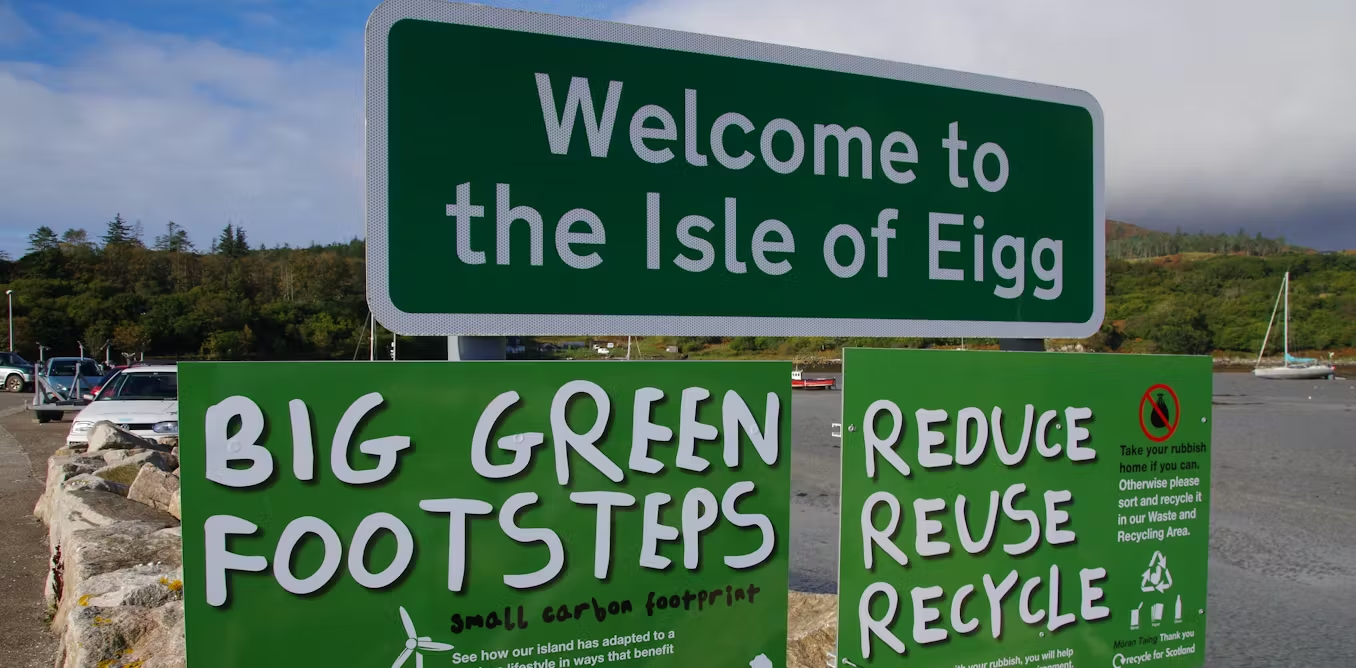
But some intentional communities are less exposed. They have changed how they produce and use energy. At Bridport Cohousing in Dorset, residents share heating systems and generate solar power. On the Isle of Eigg in the Scottish Inner Hebrides, the entire island runs on a community-owned electricity system powered by wind, water and sun.
Of course, these systems don’t make communities immune to wider pressures. But they can cushion the blow by lowering bills and reducing dependence on volatile global markets.
Rising energy prices feed directly into food, housing and everyday costs. For many households, the pressure is relentless. Intentional communities respond differently. They pool resources. Food is often bought in bulk or grown collectively. Meals are shared. Housing is organised cooperatively, which can help to bring down rents and mortgages.
While pooling resources doesn’t eliminate costs, it can spread them. And that makes a difference, especially for those on tight or fixed incomes.
Advertisement
Social resilience in uncertain times
Resilience isn’t just financial. Intentional communities can also help buffer the psychological and social effects of living in times of conflict or uncertainty.
The pandemic offered a glimpse of this. While many people experienced isolation, collaborative housing communities often mobilised quickly because support networks were already in place.
A 2023 study of 18 intentional communities in England and Wales found they were able to quickly build on their existing and well-established social infrastructure. Regular contact, shared decision-making and mutual support helped people cope. In uncertain times, that kind of connection matters. It reduces isolation and makes crises easier to navigate.
One example was an older women’s cohousing group near London who set up online movie and book review clubs, as well as regularly sharing homegrown food from their communal allotment.
Advertisement
The Isle of Eigg survives only on renewable energy.
Disrupted fuel supplies – as we have seen in the recent closure of the Strait of Hormuz – can have cascading effects on agricultural production and food distribution. This can lead to price increases and occasional shortages.
Many intentional communities try to buffer against this by growing their own food. Small-scale farming, permaculture and community gardens are common.
For example, the Redfield community in north Buckinghamshire grow much of their own food, as well as keeping chickens, a small flock of sheep and bees on their 17 acres of land. This increases self-sufficiency, meaning they are less exposed to global disruptions. It also builds skills – knowledge that often spreads beyond the community itself through friends, family and even courses on growing, permaculture and self sufficiency.
Advertisement
None of this makes intentional communities self-contained utopias. They still rely on wider systems. Renewable energy infrastructure requires investment, for example. Skills and resources are uneven, which means that no community is fully insulated from global crises. But that may not be the point.
What sets these communities apart is not independence, but adaptability. They spread risk and diversify how needs are met in terms of energy, food, housing and care. And systems that are more diverse tend to be more resilient.
Intentional communities are, in effect, testing grounds. They show what happens when people reorganise everyday life around cooperation rather than individual consumption. Some of their ideas, like shared ownership, local energy and community food networks are already spreading beyond them into local and national government policy, builders and architects and wider community groups.
Officials have suggested airlines have just weeks of fuel left (Picture: Getty Images)
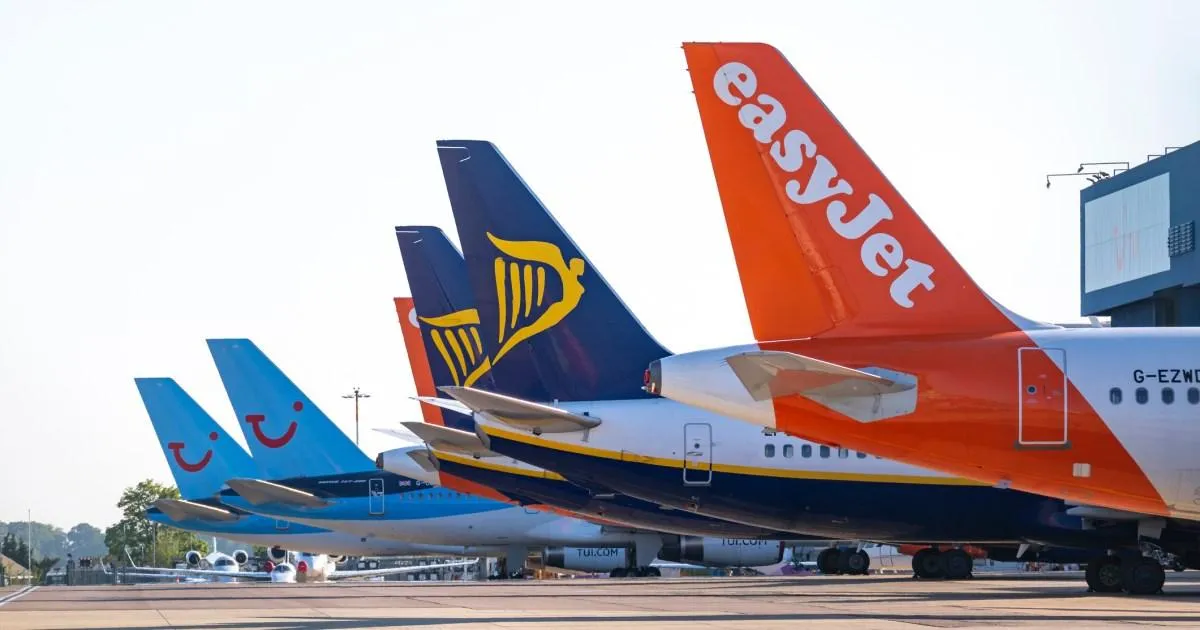
As airlines grapple with an ongoing jet fuel crisis, passengers are being hit from both sides: more cancelled flights and higher travel costs.
Carriers around the world are cutting routes and introducing extra charges in an effort to manage soaring fuel prices driven by ongoing conflict in the Middle East.
The Strait of Hormuz, which has effectively been blocked by Iran since February, carries up to 75% of plane fuel exports from the Gulf to Europe.
However, with this route disrupted and supplies running low, costs have skyrocketed from around $85 to $90 (£63 to £67) to as much as $200 (£148) per barrel over the past few weeks.
Advertisement
What is the Strait of Hormuz?
The Strait of Hormuz is 60-mile-wide section of waterway that connects the Gulf with the Arabian Sea, making it one of the most important shipping lanes in the world. With Iran to the north and Oman to the south, during peace time, around 20% of the world’s oil and gas passes through it.
The UN allows countries to exercise control of their territorial seas up to 13.8 miles from their coastlines, and since some portions of the Strait lie entirely in Iran and Oman’s territorial waters, they are allowed to ‘defend’ their countries if needed.
Along with the geography allowing Iran to exert control on the waterway, at its narrowest point, the Strait is just 24 miles across, making it easy for Iran to target vessels passing by.
Advertisement
Last week, head of the International Energy Agency (IEA), Fatih Birol, said Europe has ‘maybe six weeks or so [of] jet fuel left,’ warning passengers to expect cancellations into the summer months.
Best of Metro Deals
Get exclusive discounts with Metro Deals – save on getaways and spa days. Powered by Wowcher
Bannatyne Spa: Spa day for two with treatments, lunch & prosecco — save up to 57% off.
Some airlines have already reduced schedules due to the shortage, while others are increasing fares or hiking baggage fees.
Advertisement
How major airlines operating in the UK have responded
Aegean Airlines
The Greek airline said this week it would raise ticket prices as a result of the spike, although hikes would be limited to around 7% to 8%.
The change will impact new bookings, but the 3.6 million passengers already scheduled to fly over the coming months, and those who hold an Aegean Pass and have bought early-bird packages, will be unaffected.
Like many other carriers, the company has also suspended flights to affected regions until the end of April, including Iraq, Israel, Lebanon, Saudi Arabia, and the UAE.
Aer Lingus
Over 500 flights have been dropped from Aer Lingus’s schedule, although it claims this is due to ‘mandatory maintenance’ on aircraft rather than the fuel crisis.
Advertisement
Air France-KLM
The airline group said it has made ‘price adjustments’ to long-haul ticket prices to address surging costs, with return fares rising by €50 euros (£44) per round trip, while short and medium-haul round trips in economy increasing by €10 (£9).
Last week, the group’s Dutch arm KLM also said it would cancel 160 flights in Europe over the coming month as a result of the fuel shortages.
Customers may face disruption (Picture: Getty Images)
Air India
In March, the Indian carrier began a phased expansion of a fuel surcharge on its domestic and international routes ‘necessitated by the steep rise in jet fuel prices arising from the geopolitical situation in the Gulf.’
All new bookings for flights to and from Europe now incur a $125 (£92) fee, up from $100 (£74) before the conflict began. However, the company noted it will be reviewing surcharges periodically, and may ‘make appropriate adjustments’ as required.
Alaska Airlines
The US airline, which is due to launch its first UK service between Heathrow and Seattle in May, increased checked bag fees for most customers earlier this month.
Advertisement
As of April 11, charges went up by $5 (£3.70) for the first bag and by $10 (£7.40) for the second, while a third piece of luggage will now cost $200 (£148), up from the previous $50 (£37).
American Airlines
Although checked baggage fees have been hiked up to $150 (£111) per bag — meaning the first costs $50 (£37), the second $60 (£44), and the third $200 (£148) — these increased charges only apply to domestic and short-haul international flights, so won’t impact travellers to or from the UK.
British Airways
British Airways owner IAG said in March it did not plan to increase ticket prices in the short to medium-term, as it was well hedged for upcoming shortages, but warned it was still ‘not immune’ to the fuel crisis.
British Airways specifically, however, has made changes to its schedule due to the ‘continuing uncertainty’, and is ‘directly in touch with affected customers to offer them a range of options’.
Advertisement
BA has made changes to its schedule (Picture: Getty Images)
Cathay Pacific
The Hong Kong airline plans to cut about 2% of its scheduled passenger flights from mid-May to late June, while its budget subsidiary HK Express is dropping around 6% of flights.
However, more flights were actually added to London, Paris, and Zurich in March, as airspace closures led to an ‘upsurge’ in demand as passengers ‘prioritised alternative routings’.
In terms of pricing, the carrier said it would hike fuel surcharge by 34% across routes from April 1 and review them every two weeks.
China Eastern Airlines
While the Chinese airline, which offers multiple daily flights between London and Shanghai, has raised fuel surcharges, these currently only apply for domestic trips.
Passengers travelling within China currently face a 60 yuan fee (£6.50) for journeys under 800km, or 120 yuan (£13) for those over 800km.
Advertisement
Delta Air Lines
Delta said at the start of April it would cut capacity by around 3.5% from its original plan, although this would be targeted on red-eye and mid-week flights to ‘reduce unprofitable flying’.
Fees for checked luggage also increased by $10 (£7.40) for first and second bags and a $50 (£37) for the third, with bosses reported to be looking at increasing airfares in the months ahead.
EasyJet
In a recent statement, EasyJet boss Kenton Jarvis said the airline had ‘no concerns’, as it has ‘visibility to the middle of May’ in terms of fuel supply.
But with £25 million in extra fuel costs in March, the CEO added that European consumers should expect higher ticket prices around summer, when existing fuel hedges come to an end.
Advertisement
EasyJet’s fuel costs were up £25 million for March (Picture: Getty Images)
Emirates
Capacity was slashed by Emirates in late February, following widespread regional airspace restrictions impacting its Dubai hub.
The world’s largest long-haul airline and the largest in the Middle East, normally operates more than 3,600 flights per week, but is currently operating to ‘more than 100 destinations’ on a skeleton timetable — roughly 70% of its normal capacity.
Bosses have said it will only ramp up operations when over-flight corridors over Iraq and Iran are reliably reopened, and will ‘develop [its] operational schedule accordingly’.
Fare prices have reportedly gone up too, with a $226 (£167) economy class surcharge added to European trips from April 1, and $623 (£461)for premium cabins
IndiGo
India’s biggest airline — which flies from London and Manchester to destinations across India — introduced new fuel charges on domestic and international flights from March 14.
Advertisement
These fees initially ranged from 425 rupees (£3.35) for domestic flights to 2,300 rupees (£18) for flights to Europe, but have since been pushed up to as much as 10,000 rupees (£79).
IndiGo bosses claimed these surcharges would be monitored and adjusted where necessary, but it aimed to limit the impact on passengers where possible.
Jet2
Following the IEA announcement about impending fuel shortage disruption, a number of Jet2 passengers reached out to the airline for clarity ahead of their bookings.
In response, representatives confirmed ‘all flights are planned to go ahead as normal’, and customers would be contacted directly should this change. To be on the safe side, passengers are advised to check their flight status via the Jet2 website at least 12 hours before departure for the latest updates.
Advertisement
What aspect of the jet fuel crisis affecting airlines concerns you the most?
Increased ticket prices
Flight cancellations
Added fees for baggage and services
Environmental impact of fuel shortages
Advertisement
Sign up to The Getaway Expert, your exclusive seven-day guide to travelling with confidence from Metro’s travel editor, Alice Murphy.
JetBlue Airways
Citing ‘rising operating costs’, the US-based carrier recently hiked baggage prices by between $4 (£3) and $59 (£44) depending on the type of flight and number of checked items.
Advertisement
While JetBlue hasn’t made a statement regarding fare increases, analysis by Deutsche Bank revealed its ticket prices jumped 16% in one week at the start of the month, potentially due to ‘panic buying’ for summer ahead of a predicted surge.
Lufthansa
Earlier this week, Lufthansa released a statement saying 20,000 short-haul flights were being cut from its schedule this summer, blaming the move on the jet fuel crisis and ongoing labour disputes.
The majority of this would be from the airline group’s loss-making short-haul CityLine subsidiary fleet, which was already due to be grounded later in the year.
Lufthansa will also withdraw four older Airbus A340-600 long-haul aircraft at the end of the summer, and reduce short and medium-haul offerings by five aircraft this coming winter, with the cuts representing 1% of the German carrier’s ‘available seat kilometres’ yet saving 40,000 tonnes of fuel between now and October.
Advertisement
Norse Atlantic UK
Low-cost Norwegian airline Norse Atlantic axes its flight route between London Gatwick and Los Angeles this week, citing the ‘global fuel crisis’.
‘We are truly sorry for the inconvenience, and apologise to passengers who have [had] their travel plans changed,’ a spokesperson commented. ‘We will assist disrupted passengers as best we can.’
Qantas
Despite cutting domestic flights, strong interest in Europe-bound travel led the Australian airline to redeploy capacity to hotspots like Paris and Rome.
Ticket prices have also increased in recent weeks, and it warned it may need to take ‘further action’ as the situation unfolds.
Advertisement
Ryanair
At the start of April, a spokesperson for the budget carrier told Metro it could ‘guarantee supply to mid-end May’, although if the conflict continues beyond this date, disruption due to fuel shortages couldn’t be ruled out.
This bolsters previous claims from Ryanair boss Michael O’Leary, who stated the company would likely be forced to cancel between 5% to 10% of its scheduled flights through May, June, and July.
With the airline operateing over 3,600 flights per day, this means approximately 360 daily trips could be impacted if the fuel crisis doesn’t resolve itself.
Ryanair expects fuel supplies to last until mid-May (Picture: Getty Images)
Scandinavian Airlines (SAS)
At least 1,000 flights are expected to have been cancelled by SAS in April, up from a ‘few hundred’ in March.
The majority of journeys affected are domestic routes within Norway however, with CEO Anko van der Werff highlighting that given the airline runs over 800 flights per day, cuts are limited in scale.
Advertisement
SAS, which had already increased flight prices, said that even if it tried to absorb the rising fuel costs, the surge was still ‘a shock that directly hits the airline industry’.
TAP Portugal
Last week, the CEO of the Portuguese Airlines Association (RENA), António Moura Portugal, said the country’s flag carrier, TAP, may ‘need to reduce operations and, eventually, raise prices’.
While analysis claims TAP only has 40% fuel coverage for 2026 (compared to between 62% and 84% for other major airlines) Portugal stressed that it was continuing to monitor the conflict, and is yet to make any ‘definitive statements’.
TUI
TUI Airways — the world’s largest charter airline, flies to over 100 destinations from 17 bases across the UK and Ireland — said it is ‘monitoring’ jet fuel shortages, but is ‘not anticipating any immediate disruption to flight schedules or holiday programmes’ at present.
Advertisement
Turkish Airlines-SunExpress
SunExpress, a joint venture between Turkish Airlines and Lufthansa, is set to impose a temporary fuel surcharge of €10 (£8.69) per passenger.
This will apply to booking for flights between Turkey and Europe, made on or after April 1. for departures on or after May 1
United Airlines
In March, United Airlines’ CEO Scott Kirby said the firm would begin ‘tactically pruning flying that’s temporarily unprofitable in the face of high oil prices’.
The 5% capacity reduction will be focused on less-popular timings like overnight, Tuesdays, Wednesdays and Saturdays, and is expected to extend through at least the second and third quarters of 2026.
Advertisement
United also increased first and second checked bag fees by $10 (£7.40) for customers travelling in the US, Mexico and Canada and Latin America, but international flights are believed to be unaffected.
Virgin Atlantic
The airline is adding fuel surcharges to fares but will still struggle to return to profitability this year, its CEO Corneel Koster told the Financial Times.
Sir Richard Branson’s airline added a fuel surcharge of £50 to economy class tickets, with premium economy increasing by £180 and business class by £360.
Advertisement
‘If the fuel price goes much higher, I think the surcharges may go higher,’ commented CEO Corneel Koster. ‘If they go up in a week and you book in two weeks’ time, you’ll be paying higher.’
The company also recently scrapped flights from London to Riyadh, just a year after the route was launched, citing ‘the latest intelligence, regulatory guidance, demand and operating costs’.
Fuel shortages have led to surcharges for Virgin Atlantic passengers (Picture: Getty Images)
WestJet
In a series of ‘near-team measures’, the Canadian airline this week added a C$60 ($32.50) fuel surcharge to some bookings, and will be consolidating flights on lower-demand routes as well as ‘adjusting the travel period for seasonal offerings’.
A statement on Westjet’s website said capacity was expected to reduce by 1% April, 3% in May and 5.5%t in June, and impacted customers would be provided with reaccommodation options, most within the same day as their original departure.
Wizz Air
Hungarian carrier Wizz Air reported issues due to shortages in three airports in Italy last week, but chief Jozsef Varadi claimed these were ‘all resolved within a day and in some cases within hours.’
Advertisement
A spokesperson for the company, the third-largest European budget airline (after Ryanair and easyJet), stated it was ‘actively monitoring fuel supply,’ and ‘will work with its suppliers to secure the jet fuel available in line with its needs’, keeping customers informed and providing updates as needed.
What to do if your flights are cancelled or disrupted
Chris Harrington, managing director of travel firm hoppa, says the first port of call if your flight is cancelled is to contact the airline.
‘If you are already at the airport, head for the airline’s customer service desk to speak to a member of staff,’ he tells Metro.
‘Acting quickly is essential, as available seats on alternative flights may be limited and only available for a short time. However, other people will be in the same position as you, so if you’re met with long queues, try using the airline’s app or ring the customer service team to find out next steps.’
Advertisement
In most cases, the airline will have to make an alternative plan for you, so ask them to rebook you on a later flight, and let them know if there’s an alternative route (or flight using another airline) that works.
Chris also highlights the importance of buying travel insurance as soon as you book, to ‘protect yourself from circumstances such as cancelled flights’.
Some policies will cover the cost of hotels, airport transfers, alternative flights, and food, which is essential since cancellations due to external factors, such as fuel shortages, are typically classed as ‘extraordinary circumstances’, meaning airlines don’t necessarily have to reimburse directly.
‘If the flight cancellation is due to the actions of the airline, then it’s likely you’ll be entitled to compensation as per ABTA guidelines,’ Chris continues, noting that this amounts to £220 for journeys of 1,500;m or less, and up to £520 for anything over this distance.
Advertisement
‘However, in this case, because the cancellation is caused by extraordinary circumstances outside of the airline’s control, compensation is unlikely to apply.’
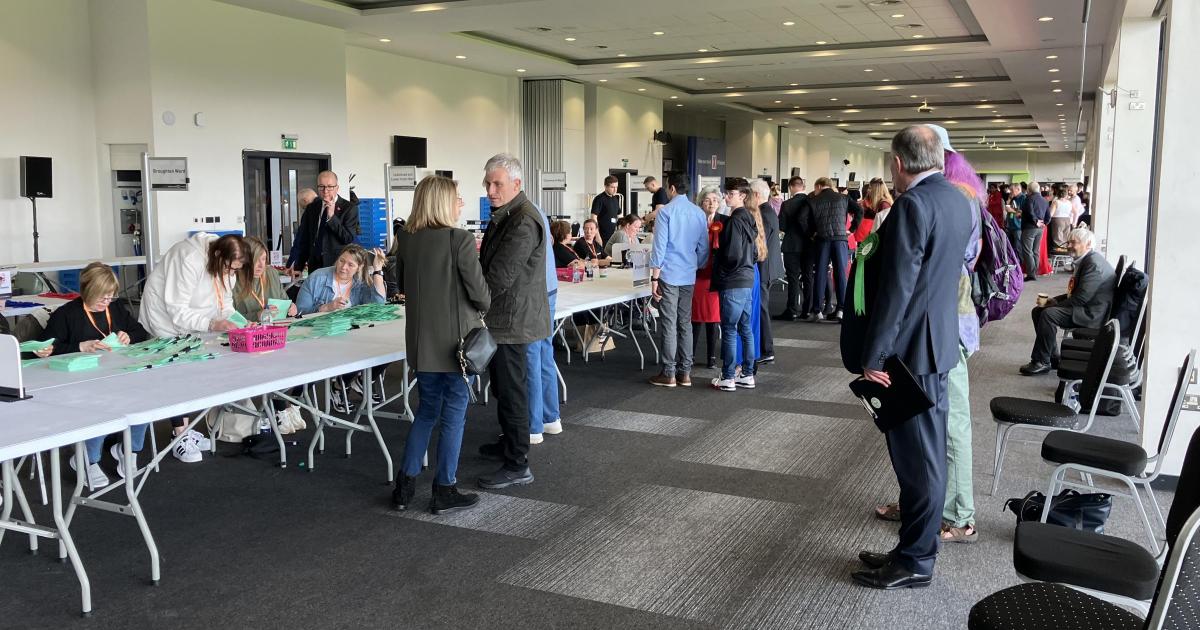
Residents of Barton and Winton will head to the polls today to vote in a new councillor following the death of England’s longest serving councillor David Lancaster. T
hen, in less than two weeks time, Barton and Winton residents will head to the polls for a second time to take part in the May 7 local elections.
Usually, when a councillor position becomes vacant less than six months before a planned election, the vote is rolled into the same day to avoid extra costs. But a ‘niche rule’ from 1972 means if two electors request an earlier polling day, the wish has to be honoured by the local authority within 35 days.
Advertisement
In this case, the person to call the election was Lewis Croden, who is standing as a Reform UK candidate for Little Hulton, and his relative.
Croden and his relative made the request less than two weeks after Lancaster’s passing, and shortly before Croden was confirmed as a council candidate.
The move has been slammed as a ‘waste of taxpayer’s money’ by Labour sources.
A spokesperson said: “The decision by Salford Reform UK to trigger an unnecessary early by‑election in Barton & Winton was entirely indefensible.
Advertisement
“The financial implications of this decision are significant. A stand‑alone by‑election costs the council over £20,000, when it could have been seamlessly incorporated into the citywide elections in May. In addition, the extension of the pre‑election period has disrupted other workstreams across the authority, potentially at a cost of tens of thousands of pounds.
“That a duly nominated Salford Reform UK candidate chose to trigger this by‑election before the late Councillor David Lancaster (the longest‑serving councillor in the country, who served the people of Salford with distinction for over 60 years) had even been laid to rest demonstrates a complete lack of decorum and respect.”
Responding to these allegations, Lewis Croden hit back: “Salford has been taken for granted by Labour for years. Public money is being wasted on a loss making stadium, £668 million in high interest PFI debt, and over £100 million wasted on a failed clean air charge zone. Time we fix our roads and fund essential services.”
There are six candidates standing in the Barton and Winton byelection: Kirsty Anne Downie (IND); Antony Ian Duke (LIB DEM); Micael James Felse (REFORM); Catherine Goodyer (LAB); Jack Groom (GREEN); and Holly Ann Muldoon (CON).
Guys like father-of-two, Jay, and 35-year-old Jaskaran, stood in solidarity with women, acknowledging that there’s a lot to be concerned by.
So, we cast the net even wider, posting the statistic on social media.
Keen to weigh in, many commenters understood why women might feel this way. On the other side of the coin though, there were accusations of misandry, as well as some pretty clear contempt for women.
Advertisement
Here’s what Metro readers had to say about it all — and if you’ve got more thoughts to share, leave a comment below.
‘Our hearts bleed’
Sadly, many commenters were unwilling to understand the female perspective.
‘Our hearts bleed,’ said Jamie Gibson, sarcastically. ‘They can keep that view, just stay over there with it and us men will be fine.’
Reader Marcos Ferreira has been with his partner for nearly 20 years, but claimed that, with women viewing men the way they do, if he broke up with his partner he’d rather be alone.
Advertisement
‘I’d rather stay single than to even bother with another woman in today’s world,’ he said. ‘They can keep the bear, I keep my sanity and the money.’
Some men weren’t willing to understand women’s views (Picture: Getty Images)
Marcos is referencing the viral TikTok debate of 2024, where some women felt it would be safer to be trapped alone in a forest with a bear, rather than a man.
Another reader, Craig Barnes, suspects a similar amount of men view women negatively too, commenting: ‘There aren’t many decent women around now, especially ones with morals. The decent ones are usually taken… younger ones are worse. So many are utterly toxic.’
However, there were many who took time to advocate for women.
‘Plenty of men on [this comment section] crying about “toxic feminism“‘, Jack Whiting said. ‘But if it’s evidence backed, it’s just factual. I don’t feel my wife is safe walking home but I don’t think it’s because of women at all.’
Advertisement
Reader Thimas Chung felt similarly, saying: ‘Some men feel threatened by calling out their toxic masculine trait, simply because toxic masculinity forms part of their identity, and that ought to come to an end.’
Another, Jack Andrew, was astounded by the many accusations of men-hating in the comments.
‘It’s staggering how many men have shown up in this comments section essentially just to say “No, it’s just misandry“‘, he wrote. ‘Guys, did you even read the article? Do you honestly not see how these comments can only make the problem worse?’
Tim Inn added: ‘Her views, her body, her choice! Not that hard to understand. Do better and be an ally, not be so toxic!’
Advertisement
‘Accept the facts’
Understandably, many women felt discouraged by the abundance of negative views under Metro‘s story, to which Shane Williams wrote: ‘Judging by the comments already, women are right to mistrust and hate men.’
Eider Gomez took a more balanced approach, saying: ‘From experience of being surrounded by a few good men, none of them get offended by such statistics cause they understand the circumstances around it. Only the other type of men do.’
Reader Serena pleaded with men to ‘accept the facts mentioned in the article’ because ‘everyone’s lives will be better’.
Women wanted men to understand their worries and frustrations (Picture: Getty Images)
‘I’m sick and tired of men moaning about any piece of information that might slightly threaten their manliness,’ she added.
Some women could understand how reading something like this as a man could be upsetting.
Advertisement
‘I completely understand why some decent men are frustrated by this poll and want to say “not all men”,’ Lesley Christie said. ‘Unfortunately there is no way for women to know which men and if we make a mistake, we may not be alive to learn from it.
‘When the consequences of a decision may be sexual assault or death, you tend to be over cautious. That’s a completely normal response to a situation women don’t want and didn’t choose. Any human would do the same.’
Ultimately, reader Hannah offered a simple solution: ‘If men want to be viewed positively, they need to work to distance themselves from the herd and actively work to end violence against women. Otherwise their silence makes them just as bad.’
It comes as the wider arts community in Northern Ireland continues to deal with historic levels of underfunding
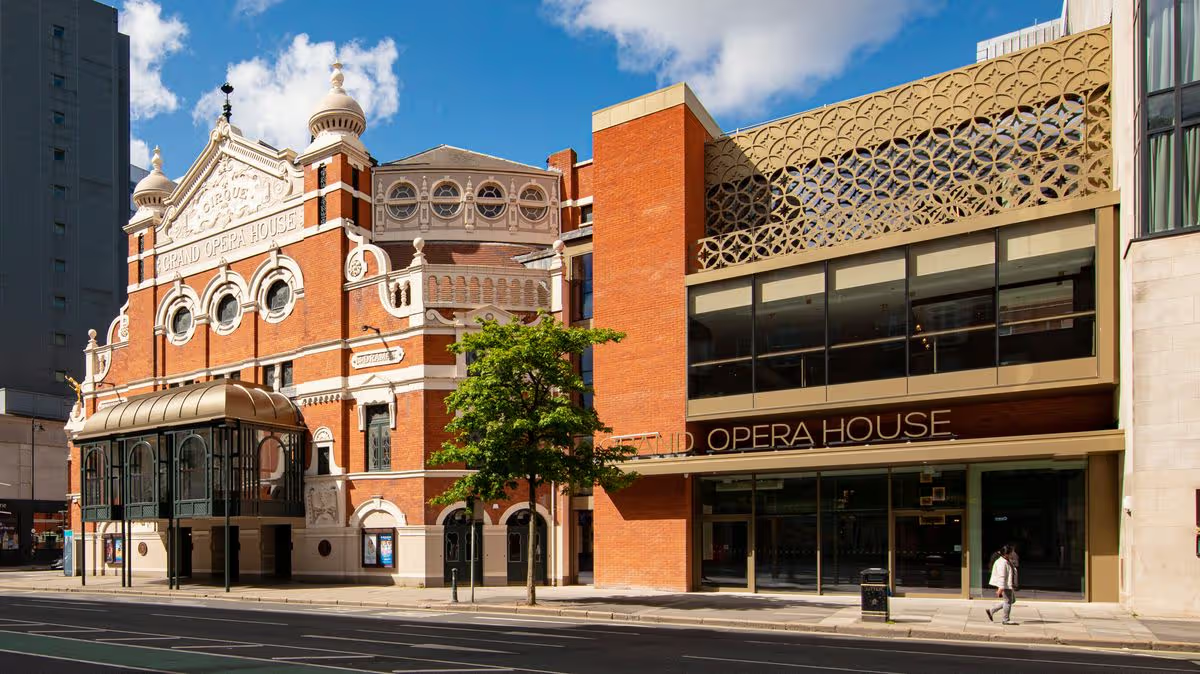
The Arts Council NI has withdrawn funding from the Grand Opera House for the first time in over 30 years, it has been revealed. The iconic Belfast city centre theatre did not receive funding from the Arts Council’s 26-27 Annual Funding Programme.
Advertisement
The renowned Victorian theatre first opened its doors to the public in December 1895, and was designed by architect Frank Matcham. Over the years, it has survived bombings and threats of demolition, and in 2021 went through a major refurbishment. The venue remains a top venue for musicals, opera, and drama, attracting performers from around the world.
It comes as the wider arts community in Northern Ireland continues to deal with historic levels of underfunding, including the lowest per-capita arts spend in the UK and Ireland. At £5.07 per head, it is half of the investment seen in Scotland.
In news first reported by The Stage, the removal of funding contrasts with the Arts Council’s role in supporting the theatre over the years. The organisation played a role in saving the venue from the threat of demolition in the 1970s, and also contributed to its £12.2 million refurbishment in 2021.
Advertisement
Funding for the Grand Opera House from the Arts Council has fallen sharply in recent years, from a high of £675,000 a year over a decade ago, to £156,880 in 2025.
Despite ceasing support for the theatre’s performance programme three years ago, the Arts Council maintained funding for some operational costs of the historic building, anhd the venue’s creative learning programme which last year engaged with over 5,000 people.
The popular theatre, which marked its 130th anniversary last year, reported attendances in the last financial year of nearly 335,000 for 355 performances and a record average attendance of 90% capacity.
In a statement, a spokesperson for the Arts Council Northern Ireland said: “The Grand Opera House did not receive funding from the Arts Council’s 26-27 Annual Funding Programme. The Arts Council is proud of its historical funding of the commercially successful and iconic Grand Opera House for over 30 years now, including key support for the building’s extension and refurbishment.
“The Grand Opera House will have other opportunities to apply for ACNI funding which the GOH Trust may be eligible for, and we are happy to provide any information and guidance when and if requested.”
The Grand Opera House Trust said as guardians of the theatre, it will continue to invest in the building, spending £1 million in the next sixteen months on projects including cleaning and protecting decorative features of the auditorium, redecorating the external façade, and improving the technical infrastructure of their 123-seat Studio space.
In a statement, a spokesperson for the Grand Opera House Trust added: “The Arts Council of Northern Ireland’s decision not to fund the Grand Opera House Trust through its 2026/2027 Annual Funding Programme ends over 30 years of support to the Trust since it was formed and took over the management of the Theatre in 1994.
Advertisement
“As the Grand Opera House celebrates its 130th year, the Arts Council’s decision not to support the Theatre through its annual funding programme affords independence for the Grand Opera House Trust, its Chief Executive, and our dedicated and brilliant staff to continue to present a programme aimed at all tastes, ages and pockets, and which attracts people from diverse backgrounds and all communities.
“The Grand Opera House Trust and its Chief Executive look forward to engaging with the Arts Council of Northern Ireland in the months ahead to consider ways as to how it and Northern Ireland’s largest arts organisation can work together in the future.”
The incidents allegedly happened during school rugby trip
Husna Anjum Senior Reporter and Bryana Francis
13:22, 22 Apr 2026
A PE teacher has resigned after facing multiple allegations of inappropriate behaviour on a school trip.
Claims heard at a hearing include how she ignored concussion protocol, showed pupils her underwear and allowed them to come to her hotel room.
Advertisement
Lowri Williams was also a rugby coach at Llandovery College in Carmarthenshire. She is currently facing a week-long EWC disciplinary hearing over her conduct at a sevens tournament at Rosslyn Park in London.
It is alleged that during the tournament Ms Williams allowed pupils to continue playing rugby despite hitting their heads. WalesOnline reports she did not follow WRU concussion protocol and did not maintain professional boundaries.
Ms Williams is also alleged to have encouraged a pupil to lie to their housemistress about having taken another pupil to a match, discussed personal relationships with pupils, discussed and showed pupils what underwear she was wearing the next day, allowed them to come into her hotel room, answered her hotel room door to a pupil when not fully dressed, asked pupils if they were seeing anyone, talked to pupils about her weekend, and showed pupils videos of her on nights out.
The teacher, who used to be a semi-professional player, has nine allegations against her at the hearing due to end on Friday. As well as the London tournament, the allegations also relate to alleged conduct at a match at the Principality Stadium in Cardiff and a netball game at Christ College Brecon.
Advertisement
All events happened between September 2023 and March 2024. The EWC panel heard how the school’s under-16s side travelled to London on March 17 to take part in the Rosslyn Park tournament.
They stayed overnight in a hotel and played in the tournament on March 18 before returning to the school late that evening. Both Ms Williams and Sophie Witt (now Sophie Hands), former head of girls’ sport, were on the trip.
Simon Bodley, former medical centre manager at the school, told the panel that with such away games the usual protocol would be that he would receive a message or email from physios telling him about any injuries. However he said that hadn’t happened and yet he said five girls presented to him as injured after the tournament including with head injuries.
Advertisement
The panel has heard how one pupil, referred to as pupil F, had told him she’d been kicked in the head during the game. Mr Bodley recalled the girl had felt she “had almost been made to play on”.
He said she should’ve come off the pitch and been assessed but that during his check-ins with her she said, after she’d been encouraged by other girls, she had been told by Ms Williams not to tell anyone about her injury and to keep playing. He said she was one of the best players and he was “furious”.
But it was also heard from Andrew Faux, representing Ms Williams at the hearing, how pupil F had said herself that she wasn’t injured from the kick to the head but had come off “to make sure I was okay”.
Advertisement
Mr Faux also raised that Mr Bodley’s recollection of dates couldn’t have been accurate, to which Mr Bodley agreed and said emails actually indicated he saw pupil F on Thursday, March 21, rather than the morning after the tournament.
Johanna Edwards, the former deputy head at Llandovery, told the EWC she started an internal investigation about injuries having allegedly not being correctly reported. The EWC heard that during that investigation Ms Williams resigned from her role at Llandovery.
Ms Hands, who was also at the tournament, said Ms Williams “cared deeply about her role and was passionate about girls’ rugby”. “I’m shocked that any allegations has been brought to be here. I hear nothing but praise for her and as far as I’m concerned I’m at a loss as to how this has escalated to this point,” she told the panel.
During the games at the sevens tournament in London Ms Hands said she was only aware of a head injury to pupil B and she said she had been properly brought off despite her parents wanting her to play on.
Advertisement
She said that at the time the college didn’t have their own concussion protocol but followed the WRU one which Ms Williams was familiar with.
Ms Hands explained how all the girls seemed in high spirits on the minibus home and were singing all the way. The panel were shown a video of them singing on the minibus and Ms Hands said they didn’t behave like that if they were injured.
The next day she said she saw some girls sat outside the medical centre complaining they were tired and had headaches. It was the first she knew about them having any problems and she said she believed they were just tired from the trip.
Ms Hands recalled how on March 19 she was told Ms Williams wouldn’t be coming on the trip back to the Rosslyn Park tournament where the under-18s were playing on March 20. She said she didn’t want to go without her.
Advertisement
She said Ms Williams had “good relationships with pupils”. “She did everything I asked and more and would put the girls first. Formed her role with good humour and dedication,” she added.
The panel heard evidence from a pupil who was referred to as pupil E. Pupil E recalled how the evening before the tournament her and two other girls went into Ms Williams’ hotel room for around 15 minutes to talk about the tournament because they were nervous and didn’t know what to expect.
Pupil E said as they walked in Ms Williams was wearing a t-shirt and shorts and they sat on a sofa in the room. She said while they were there Ms Williams was folding clothes she was going to wear the next day on her bed, including her underwear.
Pupil E said another pupil said the underwear was “nice” and there being a discussion about their relationship statuses. She said Ms Williams told them she was speaking to someone but didn’t go into anymore detail.
Advertisement
Pupil E said: “I don’t believe she liked me and was randomly nice to me. She was fine as a teacher but many of the girls felt she didn’t like us and we felt like we didn’t want to play rugby anymore.”
She said she was disappointed she hadn’t played more at the tournament because she had paid £300 for the trip, but said Ms Williams would rather pick other players over her.
Ms Hands said during the overnight stay in London her and Ms Williams both had their own hotel rooms on a different floor to the pupils. She said their rooms were opposite each other and she was not aware of any pupils going into her room or her wearing anything other than a college tracksuit.
The hearing also heard from a former Llandovery College pupil who attended the tournament. She said Ms Williams had a “banterful relationship” with the pupils and she felt as though Ms Williams saw the year 13s as her mates and wanted to get on with them.
Advertisement
She recalled how during the tournament she’d suffered a head clash in the game with someone on her side but the former pupil said it was just part of the game to have those knocks and that Ms Williams was persistent in checking her and the others were okay. “If someone mentioned they weren’t feeling too well she would check up on them specifically, as well as the whole team,” she added.
She said during the game pupil F, one of the best players and the captain, “caught a stud” and she recalled Ms Williams asked her if she was okay. After she said she was okay to continue, the pupil said Ms Williams replied “good” and told her to “carry on”.
The pupil said she felt the substitutes were less experienced and that sports teachers, like Ms Williams, didn’t want to be embarrassed and therefore didn’t want pupil F to come off.
The day after the tournament she told the panel she had gone to the medical centre with a friend because she felt sore with muscle tension. She admitted she had held a grudge with Ms Williams since a match at the Principality Stadium when a player she thought was worse then her started instead.
CCTV captured the moment Chiara was struck (Picture: Newsflash)
A woman on holiday in Naples was killed after being struck in the head with a heavy statuette thrown from a balcony.
Chiara Jaconis, 30, was walking with her boyfriend through the Spanish Quarters of Naples on September 15, 2024, when she was killed.
CCTV footage from a nearby cafe caught the moment Chiara collapsed, as her partner Livio screamed for help.
According to investigators, the boy threw a black statuette weighing around 4.4 pounds from a third-floor balcony, striking Chiara as she walked below.
Advertisement
She was rushed to the hospital with severe head injuries, but died just hours later despite emergency surgery.
Chiara was walking with her boyfriend when she was fatally injured (Picture: Newsflash)
Sign up for all of the latest stories
Start your day informed with Metro’s News Updates newsletter or get Breaking Newsalerts the moment it happens.
Now, the parents of the 13-year-old boy accused of her death have rejected blame for the boy’s behaviour and are demanding that, even though he is too young to be charged, he also be officially cleared of wrongdoing.
Advertisement
Italian prosecutors have requested that the boy’s mother and father be charged with negligent manslaughter, arguing the tragedy could have been prevented if they had kept a closer watch on their son.
The teenager has already been cleared by a juvenile court because he is under the age of 14 and cannot be held criminally responsible under Italian law.
A preliminary hearing to decide whether the case will go to trial is scheduled for 26th June.
Prosecutors say the parents bear responsibility because they did not supervise their son, who is believed to have carried out similar dangerous acts in the past.
Advertisement
Chiara worked for Prada before her death (Picture: Newsflash)
However, the couple, both professionals in Naples, aged 65 and 54, have strongly denied any wrongdoing.
Through their lawyers, they insist they had no involvement in the incident and claim the statuette did not belong to them.
They have also bizarrely appealed the court’s decision to clear their son because of his age, arguing he should be acquitted based on the facts of the case rather than simply because of his age.
The case has drawn widespread attention in Italy, raising questions about parental responsibility and safety in densely populated urban areas.
Marsh took Uttlesford District Council to court after being refused a wild animal licence, but she has now been given approval to keep 12 marmosets at her rescue centre in Essex
12:56, 22 Apr 2026Updated 13:06, 22 Apr 2026
Former glamour model Jodie Marsh has been granted a new license to keep monkeys after a drawn-out legal battle.
The 47-year-old has been given the green light to keep 12 marmosets at her rescue centre at Fripps Farm in Lindsell, near Great Dunmow, Essex. Marsh took Uttlesford District Council to court after it previously refused to grant a wild animal licence, meaning she could not legally adopt eight ring-tailed lemurs, but she won her case in June.
She said she was “elated” and “completely over the moon” after Uttlesford District Council approved her latest application. She told the BBC: “I knew we would get the licence because we’d done everything correctly. With the new primate law coming into effect, many people won’t be able to keep their marmosets, and thousands will need homes. It is so crucial that those of us who can, do have the licence, so we can rescue more if needed.”
Advertisement
The Animal Welfare (Primate Licences) (England) Regulations 2024 introduced a licensing regime to protect the welfare of primates kept in England. The council confirmed that Marsh’s primate licence was effective from April 6, until April 5 2029. She said the new regulations were “higher than zoo standards” and feared many small monkeys would be put down or abandoned if their owners were unable to get a new licence.
Marsh rose to fame in the ITV series Essex Wives in 2002 and became a regular face in the tabloid newspapers. Alpacas, emus and reptiles are among the animals she keeps at the private 3.5-acre (1.4-hectare) Fripps Farm, which she founded in 2020 and used OnlyFans to partly fund.
Advertisement
Last week Marsh appeared at Chelmsford Magistrates’ Court accused of assaulting a man at the farm in January. She is alleged to have grabbed Christopher Hynes by the neck at the animal sanctuary she runs. She appeared at Chelmsford magistrates’ court on Friday where she denied assault and using threatening and abusive words against Mr Hynes and Susan Hammond.
Marsh was bailed and will face trial in May next year.
Liverpool supporter Mark Mogan appeared in Liverpool Magistrates’ Court on Wednesday morning, accused of racially abusing Antoine Semenyo during a match in August
13:01, 22 Apr 2026Updated 13:02, 22 Apr 2026
The trial of a Liverpool supporter accused of racially abusing Antoine Semenyo has been pushed back to later this year. Mark Mogan appeared in Liverpool Magistrates’ Court on Wednesday where the judge decided to adjourn the case until October.
Mr Mogan allegedly abused Semenyo while he was preparing to take a throw-in while playing for Bournemouth against Liverpool at Anfield in August. The match was halted after Semenyo reported the incident to the referee.
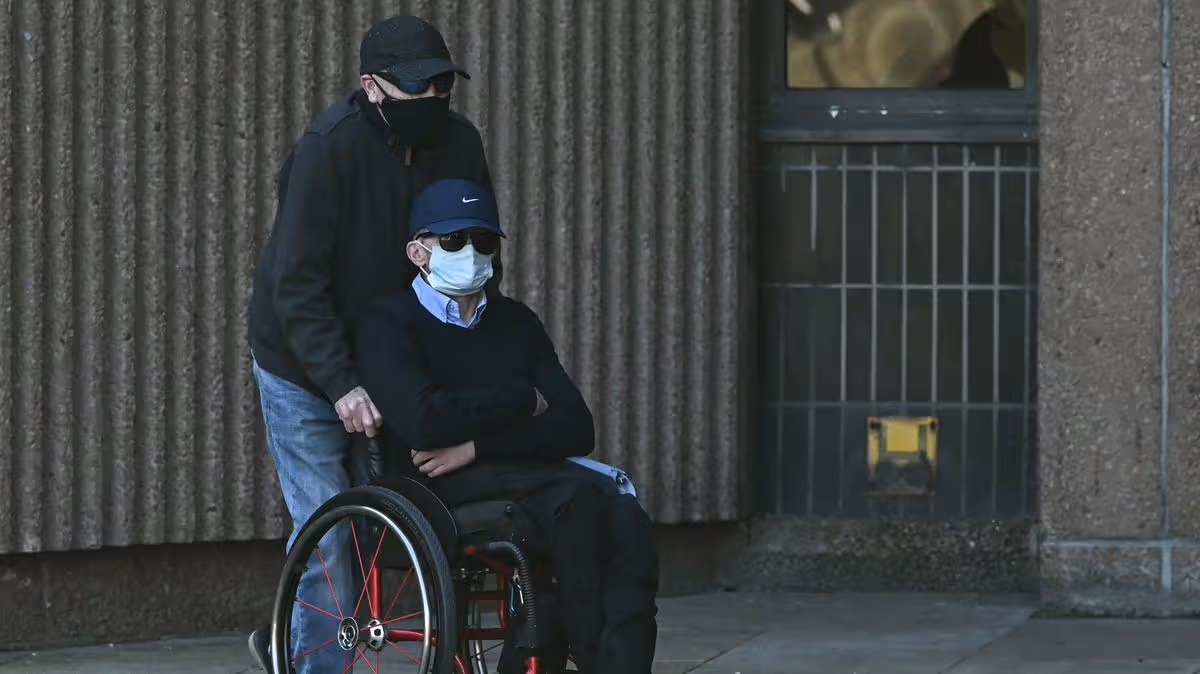
Mr Mogan was subsequently arrested and banned from every stadium in the country. The 47-year-old pleaded not guilty to the charge in December and attended court on Wednesday in a wheelchair with a Liverpool FC badge on the back.
Advertisement
His lawyer appealed for the case to be pushed back on the grounds that Mr Mogan is unfit to stand trial. District Judge James Hatton said that a fitness to plead hearing will be held on September 7 ahead of a new trial on October 14.
“This matter is listed for trial today, one matter of a racially aggravated section five offence where the complainant in the matter is Mr Semenyo,” defence lawyer Olivia Belle said. “No witnesses have attended court today.
“In short it is the defence’s application this morning to vacate the trial as a consequence of Mr Mogan being assessed that he is unfit to plead and stand trial.”
In a statement posted after the incident, a spokesperson said: “Liverpool Football Club is aware of an allegation of racist abuse made during our Premier League game against Bournemouth. We condemn racism and discrimination in all forms.
Advertisement
“It has no place in society, or football. The club is unable to comment further as tonight’s alleged incident is the subject of an ongoing police investigation, which we will support fully.”
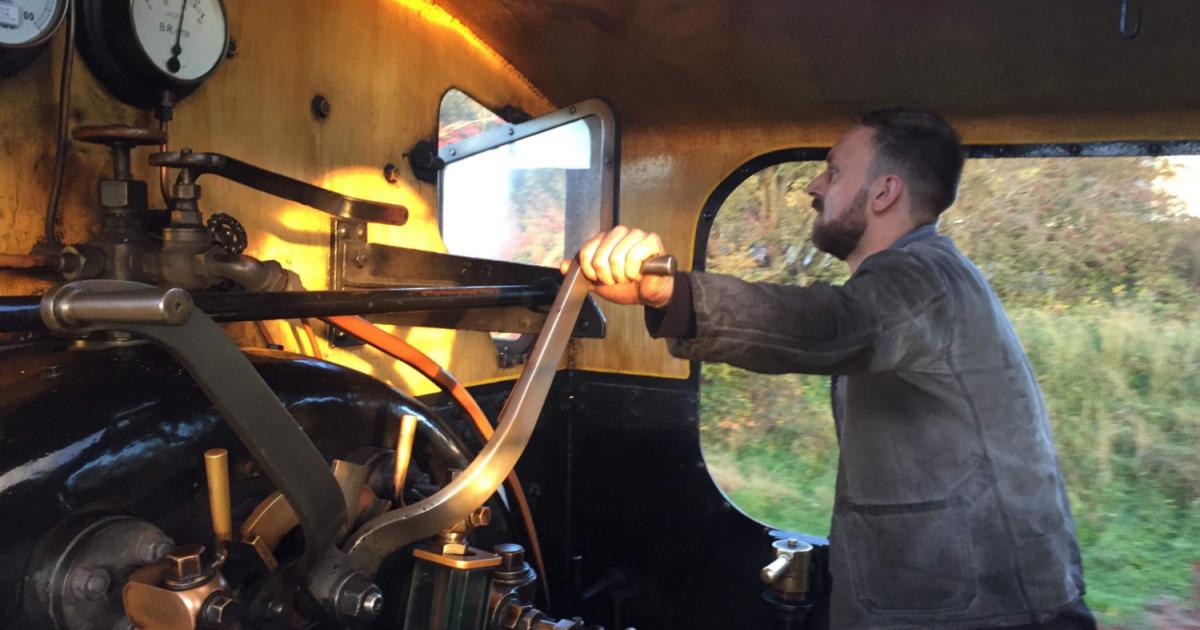
Tanfield Railway, known as the world’s oldest railway, has launched its new Steam Driver Experiences, offering a rare opportunity to operate one of its historic industrial locomotives.
Under the guidance of a qualified crew, participants will spend 40 minutes on the footplate learning how to drive the powerful engines, including models like Sir Cecil A Cochrane and Keighley Corporation Gas Dept No.2.
Tanfield Railway in County Durham, the world’s oldest railway, has launched new Steam Driver Experiences, allowing visitors to operate historic industrial locomotives and enjoy a unique hands-on heritage attraction. (Image: Tanfield Railway)
Euan Sharp, visitor experience lead at Tanfield Railway, said: “Our experience packages have been incredibly popular over the past few years, and the response from the public has been nothing short of fantastic.
“However, the Steam Driver Experience is the one we’ve been working so hard to offer, and I’m thrilled it’s finally here.
Advertisement
“It provides a true, hands-on experience of our industrial railway heritage, and you never know, we might even get a few more volunteers out of it too.”
These rugged locomotives, built for industrial work rather than speed, were manufactured by historic Tyneside firms Robert Stephenson and Hawthorn Leslie, capturing a piece of the North East’s industrial legacy.
Participants will wear traditional footplate attire, including a flat cap and boiler suit, and will be taught how to master the regulator and tackle the steep 1-in-40 gradients that have tested engine crews for generations.
Tanfield Railway in County Durham, the world’s oldest railway, has launched new Steam Driver Experiences, allowing visitors to operate historic industrial locomotives and enjoy a unique hands-on heritage attraction. (Image: Tanfield Railway)
The experience also includes a complimentary day of unlimited train travel for the participant and a guest, plus a Tanfield Railway goody bag.
Advertisement
Sessions are currently scheduled for May 25, July 5, August 1, and August 31.
Participants must be aged 21 or over and meet basic fitness requirements to safely enter and operate the locomotive cab.
The Next Kit Table Lamp has amassed hundreds of 5/5 star reviews with many shoppers praising the ‘gorgeous’ design and wide range of colours
This article contains affiliate links, we will receive a commission on any sales we generate from it. Learn more
Advertisement
A well-chosen lamp can quietly transform a room, adding both warmth and character without the need for a full redesign. It can be placed on a bedside table or tucked into a cosy corner and it’s one of the simplest ways to effortlessly elevate your home.
The Next Kit Table Lamp does exactly that, blending practicality with a clean, contemporary look. The table lamp is priced at £22 and is designed with a 50% metal and 50% textile construction.
What sets it apart is its touch functionality – no switches to fumble for in the dark, just a simple tap to turn it on or off. It’s a small detail, but one that makes a noticeable difference in everyday use, especially in bedrooms where ease and comfort matter most.
The table lamp is available in 10 different colours, it’s easy to find a version that complements your space, whether you lean towards neutral tones or something a little bolder. The lamp is described as an accessible way to refresh your décor without overthinking it.
Advertisement
The champagne gold version has amassed hundreds of five-star reviews praising its lightweight feel, stylish design and convenience, it’s clear why this lamp has become a popular choice.
One shopper said: “Beautiful lamp. Lightweight, modern and stylish, just right for my bedside tables. No fumbling around in the dark trying to find the switch, just gently tap to light up. Highly recommended.”
Another said: “I am pleased with this touch on/off lamp. The colour matches the scheme in the bedroom that has been decorated. It is exactly the right shade.”
Advertisement
Whereas one thought: “Really nice lamp but would have preferred a taller base small dumpy lamp colour great.”
Regardless, another review of the Next lamp said: “I bought two of these lamps a few weeks ago. They look very nice in my freshly decorated bedroom. The lamps are easy to turn on and off, all you do is touch the rim. They look more expensive and really smart in person.”

























































You must be logged in to post a comment Login