It comes as many Brits are worried their flights in May and early summer could be cancelled across numerous airlines, due to concerns of fuel shortages caused by the current Middle East conflict.
Supplies of jet fuel (which is used to fly planes) from the region have been disrupted since the US-Israel’s war with Iran because of Iran’s effective closure of the Strait of Hormuz, a critical international shipping route.
This has led to soaring prices and warnings that flights could be affected because of Europe’s reliance on fuel imports from around the world.
Advertisement
easyJet issues flight update to UK passengers amid fuel shortage fears
However, for those who are planning on flying with easyJet over the next few weeks, there is no need to worry, as at present the airline is seeing “no disruption to flights” and doesn’t plan on making “any changes” to its flight schedule.
A spokesperson for easyJet which is headquartered at London Luton Airport (LTN) told Newsquest today (April 21): “We are currently seeing no disruption to flights and don’t plan to make any changes to our flying schedule”.
It appears the airline is remaining positive about its flights going into summer too, specifically in July, as someone asked @easyJet on X: “@easyJet I have a holiday package booked with you in July, with the fuel shortage looking ever more likely, is this looking likely to cancelled?”
easyJet responded: “We understand that you’re concerned about the status of your holiday.
Advertisement
“We are currently not seeing disruption to jet fuel supply and engage with fuel suppliers and government to monitor the situation.
“We have no plans to make changes to our flying programme.”
TUI confirms it is ‘monitoring’ jet fuel shortages
Elsewhere, TUI has said it is “monitoring” jet fuel shortages as a result of the US-Israel and Iran war.
The update from the budget airline comes after another concerned passenger asked the question on social media regarding their holiday in May.
They said: “With the reported jet fuel shortages, are you expecting holidays from May 1 to be affected?”
Advertisement
TUI replied: “We’re closely monitoring the developing situation in the Middle East and its potential impact on global aviation fuel supplies.
“At present, we’re not anticipating any immediate disruption to our flight schedules or holiday programmes from fuel shortages.”
Earlier this month, a trade body for European airports warned over a “systemic” shortage of jet fuel ahead of the peak summer season if the Strait of Hormuz does not reopen in the weeks ahead.
Welcome back to #TUITriviaTuesday! Which Nordic country is famous for fjords, trolls and vikings! 🔍 Hint…it is west of Sweden 🧭
Airports Council International (ACI), which represents more than 600 airports, wrote a letter to the European commissioners for energy and transport and tourism.
The body’s director-general Olivier Jankovec wrote in the letter: “At this stage, we understand that if the passage through the Strait of Hormuz does not resume in any significant and stable way within the next three weeks, systemic jet fuel shortage is set to become a reality for the EU.
“The fact that we are entering the peak summer season… is only adding to those concerns.”
Which airline are you due to fly with, in the coming weeks? Let us know in the comments below.
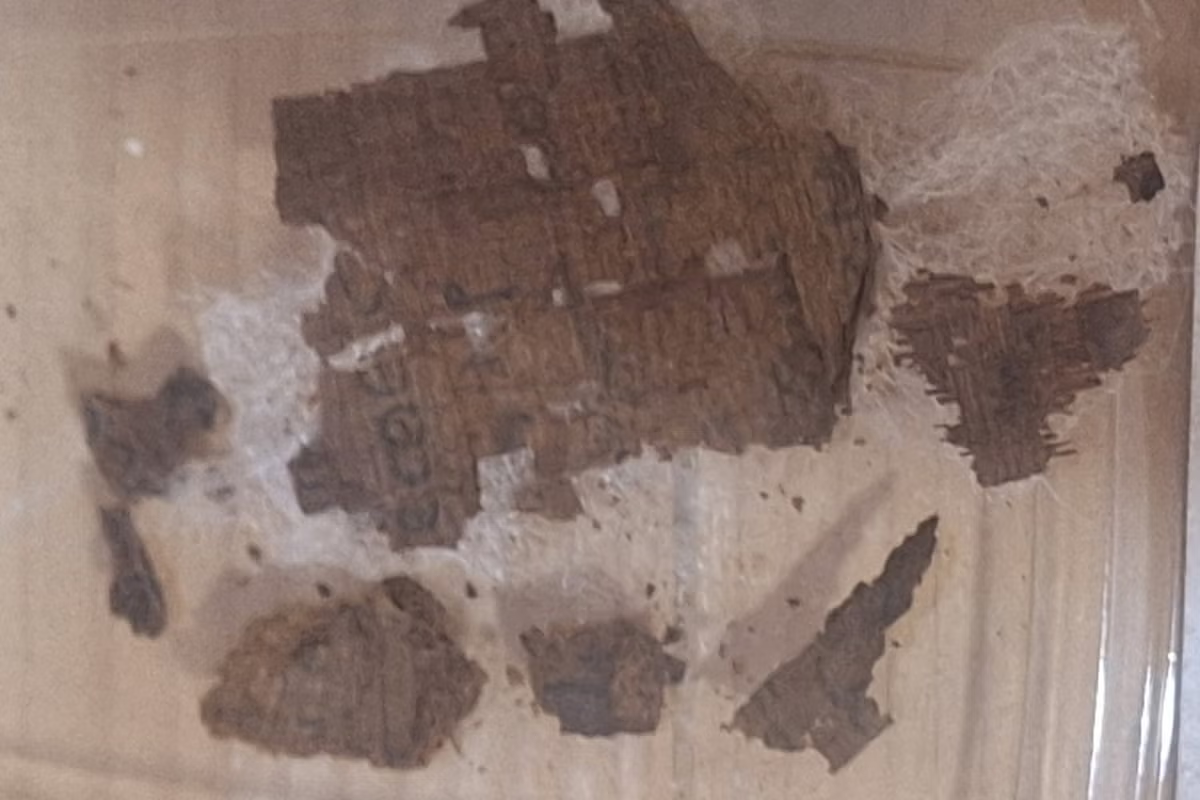
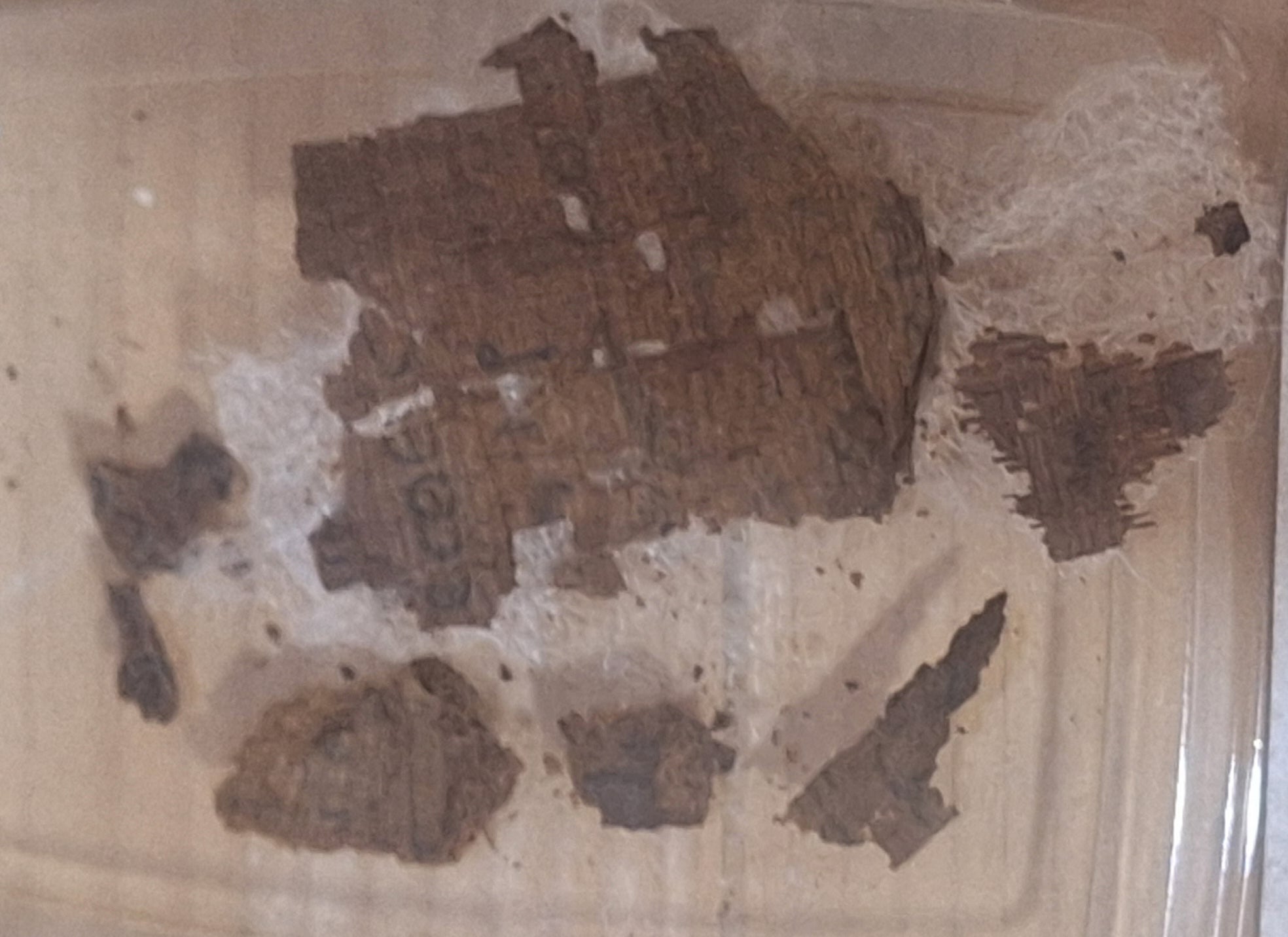
Archaeologists have found a papyrus copy of Homer’s Iliad in the gut of an ancient Egyptian mummy, the first time ever that a Greek literary text has been found incorporated into the preservation process.
The discovery has big implications for our knowledge of funerary practices and religious life in ancient Egypt.
The papyrus fragment was discovered in the abdomen of a mummy buried in a Roman-era tomb in Oxyrhynchus around 1,600 years ago.
Oxyrhynchus, known in the Pharaonic times as Per-Medjed, was one of the most important cities of Greco-Roman Egypt. Its remains are in the present-day town of Al-Bahnasa, about 190km south of Cairo, next to the branch of the Nile known as Bahr Yussef.
Advertisement
Researchers from the Institute of Ancient Near East Studies at the University of Barcelona found the mummy during a recent excavation campaign carried out between November and December 2025.
They found the mummy featured an unusual element, a papyrus placed on the abdomen as part of the embalming ritual.
Egyptian mummies from this period have previously been found to carry papyri written in Greek, but they have all carried text of magical or ritualistic content.
Papyrus containing Homer’s ‘Iliad’ inside the Roman-era mummy (University of Barcelona)
The discovery of the Iliad papyrus marks the first time that a Greek literary text has been found in the embalming context, researchers note.
The epic poem, divided into 24 books, is attributed to Homer and dates back to 800BC.
Advertisement
It mainlyfocuses on the Trojan War and the heroic deeds and tragic fate of Achilles, the mightiest warrior of the Greek army.
The poem unfolds a few weeks into the final year of the war, depicting the wrath of Achilles after he’s slighted by the Greek commander Agamemnon, delving into themes of pride, fate, honour, and mortality.
It combines elements of ancient Greek culture and mythology, providing valuable insights into the values of the ancient Greeks, continuing to be relevant even in modern times, inspiring countless adaptations.
The archaeological site in Oxyrhynchus (University of Barcelona)
The identified Iliad text in the recent dig belongs to the catalogue of ships in Book II of the epic poem, researchers say.
It contains a famous passage listing the Greek forces massing before Troy.
Advertisement
Researchers said they were unsure why this particular Greek text was chosen for the mummification process.
Roman-era mummification in Oxyrhynchus combined traditional Egyptian, Greek, and Roman customs.
Ancient Egyptian priests of the time focused on preserving bodies for over 40 days, using natron salt to dehydrate them and wrapping them up in linen.
Instead of using traditional canopic jars to preserve organs, they preferred to pack the body with preserved materials along with papyri containing Greek literature sealed with clay inside the chest or pelvic cavity.
Advertisement
One of the tombs found at Oxyrhynchus (University of Barcelona)
Coffins and wrappings frequently displayed a mixture of Egyptian and Roman motifs.
“This is not the first time we have found Greek papyri, bundled, sealed, and incorporated into the mummification process, but until now, their content was mainly magical,” Ignasi-Xavier Adiego, a professor in the Department of Classical, Romance and Semitic Languages, said.
“Furthermore, it is worth noting that since the late 19th century, a huge number of papyri have been discovered at Oxyrhynchus, including Greek literary texts of great importance, but the real novelty is finding a literary papyrus in a funerary context.”
So far, excavations at Oxyrhynchus have revealed three limestone chambers containing Roman-era mummies and decorated wooden sarcophagi.
Previous campaigns in the ancient city led to the discovery of 52 Ptolemaic-era mummies, of which over a dozen had “golden tongues”, a symbol of preparation for the afterlife.
Hull and East Riding Friends of the Earth (HERFoE) has launched Tree Stories, a new project encouraging residents to reconnect with the living landscape in their communities.
Backed by £17,090 from the national lottery community fund, the two-year programme aims to inspire people to care for existing trees, support new planting, and explore the ways trees shape daily life.
Lauren Saunders, project artist and climate artist at HERFoE, said: “Tree Stories is about making space for many different ways of noticing, valuing and caring for trees.
“Whether your starting point is science, creativity, memory or everyday experience, this project invites people to build deeper relationships with the trees that shape our shared landscapes.”
Advertisement
Members of the public are invited to tell the story of a tree in their community, sharing creative responses, ecological observations, memories, historical research or hopes for new plantings.
A previous creative commission by Hull and East Riding Friends of the Earth – “Where beings are” (Image: Lauren Summers)
These stories will be added to a growing online ‘Digital Forest’ – an interactive map showcasing tree stories across the East Riding and Kingston-upon-Hull.
The project builds on local surveys highlighting strong public support for more green spaces, alongside HERFoE’s ongoing work to protect trees.
Originally conceived as an ‘adopt-a-tree’ scheme, it has grown into a broader community effort that blends creative, scientific, heritage and community-led approaches to nature connection.
Advertisement
Submissions are welcome in text, images or audio-visual formats, and can be sent online or by post.
To ensure the project is accessible, key resources are available in Romanian, Polish, Kurdish (Sorani), and Arabic through a partnership with Hull-based translation service Language Is Everything.
The programme will include free workshops, talks, walks and community events.
These will offer opportunities to learn about tree care and planting, while also exploring artistic and cultural connections to trees.
Advertisement
Friends of the Earth member Hilary picking litter from a local wooded area in East Yorkshire (Image: Supplied)
Lauren Saunders said: “Tree Stories invites people to slow down, notice and build relationships with the trees they live alongside – to see them as part of our shared community.
“Through observation, creativity, curiosity and shared knowledge, we can strengthen our collective responsibility for the places we call home.”
Tree Stories launches today, which is also Earth Day, Wednesday, April 22, 2026.
HERFoE is inviting community groups and public-facing organisations across the East Riding and Kingston-upon-Hull to take part, whether tree-focused or not.
Advertisement
Partners will be able to connect with new audiences, raise the profile of their work and contribute to a growing, county-wide celebration of trees and community action.
A dedicated Partner Pack and digital resources will be available to help organisations get involved.
US Vice President JD Vance will again lead the American delegation
Donald Trump says he ‘expects to be bombing Iran’ and that the US military is ‘raring to go’ as JD Vance departs for eleventh‑hour talks in Pakistan.
Advertisement
The US President told CNBC he had no intention of prolonging the two‑week ceasefire with Tehran as the deadline approaches, insisting Washington now holds the upper hand and is “going to end up with a great deal”.
Fresh negotiations in Islamabad are already overshadowed by uncertainty, set against a tense stand‑off in the Strait of Hormuz that continues to disrupt global shipping and unsettle energy markets.
The effective closure of the critical supply route during the conflict has inflicted a global economic shock and sent energy prices soaring.
Advertisement
UK Foreign Secretary Yvette Cooper, who has been holding discussions with counterparts aimed at safeguarding the strategic waterway, has described it as “a critical diplomatic moment” in the crisis.
US Vice President JD Vance will again lead the American delegation while Iran’s parliament speaker Mohammad Bagher Qalibaf has been tipped as Tehran’s chief negotiator.
The timing of the talks has not been confirmed, and the White House said Mr Vance was still in Washington on Tuesday afternoon.
Threatening to resume strikes if a deal is not struck with Iran soon, Mr Trump said: “Well, I expect to be bombing because I think that’s a better attitude to go in with. But, you know, we’re ready to go. I mean, the military is raring to go.”
Advertisement
Mr Trump also said he did not want to extend the current ceasefire, which he said runs out on Wednesday. He told CNBC: “I don’t want to do that. We don’t have that much time.”
The president added: “What I think is that we’re going to end up with a great deal. I think they (Iran) have no choice. We’ve taken out their navy, we’ve taken out their air force, we’ve taken out their leaders.”
He again claimed “regime change” and said those now in charge were “much more rational”. Mr Trump said: “I think we’re in a very strong negotiating position to do what other presidents should have done during a 47-year period.”
Advertisement
Meanwhile, Mr Qalibaf has accused the US president of seeking to turn the negotiating table into a “table of surrender”. “We do not accept negotiations under the shadow of threats,” he wrote in an X post and said Iran was preparing “to reveal new cards on the battlefield”.
Ensure our latest stories always appear at the top of your Google Search by making us a Preferred Source. Click here to activate or add us as your Preferred Source in your Google search settings.
In the UK, Prime Minister Sir Keir Starmer held talks with ministers and officials on the Government’s work to ease pressures on the public caused by the conflict.
The Middle East Response Committee discussed ongoing contingency planning such as work with fuel suppliers, airlines and international counterparts, a Government spokesperson said.
Advertisement
They also talked about diplomacy to support negotiations between the US and Iran, military planning as part of the post-war mission to keep the Strait of Hormuz open co-led with France, and wider measures such as efforts to weaken the link between gas and electricity prices.
The Xbox has a serious identity crisis (Microsoft)
As Game Pass undergoes a major overhaul and Project Helix edges closer to release, GameCentral asks whether the glory days of the Xbox 360 will ever come again.
When Phil Spencer was still in charge of Xbox, he used to balk at the idea that the Xbox 360 was the golden age of the brand, arguing that there are more people playing Xbox today (by which he meant the console, PC, and streaming) than there ever was in the late 2000s. But that was missing the point. The Xbox 360 maintains its reputation as the best Xbox console for many reasons but the most important is that it was the only time Microsoft was leading the conversation in the industry.
The Xbox 360 sold less than both the PlayStation 3 and Wii and yet still most people refer to that generation as the Xbox 360 era. That’s not because anyone cares how many it sold but because it set the pace for the generation, in terms of introducing new ideas – from indie downloads to Achievements – and had better first party support than Sony, while being the lead format for almost all third party games.
It’s a common argument that competition benefits everyone and the Xbox 360 is clear proof of that. Without Xbox keeping Sony on their toes, the introduction of online features to PlayStation formats would have been much slower. The PlayStation 4, in particular, was a pointed response to the lessons learned from Xbox and the console’s outstanding first party line-up would likely have never existed without its stimulus.
Advertisement
Despite all Microsoft’s money they never again had that sort of influence over the games industry, with the Xbox One selling less than the Xbox 360 and the Xbox Series X/S less than both. Something had to change and inevitably that meant replacing Spencer, with new boss Asha Sharma – who has no experience in the games industry and barely seems to have played any games before.
That should not count against her though, as many execs have little or no experience in game development (reportedly, legendary Nintendo boss Hiroshi Yamauchi could barely use a controller) and Spencer being a self-avowed gamer did not seem to help anything.
Expert, exclusive gaming analysis
Sign up to the GameCentral newsletter for a unique take on the week in gaming, alongside the latest reviews and more. Delivered to your inbox every Saturday morning.
Advertisement
Sharma’s first few months on the job have mostly consisted of mood talk, as she insists that she won’t ‘chase short-term efficiency or flood our ecosystem with soulless AI slop’, despite that being precisely what everyone expects from Microsoft at the moment.
Everyone loves the Xbox 360 (Microsoft)
It’s easy to assume that the next gen Project Helix hardware was designed with AI in mind, given Microsoft’s attachment to the technology and the threat of not just Gaming Copilot but generating whole games with AI. In addition, Sharma’s background is with generative AI, so backing away from it completely seems very unlikely.
The first part of her statement is just as important, as one problem with Xbox since the very beginning has been short-termism. Perhaps blinded by its own wealth, Microsoft is always looking for a short cut and time and again has proven itself happy to rip up the roots of the business just to chase the latest trend.
Its support for the original Xbox was cut short as soon as they realised it wasn’t an instant hit, the Xbox 360’s time in the sun lasted only a scant few years before the introduction of Kinect (an attempt to copy the Wii) and the deterioration of its first party studios, the Xbox One started its life trying to be anything but a games console, and the Xbox Series X/S bet everything on Game Pass… and lost.
Advertisement
Game Pass has not worked out how Microsoft expected (Microsoft)
The big annoucement this week was that Game Pass prices are being cut, following a previous increase, and that Call Of Duty will no longer be part of it from day one. That’s a sensible U-turn, but there’s still no sign that Microsoft has accepted the fact that most people have no need for a video game subscription service and don’t want to pay for games that way.
With rumours of another massive round of lay-offs coming up, it’s unclear what other changes Sharma will make. The return of Halo and Gears Of War will be important steps forward, but they were initiated before she started. There’s been talk of her bringing back console exclusives but that seem very unlikely given how small the Xbox Series X/S userbase is and how unlikely it is Project Helix will do better (not least because, according to Microsoft, it will be very expensive).
For a long time now, it’s seemed as if Microsoft is just treading water, aware that they are unable to break Sony’s stranglehold on the games market. It often feels like they’re just biding their time until video game streaming becomes practical for everyone – at which point they will have an instant and potentially unassailable advantage over their rivals. And yet playing the waiting game doesn’t seem to be Microsoft’s style.
The company’s impatience is most obvious in its constantly changing marketing focus, which ping pongs from one feature to another with the attention span of a bored toddler. Sharma was praised for killing the ridiculous ‘This is an Xbox’ campaign, almost as soon as she took over, but at the same time that means yet another switch in brand messaging.
Another failed marketing campaign (Microsoft)
There are some things that never change at Microsoft, including the way current and previous execs always seem to talk as if Xbox is a market leader, despite the fact that it’s very clearly not. Sharma immediately fell into this trap and while it wouldn’t matter so much if it was just an act, most execs seem to end up believing their own hype, which then goes on to adversely influence their decision making.
Xbox’s other big problem has been its inability to appeal to anyone outside of North America and the UK. Occasionally, it half-heartedly acknowledges the importance of Japan but it has never had the exclusive games or publisher relationships necessary to succeed there. Continental Europe has been much the same, with Xbox’s marketing attempts amounting to nothing more than the occasional FIFA bundle (‘They like soccer there, right?’) while they give the job of translating the Xbox dashboard and documentation to AI, with predictably incoherent results.
Advertisement
By this point, these failings seem baked in at Microsoft but the biggest issue for Sharma is the simple question of what is the purpose of Xbox? What is its trying to do or be? As a console format it’s never been less popular and its ecosystem offers little tangible appeal to anyone else. People can be drawn into it via the right kind of exclusives but, as mentioned, that prospect seems unlikely.
This year’s Forza Horizon 6 will be a huge hit on PlayStation 5, and there’s a chance the Fable reboot will be too, but that doesn’t make Xbox any different from a third party publisher like EA or Ubisoft. Which is fine, as long as you’re making money, but Microsoft’s aspirations have always been greater than that.
They got into the games industry to prevent Sony from taking over the living room with PlayStation, a concern that smartphones rendered irrelevant. So what is the goal now? Xbox Game Studios is already the biggest games publisher in the West, simply by virtue of owning Activision Blizzard, but so what?
Advertisement
Despite that, Xbox’s influence on the games industry has never been more insubstantial. Neither friend nor foe seems to care what they do and, unlike in the Xbox 360 days, they have no big ideas that everyone’s trying to catch up with and implement themselves.
That is what Is needed though and the worst case scenario is that they’ve convinced themselves it’s AI. One can only hope that the response to DLSS 5 has disabused them of that, but if they have seen sense they still need something else. Not just a selling point but a sign that they understand the games industry and its future better than anyone else.
If you’re a PlayStation owner you should hope they come up with something, so that they can in turn light a fire under an increasingly complacent Sony. Competition is good for the industry, but Xbox has not provided any for a worryingly long time.
The Tobacco and Vapes Bill will now be put forward for Royal Assent, giving ministers new powers to regulate tobacco, vaping and nicotine products
Kirstie McCrum, Ella Pickover and Will Meakin-Durrant
20:19, 21 Apr 2026
Legislation designed to prevent anyone born on or after January 1, 2009, from ever legally purchasing cigarettes has passed through the UK Parliament.
The Tobacco and Vapes Bill will now proceed to royal assent in what Health Secretary Wes Streeting has described as a “historic moment for the nation’s health”. The Bill has a four-nations approach, meaning it will be enforceable in Scotland, England, Wales and Northern Ireland.
Advertisement
The Bill was crafted to establish a “smoke-free generation”, and, once it receives the royal seal of approval, will grant ministers fresh powers to control tobacco, vaping and nicotine products, including their flavours and packaging. Both the Commons and Lords agreed on the final version of the Tobacco and Vapes Bill, reports Devon Live.
Health minister Baroness Merron told the Lords on Monday: “This afternoon marks the end of this Bill’s journey throughout Parliament. It is a landmark Bill, it will create a smoke-free generation.”
Mr Streeting said: “This is a historic moment for the nation’s health as the Tobacco and Vapes Bill ends its journey throughout Parliament. Children in the UK will be part of the first smoke-free generation, protected from a lifetime of addiction and harm.
“Prevention is better than cure – this reform will save lives, ease pressure on the NHS, and build a healthier Britain.”
Advertisement
Ash Scotland said: “The rising age of sale proposal to stop future generations from becoming addicted to tobacco will mean that, from 1 January 2027, it will be illegal to sell tobacco products to anyone born on or after 1 January 2009.
Hazel Cheeseman, chief executive of Action on Smoking and Health (ASH), said: “This is a decisive turning point for public health. The end of smoking, and the devastating harm it causes, is no longer uncertain – it’s inevitable, and the focus now is on how soon we get there.
“Over the past half-century, smoking has claimed millions of lives across the UK, leaving a legacy of preventable pain and loss. Ending its harm is a lasting gift to generations ahead and families everywhere can now feel secure that their children can grow up free from the harm of tobacco.”
Sarah Sleet, chief executive at Asthma and Lung UK, said: “This landmark piece of legislation will transform the nation’s health. A smoke-free future means the tobacco industry will no longer be able to wreak havoc on the lungs of the next generation.
Advertisement
“The Bill also introduces desperately needed restrictions on where vapes, cigarettes, and heated tobacco products can be used, protecting vulnerable people around schools and outside hospitals.”
Michelle Mitchell, chief executive officer at Cancer Research UK, said: “Thanks to decades of research and campaigning, the Tobacco and Vapes Bill has secured full parliamentary approval and is set to become law in the UK. This is a historic achievement that will shield our children from the devastating grip of tobacco addiction and help to put an end to cancers caused by smoking.
“The first smoke-free generation is now within reach.”
Uphall Councillor Tony Boyle told the meeting the feeling within the community was the proposal amounted to a “land grab”.
Plans by a West Lothian Church to run a village community centre have been put on hold after councillors raised doubts about public access to the building.
Advertisement
Uphall Councillor Tony Boyle told a meeting of the Asset Transfer Committee that the Community Council had already had to find an alternative venue for their meetings.
And he told the meeting the feeling within the community was the proposal amounted to a “land grab”.
Council officers have recommended a Community Asset Transfer of Uphall Community Centre to a new trust formed as a joint team of the former management committee and the King’s Church West Lothian, an evangelical church.
No representatives of either group turned up at a meeting of the Asset Transfer Committee in Livingston to promote their plan.
That absence prompted surprise and comment from across the political spectrum of a Conservative, Labour and SNP councillors.
Conservative Alison Adamson asked: “Is there any reason why there’s no representatives of Uphall community centre or the King’s Church here today?
“Normally with these types of applications we have the applicant to speak up about what they’re asking for. Were they aware they could make representations in person?
Advertisement
Martin Thomson, a Business Growth Adviser with the council said the applicants “were very much aware” they could attend but had decided not to.
He added: “We have had recurring monthly meetings with them and officers have been satisfied. The applicant did have the opportunity but decided not to.”
An officer report to the committee said the offer from the joint trust: “is considered to represent the best available option for the use of this property. There are considered to be no reasonable grounds for refusing that request.
Advertisement
“The committee is therefore recommended to approve the community asset transfer request submitted for the Uphall Community Centre subject to the conditions.”
Councillor Tony Boyle proposed delaying a decision until questions on the future running of the community centre, which had been initially posed by fellow ward member, the SNPs Tony Carlin, could be answered.
Councillor Carlin had questioned some of the proposed figures about projected income at the centre and future employment plans.
Councillor Boyle pointed out that there were local fears that some in the community could lose access to the hall in Strathbrock Place.
He told the meeting that the local community council had already had to secure another venue for its meetings. “The community council were told there was no space for them at the centre,” he told the meeting.
Councillor Boyle said that people at a public meeting to discuss the future of the building did not realise what the potential changes would mean.
He added: “What I am getting from the community is that they think this is a land grab”.
Advertisement
Cllr Carlin said: “I echo what Tony is saying and I’m also disappointed there’s no representation from the applicant because some of the questions I have asked have been deflected because there’s no representation here.”
He expressed doubts about the business plan adding: “The margins are so tight, a £104 surplus in the first year? You could sneeze and lose that.”
Chairing the meeting, Labour councillor Craig Meek said he would move the recommendation to allow the asset transfer to proceed, as per the officer recommendation, but this won no support from fellow councillors.
Advertisement
After a short adjournment Councillor Boyle proposed a delay to request more information, and the hope the applicants could attend a further meeting.
Dan Dare: Pilot of the Future was a groundbreaking science fiction comic serial, first appearing in the UK comic The Eagle in 1950. Now, more than 75 years later, a reinvention of the series is underway, with the first new graphic novel written by Alex de Campi (Bad Girls and Madi) with art by Marc Laming (Marvel’s Star Wars). set for later this year.
As science fiction enthusiast and a scientist, I am excited to see what it will be like. I’m sure I’m not alone, as a number of scientists – including the late astrophysicist and cosmologist Stephen Hawking and planetary scientist Colin Pillinger – cited Dan Dare’s exciting vision of the future as instrumental in their decision to pursue science.
Daniel McGregor Dare is an officer in the Britain-based Interplanet Space Force (ISF). Faced with overpopulation and starvation on Earth, the ISF is tasked with exploring the possibility of crop production or trade on Venus. After initial problems, Dan Dare and a small group of colleagues are able to reach the surface of the planet. Once there, they find a habitable world with two native species: the friendly Therons, and the inimical Treens, with the latter led by their “super-scientist” the Mekon. Defeating the Mekon, and making arrangements for food supply with the Therons, Dare opens up the solar system, and ultimately the wider galaxy, to humanity.
While the concept of Dan Dare originated with a clergyman, Marcus Morris, its formative years and storylines were shaped by a very different man. Writer and artist Frank Hampson was known for the attention he paid to the science, working from detailed models and reference photographs. He gave thought to plausible design and stayed abreast of developing vehicle technologies and concepts, while also working with a scientific advisor.
Advertisement
In an early story, “The Red Moon Mystery” (serialised in The Eagle in 1952), for instance, he had the character Professor Peabody explain planetary orbits, magnetic fields and spectroscopic biosignatures to a young audience. He also drew a sequence with accurate representations of the Royal Observatory at Herstmonceux in Sussex, and a character closely based on the astronomer royal of the time, Sir Harold Spencer Jones.
This level of precision both added to the verisimilitude of his stories and appealed to an enthusiastic audience that saw a bright future in space exploration, an audience that included budding scientists Hawking and Pillinger.
Sadly, the level of scientific accuracy in the series declined after Hampson’s departure, with writers introducing more bizarre aliens and unexplained interstellar travel. But its engagement, from the very beginning, with technical accuracy and scientific plausibility, continues in many ways and is also part of the reason for its longevity and why it remains relevant.
A new Dan Dare
Despite its many reinventions over the decades, much of this premise has remained unchanged. Dare has always represented humanity’s best, and is typically shown as an optimistic exemplar of bravery, chivalry and honour. The Kickstarter page for the new Dan Dare: First Contact novel makes it clear that the current creative team respects the character’s origins. As the new reboot’s writer Alex de Campi says:
Advertisement
if you are already a Dan Dare fan, there’s a ton of references to the classic stories as well as a sincere respect for Frank Hampson’s legacy from our entire creative team.
But like the 1990s graphic novel written by Scottish comic writer Grant Morrison or the 2010s audio dramas made by B7 Productions, there will be some changes in the story. For instance, these iterations have given more agency to Dare’s female scientist colleague Professor Jocelyn Peabody. They have also typically been darker and more cynical regarding the political or commercial interests funding human spaceflight.
Dan Dare is back! Wikimedia
The new Dan Dare team also acknowledge Hampson would have expected changes in scientific and contextual representation:
In First Contact, the science is updated, making Dan’s world one we can understand from our current point of view: a world of bickering oligarchs, broken nations, and climate disaster. The stakes are immediate: humanity is only just getting faster-than-light travel.
As I’ve discussed in my own work on the relationship between science and science fiction, the stories have always reflected our changing understanding of solar system habitability. Already by 1950, scientific studies were making it clear that Venus was uninhabitable, although popular culture and even school textbooks often retained the older visions. As a result, more recent versions have tended to gloss over issues such as the origin of the Treens, sometimes relocating their civilisation to cloud cities high in the atmosphere of Venus.
The changing science shouldn’t be a surprise: the role of science fiction has always been to mirror and extrapolate as much from the sociopolitical concerns of a time as from its technology and science. Good science fiction has always balanced accurate science with fine storytelling and a critical eye towards social trends and their logical extremes. The new Dan Dare project will do so for a new audience, adding to a remarkable eight-decade long record of popular engagement with space science.
A BBC newsreader blacked out during the 2011 London Marathon after becoming dehydrated
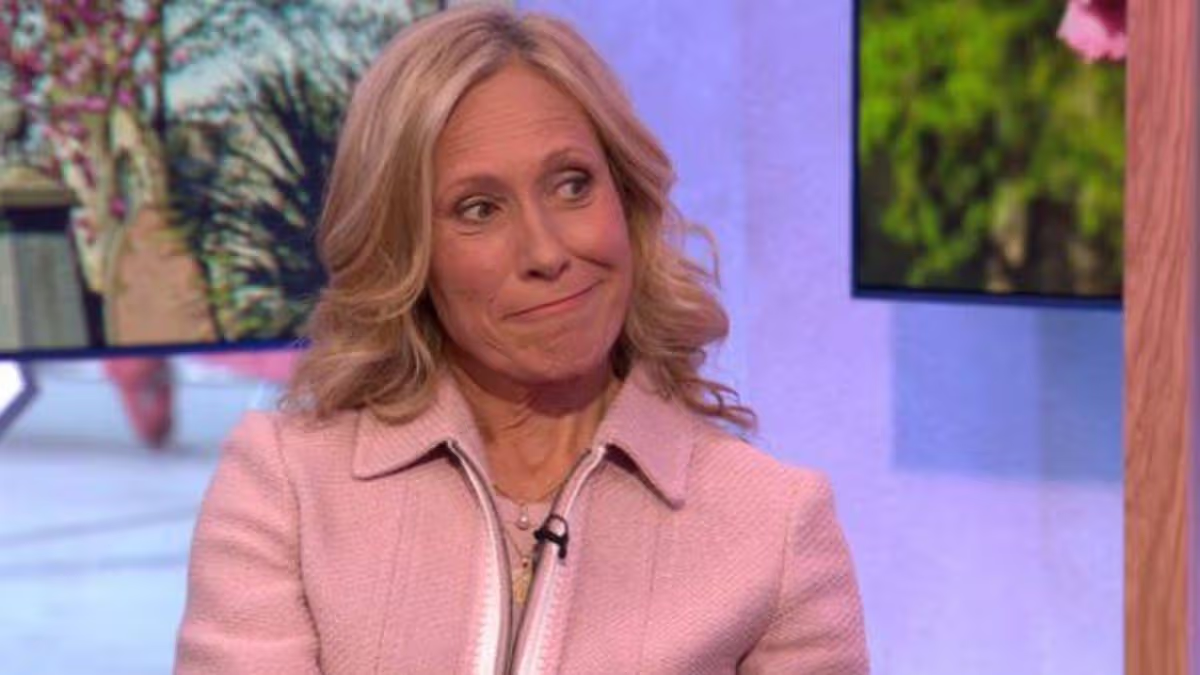
BBC presenter Sophie Raworth has said it was “awful” blacking out during the London Marathon.
Advertisement
The newsreader recalled the ordeal ahead of this year’s London Marathon, which she is gearing up to take on once more, competing for the 13th time on April 26.
During an appearance on The One Show, Sophie revealed that she had been aiming to complete her debut 26.2-mile race in under four hours, but became dehydrated and collapsed just a few miles from the finish line. She told the BBC show’s hosts Alex Jones and Roman Kemp she ended up having oxygen in a medical tent, reports the Mirror.
The presenter — who didn’t take up long-distance running until she was 42 — explained that when she first attempted the race in 2011, conditions were “really hot” and that she “didn’t drink enough water”.
“And I got to about mile 24, and I blacked out,” she said. “I don’t actually remember quite what happened, but I did black out.”
“And I woke up about 20 minutes later with people putting an oxygen mask on and people pouring ice all over me. And I had a temperature of 42 Celsius, and it was awful, actually.
“And I had a good two hours with St John Ambulance, who were amazing, and looked after me.”
Advertisement
She continued: “And then they said, ‘We’ll put you on a bus back to the finish.’ And I’d raised all this money for charity. I was like, ‘I can’t come on a bus back to the finish. I have to finish this thing.’ So I made them let me walk. So I walked to the finish line, and it was six hours, 22 minutes, and 57 seconds was my first marathon time.
“But what it taught me was that if you fall, if you crash like I did, if you just you can pick yourself up and get back on it again. Because I went back a year later, did the training again, and I came under four hours, which is what I was trying to do that year.”
Host Alex noted that Sophie had shared the medical tent with Kaiser Chiefs’ Ricky Wilson.
“Yeah, so that was his first marathon too, and his last, actually, because he also collapsed,” Sophie revealed.
The star had been completely unaware of this until she spotted the musician discussing the incident on television, during which he mentioned that she had been brought into the tent while he was present.
She recalled: “And then he started saying, ‘Oh, yeah. I mean, honestly, I saw things no man should ever see.’ And I was out there going, ‘Oh, no’.”
The star admitted it took her several years to “pluck up the courage” to ask what he had witnessed, and that while penning her new book Running On Air she rang him to ask. However, she teased: “I’m not going to tell you here, now!”
Advertisement
The One Show airs on BBC One from 7pm on weekdays.
Pollen seasons across Europe are now one to two weeks longer than they were in the 1990s and heat-related deaths have risen across almost the entire continent, according to a major report.
Out of all European regions monitored by researchers, around 99.6 per cent saw heat-related deaths rise between 2015 and 2024 compared with 1991-2000, with an average increase of 52 extra deaths per million people each year.
The hours each year when outdoor physical activity carries a risk of heat illness have grown by 88 per cent compared with the 1990s, and heat exposure among infants and people over 65 has risen by 254 per cent in terms of person-days.
Advertisement
Across the workforce, heat is estimated to be cutting labour supply by around 24 hours per worker per year compared with historical baselines, with outdoor workers in construction and agriculture among those most exposed.
The potential for dengue transmission in Europe has also increased by 297 per cent since 1981-2010, contributing to a rise in local outbreaks of the mosquito-borne virus, which was once almost entirely confined to travellers returning from tropical regions. The tiger mosquito that carries it has been expanding its range northward as European summers grow warmer.
The findings were published in the 2026 Europe report of the Lancet Countdown on health and climate change – a collaboration of 65 experts from research institutions and United Nations organisations published in the Lancet Public Health journal.
(AFP/Getty)
The health burden falls unevenly across income groups, researchers warned. Low-income households are 10.9 percentage points more likely than middle-income households to experience food insecurity driven by heatwaves and droughts, and more than one million additional people were affected by moderate or severe food insecurity in 2023 compared with the annual average for 1981-2010. People in the most deprived areas face higher wildfire risks and have less access to green space.
Deaths linked to air pollution from burning wood and other biomass at home were 4 per cent higher in 2022 than in 2000, a rise the researchers attribute partly to growing use of wood as a heating source as energy prices have climbed.
Advertisement
“Climate change health impacts are already apparent in Europe, and these will accelerate without proper scaling up of adaptation measures and global mitigation efforts,” the authors wrote.
The report, however, acknowledges some progress.
Coal use and carbon intensity both fell in 2023, and renewables supplied 21.5 per cent of Europe’s electricity, up from 8.4 per cent in 2016. Clean energy investment reached €427 billion in 2023, 86 per cent higher than in 2015.
Despite committing to phase out such subsidies by 2025 in several international agreements, only Denmark has adopted a comprehensive national plan to do so. The report warns that unless others follow, progress toward 2030 net zero targets will be compromised.
“Unless the rest of Europe follows Denmark’s example, this setback will likely compromise reaching 2030 net zero goals,” the authors wrote.
Without stronger global action to cut emissions and better protect communities, the health harms documented will accelerate, the authors conclude.
“Redirecting financial flows to climate action is essential to reinforce Europe’s strategic direction and commitment to climate leadership. Part of these flows should finance the adaptation of low-income countries’ health-care systems, which currently receive very little funding for this purpose,” the authors wrote.
























































You must be logged in to post a comment Login