

Connect with us
DAPA Banner
DAPA Coin
DAPA
COIN PAYMENT ASSET
PRIVACY · BLOCKDAG · HOMOMORPHIC ENCRYPTION · RUST
ElGamal Encrypted MINE DAPA
🚫 GENESIS SOLD OUT
DAPAPAY COMING

NewsBeat

Switzerland reaches World Cup quarterfinals after shootout win over Colombia

Published

on

Switzerland reaches World Cup quarterfinals after shootout win over Colombia

VANCOUVER, British Colombia (AP) — Ruben Vargas converted his penalty and Switzerland advanced to the World Cup quarterfinals with a 4-3 shootout win over Colombia after a scoreless draw on Tuesday.

Switzerland will next face defending champion Argentina on Saturday at Arrowhead Stadium in Kansas City, Missouri. Argentina defeated Egypt 3-2 earlier in the day.

Switzerland had not reached the quarterfinals of a World Cup since hosting the tournament in 1954. And the Swiss were shorthanded Tuesday without young midfielder Johan Manzambi, who was injured in training on Monday.

Vargas, who has scored two goals in the World Cup, also left Monday’s training early but was available off the bench and came on in stoppage time at the end of regulation.

Advertisement

Colombia defender Davinson Sanchez’s penalty attempt hit the crossbar and Switzerland goalkeeper Gregor Kobel saved an attempt by Cucho Hernandez.

FIFA President Gianni Infantino was among those at BC Place, where the sellout crowd was overwhelmingly clad in yellow in support of Colombia.

Colombia failed to qualify for the last World Cup in 2022. The team made the quarterfinals at the 2014 tournament in Brazil, defeating Uruguay in the round of 16 before losing to the host country 2-1.

The Swiss reached the round of 16 at the past three World Cups but failed to advance with a smaller field of 32 teams.

Advertisement

The match was tightly contested by two teams with contrasting styles, the Swiss with a more organized approach and Colombia more attack oriented. Switzerland had a slight edge in possession.

Manzambi, a 20-year-old midfielder who plays for German club Freiburg, had three goals in the World Cup and was one of the tournament’s breakout stars. The Swiss were also without Luca Jaquez and midfielder Michel Aebischer.

Gustavo Puerta had the first good chance for Colombia with a shot from distance in the 21st minute that was pushed away by Kobel.

The Swiss got one of their best opportunities in the 30th with Fabian Reider’s blast at Camilo Vargas, who punched the ball down. Minutes later, Vargas smothered another attempt from Dan Ndoye.

Advertisement

The Swiss had a free kick in the 52nd minute, but Reider’s attempt curled around the wall and went into the side netting.

In the first extra time period, Jhon Lucumi’s header hit the cross bar and caromed away as Colombia put pressure on Kobel.

Colombia and Switzerland also met in the group stage at the 1994 World Cup in the United States, with South American team winning 2-0.

___

Advertisement

See more of AP’s World Cup coverage here

Source link

Advertisement
Continue Reading
Click to comment

You must be logged in to post a comment Login

Leave a Reply

NewsBeat

How Shakespeare’s The Tempest can help readers understand the hidden costs of AI

Published

on

How Shakespeare’s The Tempest can help readers understand the hidden costs of AI

In the 400 years since his death, William Shakespeare’s work has been used as a lens through which to interpret countless developments he could never have anticipated – from modern psychology and political theory to colonialism and climate change. His writing possesses an uncanny ability to illuminate nearly every facet of the human condition.

Yet, as a decolonial scholar and an AI researcher, we believe that Shakespeare’s plays are now beginning to illuminate something beyond that as well – the emergent forms of artificial intelligence that increasingly shape and challenge our understanding of what it means to think, act and be.

AI tools have rapidly become part of many people’s everyday lives. Yet relatively few probably consider the physical infrastructure that makes these systems possible. Each prompt we send is processed in distant data centres: vast facilities that generate responses by predicting the most likely sequence of words based on patterns learned from enormous datasets.

This dynamic of distant, unseen control recalls Shakespeare’s The Tempest, a play that offers a useful means of understanding how power operates through hidden infrastructures.

Advertisement

This article is part of Rethinking the Classics. The stories in this series offer insightful new ways to think about and interpret classic books and artworks. This is the canon – with a twist.


AI data centres are energy and resource intensive, often located far from the users they serve. In some cases, they are built in rural or marginalised regions where land and resources are more easily secured. For example, in the United States, a proposed bill, NCA 25-077, would establish the Mvskoke Technology and Innovation Park in eastern Oklahoma. This proposal sparked debate within the Mvskoke Nation, particularly around water usage and long-term trade-offs, which ultimately led to it being voted down.

Mvskoke Nation citizen Jordan Harmon and her friend Mackenzie Roberts, two prominent voices in the debate, pointed to these data centres’ “ravenous consumption of data and physical resources” and AI being used to “surveil and police people”. They consider this as “part of the legacy of colonialism and imperialism”. AI data centres are extractive endeavours, they argued, impinging on other aspects of a community’s life, such as water supply and land sovereignty.

Advertisement

The Tempest offers a stark warning of what happens if such endeavours are not reined in.

Prospero’s island and the politics of AI infrastructure

The play tells the story of Prospero, the exiled duke of Milan. He seizes control of a remote island and its inhabitants, including a creature named Caliban and the spirit Ariel. While the play ends with reconciliation and Prospero’s return to Milan, it has long been read by postcolonial scholars as an allegory of colonisation. Caliban’s prior claim to the island, “which thou tak’st from me”, resonates with contemporary struggles over land and resources.

Yet the parallels go further when considering how Prospero exercises power. His authority depends not only on physical domination but on his command of sorcery and manipulation. Both Ariel and Caliban are compelled to serve him – Ariel through enchantment, Caliban through coercion and emotional abuse.

Advertisement
Hervé Goffings performs Caliban’s monologue.

In this sense, Prospero’s magic mirrors the logic of modern AI systems, which extracts labour to transform human knowledge and creativity into outputs that appear detached from the people and environments that make them possible.

Prospero’s conjuring of a storm at the start of the play is equally revealing. The tempest is a spectacle of control, designed to disorient and reorder the world to Prospero’s advantage. Today’s AI expansion produces its own kind of storm: not only in the environmental strain of data centres, but also in the disruption of labour markets, as automation threatens certain forms of work while concentrating power in the hands of a few corporations. Like Prospero’s magic, these transformations obscure the decisions and interests that drive them.

In the final act of The Tempest, Prospero relinquishes his magical power only after it has enabled him to recover his dukedom, orchestrate reconciliation, and secure dynastic stability, implying that his renunciation is prompted less by ethical transformation than by the completion of his political objectives.

The play largely centres on Prospero’s authority, in which power was his to give, instead of offering recognition of the native inhabitants as agents capable of self-governance. A similar dynamic is echoed in the discourse surrounding AI, where corporations are unlikely to surrender control unless it becomes advantageous to do so.

Advertisement

The Mvskoke Nation has demonstrated that it is not futile for Indigenous citizens to assert their sovereignty and maintain stewardship of their lands by exerting pressure that makes the continued development of data centres more costly. This comparison highlights that, unlike the idealised resolution of the play, real-world change is rarely driven by the goodwill of those in power. Instead, it often depends on the efforts of communities to make continued control less advantageous and to demand accountability

From Caliban to contemporary struggles

Postcolonial scholars have often compared the relationship between Caliban and Prospero to that between colonised and coloniser. This can be seen in novelist Viet Thanh Nguyen’s writing, where the colonised are called the “descendants of Caliban”. Jamaican-born poet Safiya Sinclair’s literary manifesto articulates similar sentiments where she compares herself to Caliban.

Nguyen and Sinclair are among the thinkers and authors concerned with the impact of colonisation and the role of language in shaping colonial power. Colonisation can take many forms – the rise of data centres on lands that do not belong to multinational corporations is just one of them.

Rather than treating AI infrastructure as inevitable, the debate within the Mvskoke Nation is a reminder that its development is a matter of choice. If data centres are to exist on Indigenous lands, they must not replicate extractive models that prioritise corporate gain over community wellbeing.

Advertisement

Caliban’s experience of loss and coercion under Prospero’s control need not be the template of the historical or future trajectories of Indigenous nations such as the Mvskoke Nation. As communities assert control over their digital futures, they challenge us to rethink who AI is for and who it benefits.

Beyond the canon

As part of the Rethinking the Classics series, we’re asking our experts to recommend a book or artwork that tackles similar themes to the canonical work in question, but isn’t (yet) considered a classic itself. Here is Xin Ying Lim and Xin Chen Cai’s suggestion:

A highly engaging contemporary play that explores themes of power, justice, identity and resistance is Off the Rails by Randy Reinholz. Set in 1880s Nebraska, the play follows Indigenous American characters navigating a world shaped by colonial control and cultural suppression.

Trailer for a production of Off the Rails.

Reinholz examines how institutions and authority figures can restrict individual freedom while also highlighting the resilience of communities facing oppression. The play combines humour, romance, music and social commentary to create an accessible yet thought-provoking exploration of cultural survival and self-determination.

Rather than presenting history as a distant subject, Off the Rails brings the experiences of Indigenous people to life through vivid characters and dramatic storytelling. Its focus on challenging injustice and preserving identity makes it a powerful and relevant work for modern audiences, offering fresh perspectives on social inequality and the lasting effects of colonialism.

Advertisement

This article features references to books that have been included for editorial reasons, and may contain links to bookshop.org. If you click on one of the links and go on to buy something, The Conversation UK may earn a commission.

Source link

Advertisement
Continue Reading

NewsBeat

Horoscope today: Your daily guide for Wednesday, July 8, 2026

Published

on

Horoscope today: Your daily guide for Sunday, April 5, 2026

Aries 0904 470 1141 (65p per minute)*

Taurus 0904 470 1142 (65p per minute)*

Gemini 0904 470 1143 (65p per minute)*

Advertisement

Cancer 0904 470 1144 (65p per minute)*

Leo 0904 470 1145 (65p per minute)*

Virgo 0904 470 1146 (65p per minute)*

Libra 0904 470 1147 (65p per minute)*

Advertisement

Scorpio 0904 470 1148 (65p per minute)*

Sagittarius 0904 470 1149 (65p per minute)*

Capricorn 0904 470 1150 (65p per minute)*

Aquarius 0904 470 1151 (65p per minute)*

Advertisement

Pisces 0904 470 1152 (65p per minute)*

*Astro line horoscopes are updated every Thursday. Calls cost 65p per minute plus your telephone company’s network access charge and will last approximately five minutes. You must be over 18 and have the bill payer’s permission. Service provided by Spoke. Customer service: 0333 202 3390

Source link

Advertisement
Continue Reading

NewsBeat

Hot couture! Cool Chanel is the star in sizzling Paris, says LAURA CRAIK

Published

on

Sarah Pidgeon, the 30-year-old US star of TV hit Love Story, looked Carolyn Bessette-Kennedy levels of chic in a drop-waisted dress

Even if it hadn’t been a broiling 33C in Paris, Chanel‘s haute couture show would still have been the hottest ticket in the fashion world.

So it was no surprise to see the coolest names in showbusiness taking their front row seats – in the latest Chanel, of course.

Sarah Pidgeon, the 29-year-old US star of TV hit Love Story, looked Carolyn Bessette-Kennedy levels of chic in a drop-waisted dress.

And fittingly, Chanel’s newly inked brand ambassador, Gladiator II actor Pedro Pascal, 51, did his best JFK Junior impression in chinos and a striped matelot top draped over a white T-shirt.

Advertisement

Meanwhile, Lupita Nyong’o, 43, who plays Helen of Troy in Christopher Nolan‘s new epic The Odyssey, braved the heat in a floor-length gown thickly embellished with black and yellow sequins – as did Wicked star Michelle Yeoh, 63, in a silver brocade jacket and matching pencil skirt.

Also in attendance was British sprinter Dina Asher-Smith, 30, who made her debut on the front row alongside long-time Chanel muses Vanessa Paradis, 53, and Tilda Swinton, 65. 

They were joined by Elizabeth Debicki, 35, who played Diana, Princess of Wales in The Crown, and American star Teyana Taylor, also 35.

Although the most surprising guest of the day was Catherine Deneuve, 82, the iconic French actress who for years has been a loyal patron of Yves Saint Laurent. 

Advertisement

Sarah Pidgeon, the 30-year-old US star of TV hit Love Story, looked Carolyn Bessette-Kennedy levels of chic in a drop-waisted dress

Elizabeth Debicki , 35, who played Diana, Princess of Wales in The Crown, attended the show

Elizabeth Debicki , 35, who played Diana, Princess of Wales in The Crown, attended the show

Chanel's newly inked brand ambassador, Gladiator II actor Pedro Pascal , 51, did his best JFK Junior impression in chinos and a striped matelot top draped over a white T-shirt

Chanel’s newly inked brand ambassador, Gladiator II actor Pedro Pascal , 51, did his best JFK Junior impression in chinos and a striped matelot top draped over a white T-shirt

Advertisement
Lupita Nyong'o , 43, who plays Helen of Troy in Christopher Nolan's new epic The Odyssey, braved the heat in a floor-length gown thickly embellished with black and yellow sequins

Lupita Nyong’o , 43, who plays Helen of Troy in Christopher Nolan’s new epic The Odyssey, braved the heat in a floor-length gown thickly embellished with black and yellow sequins

Tilda Swinton, 65, was one of the coolest names in showbusiness taking their front row seats

Tilda Swinton, 65, was one of the coolest names in showbusiness taking their front row seats

Also in attendance was British sprinter Dina Asher-Smith , 30, who made her debut on the front row

Also in attendance was British sprinter Dina Asher-Smith , 30, who made her debut on the front row

But that’s the Chanel effect: even a lifelong friend of a rival couldn’t resist experiencing her first Chanel show.

Advertisement

Since taking over as artistic director last year, designer Matthieu Blazy, 42, has captured his clients’ imaginations and set the tills on fire, modernising the esteemed French house and churning out must-haves in a way that makes it seem easy.

It’s not easy, of course. Other luxury brands are struggling, which makes Chanel’s recent 2 per cent profit rise – in 2025 overall revenue climbed to $19.3billion (around £14.4billion) – all the more extraordinary. 

For autumn/winter 2026, his sophomore couture collection, Blazy created a fairytale landscape that referenced Jack and the Beanstalk, with vine embroidery creeping up silk skirts, boucle jackets and the heels of shoes. 

Flowers, feathers and fauna adorned almost every surface, showcasing the skills of Chanel’s artisans and ateliers.

Advertisement

Lest the message be lost that couture is art, Chanel emphasised the point by inviting artist Joel Blanc, famous for painting live sporting events, to capture the show as it unfolded.

Which certainly made a change from recording it on a smartphone.

Source link

Advertisement
Continue Reading

NewsBeat

Mass death of marine animals in Australia caused by ‘world’s most toxic algae’

Published

on

Mass death of marine animals in Australia caused by ‘world’s most toxic algae’

The algae responsible for the catastrophic die-off of hundreds of thousands of marine animals in southern Australia last year is the most toxic species of its kind, a new study reveals.

A strange foam washed up on South Australia’s beaches in March last year, coinciding with thousands of fish dying and surfers getting ill, with many developing symptoms like coughing, sore throat and blurred vision.

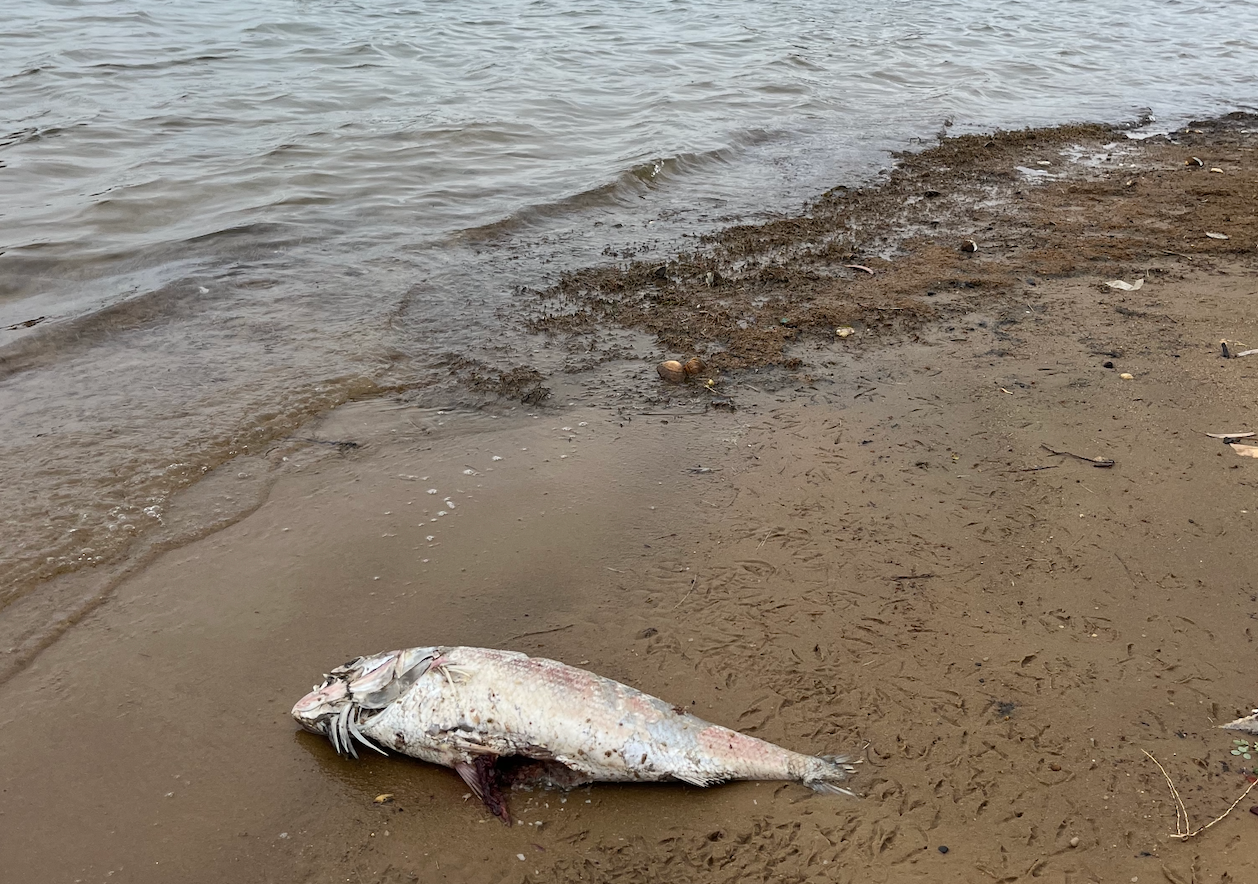
The foam covered vast stretches of the Waitpinga Beach, about 15km southwest of Victor Harbour, killing scores of seahorses, fish and octopuses.

The algal bloom, which lasted several months, took an immense environmental, economic and public health toll on South Australia.

Advertisement
Fish die off due to algal bloom
Fish die off due to algal bloom (Shauna Murray)

Researchers later found the die-off was caused by neurotoxins from the microalgae Karenia cristata.

The new study revealed that the algae had stronger toxic effects than any other harmful algal bloom studied thus far.

The findings help explain the scale of last year’s mass mortality of invertebrates, fish, mammals, and birds, according to the study published in the journal Nature Ecology & Evolution.

Researchers conducted experiments on laboratory-grown strains of Karenia cristata to more thoroughly assess its toxicity.

They also compared the results with the toxin analysis of water samples from the algal bloom.

Advertisement
K cristata microalgae species
K cristata microalgae species (Shauna Murray)

Karenia cristata in the laboratory was highly toxic in very low cell concentrations,” said Shauna Murray, lead author of the study from the University of Technology Sydney.

“Our results are in line with periods of mass marine animal mortalities in 2025 and 2026 and the actual environmental concentrations of Karenia cristata there at the time. We found that Karenia cristata is an order of magnitude more toxic than the next most toxic microalgae that has been studied to date.”

Researchers warned that the findings carried “international consequences”.

Microalgae under microscope
Microalgae under microscope (Shauna Murray)

They said that other cold water brevetoxin-producing Karenia could potentially bloom anywhere with similar coastal water conditions. “Before now, the warm water Karenia brevis, which only occurs in the southeastern US and also produces brevetoxins, had been considered the most devastating marine harmful algal bloom species in terms of its environmental, economic and social impacts,” Dr Murray said.

“The South Australian harmful algal bloom still hasn’t completely disappeared about 15 months after it started,” Dr Murray added.

“We now need to fully investigate the factors that cause Karenia to grow and understand its mechanisms of toxicity.”

Advertisement

Source link

Continue Reading

NewsBeat

Airport hack gets families through security faster without paying for express lane

Published

on

Wales Online

Navigating the airport with kids can be a pre-holiday headache, but many parents may not realise that certain airports have made it a little easier for families to get through

If you ask parents which part of the airport experience is the worst, many will answer that it’s the security scanners. Not only do you have to deal with long queues, but getting the kids to take off their backpacks and shoes can be a massive pain.

Advertisement

Some parents fork out for express lane access, as this means a shorter queue and fewer people around to stare at any toddler tantrums; however, if you live near certain family-friendly airports, you may not need to pay this fee.

The express lane at the airport can often cost from £4 to £12 per person, cheaper if booked in advance rather than paying on arrival. With many airports charging for both adults and children, the cost soon gets pricey when you need to pay for four or five passes.

A small number of UK airports now offer dedicated family lanes through security or will allow parents of kids through the assistance lanes, meaning you aren’t stuck with toddlers or young kids in the main line.

Advertisement

Manchester Airport is one example. It offers a family and assisted travel lane, so those with kids can pass through faster. It also advises against booking FastTrack security if you have a young child, saying: “The express lane is unsuitable for passengers requiring Assisted Travel, those travelling with pushchairs and car seats, or infants under three years old. You will be automatically directed to the assistance lane at security, so you do not need to book FastTrack or TimeSlot.”

London-Heathrow and Gatwick have family lanes for families of up to 12, while other airports don’t specify whether they have family lanes outright, but may wave families to the front of the queue. Policies vary, but parents of younger children or babies tend to be given priority. Cardiff Airport doesn’t have dedicated security lanes for families, although a recent change means kids over 120cm tall can use passport eGates to save some time.

If the airport you fly from doesn’t have dedicated family lanes, it may offer express lanes with free or reduced tickets for kids. For example, Birmingham Airport has an express lane that costs £7 per person, but is free for children aged four and under travelling with a paying adult.

It’s worth checking your departure airport’s official website or social media pages to learn about airport policies before you go, so you can decide whether you need FastTrack security.

Advertisement

Parents going through security should also think about what they need to take in their hand luggage. They can take enough milk for their child’s journey, even if it’s over 100ml and the airport still uses the old rules, but this is usually scanned separately. It will need to be taken out of the bag and placed in a separate tray. Luckily, wet wipes are one essential not classed as a liquid.

Pushchairs need to be folded and go through the security scanner, so keep that in mind when you travel with a baby. Many parents opt for a cheap, easy-to-fold stroller rather than taking their entire travel system.

Have a story you want to share? Email us at webtravel@reachplc.com

Source link

Advertisement
Continue Reading

NewsBeat

‘Weak and inconsistent’ safeguarding of NI school funds, report finds

Published

on

Belfast Live

“There is a risk therefore that serious concerns raised by parents, staff or governors may trigger an inconsistent response across sectors.”

There are “weaknesses and inconsistencies” in arrangements for safeguarding how Northern Ireland’s school system spends public funds, an Audit Office report has found.

Advertisement

The report by Comptroller and Auditor General Dorinnia Carville said that a “coherent, modernised governance framework is urgently required”.

Her report has examined governance and accountability arrangements in Northern Ireland’s education system, focusing on the Voluntary Grammar (VG) and Grant-Maintained Integrated (GMI) schools sectors. Funding of £392 million was given to VG and GMI schools in 2024-25.

The report said: “Northern Ireland’s education system is large, complex and historically fragmented, comprising more than 1,000 schools across controlled, maintained, VG, integrated, Irish-medium and special school sectors.

“This complexity is rooted in long-standing differences in ownership and management. Controlled schools are state owned, while voluntary schools – including VG schools – retain private ownership and management arrangements.”

Advertisement

The report said this has resulted in differing arrangements between the VG/GMI sectors and other schools for ensuring good governance in the way public money is spent.

It said the inconsistencies are “partly attributable to a lack of clarity in the legislative framework”.

It said: “This structural distinction has created differing accountability, oversight and intervention arrangements across the system.

“There is a risk therefore that serious concerns raised by parents, staff or governors may trigger an inconsistent response across sectors.”

Advertisement

The report said reliance is placed on information submitted by schools and on the work of auditors and boards of governors.

However, it raised concern that not all schools are submitting information to the Education Authority (EA), and there is “limited scrutiny of this information by the EA to identify emerging risks and give assurance that public money is being spent properly”.

The report also identified “uncertainty” regarding the roles and powers of the Department of Education and the EA for oversight and intervention where risks are identified.

It said: “Our findings confirm that a coherent, modernised governance framework is urgently required.

Advertisement

“Without clearer legislation, updated guidance along with robust consistent oversight arrangements across all sectors, the department and the EA cannot provide the level of assurance needed to safeguard significant amounts of public money or ensure that strong governance standards are applied effectively across the school system.”

The report found “contradictory views” between the department and the EA on the extent of intervention powers in VG and GMI schools should a problem arise.

Ms Carville said: “It is important that effective arrangements operate over the use of significant public funds by schools.

“This report highlights various inconsistencies and areas of uncertainty, which could potentially result in serious risks or concerns failing to be properly identified and adequately addressed.

Advertisement

“We recognise the challenges presented by the current legislative framework. Addressing these challenges will take time.

“However, there is a need in the shorter-term for proactive action by the department and EA to provide assurance to pupils, parents and taxpayers.

“This includes clarifying and ensuring understanding of oversight and intervention powers, strengthening scrutiny of schools’ financial and governance information, and putting in place consistent processes for escalating and managing risks.”

For all the latest news, visit the Belfast Live homepage here and sign up to our daily newsletter here.

Advertisement

Source link

Continue Reading

NewsBeat

M23 Gatwick closed LIVE: Motorway shut near airport ahead of rush hour traffic

Published

on

Daily Mirror

Police and paramedics have been spotted still at the scene of the crash in Crawley, with motorists on the M23 experiencing delays in the wake of a serious crash on the motorway in the early hours of this morning.

Emergency services near the scene of the M23 crash near Gatwick Airport(Image: TrafficCameras.co.uk)

Trucks waiting at J9 on the M23 southbound in the wake of this morning's crash

Trucks waiting at J9 on the M23 southbound in the wake of this morning’s crash(Image: TrafficCameras.co.uk)

AA Roadwatch logs indicate first calls about the crash on the southbound motorway came in shortly after midnight.

Source link

Advertisement
Continue Reading

NewsBeat

Largest study yet reveals which cancers have their own microbiomes

Published

on

Largest study yet reveals which cancers have their own microbiomes

For decades, cancer has been thought of as a purely human disease – rogue cells multiplying out of control, with no room for anything else in the picture. But a growing body of research suggests that isn’t quite right. Some tumours, it turns out, come with company: communities of bacteria, viruses and fungi living on, between and even inside the cancer cells themselves.

The trouble is that nobody has been entirely sure which cancers actually have this so-called microbiome, and which don’t. The field has been dogged by contradictory claims, competing methods and – in one particularly damaging case – a retraction, after results from a high-profile study could not be replicated.

Since then, the field has been left without a clear way forward. Every research group has used its own methods and level of rigour, and there has been no agreed-upon benchmark to check new findings against. That matters because the stakes are high.

If microbes really are helping some cancers grow, resist treatment or spread, they could become new targets for screening and drug development. But chasing signals that turn out to be false wastes time, money and precious patient samples.

Advertisement

Our team set out to settle the question properly, using the largest collection of cancer genetic data in the world – Genomics England’s 100,000 Genomes Project, which includes DNA from more than 16,000 tumours. We built what we believe is the most rigorous analysis pipeline yet developed for this kind of work, designed to strip out every source of error we could identify, then applied it to the entire dataset.

Our latest research found that most cancers – including those of the brain, breast and kidneys – lack a microbiome that is distinguishable from background. This suggests that earlier studies that had picked up microbial signals in these tumours may have been affected by contamination: stray DNA from laboratory equipment or even the scientists handling the samples.

But some cancers were different. Tumours of the mouth, oesophagus, stomach and bowel showed clear, consistent evidence of microbial life. And it wasn’t just bacteria. We found viruses, fungi and archaea (organisms similar to bacteria but genetically distinct) living within these tumours.

In some cases, we detected trichomonas, a single-celled protozoan parasite. The particular mix of species varied depending on where in the digestive tract the cancer was and was linked to features such as the cancer’s subtype and how many genetic mutations it carried.

Advertisement

Telling real microbes from contamination

Working out which of these microbial signals were genuine and which were laboratory contamination was the hardest part of the project. Sequencing a tumour means reading every strand of DNA in the sample, human and non-human alike.

Most cancer researchers simply ignore the non-human portion. We did the opposite. We discarded the human DNA and matched everything left over against known microbial genomes to see what was hiding there.

However, this approach can run into problems fast. There’s no single, definitive human genome to measure against – everyone’s DNA differs slightly, and even the best reference genomes have gaps. Any leftover human sequence that happens to resemble microbial DNA can be wrongly flagged as a hit.

Then there are errors in the microbial reference libraries themselves – occasionally the wrong species ends up catalogued, or DNA from a lab technician’s skin ends up mixed in with a sample. And however carefully a lab operates, some contamination during tumour preparation is almost unavoidable.

Advertisement

We tackled each of these problems in turn. We filtered aggressively against multiple versions of the human genome, stripping out anything ambiguous or repetitive. We used the most up-to-date DNA-matching software against carefully curated microbial databases.

Sample contamination happens easily in a lab.
Komsan Loonprom/Shutterstock.com

To catch contamination, we compared which microbes turned up across different cancer types: species that appeared everywhere were almost certainly picked up in the lab, while species confined to just one or two cancer types were more likely to be real.

Sure enough, several of the culprits we filtered out were common skin bacteria found in every cancer type – probably from the researchers who had handled the samples.

This kind of large-scale, painstaking filtering was only possible because of the sheer size and quality of the Genomics England dataset. Smaller studies simply don’t have enough samples or resolution to distinguish a genuine biological pattern from a one-off contamination event.

Advertisement

We’ve now made our data freely available as downloadable software, along with a list of the microbial species we’re confident are genuinely present in these tumours, so other researchers can apply the same rigorous approach to their own data.

The hope is that this draws a line under years of conflicting claims. Scientists can then focus their efforts where the evidence is strongest. That means tracking how these microbial communities in mouth, throat, stomach and bowel cancers might influence how tumours develop and how well they respond to treatment. Ultimately, it could help these cancers be diagnosed and treated earlier.

Source link

Advertisement
Continue Reading

NewsBeat

Games Inbox: Will Sony do a U-turn on PS5 discs?

Published

on

Games Inbox: Will Sony do a U-turn on PS5 discs?
Will Sony change its mind? (Credits: Getty Images)

The Wednesday letters page thinks that the Xbox is regressing back to being a ShooterBox, as a reader is very upset at the layoffs at id Software.

Games Inbox is a collection of our readers’ letters, comments, and opinions. To join in with the discussions yourself email gamecentral@metro.co.uk

Thick as thieves
I know that Sony has already changed how its factory works but I really can’t see them getting away with this all-digital push without a U-turn. I don’t even understand why they’re doing it now. If the PlayStation 6 was digital-only I don’t think many people would be surprised and while they wouldn’t like it, you can’t say much if it never had the option.

But the PlayStation 5 is in its last couple of years, what’s the point of changing anything now? Unless you love bad publicity. I put the blame squarely on Rockstar Games who I suspect put Sony up to this. They want 100% of the profits from GTA 6 and they’re big enough that they can make that happen.

Advertisement

Kudos to the memes and people posting against Sony on Twitter and elsewhere. If you keep it up, I think they will U-turn, for the PlayStation 5 only. Except I bet there’s one exception… for GTA 6.
Zeiss

Exec Unit 3021-6
Kudos to that Bungie dev that called execs ‘stupid detached money grubbing idiots’ you can’t get a better description than that without using harsh language. These people are all the same and everyone’s already noticed that Asha Sharma speaks exactly the same as Phil Spencer.

Expert, exclusive gaming analysis

Sign up to the GameCentral newsletter for a unique take on the week in gaming, alongside the latest reviews and more. Delivered to your inbox every Saturday morning.

Advertisement

They probably both got ChatGPT to print off their scripts and give them their opinions. I’m beginning to think that the only reason we never hear from Sony nowadays is because they don’t want to make it obvious that they talk the same way. They’re all just robots who couldn’t give a damn about video games.
Spender

Final Doom
Really disappointed that id Software have been hit by layoffs, with some suggesting that the bulk of their development team have been let go. As game developers they gave us a truly excellent modern Doom trilogy where each game was unique, rather than a minor evolution on what came before.

Doom Eternal, in particular, is a wonderful game that will stand the test of time. Additionally, as technical specialists they have developed proprietary, incredibly scalable game engines that other studios leveraged to give us experiences like Indiana Jones And The Great Circle. My condolences to everyone who has been affected but as a huge id Software fan that news really stung.
Magnumstache

Advertisement

GC: You’re right, including about Doom Eternal being great.

Email your comments to: gamecentral@metro.co.uk

Saw it coming
All in all, that seems to have worked out quite well for the likes of Tim Schafer and Guillaume Provost. I’m guessing in the desperation during Xbox One, Microsoft paid them a decent amount of money to buy Double Fine and Compulsion. They then got the freedom to work on what they wanted for almost a decade and at the end Microsoft has seemingly just handed the studios and all the IP back to them.

So essentially they’re just back where they were at the beginning, just a lot richer.

Advertisement

A lot of people say Microsoft only cares about money. But Xbox seems far better at giving it away to people than actually making any.
Tim

GC: It’s been suggested that Double Fine had a carefully constructed contract that planned for just this sort of eventuality.

Over the top
I wonder what the first big game to launch after GTA 6 will be? I see Sega’s Stranger Than Heaven will be out on January 15, but I’m not sure how big I’d say that was going to be. After that it’s the Tomb Raider remake in February, which seems to be the first big one we know about at the moment.

Advertisement

Although I have read rumours saying that God Of War Laufey is going to be out very early next year, so maybe Sony has struck some kind of deal that they’ll be the first to make a move, and Rockstar won’t try to counter them with too much marketing at the time.

If it is out early next year that kind of hints that Interstellar: The Heretic Prophet will be the big Christmas game for Sony. I hope it gets an unveil at The Game Awards in December because I really want to know what it’s like, but that may be a bit early if it’s not out for so long.
Rizzo

ShooterBox Pro
One glance at the studios Xbox has left and it’s obvious what their game plan is. As you said, they just haven’t got the talent any more to make anything other than Halo, Gears Of War, and Forza. So they’re right back to be being the ShooterBox, targeting young American men and nobody else.

This was their main problem with the Xbox 360 and the reason they never went further than that, in my opinion. I think the main reason Phil Spencer bought companies like Double Fine and Compulsion is that he wanted to expand things, do more arty games, but it never really worked out. It took too long for the games to be made and in the end they weren’t really that great.

Advertisement

I think he thought they were going to be award-winning darlings, but it never happened, and instead they just ended up looking like weird double-A games that nobody played even when they were free on Game Pass.

Resetting the clock back to the Xbox 360 era might see a small increase in Xbox’s popularity but it’s also admitting they haven’t moved a step forward in 15 years. Personally, I think Team Xbox should call it a day, they haven’t got anywhere to go now and it’s only going to get more embarrassing from here.
Korbie

Just try it
I will laugh so hard if Microsoft try to make The Elder Scrolls 6 an Xbox console exclusive. If you thought the upset about physical media was bad just imagine if Microsoft try and force you to buy an Xbox to play the sequel to Skyrim. Something we will have all been waiting for close to 20 years by the time it comes out.

I honestly want to see them try because the U-turn will be so swift it’s going to take some heads off. Personally I give it a 50/50 chance that they’ll try it.
Cubby

Advertisement

Don’t miss Gaming news! Add us as a Preferred Source

As a loyal GameCentral reader, we want to make sure you never miss our articles when searching for gaming stories. We have all the latest video games news, reviews, previews, and interviews, with a vibrant community of highly engaged readers.

Click the button below and tick Metro.co.uk to ensure you see stories from us first in Google Search.

Add us as a Preferred Source

GameCentral collage of Mario Kart, Ghost of Yotei, and Halo
GameCentral has been delivering unique games news and reviews for over a decade
Advertisement

Hidden costs
While going digital-only eliminates the second-hand market, there are additional benefits from the perspective of Sony, Microsoft, and Nintendo. The most obvious is that they cut out the so-called middleman, the retailer, and thereby retain all the profits if, as is typically the case, they can sell digital versions at the same price as physical copies sell for in stores.

But there’s another important factor here, that if no physical commodity is produced, scenarios like that of Atari, when surplus stocks of E.T. were buried in the Arizona desert, no longer occur. With digital it is impossible to over produce, thereby eliminating the problem of building inventories, which then have to be stored at physical sites that incur additional costs, and whose value if not quickly sold decreases.

Companies still risk considerable amounts of money when investing in game development but eliminate risks concerning the quantity of games, that would otherwise have to be produced in physical form in anticipation of potential but not necessarily realised demand. By selling games in digital format only the manufacturing costs incurred in the production of physical games is eliminated.

Furthermore, as we have seen with day one patches, the turnaround time from investing in game development to point of sale is also greatly reduced, even though in many instances the game releases onto the market effectively broken.

Advertisement

The end of physical games has been a long time coming. The incentives for companies going digital-only are so great that sooner or later this was bound to happen. Sony isn’t going to back down, history is on their side, but you can be sure that as soon as it is expedient Nintendo will gladly follow suit.

When you factor in all the jobs lost in retail, manufacturing, transportation, storage facilities, and so forth, the layoffs at multiple game developers are only the most visible tip of a far greater invisible iceberg.

In the final analysis, digital or otherwise, none of this resolves the current crisis engulfing the video game industry or lessens the impact of the cost of living crisis affecting many gamers and their ability to pursue their hobby.
Ciara

Inbox also-rans
OK Asha, hear me out. You want more Halo, and Bungie just let go all their Destiny 2 staff. Why not sub them in as contractors and make the Destiny 3 that everyone wants… but it’s Halo?
ArmandxUltra (gamertag)

Advertisement

Given what’s happening with Double Fine I went and tried to play Kiln on Game Pass. Emphasis on the tried, because I couldn’t find anyone to play with and it’s only a month or so old! I checked on Steam and it has an all-time peak of 193 people. I’m kind of starting to see Microsoft’s point here…
Dougal

Email your comments to: gamecentral@metro.co.uk

The small print
New Inbox updates appear every weekday morning, with special Hot Topic Inboxes at the weekend. Readers’ letters are used on merit and may be edited for length and content.

You can also submit your own 500 to 600-word Reader’s Feature at any time via email or our Submit Stuff page, which if used will be shown in the next available weekend slot.

Advertisement

You can also leave your comments below and don’t forget to follow us on Twitter.

Advertisement
Advertisement

Source link

Continue Reading

NewsBeat

I’m Reece James’ dad – this is how he’ll fight back to rescue England despite 10th hamstring in six years, forged by a childhood of tough standards, the car phone prank I played on him and the ’20p game’ with his sister Lauren

Published

on

‘You make lots of decisions to get your kids where they are,’ Nigel James, dad of Reece, says. ‘Thank God, I got those decisions right'

There was one ruse in particular of which Nigel James was fond when he was trying to teach his children – budding footballers all in Reece, Joshua and Lauren – how to behave.

He would be driving from their family home in Mortlake near Richmond, south-west London, to wherever they were training or playing that day, with the siblings squeezed together in the back. Then the call would come through once he had his captive audience right where he wanted them.

‘If I really wanted to get a message across without being overpowering, I would sometimes set up a conversation with a friend, to have him call me while we were in the car,’ Nigel tells Daily Mail Sport. ‘We’d be talking about a player, and he’d tell me about that player, saying something like: “He’s signed with a club but he’s got no future. The gaffer doesn’t fancy him because he’s lazy and he’s not sociable and he’s like this and like that…”’

Except, this player did not exist. It was all subtly staged; a theatrical tactic so his children knew how they had to be if they wanted to forge a career in professional football. It worked. Reece is now Chelsea captain with 26 England caps. Lauren, 24, has played for Arsenal, Manchester United and now Chelsea, has 40 England caps of her own and won the Euros in 2025. 

Advertisement

‘They’re little things that they picked up over the years,’ Nigel continues. ‘They heard the success which works and they heard the failures which don’t work. Then it’s down to choices. Choices that they had to make. Which path they wanted to go down.

‘Every manager that Reece and Lauren have played under, they’ve got really close to the manager, for that manager to feel they’re one of their special players. You’re showing your ability, but you’ve also got to have that something where someone likes you and your personality.’

‘You make lots of decisions to get your kids where they are,’ Nigel James, dad of Reece, says. ‘Thank God, I got those decisions right’

Advertisement
Reece is pushing to be fit for England's World Cup quarter-final against Norway on Saturday

Reece is pushing to be fit for England’s World Cup quarter-final against Norway on Saturday

Reece, Nigel and Lauren together at Stamford Bridge - both children now play for Chelsea

Reece, Nigel and Lauren together at Stamford Bridge – both children now play for Chelsea

Thomas Tuchel is a fan of Reece’s, we know that. After working together at Chelsea, Tuchel called him up for his first World Cup with England, remaining in touch with the 26-year-old towards the end of last season when he was nursing his 10th hamstring injury since December 2020.

‘My fingers were crossed, hoping he was going to get through that,’ Nigel says of that issue between March and May, and now, a nation is crossing its fingers, too.

Advertisement

James Jnr is pushing to prove he is fit enough to feature in this Saturday’s World Cup quarter-final against Norway, with the right back position having proven problematic for Tuchel.

He started the first two group games versus Croatia (a 4-2 win) and Ghana (a 0-0 draw), only to report tightness in his hamstring to England’s medical team and for a scan to show he would miss their next two matches ‘at least’. It sparked immediate scrutiny of Tuchel’s decision to replace the injured Tino Livramento with a central defender in Trevoh Chalobah rather than a natural full back, such as Real Madrid’s Trent Alexander-Arnold.

In James’ absence, Tuchel started Jarell Quansah at right back against Panama (a 2-0 win), then Djed Spence with a cameo from Declan Rice against DR Congo (a 2-1 win). For Mexico (a 3-2 win, as if anyone needed reminding), Tuchel reverted to Quansah, though his red card means he will miss Norway, unless the FA try to use their Trump card.

James made the bench for that Mexico victory, and maybe it was the adrenaline, but the England right back appeared surprisingly spry amid the celebrations at the Azteca in his sprinting and jigging.

Advertisement

If brought back in to the starting lineup for Norway, Nigel will have full faith that his son’s mind is in the proper place. It is considered one of Reece’s biggest attributes – the ability to bounce back after a blip. You are not named Chelsea captain by luck. It takes an elite mentality. Nigel helped mould that, and not only through fake calls in the car.

‘You make lots of decisions to get them where they are,’ Nigel says. ‘When they’re young, they’re looking to you to guide them, so as a parent, you make the decisions. Thank God, I got those decisions right. There have been many talented players where maybe some parents – or some agents – haven’t got it right. There’s talent, but talent doesn’t take you all the way through.    

Thomas Tuchel is a huge fan of James', having worked with him at Chelsea when he was manager there

Thomas Tuchel is a huge fan of James’, having worked with him at Chelsea when he was manager there

James started England's first two group games versus Croatia and Ghana, only to report tightness in his hamstring to the medical team

James started England’s first two group games versus Croatia and Ghana, only to report tightness in his hamstring to the medical team

Advertisement
James has suffered 10 hamstring injuries in the last five and a half years

James has suffered 10 hamstring injuries in the last five and a half years

‘Growing up, they were always surrounded. There was a variety of ages of friends in and out of the house, and we had a good-sized garden, but the most impressive thing in Mortlake was you had the fields which were literally at the back of our house, the size of two football pitches.’

Nigel’s coaching background was beneficial as they had all the equipment they needed. His children could head to that field with a bag of 25 balls, with Reece crossing for Joshua to head or volley, one after another. 

There was a little tough love from Nigel, though he never wanted to be seen as a pushy parent, as he adds: ‘Instead of me being too demanding, and there was a demand, there were times that I pulled myself away and set a challenge to them all – and the winner got 20p.’

Advertisement

Keepie-uppies, around-the-worlds, crossbar challenges, one-v-ones, whatever it was. It was fun, but competitive, neither of the two brothers ever letting their little sister win. Lauren had to work if she wanted her reward, with Nigel regularly having to nip out to change a £20 note into 20p coins, just to stay on top of paying up.

‘Reece was the one out of the three of them that, from a very young age, loved money,’ Nigel remembers, chuckling. ‘He loved to save. He loved new boots. In his spare time, he used to go in goal, and he used to want to buy the best goalie gloves. 

‘He loved cricket. His passion, when he saved his money, was to get new goalie gloves and cricket bats. So from a very young age, he knew how to own a contract!’

Nigel is a trusted mentor within football – Chelsea have asked him to help with Dastan Satpayev, their exciting new arrival from Kazakhstan who turns 18 next month, for example – and he had to overcome his own challenges in his younger years. If nothing else, he has been able to pass down those experiences to the fledglings he now works with, and also Reece, Joshua and Lauren.    

Advertisement

‘I gave up playing,’ he explains. ‘I had a motorbike accident, came back, had a manager at Aldershot, and he wasn’t particularly nice. With the setbacks I’d had, and when your mind is fragile, he sort of broke me.’

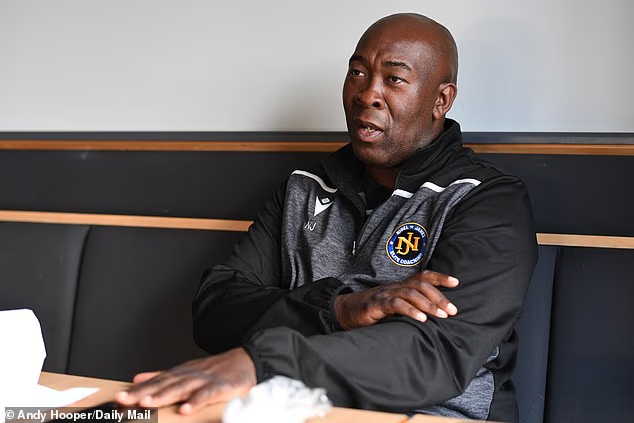
Nigel now has his own academy, Nigel James Elite Coaching. While he insists enjoyment is essential, standards also need setting

Nigel now has his own academy, Nigel James Elite Coaching. While he insists enjoyment is essential, standards also need setting

Sadly, James, 24, is no stranger to the medical department having suffered various injuries during his career

Sadly, James, 24, is no stranger to the medical department having suffered various injuries during his career

But he seemed in good shape when he joined in the celebrations after England's victory over Mexico

But he seemed in good shape when he joined in the celebrations after England’s victory over Mexico

Advertisement

That was a catalyst for Nigel moving into coaching. He now has his own academy – Nigel James Elite Coaching – and is supporting a national campaign called Play Their Way. While he insists enjoyment is essential, standards also need setting.

‘I want to set a discipline with it, because without having strong discipline, you’re going to create problems for yourself,’ Nigel says, giving an example: ‘If we start training at 6 o’clock, it’s not “turn up at 6 o’clock”.’

Reece was heartbroken to miss the last World Cup in Qatar. He believed he had overcome his knee issue in time, but Gareth Southgate did not want to take the risk. Tuchel has done, and there has been a setback, yet his return could solve England’s right back conundrum. If England are to reach the final, they would play Saturday, Wednesday, Sunday. That could be a testing schedule on the hamstring, but it is suspected Reece would be willing to take the risk if allowed. 

‘He’s waited a long time for it,’ Nigel says of Reece and this first World Cup. Let’s hope he’s able to resume it on Saturday.

Advertisement

Nigel James is supporting Play Their Way, a national campaign funded by Sport England, which is calling on coaches to adopt child-first coaching to give children more positive and enjoyable experiences of sport. 

Source link

Continue Reading

Trending

Copyright © 2025