Locals praise the town’s transport links and green spaces – but they’d like to see more added to the town
A look around Cambourne, near Cambridge
People who live in a ‘new’ Cambridgeshire town have praised its transport and green spaces – but they’d like to see more pubs and restaurants. Up until 26 years ago, Cambourne near Cambridge didn’t exist.
Since then, the town has grown with more people moving in, and more facilities opening. However, some residents still feel the town could have more. As part of the Exploring Cambridgeshire series, we spoke to residents about what it’s like to live in Cambourne.
Aaron Kersey, who has lived there since 2022, wants to see more pubs and restaurants in Cambourne. “We have three dentists, but only one pub,” said Aaron.
He added: “Something like another supermarket would also be good. However, it [Cambourne] has what you need. The road networks are fine and safe. The only thing it needs is a train station, but there is talk about one coming.”
A long-term resident, who wished to remain anonymous, likes Cambourne’s green spaces. He said: “It’s got quite a lot of good community things going on as well, like a lot of different clubs and activities.
“I think it’s also good for transport.” However, the man would also like to see other things come to the town. He added: “Things like a public swimming pool and a change of shops would be good. It would bring more footfall in.”
Advertisement
Michael Abbott moved to Cambourne around 10 years ago, and admitted its “great” transport. He said: “We have regular buses that take you to Cambridge, so you can get into the city centre quite easily.
“We have a good supermarket, but it would be good to see one more to add a bit more variety. Cambourne is also a cheaper place to live if you need to commute to Cambridge for work.”
Just like Aaron, Michael would like to see more places to eat and drink. He added: “The local pub is good, but it would be good to have another one, again for more variety.”
Kin Leu moved to Cambourne a few years ago with his wife and two children. He said: “My wife chose our house because we have two young children, and it’s close to bus stops. So, they can get on the bus safely.” Kin also wants to see more added to Cambourne.
He said: “For me, I would like one more petrol station and maybe another supermarket. I used to walk to Morrisons sometimes, but another supermarket would be nice.
“We have a good football pitch, but sports could be a bit better. A public swimming pool would be good.”
Christina Church has “no complaints” about living in Cambourne. She said: “Being in the centre means I am only a few minutes away from what I need, especially Morrisons.
Advertisement
“We have some fast food places like fish and chips and Domino’s, which are good.” Christina praises the transport, but also wishes the town could have a train station.
“If somewhere like Waterbeach can have one, why can’t we?,” added Christina. She said: “It’s a growing town and we need that sort of thing. It would also make it more desirable to live here.
“I also love the green spaces here. They are lovely to walk my dog around.”
Figures released under freedom of information laws have revealed the stark cost of delayed hospital discharge.
More than 1,500 people have died while waiting to get out of hospital in the past three years, according to data obtained by Scottish Labour. Freedom of information requests by the party show 1,579 people died between 2022 and 2025 while waiting to be discharged.
Advertisement
Some 541 died while delayed in 2022/23, 522 in 2023/24 and 516 in 2024/25. Delayed discharge, or bed blocking, happens when a patient is deemed medically fit to leave hospital but is unable due to inadequate arrangements in the community, such as a lack of social care.
Scottish Labour said despite the SNP promising to end delayed discharge in 2025, data from Public Health Scotland shows bed blocking rose – with 55,547 days spent in hospital in February by people whose discharge was delayed, with nearly 2,000 beds on average occupied by people ready to leave that month. According to Audit Scotland, delayed discharge cost the NHS £440 million in 2024/25.
Scottish Labour leader Anas Sarwar said: “Behind these figures are Scots who spent their last days stuck in hospital wards rather than at home surrounded by friends and family. The SNP’s pledge to end bed blocking lies in tatters, along with so many other broken promises.
“This is a damning sign of the SNP’s neglect of health and social care, which has failed patients and piled pressure on hospitals. Scotland needs change and only Scottish Labour can deliver it.”
Advertisement
Mr Sarwar pledged to create an additional 1,000 care at home packages and 300 step-down beds, should his party take power at Holyrood next month. He said Labour would ease the pressure on hospitals and give people “the dignity of getting home to their family and friends”.
He added: “On May 7, Scotland can vote for change and end the SNP’s neglect of the services we all rely on. Together we can get rid of this failing SNP Government and elect a Scottish Labour government that will get the basics right.”
Get more Daily Record exclusives by signing up for free to Google’s preferred sources. Click HERE.
While the lingering chill in the air might lead you to believe otherwise, British festival season is fast approaching. We’ve whittled things down into a handy guide to the events you won’t want to miss out on this summer.
For the music obsessives looking to spruce up their rotation with some fresh talent, look no further than the UK’s biggest new music festival, The Great Escape, which will be celebrating its 20th birthday in May. It’s set to be one hell of a party.
Speaking of newcomers, State Fayre, the latest event from industry titans Festival Republic, will be hoping to shake things up in August, bringing an impressive mix of rock, country, folk and Americana to the sprawling grounds of Hylands Park in Chelmsford, Essex.
Then there are some killer line-ups from Reading and Leeds, All Points East, Green Man and Isle of Wight, which should be enough to keep you busy while Glastonbury takes its traditional fallow year.
Advertisement
So, dust off your sunhat – and, let’s be realistic, your wellies and anorak, too – because it looks like this summer is set to be a corker…
The Great Escape
Peaches is performing a spotlight shot at Brighton Dome, hosted by The Independent (Press)
Where – Brighton
When – 13-16 May 2026
Twenty years since it first erupted onto the UK festival scene, the Great Escape will be returning to Brighton with a veritable smorgasbord of up-and-coming talent, sourced from every corner of the globe. Discover the hottest newcomers to indie, soul, metal, and everything in between, scattered over 30 intimate venues (all within walking distance) in the seaside town.
Advertisement
Confirmed names range from Canadian powerhouse Peaches to The Kooks, who caught their big break at the festival back in 2006, as well as Irish act Kingfishr, who first played The Great Escape on The Independent’s stage two years ago, now performing a spotlight show at the Brighton Dome. Then there are over 450 other acts to enjoy across the four days, plus keynote conversations with Peaches, Melanie C, Ian Murray MP, and plenty of industry insiders and experts discussing everything from representation to mental health. Evie Wynne
Mighty Hoopla
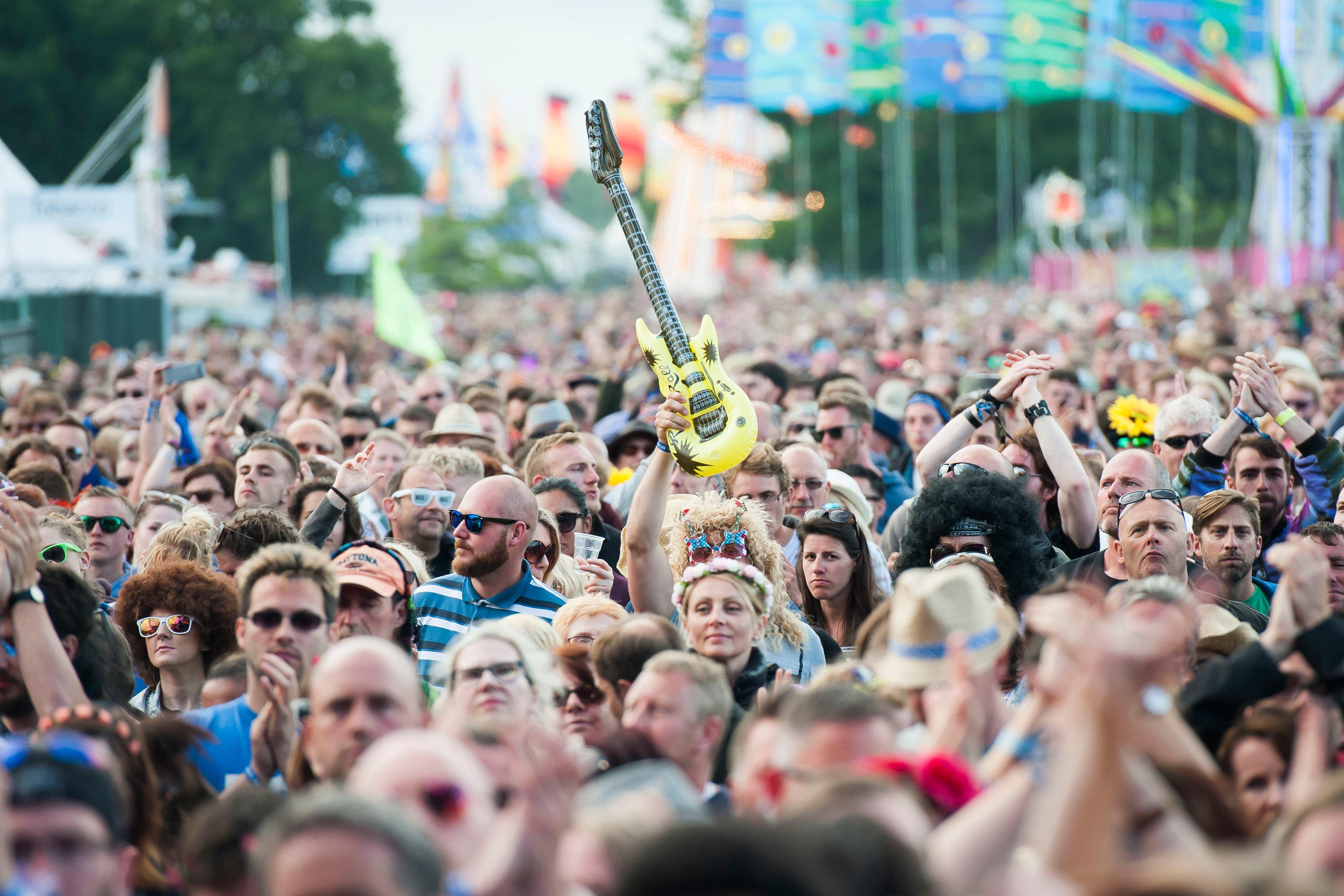
Crowds soaking up the sun during a performance at Mighty Hoopla festival, 2023 (Sarah Louise Bennett)
Where – Brockwell Park, London
When – 30 and 31 May 2026
In May, London’s Brockwell Park will once again be playing host to the two-day bonanza that is Mighty Hoopla, the most colourful, joyful, camp celebration of everything we love about pop music. Witness sets from Tulisa, Scissor Sisters, JLS, Louise and Alexandra Burke all in one place, along with this year’s it-girl, Lily Allen, delivering a UK festival exclusive performance of her critically adored comeback album, West End Girl. Grab something sequinned, sparkling or spandex and we’ll see you there. EW
Advertisement
Isle of Wight
The Isle of Wight Festival has branched out in recent years (PA Archive)
Where – Seaclose Park, Newport, Isle of Wight
When – 18 – 21 June 2026
Enjoy unlimited access to 100 million ad-free songs and podcasts with Amazon Music
ADVERTISEMENT. If you sign up to this service we will earn commission. This revenue helps to fund journalism across The Independent.
Advertisement
While the festival’s early line-ups earnt it a reputation as the “European equivalent of Woodstock”, it’s fair to say that Isle of Wight has diversified its offering in recent years. Whether you’re singing along to Lewis Capaldi or reminiscing on summers of yore with Calvin Harris and Rita Ora, there really is something for everyone. And with The Cure, Sex Pistols, and Shed Seven all set to make an appearance, there’s plenty to keep the rock fans happy, too. EW
State Fayre
Elvis Costello is headlining the inaugural State Fayre festival this summer (Getty)
Where – Hylands Park, Chelmsford, Essex
When – 26 – 28 June 2026
From the organisers of Reading, Leeds and Latitude, we give you State Fayre, a new event tapping into the UK’s ongoing obsession with country music. Packed with the very best that the country, Americana, rock and folk scenes have to offer, its lineup includes major acts like Elvis Costello and the Imposters, Alanis Morissette, Skunk Anansie, The Coral and Kings of Leon, plus brilliant newcomers such as Stephen Wilson Jr, Muireann Bradley and Kezia Gill. And when you need to re-charge, there’ll be plenty of delicious options thanks to foodie influencer Eating with Tod, who’ll be bringing his BBQ festival Fume to the park, as well. EW
Advertisement
Latitude
Larking around at Latitude (Katie Wiilloughby/Festival Republic/PA) (Local Library)
Where – Henham Park, Suffolk
When – 23 26 July 2026
Latitude’s family-friendly festival returns with a typically excellent mix of music, art, literature and entertainment. Whether you’re in the mood for some chart-topping tunes from Teddy Swims and Tom Grennan, the sweet soul of Billy Ocean or the fiery rock of The Undertones. Want to give those weary feet a rest? Stroll over to the Listening Post, where Salford’s own Dr John Cooper Clarke will be imparting his wisdom with the crowd. Or, for some light relief, join Sarah Pasco, Lenny Henry, and Sue Perkins in the Comedy Arena for an afternoon of guaranteed laughs. EW
Camp Bestival
Advertisement
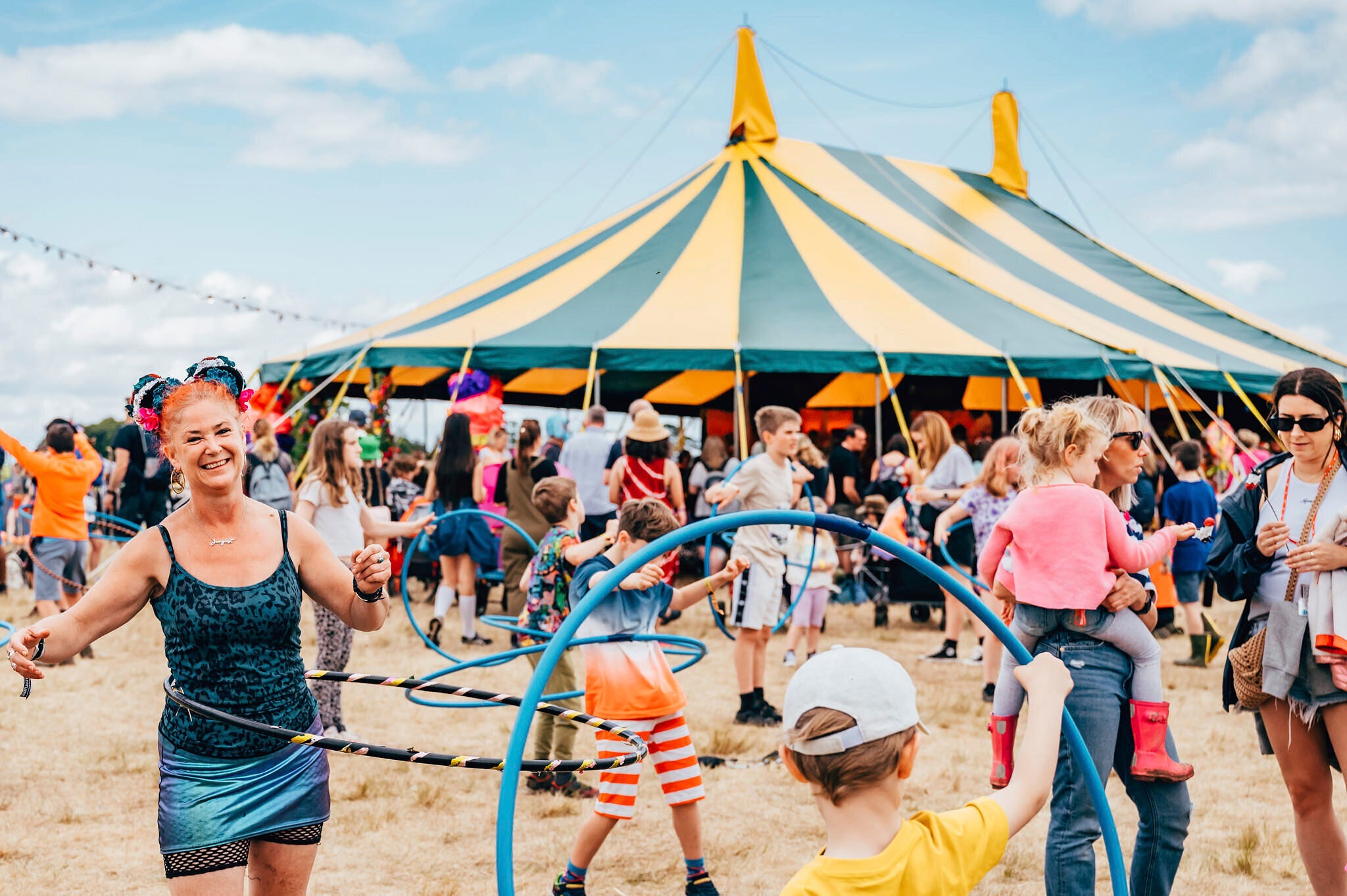
Family fun at Camp Bestival (Press)
Where – Lulworth Castle, Dorset
When – 30th July – 2 August 2026
In just a matter of months, the staid grandeur of Lulworth Castle will once more be transformed into a kooky wonderland of circus, craft, disco, and plenty besides. In this, its 18th year, Camp Bestival will be taking parents on a trip down memory lane with performances from hip-hop greats Fatboy Slim and De La Soul, while, a few tents over, the kids settle down for a bedtime story with CBeebies. Best. Weekend. Ever. EW
ArcTanGent
Where – Fernhill Farm, Bristol
Advertisement
When – 19 – 22August 2026
ArcTanGent represents a glimmering alternative to the more mainstream festivals out there. This year they’re offering performances from industry disruptors Chelsea Wolfe, Primus, and Perturbator, to name a few. ATG opens the door to an underground world of electronic, synth wave, and industrial, bringing them firmly into the fore. Join them in Bristol this August for an experience you won’t forget in a hurry. EW
Green Man
Wolf Alice are headlining Green Man this summer (Scott Garfitt/Invision/AP)
Where – Bannau Brecheiniog National Park, Wales
When – 20 – 23 August 2026
Advertisement
Nestled amidst the gently rolling hills of Bannau Brecheiniog National Park in Wales, Green Man is back with another mesmerising programme of music, comedy, science, and arts designed to tantalise the senses. Part of a typically eclectic line-up, this year’s headliners include indie aficionados Wilco and modern-day rock band Wolf Alice, whose recent album, In Bloom, saw them nominated for a second Mercury Prize in 2025. Arguably the best part about Green Man, though, is the plethora of other activities on offer, which will see you filling your mornings with yoga and your evenings with toasted marshmallows, high on the magic of the Welsh mountain air. EW
All Points East
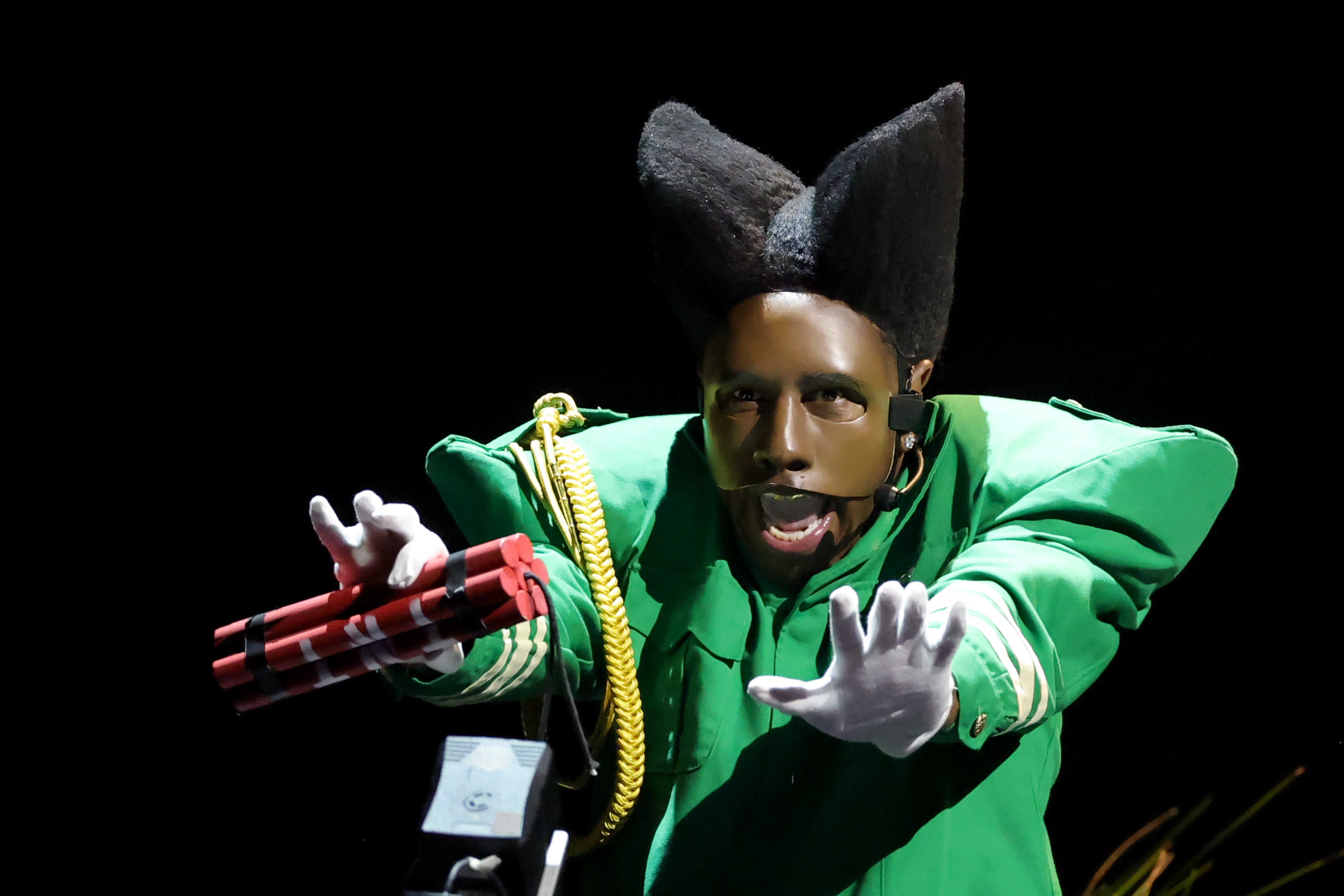
Tyler, the Creator will headline All Points East in a UK festival exclusive (Getty)
Where – Victoria Park, London
When – 21 – 30 August 2026
Its cool crowd and impressive line-ups have earned All Points East comparisons to California’s Coachella music festival – albeit smaller and with far fewer influencers. It’s a bit of a stretch given the California event is one of the biggest festivals in the world, but at least here you’re not shelling out $70 for tacos (it’s more like £18). Anyway, by now All Points East is a staple of any festival-lover’s culture calendar.
Advertisement
Descending on Victoria Park this year are soul stars Jorja Smith and Tems, as well as two sets from Tyler, the Creator in what will be the American rapper’s UK exclusive. Headlining with support from PinkPantheress, fresh off her own headliner-in-the-making Coachella set of her own, is none other than Lorde. For the moody alt-rockers out there, both old and new thanks to a recent revival of early Noughties metal, Deftones are back in the UK – it’s been 31 years since their debut album, but hits like “Nosebleed” feel as fresh and immediate as ever. Likewise, nostalgia runs deep for Twenty One Pilots who will be making their APE debut on 30 August. Annabel Nugent
Reading / Leeds
The UK’s answer to Coachella? Sombr will be playing All Points East in August (Getty)
Where – Rivermead Park, Reading / Bramham Park, Leeds
When – 27 30 August 2026
Shrugging off any preconceived stereotypes of a festival overrun by excitable teenagers, Reading and Leeds have announced a line-up that is certainly not to be sniffed at. So, if Gen-Z artists Sombr, Role Model, and Raye aren’t your thing, the subversive sounds of Kneecap, Geese, and Men I Trust just might be. Meanwhile, for those whose tastes lie closer to the club, check out Mall Grab and Hybrid Minds on the brand new Warehouse stage for a party that won’t disappoint. EW
A town council has increased its portion of the council tax bill by nearly 70%
A man has been arrested on suspicion of fraud believed to be linked to a nearly 70% council tax precept rise. In February, Cambourne Town Council agreed to increase its council tax precept to £1,493,098, which was a 68% increase from the previous financial year.
Advertisement
The rise left a number of Cambourne residents angry, with one resident branding it as “ridiculous”. The town council admitted that “restricted funds, including S106 monies, were previously used for revenue expenditure when they should not have been”, a spokesperson previously told CambridgeshireLive.
A 63-year-old man has been arrested on suspicion of fraud in connection with the precept rise. A Cambridgeshire Police spokesperson said: “On Wednesday (April 15), a 63-year-old man from St Ives was arrested on suspicion of fraud by abuse of position. He has been bailed until July 15.”
A Cambourne Town Council spokesperson said: “As there is an active criminal investigation, the Council is not able to comment on specific matters. We are complying fully with all legal obligations and will provide further information when it is lawful and appropriate to do so.”
Experts believe that around two million devices will be impacted (Picture: Riccardo Milani / Hans Lucas)
Millions of Amazon Kindle devices are going to stop working within weeks in what one book-lover has called a ‘nightmare’.
The tech giant informed Kindle lovers in an email last week stating that Amazon Kindle and Kindle Fire devices released during or before 2012 will no longer be supported from May 20.
This means that anyone using the affected devices, which rely on online services, will no longer be able to download new e-books, effectively ‘bricking’ the devices.
Amazon says that users will still be able to flip through already downloaded ebooks and their Kindle Library will remain accessible on the smartphone app and the Kindle website.
But it warned that deregistering or performing a factory reset on the older Kindles will make them unusable, and users will no longer be able to reregister it or use the device in any way.
On Kindle Fire devices, users will no longer be able to purchase or download content. All other services will remain operational.
In its recently updated support page, Amazon also confirmed that the gadget’s ‘Send to Kindle’ feature will no longer work, and users will be forced to use a USB cable to transfer any documents to e-readers.
Advertisement
Older Kindle devices will no longer be able to download new books from the end of May. (Photo by Smith Collection/Gado/Getty Images)
Amazon should have already emailed you if you own one of these bricks-to-be, but you can use this page to find out which model you have.
To soften the blow, Amazon is offering longtime users a promotional code for 20% of some Kindle devices, as well as book credits if they purchase a new device before June 20.
Tech expert Paolo Pescatore says that as much as Amazon’s decision is ‘frustrating’ for users, stopping support for older models makes sense from a security perspective.
What has Amazon said?
An Amazon spokesperson told Metro: ‘Starting May 20, 2026, customers using Kindle and Kindle Fire devices released in 2012 and earlier will no longer be able to purchase, borrow, or download new content via the Kindle store.
‘These models have been supported for at least 14 years – some as long as 18 years – but technology has come a long way in that time, and these devices will no longer be supported moving forward.’
‘The challenge is that these devices were built for a different era and are not equipped to run newer, more data-hungry services and features,’ he tells Metro.
Advertisement
‘On top of that, supporting ageing hardware becomes harder as older chipsets, components and software stacks lose broader industry support.’
Ugo Vallauri, co-director of the Restart Project, which teaches people how to refurbish their old tech, says Amazon will brick two million devices.
A Kindle 1st Generation (2007) is among the impacted products (Picture: eBay)
Vallauri tells Metro that while this will only impact 3% of users, it’s the latest example of ‘software obsolescence’, leading to 624 tons of e-waste.
‘We’ve seen it all before,’ he says. ‘Manufacturers of all kinds of products.
‘Amazon claims that new models provide better performance when deciding to stop supporting products they’ve already sold to consumers. However, that’s hardly a good reason for soft-bricking millions of still functioning devices.’
Advertisement
‘By offering a discount to buy a new device, Amazon is implicitly inviting people to upgrade and recycle their existing, functioning device.’
‘I made the intentional choice not to trust Amazon’
Daria Ershova has owned her Kindle for nearly a decade (Picture: Daria Ershova)
Book-lovers have criticised the move. Among them is Daria Ershova, a PR worker in Belgrade, Serbia, who has owned a Kindle since 2017. Her mum, meanwhile, has been reading books on the device for 13 years.
‘What frustrates me most is the logic of it,’ Daria, 24, tells Metro.
‘If a device works perfectly fine, cutting off its access to new content is a bad business decision.
‘And it’s one that punishes exactly the kind of customer Amazon should want to keep: people who’ve been in their ecosystem for a decade.’
Advertisement
Some social media users fear that the move was to force more people to use updated Kindle models that display adverts.
I’m so upset… My Kindle is fifteen years old. It still works fine, and I want no other. I read a lot, and this is the only e-reader that doesn’t hurt my eyes. None of the new models have a screen that so perfectly mimics paper. And now Amazon is forcing me to buy a new… pic.twitter.com/NuaSOYIG9C
— Susana Imaginário – Authoress (@Chronodendron) April 9, 2026
New Kindle models display ads for books and sponsored screensavers on the home page and lock screen, which can be removed for a fee.
Amazon’s announcement has left people who own e-readers not produced by the American corporation worried that their devices could be next.
Advertisement
One social media user told Metro that he bought an e-device by the Canadian company Kobo for this very reason.
‘I am a bit worried that I’ll eventually need to replace my Kobo and would rather refurbish it,’ he says.
‘I’d be more worried if I had a Kindle but I made the intentional choice not to trust Amazon.’
England’s Lionesses are no strangers to making history.
The past decade has been rich in landmark moments; a first tournament medal, a first major trophy, and a first title defence – on foreign soil to boot.
When Sarina Wiegman’s side play Iceland in Reykjavik on Saturday (17:30 BST) they will reach another milestone – the 500th fixture for England’s senior women’s team.
The game is important for securing qualification for next year’s World Cup in Brazil, with England keen to win more silverware in the famous white shirt.
Advertisement
But regardless of the result, the match will be etched in history as a reminder of how far the English women’s game has come.
“But, in saying that, watching him, his energy, his intensity of how he pressed and ran for the team and defended, they are all really, really good signs in terms of his fitness. And if he stays in that place, his quality will take over and he’ll be massive for us between now and the end of the season.”
Bitcoin has long been promised to function as money. In practice, it rarely does.
While 99% of transactions are still speculative trading, for as long as bitcoin has been a thing it has been used to skirt governments’ economic controls. Cryptocurrencies are particularly attractive for countries facing sanctions.
The Iranian government is considering charging oil tankers for safe passage through the Strait of Hormuz in cryptocurrency. The reports have excited the bitcoin community with crypto markets jumping slightly in response. “Once the email arrives and Iran completes its assessment, vessels are given a few seconds to pay in bitcoin, ensuring they can’t be traced or confiscated due to sanctions”, an Iranian government spokesperson told the Financial Times.
$2 million per ship – in crypto
According to blockchain intelligence firm TRM Labs, Iran’s armed forces, the Islamic Revolutionary Guard Corps (IRGC), has accepted payments from ship operators since March, charging up to US$2 million per vessel to transit the strait. Payment can be made not only in bitcoin but also in Chinese yuan or the dollar-pegged “stablecoin” tether.
Advertisement
For shipping companies, the details remain unclear. But many ships are unlikely to set sail without assurances of safe passage from the IRGC.
The US has taken a hard line. President Donald Trump has accused Iran of extortion and stated that the US would hunt down and intercept any ships in international waters that paid the Iranian tolls.
The stalemate is likely to tighten an already narrow choke point. The war has reduced the passage of tankers to a trickle.
Practical problems
Our research has examined how individuals and governments facing sanctions use cryptocurrencies as a way to buy and sell oil, raise hard currency and sidestep economic embargoes. Iran is no stranger to crypto shenanigans. Around 4.5% of all bitcoin mining takes place there, allowing the country to purchase imports and bypass US sanctions.
Advertisement
Yet implementing a bitcoin-based toll system without US approval is not straightforward. Shipping companies will struggle to buy enough cryptocurrency from exchanges without alerting US regulators.
As the US has defined the IRGC a terrorist organisation, any exchanges doing business with Iran risk being added to sanctions lists. Two UK-registered crypto exchanges have found themselves in such a predicament this year.
Even if shipping companies had ready access to millions of dollars-worth of crypto, bitcoin is not truly anonymous. All transactions are logged in a transparent ledger, known as a blockchain, and can be traced with ease in real time.
The transit fee has been reported as the equivalent of US$1 per barrel of oil. US enforcement agencies need only check how much oil a ship is carrying and the time the vessel sailed the strait to guess whether or not a toll was paid.
Advertisement
Who wins from crypto crises
Iran’s plan is seemingly a challenge to the dominance of the US dollar in global oil markets. Accepting payment in yuan, in particular, could subvert the so-called “petrodollar” system. One strategist at Deutsche Bank says the conflict could see “the beginnings of the ‘petroyuan’”.
But China and Iran aren’t the only potential beneficiaries. Some of the biggest commercial proponents of bitcoin are US oil firms, like Exxon and ConocoPhillips. Both have been recognised by the World Bank for their “innovations”: using residual gas from oil wells to power their bitcoin mining machines. Both benefit enormously from a high global oil price and spiking crypto markets. By spurring demand for bitcoin, the crypto industry – centred in the US – will also win big.
In times of war, stocks in weapons companies have always been a safe investment. It looks like cryptocurrencies could be joining them. In a forthcoming book I have written with colleagues, Crypto Crises: how digital currencies accelerate global instability, we explain how cryptocurrencies are reproducing and intensifying geopolitical crises, transforming them into new opportunities for states and corporations to extract profits.
Trump himself initially suggested that the US and Iran might levy the Hormuz toll fees as a “joint venture”, declaring that US involvement would be “a beautiful thing”.
Together, these moves point to a broader shift. Bitcoin remains difficult to use on the high street, while its transparent ledger makes it a terrible choice for criminals. Instead, its real use lies elsewhere.
Crypto use is often a symptom of desperation, not innovation. It is being touted during economic blockades or other moments of geopolitical tension, when conventional financial systems are restricted or have broken down. In these circumstances, it can become a makeshift opportunity for survival, or a tool for making quick profits from instability.
Tottenham host Brighton this afternoon as they continue their quest to dodge relegation to the Championship.
That defeat leaves Spurs in 18th place in the table, two points adrift of safety with six matches left to play.
They will have their work cut out for them if they are to get one over on Fabian Hurzeler’s Brighton, though.
The Seagulls are the form Premier League’s form team at the moment, with five wins in their last six matches propelling them back into the European conversation.
Advertisement
Brighton have only graced European football once, going out in the last 16 of the 2023-24 Europa League.
Now ninth in the table with as many as eight Premier League sides set to compete on the continent next season, a strong performance in the run-in may well bring European football to the AmEx Community Stadium.
How to watch Tottenham vs Brighton
TV channel: In the UK, the game will be televised live on Sky Sports Premier League and Main Event, with coverage starting at 5pm BST ahead of a 5.30pm kick-off.
Advertisement
Live stream: Sky Sports subscribers can also catch the contest live online via the Sky Go app and website.
Live blog: You can follow all the action on matchday via Standard Sport’s live blog, with expert analysis from Sam Tabuteau at Tottenham Hotspur Stadium.
Oil prices dropped back to where they were in the early days of the Iran war, and US stocks raced to another record Friday after Iran said the Strait of Hormuz is open again for commercial tankers carrying crude from the Persian Gulf to customers worldwide.
The S&P 500 leaped 1.2 per cent to an all-time high and closed out a third straight week of big gains, its longest streak since Halloween. A freer flow of oil could take pressure off prices not only for gasoline but also for groceries and all kinds of other products that get moved by vehicles. It could even ultimately help people pay less on credit-card interest and mortgage bills.
The Dow Jones Industrial Average surged as many as 1,100 points before paring its gain to 868, or 1.8 per cent. The Nasdaq composite climbed 1.5 per cent.
The US stock market has jumped more than 12 per cent since hitting a bottom in late March on hopes the United States and Iran can avoid a worst-case scenario for the global economy despite their war. Friday’s reopening of the Strait of Hormuz, which may only be temporary, is the clearest signal yet for optimism, and president Donald Trump said late Thursday that the war “should be ending pretty soon”.
Advertisement
The price for a barrel of benchmark US crude plunged immediately after Iran’s foreign minister, Abbas Araghchi, posted on X that passage for all commercial vessels through the strait “is declared completely open” as a ceasefire appears to be holding in Lebanon. He said it would stay open for the remaining period of the ceasefire, and the price for U.S. oil dropped 9.4 per cent to settle at $82.59 per barrel.
Brent crude, the international standard, fell 9.1 per cent to settle at $90.38 per barrel. To be sure, it remains above its $70 price from before the war, indicating some caution is still embedded in financial markets.
US stocks are heading toward the end of a third straight week of big gains.
Several times since the war began, optimism on Wall Street has quickly deteriorated into doubt about a possible end to the fighting. That in turn has caused vicious and sudden swings of prices for everything from stocks to bonds to oil.
Advertisement
Minutes after the Iranian foreign minister’s announcement of the Strait of Hormuz’s reopening, Mr Trump said on his social media network that the US navy’s blockade of Iranian ports remains “in full force” until both sides reach a deal on the war. He, though, also suggested that “should go very quickly in that most of the points are already negotiated” and emphasized it by using all capital letters.
Companies with big fuel bills soared to some of Wall Street’s biggest gains following the easing of oil prices.
United Airlines flew 7.1 per cent higher, and Southwest Airlines climbed 5.1 per cent. A day earlier, the head of the International Energy Agency had said that Europe has “maybe six weeks or so” of remaining jet fuel supplies.
Operators of cruise ships, which guzzle fuel, also steamed higher. Royal Caribbean Group gained 7.3 per cent and Carnival rose 7 per cent.
Advertisement
Housing and auto-related companies likewise got some relief from the drop in oil prices.
With less threat of high inflation hurting the economy, a sustained drop in oil prices could convince the Federal Reserve to resume its cuts to interest rates to help the economy. The yield on the 10-year Treasury sank to 4.24 per cent from 4.32 per cent late Thursday, and lower yields can bring down rates for mortgages and other loans going to U.S. households and businesses.
Builders FirstSource, a supplier of windows and other products, rose 5.5 per cent, and homebuilder PulteGroup gained 5 per cent on hopes that lower mortgage rates will spur more people to buy houses. Carvana climbed 7 per cent because lower loan rates can get more customers into new autos.
A strong start to the earnings reporting season for big U.S. companies has also helped support the U.S. stock market, and more financial companies joined the list delivering bigger profits for the start of 2026 than analysts expected.
Advertisement
State Street rose 2.5 per cent, and Fifth Third Bancorp added 1.7 per cent after both reported better results for the latest quarter than expected.
They helped offset a 9.7 per cent slide for Netflix, which fell even though it delivered a better profit than expected. It did not raise its forecast for revenue growth for the full year, which analysts said may have disappointed some investors.
It also said Reed Hastings, cofounder and chairman of the streaming company, will step down from its board of directors in June when his term expires.
All told, the S&P 500 rose 84.78 points to 7,126.06. The Dow Jones Industrial Average jumped 868.71 to 49,447.43, and the Nasdaq composite climbed 365.78 to 24,468.48.
Advertisement
In stock markets abroad, stock indexes leaped in Europe following Iran’s announcement about the Strait of Hormuz. France’s CAC 40 jumped 2 per cent, and Germany’s DAX returned 2.3 per cent.
In Asia, where trading finished for the day before the announcement, indexes were weaker. Japan’s Nikkei 225 lost 1.8 per cent, and Hong Kong’s Hang Seng fell 0.9 per cent for two of the bigger losses.
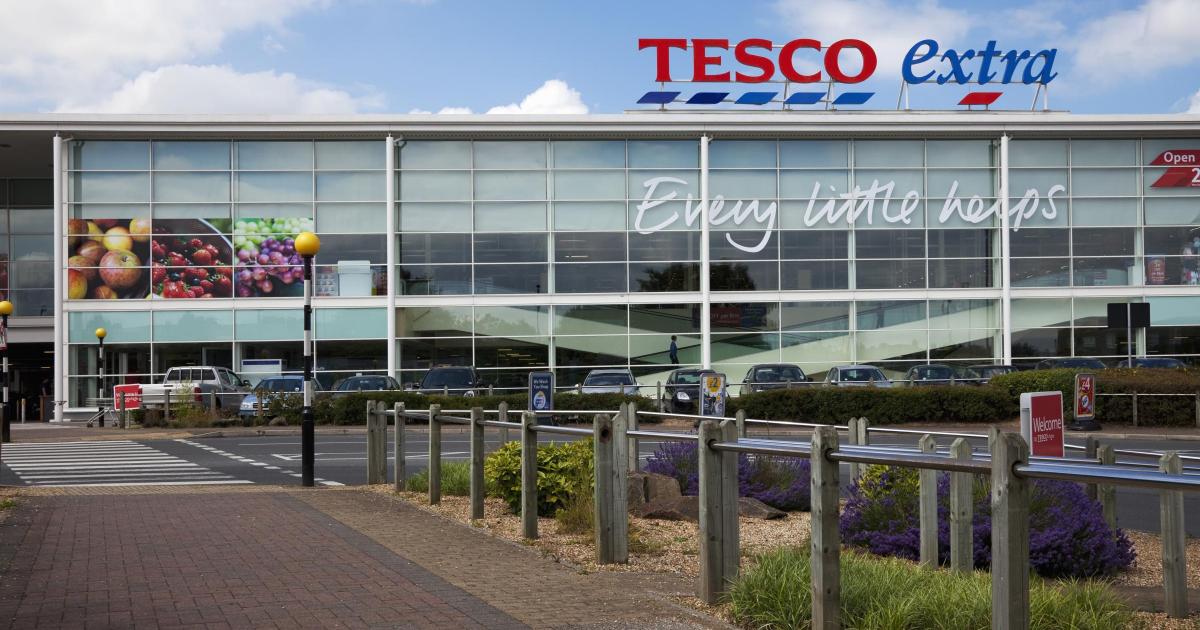
The UK’s biggest grocer described the move as “one of the most revolutionary retailing improvements in decades” which would give customers access to a host of information about products via their smartphones.
QR codes will be applied to the packaging of 13 lines of Tesco’s own-brand sausages including Tesco Pork Sausages, Tesco Pork Chipolatas, Tesco British Pork Sausage Meat as well as British Cumberland Sausages and British Lincolnshire Sausages.
The codes can be used to provide additional product information to customers such as nutritional content, with shoppers being able to use them to access recipes and competitions.
(Image: PA Wire)
Tesco said adopting the new codes would give it better information about products in stores, helping it to order more accurately and improve efficiency, reducing unnecessary waste.
Advertisement
In the event of product recalls, QR codes will allow retailers to identify specific batches instead of removing all items, avoiding throwing products away unnecessarily and improving availability.
Retailers will also be able to block the sale of affected items at the till and contact customers who may have purchased them.
It is part of a wider industry shift led by GS1, the global body responsible for barcode standards, which has set a target for retailers and manufacturers to be ready to accept QR codes.
Tesco development and change director Peter Draper said: “For customers, this is a tiny and almost invisible change at the checkout, but for the retail industry it’s a significant step forward.
Advertisement
“Moving to QR codes will help us reduce food waste, improve stock control and unlock new digital benefits for our customers.
(Image: PA Wire)
“Customers will continue to shop and pay in exactly the same way, but they’ll have the option to access far richer information about the products they buy simply by using their smartphones.
“Over time, this opens up exciting possibilities, such as personalised digital tools to help customers manage the food they buy and reduce waste at home.”
Anne Godfrey, chief executive of GS1 UK, added: “Tesco moving to QR codes powered by GS1 across an entire range marks a significant step forward for UK retail.
Advertisement
“It shows how the next generation of barcodes can support a more connected, transparent future. We hope this progress encourages others to follow Tesco’s lead so that consumers and businesses alike can benefit from richer, more trusted product information.”










.jpg)















































You must be logged in to post a comment Login