Parent-teenager friction is a rite of passage that everyone experiences at some point. Not only is it common, but according to several experts who spoke with HuffPost, it’s also developmentally appropriate.
As they emerge from childhood, teens push boundaries while simultaneously exploring their newfound freedom. At the same time, parents are desperately trying to ensure not only their kids’ safety, but their success as independent adults.
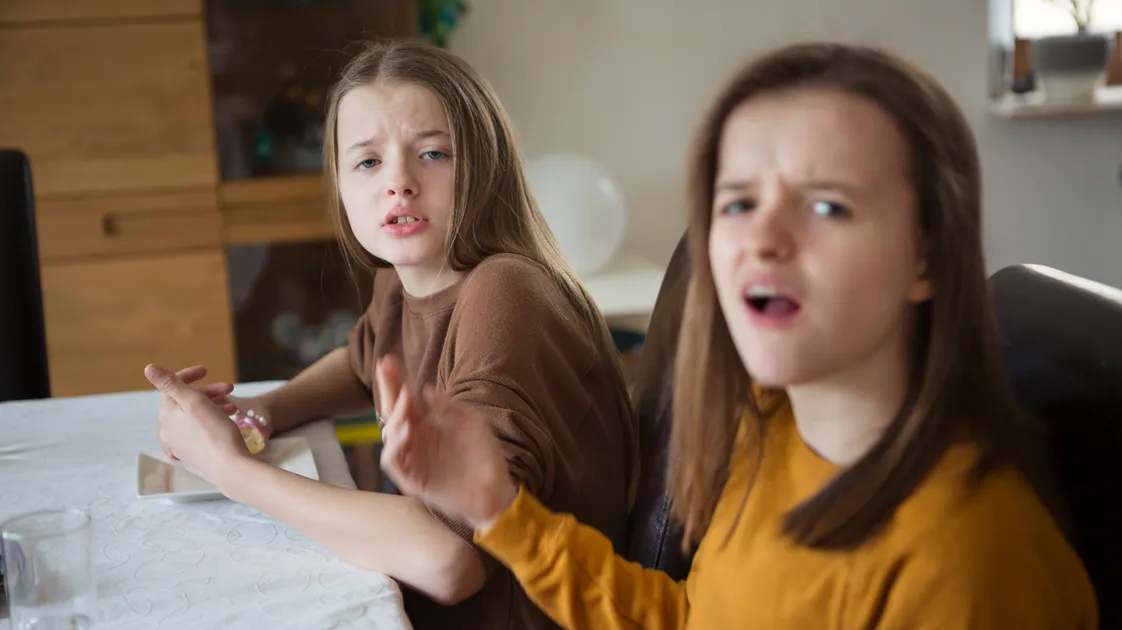
“At the heart of almost every argument between parents and teens is autonomy and agency,” licensed marriage and family therapist Saba Harouni Lurie, the owner and founder of Take Root Therapy, told HuffPost. “Teens are trying to figure out who they are, and that process naturally involves pushing for more independence.”
Parents, on the other hand, “are focused on protection and long-term safety of their kids,” licensed marriage and family therapist Cristina Pasini Billingsley, told HuffPost, “particularly when emotional maturity may not yet align with chronological age.”
Advertisement
Elva Etienne via Getty Images
“Autonomy” and “agency” are at the heart of almost every conflict between teens and their parents.
It shouldn’t come as a shock that this parent-teen conflict usually arises around the following three topics: screen time, homework/grades and chores.
But Harouni Lurie acknowledged that the source of the fight usually doesn’t matter: “What is really happening underneath is a teen saying, ‘I need more space to become myself,’ and a parent saying, ‘I still need to keep you safe.’ Both things are completely valid, and that is exactly what makes it so hard,” she said.
So what do you do when it feels like every day is a battle between you and your teenager?
Advertisement
JJ Kelly, a licensed clinical psychologist known as the “Punk Rock Doc,” advised getting ahead of fights with a parenting contract that families can keep in plain sight on their refrigerator. This document, along with several other practical strategies, can help prevent disagreements from deteriorating into full-on blow-ups.
“When expectations around chores, grades and screen time are written down, agreed upon, and posted on the fridge before a fight ever starts, you’ve already done most of the work,” said Kelly of the parenting contract strategy, offering this free, therapy-informed resource on her website. “There’s nothing to debate. There’s nothing to negotiate in the heat of the moment. You just refer back to what was already decided, together, calmly.”
This contract, along with the following advice from our experts, can be implemented when discussing these painfully common fights parents have with their teens.
1. Screen time (phone use, tablet use, etc.)
Advertisement
Screen time is the root of many parent-teenager conflicts because both sides have valid arguments. Parents are concerned about their teens’ safety and mental health, while teenagers rely on their screens to stay connected to their social world.
Not to mention the fact that screens are highly addictive, by design.
“Screen time is the fight of this generation,” observed Kelly, and it’s uniquely hard because the technology is designed – by some of the smartest engineers on the planet – to be impossible to put down.”
There is no doubt that parental concern about their teens’ exposure to harmful content and predatory adults, as well as social media’s impact on mental health, is legitimate. But Harouni Lurie pointed out that limited screen time can “genuinely feel devastating” to teenagers because devices are the gateway to their entire social existence.
Advertisement
“Social connection is everything at that age,” she said, “and their phone is often the primary way they access it.”
What some parents may not realise is that many teens also use their devices to cope with hard emotions or to decompress. “In moderation, that’s not always a bad thing,” offered Harouni Lurie. But “when a parent takes the phone away or puts heavy restrictions on it, they’re potentially cutting off a coping mechanism and a social lifeline.”
However, the key phrase here is “in moderation,” as Harouni Lurie warned that coping through screens “can tip into avoidance, which doesn’t actually help [teens] process what they’re feeling.”
PixelsEffect via Getty Images
We can’t pretend that teens’ independent social lives don’t require some bit of screen time. But you can tag-team to find the balance and teach them how to identify the ways the screens make them feel.
Get ‘curious’ before implementing boundaries that make sense for your teen
Advertisement
Kelly recommended “getting curious” before establishing any rules or boundaries, and deducing what exactly is driving their teen to seek comfort from their device. Is it anxiety? Social struggles? Overwhelmed at school? Because the goal of screen time limits isn’t compliance, it’s emotional regulation.
“If your teenager is spending five hours a day on a screen, ask yourself – and then ask them – what’s going on underneath that?” said Kelly. Without this fundamental understanding, “taking away the screen without addressing the underlying feeling just moves the avoidance somewhere else.”
Once you have a clearer understanding of your teen’s screen use, you can establish any proposed screen time limits in the parenting contract “before it becomes a crisis,” advised Kelly.
The more details in the contract, the better: hours per day, which devices and which hours of the day. Most importantly, agree upon these limits and write them down “when everyone is calm.” So when limits are crossed, parents can refer to the contract instead of their frustration.
Advertisement
2. Chores
Let’s get real: Nobody likes to do chores. So it’s hardly surprising that our experts pinpoint these essential tasks as a source of conflict between parents and teens.
Yes, the dishes and the laundry need to get done, but that’s not why fights break out. The arguments are really about fairness and respect.
“Teens often feel like their time and their effort aren’t valued, that chores are just one more thing being imposed on them without their input,” observed Harouni Lurie. “Parents, on the other hand, are often exhausted and feel like they’re carrying the household while their teen is checked out. Both of those experiences are real, and when they collide, it tends to get loud.”
Advertisement
The other layer to this conflict is neurobiological: teenage brains literally haven’t finished developing yet, so they don’t understand why the bins need to be taken out now.
“The part of their brain that connects present action to future consequence is still under construction,” explained Kelly. The prefrontal cortex (the seat of long-term thinking, planning and “this will matter later”) isn’t fully developed until people are in their mid-20s. “So when a parent says ‘do your chores,’ the teen isn’t being defiant for sport,” she continued. “[Teens are] operating from a brain that is literally wired to prioritise the immediate. That gap in perception is where the fight lives.”
Chores do help teens learn the skills they’ll eventually need to live alone. But rigidity isn’t necessary to make those lessons stick.
Figure out ways to add flexibility to the standard chore requests
In addition to establishing expected tasks (which chores, how often, etc.) in Kelly’s parenting contract, both Kelly and Harouni Lurie recommended giving your teens some agency over how they contribute to the household.
For example, your teen can choose which chores they take on, or perhaps decide when to do them.
Advertisement
“This kind of flexibility costs you little as a parent but buys a lot in terms of buy-in from teens. Teens are far more likely to follow through on something they helped decide,” Harouni Lurie said.
Kelly echoed the importance of autonomy here as well, because it’s “deeply important to adolescent development.” She pointed out the significant difference between telling a teen, ‘Your room needs to be clean by Sunday evening,’ and ‘Clean your room right now.’ One respects the developmental need for independence; the other triggers a power struggle that neither of you will win.”
Harouni Lurie also advised viewing chores as an essential real-world life skill rather than just a parental demand. “They’re part of learning to function as an adult and as a contributing member of a household.”
Teens who know how to do laundry, cook basic meals, and clean up after themselves will be able to adjust far more easily once they’re living on their own.
Advertisement
But if teens feel the current chore system is unfair, you can absolutely re-negotiate! Kelly recommended having a conversation – calmly – to revisit your assigned tasks. “That’s a mature move,” she noted, “and most parents will respond to it.”
3. Homework and grades
If you’re not fighting over homework and grades, do you really have a teenager? This conflict is rooted in control and anxiety – on, you guessed it, both sides.
“A parent’s instinct is to stay on top of their teen’s schoolwork because the stakes feel high: grades, college, their future,” Harouni Lurie said. “But for a teen, being micromanaged around homework [and grades] is one of the clearest signals that their parent doesn’t trust them to handle their own responsibilities. And trust, at this stage of development, is everything.”
Advertisement
Yes, much of the parents’ anxiety comes from love, acknowledged Kelly, but, she said, “It gets delivered as pressure, criticism or panic, and none of those land the way the parent intends.”
For teens who come home with a low grade, it’s often accompanied by shame and the belief that they are a failure.
“Shame shuts people down,” Kelly continued. “It doesn’t motivate; it paralyses. So you have a parent escalating out of fear and a teen shutting down out of shame, and both of them are doing the exact opposite of what the situation actually needs.”
Leading with shame is far less likely to get you the results you want when it comes to your teen’s school work.
Letting kids experience consequences for their choices is important. But check in on the deeper issues, too.
Harouni Lurie recommended setting clear expectations about when and where homework gets done, and then “letting your teen take ownership of it.”
Advertisement
Understandably, parents want their teen to complete their homework, but ultimately, it’s the teen’s responsibility. If they don’t do their assignments, they will experience the consequences, whether it’s in the form of low grades and a lack of preparedness on the subject.
If grades start to slip, however, parents should talk with their teenager. Harouni Lurie suggested asking direct questions before making assumptions, like, “Is there something making this harder right now?” instead of “Why haven’t you started yet?”
“Before you say a single word about the grade itself, find out what your teen is feeling,” advised Kelly, emphasis on the word “feeling.”
“If they’re already ashamed, piling on with, ‘What were you thinking?’ or ‘You need to do better’ is gasoline on a fire,” she said.
Advertisement
Instead, validate your teen first. “It looks like this was a hard one. What’s going on for you?” Then you can move on to problem-solving. Kelly also recommended adding academic expectations to the parenting contract, with a focus on effort, communication with teachers, and agreed-upon consequences for poor performance – not necessarily specific grades.
“If struggles are consistent,” noted Harouni Lurie, “it may be worth looking into whether there’s an underlying issue, like [ADHD] or anxiety, that needs support.”
Yes, parent-teen fights are common, but they can be healthy, too!
If you feel a disagreement is getting a little too heated, Pasini Billingsley advised parents to first “emotionally regulate before attempting to communicate.” This way, you can approach your teen from a grounded perspective, allowing each side to calmly present their case.
Advertisement
“It’s important to remember that conflict within families, especially during adolescence, is common and expected,” she continued.But, by implementing the strategies discussed above, the ultimate goal is for families to “develop better communication patterns that support emotional resilience and secure relationships.”
Above all, arguments between parents and teenagers can be productive, as long as they are “built on a foundation of respect,” Pasini Billingsley said.
Spider-Man beat the Avengers at the box office. “Spider-Man: Brand New Day” broke the “Avengers: Endgame” record for the biggest North American opening weekend with $360 million in ticket sales from theaters in the U.S. and Canada, Sony Pictures said Monday.
Sony on Sunday projected that “Spider-Man” would net an estimated $355 million in its first weekend playing in 4,487 theaters, just barely missing the 2019 “Avengers: Endgame” record of $357 million. But the fourth Spider-Man movie starring Tom Holland had a stronger than expected Sunday and ultimately came in ahead.
Tom Rothman, the chairman and CEO of Sony Pictures Motion Picture Group said in a statement, “records are made to be broken, but we will take great pride in this one, for as long as we hold it.”
Before “Avengers: Endgame,” no movie had opened over $300 million domestically. The previous record holders were “Avengers: Infinity War,” which launched with $257 million in 2018, and “Star Wars: The Force Awakens” ($247 million in 2015). In December 2021, during the pandemic, the third Holland Spider-Man movie “No Way Home,” earned a place on the list with a $260 million debut on its way to $1.9 billion globally.
Advertisement
The high-earning combination of “Spider-Man: Brand New Day” and “The Odyssey,” which share actors Holland, Zendaya and Jon Bernthal, also propelled a record weekend overall for movie theaters in the U.S. and Canada.
According to Rentrak, the domestic box office overall is up over 15% from last year with over $6.2 billion in ticket sales to date.
Two town centre shops at Newborough in Scarborough have applied to sell alcohol from the early morning, seven days a week, with councillors set to debate the plans at a meeting next week.
If the premises licence applications are approved, the One Stop at 50 – 53 Newborough would be allowed to sell alcohol and stay open from 7am to 10pm, Monday to Sunday.
Meanwhile, the Food Plus at 54 – 55, Newborough would also be allowed to stay open and sell alcohol from 7am to 11pm, daily.
However, concerns have been raised by local residents about the impact on other businesses, customers, and members of the public if the licences are granted.
Advertisement
One objector said: “The area risks becoming an area dominated by off-licence alcohol availability and that is not in the interests of the local community.
“It would increase the risk of alcohol-related nuisance, street drinking, littering, loitering, anti-social behaviour, proxy purchasing, underage access to alcohol and pressure on the surrounding businesses and public areas.”
Google Maps Distance Between The Two Businesses On Newborough Seeking 7am Premises Licences. Google Maps
The objector, who owns nearby commercial premises, has expressed concerns about alcohol-related nuisance and street drinking.
The objector said: “The grant of these applications would, in my view, undermine the licensing objectives, particularly the prevention of crime and disorder, public safety, the prevention of public nuisance, and the protection of children from harm.”
Advertisement
At a meeting on Monday, August 10, members of North Yorkshire Council’s statutory licensing sub-committee will discuss the proposal.
The committee can grant the licences as applied for, subject to any conditions, grant the licences subject to any additional conditions that members consider appropriate, or reject the whole or part of the applications.
The objector has urged councillors to introduce various additional conditions if the licences are granted.
Newborough, Scarborough. Google Maps.
These include restricting alcohol sales to between 10am and 9pm, prohibiting the sale of single cans or bottles, and banning the sale of beer, lager, or cider above 5.5 per cent ABV, except for “genuine premium or specialist imported products sold as part of a multipack”.
Advertisement
The objector also suggested that spirits should be kept behind the counter or in a locked display cabinet, and that the premises should operate a Challenge 25 policy at all times.
Residents and members of the public are invited to attend the committee meeting at Scarborough Town Hall, starting at 10.30am.
Elizabeth Emanuel, who with her husband, designed the wedding dress worn by Lady Diana Spencer at St Paul’s Cathedral in 1981, has a new challenge
The designer of Princess Diana’s wedding dress has created a replica of the late princess’s 40-foot veil – more than four decades after the original went missing.
Advertisement
Elizabeth Emanuel has recreated the iconic embroidered veil, which she originally designed with her husband David for Diana’s wedding to the then Prince Charles at St Paul’s Cathedral on July 29, 1981.
In the decades after the royal wedding, Diana’s famous wedding gown has been on display for visitors of both Kensington Palace in London and the late princess’s ancestral home of Althorp House in Northamptonshire, however her veil has always been missing from the exhibits.
Now, Ms Emanuel has been commissioned by Renae Plant, the founder of the Princess Diana Museum, to bring the veil back to life on the 45th anniversary of the royal wedding.
Advertisement
Taking to Instagram, Ms Emanuel shared some unseen photographs of seamstresses and embroiderers working on crafting the original bridal gown in her small studio in Mayfair back in 1981.
She wrote: “Hard to believe it’s been 45 years since the royal Wedding! The behind the scenes photos bring back so many memories.”
Speaking to People magazine about the remarkable recreation of the veil, Ms Emanuel explained that adding the accessory to future displays will help ensure the ‘whole magic’ of Diana’s wedding look continues to live on in her memory.
Content cannot be displayed without consent
She told the publication: “’That’s why I call it the Veil of Light. You can see the twinkle, and it radiates. The dress isn’t as complete without the veil.”
Advertisement
The designer added that once the veil is added to the whole look, the wedding dress “looks lighter, and has this airy, delicate feel to it which you don’t necessarily appreciate when you see the dress without all of that. It is an integral part of the design.”
To ensure the new veil is as accurate as possible to the original, Ms Emanuel worked alongside London-based embroidery house Hand & Lock, who produced the first veil in 1981, and has also unearthed the initial measurements they used.
45 years on from the royal wedding, which was watched by 750 million people in 74 countries, Ms Plant is set to take the collection on tour in Autumn, allowing members of the public to catch a rare glimpse of the recreated piece for the first time.
David and Elizabeth Emanuel went to extraordinary lengths to keep the design of Diana’s iconic wedding gown under wraps until the big day. The pair even destroyed their sketches immediately after showing them to Diana, ensuring they could never end up in the wrong hands. And should the design somehow be leaked, they crafted a second backup dress as a precaution.
David previously told People magazine: “At the time we wanted to make absolutely sure that the dress was a surprise. We didn’t try it on Diana. We never even discussed it. We wanted to make sure that we had something there; it was for our own peace of mind, really.”
Diana never actually set eyes on the second dress, which was crafted from identical fabric to the first and also featured ruffles around the neck.
South Cambridgeshire District Council ordered the unapproved mobile homes at Southgate Caravan Park to be removed – but a government inspector sided with the site owner
An inspector has allowed the owner of a Cambridge Traveller site to keep extra mobile homes put up without permission after an appeal against the council.
Advertisement
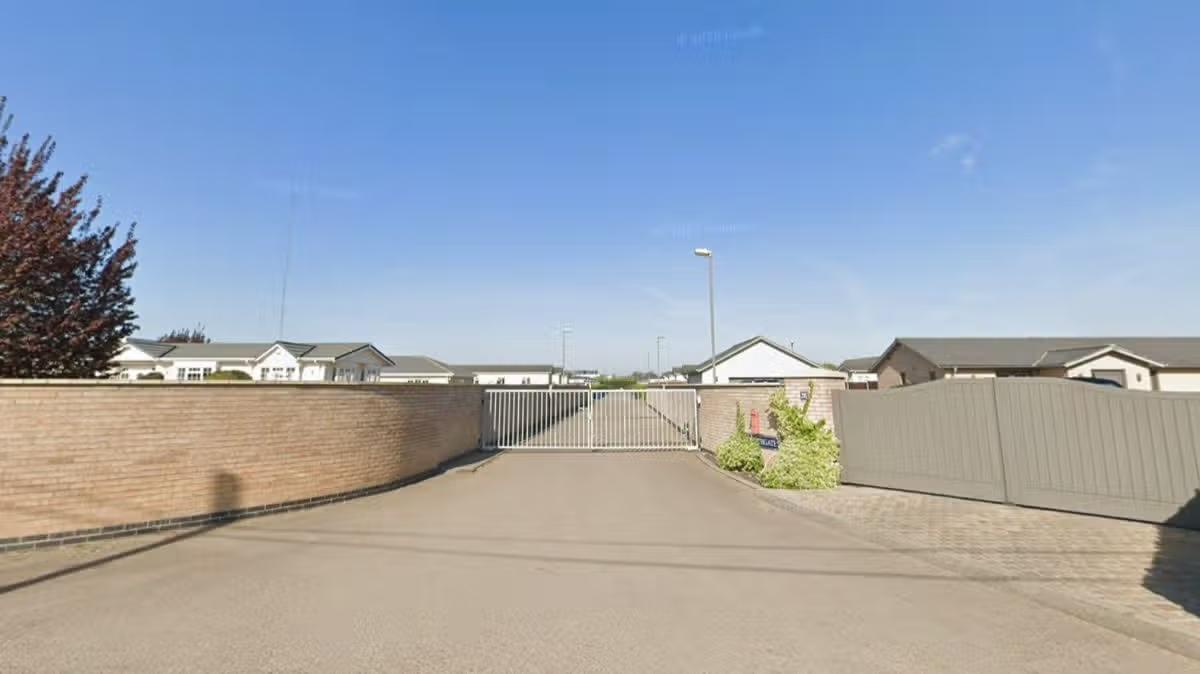
Planning permission was granted in 2008 for 24 mobile homes and two chalets to be sited at Southgate Caravan Park off Fen Road for use solely by Travellers.
South Cambridgeshire District Council issued an enforcement notice in February alleging that more mobile homes had been added and others subdivided. Amos Webb appealed to the Planning Inspectorate with a hearing held on July 14.
The council also said that nine of the mobile homes were “used by persons of several ethnicities and did not identify as Gypsies or Travellers”.
Mr Webb disputed this and said he had made sure all residents were from the Gypsy or Traveller community by checking they “could speak Roma”.
Advertisement
Inspector M Madge said there was no “substantive evidence” to show that only Gypsies or Travellers have used the site.
Mr Webb also appealed on the grounds that the “time that action could be taken had passed”. This was accepted for two of the mobile buildings as they could be shown to have been there for 10 years or more “without significant interruption”.
A building alleged by the council to be an “additional unit of accommodation” was found by the inspector to instead be used as a garage. It can be seen in aerial photographs dating back as far as April 2015.
Another mobile unit was also in photographs from this period. Mr Webb said it was used to provide “additional sleeping and showering facilities”. The council argued this was used as a separate home as it was fenced off from the surrounding pitches.
Advertisement
Inspector Madge said it was “not clear what purpose this mobile home serves” but “it would not be unreasonable to conclude it contains all the required facilities for day-to-day domestic existence”.
There were multiple mobile homes “substantially larger” than the others which the council alleged were sub-divided. The inspector said Mr Webb did not provide any “substantive evidence” to disprove this.
The inspector said these larger units were only visible in aerial images as far back as May 2017, less than the 10-year cutoff. Three more mobile homes were seen to have been placed on the land somewhere between June 2023 and March 2025.
The inspector said that the extra units do not “significantly reduce” outside space and, “seen against a backdrop of mobile homes”, do not “have any adverse effect on the character and appearance of the countryside”.
Advertisement
Though planning permission was only given for 26 homes, they said each pitch “is of a sufficient size to accommodate a mobile home along with associated vehicles, touring caravans and outside amenity space for residents.”
Inspector Madge accepted Mr Webb’s argument that, “as families grow”, residents on the pitches needed extra accommodation or dayrooms and that these extra units “would make a positive contribution” to “facilitating the traditional lifestyle of the authorised users of the caravan site”.
They granted planning permission for the additional mobile home units – under the condition they cannot be used as independent homes “to prevent overcrowding”.
JOHANNESBURG (AP) — A court case opened Monday challenging South Africa’s controversial new law that allows the government to seize private land, which has been at the heart of strained relations with the administration of U.S. President Donald Trump.
The Expropriation Act was signed into law by President Cyril Ramaphosa last year as part of the government’s efforts to address the effects of land dispossession and economic inequality through decades of white minority rule in South Africa that ended in 1994.
Trump has said the law will be used to target white farmers for land seizures and has cited it as a reason why the U.S. has withdrawn all financial aid to South Africa and imposed high trade tariffs on the country. The government denies this, and says the law will be aimed at making unused land productive.
The Democratic Alliance, a political party which is now part of the country’s unity government, has joined with lobby groups to challenge the law in the Western Cape High Court. Lawyers for the groups argued Monday that the law violates the South African Constitution’s protections of private property and prohibitions of expropriation of land without compensation.
Advertisement
Proceedings in the case are scheduled to run through the end of the week, but is unclear how long judges will take to deliver a ruling, which could take weeks or months.
The law allows the South African government to expropriate land from private parties if it’s in the public interest, and it allows for expropriation without compensation if negotiations for a reasonable settlement have failed. The government says the law does not allow land to be taken arbitrarily.
Others parties to the case include the Institute for Race Relations, which argues the law does not adequately protect land owners’ property rights and the Afrikaner lobby group AfriForum.
Afrikaner farmers are descended from Dutch and other European colonial settlers who first came to the country more than 300 years ago. The Trump administration has offered asylum to Afrikaners who claim persecution.
But number one went to military thriller War Machine, starring Alan Ritchson, Dennis Quaid, Stephan James, Jai Courtney, and Esai Morales.
Ritchson “plays a combat engineer who enters the elite US Army Ranger selection process, pursuing a long-abandoned goal he once shared with his brother,” its synopsis reads.
“During the last round of the relentless training program, the candidates find themselves fighting to evade the sights of a massive and mysterious killing machine.”
With a respectable 66% on review aggregation site Rotten Tomatoes, Empire said that while the 2026 film isn’t exactly sophisticated, “there’s something inherently satisfying in watching a man who is 80 per cent bicep hit things with varying degrees of extreme force”.
Advertisement
Or, as The Guardian put it, “Netflix bravely asks: what if Predator but Transformers?” (they gave it three out of five stars).
During the first half of the year, Netflix’s Tudum shared that War Machine racked up a dizzying 146.9 million views.
Perhaps unsurprisingly, the publication added: “A sequel is on the way.”
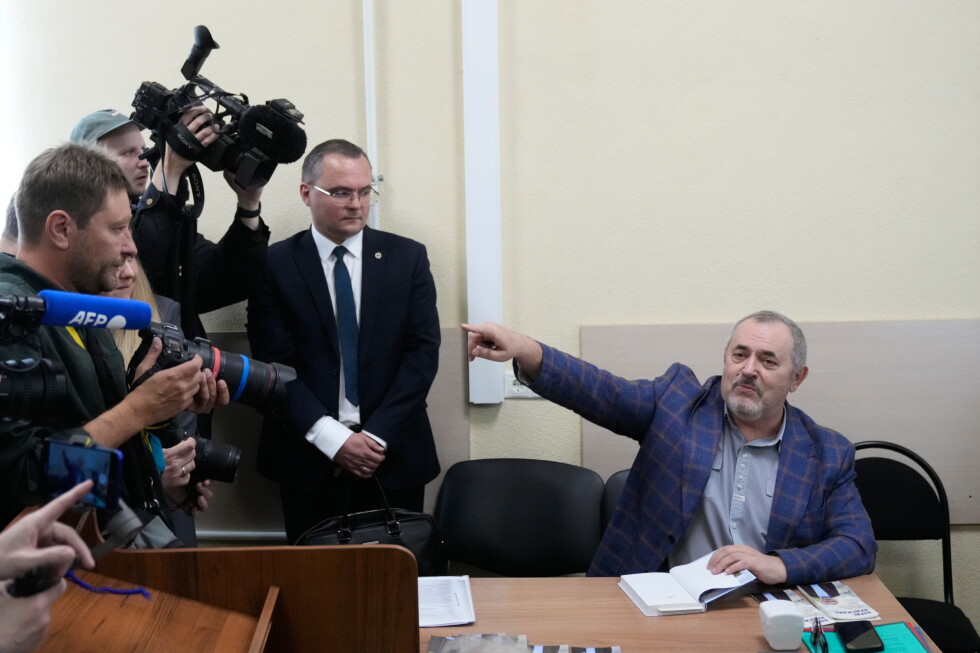
Opposition politician Boris Nadezhdin, who criticized Russia’s war in Ukraine and tried to challenge President Vladimir Putin in the 2024 election, said Monday he has left Russia, a move that follows a crackdown that barred him from a race for parliament this year.
Nadezhdin, 63, shared a video on Telegram, showing him standing in front of the Eiffel Tower in Paris.
“Good news: I’m alive and free. Unfortunately, not in Russia for the time being,” he said, adding that he needs “to look around and figure out life going forward.”
In July, a Russian court fined Nadezhdin about $13 for displaying “extremist symbols,” charges that he rejected as absurd. The accusations stemmed from a 2023 online video that briefly showed a picture of the late opposition leader Alexei Navalny, convicted of extremism in a case widely seen as politically motivated.
Advertisement
Earlier that month, Nadezhdin also was designated a “foreign agent” — a label that brings additional government scrutiny as well as stigmatizing connotations in Russia.
That and a fine on an extremism-related charge barred him from running in September’s parliamentary vote, which is expected to be tightly controlled by the Kremlin.
The ruling United Russia party is seeking to preserve its dominance in the lower house of parliament in a race against the Communist Party and a couple of other parties that vote in sync with the Kremlin on key issues. The campaign comes amid signs of growing public fatigue with the war in Ukraine as fuel shortages and economic pain increase, an environment that reduces the authorities’ tolerance for even token opposition.
In January 2024, Nadezhdin collected thousands of signatures in his run for president as he openly called for an end to the war in Ukraine. But he was kept off the March 2024 ballot after Russia’s Supreme Court ruled that more than 9,000 signatures submitted by his campaign were invalid — enough to disqualify him. Putin faced only token opposition in the election and easily gained a fifth term.
Advertisement
A veteran politician, Nadezhdin worked in the government in the 1990s when he was an adviser to Sergei Kiriyenko, now a top Putin aide. He also served as a lawmaker and more recently became a member of a municipal council. He was one of the few high-profile Putin critics still living in Russia.
Earlier this year, Nadezhdin declared his bid to run for the lower house of parliament, the State Duma, and vowed to continue his symbolic campaign even after the Justice Ministry branded him with the “foreign agent” designation.
Advertisement
Sign up for Morning Wire:
Our flagship newsletter breaks down the biggest headlines of the day.
Advertisement
Another blow came when police briefly detained Nadezhdin and charged him with displaying “extremist symbols.” The politician said he was considering a move abroad but was barred from leaving Russia. It wasn’t clear from his Monday video statement whether the ban has since been lifted, or if he left the country despite it.
After the Kremlin’s full-scale invasion of Ukraine in 2022, authorities ramped up their crackdown on dissent and free speech, relentlessly targeting rights organizations, independent media, members of civil society organizations and Kremlin critics. Hundreds of people have been jailed and thousands of others fled the country.
A new album made from the echolocation calls of bats is inviting listeners to hear one of the UK’s most misunderstood mammals differently
Echo in the Dark, by artists Hanna Tuulikki and Tommy Perman, transforms the ultrasonic calls of eight bat species into electronic music, blending translated bat recordings with the human voice.
Normally beyond the range of human hearing, the calls have been made audible using heterodyne bat detectors, revealing clicks, buzzes and rhythms that can sound surprisingly close to electronic music.
Advertisement
The project began in 2022, when Hospitalfield, an arts venue in Arbroath, Scotland, commissioned Tuulikki to make work inspired by bats after running community bat walks during the Covid lockdowns. She proposed dance music made from echolocation sounds and invited Perman to collaborate.
Advertisement
“It was an easy yes from me,” said Perman, who has long used electronic music to fuse natural sounds with other instruments. “What you hear is extraordinary – clicks, buzzes, rhythms and warbles that could easily be mistaken for samples from electronic dance music. That realisation felt like an invitation we couldn’t ignore.”
The pair made some recordings themselves, gathered others through an open call, and worked with Tayside Bat Group, eventually collecting sounds from 13 of the UK’s 18 bat species. Eight of those species feature on the finished album, their calls processed into beats, melodies and textures, with Tuulikki’s voice woven through them to create what the artists describe as a human-bat hybrid sound world.
Perman said he had wrongly assumed the species would sound broadly similar, but found the variety “astounding”. “The lesser horseshoe bat produces the most beautiful rippling calls that wouldn’t be out of place on a dub record, while the Daubenton’s bat creates amazing syncopated rhythms that sound like a jazz drummer,” he told Positive News.
Advertisement
The first version of the project became a series of outdoor “silent bat raves”, where audiences danced through headphones at dusk while bats few above them. Now the music has been reworked as a full-length vinyl and digital album, released on 28 August through Glasgow independent label KIN-TU.
The artists hope the record can do more than surprise listeners. Bats are crucial to ecosystems, but remain surrounded by unease and superstition. Perman said he was shocked by a recent Bat Conservation Trust survey which found that 46% of people in the UK hold negative feelings about them.
The lesser horseshoe bat produces calls that wouldn’t sound out of place on a dub record
Echo in the Dark is not trying to change that through a lecture. “Dance music has always been a space where people can come together, lose themselves in the moment, and feel part of something bigger,” said Perman. “We hope the album can use that power to nurture a different kind of relationship with the more-than-human world – one rooted in curiosity and care rather than fear.”
Advertisement
The dream, he said, is simple: for someone who has never given bats much thought to put on the record and come away feeling differently. “If it sends even a handful of listeners out into the night to listen for bats, or to support bat conservation, that feels like a genuinely positive outcome.”
Main image: Lawrence Winram
Be part of the solution
At Positive News, we’re not chasing clicks or profits for media moguls – we’re here to serve you and have a positive social impact. We can’t do this unless enough people like you choose to support our journalism.
Advertisement
Give once from just £1, or join 1,800+ others who contribute an average of £3 or more per month. Together, we can build a healthier form of media – one that focuses on solutions, progress and possibilities, and empowers people to create positive change.
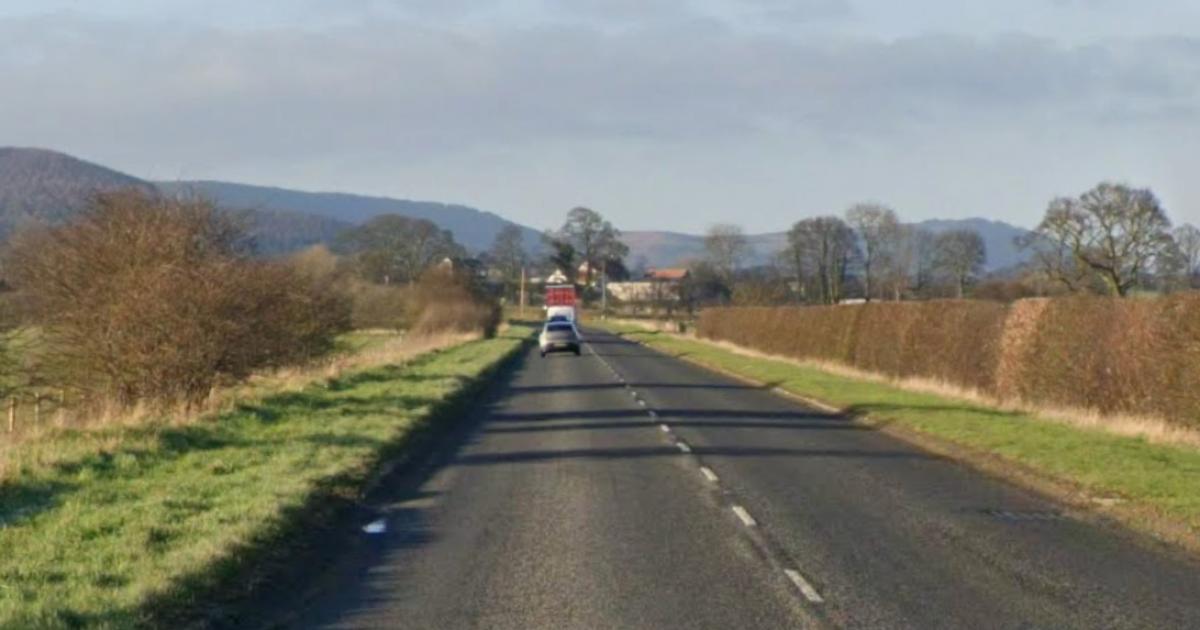
Emergency services were called to the A172, between Thirsk Road and Little Busby, earlier today (August 3) following a crash.
North Yorkshire Police said the road is expected to be closed for some time – with AA Traffic News now showing slow traffic on either side of the closure.
It is not yet known whether anyone has been injured in the incident or taken to hospital.
Advertisement
A force spokesperson said: “We are currently dealing with a two-vehicle road traffic collision between Thirsk Road and Little Busby.
“The road is expected to be closed for some time. Motorists are advised to find alternative routes in the meantime. Reference: NYP-03082026-0290.”
The Yorkshire Ambulance Service has been contacted for more information.

























































You must be logged in to post a comment Login