Connect with us

NewsBeat

Tottenham vs Getafe: Prediction, kick-off time, team news, TV, live stream, h2h results, odds today

Published

on

Tottenham vs Getafe: Prediction, kick-off time, TV, live stream, team news, h2h results, odds

It has so far been a successful summer for Spurs, having beaten MK Dons, Auckland FC, Sydney FC and, most recently, Chelsea as they prepare for the new season.

There has also been positive news on the injury front, with Dejan Kulusevski and Mohammed Kudus back in training.

Source link

Advertisement
Continue Reading
Click to comment

You must be logged in to post a comment Login

Leave a Reply

NewsBeat

Britain must keep its promise to those Afghans who fought alongside our forces

Published

on

Britain must keep its promise to those Afghans who fought alongside our forces

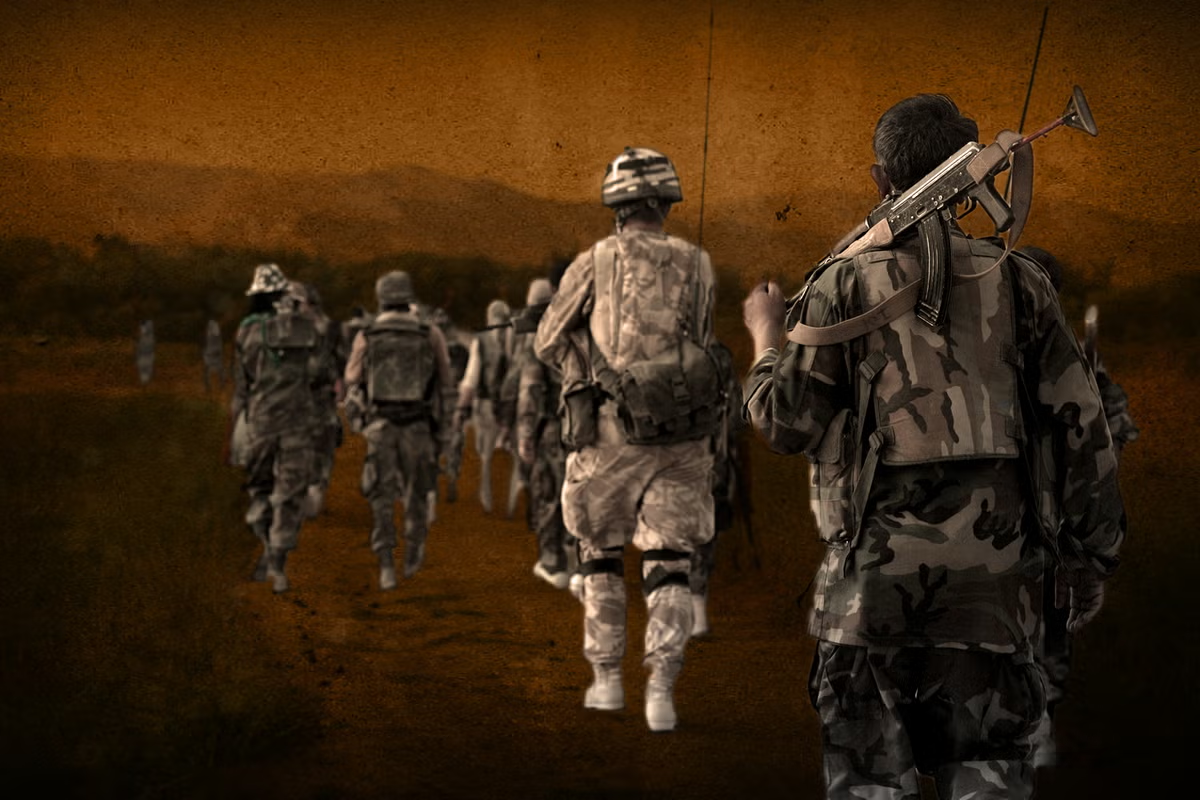
As a matter of national honour, the British government must stop dragging its feet in protecting those who served alongside our troops in Afghanistan. As we report today, the Ministry of Defence (MoD) has admitted in an internal review that Afghans who worked with British forces are still likely to be at risk from Taliban retribution.

Despite this admission, in June last year the government stopped evacuating families who had already been approved for sanctuary in Britain. Luke Pollard, the defence minister, announced in April this year that Afghan families eligible for relocation would have to flee the Taliban-run country on their own.

He told the Commons in a written statement that the thousands of Afghans still waiting would “need to make their own way to a third country when they are able to do so”.

The Independent can now reveal that a review carried out by the MoD in February concluded that “the risk to individuals who may be eligible … remains real, albeit diminished”.

Advertisement

The review tried to minimise the dangers to Afghans who served with or worked for British forces during the 20 years that Western troops occupied the country before the Taliban regained control in 2021. It described the threat as “selective and localised” and that recent attacks, including killings, of Afghans “may well be the result of recent transgressions, rather than their previous affiliation” to the UK government.

These excuses are beside the point. The British government made a solemn promise to those Afghans who worked with the British that they would be protected. Many thousands of them have been given sanctuary in Britain, but there remain about 7,000 who the MoD accepts are in danger and are therefore eligible for resettlement, but who are still in Afghanistan or neighbouring countries, mainly Pakistan and Iran.

This number is higher than it would have been because of the catastrophic data breach in 2022, when the MoD accidentally sent out a list of Afghans who had worked with the British by insecure email. This was an error for which the British government has to take responsibility, and yet too much of the response to it involved obfuscation and delay.

We are concerned that this approach, to make it difficult and slow to make it to safety, is typical of the British state’s attitude to its obligations to Afghans generally. We are proud to have played a role in the Home Office’s decision in 2023 to grant indefinite leave to remain for the Afghan pilot who was threatened with deportation to Rwanda.

Advertisement

But throughout The Independent’s long campaign to hold the government to account for its promises, we have suspected that the unspoken view among ministers and officials is that obstruction and delay are an effective way of discouraging applicants.

This is unacceptable. We understand that immigration is a sensitive political subject, and we share the public’s dismay at the previous government losing control of the system, allowing too many work visas and dependants. But the Afghan situation is specific, limited and a question of principle. Public opinion supports the government in delivering its obligations to those who served alongside our troops or who put themselves at risk by working to assist them as translators, guides or administrators.

It is now time, five years after the fall of Kabul, for the government to end the delays, the excuses and the attempts to minimise the dangers. Of course, applicants must be checked, and undesirables must not be allowed to take advantage of British generosity, but we are now talking about thousands of people who have been accepted for protection but are unable to make it to safety.

The UK must at long last finally discharge its obligations to our Afghan allies, promptly and in full.

Advertisement

Source link

Continue Reading

NewsBeat

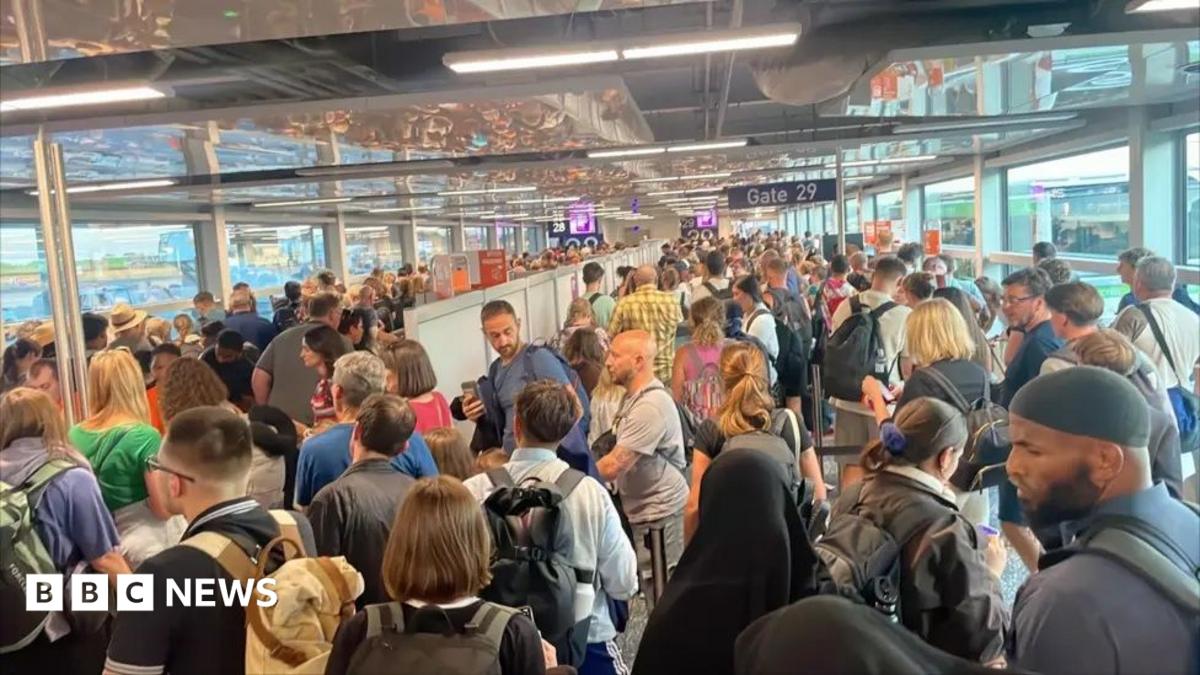
Bristol Airport disruption a ‘shambles’ as flights restart

Published

on

Three side by side photos from left a woman's legs wearing a skirt and flip flops, a man's legs wearing shorts and a woman wearing a white strappy top

Anyone caught up in the disruption should contact their airline, they added.

No further official information about the nature of the defect has been released.

A number of people spoke to the BBC on Friday evening about their experience at the airport – among them Paul Smith, who was due to fly to Glasgow for his son’s 20th birthday but had to cancel his trip.

“The communication, advice and support for passengers has been really poor,” he said.

Advertisement

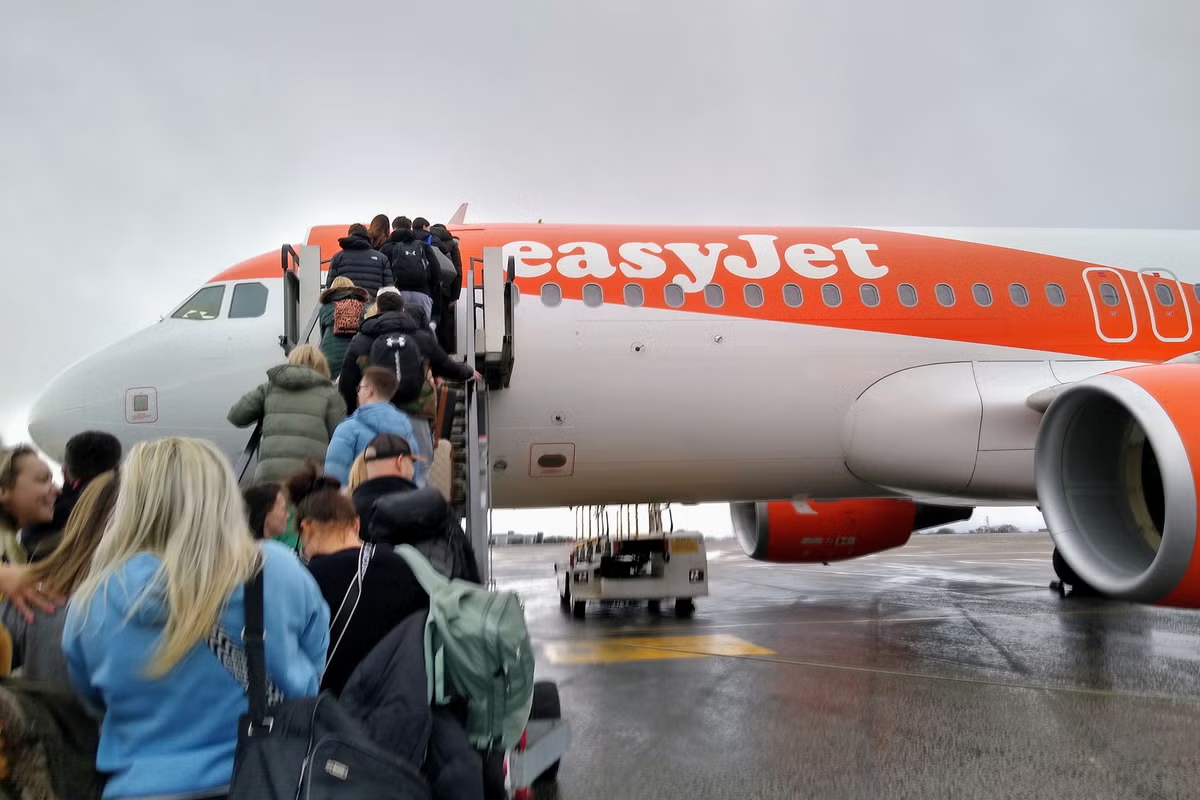
There were no announcements on the tannoy system for over an hour, he said, which meant EasyJet reps in the departure lounge were the only source of information.

“What we’ve heard is that there’s a hole in the runway.”

Dave Blackwell, travelling home from Rhodes in Greece, said it had been “a shambles” since his flight back to Bristol was diverted to Newcastle.

“We were in Rhodes Airport for three hours with no information. Now we have all been told our flight is going to Newcastle and then a five or six hour bus ride – why Newcastle? How appalling,” he said.

Advertisement

Are you waiting for a flight to or from Bristol Airport? Please use the form below to get in touch and tell us your experience.

Source link

Continue Reading

NewsBeat

Flight attendant shares airplane hack to get more space on long-haul travel

Published

on

Belfast Live

A flight attendant has shared a simple yet effective airplane armrest hack to help passengers feel more comfortable on long-haul flights – and it involves a little-known hidden seat button

Flying can prove to be quite a stressful experience, especially if you’re not among the privileged few who can afford to fork out for business class tickets. No one wants to be stuck in the same seat for what can seem like endless journeys, boredom and discomfort often take over – particularly when you’re squeezed in on a row with total strangers.

While the cheaper economy class seats are known to be cramped, and on protracted flights, this frequently leads to significant discomfort and potentially severe health complications. Sitting down on a plane seat for longer periods of time has been proven to sometimes cause muscle cramps, bloating, and, in extreme circumstances, deep vein thrombosis or blood clots.

Advertisement

This is exactly why, if you’re planning to undertake a long-distance flight in the coming weeks or months, prioritising your comfort and physical wellbeing is absolutely essential.

While certain tactics can improve your comfort – including wearing baggy clothing, investing in noise-cancelling headphones, and packing a neck pillow – these remedies don’t always prove effective.

To help passengers in getting more comfortable in their seat, a flight attendant named Charlie Silver, from Manchester, has revealed her ultimate comfort hack for your upcoming flight, particularly when you’re wanting a bit more space in your seat.

How to get more space in a plane seat

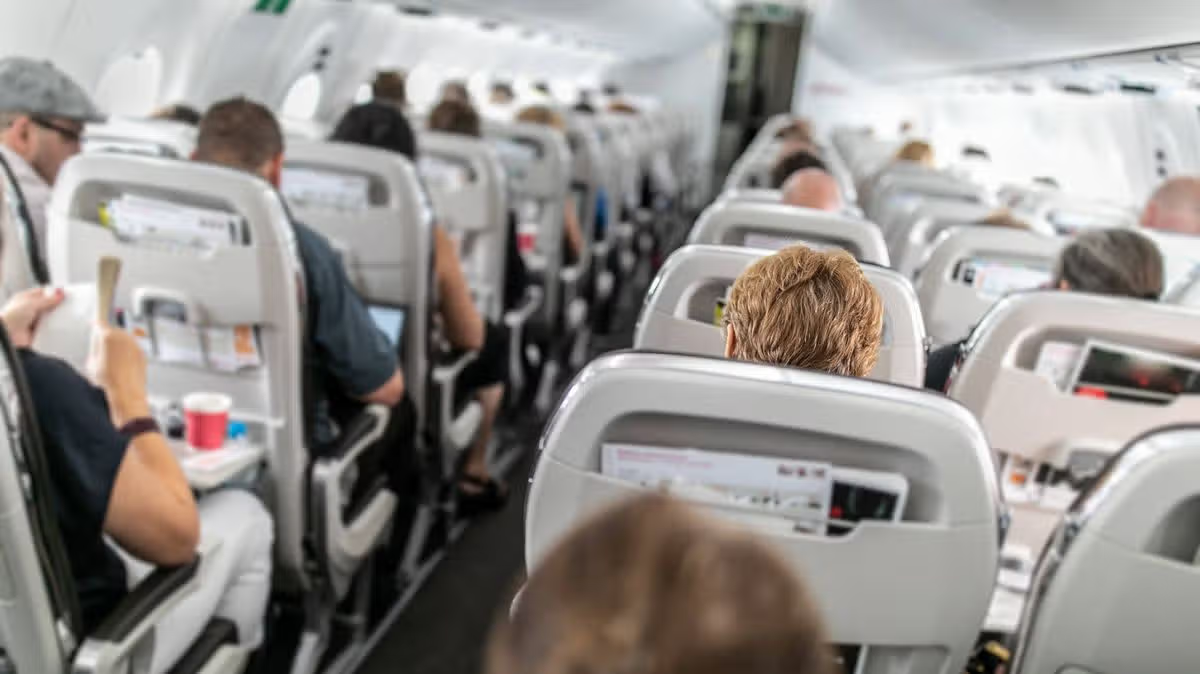
In her video demonstration, Charlie is positioned in an aisle seat on board a plane, showing how the exterior armrest functions distinctly from the remaining armrests in that row – crucially, it doesn’t fold upwards.

Advertisement

“Are you sitting on the aisle seat, wondering why your armrest doesn’t go up?” she asked in her video. “Well, here you go. Here’s a little hack for you.”

Content cannot be displayed without consent

She went on to share how to find a concealed button on the armrest, enabling her to move it as she pleased and thereby giving her more room in her seat.

“Press this little hidden button and voila. Your armrest will move freely up and down,” she said, pointing out the small lever-style button that was within easy reach while sitting down.

Using it means travellers can raise the armrest, creating more room in their seat for enhanced comfort. While it might just give you a couple of extra inches in the seat, this can mean a lot if you’re stuck in your seat for hours at a time.

Advertisement

Numerous viewers were quick to praise Charlie for her simple yet handy suggestion, though some noted it hadn’t worked on their flights.

“The flight attendants always make me put it down,” one person observed. Someone else explained: “You have to put it down for take off and landing, but you should be able to have it up during cruise.”

Another viewer wrote: “This hack is great for when you’re going into the row or getting out.”

“Nah! Needed to see this at the beginning of the year! Why’s it so hidden,” wrote another, clearly frustrated they hadn’t discovered it earlier.

Advertisement

However, not everyone was impressed by the revelation, with several expressing astonishment that it wasn’t widely known: “I thought everyone knew that.”

Source link

Continue Reading

NewsBeat

Drugs seized and two shops closed in Bolton crackdown

Published

on

Drugs seized and two shops closed in Bolton crackdown

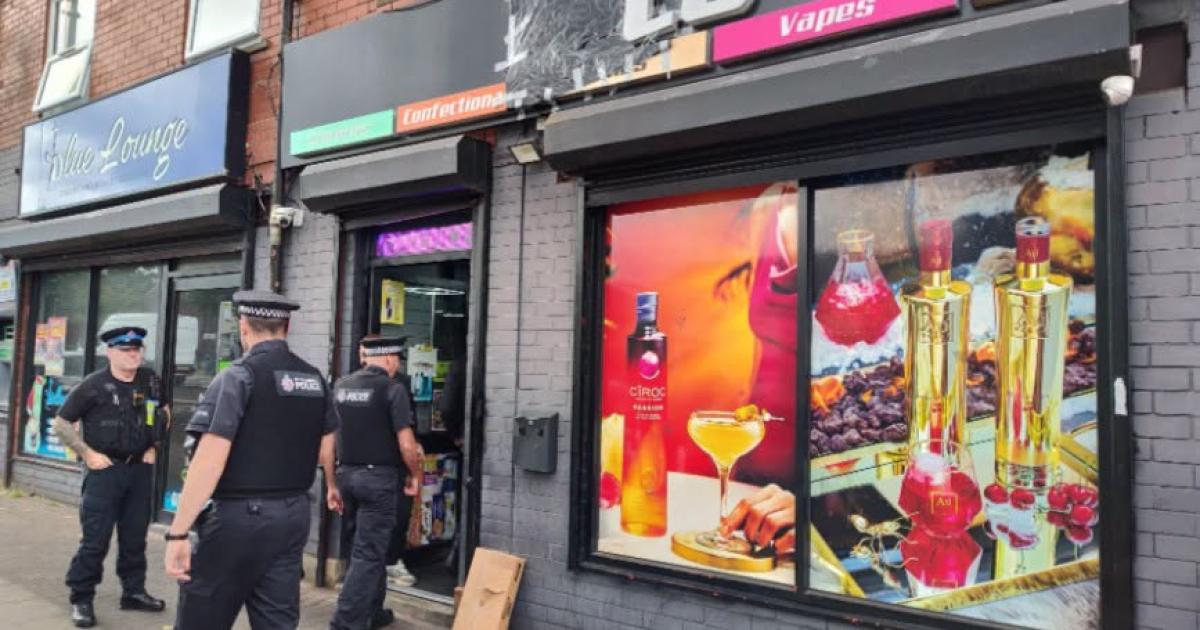
Great Lever’s Neighbourhood Policing Team led the operation, focusing on removing illegal drugs from the streets and ensuring businesses comply with the law.

At the weekend (Sunday, August 2), officers on patrol found an abandoned vehicle, with checks later confirming that it had no current keeper and no insurance.

Inside the vehicle, officers discovered 49 boxes of nitrous oxide, a Class C drug.

Sergeant Daniel Richards from GMP’s Bolton neighbourhood team said: “The last few days have seen several successes for our team – taking illicit and dangerous drugs off the streets, and working with partners to secure the closure of shops suspected of criminality.

Advertisement

“While we will always work to tackle these sort of issues, our work can take many forms – from proactive patrols to local engagement and preventative work with the local council and other teams to address issues affecting residents in our area.

“I would urge anyone with anyone with issues to please get in touch with us, as it all informs our work and we will do what we can to help you.”

The nitrous oxide was seized this week. (Image: GMP)

Nitrous oxide can cause serious health risks and has been linked to fatal and life-changing road collisions in Greater Manchester.

The canisters were seized, and officers have gathered further intelligence as part of ongoing efforts to reduce the drug’s use.

Advertisement

On Monday, the team executed a warrant at a property on Grosvenor Street following reports of illegal substances.

A small amount of recreational steroids was found and seized.

A man was given an out-of-court disposal and a warning.

In addition to drug enforcement, officers secured three-month closure orders for two shops on Derby Street in Great Lever.

Advertisement

Great Lever’s Neighbourhood Policing Team lead the operation. (Image: GMP)

These closures followed reports of anti-social behaviour linked to the businesses.

The neighbourhood team said it remains committed to addressing both criminal activity and the wider community concerns that contribute to anti-social behaviour.

Their work includes direct enforcement, engagement with residents, and joint initiatives with the local council.

Officers continue to encourage residents to report any concerns or suspicious activity to help inform future operations and keep the community safe.

Advertisement

Source link

Continue Reading

NewsBeat

ROBERT HARDMAN: How happy-clappy rewilders, wilfully ignoring centuries of wisdom and experience, are making Britain a tinderbox

Published

on

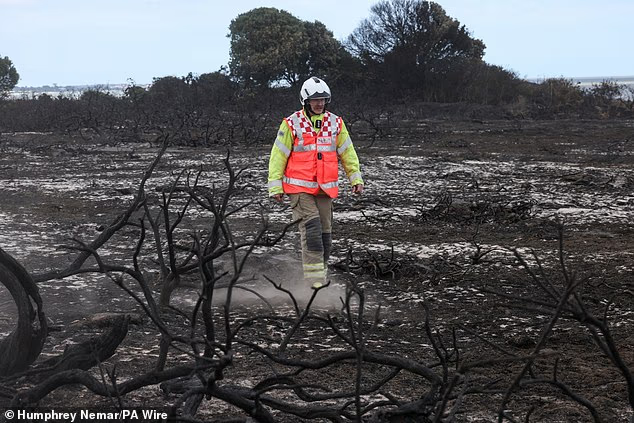
Emergency services inspect the scene of the wildfire at Dunwich Heath, on the Suffolk coast on July 31, 2026

While the old adage of ‘no smoke without fire’ may be true, the reverse is not. From Suffolk to the Peak District to the Cairngorms, pockets of fires are still furtively flickering away, smokeless, unseen and underfoot, in roots, animal burrows or a seam of peat. Sharp-eyed fire crews remain on standby, ready to pounce on the next flame to pop up from the underworld.

The worst may be over – for now, although a new heatwave is on the way – after the spate of wildfires breaking out across Britain in recent days. But the damage – not just to the landscape but the wider tourist industry – reflects a disturbing reality: These things now spread further, faster and deeper than they used to.

And it’s certainly not just down to climate change.

The rise of the fashionable new doctrine that nature is ‘best left to itself’ is leaving mountains of flame-ready brushwood waiting for a spark.

Advertisement

And where, in the past, a live-in gamekeeper might have been on the spot in a trice to swat a wildfire before it got going, much of the countryside is now administered by a nine-to-five lanyard class who are expressly forbidden from tackling anything riskier than a bin fire in the office waste paper basket.

In Suffolk, much of Dunwich Heath and Minsmere, a great sprawl of ancient wood, heather and grassland, resembles a First World War-style wastescape of ash and the odd gnarled tree.

Two nature reserves – one run by the Royal Society for the Protection of Birds and the other by the National Trust – have been wiped out.

The disaster zone equates to 210 football pitches, so we are told by the local authorities who think that the public find a sporting analogy easier to digest than ‘371 acres’. Or, to put it another way, that equates to seeing London’s Hyde Park or three-quarters of Monaco go up in smoke.

Advertisement

Emergency services inspect the scene of the wildfire at Dunwich Heath, on the Suffolk coast on July 31, 2026

A firefighting helicopter scoops up seawater in attempt to control the Dunwich Heath wildfire

A firefighting helicopter scoops up seawater in attempt to control the Dunwich Heath wildfire

The destruction further north has been much worse. The losses at Tintwistle Moor and Dove Stone in the Peak District have been officially rated as 1,250 football pitches, while the destruction in the Cairngorms stands at 3,500 pitches (ten square miles in old money). In each area, the fire crews have performed heroically, assisted by quick-thinking local farmers, gamekeepers and volunteers.

Advertisement

In Suffolk, for example, families had to be plucked from caravans in the dead of night as the flames were heading to a holiday park and, for a while, towards nearby homes.

Ultimately, not a single shed or mobile home, let alone a human life or residence, was lost. The sense of relief round here is palpable.

But now that these wildfires have been largely stamped out, a similarly incendiary debate has already started over the best way to minimise the damage in future.

In very broad terms, it boils down to those, on one side, who think our countryside should be proactively managed the way it has been for generations by people living and working on the land.

Advertisement

Then there are those, on the other, who want it to revert to a more ‘natural’, less human-centric state, a doctrine usually described as ‘rewilding’.

It is a quarrel variously painted as tweedy traditionalists versus dreamy idealists; horny-handed countryfolk versus eco-zealots. Scratch a little deeper and you are soon into culture war/class war/political territory, too.

All can happily agree on a few things. First, idiots will always be with us, dropping fag ends and glass or lighting camp fires in hot weather.

Second, climate change, scorching temperatures and dry, tinderbox summers are now set to be the norm. Views then differ radically on what can be done to make the countryside less flammable.

Advertisement

It is clear that the more we leave woods, grass, heather and gorse untouched by human hand, the more an area accumulates what the authorities call ‘fuel load’ – and what the rest of us call ‘kindling’.

Yet the rewilding lobby argues passionately that rewilding leads to ‘rewetting’ – the benefits of dam-building beavers are often cited – and, thus, a wetter countryside is less likely to burn.

‘This cult has grown up saying, “Man bad, nature good”; that any human intervention is a bad thing,’ says Tim Bonner, chief executive of the Countryside Alliance. ‘At a time when the environmental movement could not be more right about the challenges of climate change and dry summers, it is exactly the time when more management is needed.

‘But the environmental movement and government agencies like Natural England have increasingly moved towards this sort of hands-off, happy-clappy, rewilding idea that if we just let nature go, it’ll all be fine.’

Advertisement

Almost every wildfire turns out to be the fault of a human (though the odd lightning strike can be to blame). Last month’s blaze above Dove Stone reservoir in the Peaks followed the drowning of a teenager whose friends had returned to honour him with fireworks. One of those set off the heather on the moor above.

However, it has not gone unnoticed that some of the worst wildfires have occurred in places with higher fuel loads – i.e. those where the orthodoxy of rewilding is embraced.

Every wildfire is different but the hottest topic in the rewilding debate concerns the management of our moorland. For this fight spills over into class, politics and animal rights.

An estimated one million acres of British moorland is dedicated to grouse shooting. Most of that land sits inside our national parks, says the pressure group Rewilding Britain, a staunch foe of ‘intensively-managed grouse moors which leave nature impoverished and contribute to climate breakdown’.

Advertisement

They argue that the traditional maintenance of grouse moors, which involves burning patches of heather in rotation during winter to promote heather regeneration, causes lasting damage to the peat beneath it.

Much better, say the rewilders, to leave nature well alone, let the peat soak up more moisture and, over time, see the heather give way to moss. They also want to block up moorland drains or ‘grips’ (historically created to promote sheep farming) that take water off the hills.

Though moorland is not prime beaver territory, the aim is rewetting as well as rewilding. Underpinning this, though, in many cases, is a simple dislike of wealthy people shooting small birds. With the grouse-shooting season almost upon us – Wednesday is the ‘Glorious Twelfth’ – the issue is a live one right now.

The shooters, estate owners and gamekeepers, however, point out that a grouse moor is not only much more eco-friendly than a hands-off hillside but it is far less likely to suffer a wildfire precisely because it is actively managed. By burning selected or ‘prescribed’ areas each winter, the moor becomes a ‘mosaic’ of heathers of different ages, each of which will promote different species of wildlife at different stages in the plant’s growth.

Advertisement

Overall, the whole patchwork is less susceptible to a fast-moving blaze because the newly-burned parts of the ‘mosaic’ serve as fire breaks. Furthermore, say the grouse lobby, winter burning or ‘muirburn’ does no damage to the peat.

With 30 years of gamekeeping behind him, moorlands expert Richard Bailey points to an online video showing a keeper placing a Mars bar underneath a patch of moorland heather.

Smoke rises in the distance over Dunwich Heath

Smoke rises in the distance over Dunwich Heath

Evacuated residents gather at Westleton Village Hall

Evacuated residents gather at Westleton Village Hall

Advertisement

Join the discussion

What’s the best way to protect Britain’s countryside from wildfires?

This then gets a full winter torching. The top of the heather is frazzled but the Mars bar underneath is unscathed in its wrapper, thus proving that the peat below is unharmed. A wildfire, on the other hand, burns down to the roots and would have incinerated both the Mars bar and the peat, too.

Peak District-based Mr Bailey, who was invited to address a parliamentary committee on the subject, has spent recent weeks helping out round the clock to put out the blazes in his area.

Advertisement

It is no coincidence, he points out, that these have occurred on non-grouse-shooting land run by the RSPB. He does not deny that wildfires can sometimes start on a grouse moor – and it does happen – but he argues that it is much less likely to take off at speed because the ‘fuel load’ is greatly depleted.

As for the rewilders’ plans to rewet peat bogs, typically over a 50-year period, he says that it is a nice idea but self-defeating if wildfires are going to incinerate the land in the meantime.

Mr Bonner points out that where locals burn heather in non‑grouse-shooting areas – such as Dartmoor – there is no vocal opposition because the beneficiaries there are animals, not gun-toting toffs in plus fours.

Mr Bailey says that Greater Manchester fire brigade regularly seeks training and advice on moorland fires from estate gamekeepers because they have been managing moors for generations. He also notes that the brigade were very grateful for the help of 20 gamekeepers who worked round the clock on the Tintwistle fire for ten days – equating to 2,289 man-hours at no public cost.

Advertisement

He states that charity staff and civil servants, through no fault of their own, are told not to tackle any fire greater than one square metre and must dial 999 instead. ‘By the time the crews get there, the fire is going to be well under way,’ he says.

Down in Suffolk, I check out the impact on the local economy. It’s lunchtime in the enchanting village of Dunwich in what should be one of the busiest weeks of the year – and the place is ghostly.

The authorities have been telling everyone to ‘avoid the area’, even though Dunwich is perfectly safe – and well worth a visit. So, too, is neighbouring Westleton which responded magnificently when the fire broke out. Barbara Buckley, chair of Westleton village hall, and her neighbours were up all night finding accommodation for the refugees from the holiday park near the burning heath.

People here want to get on with their lives, not debate the merits of rewilding. However, one local farmer points out that the RSPB’s Minsmere reserve hardly needs rewetting since much of it is marshland, while its fire breaks were ‘woeful’.

Advertisement

The village hall remains the local information hub. One of those dropping in is the gardener for film star Ralph Fiennes who has a house inside the sealed-off security zone. Like all the others, it is fine thanks to the swift response of the fire brigade.

I talk to the actor’s brother, Jake Fiennes, a prominent countryside expert who runs the award-winning operation at Holkham Hall, the Earl of Leicester’s 25,000-acre estate in neighbouring Norfolk.

He has friends on both sides of the rewilding debate but wants to see us move on from its divisive tone. ‘We are on a small island on the edge of the Atlantic that has been managed by Man for millennia.

‘I get frustrated by the ecological language which alienates those who have historically managed land through different processes. There has to be compromise, partnership and understanding. I prefer to talk about restorative agriculture.’

Advertisement

Having grown up near Dunwich, he is very familiar with the burned-out area. He reflects that some of the heathland there had been left untouched for too long and had become, as he puts it, ‘rank’.

The RSPB also questions the language of the debate.

‘Rewilding means different things to different people but restoring and protecting natural processes in the right places can have real conservation benefits,’ a spokesman tells me.

‘That said, the heathland at RSPB Minsmere and our other lowland heathland sites is the very antithesis of what many consider to be “rewilding”. These landscapes are actively, carefully and continuously managed.’

Advertisement

He adds that the RSPB does provide firebreaks: ‘We take the risk of wildfire exceptionally seriously across all our reserves.’

The National Trust says it is equally committed to safety but that its eight-metre firebreaks at Dunwich were overwhelmed by 40-metre flames. It adds: ‘There is no rewilding policy at Dunwich Heath or anywhere at the National Trust. Our decisions are guided by science.’

It rejects the use of selected winter burning to reduce fuel load, saying there is ‘limited evidence’, adding: ‘We prioritise nature restoration over routine burning because healthier, wetter landscapes are more resilient to wildfire’.

Judging by recent events, those beavers have a great deal left to do.

Advertisement

Source link

Continue Reading

NewsBeat

Transfer news LIVE: Man City reject Rodri bid, Arsenal identify Vinicius Jr alternatives, Man Utd done deal

Published

on

Transfer news LIVE: Man City reject Rodri bid, Arsenal identify Vinicius Jr alternatives, Man Utd done deal

Arsenal hold nerve after missing out on Vinicius Jr with three alternative targets

Mikel Arteta is still eager to bring in a new left winger, though, with three notable options still on the table.

Arsenal made a serious bid to sign Vinicius Jr, with an agreement close on personal terms, but the 26-year-old ultimately opted to commit his future to Madrid in a deal until 2032.

Harry Latham-Coyle8 August 2026 07:00

Advertisement

Manchester City reject first Barcelona bid for Rodri

No meaningful talks have taken place between the clubs yet with City reluctant to enter negotiations until there is the prospect of a deal near their valuation of the midfielder.

Harry Latham-Coyle8 August 2026 06:00

Advertisement

Man City line up James Trafford replacement as Leeds pay record fee to solve goalkeeper woes

Leeds United have signed James Trafford from Manchester City for a club-record fee of up to £45m and City are already lining up a replacement.

City, who have inserted a 20 per cent sell-on clause, also have a matching rights option to sign Trafford for a third time if and when he leaves Leeds.

Richard Jolly8 August 2026 05:00

Advertisement

Why Arsenal had to sign Bruno Guimaraes – and how he fits into Mikel Arteta’s midfield

It’s a significant signing for Arsenal – and perhaps one they had to make. Jamie Braidwood explains:

Harry Latham-Coyle8 August 2026 03:00

Newcastle sporting director admits Bruno Guimaraes wanted to leave

Ross Wilson, Newcastle’s sporting director, has revealed that Bruno Guimaraes expressed his desire to leave the club – providing little choice as they granted him a switch to Arsenal.

Advertisement

“What we had to weigh up was, very respectfully from Bruno with his behaviour towards us, very emotionally as well, he effectively told us he wanted to leave and move on,” he said.

“That doesn’t mean he can go, but it certainly plays a part in what our thinking is when we hit a certain range of number.

“There’s no part in saying it was part of our strategy and was in our thinking this summer – it wasn’t.

“But we have got to be flexible and react to things that happen.”

Advertisement
Bruno Guimaraes has joined Arsenal (Action Images/Reuters)

Harry Latham-Coyle8 August 2026 02:00

Manchester United continue squad overhaul by offloading goalkeeper

The Spanish club have an option to buy the Turkey international, reportedly for a fee of £3.5m, which would give United a high sell-on clause on top of that.

Harry Latham-Coyle8 August 2026 00:01

Advertisement

The real reason Chelsea signed Jordan Henderson

Speaking of former Liverpool players, Jordan Henderson is a surprise signing for Chelsea but, as Jack Rathborn explains, Xabi Alonso could lean on the 36-year-old to help establish his ideas at an unstable club:

Harry Latham-Coyle7 August 2026 23:00

Advertisement

The cold truth behind Mohamed Salah’s move to Turkey’s fourth-biggest club

Mohamed Salah will be something of an incongruous sight at Trabzonspor – a stark drop in prestige from Liverpool – but the move to football’s growing, lucrative retirement home does offer intrigue, Richard Jolly writes:

Harry Latham-Coyle7 August 2026 22:00

Manchester United told Lewis Hall not for sale

According to Sky Sports, Manchester United have been told that Lewis Hall is not for sale by Newcastle as the Tyneside club bid to hold on to at least one key figure this summer. Manchester United are keen to add a versatile left-back option but knew a deal for Hall might be difficult – and it appears he’s likely to stay at St James’ Park.

Advertisement
Lewis Hall appears set to stay at St James’ Park
Lewis Hall appears set to stay at St James’ Park (Getty)

Harry Latham-Coyle7 August 2026 21:00

Martin O’Neill health update after Celtic boss hospitalised for ‘small procedure’

Celtic manager Martin O’Neill is out of hospital and in “good form”, assistant Shaun Maloney has confirmed.

The Parkhead club announced on Wednesday that the 74-year-old Northern Irishman had undergone a “small procedure”.

Mike Jones7 August 2026 20:30

Advertisement

Source link

Continue Reading

NewsBeat

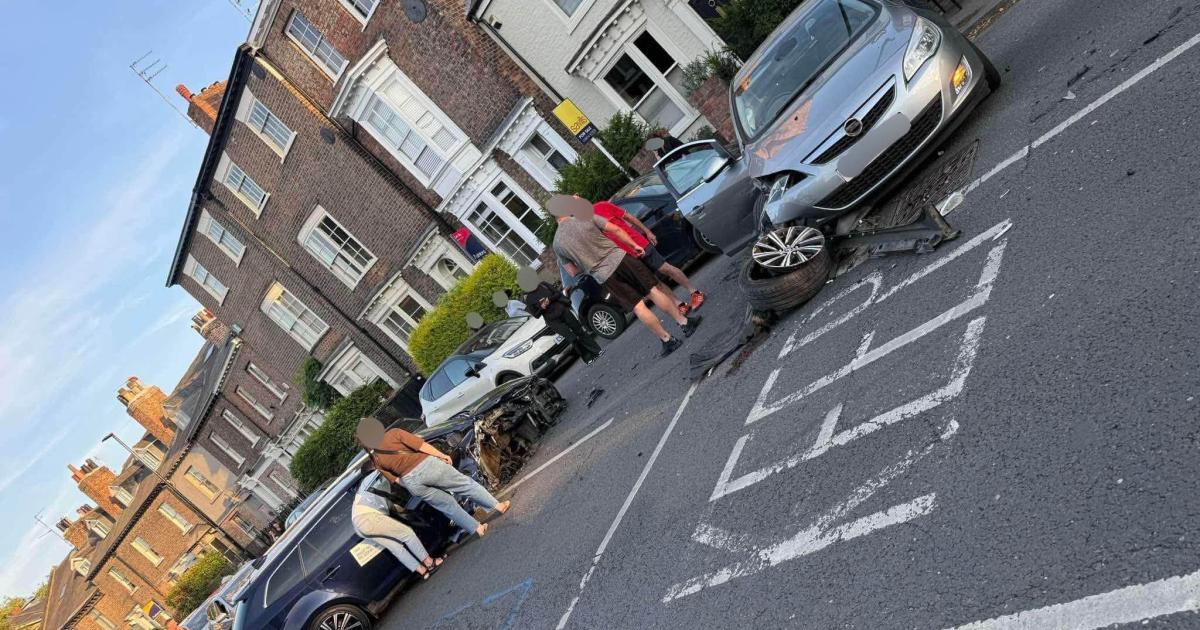
Two cars crash in Holgate Road, York – crews called

Published

on

Two cars crash in Holgate Road, York - crews called

Police, firefighters and paramedics were called to the scene in Holgate Road at 7.45pm on Friday (August 7).

Everyone was out of the vehicles when the fire crews arrived, North Yorkshire Fire and Rescue Service said.

The fire service said “casualties were left in the care of ambulance crews”.

Advertisement

Firefighters made the scene safe by isolation the vehicles’ batteries.

The fire service said the incident was “left in the hands of police”.

Images of the scene showed the fronts of both cars, a navy Uber and a silver Vauxhall, badly damaged after the collision outside the Crystal Palace pub.

The stretch of Holgate Road outside the pub was cordoned off after the crash.

Advertisement

Source link

Continue Reading

NewsBeat

New McDonald’s restaurant to open in Cambridge five minutes away from another

Published

on

Cambridgeshire Live

McDonald’s set its sights on a Cambridge location, just minutes away from another operating store

McDonald’s has been given the green light to open a new restaurant in Cambridge despite another being just minutes away in the car. Cambridge City Council has granted McDonald’s Restaurants Ltd permission to open the new restaurant at Cambridge Retail Park.

Advertisement

The site, which has been vacant since March 2023, contains a former Frankie and Benny’s restaurant. It has more recently been used as a Turkish Restaurant. The approved plans include the change of use of the site to transform it into a mixed restaurant and takeaway use.

A planning statement says: “The customer seating area comprises a sizeable 112 covers for visitors to eat their meals within a relaxed modern environment. The dining area will include a variety of seating types and table sizes tailored to the customers’ needs.”

According to the proposals, the restaurant is expected to employ more than 120 full and part time staff, which McDonald’s seeks to recruit from the local area.

Located less than one-mile away from the new site, around a five-minute drive, is another McDonald’s location on Newmarket Road. There is also another operating restaurant on Rose Crescent in the city centre.

Advertisement

At the new location, the back of the restaurant would be extended into the existing storage area and alterations to the elevations include a new sliding entrance door and side door. The existing patio area is to be retained and enhanced, with a new children’s playframe and new patio seating included in the plans.

According to the applicant, McDonald’s Restaurants Ltd, the latest figures available show that the fast-food chain contributed £3.18 million to the economy in Cambridge.

Source link

Advertisement
Continue Reading

NewsBeat

Bristol airport travel chaos as flights delayed due to runway defect

Published

on

Bristol airport travel chaos as flights delayed due to runway defect

Passengers are facing travel chaos at Bristol airport after a runway defect suspended operations for hours leading to cancellations and delays.

Passengers were left stranded on Friday after the airport’s runway was closed at around 6pm. It remained shut, with no flights coming in or out, until 8am on Saturday, but operations have now resumed.

Though the runway has reopened, passengers are now facing hours of delays, with multiple flights affected.

An updated statement on the airport’s website said: “Flights have resumed at Bristol Airport this morning. There will be some disruption to some flights today and customers are advised to refer to their airlines with any flight queries. We apologise for any inconvenience caused.”

Advertisement

Earlier, the airport said that it had suspended operations to assess and repair a “defect on the runway.”

If you have been affected by the runway closure at Bristol airport, please get in touch by emailing daniel.haygarth@independent.co.uk

Among the many flights to be delayed this morning, according to the airport’s online departures board, are the 5.55am service to Faro, which is scheduled to take off at 10.40am, and the 6.20am flight to Menorca, which is expected to depart at 11.30am.

Cancelled or delayed flights: What are my rights to a refund? Check here

Advertisement

Paul Smith, who was due to fly to Glasgow on Friday for his son’s 20th birthday but had to cancel the holiday, told the BBC: “The communication, advice and support for passengers has been really poor”.

Mr Smith said there were no announcements for more than an hour on Friday and claimed that he was only getting information from EasyJet staff in the departure lounge.

On X, responding to a passenger asking if flights have been cancelled today, airline Jet2 said: “Our flights have not been cancelled. They are currently delayed, and are expected to fly later today when the runway re-opens.”

Advertisement

Source link

Continue Reading

NewsBeat

‘Be nice and be treated, or leave’: Readers call for tougher line on racist patients as incidents in NHS rise

Published

on

‘Be nice and be treated, or leave’: Readers call for tougher line on racist patients as incidents in NHS rise

Racism against NHS staff is on the rise, according to the Society of Radiographers (SoR), with members reporting a “noticeable” increase in abuse from patients over the past 18 months – including staff being called “monkeys”, told they are “dirty foreigners”, and, in one case, a man refusing to let a sonographer scan his pregnant wife because of her ethnicity.

Figures from the latest NHS Staff Survey back this up: 9.26 per cent of staff said they had personally experienced discrimination from patients or service users in the last year, the highest proportion in five years.

NHS England says new national staff standards will require organisations to take “meaningful action” against racist patients, including the option to refuse non-emergency care.

The story struck a nerve with Independent readers, many of whom voiced anger on staff’s behalf and called for tougher consequences for offenders.

Advertisement

Here’s what you had to say:

Patients repay lifesaving care with baseless superiority

It’s been going on forever. Patients who can barely read or string a coherent, expletive-free sentence together thumb their noses at well-educated non-white staff who often speak multiple languages better than they can speak one, while saving lives. Every Black worker in a caring profession among my friends and family can tell you endless stories. Some of the lurching, booze-sodden, abusive, toothless specimens who drag themselves into A&E after a Friday night’s excess are treated with care and respect, only to respond with utterly baseless superiority.

BrotherChe

Advertisement

Anti-immigration rhetoric is fuelling the rise in racism

Sadly, the inevitable rise of racism is a side effect of all this anti-immigration rhetoric. The far right thrive under these circumstances, as do their appalling racist values. When we normalise the far right and groups like Reform, these are the behaviours and values we start to normalise and accept again. If there was a general election today, Farage would probably win.

DH

Threatened with deportation by a patient

Advertisement

This happened to me (a German nurse) and a Portuguese student nurse when we were caring for a patient in A&E.

“So,” he said, “what are you going to do when we kick you both out of the country?” I was tempted to ask what he’d do if neither of us were in the country – but refrained.

Baldrick’s Plan

The NHS depends on foreign workers

Advertisement

Many seem to forget that there are far fewer British people going into nursing and care jobs because of the wage stagnation that’s occurred over the last 15 years, so we need these foreign workers to keep the NHS functioning. Without them it would collapse – there are still 111,000 adult care work vacancies in the UK. Complaining about workers from other countries has risen because of the racist rhetoric Farage has nurtured and encouraged for years now, and to deny that isn’t part of the problem is just ridiculous.

antmanbee

Don’t treat patients who abuse staff with racism

Simple answer – don’t treat racist hospital patients who insult NHS staff with racist remarks. The NHS does a wonderful job, and their staff should not have to put up with racism.

Advertisement

Christopher1959

It’s ignorance and arrogance, not skin colour, that’s the problem

26 years ago, as an area manager in a social housing supported living service, we had white racists who complained about non-white support workers or domiciliary carers. If they complained about or refused care from a non-white person, we’d invite them to go and live elsewhere. It’s not the colour of skin of the care providers that’s the problem – it’s the ignorance and arrogance of a colonialist mindset. Disgraceful.

JimLiverpool

Advertisement

Language standards for registration could be tightened

Racist incidents, from anyone, are disgraceful. However, regarding communication, there can certainly be problems. The NMC publishes “Guidance on registration language requirements”, but in a few cases this does not seem to be adequate – perhaps there should be an actual test at registration.

IndyReader

Bigotry clouds judgement, not skill

Advertisement

The government and NHS senior managers need to stop allowing this sort of behaviour, including assault. If people aren’t happy with what the NHS offers they have a choice of private care. I worked for years as a nurse, and I can assure you the colour of someone’s skin makes no difference to how they perform. Racism and bigotry affect a person’s mind.

Malcolm

Patients can’t dictate who treats them

This is part of a wider pattern of bad patient behaviour – at my local hospital, people even smoke in the grounds despite clear signage against it. There needs to be a much stronger response: racist comments, intimidation and other unacceptable behaviour shouldn’t be treated as minor, and should involve prosecution in serious cases. A patient can refuse treatment from an individual clinician, but they can’t insist the NHS provide a different one.

Advertisement

Musil

I only saw nurses and doctors, nothing else

I had a bypass operation within a few days of diagnosis. I saw nurses and doctors – that’s it, nothing else. How can people see anything else? They helped me, and today I’m alive and writing this comment. The NHS is not perfect, but people are trying to make it better all the time. People complaining about colour within the NHS aren’t getting treatment or help from that.

Redlorries

Advertisement

Sowing division

What a terrible shame that those brought into the country to help the NHS and social care must bear the brunt of these attacks, when governments of both parties are culpable for sowing the division brought about by mass immigration. Little wonder some people have become intolerant when they see their towns and cities change. Mass immigration has been used not to help the NHS but to help capitalists increase their profits by reducing wages and workers’ rights and conditions.

FaithofOurFathers

Be nice and be treated, or leave

Advertisement

Six years ago I was in hospital for almost three weeks for a heart bypass, and every single nurse, doctor or auxiliary – whatever their background – was extremely good at their job. I wish I could say the same for the patients: some missed appointments through their own fault then complained they hadn’t been seen to, one refused a required test, and others were plain rude to staff, treating them like waiters and demanding things without a please or thank you. If people want to be racist, rude or uncooperative, give them one choice: be nice and be treated, or leave. The NHS is stretched and should be allowed to refuse treatment.

slapand

They should be sent private instead

These people should be sent private and see how far that gets them. Even my mother, who is fairly conservative, was shocked by the way other patients treated people of colour during a recent hospital stay – she was so grateful for the excellent care she received from all the staff.

Advertisement

Illearthstoner

Some of the comments have been edited for this article for brevity and clarity.

Want to share your views? Simply click ‘log in’ or ‘register’ in the top right corner to sign in or sign up. Once registered, you can comment on the day’s top stories for a chance to have your opinions showcased.

Want your voice to stand out? Independent Premium subscribers enjoy priority for featured comments. Subscribe here.

Advertisement

Make sure you adhere to our community guidelines, which can be found here. For a full guide on how to comment, click here.

Source link

Continue Reading

Trending

Copyright © 2025