Staff and residents at Marriott House and Lodge care home in Chichester are over the moon because their brilliant Managing Director, Duncan Edwards, from Barchester’s South West Division, and his team of fellow MDs have really brought home the bacon and won the Barchester Charitable Foundation Cook Off 2026.
The 56-year-old rejected an offer to become Blackburn Rovers’ full-time boss earlier this month
15:39, 27 May 2026Updated 15:45, 27 May 2026
Michael O’Neill has signed a fresh contract as Northern Ireland boss – and this time it’s “personal”.
The 56-year-old rejected an offer to become Blackburn Rovers’ full-time boss earlier this month, having guided the club to Championship safety during a short-term spell at Ewood Park. On Wednesday, the Irish FA confirmed O’Neill had signed a four-year extension to his existing deal, keeping him at the helm until 2032.
And the Northern Ireland manager says the pull of the international job, and the chance to develop his young squad, outweighed the attraction of remaining in England.
Advertisement
“The most important thing is that I love doing this job,” said O’Neill. “I’m committed to it. It is challenging at times, but it’s very personal as well.
“The people at Blackburn, they made me a great offer to stay. Suhail Shaikh, who runs the club there, is a really good man. He did everything possible to convince me to stay.
“But I just felt that it wasn’t the right thing for me to step away from the Northern Ireland job more than anything else.
“As attractive as the Blackburn situation was, I just felt that I wanted to continue in this role. It’s a different type of job. I enjoy the group of players that we have. I enjoy continuing to work with this group of players.
Advertisement
“And obviously the opportunity to try and develop the team further and get to a major tournament is something that I think would probably supersede anything I could do in club football. That was a big factor in it.
“The IFA were really positive about extending my contract, which I’m grateful for. As I say, it was not a job that I felt I wanted to step away from at this moment in time.
“Club jobs are different. They have a different nature to them. There’s a short-termism to them and that’s the nature of football now.
“So it wasn’t a difficult decision for me to stay here and obviously to extend my deal as well.”
The two men were involved in a fight where chairs and cans were thrown
Two people suffered facial injuries after two men were involved in a fight at a boxing event. Asriel McLeod, 27, and Andrew Taylor, 33, attended a boxing event at the Montague Club in Hartford Road, Huntingdon, on November 15, 2024 when a fire broke out amongst the crowd at around 9.30pm.
Advertisement
The incident happened during a fight between boxers from Wellingborough Boxing Club and Peterborough Boxing Club. When people started pushing forward and standing on tables and chairs, Taylor assaulted someone in the melee. The boxing match was stopped and the crowd were warned to stop or both boxers would be disqualified. However, the disorder continued.
By 10.15pm, the boxing was abandoned as glasses, chairs and cans were thrown and a group of men, including Taylor and McLeod, began assaulting another group. A woman and man suffered minor facial injuries requiring hospital treatment after chairs hit them.
Officers arrived to the fight, but the offenders ran off and Taylor and McLeod were identified from CCTV footage. On May 14 at Cambridge Crown Court, McLeod, of Swallow Drive, Raunds, Northamptonshire, was jailed for six years and four months, having pleaded guilty to violent disorder relating to the boxing event.
He also pleaded guilty to being concerned in the supply of cocaine, concerned in the supply of heroin and being concerned in the supply of cannabis, which all happened outside of Cambridgeshire.
Advertisement
Taylor, of Burns Road, Wellingborough, was jailed for two years and four months at Peterborough Crown Court on March 18, having pleaded guilty to violent disorder. All of the other people involved were also identified on CCTV.
The following men have also been sentenced for their part in the disorder:
Perry Coomber, 34, of Normandy Road, Peterborough, pleaded guilty to affray and was handed a sentence of eight months suspended for 18 months at Peterborough Crown Court on May 21
Brian Lawless, 27, of Lavender Crescent, Peterborough, pleaded guilty to affray and was handed a sentence of six months suspended for 18 months at Peterborough Crown Court on May 21
Lance Campbell, 41, of St Saviours Road, Birmingham, pleaded guilty to affray and was handed a sentence of six months suspended for 18 months at Peterborough Crown Court on March 19
Ezra Coke, 25, of Birchfield Road, Wellingborough, pleaded guilty to violent disorder and was handed a sentence of 18 months suspended for 18 months at Peterborough Crown Court on March 19
Shakeem Ghanie, 23, of The Drive, Wellingborough, pleaded guilty to violent disorder and was handed a sentence of 16 months suspended for 18 months at Peterborough Crown Court on March 19
Malakki Minter-Codrington, 22, of Kingsway, Wellingborough, pleaded guilty to violent disorder and was handed a sentence of 16 months suspended for two years at Peterborough Crown Court on March 18
Nassir Msuri, 30, of Priory Road, Wellingborough, pleaded guilty to violent disorder and received a community order at Peterborough Crown Court on April 22, 2025.
Alfie Plummer, 21, of The Banks, Wellingborough, pleaded guilty to violent disorder and was handed a sentence of 15 months suspended for 18 months at Peterborough Crown Court on March 19
Jaiden Stray, 19, of Golding Crescent, Earls Barton, pleaded guilty to violent disorder and received a six-month youth referral order at Wellingborough Magistrates’ Court on July 22, 2025
Ramone Woodley, 22, of Ise Valley Way, Wellingborough, pleaded guilty to affray and was handed a sentence of 10 months suspended for 18 months at Peterborough Crown Court on March 19.
DC Aurore Kiss, who investigated, said: “This was a disgraceful outbreak of violence, witnessed by a number of children, which saw two people needing hospital treatment and left numerous others injured who didn’t go to hospital. There were also many more people left incredibly frightened and some with a lasting psychological impact.”
This year marks the 50th anniversary of the death of Agatha Christie (1890-1976). The event itself, on January 12, was marked by a flurry of media coverage across the world, and academic experts were sought for comment. The chief question being: why is Christie the bestselling author of all time?
Christie’s success is a conundrum, not a self-evident manifestation of incontrovertible genius – and this is what makes it so fascinating. Christie was a talented writer, but the same could easily be said of many 20th-century authors.
Known as the “queen of crime”, she was a prolific bestselling author when she died – but so were her fellow mass-producing crime writers, Edgar Wallace (1875-1932) and John Creasey (1908-1973). They didn’t go on to have phenomenal literary afterlives.
Christie, by contrast, became a synonym for a whole genre of writing, and her characters became some of the most beloved figures in global popular culture. How did this happen? What made Christie transcend her times and her competitors?
One of the solutions commonly proposed for the secret of Christie’s success is her plotting. She is the doyenne of the “clue-puzzle” mystery, with an unparalleled ability to generate clever plots that surprise, delight and even shock her readers.
This reputation is in large part the legacy of The Murder of Roger Ackroyd (1926), itself celebrating its centenary this year. The book was a career breakthrough, prompting just acknowledgement of a trick well played. I won’t reveal the killer plot twist, but careful readers returning to the book for a second encounter can take pleasure in seeing inside the machine, spotting the omissions and misdirections through which they were so skilfully deceived.
Ackroyd isn’t Christie’s only plotting masterclass, but it – and all it stands for – also isn’t an adequate answer to the mystery of Christie’s global success. For all her ability to mislead readers, she wrote some prosaic, daft and far-from-convincing puzzles over the course of her 55-year publishing career.
So, if it’s not just Christie’s plotting that accounts for her success, what else might it be? An obvious and compelling answer is that she also created two brilliant examples of the underestimated outsider detective: Hercule Poirot, the comical cosmopolitan foreigner, and Miss Jane Marple, the village spinster.
Advertisement
Characters and suspects dismiss them because of prejudice – against age, gender and nationality – and there is huge pleasure in watching these underestimated figures turn the tables on murderers, bullies and abusers.
Yet once again, Christie’s success cannot solely be attributed to the familiar comforts of Poirot and Marple. Some of her finest – and most successful – novels are standalone fictions that mobilise terror, psychological tension, anxiety, suspense and the brutal manipulation of the reader.
And Then There Were None (1939) – the tale of ten strangers invited to an island to be murdered – is the bestseller among her bestsellers, while the late thriller Endless Night (1967) astonished reviewers with its capacity to capture psychopathy.
Advertisement
A French adaptation of Christie’s And Then There Were None, part of Channel 4’s Walter Presents series.
Also, those books which do feature the familiar detectives do not necessarily rely upon them. The Poirot novels increasingly come to be fronted by other characters – detective surrogates like Mrs Ariadne Oliver, or figures who are themselves implicated in the crime.
Taken at the Flood (1948) is typical here. It is technically a Poirot novel, in that he appears at the beginning and the end. But the reader follows the concerns of the village community under investigation through a series of effectively realised post-wartime characters.
The reader might come for Poirot but they stay for something else: a nuanced examination of the resentments, anxieties and tensions that distorted British society in the aftermath of war.
It seems then, that solving the Christie conundrum requires the embracing of more unexpected possibilities: her style, wit and psychological insight. Her books are easy and pleasurable to read (which contributes to their success in translation), and they are also often funny.
Advertisement
Sharp, witty, observant
Alongside the serious business of murder, Christie writes sharply observed social comedy, much of the impact of which comes from her characters. Early commentators on the genre dismissed Christie’s characterisation as two-dimensional, but there is consummate skill in her ability to deftly sketch recognisable figures.
It doesn’t matter whether her books are set in the 1920s or the 1950s, we all know what a pompous self-made man is like, or a religious hypocrite, or a put-upon housewife. It reminds us that people are most commonly killed by those closest to them, and the reasons for those murders have changed little in the past half-century.
Be it jealousy, greed, ambition, hatred, resentment or desire, Christie was good at judging just how much it would take to push a character over the edge of reason.
Advertisement
The puzzle of “why Christie?”, then, demands recognition of a range of less familiar Christies. There was noir Christie, a writer of disturbing, manipulative psychological fiction; comic Christie, a sharp and witty deconstructor of social mores; and uncanny Christie – a crime writer whose familiar voice has a curious knack of making the reader feel at home, while pulling the rug from under them.
This final Christie has in part been recognised, most notably by crime writer Robert Barnard – one of the first critics to attempt to solve the Christie conundrum. He writes of her capacity to generate a mood of “trustful mistrust”. Readers have confidence in Christie to deceive them in an appropriate and respectful fashion.
This can be supplemented, I would argue, with something more disturbing. In Christie’s fiction, time and again, nice Dr Jekyll turns into murderous Mr Hyde, and no one – as Christie’s characters are fond of saying – is safe.
Perhaps, then, Christie’s longevity and success might perversely be attributable to her capacity, repeatedly, to rewrite Robert Louis Stevenson as light comedy. In an astonishing high-wire act of authorship, she exposes the profound darkness of human nature through the prism of the prosaic and the comforts of the mundane.
Advertisement
This article features references to books that have been included for editorial reasons, and may contain links to bookshop.org; if you click on one of the links and go on to buy something, The Conversation UK may earn a commission.
Emergency services were called to Church Row at around 12.12pm this afternoon (May 27).
Pictures from the scene show two fire engines blocking the road as crews tackled the blaze.
The fire broke out on Church Row in Darlington. (Image: THE NORTHERN ECHO)
The fire broke out on Church Row in Darlington. (Image: THE NORTHERN ECHO)
One police car and a police van were also at the scene diverting the public away from the street.
The fire broke out on Church Row in Darlington. (Image: THE NORTHERN ECHO)
Fire damage could be seen from a top-floor window of the building, next to the well-known Boot and Shoe pub.
Advertisement
One resident said: “Apparently a fan caused the fire – I hope everyone is okay.”
A County Durham and Darlington Fire and Rescue Service (CDDFRS) spokesperson said: “We were called at 12.12pm today (May 27) to a fire in an office building on Church Row in Darlington.
“Two fire engines from Darlington Fire Station attended.
The fire broke out on Church Row in Darlington. (Image: THE NORTHERN ECHO)
“Firefighters wearing breathing apparatus used a hose reel to put out the fire and a positive pressure ventilation fan to clear the smoke.
Advertisement
“Crews left the scene at 1.34pm.”
Durham Police have been contacted for more information.
If your dog is showing signs of heatstroke, the Royal Society for the Protection of Animals (RSPCA) said that it’s important to “cool first, transport [to the vet’s] second”.
Still, they added, a common cooling method – covering them with damp towels – could seriously backfire.
Advertisement
Why shouldn’t I use damp towels on my dog when it’s overheating?
“Don’t place damp towels directly over the dog’s body, as this can trap heat and worsen their condition,” the RSPCA said.
“You can place wet or damp towels beneath the dog – remembering to re-wet the towel frequently – but never over their body.”
According to pet food company Purina, this is a “popular” recommendation, despite not usually being a wise choice for dogs.
Advertisement
Like the RSPCA, though, they say that the initial cooling effect disappears almost immediately, leaving your dog covered in a hot, moist towel that makes them even warmer.
What are the signs of heatstroke in dogs?
Excessive panting,
Red, purple, or pink gums,
A dry nose,
Infrequent urination,
A higher than usual heart rate,
Shaking and shivering due to muscle spasms,
Seizures, especially in epileptic dogs,
Collapse,
Confusion or disorientation,
Tiredness,
Sunken eyes,
Weakness,
Red skin,
Being wobbly on their feet,
Drooling,
Thicker than usual saliva,
Noisy breathing, especially in flat-faced breeds like pugs or French bulldogs,
Vomiting and/or diarrhoea.
What should I do if I think my dog has heatstroke?
As we mentioned before, the RSPCA says it’s best to cool your dog down before moving them to the vet’s.
Stop any exercise immediately and remove them from direct sources of heat. Get them into the shade, creating your own shade if none is available.
Advertisement
Pour water on their body but not their head. Give special focus to their stomach, neck, and thighs.
“Submerge their body in cool water if available (such as a paddling pool or stream, as long as the water temperature is cooler than the dog),” the RSPCA continued (don’t do this if your dog is older, unconscious, or has health issues).
Fan the dog after that. Once they’ve been thoroughly cooled, take them in a cool, well-ventilated vehicle to the vet’s, keeping your windows down and/or air conditioning on as you transport them. Make sure there’s a source of water in the car and ring the vet ahead of driving to let them know about your dog’s case.
Your demeanour matters too, the RSPCA added. “Try to stay calm and think clearly. Stay focused on the dog and remind yourself that you are capable of saving a life,” they ended: “Keep your cool, keep them cool”.
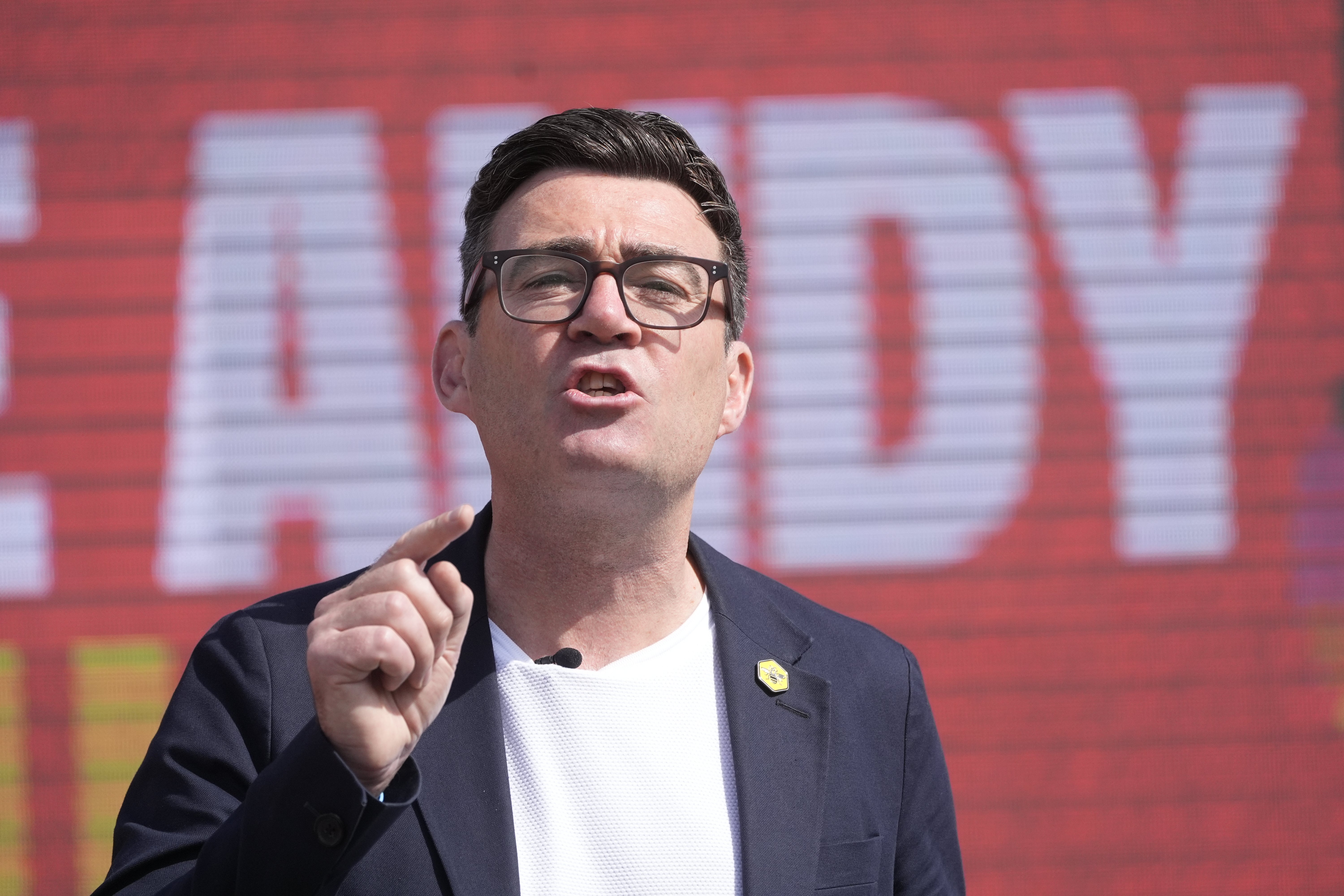
Andy Burnham is positioning himself to replace the Prime Minister (Peter Byrne/PA) (PA Wire)
“If you don’t get how that’s driving politics now, if you are not rooting your analysis in the fact that people are unable to live and that things that were taken for granted are no longer affordable, then you are not understanding what’s going on,” he said.
Mr Burnham also insisted it is the centrists, like Sir Tony, who had failed voters and fuelled the rise of Mr Farage’s Reform UK.
Advertisement
Mr Burnham said his former party leader “criticises my phrase about 40 years of neoliberalism but the last 40 years has given us wide inequality – that’s what’s responsible for the abandonment of the centre.
“People don’t think the centre has delivered for them in terms of their lives, therefore they’ve gone further to the extremes.”
Mr Burnham also attacked what he described as Sir Tony’s “obsession” with universities.
When he was in office the former prime minister famously set a target of 50 per cent of young people to carry on to higher education.
Advertisement
Mr Burnham, currently the mayor of Greater Manchester, said there should be greater focus on technical education.
“The prioritisation of universities is a significant part of the problem that has left out too many people and has impacted on the welfare system,” he said.
Police had decided to conduct a welfare check at the property in Rhondda Cynon Taf where they discovered the woman had died in the house
A woman was found dead at her home in Rhondda Cynon Taf after police carried out a welfare check, an inquest opening has heard.
Advertisement
Lynn Susan Harris, 51, from Llwynypia, was found dead at her home in Pontrhondda Road by officers from South Wales Police who decided to conduct a check on the property after growing concerned.
She was found at the house on February 2 and a post-mortem examination was carried out at Prince Charles Hospital in Merthyr Tydfil on February 12, Pontypridd Coroners’ Court heard on Wednesday, May 27.
At the brief hearing on Wednesday morning a provisional cause of death for Ms Harris was given as left ventricular hypotrophy, fatty liver, with mixed drug toxicity.
Coroner Kerrie Burge adjourned the inquest until a date yet to be fixed, stating further evidence had to be gathered. She expressed her condolences to Ms Harris’ family.
Advertisement
Ms Harris’ funeral took place at Glyntaff Crematorium in Treorchy on Friday, March 6, where mourners wore blue in tribute to her.
The number of people waiting for 12 hours or longer on trolleys at the York and Scarborough Teaching Hospitals NHS Foundation Trust’s emergency departments is at its lowest rate in months.
Last month, 77 people were recorded as waiting more than 12 hours, down from 237 people in March, 406 people in February, and 930 people in January.
Martin Barkley, chair of the NHS Trust, described the reduction as “incredible”.
Speaking at a board meeting on Wednesday, May 27, he said: “We are down to double figures from four figures when I arrived [at the trust in 2023]. Absolutely amazing, so thank you.”
Advertisement
However, figures presented to health bosses stated that 5.9 per cent of Type 1 patients spent over 12 hours in emergency departments in April 2026, behind the trust’s monthly target of 5 per cent.
In the latest available national data – for March 2026 – the Trust ranked 54th out of 118 providers compared to 62nd in February.
Scarborough Hospital Uecc. Courtesy Numminen/Ldrs
“The emergency assessment units (EAU) have supported a reduction in patients spending over 12 hours in ED.
“This is because medical patients awaiting admission are being managed in the emergency assessment unit by acute physicians and receiving timely senior reviews,” a report presented at the board meeting notes.
Advertisement
“In order to maximise this opportunity, there needs to be a continued flow out of EAU through both discharges home and admission to the main bed base. Work to refine these pathways continues since this is important for managing flow and eradicating corridor care.”
At the meeting, health bosses were also warned of potential risks to the improvement, including high levels of bed occupancy.
York Hospital. Courtesy Numminen/LDRS
According to a report, the capacity required on wards could be higher than the escalation spaces can support.
“Community health and social care capacity remains challenged and while the new model reduces patients waiting 12 hours in ED, some patients are waiting for the same time in EAU, which can quickly become full if patients are not discharged or moved to acute medical units and/or the main bed base.”
Superheroes are having a bumpy ride. Marvel, which gave the world Spider-Man and Captain America, is reeling from a string of disappointing film releases such as 2023’s The Marvels and 2025’s The Fantastic Four: First Steps. This has forced owners Disney to completely rethink their Marvel strategy just before the new Spider-Man and Avengers films hit cinemas later this year.
DC Comics, the creators of Batman and Superman, are vying to relaunch their own cinematic franchise, but leaving much to be desired if audience opinion is anything to go by. This places a big question mark over the success of the forthcoming Supergirl film.
And Sony, which still owns the rights to Marvel’s Spider-Man (it can get a bit confusing), is also rebooting its cinematic offerings following a long string of box office disappointments.
All of this creates the perception of “superhero fatigue”, with complaints of “same plots, same villains”. Consumers seem tired of superhero content and want to move on after a 20-year-strong romance.
Advertisement
Yet the superhero genre is known for its incredible survival skills. After all, DC is 92 years old now, and Marvel is not far behind at 87. So, is superhero fatigue really a thing?
What’s really going on
First, let’s look at the evidence. While Marvel’s cinematic offerings are underperforming, its video games are hugely successful. For instance, Marvel’s Spider-Man trilogy for PlayStation (2018-23) was released to critical acclaim and sold tens of millions of copies.
And Marvel Rivals, an online game based on Marvel’s large roster of comic book characters, attained 40 million players within two months of its release in late 2024. This means that superheroes are still much loved by the same people who are now disengaging with the superhero films.
Advertisement
In a different realm, Penguin shocked the world in 2022 when it released select Marvel comics as part of its prestigious Classics collection, making Marvel a part of the global literary canon alongside Jane Austen and Leo Tolstoy.
The series reprints the origin stories of select Marvel characters and, according to Penguin, “serves as a testament to Marvel’s transformative impact”. This adds broad cultural legitimacy to superhero entertainment and attracts new audiences.
Lastly, while the traditional comic book publishing model may be waning these days, the longer formats are experiencing a major resurgence. For instance, the market for graphic novels recently reached an unprecedented US$1.57 billion (£1.16 billion).
Advertisement
The resonance factor
The major shift started after 2019, when Marvel’s Avengers: Endgame became the highest-grossing film of all time. This means that global audiences are now “accustomed” to long-format superhero entertainment and want to see more (or at least the same amount) of it.
So it is safe to say that superhero fatigue is not “a thing”. Indeed, consumers might be simply (over)reacting to a long stretch of bad releases that failed to inspire to the same extent as Marvel did in its halcyon days of 2008-19.
At the same time, my ongoing research on superhero franchises highlights another factor that Marvel and DC should account for: resonance.
It is commonly assumed that superheroes are popular because of the light and even cheap entertainment they provide. Revered filmmaker Martin Scorsese famously dismissed superhero films for not being cinema in the New York Times, likening them to theme parks.
Advertisement
However, my interviews with dozens of Marvel and DC fans reveal a totally different picture: audiences revel in the punchy sociocultural commentary that superhero archetypes can deliver.
For example, 2018’s Black Panther was revolutionary in bringing the issues of racism and post-colonialism to the summer blockbuster genre. And the Iron Man trilogy (2008-13) dealt with global terrorism just as ISIS Islamic State was becoming a familiar dreaded name. It is this current lack of social and cultural commentary that participants reported as the reason behind Marvel and DC’s recent troubles.
Advertisement
This view is consistent with the entire history of superhero entertainment. The original “superhero boom” of the 1930s offered much-needed hope amid the Great Depression, the decade-long economic downturn that began with the Wall Street crash of 1929.
Marvel’s meteoric rise in the 1960s and the 1970s is frequently associated with the countercultural, “hippie” overtones that it was subtly spilling amid the Vietnam war and the general political instability of that era. And most recently, the whole superhero concept experienced a renaissance just after the events of 9/11.
This chimes with the successes of other, more niche superhero franchises like The Boys on Amazon Prime, which recently aired its last episode.
A dark, dystopian and subversive take on the superhero archetype, The Boys offers a timely and much-needed perspective on the major political shifts towards populism and nationalism, exploring issues of accountability of those in power, continuing the tradition that Marvel and DC started almost a century ago.
Advertisement
Superhero archetypes need to resonate with audiences to stay relevant. And while DC and Marvel are currently failing at this, their niche competitors do so with more success.
In other words, superheroes are here to stay. It is just a question of whether Marvel and DC, the two biggest names in superhero entertainment, can find ways to reinvent characters that resonate with the world – as they have done so successfully in the past.
When Wes Streeting and Andy Burnham announced that they intend to challenge Keir Starmer as prime minister, it felt like the start of a depressingly familiar loop. A leader who had made many great-sounding promises failed to deliver and lost the trust of the public. The public demands he quit, and he may soon be replaced by another leader who also makes impressive pledges.
During the past decade the UK has seen this loop many times. There have been five leaders of the UK government – an average of one leader every two years.
It is tempting to think that the rapid turnover is a quirk of the British system. It is not. People have become increasingly impatient with leaders in all walks of life – from coaches of professional sports teams to CEOs of large businesses to the leaders of political parties.
In our book, The Art of Less, Mats Alvesson and I argue that an important step is giving up on some of the fantasies of leadership. For example, there are often unrealistically high expectations of leaders to deliver on multiple fronts, and to do it quickly.
Advertisement
And when they fail, the public has become more intolerant and uncivil. There is also more willingness to push leaders out and look for an alternative. But this hasty search for alternatives often makes no difference to performance. In some cases, it can actually lead to worse outcomes.
To borrow a phrase from 17th-century philosopher Thomas Hobbes, the tenure of leaders has become increasingly nasty, brutish and short.
1. Nasty
In many spheres of life, there are elevated expectations of leaders. People expect them to work on dozens of objectives quickly, and to a very high level. One study found that in the 1950s the CEO of a large US company typically had five to seven major goals. By 2014 that number was between 25 and 40.
In sport, coaches not only have to deliver a string of wins. They also need to ensure the team is commercially viable, grow the fanbase and develop players. And in politics, party manifestos have grown from a few hundred words at the beginning of the 20th century to tens of thousands today. These lengthy and complicated manifestos increase public expectations – but they can also increase the scope for voter confusion and disappointment.
Advertisement
The many (often unrealistic) goals that leaders sign up to often leaves them facing nasty tensions. Sometimes delivering on one objective means they cannot achieve another – cutting taxes, for example, often means cutting public services too.
2. Brutish
When leaders face unrealistic expectations, the public can quickly become disappointed with them. This can rapidly tip over into hostility. In the past, a sense of deference usually ensured that authority figures only faced tough questions after extreme institutional failures. Today, hostility and incivility has become routine.
This hostility can be found in declining public trust in leaders. PR firm Edelman has reported a long-term decline in trust and rise in grievance in most major public institutions around the world and the people who lead them. Trust in representative political institutions like parliament has been declining throughout developed countries since the late 1950s.
Recently this has spilled over – a study by the UK electoral commission found that 70% of election candidates had experienced some form of abuse. And another study by the UK parliament found that 96% of MPs who responded had experienced threatening language or behaviour.
Advertisement
Leaders in business are often targets of online trolling and death threats. In sport, coaches of professional teams are now routinely subjected to extensive online abuse. According to one recent study this online abuse is rising at a rate of about 25% a year.
3. Short
Leaders have increasingly short shelf-lives. CEOs of large US companies currently spend about 4.8 years in the role, while a decade ahead ago the median was six years. The tenure of managers of top English football clubs was about four years in 2012. A decade later that number had halved to two years. Now it is closer to 18 months.
The tenure of a political leader in the UK has also been decreasing. Between the second world war and the election of Tony Blair in 1997, the average length of service of a prime minister was more than seven years. Since then it has been under four years – with some very short-tenured PMs.
Tony Blair stepped down in 2007 after a decade as prime minister. EPA/ANDY RAIN
This increasingly rapid change in leaders is usually driven by an impatient search for better performance. However, one meta-analysis of more than 13,500 changes in CEO found that leadership change at the top led on average to a short-term performance dip followed by no significant impact on performance in the longer term.
In elite sport, studies have found that although changing manager might bring a short-term bounce, the club’s performance typically reverts back to the mean within a season.
But it can address one problem that failing political parties face – leader credibility. This can lead to a short-term improvement. But it typically does not address underlying issues such as policies, economic conditions and a government’s capacity to deliver.
Kinder, civil, patient
There is a danger that both followers and leaders are locked into a game of rapid change that makes no one happy. Followers have heightened expectations that cause would-be leaders to seek approval with unrealistic promises.
Advertisement
Perhaps if we actually want better performance from our institutions – whether businesses, sports teams or governments – we might need a different approach. Leaders might need to be kinder to themselves, and the public may have to set fewer, more realistic objectives.
Being civil to leaders doesn’t mean blind deference. Rather it highlights that delivering results takes time, effort and trade-offs. We may all need to be a little more patient. Disposing of leaders if they are not instantly delivering results might feel decisive, but it can also fuel longer-term problems.
This article features references to books that have been included for editorial reasons, and may contain links to bookshop.org. If you click on one of the links and go on to buy something, The Conversation UK may earn a commission.
























































You must be logged in to post a comment Login