

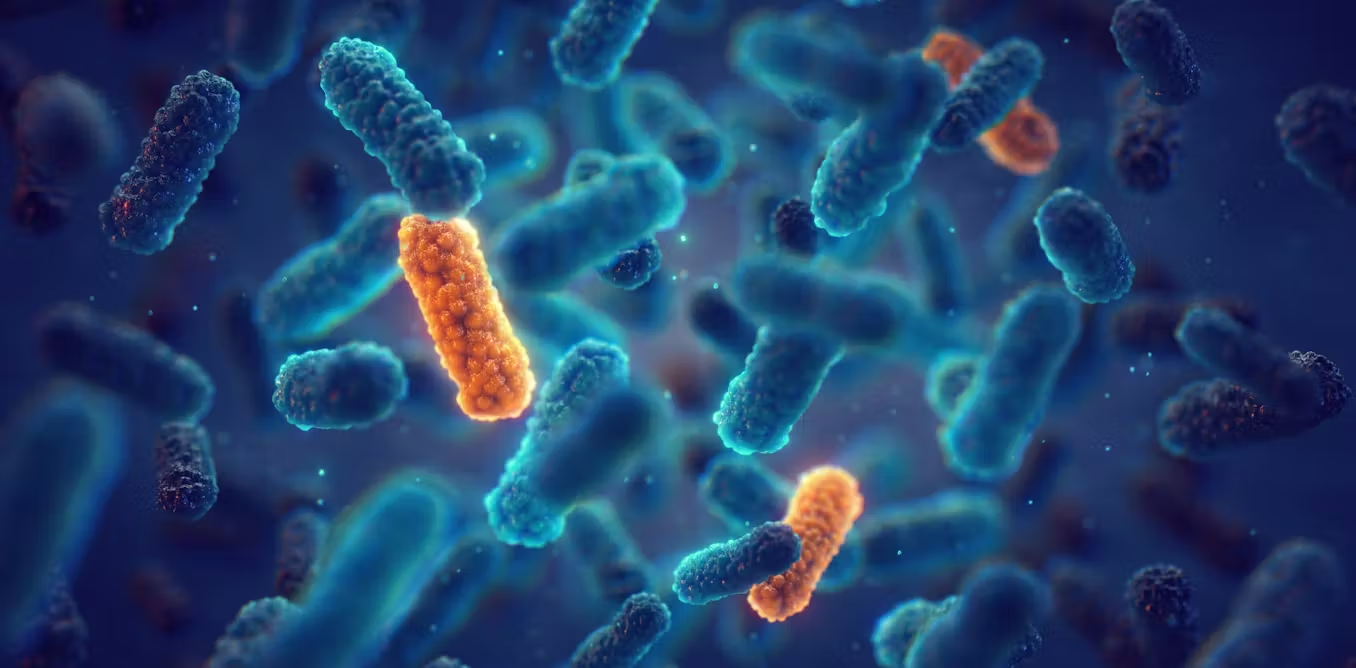
Antibiotics are one of the greatest breakthroughs in medical history. They turned once-deadly infections into treatable illnesses and made modern healthcare possible. But bacteria are changing, and some of the drugs we have depended on for decades are becoming less effective.
Around the world, infections are becoming harder to treat. This problem is known as antimicrobial resistance. It happens when bacteria evolve ways to survive medicines designed to kill them. It is estimated that drug-resistant infections already cause about 1.27 million deaths every year worldwide.
The World Health Organization has warned that we may be moving towards a “post-antibiotic era” in which common infections once again become dangerous, and even routine injuries or procedures carry serious risk.
A century ago, that was normal. A cut from gardening, a sore throat or childbirth could turn into a life-threatening infection. Doctors had few effective treatments, and infectious diseases such as pneumonia, tuberculosis and diarrhoea disease were among the leading causes of death. The arrival of antibiotics changed that dramatically.
Penicillin, discovered by Alexander Fleming in 1928, marked the beginning of one of the most important revolutions in medicine. Before antibiotics, tuberculosis was one of the world’s deadliest infectious diseases. In 1882, it killed one in seven people living in the US and Europe. Once antibiotics became available, many bacterial infections that had once been deadly could be treated effectively.
Antibiotics not only cured infections, but also made modern medicine far safer. Many procedures rely on them to prevent or treat infection, including caesarean sections, organ transplants, joint replacements and cancer chemotherapy.
Without effective antibiotics, these treatments would become much more dangerous. Fleming himself recognised that risk. When he accepted the Nobel Prize in 1945, he warned that misuse of penicillin could lead to resistance.
Living in a microbial world
The human body contains about 30 trillion human cells, but it also carries tens of trillions of bacteria on the skin and inside the body. Together, these communities form the microbiome, the vast collection of microbes that live in and on us. Many of them are not harmful. In fact, they help digest food, produce vitamins and support the immune system, the body’s defence system against disease.
So life is a finely balanced relationship between humans and the microbial world. But bacteria are ancient and extraordinarily adaptable. They have existed on earth for more than 3.5 billion years and survive in some of the harshest places imaginable, from deep-sea vents to polar ice.
Bacteria multiply very quickly and can also swap genetic material, meaning they can share useful survival traits with one another. Some produce substances that break down antibiotics before the drugs can do any damage. Others alter the parts of their cells that antibiotics are designed to attack.
Some develop tiny molecular pumps that push antibiotics back out of the bacterial cell. Others find alternative ways to carry out the jobs that the drug was meant to block.
À lire aussi :
Bacteria ‘shuffle’ their genetics around to develop antibiotic resistance on demand
These changes happen through random genetic variation, which means natural differences arise as bacteria reproduce. But heavy antibiotic use creates strong evolutionary pressure. When antibiotics kill bacteria that are vulnerable to them, the resistant bacteria are left behind to survive and multiply.
Conditions for resistance
Antibiotics are among the most commonly prescribed medicines in the world, and they are often used when they are not needed. In some countries, they are still prescribed for illnesses such as colds and flu, even though antibiotics do not work against viruses. In the UK, prescribing is more tightly controlled, but inappropriate use and public misunderstanding remain a concern.
Large amounts are also used in agriculture and livestock production. This can further encourage resistant bacteria to emerge and spread.
Across Europe, antimicrobial resistance is now recognised as a major public health threat. The European Centre for Disease Prevention and Control estimates that antibiotic-resistant infections cause more than 35,000 deaths each year across the EU and European Economic Area.
Doctors are now seeing infections that are difficult, and sometimes impossible, to treat. Some of the most worrying include methicillin-resistant staphylococcus aureus (MRSA), vancomycin-resistant enterococci (VRE) and carbapenem-resistant enterobacterales (CRE). MRSA can resist several commonly used antibiotics. VRE no longer responds to vancomycin, while CRE can withstand carbapenems, some of the most powerful antibiotics available.
What a post-antibiotic world could look like
If antibiotic resistance continues to rise, the consequences for healthcare could be severe. Many routine medical procedures depend on antibiotics to prevent infection. Without them, surgeries such as hip replacements, organ transplants and some cancer treatments may become too risky to perform.
Even common infections could once again become life-threatening. A simple urinary tract infection could spread into the bloodstream. A skin wound could develop into a severe invasive infection, meaning an infection that spreads deep into the body.
One of the greatest concerns is sepsis, a life-threatening condition in which the body overreacts to an infection and begins damaging its own tissues and organs. Early treatment with antibiotics saves many lives. But when bacteria are resistant, those treatments may fail. That makes sepsis much harder to treat, and in severe cases doctors may have very few options left.
À lire aussi :
Why sepsis is becoming harder to treat in Europe
Healthcare could begin to resemble the pre-antibiotic era, when infection was one of the biggest dangers of everyday life.
Reasons for hope
The situation is serious, but it is not hopeless. Scientists are developing new ways to fight infection. Some researchers are exploring bacteriophages, often shortened to phages, which are viruses that infect and kill bacteria.
Others are working on anti-virulence drugs. Rather than killing bacteria outright, these drugs aim to disarm them by blocking the tools they use to cause disease. The hope is that this may place less evolutionary pressure on bacteria to develop resistance.
Another promising approach is host-targeted therapy. This means boosting the body’s own ability to fight infection, rather than attacking the bacteria directly.
Better diagnostic tests, stronger infection prevention and more careful use of antibiotics could also help preserve the drugs we still have. Antibiotics transformed medicine in the 20th century and saved countless lives. But they were never a permanent victory over microbes.
The challenge now is not just to develop new treatments, but to protect the antibiotics that still work. If we can do that, the post-antibiotic future many scientists warn about may never arrive.
À lire aussi :
Antibiotic resistance could undo a century of medical progress – but four advances are changing the story























































You must be logged in to post a comment Login