




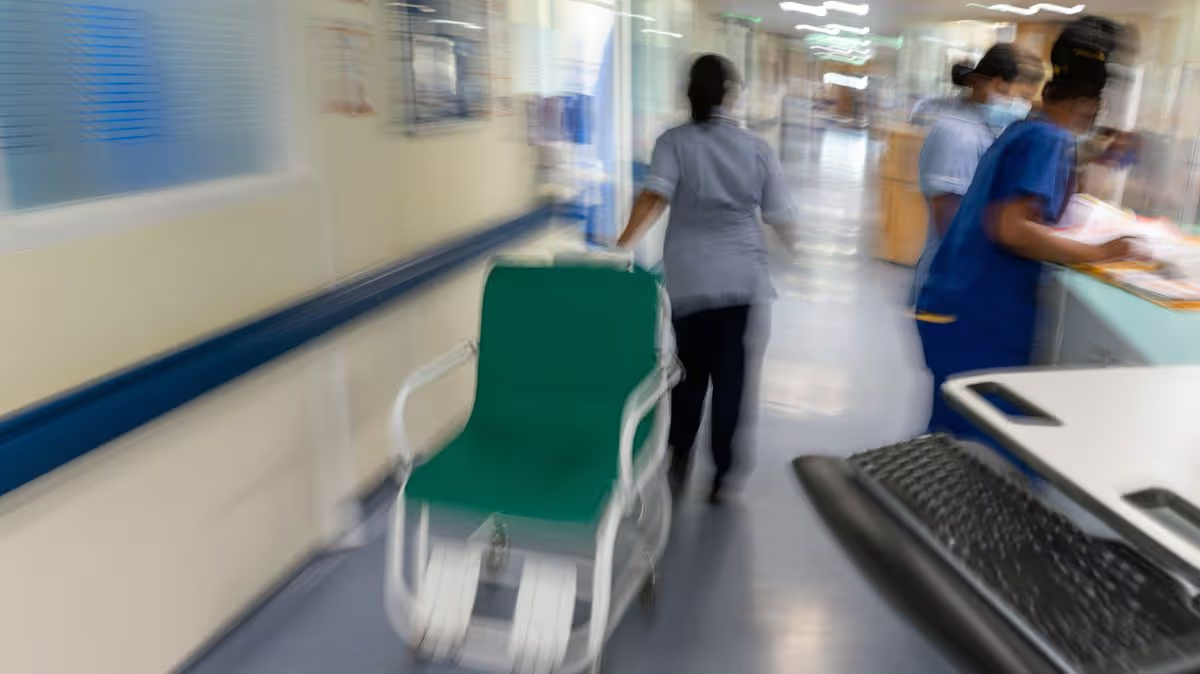
“Accidents devastate lives in an instant. They are often sudden, violent, and shocking, leaving families and communities to cope with consequences that can last a lifetime.”
Nearly 800 deaths and 10,000 hospital admissions from accidents have been recorded in a single year in Northern Ireland, new statistics show.
And accidental deaths are rising in Northern Ireland, a new report from safety charity the Royal Society for the Prevention of Accidents (RoSPA) warns today.
Accidents killed nearly 800 people in Northern Ireland in 2023/24 while around 10,000 were admitted to hospital.
READ MORE: Asylum seekers will no longer use Co Down hotel, UK Government saysREAD MORE: The easiest places to pass a driving test in Northern Ireland
Northern Ireland’s accidental death rate of 39 per 100,000 people is higher than the UK average of 34 per 100,000, meaning people here are 23% more likely to die in accident than people in England
Falls and accidental poisonings (including alcohol and drugs) are the biggest killers, with other causes including road traffic collisions, choking, and exposure to smoke.
The safety charity is calling on the UK Government to implement a National Accidents Prevention Strategy to tackle the “public health emergency”.
Alongside the disparity between Northern Ireland and the rest of the UK, there were also varying rates of accidental deaths across socio-economic backgrounds. Those in the most deprived 50% of the population were almost three times more likely to be admitted to hospital than those in the less deprived 50%.
The RoSPA also estimates that immediate treatment costs to the NHS run to £6 billion annually, and accidents account for a minimum of 5.2 million bed days – reducing capacity and driving up waiting lists across the health service.
CEO of RoSPA Becky Hickman says accidents “devastate lives in an instant”, adding: “They are often sudden, violent, and shocking, leaving families and communities to cope with consequences that can last a lifetime. What makes this devastation even harder to bear is the knowledge that so many of these incidents are entirely preventable.”
Dr Sally-Anne Wilson, vice president of the Royal College of Emergency Medicine (RCEM), said A&E departments “see first-hand the rising impact of accidental injuries, particularly among older people”.
She added: “The patients I worry about most are those who fall from standing height, often in their own homes, and arrive in the ED with serious injuries such as hip or rib fractures. These seemingly simple accidents can have devastating consequences.
“We know that older people are disproportionately affected by crowding in Emergency Departments, and that delays transferring them to inpatient wards are linked with longer hospital stays and increased mortality.
“Prevention must be a priority. Anything we can do to reduce the number and severity of avoidable injuries will make a meaningful difference to patient outcomes and help relieve pressure on a stretched emergency care system. RCEM strongly supports RoSPA’s focus on this vital area of public health.”
For all the latest news, visit the Belfast Live homepage here and sign up to our daily newsletter here.
























































You must be logged in to post a comment Login