













The announcement of a new agreement between the United States and Iran has been greeted with relief across global markets. Oil prices have eased, shipping insurers have relaxed and politicians have rushed to hail a diplomatic breakthrough.
The memorandum of understanding, which both sides have agreed to and are expected to formally sign in Switzerland on June 19, has even been described by some as a peace deal that will formally end the conflict. Yet that risks overstating what has actually been achieved.
What has reportedly been agreed is a diplomatic framework intended to guide future negotiations, not a peace treaty or a comprehensive settlement of the disputes that brought the two countries to the brink of a wider regional war. The most contentious issues – including Iran’s nuclear programme, sanctions and broader regional security arrangements including Israel’s war and occupation in Lebanon – remain unresolved and subject to further talks.
The distinction is more than semantic. International diplomacy operates on a spectrum. A ceasefire halts fighting; a peace agreement resolves the disputes that caused it. The US-Iran arrangement falls somewhere in between. The core issues remain unresolved and have been deferred to future negotiations, while the wider pattern of “grey-zone” confrontation — proxy activity, economic pressure and limited military escalation below the threshold of full-scale war — remains largely intact.
There is another reason to be cautious about calling this peace. The war interrupted diplomatic talks that were already underway. This agreement will largely restore a negotiating process that existed before the conflict rather than creating a new political settlement. If the central disputes remain unresolved, in what sense has peace actually been achieved?
One indication of the agreement’s limitations comes from Washington itself. The US president, Donald Trump – even in the latest “peace deal” announcement – has continuously suggested that future military action against Iran cannot be ruled out. That is not the language normally associated with a definitive peace settlement.
Nor does the agreement fully address the broader regional dimensions of the conflict. Israel, one of the principal actors in the confrontation with Iran, is not a party to the framework. Nor does the arrangement resolve continuing tensions on Israel’s northern border with Lebanon, which remains a major source of instability. With Israel’s prime minister, Benjamin Netanyahu, maintaining a hardline position towards Lebanon and reserving the right to act independently, the agreement looks less like a regional peace settlement than a narrowly focused US-Iran de-escalation mechanism.
Perhaps the clearest evidence that the deal is being exaggerated, however, lies in what it actually delivers. Strip away the diplomatic fanfare and the financial benefits to Iran and the agreement largely restores conditions that existed before the conflict escalated, particularly when it comes to reopening the Strait of Hormuz.
This may help explain why financial markets responded so enthusiastically. Markets are often described as reacting to peace. In reality, they tend to react to stability.
Oil traders, shipping companies and insurers are not primarily concerned with whether longstanding political disagreements have been resolved. They care about whether oil can move through chokepoints, whether tankers can be insured and whether supply chains can continue functioning.
The economics of de-escalation
That risk was considerable. The Strait of Hormuz carries roughly one-fifth of globally traded oil. Any prolonged disruption would have had profound consequences for the world economy. Although oil prices never reached the US$200 (£149) per barrel levels that some commentators feared, this should not be interpreted as evidence that markets were comfortable with the situation.
Part of the reason prices remained contained was that governments and businesses were drawing upon buffers built for precisely such emergencies. Strategic petroleum reserves were released, existing stockpiles were called upon and some countries reduced imports and relied more heavily on stored supplies. These measures bought time. But they could never have continued indefinitely, especially as global strategic oil reseves were running out fast.
Had instability in the Gulf continued for several more months, governments would likely have faced increasingly difficult trade-offs between inflation, economic growth and energy security. Seen from this perspective, the diplomatic urgency becomes easier to understand.
For the US, sustained disruption in global energy markets risked feeding inflationary pressures that remain politically sensitive. For Europe and Asia, higher shipping and energy costs threatened already fragile economic recoveries. For many developing countries, another energy shock would have imposed severe economic hardship.
The agreement therefore reflects not only diplomatic calculation but economic necessity. In this sense, the biggest beneficiaries may not be Washington or Tehran at all. They may be consumers, businesses and central banks around the world that have avoided another potentially destabilising energy shock.
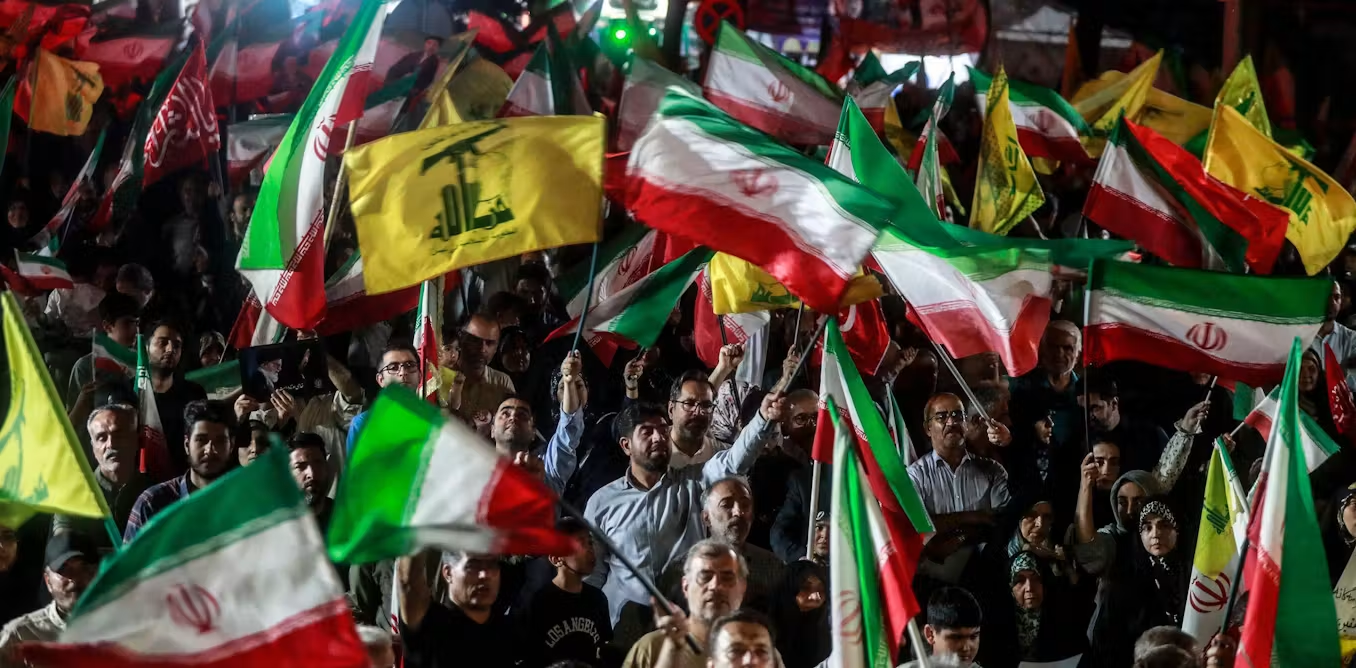
EPA/Abedin Taherkenarah
Peace or pause?
None of this is to dismiss the significance of the agreement. Preventing further escalation is a genuine achievement. Reopening critical maritime routes is beneficial for the global economy. Replacing military confrontation with diplomacy is undoubtedly preferable to the alternative.
If the deal holds, Iran could enter the next round of negotiations with the upper hand: sanctions relief under discussion, diplomacy back on track – and Washington increasingly reluctant to contemplate renewed military action as November’s midterm elections draw nearer.
But diplomacy is still best served by precision rather than exaggeration. Historically, peace agreements have settled disputes, created institutions and established durable frameworks for coexistence. This arrangement does none of those things – at least not yet.
The war’s underlying disagreements remain unresolved. Iran’s nuclear future remains uncertain. Sanctions remain contested. Regional rivalries persist. The possibility of renewed confrontation has not disappeared.
What has been achieved is not peace in any comprehensive sense. It is a ceasefire framework, an economic stabilisation mechanism and a diplomatic holding pattern.
That may prove to be an important first step. But it is not, at least for now, a peace deal.
If anything, the real story is not that Washington and Tehran have resolved their differences. It is that both sides had compelling reasons to step back from the brink.













































You must be logged in to post a comment Login