Connect with us
DAPA Banner
DAPA Coin
DAPA
COIN PAYMENT ASSET
PRIVACY · BLOCKDAG · HOMOMORPHIC ENCRYPTION · RUST
ElGamal Encrypted MINE DAPA
🚫 GENESIS SOLD OUT
DAPAPAY COMING

NewsBeat

Why did Keir Starmer resign as Prime Minister

Published

on

Manchester Evening News

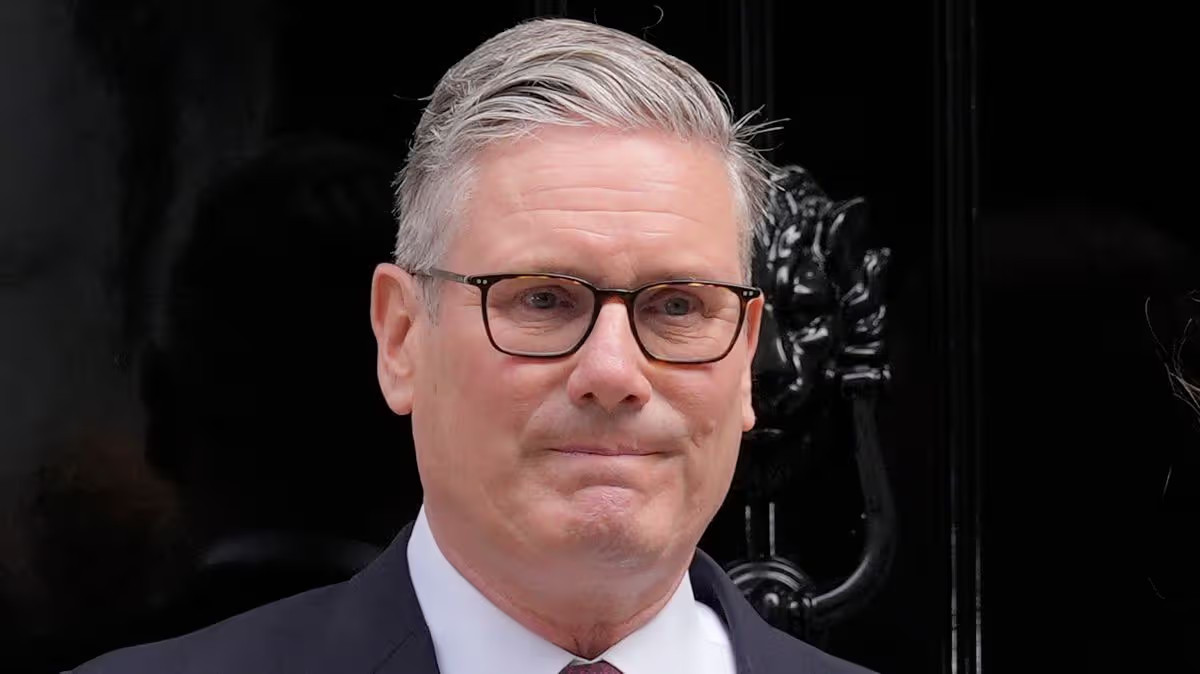
Sir Keir Starmer announced his resignation outside Downing Street on Monday morning

After weeks of mounting pressure, Sir Keir Starmer has officially resigned as prime minister.

Advertisement

The news came on Monday morning (June 22), just days after Greater Manchester mayor Andy Burnham won the Makerfield by-election, paving the way for an expected leadership challenge in the coming weeks or months.

Calls for Sir Keir to go have been building since Labour took a hammering in May’s local elections, and now marks around a quarter of the party’s 403 MPs.

Click here to get the biggest stories straight to your inbox in our Daily Newsletter

Until now Sir Keir repeatedly vowed to fight any leadership challenge, insisting he will not “walk away”. But as of Saturday, June 20, the number of MPs to call on Sir Keir to quit reached 100 and the Prime Minister said that was why he was now stepping down.

Advertisement

Announcing his resignation on Monday morning, Sir Keir Starmer said: “The question my party is asking now is whether I am best placed to lead us into the next general election.

“I have heard the answer of my parliamentary party to that question, and I accept that answer with good grace. Every decision I have taken has been about putting the country I love first. That is why I will resign as leader of the Labour Party.”

He started his speech by saying: “Walking up this street two years ago was the proudest moment of my life. A new Labour government. The first in 14 years. A page in our country’s history turned after years of disappointment and despair.

Advertisement

“The chance to change the lives of millions of people for the better. That’s what I came into politics for. The journey to that point was not easy. Six years ago, I inherited a Labour Party that was politically, financially and morally bankrupt. I was told, time and time again, that my party was finished.”

Sir Keir continued: “That we were consigned to history, that a majority at the general election, let alone a landslide majority, was impossible. But we proved those people wrong because we changed our party. Ripping out the poison of antisemitism, restoring trust on the economy, defence, and national security.

“And becoming a party that, once again, stood proudly with, not against, our national flag. The hard work of change was with a singular purpose. Not power for power’s sake but to change Britain for the better. To build a fairer country, with dignity and respect, where everyone is seen, everyone is valued. Wealth and opportunity for all, not just the privileged few. And look at what we’ve achieved in just two years.

“An economy that is stronger, growing faster than our peers. Wages rising faster than inflation in every single month since we came to power. Investment secured, infrastructure being built. An end to austerity, with the fastest fall in NHS waiting lists for 17 years.

Advertisement

“The biggest improvement in rights for workers and renters in a generation. The biggest uplift in defence spending since the Cold War. Small boat crossings falling, asylum hotels closing, protecting young people from social media, and half a million children being lifted out of poverty because of the choices that I made.

“Our reputation in the world restored, with Britain once again standing up for decency, respect and the rule of law. Securing trade dues, standing with Ukraine, standing up for our values, and rebuilding our relationship with our allies in Europe.

“Change promised by a Labour government. Change fought for by a Labour government, change delivered by a Labour government. But I know the question being asked now is not who was best placed to change the Labour Party, to take us into power, and to begin the vital work of improving lives for millions of people. Those questions have been answered.

“The question my party is asking now is whether I am best placed to lead us into the next general election. I have heard the answer of my parliamentary party to that question. And I accept that answer with good grace.

Advertisement

“Every decision I’ve taken has been about putting the country I love first. That is why I will resign as leader of the Labour Party. I have spoken to His Majesty the King this morning to inform him of my decision.

“I will ask the National Executive Committee of the Labour Party to set out a timetable with nominations opening on the 9th of July and completed by the summer recess. In the case of a contest, this will ensure a new leader is in place before Parliament returns in September.

“I will remain in post as Prime Minister until the contest is complete. And I will do everything I can to ensure an orderly handover of power.

“I will also give my successor my full and unequivocal support, knowing that they will inherit a Britain that is far stronger and fairer than the one I inherited two years ago, better prepared for the challenges ahead, and better able to ensure the Labour Party secures a second term in office.

Advertisement

“I want to thank all of those friends and colleagues who have been at my side for these past six years or so for their incredible commitment, service and support.

“I want to thank the brilliant Number 10 staff and our country’s extraordinary civil service, who dedicate their lives to public service.

“And when I leave, the biggest job in the country. I shall spend more time on the most important job. Being the best husband I can to my fantastic wife, Vic, who has been a rock by my side, through good times and bad. And being the best dad I can to my beautiful children, who are my pride and my joy.”

Source link

Advertisement
Continue Reading
Click to comment

You must be logged in to post a comment Login

Leave a Reply

NewsBeat

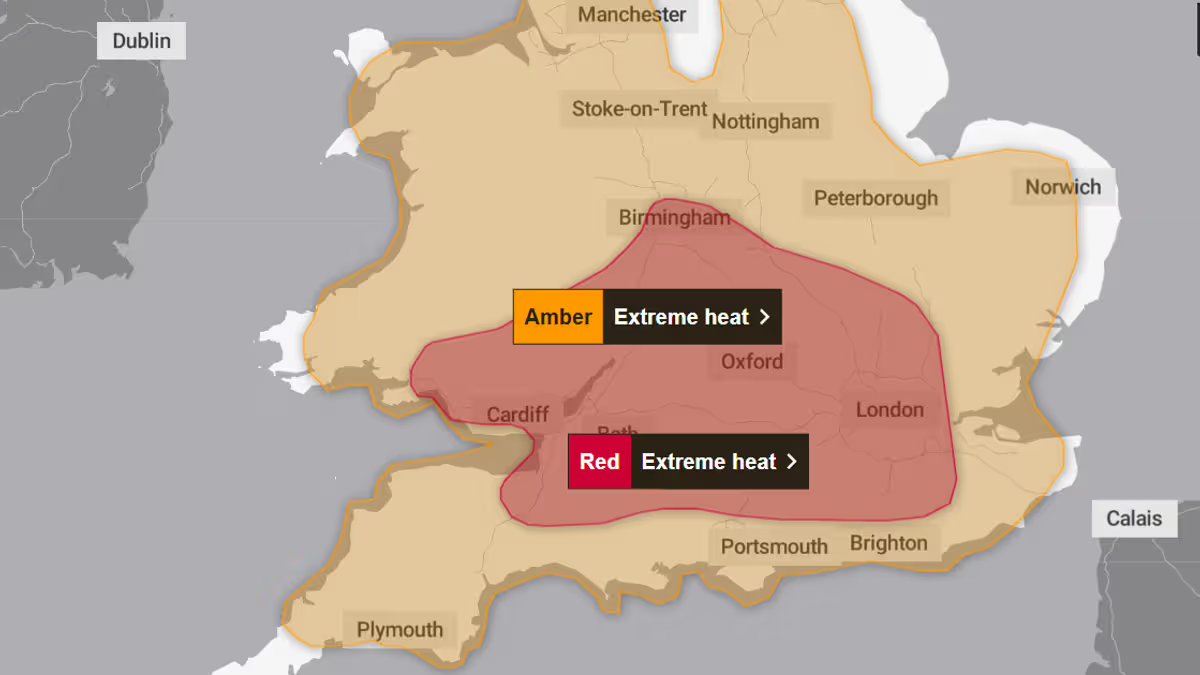
Extreme heat LIVE as rare red health and weather alerts issued across England ahead of 40C heatwave

Published

on

Manchester Evening News

Rod Dennis, road safety spokesperson at RAC, has urged drivers to take the red extreme heat warnings seriously this week as he warned that there could be a record number of breakdowns this week.

He said: “Drivers whose vehicles don’t have effective air conditioning should strongly consider postponing any non-essential car journeys until the Met Office’s weather warnings are lifted and temperatures drop.

“If this isn’t possible, our best advice is to travel during cooler times of day. This is especially important for anyone travelling with vulnerable people, including young children and older adults, who are at greater risk from the intense heat. We’d also remind motorists never to leave pets inside a hot vehicle, as doing so can quickly become fatal.”

Advertisement

He added that the RAC expects breakdown volumes on Monday to be 20% higher than what’s normal for a Monday in late June and advised drivers to pack an emergency breakdown kit.

He said: “This week could end up being a record-breaking one for June – not just because of the heat, but also for the number of drivers breaking down. The heatwave will affect services right across the UK and while all patrols will be working incredibly hard to assist drivers, longer waits are more likely.”

Mr Dennis also said drivers can reduce the risk of breakdowns with a few basic checks, including making sure oil levels are sufficient while coolant levels sit between the “min” and “max” markers.

Source link

Advertisement
Continue Reading

NewsBeat

The Worst Food And Drink To Consume If You Hate Mosquitoes

Published

on

The Worst Food And Drink To Consume If You Hate Mosquitoes

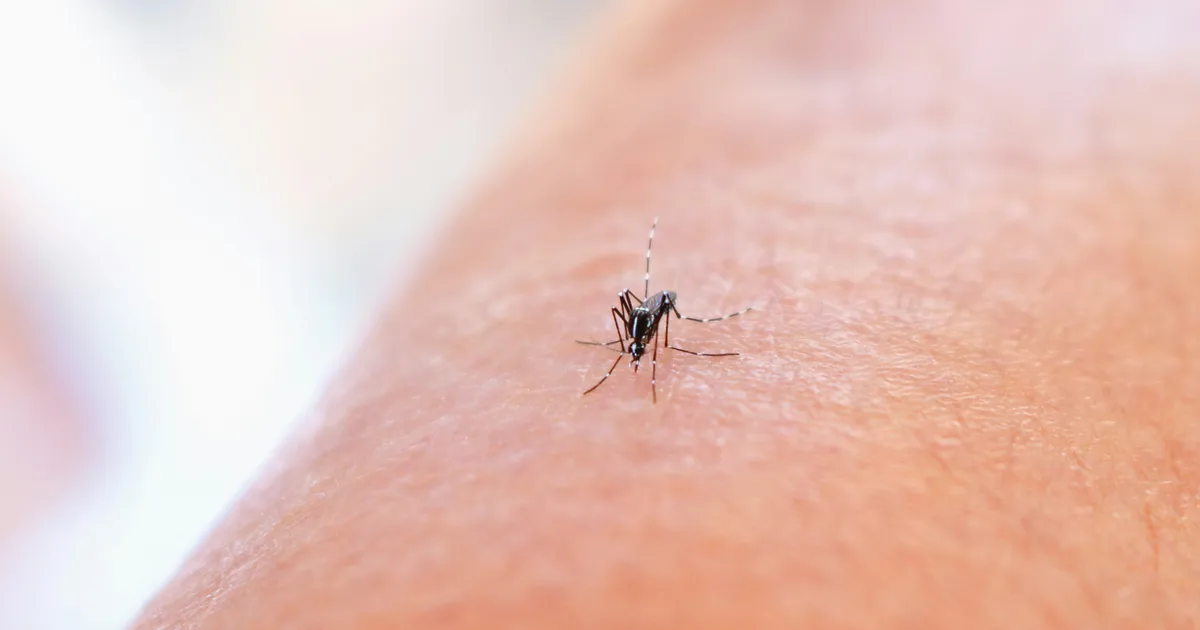
Mosquitoes really do have favourites, even though they’re probably not as fussed as you think by your blood type.

Some research has shown, for instance, that mosquitoes prefer pregnant people.

That’s probably partly because they emit more carbon dioxide, which we know mozzies love, than non-pregnant people.

And as it turns out, how we eat and drink might matter too.

Advertisement

Mosquitoes love bananas and beer

Beer drinkers are 44% more likely to attract mosquitoes, a 2025 paper found.

The research, which was conducted at a festival, found that those who smoked cannabis and had slept with someone the night before were also more appealing to the flies (35% and 46%, respectively).

Meanwhile, another paper found that eating bananas seemed to make mosquitoes likelier to bite mosquitoes. Grapes didn’t seem to make a difference.

Advertisement

Some also believe that salty, spicy, and sweet food can make you irresistible to the pests, though there’s no firm evidence to suggest this is the case.

Other factors that could bring all the bugs to your yard include your body odour, the sebum (oil) you excrete, and even the colours you wear.

Higher body temperatures might make you more appealing to mosquitoes too.

How can I stop mosquitoes from biting me?

Advertisement

If you’re one of the unlucky people mosquitoes just seem to love, there are some things you can do to help.

Firstly, the festival study found that people who wore sunscreen were 48% less attractive to mosquitoes.

Covering up, keeping your windows shut, and even wearing white may all help too.

But speaking to New Scientist, the University of Sydney’s mosquito expert Cameron Webb said that proven mosquito repellants, like DEET sprays, are our best bet.

Advertisement

He told the publication, “The reality is that if we just reminded ourselves to put on mosquito repellent and spent less time thinking about why mosquitoes bite us, we’d all probably receive fewer bites and lower our risk of mosquito-borne disease”.

The UK Health Security Agency (UKHSA) recommends a product with at least 50% DEET as a first line of defence.

“If DEET is not tolerated, use of a repellent containing the highest strength formulation available of either icaridin (20%), eucalyptus citriodora oil, hydrated, cyclised or 3-ethlyaminopropionate is recommended,” they added.

Advertisement

Source link

Continue Reading

NewsBeat

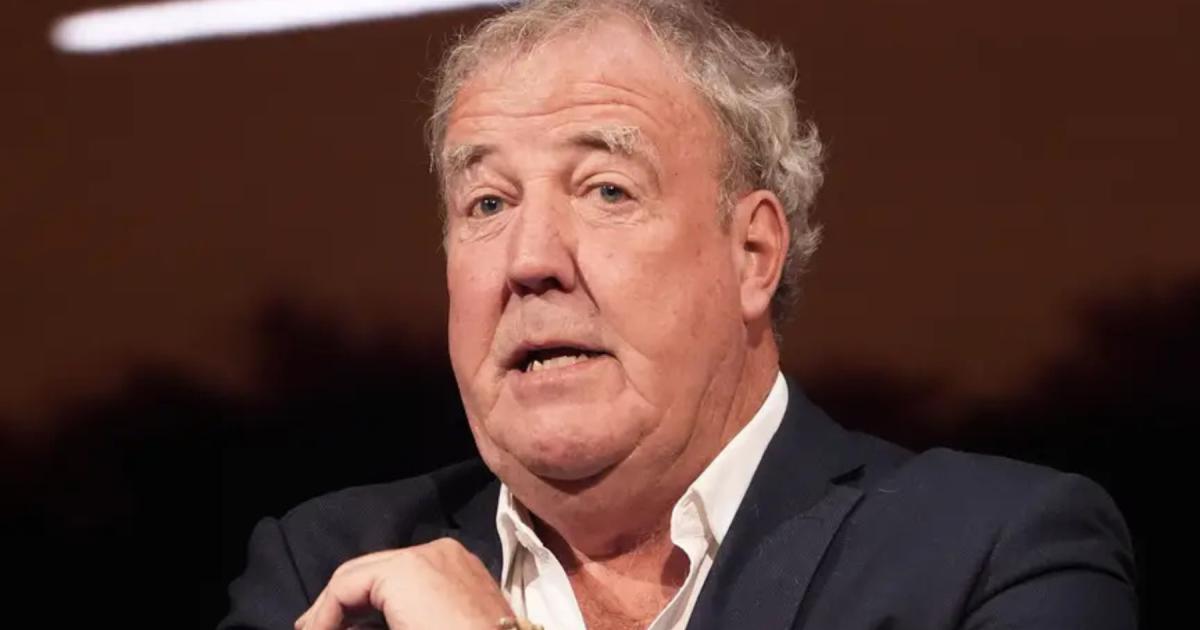
Jeremy Clarkson issues health update after cancer diagnosis

Published

on

Jeremy Clarkson issues health update after cancer diagnosis

Mr Clarkson shared that he had been diagnosed with an “aggressive” form of cancer during the final two episodes of the fifth series of Clarkson’s Farm.

He shared the news with co-stars Kaleb Cooper and Charlie Ireland during a conversation at his Diddly Squat Farm in Oxfordshire.

He explained that the cancer was detected early following a medical in May 2025 and described it as “aggressive”.

Advertisement

Jeremy Clarkson shares health update after cancer diagnosis

Now, Mr Clarkson has shared an update with fans in an interview with The Times.

The presenter said the cancer was detected early, and a recent PSA test showed no remaining signs of the disease.

In the interview, Mr Clarkson said he had spoken with former Prime Minister Lord David Cameron about the impact of their public disclosures, noting how they encouraged others to get checked.

Mr Clarkson said, “I was talking to David (Cameron) about it earlier this morning.

Advertisement

“He said the amount of people that come up to him is mostly in public conveniences and say, if you hadn’t owned up to it, I wouldn’t have got checked, and they wouldn’t have found it.”

He also revealed a support group including Mr Cameron, food writer Giles Coren, and others who have been diagnosed with prostate cancer.

Mr Clarkson said: “So now there’s a group of us, Giles Coren, David, me, one or two other people, and we meet for lunch every so often.

“Everybody has different Gleason scores, and everybody has different Stockholm and PSA scores.

“We all compare notes and I actually get muddled with what mine were.”

Advertisement

The group has drawn attention from onlookers curious about what connects the members.

Mr Clarkson said: “It is quite funny watching people looking at us and going, that’s quite an interesting group of people, what do they all share in common?”

He also spoke about the seriousness of his diagnosis and the importance of early testing.

Advertisement

Mr Clarkson said: “This is why I have to say to everybody who’s reading this, please, please, please go and get checked.

“It’s not uncomfortable, it’s not undignified, and it’s a no-brainer.

“I did, and that’s why I’m sitting here talking to you 11 months down the line.”

Reflecting on the wider impact of cancer, he expressed empathy for those facing terminal diagnoses.

Advertisement

He said: “I’ve seen so many people die of cancer.

“It doesn’t bear thinking about what it must be like to live knowing that an illness is going to kill you.

“It must be very, very, very distressing.

“I don’t know the history of what happened to (former Olympic cyclist) Chris Hoy, but to be told your cancer is inoperable and to still carry on you’d have to be incredibly brave.”

Advertisement

Mr Clarkson’s diagnosis came nearly two years after he underwent a heart procedure involving the placement of two stents.

He revealed that during cancer treatment, he experienced complications after resuming medication without consulting a doctor.

He said: “That was horrific and it was all my own fault.

“I’d been on drugs for heart issues and I had to come off them during the cancer treatment.

“Two or three weeks after the cancer operation, I thought I’d better put myself back on those blood thinners.

Advertisement

“Big mistake, huge.


Recommended Reading


“It (resulted in) a very big emergency in the middle of the night.

“I’m not even going to go into the treatment that was required as a result of that, because it was horrible.

Advertisement

“I didn’t ask a doctor, I just thought, I’m sure it will be all right to go back on blood thinners.”

Mr Clarkson also shared that his doctor had advised him to stop working following his heart procedure, though he has continued to front the series Clarkson’s Farm.

The show follows his experiences running Diddly Squat Farm near Chipping Norton, Oxfordshire, which he began running in 2019.

Advertisement

Source link

Continue Reading

NewsBeat

Man, 60, found dead at home in York – police launch appeal

Published

on

Spate of fires in Sherburn in Elmet prompts police action

As a subscriber, you are shown 80% less display advertising when reading our
articles.

Those ads you do see are predominantly from local businesses promoting local
services
.

These adverts enable local businesses to get in front of their target audience – the local
community
.

It is important that we continue to promote these adverts as our local businesses need
as much support as possible during these challenging times.

Advertisement

Source link

Advertisement
Continue Reading

NewsBeat

UK weather live: Met Office issues RED heatwave alert as hottest day ever looms

Published

on

Daily Mirror

The Met Office alerts also warn of an increase in potential water safety incidents, as more people are likely to visit coastal areas, lakes or rivers.

During the previous record-breaking heatwave , from May 24 to 31, the UK saw a horrifying death toll of 19 children and adults killed in water related incidents during one week. In response the Mirror launched our ‘Save Lives for Sam’ campaign to stop the “catastrophic” deaths of 33 children who drown in England every year – “the equivalent of a classroom of children lost”.

Bereaved families, Olympic legends and safety organisations have joined together to call on the Government to take five key steps to save young lives across the country. People heading to the coast should be mindful that sea-surface temperatures are not as high as they would be in mid-summer.

Advertisement

Samantha Hughes is the National Water Safety Partner at the RNLI. She said: “With warmer weather approaching, it’s important to remember that the water is still cold. Entering it unexpectedly can lead to cold water shock, causing a sudden increase in breathing and heart rate, which may trigger panic.

“If you find yourself struggling in the water, remember to Float to Live: tilt your head back so your ears are submerged, relax and control your breathing. You may need to gently use your hands to help you stay afloat, and it’s ok if your legs sink—everyone floats differently.

“Where possible, always choose a lifeguarded beach, and swim between the red and yellow flags. In a coastal emergency remember to call 999 for the coastguard.”

Source link

Advertisement
Continue Reading

NewsBeat

Man seen ‘covered in blood’ as locals left ‘shocked’ by stabbing

Published

on

Cambridgeshire Live

A man in his 20s suffered serious injuries after a stabbing on Sunday evening (June 21)

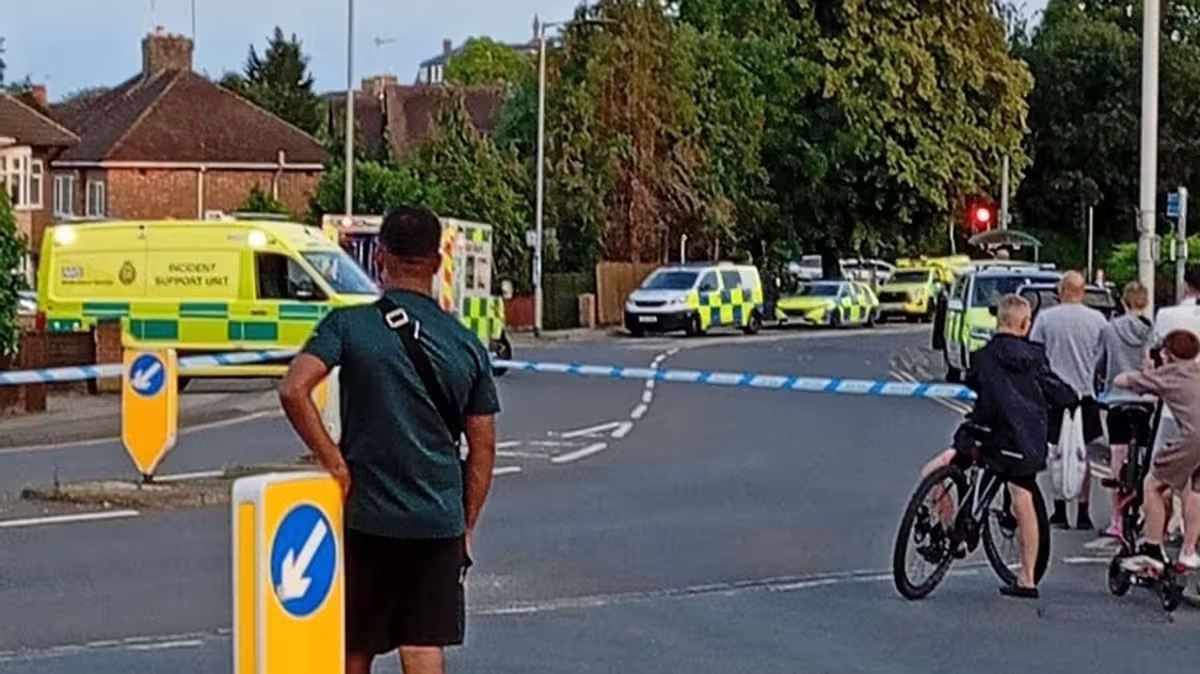
Residents have been left in shock after seeing a man “covered in blood” – as police swarmed a street following a stabbing. Cambridgeshire Police were called to reports of a stabbing at a house along London Road in Peterborough at around 7pm on Sunday (June 21).

A man in his 20s was stabbed and suffered serious injuries. He remains at Addenbrooke’s Hospital in Cambridge. A 52-year-old man wanted in connection with the stabbing is in hospital. People who live along London Road say police “swarmed” the street on Sunday night.

Amsita, who wished for her surname not to be included, said she was in her garden with her children when she suddenly heard “screaming”. She added: “We went outside and it looked like a young boy. There was a lady crying – the man had a lot of blood on him. Suddenly police and ambulances came and they were checking the man.”

Advertisement

Amsita said it was “horrible”. She added: “We heard screaming and shouting. We were surprised it was happening. They [police] were here for about two to three hours. They broke down the door to a house. We were shocked it happened.”

Another woman, who wished to not be named, found it “frightening”. She added: “I came out and saw the armed police, but I didn’t see the man. They [police] were all across the street. There were about nine police cars and three ambulances. It was quite shocking. Because of the armed police and dogs, and you hear them shouting to open up [the front door], it was quite frightening. But because there were quite a lot of police, it felt under control.”

Another woman, who wished to remain anonymous, said London Road was “swarmed” with police.

“I had never seen anything like that – it was crazy. We had no idea what was going on, and then all you could hear was shouting and the police trying to get someone out of the house. I saw a man lying on the floor and a lady crying, but I couldn’t see what it was like. It was quite scary.”

Advertisement

Another resident, who didn’t want to be named, also saw a man with “blood on him”. The man said: “They [police] were here for quite a long time and then the neighbours were everywhere. It was a frightening thing to happen so close to home.”

Source link

Continue Reading

NewsBeat

‘I visited Lidl’s first pub but will never return after disgraceful incident’

Published

on

Belfast Live

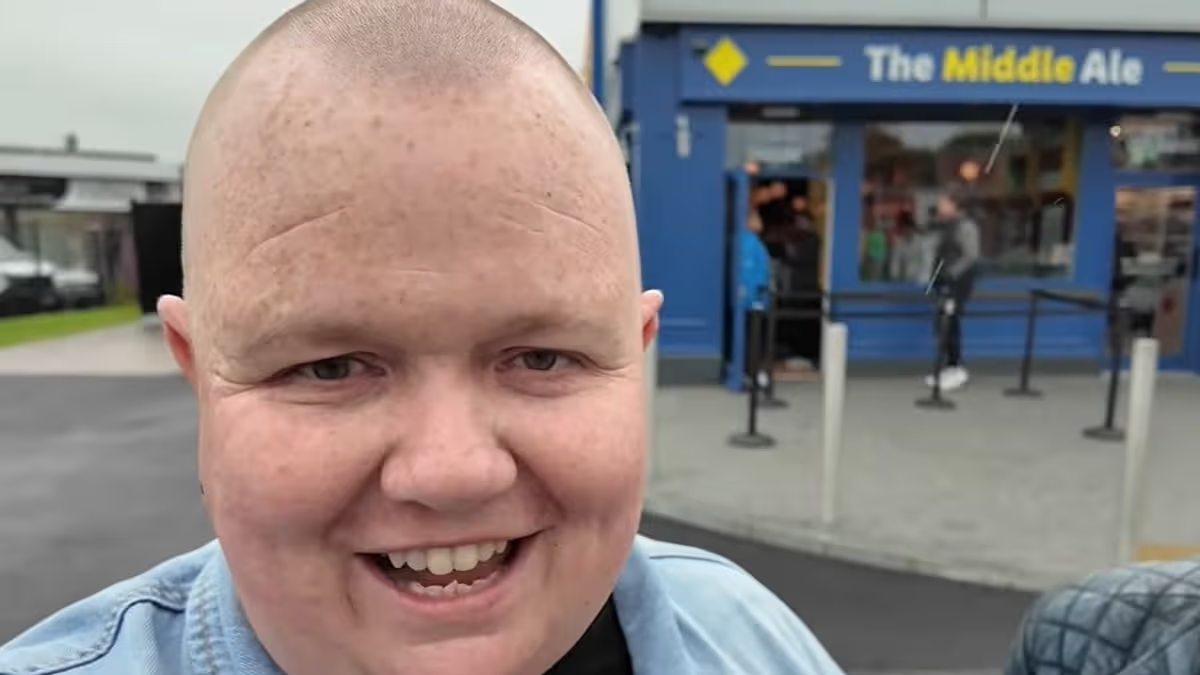
The first Lidl pub opened in Dundonald this month and one content creator known as the Northern Ireland Traveller has released a video about his experience

A bloke who was only the second ever customer to be served a pint inside the world’s first Lidl pub has declared he will never return — after being left in “complete shock” at what happened during his visit.

Advertisement

Mark Rowan, known online as Stumpy or the Northern Ireland Traveller, was the second punter in the door when The Middle Ale opened in Dundonald this month.

It is owned by the supermarket chain and it was partly launched as a way to comply with the strict licensing laws in Northern Ireland.

Stumpy was there for the grand opening and things were going smoothly until he suddenly was asked to stop filming — but more on that shortly.

Starting off on a positive note, he told his 28,900 YouTube subscribers: “This is the first Lidl pub in the world. Considering Lidl has almost 13,000 stores across 31 counties, it’s pretty remarkable that Belfast Northern Ireland is the first place to have one.”

Advertisement

He then explained that the name The Middle Ale was a clever play on words relating to Lidl’s famous “middle aisle” which is loved by shoppers.

The YouTuber joked that you could end up enjoying a pint in the boozer before going to the middle aisle next door to buy a chainsaw and a lawnmower.

Inside the pub, which has a separate entrance to the supermarket, punters are met by bold red, yellow and blue colours, reflecting the German brand. There is space for about 60 people and the walls feature shelves of Lidl grocery products.

Advertisement

One of the standout features was trolleys transformed into chairs, and Stumpy noted: “Absolutely unbelievable — I absolutely love this.”

A pint of Guinness in the pub costs £5.80 while a lager is £5.30.

And sipping a pint of the black stuff, Stumpy said he was impressed and that the temperature of his drink was solid. Summing up his thoughts, he said: “I really like it. There’s a good vibe about the place, good atmosphere, and very friendly staff. Very very impressed so far. Obviously, it’s opening day, so there’s going to be a bit more of an atmosphere around the place but yeah, so far so good.”

Advertisement

Unfortunately, things then changed in an instant, after Stumpy said he was approached by a member of staff who identified himself as security.

Stumpy was informed that he would have to leave if he kept filming before he explained that he had been doing so all day without any issues.

He alleged that he then asked for the man’s name, and Stumpy continued: “His response was none of your f***ing business.”

This behaviour caused Stumpy to say he would “definitely not be returning” before he outlined his disappointment about a pleasant experience turning sour.

He said: “I actually said the pint was good, I can’t take that away from it, wasn’t a bad pint. Would I return again? Definitely not. I don’t really know what to say. We were planning to spend the rest of the day in there. So plans have changed.

“I’m completely in shock. I totally understand it’s up to the owner’s discretion if they allow you to film inside the premises.

“[But] press team inside there this morning were taking picture of us when we walked in the door. And that’s obviously going to be going on social media and across all news platforms.”

Advertisement

He added on the video: “I was here to promote the place on the first day.

“Obviously, everyone is going to be taking photographs or if and pictures of it and videos of it. It’s the very first supermarket pub in the UK and Ireland. Absolute disgrace to be honest. I am annoyed.”

He clarified that every member of staff he encountered was friendly but the alleged behaviour of one left him determined never to go back in the future.

Advertisement

Hours later, long after Stumpy had left, a brawl erupted at the Lidl pub, in a separate incident which spoiled the opening night.

One man was left hospitalised after the altercation and the PSNI said in a statement: “Police received a report of an assault outside licensed premises in Dundonald on Thursday evening, June 18.

“At approximately 11.20pm, it was reported two men were involved in an altercation outside premises in the Dunlady Road area. Officers attended, and one man was taken to hospital for treatment to injuries not believed to be serious.”

Lidl Northern Ireland meanwhile said: “We are aware of an incident at The Middle Ale which took place yesterday evening.

Advertisement

“A group of customers were politely asked to leave the premises after last orders were called and an altercation took place between the group of customers.

“For the safety of our employees and customers, security personnel assisted in the prompt removal of the group and the PSNI supported in ensuring their full removal from the site.

“At The Middle Ale, the safety of our employees and customers is of utmost importance and we operate a zero-tolerance approach to disorderly behaviour.”

In relation to the earlier incident involving the Northern Ireland Traveller, Lidl Northern Ireland was approached for comment.

Advertisement

Source link

Continue Reading

NewsBeat

Shooting at high school in Philippines kills 3

Published

on

Shooting at high school in Philippines kills 3

MANILA, Philippines (AP) — Two students armed with hand guns opened fire in a high school in the central Philippines on Monday, killing three fellow students and wounding another seven, police said.

The suspects, aged 14 and 15, were arrested. The suspects and the victims were students of the San Jose National High School in Tacloban city, where the mid-morning shooting happened, regional police chief Brig. Gen. Jason Capoy said.

An investigation was underway to determine the cause of the shooting in the government-run school, which has more than 1,500 students. Capoy said that the suspects, who were close friends, said in initial questioning that they were bullied in school. He did not elaborate.

They have no criminal records. One of the suspects got the 9 mm pistol he used in the attack from an aunt, a police officer, who was now being investigated. The other suspect used a cal. 38 revolver. They managed to bring the guns onto the campus because there was only one guard on duty at multiple entrances and exits, Capoy said.

Advertisement

“The suspects barged into two rooms because after the shooting in the first, the children scampered and the suspects apparently ran after some victims into another room,” Capoy told reporters.

Most of the dead and wounded were female students, he said. Police recovered at least 40 shell casings at the scene of the attack.

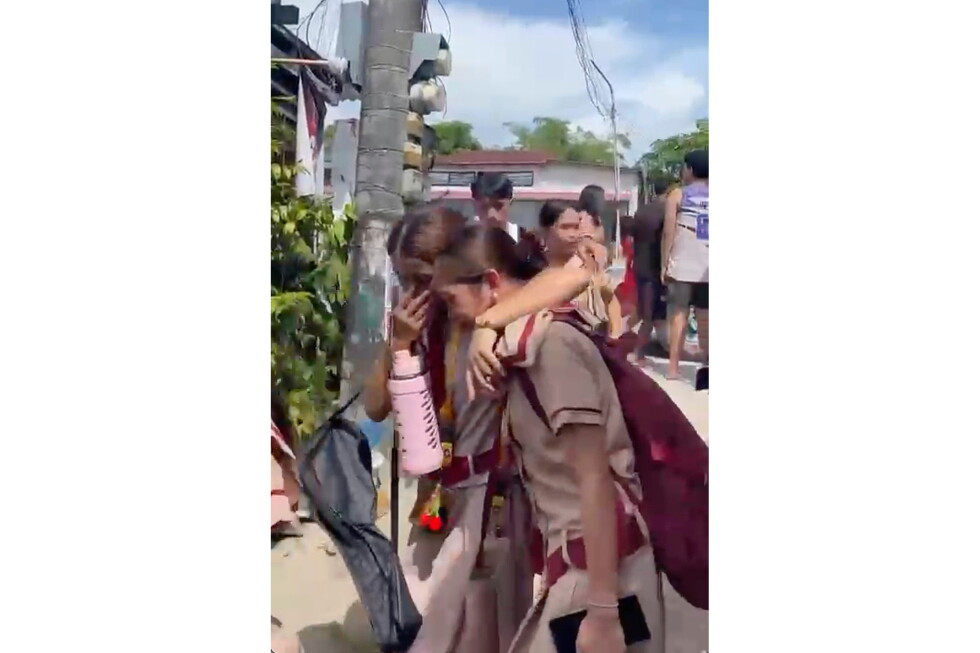
In a video posted online, students hiding under desks in a shut classroom can be heard screaming and weeping as gunshots are heard outside. Some called their mothers. Other videos show visibly terrified students streaming out of the school campus, some holding and embracing each other.

One of the suspects was arrested in the school after the attack but the second fled and hid in a house nearby. He was found by police who were alerted by residents, police said.

Advertisement

President Ferdinand Marcos Jr. ordered a thorough investigation of the shooting and asked law enforcers to boost security in all schools, workplaces and public areas, Communications Undersecretary Claire Castro said.

“The president was saddened by this incident. Anybody, especially the parents of the victims, will feel sad and terrified,” Castro said.

The suspects were to be turned over to government welfare officers after the investigation since they are minors. The 14-year-old would be exempt from criminal prosecution under a 2006 Philippine law, which sets the minimum age of 15 for a minor to be criminally liable and only if authorities determine that a suspect was clearly aware of the crime that was committed and its repercussions.

The national police have urged the public to remain calm and cooperate with authorities by providing any information that may aid the ongoing investigation.

Crimes involving the use of firearms are prevalent in the Philippines, partly due to the proliferation of unlicensed firearms, but school shootings are relatively rare.

In 2022, a man armed with pistols opened fire at an upscale university in the Manila metropolitan area ahead of a graduation ceremony, killing a former Philippine town mayor with whom the suspect had a long-running feud, and two others in the brazen attack. The gunman was arrested.

Advertisement

Source link

Advertisement
Continue Reading

NewsBeat

Can volunteering abroad build the next generation of global citizens?

Published

on

Can volunteering abroad build the next generation of global citizens?

For young adults who feel cut off from global politics, overseas volunteering can offer a more practical route into global citizenship – one built through classrooms, communities and cross-cultural exchange

When politics feels remote, polarised or simply too big to touch, one of the oldest youth organisations in the world is offering a more hands-on answer: get on a plane, meet people whose lives are unlike your own, and work on something useful.

Founded in 1948, in the aftermath of the second world war, AIESEC describes itself as the world’s largest youth-run non-profit. Its original purpose was rooted in cross-cultural understanding at a time when Europe was trying to rebuild trust across borders. More than 75 years later, that idea has not exactly gone out of date.

Advertisement

Through its Global Volunteer programme, the organisation sends 18- to 30-year-olds abroad for projects linked to the UN’s Sustainable Development Goals, with placements typically lasting four to eight weeks. Volunteers work on schemes ranging from education and first aid to tourism marketing, economic development, marine conservation and projects designed to challenge prejudice.

“The reason why conflict starts is that people don’t understand each other,” says Mary-Treesa Rozario from AIESEC’s Sydney University branch. “So cross-cultural understanding and global volunteering – the main purpose of the project – allow the volunteers to understand new cultures.”

Advertisement

There is a danger with any international volunteering programme that it can drift into worthy tourism, or sell transformation too neatly to young people looking for experience. The more useful version is harder, less flattering and more reciprocal: arrive with something to offer, then realise how much you do not know.

For many participants, the initial motivation is practical. They want independence, work experience, a stronger CV or proof that they can handle themselves outside the structures of home and university. Some are also drawn by the chance to receive a certificate linked to the UN’s global goals. But Rozario says the reason for going often shifts once they are there. After working in unfamiliar environments, “the whole type of purpose in doing this exchange completely changes,” she says. “It provides more meaning.”

Sarah Sepuldiva, who volunteered on a Global Classroom project in Vietnam in June 2025, says she joined because she wanted “to become more independent and gain first hand experience about issues happening”. Teaching English without speaking Vietnamese forced her to rethink what communication really depends on.

Advertisement

Cross-cultural understanding and global volunteering allow the volunteers to understand new cultures

“The biggest lesson I learned was patience,” she says. “Not speaking Vietnamese meant I had to rely on careful listening, observation, and creative communication. I learned to interpret what students were trying to express and respond in a way that made sense to them.”

In the classroom, that meant designing activities that were engaging and accessible, watching students closely, and building confidence through encouragement and humour. Sepuldiva found she was especially effective when working one-to-one with students who felt nervous about their English. She would tell them about her own experiences learning languages and joke that, even as a native English speaker, she still made mistakes.

“Their laughter and smiles showed me that this approach helped them feel safe to try and make mistakes,” she says. “I like to think that my presence helped create a supportive environment where students felt confident, motivated, and proud of their progress.”

Advertisement

Founded in 1948, in the aftermath of the second world war, AIESEC describes itself as the world’s largest youth-run non-profit

For Harry Kwon, who volunteered on the Beyond Race project in Jakarta in 2018 and 2019, the starting point was partly restlessness. Raised in Perth after being born in Asia, he says he wanted “to get out of Perth” and see more of the world. At 19, during his first summer at university, he travelled to Indonesia, where he taught in primary and middle schools.

“The premise was I was teaching English but the hidden agenda was to raise awareness of diversity and stereotypes,” he says.

Advertisement

Indonesia’s mix of ethnicities, cultures and religions gave those conversations an immediacy that classroom theory rarely has. Kwon used his own experience of growing up in a foreign environment to talk to students about difference, social harmony and the potential that can exist across cultural divides. He also found himself learning from the other volunteers around him, who had come from Germany, Turkey, Malaysia, China, Korea and beyond.

“I learned the world is vast and also that I can make some kind of change,” he says. “I also saw my privilege of living in Australia and what I had that many others around the world don’t – so I realised I should use some of this privilege in ways I can.”

That experience did not end when he came home. Kwon went on to work for AIESEC Australia, helping other young people take part in exchange programmes. He now works for an education philanthropy focused on developing young people to pursue social impact.

Advertisement

“It shaped a lot of what life after looked like,” he says.

That may be the clearest argument for the model. The point is not that a few weeks overseas can solve global inequality, climate breakdown or cultural division. It cannot. The point is that it can interrupt a young person’s assumptions early enough to shape what they do next.

For a generation surrounded by global crises but often shut out of meaningful influence, that shift is not insignificant. AIESEC’s promise is modest when stripped of the marketing language, but it is still powerful: travel with purpose, work across difference, and come back less certain that the world is someone else’s responsibility.

Images: AIESEC

Advertisement

Be part of the solution

At Positive News, we’re not chasing clicks or profits for media moguls – we’re here to serve you and have a positive social impact. We can’t do this unless enough people like you choose to support our journalism.

Give once from just £1, or join 1,800+ others who contribute an average of £3 or more per month. Together, we can build a healthier form of media – one that focuses on solutions, progress and possibilities, and empowers people to create positive change.

Support Positive News

Advertisement

Source link

Continue Reading

NewsBeat

Former Federal Reserve Chairman Alan Greenspan dies at 100

Published

on

Former Federal Reserve Chairman Alan Greenspan dies at 100

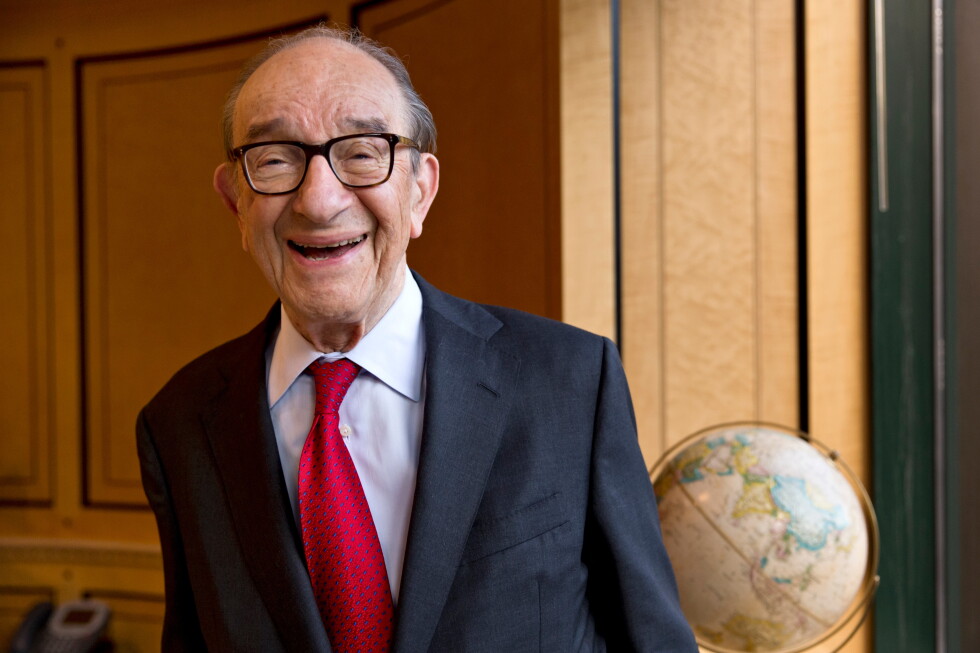
WASHINGTON (AP) — Former U.S. Federal Reserve Chair Alan Greenspan died Monday from complications of Parkinson’s Disease, said his wife of 29 years, NBC News correspondent Andrea Mitchell. He was 100.

“To me he was my husband, who shaped my life from our very first date in 1984,” Mitchell said. “He had ‘irrational exuberance’ for baseball, the Washington Commanders, tennis, golf, and music, especially jazz. He will be remembered for his brilliance and his kindness. Being his life partner was the joy of my life.”

In his 18½ years at the helm of the Fed, Greenspan presided over a sustained era of American growth and prosperity, yet one that ended with devastating consequences in 2008, two years after he had left the central bank.

Era of US economic growth

Greenspan was so respected during his many years as head of the world’s most influential central bank that by the time he stepped down in 2006, he was widely celebrated as the “Oracle’’ and “Maestro.’’

Advertisement

He presided over a breathtaking surge in stock prices and a 10-year economic boom that began in March 1991. He was widely celebrated as a virtuoso who nurtured America’s economic well-being and whose nearly every utterance was parsed for clues as to where interest rates, the economy and the financial markets might be headed.

The intense scrutiny of Greenspan’s intentions gave birth to new Fed folklore: The “Briefcase Indicator.” A stuffed briefcase carried into Fed meetings implied changes might be afoot because Greenspan carried with him charts and research to make his point.

US housing crisis raised questions about policies

Greenspan’s reputation suffered a serious setback, however, soon after he left the Fed in 2006. The American housing market collapsed, igniting a global financial crisis that nearly toppled the U.S. banking system and plunged the economy into the worst recession since the 1930s.

Critics pinned much of the blame for the crisis on Greenspan’s easy-money policies and on what they believed was an overexuberant faith in lightly supervised financial markets.

Advertisement

Greenspan himself later acknowledged that “I made a mistake’’ in assuming the nation’s banks, whose stability undergirds the financial system and the entire economy, could essentially regulate themselves.

As housing values plummeted, millions of Americans, many of them stuck with outsize mortgage debt, lost homes to foreclosure. The spiraling financial crisis sent the U.S. economy sinking into the Great Recession of 2007-2009.

The crisis in the U.S. rapidly spread overseas, leading to a debt crisis for nations in Europe. China also engineered a massive government stimulus package to stabilize its economy.

Greenspan became the authoritative voice on the US economy

Until then, however, it seemed that Greenspan could do no wrong. Not only in the United States but across the world, he was regarded with a mixture of reverence and awe. Many openly dreaded the day when he would leave the Fed.

Advertisement

Investors hung on his sometimes inscrutable observations. In the most well-known such remark, Greenspan sent financial markets reeling on Dec. 5, 1996, when he suggested with just two words — “irrational exuberance” — that stock prices were too high.

Mindful of his power to move markets, Greenspan typically resorted to obfuscation. At times, he even satirized his habit of doing so.

“I know you believe you understand what you think I said, but I am not sure you realize that what you heard is not what I meant,” Greenspan once told a befuddled congressional committee.

A protégé is born

Born in the Washington Heights neighborhood of Manhattan, the young Greenspan was a math whiz who was trotted out by his mother to show off for visitors.

“I was a prop at parties,’’ he said in a 2007 interview with PBS NewsHour. A Julliard School dropout, he worked as a professional musician in his teens, playing clarinet and saxophone alongside the future jazz great Stan Getz — a humbling experience that persuaded the young Greenspan to seek another line of work.

He pursued undergraduate and graduate study in economics at New York University, eventually earning a doctorate there. For most of three decades, he ran an economic consulting firm. During the 1950s, he became a disciple of the libertarian philosopher Ayn Rand, who stuck him with the nickname the “Undertaker’’ for his dark clothes and quiet bearing. When Greenspan was sworn in as President Gerald Ford’s chief economic adviser in 1974, Rand stood beside him.

Advertisement

An early trial for a new Fed chair

President Ronald Reagan tapped Greenspan to run the Fed in 1987. He was tested almost immediately. On Oct. 19, 1987, which came to be known as “Black Monday,” the stock market suffered the worst one-day percentage loss in American history just two months into his term. The Dow Jones Industrial Average shed 22.6% of its value rapidly for reasons that weren’t entirely clear then, and remain opaque to this day.

Greenspan won credit for helping restore calm and stability. He assured Wall Street that the Fed would supply as much money to the financial system as was needed to restore calm. Stocks recovered, and the American economy emerged unscathed by the market crash.

Greenspan’s crisis management skills were tested again in 1997 and 1998, when a financial crisis in Asia threatened to spread economic devastation around the globe. Under Greenspan, the Fed arranged an emergency loan to Thailand and persuaded U.S. banks to roll over short-term loans to a teetering South Korea.

During his tenure at the Fed, Greenspan drew praise for presiding over what was at the time the longest economic expansion in American history. Over that time, the nation’s unemployment rate briefly dropped below 4% for the first time since 1970.

Advertisement

And inflation, which had bedeviled the United States and much of the global economy during the 1970s, was remarkably dormant during Greenspan’s chairmanship, something many economists had not thought could occur for so long a period.

During the long boom, Greenspan argued that improvements in technology had made the economy so efficient that it could run faster, at lower rates of unemployment, without unleashing inflation. As a consequence, the theory went, the Fed could keep interest rates low even when the economy was roaring.

A passion for numbers and life

As Fed chair, Greenspan relished poring over obscure economic data, from monthly boxcar loadings to steel production, all in a bid to assess where the economy was going. He would often phone economists at other government agencies to discuss details. He would rise early each morning for a two-hour soak in his bathtub, time that he used to review statistics and Fed staff memos.

Improbably, Greenspan also made the gossip pages as something of an unlikely ladies’ man. He dated the television journalist Barbara Walters and later married Mitchell after a 12-year courtship. They had no children.

Advertisement

Greenspan had dated Walters while working as an adviser to President Gerald Ford. According to a biography of Greenspan, “The Man Who Knew” by Sebastian Mallaby, when Ford read a newspaper item about the pair, he cut it out and sent it to his chief of staff, Dick Cheney, with a note that said, “I don’t believe it.”

A strong faith in self-regulating markets is challenged

All along, Greenspan held fast to the belief that financial markets could largely regulate themselves. With officials from President Bill Clinton’s White House, he helped block efforts by Brooksley Born, the nation’s top commodities regulator, to bring federal oversight in the late 1990s to the shadowy market in over-the-counter derivatives. The derivatives allowed speculators to make bets on everything from the price of oil to high-risk mortgages.

Eventually, history would vindicate Born, not the Maestro.

The low interest rates Greenspan had engineered helped swell housing prices into a dangerous bubble. And the financial deregulation he supported allowed banks and other financial firms to pile up huge risks, often hidden from government supervision. Bad derivatives bets helped sink insurance giant American International Group, which required a $180 billion taxpayer bailout.

Advertisement

The Financial Crisis Inquiry Commission, which was assigned to investigate the debacle by Congress, concluded:

“More than 30 years of deregulation and reliance on self-regulation by financial institutions, championed by former Federal Reserve chairman Alan Greenspan and others … had stripped away key safeguards, which could have helped avoid catastrophe.”

Life after the Fed

In the years after stepping down as Fed chairman in 2006 just shy of his 80th birthday, Greenspan kept busy doing what he loved to do most — following the economic data. He ran his own consulting firm, Greenspan Associates, through which he dispensed advice to Wall Street clients and collected handsome speaking fees.

He kept up a busy schedule well into his 90s, writing his memoir and two other books on the economy, as well as opining on the latest economic developments on television news shows.

Advertisement

He also signed onto opinion articles and statements defending the Federal Reserve’s political independence from President Donald Trump’s ongoing attacks. In January 2026 he signed a statement criticizing the Trump administration’s investigation of Fed Chair Jerome Powell. The statement, which was also signed by two other former Fed chairs and five former Treasury secretaries, called the investigation “an unprecedented attempt to use prosecutorial attacks to undermine” the Fed’s independence and warned it would have “highly negative consequences for inflation.”

Greenspan’s tenure as Fed chairman — from August 1987 through January 2006 — was just five months shy of the longest Fed chairman’s tenure. That distinction belonged to William McChesney Martin, who served from 1951 until early 1970.

In his 2013 book “The Map and the Territory,’’ Greenspan defended himself against critics who assigned him significant blame for the 2008 financial meltdown. He argued that traditional economic forecasting was no match for the irrational risk-taking that can feed catastrophic price bubbles.

“Bubbles go up very slowly as euphoria builds,” Greenspan said in a 2013 interview with The Associated Press. “Then fear hits, and it comes down very sharply. When I started to look at that, I was sort of intellectually shocked.”

Advertisement

————-

AP Economics Writers Christopher Rugaber and Martin Crutsinger contributed to this report.

Advertisement

Source link

Continue Reading

Trending

Copyright © 2025