
Politics
5 Moments MPs Grilled Starmer Over Peter Mandelson


Keir Starmer was met with ridicule and disbelief from MPs while fielding their questions over why he ever decided to appoint Peter Mandelson to be an ambassador for the US.
It emerged last week that the ex-Labour peer failed security vetting without the prime minister’s knowledge, and was still given the top job in Washington days later.
Starmer sacked Olly Robbins, the top civil servant in the Foreign Office, granting Mandelson clearance without informing them.
Though Mandelson was sacked in September when the depth of his friendship with convicted paedophile Jeffrey Epstein was revealed, the saga continues to cast a shadow of Downing Street.
Questions swirl over the prime minister’s judgement and apparent lack of authority within his own government.
Here’s how the prime minister’s attempt to address the scrutiny head on went down with MPs…
1. Laughter During Starmer’s Opening Statement
The prime minister tried to preempt the frustration from MPs over Mandelson – and his vetting – by admitting that “many members across the House will find these facts to be incredible”.
Starmer was instantly interrupted with a wave of laughter from the opposition benches which seemed to even take the prime minister by surprise.
“To that, I can only say they are right,” the PM ploughed on, despite the noise. “It beggars belief that throughout the whole timeline of events, officials in the Foreign Office saw fit to withhold this information from the most senior ministers in our system in government.”
2. Mother Of The House Asks The Most Basic Question
Diane Abbott tore into the PM for not doing the obvious: asking if Mandelson passed security vetting.
The MP for Hackney North and Stoke Newington pointed out that Mandelson had already been fired from government twice, both occasions long before he was considered for the ambassador role.
“It’s one thing to say, as he [Starmer] insists on saying, ‘Nobody told me, nobody told me anything, nobody told me’,” Abbott said.
“The question is, why didn’t the prime minister ask?”
The PM said he did ask the cabinet secretary to review the “process” around hiring Mandelson once the “further revelations” came to light.
Abbott, Starmer’s former shadow cabinet colleague turned vocal critic, lost the party whip last year and now sits as an independent.
As the longest-serving female MP in the Commons, she is known as the “Mother of the House” as a marker of respect.
3. Labour Backbencher Slams Starmer’s Ambitions
Another one of Starmer’s former shadow cabinet colleagues, John McDonnell, also scorched the prime minister – this time over his wider political career.
“Isn’t the reality this: when he sought to realise his ambition to become leader of the Labour Party, with very little base within the party, he became dependent on [Morgan] McSweeney and Mandelson, and Labour Together to organise and fund his election.”
The Labour MP for Hayes and Harlington claimed Mandelson was then rewarded with the “highest diplomatic office” as a result.
“The unspoken message to civil servants was: what Mandelson wants, Mandelson gets. This has damaged the party that I’ve been a member of for 50 years,” McDonnell said.
Starmer refuted McDonnell’s message about Whitehall, insisting it’s “simply not good enough” for any civil servants to withhold such information.
4. Comparisons To Boris Johnson’s Partygate
“It’s 2022 all over again,” Lib Dem leader Ed Davey told the Commons, referring to the fury Boris Johnson was faced with as prime minister after it emerged he had broken his own government’s social distancing rules during the Covid lockdowns.
Johnson was later accused of misleading the House – including by Starmer himself – and blaming Downing Street officials for the error.
Davey pointed out that, as leader of the opposition, Starmer promised to implement change if he were to get into office.
“I’m afraid the fact that he even had to make the statement today shows how badly he has failed,” Davey said, as he called on the PM to resign.
5. Labour Backbenchers Abandon The PM
Even as Starmer was fighting to keep his job, it seems Labour MPs were not minded to stay in support.
The benches behind the prime minister thinned out substantially during his time in the chamber.
A Labour source told HuffPost UK: “Starmer is fighting for his political life and look how his benches have thinned out. Feels like it’s sinking fast.
“I suspect post-May Labour MPs will start saying he has to set out a timetable to go.”
Subscribe to Commons People, the podcast that makes politics easy. Every week, Kevin Schofield and Kate Nicholson unpack the week’s biggest stories to keep you informed. Join us for straightforward analysis of what’s going on at Westminster.



In a Parliamentary debate on Thursday 16 April, MPs across party lines demanded the government end its £330 million NHS contract with spyware tech giant Palantir. But there was one glaring absence – where was Wes Streeting, our secretary of state for health and social care?
‘Evil’ company
Every one of the 13 MPs who spoke in the debate, led by Lib Dem MP Martin Wrigley, raised the alarm over Palantir. The company has deep involvement with the US military, powers Israeli war crimes in Gaza and Lebanon, supports British intelligence and surveillance, and provides data analysis for violent US deportations.
The call was clear: contract details – which the Good Law Project revealed had been heavily redacted – need scrutiny and transparency; the government needs to come clean on how the contract was awarded; and it must explore exiting through its break clause.
The distrust over Palantir’s role to provide the NHS’s centralised data system – called the federated data platform (FDP) – was unanimous. Founded by tech-billionaire, Epstein-pal and Trump-funder Peter Thiel, its CEO boasts how they like to “scare” enemies and “on occasion kill them.”
MPs called the NHS relationship “shameful.” From Labour, Lib Dem, Independents, Conservatives and even the DUP, there was wide condemnation.
Iqbal Mohamed of Dewsbury and Batley didn’t hold back:
If it looks evil, if it smells evil and if it behaves evil, then it is evil.
Cancelled Contracts
MPs pointed to Switzerland that recently kicked out Palantir contracts due to national security concerns (hushed news leaked by a small publication that Palantir then tried to sue). Hospitals in New York have also rejected Palantir arrangements.
But here in the UK in 2023, Palantir walked away with a seven-year NHS contract without competition (the same kind of mates’ rates for the £240 million Ministry of Defence deal). Data handling, trust and transparency are the major concerns.
“Palantir should be nowhere near our NHS data and patient data,” Labour’s Ian Byrne declared, because the issue of trust was central.
Labour/Co-op MP Rachael Maskell said:
As a former clinician in the NHS, I know that trust is key. If a clinician does not have the confidence and trust of their patients, that will result in worse health outcomes.
She added:
I urge the Government to end this contract.
Human rights abuses
Ethics and values “should be our starting point”, said Dawn Butler MP for Brent East, but we’re far from that. It is not only a concern that the future of NHS data is in the hands of a company that’s been hostile towards the NHS. Back in 2020, Amnesty International raised the alarm about Palantir technology facilitating human rights violations in the US.
Palantir technology has been used by US Immigration and Customs Enforcement (ICE) for years. The recent violence and murders at the hands of ICE have led the British Medical Association (BMA) to urge doctors to limit their use of the tech system. The BMA has also called on the government to “remove the NHS from Palantir’s technical architecture at pace.”
No Palantir in the NHS
Health justice organisation Medact has been a key part of the No Palantir in the NHS campaign. They have been joined by organisations like Health Workers for a Free Palestine, Just Treatment, Good Law Project, and others.
The campaign outlines Palantir’s complicity in war crimes and urges local health bodies to reject the FDP through a detailed briefing. The campaign also calls on the public and whistleblowers to join the campaign.
Behind the scenes though, Jeremy Corbyn, Independent MP for Islington North, claimed Palantir is “pressurising every local hospital and NHS trust to join” the FDP, while workers who have tried to criticise its rollout have been silenced.
Dr Danny Chambers, Lib Dem MP for Winchester, said:
Why are we asking them [doctors] to use a system they do not trust and stake their professional reputations on it?
Palantir and the government push back
Tory MP Dr Neil Shastri-Hurst said:
People are not just asking whether the system is safe today. Could future Governments choose to use the capability in different ways? Those are not unreasonable questions.
And the government’s response? Parliamentary under-secretary of state for health and social care, Dr Zubir Ahmed, gave a filibustering ramble. He claimed the FDP was “exceeding its targets”, contrary to Wrigley citing that trial results were “exaggerated and untrue.”
Palantir UK’s executive vice-president Louis Mosley continues to fight back. A multi-pronged PR campaign now props up Palantir, led by Boris Johnson’s political strategist Isaac Levido’s lobbying firm Fleetwood Strategies. An £8.5 million contract was also awarded to consultancy firm KPMG to “promote the adoption” of the FDP among the 200-odd NHS trusts, of which only about half are currently using.
There’s no disagreement that we need big tech to advance services, cut waiting times, boost screenings and improve surgery admissions. The scandal is how this insidious company – named after Tolkien’s seeing-stones – came to handle our most valuable data. The question is why they should continue to do so.


After 35 years defending Palestinian children’s rights, Defense for Children International-Palestine (DCIP) has ceased operations, following years of threats and criminalisation by “Israel”.
Its general director described the moment he announced the NGO would close as the “saddest moment” of his time here.
Khaled Quzmar joined the organisation in 1995 as a lawyer representing Palestinian children in the Israeli occupation’s military courts.
He said:
I always used to be proud to talk about DCI work, the achievements we had, and the support we gave to our community. When I announced stopping the work of DCIP it was the saddest moment for me during my more than 30 years here. It hasn’t been an easy decision for me, for the staff, the beneficiaries, or the board of directors, but I was forced to do that due to Israeli restrictions and attacks.
Palestine loses one of its human rights defenders
DCIP started in 1991 as an initiative by activists who had been in prison. They saw firsthand how the Israeli occupation treated Palestinian children when they were detained.
Not only had their childhood ended there and then, but they were also subjected to torture and ill treatment while no lawyer visits took place.
Once released, the problems often continued for these children. They expected to be received as heroes in their communities and so commonly experienced difficulties when it came to spending time with their families or reintegrating back into their schools.
DCIP provided support not just for the children but also for their families and communities. Through DCIP, a lawyer began visiting children in prison and detention centres, and represented them in court.
Meanwhile, psychosocial workers helped them avoid isolation by engaging them with their local community. They also worked with families, showing them how to provide much needed support, something the Israeli occupation prison services have never done for any Palestinian.
But in order to tackle the ills of the system, DCIP needed evidence, Quzmar explained.
Instead of talking about the illegal Israeli military court system, we needed to prove this so we started to collect evidence. We began to document all the violations, such as no fair trial standards and no lawyer visits during interrogations. We concluded that the system was so far from the fair trial standards and illegal under the Fourth Geneva Convention.
DCIP collected evidence and became increasingly vocal about the injustices Palestinian children face at the hands of the Israeli occupation. It was then DCIP started receiving attacks from right-wing Zionist NGOs, which are supported by the occupation’s government.
They never challenged our narrative because the narrative is well documented according to the UN standards. They just kept lying, lying, lying, and constantly attacked us.
In 2010, they started accusing us of being a terrorist organisation. When they failed to silence us, they started targeting our partners and donors, one by one, threatening to stop their support for us or be prosecuted. But none of the donors accepted such allegations or threats, and continued working with us.
DCIP vs UK Lawyers for Israel
One of the organisations that targeted and tried to delegitimise DCIP was the “Israel” lobby group, UK Lawyers for Israel (UKLFI). Founded in 2011, UKLFI defends the genocidal state of Israel and says it aims to “mobilise members and supporters to use their skills pro bono to combat the Boycott, Divestment, Sanctions movement and the delegitimisation of Israel”.
When UKLFI failed to have the desired effect, a complaint followed against DCIP’s audit company, PricewaterhouseCoopers (PwC). But after a two-year investigation, the complaint was dismissed.
UKLFI targeted Defense for Children International-Palestine and led a misinformation campaign against the organisation since 2018, claiming it was a “terror linked” charity. It sought to harm the reputation of DCIP, isolate the organisation, and prevent it from receiving charitable donations.
In 2019, DCIP sued UKLFI for libel. The case was settled out of court and UKLFI was forced to apologise and issue a public retraction acknowledging that DCIP did not have links to terrorism.
We issued libel proceedings against UK Lawyers for Israel in UK courts in June 2019. Yesterday, as part of legal settlement, UKLFI recanted allegations that @DCIPalestine provides material support to any designated terror group.
Read our statement » https://t.co/biyqZgnIPX pic.twitter.com/ZCUn17oY2E
— Defense for Children (@DCIPalestine) March 10, 2020
Quzmar said:
I was not looking for money. I was looking to silence them, and this silenced them. But not long after this, we shared with Josh Paul, the case of a 13-year-old child arrested by Israeli police and subjected to sexual assault in an Israeli prison.
Josh Paul: ‘We believed [allegations] were credible’
Then, Josh Paul was a director of the Bureau of Political-Military Affairs, an agency within the US Department of State responsible for US defence diplomacy, security assistance and arms transfers.
He resigned from that position in October 2023 over Biden’s arms transfers to Gaza and explained why in a candid LinkedIn post.
During an interview with CNN shortly after, Paul discussed the information DCIP shared with him.
He said:
We examined these allegations. We believed they were credible. We put them to the government of Israel, and you know what happened the next day? The IDF went into the DCIP offices and removed all their computers and declared them a terrorist entity.
Quzmar was shocked, not because the Israeli occupation had failed to open an investigation, but because his offices were raided.
He added:
There was no reason to raid the office. They broke the door, stole equipment, including computers. They just wanted to damage and destroy. I found tens of files in the stairway and they overturned the coffee machine.
I filed a complaint against them in the Israeli military court, claiming thieves in Israeli army uniform raided the office and stole equipment, on 27 July 2021. After a week they said yes, the Israeli army had raided the office because they had received information that there were materials used in the military operation against Israel, or will be used.
Quzmar asked to see the evidence but received nothing. Three months after this raid, DCIP was designated as a “terrorist organisation”. Although he says he never trusts the Israeli occupation’s “legal system”, Quzmar appealed the case and hired a lawyer.
He said:
There is no due process in Israel when it comes to Palestinians, and I lost a huge amount of money to pay the lawyer. The lawyer asked for discussion with the Israeli defense minister, who issued the designation against my organisation. We had one session, three years ago. There have been no other sessions or discussions, and they kept us designated.
The Israeli occupation controls everything in Palestine. It forced the banks not to work with DCIP so eventually, it could not operate, and it threatened the communities and donors that worked with the NGO. Many donors lost their presence in Palestine due to working with DCIP.
Being labelled as a terrorist organisation worried Quzmar greatly. According to “Israeli” military law, as the director of such an organisation, he could be subject to up to 20 years in prison. Meanwhile, medium-level staff could get 10 years and junior staff could be imprisoned for five years without any discussion.
Quzmar said:
Continuing the work was very high risk for me. Anyone who worked with me could be subject to prosecution, for working with a so-called terrorist, and so violating the Israeli law designating me as a terrorist. Also, a child represented by a lawyer from our side could be prosecuted because they have benefited from a terrorist organisation.
‘Today UAWC was raided, tomorrow it could be DCIP’
DCIP was forced to seriously consider the impacts such a designation would have on its organisation and staff after the Israeli Occupation Forces (IOF) raided the offices of the Union of Agricultural Work Committees (UAWC).
The occupation designated UAWC as a terrorist organisation in December 2025. The raid, unlike any of the previous ones, was not at night but at 10am, and was accompanied by a media mission. The raid came one week after right-wing journalists from “Israel” wrote complaining that the Israeli army had done nothing about organisations in Palestine it had designated as terrorist organisations.
During the raid, UAWC staff were blindfolded, handcuffed and interrogated, kneeling down, or with their faces down on the floor for several hours. Eight were detained.
Quzmar told the Canary:
For me, in the position of managing DCIP, it got me thinking about the impact of such a raid. It was like a message to me. We had also been designated, so we’re in the same position. Today UAWC was raided, tomorrow it could be DCIP.
We had two mothers working for us, who both gave birth five or six months ago. If they were arrested, who would take care of their children? Eventually, to save the lives and security of the staff and children, and to save the assets of the organisation, we decided to end our work, and the office is now closed.
Palestine’s children need protection
Although DCIP has been forced to stop its work, Quzmar will continue to focus on children. They are now in even more need than any time previously.
He believes the situation faced by Palestinian children is unique in the world. Their rights are ignored and while the UN Convention on the Rights of the Child is applied everywhere, Palestine is the exception.
These children just want to live like other children. They can’t understand why they are excluded.
I’ve tried to convince them that we’re working to hold [Israel] accountable, to stop the crimes. But we failed to convince them, in 35 years, that there is a possibility of ending this struggle. This is not because there is no political will in the international community.
There are also those who are complicit and partners in the crimes. They talk about human rights while providing Israel with more arms. What kind of human rights are these they talk about while killing people?
He argues that while the Israeli occupation is now denying many thousands of human rights activists entry into Palestine, to prevent them witnessing zionist crimes against Palestinians, Europe is still allowing Israeli occupation terrorist settlers, politicians and other criminals to travel freely.
“This is the hypocrisy we live in, the absence of political will,” Quzmar said.
Our message to the international community is to stop hypocrisy and complicity, and hold the criminals accountable in order to ensure that human rights will be respected, and people not just in Palestine but around the world, can live in peace.
Featured image via the Canary
By Charlie Jaay

If you’ve got a garden, you probably keep a pretty keen eye out for signs of disease, pests and other lawn maladies.
It’s especially important in summer when weeds flourish and garden invaders are rampant.
You might already know to track browning leaves, wilting stems and fuzzy, mouldy soil.
But it turns out that there’s another early sign that your garden is suffering – spotting footprints, even on a perfectly healthy-looking patch of grass, could be a sign your lawn is in need of some TLC.
Here are the types of footprints that should cause concern – and what to do if you notice the issue.
How to run a ‘footprint test’ on your lawn
The ‘footprint test’ couldn’t be easier to do – you just have to step onto your grass and watch the reaction.
As the University of Illinois shared, you should worry if stepping on your lawn causes it to maintain the shape of your shoe.
If your footprints remain on the lawn after walking across it, they suggest your garden is likely to be on the verge of drying out, and could already be suffering with something called drought stress.
It sort of works like the pinch test when checking for dehydration. Dry skin or grass is less able to ‘bounce’ back from pressure, because its lack of moisture affects its turgidity.
The less water your grass has when you step on it, the slower it’ll be to spring back to its original shape. The test could help to reveal dryness before clearer signs of dehydration, like browning and wilting, are visible.
It’s especially handy in the middle of our current heatwave, when drying lawns can creep up on gardeners regardless of how careful they are.
OK, what can I do if my lawn is drying out?
Luckily, the footprint test works well on lawns in the early stage of dehydration. So it’s very likely your garden can still be saved at this stage.
The Royal Horticultural Society (RHS) advises against mowing in extreme heat, and recommends using rainwater to hydrate ailing lawns if you have any to hand.
And while it can be tempting to run out and start watering every time you spot a symptom of drought stress, it turns out that quality and quantity are much more important than frequency when it comes to quenching your lawn’s thirst.
To encourage water penetration, the RHS says that “watering more thoroughly, but less frequently helps get the water down to the deeper root tips”.
In any case, knowing exactly how well your grass is faring is always a step (sorry) in the right direction.
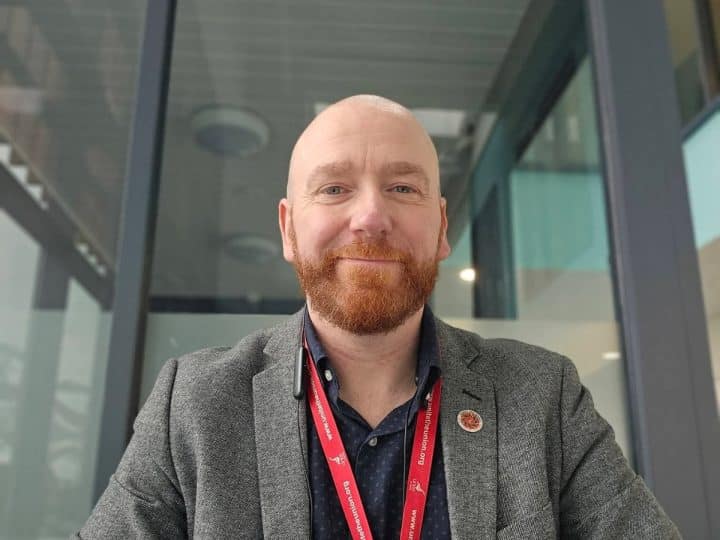

Former Labour turned independent councillor Jimmy Shannon has joined the Green Party.
The defection comes as the party recently broke the 1,100 local membership total and nationally exceeded 226,000 members. In Cheshire West and Chester, the party is looking to make significant gains in the next local elections. These will take place in 2027. The focus will then turn toward the next General Election in 2029.
Shannon has been working closely with the other Green councillors in the borough as part of the former Green Independent Alliance.
Announcing the defection, local chair, Nick Brown said:
Jimmy is the first standing councillor in Cheshire to switch to the Green Party, but he may not be the last. This shift shows that the momentum is building both locally and nationally and more breakthroughs will follow.
Jimmy is a true union man and an outstanding representative for his local community. We welcome him into the party with open arms.
He will be working with our other Whitby Councillor, John Roach to really develop the party across the Ellesmere Port area.
Shannon said:
For me it is business as usual, putting the people of Whitby Groves first. I have joined a party that aligns with my core beliefs and clearly puts people and this planet first – by tackling crippling
inequality, protecting public services, access to affordable, safe housing and safeguarding the future of our environment.I will continue to fight along side my fellow Green councillors for the interests of those living in Whitby Groves, and more widely across Cheshire West, to get the changes we desperately need.
Amongst his other priorities, Shannon is working alongside Green councillor John Roach to take an active role in the Stanlow Pollution Watch campaign to address resident concerns about the chemical pollution coming from the Stanlow sites.
Featured image supplied
By The Canary


Former trader-turned-inequality economist Gary Stevenson has taken to his socials ahead of the local elections. In his video, he is reminding people that they must register today if they want to vote in the upcoming local elections.
Candidates and their respective parties are hitting the ground running – well, all except Your Party – in a desperate bid to win votes in an increasingly polarised and divisive political landscape. With Reform UK and the Green Party set to make big gains on May 7, voters are being asked to choose between politics of hope and compassion or the far-right’s politics of further division and hate.
Stevenson has long made it clear that building a fairer society requires urgent wealth redistribution. Going further, he pushes for a much-needed shift away from taxing workers who are captive in the PAYE system and never get a break. Instead, this millionaire is asking the richest in society to finally pay their fair share and wants your help to pressure the government to make it happen.
Hoping to increase pressure for a meeting with the Labour government, Stevenson leads a call to action to ‘instrumentalise your power’ and register to vote today:
REGISTER TO VOTE DEADLINE IS TODAY. You NEED to vote in the May local elections and TODAY is the deadline to register. It only takes 5 minutes. Do it here: https://t.co/vsZikmwtGG pic.twitter.com/kQB9pxdZeb
— Gary Stevenson (@garyseconomics) April 20, 2026
Gary Stevenson: “Tax wealth, not work”
Gary Stevenson produces videos on his YouTube channel and across his social media. Through his videos, he educates people on economic policy whilst regularly debunking the neoliberal capitalistic rhetoric we often hear pushed by establishment politicians. Shaking things up, Stevenson, a millionaire himself, argues that the system is all wrong and our economy is being broken by the greed of the super-rich.
Teaming up with other millionaires and billionaires through the Patriotic Millionaires UK campaign group, he has been pressuring Starmer’s Labour government for a sit down for a few years, to no avail. Not Starmer’s preferred ‘brand’ of millionaire, it would seem.
However, Stevenson appears to be increasing pressure through his committed audience in the hope of finally securing that meeting.
His plea to his viewers went as follows:
Gary Stevenson: Alright, this is Gary’s Economics doing a short to let you know that we are doing a get-out-the-vote drive for the local elections in May.
Here’s a link where to vote, it’s in the description. Register to vote, register to vote in the local elections in May.
We are not supporting any party yet, but at the moment, Labour are refusing to talk to us, so we are going to instrumentalise your power.
You are going to sign up to vote. All of you are going to sign up to vote and then I am going to demand from Labour, come and talk to me, give me an offer. Otherwise, I’m going to tell my viewers to vote against you.
Register to vote. We are going to not accept Labour ignoring us, please. Register to vote. Register to vote. It’s easy. 7th of May is the election.
Register now. If you’re not going to be here, get a postal vote.
Register today – you won’t be able to tomorrow
The local elections are coming in fast. Gary Stevenson’s reminder came in the nick of time, and we hope his viewers heed it. Hopes of a meeting with Labour are pretty much non-existent. Nevertheless, it is essential that pressure is maintained so that those with power truly understand the mood of the electorate.
It also highlights how the debate is evolving. After all, we hear far more calls than ever before for proper wealth taxes on the super-rich who do precious little ‘work’. Other than the gruelling task of watching their obscene wealth appreciate, of course.
As Stevenson has repeatedly argued, workers are paying more in tax year after year while wealthy executives contribute comparatively little. He highlights the inevitable widening inequality, with the richest seeing their wealth surge up to 1000%. Meanwhile, more and more people are struggling to afford basic essentials, let alone have any hope for a better future for their families.
Therefore, it is absolutely time to tax wealth and finally begin to ease taxes on workers.
Featured image via the Canary

DAYS THE BUDGET IS LATE: 20
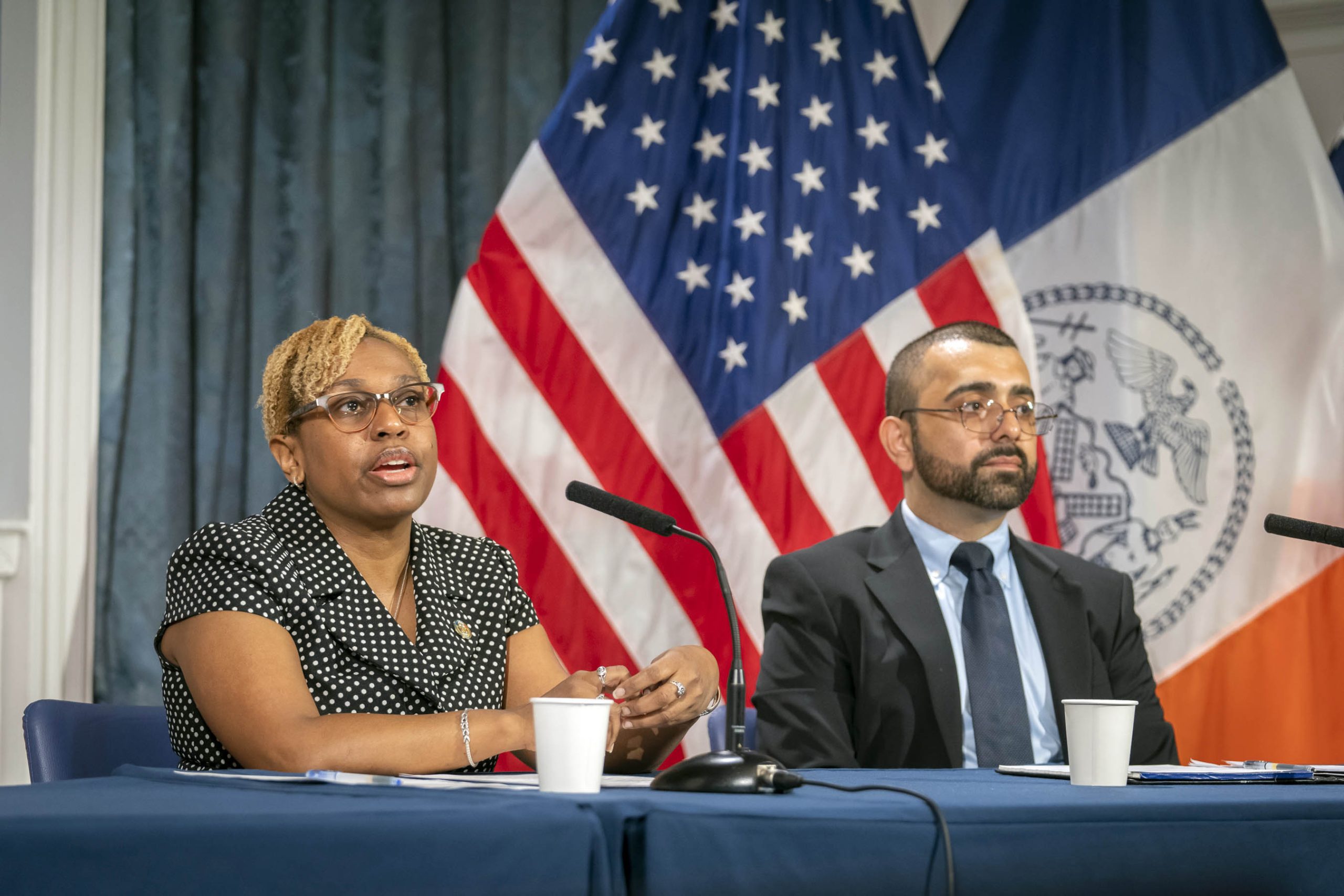
BACK AT CITY HALL: Hassan Naveed, who was fired as New York City’s hate crimes prevention chief in 2024, is back in the municipal ranks — even as he continues to sue the city and the former mayor over allegations that his termination stemmed from religious-based discrimination.
As of this morning, Naveed is the new chief of staff to Deputy Mayor for Community Safety Renita Francois. That makes him the first high-profile addition to Francois’ team since Mayor Zohran Mamdani tapped her in March for the newly-created post, which comes with oversight of Mamdani’s signature Office of Community Safety.
Naveed, who also served on Mamdani’s transition team, declined to comment on his new gig.
But Naveed’s lawyer, Luna Droubi, confirmed to Playbook today that her client is continuing to pursue his lawsuit against former Mayor Eric Adams, the Mayor’s Office of Criminal Justice and two employees in that unit over allegations that Naveed was terminated as the city’s executive director of hate crimes prevention in April 2024 because of his Muslim faith.
So far, the city Law Department has represented Adams, the Mayor’s Office of Criminal Justice and the two employees against Naveed’s suit. At least one of the two named employees remains in city government, records show.
Naveed’s return to City Hall creates a potentially messy dynamic, in which he’s now working for the same government — and alongside at least one of the same government officials — he’s continuing to sue. The awkward situation is arguably heightened by the fact that Mamdani’s Law Department is continuing to provide Adams and the other defendants with taxpayer-funded legal representation as they continue to contest Naveed’s claims.
A spokesperson for Mamdani confirmed this afternoon that Naveed is back in city government, but said Naveed will need to recuse himself from any matters related to issues raised in his lawsuit. The spokesperson also said the Law Department is in the process of reviewing whether Naveed’s case can be resolved and if Adams and the other defendants are entitled to taxpayer-funded representation.
“Hassan Naveed brings deep experience across the core issues at the heart of the Office of Community Safety’s work,” the spokesperson, Sam Raskin, said. “That experience will be essential as we build a more coordinated, whole-of-government approach to public safety and mental health that ensures our systems respond to New Yorkers’ needs with urgency and dignity.”
Since Mamdani took office, the Law Department has already moved to strip Adams of taxpayer-funded legal representation against a civil lawsuit accusing him of sexually assaulting a transit police colleague in 1993. Adams has denied wrongdoing in the assault case as well as in Naveed’s lawsuit.
There does not appear to be any city laws barring Naveed from continuing his suit against Adams while in city service.
While declining to comment on Naveed’s specific case due to confidentiality protocols, Carolyn Miller, executive director of the city Conflicts of Interest Board, said public servants are generally only prohibited from acting as “an attorney or counsel against the interests of the city in any litigation to which the city is a party.”
“As a general matter, a public servant is not prohibited from seeking redress against the city for wrongs allegedly caused by the city,” said Miller. “For example, if I believe that I have been the victim of a wrongful arrest by an NYPD officer or medical malpractice by a Health + Hospitals physician, the conflicts of interest law does not prohibit me from pursuing those claims.”
Todd Shapiro, a spokesperson for Adams, said the former mayor “does not comment on pending litigation.”
“That said, throughout his tenure, Mayor Adams maintained a strong and consistent record of standing up for religious freedom and protecting all communities from hate and discrimination,” Shapiro said. “His administration made historic investments in hate crime prevention and worked closely with diverse faith-based communities across New York City to ensure every New Yorker felt safe and respected.”
Naveed’s religious-based discrimination suit, which was filed in October 2025 and asks for monetary damages, alleges he was “singled out” for discrimination by Adams and members of his staff after Hamas militants killed some 1,200 people and took hundreds more hostage during the Oct. 7, 2023 terror attack in Israel.
For instance, the suit charges that Naveed confronted Adams in mid-October 2023 about social media posts from some of the then-mayor’s staffers that Naveed considered “anti-Muslim, anti-Arab and anti-Palestinian.” According to the suit, Adams dismissed Naveed’s concerns and told him that Muslims in New York City were experiencing hate because they had failed to adequately condemn Hamas after the Oct. 7, 2023 attacks, which prompted Israel to launch a war in Gaza that has killed more than 70,000 Palestinians.
Adams also told Naveed that pro-Palestinian demonstrations playing out in the city at the time were akin to “Klu [sic] Klux Klan protests,” according to the suit.
Naveed’s suit says he was ultimately fired as a result of the alleged anti-Muslim sentiment inside Adams’ administration. Adams spokesperson Kayla Mamelak denied that last year and said Naveed was terminated for “poor job performance.”
A former Adams administration official, granted anonymity for fear of legal retaliation, said Mamdani is making a poor hire because Naveed “was bad at his last job.”
“He completely ignored segments of the city and he never reached out to anyone,” the former official said. — Chris Sommerfeldt
From the Capitol

GOP BACKS BLAKEMAN BUCKS: Republicans in the state Legislature have introduced a bill that would force New York to let GOP gubernatorial candidate Bruce Blakeman access $3.5 million in public campaign matching funds.
Blakeman was booted from the program after a partisan vote by the Public Campaign Finance Board last month for failing to fill out a nonexistent form identifying his running mate. The new measure from Senate Minority Leader Rob Ortt and Assembly Minority Leader Ed Ra, announced Monday, would give their fellow Republican additional time to rectify any paperwork infirmities.
“My [Democratic] colleagues say they are for free and fair elections. They can take the bill; they can take it from me. I’d remove my name from it, and I’d be happy to vote for it,” Ortt said. “If they don’t do it, when they talk about free and fair elections, they are full of shit.”
Read more from Bill Mahoney in POLITICO Pro.
BUDGET CRAWL: The state’s tax-and-spend plan is yet to be resolved as New York lawmakers Monday approved their fifth stopgap measure since the budget was due nearly three weeks ago.
Gov. Kathy Hochul in Buffalo earlier in the day reiterated to reporters she is seeking changes to car insurance laws that have become a key sticking point in the talks. And the governor restated her desire to reach a deal on a package of protections for undocumented immigrants, which may be included in a final budget deal.
Read more from POLITICO Pro’s Nick Reisman.
FROM CITY HALL

BAILOUT FROM ALBANY?: Mamdani’s tenant protection czar Cea Weaver urged attendees at a housing panel today to turn their attention to the now weeks-late state budget.
“I would really encourage everybody — anyone who has Kathy Hochul’s phone number — feel free to call her and ask her to give us some more money. That would be great,” Weaver, formerly a prominent tenant activist, said to some chuckles. “Or the president, for that matter”
Weaver, head of the mayor’s Office to Protect Tenants, and housing commissioner Dina Levy joined the non-profit Urban Homesteading Assistance Board for a conference exploring “social housing,” a broad term for efforts to insulate housing from private market forces by keeping units permanently affordable and community-controlled. UHAB organized the conference with the Parsons School of Design.
Weaver laid out the city’s fiscal strain in frank terms, as Mamdani has sought to do in recent months.
“We’re not making it up when we say there’s no money for X, Y, Z thing,” Weaver said. “The budget problems that our city is facing are extraordinarily real … That is scary, and it means that we’re going to have less flexibility to do the things that we all really want to do. But the state budget is not over yet.”
She continued, “So anything that we can do to join together in a fight for more resources from Albany is going to be really important to being able to achieve the things that we want to achieve.” — Janaki Chadha
FROM THE CAMPAIGN TRAIL

AND THEN THERE WAS ONE: The Democratic field to take on Republican Rep. Nicole Malliotakis appears to have narrowed to one, after union electrician Allison Ziogas filed a certificate of declination with the city Board of Elections on Monday morning.
Ziogas’ apparent decision to drop out leaves Mike DeCillis, a former NYPD officer, as the only Democratic challenger for what’s certain to be an uphill battle in a district that President Donald Trump won by 24 points in 2024.
The New York Times reported that Ziogas, who appeared to be the early frontrunner in the primary, was ending her bid because of unspecified health issues. DeCillis wrote on social media that he is “sorry to hear about her health issues and we wish her the best.”
Democrats unsuccessfully tried to redraw the seat, which covers all of Staten Island and part of Brooklyn, to make it more competitive, but that effort was blocked by the Supreme Court. However, some still saw opportunity there, given recent Democratic overperformances across the country and Trump’s unpopular policies. Republicans are adamant that the seat is not in play — and Ziogas dropping out is likely to put a damper on Democrats’ optimism.
Ziogas, who entered the race in March with the help of Morris Katz, a key Mamdani strategist, quickly received an endorsement from the Staten Island Democratic Party. After she declared her candidacy, the first Democrat to enter the race, educator Troy McGhie, dropped his bid and endorsed her. Ziogas outraised DeCillis $85,000 to $32,000 in the first quarter — both paltry hauls compared to Malliotakis’ $580,000 raised.
Ziogas’ campaign did not immediately respond to a request for comment.
Read more from Madison Fernandez and Chris Sommerfeldt in POLITICO Pro.
IN OTHER NEWS
— SUDDENLY SOCIALIST: An ex-cop Assembly candidate who for years led a group that bashed socialists and boosted the GOP now praises Mamdani and lauds the DSA. (New York Post)
— UNDER DOG?: Internal polls from democratic primary candidate Darializa Avila Chevalier show incumbent Democrat Rep. Adriano Espaillat is leading by 42% in New York’s 13th congressional district with the DSA challenger trailing by 28%. (THE CITY)
— RETURN POLICY: Hochul wants the Trump administration to refund an estimated $13.5 billion in tariff payments to New Yorkers, as Monday marks the first day for importers to claim refunds following a Supreme Court ruling that struck down the import tax. (NY 1)
— CUOMO CLEARED: The U.S. Supreme court declined to take up a lawsuit from relatives of nursing home patients who died of Covid-19. (Times Union)
Missed this morning’s New York Playbook? We forgive you. Read it here.

The announcement followed hot on the heels of two nights of rioting in Clapham, in a so-called ‘link-up’ between young people. So serious was the unrest that it required the deployment of 100 police officers, four of whom were assaulted. More soberly, four young people were killed over the Easter weekend in London in violent attacks. One was a 14-year-old shot dead in Woolwich. Another was a 21-year-old film student fatally stabbed on Primrose Hill. He had been at the picturesque spot, in the daytime sunshine, testing out a new film camera recently gifted to him for his birthday.
Will the new youth clubs do anything to avert tragedies like these? It seems unlikely. While there is little agreement on whether knife crime is increasing in London, what we do know is that 29 per cent of all knife offences take place in the capital. So we need to do something.
Khan claims, ‘I’ve seen from my own experience growing up in south London the difference youth clubs made to me and my brothers, with somewhere to not just play table tennis and pool and do boxing, cricket and football, but also in providing a safe space for us to go’. Likewise, Labour MP for Stratford and Bow, Uma Kumaran, welcomed the news, claiming it would help young people in her patch of east London, ‘after years of austerity which closed youth clubs and cut services to the bone’.
But a quick Google search will show you there’s no shortage of free activities already on offer in Newham, one of the borough’s covered by Kumaran’s electorate. There are free sports classes. There’s the optimistically-named Fight for Peace. There’s an array of activities at Royal Wharf Community Dock. There are evening events at Newham Libraries. And there’s a brand-new, state-of-the-art, £8million ‘Youth Zone’, which opened just two years ago.
The same is true in Clapham. Presumably, the young people recently ransacking shops were not doing it in protest at the planned chess tournament being cancelled and the local library’s insufficiently extensive collection of Jane Austen. In Clapham, there are two youth clubs within a short walk of the Common – the Clapham Youth Centre and the Devas Club. What’s more, Khan’s announcement came just days after the UK government opened its first wave of ‘Youth Futures Hubs’, in areas of high knife crime and anti-social behaviour, including in London’s Tower Hamlets.
Clearly, there are plenty of places in London for young people to spend time in a warm and safe environment. Indeed, the number of such places is far higher than it is outside the capital. You know where it is safe and enjoyable? London’s galleries and museums. And they are increasingly open late – the Barbican is open every single day until 11pm. It’s free, too.
The left will howl that, of course, youth clubs aren’t the only solution, but we should surely welcome them as part of the answer. Perhaps. Despite everything, I am not intrinsically opposed to youth clubs – if they can be run competently. Khan’s scheme is reminiscent of the 1990s ‘midnight basketball’ initiative in inner cities in the US, and there are studies that suggest it was successful. Some of these, notably a 2024 report for the Institute for Fiscal Studies, have suggested that youth clubs do have benefits for educational performance and in reducing youth crime. Though the study in question failed to differentiate between a strict environment offering boxing classes, say, and an ill-disciplined free-for-all with a few ping-pong tables, which surely makes a large difference.
Besides, the £30million pledged by the London mayor has to come from somewhere. Is it really a good use of money if it comes at the expense of boosting detention capacity or police numbers? And what if the clubs themselves, rather than providing a safe and neutral space, become places of violence, or cause well-behaved kids to get in with the wrong crowd? Or, indeed, become places for drug dealers to find customers, and phone snatchers to sell their loot? If you really want to give young people a sense of purpose and something to do, then fix the economy so they can get a job. Or, even better, encourage them to start their own business.
The biggest problem with the focus on youth clubs, however, is the deflection. Deflection, that is, from the real causes of violent crime: joblessness, absent fathers, failures of migrant integration, weak policing, a lack of strict discipline in schools, an abdication of parental responsibility and a societal turn against self-discipline. And, for that matter, the failure to put in place proper protections for police officers so they do not fear losing their jobs from bogus accusations of racism should they seek to get tough on perpetrators.
Youth clubs feel like the thing you resort to when you’ve run out of ideas. Now, who’s up for a game of ping-pong?
Ameer Kotecha is a former diplomat and now the CEO of the Centre for Government Reform.
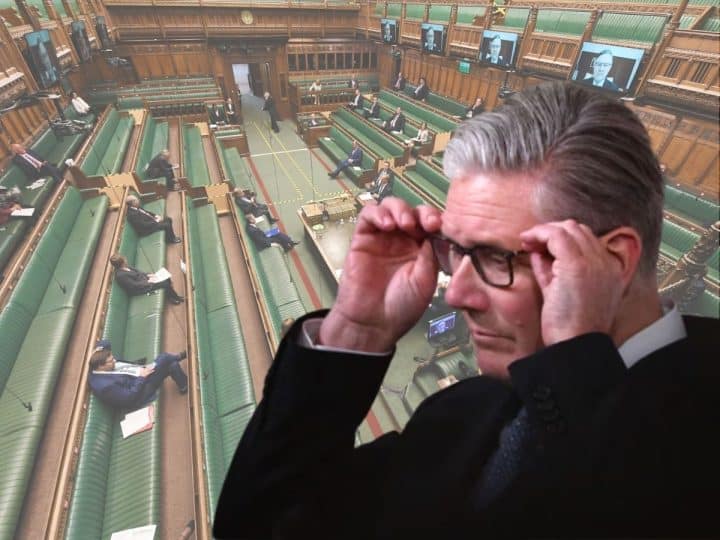

On 17 April, we learned that Peter Mandelson had failed his security vetting for the ambassador to the US position. As Keir Starmer told parliament that Mandelson had actually passed vetting, this meant the PM misled parliament.
Simple, right?
According to No 10, no.
The line from Starmer’s people was that the PM didn’t know Mandelson failed his vetting, and that actually a rogue minister had obscured this truth from him. This argument seemed completely implausible, and as we covered, it’s failed to stand up.
Now, No 10 is seemingly admitting that Starmer misled parliament.
The caveat is that they still claim he did so unknowingly:
"The Prime Minister would never knowingly mislead Parliament or the public" — Politics UK (@PolitlcsUK) April 20, 2026
 NEW: No 10 has appeared to admit that Keir Starmer unknowingly misled Parliament about Peter Mandelson's vetting
We call bullshit
Firstly, the timeline of events shows that No 10 should have been aware that Mandelson didn’t pass vetting last year:
Liz Kendall is asked about David Maddox asking Number 10 about Mandelson failing the vetting months ago, despite the PM saying he only found out last week.
Kendall refuses to comment, saying she can't speak on behalf of number tens director of communications. https://t.co/DzX9KJxMMW pic.twitter.com/pDW1k0ytsc
— Saul Staniforth (@SaulStaniforth) April 19, 2026
They want us to believe that a rogue minister and a rogue press secretary both knew, but neither told Starmer.
And of course, this goes beyond the nonsense of them wanting us to believe that Mandelson could fail his vetting without several individuals and agencies raising massive red flags.
Just what sort of country is Starmer running?
Secondly, the idea that Starmer ‘would never knowingly mislead the public’ is a nonsense. New Labour ghoul Tom Watson discovered what the public think of this claim when he posted the following:
He lied to get elected as Labour leader. Broke all his 10 pledges. https://t.co/a83iQdhPLT
— Mukhtar (@I_amMukhtar) April 17, 2026
The broken promises haven’t stopped now that Starmer’s in office, either, as we reported:
After 18 months in power, Starmer has turned his back on the mandate pledges that granted him office, while his broken promises stack up.https://t.co/VY6hTDrm7M
— Canary (@TheCanaryUK) February 10, 2026
On the pledge sheet sent to Labour members, Starmer promised raising income tax on the top 5% of earners. But in September 2023, the MP for Holborn and St Pancras walked that back, stating there would be no increase. It was a lie and Polanski is right to point this out.
He also pledged “support[ing] the abolition of tuition fees”. Instead, Labour has raised tuition fees by £285 — another lie. This should reduce Starmer’s mandate to tatters and he should be recalled for another election.
It’s increasingly clear that words mean very little to Starmer. He also promised that he would “put the Green New Deal at the heart of everything we do”.
And yet again, in February 2024, the Labour leader dropped a £28bn per year commitment to green energy. And in government, he’s propping up fossil fuel firms with £22bn for carbon capture projects that don’t even work.
This is who Starmer is
So yes, Starmer absolutely would mislead the public.
In fact, there are very few examples of him being honest with the public.
Let’s hope he finally does the decent thing today and steps down; it will certainly be a first if he does.
Featured image via House of Commons (Flickr)
By Willem Moore
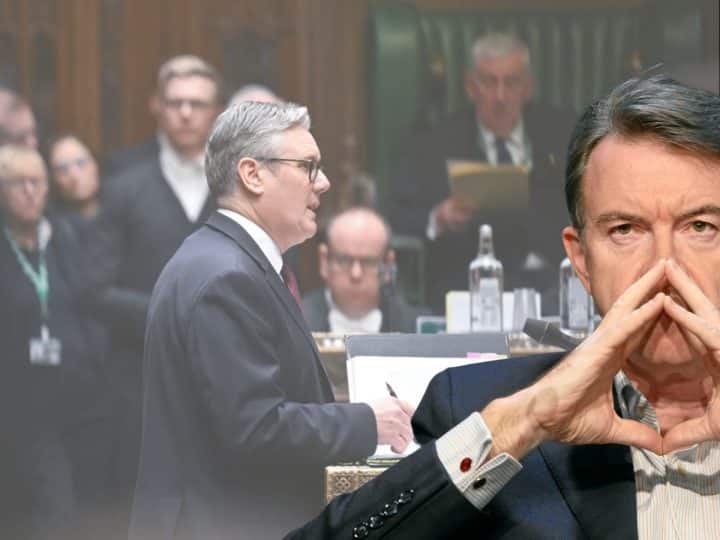

At 15:30 on 20 April, Labour PM Keir Starmer went before parliament to get his excuses in for hiring Peter Mandelson. While it was always an act of gross incompetence to hire the twice-disgraced Mandelson, we now know Starmer hired him despite Mandelson failing security vetting. The PM claims he was unaware of the vetting issue; the public are struggling to believe him.
In aid of his latest excuse-fest, Team Starmer produced the following document which has now leaked:
[@breeallegretti] pic.twitter.com/We9qSEetyQ — Politics UK (@PolitlcsUK) April 20, 2026
NEW: The "lines to take" script given to Labour MPs for Keir Starmer's statement has been leaked
We’re going to go through it and give you some ‘lines to take’ of your own.
Line them up
The first section of the document is titled ‘Top Lines’.
And if these are the lines they put at the top, we’d hate to see the ones at the bottom.
- Peter Mandelson should never have been appointed as our Ambassador – the PM has taken responsibility for that decision and repeatedly apologised.
Apologies aren’t enough when the act was so obviously wrong from the outset. If random Twitter accounts knew it was a horrible idea to hire Epstein-associate Mandelson, the PM should have known.
- Foreign Office officials granted Developed Vetting security clearance to Mandelson and never told Ministers they’d done so against the recommendation from the vetting agency.
Sounds like Starmer has no grip on his government whatsoever; he should really resign!
- Neither the Prime Minister, nor any Government Minister, was aware this had happened until Tuesday last week. Neither were any officials in Number 10. That’s why the PM has said himself he’s furious – this is completely unacceptable.
“Nor any Government Minister” is doing a lot of heavy lifting here, because we know that Starmer’s Director of Communications was made aware last year (if he didn’t know already):
Liz Kendall is asked about David Maddox asking Number 10 about Mandelson failing the vetting months ago, despite the PM saying he only found out last week.
Kendall refuses to comment, saying she can't speak on behalf of number tens director of communications. https://t.co/DzX9KJxMMW pic.twitter.com/pDW1k0ytsc
— Saul Staniforth (@SaulStaniforth) April 19, 2026
- Once the Prime Minister was told, he immediately asked his officials to establish the facts so he could come to the House of Commons with all the information and explain what had happened. That is what he’s doing today.
No one believes he didn’t already know, sorry.
- The Prime Minister has confirmed he would not have appointed Peter Mandelson as HMA Washington if he had been informed UKSV had recommended his security clearance should not be granted.
Mandelson was given the role before his vetting was completed, so this is just untrue, isn’t it?
- Following these shocking revelations, the Chief Secretary to the Prime Minister immediately suspended the ability of the Foreign Office to grant security clearances against the recommendations of UKSV.
How come every British political scandal is solved with: ‘we’ve implemented new guidelines to ensure people follow the rules which prevent them breaking the law‘?
- The Prime Minister recognises people’s trust in politics has been badly damaged by the recent revelations but despite what’s happened, he holds the same beliefs: that politics can be a force for good and his Government is united in moving forward with confidence to change the country for the better.
Starmer holds no personal beliefs or opinions; he’s essentially what you’d get if a genie turned a rock into a person.
- As the Prime Minister has previously assured the House, the Government remains committed to complying with the Humble Address. Work is ongoing to compile the rest of the information in scope of the motion.
You need to commit yourself to resigning, pal, and to stop dragging this out.
Labour: suggested Interventions
The following are lines that Starmer’s team hoped MPs would read out in the commons address. We’re not going to cover all of them, but some stand out:
Mr Speaker, I thank the Prime Minister for his statement, and I commend him for coming to the House and setting out the facts for us all to hear today. For me, there is one fact that matters above all, and I would just ask him to reiterate it for those on the benches opposite who are having difficulty understanding. Did anyone from the Foreign Office at any stage say to him or his office that UKSV had recommended against granting Mandelson DV status?
This gives Starmer the opportunity to repeat ‘no one told me nothing‘. This would be fine if anyone was inclined to believe him.
Mr Speaker, earlier today, NBC released an interview with hospice worker Rachel Benavidez, who was 22 years old when she became one of the victims of Jeffrey Epstein’s abuse on his New Mexico ranch. For 27 years, she has been waiting for the crimes committed against her to be recognised, and she told NBC, I quote, “Until we are heard, until survivors are heard and believed, then I don’t think there’s ever going to be any justice.” Does the Prime Minister agree that we owe it to the hundreds of victims like Rachel to put them first in these debates, and that he was absolutely right to sack someone like Peter Mandelson who refused to believe those victims?
The time to put survivors first was before hiring Epstein-associate Mandelson, and the way to do so was by not hiring him.
Mr Speaker, I can understand why the detail of vetting reports are not shared with the appointing Ministers, because if they were, then the subjects of that vetting would not be as forthcoming as they need to be when questioned about their personal lives. However, does the Prime Minister agree that the conclusions which emerge from those vetting reports absolutely should be shared with Ministers, especially in a situation when those conclusions are being overruled?
It’s so hard to believe this wasn’t happening already. If it wasn’t, just sack everyone and start again.
While we’ve nothing but bad things to say about spooks and politicians, we did at least think they could carry out a simple vetting procedure.
I thank the Prime Minister for his Statement, and welcome him stating that Peter Mandelson should never have been appointed as HMA Washington. Can he now tell the House what reforms he has made to strengthen both due diligence and security vetting processes, given they so clearly fell short on this occasion?
“Due diligence” didn’t need to come into it; he was Peter Mandelson – the self-styled ‘Prince of Darkness’ – the pal of Jeffrey Epstein – so scant diligence should have sufficed.
Christ, a passing glance would have covered it.
Can the Prime Minister tell the House what action he is taking, alongside Cabinet colleagues, to ensure the information provided to Parliament around the appointment of Peter Mandelson is wholly accurate?
Mr Liar Liar, could you please reassure us that your flaming trousers are in fact not on fire?
Could the Prime Minister provide the House with an update on the proposed legislation to remove peerages from disgraced peers, like Peter Mandelson, given their behaviour
While we do need this legislation, let’s not forget that Mandelson was twice-disgraced before they made him a peer.
Speaking out
We really hope that none of the above “lines to take” are spoken aloud. We hope that Labour MPs have finally seen the writing on the wall, and that they get rid of Starmer before he can do any more damage.
We’re not confident in that, of course, because this is the same Labour Party who gave us Starmer and Mandelson in the first place. Still, the fact that this document leaked shows some MPs are done with taking talking points from this laughing stock of a government.
— Politics UK (@PolitlcsUK) April 20, 2026
WATCH: MPs laugh as Keir Starmer says he knows they will find the "facts" on Peter Mandelson's vetting "to be incredible" pic.twitter.com/SeCoPCesI0
Featured image via World Economic Forum (Flickr)
By Willem Moore

Whatever one thinks of the current war in Iran, allowing the fundamentally unstable Islamic Republic power over the world economy is truly a fool’s errand. In many ways, Iran’s attempt to control the Strait of Hormuz and the Red Sea is playing out in waters long shaped by piracy and imperial rivalry.
Rather than seek to placate the potentates, crowned or turbaned, the West should instead focus on making the Gulf irrelevant again. Since the days of the Silk Road, where the area played a critical role as a link between Asia and Europe, few in the period of European ascendancy worried much about these territories – that is, until they discovered huge pools of energy there a century ago. Since then, these countries have, at different times, disrupted global commerce and promoted forms of largely Islamist militancy throughout the world. Even Dubai, arguably the most enlightened of the Gulf monarchies, may not be able to thrive long-term in its awful neighborhood.
This is a lesson we should have learned during the oil embargo after the 1973 Yom Kippur War. The Saudi-led effort drove most of the capitalist world into a deep recession. The embargo hit hard because the energy business had swung, in economist Tyler Goodspeed’s words, from ‘a Gulf of Mexico oil market to a Persian Gulf-centric one’. That trend now shows signs of reversing, even if doing so may hurt the Trump family’s financial interests in the region.
To be sure, it will take years, not months, to unwind this primacy. But both the need and the means are clear. Most significant is the US transition from a mega-consumer of energy to the world’s largest producer of oil and gas – giving it the kind of leverage that did not exist in 1973. This shift predates Trump. Fracking boomed under President Obama. President Biden, facing inflation-driven political pressure, expanded drilling in the Gulf of Mexico and Alaska and approved a new LNG plant in Louisiana aimed largely at supplying Europe.
Energy abundance has already made the US far less vulnerable to disruptions in Hormuz, and the boom may only be beginning. Estimates suggest public lands may contain nearly 30 billion barrels of oil and 391.6 trillion cubic feet of gas – enough to supply the US for years. States such as Texas, Louisiana, Oklahoma, North Dakota and Pennsylvania could even benefit if shipping shifts from the Persian Gulf to the Gulf of Mexico. A proposed Alaskan pipeline could also prove vital for Asian markets.
America’s surge forms part of a broader push to develop new energy fields. Advances in fracking, horizontal drilling and geological surveying are turning multiple regions into potential energy superpowers. Canada, once wedded to anti-fossil fuel policies, now aspires to that status, as prime minister Mark Carney suggests. With the world’s fourth-largest oil reserves, it is seeking pipelines to reach Asian customers.
Perhaps the most promising developments are in South America. Venezuela’s vast oil reserves – the largest in the world – could lead to renewed production following the US toppling of Nicolás Maduro, opening the door to US oil companies after years of mismanagement. Mexico, another potential energy powerhouse, has begun embracing fracking to reduce dependence on US imports.
Right next door to Venezuela, Guyana is home to huge oil and gas deposits, putting it in the top 20 in terms of reserves, surpassing Norway. Maduro threatened to seize these fields, but now with him gone, US oil companies can exploit a potentially huge energy cornucopia. Together, what Foreign Affairs calls the ‘Americas quintet’ – the US, Argentina, Brazil, Canada and Guyana – may yet erode the Middle East’s oil dominance.
Then there’s Africa. The UN projects its population could rival Asia’s by 2100, and this booming population will need power. European NGOs like to pressure African leaders to go with solar and wind, which critics, such as Austin Williams on spiked, have described as ‘neo-colonialism gone green’. This advice is clearly being rejected by governments in Senegal, Nigeria and South Africa – and increasingly in Ghana, Tanzania, Uganda and Mozambique – which are instead pursuing fossil-fuel development.
Demand from India will further support this trend. Like many African nations, India prioritises energy access over emissions targets. Advisers to prime minister Narendra Modi have openly criticised what they call ‘Western carbon imperialism’. In such contexts, even coal is often seen as preferable to the health risks of burning biomass fuels.
Some, including South Korea’s president, think current energy shortages will accelerate the shift to renewables; others claim that China will be the winner in the post-fossil-fuel future. Yet, as Mark Mills of the Manhattan Institute notes, global oil consumption has risen by 30 per cent over the past quarter of a century. In the words of one former Net Zero campaigner, writing in the Free Press, the movement’s passion has run up against ‘the inconvenience of reality’.
Barring a massive disruption, fossil-fuel energy will remain critical through the next few decades. Trillions have been spent on green energy over the past 20 years, notes energy entrepreneur and investor Brian Gitt, yet the percentage of global power generated by fossil fuel has barely declined – from 86 to 81 per cent since 2010. The bulk of greenhouse-gas reductions have come from substituting natural gas for coal.
Efforts to ban fossil fuels prematurely, particularly without nuclear power, have proven disastrous. California illustrates the risks: once responsible for 40 per cent of US oil production, it now accounts for just two per cent and relies heavily on imported energy. The result has been higher prices, increased electricity imports and mounting strain on households and industry.
With energy costs among the highest in the US, California faces growing pressure not only on consumers but also on its tech sector, where energy-intensive AI development is expanding rapidly. Companies may ultimately look elsewhere for more reliable and affordable power. Governor Gavin Newsom likes to blame Trump – who else? – and the evil oil companies for the high prices, but more than half the price is the result of state regulations. The state excise tax on gas is now the highest in the US.
Australia, another nominally energy-rich country, with vast supplies of coal, is performing a similar act of economic seppuku. Its Net Zero obsession has meant a forced transition to renewables, resulting in higher prices and deindustrialisation. Once a winner in the energy wars, Australia is purposely undermining its own prosperity.
By far the most consequential and damaging policy agenda comes from Europe. The decision by the EU and the UK to embrace foolishly concocted green policies, including in some places the phase-out of nuclear power, while restricting domestic fossil-fuel production has increased dependence on external suppliers and left the region vulnerable to disruption.
As energy analyst Robert Bryce notes, this is despite the continent’s untapped fossil-fuel reserves. According to the European Parliament, Europe holds substantial shale-gas reserves, yet seven European countries have decided to ban fracking. Britain also has enormous oil and gas reserves that, as spiked has reported, it refuses to use.
The current German energy minister has acknowledged the problem with this approach. She said this month ‘that by ignoring costs’, the so-called energy transition will ruin the country ‘it claims to save’.
As for the rest of the economy, the outlook is also bleak. Energy prices are so high that Germany’s long-admired industrial base is threatened, as they are across the continent. Just recently, McKinsey suggested that Volkswagen shut down eight of its 10 German plants, due in part to energy prices. High energy prices have shifted more production to places like the US. Today, the states of Alabama and Mississippi now produce more vehicles annually than Italy or the UK. By some accounts, Brits are now, on average, poorer than Mississippians.
Rather than reducing their nations’ reliance on the Gulf for energy, British and European leaders seem resigned to their dependency. The rot here comes from the top, including academics who continue to claim renewables are cheaper than fossil fuels. European elite opinion, epitomised by The Economist and the Financial Times, seems more interested in criticising the US than protecting the continent’s basic interests.
This means that, increasingly, Europe and Britain will be leaving their futures in the hands of some of the most reactionary regimes on Earth. The Islamic Republic of Iran is the current focus, for obvious reasons. But other regimes in the region, such as Saudi Arabia, Oman and terror sponsor Qatar, are all autocracies and embrace varied forms of Islamic supremacism.
Rather than try to score points against the US, other Western powers need to wake up to the need to develop their own energy supplies. Even if Trump manages to secure the Strait of Hormuz, we can expect disruptions in the future from the Gulf. A better option lies in making the Gulf irrelevant again, not by turning back the clock, but by ensuring it no longer holds such sway over the global economy.
Joel Kotkin is a spiked columnist, a presidential fellow in Urban Studies at Chapman University in Orange, California, and a senior research fellow at the University of Texas’ Civitas Institute. Find him on Substack here.

Apple CEO Tim Cook to step down as hardware leader John Ternus takes over

LARRY KUDLOW: Banking, blockading, and the final Iranian financial squeeze

Players Searching for FanDuel Alternatives Are Discovering ZunaBet and the Numbers Keep Growing



-

 NewsBeat7 days ago
Trump and Pope Leo: Behind their disagreement over Iran war
-

 Fashion3 days ago
Weekend Open Thread: Theodora Dress
-

 Crypto World7 days ago
SEC Signals Exemption for Crypto Interfaces From Broker Registration
-

 News Videos6 days ago
Secure crypto trading starts with an FIU-registered
-

 Sports4 days ago
NWFL Suspends Two Players Over Post-Match Clash in Ado-Ekiti
-

 Crypto World7 days ago
SEC Proposes Certain Crypto Interfaces Don’t Need to Register as Brokers
-

 Business1 day ago
Powerball Result April 18, 2026: No Jackpot Winner in Powerball Draw: $75 Million Rolls Over
-

 Crypto World3 days ago
Russia Pushes Bill to Criminalize Unregistered Crypto Services
-

 Politics3 days ago
Palestine barred from entering Canada for FIFA Congress
-

 Politics56 minutes ago
Gary Stevenson delivers timely reminder to register to vote as deadline TODAY
-
 Business4 days ago
Creo Medical agree sale of its manufacturing operation
-

 Politics2 days ago
Zack Polanski demands ‘council homes not luxury flats for foreign investors’
-
 Entertainment7 days ago
Brand New Day’ Footage Reveals the Devastating Impact of ‘Now Way Home’
-

 Crypto World3 days ago
Russia Introduces Bill To Criminalize Unregistered Crypto Services
-

 Tech2 days ago
Auto Enthusiast Scores Running Tesla Model 3 for Two Grand and Turns It Into Bare-Bones Go-Kart
-

 Tech6 days ago
Microsoft adds Windows protections for malicious Remote Desktop files
-
 Entertainment7 days ago
Karol G’s ‘Ultra Raunchy’ Coachella Set Gave ‘Satanic Vibes’
-

 Tech5 days ago
‘Avatar: Aang, The Last Airbender’ Leaked Online. Some Fans Say Paramount Deserves the Fallout
-

 Tech7 days ago
What was the first ransomware attack to demand payment in Bitcoin?
-

 Sports6 days ago
Younger Than Sachin Tendulkar: Vaibhav Sooryavanshi Set To Make Historic India Debut
You must be logged in to post a comment Login