

Politics
8 Of The Shocking Comments From Reform’s Makerfield Candidate

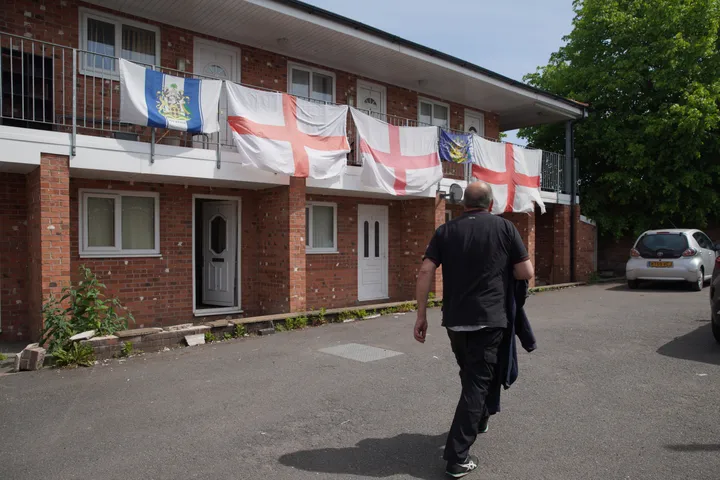
Reform UK’s candidate for the Makerfield by-election’s unearthed social media posts have stunned the general public over the last week.
The right-wing party announced last Tuesday that Robert Kenyon, a supposed “plucky plumber” and Wigan councillor, was going to be taking on Labour’s Andy Burnham in the race to win next month’s crunch contest.
Reform and Labour are locked in a two-horse race for the seat with Kenyon hoping to win over the support of the pro-Brexit constituency.
However, Burnham’s reputation as Greater Manchester mayor has given him an early lead according to polling – and he is hoping to oust Keir Starmer as prime minister if he wins the by-election.
With all eyes on the contest, Kenyon’s historic online presence has been dredged up – revealing some deeply problematic views.
Even so, Reform has stood by its candidate, even trying to market his outspoken comments as a positive.
Here’s what has been uncovered so far:
1. Attacks On Women
An account uncovered by The Independent and linked to Kenyon wrote women can’t “ref, drive or give directions” on an online rugby fan forum in the 2010s.
He said women presenting rugby games on TV “aren’t up to the job and only there to tick a box”, adding: “I’m sexist, sorry but I am.”
He also objectified European women’s bodies, saying English women “don’t care” and “just walk around with their fat bellies and odd shapes pushing a pram at 16 in their PJ’s”.
A spokesperson said: “These comments, which are little more than locker room banter, were made more than a decade ago – well before Rob was in politics.”
Reform’s spokesperson said: “We simply don’t care about establishment hit jobs. We fully back Rob and are confident he will be an excellent MP for Makerfield.”
2. Anti-Abortions Comments
The i paper unearthed 2019 comments sent on a rugby league forum which claimed women who have abortions get them for “vanity purposes” and so they can “shag anyone they want”.
Hope Not Hate campaigners also found that Kenyon also called abortion a “cowardly act of murdering a defenceless baby”in a series of now-deleted tweets from one account.
He also suggested women falsely claim to have been raped to terminate a pregnancy.
A spokesperson said: “Cllr Kenyon is perfectly entitled to his own personal opinions on abortion. In this country, this issue has always been a matter of conscience, regardless of which party a politician represents.”
3. Attacks On The LGBTQ+ Community
The Mirror reports Kenyon described gay people as “poofs” on a 2009 forum, and in 2010, described them as “mincing about” on TV.
In one post, he wrote: “You can’t call her ‘The Queen’ anymore because it offends the poofs.”
The next year, he wrote: “People who want to make a stand for homosexuals need not combat the throwaway comments of a sportsman on twitter but need to do something about the way homosexuals are perceived in the mainstream media, for instance having Julian Clarey [sic], Graham Norton, 4 poofs and a piano and Paul O’Grady mincing about on TV does a lot more damage to the reputation of homosexuals and causes greater insult in my opinion.”
In 2020, he wrote: “If LGBT just want acceptance then stop making a big song and dance about it, attention seeking and taking over other events because that’s turning people against you”.
He also called Labour the “party for trannys”, according to the Observer.
A spokesperson said: “Many of these comments were made nearly 20 years ago – well before Rob was in politics. We simply don’t care about establishment hit jobs. We fully back Rob and are confident he will be an excellent MP for Makerfield.”

4. Anti-Covid Vaccines Comments
Kenyon cast doubt on the Covid vaccine on X while using an account which has since been deleted.
Archived webpages uncovered by the Guardian revealed Kenyon said: “It’s not making people sicker, I’ve no booster and had covid last week asymptomatic.”
When pressed on why his opinion was based on his own anecdotal experience, he said: “At the same time I had it, four other people on the course I was on caught it all the same as me, no symptoms.”
He claimed his 70-something mother-in-law with chronic ung disease also experienced it as a “cold”.
Kenyon advised someone else who was ill with Covid: “Wait longer, take vitamins, stop having boosters.”
He also replied to a Sky News post about England’s chief medical officer Chris Whitty urging Brits to get booster jabs, saying Whitty can “fuck right off”.
He also claimed worries about a new variant in January 2022 were designed to “scare parents into getting their kids jabbed”. He wrote: “I smell a rat.”
“Robert had all his Covid jabs during the pandemic and his children are fully up to date on every vaccination,” a party representative said.
“These comments were made long before Rob was in politics. He isn’t a polished, professional politician and doesn’t speak like one. That’s precisely why he’ll be a straight-talking, effective voice for normal working people in Makerfield.”
5. Questions Over Brexit
The Times reported that Kenyon may not have voted for Brexit, even though that is a core policy of Reform UK.
In a social media post dating from March 28, 2019, he claimed he was not the typical right-winger.
“So anyone who thinks I love Trump, voted Brexit, read the Daily Mail, live in the 1950s, a Tory and 103 is wrong. I’m none of the above,” he said.
In another post, including a discussion called ‘Brexit Anyone?’, he wrote: “I woke up the day after Brexit shitting myself to what was voted for”, though he later said the EU’s treatment of Britain made him “glad we voted out”.
Kenyon also appeared to praise the principle of European free movement – one of Reform’s greatest qualms with the bloc – writing: ” “Free movement of people is great when they are natives of the EU countries and not people from outside Europe seeking a Greek passport that will allow them into any country in the EU.”
A representative said Kenyon “voted Leave in 2016 and is a proud Brexiteer, unlike Andy Burnham who will drag the UK back into the EU by any means possible”.
6. Carol Vorderman Remarks
Hope Not Hate also revealed that in 2021 Kenyon interacted with a social media message sent to the Countdown host, which read: “Happy birthday Carol, my God I would love to smell and lick your arsehole.”
Kenyon replied, “he’s only saying what we’re all thinking,” along with a thumbs up and a laughing emoji.
Vorderman has called Kenyon a misogynist, and told the Daily Mirror that she wanted “apology from Rob Kenyon, to me, and to all the other people he’s abused online.”
Danny Kruger defended Kenyon’s comments on Vorderman on Monday, telling BBC Radio 4′s Today programme: “The great challenge for social media for private people is that they use it as if they are chatting to their friends in the pub.
“It was a clearly inappropriate thing to say. I’m not going to judge people for what was intended as private conversations. Clearly that is not the kind of comment you would want an elected politician to say.”
7. Interacting With The Far-Right
Campaign organisation Searchlight said Kenyon was friends with fascist campaigner Gary Raikes on a now deleted Facebook page.
Reform has not disputed this claim. Party leader Nigel Farage said: “When he [Kenyon] campaigned here at the general election, hundreds of people joined as friends, and one of them turned out to be unsavoury.
“I am utterly confident that in Rob, we’ve got somebody who’s done his bit for his country, done his bit for himself, does his bit for the community.”
8. Weighing In On Ukraine And Russia
Kenyon claimed Russia was “within its rights” to invade the Ukrainian peninsula of Crimea back in 2014, according to The Telegraph.
In an online forum, he agreed with a post which called the annexation “democracy in action”, writing: “Russia are well within their rights to do what they have done as we did with the Falklands.”
“At no point did Rob explicitly support or endorse Russia’s actions in Crimea,” a spokesperson said. “He is fully opposed to Russia’s illegal and brutal invasion of Ukraine. We fully back Cllr Kenyon. He is an excellent local candidate, who we are confident will be a superb MP for Makerfield.”
Subscribe to Commons People, the podcast that makes politics easy. Every week, Kevin Schofield and Kate Nicholson unpack the week’s biggest stories to keep you informed. Join us for straightforward analysis of what’s going on at Westminster.

A conference held by a US-Israel lobby group has laughed uproariously at the memory of an Israeli terrorist attack that killed and maimed thousands, including children.
US politician calls not shaking Netanyahu’s hand ‘wild’
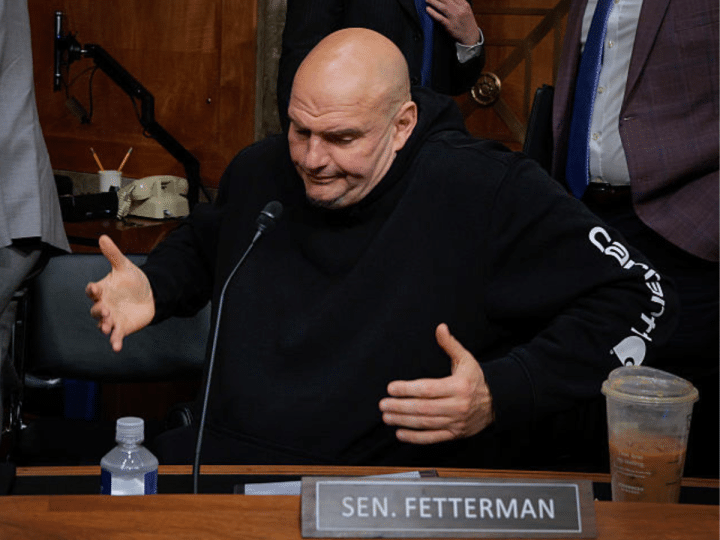
Lobby-funded senator, John Fetterman, was speaking to the American Jewish Committee, a hardcore Zionist, pro-genocide group.
He told listeners that the idea of someone not shaking the hand of wanted war criminal, Benjamin Netanyahu, was “wild”.
But blowing up kids and old people? “I love it.” (Cue hilarity from the AJC audience.)
Zionism is racism. Israel is terrorism.
Featured image via Chip Somodevilla/ Getty Images
By Skwawkbox
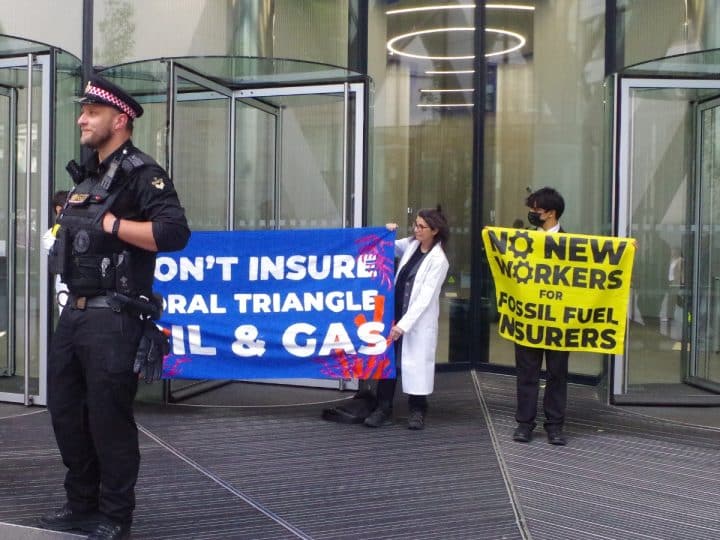
Activists occupied the Gherkin’s foyer in protest against insurance company Swiss Re’s refusal to rule out liquefied natural gas projects in the Coral Triangle on international Coral Triangle Day.
Protesters chanted: “Protect our oceans, protect our future!” and “Swiss Re, you can’t hide, don’t insure this ecocide!” The Coral Triangle spans much of South East Asia, including Indonesia, Malaysia, Papua New Guinea, the Philippines, the Solomon Islands and Timor-Leste.
When the protesters tried to deliver a letter to Swiss Re, they were refused. Security guards man-handled young people and dragged a scientist participating in the protest to the revolving door, where he lay between the panels blocking the entrance. City of London Police attended but made no arrests.
Protect the Coral Triangle
Lily, 17, a student from Generation 1.5, said:
We are demanding Swiss Re rules out the insuring of new oil and gas projects in the Coral Triangle. Our futures depend on scaling down fossil fuels, not more expansion, and biodiverse regions like the Coral Triangle have to be protected.
Insurers have the power to stop extractive and destructive projects like this by withdrawing support, but they need to be willing to act.
The protest follows an open letter from over 70 organisations, calling on insurance companies to:
- Rule out insuring gas expansion into the Coral Triangle.
- Exclude fossil gas projects in high-biodiversity and protected areas.
- Stop insuring fossil gas expansion globally.
- Support a just and secure energy transition.
- Respect human rights and Indigenous sovereignty as a condition of insurance coverage.
The Coral Triangle is home to 76% of the world’s coral species, critical tuna spawning grounds and vast mangrove carbon sinks. It supports over 360 million people’s livelihoods. Fossil fuel expansion there would increase threats of oil spills and pollution.
This could devastate critical coral reef ecosystems that are essential for global food security, water security and geopolitical stability, according to the UK government’s report on ecosystems collapse and national security threats.
Shana Sullivan, a PhD student and spokesperson for the student protest group No New Workers, added:
As students we pledge to boycott careers in any such insurance or financial companies that prop up the fossil fuel or arms industries, while calling on our peers to do the same, building pressure on the insurance sector to withdraw their support for extractive, ecocidal and imperialist projects wiping out communities and accelerating climate breakdown.
Insurance sector is worried
Already the insurance sector is showing alarm at student opposition to destructive underwriting practices. Just 13% of students say they’ll ever consider a career in insurance, a historic low. Student protests will “send shivers through the insurance sector”, according to Emerging Risks trade commentary.
No New Workers is a youth-led grassroots campaign targeting the industries enabling new fossil fuels and weapons of war. Students, graduates and young people are promising no new workers for these industries until they divest from ecocide and genocide.
Generation 1.5 is a youth climate justice action group. It aims to build a community of young people willing to organise and take action to make our voices and the ones of marginalised and oppressed groups heard, and to educate about the root causes and injustices surrounding the climate crisis.
Featured image supplied
By The Canary
In this scene, John Swinney is portrayed by Stewie Griffin, and the membership of the SNP is portrayed by Brian Griffin.
We’re not sure any words are needed after that, but what the heck.
Because it’s really, really difficult to overstate the blind idiot gullibility of the 40% of the SNP’s one-time members who still HAVEN’T quit the party since the revelations about the stolen fundraiser money.
(Let’s stop calling it “missing”, because there’s no mystery about where it is – the SNP have now openly told us that they stole it and spent it on the exact thing they swore blind they WOULDN’T spend it on.)
But it’s all fine, Swinney insists, because there’s been a “governance review” and new rules that will stop it from happening again. And indeed there was, in 2024, and indeed it did promise to make some vague unspecified changes.

But of course, the immediate problem with that is that we know the SNP doesn’t give a damn about following its own rules.
It was in the rules in 2021 that the party’s National Executive Committee, under the auspices of its National Treasurer and its Finance & Audit Committee, had to be allowed to see the books in order to prevent Peter Murrell embezzling hundreds of thousands of pounds.


But when the Treasurer and the Committee tried to exercise their rights in order to do their legal duties they were refused by Murrell, and when members of the NEC tried to alert Nicola Sturgeon to this breach of the rules she angrily insisted her husband wasn’t up to anything and that the treasurer and the committee members should simply shut up, leaving those with any conscience or integrity forced to resign.
The 2024 Governance Review actually made the leader’s power far MORE absolute over the party, chiefly by effectively removing any way they can be challenged, so absolutely nothing would prevent the same thing happening again. If an SNP CEO is on the fiddle and its leader is determined to cover up for them, the NEC – even assuming there’s anyone on it with a spine, which is unlikely – is toothless.

So THAT’S been going well since 2023.
But we don’t even need to make any such deductions or assumptions to know that the 2024 Governance & Transparency Review (to give it its full irony-laden title) is cobblers.
On the GTR screenshot above we deliberately left in the next item, which categorically states that “membership numbers will be reported twice a year”. That rule, however, has been simply ignored since Swinney took over the leadership. The most recent published SNP membership figures date from 1 June 2025, more than a year ago.

(They weren’t actually released until last August, in the party’s annual accounts.)

The rule hasn’t been changed since 2024, just ignored by Swinney. And yet still the remaining diehards cling to the leadership’s every lie as gospel.


Everything’s fine, you see, because you’ll probably get a receipt for a raffle ticket. And the complicity of the previous leadership in Peter Murrell’s crimes, and the current leadership’s admission that it stole donors’ money, are apparently less important and pressing issues than controls on vape shops.

Now, it’s fair to say that anyone dumb enough to still be in the SNP probably deserves to be robbed at every step. “If we do everything the same, all the outcomes will be different” is the line that the leadership has taken on independence strategy, and – as Swinney points out in the video above – the loyal rump of the membership swallowed that, so why would they question anything else?
But everyone else who donated to the “ringfenced” fundraisers, only to see their money used to prop up a zombie party that is now the main obstacle to independence, would still like to see justice, and however much John Swinney (and Nicola Sturgeon) might wish otherwise, that story still has a long way left to run.
Because at the end of the day, there’s just too big a river of effluent on the floor for even the hungry gullets of the eternally stupid to choke down.

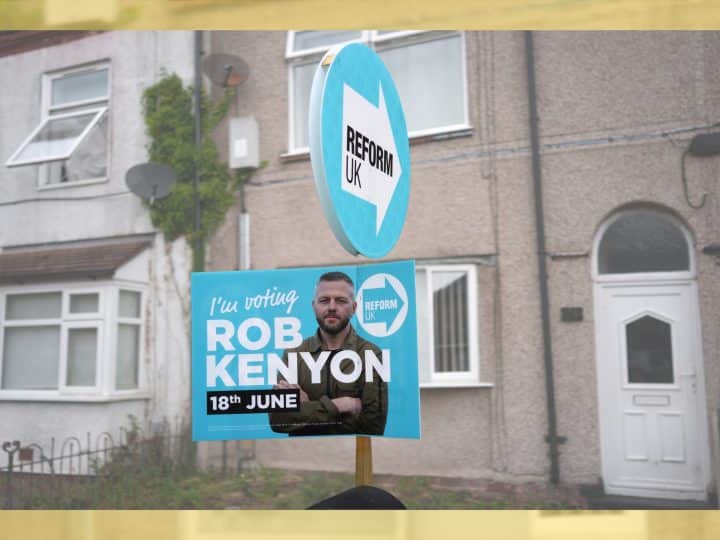
According to the Guardian’s Jessica Elgot, voters in Makerfield are baffled by a decision from the Reform candidate. The candidate in question is Robert Kenyon, and the decision he made is to not apologise for the comments he made online:
Voters who had noticed Kenyon’s online comments (almost everyone was aware) were slightly baffled he hadn’t apologised. Feel a difference here between “never back down” attitude of online debate versus what people expect in real life.
— Jessica Elgot (@jessicaelgot) June 9, 2026
Kenyon has a track record of derogatory comments
When it comes to Kenyon’s online comments, there are many which may have caused offence. As the Canary has reported, these comments include the following on women’s rights:
I’d hazard a guess that the majority [of abortions] are for vanity purposes like unwanted pregnancies.
On the question of whether this makes him a sexist, the answer is Kenyon doesn’t care, because he’s also said:
I’m sexist, sorry I am.
While Kenyon technically said “sorry” here, he’s steadfastly refused to apologise since.
Kenyon also said:
Reproductive rights? Women’s rights? They can dress it up all they want, they are deciding to kill a baby inside the womb…What they mean is they want to shag anyone they want and if they get caught they get a second chance and treat it [sic] as a secondary last chance form of contraception. They ain’t kidding anyone.
Kenyon sells himself as a straight talker, but really he’s just another Billy big-bollocks who wants to import Yank-style Christo-fascist politics to the UK.
Oh, and he’s also a coward because while it’s true he won’t apologise for his words, he won’t stand by them either.
He literally went for ‘how can I hate women, when my mum was a woman?’ https://t.co/6oTZDGwRKh
— Willem Moore (@willem_moore_uk) June 4, 2026
Honestly, it’s a bit odd that he’s a plumber given how much time he’s spent sitting on fences in regard to his own opinions.
Reform UK’s Robert Kenyon on #BBCQuestionTime:
Audience: “I’d rather have a career politician than a plumber who’s a sexist.”
“You described yourself as a sexist.”
Kenyon: “Allegedly.” Then refuses to apologise to Carol Vorderman after agreeing in 2021 that a creep wanting… pic.twitter.com/gtDR4WqgtC —

 King (@King0243_PJC) June 5, 2026
How is this any different to the careerist politicians who refuse to answer questions? The careerist politicians Reform is supposedly here to replace?
On the the Vorderman comments, the Guardian reported:
In 2021, Kenyon responded to a social media post about [Carol] Vorderman in which another user wrote: “My god I’d love to smell and lick your arsehole”, by saying: “He’s only saying what we’re all thinking”.
You’d think this would be an easy one to apologise for, but Kenyon flat-out refused to do so. Adding insult to injury, he attacked Vorderman for speaking out, saying:
There’s been a lot of noise about this indirect, sort of vulgar tweet that I’ve made, but I’ve not heard much about Carol’s thoughts on Labour not having the grooming gangs inquiry last year or what she thinks about biological males being allowed into single sex spaces.
Kenyon also claimed women “can’t drive“, which is ironic in the sense that he’s driving women to not vote for him.
It doesn’t end with sexism either.
Rob Kenyon has still not apologised for his homophobic or sexist comments.#Makerfield pic.twitter.com/zg91qJf7eT
— Reform Party UK Exposed
(@reformexposed) June 9, 2026
The more they see of him, the less they want
Elgot also observed the following:
Spent Monday in parts of Ashton and Orrell where Labour are targeting around 16% still undecided voters in Makerfield by-election.
Some observations
– Many who voted Reform only weeks ago are prepared to vote for Burnham. There is a *big* gender divide and QT was a big factor — Jessica Elgot (@jessicaelgot) June 9, 2026
Many of the clips above are from Kenyon’s Question Time appearance. It was there that he was asked to apologise for his past sexism, and it was there that he refused to do so.
Following Kenyon’s appearance, the Canary‘s Maddison Wheeldon wrote:
Rather than recognising why people took issue with the Reform candidate’s remarks or offering any meaningful apology, Kenyon has chosen to dispute the criticism itself. That approach has only deepened concerns about his dangerous judgment.
When someone seeks influence and authority, their willingness to listen to criticism and reflect on their mistakes matters just as much as the views they express.
Given all this, it’s unsurprising women don’t see Reform as having their interests in mind. What’s disappointing is that many men seemingly don’t care.
As the vast majority of these men were no doubt born of woman, this puts to bed the idea that lads can’t be sexist if they have mothers.
Featured image via Christopher Furlong/ Getty Images
By Willem Moore


The US has bombed 20 locations in Iran after it shot down an ‘Apache’ helicopter set up for electronic warfare in the Hormuz Strait.
Trump has pulled in the AH-64 Apache from American facilities worldwide for use in attacks on Iran.
US surveillance and attack
The US military had originally claimed that a technical fault caused the crash. The helicopter’s crew survived and was picked up from the sea.
The ‘Longbow’ variant of the apache is set up for surveillance and for support of special forces. Former US special forces officer, Lt Col Antony Aguilar, described it as hard to shoot down and said that similar aircraft had been used a week earlier to attack Iranian civilian vessels.
Trump attacked Iran for successfully defending itself and has described the escalated aggression as “defensive”.
Featured image via the Canary
By Skwawkbox
Lord Ashcroft KCMG PC is an international businessman, philanthropist, author and pollster. For more information on his work, visit lordashcroft.com
The ten-year anniversary of the Brexit referendum and the musings of Labour leadership hopefuls have combined to revive the debate over Britain’s relationship with Europe.
Would it help Labour to make rejoining the EU a cornerstone of their next election campaign?
How a ‘rejoin’ campaign could help Labour
A decade on from the referendum, Brexit has a poor reputation. My poll found only 11 per cent of people saying life in Britain in recent years has been better than it would have been if the UK were still a member of the EU, with a majority thinking it has been worse. Given a binary choice between the UK needing to accept that Brexit has failed and should try to rejoin some aspects of the EU, and the UK needing to accept that we have left for good and should make the best of it, the former leads by 16 points. When asked how they would vote in a referendum on rejoining the EU, 53 per cent of people said they would vote to rejoin, as against 30 per cent who said they would vote to stay out. These figures become even more favourable for Labour when broken down by party affiliation, as shown below

Rejoining leads by 82 points among current Labour supporters, 74 points among Greens and 69 points among Lib Dems. Current Reform voters would vote to stay out by a 62-point margin but Conservatives are more closely divided, saying they would vote against rejoining by 52 per cent to 33 per cent. Since the decisive factor at the next election will be which party is most able to consolidate support within its own “bloc” (Labour, the Lib Dems and Greens on the one hand, and the Tories and Reform on the other), making the next election about an issue which unites the left but splits the right could clearly be profitable for Labour.
There are other potential advantages.
Tying Nigel Farage to Brexit may give Labour a more promising line of attack than anything they have found to date. A focus on Brexit could also allow Labour to attribute to the Conservatives some blame for the state of the country and to assert that they have learned nothing from 2024, without needing to resort to the much-derided lines about £22 billion black holes. And with six in ten voters saying the current Labour government is no better or even worse than its predecessor, it would save Labour from having to campaign solely on its record in office. Since most voters agree a referendum would be needed to rejoin the EU, such a policy would allow Labour to promise change without having to explain why they didn’t use their vast majority to bring it about. A rejoin policy would also provide a reason to back Labour beyond a tactical vote to stop Reform, and a sense of purpose whose absence has characterised the government’s first two years.
We can examine this further by reference to our political map.
The chart below shows how people currently plan to vote and who has noticed what about the government so far. Bubble sizes are proportional to the size of the relevant voter group, and the closer bubbles are, the more similar the respective groups of voters. In the party colours, we have the locations of current support for the five largest parties. The ten grey bubbles come from a regular question where we ask respondents to recall, unprompted, things this Labour government has done (whether they agree with them or not). This shows the ten most-noticed acts (as opposed to failures and omissions to do things). We also highlight the people who identified improving relations with Europe as something the government has done so far.

This shows a number of things.
One is that Labour’s message is simply not cutting through much beyond its core support, even in the bottom left quadrant which is historical Labour territory and where the party has shed votes to the Greens. Another is that very few people have noticed the government policy on Europe, and those who have tend to be slightly closer in political outlook to Lib Dem voters rather than Labour voters. Labour proposing rejoining would eclipse the Lib Dem policy on a customs union. It would polarise the electorate in a way the current policy does not.
But it would be noticed.
It is too early to quantify the potential impact on Labour’s electoral prospects if they back rejoining the EU – we don’t know how they will perform in other areas in the coming months and years, or even who the prime minister will be. But there is an arguable case that a rejoin policy would make some of the campaign obstacles and electoral dynamics less unfavourable for Labour. In their current predicament, some chance of a way out may be preferable to no chance at all.
The risks for Labour of a rejoin policy
Admiral Nelson’s maxim that the boldest measures are the safest has some application to 21st century politics as well as 19th century naval combat. Election results worldwide suggest that incumbent parties cannot retain office by simply playing it safe (witness the successes of Mark Carney and Anthony Albanese and the failures of Chris Hipkins, Kamala Harris and Hillary Clinton). As against that, we have Sir Humphrey’s dictum that “controversial” means “this will lose you votes,” but “courageous” means “this will lose you the election”. What are the risks of Labour nailing its colours to the rejoin mast?
One obvious risk is that public support for rejoining may turn out to be weaker than it first appears, especially once questions of detail emerge.
Testing every potential sticking point in hypothetical negotiations with the EU is clearly not practical, so we asked about three potential conditions which might be attached to the UK’s readmittance: joining the euro, paying a higher membership fee than before Brexit and joining the Schengen area. We also asked people which came closer to their opinion in a forced choice between the UK needing to agree that Brexit has failed and should seek to rejoin some parts of the EU, and the UK needing to accept that the UK has left the EU for good and should try to make the best of it.
Based on these questions, as well as the voting intention in a hypothetical referendum on rejoining the EU, we can divide the population into four categories:
- Strong Rejoiners, who say that they would vote to rejoin, agree that Brexit has failed and would consider at least one of the conditions acceptable
- Hesitant Rejoiners, who say that they would vote to rejoin but either consider all three above conditions unacceptable or agree that the UK needs to accept that it has left the EU for good, or both
- Rejoin Rejecters, who say that they would vote to stay out or are unsure how they would vote, consider all three potential conditions unacceptable and agree that the UK needs to accept that it has left the EU for good
- Others, who do not fall into the above three categories
We could reasonably expect the Strong Rejoiners to vote to rejoin in a referendum and the Rejoin Rejecters to vote against rejoining. Having any expectations about how the hesitant rejoiners would vote is harder. If they perceived the UK as having secured favourable terms, they might come out in favour of rejoin; if the terms seemed unacceptable, they may well break strongly against rejoining. If we treat the hesitant rejoiners as undecided voters, then the 23-point lead for rejoin in headline referendum voting intention shrinks to six points.
This analysis is necessarily speculative and is certainly not intended as a prediction. But there is a temptation to see such a large lead on a subject as being decisive and thus to believe the result of a referendum is a foregone conclusion. If people have made up their mind about Brexit, that is not the case with rejoining.
A second risk is that, as with Brexit, a campaign around rejoining could divide Labour’s voter base. The chart below shows how the different categories we defined above break down based on current voting intention.
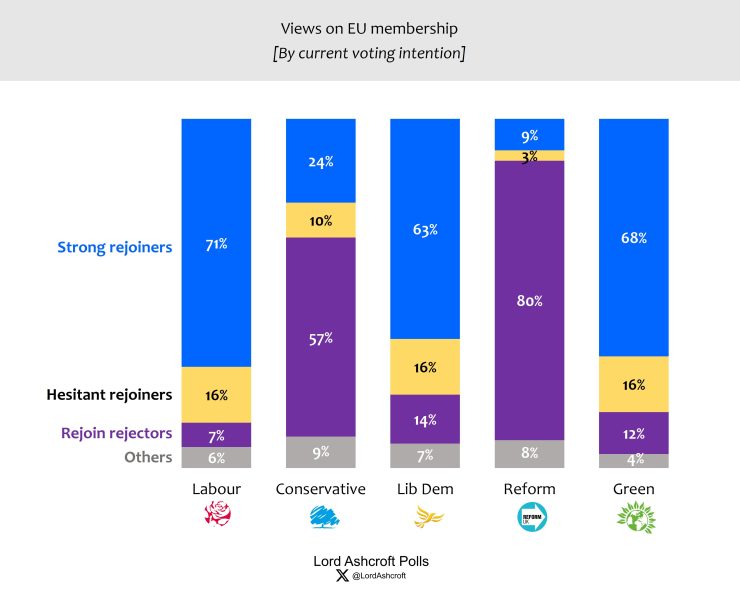
This is the sort of picture which would vindicate a rejoin-centric election campaign. It shows that current Conservative voters are divided on the issue: around a quarter are Strong Rejoiners whereas a slender majority are Rejoin Rejecters. Whichever stance the Conservative leadership took on the issue, at least one of these groups would be disappointed. Conversely, current Labour voters skew heavily towards Strong Rejoiners and are more united on this issue than current Lib Dem or Green voters; they are about as unified in favour of rejoin as Reform voters are in favour of staying out.
However, by 2024 vote the picture is somewhat different and significantly more ominous for Labour:
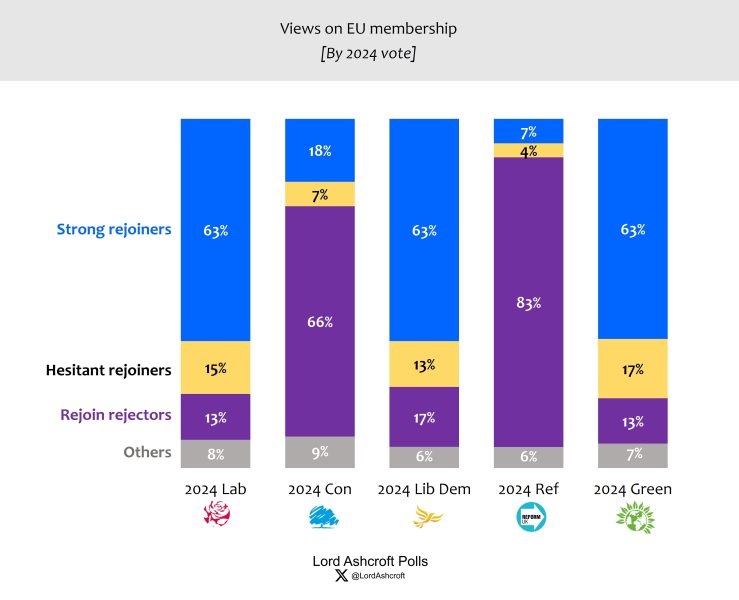
By 2024 vote, Labour are at least as divided as the Conservatives (and no more united than the Greens or Lib Dems). If a tactical benefit of placing rejoin front and centre of an election campaign is that it helps parties which are united on this issue, the primary beneficiaries going by 2024 vote would be Reform. Current voting intention is a snapshot of a dynamic situation. By the time of the next election, will the profile of opinion on rejoining the EU still look like the breakdown by current voting intention, or revert to something closer to the 2024 breakdown (even if headline voting intention does not change)? In the latter case, making the election about an issue which unites Reform voters but splits the other parties could hand Nigel Farage the keys to Number 10.
But waiting to see how things look in 2028 is not a credible option, largely because of the third risk: relevance.
Successful parties fight elections based on voters’ priorities.
For putting rejoin at the centre of an election campaign to pay political dividends, voters would either need to consider Britain’s relationship with the EU a high priority, or believe that rejoining the EU would enable meaningful improvement on some of their big concerns. Otherwise, the campaign looks irrelevant and out of touch. The last time I asked people to name the three most important issues facing the country, Brexit languished outside the top ten, chosen by just six per cent of voters.
Could things be changing?
Since January 2025, those preferring a closer relationship with the EU rather than the US has risen by nine points to 76 per cent. Even so, it is hard to see EU relations beginning to rival immigration, the NHS or the cost of living in the near future.
The best politicians are, to an extent, able to set the agenda; however, no amount of political skill or leadership ability allows this to be done overnight.
Whatever the issue or policy – be it small boat crossings, net zero, a wealth tax, or Brexit itself – none of these materialised without trace on the British public’s consciousness. But far from banging the drum for rejoin, Labour have been cautious and equivocal. How would rejoining improve the NHS, help address concerns over immigration or make the average person better off? If rejoining is to be the centrepiece of a future Labour general election campaign, then Labour need to be making those arguments and be comfortable doing so.
Next is the risk of polarisation.
Andy Burnham cited the division reopening the Brexit debate would cause as a reason for drawing back from advocating an immediate return. Even if this is a fig leaf for saying one thing to the voters of Makerfield and a different thing to the Labour membership, the risk of returning to parliamentary paralysis and government gridlock is real. If sufficient time has passed to warrant reconsidering the 2016 vote, the SNP will leap on this as justification for a re-run of the Scottish independence referendum. Again, this risk is difficult to quantify. Division and polarisation are inevitable consequences of putting rejoin on the political agenda; the question is whether Labour decide the benefits of rejoining outweigh the downsides of reviving the Brexit wars.
The fourth risk to Labour is perhaps the biggest of all.
What if they were to win the election but lose the subsequent referendum?
Their parliamentary coalition would collapse. They would be damned by rejoiners for having failed, and damned by opponents of rejoining for having tried at all. Predictions of long-established parties being finished as political forces are made too lightly in political commentary, but it is no hyperbole to say that if Labour bet everything on rejoin and lose the referendum, the consequences could be existential.
There is a common thread running through these four risks.
Labour voters uniting rather than dividing, EU relations becoming more relevant, people believing that polarisation is a price worth paying for putting the issue on the agenda and rejoin winning a referendum will only happen if the groundwork has been laid. Laying the groundwork will require patience, discipline, strong communication and a lot of political skill – all of which have so far been scarce in this government. If, on the other hand, Labour declares its support for rejoining as a last-minute roll of the dice, these risks will bite harder and the party’s reward could be to turn a very bad election result into a disastrous one.
Coming soon: ‘How should the Conservatives respond to a rejoin campaign?’ Full data tables at LordAshcroftPolls.com
The post Lord Ashcroft: Should Labour promise a ‘rejoin’ referendum? appeared first on Conservative Home.
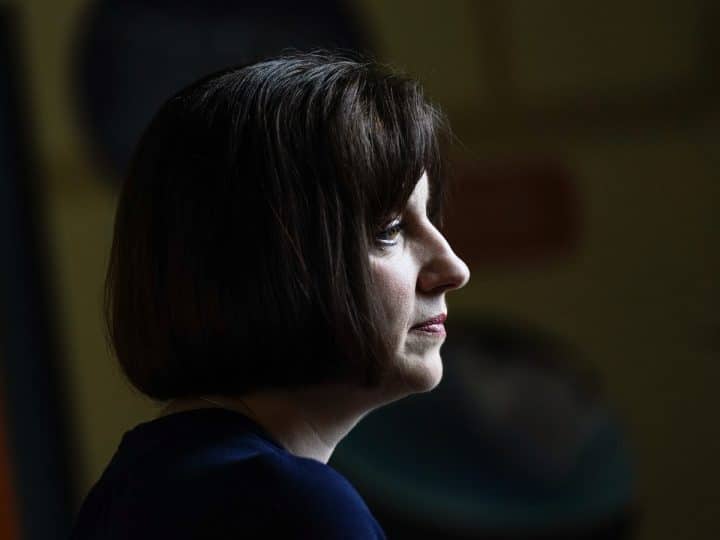
GMB, Unison and Unite have penned a joint letter to education secretary Bridget Phillipson MP. It expresses:
profound concern regarding the current direction and lack of meaningful progress within the School Support Staff Negotiating Body (SSSNB).
Together the unions represent more than 500,000 school workers. General secretaries Gary Smith, Andrea Egan and Sharon Graham warn against the ‘continued expansion of academisation’. And they say unless things change:
we will have no option but to escalate our response publicly and industrially.
The letter to the education secretary says:
The joint trade unions campaigned extensively over many years to re-establish the SSSNB.
We did so in good faith because we knew it was our best and long overdue opportunity to address the deep-rooted inequalities, fragmentation, and inconsistency experienced by school support staff across England.
However, the pace and substance of negotiations to date are now placing that confidence at serious risk.
At the recent SSSNB Working Group meeting on 20 May 2026, it was extremely disappointing to be informed that the remit for the SSSNB in its first year would be very limited.
The continued expansion of academy trust structures, in the absence of a coherent national framework for school support staff, risks accelerating workforce fragmentation.
GMB, UNISON and UNITE remain committed to constructive engagement and would strongly prefer to resolve these issues through meaningful progress and genuine partnership with government.
However, the current trajectory is rapidly exhausting the goodwill that existed when the SSSNB was re-established.
Should meaningful progress continue to be absent, we will have no option but to escalate our response publicly and industrially, including at upcoming conferences over the summer period.
We are therefore urging government to treat this moment with the seriousness it requires and to work with us urgently to restore confidence in the process before further damage is done.
Featured image via Ian Forsyth / Getty Images
By The Canary
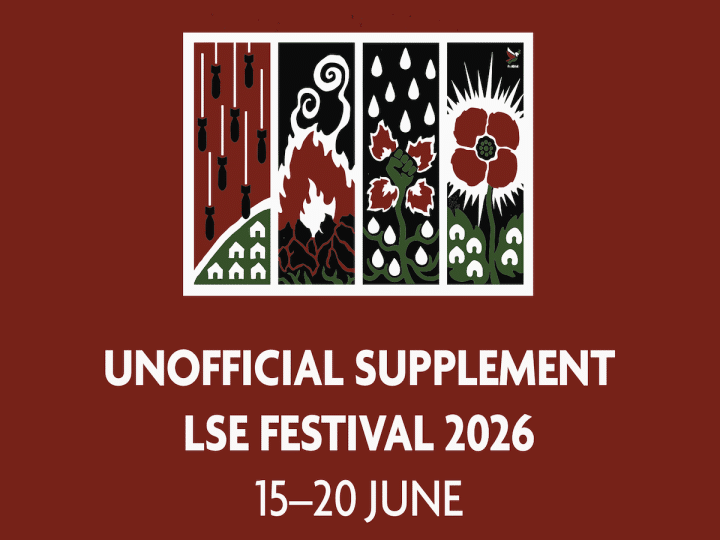
Students from the London School of Economics and Political Science (LSE) have published a document criticising the university’s greenwashing of corporate capitalism at LSE Festival 2026.
The document, seen by the Canary, takes aim at how the university’s stated ethos diverges from its material investments and corporate practices. This alternative programme was compiled by LSE Students for Justice in Palestine.
It comes in response to LSE’s school-wide festival, beginning 15 June, which will gather economists, academics, policy ministers, journalists, and scientists to speak about the climate crisis, green finance, and ecological governance.
However, student and staff activist researchers in 2024 and 2025 revealed how LSE’s own investment practices contradict its charitable goals and ESG standards.
This year, students write:
…while the institution performs planetary concern on its stages, it holds more than £86 million in investments across the very industries responsible for the climate catastrophe.
As you attend this festival, remember that LSE does not put its money where its mouth is.
LSE’s money isn’t where its mouth is
In May 2024, LSESU’s Palestine Society published Assets in Apartheid, a forensic analysis of LSE’s multi-million pound endowment. In June 2025, it published Stakes in Settler Colonialism, a 228-page update.
The reports’ cumulative findings are clear. LSE holds more than £86 million in companies profiting from the extraction and/or distribution of fossil fuels, including BP (£2.05 million ), Enel (£1.98 million), and Shell (£1.11 million).
Its investment advisor, JP Morgan Chase, is the world’s most prolific financier of fossil fuels, according to the 2025 Banking on Climate Chaos: Fossil Fuel Finance Report. This is who LSE trusts with its money.
Beyond fossil fuels, LSE has investments worth over £71 million in companies profiting from the manufacture and/or proliferation of arms as well as the funding of nuclear weapons.
The university also has at least £72 million in companies profiting from the genocide in Gaza. Those companies are:
- Supplying the Israeli military operating in the Occupied Palestinian Territory (OPT)
- Involved in illegal settlement activities
- Funding the occupation of Palestine
The report explains that:
These are not abstract figures. Every barrel pumped, every missile shipped, and every settlement financed by a company in this portfolio is a decision that LSE’s Finance and Estates Committee has taken, and refuses to reverse.
The students at LSE allege that for the university, “money is more important than lives”.
The university is happily staging a festival about saving the planet while bankrolling its destruction. In doing so, it uses the spectacle of concern to obscure its own material role in ecological breakdown and genocide.
Polluters are the programme
LSE has organised various high-profile speakers, all with loft speech titles, but the students aren’t convinced.
Mon 15 June
The Politics of Climate Change
This is a panel on the “green backlash” and climate rollbacks in recent years. However, students say:
LSE is its own case study: students voted for divestment in 2024, and again in 2026. Management declined to act both times.
The panels are included, but not limited to, ‘Political Economy Analysis for Accelerating the Green Transition,’ ‘How the Right Laws Can Save the Planet,’ and ‘Can We Tackle Climate Change Without Deepening Inequality?’
And, the report authors promise to tackle the problem of opposition from management:
LSE’s administration and its own student body are divided by exactly this failure of cooperation. 89% of students voted for divestment. Management refused. Cooperation, apparently, means something different when the institution is on one side and its students on the other.
Gross institutional hypocrisy on BP
As the students state:
Oil and education don’t mix.
They’re keen to underscore the complicity of BP, to whom LSE directs many millions of pounds. BP is complicit in both ecocide and the Gaza genocide.
LSE has been here before. In 1988, following a two-week student occupation of Connaught House, LSE divested from all 26 of its holdings in companies complicit in South African apartheid, a stake worth £3 million that included investments in BP. It has been done, and can be done again.
However, two years later, in 1990, LSE accepted £1.25 million from BP to establish the BP Centennial Professorship Scheme, designed, in LSE’s own words, to “contribute to the internal education programme of BP and to develop contacts between the School and BP”.
Under this scheme, LSE lends BP the grammar of sustainability, development, and progress. This is the precise language BP uses to greenwash its complicity in climate breakdown whilst the planet burns.
The report authors explain that:
Greenwashing is the practice of deploying the language of environmental responsibility to obscure the reality of environmental harm. It does not require lying. It requires only that the performance of concern be loud enough, and public enough, to crowd out scrutiny of the underlying conduct.
In June 2024, the LSE Student Union held a referendum on divestment from fossil fuels and arms producers. With record turnout, 89% of students voted in favour. In February 2026, the referendum was renewed with similarly overwhelming support.
Both times, LSE management declined to listen to its student body, citing “fiduciary duties”. But, the students allege fiduciary duty is not the neutral, technical constraint that management presents it as. It is a choice about whose interests count and over what timescale.
How to actually save the planet
Students have listed a number of suggestions for LSE to take up:
-
Full divestment from all holdings in fossil fuel companies, and from the asset managers and advisors financing their expansion.
-
Immediate divestment from all companies identified in Assets in Apartheid and Stakes in Settler Colonialism as complicit in crimes against the Palestinian people.
-
Full transparency of LSE’s portfolio. Easy access to view how much money is invested and in which companies.
-
Democratic oversight of the endowment. Students and staff must have binding participation in investment decisions.
-
End the BP Centennial Professorship and all partnerships with BP and other fossil fuel giants.
Until these demands are met, every “How to Save the Planet” panel is an alibi for inaction.
Featured image via the Canary
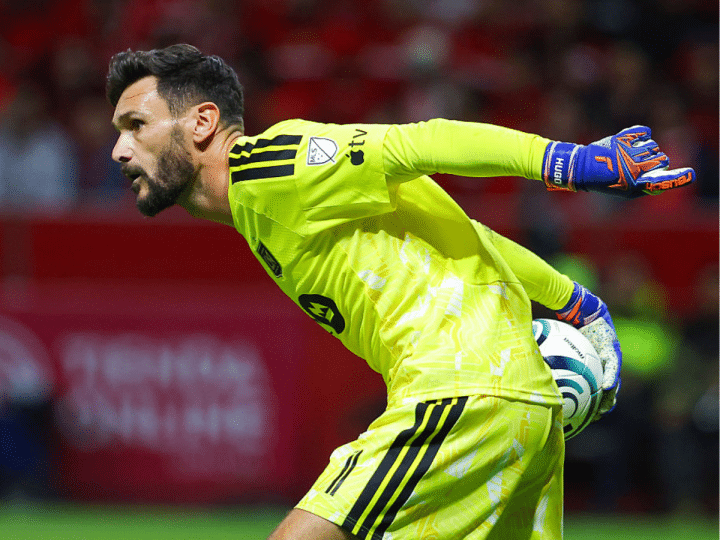
In football, a goalkeeper does not always need to lift the trophy to secure his place in World Cup history. Some have built their legacy by enduring on the world’s biggest football stage, whilst others have forged their legend by keeping a clean sheet against their opponents.
Throughout the history of the World Cup, two distinct paths to immortality have emerged among goalkeepers; the first is measured by the number of matches a goalkeeper has played, and the second by the number of clean sheets he has kept.
World Cup: Hugo Lloris sits top of record books
Over the course of four World Cup appearances, Frenchman Hugo Lloris has become a symbol of consistency and reliability. The goalkeeper, who led his country to the 2018 title and the 2022 final, has become the most-capped goalkeeper in the tournament’s history with 20 appearances.
Lloris’s achievement was no mean feat, as he surpassed names that have been synonymous with World Cup history for decades, foremost among them Germany’s Manuel Neuer (19 appearances), followed by Sepp Maier and Taffarel (18 appearances each).
These figures reflect a value distinct from tournaments and titles; they tell the story of a goalkeeper who has managed to maintain his place among the elite for many years, across successive generations of players and managers.
Goalkeepers with the most World Cup appearances
- Hugo Lloris – France – 20 matches
- Manuel Neuer – Germany – 19 appearances
- Sepp Maier – West Germany – 18 appearances
- Taffarel – Brazil – 18 appearances
- Fabien Barthez – France – 17 appearances
- Peter Shilton – England – 17 appearances
- Iker Casillas – Spain – 17 appearances
- Fernando Muslera – Uruguay – 16 appearances
- Thibaut Courtois – Belgium – 15 appearances
- Gilmar – Brazil – 14 appearances
- Emerson Leão – Brazil – 14 appearances
- Jan Youngbloed – Netherlands – 12 matches
Barthez and Shelton: The kings of clean sheets
Whilst Lloris may have won the battle of endurance, France’s Fabien Barthez and England’s Peter Shilton share the top spot on the list of goalkeepers with the most clean sheets.
Both kept 10 clean sheets at the World Cup, the highest tally in the tournament’s history, setting the standard for resilience under pressure in the biggest competitions.
Just behind the duo is Dutchman Jan Jongbloed, with eight clean sheets from just 12 matches – the best success rate among top goalkeepers – alongside prominent names such as Taffarel, Sepp Maier, Emerson Leão and Hugo Lloris.
Clean sheets are not merely a defensive statistic; they often represent the difference between an early exit and progression to the knockout stages, which explains why most of those with such records feature among the greatest goalkeepers in the history of the game.
Goalkeepers with the most clean sheets
- Fabien Barthez – France – 17 matches – 10 clean sheets
- Peter Shilton – England – 17 matches – 10 clean sheets
- Jan Jongbloed – Netherlands – 12 matches – 8 clean sheets
- Emerson Liao – Brazil – 14 matches – 8 clean sheets
- Sepp Maier – West Germany – 18 matches – 8 clean sheets
- Taffarel – Brazil – 18 matches – 8 clean sheets
- Hugo Lloris – France – 20 matches – 8 clean sheets
- Gilmar – Brazil – 14 matches – 7 clean sheets
- Thibaut Courtois – Belgium – 15 matches – 7 clean sheets
- Fernando Muslera – Uruguay – 16 appearances – 7 clean sheets
- Iker Casillas – Spain – 17 matches – 7 clean sheets
- Manuel Neuer – Germany – 19 matches – 7 clean sheets
Two sides to goalkeeping greatness
Although the criteria differ, some names have managed to combine both. Hugo Lloris not only holds the record for the number of appearances, but also ranks among the goalkeepers with the most clean sheets. The same applies to Manuel Neuer, Tavaril and Sepp Maier.
Whilst the record of appearances tells the story of staying at the top, the list of clean sheets tells the story of the ability to keep the dream alive. Between these two stories lies the legacy of the goalkeepers who have left their mark on World Cup history — not through the goals they scored, but through the goals they prevented.
Featured image via Agustin Cuevas/ Getty Images
By Alaa Shamali
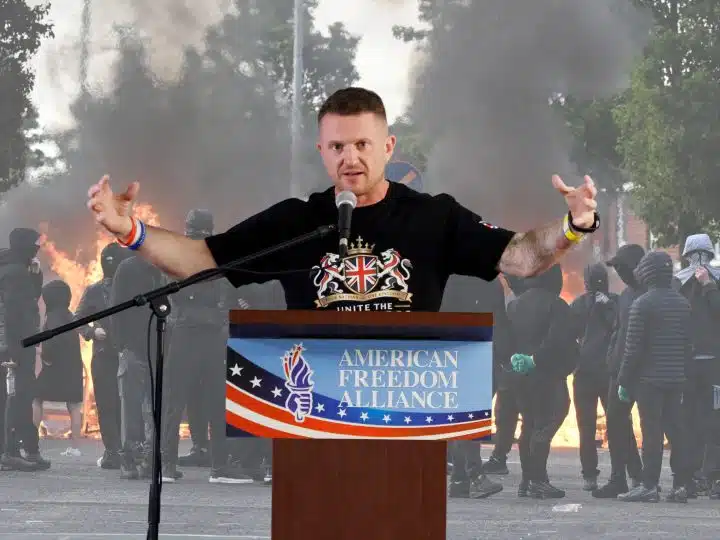
Tommy Robinson has, once again, been promoting the far-right uprisings spreading across the UK. He tweeted:
The whole of the United Kingdom is hitting the streets tonight at 7pm following yet another invader attack on our people.
It's time — Tommy Robinson
pic.twitter.com/tscckc9ceK
(@TRobinsonNewEra) June 9, 2026
Tommy Robinson: from Russia with hate
Following Robinson’s calls to rise up, riots erupted in Belfast. The city was earlier the scene of an attempted murder involving a Sudanese man. And once again, we saw the right cynically using a horrific crime to drive racial tensions:
Crime is now being viewed through an entirely racialised lens – but only when the perpetrators aren't white.
When Chas Corrigan stabbed a Saudi student to death, or Paul Doyle mowed down Liverpool fans, white people didn't have to fear being a target of collective retaliation.
— Ash Sarkar (@AyoCaesar) June 10, 2026
Robinson revelled in the violent acts which followed his call to action:
Belfast is out. pic.twitter.com/nHZ7GURRRA
— Tommy Robinson
(@TRobinsonNewEra) June 9, 2026
Belfast is burning.
Britain's politicians have failed us all. pic.twitter.com/MDqnFKoQCB
— Tommy Robinson
(@TRobinsonNewEra) June 9, 2026
Roads blocked by burning vehicles in Northern Ireland. pic.twitter.com/N2MXRnHerI
— Tommy Robinson
(@TRobinsonNewEra) June 9, 2026
Suspected HMO's are being burned out across Northern Ireland following the attempted beheading of a man by a Sudanese invader last night. pic.twitter.com/JTMYkBuSl7
— Tommy Robinson
(@TRobinsonNewEra) June 9, 2026
As the sun goes down over Northern Ireland, homes and vehicles burn in Belfast. pic.twitter.com/68lGMT9f6Q
— Tommy Robinson
(@TRobinsonNewEra) June 9, 2026
Robinson has claimed refugees pose a risk to British women. Meanwhile, he’s telling us the solution to this is to elect the notorious rapist Conor McGregor:
Lead your people Conor.
It's the only way — Tommy Robinson
 https://t.co/mUdcXrCCQH
(@TRobinsonNewEra) June 9, 2026
https://t.co/mUdcXrCCQH
(@TRobinsonNewEra) June 9, 2026
A mockery
Robinson mocked the Black residents of Belfast whose houses were burned down:
https://t.co/UxNXqDKwjL pic.twitter.com/eZcZblhCIb
— Tommy Robinson
(@TRobinsonNewEra) June 10, 2026
In the above, Robinson is referencing the killing of Henry Nowak. On 2 June, the Canary’s Rose Cocker reported on another far-right agitator – Nigel Farage – who used the murder of Nowak to push for “pure, cold rage” – a call that white rioters took up. As Cocker reported, murderer Vickrum Digwa:
wrongfully claimed that he had been the victim of a racialised assault, and responding officers attempted to arrest Nowak as he lay dying. Body-cam footage shows Nowak pleading with officers that he had been stabbed, and he couldn’t breathe. At one point, an officer replied “I don’t think you have, mate.”
Henry Nowak’s parents stated clearly that they didn’t want their son’s murder to be used to stir up hatred and division. Instead, they called for knife crime to be treated as a national emergency.
By suggesting all people of colour should be blamed for the Henry Nowak case, Robinson is promoting ‘collective punishment‘ – an act which is considered to be a war crime and a grave violation of human rights.
This is not normal.
Men like Robinson are dragging us back to the pre-WWII status quo, and we cannot allow them to succeed.
The Musk connection
On 9 June, we reported that Robinson was in Russia. Notably, Robinson met with Elon Musk’s father, Errol. As Elon despises his father and has very thin skin, we predicted this would lead to a split between Elon and Robinson. As it turns out, however, it seems Elon cares more about pushing hatred than avoiding humiliation:
Only by protesting REPEATEDLY and LOUDLY will there be any change!! https://t.co/73GDcLLFwv
— Elon Musk (@elonmusk) June 9, 2026
We say ‘avoiding humiliation’ because Errol Musk is a man who Elon himself describes as “evil”. Despite this, he passively watched on as his tormentor hung out with his minion. Errol is also a man who married his own stepdaughter – Elon’s stepsister – and who allegedly abused several of the Tesla billionaire’s siblings.
Musk is a powerful ally for the British far-right to have, anyway. He’s been pushing their message for years at this point, and surprise, surprise; we now have yearly white riots erupting off the words of social media Goebbels like Robinson.
They're itching for a civil war. A forieng billionaire is trying to use a thug to start it. pic.twitter.com/WsuV8455Wx
— Mukhtar (@I_amMukhtar) June 9, 2026
Pogroms
These white riots weren’t just displays of street violence, either. As Robert Freeman reported for the Canary:
Racist thugs have carried out a wave of pogroms in Belfast and nearby towns, setting fire to homes belonging to people of colour. The rioters also attacked businesses that they thought were the property of ‘foreigners’, ignited vehicles, and blocked roads.
A pastor helping those in houses targeted tonight in Belfast says people were being put out of their homes “because they're black”
He says members of his church “who have been with us for 20 years..had their house attacked, windows smashed, houses beside them burned” pic.twitter.com/nYwrVPx8Aa
— Taj Ali (@Taj_Ali1) June 9, 2026
For those who are unfamiliar, a ‘pogrom‘ is “an act of organized cruel behaviour or killing that is done to a large group of people because of their race or religion” (Cambridge Dictionary). The word is most commonly applied to the waves of violence against European Jews in the 20th century, with the most famous example being the Nazi’s Kristallnacht.
Now, we’re once again seeing pogroms in the Western hemisphere; most often against Muslims, but increasingly affecting anyone whose skin tone doesn’t reflect that of far-right rabble rousers like Tommy Robinson.
Just home from dealing with the consequences of tonight's lawlessness.
Perhaps some of the English right wing influencers and local politicians enthusing about these protests would explain to children I met why they have no beds to sleep in tonight.
Utterly disgusted.
— Matthew O'Toole (@MatthewOToole2) June 10, 2026
And make no mistake, Robinson is directly dehumanising the people who now face mob violence. Here he is describing foreign people as “savages”:
Stop importing the fuckers then, send them back!!!
Stop dumping these third world savages into our communities!!!
Enough of your performative politics you wanker!!!#EnoughIsEnough@Keir_Starmer https://t.co/GW34YHAOHa — Tommy Robinson
(@TRobinsonNewEra) June 9, 2026
And here he was saying the same thing a few months ago:
Independent journalist @ActivePatriotUK has been arrested for social media posts AGAIN!
The nation is literally being invaded by third world savages and the police are going after those who expose it! — Tommy Robinson
pic.twitter.com/2TMLm6tXY1 (@TRobinsonNewEra) March 28, 2026
It’s not condoning the actions of the alleged attempted-murderer to say we shouldn’t be referring to entire groups of people as “savages”.
After all, if we were to collectively denigrate groups for the actions of individuals, the scenes in Belfast would suggest all white people are ‘savages’, wouldn’t they?
Featured image via Mario Tama (Getty Images) / Charles McQuillan (Getty Images)
By Willem Moore

Review – Murder for Two, Bolton Octagon is ‘inspired lunacy’

SpaceX wants regular investors to help its stock launch. Here’s what to know before clicking ‘buy’

New York DFS Proposes Updated Stablecoin Framework for GENIUS Act Compliance



-

 Fashion5 days ago
Weekend Open Thread: Evereve – Corporette.com
-
 Crypto World5 days ago
Jensen Huang Approves Samsung, SK Hynix, and Micron for NVIDIA (NVDA) HBM4 Memory Supply
-

 Crypto World2 days ago
Anatomy of the June crypto crash: Fed, Iran, Saylor
-
 Entertainment3 days ago
The Best Mystery Series of All Time Is Surging on Streaming 30 Years After It Ended
-

 NewsBeat3 days ago
Alexander Zverev wins the French Open to finally earn a 1st Grand Slam title
-

 Tech4 days ago
Suspicious Polyfill login prompts pop up on Toshiba, Muji websites
-
Crypto World4 days ago
Senator Cynthia Lummis Calls CLARITY Act the Most Consequential Financial Legislation of This Generation
-

 Tech3 days ago
Microsoft unveils seven homegrown AI models in new bid for ‘long term self-sufficiency’
-

 Tech5 days ago
Microsoft launches MXC, an OS-level sandbox for AI agents, with OpenAI and Nvidia already on board
-

 Business5 days ago
(VIDEO) Justin Bieber Delivers Surprise Happy Birthday Serenade to Diners at Los Angeles Mexican Restaurant
-
 Business3 days ago
The Pain Points Taking a Fragile Tech Rally Down a Notch
-
Crypto World5 days ago
LBank Surpasses 25 Million Users Worldwide as AFA Partnership Continues to Drive Global Growth
-

 Crypto World3 days ago
Trump’s AI Ownership Plan Could Benefit Anthropic at OpenAI’s Expense
-

 Tech5 days ago
Meta steals a tactic from Tesla and builds data centers in tents
-

 Tech4 days ago
Von der Leyen’s AI envoy pick draws conflict-of-interest fire
-
 Sports21 hours ago
Bangladesh beat Australia after 20 years in ODIs, register only their second win over six-time world champions | Cricket News
-
 Crypto World2 days ago
Eli Lilly (LLY) Stock Surges 4% Following Breakthrough Sleep Apnea Trial Results
-

 Business2 days ago
High Stakes for Wembanyama as New York Pushes for 3-0 Lead
-

 Tech4 days ago
Hackers now exploit SolarWinds Serv-U flaw to crash servers
-

 Tech3 days ago
Notion restores access to Anthropic after service disruption
You must be logged in to post a comment Login