

Politics
A year since the EU-UK summit: where are we now?

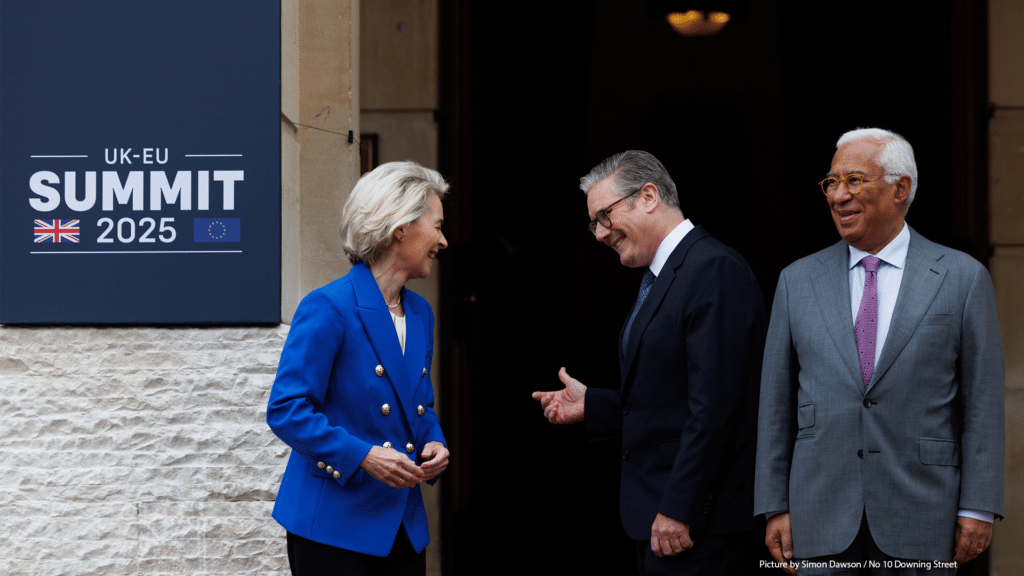
One year on from the inaugural UK-EU summit, Hussein Kassim reflects on what has (or has not) been acheived since and what this means for the UK-EU relationship.
A year after EU leaders met Keir Starmer at Lancaster House on 19 May 2025, the optimism that accompanied the conclusion of the talks has faded. The first summit since the UK’s departure from the EU followed the Labour Party’s much vaunted manifesto pledge to reset relations with the EU. The signing of three texts looked set to open a new era of constructive and cooperative relations, with EU leaders welcoming a roadmap towards wider cooperation, while in the UK hopes were high about the possibility of moving towards to an even closer relationship with the EU in pharmaceuticals, chemicals and electric vehicles.
From one point of view, much was achieved at the summit and in its follow up. An agreement on fisheries has been signed, the UK will return to Erasmus+ from 2027, and negotiations continue between the two sides on an agrifood and trade agreement, energy cooperation, linking their two emissions trading schemes, and a Youth Experience Scheme – YES. More broadly, a comprehensive draft treaty on Gibraltar has been finalised and the Commission renewed its data adequacy decisions concerning the UK.
But so far there has also been at least one notable casualty. In security, where the two sides had signed a Security and Defence Partnership, the UK’s attempt to join SAFE (Security Action for Europe) – the EU’s flagship €150bn defence fund – collapsed when the two sides found themselves wide apart on the level of the UK’s financial contribution.
Add to that the several areas where negotiations have been stumbling and the picture is somewhat less promising. On agrifood and trade, for example, although the fundamentals, such as dynamic alignment with EU rules, have been agreed, the UK continues to seek exemptions. On electricity, the UK has been refusing to accept that, in return for access to the EU single market, it should like Norway and Switzerland contribute to the EU cohesion fund – a policy aimed at reducing regional economic disparities within the EU. Meanwhile, on YES, which is the EU’s main ask, the UK is refusing to allow EU students to pay tuition fees at the same level as domestic students and wants to cap the number of young Europeans coming into the UK. In neither electricity nor youth experience, London argues, were the concessions that the EU is demanding prefigured by the May 2025 agreement. Since the EU considers that agreement on SPS and emissions trading will benefit the UK more than the EU, it may yet decide that the UK will need to meet EU demands on YES to make the overall package acceptable.
More broadly, the UK finds it hard to understand why the EU will not agree on measures that in London’s mind would produce benefits for both parties. It sees the EU as backward looking and wonders why the EU cannot show more flexibility given the wider interests it shares with the UK.
The EU, for its part, has been baffled by elements of the UK’s approach. Since member states consider the UK to be in a better economic condition than some EU countries, they are not persuaded when the UK claims the state of the British economy prevents it from paying more. Similarly, the EU has limited sympathy when the UK invokes domestic debates about immigration when the issue is also sensitive in parts of the EU. More generally, the EU finds it difficult to reconcile the UK’s expressed desire for closer relations with what it perceives as the UK’s hypertransactionalist approach to the negotiations. Although much has changed since the days of Boris Johnson, the EU remains unsatisfied with some aspects of the UK’s implementation of rules under the Windsor Agreement. The monitoring and inspection of goods between GB and Northern Ireland, where the EU is concerned about products from the UK finding their way into the single market, is a particular issue. The view on the EU side is that if a party cannot implement an existing agreement, there little ground on which to trust it to comply with a new agreement.
What room there is for manoeuvre remains to be seen. Although it has shown signs of flexibility in its approach to the UK, the EU is not about to abandon its existential principles in regard to the single market. Nor is it likely to offer concessions to the UK that could trigger requests from other third countries to amend their agreements with the EU. Moreover, since the EU is largely satisfied with the Withdrawal Agreement and the Trade and Cooperation Agreement, it needs to be persuaded of the benefits of further add-ons. As member states have differing perspectives on the desirability of a closer relationship, often based on geographical proximity, there is also a question of whether the overall gains to the EU from an agreement with the UK will be substantial enough and whether all member states will see the benefit. Further, the EU side is wary of what happens next in British politics. UK domestic uncertainty has led the EU to pay particular attention to crafting safeguard provisions and conflict resolution clauses.
On the UK side, government rhetoric has changed noticeably over the past few months. Pointing to the costs of Brexit and the economic damage it has caused the UK, both the PM and the Chancellor have called for a closer relationship with the EU. Most recently, in the wake of Labour Party losses in the May local elections, Starmer declared that the UK should be ‘at the heart of Europe’. How this can be reconciled with Labour’s red lines or translated into an impetus to successfully conclude the current negotiations remains uncertain. The impact of a possible leadership contest on the government’s position is also unclear.
In short, the signs twelve months after the summit are mixed at best. The absence of the announcement of a date for a second summit bears eloquent testimony to the distance between the two sides that remains. In addition, unanticipated legal complexities and controversies concerning the mechanisms the government will need to adopt to make parts of an agreement work appear themselves to have opened a pandora’s box.
By Professor Hussein Kassim, Professor of European Public Policy and Administration, University of Warwick.



Illustration by Tracy Worrall

10 min read
As the conflict in Iran highlights Britain’s exposure to fossil fuel markets, Zoe Crowther examines fears UK’s shift towards clean energy might mean replacing one dependency with another
For years, the political logic of the energy transition has rested partly on the promise of greater sovereignty and less economic exposure to volatile oil markets, unstable regimes and geopolitical shocks. But as countries race to electrify transport systems, build offshore wind farms and expand solar generation, another dependency is becoming harder to ignore: China’s dominance in the clean energy supply chain.
In a surprisingly hawkish speech in Brussels earlier this month, EU commissioner for climate, net zero and clean growth Wopke Hoekstra said that the EU had been “too naïve for too long” over the role of China in Europe’s energy sector.
He warned of the danger of creating a new reliance on Chinese cleantech after the negative impact of dependencies on Russian gas, and imported liquefied natural gas from the Middle East and the US has become increasingly obvious.
More than 20 years ago, the first “China shock” came when China’s accession to the World Trade Organization unleashed a wave of low-cost manufactured exports that transformed global trade and hollowed out industries across Europe and the United States, contributing to political backlash, increasing populism and economic insecurity in the Western world.
Analysts are now increasingly speaking of “China Shock 2.0”: The Financial Times has reported on the extent to which it is now not just cheap consumer goods flooding global markets, but Chinese dominance in electric vehicles, batteries, solar panels, wind turbines and the critical minerals supply chain underpinning the energy transition.
Loom, a UK-based strategy and research group focused on the intersection of climate policy, energy security, industrial strategy and geopolitics, has published a new report arguing that the transition away from fossil fuels risks creating new strategic vulnerabilities if governments fail to develop domestic industrial capacity and more resilient supply chains. It describes China as Europe’s “next energy blind spot”, with strategic dependence being relocated rather than removed.
The Iran conflict has highlighted the structural risks embedded in fossil fuel dependence, hastening calls from the pro-climate movement to further expand the UK’s renewable sector.
However, while Britain has made significant progress in decarbonising electricity generation, much less progress has been made in electrifying heating and transport, leaving large parts of the economy heavily dependent on oil and gas.
Dan Marks, research fellow in energy security at the Royal United Services Institute (Rusi) tells The House that instability in fossil fuel markets is not temporary but structural.
“While Vladimir Putin is in charge of Russia, while the ayatollahs are in charge of Iran… Russia could be sanctioned at any point, and Iran can close the Strait of Hormuz at any point. So that’s structural risk built into the oil and gas market for an indefinite period of time.”
Unlike fossil fuels, which require continuous imports vulnerable to price shocks and disruption, renewable infrastructure generates energy domestically once installed. However, there are still widespread concerns around both the economic dependency and national security implications.
Chris Aylett, research fellow in the Environment and Society Centre at Chatham House, describes the most significant effect as being that the UK could forego huge economic opportunities in an energy system where China is the leader.
“China’s been working on this and developing this massive green industrial behemoth for decades,” he says.
“It’s absolutely at the top of its game, it’s producing to the highest quality and lowest cost, and it’s just really difficult to challenge that. Other countries, including in Europe, are making a bit of headway, but it’s not going to match China, and certainly not in the UK.”
This is likely to continue for the foreseeable future, as China is still building out its capacity.
The US may have been the only western economy with the scale to seriously challenge that dominance through former president Joe Biden’s Inflation Reduction Act, which aimed to boost domestic green manufacturing, but that effort was weakened after President Donald Trump reversed major parts of the policy.
There is also concern that the US could pressure allies to remove Chinese technologies from energy supply chains, echoing the Huawei dispute. But Aylett believes this is increasingly unlikely as Washington’s leverage has weakened after the “strategic blunder” of the Iran War.
“It’s diminished him [Trump] in a way… his power on the world stage of being able to say and do whatever he wants,” Aylett says.
Alongside the economic risks are the direct risks to the UK’s national security from Chinese interference, which extend to both clean energy infrastructure itself and some of the communications technologies used.
Graeme Downie, Labour MP and chair of the Coalition for Secure Technology, points to Chinese-made cellular IoT modules – essentially low-tech semiconductors – which are prevalent in many products from traffic lights and IT routers to parts of the energy system.
“Anything that can communicate usually has a module in it,” he tells The House. “Energy security means security of supply, but it also means security of technology.”
Aylett warns that these connected technologies can create vulnerabilities regardless of where they are made.
“Connected technologies are vulnerable to cyber attacks, whether that be remotely operated via a back door, or whether they are just vulnerable to attack generally due to poor security standards and practices,” he says. “Russia, for example, doesn’t make clean energy tech but engages in cyber attacks on energy infrastructure. So that is a risk.”
Downie believes the current crisis should force a broader rethink of the UK’s energy security system. “We should have learned this lesson after the Russian invasion of Ukraine,” he says. “We’ve got to take this opportunity to do it properly.”
After multiple national security incidents involving China in recent years – including the arrest and investigation of individuals accused of spying for China, and warnings from MI5 that China represents a significant long-term espionage and interference threat – the UK government is alive to the risks.
China’s been working on this and developing this massive green industrial behemoth for decades
In March, the UK blocked Chinese wind company Ming Yang from building a £1.5bn turbine factory in Scotland on national security grounds. The government has refused to elaborate on the reasons for that decision when asked by The House. Some speculate, however, it reflects a more aggressive stance on the technologies and desire to widen the supply base.
Mike Reader, Labour MP and member of the Energy Security and Net Zero Select Committee, argues Britain’s vulnerability is partly the result of decades of deindustrialisation. “The Conservatives left us completely reliant on a global supply chain without UK capability,” he says. “The de-industrialisation of the UK was done without considering our sovereignty and our security.”
The government is therefore now trying to strengthen domestic resilience. Pranesh Narayanan, senior research fellow in IPPR’s Centre for Economic Justice, says the UK’s updated Critical Minerals Strategy is more sophisticated than previous efforts because it identifies parts of the supply chain Britain could realistically develop, particularly refining capacity.
But he warns the funding attached – around £50m – is insufficient and “not necessarily commensurate with the scale of the problem”. He argues the government should allocate some money every year over a longer term towards this to build resilience.
The government’s industrial strategy, too, is described by Narayanan as taking “positive steps” to identify the manufacturing base that the UK could develop. “But it’s going to be slow to deliver, and you’re going to need to commit to delivering it over many, many years.”
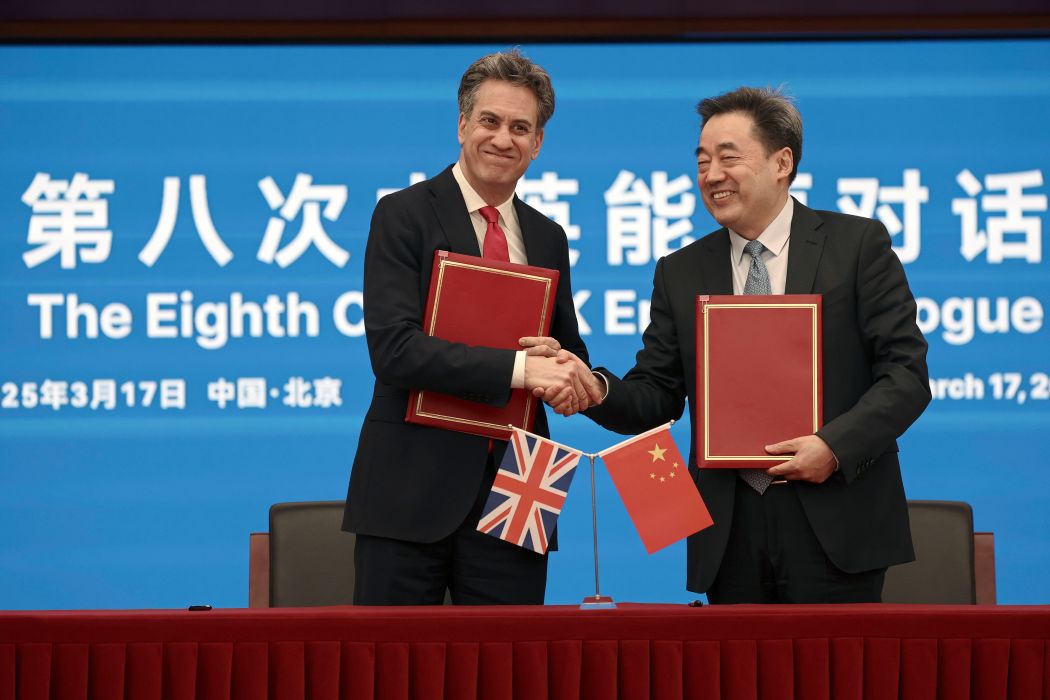
There are signs of growing co-ordination across Europe. The UK recently joined the Hamburg Declaration alongside countries including Germany, Denmark and the Netherlands to develop a vast interconnected North Sea offshore wind grid.
Chatham House’s Aylett describes there as being a “decent amount of political will and momentum” in the UK to support the European wind sector, and develop offshore wind as one area where Britain could still carve out a competitive advantage.
However, any meaningful diversification away from China will take years and require sustained state intervention.
Narayanan points to India, Vietnam and Malaysia as countries developing alternative solar manufacturing capacity, but says markets alone will not solve the problem. “Some public effort is going to be needed as the market isn’t going to do it by itself,” he says.
Loom is set to produce further reports looking at where those alternative opportunities could emerge.
The Labour government has appeared to pursue a strategy closer to “de-risking” than “decoupling”: accepting that deep economic ties with China in sectors such as clean energy and critical minerals are unavoidable, but acknowledging that action is needed to reduce dependency.
European governments don’t want to communicate trade-offs
Reader says: “It’s an almost hawkish, anti-China argument to say, are we reliant on China? The whole world is reliant on China’s critical minerals and rare earths, whether you’re talking about wind, EVs, phone batteries, the toaster that you’ve just bought…
“I wouldn’t say we are more reliant on China because we have clean energy. We’re reliant on the critical minerals and rare earth minerals supply chain. What’s important is that the government is setting out strategies to deal with that upstream challenge… When we build the next batch of small modular reactors, the factory that builds the reactor has to be in the UK, so not in France, not in Taiwan, not in Korea, it has to be in the UK supply chain.”
The ‘de-risking’ approach has exposed tensions inside Whitehall between security hawks and departments such as the Treasury and the Department for Business and Trade, which are focused more on trade and investment. Business Secretary Peter Kyle, in particular, has been consistently keen on Chinese investment in the energy industry.
IPPR’s Narayanan argues policymakers need to be more precise about what dependency means. “What are the specific risks of buying things from China?” he asks. “Are we buying things that ultimately give the Chinese government some kind of access to our digital infrastructure or data?”
Rusi’s Marks argues that political leaders have avoided confronting difficult trade-offs. “What governments are meant to do is decide and to govern,” he says. “A lot of European governments – this isn’t just a UK problem – have just become technocratic, and all they really want to do is find win-wins: tweak this regulation, make this process slightly more efficient.
“They don’t want to communicate trade-offs. Nobody is preparing populations for what might happen if the Strait of Hormuz doesn’t open in the next two to three months. At no point have they come out and said we’re in a national emergency here.”
The energy transition may still reduce Britain’s exposure to the volatility of global fossil fuel markets, but the emerging debate suggests sovereignty in the age of net zero is becoming more complicated than simply replacing oil with wind turbines.
The challenge for ministers is no longer whether dependency exists, but which dependencies Britain is willing to accept and how much resilience it is prepared to pay for. It is a difficult balance for any government to strike, particularly one already grappling with multiple competing crises and mounting pressure to bring down energy bills for households still struggling through the cost-of-living crisis.
Politics
The House | Hormuz has shown the vulnerability but there are other emerging challenges to chokepoints like our own Dover Strait


A ferry going to Port of Dover after crossing the English Channel (David Vilaplana/Alamy)
4 min read
The UK’s prosperity has always depended on the sea.
As an island trading nation, more than 85 per cent of the UK’s imports and exports by volume move by ship, and the waters around our coast are among the busiest in the world. Recent instability in the Strait of Hormuz and wider disruption to global shipping routes have shown how quickly maritime security becomes an economic concern, reinforcing the importance of keeping vital sea lanes open, resilient and secure.
Every day, thousands of vessels transit UK waters, including through our own maritime chokepoint, the Dover Strait: container ships carrying goods to our shelves, tankers supplying energy, ferries connecting communities, and vessels serving the renewable energy sector.
Keeping these routes open, safe and efficient is not a luxury; it is an economic and national necessity. That resilience depends on a navigation system capable of operating reliably in all conditions while adapting to a rapidly changing maritime environment.
The General Lighthouse Authorities – Trinity House for England, Wales, the Channel Islands and Gibraltar; the Northern Lighthouse Board for Scotland and the Isle of Man; and Irish Lights for the island of Ireland – are charged in statute with delivering reliable, resilient and efficient aids to navigation service for all mariners. At no cost to the UK Exchequer, their shared purpose is to support prosperity and security, protect the marine environment and save lives at sea – at all times and in all conditions.
To achieve this, a small number of highly skilled seafarers and engineers operate from bases across the UK and Ireland, and at sea. Together, they maintain hundreds of aids to navigation, including lighthouses, buoys and lightvessels, marking some of the most hazardous waters in Europe. When a light fails, a wreck creates a hazard or an incident threatens navigational safety, teams provide a co-ordinated response around the clock to restore safety and keep shipping moving.
Their responsibilities extend beyond the maintenance of major aids to navigation. Thousands of local aids to navigation provided by ports, harbours and other authorities are inspected and regulated to ensure a consistent and dependable standard of safety across our waters.
The General Lighthouse Authorities also play a central role in the consenting process for marine developments, helping balance growth, environmental protection and navigational safety.
That role is becoming increasingly important as the maritime environment grows more complex, congested and contested. Offshore wind, tidal energy and other marine developments are expanding rapidly around the coast, while commercial shipping patterns continue to evolve.
Keeping these routes open, safe and efficient is not a luxury; it is an economic and national necessity
At the same time, modern shipping has become heavily dependent on Global Navigation Satellite Systems (GNSS), such as GPS. While these systems are highly capable, they are also vulnerable to jamming, spoofing and accidental interference. As the recent Royal Institute of Navigation report into GNSS vulnerability highlights, these risks are no longer theoretical. Incidents of GNSS disruption are increasing globally and the consequences for vessels operating in confined or congested waters can be severe.
Resilience therefore depends on maintaining the right balance between physical infrastructure and advanced technology. Digital navigation systems, real-time monitoring and data-led traffic management are transforming maritime operations, but they cannot wholly replace traditional aids to navigation. Physical infrastructure – lighthouses, buoys, beacons and lightvessels – continues to provide an independent and highly reliable means of navigation, unaffected by cyber disruption or satellite failure. The challenge for the future is to integrate these systems effectively, ensuring that innovation strengthens resilience rather than creating new single points of failure.
That balance will become even more important as autonomous and remotely operated vessels become more common. New types of craft – operating with varying levels of human oversight and often alongside conventional shipping and leisure traffic – will place fresh demands on regulation, navigation standards and traffic management, particularly in crowded coastal waters. The challenge is not simply to adopt new technology, but to ensure that maritime safety frameworks evolve quickly enough to manage increasingly complex patterns of movement at sea.
The UK’s economy, energy security and global competitiveness all depend on the safe and efficient movement of ships around our coast. In an era of geopolitical uncertainty, growing technological vulnerability and increasing pressure on maritime space, maintaining resilient navigation systems and secure shipping routes has never been more important.
Rear Admiral Iain Lower is Deputy Master and Chief Executive Officer, Trinity House
Politics
The House | Meet Japanese Ambassador Hiroshi Suzuki, Who Loves Pubs, Paddington And The Premier League


Hiroshi Suzuki tastes some ‘original recipe’ Irn-Bru in Glasgow in 2025 (PA Images/Alamy)
7 min read
Diplomacy is having a lean period as wars rage on, but it has found a star in Hiroshi Suzuki. Japan’s ambassador to the UK tells Ben Gartside about his love of the UK, the power of social media and travels with his stuffed toy
Honey, they say, catches more flies than vinegar. A marmalade-loving bear is certainly proving a more powerful diplomatic tool than the démarche. It is hard to avoid Hiroshi Suzuki online even if one wanted. The 64-year-old posts a steady stream of love letters to the UK, many featuring his stuffed toy Paddington.
Britons aren’t easily praised – but there is something winning about Suzuki’s open-hearted commitment to the cause of sucking up. John Redwood, as Welsh secretary, was pilloried for his efforts at the national anthem – but when a Japanese ambassador gives it a good go, he’s a hero.
So, is there guile behind the blarney?
Meeting at his Kensington residence with views of a delightful garden in the full glories of spring, Ambassador Suzuki is as rhapsodic in person as online. Wearing a perfectly tailored three-piece suit, he says he struggles to pick out the favourite moment of his tour to date.
“I have many favourite moments, but, you know, I love going to pubs. Enjoying a good local ale or bitter is always a huge joy to me.”
Born in Kyoto in 1961, Suzuki is approaching his 65th birthday, an unlikely age for a new social media star. In 1985, he joined the Japanese diplomatic service after a period of studying in the US.
On his mantelpiece sits a number of photos and keepsakes – one of Suzuki with Ukrainian President Volodymyr Zelensky, a black-and-white picture of former Japanese prime minister Shinzo Abe, and a signed rugby ball.
A close friend and political ally of Abe, who was assassinated in 2022, Suzuki worked closely with him for a number of years. The prime minister’s outlook clearly had a strong impact on his work.
Unlike most ambassadors, Suzuki has become a very recognisable presence in Westminster. Catapulted into fame from sharing videos of himself enjoying traditional British pubs, his spirited but far-from-pitch-perfect rendition of the Welsh national anthem endeared him to locals, given how few domestic politicians would dare try.
“I have been so fortunate to have become popular on [social media]. But the starting point for me is that the Japanese people love British culture and British people – Shakespeare, Beatles, Queen, or James Bond, Harry Potter, or the Premier League Football, or even having afternoon tea.”
“Japanese people just love the UK and British culture,” he says. “So, as an ambassador, as their representative, I want to express and convey my love and affection towards the British people and towards British culture. Fortunately, that has been picked up. And I have been so fortunate to be popular… and I’m helped by Paddington so much,” he adds, pointing to his stuffed Paddington Bear companion. Suzuki was described as “the Paddington Bear of ambassadors” in one newspaper column.
When we meet, he is looking forward to the Badminton Horse trials the following day; sure enough, afterwards he posts a picture of himself and his toy Paddington mascot standing by a fence on the course.
For his summer break last year, Suzuki hired a boat and sailed around the Sussex coast, which he described as an “amazing” experience. More recently, he spent his time off travelling around the Lake District and visited the Beatrix Potter museum in Windermere.
Despite the novel approach to his job, Suzuki has a traditional background. He’s been a member of the Japanese diplomatic service for over 40 years, having previously served in Tehran and Kabul – a far cry from the cosy and cultural work he currently finds himself doing. He speaks of how lucky he was to be able to join the diplomatic service, at a time when Japan was undergoing profound change.
Despite a short stint in the UK so far, Ambassador Suzuki has already proved influential. He says he’s often collared by MPs and peers when walking around Westminster off the back of his social media, which helps a great deal when making introductions – whether that’s on cherry blossom trees or global defence treaties.
British diplomats are already trying to emulate him, and he seems to have moved the wider Japanese diplomatic service too. International press have cited his social media strategy as part of a wider move in the Japanese diplomatic corps, with the new ambassador for France employing a similar strategy.
Hideo Suzuki – no relation – brings copies of Asterix instead of travel guides with him when travelling across France, poses as Tintin in pictures and professes his love of regional coin and stamp collecting. While he doesn’t seem to be as fond of a French red as the British ambassador is of a pint of bitter, he has posted his love of patisseries. Topical French magazine Paris Match described him as “the Japanese ambassador who makes us love… France”. We, Brits, clearly are not the only ones.
Suzuki’s face twinkles at the mention of the French ambassador. “He’s my best friend in the service, so I wish him all the best. He just took up his post in Paris recently. And he’s doing a great job.”
Suzuki is an adept diplomat. He quotes music and philosophers as easily as foreign trade statistics and investment numbers, always with a smile and always linking back to whatever message he’s trying to hammer home.
Japan tries to punch above its weight, and we want to learn from the UK because it is known to punch above its weight
On defence policy, an area becoming increasingly tense between Japan and the UK, he subtly encourages the government to push ahead with the shared Global Combat Air Programme between the MoD, Italy and Japan.
“I am hoping that in the near future, a long-term contract could be signed… Our plan is for the first fighter jet to take to the sky to defend our free skies in 2035, nine years from now.”
He reinforces the point moments later, after I press on apparent tensions between the parties over Britain’s delayed Defence Investment Plan holding up the deal.
“We are fully committed to our original plan of 2035. Nothing will delay our original schedule.”
Later, he outlines his manifesto for the UK-Japanese relationship. Suzuki highlights the UK’s soft power as a unique skill.
“I’ve met a number of [Japanese footballers in the UK] and they all say the same thing in different words, which is ever since they were little they’ve dreamt of playing in the Premier League. The pitch for them is the pitch of their dreams. And it’s not just football – last year, the Japanese national ballet came.
“And again, it’s the same thing – ever since they were little, it was their dream to perform at the Royal Ballet. If some Premier League teams could tour Japan, it would be a phenomenal success. Likewise, a potential tour of the Royal Ballet to Japan would be success guaranteed.”
He says that while the UK isn’t a superpower, he doesn’t believe it’s a middle power either.
“In my view, the UK is a global power… Japan tries to punch above its weight, and we want to learn from the UK because it is known to punch above its weight. The UK is an opinion-making leader. You have the BBC, you have the Financial Times, you have the Economist, just to name a few. The UK has the capability and the capacity to set the international agenda and rally countries across the world to achieve that goal. That’s the UK I see.”
Together, Suzuki believes the UK and Japan should push for a more free and open society.
“I want to see both the UK and Japan play a leadership role in making sure that our children and grandchildren’s generation will live in a free and open society, where they can pursue their own dreams and realise their full potential. [My generation] were given that chance. I wanted to become a diplomat and I was given a chance and, luckily, I succeeded in becoming a diplomat.
“That’s why we are extending so much assistance to Ukraine, because we want to make sure that fundamental principles would endure, principles like freedom, democracy, rule of law, human rights.
“So, if our generation, if we do not stand up to defend those fundamental values, then our children and grandchildren in 50 years or a century later will ask us: ‘Where have you been, when all of this was happening?’”
He ends by quoting John Locke, the 17th-century philosopher whose liberalism clearly had a significant impact on Suzuki: “Wherever the rule of law ends, tyranny begins.”


Humans are built in a way that is linked with a desire to peer beyond the curtain of the future. It can be anything – political campaigns, economic fluctuations, or monumental sporting events- people try to predict the outcome. The most famous example of this passion is World cup betting odds, which millions of fans and experts begin studying months before the referee blows the starting whistle. Why does our brain crave certainty in a place where randomness reigns? Where does this deep-seated need to transform the unknown future into a comprehensible framework even before it becomes the present come from? The answer lies at the intersection of evolutionary biology, neuroscience, sociology, and the psychology of mass behavior.
The Brain as a Prediction Machine
To understand people’s obsession with predictions, you need to look at how our main processing center functions. Modern cognitive science, particularly predictive coding theory, posits that the human brain does not passively absorb information from the surrounding world. Instead, it operates as a powerful prediction machine, continuously generating hypotheses about what will happen in the next millisecond, second, or year.
For our distant ancestors, the ability to anticipate the behavior of a predator, weather changes, or animal migrations was a matter of life and death. Evolution rewarded those who could see patterns in chaos. This evolutionary mechanism means that when faced with a frightening or exciting unknown, our consciousness automatically initiates a complex adaptive process, including:
- Scanning our memory for similar historical experiences.
- Constructing probability models based on even the most fragmentary data.
- Searching for any confirming or refuting signals in the external social environment, which together allow us to create a stable illusion of control over the future and reduce stress levels.
This list is not only a set of cognitive reactions but a unified defense mechanism that protects our psyche from the paralyzing fear of the unknown. When people predict the outcome of an event, they «experience» it in advance, preparing their nervous system for possible shocks.
The Dopamine Trap – The Joy of Being Right
It is not about avoiding stress. A powerful reward system is in play. Research showed that dopamine releases have a «reward prediction error». Dopamine is released not only when people receive something pleasant, but also when their expectations are met.
When you watch football and guess that a specific player is about to score, or when you predict the outcome of your city’s mayoral election, your brain is washed over by a wave of chemical pleasure. It is a triumph of intelligence over entropy. People love guessing about the outcome because every correct prediction makes us feel smarter, more insightful, and more successful.
This feeling of being right is one of the most powerful legal drugs available to humans. That is why analysis shows that before major matches, audiences are comparable to the broadcasts themselves. People want to compare their predictions with the experts’ opinions and enjoy the anticipation of being right.
Politics – How Polls Shape Reality
Opinion polls in politics are widespread examples of people’s addiction to prediction. Long before election day, polling agencies begin publishing candidate rankings. Citizens follow these figures with as much fervor as they do sports scores.
Interestingly, in politics, forecasts do not reflect a possible reality – they actively shape it. This is where the so-called «bandwagon effect» comes into play. When people see a certain candidate leading in the polls, many of them subconsciously shift their preferences in their favor. No one wants to be associated with the losing side; the frontrunner’s victory seems inevitable, and voters want to be part of that victory.
There is also the opposite phenomenon – the «underdog effect», when voters, sympathizing with a candidate they like but who is trailing, mobilize and go to the polls to disrupt the predicted scenario. In both cases, polls, which were intended as a tool for measurement, become a tool for influence. People read political forecasts not only to learn about the future, but also to understand what kind of society people live in right now, what values dominate, and where people fit into this social hierarchy.
Sports – The Perfect Canvas for Predictions
While politics is laden with ideology and economic implications, sport represents a form of unpredictability. Sports competitions are closed ecosystems with clear rules, limited time, and uncertain outcomes. This makes them the ideal training ground for the internal «prediction machine».
Football, basketball, and tennis – all these disciplines generate colossal amounts of statistics. Today, fans have access to expected goals metrics, heat maps of player movements, possession statistics, and head-to-head histories spanning the last hundred years. This illusion of measurability fuels our analytical apparatus. People believe that if they account for all the variables, they can mathematically predict the winner.
But the beauty of sport is that it defies these mathematical models. A human error, a momentary lapse in concentration, an accidental rebound, and suddenly the clear favorite is defeated by a team from a lower division. This duality creates incredible emotional tension. People love guessing the outcome of sports matches precisely because the chance of being right, thanks to our knowledge, collides with the romance of a miracle. When people predict the outcome, they are not simply analyzing data – they are telling themselves a story about how the plot should unfold.
The Spoiler Paradox – Why Do People Want to Know the Future, But Not Completely?
An interesting psychological paradox arises. If people crave to know how things will end, what World Cup betting odds are going to be, then why do they hate spoilers for movies or books so much? Why would someone spend hours studying analysis before a boxing match, be enraged if they were told the ending of a detective series?
The difference lies in the nature of the event itself and people’s role in it. A book or film is a complete, static narrative. The author has decided everything for you. Once people know the ending, they are deprived of the process of independently unraveling the mystery; they lose the ability to empathize with the characters in a moment of uncertainty. Our brains are deprived of the «work» of constructing hypotheses, producing a ready-made answer, which blocks the release of dopamine.
Sports, elections, and the living economy are open systems. The outcome is not predetermined by anyone. When people guess about the outcome in real life, they act as co-creators of reality. The forecast is an attempt to cast a meaningful net over the chaos of the future. Even if you are wrong, the process of analysis itself brings you intellectual satisfaction. A spoiler in a movie kills the suspense; a forecast in sports or politics creates that suspense.

Chief secretary to the UK prime minister, Darren Jones, probably thought he would be commended for getting on with what he and his ilk habitually call ‘the serious business of government’. While most of the Labour Party are engaging in an overexcited bout of fratricide, Jones announced last week that all government departments would be getting a new ‘delivery team’ led by a top civil servant to help them, you guessed it, ‘deliver’. For good measure, ministers would be given new ‘delivery advisers’ in their private offices to support this work. Man the desks!
The reaction from the commentariat hasn’t been as warm and fuzzy as perhaps Jones expected. Cue jibes about needing delivery units for the delivery of the delivery units. More civil servants being employed to deliver the thing that every civil servant is meant to be delivering does indeed sound like it came straight out of The Thick of It. It does raise the question: what are the rest of the civil servants doing? As shadow business secretary Andrew Griffith observed, those lanyards aren’t going to wear themselves.
The tinkering with delivery teams is illustrative of Labour’s total lack of ideas for how to fix the civil service. Instead, all this government can resort to is reheated Blairism. Adding yet another layer of bureaucracy to the bloated state and employing yet more Sir Humphreys is quite clearly not the answer to tackling an inert and ineffective civil service that has grown 35 per cent in the past 10 years. But then Darren Jones presumably needs enough civil servants working for him to justify his ever-expanding job title: after all, ‘Chancellor of the Duchy of Lancaster, Chief Secretary to the Prime Minister and Minister for Intergovernmental Relations’ rather puts Jim Hacker’s ‘Ministry of Administrative Affairs’ in the shade.
Successive governments have found themselves confronting the dire problem of Whitehall’s prioritisation of process over results. This explains why the No10 Delivery Unit, first created at the start of Tony Blair’s second term, was revived by the Tories in 2021. Way back in 1999, New Labour’s Modernising Government white paper was meant to herald ‘a new focus on delivery – asking every permanent secretary to ensure that their department has the capacity to drive through achievement of the key government targets and to take personal responsibility for ensuring that this happens’. We continue to wait.
The problem is that actual delivery has become an alien concept to most civil servants. The people on the front lines of public services – nurses, teachers, prison officers, etc – do ‘delivery’ day in, day out. But the civil service in Whitehall sees itself primarily as an ideas factory. Everyone wants to work in a policy job. For that is how you get ahead and into the senior ranks. Implementing those ideas is seen as a bit of an afterthought, if it is thought about at all.
Huge amounts of paperwork are thereby produced by the machine, for the machine, and in volumes far greater than senior decision-makers even have time to read. Former No10 director of strategy Steve Hilton decried civil servants wearing down David Cameron’s government through endless paperwork.
It all comes down to incentives. Officials don’t need to be invested in results when their advancement is not based on them. In the civil service, it doesn’t matter what you’ve actually achieved in your role, so long as you can spin a good story about it or – even better – show how you ‘learned and developed’ from the experience. Those who do best in the civil service and rise to the most senior ranks are the smooth operators who master the jargon required to ace bizarre civil-service ‘behavioural’ interviews, rather than those who have demonstrated competency in their role.
What is more, in recent years, even these appraisals have been removed from the hiring and promotion process in most government departments, thanks to fears that they were discriminating against certain protected-characteristic groups. Results-based performance management has been expunged from the system.
Across the civil service, this leads to an elevation of process over delivery. In the private sector, the market will mete out natural punishment to profligate firms who fail to control costs. Not so in the public sector, where the equivalent of going bust is some stern words from Darren Jones’s private secretary.
Delivery units will not change the basic fact that the apparatus of government has grown far too vast and has become chronically unproductive. The British state is paralysed by a perverse incentive structure that rewards risk-averse proceduralism and foot-dragging over results. More civil servants steeped in the same culture will do nothing to change that. We need a total sea change in how Whitehall is run.
It is depressing but hardly surprising that this Labour government lacks the stomach to do anything truly radical to shake up the state. It is now too beholden to the lanyard class as a key bloc of its voting coalition. But if ‘delivery units’ are the best this government can come up with, the next Labour leader and prime minister will only have himself to blame when he inevitably finds delivery of his agenda runs up against the cold reality of our dysfunctional civil service.
Ameer Kotecha is CEO of the Centre for Government Reform. He was formerly a senior diplomat, serving as the head of the British consulate in Russia between 2023 and 2025.


Lawyers acting for the Global Sumud Flotilla, whose humanitarian volunteers Israel criminally abducted this week, say that Israel has subjected the captives to “extreme violence”. Some have been sexually assaulted, several have suffered broken bones and internal injuries. Israeli thugs have used ‘rubber bullet’ projectiles at close range:
View this post on Instagram
Israeli mouthpieces have boasted of the mistreatment of the flotilla activists. ‘Security’ minister Itamar Ben-Gvir posted footage of himself humiliating the abductees. Ethnofascist barbarity that has been perpetrated on Palestinians for years is now being dealt out to international humanitarians.
Israel is a terror state. Will the UK government ever admit the truth? Don’t hold your breath.
Featured image via Syamsul Bahri Muhammad/Getty Images
By Skwawkbox
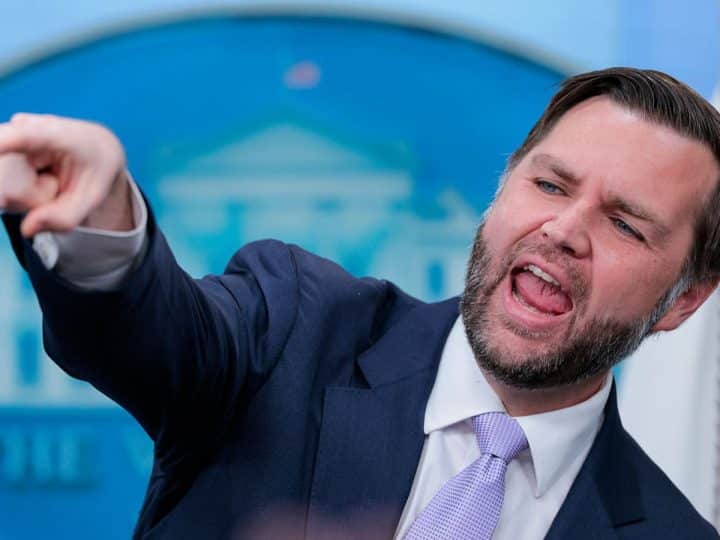

US VP JD Vance has encouraged the UK far-right to “keep on going” after fascist thug ‘Tommy Robinson’ told them to get ready for the “battle of Britain”. Around 40,000 racists turned out in London for a blatantly hateful rally, yet were given preferential treatment by police and politicians over the hundreds of thousands of peaceful anti-genocide marchers.
The Vance ‘Culture’
In a speech attacking immigration, Vance told White House reporters that “it’s ok to want to defend your culture” — by which he presumably means beery fat blokes shouting “Get your t**s out for the lads” and women dressing up in Muslim dresses to perform a racist strip. Is this worth ‘protecting’?:
The mob also distributed Islamophobic and other racist literature, while ignorant speakers gave speeches demanding the removal of ‘Islam’ from public institutions.
But then, Vance works for a ‘man’ who boasts of grabbing women by the genitals.
Meanwhile, Keir Starmer condemned the march for being hateful. But he and his lackeys call opposing mass murder and crimes against humanity ‘hate’, too — so nothing that comes out of his mouth is worth the foetid air it uses.
Featured image via Heather Diehl/Getty Images
By Skwawkbox
Politics
Watch: Israeli war criminal Ben-Gvir posts video of him abusing humanitarian flotilla abductees


Wanted genocidal war criminal and settler extremist Itamar Ben-Gvir’s arrogance is boundless. So much so that he has had himself filmed abusing and humiliating the 400 innocent volunteers of the humanitarian flotilla to Gaza that Israel abducted this week:
View this post on Instagram
The volunteers were trying to reach innocent Palestinians, whom Israel’s minister of national security wants dead or expelled, in Gaza where they are starving under Israel’s criminal starvation blockade.
Ben-Gvir compensating
The settler responded to the International Criminal Court (ICC) chief prosecutor’s application for a warrant for his arrest by announcing the illegal settlement of another stolen Palestinian area. The man is clearly compensating hard for something lacking in his body or soul, or most likely both.
Featured image via Amir Levy/Getty Images
By Skwawkbox

The Telegraph has argued that people not in employment shouldn’t be able to vote, including people with disabilities and those who are sick. The paper posits that the “unemployable” should not be allowed “citizen rights”. It argues that increasing welfare payments is “bribery”.
Telegraph — bit extreme?
People with disabilities certainly need to be able to vote because otherwise they have no say in a far right party getting into power. This can have tragic outcomes. The Nazis murdered at least 250,000 people with disabilities from 1939-1945.
The job fairies
It’s standard for the corporate class to go on about unemployment welfare, but it’s a denial of reality.
There aren’t enough jobs for people to become employed, so it’s unclear what the Telegraph is proposing. There are 1.8 million people not in employment in the UK. And there are 9.1 million people economically inactive (also without employment but haven’t looked for a job in three months). That’s 10.9 million people without work.
And how many job vacancies are there? 705,000. That’s over 10 million people, including those who cannot work, the Telegraph expects to become employed at jobs that don’t exist.
Anything that benefits a group could be ‘bribery’
Why are policies that benefit the less well off or people with disabilities considered ‘hand outs’ or ‘bribes’? Meanwhile, policies that benefit the super rich are considered ‘good politics’.
In the 2023/24 year, some government subsidies to corporations totaled £32 billion. And in 2024 Labour announced a further £22 billion bung to the fossil fuel sector for carbon capture projects that don’t work. These could be described as ‘bribes’ to keep corporations on side.
In the UK, 28% of people with disabilities live in poverty — 8% higher than the average. Would lifting those people who cannot work out of poverty be considered a ‘bribe’? Nope, it’s called civilisation.
Featured image via Dan Kitwood/Getty Images
By James Wright


Authors Paul Holden and Andrew Feinstein — a former Mandela minister — have issued a statement demanding Keir Starmer come clean on what he knew about ‘Labour Together’s (LT) spying on them and other journalists. LT paid PR firm APCO to snoop on them as they were investigating LT’s sabotage, rigging and undeclared funding.
The pair were commenting in response to coverage in Democracy for Sale and the Financial Times that Starmer’s closest advisers were fully briefed on what LT and APCO were doing:
The articles in today’s media on Labour Together & the Labour Party’s investigation & surveillance of journalists including myself & my colleague Paul Holden, author of @StarmertheFraud, make it imperative that Starmer reveal exactly what he knew about these dirty tricks & when;… https://t.co/v4oGcWhIqa pic.twitter.com/MfFs1UDzSc
— Andrew Feinstein (@andrewfeinstein) May 20, 2026
In a joint statement demanding a full inquiry, Feinstein and Holden said that they had received “deeply disturbing” documents showing the “utterly false and highly defamatory” allegations LT and APCO made about them. The firms targeted family members, colleagues and friends — and the operation was run by Starmer’s party as well as by them.
And they say that the new coverage also blows apart the excuses and evasion of Starmer’s ministers and handlers about the spying:
Joint Statement: Paul Holden and Andrew Feinstein Regarding Labour Together, APCO and the Labour Party
On Wednesday last week we received documents from Labour Together following Subject Access Requests that we submitted to Labour Together in February 2026. The documents provided by Labour Together are deeply disturbing.
They show that Labour Together and APCO targeted us, our colleagues, our associates and Paul’s family with utterly false and highly defamatory allegations, and that this was done with the knowledge of the highest levels of the Labour Party. Indeed, we are now of the view that the operation to investigate us, our families and associates was effectively a joint operation run by the Labour Party, Labour Together and APCO.
This highly invasive campaign was launched because of Paul’s factually accurate reporting. This reporting raised serious questions about whether Labour Together and Morgan McSweeney deliberately failed to report £730,000 in donations to the Electoral Commission in violation of the law. It is now plain that Sir Keir Starmer benefited from the work funded by these donations and that they facilitated his rise to power.
We are calling for a full inquiry into Labour Together.
We also call on Sir Keir Starmer to clarify his role in this scandal. Considering the documents that have been disclosed to date, we find it nearly inconceivable that Sir Keir Starmer did not know about this despicable project that included Labour Together reporting us to the National Cyber Security Center (NCSC), a part of GCHQ, based on utterly false and highly defamatory allegations. These highly defamatory allegations were then shared with at least one major newspaper outlet.
The newly released documents reveal six important facts.
First, they show that Morgan McSweeney and Paul Ovenden were aware of the APCO and Labour Together investigation into us from at least January 2024. McSweeney was the Labour Party’s head of campaigns and subsequently Sir Keir Starmer’s Chief of Staff in Number 10. Paul Ovenden was the Director of Labour Party communications and subsequently Head of Strategy in Number 10.
The emails show Simons arranging a meeting between himself, Ovenden, McSweeney and Tom Harper, a senior APCO employee, to discuss the investigation into us. A third Labour employee was copied into the email, but, because of redactions, we do not know who this is. We ask the Labour Party to confirm who else was copied into this correspondence.
The excellent @PeterKGeoghegan and Democracy for Sale have confirmed with a Labour Party source that the intended meeting did take place.
Second, they show that APCO’s Tom Harper actively coached Josh Simons and Labour Together on how to submit a ‘crime complaint’ about us to the National Cyber Security Centre (NCSC), a part of GCHQ. Harper provided text for Simons to submit to the NCSC. The decision to complain about us to the NCSC was made only days after Simons had emailed McSweeney, Ovenden and Harper about APCO’s upcoming report into us, asking for a meeting to discuss its contents.
Third, Josh Simons has repeatedly claimed in public that he appointed APCO to investigate a ‘hack’ of Labour Together materials. But the new documents show that Labour Together and Simons did not conduct any meaningful cybersecurity review to establish whether materials had been hacked from Labour Together, or where else they may have been sourced from.
Labour Together did, however, appoint a cybersecurity expert to review a potential hack in late 2025. This review, a summary of which has now been disclosed to us, shows that there was no ‘hack’ of Labour Together. This is obviously true, as we have repeatedly explained that the investigation into Labour Together was based on documents legally leaked from the Labour Party by whistleblowers concerned about misconduct by the Party’s most senior officials, open-source materials, and Freedom of Information requests.
Fourth, they show that Josh Simons and Labour Together told the NCSC that they were reporting us because they were concerned that Paul’s reporting ‘may be a co-ordinated effort to discredit Labour Together in order to undermine Mr McSweeney and by extension, Mr. Starmer in the run-up to next year’s general election.’ It is our view that this joint Labour Together, Labour Party and APCO operation was launched because Paul’s factually accurate reporting would have shed light on the highly problematic and unlawful aspects of Sir Keir Starmer’s rise to power.
Fifth, they show that APCO had sent a ‘case summary’ to Josh Simons of Labour Together on the 20th of November 2020, on the basis of which APCO were contracted by Labour Together two days later. The ‘case summary’, setting out a proposed scope of work, clearly identified us as journalists. From the very beginning, therefore, APCO and Labour Together knew that they were looking to investigate journalists – the very journalists who were reporting accurately on Labour Together, Morgan McSweeney and undeclared donations.
Sixth, they show that Simons wrote to an unknown person at the Labour Party in November 2023 asking for ‘intel’ on us. This shows that Simons’ immediate response to announcement of Paul’s book was to seek the assistance of the Labour Party. At the time, we were both Labour Party members. The reply to Simons’ request has been redacted in our documents. We call on the Labour Party to release all documents to us relevant to this scandal, and to confirm whether Josh Simons, Labour Together or APCO were provided with any of our private, personal information.
It appears there are only three possibilities remaining. Starmer was either elbow-deep in Labour Together’s activities, or a complete puppet of those who were. Or, of course, both.
Featured image via Brook Mitchell — WPA Pool/Getty Images
By Skwawkbox

Southampton: FA opens investigation over Spygate

Kuwait International Airport Is Open Today as Phased Recovery Continues After Drone Strike Closure

Fraher Breaks Silence on Silvergate’s SEC Settlement Under Gensler


-

 Crypto World5 days ago
BloFin War of Whales 2026 Grand Prix opens registration for $5M trading championship
-

 Fashion6 days ago
Weekend Open Thread: Theory – Corporette.com
-

 Crypto World6 days ago
E-Estate Announces 1 Year Live: Washington DC Summit as Real Estate Tokenization Enters Its Next Phase
-

 Tech6 days ago
Tech Moves: Microsoft AI leader jumps to OpenAI; former AI2 exec joins Meta; and more
-

 Tech5 days ago
Google reimburses Register sources who were victims of API fraud
-
 Crypto World7 days ago
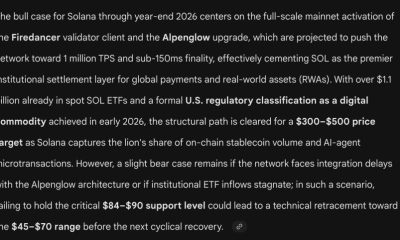
Google’s Gemini AI Predicts Incredible Solana Price by the End of 2026
-

 Business6 days ago
H&R Real Estate Investment Trust (HR.UN:CA) Q1 2026 Earnings Call Transcript
-
 Entertainment7 days ago
Zara Larsson Has Blunt Response To Chris Brown Diss
-

 Sports5 days ago
Napoleonic enters 2026 Doomben 10,000 field via Abounding withdrawal
-
 Crypto World5 days ago
BeInCrypto 100 Institutional Awards Nomination: KAST for Best Digital Assets Neobank and Best Digital Assets Fintech
-
 Crypto World5 days ago
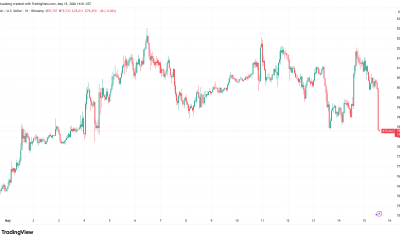
Bitcoin Battles US Bond Nerves With BTC Price Dip Toward New May Lows
-

 Fashion4 days ago
On the Scene at Gucci’s Cruise Show in New York City: Mariah Carey, Kim Kardashian, Lindsay Lohan, Iman, and More!
-
 Crypto World5 days ago
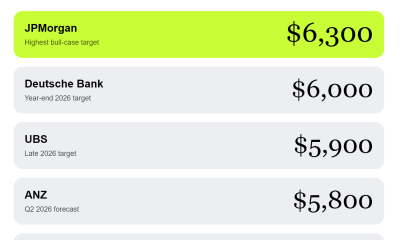
Wall Street’s Boldest Gold Prediction Has Russians Rushing to Buy
-

 Crypto World5 days ago
ICE and CME urge US regulators to curb Hyperliquid energy trading
-

 Politics6 days ago
DWP PIP Timms review continues to be an absolute farce
-

 Fashion5 days ago
Trending Western Style Vests Perfect for Summer
-

 Entertainment6 days ago
David Letterman Returns to Late Show, Blasts Cancellation
-

 Crypto World5 days ago
IREN closes $3 billion convertible notes deal amid AI infrastructure expansion
-
 Crypto World6 days ago
Lido Finance Selects Chainlink CCIP as the Official Cross-Chain Infrastructure for wstETH Security
-

 Fashion4 days ago
Amazon Sundays: Memorial Day Hosting
You must be logged in to post a comment Login