

Politics
Alex Burghart: The Labour doom spiral begins again

Alex Burghart MP is Shadow Chancellor of the Duchy of Lancaster, Shadow Northern Ireland Secretary, and Conservative MP for Brentwood and Ongar.
After the psychodrama has subsided, how will Starmer’s premiership be remembered? Unquestionably as one that failed to confront or solve the deep problems that continue to destabilise the country. A failure to create growth, a failure to manage public spending, a failure to restore our Armed Forces, a failure to secure our borders, and so on and so on.
The next Labour leader, whoever they are, from whatever wing of the party they hail, will, without doubt, also fail. The decisions that need to be made are not to be found in the Left’s locker. Starmer could have used his majority and early authority to make difficult decisions in the national interest that were counter to Labour’s culture. Instead, he immediately played to the socialist gallery, sending huge amounts of money to the unionised professions whilst hiking business taxes to cover the cost.
The result has been chaotic tax and spend, anaemic growth, inflation, unemployment and cripplingly high borrowing costs. And a Labour PLP manifestly unwilling to cut public spending. A classic Labour doom spiral in which reality and left-wing policy drag the economy into the sewer.
The greatest lie was, of course, that Labour had a plan for growth. The plan, such as it was, was simply to talk about growth whilst doing precisely nothing to achieve it. Indeed almost everything major policy decision worked the other way. Not least the work of Ed Miliband to spend huge amounts of money locking in high electricity prices to the detriment of families, businesses and public services.
But within the lie that Labour had a plan for growth, was the lie that the solution to the country’s problems lay in ‘resetting’ our relationship with the EU. From the outset, Labour was unclear about what it wanted from Europe. Not that this has dimmed its belief that putting Britain ‘at the heart of Europe’ would somehow nullify and neutralise all the harm it has done to the economy.
Thus far the ‘reset’ has been a classic triumph of Labour-led negotiation. The Government signed away 12 years of fishing rights (something deeply prized by our EU neighbours) and received the square root of diddly squat in return. Instead, before the ink had dried on that agreement, the EU gave a two-fingered salute to the UK’s request to join the SAFE defence fund (despite the enormous contribution Britain makes to continental defence).
We are now faced with the bleak prospect of the UK accepting vast tracts of EU law with no say over how those laws are made and paying for the privilege of doing so. And now, as the Labour leadership contest lumbers into life, Wes Streeting and Andy Burnham are flashing their Rejoin credentials, attempting to distract from their terrifying lack of thought-through policy.
The truth is that Labour’s ‘reset’ was never part of a plan to fix the UK economy, it was simply a kneejerk reaction to a new status quo that Labour did not (and perhaps could not) understand. The major structural challenges that face our country cannot be overcome by accepting EU rules. We know this because the economic woes of Germany, France and the like have not been overcome by this means. The EU has become a low growth zone. Becoming subservient to it will not miraculously make the UK a high growth zone.
To resolve the immense challenges facing Britain we will need to acquire cheaper energy and electricity (see the excellent work of Claire Coutinho). We will need to dramatically reduce business regulation (see Andrew Griffiths). We will need to significantly reduce public spending by cutting welfare (see Helen Whately) thereby freeing up money to reduce the deficit and taxation (see Mel Stride). This must needs be coupled to a massive overhaul of the Blairite constitutional settlement so that government and ministers can again take decisions and use a sovereign parliament to make unimpeachable statute. None of this will be easy. It will require tough, consistent, brutally honest leadership. And that, only Kemi Badenoch can provide.

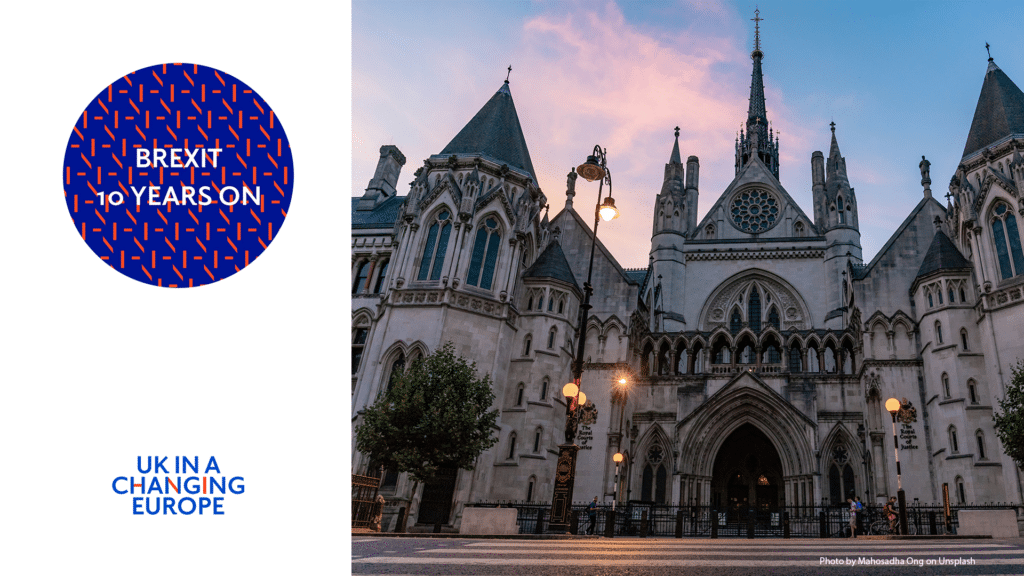
To mark the ten year anniversary of the EU referendum on 23 June, UK in a Changing Europe experts have written a short series of blogs reflecting on some of the issues at the heart of Brexit then and now. Here, Catherine Barnard reflects on the legal implications of Brexit.
One of the most common questions asked post-Brexit is: has the law changed much? In the run up to the referendum, Brexiters had made a big play on taking back control of our laws. This was reiterated in the government’s 2018 Command Paper: ‘EU law in the UK will end, as will the jurisdiction of the Court of Justice of the European Union (CJEU).’ It continued, ‘The laws that we live by will once again be passed by our elected representatives in Belfast, Cardiff, Edinburgh and London – who are fully accountable to the people of the UK. UK courts will no longer refer cases to the CJEU, with our Supreme Court truly supreme.’
Has this happened? The answer is yes – and no.
Let’s start with the adoption of new, post-Brexit laws. It is certainly the case that, post-Brexit, the UK has had the freedom to legislate for itself. However, that freedom to develop new UK rules has been constrained by four factors.
First, a lack of clarity as to what a new, independent UK regime might look like, not least because there was so little planning done before Brexit. Financial services were seen as an obvious contender for reform. The cap on bankers’ bonuses, introduced after the 2008 financial crisis, has been removed. However, the scale of divergence on financial services has been less than anticipated, given it was identified by the Chancellor in 2022 as a priority sector for regulatory reform.
Second, there has been a question of civil service/government and legislative capacity. With so much energy devoted to preparing for a no-deal Brexit, then delivering Brexit itself, and then Covid, there has been little time to develop an independent UK regulatory regime.
Third, some areas, like environmental protection and workers’ rights, are subject to the so-called ‘level playing field’ provisions in the Trade and Cooperation Agreement (TCA), which forbid either side from reneging on 2020 levels of protection and the UK from failing to broadly keep up with new EU rules. Significant divergence from EU rules (leading to weaker standards) in these areas would eventually lead to tariffs.
Fourth, to protect the Good Friday Agreement, the Northern Ireland Protocol (NIP)/Windsor Framework (WF) requires Northern Ireland to dynamically align (i.e. keep up to date) with about 300 EU rules. The greater the regulatory divergence by the other UK nations, the ‘harder’ the GB/NI border would become, meaning that more checks would take place, creating more disruption to the movement of goods. More generally, manufacturers did not want regulatory divergence from EU rules, since this would increase their costs in respect of GB/NI and GB/EU trade. The devolved administrations were not keen to depart either.
What about pre-existing EU law? Some hoped that Brexit would mean the wholesale repeal of EU law on the UK statute book. However, there was no new UK regulatory regime for matters as diverse as airline safety, food safety and workers’ rights. Continuity, and not repeal, was therefore the order of the day. This was delivered by the EU (Withdrawal) Act 2018 which took a snapshot of all EU legislation on the UK statute book and ensured it continued after Brexit. Some legislation, such as the rules on free movement, was turned off because it was no longer suitable in the post-Brexit world. Other legislation was amended to remove, for example, references to the European Commission and to replace them with UK equivalent bodies.
But that still left a huge swathe of EU-derived legislation, known as retained EU law (REUL). The problem was: no one knew how much. Originally it was thought to be about 2,500 pieces yet, as of early 2026, that number had grown to almost 7,000. Jacob Rees Mogg MP wanted a ‘bonfire of EU rules to power Brexit innovations’, which he aimed to deliver via the Retained EU Law (Revocation and Reform) Bill. A change of Prime Minister (Rishi Sunak) put a stop to such wholesale ‘arson’ but did ensure that the concept of supremacy of EU law (i.e. EU law taking precedence over conflicting national law) was removed from the UK statute book. Retained EU law was renamed as assimilated law.
Since Rishi Sunak’s time as Prime Minister, enthusiasm from government for regulatory divergence has waned, largely because of pressure from business, to the extent that now the (Labour) government’s position is that divergence should be ‘the exception, not the norm’. And if future agreements with the EU are signed, on matters such as SPS (sanitary and phytosanitary standards) and emissions trading, these will also require not just catching up with the EU rules which have been adopted since Brexit but also staying up to date with new rules. And this will mean the government having to take the power to implement EU rules by secondary, not primary, legislation – providing only a minimal scrutiny role for MPs.
And what about the role of the European Court of Justice (CJEU). Finished? Not so fast. Pre-Brexit case law continues to bind UK courts unless the Supreme Court or the Court of Appeal decides otherwise. They have been reluctant to do so. Even post-Brexit EU case law should be taken into account by the UK courts when interpreting a provision of assimilated law. References (i.e. questions) to the CJEU have largely been stopped except in respect of matters under the NIP/WF and the citizens’ rights element of the Withdrawal Agreement (until 2028). The CJEU also has a say on the interpretation of concepts of EU law which arise in the context of any disputes under the Withdrawal Agreement which goes to arbitration. A question must be referred to the CJEU although it is the arbitration panel which makes the final decision. A similar mechanism is likely to be provided for under any future UK-EU agreement on, for example, SPS or emissions trading. Under the TCA, which is a free trade agreement under international law, the CJEU has no role to play. But even here, in the first and only UK-EU dispute – on sand eels – the parties and interveners referred to concepts of EU law in their arguments.
EU law may have formally gone in Great Britain, but it is far from forgotten. Future agreements with the EU mean more EU law, not less, and the CJEU will continue to have a residual role.
By Catherine Barnard, Senior Fellow, UK in a Changing Europe & Professor of EU Law and Employment Law, University of Cambridge.
3 min read
Harold Wilson said the Labour Party is “a moral crusade or it is nothing”. Today, as so often in the past, our moral crusade is to deliver for a younger generation too often locked out of opportunity.
Across Britain, too many young people are growing up believing that they will be worse off than their parents. Communities that once offered pathways into skilled work have seen industries disappear and investment pass them by. If Labour is to shape the future, it must begin with the young; that means making skills, jobs, and opportunity the central mission of the next Labour leadership.
For too many wasted years under the last government, our sluggish economy was characterised by low pay, insecure work, and a chronic failure to invest in the talents of our people. We’re now reaping what the Conservatives sowed.
Young people do not lack ambition or need lectures about hard work. They need a government prepared to back them with apprenticeships, vocational education, and a foot on the ladder to high-quality jobs in every region of the country. That can be our government.
We should be creating a new generation of skilled workers in advanced manufacturing, green energy, construction, digital industries, transport and public services. Every young person should know that if they are willing to train, gain qualifications and contribute to society, there will be a job for them. This is not simply an economic argument. It is a moral one.
Work is about more than a wage packet. It provides purpose, responsibility and belonging. Strong communities are built when people feel they have a stake in society and confidence in their future. The dignity of work will always be a core Labour value because it empowers individuals and strengthens families.
That is why we must also be honest about the dangers of long-term welfare dependency. The welfare state should always provide security for those who need it. It should protect people from hardship, support those with disabilities, and help families through difficult times. These are principles Labour must never abandon.
But we should never accept a situation where, like under the Thatcher government, young people are signed off, written off, left without a route into employment. This damages confidence, limits aspirations and creates a dangerous sense of isolation. That isn’t compassion – a life spent trapped outside the labour market has profound consequences for individuals and society as a whole.
The answer is opportunity. We can support people when they fall while also doing everything possible to help them rise.
I understand young people’s concerns about the job market they face. The AI revolution is changing the way we work, the skills we need and the opportunities on offer for future generations – in as profound a way as the industrial revolution. But while it will undoubtedly both create and destroy jobs, I have no doubt it will also reward those nations who build the capacity, the infrastructure, and the workforce to take on this challenge.
As Alan Milburn’s report has laid bare, a million young people not in education, work or training cannot be the new normal. Pat McFadden has made a good start tackling this with the Youth Guarantee, which will help half a million young people, including those who have been out of work for 18 months. This government is rightly expanding apprenticeships for young people and developing new vocational qualifications.
The next leader must keep their foot on the gas and drive this agenda forward to create a genuine new deal for our young people.
Patrick Hurley is the Labour MP for Southport
More than a quarter of the House of Commons has signed an amendment calling for a national commission on electoral reform, in what backers are describing as an “open goal” for Andy Burnham, the likely incoming prime minister.
The amendment to the Representation of the People Bill, tabled by Labour MP Alex Sobel, has attracted 166 signatures, making it the most-signed amendment to any piece of proposed legislation since the 2024 general election. A total of 88 Labour MPs have backed the bill.
This development means the amendment has surpassed the 164 signatures gathered by Meg Hillier’s reasoned amendment to the government’s welfare bill in June/July 2025, which triggered a tortured climbdown from the government.
Supporters of the electoral reform amendment span eight political parties as well as independents, including Labour, Liberal Democrat, Green, Plaid Cymru, Scottish National Party (SNP), Alliance, Your Party and Social Democratic and Labour Party (SDLP) MPs.
MDU warns Chancellor clinical negligence system ‘not fit for purpose’

Northern Ireland RE curriculum is ‘indoctrination’ – Supreme Court
The Representation of the People Bill, which proposes extending the right to vote to 16- and 17-year-olds among other measures, is set to return to parliament next week.
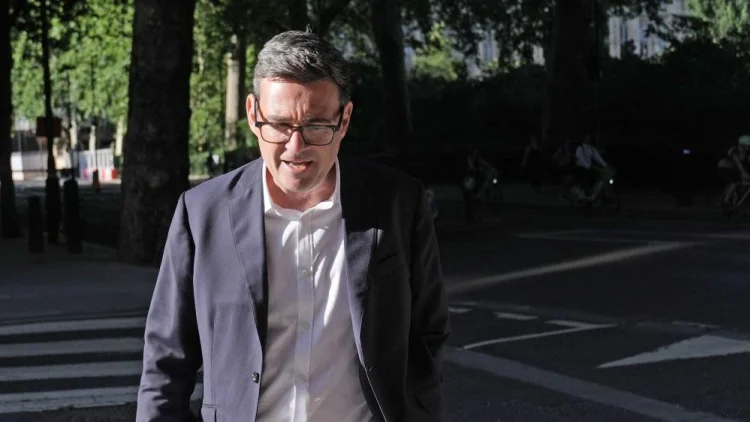
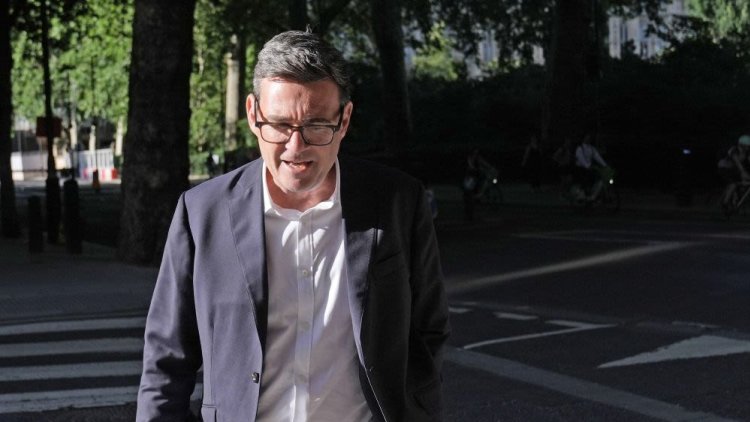
The all-party parliamentary group (APPG) for fair elections has described the amendment as a straightforward win for Andy Burnham, who has previously championed both proportional representation (PR) and the idea of a national commission. Burnham is so far the only declared candidate in the race to succeed Keir Starmer as Labour leader and prime minister.
Alex Sobel, who chairs the fair elections APPG, has argued that the commission would be a signal to “break the status quo”.
Sobel said: “My amendment to establish a national commission on electoral reform is now the most supported amendment this parliament with 166 signatories from eight parties, half of whom are Labour.
“MPs still have five days left to sign and it’s clear with the change of government coming that the commission is not just a clear signal to break the status quo but hugely popular with both MPs and the public.”
Beccy Cooper, a prominent figure on Labour’s “soft left”, called the amendment a “golden opportunity for the incoming prime minister.”
Copper stated: “PR has been central to [Burnham’s] political analysis and remedy for Britain’s ailments for years, so this is about much more than just voting reform now – it’s about authenticity, trust, and showing he means what he says.”
Chris Curtis, who founded the Labour Growth Group (LGG), said that Labour MPs were now “clamouring” for electoral reform.
Curtis said: “You don’t have to be Harry Kane to see what an open goal this is for him. He should launch a commission in his first 100 days – so he can focus on his other priorities and bringing growth and hope to Britain.”
Burnham endorsed the idea of a national commission on electoral reform in an address to Labour conference last year. He argued that proportional representation “would lay the ground for a new politics [and] a better conversation with the public”.
Burnham further contended that electoral reform would precede economic reform and lead to “some of the structural changes this country needs to make.”
He stated: “What I think a move to a proportional system would do is it would allow new politics to come in, where parties that can agree can set a long term approach so repairing the basics, building the council and social homes that we need as a country over a 10 year period.”
Burnham repeated his support for electoral reform during the June 2026 Makerfield by-election.
In December 2024, the House of Commons voted in favour of the Elections (Proportional Representation) Bill – introduced by Liberal Democrat frontbencher Sarah Olney under the 10-minute rule procedure. The bill sought to “introduce a system of proportional representation for parliamentary elections and for local government elections in England”.
A total of 138 MPs supported the bill – with 136 opposed. Notably, 59 Labour MPs backed Olney’s bill.
Introducing the bill, Olney told the House: “First past the post [FPTP] is a broken and unfair system. This summer, the Labour Party won a landslide election victory, securing 63% of seats in the House of Commons in return for just 34% of the vote.
“The system leaves millions of voices unheard and creates a divisive, adversarial political climate where collaboration is discouraged and accountability is often sidestepped.”
In January 2025, Rushanara Ali, the then democracy minister, told the commons that there are “no plans” to change FPTP for national contests.
Ali said: “The [FPTP] system, while not perfect, provides for… a direct relationship between members of parliament and their local constituency.”
In September 2025, the APPG for fair elections published a “ready to go” blueprint for an independent review of the FPTP electoral system. Sobel described the proposal as “a ready to go plan to independently review how parliament is elected, promote a national conversation, and build consensus on a way forward”.
The defence secretary has wished Count Binface “good luck” in the Clacton by-election after the satirical candidate vowed to challenge Nigel Farage.
The intervention comes after Farage, the leader of Reform UK, sensationally announced that he would resign as the MP for Clacton and stand in the subsequent by-election so that voters could be the “judges of my actions”. The shock declaration, delivered in a live video statement on Tuesday afternoon, came in the face of growing questions over a series of donations Farage has received.
Farage billed the by-election as a “people versus the establishment” contest.
However, in the wake of Farage’s statement, the major parties consecutively confirmed that they would not stand candidates in Clacton.
MDU warns Chancellor clinical negligence system ‘not fit for purpose’
Northern Ireland RE curriculum is ‘indoctrination’ – Supreme Court
A Labour Party spokesperson said: “Labour’s ruling body, the national executive committee, has decided not to stand a candidate in this circus.
“Instead, Labour will remain focused on delivering for working people and holding Reform to account. Farage should let the parliamentary investigation into his finances run its course and face the consequences.”
A spokesperson for Andy Burnham, the likely incoming prime minister, referred to the election a “a gimmick designed to distract from serious allegations about Farage’s funders.”
Kemi Badenoch, the Conservative leader, indicated that her party would not stand a candidate in the “fake by-election”.
Badenoch said: “We will not be standing a candidate in the fake by-election that Farage is causing to distract people from what is happening.”
The Liberal Democrats, meanwhile, urged Reform UK’s rivals to “refuse to give oxygen to Farage’s vanity project.”
Rupert Lowe, the leader of Restore Britain, has also said his party will not be standing a candidate.
These developments appeared to clear the way for novelty candidate Count Binface, a staple of recent parliamentary by-elections, to challenge Farage. Binface, so far, appears to be Farage’s main electoral rival.
In a statement on Tuesday afternoon, posted to social media, Binface called on any “Clacton residents who want to nominate your friendly neighbourhood intergalactic space warrior” to get in touch.
Count Binface, who sports a rubbish bin as a helmet and poses as a “space politician”, recently stood in the June 2026 Makerfield by-election. They won 95 votes and placed seventh. In the 2024 general election, Binface stood in the Richmond and Northallerton seat, the constituency of incumbent prime minister Rishi Sunak, securing 308 votes.
Binface’s campaign in Clacton received a boost on Wednesday morning as the defence secretary, Dan Jarvis, appeared to row in behind the perennial candidate and comedian.
Jarvis referred to the self-imposed by-election as a “stunt” and said Farage was in “real trouble”.
Speaking from a Nato summit in Ankara, the defence secretary stated: “I don’t think that has played out particularly well for him. I don’t think it’s been well-received. I’ve had some quite interesting feedback from my constituents that this is just a complete circus and a complete waste of time.
“Looks like Count Binface will be sort of stepping forward, and good luck to him.”
Politics.co.uk is the UK’s leading digital-only political website. Subscribe to our daily newsletter for all the latest news and analysis.
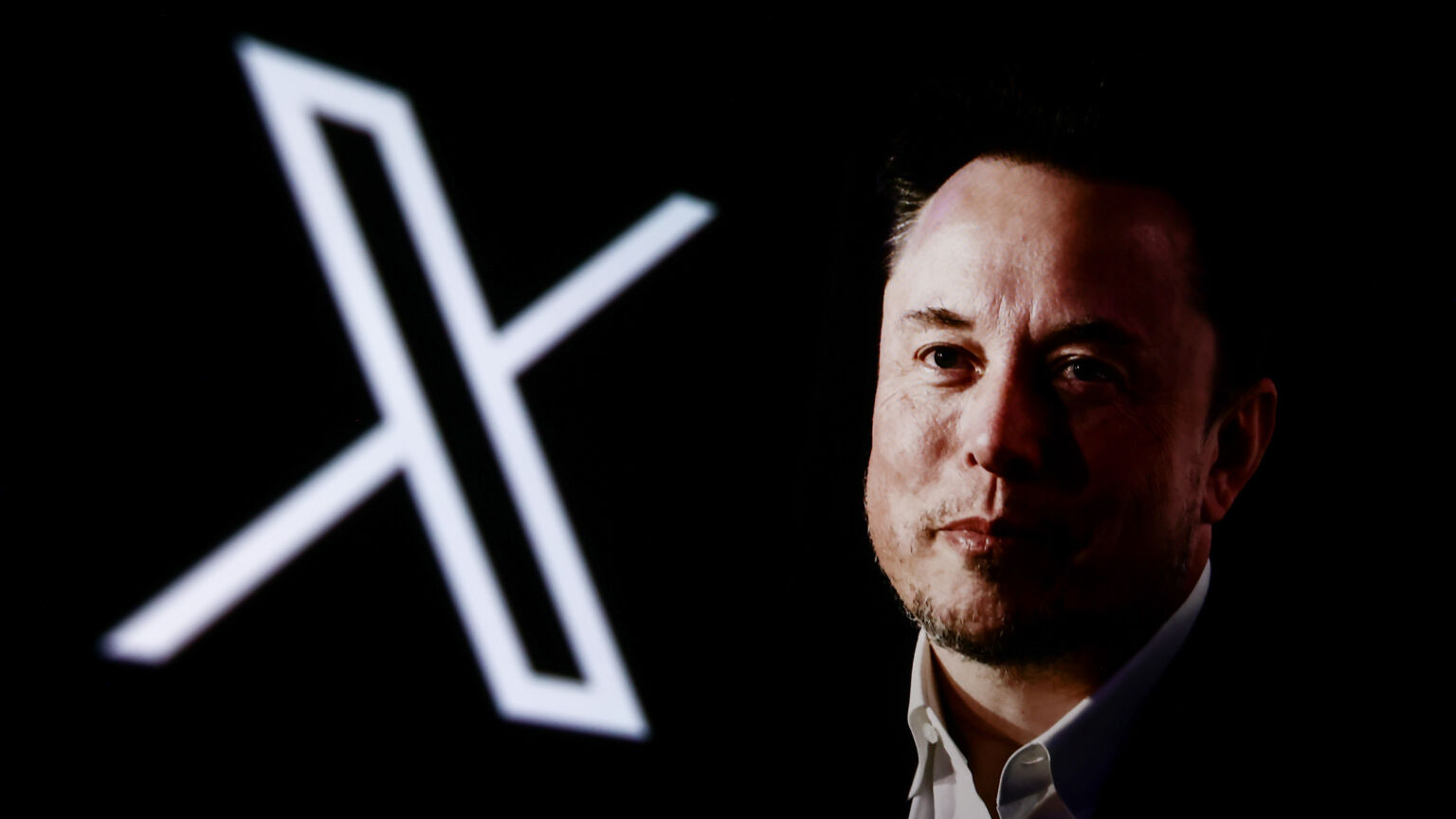
Lisa Nandy announced last week that she is leaving X. That’s right, the UK culture secretary is leaving one of the biggest communications spaces there is – one that directly and indirectly shapes the culture she is meant to be engaged with.
She has justified her departure – and that of the Department for Culture, Media and Sport (DCMS), too – on the grounds that the platform is now rife with ‘misinformation’, and that it ‘isn’t healthy for our democracy’.
Nandy’s gripes against X are hardly unusual among our political and media class. Other senior Labour figures have also launched broadsides against X recently. London mayor Sadiq Khan has repeatedly attacked X for spreading ‘misinformation’ about the state of London, welcomed an Ofcom investigation into sexualised images on the platform and accused X owner Elon Musk of misunderstanding free speech. And just this weekend, Labour deputy leader Lucy Powell described X as ‘toxic’ and called for the introduction of so-called purdah rules on the platform during elections.
Indeed, there may come a day when the government moves to ban X outright. I don’t mean more regulation, or another Ofcom code of practice. I mean a straight-up ban. Should that happen, it would put Britain in the same category of state censorship as North Korea, China, Russia, Turkmenistan, Myanmar, Venezuela and Iran.
NGOs have backed Labour in its anti-X crusade. Amnesty International has claimed that if Nandy genuinely believes X is unhealthy for our democracy, she ‘should take more decisive action – not just leave the platform’. It is effectively calling for new legislation to force X into line. Funny, that, coming from a charity whose entire purpose is supposedly to defend people’s freedoms – including freedom of speech.
Keir Starmer’s government even suggested earlier this year that it would not rule out ending its use of X if the platform did not act on concerns about its AI chatbot generating non-consensual sexualised images of users. This was a genuine issue, and one the platform did act swiftly on, but it was difficult to avoid the conclusion that the UK government has it in for X – that, as Musk once put it, it wants ‘any excuse for censorship’.
Why does the political establishment hate X so much? The simple answer is because it is much freer than its rivals. It allows people to express dissenting or heterodox views in a way that other platforms don’t. There is no filter.
Pre-Musk X, then known as Twitter, was much more restrictive. Certain views, even news stories, were suppressed if they didn’t accord with the dominant consensus. Some users were kicked off the platform, or ‘shadow banned’, for their opinions on everything from gender identity to the origins of Covid.
But back then, nobody in government called the suppression of alternative views ‘unhealthy’ for our democracy. None of those currently attacking X accused Twitter, despite its censorial behaviour, of failing to foster meaningful debate. That all tells us something – namely, that the current attacks on X are not really about misinformation or democracy. They are fuelled, rather, by the Labour government’s loss of control over the debate. In short, Labour feels as if it is losing its grip on the public conversation, and X is where that grip has slipped furthest.
There is another reason for Labour’s hatred in particular. X is the platform that brought the grooming-gangs scandal back into the open in early 2025, doing great damage to Keir Starmer’s government. Musk effectively forced the political and media establishment to finally reckon with the horrors visited on thousands of young, vulnerable girls over the course of decades – while the social workers, the police and others looked away. He dragged a scandal back into the spotlight that many would have preferred to stay hidden.
Labour and the political class are not just at war with Elon Musk and X. They are also effectively waging a war on free speech. Days after her announcement, Lisa Nandy’s DCMS published a green paper proposing a ‘prominence regime’. This will legally require platforms like X to push content from ‘trusted sources’, like the BBC and other legacy media outlets, at the expense of other journalistic sources and independent media.
This is bigger than Elon, or Nandy’s huffy exit from X. We have a Labour government stating plainly that it intends to intervene directly in the content people consume. Its war on X heralds an assault on people’s freedom of speech and of thought.
Ada Akpala is a spiked intern.
 lead image
BRUNSWICK, Maine — The effort to push Graham Platner out of the Maine Senate race has some Democrats flashing back to 2024 — and making them worry about abandoning their nominee.
Platner has seen a dramatic drop in support within the party and has lost his biggest financial backers after POLITICO reported that a woman said he forced her to have sex with him, which he denies. Democrats in Maine are already jockeying to replace him on the ballot and take on GOP Sen. Susan Collins — all before Platner has even dropped out of the race.
That series of events, several voters said in interviews, dredged up unwelcome memories of one fateful summer two years ago, when former President Joe Biden ended his reelection bid late, leaving his Vice President Kamala Harris just 107 days to beat Donald Trump. Then, she lost.
Platner should end his bid “only if he does it in time for another good strong candidate to actually hit the ground really running like hell,” Claudia Knox, 85, told POLITICO.
“I do want a fighter. I do want Collins out. So, the question to me is, if he withdraws, what happens? That’s my question,” she added. “Maybe he should hurry up, because this is feeling parallel to Joe Biden and Kamala Harris.”
Some Maine voters told POLITICO they’re doubtful that another candidate can replicate Platner’s momentum, even as some of them want him to drop out. They’re skeptical of what the process to replace him would even look like and worried whether Democrats have enough time to both pick a new nominee and unseat Collins.
Linda, a 79-year-old Brunswick resident who declined to share her last name, said that it was time for Platner to end his campaign. But she’s worried Democrats now face potentially insurmountable odds to defeat Collins with just four months left before the general election.
“It’s going to be tough, tough, tough. It’s going to be very tough,” she said. “I think [Democrats] have a reasonable slate of people to work with. … They can’t just go blue sky now. I mean, they’ve got to focus.”
If Platner withdraws by Monday, the Maine Democratic Party has until July 27 to name his replacement. Some officials have already begun maneuvering to identify who can step in and are considering the unsuccessful candidates for governor in this year’s primary — Secretary of State Shenna Bellows, former public health official Nirav Shah and former Maine Senate President Troy Jackson — as well as state Rep. Valli Geiger and brewery owner Dan Kleban, who briefly launched his own Senate campaign last year.
Harris’ experience shows the difficulty for a candidate to step in late in the process and rebuild Democrats’ ticket-topping campaign. Platner’s replacement will have a short runway to reintroduce themself to voters and broadcast their policy priorities — all while continually having to distance their campaign from the oysterman and his string of controversies.
But the two situations are not entirely analogous. None of the candidates have shared a ticket with Platner, and all have forcefully denounced him. Harris, on the other hand, had to contend with the four years she served alongside Biden, as his presidency grew increasingly unpopular.
Biden and Harris spokespeople did not respond to requests for comment.
Those differences haven’t calmed some Maine voters’ early concerns at this nascent stage in the process, though.
“We are just leery about a new kind of Kamala Harris situation, where we don’t get to choose whatever Democratic candidate will be on the ticket,” said Stephanie Gardner, 38, as she removed her Graham Platner campaign sign from her yard in Topsham on Tuesday morning.
Gardner said she believes it’s time for Platner to step aside and wants Jackson to step up in his stead. Jackson, who touted endorsements from Platner and Sen. Bernie Sanders (I-Vt.) in his unsuccessful run for governor, has already filed paperwork exploring a run.
Rose Heithoff, 35, said that she might prefer a process in which party leaders help winnow the field to avoid a full intraparty war, but acknowledged that didn’t solve Democrats’ problems in 2024: “If you look back at the Biden-Harris situation, that was a fumble in some ways because I think people felt like they didn’t necessarily have the choice,” she said.
The Maine Democratic Party has promised an open process and that it will reveal details as soon as Platner withdraws from the race. In a fiery Tuesday evening post on social media, Maine Democratic Party Executive Director Devon Murphy-Anderson also slammed Platner’s team for reaching out to party officials to “put their thumb on the scale of what this process looks like.”
But for now, it’s unclear whether there will be any public debates and campaigning, or how much voters will have a say.
Platner said on social media within minutes of POLITICO’s report publishing Monday that he was “taking the time to reflect on the best path forward.” By Tuesday, he had cancelled fundraisers, pulled down ads, and lost support from his biggest backers, including Sanders. The powerful national Democratic campaign arm and outside groups who’ve helped fund Platner’s bid said they would focus their resources elsewhere.
Even so, some voters don’t want to see Platner go at all, worried about the consequences for the race.
On Monday, outside the site of a cancelled town hall in Gorham where Platner was scheduled to field questions from voters, Kirk Little, 78, said “the Democratic Party disqualifies people too soon” and he is sticking with Platner — for now.
POLITICO had published Racicot’s allegations just an hour before the event was supposed to begin, and Little had heard of it from a radio broadcast in his car.
“If it’s true, is it disqualifying historically? Yes. But since Trump, stuff like this that we used to think of as historically disqualifying isn’t,” he said. “I’ll still vote for the guy.”

About 30 miles away in Sanford, just north of the Maine-New Hampshire border, a group of about 10 Maine voters gathered in the parking lot of a veterans community center where Platner was set to appear after his town hall in Gorham. Once it became clear that he would not show, the would-be attendees started commiserating over the canceled event and the day’s news.
Rob Brandow, 41, of nearby Waterboro, leaned against the wooden fence surrounding the building and quietly followed the conversation from a few feet away. “It’s a tough one,” he told POLITICO of the allegations. “The honest answer is, I actually don’t care.”
“I think it’s possible philosophically to walk that line where I say, like, ‘Yes, those things are bad, it shouldn’t happen, and those allegations should be given appropriate due process to see the light of day,’” he said. “And simultaneously Susan Collins should not be re-elected.”
Jessica Piper contributed reporting.
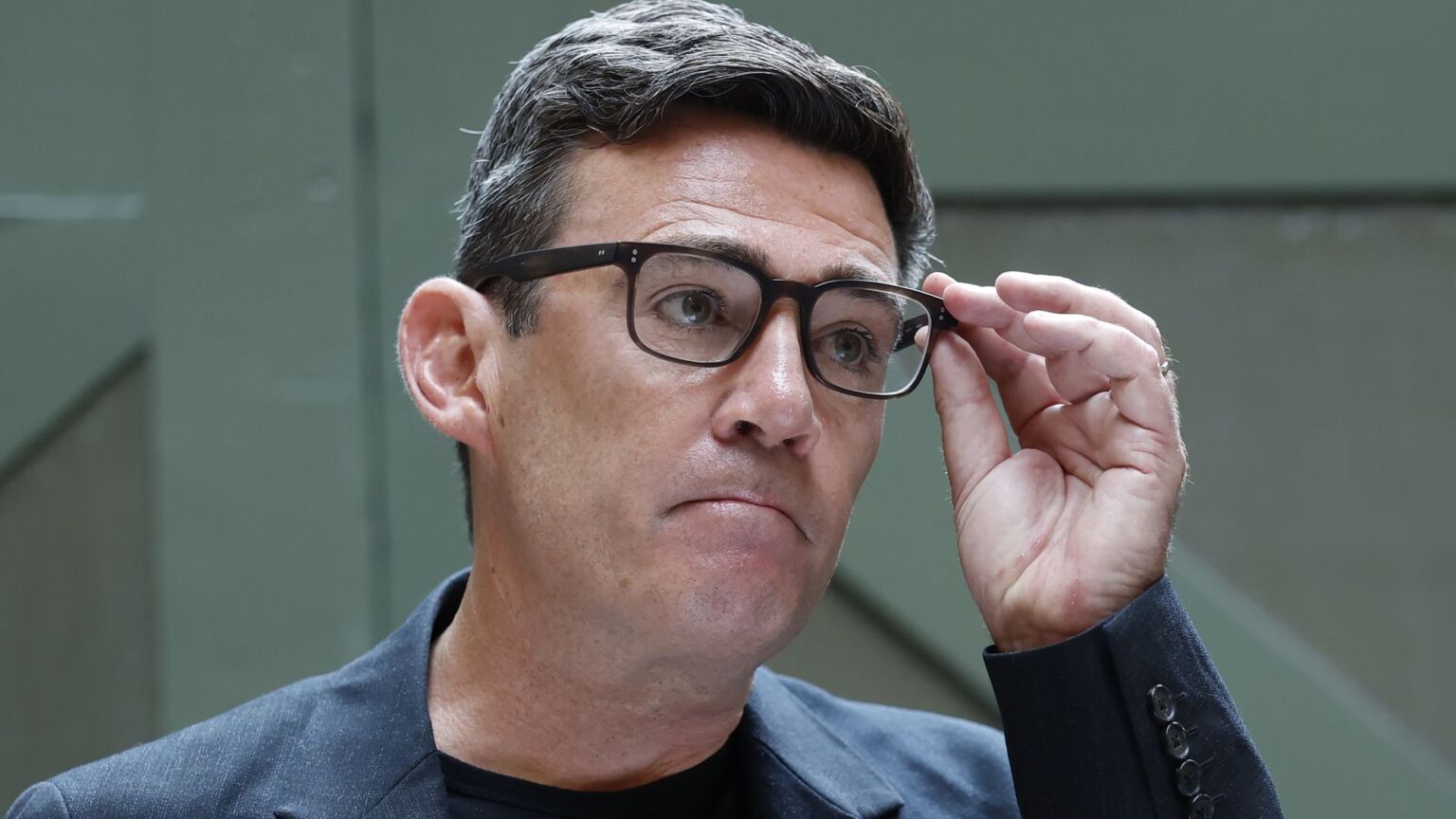
Andy Burnham has promised that ‘the north’ will be his lodestar when he takes the reins of power. Yet it seems the incoming regime could be drawing inspiration not from the north of England, but from North Korea. A raft of new measures clamping down on our online activity, proposed by the outgoing Starmer administration – from restrictions on VPNs (virtual-private networks) to enforcing so-called purdah rules during elections – have reportedly gained Burnham’s backing, bringing Britain’s approach to the internet in line with some of the least liberal and democratic countries on the planet.
Team Burnham confirmed earlier this week that Keir Starmer’s proposed ban on under-16s using social media will go ahead. And crucially, to enforce these age restrictions, the use of VPNs is likely to be heavily curtailed if not banned outright – for children and adults alike.
Essentially, VPNs allow users to disguise their location and their device’s IP address, making it possible to circumvent national restrictions. Their use has surged since July 2025, when the Online Safety Act began blocking age-inappropriate social-media content – and they have been in the Labour government’s sights ever since. Tech secretary Liz Kendall has promised an announcement on VPNs will come this month. A ban would bring Burnham’s Britain in line with totalitarian states like China, Russia, Iran, North Korea and Belarus.
And the crackdown won’t end there. Shortly after flouncing off X, culture secretary Lisa Nandy unveiled a green paper with plans to compel social-media channels and video-sharing platforms to prioritise what it calls ‘trusted’ content creators. In the name of tackling so-called mis- or disinformation, videos from the BBC and other public-service broadcasters will be given additional prominence on our news feeds, while content from independent creators will be artificially suppressed.
It’s not hard to guess what the government is up to here. After all, the BBC and mainstream media have broadcast their own fair share of actual misinformation – pushing elite orthodoxy on everything from trans to Palestine, even when it conflicts with the truth. Still, in Labour’s eyes at least, the Beeb can at least be trusted not to ask too many difficult questions about the issues that most animate the public – from rape gangs to small boats. Labour wants to replace the rough-and-tumble of the free internet – with its range of noisy, rabble-rousing dissenting voices – with a safe space where only state-approved opinions can dominate the discourse. And as if that were not Orwellian enough, Labour’s consultation on the ‘prominence’ regime does not allow respondents to say they are opposed to the state dictating what appears on our social feeds.
Perhaps the maddest proposal yet has come from Labour’s Lucy Powell, a Burnham ally who is expected to be promoted to deputy PM. Powell has suggested amending the Representation of the People Bill that’s currently working its way through the Commons to force social-media firms to follow similar rules to broadcasters during election periods. In other words, they should seek to enforce ‘impartiality and balance’ on their news feeds, even giving due weight to political parties based on their past electoral support. This would entail nothing less than the end of social media as a space for the free expression of public opinion – and during election time, no less. It would require a staggering amount of censorship and state oversight over what we post online and what posts we’re allowed to read, just as we’re making up our minds about who governs us.
As alarming and authoritarian as these proposals may be, none of them should surprise us. The Labour government’s all-out assault on free speech has turned the UK into an international embarrassment. Thirty people are arrested every day in England and Wales for posts on social media deemed ‘grossly offensive’ by police – that’s 12,000 arrests per year, more than America was arresting at the height of the first Red Scare. The Online Safety Act – passed under the Tories, but implemented and beefed up by Labour – means that vast swathes of the internet are now blocked to Britons who haven’t verified their age. This includes social-media posts about gender ideology and asylum hotels, a speech in parliament about the rape gangs, and a piss-takey article about the plummeting popularity of the Christian name ‘Keir’. Our right to blaspheme against Islam – or even criticise the most extreme manifestations of Islamist ideology – has also been constrained by Labour’s new Islamophobia rules. Not since the Crown licensing of the press was abolished in 1695 have we had a government so determined to keep a lid on dissent.
Burnham has now all but confirmed that a change of Labour leader will not mean a change of direction when it comes to our right to speak freely. We will continue careening down the slippery slope towards ever more insidious forms of authoritarianism. In the name of child protection and fighting misinformation, we could soon be living under speech restrictions that would make a tinpot dictator blush.
Be in no doubt, Big Burnham will be watching you.
Fraser Myers is deputy editor at spiked and host of the spiked podcast. Follow him on X: @FraserMyers.
Politics
Politics Home Article | Labour and Tories Refuse To Stand Candidates In Clacton By-Election
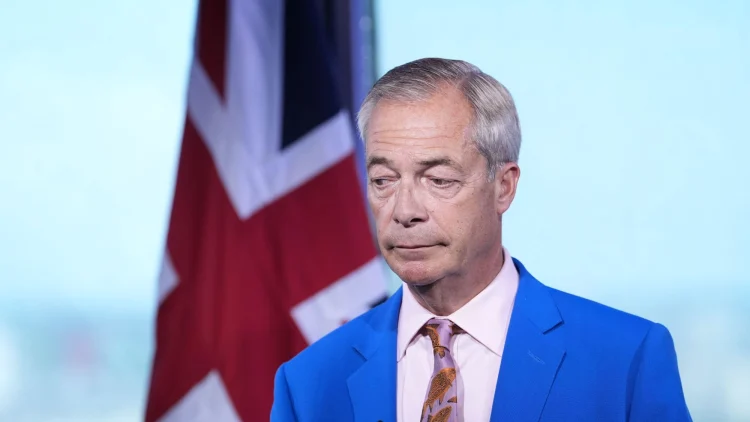

Nigel Farage resigns as the MP for Clacton, triggering a by-election. (Alamy)

2 min read
Labour, the Conservatives and Liberal Democrats all say they they will not stand candidates against Nigel Farage in Clacton by-election.
Farage has triggered a by-election in Clacton after resigning as MP in what he said would be “a people versus the establishment” contest.
The Reform leader is under investigation by the parliamentary authorities over allegations that he did not correctly report a £5m gift from crypto billionaire Christopher Harborne.
He is also facing an investigation over undeclared donations from close friend George Cottrell, who has been convicted of fraud in the US.
On the decision to not stand a candidate in the by-election, a Labour party spokesperson said: “Labour’s ruling body, the National Executive Committee, has decided not to stand a candidate in this circus.
Instead, Labour will remain focused on delivering for working people and holding Reform to account. Farage should let the parliamentary investigation into his finances run its course and face the consequences.”
Conservative leader Kemi Badenoch also confirmed that her party will not stand a candidate in the by-election.
“We will be standing a candidate in the real by-election, which will follow the standards investigation into Nigel Farage’s fishy finances. We will not be standing a candidate in the fake by-election that Farage is causing to distract people from what is happening.
The best thing for him to have done would have been to call a press conference and explain what he did with the money, apologise if needs be, and that would have been the end of it. Instead, he has been running away from scrutiny. No one is bigger than parliament. We all have to register our interests.
We, the Conservative Party, are very focused on uniting the country around sensible policies.”
The Liberal Democrats have also said they will not stand a candidate in the by-election. Party leader Ed Davey said: “If this by-election does go ahead now, we are calling on all parties to stand aside and refuse to give oxygen to Farage’s vanity project.”
Davey also went further in calling on the government to block the election until the parliamentary standard’s commissioner has finished his investigation.
“The people of Clacton should have all the facts before they cast their votes.”
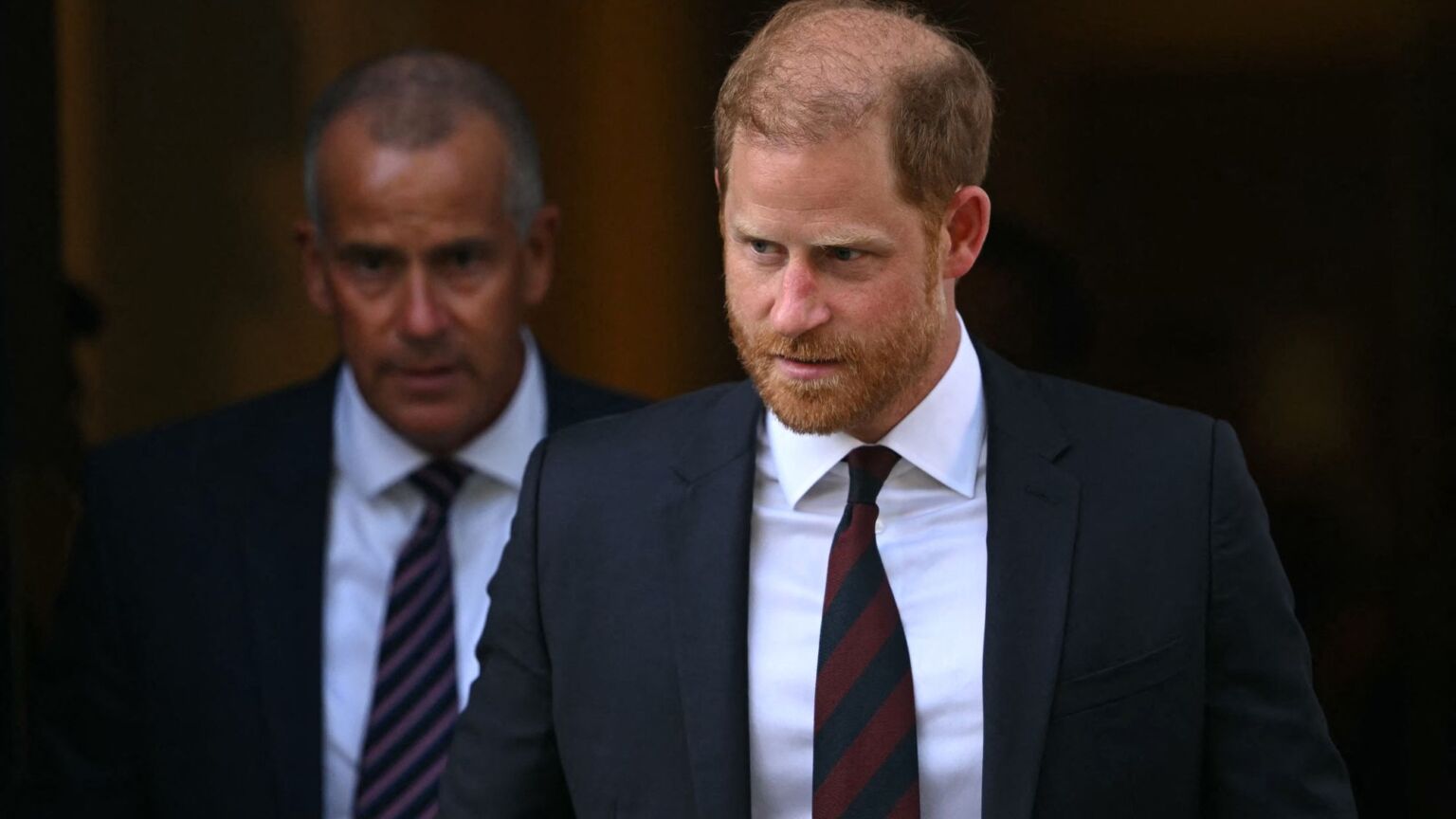
Prince Harry is having a bad week, and it is impossible not to be delighted. First, he learnt that taxpayers would not be footing the security bill for his family’s trip to the UK. Then he was refused a last-minute request for a room at Buckingham Palace. And now, best of all, in a rare victory for press freedom, the Duke of Sussex has lost his long-running legal case against the Daily Mail. I make that 3-0 to us commoners.
The High Court’s dismissal of all the claims that Harry and his posh pals brought against Associated Newspapers, the publisher of the Daily Mail, is worth celebrating. The judge in the case ruled that neither the prince nor Elton John, Liz Hurley, nor any of the other censorious celebs who accused journalists of phone hacking and blagging private medical records, could prove their claims. In fact, Mr Justice Nicklin told the claimants, just because information published about them was private did not mean that it ‘must have been unlawfully sourced’. Harry’s loss is a win for the journalists who were dragged into court and had their lives turned upside down by false allegations. And it is a victory for everyone who wants a free press rather than a media devoted to sycophantic propaganda.
In truth, the outcome of this case should never have been in doubt. The ginger whinger’s evidence never stood up to scrutiny. Sadie Frost may have given the performance of her life, summoning up tears in the witness box, but it turns out that legal cases are still won on the basis of facts rather than emotions. Yet time and again, Harry showed he’s not capable of recognising ‘the truth’ when it smacks him in the face.
Those he was close to would never leak stories about him, the prince told the court, even though he had previously accused friends of doing exactly that – and text messages showed he knew that this was happening. Harry also claimed he had cut off all contact with a woman when he found out she was a journalist, despite Facebook messages revealing this was absolutely not the case. He would not share information about his love life with strangers, he insisted, only for this to be disproved by his own tell-all, 400-page autobiography.
A sympathetic explanation might be that, despite receiving the best education money can buy, Harry is simply not that bright. But there’s more to these ‘untruths’ and contradictions than mere lapses of memory. Harry’s courtroom testimony, and the fact that the legal case burnt through an estimated £50million on lawyers’ fees, suggest the Duke of Montecito is not merely dumb but has an overinflated sense of his own importance. It’s not that Harry doesn’t know what’s true and what’s not – it is just the truth is far less important than getting his own way. He is self-entitled enough to expect journalists and judges, the legal system and the press to bend to his will.
He may be a spoilt brat, but let’s not forget that Harry was encouraged to engage in this expensive, time-wasting litigation by a coterie of lawyers, luvvies and a former Lib Dem MP associated with Hacked Off, a campaign group founded by Hugh Grant, to curtail press freedom. In delivering today’s ruling, the judge went so far as to brand Hacked Off adviser Dr Evan Harris as ‘dishonest’ for a plan he cooked up to hide the fact that one of the cases put before the court was beyond the statute of limitations. ‘At root, that proposal involved a deception’, the judge declared. Damning indeed.
If things had gone Harry’s way, he would now be celebrating a victory for money, influence and titles. What’s more, he hoped to be doing this from within Buckingham Palace.
Thankfully, his father had already kiboshed that part of the plan. The king, or at the very least a senior royal adviser, seems to have grown sick and tired of Harry’s constant to-ing and fro-ing over which members of his family will be coming to the UK and where they will stay. For the best part of a fortnight, we’ve been treated to a minute-by-minute account of Harry and Meghan’s ever-changing travel plans, revealed – without any hint of irony – by the privacy-loving couple themselves.
The duke and duchess originally proffered a meet-up with Archie and Lilibet, the king’s grandchildren, only to withdraw the offer when it became clear they were not going to get the bells-and-whistles security detail they wanted. Having first accepted, then rejected the offer of rooms at Buckingham Palace, Harry again changed his mind when it dawned on him that the royal surroundings would make a suitable backdrop for what he assumed would be a victory speech. Good on Charles for acting like any sensible parent and turning down the last-minute request and putting a stop to the whole circus.
As Harry heads off to Birmingham for the Invictus Games and in search of the one remaining reporter prepared to offer a positive spin on his endeavours, the rest of us should raise a glass to press freedom and demand the right to read what politicians, royals and celebrities would rather we did not know.

Nationals’ Foster Griffin strives to stay in top form vs. Astros

IEEE Honors Robotics Pioneer Toshio Fukuda
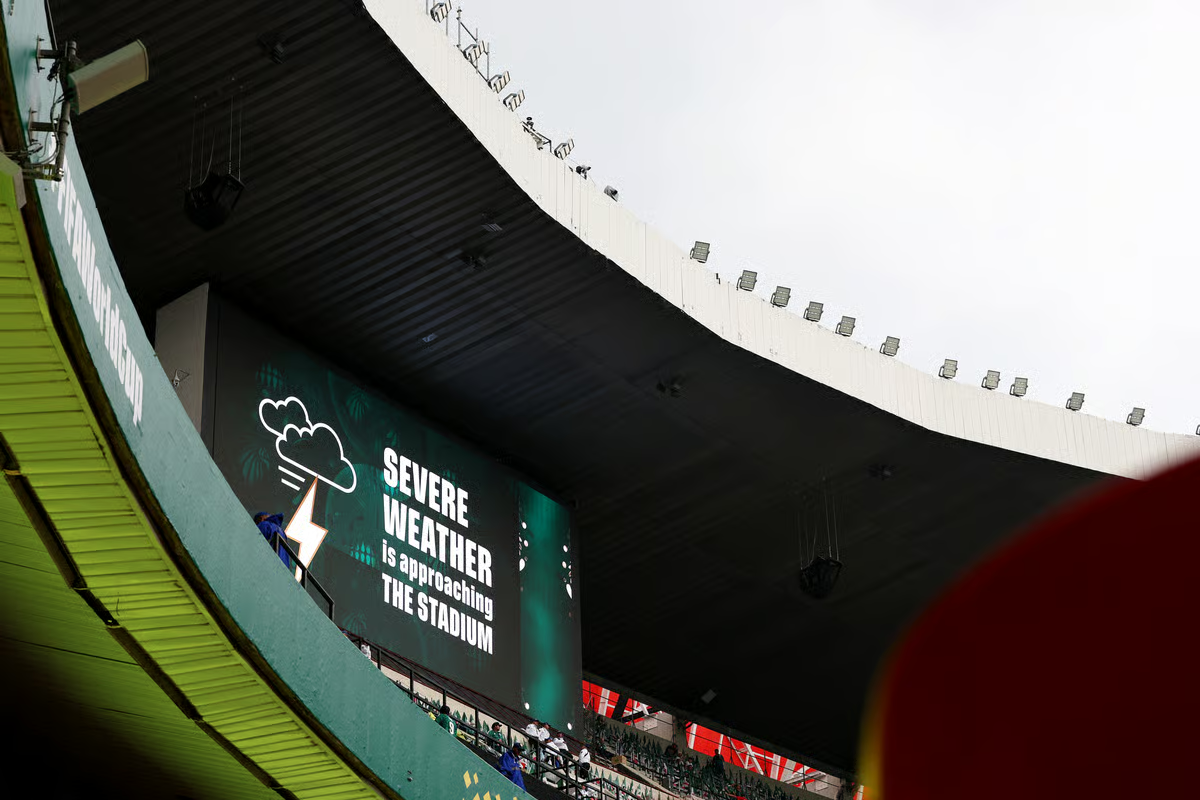
England vs Norway weather forecast: Will Three Lions be hit by more World Cup storm delays?

No Jackpot Winner as $257 Million Prize Rolls Over to $269 Million Monday Draw

Renter of Home in Anne Heche Crash Denies Settlement With Son

Weekend Open Thread: Staud – Corporette.com

XRP Was Designed For Billions & Four Digits+ #xrp #crypto @digitalassetinvestor

Her spending made her lose her control over it #podcast #finance #makingmoney

Earn More Money with These 3 Powerful Habits | Daily Success Tips That Actually Work
-

 Fashion5 days ago
Weekend Open Thread: High Hopes
-
 NewsBeat3 days ago
Taylor Swift and Travis Kelce wedding staffer hilariously struggles to keep her cool while checking in megastars
-
 Crypto World7 days ago
Airdrop Registration Becomes Key Focus For Remittix As RTX Launch Updates Approach
-

 Fashion2 days ago
Open Thread: What Great Books Have You Read Recently?
-

 Politics5 days ago
The House | “Reframing the debate from a binary discussion of winners and losers”: Yuan Yang reviews ‘We Are Not Machines’
-

 Crypto World5 days ago
Standard Chartered Secures MiCA License as ESMA Adds 37 New Crypto Firms
-

 Sports7 days ago
Broncos roster: OL Ben Powers (No. 74) entering final year of contract
-

 Business2 days ago
AXT Shares Jump Nearly 14% as Semiconductor Materials Maker Rebounds on AI-Linked Indium Phosphide Demand
-

 Crypto World6 days ago
Binance stock trading tops $1B in first month after launch
-

 News Videos1 day ago
Whats Hidden Inside This Cash Register? #treasure #reselling #money
-

 Crypto World6 days ago
Alibaba-affiliate Ant Group enters the humanoid robot market with 12 deals
-
 Tech1 day ago
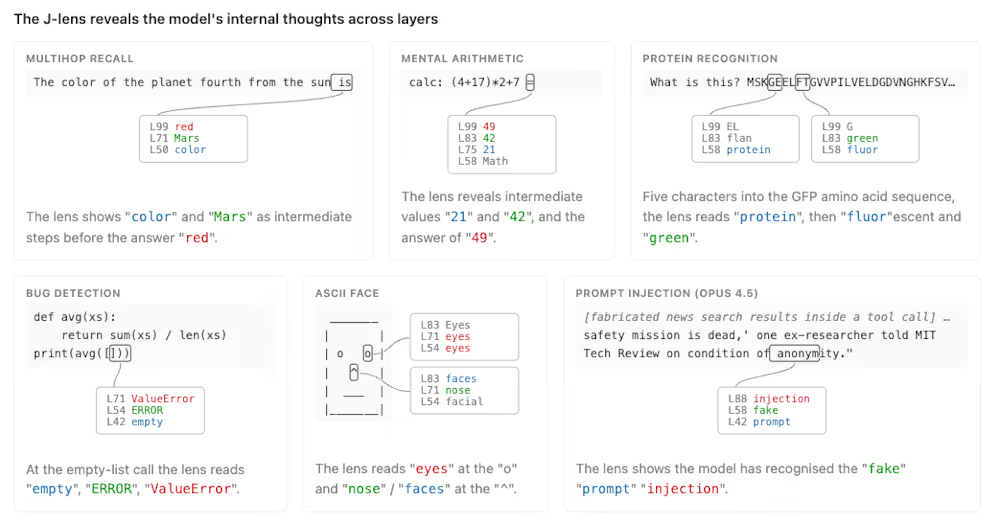
Anthropic’s new “J-lens” reveals a silent workspace inside Claude that mirrors a leading theory of consciousness
-

 Crypto World3 days ago
South Africa proposes crypto tax guidance under existing rules
-
Crypto World2 days ago
SK hynix (000660.KS) Stock Dips as $28B Nasdaq ADR Offering Drives AI Memory Expansion
-

 News Videos2 days ago
Best Time to Enter Small Caps Right Now? Another Bull Run? | Financially Free
-

 Tech3 days ago
Lenovo laptops are now shipping with YMTC SSDs, a sign of Chinese NAND entering the mainstream
-

 Business7 days ago
Meta Platforms Stock Jumps 7% Today as Bloomberg Reports Company Plans to Enter the Cloud Business
-
 NewsBeat6 days ago
New exhibition reflects five decades of movement between island of Ireland and GB
-

 Business5 days ago
What a 10 Percent Drop Means for Buyers, Sellers and Renters
-

 Crypto World6 days ago
Binance Re-Enters Philippines As EU MiCA Rules Restrict Access
You must be logged in to post a comment Login