

Politics
Basque police brutally beat Palestine activists after they return from Israeli prison

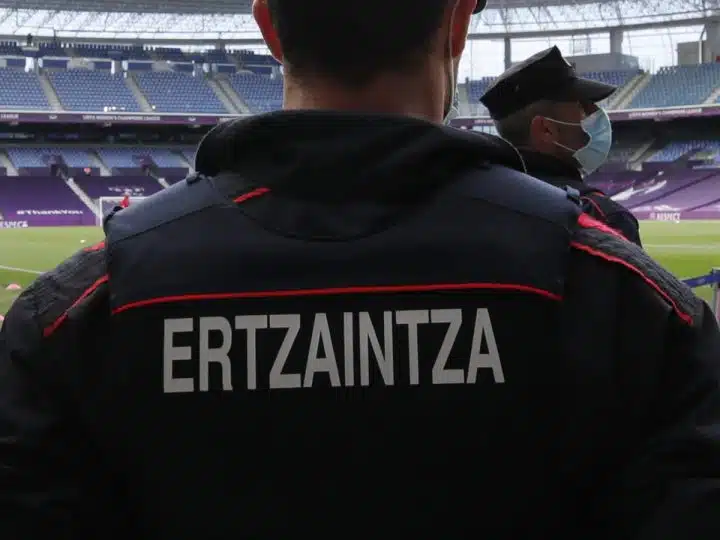

It might have looked like a scene from a prison in so-called ‘Israel’, but the appalling scenes actually unfolded at Bilbao airport. It wasn’t Israeli Occupation Forces (IOF) beating peaceful Basque activists, but rather their own police force, the Ertzaintza, who smashed them with batons as they lay helpless on the ground.
More shockingly still, the activists had only just returned from captivity in ‘Israeli’ dungeons. They were participants in the heroic Global Sumud Flotilla (GSF), which sought to bring aid to Palestinians starved by Zionists’ grotesque restriction of aid to Gaza. As GSF explain:
When a family member, waiting anxiously in the arrivals terminal, attempted to cross a barrier to embrace their loved ones, the Ertzaintza suddenly and shockingly responded with violence. What should have been a moment of relief and familial comfort after such a harrowing experience was interrupted by even more brutality.
Among those attacked and beaten by the Basque police were individuals who had just recently been discharged from medical facilities to fly home, bearing severe, agonising injuries from their time in israel’s captivity, after being illegally abducted in European international waters. The Ertzaintza’s deployment of force against citizens in acute medical agony represents an unconscionable failure of basic humanity and continued display of systemic and colonial violence.
At least four people, including three flotilla participants, were subsequently arrested by Spanish state paramilitary police and are currently being held at Deusto police station in Bilbao.
Basque police’s deep ties with ‘Israel’
The GSF went on to describe the attack as a “chilling demonstration of interconnected global repression”. They cite the Ertzaintza’s:
deep, historical procurement pipelines, commercial contracts, and tactical training ties with israeli private security firms…
The Basque region is itself still colonised by Spain, and clearly its police force continues to operate with colonial tendencies. In a Substack post, Ahmed Eldin elaborated on the Ertzaintza’s links with the Zionist entity, pointing out:
The Ertzaintza has purchased Israeli technology and equipment for years. Its phone-tapping system comes from Verint Systems, an Israeli company with deep ties to Israeli military intelligence. An Israeli firm, ICTS, has managed security at some of their facilities. They’ve used Israeli body armor, surveillance cameras, and listening devices.
Eldin said:
The Ertzaintza presents itself as a different kind of police force. Created in 1982 as part of Basque autonomy, it’s supposed to be more responsive to local communities, and less like the centralised Spanish national police.
The truth is, the Ertzaintza has a long-standing, multifaceted relationship with Israel that goes far beyond the Spanish government’s official positions on Palestine.
This is similar to the Police Service of Northern Ireland (PSNI). Another police force supposedly reconfigured to be more accountable to the population they ‘serve’, the PSNI have purchased software and body armour from so-called ‘Israel’.
The Palestine Laboratory
The Zionist entity operates a pipeline of violence and repression that begins with The Palestine Laboratory. Tools used to brutalise and surveil Palestinians are tested on them like human guinea pigs, then imported by repressive powers around the world for use on their own populations.
This is why the line “nobody is free until we’re all free” isn’t merely a slogan – it is a truism. As long as someone is being mistreated anywhere in the world, the methods used to subjugate them represent a danger to everyone else.
The flotilla activists represent a threat not only to so-called ‘Israel’, but to reactionary political ideals across the world. It’s harder to ram into people’s heads the idea of foreigners being unworthy of our help when people are risking their lives travelling thousands of miles to help those they’ve never met. Left-wing activists lionised for their heroism inherently represent a threat to the interests of capital in their home countries.
As Eldin points out:
When Israeli forces sexually assault, torture, and brutalise international activists bringing aid to Gaza, those actions send a clear message to every police force they’ve trained: “This is how you handle people who challenge us. And you should be doing the same.”
The Spanish government, like the Irish government, is not as pro-Palestine as an at-a-glance reading may suggest. In reality, the Irish government voted against sanctioning the Zionist settler-colony, even when its own citizens were being tortured there.
As Eldin points out, the Spanish state also continues to maintain economic ties with the Zionist entity. True solidarity with Palestine means following true Boycott, Divestment and Sanctions (BDS) policy – severing all ties with so-called ‘Israel’ while it maintains its apartheid, genocidal policies against the Palestinian people.
Featured image via Clive Brunskill/Getty Images

Politics
The House | The outsourcing injustice at the heart of government is finally coming to an end
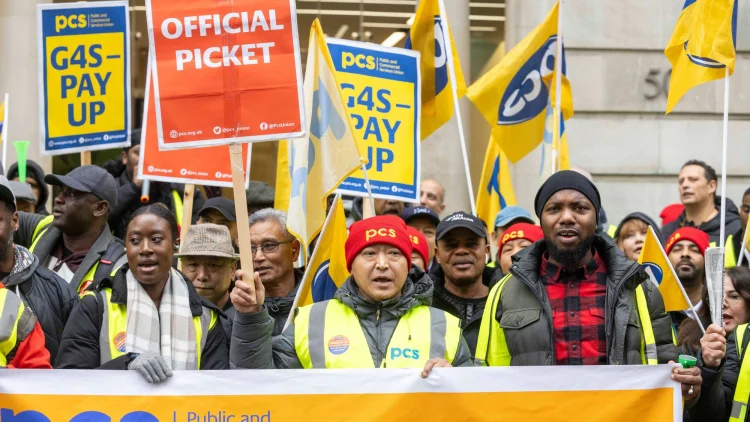

Members of the PCS Union employed by G4S as security officers, receptionists, cleaners, caterers and porters at the Department for Business and Trade, the Department for Science, Innovation and Technology and the Cabinet Office, on strike over pay, terms and conditions in London, November 2024 (Karl Black/Alamy Live News)
3 min read
For too long in this country, some of the key functions of government have been outsourced to private companies that care first and foremost about turning a profit.
They do that by driving down the pay and conditions of workers and by providing a lower level of service to the public.
About a third of government spending – some £341bn – is spent on private companies, enabling shareholders to cash in at the public expense. It’s wasteful, inefficient, and leads to worse public services for all of us.
When Labour was elected in 2024, they pledged to undo this scandal with the biggest wave of insourcing in a generation. And this week, Rachel Reeves announced the critical first step in this journey. From 2028, when government contracts with outsourcing companies come to an end, thousands of staff working in government buildings will be brought back in-house.
It might surprise you to learn that you can work in a government building where all of your colleagues are civil servants – and be entrusted with keeping the nation safe – but be employed on an insecure private sector contract.
We met a security guard who puts his own safety on the line protecting the people working in a government department. But unlike his colleagues inside the building, he isn’t entitled to a decent pension or flexible working to enable childcare – in fact, he’d been disciplined by his employer for taking time off to care for his kids.
For most of his time working for the government, he wasn’t even entitled to decent sick pay – but alongside his colleagues, he went on strike and won that right last year.
Put simply, there’s a two-tier workforce in the public sector, where outsourced staff are on worse pay and conditions than their directly employed colleagues. That means many people delivering public services are forced to choose between eating and heating their homes in the winter – or going straight from work at a government building to a foodbank.
Caterers, security officers, cleaners, porters, engineers, plumbers, electricians, receptionists, handypersons and messenger service workers have been denied the dignity and security afforded to white-collar civil servants who work in the same building as them.
The sheer injustice is compounded when you consider that these staff are disproportionately women, Black or from other ethnic minority backgrounds.
And these contracts are often inflexible and bad value for the taxpayer – with even minor changes to the way services are delivered hampered by complex and costly contract negotiations.
The scourge of outsourcing can be felt all the way through our public sector. That’s why today’s announcement should represent a signal of intent – and kickstart a serious programme of insourcing contracts across the public sector.
Enough is enough. The big outsourcing companies trying to squeeze a profit from the public purse are in the Chancellor’s sights. Today must be the beginning of the end of the scourge of public sector outsourcing.
Paul Nowak is TUC general secretary and Fran Heathcote is PCS general secretary
!function(n){if(!window.cnx){window.cnx={},window.cnx.cmd=[];var t=n.createElement(‘iframe’);t.display=’none’,t.onload=function(){var n=t.contentWindow.document,c=n.createElement(‘script’);c.src=”//cd.connatix.com/connatix.player.js”,c.setAttribute(‘async’,’1′),c.setAttribute(‘type’,’text/javascript’),n.body.appendChild(c)},n.head.appendChild(t)}}(document);(new Image()).src=”https://capi.connatix.com/tr/si?token=19654b65-409c-4b38-90db-80cbdea02cf4″;cnx.cmd.push(function(){cnx({“playerId”:”19654b65-409c-4b38-90db-80cbdea02cf4″,”mediaId”:”3f63c6aa-7365-433b-9b51-7732b4d97258″}).render(“6a32c6f5e4b04f5fa0bdd13a”);});

Donald Trump has once again refused to say who he thinks is responsible for the ongoing Ukraine war.
Vladimir Putin illegally invaded Russia’s European neighbour more than four years ago and his forces now hold around a fifth of Ukraine’s sovereign territory.
The Russia leader has refused to withdraw his troops or compromise on any peace negotiations despite growing economic pressures from the cost of the war.
Trump took it upon himself to resolve the Ukraine conflict within the first 24 hours of his second term, but he has failed to make any significant progress.
Putin has refused to come to the negotiation table even when Trump rolled out the red carpet.
Yet the US president would still not name Russia as the aggressor during the G7 summit in France on Wednesday.
Asked if he believed Putin was more responsible for the ongoing conflict in Ukraine, he said: “I don’t want to comment on that because I’m trying to get it settled.
“That doesn’t make it easy.”
Trump has falsely blamed Zelenskyy for delays in the peace process since returning to the White House.
He has turned his attention away from Ukraine since the US and Israel decided to launch strikes on Tehran at the end of February.
However, the US president told reporters on Wednesday: “I had very good talks with president Zelenskyy and president Putin.
“We’d like to see that one end.
“I ended eight wars. To be honest with you, I thought this would have been one of the easier ones.
“But they’re not liking each other too much and that’s making it more difficult.
“But we’re working on it. I’ve had two good conversations with president Zelenskyy and president Putin.”
Listen to Commons People, the podcast that makes politics easy. Every week, Kevin Schofield and Kate Nicholson unpack the week’s biggest stories to keep you informed. Join us for straightforward analysis of what’s going on at Westminster.

A location-sharing app can be an invaluable tool for families. Whether it’s used by parents to keep an eye on their kids while travelling home from school or to find each other in crowded areas, they can help families feel safe and more in sync.
However, many apps provide constant location sharing that can raise questions about privacy. HeyPolo, on the other hand, offers a considered location sharing solution.
Instead of everyone’s whereabouts being tracked 24/7, its key features can be adjusted to suit the situation and to fit what everyone’s happy with. Whether that means sharing a general area rather than a specific location or sharing a location for a limited period of time, HeyPolo can be adjusted to suit different tracking needs.
This level of flexibility is particularly useful for families thinking to the future, as it leaves room for younger members to become more independent.
So, what is HeyPolo?
HeyPolo provides a variety of location tracking features, from emergency location sharing to everyday location tracking, which can be adjusted to you and your family’s needs and preferences.
Launched by the cybersecurity company Surfshark, which offers a number of online privacy services including VPNs and antivirus software, it’s no surprise that privacy is a defining feature of HeyPolo. While subscribers can feel confident and reassured, the idea is that boundaries won’t be overstepped.
When it comes to downloading the app, HeyPolo is designed to run seamlessly whether you use Android and iOS. Once you’ve signed up for your HeyPolo subscription, it’s free for the rest of your family to join. And there’s a live chat available between 9am to 5pm, so you can get support from a real person.
There’s exact location sharing, and scheduled location sharing. The latter is particularly useful when it comes to keeping tabs on everyone during busy weeks packed with after-school activities and daily morning commutes. You’ll also be able to set up alerts, so you’ll get handy notifications that keep you updated on arrivals, when they’ve left a certain location, or when they’ve updated their privacy settings. Instead of checking their status every 10 minutes, you can get on with your day reassured by the knowledge you won’t miss anything important.

There’s also a very useful speed monitoring feature, so you can receive real-time alerts when your young adult is driving over the speed limit. Plus, the live compass element offers directional navigation which is built into the app’s map interface, so you can find your family members at a festival, shopping centre or amusement park.
Keeping everyone connected, HeyPolo allows you to create groups with your family too, making it easy to stay up to date on everyone’s whereabouts, with all their locations conveniently in one place. Whether it’s a group for friends or family, you’ll be able to add people to the group at any time, and you can remain in a group without sharing your own location if you don’t want to.
Ok, but what makes HeyPolo different?
HeyPolo lets you decide when a location will be tracked, for how long, and by who. This location sharing isn’t set up by one person, but instead needs to be agreed on by everyone. This way, everyone will be happy with the setup, and if they aren’t, the settings can be adjusted. Flexibility is a key perk of the app, something which is especially important for accommodating growing families that want to give children the space and the trust to become more independent.
For instance, HeyPolo allows you to share a location for a couple of hours, rather than 24/7 like some location tracking apps. Similarly, you could also choose to have the approximate location of a family member shared, instead of zooming into the exact location. Locations can be shared in specific emergency situations, with certain people, and for a limited time, so there’s more control allowed there, too.
There’s often concern about what data when using location sharing apps like HeyPolo. For those who are concerned about what happens to their data, HeyPolo doesn’t sell your data to third-party advertisers, and your data is never shared. It’s also worth noting that you won’t see any ads popping up in the app while using it, either.

How much is HeyPolo?
Easy to manage, you’ll just have one HeyPolo subscription and this will cover everyone you invite. This means once you have your subscription set up, it’s free for anyone else to join. If you want to give HeyPolo a try before you commit to a full year, you can opt for the paid monthly subscription, which costs £4.48 per month and renews automatically every month. Or there’s the annual subscription, costing £47.88 for a year, which works out as £3.99 per month.
With a variety of location sharing options to suit different scenarios, the HeyPolo safety app will appeal to families who want to respect privacy, build trust and support kids’ growing independence. To see whether the HeyPolo app is right for your family, sign up for a subscription now.
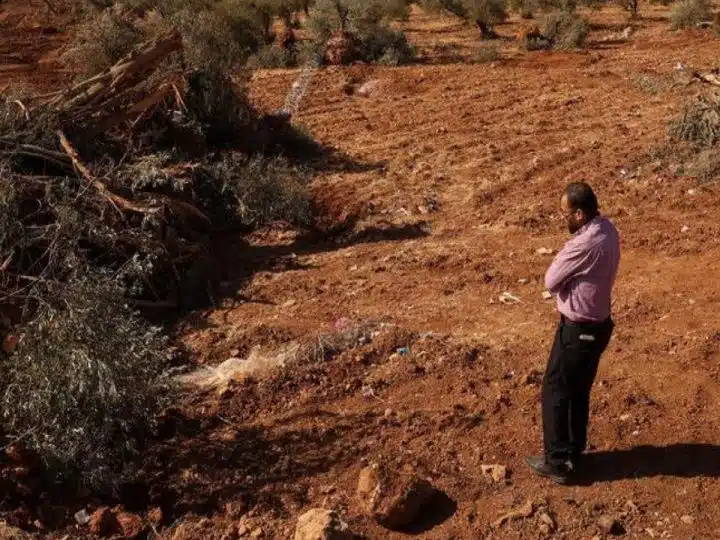
Amnesty International has published a new investigation. It has accused Israel of carrying out ethnic cleansing against Palestinian Bedouin and herding communities in the occupied West Bank. It claims the occupation’s ethnic cleansing campaign in Area C is “state-sanctioned, state-driven, and state-implemented.”
Settler violence — the goal is ethnic cleansing
The report is titled Erasing Anything Palestinian: Israel’s ethnic cleansing of West Bank Bedouin and herding communities. It documents how entire communities have been driven from their land. This has been carried out through a combination of settler violence, home demolitions, land seizures and settlement expansion. Restrictions on access to water and grazing areas also play an important role in this displacement.
Area C of the occupied West Bank is fully controlled by the Israeli occupation.
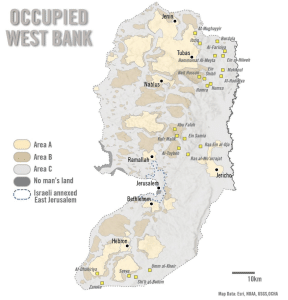
Amnesty says the forced displacement of Palestinians in Area C amounts to the war crime of unlawful deportation and transfer, and the crime against humanity of forcible transfer or deportation.
Israeli officials and most of the western media make it seem as though the settler attacks are the actions of a violent fringe operating beyond government control. But Amnesty presents settler violence as a key mechanism for removing Palestinians from strategic areas of the occupied territory.
Palestinian families described repeated raids on their homes and villages, consisting of physical assaults, death threats, theft of livestock and vandalism. Vital infrastructure was also destroyed, and water tanks were smashed. Electricity supplies were cut. Grazing land was fenced off. Many people who fled and later attempted to return found their communities destroyed. Others faced new attacks that forced them out again.

Ethnic cleansing since 1967 but dramatically increased under Netanyahu
The violence and displacement have been ongoing since 1967, but have escalated since December 2022. Netanyahu’s Likud party formed a coalition government with the far-right Jewish Power and Religious Zionism parties. This government openly embraced the settler movement’s vision — the vision of a “Greater Israel” stretching across the occupied Palestinian territories.
In September 2025, finance minister Bezalel Smotrich set out plans to annex more than 80 percent of the West Bank. He said the guiding principle should be “maximum land, minimum Arab population.
While national security minister Itamar Ben-Gvir called for Israeli “sovereignty” across the occupied territories.
Because this is our land, and because we need to tell the whole world: ‘this is ours forever and ever’… Sovereignty, and also encouraging [Palestinian] voluntary emigration, which we should do also in Judea and Samaria.
These words by politicians have been matched by actions on the ground.
Between 2023 and 2025, Israeli occupation authorities advanced plans for more than 50,000 settlement housing units. Nearly 28,000 were approved in 2025 alone, the highest annual figure on record. Across the occupied West Bank, new settler outposts have also appeared at a rate never seen before. By April 2026, more than half of all existing outposts had been established during the current government’s time in office.
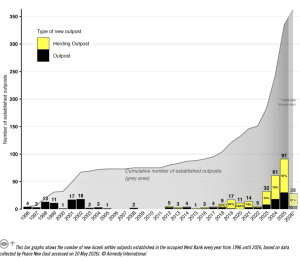
Illegal settlements at record rate while Palestinian development blocked
Along with settlement growth comes the rapid development of settler-only infrastructure, including roads and security systems. This continues to isolate Palestinian communities and restricts their movement.
But while settlement expansion continues at unprecedented speed, Palestinian development has effectively been frozen. No Palestinian housing plans were approved in Area C during 2023 and 2024. And only a handful of building permits were issued.
Thousands of demolition orders have been carried out against Palestinian homes, schools, animal shelters and water systems. Between January 2023 and April 2026, Israeli authorities destroyed more than 3,400 Palestinian homes and structures. Almost 3,000 Palestinians were displaced.

The report raises serious questions about the role Israeli occupation authorities play in enabling and protecting the violence. Amnesty documents Israeli occupation soldiers being present during settler attacks. And also being directly involved in incidents of harassment, intimidation or violence against Palestinians. Witnesses described them standing by while settlers assaulted residents, destroyed property and drove shepherds from grazing land. In other cases, “Israeli” soldiers arrived alongside settlers, coordinating with them during the violence.
Without accountability, violence towards Palestinians increases exponentially
Following 7 October 2023, Israeli occupation authorities dramatically expanded firearm licensing and distributed weapons to illegal settlers. Many settlers began wearing military uniforms. It became difficult for Palestinians to know whether the people entering their communities were occupation soldiers or settlers. This has further increased the risks faced by Palestinian communities.
Ein Samia is a Bedouin community in the central occupied West Bank. Residents faced increased intimidation, harassment and violence before leaving the area in 2023. Ayman Suleiman, a Palestinian man displaced from Ein Samia, described to Amnesty how the situation changed.
For almost a year, I didn’t cross the highway [Allon Road]. They [settlers] used to harass me and other shepherds, and we’d try to avoid them, but then the army started showing up and protecting them, shooting in the air.
The report argues that the atmosphere of near total impunity has led to an exponential increase in the violence. Between 2005 and 2025, only three percent of investigations into crimes by these illegal colonists against Palestinians resulted in partial or full convictions. Many Palestinians interviewed said they no longer report attacks because they see little chance of justice. Others told researchers they were the ones questioned, detained or fined after reporting violence carried out against them.
You cannot separate settler violence from political aspirations
Amnesty argues settler violence cannot be separated from the wider political goal of expanding Israeli control across the West Bank. A deliberate campaign is taking place in Area C to permanently reshape the demographic reality of the occupied West Bank. This is, of course, at the expense of the Palestinians who have lived there for generations. The aim is to remove them from their land, to create space for further settlement expansion.
The legal framework which the Israeli occupation uses to govern the West Bank strengthens this system of forced displacement and ethnic cleansing. Since 1967, “Israel” has used military orders to control the lives of Palestinians in the territory, although under international law an occupying power can act only as a temporary administrator. Palestinian lives have been reshaped into tightly controlled enclaves, especially in Area C, where the occupation maintains full control.
A system designed to entrench the Israeli occupation’s dominance
Some Bedouin and herding communities in the occupied West Bank have been emptied, the residents forcibly displaced after sustained attacks and demolitions. Others remain under constant threat, surrounded by expanding illegal settlements and outposts which continue to tighten control over surrounding Palestinian land.
Amnesty’s report argues that there is a deeply entrenched culture of impunity. Even if courts issue rulings in favour of Palestinian residents, including orders allowing displaced families to return to their villages, enforcement often does not take place. The Israeli occupation’s police and military often fail to implement court decisions, leaving families without any meaningful protection or solution.
Amnesty International concludes that the displacement of Palestinians in Area C is part of a structured system of control. This is designed to entrench the Israeli occupation’s dominance over Palestinian land while reducing Palestinian presence. For the Bedouin and herding communities of Area C, this means emptied villages, shrinking grazing land, destroyed livelihoods, and families scattered from the places they have lived for generations.
Featured image via the Canary
By Charlie Jaay

A survivor of rape is attempting to return ‘Shame’ to Andrew Mountbatten Windsor. Dolly Sen has carved the word “SHAME” out of wood. She’s then covered it in facts and figures about rape in the UK, as well as quotes from survivors. And she’ll attempt to deliver the art piece to Windsor or to his home in Norfolk.
Sen says:
I am doing this for Virginia, for Gisèle, for myself, and for the 2000 women who be raped this week and the vast majority will have no justice.
Gisèle Pelicot requested a public trial of the more than 50 men who raped her while she was unconscious. She wanted to raise awareness of ‘chemical submission’ and give encouragement to other survivors. Pelicot has now written about her experiences in a book with the subtitle: “Shame has to change sides”.
Before her untimely death, Virginia Giuffre alleged that Ghislaine Maxwell and Jeffrey Epstein had groomed her to have sexual encounters with rich and powerful men, including Windsor.
Sen lays out the grim statistics around rape and sexual assault:
- 1 in 4 women have been raped or sexual assaulted.
- Fewer than 3 in 100 rapes in 2024 recorded by police resulted in someone being charged, let alone convicted.
- On average, approximately 10,000 women are sexually assaulted and 2,000 are raped every week in England and Wales.
Windsor may avoid court
Sen also says:
Some say Andrew hasn’t been convicted as a sexual predator or abuser, it is all alleged. This is the problem. It will always be alleged. 1,200 women were abused under Epstein and not a single person has been charged, let alone seen the inside of a court room. I believe Virginia Giuffre. I also believe he will never go to trial because of his status.
What will be interesting is that I may get arrested for this action even though there will be no violence involved. I will probably see a court before Andrew does.
He is a symbol of entrenched privilege and lack of accountability. There is a special gravity for certain bodies – they fall upwards, buoyed by privilege, cushioned by silence. Elsewhere, we are pinned down.
The Epstein files case has become a stark symbol of systemic failure, where survivors’ voices are dismissed and influential abusers evade accountability: the shame belongs not to those who survived abuse.
We are reclaiming our voices, our power, and returning the shame where it belongs: to abusers and the institutions that enable and protect them. My body is no longer the site of shame or apology. It is a site of truth and resistance.
Sen is calling for:
- Transparent investigations and accountability for all perpetrators, regardless of wealth or status.
- Stronger legal protections and support for survivors.
- Greater investment in survivor services, including counselling and legal aid.
- Education campaigns challenging systemic gender inequality and toxic cultures that normalise abuse.
And Sen concludes:
By returning the shame, women are refusing to be silent, reframing the conversation, and forcing society to confront the manufacturers of shame that allow sexual violence to persist.
This is about our right to justice and dignity. We do not get it from the police, the media, or the court system. We are done carrying shame.
Sen is a writer, artist, and activist whose fearless work centres on social justice and challenging institutional abuse and discrimination. Through her public speaking, creative practice, and campaigning, she has consistently amplified the voices of marginalised people.
Some of her previous activism includes Sectioning the DWP and creating Help the Normals, an art piece featureing charity collecting cans. This challenges assumptions about pity, disability, and who society defines as “normal”. Help the Normals is now part of the Wellcome Collection’s Being Human exhibition.
Featured image via the Canary
By The Canary

spiked is funded by readers like you. Only 0.1% of regular readers currently support us. If just 1% did, we could grow our team and step up the fight for free speech and democracy.
Become a spiked supporter and enjoy unlimited, ad-free access, bonus content and exclusive events – while helping to keep independent journalism alive.
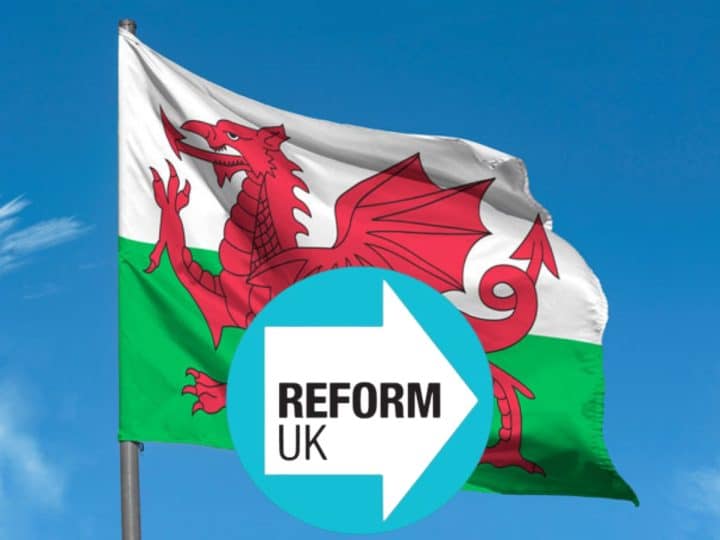
Campaigners have warned that a motion tabled in the Senedd to end Welsh government spending on international relations would damage Cymru’s reputation as an open, outward-looking nation and weaken its ability to respond to global challenges such as climate change.
Llyr Powell from the Reform UK party has submitted a motion calling for the cessation of all Welsh government international relations spending. Critics have called this a step backwards for a nation that has built its global reputation on partnership, sustainability and solidarity.
The Welsh government’s international relations budget represents a very small proportion of overall public expenditure. It’s around £9.2m in total, of which approximately £1m supports international sustainable development activities. That’s equivalent to roughly 0.003% of total Welsh government spending.
Campaigners argue that despite its modest size, the budget delivers disproportionate value. They point as a clear example to the Mbale tree-planting initiative in Uganda, which plants a tree for every child born in Cymru.
The scheme has already sequestered an estimated 1.4m tonnes of carbon dioxide, equivalent to around a quarter of Cymru’s annual transport emissions. It also supports local livelihoods, reduces landslide risk and strengthens climate resilience in vulnerable communities.
Cymru’s place in the world
A spokesperson from Global Climate Justice Cymru said:
We regret Reform UK’s isolationist approach to Cymru’s place in the world.
At a time when climate change, economic inequality and conflict are global challenges that do not respect borders, turning inward and cutting off the partnerships that help us respond to them is not strength, it is retreat.
Cymru cannot insulate itself from the world by pretending it isn’t part of it.
The warning echoes the UK government’s own National Security Risk Assessment, which identifies biodiversity loss and ecosystem collapse as top-tier threats to national security, economic stability and public wellbeing.
Environmental degradation, including deforestation in critical ecosystems like the Amazon, is linked to food insecurity, rising prices, instability and displacement worldwide.
The campaign also pointed to the Well-being of Future Generations (Wales) Act. This requires Cymru to consider its contribution to global well-being as part of its approach to domestic policy. It’s not an optional extra, but a defining feature of how the nation is governed.
A spokesperson from Wales Overseas Agency Group said:
Cymru’s reputation as an outward-looking, internationally engaged nation has been hard-won. It reflects decades of leadership on sustainable development and global solidarity.
Cutting this funding would not save meaningful sums but it would send a damaging signal that Cymru is turning its back on the world.
Campaigners stressed that the costs involved are negligible in the context of overall public spending. The £1m sustainable development budget is equivalent to roughly 40 minutes of health spending in Cymru. While the entire international relations budget would barely cover six hours of healthcare spending.
They argue the real impact of cutting it would be reputational and economic. Around £8m of the budget supports international economic and cultural links. These are increasingly vital in the post-Brexit context, where Welsh exporters face new trade barriers, regulatory complexity and delays.
Campaigners are calling on Members of the Senedd to oppose the motion when it comes to a vote, and instead to recommit to Cymru’s role as a globally responsible, engaged and forward-looking nation working in partnership with others to advance shared prosperity, climate action and social justice.
Featured image via the Canary
By The Canary

Donald Trump has admitted the US-Israel war in Iran could have caused “economic catastrophe” while talking up his new deal with Tehran.
Speaking at a G7 press conference from France, the US president said: “I didn’t want to see economic catastrophe. If you kept this going, that could have happened.”
He added that the stock market is “more brilliant than anybody there is… other than me.”
The US and Iran have agreed to sign a deal to end their conflict although details of any such agreement are yet to be released.
It comes after Trump joined Israel’s prime minister Benjamin Netanyahu in bombing Tehran in February.
Iran retaliated by effectively closing a major shipping lane, the Strait of Hormuz, which hit around a fifth of global oil supplies and rocked the global market.
Trump also claimed Iran’s new group of leaders are “very smart” and “far less radicalised”.
He said: “I think they’re going to behave much differently. I think they see a different way of life that they were never exposed to.”
American and Israeli bombs have killed multiple senior officials including supreme leader Ayatollah Ali Khamenei over the last four months.
The White House also promised regime change in Iran after widespread public protests.
However the Islamic Republic is still very much in charge and the new supreme leader, Mojtaba Khamenei, is the son of his predecessor.
Despite concerns that Iran could still squeeze the Strait of Hormuz whenever it wants, Trump also issued fresh threats to renew the conflict.
He said: “If [a new peace agreement] doesn’t get done in 60 days, it’s all right – we go back to bombing.
“I don’t want to do that, because it’s so good. But we might have to, because we’re never going to let them have a nuclear weapon.
“But they’ve agreed not to, and you’ll see that very clearly in the agreement.”
Listen to Commons People, the podcast that makes politics easy. Every week, Kevin Schofield and Kate Nicholson unpack the week’s biggest stories to keep you informed. Join us for straightforward analysis of what’s going on at Westminster.

On Wednesday 17 June, Starmer said he would like to give Andy Burnham a “big role” in government should he win the Makerfield by-election. The question was this: would Burnham accept a job in the most unpopular government of his lifetime, or would he simply force Starmer out and take the top job for himself?
The answer was obvious, and we didn’t have to wait long to hear it:
Senior Labour source: “The benefit Andy has is the wind of change for not having been associated with the Government’s failings” — Politics UK (@PolitlcsUK) June 17, 2026
 NEW: Andy Burnham won’t accept a job in Keir Starmer’s Government
Burnham says no thanks
Starmer offered Andy B a job in an interview with Beth Rigby:
In a deeply personal interview, the PM tells me:
— Beth Rigby (@BethRigby) June 17, 2026
He wants Andy Burnham back in cabinet – to “have a big role in government” He says he will talk to Burnham “after the weekend”“I don't feel angry. I don't feel bitter” Starmer says, on the leadership crisis he’s facing… pic.twitter.com/WGjNoMkX9K
He probably should have saved himself the embarrassment by offering Burnham the job directly. Saying that, if Starmer cared about embarrassment, he wouldn’t do half the things he does.
According to the Manchester Evening News (MEN), a “senior source” in Team Burnham said:
the benefit Andy has is the wind of change for not having been associated with the Government’s failings.
In other words, the man doesn’t want to get Starmer’s stink on himself. And this is all reminiscent of when David Cameron offered Boris Johnson a ‘top five’ position to not campaign for Brexit. And much like Johnson, Andy B is also a regional mayor with a massive barnet.
The MEN also reported:
The source also told us that the discussion of the Greater Manchester mayoral elections was an attempt to put ‘further challenges up’ and that if Keir Starmer stays it will give people ‘an excuse to vote against Labour’ in that election. If Mr Burnham wins the Greater Manchester Mayoral election is expected to take place at the end of July.
And this was in response to Starmer’s other attempt to wriggle out of a leadership challenge.
Focus
Slippery Starmer also said the following:
We’ve got the by-election tomorrow. First and foremost, I want Andy Burnham to win, and that’s why I’ve encouraged activists and members to go up there during the course of the campaign, and they’ll be up there tomorrow helping to get the vote out.
Then what happens is we’re immediately tipped into a Manchester mayoral contest by-election, one of the biggest by-elections that we’ve ever fought, because of the scale of it. And it’s really important to my mind that the whole of the Labour Party and Labour movement focuses on that, which is the next most immediate task.
So here’s the thing; the biggest obstacle to Labour winning any election seems to be Keir Starmer leading the party. As such, this argument doesn’t really hold up. It is a string of sentences, though, and the man does have to act like he’s not just a placeholder prime minister.
Change?
We should add that Burnham’s offering right now isn’t all that different to Starmer’s:
- Burnham ‘to support’ Mahmood’s racist immigration changes.
- Burnham is silent on wealth taxes – not a promising sign from potential PM.
- Andy Burnham’s role with Iain Duncan Smith’s think tank just shows he’s more of the same.
- Burnham WON’T back proportional representation this parliament.
- Shapeshifting Burnham ditches trans rights to panic-grab Reform votes.
- Burnham slammed for saying he won’t renationalise Thames Water.
- Burnham calls for ‘safe routes’ then agrees with Farage in muddled interview.
- Green candidate calls out genocide as Burnham sits on fence.
- Andy U-Turnham has already abandoned the Waspi women.
While some of this may change when Burnham is actually PM, that doesn’t mean he’ll get better!
Featured image via The Canary
By Willem Moore

Chris Brown Sparks FRENZY W/ Tour “PSA” For The Ladies

Suit of the Week: The Fold

The House | The outsourcing injustice at the heart of government is finally coming to an end


-

 Business3 days ago
No Jackpot Winner as $257 Million Prize Rolls Over to $269 Million Monday Draw
-

 Crypto World6 days ago
Oppenheimer backs SpaceX as $70 billion retail frenzy builds
-

 Fashion5 days ago
Weekend Open Thread: Tuckernuck – Corporette.com
-

 Crypto World6 days ago
Markets Rally as SpaceX IPO Looms Amid Iran Tensions and Inflation Surge
-
 Crypto World3 days ago
Zimbabwe Requires Crypto Businesses to Register Annually Under New FIU Regulations
-

 Tech5 days ago
NanoClaw integrates JFrog registries to secure AI agent downloads
-

 Crypto World4 days ago
Bitget enters Argentina’s regulated crypto market through PSAV registration
-

 Tech5 days ago
This Week In Security: Microsoft On Microsoft, Register Your Domains, Linux On ARM, And FreeBSD Joins The File Cache Club
-
 Tech6 days ago
Dutton Ranch star claims they ‘didn’t see any disruption’ on set following Chad Feehan’s exit from Yellowstone spinoff fueled by Taylor Sheridan clash rumors
-

 NewsBeat6 days ago
El Nino has formed in the Pacific and could set records, forecasters say
-

 Politics6 days ago
Politics Home | Healey Resignation Is “Colossal Failure Of Government”, Says Former Labour Defence Secretary
-
 Entertainment6 days ago
Donnie Wahlberg & More Heat Up Las Vegas at Circa’s Barry’s Downtown Prime
-
 Tech6 days ago
Opendoor Ends India Operations, Fueling a Bigger Conversation About AI and Outsourcing
-

 Politics6 days ago
Belfast burns, while Met chief points finger at Iran and Russia
-

 Sports6 days ago
First Time Since 1971: Australia Register Historic Low In ODI Cricket
-

 NewsBeat5 days ago
FBI searches office of Ohio voter registration group
-

 Business6 days ago
AT&T: Verizon's 27% Outperformance Sets Up A Solid Entry Point
-
 Tech6 days ago
Anthropic is spending $150M to embed 1,000 AI fellows inside nonprofits. No degree required.
-

 Politics6 days ago
Modi thanks Trump for wishes as US attacks Indian seafarers
-
 Entertainment6 days ago
‘The Pitt’s Fan-Favorite Doctor Confirms Noah Wyle Gave His Blessing to Return [Exclusive]
You must be logged in to post a comment Login