

Politics
DWP benefit fraud and error remains largely the same since 2025


The level of fraud and error in the benefits system has seen little change in the past year, according to the DWP’s annual report.
Despite the department using the press to demonise those on benefits, its own figures show that the level of fraud and error has pretty much stayed the same. For some benefits, it’s actually gotten better. But this is the DWP, so the media headlines are focusing on the ‘billions’ lost.
While disability benefits in particular take a beating in the press, disability benefit fraud and error have only increased by one percentage point.
The DWP called this a “statistically significant increase” for personal independence payments (PIP). What’s interesting though, is that in other areas fraud has fallen by the same rate or higher, and is, of course, being ignored.
DWP benefit fraud has stayed the same
Across all benefits, fraud and error was at an estimated 3.2% (£9.9 billion) for the financial year ending (FYE) 2026, compared with 3.3% (£9.4 billion) in FYE 2025.
As the report itself says:
The Fraud (2.2%), Claimant Error (0.6%) and Official Error (0.4%) overpayment rates in FYE 2026 have remained broadly similar to FYE 2025.
The report also notes that we should pay attention to the rate, not the money:
Due to each benefit’s expenditure changing year on year, it is recommended that the rates are used when comparing levels of fraud and error over time, rather than the monetary amounts.
By that logic then, today’s 3.2% across all benefits should be regarded as an improvement, so it’s interesting the Telegraph ran with the following headline:
Benefit cheats fuel £10bn in welfare overpayments
Why not affirm that there has been “No significant change reported in benefit fraud rates”? Well, fewer people will rage click on that, won’t they?
Another relevant part of the DWP’s report to highlight is that this is not the full picture. It’s only what the DWP wants us to see as the data is devised from a sample.
The estimates in this publication are based on a sample of benefit claims. As a result, year‑on‑year comparisons are subject to sampling variability.
Universal Credit fraud lower than in Covid-19 peak
For Universal Credit, the rate of overpayment was 8.5% (£6.720 million) in FYE 2026, compared with 9.5% (£6.210 million) in FYE 2025. While the money has gone up, the DWP says this is due to how many people have migrated over to Universal Credit.
But if we’re looking at the percentage, as the DWP has told us to, this is again a significant decrease.
When compared to the COVID-19 peak, the amount of claimants overpaid has decreased even further from 24 in 100 claimants in FYE 2022 to 21 in 100 claimants in FYE 2026. Fewer claimants also lost entitlement in 2026, 7% compared to 12.5% in 2022.
Fraud due to claimants not declaring their earnings correctly has also fallen, but at least this time the DWP admits it’s relevant.
Earnings/Employment (under-declaration of income from work undertaken) remained the main cause of Universal Credit Fraud overpayments but saw a statistically significant decrease to 1.5% in FYE 2026 from 2.2% in FYE 2025.
Tiny rise in PIP overpayments
Leading up to the yearly update, we usually see an increase in disability benefit fraud hate from the rags. PIP fraud is usually minuscule, so they have to drum up hate for a few percentage increases. This year is no exception.
To further this, the DWP is trying to say a one percentage point increase is remarkable. The report states:
This was a statistically significant increase and a continuation of an upwards trend that started in FYE 2024.
That’s right, an increase of a percentage point is “significant” whilst decreases of that or higher aren’t as important. The main reason that benefits were overpaid was people not declaring changes in ‘functioning needs’. This means that the claimant didn’t tell the DWP when their condition had improved.
Though, of course, ‘improvements’ are decided by the DWP, not medical professionals. Anyone with chronic conditions can tell you that conditions have good days and bad days. However, this is the DWP, so that’s not the whole story.
As it lumps fraud and error together, that 2.3% isn’t all fraud. The DWP’s error accounted for 0.2% (£50 million) and 0.7% (£210 million) was claimant error.
DWP manipulates its own stats and the public
Once again, this is a clear case of the DWP manipulating its own data and the public’s perception. It’s true that benefit fraud and error expenditure have risen in monetary terms, but as a percentage of those who aren’t ‘cheating the system’, it’s not relevant at all. This is especially true when we’re talking about disabled people who the press won’t shut up about.
Nonetheless, at a time when the DWP is increasingly trying to limit who can access disability benefits, it’s in the department’s best interests to make disabled people all look like fraudsters.
Featured image via the Canary

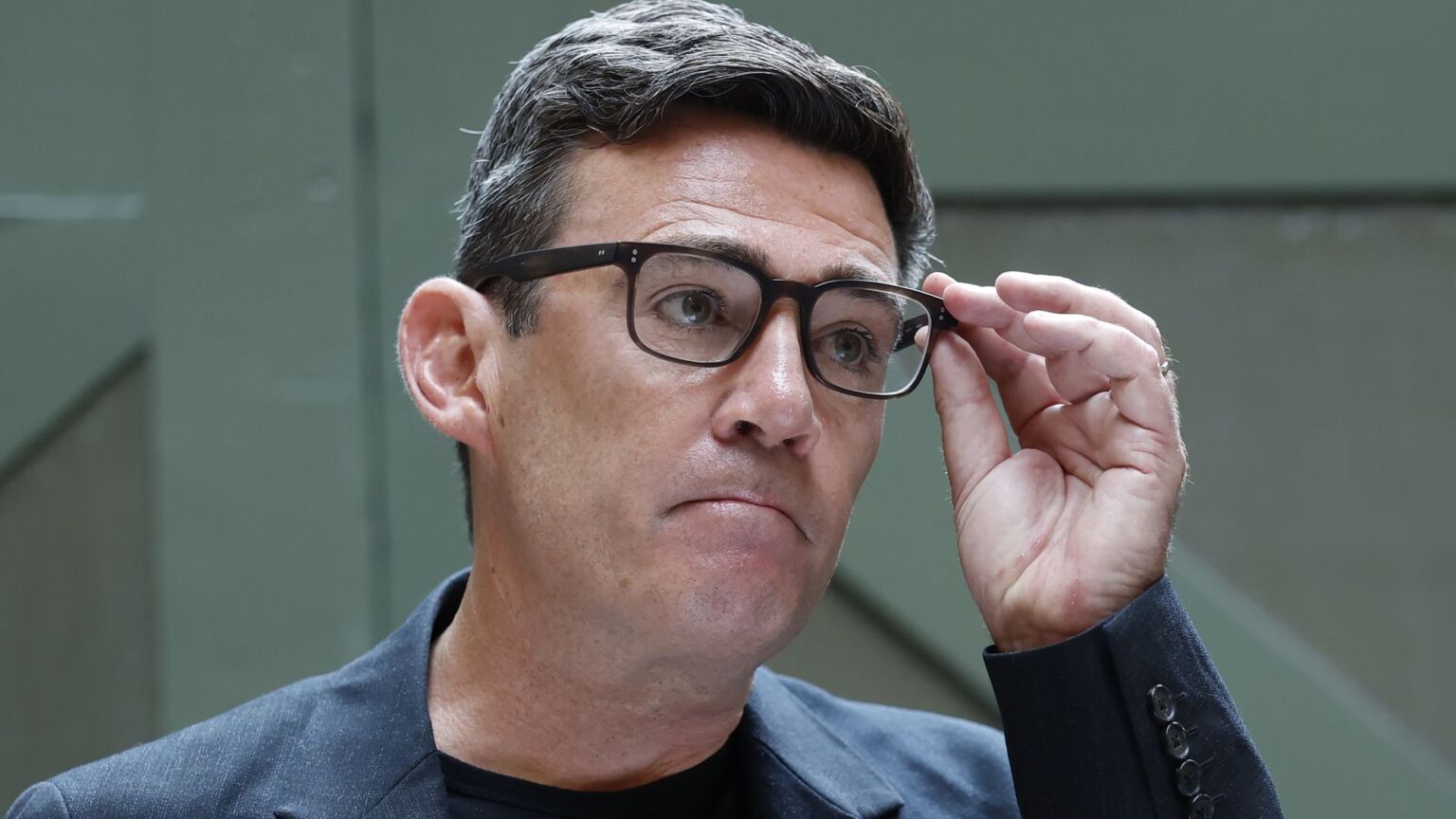
Andy Burnham has promised that ‘the north’ will be his lodestar when he takes the reins of power. Yet it seems the incoming regime could be drawing inspiration not from the north of England, but from North Korea. A raft of new measures clamping down on our online activity, proposed by the outgoing Starmer administration – from restrictions on VPNs (virtual-private networks) to enforcing so-called purdah rules during elections – have reportedly gained Burnham’s backing, bringing Britain’s approach to the internet in line with some of the least liberal and democratic countries on the planet.
Team Burnham confirmed earlier this week that Keir Starmer’s proposed ban on under-16s using social media will go ahead. And crucially, to enforce these age restrictions, the use of VPNs is likely to be heavily curtailed if not banned outright – for children and adults alike.
Essentially, VPNs allow users to disguise their location and their device’s IP address, making it possible to circumvent national restrictions. Their use has surged since July 2025, when the Online Safety Act began blocking age-inappropriate social-media content – and they have been in the Labour government’s sights ever since. Tech secretary Liz Kendall has promised an announcement on VPNs will come this month. A ban would bring Burnham’s Britain in line with totalitarian states like China, Russia, Iran, North Korea and Belarus.
And the crackdown won’t end there. Shortly after flouncing off X, culture secretary Lisa Nandy unveiled a green paper with plans to compel social-media channels and video-sharing platforms to prioritise what it calls ‘trusted’ content creators. In the name of tackling so-called mis- or disinformation, videos from the BBC and other public-service broadcasters will be given additional prominence on our news feeds, while content from independent creators will be artificially suppressed.
It’s not hard to guess what the government is up to here. After all, the BBC and mainstream media have broadcast their own fair share of actual misinformation – pushing elite orthodoxy on everything from trans to Palestine, even when it conflicts with the truth. Still, in Labour’s eyes at least, the Beeb can at least be trusted not to ask too many difficult questions about the issues that most animate the public – from rape gangs to small boats. Labour wants to replace the rough-and-tumble of the free internet – with its range of noisy, rabble-rousing dissenting voices – with a safe space where only state-approved opinions can dominate the discourse. And as if that were not Orwellian enough, Labour’s consultation on the ‘prominence’ regime does not allow respondents to say they are opposed to the state dictating what appears on our social feeds.
Perhaps the maddest proposal yet has come from Labour’s Lucy Powell, a Burnham ally who is expected to be promoted to deputy PM. Powell has suggested amending the Representation of the People Bill that’s currently working its way through the Commons to force social-media firms to follow similar rules to broadcasters during election periods. In other words, they should seek to enforce ‘impartiality and balance’ on their news feeds, even giving due weight to political parties based on their past electoral support. This would entail nothing less than the end of social media as a space for the free expression of public opinion – and during election time, no less. It would require a staggering amount of censorship and state oversight over what we post online and what posts we’re allowed to read, just as we’re making up our minds about who governs us.
As alarming and authoritarian as these proposals may be, none of them should surprise us. The Labour government’s all-out assault on free speech has turned the UK into an international embarrassment. Thirty people are arrested every day in England and Wales for posts on social media deemed ‘grossly offensive’ by police – that’s 12,000 arrests per year, more than America was arresting at the height of the first Red Scare. The Online Safety Act – passed under the Tories, but implemented and beefed up by Labour – means that vast swathes of the internet are now blocked to Britons who haven’t verified their age. This includes social-media posts about gender ideology and asylum hotels, a speech in parliament about the rape gangs, and a piss-takey article about the plummeting popularity of the Christian name ‘Keir’. Our right to blaspheme against Islam – or even criticise the most extreme manifestations of Islamist ideology – has also been constrained by Labour’s new Islamophobia rules. Not since the Crown licensing of the press was abolished in 1695 have we had a government so determined to keep a lid on dissent.
Burnham has now all but confirmed that a change of Labour leader will not mean a change of direction when it comes to our right to speak freely. We will continue careening down the slippery slope towards ever more insidious forms of authoritarianism. In the name of child protection and fighting misinformation, we could soon be living under speech restrictions that would make a tinpot dictator blush.
Be in no doubt, Big Burnham will be watching you.
Fraser Myers is deputy editor at spiked and host of the spiked podcast. Follow him on X: @FraserMyers.
Politics
Politics Home Article | Labour and Tories Refuse To Stand Candidates In Clacton By-Election
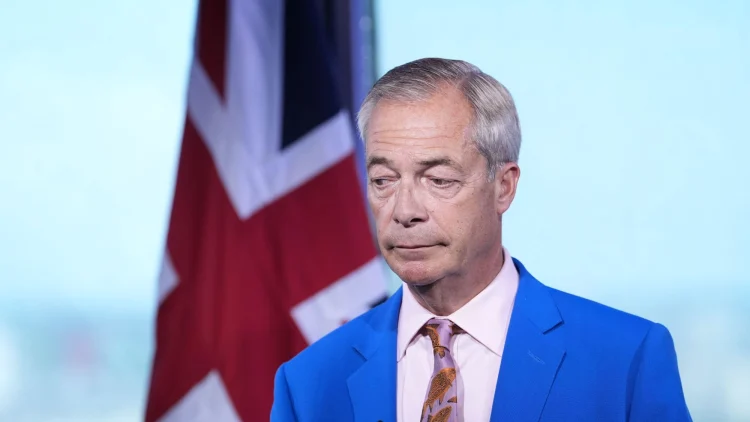

Nigel Farage resigns as the MP for Clacton, triggering a by-election. (Alamy)

2 min read
Labour, the Conservatives and Liberal Democrats all say they they will not stand candidates against Nigel Farage in Clacton by-election.
Farage has triggered a by-election in Clacton after resigning as MP in what he said would be “a people versus the establishment” contest.
The Reform leader is under investigation by the parliamentary authorities over allegations that he did not correctly report a £5m gift from crypto billionaire Christopher Harborne.
He is also facing an investigation over undeclared donations from close friend George Cottrell, who has been convicted of fraud in the US.
On the decision to not stand a candidate in the by-election, a Labour party spokesperson said: “Labour’s ruling body, the National Executive Committee, has decided not to stand a candidate in this circus.
Instead, Labour will remain focused on delivering for working people and holding Reform to account. Farage should let the parliamentary investigation into his finances run its course and face the consequences.”
Conservative leader Kemi Badenoch also confirmed that her party will not stand a candidate in the by-election.
“We will be standing a candidate in the real by-election, which will follow the standards investigation into Nigel Farage’s fishy finances. We will not be standing a candidate in the fake by-election that Farage is causing to distract people from what is happening.
The best thing for him to have done would have been to call a press conference and explain what he did with the money, apologise if needs be, and that would have been the end of it. Instead, he has been running away from scrutiny. No one is bigger than parliament. We all have to register our interests.
We, the Conservative Party, are very focused on uniting the country around sensible policies.”
The Liberal Democrats have also said they will not stand a candidate in the by-election. Party leader Ed Davey said: “If this by-election does go ahead now, we are calling on all parties to stand aside and refuse to give oxygen to Farage’s vanity project.”
Davey also went further in calling on the government to block the election until the parliamentary standard’s commissioner has finished his investigation.
“The people of Clacton should have all the facts before they cast their votes.”
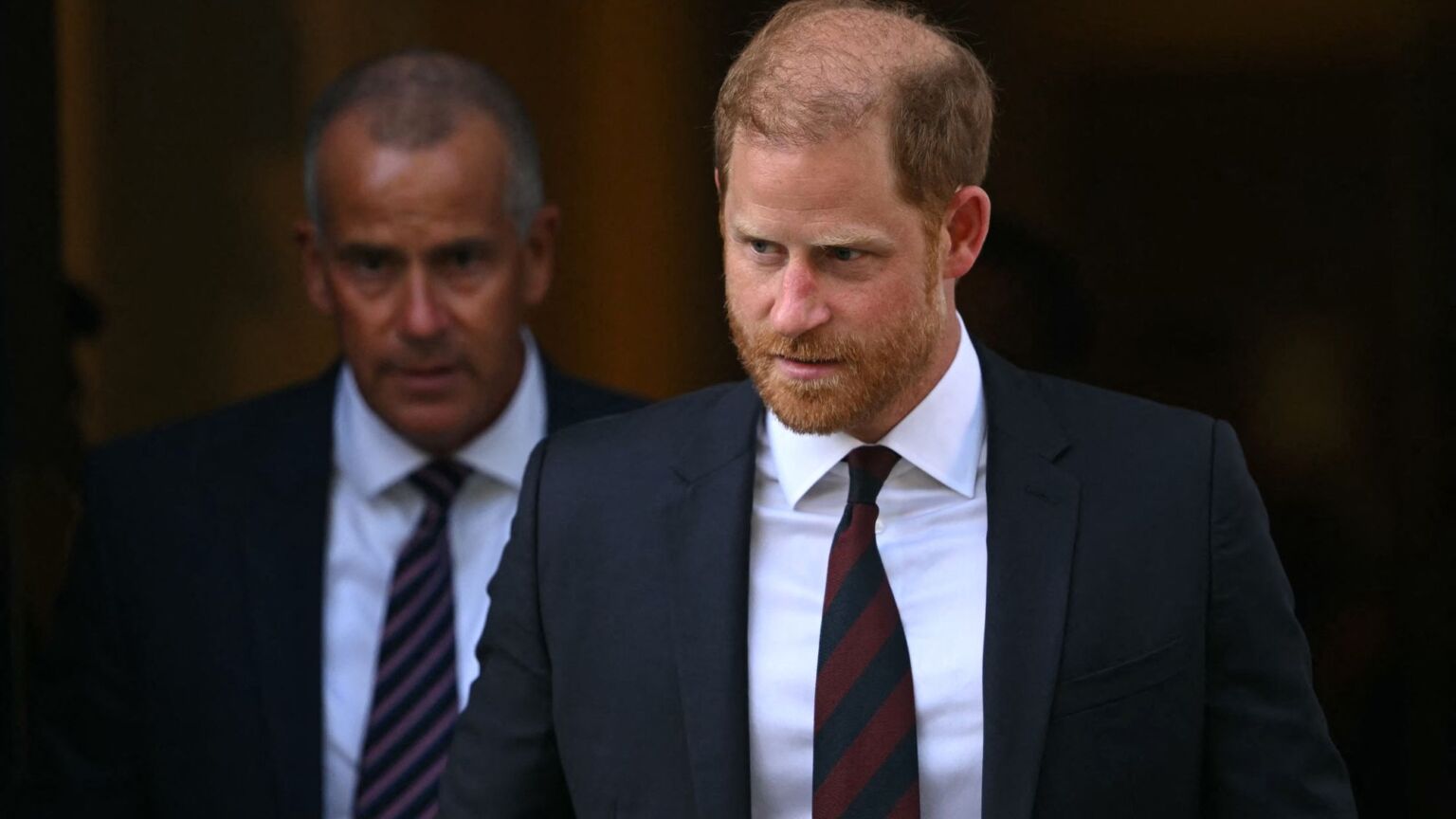
Prince Harry is having a bad week, and it is impossible not to be delighted. First, he learnt that taxpayers would not be footing the security bill for his family’s trip to the UK. Then he was refused a last-minute request for a room at Buckingham Palace. And now, best of all, in a rare victory for press freedom, the Duke of Sussex has lost his long-running legal case against the Daily Mail. I make that 3-0 to us commoners.
The High Court’s dismissal of all the claims that Harry and his posh pals brought against Associated Newspapers, the publisher of the Daily Mail, is worth celebrating. The judge in the case ruled that neither the prince nor Elton John, Liz Hurley, nor any of the other censorious celebs who accused journalists of phone hacking and blagging private medical records, could prove their claims. In fact, Mr Justice Nicklin told the claimants, just because information published about them was private did not mean that it ‘must have been unlawfully sourced’. Harry’s loss is a win for the journalists who were dragged into court and had their lives turned upside down by false allegations. And it is a victory for everyone who wants a free press rather than a media devoted to sycophantic propaganda.
In truth, the outcome of this case should never have been in doubt. The ginger whinger’s evidence never stood up to scrutiny. Sadie Frost may have given the performance of her life, summoning up tears in the witness box, but it turns out that legal cases are still won on the basis of facts rather than emotions. Yet time and again, Harry showed he’s not capable of recognising ‘the truth’ when it smacks him in the face.
Those he was close to would never leak stories about him, the prince told the court, even though he had previously accused friends of doing exactly that – and text messages showed he knew that this was happening. Harry also claimed he had cut off all contact with a woman when he found out she was a journalist, despite Facebook messages revealing this was absolutely not the case. He would not share information about his love life with strangers, he insisted, only for this to be disproved by his own tell-all, 400-page autobiography.
A sympathetic explanation might be that, despite receiving the best education money can buy, Harry is simply not that bright. But there’s more to these ‘untruths’ and contradictions than mere lapses of memory. Harry’s courtroom testimony, and the fact that the legal case burnt through an estimated £50million on lawyers’ fees, suggest the Duke of Montecito is not merely dumb but has an overinflated sense of his own importance. It’s not that Harry doesn’t know what’s true and what’s not – it is just the truth is far less important than getting his own way. He is self-entitled enough to expect journalists and judges, the legal system and the press to bend to his will.
He may be a spoilt brat, but let’s not forget that Harry was encouraged to engage in this expensive, time-wasting litigation by a coterie of lawyers, luvvies and a former Lib Dem MP associated with Hacked Off, a campaign group founded by Hugh Grant, to curtail press freedom. In delivering today’s ruling, the judge went so far as to brand Hacked Off adviser Dr Evan Harris as ‘dishonest’ for a plan he cooked up to hide the fact that one of the cases put before the court was beyond the statute of limitations. ‘At root, that proposal involved a deception’, the judge declared. Damning indeed.
If things had gone Harry’s way, he would now be celebrating a victory for money, influence and titles. What’s more, he hoped to be doing this from within Buckingham Palace.
Thankfully, his father had already kiboshed that part of the plan. The king, or at the very least a senior royal adviser, seems to have grown sick and tired of Harry’s constant to-ing and fro-ing over which members of his family will be coming to the UK and where they will stay. For the best part of a fortnight, we’ve been treated to a minute-by-minute account of Harry and Meghan’s ever-changing travel plans, revealed – without any hint of irony – by the privacy-loving couple themselves.
The duke and duchess originally proffered a meet-up with Archie and Lilibet, the king’s grandchildren, only to withdraw the offer when it became clear they were not going to get the bells-and-whistles security detail they wanted. Having first accepted, then rejected the offer of rooms at Buckingham Palace, Harry again changed his mind when it dawned on him that the royal surroundings would make a suitable backdrop for what he assumed would be a victory speech. Good on Charles for acting like any sensible parent and turning down the last-minute request and putting a stop to the whole circus.
As Harry heads off to Birmingham for the Invictus Games and in search of the one remaining reporter prepared to offer a positive spin on his endeavours, the rest of us should raise a glass to press freedom and demand the right to read what politicians, royals and celebrities would rather we did not know.
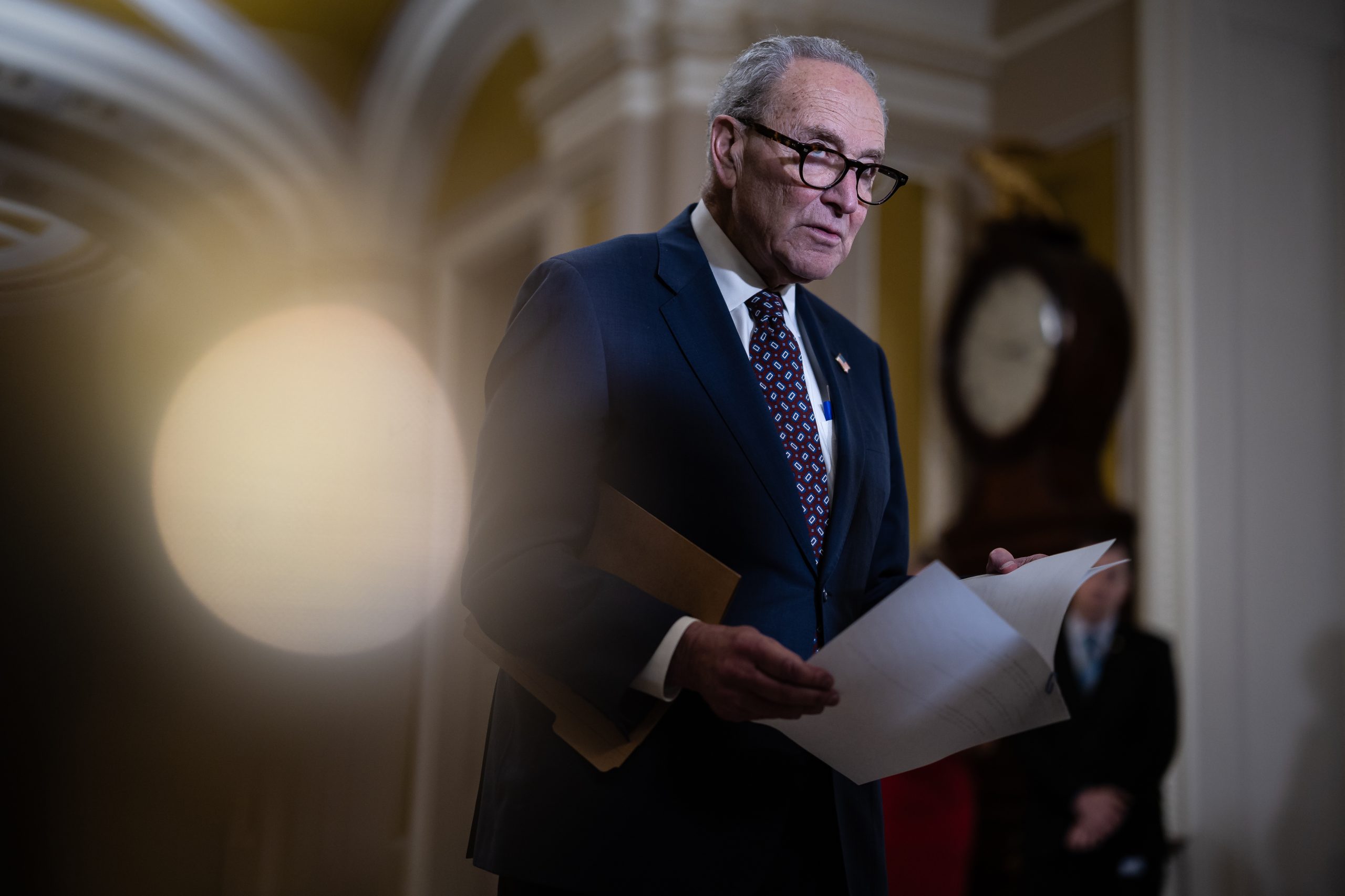

More than half of the Senate Democratic caucus has called for Graham Platner to drop out of the Maine Senate race, less than 24 hours after POLITICO reported that a woman the oysterman once dated had accused him of sexual assault.
Platner called the claim “false.”
Most Democrats previously stuck by Platner even as his beleaguered campaign battled scandal after scandal in recent months. By Tuesday, the tide had turned firmly against Platner, with 31 of the Senate’s 47 Democratic senators calling for him to drop out as of early Tuesday afternoon.
The revolt included some top former allies who had previously defied calls to distance themselves from Platner. Sen. Bernie Sanders (I-Vt.) said in a statement Tuesday that he had spoken with Platner and “in light of these very serious allegations, I have recommended that he step aside.”
And Sen. Elizabeth Warren (D-Mass.) on Monday said that there “can be no tolerance for sexual assault,” just months after referring to the progressive outsider as “my kind of man” while stumping for him in April.
The list — according to POLITICO’s tally of every sitting Democratic senator’s social media posts and public statements — also includes some of the party’s top leaders. Senate Minority Leader Chuck Schumer and Sen. Kirsten Gillibrand (D-N.Y.), the chair of the Democratic Senatorial Campaign Committee, said in a joint statement that he should withdraw and the DSCC “will not invest in the Maine Senate race if Platner remains on the ballot.”
More than a dozen Democratic senators appeared to have not yet publicly commented on Platner, and did not immediately respond to POLITICO’s request for comment on their stance.
It’s not just senators who are breaking with Platner. The Maine Democratic Party put out a joint statement calling for him to exit the race, and New York City Mayor Zohran Mamdani, who shares a number of top advisers with Platner but never endorsed him, also called for him to step down on Tuesday.
Platner has denied the allegations. But he said his campaign is “mindful of the political reality” and “taking the time to reflect on the best path forward for the state that I love” in a video released on social media Monday, shortly after POLITICO published its article.
Platner had not yet reached a final decision on his campaign.
Platner’s campaign did not immediately respond to a request for comment on the calls from senators for him to step aside.
The office of Maine Sen. Angus King, an independent who caucuses with Democrats and will serve with the eventual winner of the 2026 Maine Senate election, said he would not be commenting on Platner, per a longstanding policy not to comment on races involving his colleagues.
Two Democratic senators who had previously endorsed Platner, Ruben Gallego (D-Ariz.) and Sheldon Whitehouse (D-R.I.) condemned him and withdrew their endorsements, but did not explicitly call for him to drop out of the race in social media posts. Whitehouse’s office pointed to his Thursday statement when asked if he would demand Platner drop out, while Gallego did not immediately respond to a question on if he believed he should exit the race.
“The allegations against Graham Platner are troubling and deeply serious,” Gallego said on X. “I am rescinding my endorsement.”
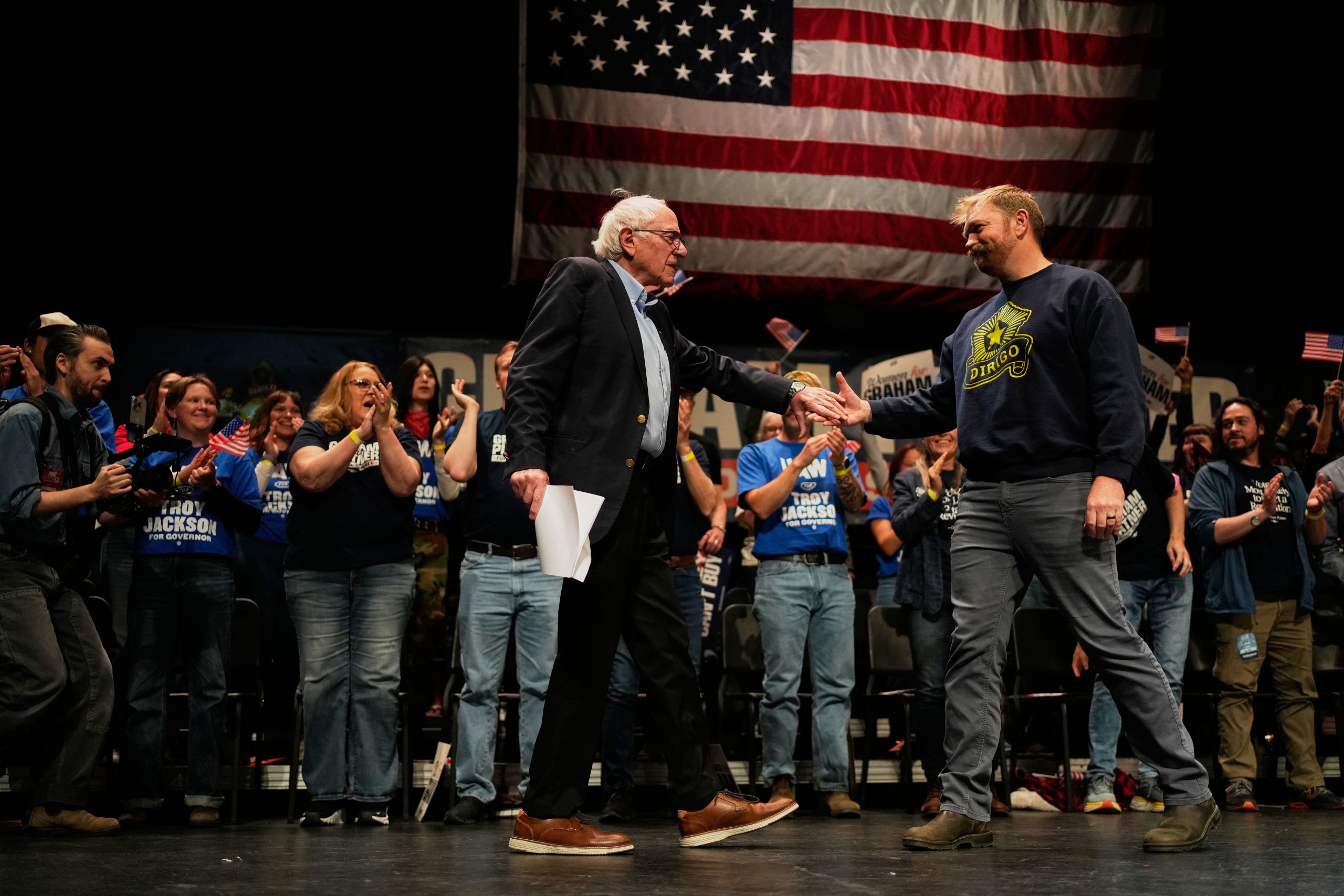

Sen. Bernie Sanders (I-Vt.) said he told Maine Democrat Graham Platner to end his Senate bid on Tuesday, in the wake of a POLITICO report that a woman who Platner dated said he forced her to have sex with him.
“I have spoken with Graham Platner about the best path forward for Maine. In light of these very serious allegations, I have recommended that he step aside,” Sanders said in a statement.
Platner has denied the allegations.
It’s Sanders’ first public remarks about Platner since the POLITICO report, and it comes after he’s stood beside Platner in the wake of other scandals. Numerous other elected Democrats and officials called on Platner to step down on Monday night.

9 min read
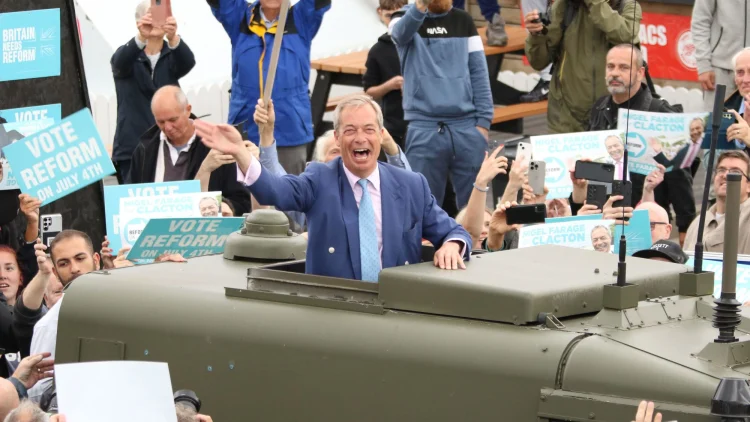
Nigel Farage has resigned as an MP, triggering a by-election in Clacton in which he says he will stand. How do the locals feel about him after his first stint? Harriet Symonds reports
“We don’t see [Nigel Farage], he doesn’t come here,” say a group of dog walkers on a blustery morning on the seafront in Clacton-on-Sea.
On Tuesday, Farage announced that he would resign as MP for Clacton and trigger a by-election in response to growing pressure over his financial backing. He insisted he has done nothing wrong, and described the by-election as “people versus the establishment”. Over the weekend, The Sunday Times revealed that Farage had failed to declare funding from George Cottrell, a convicted criminal involved in crypto gambling.
After the Reform UK leader was elected MP for Clacton in 2024, accusations that he was rarely present in the constituency became a familiar refrain. Farage has consistently dismissed such claims, arguing that the demands of leading a national political party inevitably limit the time he can spend locally compared with most MPs.
Speaking earlier this year, a spokesman for Farage told PoliticsHome: “There are 78,703 registered voters in Clacton. It would be impossible to meet every single one of them. Nigel’s visits are structured to ensure he visits and helps as many community groups, businesses, charities and constituents as possible.”
He does, however, live nearby. In late 2024, his partner, Laurie Ferrari, purchased a detached property in the area for £885,000. The house sits around seven miles up the road in Frinton-on-Sea — “the posh end,” as one Clacton resident describes it.
Last year, Farage denied accusations that he had avoided £44,000 in stamp duty by placing the property in his partner’s name, insisting she bought it with her own funds.
In Spring this year, PoliticsHome visited the constituency, where the MP’s absence was felt by several Clacton residents who told us they were uncertain whether Farage even held constituency surgeries. Nor, they said, were they sure if he had a constituency office at all.
The constituency office is discreetly located on Clacton seafront. Nearby is XO – Greek, a popular restaurant on the seafront owned by Jason Smedley. The restaurant hosted Farage’s election victory party in 2024, and Farage would drop in roughly once a month to catch up over “breakfast and a coffee”.
“The change has been phenomenal,” Smedley said. “Everyone hated him when he first came in, but now everyone is like ‘I love him’. If he’s in here, people flood in to see him and get a picture.”
He admitted he was initially reluctant to host events for Farage but now allowed the local Reform branch to hold meetings there as well.
Sources said that Reform did not want any branding outside the constituency office when it was set up. “At one point I had a big poster which I put in the door, which had got the Reform logo on it – that was taken away. They don’t really want it to be seen.”
Reform said the office location was kept a secret for security reasons. In 2024, Farage himself cited safety concerns when explaining why he did not hold open public meetings with constituents.
“Do I have an office in Clacton? Yes. Am I allowing the public to flow through the door with their knives in their pockets? No, no I’m not.”
Local government sources said the Reform leader did not hold traditional in-person surgeries, though they had heard of “invitation-only” meetings — including sessions with local business owners.
“Nigel has held surgeries online”, his spokesperson said.
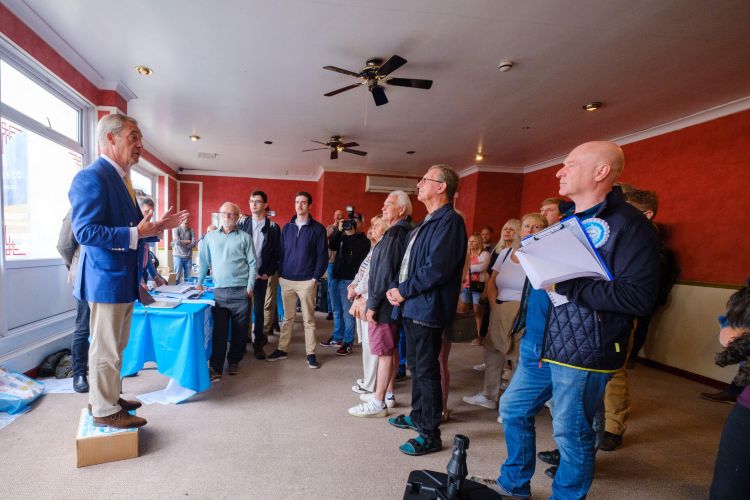
Farage’s social media showed he had visited a handful of local businesses in the constituency since 2024. The business surgeries held with the editor of the Clacton Gazette were also advertised on social media, the local newspaper and community groups online.
Unusually, when PoliticsHome visited his constituency in the Spring, Farage had the lowest total staff spend of all seven Reform MPs of £150,834.40. Farage has repeatedly insisted that his “personal MP expenses” are null.
According to the official staff register, Farage employed five staff to handle his parliamentary and constituency work. Sources familiar with the set-up said Farage’s parliamentary team in London handled his constituency casework, but there was one full-time caseworker based full-time in the constituency.
“Most of it is done by letter and email to be honest,” they said.
Still, some residents said accessing the MP remained difficult.
A local councillor told PoliticsHome they had occasionally taken on casework on Farage’s behalf. “People in my ward have brought issues to me because they’ve not been able to contact the MP,” they said.
“I wouldn’t know where to contact Nigel Farage,” said Vanessa, who had lived in Clacton for six years and had regular contact with the previous MP, Giles Watling.
Watling himself said constituents still occasionally approached him with problems. “People do feel slightly abandoned,” he said. “If it’s being managed at all, it’s being managed at arm’s length.”
Clacton itself presents the familiar paradox of England’s struggling coastal towns: picturesque seafronts and chronic economic malaise. Once a bustling holiday resort, the town now faces entrenched deprivation, high economic inactivity and a declining high street.
Official figures show that parts of nearby Jaywick — within Farage’s constituency — have been ranked the most deprived neighbourhood in England for four consecutive deprivation indices since 2010.
Economic activity in the wider Clacton constituency is significantly below the national average: roughly 60 per cent of working-age adults are economically active, compared with around 78 per cent across the UK.
The constituency is also unusually old. Nearly a third of residents are aged over 65, giving the area one of the oldest demographic profiles in England. Younger people often leave for work elsewhere, while retirees move in from London and the Home Counties.
These conditions have made it unusually receptive to anti-establishment politics. In 2014 the constituency elected Britain’s first UKIP MP when Douglas Carswell defected from the Conservatives and won the resulting by-election. Two years later nearly 72 per cent of voters backed Brexit.
Earlier this year, PoliticsHome did not have to walk far through the town to spot a Union Jack or St George’s flag cable-tied to a lamppost.
“The town looks more scruffy since he’s been an MP”, remarked Vanessa, who moved to Clacton six years ago. “Since [Farage] has been around here, you’re getting more shops being vacant”.
“My daughter is thinking of closing her shop now – she only phoned me yesterday to say I’m thinking of giving it up,” said Janet, another Clacton resident.
Along the high street, empty shopfronts sit beside amusement arcades and fast-food outlets. The town’s landmark pier — refurbished in recent years — remains one of the few clear signs of investment.
“It was on its way there anyway – but I thought [Farage] coming here would have livened it up”, added another resident.
.jpg)
Rachel Goldsmith, who runs the Old Market Café on the high street, said small businesses were struggling to stay afloat.
“It’s a struggle because everything has doubled,” she says. “I counted the other day, and there’s about 13 empty shops here.”
“Our main post office closed down — it’s now flats.”
Some locals complained that the only new businesses opening are nail bars and barber shops — an issue Reform UK has itself highlighted, claiming many such premises are fronts for money laundering and organised crime.
Farage was also known to frequent The Three Jays pub in Jaywick, described by locals as “his favourite pub”, a short drive from Clacton town centre.
“He’s always in the Three Jays having a drink,” chuckles one constituent.
Inside the pub, GB News played on the main television. Above the bar hangs a sign that reads: “Let’s keep the dumbfuckery to a minimum today.”
Union Jack flags hang in the windows, and the building itself is painted in a shade locals jokingly describe as “Reform blue”.
“That’s no coincidence,” said Rob, a regular who moved to Clacton more than 30 years ago and says he has watched the town steadily deteriorate.
Among the pub’s regulars there was little hesitation in expressing support for Farage. Immigration, empty high streets and a sense of national decline dominate conversation. Many saw the Reform leader as one of the few politicians willing to articulate their frustrations.
Yet some pointed out that the town’s current regeneration projects — including government-funded schemes intended to revive struggling high streets — have little to do with their MP.
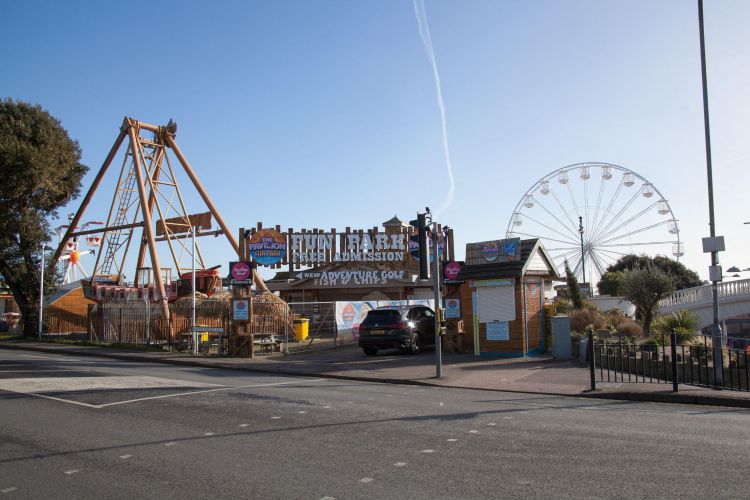
The town has been earmarked for £20m through the government’s “Pride of Place” regeneration funding programme, designed to support a ten-year redevelopment strategy.
A Clacton Town Board was established to oversee the initiative. But Farage — who sits on the board — has not attended any meetings since its creation, according to records, occasionally sending a staff member (George Ivil) in his place.
A spokesperson for Farage said: “Nigel has had a private briefing about the town board from council chief executive Ian Davidson, Council leader Mark Stephenson and the chair of the Clacton town board George Kieffer. He is well briefed on everything that is happening and fully supportive of the Love Clacton campaign.”
However, the complaints about abandonment were a common refrain. “The only time you ever sort of see him is if there’s a photo opportunity,” added another local resident.
Speaking back in the Spring, a spokesperson for Nigel Farage told PoliticsHome: “Nigel Farage is an active Member of Parliament for Clacton and is currently in the constituency as this article is being published.”
They pointed out that he made regular personal donations to charities and good causes, wrote a weekly column for the local newspaper and was the only MP to have ever held a business surgery in the constituency. They also stressed that MRP polls published since the last general election predicted an increased majority for Reform in Clacton.
But the words of some local politicians suggest he’ll be in for a tougher battle this time round than before.
“His excuse always seems to be that he’s the leader of the national party, so therefore he can’t be in the constituency all the time,” said one local councillor.
“But a lot of the time he’s not even in the country.”
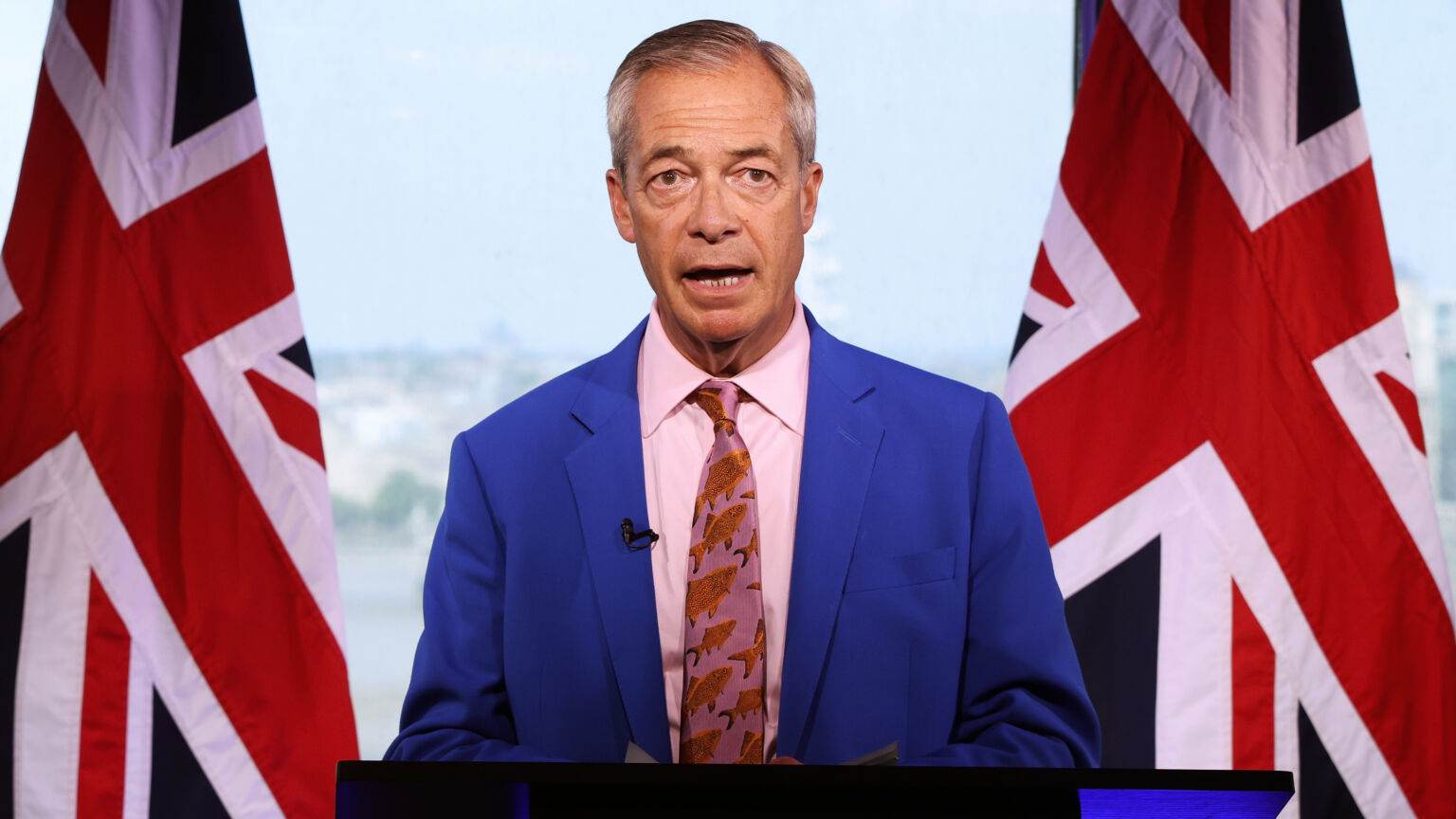
With righteous indignation, Nigel Farage has resigned today as MP for Clacton, triggering a by-election that he intends to fight. He’s giving up his seat in the hope he’ll win it back. Why? Because he believes it should be ordinary people, not the turbo-smug media classes, who determine his destiny. ‘Why should they be the people that decide my fate?’, he asked, spitting out the word ‘they’ with highly warranted contempt. Only ‘the people of Clacton’ should be ‘the judges of my actions’, he said.
It’s a bold move. For it wrestles Farage’s fate – and the future of populism itself – from the whining and mudslinging of the cloistered media classes and returns it to the cool deliberation of the people. It was in a televised press conference that he made his announcement. His voice quivering with rage, he slammed the media for obsessing over allegedly dodgy donations he received from rich pals. I’ve been subjected to ‘constant demonisation by the press’, he said, with the aim of hounding me from public life simply because I give voice to ‘the consensual view on many issues’. He then disarmed the knife-wielding media plotters, robbing them of their power by inviting the people of Clacton to pass judgement on him instead. It’s clever. And it’s risky.
The media have been sniffing for scandal around Farage for weeks now (well, years). The latest storm involves a £5million donation he received from a cryptocurrency investor in April 2024, before he became an MP, and some financial assistance he received from his longstanding ally, George Cottrell, who once did jailtime in the US for wire fraud. The parliamentary commissioner for standards is investigating the five million quid, which Farage did not declare. The media elites are salivating. Every earthly issue must now play second fiddle to their onanistic obsession with Farage’s ‘sleazy’ antics.
Two things can be true at once. One, Farage may not have followed all the rules on these donations (let’s see). And two, the media fever over the donations is a brazen political crusade motivated less by a love for probity in public life than by an ugly, burning urge to rid British politics of its best-known populist. Watching the scandal-hit Labour Party busily dig the grave of Farage’s career is almost too funny for words. Seeing the media say, ‘This is just about honesty in public life’ is even funnier. They must think we were born yesterday. We can all see the real slogan inscribed on the knives they’re wielding: ‘Finish Farage. Finish populism.’
The media elites spy an opportunity to do with the brute instrument of scandal what their kind have failed to do in the democratic realm: weaken Reform UK. They dream that newspaper headlines and backroom investigations will dent the clout of this party that ‘the gammon’ insist on voting for. It’s a highly anti-democratic endeavour dressed up as an effort to ‘restore trust’. Sadly for them, we’re not as dumb as they think. And Farage has now punctured their fake, bloated virtue by stealing their power to shape politics and giving it back to its only rightful exercisers: the people.
‘I am the most physically and verbally attacked public figure… of modern times’, he said. He reminded us that he’s had milkshakes thrown in his face, placards bashed over his head, death threats. The breaking point, he said, was The Sunday Times allegedly publishing a photo of the house where his daughter lives. He said he’s ‘never been angrier’. And now he’s decided it shouldn’t be milkshaking silver-spoon radicals or those posh hacks still blubbing over Brexit who determine his future – it should be working-class Clacton.
The Clacton by-election will be the anti-Makerfield. That by-election was triggered to bring about a coronation for the King of the North, Andy Burnham, so that he could sweep to power and fix the Labour Party while also enforcing his vision for Britain without the benefit of anything resembling a people’s mandate. In contrast, the Clacton by-election will invite ordinary people to pass judgement not only on Farage but also on the media, on the elites’ use of scandal as a political tool, and on the anti-populist intrigue of the cushioned classes. I, for one, relish the empowerment of the good people of this poor seaside town that Remoaners loathe because 70 per cent of them voted Brexit. Their unjaundiced judgement will be brought to bear on the breathless machinations of the privileged.
The stakes could not be higher. Many – including the bloody media – will strive to dent Farage’s chances. Labour activists will put a peg on their noses and beg the sunburned masses for a vote. It will be rough, and entertaining. And if Farage wins, it might just give the populist ethos the injection it needs. Let’s go. Let the people decide.
Brendan O’Neill is spiked’s chief political writer and host of the spiked podcast, The Brendan O’Neill Show. Subscribe to the podcast here. His latest book – After the Pogrom: 7 October, Israel and the Crisis of Civilisation – is available to order on Amazon UK and Amazon US now. And find Brendan on Instagram: @burntoakboy.

5 min read
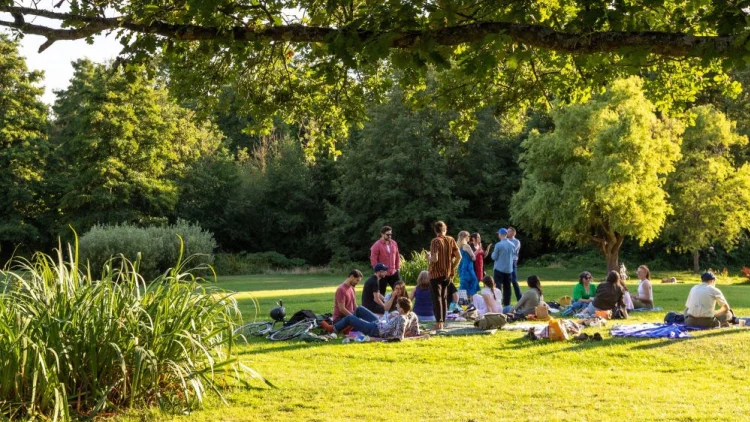
Shared public spaces like libraries, parks and sports clubs help create strong communities. No longer can they be seen as nice-to-haves.
The work of councils reaches into almost every part of people’s lives.
It is there when a child needs protection, when someone needs care, when a family needs a home, when a road needs repairing, when a library gives someone a quiet place to learn, when a local business needs support, or when a community is hit by crisis.
That is why the new report by the Local Government Association (LGA), LG2040: Forces Shaping Local Government, matters. Published today (Tuesday), it looks ahead to the forces that will shape councils and communities over the next 15 years.
Its message is clear. Unless we act now, the country risks entering the 2030s and 2040s with weaker communities, higher demand for crisis services and a growing gap between what residents need and what councils can deliver.
One warning stands out. The loss of social infrastructure is becoming one of the biggest risks facing the country.
For too long, the places and relationships that hold communities together have been treated as valuable, but only if budgets allow. Libraries, parks, youth centres, leisure facilities, community hubs, sports clubs and shared public spaces cannot be seen as optional extras.
Social infrastructure is the foundation of strong communities. It is the quiet, everyday network that reduces loneliness, supports families, keeps young people engaged and helps older people stay connected. It is often where problems are spotted early, long before they become crises.
When these places disappear, the need does not disappear with them. It shows up in the NHS, in policing, in mental health services, in housing need, in community safety and in rising demand for urgent support. We pay for the loss many times over.
The pressures facing communities are changing. People are living longer. Young people face more insecure prospects. Health inequalities remain deeply rooted in some places. Climate shocks, economic insecurity and falling trust in institutions do not arrive neatly one at a time. They collide.
When they do, the strength of a community’s social fabric often determines whether a challenge is managed early or becomes a crisis.
That is why prevention cannot just be a slogan. It has to mean real places, real services and real relationships.
It is the library that keeps a teenager learning. The park that supports physical and mental health. The community centre that gives an older person somewhere to go. The youth worker who notices when something is wrong.
At its best, local government helps stop people falling through the cracks in the first place. But councils cannot rebuild the foundations of community while being forced to spend more and more of their budgets responding to acute need.
The current model is not sustainable. Councils cannot keep absorbing rising demand for care, children’s services, homelessness support and other urgent help while the funding, flexibility and certainty needed to prevent demand are squeezed.
That means a new settlement for local government.
Councils need sustainable long-term funding so they can plan ahead. They need greater freedom to join up services around residents, rather than work around Whitehall departments. They need the ability to invest in prevention, not just manage crisis. And they need national government to recognise social infrastructure as essential to the country’s resilience.
This should be an urgent priority for any prime minister who wants to improve public services and strengthen communities.
National reform will only work if it is rooted in neighbourhoods, towns and cities, and if councils are treated as partners with the tools to support people earlier.
This is also a significant moment for local government itself. Councils are facing major structural change through local government reorganisation, rising demand, tight budgets and growing expectations from residents. Recent local elections have brought a wider range of political voices into town halls, reflected in the growth of political groups at the LGA.
The LG2040 report is not a prediction of decline. It is a warning that the choices made now will shape the country we become by 2040.
Across the country, councils are already finding new ways to support people earlier, use data better, work with residents and build stronger local partnerships. But local innovation cannot replace national reform.
If we want a country where people feel connected, supported and confident about the future, we have to invest in the places and services that make that possible. We have to stop treating libraries, parks, youth services and community spaces as expendable, and start seeing them as part of how we keep people well, safe and connected.
As I begin my term as Chair of the LGA, I want to champion the role of councils in shaping the future of this country. Local government is not simply there to pick up the pieces when other systems fail. It is where prevention, resilience and trust can be built in people’s everyday lives.
That is the future we should be building towards. And it starts by rebuilding the social fabric of this country.
Cllr Eamon O’Brien is Chair of the Local Government Association
Politics
Anna Ridgway: Burnham has the chance to do what no politician has dared – scrap the triple lock
Anna Ridgway is National Coordinator for Students for Liberty UK.
Three months ago I wrote on this site that Britain needs to start thinking differently about the state pension. I was called selfish, ignorant, cruel, and (my favourite) a “lefty.” Seventy-three comments, many of them furious. One commenter told me I just need to get off social media and stop doing university courses that do not lead to a good income. Noted.
But here is what has changed since April. Keir Starmer is gone. Andy Burnham is almost certainly about to become Prime Minister. The fiscal case I made has not changed much. The OBR still projects £80 billion more in state pension spending by the 2070s, with over half driven by the triple lock. The IFS still shows the full new state pension running £30 a week higher than it would under simple earnings indexation. Annual spending is still £12 billion above what an earnings link would have cost. None of this is news.
What is new is that the consensus against the triple lock has hardened into something close to unanimity. As Sky News reported recently, think tanks from across the political spectrum now warn the policy is unsustainable. The original estimates when it was introduced in 2012 suggested it would cost around £5.2 billion a year by 2029–30 and push the state pension up by an average of 0.2 percentage points above earnings growth. It has blown past both figures.
Even the Resolution Foundation, a centre-left outfit once led by the current pensions minister Torsten Bell, has called time on it, publishing a report in June called What a Ratchet! which found that pensioner poverty fell by 15.8 percentage points in the fourteen years before the triple lock existed, driven mostly by Pension Credit, and that the policy has cost the Treasury three times more than originally expected while doing comparatively little for the poorest pensioners. When a think tank that close to Labour is saying this, it is worth paying attention. More importantly, they proposed a concrete replacement. More on that shortly.
Now, Burnham has publicly committed to keeping the triple lock. Of course he has. Every party leader does. But there are reasons to think he might actually be the one to ditch it, and reasons to think he should.
The first is that he has watched, up close, what happens when you reform pensioner benefits stupidly. The winter fuel allowance debacle was not the only thing that sank Starmer, but it became the one voters kept bringing up. Labour MPs called it “kryptonite” on the doorstep. The reason it stuck was not the policy itself but the execution: announced three weeks into government, with no groundwork, no explanation of what the savings would fund, and no compensating offer. It looked like taking from pensioners for nothing in return.
The lesson is not “never touch pensioner spending.” The lesson is “don’t do it badly.” Burnham can learn from this. He can do it differently.
His own advisers are already telling him to. Lord O’Neill, the former chairman of Goldman Sachs Asset Management and the man who coined “BRIC”, has called ending the triple lock a “no-brainer.” Andy Haldane, formerly chief economist at the Bank of England, has warned that Britain cannot afford its current spending commitments. Both sit at the centre of Burnham’s economic thinking, and both are pushing hard.
And Burnham has something Starmer never had – goodwill.
He is the most popular figure in the Labour Party by a country mile. He won Makerfield with a majority over 9,000, smashing expectations. He has framed his pitch around “economic renewal” and trust. If a prime minister is ever going to spend political capital on something difficult, the first six months are when you do it. Everyone knows this. Burnham knows this.
The Resolution Foundation has even handed him the replacement policy on a plate. A “smoothed earnings link” would keep the state pension tracking wages over the long run, while still protecting its real value in years when inflation outpaces earnings. What it would not do is keep ratcheting the pension above earnings every time the economy misbehaves. The difference in cash terms? About £1.30 a week by 2029–30. That is it. £1.30 a week less for pensioners, £650 million a year back to the Exchequer, growing over time.
£1.30 a week. That is what stands between the current policy and a fiscally sustainable alternative. Try telling me that is not a trade worth making.
There is also a looming absurdity that makes reform almost unavoidable. The full new state pension is now £12,548 a year. The personal allowance is frozen at £12,570. Next year, the state pension will breach that threshold, and pensioners receiving only the state pension will start paying income tax on it. Burnham has said he will exempt them. Fine. But that is yet another sticking plaster on top of a system that is generating its own contradictions faster than politicians can patch them.
Yes, this is politically risky. YouGov found in May that 66 per cent of the public support keeping the triple lock. Only 14 per cent oppose it. Landslide numbers. But dig into the detail and the picture shifts. When people are presented with specific alternatives, like a double lock or a smoothed earnings link, support and opposition split much more evenly. The British public might well accept change if anyone in politics actually tried to explain one.
So far, nobody has.
Westminster knows all this, by the way. As this site noted back in April, the triple lock is an open secret. Almost every economist, journalist, and politician privately accepts it is unsustainable. They keep it because older voters turn out, younger voters do not, and nobody wants to go first. That is not principle. It is cowardice dressed up as compassion.
Burnham could break the pattern. Not by cutting pensions or punishing pensioners, but by swapping a volatile and badly designed indexation formula for a stable one, and being straight about why. He could say: we are protecting the state pension, we are keeping it rising with wages, and we are using the savings to bring down the tax burden on young workers, build houses, and fund training for people locked out of the labour market. Call that an attack on pensioners if you like. I would call it governing.
Will he do it? The early signs are not encouraging. Burnham recently did a Reddit “Ask Me Anything” session, presumably to show he is the kind of leader who engages with difficult questions. One of the most upvoted questions asked whether it is time to abolish the triple lock. His answer: “I appreciate there’s a lot of debate about this but it is important that the commitment in the manifesto stands.” That is not a leader preparing the ground for reform. That is a politician reading from the same script as every other politician who has ever been asked this question.
His public statements are no bolder. Defenders will point out, as they always do, that the UK state pension remains low by international standards. That is true. But the triple lock is not a policy designed to reach a target and stop. It is a ratchet with no ceiling, and keeping it because the pension is still comparatively modest does not make the mechanism any less broken.
The economists around Burnham are serious. The fiscal arithmetic does not go away. And the political window is as open as it is likely to get. Plenty of people doubt he has it in him. They may be right. But if Burnham ducks this, the next prime minister will face the same problem under worse conditions. And the generation paying for it, my generation, will still be here, still paying, still waiting for someone in charge to be honest.
I said in April that symbolism does not pay the bills. Three months on, I see no reason to update that view.

Nigel Farage has announced that he will resign as a member of parliament and force a by-election in the constituency of Clacton.
In a statement on Tuesday afternoon, the Reform UK leader vowed he would stand as a candidate in the contest so that voters in Clacton could be the “judges of my actions”.
Farage delivered the live statement concerning his “future in public life” after facing growing questions over a series of donations. He is facing an investigation by the parliamentary standards commissioner over a £5 million gift he received from crypto-billionaire Christopher Harborne.
Farage, who returned to frontline politics shortly before the 2024 general election, took aim at the “mainstream media” and the “establishment”. He insisted that he had done “nothing wrong”.

MDU warns Chancellor clinical negligence system ‘not fit for purpose’

Northern Ireland RE curriculum is ‘indoctrination’ – Supreme Court
The Reform leader then declared his intention to vacate his parliamentary seat and force a by-election in Clacton in order to give voters a chance to “stick two fingers up to the establishment”.
Farage stated: “I thought about it hard and I have decided today I will resign as a member of parliament for Clacton-on-Sea, thereby forcing a by-election, which should happen, I hope, in short order.
“Now I’ve decided that the people of Clacton should be the judges of my actions. This will be a people versus the establishment by-election. It’s a chance to stick two fingers up to the entire establishment to frankly tell them where to go. And that is why I will be putting my name forward to stand in this by-election.
“I will fight to win. I will fight to continue the political revolution that Reform has started, and I would say this to you, the voters of Clacton, if I win, you win, because if I lose, they win, and we will never with the two old parties get the type of fundamental change that we need to fix broken Britain.”
This is a breaking news story. Refresh the page for updates.

Bitcoin Bulls Push for $63K Amid US Chip Slide, Micron Nears 10% Drop
Christopher Nolan compares this “Odyssey” actor’s impact to Heath Ledger in “The Dark Knight”

Big Burnham will be watching you


-

 Fashion4 days ago
Weekend Open Thread: High Hopes
-

 Fashion1 day ago
Open Thread: What Great Books Have You Read Recently?
-
 NewsBeat3 days ago
Taylor Swift and Travis Kelce wedding staffer hilariously struggles to keep her cool while checking in megastars
-

 Politics4 days ago
The House | “Reframing the debate from a binary discussion of winners and losers”: Yuan Yang reviews ‘We Are Not Machines’
-
 Crypto World6 days ago
Airdrop Registration Becomes Key Focus For Remittix As RTX Launch Updates Approach
-

 Crypto World4 days ago
Standard Chartered Secures MiCA License as ESMA Adds 37 New Crypto Firms
-

 Business1 day ago
AXT Shares Jump Nearly 14% as Semiconductor Materials Maker Rebounds on AI-Linked Indium Phosphide Demand
-

 Sports6 days ago
Broncos roster: OL Ben Powers (No. 74) entering final year of contract
-

 Crypto World6 days ago
Binance stock trading tops $1B in first month after launch
-

 NewsBeat7 days ago
Presenter Caroline Flack’s brother Paul Flack dies aged 55
-
Crypto World1 day ago
SK hynix (000660.KS) Stock Dips as $28B Nasdaq ADR Offering Drives AI Memory Expansion
-

 Crypto World6 days ago
Alibaba-affiliate Ant Group enters the humanoid robot market with 12 deals
-

 Crypto World2 days ago
South Africa proposes crypto tax guidance under existing rules
-

 News Videos1 day ago
Best Time to Enter Small Caps Right Now? Another Bull Run? | Financially Free
-

 Tech2 days ago
Lenovo laptops are now shipping with YMTC SSDs, a sign of Chinese NAND entering the mainstream
-

 Business6 days ago
Meta Platforms Stock Jumps 7% Today as Bloomberg Reports Company Plans to Enter the Cloud Business
-

 News Videos16 hours ago
Whats Hidden Inside This Cash Register? #treasure #reselling #money
-
 NewsBeat5 days ago
New exhibition reflects five decades of movement between island of Ireland and GB
-

 Business5 days ago
What a 10 Percent Drop Means for Buyers, Sellers and Renters
-

 Crypto World5 days ago
Binance Re-Enters Philippines As EU MiCA Rules Restrict Access
You must be logged in to post a comment Login