
Politics
For Belgium's Beltway fans, a rout was the best revenge



Belgium’s sports authorities do not appear to have fully moved past the controversy that shrouded their Round of 16 matchup against the United States, but Belgian fans in Washington have.
Folarin Balogun, the American striker whose red-card punishment was suspended by FIFA just before that game, is now barely top of mind.
“I don’t think it had any impact on the game,” Michael McCusker, a Brussels native, said of FIFA’s decision. “Did it give us the extra push? I don’t know. The USA were terrible.”
The White House lobbied hard for Balogun to play against Belgium. And President Donald Trump took all the credit when FIFA lifted his suspension. The Royal Belgian Football Association, in turn, formally challenged the decision. Fans blasted FIFA’s reversal as politically motivated, arguing the organization had bowed to Trump.
But even with Balogun lining up on Monday, the Belgians made mincemeat of the U.S., never trailing in the match. For Belgium’s Beltway fans, winning seems to have taken care of everything.
“I woke up that morning feeling really good,” Margo Vandenbroucke, a Leuven native who works at the International Monetary Fund. “I walked into work that morning and everyone was clapping for me, for Belgium. I think that was the best way of showing that it didn’t matter.”
But if Belgian supporters abroad have moved on, the Balogun scandal is still alive and well in Brussels. In a letter Wednesday, 72 members of the European Parliament called for an investigation into FIFA President Gianni Infantino — and whether his relationship with Trump played a role in the decision to reverse an on-field disciplinary action.


We hope you love the products we recommend! All of them were independently selected by our editors. Just so you know, HuffPost UK may collect a share of sales or other compensation from the links on this page if you decide to shop from them. Oh, and FYI — prices are accurate and items in stock as of time of publication.
I’ve said it before, and I’ll say it again: the more I shop, the more I want. That is the plight of a shopping writer.
While I’m lucky enough to test probably close to a thousand products a year, I can’t help but build a wishlist of more fashion, beauty, jewellery, and wellness bits and bobs I want along the way.
And while I’ve already rounded up all of the products I loved in July, if you’re looking for shopping inspiration, I thought I’d be generous and share what’s on my wishlist this payday. Just don’t sell it out before I have a chance to buy it too!
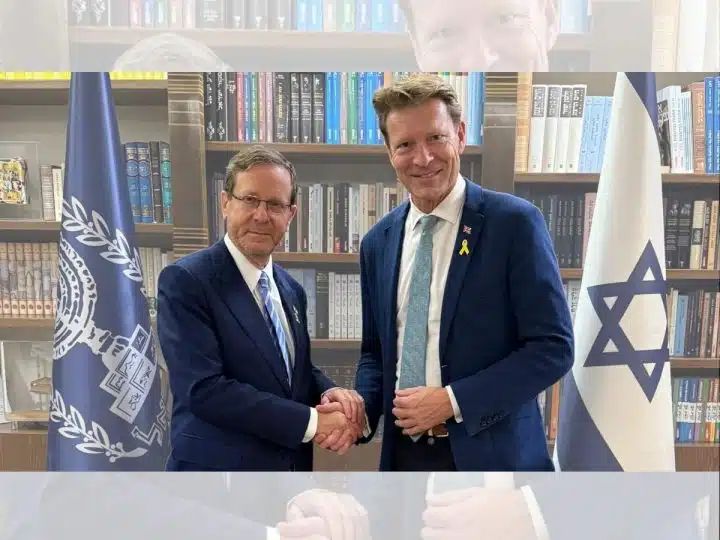

The parliamentary standards watchdog has opened an investigation into Reform UK deputy Richard Tice. The allegation focuses on Tice failing to declare an interest that related to a Commons debate on Israeli influence.
Tice himself has disputed media reporting, although the following claim is in part at odds with what the Parliamentary Commissioner for Standards stated.
Contrary to garbage in media:
I am being investigated for standing against antisemitism. You could not make it up. Standards Commissioner is considering complaint by anti semitic anti Israel lobby group over whether I should have referenced my register of interests at start of…
— Richard Tice MP
 (@TiceRichard) August 3, 2026
Richard Tice claims probe is over antisemitism stance
In full, Tice said:
Contrary to garbage in media:
I am being investigated for standing against antisemitism. You could not make it up.
Standards Commissioner is considering complaint by anti semitic anti Israel lobby group over whether I should have referenced my register of interests at start of a debate on UK democracy and Israeli influence.
The same anti Israel group failed to notify Commissioner that Ayoub Khan MP did not declare his substantial donation received from a pro Palestine group.
Funny that…..
Adding further context, the BBC reported:
Reform said Tice did not mention in his 22 June speech that he had been on a trip to Israel last September, funded by a pro-Israel lobbying group.
The trip has been listed in Tice’s Declaration of Members’ Interests.
Here is what the Parliamentary Standards Commissioner published regarding the ongoing investigation:

Therefore, it is not the case that the commissioner is investigating Tice for “standing against antisemitism”, as he suggested.
The ‘Rule 6’ stipulates:
Members must always be open and frank in declaring any relevant interest in any proceeding of the House or its committees, and in any communications with ministers, members, public officials or public office holders.
Additional guidance states that MPs can refer to register of interests entries but:
Such a reference will not suffice on its own, as the declaration must provide sufficient information to convey the nature of the interest without the listener or the reader having to have recourse to the Register or other publication.
Israeli influence
The debate in question happened as a result of a Parliament petition passing 100,000 signatures. The petition read:
We are concerned about reported Israeli state-linked and pro-Israel lobbying activity in UK politics. We believe it is important to determine the scope and impact of any such influence campaigns.
We feel that the horrific devastation in Gaza, the ongoing suppression of Palestinians in the West Bank, and the UK’s political response underline the urgent need to scrutinise how pro-Israel organisations, networks, and lobbying efforts may shape government decisions, party policy, and public debate.
Featured image via Office of the President of Israel/ X
By Willem Moore

Our family bathrooms may not be dedicated to them the way that they were in the ’90s, but dolphins are still a really popular mammal. I mean, of course they are, look at their wee faces!
One thing we have been learning over time, however, is that they are a lot more mischevious than we first thought. For example, did you know that dolphins like to swim through self-made bubbles and surf in waves? Adorable!
However, I just learned something about these scamps of the ocean that is both horrifying and, to be honest, absolutely hilarious.
The reason why dolphins taunt pufferfish
In a BBC series called Spy In The Pod, a documentary that used hidden cameras disguised as tuna and squid, to go into the heart of the dolphin’s world and get up close with their everyday lives.
One part of the footage revealed that dolphins appear to get high off pufferfish defence chemicals.
According to The Smithsonian, pufferfish produce a potent defensive chemical, which they eject when threatened. In small enough doses, however, the toxin seems to induce “a trance-like state” in dolphins that come into contact with it.
In the documentary, the dolphins gently played with the pufferfish, passing it between one another (puff, puff, pass, anyone?) which was in direct contradiction to what they did with other fish, which they immediately tore apart.
In a hilarious development, the dolphins were also filmed floating just underneath the water’s surface, mesmerised by their own reflections. Just like we do in club toilets at 2am!
Researchers believe this was not a one-off
Speaking to the Daily Mail, series producer Rob Pilley said that he didn’t believe this was a one-off encounter, saying: “The dolphins were specifically going for the puffers and deliberately handling them with care.”
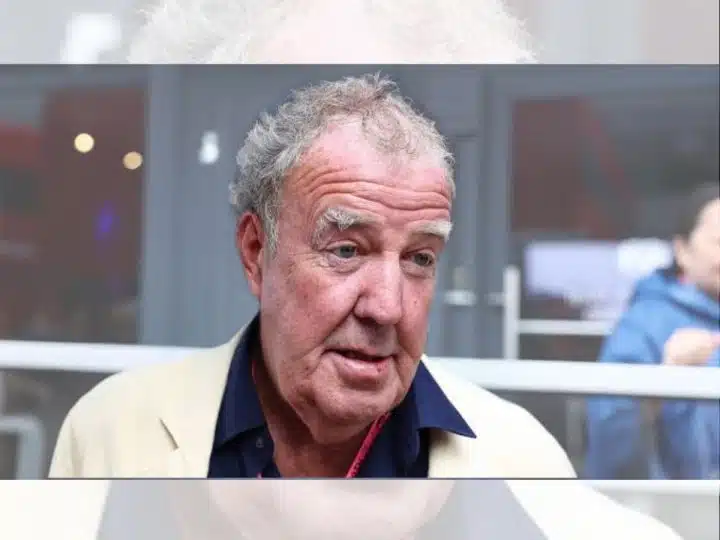

There are many miserable people in Great Britain who love to spread their misery around. One such person is Jeremy Clarkson, who seemingly spends his free time devising new ways to belittle benefit claimants.
“It is SO kind of you to go to work every day so that I don’t have to. Thanks to you I was able to buy an even bigger television this week”
— Politics UK (@PolitlcsUK) August 3, 2026
 NEW: Jeremy Clarkson says benefits claimants should be forced to write a genuine thank you email to a random worker every week
As many have pointed out, Clarkson himself is a beneficiary of government money. In other words, expect a thank you letter from him sometime soon.
Jeremy Clarkson, the meat w*nker
In his latest piece for the Times, Clarkson compares welfare recipients to dogs. As if that wasn’t bad enough, the broadcaster suggested that welfare recipients are actually worse than animals, because “at least dogs are grateful”.
Speaking of gratitude, now is a good time to remind you Clarkson once punched a man because the platter of meat he brought was cold — not hot, as Jeremy would have preferred. Is this the famous ‘gratitude’ he’s speaking of?
Clarkson’s piece begins:
As I’m sure you’ve heard, there are now more than a million young people in this country who are not working. They’re not even looking for work. They’re just sitting at home all day, gormlessly watching shortform nonsense on their massive vulgarsonic televisions.
Nearly a million young people being out of work is true. The idea that none of them are “even looking for work” is some shite he made up. Also, we’re not sure he should be criticising people for “gormlessly watching nonsense on television” given that he was the host of Top Gear.
If you live in the world, you’re no doubt unsurprised to learn that a significant number of young people are out of work. The high streets are run down, many jobs have been lost to automation, and people can’t afford to go out, which means fewer jobs in hospitality. These are all areas in which young people traditionally worked, so of course fewer of them are in work.
Plus, the rise in national minimum wage has reduced the jobs available for youngsters.
While he’s coming at it from the wrong angle, Clarkson isn’t wrong to suggest social media is having an impact. Because of phones, we’re never more than a swipe away from seeing how the other half lives. You don’t think that will instill a sense of hopelessness in young people who can’t even get an interview in retail?
Clarkson clueless about PIP
Like everyone on the right, Clarkson doesn’t understand how Personal Independence Payments (PIP) work. Clarkson suggests they’re given to people for not working, but Rachel Charlton-Dailey explained:
PIP isn’t an out-of-work benefit and has nothing to do with employment.
Here’s what Clarkson said:
And what makes this especially dispiriting is that if they’ve got ants in their pants, or ADHD as it’s now called, or some other head-based issue with an acronym, the state will give them up to £194 a week. Which is £100 more than they’d get if they got off their arses and did some kind of part-time work in the local shop.
Charlton-Dailey reported that about four in 10 claimants with ADHD receive the top rate of £194. As this is PIP, many will be in work because that’s how PIP functions.
Misery loves company
Clarkson’s piece contains a long section about his dogs, in which he admits that they sometimes shit in his house (training issue). He then gets to his idea to belittle benefit claimants:
It’s very simple. Every week, when the benefits are paid, the recipient is given the email address of a randomly selected person who is getting up and going to work every day. And they are told that unless a proper and genuine email is sent, thanking the working person for their generosity, the benefits will stop. And I’m not talking about a cursory “thanks mate”. I want fulsomeness. I want to hear what they’ve done with the £194 I gave them that week. And I want effusiveness as well. I want to feel their gratitude.
“It is SO kind of you to go to work every day so that I don’t have to. Thanks to you I was able to buy an even bigger television this week”
This way, the communists in the Labour party would be happy because the benefits are still being paid. And the taxpayer will feel a bit better too because they’re at least being thanked.
This might not need pointing out, but this is blatant right-wing propaganda. We have a benefits system to ensure:
- Those who become unemployed can survive between jobs
- Sick and disabled people don’t become homeless
- People of retirement age are able to retire
£29 a week doesn't even cover a basic grocery top-up, yet @JeremyClarkson thinks disabled people and trauma survivors owe the public a handwritten thank-you note for it. https://t.co/KonzXmfD2v
— Dr_Rebecca (@Dr_Bekka_UK) August 3, 2026
The benefits system was designed to benefit everyone besides the ultra-wealthy — the people who will never require government support for themselves or their loved ones. The reason they’ll never require it isn’t because they’re inherently better than us; it’s because they and their ancestors benefitted from the fruits of other people’s labour.
Jeremy Clarkson benefits from govt handouts
These ultra-wealthy people use their position of influence to highlight the small numbers of people who are, admittedly, taking the piss, to tarnish the reputation of the entire benefits system. For what? So they can get away with paying less tax?
Clarkson has an estimated net worth of £50 million by the way. Despite this, he’s accepted the following government and EU subsidies:
- Environmental Stewardship scheme (£116,352)
- Basic Payment Scheme (£133,733)
The government subsidises things like farming because crops — much like people — are needed to ensure society remains functional. The right-wing press doesn’t criticise farming subsidies because the land barons who benefit from them are often right-wing themselves. Funny how that works, isn’t it?
Says the man who bought a farm partly to avoid inheritance tax! He should write one to the 35,000 grieving relatives who have to pay it this year saying thanks for paying it so farmers can have a £2.5m allowance and half the rate of tax above that! https://t.co/cuVU9XH26S
— Paul Lewis (@paullewismoney) August 3, 2026
This aside, there is a method for people to make money without working, and that method is to be born wealthy.
If a person has a million pounds, they can pay a second person to turn that fortune into more money through investing and asset hoarding. Over time, this has led to a situation in which global wealth is concentrated in the hands of fewer and fewer people. And wouldn’t you know it, this has also coincided with there being fewer opportunities for ordinary working people.
To be fair to Jeremy Clarkson, he does seem like someone who works hard. The problem is, he works hard at being a f*cking knucklehead.
The longer we allow the rich to seize all the wealth, the worse things will get. The worse things get, the more that the rich will blame us for the problems they created.
Featured image via Acub Porzycki/ Getty Images
By Willem Moore

It depicted himself seated at a table with Presidents George Washington and Abraham Lincoln. Trump in the image is wearing clothing almost identical to Lincoln’s, and the three are shown signing an upside-down U.S. map:
Some of Trump’s other weekend images included him gazing at a younger version of himself in the uniform he wore during his time in a private military academy as a teen, as well as one of himself as some kind of Revolutionary War hero.
Trump, however, never actually served in the military.
Trump was of draft age during the Vietnam War, but received four deferments for college and one for bone spurs in his heels.
He later infamously told radio host Howard Stern that avoiding sexually transmitted diseases was “my personal Vietnam.”
Trump’s critics slammed him for obsessively posting AI slop images of himself instead of focusing on the war in Iran, affordability or any other issue far more important to the American people:
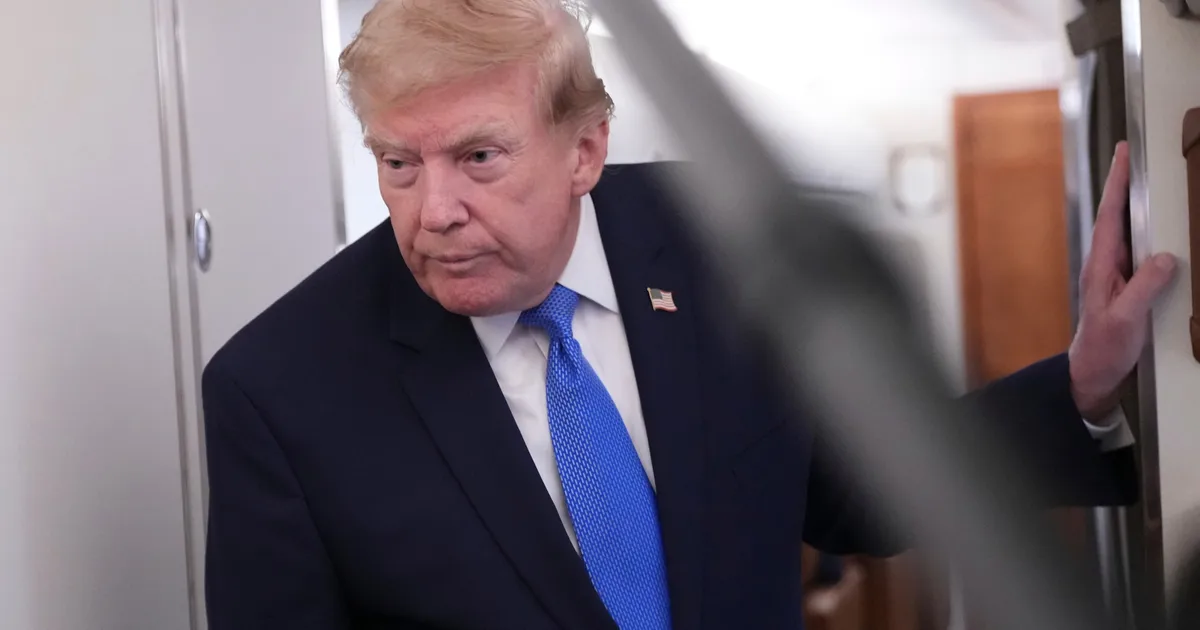
Iran is “playing Donald Trump like a fiddle” as the US president struggles to strike a peace deal with the Tehran regime, Andrew Neil has said.
In a brutal takedown, the veteran broadcaster said there are now “no good options” for America, despite the US president’s repeated claims to have won the war.
His comments on Times Radio came after Iran denied it was planning to hold peace talks with America to end the conflict, which began when the US and Israel launched attacks at the end of February.
That came after Trump claimed to have called off “massive” strikes on Iran so that negotiations could resume.
Neil said Iran was stringing Trump along until the US midterm elections in November, when his Republican Party is expected to suffer a heavy defeat.
He said: “The truth is there are no good options [for Trump].
“You escalate this war, as he has threatened to do many times, Iran will escalate right back and create a mess among the Gulf states.
“You don’t do that, basically Iran has the upper hand and in the end you have to scuttle away.
“There is no deal in the offing. Iran is playing Trump like a fiddle on this. This is a very evil regime in Tehran, but it’s not a stupid regime.
“They know what’s happening in America. They follow the midterms as closely as we do. They know this is a deeply unpopular war.
“The impact on the American economy has been very unpopular, his handling of the economy now has an approval rating of 30% [and] 78% of Americans want the war to end now.
“They are just going to drag this out through the summer months, until Trump gets a kicking in the midterm elections.”
He added: “It’s a terrible time for America with no good options, and none of this rhetoric coming from Trump – we waste our time even analysing it because it’s either meaningless or he U-turns on it within 24 hours.”
Listen to Commons People, the podcast that makes politics easy. Every week, Kevin Schofield and Kate Nicholson unpack the week’s biggest stories to keep you informed. Join us for straightforward analysis of what’s going on at Westminster.
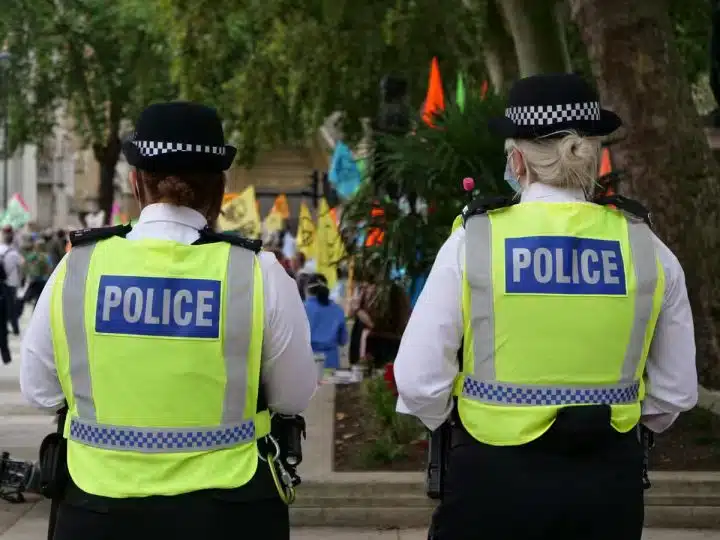

The cyber-criminal group ExfilSquad has leaked the names and contact details of more than 100,000 police staff on the dark web.
The news follows threats from the same group last week to leak more data unless public institutions met their demands for payment. ExfilSquad posted on X:
Check your emails! We warned most of you before posting these public warnings!!
Once your company’s data is posted here, it’s NEVER leaving the public eye and it will be passed around the internet FOREVER.
The payment we request of you is simply a rounding error compared to the litigation costs of your data leaking. Be smart and just pay.
Hackers put multiple organisations under threat
Last week, the Canary reported that the same hackers had posted data stolen from the Department for Education (DfE) and the Police National Legal Database (PNLD). A source explained that a majority of the 145,550 full-time police officers employed in England and Wales have used the PNLD as part of their daily work.
Whilst ExfilSquad stated that they targeted 14 institutions in total, the identities of the others were not public knowledge. However, the most recent reporting from the Telegraph has revealed that the wide-scale hack targeted the Crown Prosecution Service, Home Office, Ministry of Defence and the National Crime Agency.
Likewise, the cyber criminals also breached Newcastle University — the only non-state body named so far. ExfilSquad reportedly stole data including the names, addresses and phone numbers of both staff and students.
The university has already begun an investigation into the exact nature of the attack and the vulnerability of its systems.
Cybersecurity adviser Jake Moore, of European infosec giant Eset, explained:
The information put on the dark web should not be underestimated. More experienced threat actors see it as highly valuable because it enables them to personalise follow-up attacks, such as phishing or social engineering, which puts even more data at risk.
***
These attacks are becoming more common as criminals increasingly automate their tactics with ease and exploit the development using AI. The knock-on effect means organisations are facing a far higher volume of attacks, often with far less effort required from the attacker.
‘Officers at serious risk’
The Times reported that a government spokesperson declined to comment on the security breach, stating:
We have dedicated capabilities to respond to cyber incidents, and it would be inappropriate to comment on a live investigation.
However, a staff member from one of the targeted law enforcement organisations said:
I have worked in serious organised crime and put high-level criminals behind bars. For private information to be leaked about me is very disconcerting and puts officers at serious risk.
In the past I have been forced to move into safe houses and sell cars due to my job. Now I will have to keep my wits about me online and look out for anyone trying to get more serious information. It is not a good look.
Featured image via Ethan Wilkinson/ Unsplash
By Grace
Politics
UKLFI’s desperate efforts to control anti-Israel narrative succeed after vegan fest cancelled
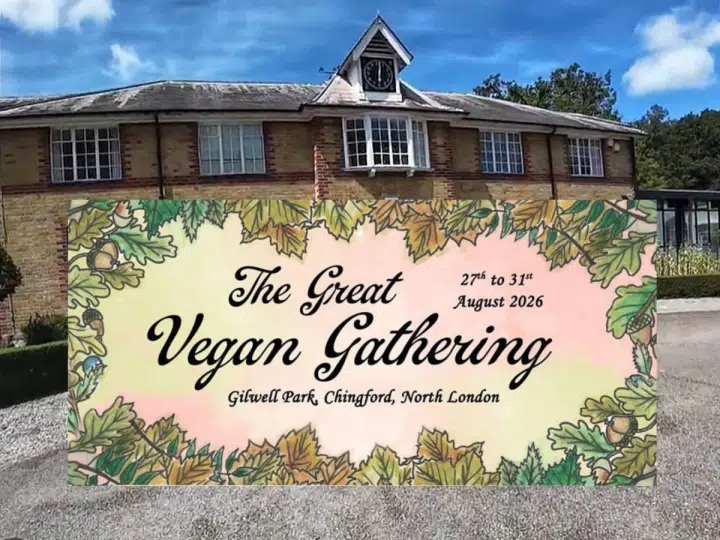

A new four‑day vegan festival in London, billed as being “built on principles of love and kindness for all sentient beings” has been cancelled after complaints from UK Lawyers for Israel (UKLFI).
The Scout Association cancelled the Great Vegan Festival’s venue booking just weeks before the event was to take place at their Gilwell Park Activity Centre in Chingford.
The association pulled the plug after UKLFI wrote to management warning them that several acts on the line‑up were “antisemitic”.
A statement from the Great Vegan Gathering read:
After pressure from UK Lawyers for Israel, Gilwell Park decided to cancel our venue hire contract just weeks before the event. As vegans, we oppose oppression in any context and therefore stand resolutely against Israel’s genocide of Palestinian humans and animals in Gaza.
It is deeply regrettable that an event seeking to raise funds for rescued animals at sanctuaries was attacked by UKLFI, an anti-Palestinian group that has repeatedly targeted cultural events and organisations.
The Scout Association has cancelled a venue booking by a vegan music festival after @UKLFI warned that bands on its line-up had promoted material alleged to be antisemitic and supportive of violence against Israelis. Read more: https://t.co/66wGB1NVa6
— UK Lawyers For Israel (@UKLFI) July 30, 2026
UKLFI accuses musicians of ‘endorsing violence’
UKLFI claimed the musicians had published or performed material that “endorsed violence, vilified Israel and Israelis, and risked stirring up racial hatred”.
The bands HAWXX, Active Slaughter, and Millie Manders and the Shutup were specifically mentioned by UKLFI. They had previously spoken up against ‘Israel’s’ genocide, colonialism and fascism, and the criminal IOF.
UKLFI highlighted several of their songs, to justify its actions.
One of these was Active Slaughter’s song, It’s Not Anti-Semitic to Hate Fascists, which UKLFI claimed “accuses Israeli forces of killing ‘for fun’ and planting knives beside injured Palestinian teenagers”. But this is true, as this film about Palestinian human rights defenders in Hebron clearly shows.
Israeli forces have filmed knives being planted beside Palestinian youths on more than one occasion.
UKLFI also claimed that if the festival went ahead in its proposed form, it could expose the Scout Association, as the venue operator, to legal, safeguarding and reputational risks.
Andrew Thorp, deputy public relations lead for the Scout Association, told us:
A decision has been made to cancel the hire of our venue for The Great Vegan Gathering at Gilwell Park.
Following the initial confirmation of the booking, we conducted a review into some actions taken by the event organisers. The review concluded that these actions were not consistent with Scout values or our venue hire policies.
As a result, we have informed the organisers that the event will not proceed at Gilwell Park.
We remain committed to ensuring that all activity taking place at our venues reflects our values and supports an inclusive, respectful and welcoming environment for everyone.”
The Canary asked Thorp for more details, but he did not respond further.
Repeat targeting of cultural organisations and events
Anyone cancelling the use of their venue based on this should be absolutely ashamed, and consulting their lawyers @scoutadventures
All solidarity with the Great Vegan Gathering.@MiddleEastEye pic.twitter.com/JT49cZky0O
— Stop genocide. End apartheid. Free Palestine

 (@JonWooders) July 30, 2026
JJ Maguire, a singer in Active Slaughter, told Middle East Eye:
My Jewish granddad escaped persecution in Nazi Germany, but many of his family members were murdered…It’s with him in mind that I founded a band which, in keeping with punk traditions, refuses far right politics wherever it rears its head.
***
I was absolutely appalled to learn that UK Lawyers for Israel had mounted an attack on our pro-Palestine free speech.
Millie Manders, from the band, Millie Manders and the Shutup, said:
My band and I are proud to support justice for all animals and humans. This includes opposing Israel’s genocide of Palestinians in Gaza, a position shared by millions of Christians, Jews, Muslims, Hindus, and atheists – people from every background.
Manders added:
We will never stop advocating for what’s right.
Attempted erasure of Palestine
UKLFI uses tactics of “legal intimidation” to silence pro-Palestine, or anti-‘Israel’ speech and activism. It sends letters, suggesting the possibility of legal action, while events are told they raise legal or equality concerns. The institution on the receiving end then risks legal action, costs and reputational damage.
By doing this the organisation erodes democratic rights as it aims to erase Palestine from public life. It has taken matters upon itself to police our speech and actions. Academic institutions, the internet, sports, public institutions, charities, councils, companies and individuals have all come under fire.
In 2026, its actions led to the cancellation of academic events and the banning of Palestine Solidarity symbols worn by various railway, airport and hospital staff. It has also influenced guidance on investment of council pension funds.
Worryingly, two encyclopedias were told by UKLFI that their referencing to Palestine was incorrect. In addition, academic institutions have changed the description and wording of courses to remove the word ‘Palestine’.
Of course, UKLFI is lying when it states its concerns are “rooted in historical accuracy and educational responsibility”.
The Scouts have been repeatedly targeted. In January, UKLFI wrote to a north London Scout group after an adult leader wore a keffiyeh, arguing the conduct may amount to harassment under the Equality Act.
In February, UKLFI wrote again after staff were seen wearing symbols of support for Palestine.
..@UklfiT has written to a North London Scout group after being informed that an adult leader at a Beavers meeting for children aged six to eight wore a keffiyeh, a garment with widely recognised political significance connected to the Palestinian cause. https://t.co/OBaLqtrVy1
— UK Lawyers For Israel (@UKLFI) January 17, 2026
UKLFI’s role in shutting down Palestine discourse
In August 2025, UKLFI complained to Hertfordshire Scouts about Camp Wilayah, an annual Islamic children’s summer camp on its land. UKLFI alleged breaches of the Public Order Act, the Counter‑Terrorism and Security Act and the Children Act. The Scouts cancelled the booking, even though the camp had taken place for more than 13 years with no complaints.
The European Legal Support Centre (ELSC) and Forensic Architecture labelled UKLFI a “major actor” in the repression of pro‑Palestinian activism in the UK.
It exploits the International Holocaust Remembrance Alliance (IHRA) definition of antisemitism, which equates criticism of ‘Israel’ with antisemitism. It also exploits terror legislation to create a chilling effect on pro-Palestine discourse.
Various organisations are taking action against UKLFI’s threatening behaviour and weaponisation of the law.
The Public Interest Law Centre (PILC) and ELSC have filed a 114‑page complaint with the Solicitors Regulation Authority. They claim UKLFI is using legal threats as a form of strategic intimidation to shut down public debate on Palestine. As such, they are calling for UKLFI to be regulated as an unregistered law firm.
The Charity Commission is also investigating UKLFI’s charitable wing after a complaint by CAGE. CAGE accused it of “engaging in vexatious and malicious complaints” against pro-Palestinian activism, while “masquerading as a charity.”
Senior barristers linked to the group also face a separate complaint over their role as patrons.
$730m hasbara budget making no difference
Pressure from UKLFI is part of a much larger, state‑backed effort to manage the occupation’s global image. In 2026, the ‘Israeli’ government approved a public diplomacy budget of roughly $730m.
Foreign minister Gideon Saar argues that managing ‘Israel’s’ image should be treated like “investing in jets, bombs, and missile interceptors”.
More than $50m is going into digital ad buys, around $40m into flying in delegations, and tens of millions more into influencer networks, AI‑driven content tools and targeted campaigns aimed at US universities and young Americans, where support for ‘Israel’ has plummeted.
Despite this unprecedented propaganda budget, unfavourable views continue to rise. No amount of money or digital campaigns can buy back the truth. The official story, framing ‘Israel’ as a democracy under threat, which treats all criticism as antisemitism and refers Palestinian resistance as terrorism, is starting to fall apart.
Featured image via Vegan FTA
By Charlie Jaay

So-called ‘Israel’ continued to livestream the extermination of an entire people over the weekend, with a massive string of atrocities across Gaza.
On Saturday 1 August, Israeli Occupation Forces (IOF) targeted warehouses used for storing medicines at the Al-Aqsa Martyrs Hospital in Deir al-Balah. According to Drop Site News, the buildings contained “critical supplies and equipment for kidney dialysis”.
Referencing Zionist policies that severely restrict aid to Gaza, hospital director, Raed Hussein, said “supplies have never been fully provided” over the past three years of genocide. He said any that do get in arrive “in a limited and reduced manner”.
Now, Zionist terrorists have destroyed even that small quantity of medical equipment.
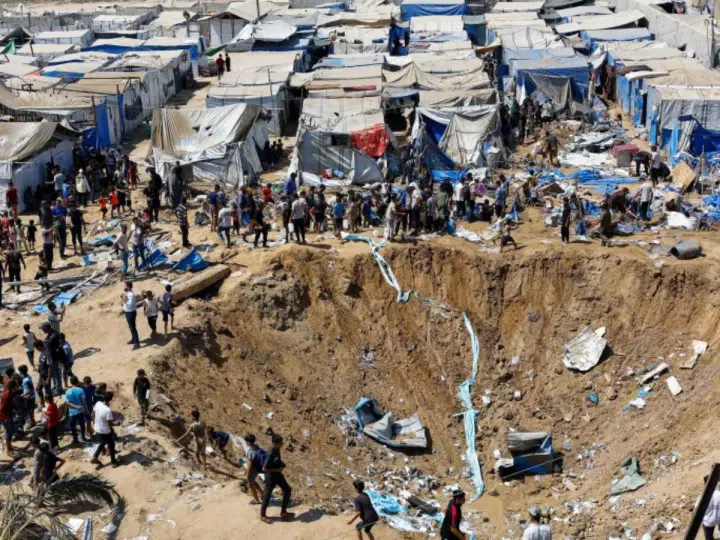
The blast left an enormous crater and destroyed large numbers of tents people had been using as makeshift shelter, alongside their belongings. Fatima Sharab was one of those left bereft.
She told Drop Site:
The mattresses, blankets we’d managed to gather after losing them 15 times, they’re gone again. What is left after this?
‘Israel’wants to spread disease throughout Gaza
In response to the attack, Munir al-Bursh, director-general of the Palestinian Ministry of Health – Gaza, said:
When the occupation fights people by destroying medicines and preventing medicine from entering, it turns medicine and illness itself into a tool of war.
Spreading epidemics as a means of mass murder is stated as an ‘Israeli’ policy. Giora Eiland, a retired major-general and still a key figure in the apartheid entity’s security establishment, said:
The international community warns us of a humanitarian disaster in Gaza and of severe epidemics. We must not shy away from this, as difficult as that may be. After all, severe epidemics in the south of the Gaza Strip will bring victory closer and reduce casualties among IDF soldiers.
In response, Finance Minister, Bezalel Smotrich, commented:
I agree with every word.
On the same day as the medical warehouse war crime, the IOF murdered “at least seven Palestinians”, the Palestinian Wafa news agency told media. In one atrocity:
An Israeli drone attack killed two people in Gaza City’s Sheikh Radwan neighbourhood…
The IOF killed another Palestinian in a Deir el-Balah drone strike and slaughtered another person “.in a strike on a tent near a school in al-Mawasi, north of Khan Younis”, Al Jazeera reported.
Terrorist forces killed three more people through the use of drones and air strikes later in the day.
Sunday 2 August was even more horrific as butchers serving the land theft project killed at least 19 people. Pulitzer Prize winning writer, Mosab Abu Toha, who documents much of the daily crimes the IOF carries out, said the killing started when:
Israel carried out a strike on an apartment in Gaza City at 1:13 a.m. local time. Two parents and their child were burnt to death. A few minutes before that, Israel bombed a house in Der el-Balah in Central Gaza, killing two people.
Footage shows child casualties of Zionist crimes
Abu Toha shared graphic footage of what appears to be the child victim of that attack. Drop Site News provided similarly harrowing evidence of other innocent children horribly wounded by yet another illegal strike “on a residential apartment in the al-Mawasi area, northwest of Khan Younis, early Sunday”.
Three Palestinians, including a child, were killed in the strike on the Hamza family’s apartment, according to Shehab News Agency.
Drop Site provided a list of the atrocities Zionists carried out during the 24-hour period, detailing at least 10 separate attacks during what Western media still absurdly calls a “ceasefire”. Since the supposed cessation of hostilities began in October 2025, apartheid land thieves have murdered “1,233 Palestinians, including 266 children“.
This is far more than the number of ‘Israeli’ civilians killed on 7 October. In response to that, Western mainstream media reacted with horror and proceeded to cheer on the Gaza holocaust. However, daily IOF atrocities contributing to that continuing extermination campaign are largely ignored.
It was therefore left to Mosab Abu Toha to call Western complicity to account in the wake of the latest wave of barbarism.
He wrote:
While you are enjoying time with your families this summer, traveling to water parks, hiking through the woods, picking blueberries, and photographing mushrooms and rocks, Gazan families continue to be slaughtered in their tents, burned alive, and torn apart by Israeli attacks.
Children continue to be targeted. Those who survive are often left as the sole survivors of their families or are permanently disabled.
None of this would be possible without the political, military, and financial support provided by the United States and many European governments.
Israel must be held accountable and punished for its heinous and live-streamed war crimes. This video you are seeing is from this early morning in Gaza. Do these kids not look like yours? Do you really appreciate kids and family?
Featured image via Mahmoud Issa/ Reuters
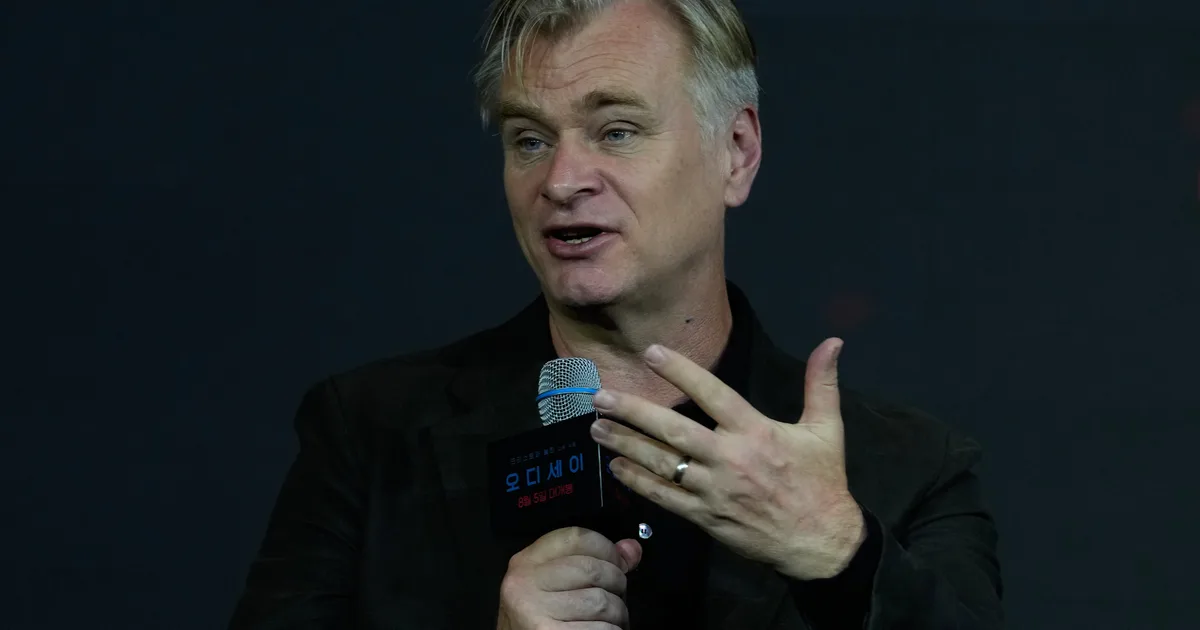
Christopher Nolan’s The Odyssey has been broadly praised by critics. The record-breaking movie has a whopping 94% on review aggregation site Rotten Tomatoes (that jumps up to 97% for the audience-generated Popcornmeter score).
Still, the adaptation has received its fair share of criticism, too. Nolan’s version of the millennia-old story was partly inspired by classical studies professor Emily Wilson’s translation of the poem.
But Wilson, it seemed, wasn’t such a fan. While she was “humbled” the director had cited her work, the classics expert said she would “be ashamed to have written any part of” the script.
Writer Joyce Carol Oates has since defended the director’s interpretation. And now, Nolan himself has chimed in on the discourse.
Speaking with translator, lecturer and podcaster Zhong Shu, Nolan talked about “a fundamental flaw of film criticism”.
When asked about how his version of the Greek classic portrays Odysseus (played by Matt Damon) in a more contemporary way, the director said: “The criticism that’s often levelled at movies in general is, ‘Oh, the character has to be made sympathetic, so the character is manipulated in different ways or changed in different ways’.”
“And that’s a fundamental flaw of film criticism in a way, or storytelling criticism. Because to be able to identify the mechanism does not invalidate the mechanism. And that’s a real problem in criticism today.”
The Oppenheimer auteur continued, “I’m thinking more of amateur criticism, because they feel they’ve identified the mechanism, they feel that it invalidates it. That can be true of certain elements, and film grammar, film language evolves with that.
“So when a trope becomes too familiar to an audience, then it has to be changed. But we do, as filmmakers, avail ourselves of that common language. We build on that understanding. Our audience has seen many films and they understand that language.”
You can watch Zhong Shu’s podcast here.

Hashdex to Close Smallest Spot Bitcoin ETF After 2+ Years

I Shop For A Living, This Is The Fashion I’m Buying This July Payday

What happens next for Infantino and FIFA?


-

 Business5 days ago
Why Trees Belong on the Risk Register
-

 Fashion3 days ago
Weekend Open Thread: Wit & Wisdom
-

 Politics3 days ago
Meta enters AI-training agreement with far-right ‘propaganda rag’ Newsmax
-
 Entertainment6 days ago
‘Stargate’ Creator’s New Sci-Fi Series Returns for Season 3 Tomorrow
-

 Crypto World2 days ago
MicroStrategy Post-Earnings CLARITY Act Push Could Add New Catalyst for Its Stock
-

 Politics6 days ago
The Part of the Electric Transition Nobody Wants to Discuss
-

 Business5 days ago
Major shareholder moves on Canyon
-

 Crypto World2 days ago
XRP Ledger v3.3.0 brings five institutional features
-

 News Videos4 days ago
Bitcoin Enters the 3rd Stage of the Bear Market
-

 Crypto World6 days ago
Kraken Enables Retail Access to Jersey Mike’s IPO via Tokenized Shares
-

 Tech7 days ago
New macOS Sequoia & Sonoma security updates for older Macs
-

 Politics4 days ago
Luke Littler’s dominance sparks GOAT debate
-

 News Videos6 days ago
Claude: Build Financial Dashboards in Minutes (2026)
-

 Business6 days ago
Johnson & Johnson agrees to $5.5B settlement over talc cancer claims
-

 Sports4 days ago
Seema Kaliramna Wins Discus Throw Bronze, Takes India’s CWG Medals Tally To 17
-

 Crypto World1 day ago
Crypto PAC spending tops $2M in Michigan House race
-

 Business3 days ago
Trump Announces Hamas Disarmament Agreement as Iran Strikes Kuwait Air Base and US Attacks Pause Overnight
-

 Crypto World3 days ago
New York sues Kalshi over prediction market gambling
-

 Tech5 days ago
Gemini can now summarize the messiest comment threads in Google Docs
-

 Tech1 day ago
ESET tracks rise in malicious AI skills and adaptable malware
You must be logged in to post a comment Login