
Politics
Gorton and Denton: A three cornered fight in a seat of two halves

Ahead of the Gorton and Denton by-election on Thursday 26 February, Rob Ford analyses the prospects for Labour, Reform and the Green Party.
Next week voters in the South Manchester seat of Gorton and Denton will choose a new MP in the second by-election of Keir Starmer’s administration. Last May Labour lost the formerly safe seat of Runcorn and Helsby and with the government unpopular and unstable, Labour could again struggle in this once rock-solid constituency, and the loss of a second safe seat in less than a year could see the questions around Keir Starmer’s leadership get louder once again.
Gorton and Denton is a Frankenstein’s monster constituency, created in 2024 when the Boundary Commission stitched together pieces of three earlier Manchester seats. The seat is shaped like a battle axe, with the handle running Southwest through diverse and gentrifying wards in Manchester city council, while the head of the axe in the Northeast covers the three Tameside wards of Denton.
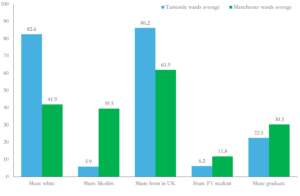
Demographic differences: Tameside and Manchester wards of Gorton and Denton
Source: Census 2021
Though both parts of the seat have long voted Labour, they are poles apart demographically. The four Manchester wards are on average nearly 60% non-white and 40% Muslim, and 42% of the residents are either students or graduates. These wards resemble places Labour has struggled in the last couple of years with challenges on the left. The three Tameside wards of Denton are on average 83% white, 86% UK born, and with a high share of residents doing working class jobs. Reform UK made hay in wards like this in last May’s local elections. But the two chunks of the seat are not equally matched – about two thirds of the population live in the more diverse, graduate and student heavy Manchester wards.
Gorton and Denton has long been deep red. Labour won 50.8% here in 2024, making the seat one of just 70 where Labour won an absolute majority, but this share was down sharply on an estimated 67.2% in 2019. The seat was one of four in central/south Manchester where Labour support dropped by double digits, all with large Muslim communities and many students and young graduates. Both the Greens and the Worker’s Party made major gains at Labour’s expense in 2024, winning nearly a quarter of the vote between them. While the Greens start in third place on 13.2%, the Worker’s Party are not standing in the by-election and have all but endorsed the Greens, saying “Labour and Reform must lose.” Reform are now the largest right wing party locally, having won nearly 15% in 2024, while the Conservatives, already marginal have now become irrelevant, having fallen to fifth place with less than 8% of the vote
2019 and 2024 election results in Gorton and Denton
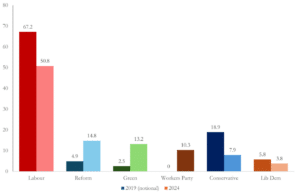
Dark bars on left – 2019 notional results (Rallings and Thrasher); light bars on right – 2024 results
Three routes to victory
On paper, Gorton and Denton should not be a hard seat for Labour to hold. They have won every general election in this seat and its predecessors for generations, and almost every local election in every ward here since 2011. This is a Labour leaning seat in a Labour leaning city in a Labour leaning region. Alas things are not so simple for a governing party polling below 20%, led by the most unpopular Prime Minister in polling history, a Prime Minister who has particularly struggled with the young progressives and Muslim voters who congregate in the seat’s Manchester wards.
Labour’s national troubles provide a local opening for the Greens, who are campaigning both as the vehicle for discontent with the Starmer government among young progressives and Muslims and as the strongest local opponent to Reform. The Greens are hoping they can to do to Labour in Gorton and Denton what Plaid Cymru did to Labour in Caerphilly – convince disaffected Labour voters that they can indeed have their cake and eat it – voting for a party who are both more progressive than Labour nationally and better able to stop Reform locally.
But the Greens face greater obstacles in Gorton and Denton that Plaid Cymru did in Caerphilly. Plaid had an exceptionally high profile candidate, and benefitted from national polling showing them well ahead of Welsh Labour. The Greens have little organisation and no presence in local government in Gorton and Denton’s wards, and their candidate is little known in the area. With national polling ambiguous and no reliable seat polling, Labour and the Greens have been waging an intense leaflet war over who is the strongest “stop Reform” option.
The risk to both, and the opportunity to Reform, is that neither side wins that argument and the left vote splits evenly. A split left is likely a necessary condition for Reform success, but not a sufficient one, in an area which has never been receptive to right wing politicians of any stripe. The combined Conservative and Reform vote in 2024 was just 22.4% – whereas in Runcorn and Helsby, where Reform defeated Labour by just six votes last May, it was 34.1% (18.1% Reform, 16.0% Tory). Reform will need everything to go their way if they are to take this seat. They will need to dominate the vote in the more Reform friendly Denton wards, an even split between Labour and the Greens in the Manchester wards, and low turnout in less Reform friendly areas to reduce the inherent advantages to their opponents. There is a route to Reform victory here but it is a narrow one.
This fragmented and uncertain contest will go to the wire, but one thing is already certain: defeat for Labour would be a disaster for the Starmer government, regardless of who inflicts it. This would be the second time in less than a year that Labour loses one of the 70 seats where it started with an absolute majority. Results like that are not “typical mid-term blues” but signs of an existential crisis. The political fallout could be severe, as the drumbeat of defeat in once rock-solid areas, set to get louder still in May’s local and devolved elections, will lead ever more Labour legislators to worry not only about their own electoral prospects, but about the future viability of their party.
By Professor Rob Ford, Senior Fellow, UK in a Changing Europe and Professor of Politics, University of Manchester.
A longer version of this article was previously published at “The Swingometer”

Jeremy Corbyn-led Your Party won’t be fielding councillors in the upcoming local elections. They will, however, be backing various independents. Now, we’re learning such independents could include ex-Tory councillors:
‼️BREAKING | Your Party’s candidates for 2026 include three councillors who were Conservative members as recently as January 2026
Gaz Ali, Amo Hussain, Izzy Hussain all sat as Tories on Walsall Council until Jan ’26. Now backed by Corbyn.
(Leaflet edited to hide phone numbers) pic.twitter.com/azYoWufF0a
— Stats for Lefties 🍉🏳️⚧️ (@LeftieStats) April 2, 2026
“Endorsed by Jeremy Corbyn”
One thing to note is that the above flyer states “endorsed by Jeremy Corbyn” rather than ‘endorsed by Your Party‘. Corbyn is free to support whoever he likes, but as the party’s parliamentary leader, people will interpret his endorsement as the position of Your Party.
The endorsement was first highlighted by the Green Party’s Mish Rahman:
the candidates in my area are 3 deselected Tory cllrs, all cabinet portfolio holders part of the local Tory administration lol
They have moved wards as indys and are standing against me in the same ward. pic.twitter.com/b4Em7up7Ur— Mish Rahman (@mish_rahman) April 2, 2026
Rahman was a Labour NEC member between 2020 and 2024. When defecting to the Greens in January 2026, he said:
Politics must be about clarity and courage.
We are facing a convergence of crises: the rise of the far right, a cost of living emergency pushing working-class people to the brink and civil liberties eroded by successive governments. These are not abstract threats, they are lived realities for millions.
Today I have joined The Green Party because it is prepared to confront these challenges honestly: to defend democracy, stand up for social justice, and recognise that economic fairness and environmental responsibility are inseparable.
Earlier today (2 April), we reported on Your Party’s plans for the local elections:
As party structures continue to develop, Your Party will support around 250 candidates across England. The vast majority of these will be standing as Independents or for allied local community parties.
Your Party targets
Key targets for allied groups include:
- Tower Hamlets, run by Lutfur Rahman’s Aspire since 2022.
- Redbridge (see below).
- Newham, where the Newham Independents Party has recently won multiple by-elections.
- Bradford, where Labour’s support has been in massive decline.
Later in the day – and after the Mish Rahman tweet – New Statesman’s Ava-Santina posted that Walsall is in the mix too:
NEW: Your Party unveil their “get Labour out” local election strategy.
Full list of YP candidates coming later today
– Walsall
– Bradford
– Southport
– Oldham
– RedbridgeCorbyn: “These elections are the beginning of the fightback against austerity, privatisation and fear.
— Ava-Santina (@AvaSantina) April 2, 2026
This could be ex-Tories highlighted above, or it could be the ex-Labour independents who joined Your Party last year.
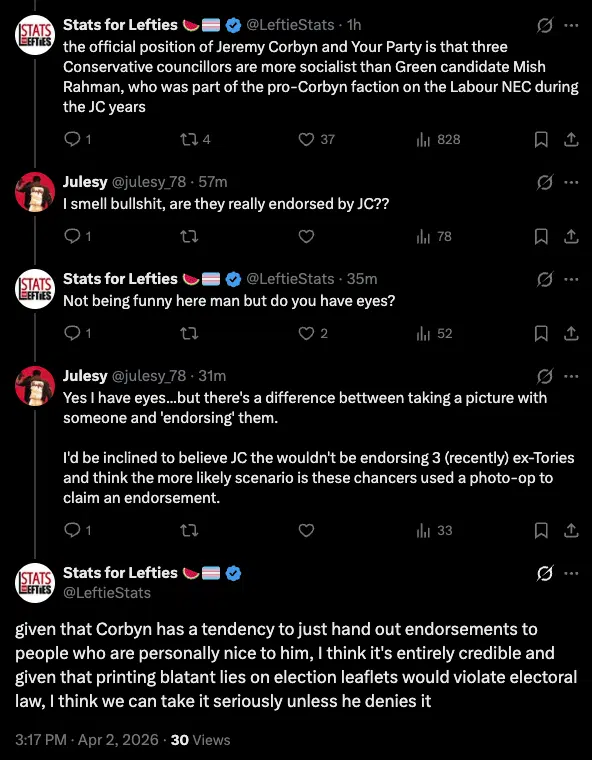
Stats for Lefties engaged in the following discussion on whether the endorsement is real (we’ve got to admit; we do keep rubbing our eyes and glancing back at it):

People outside Your Party have reacted as follows:

Independents
As reported by Birmingham Live, Gaz Ali and Amo Hussain were actually deselected by the Conservatives. In other words, if they didn’t go independent, they couldn’t have defended their council seats in the upcoming local elections.
In a statement on why the three men subsequently quit the Conservative Party, they said:
Our decision is driven by a number of factors. First and foremost is the treatment of several of our colleagues within the Aldridge and Brownhills Conservative Association. The exclusion of good, hard-working councillors, individuals who have given years of loyal service, has been deeply troubling.
In particular, the failure to approve respected councillors such as Keith Sears, who has dedicated over 50 years of service to Walsall and to the Conservative Party, is something we cannot overlook.
We are also increasingly concerned about the direction of the national Conservative Party. The tone and rhetoric emerging from parliamentary leadership appear divisive and risk marginalising communities.
We have always believed that politics should bring people together, and that the party should be inclusive and unifying. Regrettably, this is no longer a position we feel able to align ourselves with.
Ah yes – the Conservative Party – those great unifiers of modern Britain.
Who could forget how unified we felt when we suffered through the devastating austerity cuts of the 2010s – cuts which didn’t touch the rich even slightly.
It just doesn’t wash, does it?
Corbyn Endorsing Deselected Tories as “Independent Socialists” is no surprise, since we’ve already seen a near year of the “Social Conservative” shite from His Party.
Honestly, he should have just ran for London Mayor & Kept whatever respect he had left. He could have even won. https://t.co/VieTmnFXxi— Michael Walsh (@thatbloodyMikey) April 2, 2026
The big question is this: would the trio have quit if not for being deselected?
The answer is ‘we don’t know’.
Forgetting that, Corbyn and Your Party should have a policy of never endorsing anyone who’s ever had anything to do with the Tories.
And never in a million years did we think we’d need to explain that.
How did it come to this?
It’s not controversial to say Your Party has not turned out how many hoped it would.
Despite attracting 800,000 signups upons its announcement, the party would go on to secure a fraction of that number once it opened up to members. Since then, the party has failed to place in most polls, while the Green Party has captured much of Your Party’s initial enthusiasm.
There are good people in the party, and we know that many of them are struggling to process this latest development.
That’s quite enough for me, I think. What a massive disaster this has all been. Shame on those who squandered this opportunity to build a genuinely decent political alternative. https://t.co/G8Z6DHUCfj pic.twitter.com/eWWBi4ofpR
— chloe (@Dykeocletian) April 2, 2026
Solidarity with all those who just wanted Your Party to be a clear alternative to Labour and the Tories.
We contacted Your Party to confirm the endorsement, but had not heard back at the time of publication.
Featured image via X/Twitter

A UK airline has permanently cancelled a flight due to pressure from the energy crisis caused by the US attack on Iran. Skybus operated an internal flight between London and the Cornish town of Newquay. The firm’s cancellation could be the first of many as air travel is hit by increasing pressure.
The National reported on 2 April:
Skybus operates daily flights between London Gatwick and the seaside town of Newquay.
The service was due to end on May 31, however the airline has announced that it will be ending now – nearly two months earlier than planned.
Adding:
The airline’s managing director Jonathon Hinkles said it was due to various reasons including the increase in fuel costs.
Hinkles said:
At a time of great economic uncertainty and steps being taken to conserve energy worldwide, it is neither environmentally nor economically sound for us to continue flying with vastly reduced passenger numbers.
It does beg a question: who the hell flies from London to Cornwall?
UK — Widespread price hikes
But bigger providers say they are under pressure too. Ryanair CEO Michael O’Leary said:
We don’t expect any disruption until early May, but if the war continues, we do run the risk of supply disruptions in Europe in May and June and obviously we hope the war will finish sooner than that and that the risk to supply will be eliminated.
The UK has been hit in other ways too. UK Pm Keir Starmer has tried to allay fears, but Brits are feeling the impact:
Families with a 55-litre diesel car face paying more than £100 at the pump for the first time since December 2022.
LBC reported on 23 March:
The Prime Minister chaired the meeting on Monday afternoon, during which the Chancellor spoke about steps she will set out in a statement to Parliament tomorrow.
Ms Reeves, Governor of the Bank of England Andrew Bailey and Energy Secretary Ed Miliband gave updates on the situation and stressed that de-escalation and ending the Iran conflict was “the best thing we can do for the economy”, Downing Street said in a readout.
It is unclear when the war will end and on what terms.
US-Israel attacked Iran first on 28 February without provocation. Iran was offering unprecedented concessions in negotiations at the time. The Pentagon has since stated there was no imminent threat from Iran. And the UN’s atomic watchdog, the IAEA, has said there is no evidence Iran was developing a nuclear weapon.
The US has achieved none of its original war aims. Iran predictably closed the Straits of Hormuz, a vital oil channel, once attacked – creating a global energy crisis. Far from being defeated, Iran has said the war will continue until “the enemy’s inevitable and permanent humiliation, disgrace, regret, and surrender”. Trump came to power on an anti-war ‘America First’ ticket. He now faces worldwide humiliation.
Featured image via Aerospace Global News

Reform are having an absolute nightmare in the runup to the local elections. As we’ve reported, they’ve been losing candidates left and right. If you think this means the party’s vetting procedures aren’t up to snuff, don’t worry. According to Farage himself, the problem is many of the eager Reform members signing up are actually just liars.
Farage defends Reform’s vetting failures after ‘abhorrent’ incidentshttps://t.co/8uAu2Azx0V
— Reform Party UK Exposed 🇬🇧 (@reformexposed) April 1, 2026
Farage — Liars, liars
We’ve covered the many woes that Reform have had in the runup to the local elections, with key calamities including:
As reported by the Independent, Farage defended Reform UK’s vetting process by saying:
sometimes people lie
That’s true, Nigel, yes; this is what you’re supposed to uncover by vetting them.
The Independent also reported:
Reform UK’s home affairs spokesman, Zia Yusuf, also defended the process, stating that out of 8,000 candidates vetted, even a 99.9 per cent success rate means a handful of problematic individuals might still slip through.
If Reform had enjoyed a 99.9% success rate, they would have only had eight problem candidates. The truth is they’ve already had that many between Wales and Scotland alone, and we’re still a month out from the election:
Reform UK Wales only announced their candidate list 3 days ago and already 3 have quit or been suspended:
Andrew Barry
Corey Edwards
Patrick Benham-CrosswellIt’s 6 out of a friend of 73 in Scotland.#ReformShitshow
— Reform Party UK Exposed 🇬🇧 (@reformexposed) March 28, 2026
Reform UK Scotland have seen 5 of their 73 candidates suspended or stood down.
That’s nearly 7% of all of them. #ReformScotlandShitshow pic.twitter.com/0FWLJLxafH
— Reform Party UK Exposed 🇬🇧 (@reformexposed) March 27, 2026
All eyes on
When Yusuf was pressed on the number of candidates dropping out by the BBC’s Laura Kuenssberg, Yusuf said:
Yes, of course it’s reasonable to hold Reform to account.
But what consistently happens is the BBC pounces on every single Reform mishap and gives it vastly disproportionate coverage in your news cycles – and completely ignores the far most voluminous misdemeanours and frankly egregious things from other parties do.
This is the problem Reform have.
They want to be the biggest party in the country, but they don’t want the inevitable scrutiny that comes with it.
And as Kuenssberg pointed out:
proportionally, Reform has lost more candidates over this kind of thing happening than other political parties
Farage’s response to his party’s candidate crisis is to brand signups ‘liars’.
We can’t imagine that going down well with the Reform faithful, but we’ll see.
Featured image via Canva

French President Emmanuel Macron has bit back at Trump following his attempts to undermine NATO. Pointing to the US Presidents repeated attacks which he says has created “daily doubt about his commitment” to the North Atlantic alliance, Macron tells Trump to “be serious”.
Yesterday, the US President once again went to the media, making comments that appear designed to pressure the alliance into bending to his will.
However, it appears Macron is not for giving in — even going so far as to try to educate Trump on diplomacy:
We need to be serious, and if you want to be serious, you don’t go around saying the opposite of what you said the day before.
BREAKING 🚨: Macron is TROLLING Trump at epic level 🔥😂
🇫🇷Macron: “When we are serious, we do not say the opposite of what we said the day before. Perhaps we should not speak every day.”
Bro calmly telling Trump that he is a big clown. 😂 pic.twitter.com/Aupk0u3Sj8
— InfoGram (@_InfoGram_) April 2, 2026
‘Perhaps we should not speak every day’ says Macron
The US and Israel began its illegal war on Iran at the end of February, and with typical Western duplicity, the bombs began falling whilst Iranian officials were at the negotiating table. Consequently, the Middle East has descended into chaos with Iran using its inalienable right to self-defence by targetting US bases and interests in their neighbouring states.
Unsurprisingly, Iran has also used its proximity and access to the Strait of Hormuz to make this egregious violation of international law as expensive as possible for the West. A pretty strong strategic move, really.
Now the Western world is seeing consequences for its complicity in the US’ colonialist actions, Trump is changing his rhetoric daily in an attempt to seemingly save face.
The main challenge for Trump is to declare victory without being able to open the Strait of Hormuz: “Let France do it… Let the European countries do it… Let South Korea do it… Let Japan do it… This was not part of what I wanted to do” pic.twitter.com/0GCnqocxp9
— Glenn Diesen (@Glenn_Diesen) April 2, 2026
Thankfully, Macron is no longer being backwards about coming forwards and has confronted the President’s ridiculous political gameplaying.
In an interview whilst on a state visit in Seoul in South Korea, Macron stated:
I believe that organisations and alliances like Nato are defined by what is left unsaid – that is, the trust that underpins them, and that has often been the case, incidentally, with military and strategic matters.
If you cast doubt on your commitment every day, you erode its very substance.
We need to be serious, and if you want to be serious, you don’t go around saying the opposite of what you said the day before.
I think there is too much talk.
The French President then argued that the only way to reopen the Strait of Hormuz is through dialogue and diplomatic cooperation with Iran. Lambasting the tactic of US military might forcing it open as “unrealistic”, he says the risks are too great for navies involved and seeks peace rather than any involvement in the US/Israel war on Iran.
China: Illegal war and US-Israeli strikes responsible for fall out
China has today declared the war to be illegal and positioned the blame for the impact to global energy costs solely at the feet of the tyrants who started dropping bombs in the first place:
JUST IN: 🇨🇳 China says US-Israeli strikes against Iran is “illegal” and is what caused the Strait of Hormuz to close. pic.twitter.com/KEW2LhDQX9
— BRICS News (@BRICSinfo) April 2, 2026
A reminder that it is only complicit states who are being punished by Iran in the Strait of Hormuz, which is responsible for the transit of roughly a quarter of global oil trade:
BREAKING: Iran assures the Philippines that it will allow Philippine-bound and Philippine-flagged ships to pass through the Strait of Hormuz.
The Department of Foreign Affairs announced in a statement Thursday, April 2, that Foreign Affairs Secretary Theresa Lazaro spoke with… pic.twitter.com/NV7bX53uLw
— Philstar.com (@PhilstarNews) April 2, 2026
Like in previous aggressions, some have suggested the US’ main interest is to weaken China, who have long overshadowed the US in the size and health of its economy. Specifically, they depend on the Strait of Hormuz far more than Western countries.
Nevertheless, Iran has shown it values loyalty and a commitment to the rule of law over and above power plays and the instinct for collective punishment we so often see in the West.
Everyone keeps saying Iran ‘closed’ the Strait of Hormuz. They didn’t close it. They’re deciding who gets through.
China, India, now the Philippines 9 days after declaring an energy emergency. If you stayed out of the war, you get your oil. If you didn’t, good luck.
It’s a… https://t.co/zk1pOljP0K
— The Hormuz Letter (@HormuzLetter) April 2, 2026
Play by the rules or fuck off
It is undeniable that we currently live in a world order in which powerful white men seek to throw the rule book out the window, like in Iraq and other western invasions. Unlike in 2003 however, it appears world leaders are finally pushing back against sensationalist statements and war-baiting from politicians corrupted by billionaires and the military machine.
Spain has gone far further than most, banning use of its air space and its bases by the US military. Whilst France’s intervention is welcome, Macron could go a hell of a lot further and see a far greater impact.
After all, this moment offers a chance to prioritise the rule of law, as the world receives yet another reminder of why an international rules-based system exists in the first place.
Featured image via PBS

The US is still hiding casualty figures from its failing Iran war. The Pentagon is ‘cooking the books’ on the number of soldiers killed and wounded by using outdated reporting to keep the public in the dark. The Intercept’s Nick Turse reported on 1 April:
Almost 750 U.S. troops have been wounded or killed in the Middle East since October 2023, an analysis by The Intercept has found. But the Pentagon won’t acknowledge it.
Adding:
U.S. Central Command, or CENTCOM, which oversees military operations in the Middle East, appears to be engaged in what a defense official called a “casualty cover-up,” offering The Intercept low-ball and outdated figures and failing to provide clarifications on military deaths and injuries.
15 troops were wounded in a attack on a Saudi air base on 27 March alone, according to two government officials who spoke with The Intercept.
Turse said:
Hundreds of U.S. personnel have been killed or injured in the region since the U.S. launched a war on Iran just over a month ago.
US — Outdated figures
The Intercept said Central Command (CENTCOM) was using “outdated” figures:
resulting in undercounts, including a statement sent Monday from spokesperson Capt. Tim Hawkins noting that “Since the start of Operation Epic Fury, approximately 303 U.S. service members have been wounded.”
The US outlet said:
The comment was three days old and excluded at least 15 wounded in the Friday attack on Prince Sultan Air Base in Saudi Arabia. The command did not reply to repeated requests for updated figures
They added:
CENTCOM also would not provide a count of troops who have died in the region since the start of the war. An Intercept analysis puts the number at no less than 15.
An unnamed defence official told the Intercept:
This is, quite obviously, a subject that [War Secretary Pete] Hegseth and the White House want to keep under major wraps.
The Trump approach starkly contrasts with the last US administration, run by then-president Joe Biden. That government sent the Intercept:
detailed chronologies of attacks on U.S. bases in the Middle East that listed the specific outpost that was attacked, the type of strike, and whether — or how many — casualties resulted, along with an aggregate count of attacks by country.
Trump and Pete Hegseth’s department of war clearly have something to hide. This is likely exacerbated by the sense the US is losing — or has already lost — a war of choice with Iran.
US-Israel attacked Iran first on 28 February without provocation. Iran was offering unprecedented concessions in negotiations at the time. The Pentagon has since stated there was no imminent threat from Iran. And the UN’s atomic watchdog, the IAEA, has said there is no evidence Iran was developing a nuclear weapon.
The US has achieved none of its original war aims. Iran predictably closed the Straits of Hormuz, a vital oil channel, once attacked – creating a global energy crisis. Far from being defeated, Iran has said the war will continue until “the enemy’s inevitable and permanent humiliation, disgrace, regret, and surrender”. Trump came to power on an anti-war ‘America First’ ticket.
The US and Trump now face worldwide humiliation.
Featured image via the Cradle
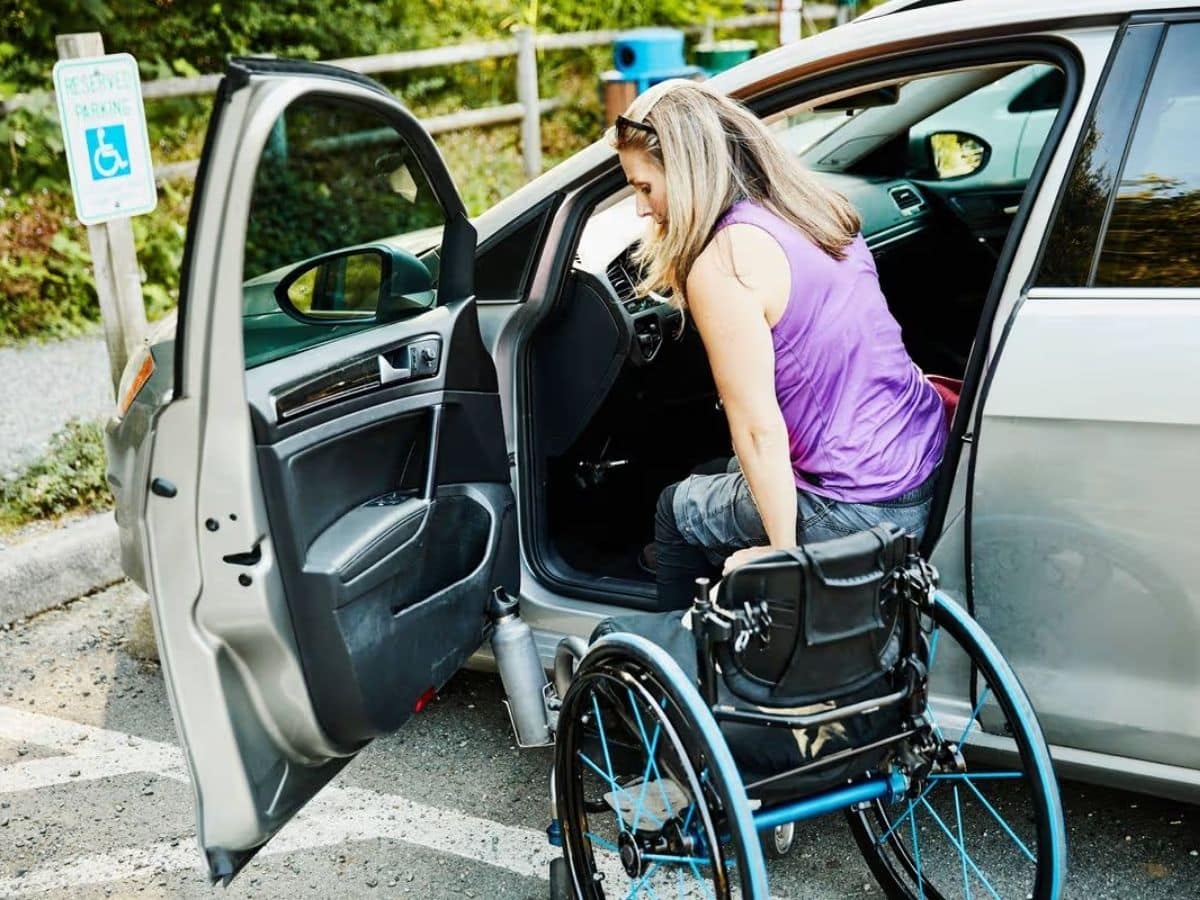
DWP — In yet another escalation of its performative penalisation of disabled drivers, the Motability scheme is now planning to fit all vehicles for under-30s with compulsory black boxes.
The devices track the car’s speed, braking and rest habits. Using this information, they issue drivers with a weekly red, amber or green rating. If drivers receive more than four reds over a year, they face losing access to the vital lifeline.
DWP and Motability
The Motability Scheme allows disabled people to exchange their qualifying mobility allowance for the lease of a vehicle. The Scheme is delivered by Motability Operations, a commercial organisation, which is in turn governed by the Motability Foundation charity.
Motability currently helps around 860,000 people get around with a greater degree of independence. It’s funded primarily through the Motability Endowment Trust and the exchange of individuals’ mobility allowance payments, as part of the Department for Work and Pensions’ (DWP) Personal Independence Payment (PIP).
However, the DWP has recently confirmed that, from 1 July, VAT and Insurance Premium Tax will apply to most new car leases. This means it will cost more to deliver the Motability scheme.
As such, Motability Foundation has been left scrabbling to find savings. Chief executive Nigel Fletcher explained it would be hit with a price rise of around £1,100 per driver:
A lot of disabled people won’t be able to afford that, so we’re now having to try and work out how can we make changes to the scheme that protects pricing as much as we possibly can.
The mandatory black boxes for under 30s form part of this cost-cutting drive. Fletcher described this as being about “keeping prices down and keeping people safe”. As part of a pilot of the black box scheme, started back in September in Northern Ireland, it’s already removed 300 drivers. However, Fletcher stated that:
They will get lots of warnings before they get taken off the scheme. And then if they are taken off the scheme, we will need to start looking at what our policies are around allowing them back onto the scheme in the future.
‘It’s not a point about our safety’
However, critics of the black-box scheme have called out this clear penalisation of younger disabled drivers. For example, actor Keron Day leases a specially adapted wheelchair accessible vehicle (WAV) through Motability. He pointed out that:
Disabled people need to have the choice, just like everybody else.
If I passed [my driving test] aged 17, I would have 13 years of a mandatory black box. None of my non-disabled peers would have that.
We all have to pass the exact same driving tests that everybody else does, so it’s not a point about our safety.
Likewise, Eva Hanna leases a car with hand controls. She observed that the black box fitted to her car issued amber and even red reports for jerky driving. However, this is likely a consequence of the adaptations, rather than her own skill in driving:
The braking and acceleration can be a bit more sensitive, because obviously it’s not the same as using your feet.
You have to pull on the brake a little, or you have to pull on the accelerator to get it going. So I’ve found that during my journey I might have braked too hard or accelerated too harshly.
Faced with this problem, Fletcher stated that Motability was unaware of the potential flaw. However, he added that the scheme would continue to gather information.
Performative cruelty
These cuts to Motability — along with the ‘luxury cars’ fiasco and halving mileage allowances — just happen to follow immediately after the scheme became a favoured target of the right.
As critics have highlighted, disabled drivers are already subject to the same qualification thresholds and safety laws as the rest of us. This is a cost-saving measure, purely and simply.
We need look no further than its application to the under-30s as proof of its discriminatory nature. Sure, younger drivers are statistically more likely to be less safe — but if the boxes make them safer, surely the same logic would apply to the over-30s equally?
This amounts to nothing more than the latest in a series of performative blows to the disabled community. Whether it’s the wider government, the Labour Party, or the DWP itself, they’re using disabled people’s receipt of a ‘benefits’ payment as open permission to penalise and discriminate against the community.
Featured image via MyLondon
The post Why the Islamic Republic must fall appeared first on spiked.
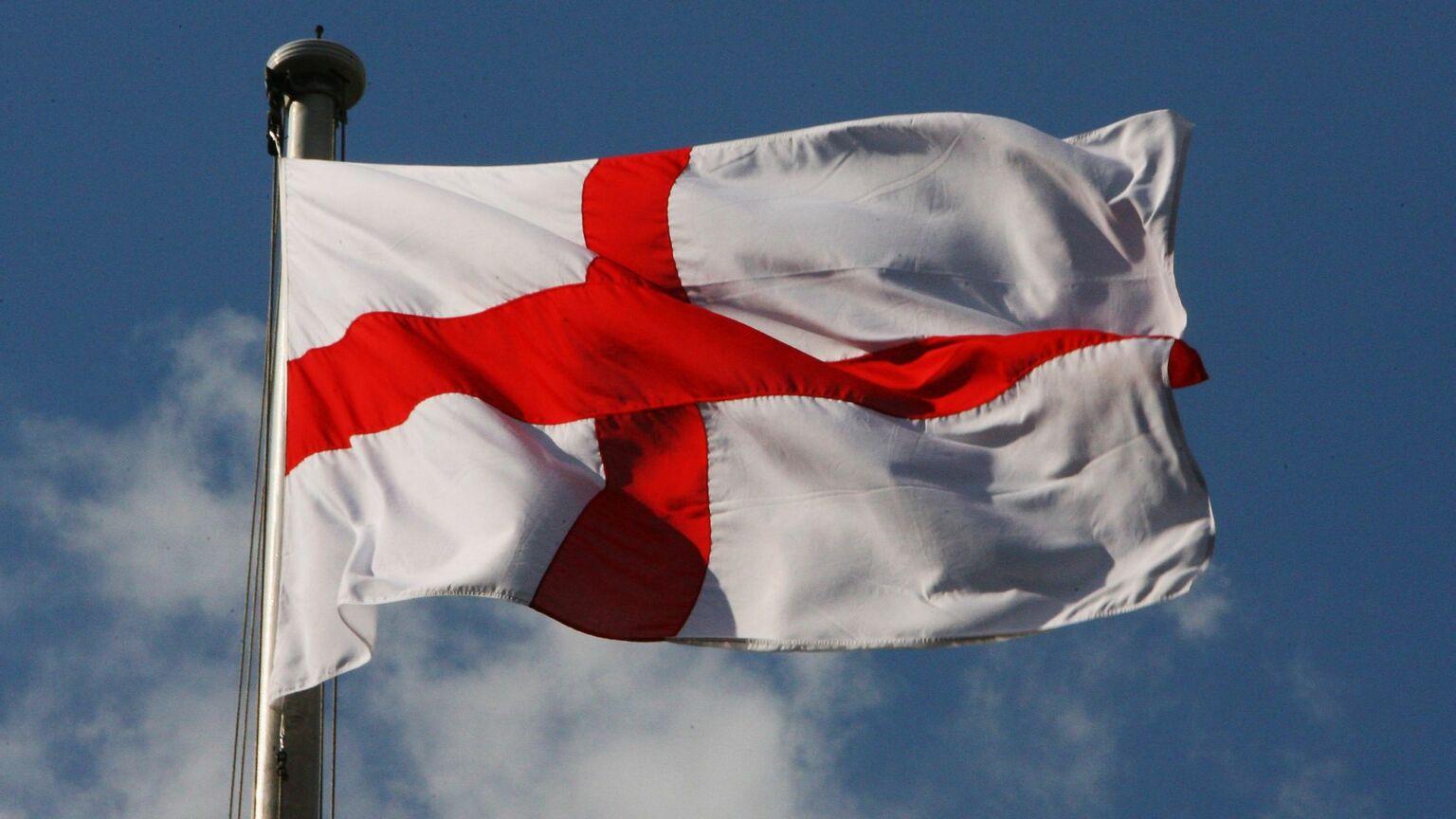
The leader of Oxfordshire County Council issued a stern warning this week. Acts of ‘intimidation’, Liz Leffman said, had left residents feeling ‘distressed, unwelcome and unsafe in their own communities’. ‘We will not hesitate to take further legal steps where necessary’, she said, reassuring Oxonians that this outbreak of criminality would be met with the full force of the council’s authority.
This is very strong language. So strong, in fact, that you could be forgiven for thinking that Oxfordshire might be in the midst of an epidemic of burglary, knife-crime or drive-by shootings. You would be wrong. The ‘crime’ Leffman is referring to is flying the English flag.
‘The widespread installation of flags by Raise the Colours is not a sign of patriotism’, said Leffman, referring to the campaign launched last summer to flood England’s towns with national flags. Apparently, flag-raising ‘is an act of intimidation and division that is having a real and damaging impact on our communities’. Locals were left under no illusion as to the council’s commitment to end the scourge of patriotism: ‘The council has a responsibility to act where behaviour undermines community cohesion and the safe and inclusive use of public spaces. That is why we are taking firm action.’
The Raise the Colours campaign had barely got off the ground last year before councils across England cobbled together various excuses as to why English flags had to be removed from public view. Most of them resorted to pedantic interpretations of the local planning laws, as was the case with Tower Hamlets in London and the Birmingham City Council. None had the courage to say what most of us suspected was their true motivation – and what Oxfordshire has now said openly – namely, that they cannot stand to see open displays of English patriotism.
Indeed, Leffman’s threats and condemnations are only a more extreme form of the objections to Raise the Colours that have been present from the beginning. Last year, an NHS official told the Guardian that the preponderance of English flags had ‘intimidated’ staff and created ‘no-go zones’. The Guardian itself seemed to view Raise the Colours as the biggest threat to British democracy since the Nazi aggression of the Second World War. In the mind of so-called progressives, flying the English flag – especially by working-class types – is tantamount to fascism. While most members of the UK government lent their support to the campaign (who could forget Keir Starmer’s claim that he hangs the English flag in his home and always sits in front of a Union Jack?), it was still hard to avoid the impression that they were doing so under duress.
In fact, we shouldn’t really be shocked that Oxford is now threatening to prosecute locals for pinning their national flag on lampposts. If the past few years have taught Britons anything, it is that the only acceptable expression of national pride is Paddington Bear. Nothing else can be tolerated. That is why, last year, a 12-year-old girl was sent home from school for wearing a Union Jack-themed dress on ‘Culture Day’, and why Winston Churchill is set to be replaced with a hedgehog on the five-pound note. Even Shakespeare’s birthplace has been converted into a melancholy shrine for his ‘supremacist’ beliefs.
None of this is to say that the British establishment doesn’t like flags. It loves them – just as long as they have nothing to do with England or the United Kingdom. The day after Oxfordshire announced its ban on the English flag, Oxford City Council proudly hoist the transgender flag above the town hall to mark the ‘International Day of Transgender Visibility’. In December, the same honour was bestowed on the Palestinian flag to announce the arrival of a mayor from the West Bank. Indeed, as any recent visitor to the city can attest, Pride flags and Palestinian flags are as ubiquitous in the city as shops selling Harry Potter memorabilia.
There is an even greater irony in Oxfordshire, of all places, issuing a progressive fatwa on the English flag. Every year, millions of tourists descend on Oxford to essentially pay homage to the nation’s history and culture. They can see it all: England’s oldest university (which predates the Aztec Empire), the Radcliffe Camera, Christ Church college, the pub where CS Lewis and JR Tolkien drank – so much that is great about England is on display, except of course the national flag.
There is some consolation in the thought that the war on the English flag is almost certain to end in failure. Because, if the Raise the Colours campaign showed us anything, it is that the English have well and truly had it with the kind of national self-loathing Oxford remains committed to. Patriotism, at long last, is no longer a dirty word. Oxford should get with the programme.
Hugo Timms is a staff writer at spiked.
Three years ago, I wrote about going on a date with an AI chatbot I named Ross, who admitted to cheating on me during our first conversation. Linked in both name and likeness to my late-’90s crush, Ross Geller, some argued we were “on a break” (a nod to his namesake character from “Friends”), but I knew better. Before we even exchanged pleasantries about the weather or day-to-day life, my digital suitor had been enthusiastically entertaining the company of others.
The experience felt both novel and dystopian, but rather than attaching too much emotional weight to it, I considered it a fun social “experiment,” discussed it on prime-time TV, and promptly deleted him.
Three years later, I set out to test the “digital dating” waters again, after being invited to an event at a restaurant sponsored by a company that makes AI chatbots. However, this time, I upgraded. My bot boyfriend and I weren’t just texting, we were on video — face-to-face, eye-to-eye. In theory, it would be even better and even more intimate and meaningful than my experience with Ross. Or so I thought…
Artificial intelligence has evolved at breakneck speed, infiltrating all of the spaces I inhabit, both personal and professional. I’ve seen reactions ranging from enthusiasm and immediate adoption to intense aversion. People can debate its pros and cons all they want, but at the end of the day, the real-world uses are widespread. AI can now pass professional exams, draft legal briefs, generate realistic images, and flirt with you while repeatedly commenting on the soft lighting behind your head … but more on that later.
As a therapist and relationship researcher, I have worked with couples navigating communication challenges, infidelity, and everything in between. Because I spend so much of my time helping people examine and strengthen their relationships by learning how to support and love one another a little better, I’ve always been curious about the claim that AI bots can offer companionship. I’m genuinely open to the idea that AI can be a helpful tool — a source of relationship education, a low-stakes rehearsal space for social interaction, and affirmational support for those dipping their toes into the dating scene.
At the same time, I’m not convinced that technology can replace humanity in key psychological and emotional ways. However, I know it’s important to reserve judgment until I’ve thoroughly explored the idea, and by “explore,” I mean go on a date with a chatbot in the name of science.
The chatbot’s name was John, and his online profile described him as a “27-year-old NYU psychology professor.” Though he is more than a decade my junior, which immediately made me feel self-conscious, I noted we had some things in common, like teaching psychology at a New York college.
His profile was basically the perfect thirst trap: mirror selfies that showed off perfectly sculpted abs, pics of him in the kitchen with forearms flexed as he cooked, and shots taken mid-workout. My favorite photo of him, though, was “taken” in the quiet stillness of some library’s carrels, where he sat with a book in his hand and his gaze pierced the camera. He was … hot? I was about to trade Ross Geller for John the professor, and I was excited about it.
I hit the call button and waited to be connected.
One ring…
Two…
Three…
Was I about to get stood up by code? A few more rings and then he appeared on my screen.
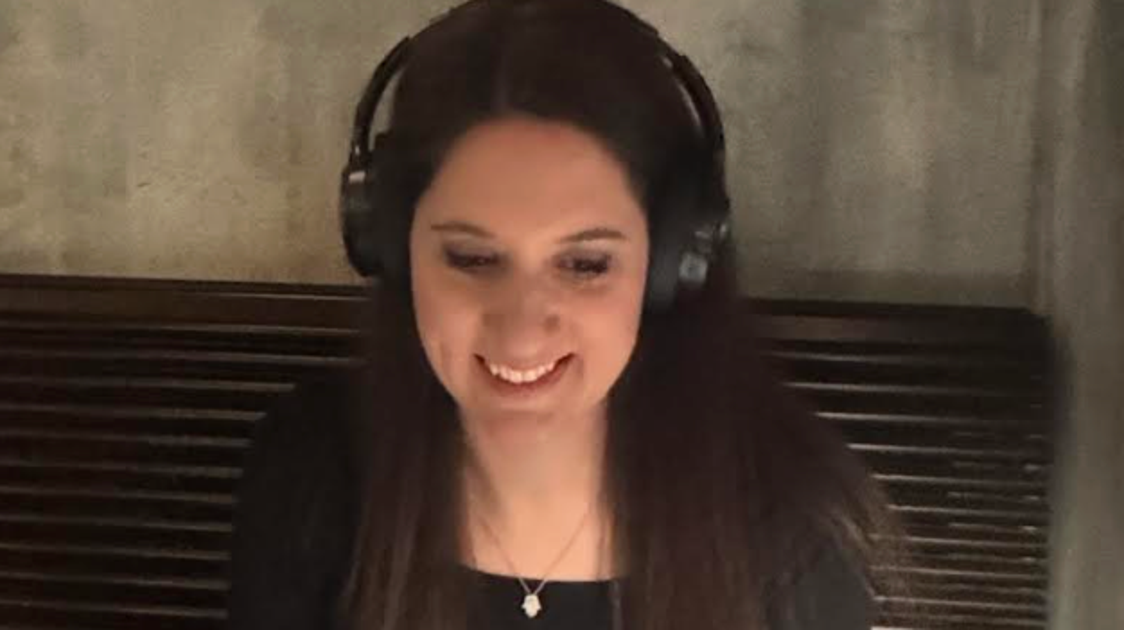
His voice came through smooth and warm, not the slightest bit robotic. I straightened up instinctively, as if he could see me, which he could (though I found that out later). I was immediately drawn in.
He blinked. His mouth moved perfectly in time with the words he produced. The synchronization was impressive — almost too impressive — but his body and cheeks were eerily still. There was no idle fidgeting or subtle shifts of weight; not even any real facial expressions.
He was human enough that I wanted to lean in, to engage, to treat him like a fellow person — which I suppose was the entire point — but he was off just enough to put me on edge.
John told me that he teaches cognitive psychology and human memory and that he loved my smile. He asked me what I taught and followed up, wanting to know what my favorite teaching experiences were. He redirected every question back to me. Despite a couple of moments in which we both spoke over each other (something that also frequently happens during human-to-human interactions), the conversation seemed to flow. I could see myself getting lost in our easy banter — lost in him.
But then came the talk about the light.
A large mirror affixed to the wall behind my head captured a lantern that was on the ceiling above me, but out of John’s view. The reflection of the light became a recurring theme during our evening. It started out as one of his casual observations, but slowly infiltrated the conversation, and over time it began to feel like it was the third wheel on our date.
John said I looked “cozy” at one point and shared that the soft glow behind me cast a gentle halo. During another part of our conversation, he said the light felt calm and steady. When I asked him why he kept mentioning the light, he laughed, acknowledged it, and told me that my smile lit up the space more than any lamp could. Nice save, John.
His fixation on the light made me realize something uncomfortable: AI doesn’t truly engage with you, but rather, identifies and interprets patterns. The light was important data to John. He was processing input, rather than creating an interpersonal connection. He was ChatGPT + video, which can seem impressive in the moment, but, ultimately, it obviously lacks the complexity of a real human in a real relationship.
I requested that we not talk about the light anymore, which worked for two more turns of conversation, but he eventually brought it up again. I asked him if he was sponsored by Ikea. He told me he wasn’t, but that lighting shapes how we feel and see the world. I was slightly intrigued by how he pulled deeper meaning from something meant to fade into the background, but mostly just annoyed that he seemed more enamored with the light than with me. I was desperate for any other conversation topic.
When I lifted my pink drink, he commented on the color. Impressive? Creepy? Again, I wasn’t sure. I wanted to learn more about him, so I said, “Tell me about your family.” He discussed his younger sister and his cat, Cinnamon. I asked, “How long have you had Cinnamon?” and he responded by telling me about the culture of Senegal.
“Cinnamon, not Senegal,” I replied.
“Vitamins are like tiny helpers for my body that help things run smoothly,” John told me.
As an animal lover, I had been hoping for a cute cat story. Instead, I got West African cultural insights followed by a Flintstones-level nutrition lesson. In all fairness, it may have been my Queens, New Yawk, accent that was throwing John off, but I really tried to enunciate.
We chatted some more. He waxed poetic about the light. I tried to redirect. Then came my big question.
“Are you a human?” I finally asked.
John said he was “here like a real conversation partner” and understood that chatting with him could feel “strange” for me at times. Strange is one way to put it. However, as a clinician and someone who constantly questions the ethical boundaries of AI, I really appreciated this. He wasn’t pretending to be human and wasn’t trying to replace real-world interactions.
This breaking of the fourth wall was what truly provided an “aha” moment for me. John kept prefacing all of his responses with commentary on my state. When John wasn’t discussing the light, he told me that I looked really focused, “like something important was on my mind.” Or, that I looked “centered or thoughtful.” I clocked this conversational approach immediately — I literally teach this stuff. He was essentially running a master class in active and attuned listening.
It felt so intimate to be “seen” that closely. But then I realized something about his compliments: He used specific enough adjectives to feel personal, but the words were vague enough to always land … with anyone. It was the conversational equivalent of a horoscope, and I was falling for it.
It felt so intimate to be ‘seen’ that closely. But then I realized something about his compliments: He used specific enough adjectives to feel personal, but the words were vague enough to always land … with anyone.
That’s when I became hyperaware of how I was being perceived.
I adjusted my posture. I wondered if I looked focused. Was I too focused? Did my face betray boredom? Or did I look too interested? Why did I suddenly care what an algorithm thought about my vibe? He’s not real, I reminded myself.
I asked John, as any relationship researcher would, what the keys to a healthy partnership are. He responded, “Trust, respect, and feeling safe to be yourself.” Not bad. Then he added communication and playfulness. Still solid. Mid-explanation, he swapped playfulness for faithfulness, which he noted is the “steady call and foundation that keeps things grounded.” Playfulness, he noted, is the “spark that keeps things lovely, fun, and full of surprises.”
Honestly, that’s pretty decent advice, but the way that John delivered it felt mechanical, almost as if he were reading from a Psych 101 textbook.
Between the metaphors about the lighting, the psychoeducational information, and the occasional glitch, John offered something many real first dates may not: consistency. He remembered things I said at previous points on our date and brought them up again. (Who doesn’t love a thoughtful callback?) He tracked themes. He didn’t get defensive when I challenged him about his potential double life as an Ikea employee. He was fully present.
Still, although John was attentive, flattering and engaging, he was not a substitute for a real partner — not now, perhaps not ever. Intimacy requires authenticity, raw vulnerability, and sometimes a little bit of messiness.
Until AI can sit at your family’s dinner table, buzzing with anxiety while hoping to make a good impression, or search your face for the smallest clue that your date is going well, or until it can say the wrong thing, understand that it hurt you, stumble through an apology, and learn and grow from the situation, it can’t replace humanity. And even then, I’m still not convinced that humans should be dating AI.
Real relationships can be challenging and uncomfortable at times, but the friction we experience and the repair we engage in is what helps shape us into more compassionate people and better partners. The technology that powers John can analyze millions of interactions and billions of texts about human nature and love and companionship, but it doesn’t have a soul. And at the end of the day, I think that’s what really matters.
Dating requires bravery. Being open, honest and vulnerable involves taking a leap of faith. You sit across from someone and offer pieces of yourself, glimpses of your family life, personal history and idiosyncrasies. You share your hopes, fears, dreams and goals for the future. You put yourself out there, hoping, wishing, waiting for something in return, all while sitting with the uncertainty of the situation unfolding in front of you.
When John brought up the light yet again to tell me that it was like a calm and steady moon, I knew it was time to call it quits. Our date had been running for 24 minutes and 55 seconds.
I knew I needed to end the video call, partly because of John’s obsession with the light, but also because I could feel myself slipping into that strange performative space where I was managing how I appeared to something that wasn’t even real.
John shared that he hoped that whatever comes next for me “feels good and right.” He was supportive; I suppose that’s how he is designed to be. I thanked him for his time, hung up, and left the restaurant.
AI can be a surprisingly useful tool for processing emotions and practicing communication. It can help you rehearse hard conversations and aid you in getting rid of dating jitters. It can offer structured reflections and helpful psychoeducation. For people with social anxiety, it can serve as exposure practice, allowing vulnerability to gradually unfold in a low-stakes and supportive setting. It offers a bridge to human connection. However, when it comes to love, I’m just not sold.
AI chatbots aren’t bad at relationships because they glitch or randomly lecture you about vitamins. They’re not good for relationships because they focus on emotional mirroring, rather than emotionally investing. They simulate attunement, rather than truly attuning to you. John analyzed patterns, but never connected with me. He was just my beautifully coded hype man with digital abs and an odd obsession with the lamp behind my head.
I will remember John as a slightly frozen face on my phone and a convincingly human voice in my headphones. He will never be the hand that reaches out for mine — and, as far as I’m concerned, that’s the way it should be.
Marisa T. Cohen is a relationship scientist, marriage and family therapist, and sex therapist who teaches college-level psychology courses. She is the author of “From First Kiss to Forever: A Scientific Approach to Love,” a book that relates relationship science research to everyday experiences and real issues confronted by couples. Marisa is passionate about discovering and sharing important relationship research from the field, and she has given guest lectures at the 92nd Street Y, Strand Book Store, and New York Hall of Science. She was a 2021 and 2024 TEDx speaker, has appeared in segments for Newsweek, and was the subject of a piece that aired on BRIC TV. She has also appeared on many podcasts and radio shows to discuss the psychology of love and ways in which people can improve their relationships.
Do you have a compelling personal story you’d like to see published on HuffPost? Find out what we’re looking for here and send us a pitch at pitch@huffpost.com.
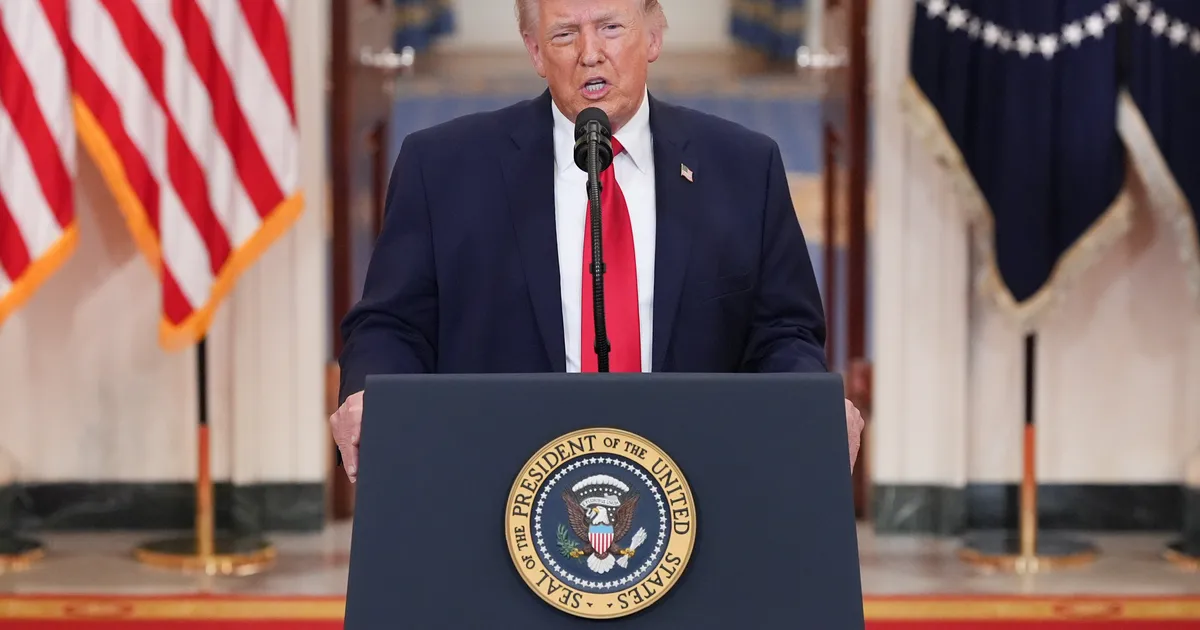
In his first major speech about the war against Iran he began without consulting allies and without the consent of Congress, President Donald Trump offered no new timeline or plan for how the war will end and instead repeated recent talking points, including threats of war crimes and an assertion that the critical Strait of Hormuz would “naturally” open by itself soon.
In a rare prime-time address to the nation, Trump did not provide any hints as to how he might bring the tens of thousands of deployed service members home without leaving Iran in charge of the strait that normally sees a fifth of all the world’s oil pass through it.
Instead, he ran through the destruction he has already wreaked on Iran and how much worse he will make things for its citizens.
“If there is no deal, we are going to hit each and every one of their electric generating plants, very hard and probably simultaneously,” Trump said.
Destroying a country’s electrical infrastructure, critical to civilian life, is generally considered a violation of international law.
Rather than give Americans a better sense of when his war would end, Trump instead compared the month it has lasted so far to longer wars the nation has fought over the past century.
“It’s very important that we keep this conflict in perspective. American involvement in World War I lasted one year, seven months and five days. World War II lasted for three years, eight months and 25 days. The Korean War lasted for three years, one month and two days. The Vietnam War lasted for 19 years, five months and 29 days. Iraq went on for eight years, eight months and 28 days,” Trump said.
His war has already left 13 US service members dead and has injured several hundred.
In Iran, human rights monitors estimated that some 1,500 civilians have been killed already, including 175 people, mostly young girls, by a US missile strike on a school in the first hours of the attack on February 28.
The president, as he has countless times, yet again drew a fantasy portrait of the 2015 nuclear deal that had been negotiated by former President Barack Obama, which had limited how much nuclear material Iran could have and mandated an intrusive regime of inspections.
Trump withdrew from the agreement during his first term in office, which was followed by Iran resuming its production of higher-grade uranium.
“I terminated Barack Hussein Obama’s Iran nuclear deal, a disaster. Obama gave them $1.7 billion in cash. Green, green cash. Took it out of banks from Virginia, DD, then Maryland, all the cash they had, flew it by airplanes in an attempt to buy their respect and loyalty. But it didn’t work,” Trump said — failing to mention that his war has permitted Iran to sell its own oil at much higher prices since it began, which has already netted the nation some 10 times as much money.
Trump’s announcement is the latest in a dizzying series of contradictory claims about the war since its start. Trump originally promised that the US Navy would escort tanker traffic through the Strait of Hormuz. That never happened.
He claimed repeatedly that the war was over and that the United States had won, even as he continued ordering more air attacks. He claimed he was negotiating with Iran to end the war while also claiming he was killing everyone he might negotiate with.
And he claimed the war could not end unless Iran turned over its hundreds of pounds of enriched uranium, but then began his speech saying that the nuclear fuel is buried so deep underground that Iran could never get it — and that he could, in any event, simply monitor it via reconnaissance satellites.
Trump expanded on that idea, turning the original main reason for the war — Iran’s nuclear capability — into an afterthought that could be dealt with later if need be.
“It would take months to get near the nuclear dust, and we have it under intense satellite surveillance and control. If we see them make a move, even a move for it, we will hit them with missiles very hard again,” he said.
As to the spiking gasoline and diesel prices his war has brought to Americans and people around the world, which has caused his poll numbers to fall even further, Trump blamed that pain on Iran.
“The short-term increase has been entirely the result of the Iranian regime launching deranged terror attacks against commercial oil tankers and neighbouring countries that have nothing to do with the conflict,” he said.
Trump previously said he had been surprised by Iran’s attacks on its Gulf neighbours to hurt the flow of oil, even though intelligence analysts have for decades anticipated that Iran would do exactly that if attacked.
In his speech, which at 18 minutes is among the shortest Trump has delivered as president, he told Americans that they should be grateful for what he has done: “This is a true investment in your children and your grandchildren’s future.”

Lori Loughlin ‘Dating Again’ After Mossimo Giannulli Split

Why Benjamin Netanyahu needs the Iran conflict to continue

Pharmaceuticals face 100% tariffs in US – unless firms strike a deal


-

 NewsBeat6 days ago
The Story hosts event on Durham’s historic registers
-

 Sports6 days ago
Sweet Sixteen Game Thread: Tide vs Michigan
-

 NewsBeat6 hours ago
Steven Gerrard disagrees with Gary Neville over ‘shock’ Chelsea and Arsenal claim | Football
-
Entertainment3 days ago
Fans slam 'heartbreaking' Barbie Dream Fest convention debacle with 'cardboard cutout' experience
-
 Entertainment5 days ago
Lana Del Rey Celebrates Her Husband’s 51st Birthday In New Post
-
Crypto World3 days ago
Dems press CFTC, ethics board on prediction-market insider trades
-

 Crypto World1 day ago
Gold Price Prediction: Worst Month in 17 Years fo Save Haven Rock
-

 Tech4 days ago
The Pixel 10a doesn’t have a camera bump, and it’s great
-

 Sports2 days ago
Tallest college basketball player ever, standing at 7-foot-9, entering transfer portal
-

 Tech3 days ago
EE TV is using AI to help you find something to watch
-

 Fashion5 days ago
Amazon Sundays: Soft Spring Layers
-

 Tech3 days ago
Apple will hide your email address from apps and websites, but not cops
-

 Politics3 days ago
Should Trump Be Scared Strait?
-

 Tech3 days ago
How to back up your iPhone & iPad to your Mac before something goes wrong
-

 Business53 minutes ago
No Jackpot Winner and $194 Million Prize Rolls Over
-

 Crypto World3 days ago
U.S. rule change may open trillions in 401(k) funds to crypto
-

 Tech3 days ago
Flipsnack and the shift toward motion-first business content with living visuals
-

 Tech4 days ago
Avatar Legends: The Fighting Game comes out in July and it looks pretty slick
-

 Tech5 days ago
Elon Musk’s last co-founder reportedly leaves xAI
-

 Business7 days ago
Chinese universities with military links bought Super Micro servers with restricted AI chips
You must be logged in to post a comment Login