

Politics
‘He’s Central Casting’ Trump Goes On Bizarre Rant About Xi Jinping’s Appearance


During a wide-ranging Thursday night interview with Fox News’ Sean Hannity, President Donald Trump went on quite a tangent about Chinese President Xi Jinping’s appearance, especially his stature.
“But I say about him (Xi), that if you went to Hollywood and you looked for a leader of China to play a role in a movie … ” Trump said.
“Central casting,” Hannity interjected.
“He’s central casting, you couldn’t find a guy like him,” Trump said. “Even his physical features, he’s tall, very tall. Especially for this country, cause they tend to be a little bit shorter. You look at the military, I mean, the military today was incredible, that military marching was incredible. But no, if you went to Hollywood, you wouldn’t find that. You’re not gonna find a guy to play the role.”
“I mean, I’ll get criticised, they always criticise me when I say good things about certain leaders,” Trump continued.
Trump and Xi met behind closed doors on Thursday morning, where the Chinese president reportedly told his counterpart “the Taiwan question is the most important issue in China-US relations,” according to a post on X by Chinese Foreign Ministry spokesperson Mao Ning.
“If it is handled properly, the bilateral relationship will enjoy overall stability. Otherwise, the two countries will have clashes and even conflicts, putting the entire relationship in great jeopardy,” she wrote.
Trump also told Hannity during the interview that Xi said during their conversations that he “would like to be of help” in negotiations to reopen the Strait of Hormuz and an end to the war in Iran.
Subscribe to Commons People, the podcast that makes politics easy. Every week, Kevin Schofield and Kate Nicholson unpack the week’s biggest stories to keep you informed. Join us for straightforward analysis of what’s going on at Westminster.

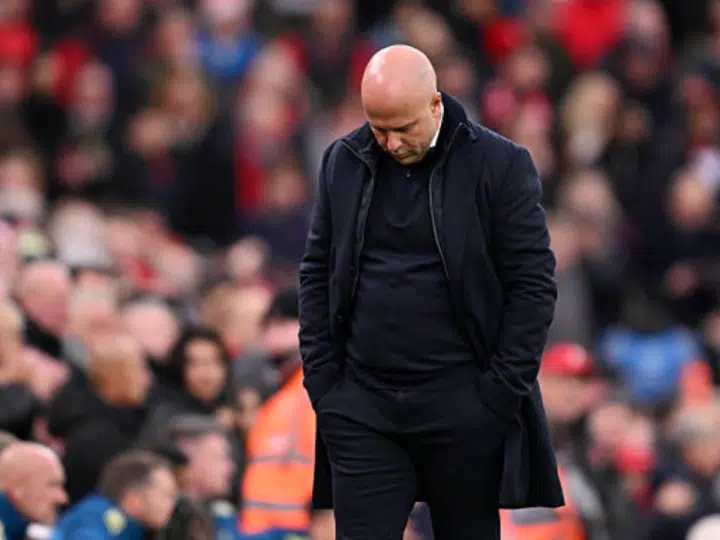

Liverpool’s title defence under Arne Slot has collapsed into a season of frustration: boos at Anfield, creativity drained, and a squad riddled with injuries and set-piece failures. The supporters are restless, and they have many reasons to be.
Arne Slot didn’t duck the reaction after the Chelsea draw; he admitted he heard the boos and insisted he knows what needs changing. “I know what we need to get that done,” he said, adding he’s “100 per cent convinced we will be a different team next season” if the summer goes to plan.
That’s a start, accountability matters but words only buy time. Slot must translate intent into visible, immediate action on three fronts: defend set pieces, restore attacking identity, and get the recruitment right.
Arne Slot overseeing slump
Liverpool have been punished repeatedly from set plays this season, 18 goals conceded from set pieces is a glaring structural failure. That’s not a one-off; it’s a recurring pattern that undermines confidence and invites pressure. Fixing it requires a forensic coaching reset: dedicated set-piece drills, clearer marking responsibilities, and a defensive leadership voice on the pitch.
If Slot wants to silence the crowd quickly, he needs to make Anfield a fortress again. Especially on dead-ball situations. Clean sheets buy patience.
Fans are bored because the team is predictable and low on chances. Liverpool’s expected-goals rank is the worst in a decade. And, the problem isn’t just finishing, it’s creating. Slot’s forwards have been starved of quality service and movement; the new attacking signings have barely had time together, with Hugo Ekitike, Florian Wirtz, and Alexander Isak combining for only 119 minutes this season. That lack of cohesion has to be addressed tactically and practically.
If there is a short-term solution, it will be, free up the front line with clearer patterns, quicker transitions, and more aggressive positional rotations. Long-term solutions will be assessed at the end of the season, but as a minimum a preseason that builds chemistry, not just fitness.
Targeted changes
Last summer’s spending was huge, but injuries and mismatches have left gaps. Jamie Carragher’s blunt prescription, a right winger, a right back and a central midfielder, is a useful shopping list: targeted, not wholesale. Slot and sporting director Richard Hughes must prioritise quality over quantity and buy players who fit the system and the Premier League’s physical demands.
Crucially, they can’t do a complete rebuild and alter the entire identity. Keep the best of what won the title and plug the holes that made the team “easy to play against,” as pundits have put it.
Fans want to see momentum. That means clear, measurable steps: improved set-piece record in pre-season friendlies, a visible tactical tweak in the first competitive game, and early transfer moves that signal intent. Champions League qualification is non-negotiable, it funds the rebuild and calms nerves. Slot must make the first two matches after the break feel like a reset, not a continuation of decline.
Uphill battle
The reality is, the boo’s are a symptom, not the disease. Slot’s words, that he knows what’s wrong and how to fix it, are necessary but not sufficient.
It’s okay to talk the talk, his team has far from walked the walk this season.
To win fans back he needs rapid, tangible improvements in defence, creativity and recruitment, plus a summer that turns stop-gap fixes into a coherent plan. If he delivers that, the noise will fade. If he doesn’t, patience is already wearing thin. He won’t be coaching Liverpool FC if this continues.
Featured image via the Canary
By Faz Ali

If you’ve booked a 2026 holiday, chances are you’ve heard the words “jet fuel price hikes” more than you’d like.
Following the closure of the key oil and fuel shipping route, the Strait of Hormuz, jet fuel costs have reportedly doubled.
That’s led some airlines to cancel flights, while others are running fewer flights overall. Still, the UK government’s site says “UK airlines say that they are not currently seeing a shortage of jet fuel,” as of the time of writing.
If that sounds a little conflicting, we’ve created a list of everything airlines like Ryanair, easyJet, British Airways, and Jet2 have said so far on the topic.
And recently, TUI provided an update for passengers.
What is TUI’s recent jet fuel update?
Speaking to The Independent on May 13, the CFO of TUI Group, Mathias Kiep, said: “I’m very much convinced that we will see no shortage in the next 10 weeks. There’s definitely enough fuel.
“We think that the discussion on fuel is a little bit artificial, as we do see no shortages for the next few weeks.” He also told the publication that he didn’t expect shortages even if the Strait of Hormuz remained closed.
This is in line with other airline bosses, like Ryanair’s Michael O’Leary.
The controversial CEO recently told Reuters, “We think the risk of a supply disruption is receding… A month ago, we were saying we’re all fine until the end of May. The fuel companies are now saying they’re seeing no supply disruption risk until the end of June.”
And speaking to Fortune on 14 May, Greg Raiff, the CEO of private jet services company Elevate Jet, went so far as to call reports of jet fuel shortages a “myth”.
Will TUI charge more for their holidays after the jet fuel price hike?
Some companies have begun adding surcharges to flights as a way to battle the rising cost of fuel.
The company had previously told customers their “holiday price is fixed, with no fuel surcharges added by TUI”.
But in his most recent update, Kiep said: “I would also see no impact in the summer at all except prices – and for the higher prices, we are luckily hedged.
“We do see that Europe now gets more oil from other countries like Nigeria because the increased prices made the production there profitable. We see that consumption is significantly lower than a year before, and refinery capacity is also up.”
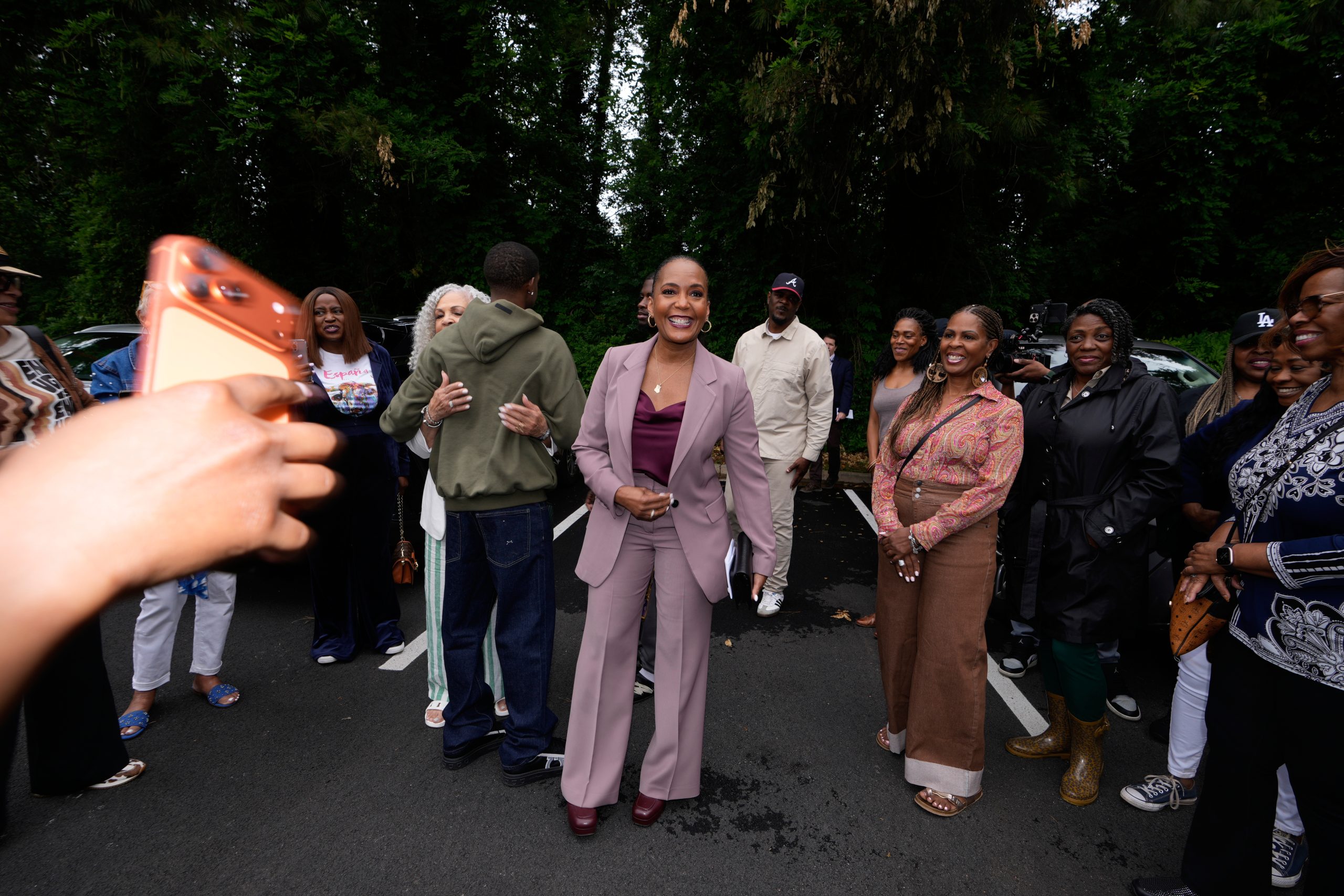

Georgia Democrats are worried their front-runner will fumble a “once in a generation” chance to win the governor’s mansion this year.
Keisha Lance Bottoms has what should be an enviable résumé: former judge, city council member, mayor of Atlanta and senior White House adviser. She’s dominating public polling in the primary, bolstered by high name recognition in the Atlanta metro area.
But a third of the Democratic electorate remains undecided, and her most high-profile endorsement is from former President Joe Biden, who left office deeply unpopular among Americans.
The wariness from Georgia Democrats stems from a simmering concern about Bottoms’ ability to win a general election, conversations with more than a half-dozen strategists and officials revealed. They warn that the crown jewel of Bottoms’ work experience — leading the state’s biggest city — will be a major drag to her campaign. Her tenure was marked by turmoil as Atlanta, like other major cities at the time, grappled with the onset of the pandemic, social unrest and spikes in crime.
Now, they worry, Bottoms could upend their best opportunity to flip the governorship for the first time in two decades.
“Keisha, because she’s so strongly identified with the city of Atlanta, obviously faces a very high hurdle,” said Howard Franklin, a Georgia-based Democratic strategist who is unaffiliated in the primary, but briefly worked for one of Bottoms’ competitors in 2013. “I don’t think there’s anybody who’s paying attention to this race who thinks that Republicans are anything less than prepared to criticize and to pile on to the criticism of the four years that she was in office.”
The Democrats interviewed, some of whom were granted anonymity to speak openly about the primary, fear her record will be easily caricatured by Republicans in the general election, leaving her vulnerable to attacks on issues like public safety.
“The Republicans will eat her for lunch. The Republicans are begging us to nominate her,” said one longtime Democratic strategist unaffiliated in the race. “If she’s at the top of the ticket, the whole ticket loses. If she’s not … we can sweep it. The stakes are that high.”
TaNisha Cameron, a spokesperson for Bottoms’ campaign, dismissed the concerns as political hand-wringing and said the Democrat is focused on “standing up to Donald Trump’s candidate for governor.”
“Political insiders have underestimated Keisha Lance Bottoms her entire career, and she has constantly proven them wrong by winning elections and beating their hand-picked candidates. Keisha is leading in the polls in both the primary and general election because voters like her vision for Georgia’s future and her record of delivering for the people of Atlanta,” Cameron said in a statement, going on to highlight how Bottoms attracted nine Fortune 500 companies to Atlanta while in office and left the city with a $180 million budget surplus.
Central to Bottoms’ pitch to voters is a pledge to expand Medicaid in Georgia and guarantee universal pre-K statewide. In mid-May, just a few weeks after the Supreme Court significantly limited the power of the Voting Rights Act, Bottoms released a comprehensive plan to protect access to the ballot in Georgia.
This could be the Democratic Party’s last shot in a generation to grasp all the levers of political power in Georgia. Republican Gov. Brian Kemp is set to redraw the state’s congressional and state legislative districts ahead of 2028. And as President Donald Trump revives personal grievances about the 2020 election, the leading GOP gubernatorial candidates are vocal election deniers who continue to sow doubt about Georgia’s voting systems in a state that will be central to the 2028 presidential race.
Each of Bottoms’ Democratic primary opponents is running in their own loosely defined lanes: former DeKalb County executive Michael Thurmond as the steady hand with experience in statewide office, former state Sen. Jason Esteves as the progressive next-generation leader, and Republican-turned-Democrat Geoff Duncan as a moderate trying to appeal to voters in the center.
But those three contenders for runner-up have found themselves in a near statistical tie for second place for months. So far, they’re collectively holding Bottoms below the 50 percent threshold that she would need to win the race outright and advance to the general election.
“It’s unfortunate right now, but in the state of Georgia versus what we saw in 2018 with Stacey Abrams, or what we saw with Warnock — we’re missing the light,” said Cobb County Democratic Chair Essence Johnson, who’s staying neutral in the primary. “We don’t have a true, strong light, because there’s so many differences. It’s great, because that shows what democracy is. But again, there’s a lot of candidates.”
Some Democrats don’t see a major issue with Bottoms’ potential nomination — especially with the GOP in a tougher position, staring down Trump’s cratering approval ratings and struggling to message on voters’ cost of living concerns and an unpopular war in Iran.
“The Republican Party is very underwater. I think the Republican Party is more underwater than Keisha Lance Bottoms is,” said John Jackson, the former DeKalb County Democratic Chair. “At the end of the day, she’s a competitive general election candidate.”
One early general election poll shows Bottoms leading the three top Republicans running for governor, but all within the survey’s margin of error.
A Bottoms win would be historic: She would be the first Black woman elected governor in the history of the country — and the first Black governor of the Peach State.
The increased attention toward Bottoms’ performance with public safety did not happen in a vacuum, as several Black women — including former Chicago Mayor Lori Lightfoot and D.C.’s Muriel Bowser — faced extra scrutiny from critics as they guided major American cities through the depths of the pandemic and nationwide protests.
Bottoms’ defenders are confident in her standing with voters.
“I have seen the kind of hand-wringing, and it is predominantly coming from very, very, insider politico Atlanta circles,” said Kristen Kiefer, Democratic chair in Houston County, which is located in central Georgia. Because of her party role, she cannot endorse a candidate.
“What we saw from here, far from Atlanta, was somebody that was willing to stand up to the governor over mask mandates,” she said. “What we saw during social unrest was the city of Atlanta was making space for peaceful protests, but then, too, we all remember the night that Keisha was on TV with Killer Mike and T.I. telling everyone to go home and being ready to shut it down when it got out of hand.”
Still, others remain worried that Bottoms could hurt their chances, even in a midterm year that favors their party.
“Most Democrats who are being honest are nervous about the campaign of Mayor Bottoms, who, to be clear, brings a lot of strengths to the race,” said Andrew Heaton, a Georgia-based Democratic strategist who is unaffiliated in the primary. “[Republicans] are going to have to find messages against the other candidates. They’ve already got the attack ads on Mayor Bottoms written.”
Bottoms touts her wins in city hall on the campaign trail. In interviews, she has highlighted her administration’s success in building more affordable housing in Atlanta and authorizing pay raises for the city’s law enforcement. Still, her abrupt decision not to seek a second term in 2021, following a period of unrest in Atlanta, continues to haunt her.
“She’s got to answer some questions. She’s got to be able to answer these questions well: Why didn’t you run for reelection as mayor of Atlanta? There’s a perception that she ran away from that job,” said Jackson, whose tenure as DeKalb County Democratic Chair overlapped with Bottoms’ time as mayor. (Atlanta extends from Fulton County into DeKalb.)
At the time, Bottoms said in a press conference that it was “time to pass the baton on to someone else,” but did not detail her reasons for giving up the opportunity for another four years in office.
Pressed about her decision in a recent interview with Atlanta News First, Bottoms emphasized that she completed her term and didn’t skip out early.
“I served the entirety of my first term as mayor,” she said. “I was asked to go to the Biden White House three times, and decided not to do it because I wanted to complete the term that I had been elected to serve.”
The decision had followed a pounding four years in office that was dominated by the pandemic, a sharp rise in violent crime and protests over the police killings of George Floyd in Minneapolis and Rayshard Brooks in Atlanta. Bottoms’ response to the city’s social unrest drew bipartisan praise — particularly her impassioned remarks at a press conference with law enforcement telling protesters to “go home.”
But Democrats and Republicans alike have already seized on her perceived biggest vulnerabilities ahead of Election Day: that a reminder of her tenure in office will evoke flashbacks of burning buildings and unrest.
Esteves, the former state senator, attacked Bottoms on the debate stage last month over the death of 8-year-old Secoriea Turner, who was shot and killed while riding in a car near protests at the site where Atlanta police fatally shot Rayshard Brooks.
“I did not allow gangs to take over blocks. We lived through 2020 together. It was the most trying time in recent history in our country,” Bottoms responded. “I made every decision that I thought was the best decision at that time. But you cannot have the death of a child — of any child — and not wonder what, if anything, you could have done differently.”
Republicans, who have otherwise been mired in their own competitive and rancorous primary, have found time to preview their general election attacks against Bottoms. In an April ad, billionaire health care executive Rick Jackson said the former mayor “abandoned” her city in a crucial moment.
“When the city needed her, she let Atlanta burn,” Jackson says over footage of protests in downtown Atlanta.
That early Republican effort to attack Bottoms’ record is exactly what has some Democrats worried about her strength in a general election.
“This is a strategic choice. Sometimes when we make these choices in voting, some of the choices can be emotional, some of them can be related to personal ties,” said state Rep. Michelle Au, who is backing Duncan in the gubernatorial primary.
“But really the most important thing — or even the only important thing — is: Can this Democrat win? Because we can get a Democrat out of the primary, and that’s all fine, but if they can’t win in November, it does not achieve my goal.”
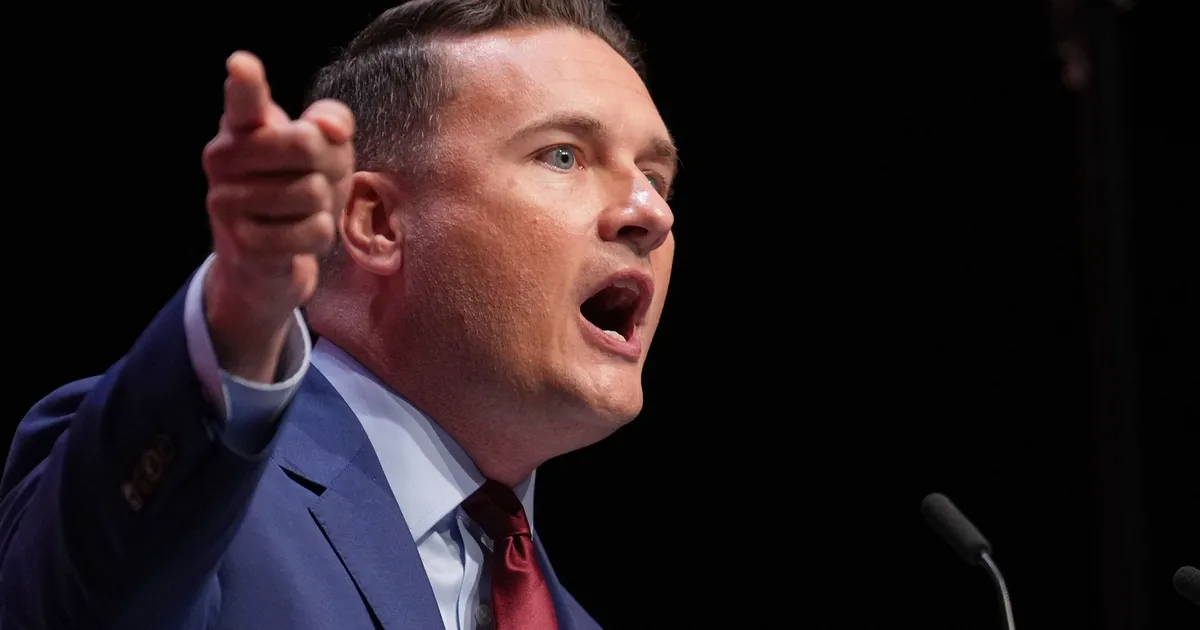
Wes Streeting will definitely run in the upcoming Labour leadership contest, his allies have told HuffPost UK.
It is the first confirmation that he plans to mount a bid to replace Keir Starmer as prime minister.
Supporters of Starmer have claimed that the former health secretary – who resigned with a ferocious attack on the prime minister yesterday – does not have enough support from Labour MPs to mount a challenge.
Under Labour Party rules, any candidate must have the support of at least 20% of its MPs to make it onto the ballot paper. At the moment, that is 81 MPs.
Starmer allies have claimed that Streeting currently only has 43 names, leaving him well short of the number required.
They said that was why he did not formally trigger a contest when he quit the cabinet, as had been expected.
But a source close to Streeting told HuffPost UK: “He has the numbers and will be a candidate when there’s a contest.”
In his resignation letter, Streeting stopped short of saying he would challenge the PM.
But he said: “It is now clear that you will not lead the Labour Party into the next general election and that Labour MPs and Labour unions want the debate about what comes next to be a battle of ideas, not of personalities or petty factionalism.
“It needs to be broad, and it needs the best possible field of candidates. I support that approach and I hope that you will facilitate this.”
A leadership contest appears inevitable, despite Starmer insisting he “won’t walk away” from No.10.
Cabinet ministers, including home secretary Shabana Mahmood and foreign secretary Yvette Cooper, have personally told the PM to set out a timetable for his departure.
More than 90 Labour MPs have so far publicly called on him to quit, while four junior ministers have also resigned from the government.
Andy Burnham kicked off his own attempt to be the next PM when it was announced that Labour MP Josh Simons is standing down to let the Greater Manchester mayor stand in his Makerfield seat.
Labour’s ruling national executive committee (NEC) is not expected to block Burnham’s bid to be the party’s candidate in the resulting by-election.
However, he faces a huge challenge to see off Reform UK and be elected the new MP for the constituency.
If Burnham wins, he is expected to immediately challenge Starmer, triggering a full leadership contest.
Others who could throw their hats into the ring include former deputy PM Angela Rayner, defence secretary John Healey, energy secretary Ed Miliband, Mahmood, Cooper and junior defence minister Al Carns
Subscribe to Commons People, the podcast that makes politics easy. Every week, Kevin Schofield and Kate Nicholson unpack the week’s biggest stories to keep you informed. Join us for straightforward analysis of what’s going on at Westminster.


An independent disciplinary commission will meet on or before Tuesday 19 May to decide whether Southampton breached English Football League (EFL) rules by allegedly spying on a Middlesbrough training session. This decision could affect the Championship play-off final at Wembley on Saturday 23 May.
Southampton: What are the allegations?
Middlesbrough lodged a complaint after a photo emerged showing a man outside their training ground with a camera. The EFL subsequently charged Southampton with breaching competition regulations. If the commission upholds the charge, Southampton could be removed from the play-offs. This would deny them a shot at promotion.
The EFL stressed the hearing is being run by an independent body:
As the proceedings are being conducted by an Independent Disciplinary Commission, the EFL does not control the proposed timetable.
On contingency planning, the league also warned supporters to expect possible changes:
Supporters should, however, be aware that the outcome of the disciplinary proceedings may yet result in changes to the fixture.
Possible outcomes and implications
- If there is no breach found, Southampton will play Hull City at Wembley as scheduled with promotion being decided on the pitch.
- If a breach is found, but sanctions are short of expulsion then it will be fines, points deductions applied to a future season, or other penalties that leave the final intact.
- If a breach is found to be true and expulsion is ordered, Southampton removed from the play-offs; the EFL would need to implement contingency plans, which could include promoting the defeated semi-finalist or rearranging the final.
Each outcome carries knock-on effects. Ticket allocations, travel plans, broadcast schedules and commercial contracts all hinge on the commission’s ruling and any subsequent appeals. The EFL has said it is planning on the basis the final will go ahead on 23 May. However, it has contingency measures ready.
Ticket sales continue
Middlesbrough’s squad have been told to report back to training amid uncertainty. Southampton have given players a short break before returning to prepare for the final. Both clubs and the EFL are continuing ticket sales while warning supporters that arrangements could change. Fans should be cautious when booking travel and accommodation.
The independent hearing is set to conclude by 19 May, is the decisive moment. The EFL’s public position is pragmatic: plan for the final but be ready to adapt. That leaves a narrow window for legal argument, potential appeals and logistical reshuffling before Wembley. The outcome will determine not just who plays at Wembley, but who earns the financial and sporting prize of Premier League promotion.
Featured image via Southampton FC
By Faz Ali
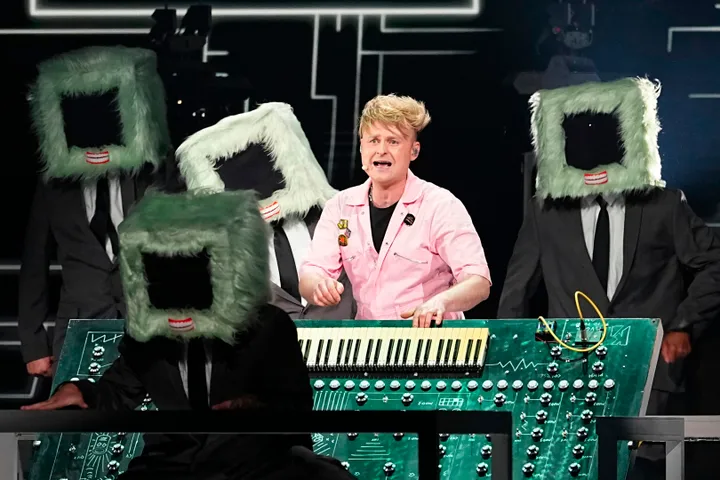
Eurovision star Look Mum No Computer has shared that the BBC took measures to make sure he’d be able to cope with the “pressure” of the contest.
Look Mum No Computer – the stage name of musician and YouTuber Sam Battle – is representing the UK at the 2026 Eurovision Song Contest this weekend with his original song Eins, Zwei, Drei.
Given how the UK has fared at the competition in recent years, it’s fair to say that picking up that mantle is not for the faint of heart, and in a new interview with BBC News, the performer opened up about how bosses wanted to make sure he was up to the challenge.
“They gave me a stress test [to see] whether I could deal under pressure,” he explained, with the BBC describing him as flashing a nervous “should-I-be-saying-this” glance towards his press team as he made the revelation.
“It’s nothing, really,” he added. “Just making sure that you don’t get too nervous and things like that.”
HuffPost UK has contacted the BBC for additional comment.

Past UK Eurovision acts have made no secret of the intense toll that the scrutiny and attention associated with the contest can bring.
Back in 2025, Olly Alexander claimed that his number one advice to the UK’s next Eurovision entrant would be to “get yourself a really good therapist because you’ll have a lot to talk about – for years!”.
Meanwhile, Look Mum No Computer isn’t the only Eurovision performer whose delegation took measures to prepare them for the contest.
Earlier this week, Israeli representative Noam Bettan claimed that, like his recent predecessors, he rehearsed while being booed to prepare for any disruptions that might occur during his performance.
“I had a few people in my crew trying to make it hard for me, to practise for this moment,” Noam told the BBC earlier this week. “But you can’t really prepare for this.”
During Noam’s semi-final performance on Tuesday night, pro-Palestine chants could be heard coming from the audience, with Eurovision later confirming that audience members had been removed for causing disruption.
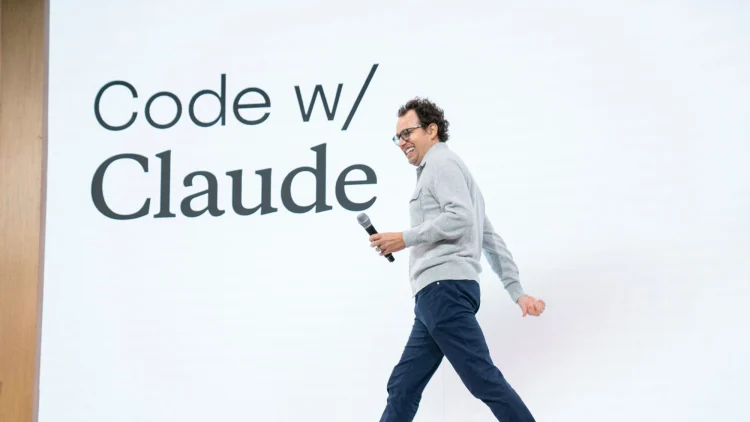
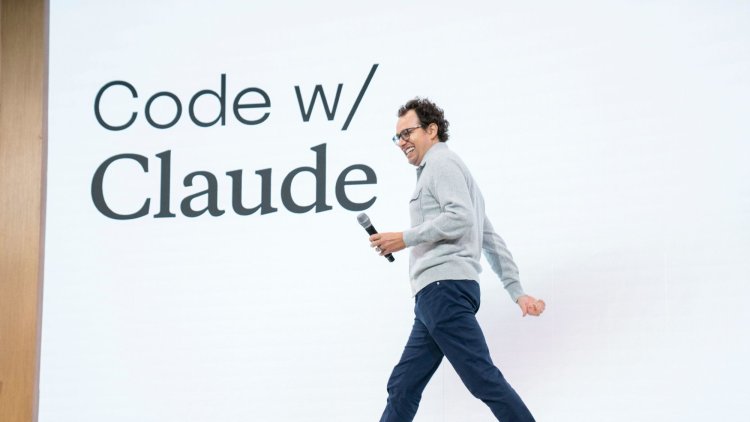
Anthropic CEO Dario Amodei (Associated Press/Alamy)
7 min read
The scale of the disruption to the labour market from AI is becoming clear; we cannot leave it to big tech or populists to frame the debate about what to do about it, argues Roa Powell
If AI is powerful enough to turbocharge Britain’s economy, it is powerful enough to disrupt our labour market. Ministers must reckon with this dual reality.
This government is taking rapid AI progress seriously. They have committed to a world-leading AI Security Institute, invested £500m in the UK’s sovereign AI capability, and plan for the UK to be the fastest AI adopter in the G7. Ministers have described AI as “the defining technology of our generation”, “the engine of economic power” and an “industrial revolution in a decade”.
But the more seriously this government takes AI, the harder it is to justify silence on AI-driven job loss.
If AI is really going to be an “industrial revolution in a decade,” surely we should expect disruption on a similar scale with backlash akin to the Luddites. If AI is going to help streamline the “flabby” civil service, with government suggesting 62 per cent of the most junior civil servants’ work is automatable, surely we can expect our own bosses to follow suit and cut headcount.
According to Public First, two-thirds of UK adults already expect AI to contribute to unemployment, and as AI’s impact on jobs becomes more prominent in the public consciousness, so does the political cost of doing nothing about it.
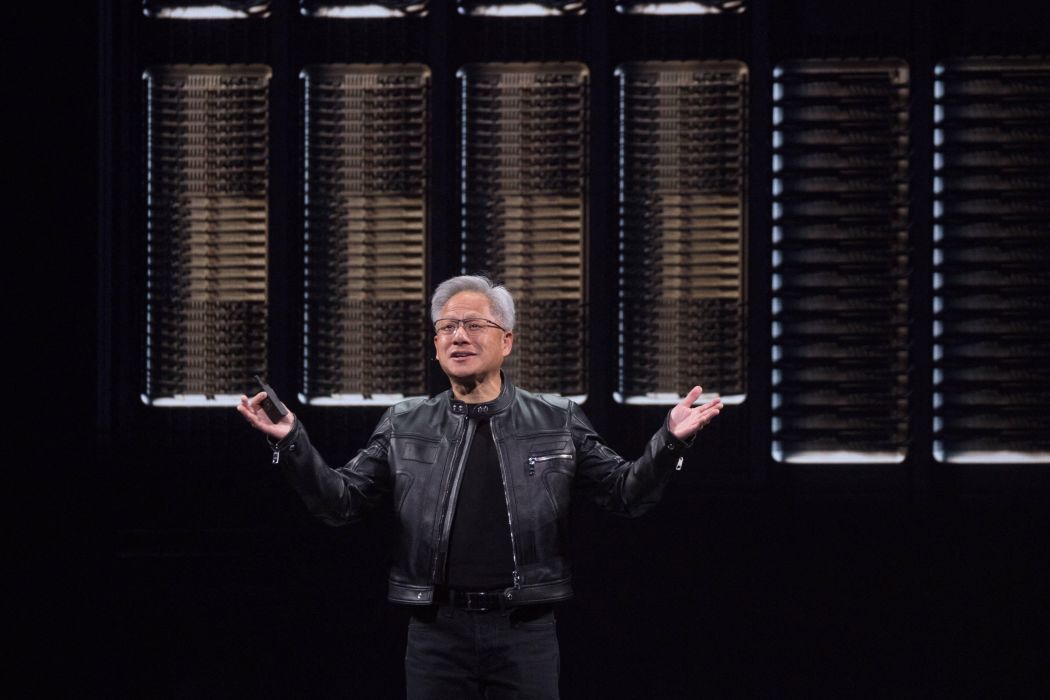
One excuse for inaction is that forecasts on AI-driven job loss still vary widely. Our own analysis at the Institute For Public Policy Research (IPPR) imagines scenarios ranging from eight million UK jobs lost to no jobs lost at all. When the International Monetary Fund said that 60 per cent of roles in advanced economies were exposed, economists pushed back, pointing out that AI being capable of performing a task tells you little about whether that person’s job will actually be scrapped. Even the tech CEOs disagree with Anthropic’s Dario Amodei predicting AI could eliminate half of entry-level white-collar jobs in five years, only for Nvidia’s Jensen Huang to push back, claiming “you’re not going to lose your job to an AI, but you are going to lose your job to someone who uses AI”.
But the forecasts are moving in one direction and the evidence that AI will bring significant change to our job market is mounting. AI’s performance at real-world job tasks has more than doubled in a year. Evaluations show AI matching or beating a human at a full-day task – that is a task that would ordinarily take a human eight hours to complete – 71 per cent of the time. At the same time “agentic” AI is taking us beyond the chatbot interfaces most people know.
Given a goal and control of a computer, AI can be left alone to browse the web, draft and send emails, edit files and book meetings. Meta, Salesforce, IBM, Microsoft and BT have all attributed significant job cuts to AI and entire disciplines have transformed overnight, with top engineers at Anthropic and Open AI saying AI now writes 100 per cent of their code.
Once the impacts are here it will be too late, risking an outcome where the state is grinding into gear just as millions are out of work, tax revenues have collapsed and techlash has peaked
We are also starting to get a sense of how uneven impacts will be. New data from the Financial Times shows 60 per cent of high earners use AI daily compared to just 16 per cent of low earners, with women also using AI less. This makes them less equipped to adjust to a world where our bosses expect us to use AI and maybe pay us more as a result. Young people are also set to feel the brunt of this as entry level jobs are most exposed, and without opportunities to learn on the job they will struggle to reach the next stage in the career ladder. Compared to the industrial revolution, the geography of AI’s impact is expected to be flipped, with high earners in cities more exposed to automation while rural areas can look immune on the surface but be left out of the economic upside.
We shouldn’t expect concrete predictions on this to arrive until very late in the day. The sequence from AI getting more capable, to AI getting adopted and then people becoming displaced doesn’t follow automatically from highly capable AI. Adoption and displacement depend on legal certainty, human preferences, and the relative cost of human versus machine labour. But by the time concrete data arrives, disruption could be well under way.
With AI, the timing trap is brutal. It is not realistic for our government to make major spending changes before bigger impacts from AI have arrived, but once the impacts are here it will be too late, risking an outcome where the state is grinding into gear just as millions are out of work, tax revenues have collapsed and techlash has peaked.
The real challenge for a country like Britain is whether we can capture the economic windfall AI brings, either by attracting firms to the UK so they are part of our tax base, or by considering new progressive tax structures for massive AI-driven profits. Across a wide range of AI labour market scenarios, this will determine whether we have the money to help those most in need.
The UK is especially exposed on this. First, because the sectors most vulnerable to AI disruption, like financial and professional services, currently bring in our biggest tax revenues.
Second, because the companies set to reap the rewards sit largely outside of our tax base. We don’t have any of the technology giants like Google or Microsoft who are already reaping the profits from AI, nor do we have any of the frontier AI companies who are seeing some of the fastest growing revenues ever, like Anthropic which just hit $30bn in revenue, up from just $1bn in January 2025.
In practice, this means we need to lay some serious groundwork now, both politically and practically.
Practically, we need to prepare multiple plans to capture the value from AI. If frontier AI companies hoover up all the profits, we should consider taxes that target them specifically. If the gains spread to any company that uses AI, we will instead need to raise corporation tax to reflect that revenue no longer accrues to workers. And in the meantime, government-backed wealth funds can help us reap some of the rewards whatever happens, by spreading our investment across the AI landscape and redistributing this to workers who need support most.
None of these policies are possible overnight and, for lots of this, the UK won’t be able to go it alone. We already struggle to effectively tax big technology companies, and international co-ordination is essential to allow everybody to take a fair share. For this to work, we need to start detailed scenario planning now.
Politically, our government needs to develop a stronger voice on this issue. The political ground is shifting fast. Just last month, OpenAI published a blueprint promoting robot taxes, a national wealth fund and a four-day working week. Meanwhile, Amodei has written that existing tax systems will no longer make sense and that progressive taxation on AI companies may be needed. These are not the demands of trade unions or left-wing think tanks. When AI’s biggest winners are calling for redistribution, it is beyond time for government to take that seriously.
The cost of waiting is just too high. Waiting would mean ceding the debate to AI companies designing rhetoric to suit their public image, or to populists who are faster in finding a way of riding anti-AI sentiment but would have our economy stall while other countries race ahead. If government remains absent from this debate any longer, its ideas will arrive just as disruption escalates, public pressure builds and simplistic solutions become dominant.
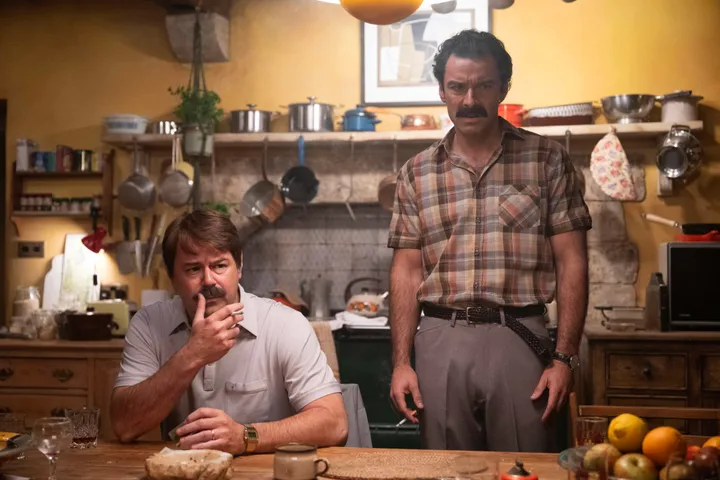
After a two-year wait, Rivals is finally back – and if any fans out there were nervous about whether season two could deliver on the outrageous fun provided by the first run, you can breathe a sigh of relief.
Disney+’s adaptation of Dame Jilly Cooper’s bonkbuster novels returned with three brand new episodes on Friday morning, with three more to come in the weeks ahead, and the rest of the season following later in the year.
In the lead-up to the release, these episodes were met with unanimous praise (check that 100% score on Rotten Tomatoes if you don’t believe us), with many of those glowing four- and five-star reviews hailing the new season as even better than its predecessor.
Here’s a selection of what the critics are saying about Rivals’ second season so far…
“How best to reward such exquisitely knowing escapism? Ten stars? Ten thousand stars? Rivals is beyond earthly praise. Let us instead insert a single rose between its tireless bum cheeks and raise a glass of Cinzano to its naked audacity. Bottoms up!”
“Despite its deliberate corniness, this is also gloriously uplifting television. It is unashamedly celebratory and perhaps even better than the last series, though there is no naked tennis this time.”

“The new series delivers exactly what we need in a week of grim headlines: pure, unadulterated escapism. Its unique blend of utter silliness, seriousness and chaos makes us glad that Rivals is so much more than an illicit affair, it’s a long term relationship we want to keep far beyond the morning after.”
“This is glossy, wickedly funny, politically incorrect and completely unashamed. When it comes to old-school escapist TV, Rivals is unrivalled.”
“[Season two is about] class, petty human jealousy, sex, and love […] of course this is a must watch!”
“What a romp this is. Any notion of second season nerves for the surprise Disney+ hit Rivals (Jilly Cooper was hardly hot property) are quickly dispelled in a gleeful continuation of the bonking, big hair and hilarity where there’s a belly laugh every 30 seconds.”
“Rivals continues to refresh the parts that other television cannot reach – a heady mix of guilty pleasure, trenchant satire, rambunctious comedy and out-and-out trash. Repeatedly, characters take their clothes off and jump into swimming pools for no reason. Sometimes you just have to go with it and take the leap yourself.”

“Dame Jilly Cooper died last October, a few months after season two of Rivals went into production. But her legacy looks secure: the residents of Rutshire are in safe hands.”
“Rivals [is] such a rare treat in today’s television landscape. It is well-written and well-acted, but it aspires to nothing more than being fun. Real, associable human emotions are kept at arm’s length in favour of stylised bucolic horniness.”
“If it were all about the plentiful sex, the audiences’ hard-on for the thrilling ’80s-set revenge drama would have long softened. As such the hateful feud between Tony and womanising MP Rupert Campbell-Black is even more fiery than the passionate entanglements that run rife in the season.”
“An unabashedly over-the-top 1980s-set drama that gleefully embraces the idea that there’s no such thing as a guilty pleasure, it’s a series that, at its heart, is about indulgence, both for its characters and for those watching along at home.
“Though it boasts a prestige cast, lavish sets, and a story that’s grounded in class tensions among the British society elite, it’s a show that determinedly refuses to take itself too seriously, and one that is deeply uninterested in lecturing its viewers about its characters’ (many, obvious) moral failings.”
“If Rivals’ first season was glam and fun, season two uses that as a spoonful of sugar to help the medicine go down. The more complex and morally grey storylines refuse to take the easy way out despite the fluffy packaging.
“You might have found yourself rooting for extramarital affairs in season one, but season two is ready to douse you in some cold water and remind you that all actions have consequences. That’s what makes the series work: you get the good and the bad.”
The first three episodes of Rivals’ second season are now streaming on Disney+. Check out HuffPost UK’s full review here.
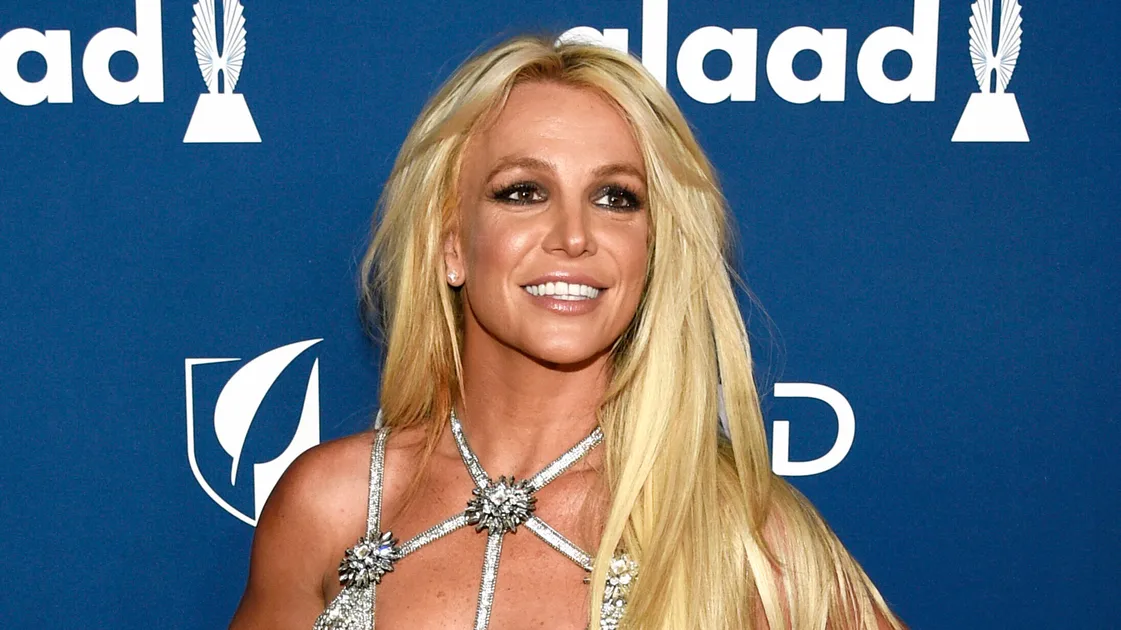
A spokesperson for Britney Spears is sticking up for the singer following accusations that she caused a scene at a Los Angeles-area restaurant on Wednesday night.
TMZ reported on Thursday that Britney had been seen dining out with two people, one of whom was a man she apparently kept saying “I love you” to while they fed each other.
Britney’s rep clarified that she was dining with her assistant and bodyguard at the Blue Dog Tavern in Sherman Oaks, and told a different story than the one reported by TMZ.
Eyewitnesses told the outlet they heard the Piece Of Me star raising her voice, screaming and barking. One described the vibe as chaotic and “kind of sad” though the Grammy winner reportedly “still looked cute”.
At one point, it was reported that staffers had to ask a person with Britney to put out a cigarette she had lit inside, but the most startling moment may have been when she allegedly walked through the restaurant holding a knife.
Entertainment journalist Jeff Sneider wrote on X that he had been dining at the Blue Dog Tavern at the same time as Britney, and called the incident both “wild” and “insane”, adding: “One diner feared for her life. This is not a joke.”
In a statement released to the media, a rep for Britney said the whole story has been unfairly exaggerated.
“Britney was enjoying a quiet dinner with her assistant and bodyguard,” her spokesperson said, while insisting any noise from the singer was because “she was simply telling the story about how her dog was barking at the neighbours”.
“At no point did she put anyone in danger with a knife. She was cutting her hamburger in half,” they added.
“This constant attack on everything that she does and this is exactly what happened 20 years ago when the media tried to depict Britney as a bad person. This is ridiculous and it needs to stop now.”
Britney’s rep notably did not address TMZ’s kissing allegations or the “I love you” comments in the statement.
The story about Britney’s supposedly erratic behaviour comes just over a week after she avoided jail for a DUI charge by pleading guilty to a lesser charge.
She had previously checked herself into a rehab facility following her arrest earlier this year.
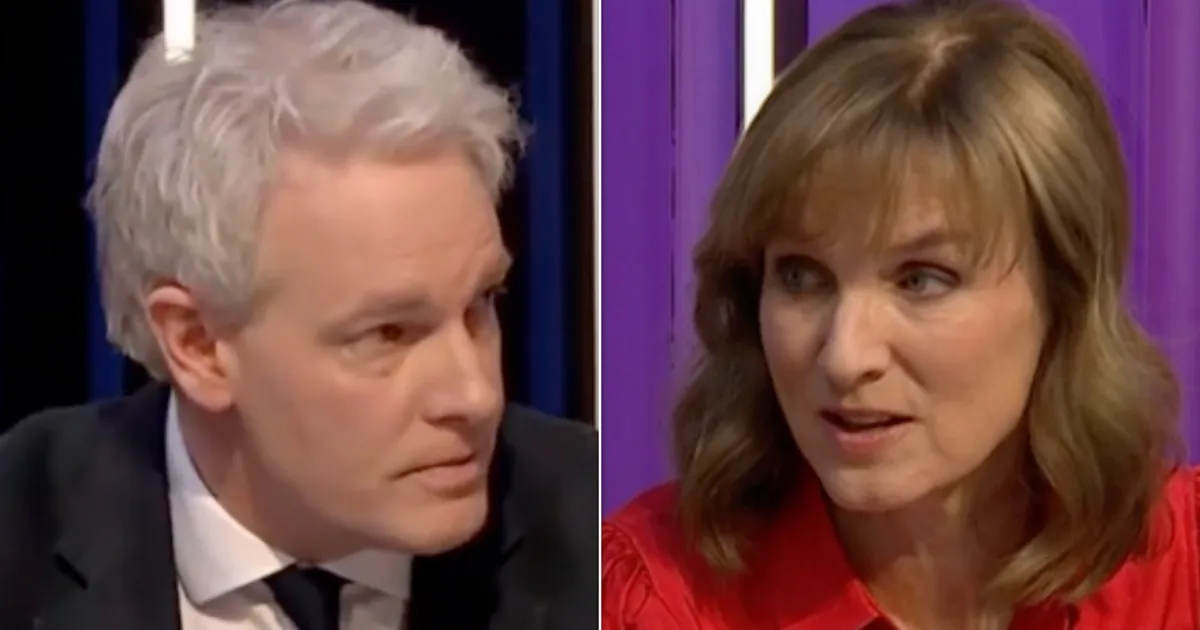
A Reform UK MP was laughed at by the BBC Question Time audience after he was left stumped by the detail of one of his own party’s policies.
Danny Kruger admitted he didn’t know how Reform plans to save £10 billion from the welfare budget by ending payouts to people with mild anxiety.
He was quizzed on his party’s plans for government by Question Time presenter Fiona Bruce.
She said: “Just coming back to the cuts in welfare, because I’ve heard Reform say this every time asked, ‘we’d get rid of benefits for people with mild anxiety’.
“What percentage of the welfare bill do those people make up?”
Kruger, the MP for East Wiltshire who defected from the Tories last year, replied: “I don’t know what that number is, Fiona.”
As the audience laughed, the presenter asked him: “How can you possibly know it’s going to save you £10 billion?”
The MP said: “Excuse me, I don’t know every fact and figure.”
Bruce said: “You’ve just given us a fact which is £10 billion, but you have no idea how you’d get it.”
Kruger insisted he could “stand that up later if you like”.
Subscribe to Commons People, the podcast that makes politics easy. Every week, Kevin Schofield and Kate Nicholson unpack the week’s biggest stories to keep you informed. Join us for straightforward analysis of what’s going on at Westminster.

How HelloRide put 20K bikes on Singapore’s streets in 3 years

Emergency services called to Mill Street, Norton car incident

Zelenskiy condemns Russia after strike on Kyiv apartment block kills 24

Manchester United reach agreement with Casemiro over contract clause amid transfer speculation

US brings back mandatory military draft registration

Steven Gerrard disagrees with Gary Neville over ‘shock’ Chelsea and Arsenal claim | Football


![Why Bitcoin Won’t Stop! [Even With 3.8% CPI Shock]](https://wordupnews.com/wp-content/uploads/2026/05/1778835689_maxresdefault-80x80.jpg)
-
 Crypto World7 days ago
HarrisX Poll Found 52% of Registered Voters Support the CLARITY Act
-

 Fashion7 days ago
Weekend Open Thread: Marianne Dress
-

 Fashion4 days ago
Coffee Break: Travel Steam Iron
-

 Fashion4 days ago
What to Know Before Buying a Curling Wand or Curling Iron
-

 Tech5 days ago
Auto Enthusiast Carves Functional Two-Stroke Engine from Solid Metal
-

 Politics3 days ago
What to expect when you’re expecting a budget
-
 Business6 days ago
Ignore market noise, India’s long-term story intact, say D-Street bulls Ramesh Damani and Sunil Singhania
-

 Politics6 days ago
Politics Home Article | Starmer Enters The Danger Zone
-

 Tech4 days ago
GM Agrees To Pay $12.75 Million To Settle California Lawsuit Over Misuse Of Customers’ Driving Data
-

 Crypto World6 days ago
PROS explodes 48% as Upbit and Bithumb listings ignite demand
-

 Crypto World5 days ago
CZ says US crypto rivals tried to block Trump pardon
-

 Tech3 days ago
GM agrees to $12.75M California settlement over sale of drivers’ data
-

 Entertainment7 days ago
YNW Melly Denied Bond Again Ahead Of Double Murder Retrial
-

 Crypto World6 days ago
Kraken Parent Seeks OCC Charter, Signaling Regulated Banking Access
-
Crypto World7 days ago
The Hantavirus Danger: Can a Potential Outbreak Spark a New Meme Coin Frenzy?
-

 Sports7 days ago
After Waka Waka, Shakira now drops first teaser for FIFA WC 2026 song | FIFA World Cup 2022
-
 Crypto World6 days ago
Solana UFO Meme Coins Surge After Pentagon Reveals Alien Files
-

 Entertainment6 days ago
Bethenny Frankel Says She Loves ‘Torturing’ Men
-

 Sports7 days ago
Why Nathan Mackinnon Remains the Hart Trophy Favourite over Connor McDavid and Nikita Kucherov | NHL
-
Crypto World2 days ago
Bitcoin Suisse expands with Digital Asset License and Investment Business Act Registration Approval in Bermuda
You must be logged in to post a comment Login