

Politics
The House | The Consequences Of Inaction On AI-Driven Job Loss Are Coming Into View

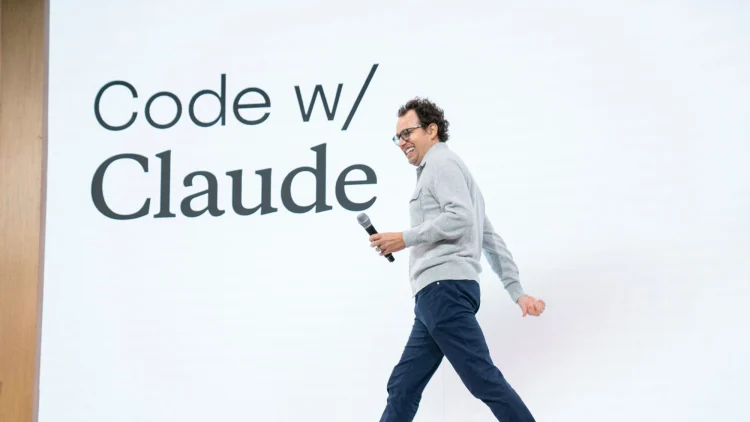
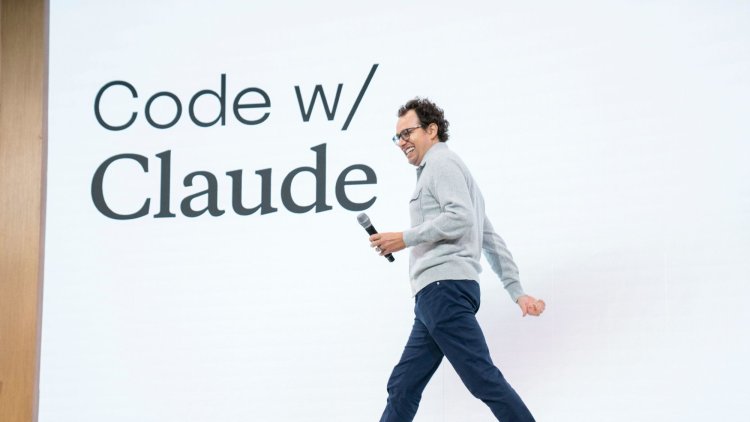
Anthropic CEO Dario Amodei (Associated Press/Alamy)
7 min read
The scale of the disruption to the labour market from AI is becoming clear; we cannot leave it to big tech or populists to frame the debate about what to do about it, argues Roa Powell
If AI is powerful enough to turbocharge Britain’s economy, it is powerful enough to disrupt our labour market. Ministers must reckon with this dual reality.
This government is taking rapid AI progress seriously. They have committed to a world-leading AI Security Institute, invested £500m in the UK’s sovereign AI capability, and plan for the UK to be the fastest AI adopter in the G7. Ministers have described AI as “the defining technology of our generation”, “the engine of economic power” and an “industrial revolution in a decade”.
But the more seriously this government takes AI, the harder it is to justify silence on AI-driven job loss.
If AI is really going to be an “industrial revolution in a decade,” surely we should expect disruption on a similar scale with backlash akin to the Luddites. If AI is going to help streamline the “flabby” civil service, with government suggesting 62 per cent of the most junior civil servants’ work is automatable, surely we can expect our own bosses to follow suit and cut headcount.
According to Public First, two-thirds of UK adults already expect AI to contribute to unemployment, and as AI’s impact on jobs becomes more prominent in the public consciousness, so does the political cost of doing nothing about it.
One excuse for inaction is that forecasts on AI-driven job loss still vary widely. Our own analysis at the Institute For Public Policy Research (IPPR) imagines scenarios ranging from eight million UK jobs lost to no jobs lost at all. When the International Monetary Fund said that 60 per cent of roles in advanced economies were exposed, economists pushed back, pointing out that AI being capable of performing a task tells you little about whether that person’s job will actually be scrapped. Even the tech CEOs disagree with Anthropic’s Dario Amodei predicting AI could eliminate half of entry-level white-collar jobs in five years, only for Nvidia’s Jensen Huang to push back, claiming “you’re not going to lose your job to an AI, but you are going to lose your job to someone who uses AI”.
But the forecasts are moving in one direction and the evidence that AI will bring significant change to our job market is mounting. AI’s performance at real-world job tasks has more than doubled in a year. Evaluations show AI matching or beating a human at a full-day task – that is a task that would ordinarily take a human eight hours to complete – 71 per cent of the time. At the same time “agentic” AI is taking us beyond the chatbot interfaces most people know.
Given a goal and control of a computer, AI can be left alone to browse the web, draft and send emails, edit files and book meetings. Meta, Salesforce, IBM, Microsoft and BT have all attributed significant job cuts to AI and entire disciplines have transformed overnight, with top engineers at Anthropic and Open AI saying AI now writes 100 per cent of their code.
Once the impacts are here it will be too late, risking an outcome where the state is grinding into gear just as millions are out of work, tax revenues have collapsed and techlash has peaked
We are also starting to get a sense of how uneven impacts will be. New data from the Financial Times shows 60 per cent of high earners use AI daily compared to just 16 per cent of low earners, with women also using AI less. This makes them less equipped to adjust to a world where our bosses expect us to use AI and maybe pay us more as a result. Young people are also set to feel the brunt of this as entry level jobs are most exposed, and without opportunities to learn on the job they will struggle to reach the next stage in the career ladder. Compared to the industrial revolution, the geography of AI’s impact is expected to be flipped, with high earners in cities more exposed to automation while rural areas can look immune on the surface but be left out of the economic upside.
We shouldn’t expect concrete predictions on this to arrive until very late in the day. The sequence from AI getting more capable, to AI getting adopted and then people becoming displaced doesn’t follow automatically from highly capable AI. Adoption and displacement depend on legal certainty, human preferences, and the relative cost of human versus machine labour. But by the time concrete data arrives, disruption could be well under way.
With AI, the timing trap is brutal. It is not realistic for our government to make major spending changes before bigger impacts from AI have arrived, but once the impacts are here it will be too late, risking an outcome where the state is grinding into gear just as millions are out of work, tax revenues have collapsed and techlash has peaked.
The real challenge for a country like Britain is whether we can capture the economic windfall AI brings, either by attracting firms to the UK so they are part of our tax base, or by considering new progressive tax structures for massive AI-driven profits. Across a wide range of AI labour market scenarios, this will determine whether we have the money to help those most in need.

The UK is especially exposed on this. First, because the sectors most vulnerable to AI disruption, like financial and professional services, currently bring in our biggest tax revenues.
Second, because the companies set to reap the rewards sit largely outside of our tax base. We don’t have any of the technology giants like Google or Microsoft who are already reaping the profits from AI, nor do we have any of the frontier AI companies who are seeing some of the fastest growing revenues ever, like Anthropic which just hit $30bn in revenue, up from just $1bn in January 2025.
In practice, this means we need to lay some serious groundwork now, both politically and practically.
Practically, we need to prepare multiple plans to capture the value from AI. If frontier AI companies hoover up all the profits, we should consider taxes that target them specifically. If the gains spread to any company that uses AI, we will instead need to raise corporation tax to reflect that revenue no longer accrues to workers. And in the meantime, government-backed wealth funds can help us reap some of the rewards whatever happens, by spreading our investment across the AI landscape and redistributing this to workers who need support most.
None of these policies are possible overnight and, for lots of this, the UK won’t be able to go it alone. We already struggle to effectively tax big technology companies, and international co-ordination is essential to allow everybody to take a fair share. For this to work, we need to start detailed scenario planning now.
Politically, our government needs to develop a stronger voice on this issue. The political ground is shifting fast. Just last month, OpenAI published a blueprint promoting robot taxes, a national wealth fund and a four-day working week. Meanwhile, Amodei has written that existing tax systems will no longer make sense and that progressive taxation on AI companies may be needed. These are not the demands of trade unions or left-wing think tanks. When AI’s biggest winners are calling for redistribution, it is beyond time for government to take that seriously.
The cost of waiting is just too high. Waiting would mean ceding the debate to AI companies designing rhetoric to suit their public image, or to populists who are faster in finding a way of riding anti-AI sentiment but would have our economy stall while other countries race ahead. If government remains absent from this debate any longer, its ideas will arrive just as disruption escalates, public pressure builds and simplistic solutions become dominant.

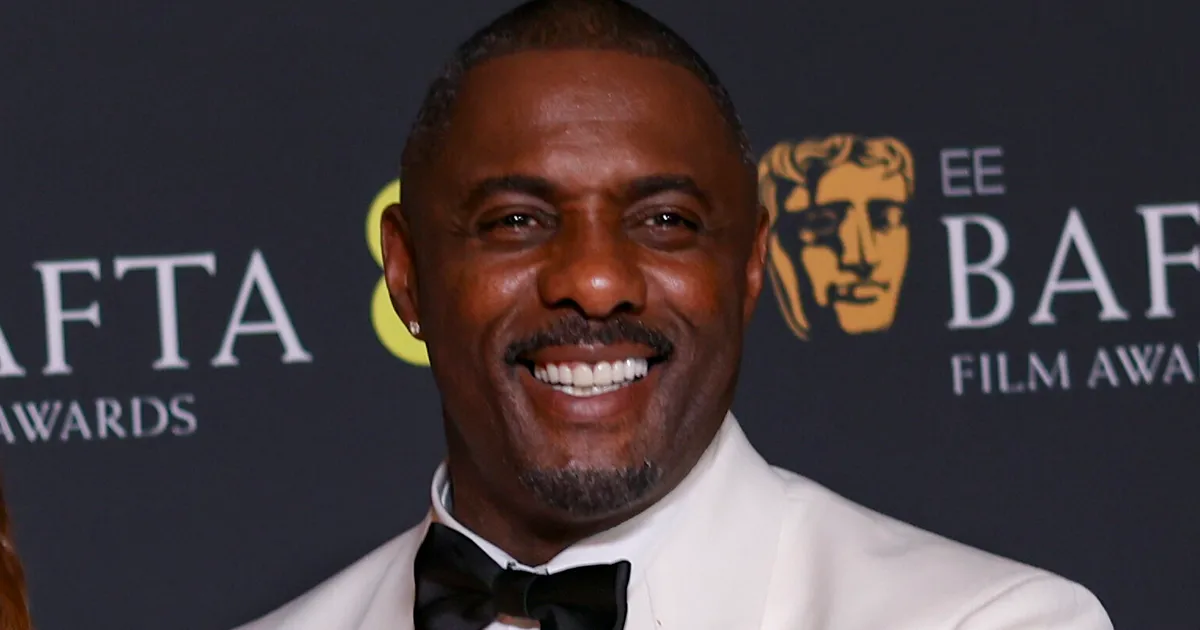
It was first reported that he was in contention to become the first Black actor to portray Bond in 2014, when leaked emails from Sony executives indicated that he was a favourite for the role.
“I’ve always felt that it’s not a realistic thing,” he told the magazine for its Heroes Issue. “James Bond was written how he was written for a reason. But I was complimented by it.
“And also, I think, in realistic terms, some markets just don’t go for that. Bond is big all over the world. And [audiences] won’t [all] go for a Black male, an African male, playing Bond. That’s not what they like in their culture. Period.”
Sir Idris added that he doesn’t think changes to the character are needed, claiming: “Bond is so unrealistic, so a hint of reality is good, but let’s not try and make it woke. I think you’ve got to be pure to what it is: escapism. Don’t try and answer the world’s taste. Just be Bond.”
The Heroes Issue of British GQ is available via digital download and on newsstands on Tuesday 9 June.

A leading Middle East expert has branded Donald Trump’s decision to go to war in Iran “an absolute strategic failure”.
Jeremy Bowen, the BBC’s international affairs editor, said the US president’s vow to bring down the Tehran regime has not come true.
His comments came after Israel defied Trump by launching retaliatory strikes against Iran in a further blow to his hopes of securing a peace deal.
It is the first time the two sides have attacked each other since a ceasefire was agreed in April.
The US joined forces with Israel in bombing Iran on February 28, with the apparent aim of bringing down the country’s ruling regime and destroying its nuclear capability.
But despite repeated claims by Trump that an end to the conflict is imminent, no agreement on a permanent ceasefire has been reached.
On Radio 4′s Today programme this morning, Bowen said “Trump is coming up against the limits of US power in the Middle East”.
He said: “What’s happening in the last 24 hours or so is another sign of the absolute strategic failure of the war that was launched on February 28.
“If you think back to then, both Trump and Netanyahu said publicly that the regime in Iran would be weakened to the point of collapse and it hasn’t been.”
Israel’s military said it carried out strikes on targets in central and western Iran early on Monday morning.
That came after Tehran launched missiles on northern Israel on Sunday.
Subscribe to Commons People, the podcast that makes politics easy. Every week, Kevin Schofield and Kate Nicholson unpack the week’s biggest stories to keep you informed. Join us for straightforward analysis of what’s going on at Westminster.
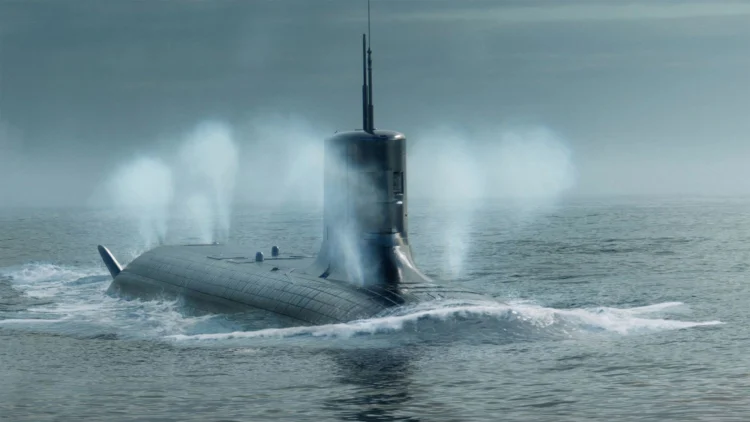
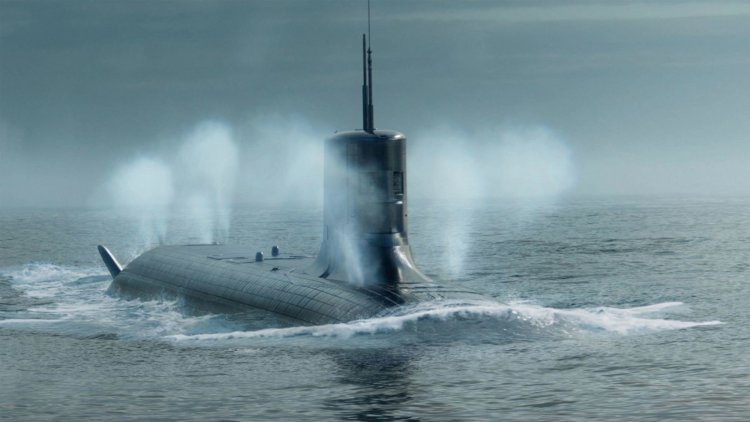
Artist’s impression of the SSN-Aukus class submarine (Pictorial Press Ltd/Alamy)

4 min read
The publication of the Defence Committee’s report on Aukus – the trilateral partnership between Australia, the UK and the US – confirmed what many in the defence community have long known: the strategic rationale remains unassailable.
Aukus will bolster security in the Indo-Pacific and Euro-Atlantic, strengthen our most trusted alliances, and secure a vital technological advantage. Indeed, the Defence Committee found the partnership is more necessary than ever.
There is, too, a positive domestic story. Delivering a brand-new class of nuclear-powered submarines – the SSN-Aukus class – to provide a common fleet for both the Royal Navy and the Royal Australian Navy represents a crucial revitalisation of our industrial base. Aukus is not merely a foreign policy pact; it is a significant blueprint for British industrial expansion and economic growth.
Some 21,000 people will be working on the SSN-Aukus in UK shipyards and across the supply chain at its peak. To meet the broader demands of the Defence Nuclear Enterprise, Britain’s nuclear workforce is forecast to increase by 40,000 by 2030. We are already seeing world-leading skills academies, heavily oversubscribed, stepping up to this challenge, creating highly skilled, high-wage jobs that will sustain families for decades.
The establishment of Defence Technical Excellence Colleges and the Defence Universities Alliance will better align education with our long-term industrial needs. A Defence Skills Passport will allow this highly trained workforce to move across the sector.
But delivering Aukus will require far more people than current plans can provide. This means new, innovative approaches to skills development are needed. We must build on what we already do well and use the unique recruitment opportunity to spread skilled jobs across the country.
Some £4bn in contracts has already been signed for the design and prototyping of the SSN-Aukus, alongside a £3bn investment into advanced manufacturing capabilities. In 2025, a £9bn contract was signed with Rolls-Royce to cover reactor design, manufacturing and service. However, delivering SSN‑Aukus requires steady government funding over many years and across multiple parliaments. This must be a cross-government priority, with an annual review comparing planned and actual investment.
As MP for Barrow and Furness, I see the transformative power of the Aukus partnership every day. We are targeting £1bn in investment for the rapid overhaul of local infrastructure. This means building thousands of high-quality new homes, improving educational outcomes, regenerating the town centre and upgrading healthcare and transport. This is not just about building submarines; it is about permanently rebuilding a community.
As MP for Barrow and Furness, I see the transformative power of the Aukus partnership every day
But we must also accelerate the integration of our supply chain. By proactively integrating small and medium-sized enterprises directly into advanced capability projects, we can turn agile tech firms into industrial heavyweights, but only if the government moves faster to remove the bureaucratic hurdles blocking their entry.
Aukus is a phenomenal success story of cutting-edge innovation and local economic regeneration. However, to sustain and accelerate a multi-decade programme of this magnitude, we must ensure it enjoys unshakeable public support.
In recent years, there have been repeated calls for a more open and honest conversation with the public on defence and security issues. This is where parliamentarians can – and must – do more. As part of a wider conversation about the role of defence in society, Aukus provides a strong opportunity to show the real, practical benefits that a successful defence industry can bring to local economies across the UK. MPs have an important role to play in delivering this message locally but, to do so, the Ministry of Defence should take a more open and proactive approach to working with MPs and engaging with the media to support this shared aim.
The Defence Committee inquiry has highlighted how important the Aukus partnership is, while also making clear the scale and complexity of what is needed to deliver it. For Britain, Aukus brings significant challenges as well as major opportunities. As parliamentarians, we must play our part to build public understanding and secure the sustained political commitment and investment needed for this long-term national endeavour.
Michelle Scrogham is Labour MP for Barrow and Furness and member of the Defence Select Committee
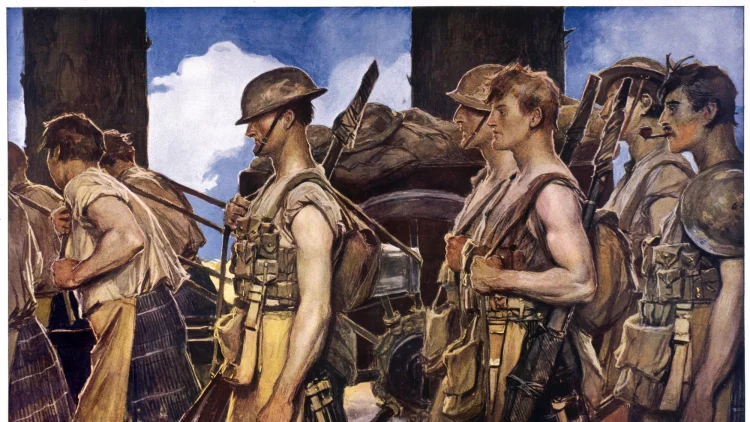

Ecossais Revenant de Combat by the French painter Francois Flameng
“Old soldiers never die; they simply fade away,” warned General Douglas MacArthur in 1951. More than half a century later, it’s not the soldiers who are fading but the nation’s focus on them that seems to ebb and flow. Professor Hugh Milroy, CEO of Veterans Aid, asks whether Britain is now caught in that same difficult rhythm?
Veterans are pulled into the spotlight in great surges of public emotion, only to be swept back out again as the tide of attention recedes. Their needs don’t come and go, but the system built to support them often seems to. Despite high profile claims of success from various governments, our workload at Veterans Aid would indicate that this assertion is the worrying reality for some veterans.
I’ve always felt that the nation’s link to veterans was anchored in four words – service, sacrifice, honour, and respect. Moreover, that it was universally accepted that a grateful nation would care for them in old age or adversity.But today, that promise sometimes feels disturbingly fragile. Support doesn’t stand firm; it surges, collapses, and drifts. One moment veterans are hailed as heroes; the next, they’re left navigating a maze of inconsistent policies, short‑lived initiatives, and a system that in some cases, seems to forget them as quickly as it remembers. The reality on the ground tells a different story. Veterans don’t need waves. They need foundations.
From my perspective, as one delivering frontline services to a large group of veterans in crisis, the shift in perceived obligation is no longer abstract – and that adjustment has consequences. In both delivery and quality the system of care for some veterans is a piecemeal, patchy, postcode lottery that frequently delivers without reference to urgency or actual need. Long term plans to improve the situation are underway but I fear that this will be too little, too late.
Recently I was given a sharp reminder of what it is to be forgotten and invisible as a veteran. I spent time talking to ‘John’, a very unwell ex-soldier who was sleeping rough. Fortunately there are fewer like him now, but one is too many.
I’ve had over 30 years’ experience in the world of veterans’ wellbeing but came away from that meeting with ‘John’, feeling despondent. It seemed that all the talk by the great and the good over the past 15 years had generated little more than hot air for veterans in real trouble.
I recall someone in government once describing Britain as “the best country in the world to be a veteran”, but it’s a fantasy to suggest that what was once a serious commitment, is still being honoured. Like promises written in vanishing ink, the pledges made to people like ‘John’ are rapidly disappearing.
This homeless former soldier had been in prison. He was in poor health and had been hospitalised, but he couldn’t name one of the government’s much vaunted veterans’ welfare initiatives (e.g. VALOUR et al) and it was only by chance that he found Veterans Aid. As we chatted over a coffee, during a wide-ranging conversation, I brought up the Armed Forces Covenant. As he scoffed at the suggestion it had any relevance to him, I could see that he had not a single visible tooth. Is this really the standard of veteran care we are settling for?
In recent months we, at Veterans Aid, have seen a series of moments that, taken individually, might be dismissed as symbolic; debates over legacy legislation which completely ignores the costs to individual veterans and their families, and decisions such as the refusal to grant the Royal Regiment of Scotland the Freedom of the City of Glasgow.* But taken together, they point to something more significant; a growing vagueness in how we, as a nation, view those who have served.
For the veterans we work with, this uncertainty is not abstract. It fosters a quiet yet deepening sense of being forgotten – or, more troublingly, of being reassessed, reconsidered, even devalued. And it raises the uncomfortable question of what it means to be a veteran in a post-heroes era; a time of fading hope?
As sector charities become more process-driven and qualification for support more complex, the likelihood of excluding those in greatest need increases. Just a week ago we encountered two veterans who could barely read. In a digital age, with a growing reliance on IT literacy, street dwellers without an address, no access to smart phones, TVs or newspapers, know nothing about advertising or marketing campaigns. They are effectively unreachable.
This is wrong: Care must meet veterans where and how they are, not where systems demand they be.
We are used to talking about moral injury in the context of conflict; something that happens when individuals experience a betrayal of deeply held values. But there is another form of moral injury that receives far less attention. What happens when that sense of betrayal occurs at home? When veterans encounter a system that is slow, fragmented, and too often reactive; when they feel they must fight to be understood; when recognition becomes conditional? I believe that that, too, leaves a mark which may have a binary impact on attitudes towards recruiting. To put it bluntly, no cut is deeper than perceiving that you have been forgotten by the nation you once served.
Despite good intentions, much of what now exists to support veterans in the UK is a hodgepodge of services. Some are genuinely fit for purpose, but others are woefully inadequate. Charities like ours step in at the point of crisis; dealing with homelessness, acute mental health needs, and financial collapse.
We stabilise, we rebuild, we move people forward, but too often, despite our effectiveness, we are intervening late, navigating systems that were never designed with coherence in mind. This is not a criticism of any single department or policy; it is an observation about a system for veterans that has evolved for political reasons without a clear, shared foundation other than in policy documents.
The gulf between policy, intent and genuine delivery is huge. Throwing money at organisations in the hope that it will result in a coherent effective model is nothing short of laughable. Especially when some have no knowledge, or only scant understanding, of the uniqueness of military life. This a recipe for chaos, not a solution.
Ultimately, veteran care is not just about provision of services; it is about national intent. And if that intent becomes uncertain or unclear, and veterans increasingly see their support becoming politicised, diluted, or inconsistently applied, then the system it is built upon begins to weaken. Because when intent blurs, service, sacrifice, honour and respect slip from principle to pretence.
What I see from the coalface of crisis intervention is not a sudden failure, but a gradual unravelling – i.e. more complex cases developing; longer periods of instability; greater reliance on emergency intervention and, most concerningly, a growing sense among veterans themselves that they are no longer fully seen. Overlay that with money going to organisations who must agree to operational controls by funders, and the client starts to become a case rather than a human being. In the end, slow motion collapse is just as damaging as a catastrophe.
This should concern policymakers, not only because of what it means for those individuals, but because of what it signals about the future. You cannot sustain a system of support if the societal commitment that underpins it is not there. The United Kingdom has long taken pride in how it treats its armed forces community, but this is a moment that demands more than pride. It demands clarity, consistency, and listening leadership. And to those living with the current system such as ‘John’, the truth is obvious; scale means nothing if people can’t be ‘seen’.
Sustainability means moving beyond symbolic gestures and short-term funding cycles based on the needs of government rather than the needs of the substantial number of veterans who are falling through the cracks. It means building a coherent, properly coordinated system that intervenes early, before crises develop. It means removing ambiguity around recognition and ensuring that those who have served are neither politicised nor marginalised. And it means working in genuine partnership with all players in the charitable sector, not just those who ‘play the game’ to get funding.
When resources flow to those who toe the party line rather than those who actually meet veterans where they are, the community loses the very organisations that understand its realities. The result is a support landscape that looks vaguely impressive on paper yet fails the people it claims to serve. Scale, brand and symbolism are no substitute for substance.
What troubles me most is the way funding so often quietly shifts toward large, branded organisations – often those most skilled at navigating political expectations – while smaller, frontline charities are left in the wilderness. Analysis1 of UK charity accounts shows that charities with annual incomes above £10m constitute only around one per cent of organisations yet account for 67.5 per cent of total charity income, highlighting the concentration of resources within a small number of very large charities. This is the inevitable outcome of a system that rewards presentation over proximity to the problem. But the effect is unmistakable; veterans will inevitably be harmed.
We know our charity saves lives and, just as critically, eases the burden on the taxpayer by around £2m per year. In other words, it works. But not one single question has been asked, from anyone in government, as to how this is done – and that is worrying.
I say none of this in anger, but out of a genuine wish to see a system worthy of the people it exists to support. Progress has been made, and more will be made, but some veterans will continue to be failed if the only model that counts is the one defined by government.
Those who deliver real impact, often quietly, often without fanfare, must be brought into the conversation without having their independence diluted or their effectiveness constrained. If the current drift continues, it will do more than fail individuals; it will signal that national gratitude is conditional, that service can be praised in public yet overlooked in practice. That would diminish not only the Covenant, but the values we claim to hold as a nation.
What is needed now is clarity, genuine consistency, and a willingness to work with those who truly understand the landscape. Anything less is passive acceptance of a situation that will inevitably get worse.
References
- Research and Analysis. Research Report: Mapping and Understanding the UK Civil Society Sector. Published 28.05.2026
* The Flameng painting depicts Scottish soldiers, specifically members of Highland regiments wearing kilts and returning from the front lines during WW1

Radio 1 presenter Mollie King has opened up about the sudden accident that led to her taking a two-week break from the airwaves.
On Monday morning, the former Saturdays performer shared that she would be returning to Radio 1 after an accident at her home led to her taking some time off from work.
“Many of you have kindly messaged me over the past two weeks asking why I haven’t been on air – thank you so much for checking in!” she wrote on Instagram.
“After coming home late from work, I suddenly collapsed unconscious on the bathroom floor at 4am, hitting my head and face as I fell. It was a huge shock and I ended up being rushed to A&E.
“I keep thinking how grateful I am that I wasn’t on my own and had Stuart [Broad, her fiancé] to bring me round after I fell.”
Mollie went on to thank the medical staff who helped her after her accident, before sharing that the incident has been a “real wake-up call that I need to make some time to get my strength back, not just for my own health, but so I can be the best version of myself for my family too”.
She continued: “Yesterday was my first day doing anything social. After what has felt like a very long two weeks, it was amazing to get out and spend time with my girls. We even had the surprise of spotting Daddy on a big screen, which made us all smile.
“Thank you so much to everyone who has checked in on me, and for all the lovely birthday messages too. Your kindness has meant so much. I can’t wait to be back on the radio with Matt [Edmondson, her Radio 1 co-star] today.”
After initially rising to fame as a member of the chart-topping British girl group The Saturdays, Mollie joined Radio 1 as a permanent presenter in 2018.
She and her partner Stuart Broad welcomed their first child, a daughter named Annabella, in November 2022.
In January 2025, Mollie gave birth to the couple’s second daughter, Liliana.
Mollie confirmed last summer that she’d had to take time off Radio 1 to undergo surgery to treat an undisclosed medical issue, noting at the time that “everything went well and I’m doing much better now”.
This article contains spoilers for the Netflix film Office Romance.
This is perhaps reflected in some of the more adult humour showcased in Office Romance – and one graphic scene in particular.
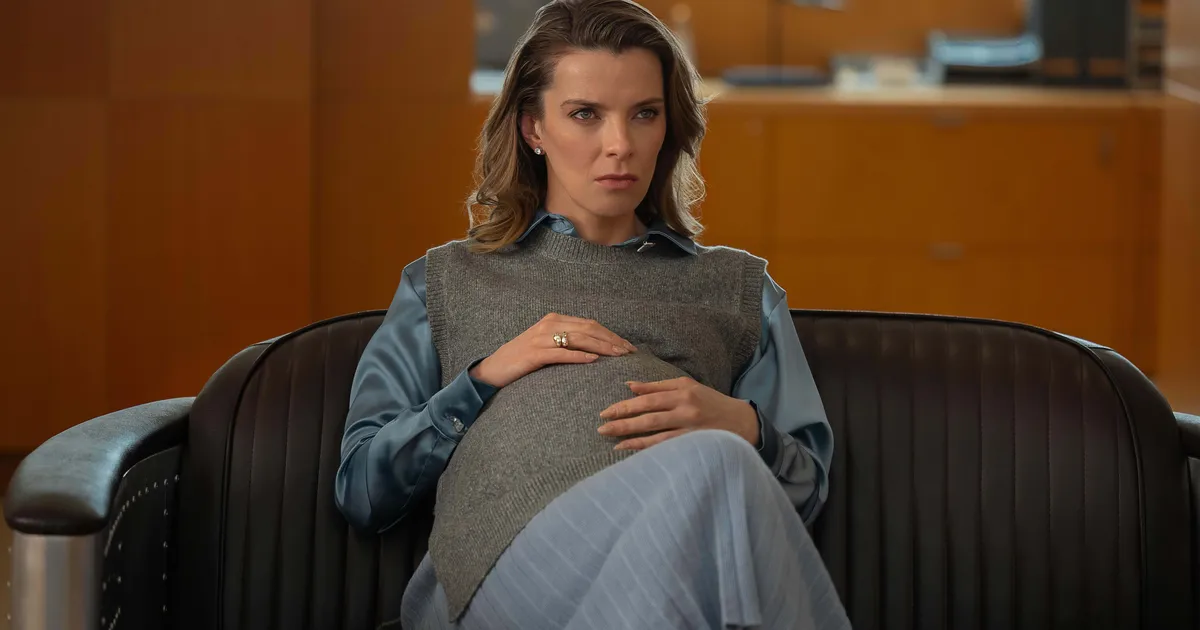
Emmy nominee Betty Gilpin plays Sydney Bloom, Jennifer Lopez’s character’s right-hand woman, in the new Netflix comedy.
When we first meet Sydney, she’s already around nine months pregnant, and as the story progresses, she eventually gives birth right there in the office – with viewers getting to see pretty much all of it.
Suffice to say, this was achieved with the use of prosthetics, which she opened up about during a new interview with Variety.
“Honestly, I was pretty freaked out when I first saw the prosthetic vagina,” she recalled.
“I had a nervous breakdown and then I was like, ‘Oh, but I’ll be holding the ultimate working mom’s hand, Jennifer Lopez, so what could go wrong?’.”
Betty explained that there were more prosthetics used for the sequence than you might have realised, claiming: “My real legs were below a table, [I had] fake prosthetic legs, and then a puppeteer was standing at my real legs pushing an animatronic baby out of my prosthetic vagina.”
“It was insane,” she remarked.
Betty went on to share that the scene was originally even more detailed than what made it into the finished film.
She added: “The saddest part was when the scene was over and everybody but the puppeteers stayed in the room because the only way to reset was to go under and pull the fake placenta — I think the placenta is not in the movie anymore – but reach up through the prosthetic vagina that I am still zipped into, pull the placenta back and take the umbilical cord and pull it back and then pull the baby back through, and then it was time to do it again.”
Office Romance stars Jennifer Lopez and Brett Goldstein as the CEO of an airline and the head of its legal department, who fall in love despite the company’s strict rules about workplace relationships.
While critically it hasn’t exactly gone down a storm (it currently holds a 51% score on Rotten Tomatoes while on Letterboxd, users have ranked it 2.6 stars), it has clearly gone down well with Netflix users, as it’s the platform’s number one film at the time of writing.

Many Rivals fans were perturbed after last week’s episode when they realised the show was due to take a mid-season break.
Following the mammoth success of its inaugural outing in 2024, Rivals’ second season was boosted from just eight episodes to 12 – albeit with a break in the middle.
Over the weekend, it was revealed that fans have a bit of a wait on their hands for the next run of episodes, with the latter half of the season due to air weekly on Disney+ starting in November.
The news was accompanied by a new teaser for the next part of season two, which you can check out for yourself below:
An official Disney+ synopsis for the rest of season two teases: “As Tony Baddingham and Declan O’Hara’s contest for the Cotswolds crown hits a fever pitch, Rupert Campbell-Black is forced to confront his own personal demons. Across hedonistic parties, Bonfire Night chaos, the Hampshire Hunt Ball and a turbulent Christmas, affairs unravel, alliances fracture and rivalries intensify.
“Caught in the middle of the frenzied franchise battle, Taggie O’Hara must find the courage to follow her heart while everyone else faces the consequences of ambition, power and secrets that they can no longer hide.”
Rachael Stirling will also be joining the cast as Lady Monica Baddingham’s younger sister Araminta Pemberton, with Rupert Evans and Big Little Lies’ Santiago Cabrera also playing new characters in the new episodes.

Rivals writer Laura Wade previously claimed that the cliffhanger at the end of season six was partly responsible for the mid-season pause in an effort “for those bits of story to just have a moment to sink in with viewers” and “build up some anticipation”.
“Also, we’ve got the Fifa World Cup coming up, so we’re releasing the first half before the football,” she pointed out on a more practical level.
“Get that out of the way, and then release the second half.”
Before the release date confirmed, she teased to TechRadar that the story would pick up in the autumn, noting: “On screen, [season two] runs into Christmas, which allows us to sort of parcel it out for everybody to savour the story.”

Sarah Smith, the corporation’s North America editor, has “once again been defied” by Israeli prime minister Benjamin Netanyahu.
Israel’s military said it carried out strikes on targets in central and western Iran early on Monday morning.
That came after Tehran launched missiles on northern Israel on Sunday.
On Radio 4′s Today programme, Smith pointed out that Israel had already angered the White House by bombing Lebanon in recent days, despite Trump’s claims that a peace deal to end the Iran war is close.
“And then, after Iran fires some missiles at Israel, he was very clear with the Israeli prime minister not to retaliate because he was worried that that could derail the peace negotiations that are going on,” she said.
“He made it clear that the Iranian missiles hadn’t done any damage, and therefore there was no need for any retaliation. And yet, very soon after that we saw that Israel did take action.
“We haven’t heard from Donald Trump since then, but he will be furious. He was very, very clear with Benjamin Netanyahu not to do this, and once again he has been defied.
“It was almost exactly a year ago that Donald Trump was answering reporters’ questions in front of TV cameras and dropped the f-bomb, surprisingly, because he was so angry with Netanyahu for firing missiles at Iran in breach of a ceasefire agreement.
“And now he says that we’re very close to a US-Iran agreement, and will be furious that he thinks that is being imperilled by Israel’s actions.”
Subscribe to Commons People, the podcast that makes politics easy. Every week, Kevin Schofield and Kate Nicholson unpack the week’s biggest stories to keep you informed. Join us for straightforward analysis of what’s going on at Westminster.
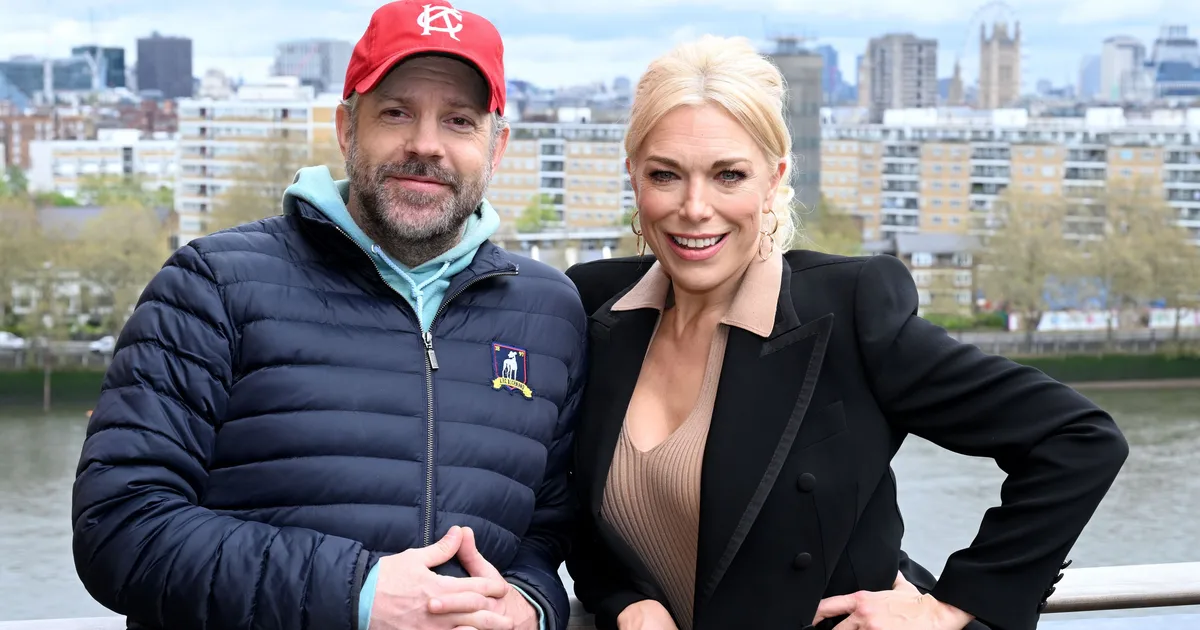
During a new interview with Variety, the British star was asked how smoothly season four had run, in reference to the fact that Jason – who writes the show as well as playing the title role – has a bit of a reputation for rewriting as he goes.
“There’s always going to be a bit of give-and-take within a scene, because of the nature of how Sudeikis works,” the Emmy winner responded. “He hears it in the room, and then we tweak.”
Hannah continued: “With that boy, you’ve got to roll with the punches. He and I have an ongoing love-hate relationship that he changes it last minute.”
For the new episodes of Ted Lasso, the title character will return to Richmond FC as the new manager of the club’s women’s team, with Sex Education star Tanya Reynolds joining the cast alongside returning faces including Brett Goldstein and Nick Mohammed.
In the time since the show last aired, Hannah made no secrets of her sadness at the prospect of never playing club owner Rebecca Welton again – or her hopes for it to return in some capacity.
The 10-episode season will begin airing on Wednesday 5 August, with new episodes following every week until the finale on 7 October.
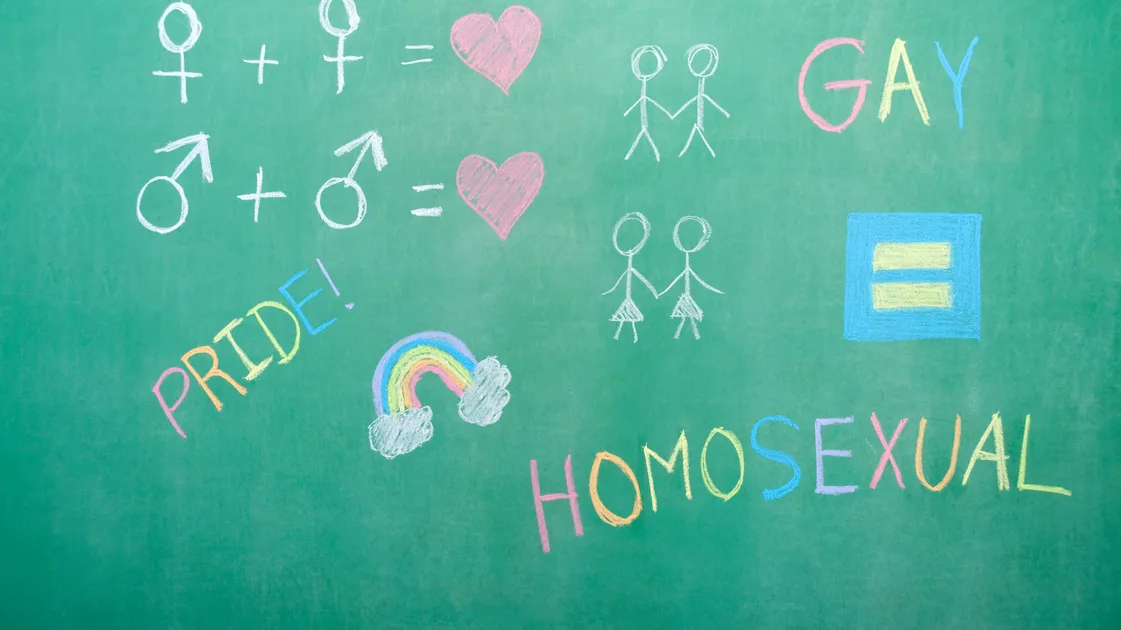
We’ve been talking about sex around my house a lot lately.
As my 10-year-old gets ready to enter middle school next year, he’s been getting increasingly curious about bodies, puberty, and of course, s-e-x.
He’s not interested in having sex, he’s quick to inform me – in fact, the first time I explained the physical machinations of intercourse, his initial response was, “I don’t know, I’d rather play video games.”
But he is interested in understanding sex, a circumstance that has led to a series of increasingly difficult-to-answer queries along the lines of “But what does semen look like?”.
We’ve looked at a diagram of the inside of a penis together. We found out that the hole on the tip of the penis is called the “urinary meatus”. I finally convinced him that a man doesn’t pee inside a woman to make a baby. It’s been a wild time.
I try to answer his questions as honestly as is age-appropriate while using the clinical and appropriate terms for body parts and sex acts. Sometimes, I get a little stumped or tongue-tied by questions I didn’t anticipate, like when he asked me how old you have to be to have sex. (I came up with: “There’s no set age, but you want to make sure you’re emotionally mature enough to handle it, that you’ve found someone you trust enough to take that step with, and that you have the necessary information to do it safely. Also, sex should never happen between children and adults.”)
While it’s not always easy or comfortable to have these conversations, I love that my preteen feels comfortable with himself and unashamed to approach me with any and all questions about sex and sexuality. (Although I did have to tell him recently that it’s not necessary to inform me every time he has an erection.)
I have also, throughout his life, been careful not to assume my son’s sexuality; if we talk about the idea of a future partner, I refer to a potential “boyfriend or girlfriend,” “husband or wife.” He has queer people in his life, and he knows other kids with gay parents. He knows about trans and nonbinary people, and he once told me a great joke that went: “What are a chocolate bar’s pronouns? Her/she.” The time he came home from school repeating what some boy had told him – “Boys can’t kiss each other” – I didn’t hesitate to tell him that, my dear, they can and they DO.
What if my son does turn out to be gay? Wouldn’t my ability to provide LGBTQ-inclusive sex education be of dire importance?
I am very much a parent who says gay, because my son’s sexual orientation (and potentially, gender identity) has yet to be revealed to me, and it’s imperative to me that he knows I will love and support him no matter who he turns out to be attracted to.
So, the other night, when he asked me if two men can have sex together, I had no problem telling him enthusiastically: “Of course they can!” It’s when he asked me HOW they do it that things got hairy.
Tripping over my words, I gracelessly gave him the main idea. (Clinically, and not in excessive detail, but he got the gist.)
Then I immediately started to second-guess my decision. I should have said something nebulous like, “People have different ways to kiss and touch each other,” I thought to myself, feeling the itchy discomfort I get when I overshare with another mum at soccer practice.
So later, when he thought to ask me how two women do it, I sort of pawned him off with a nonanswer and sent him to bed. (But not before he asked me if I had ever done it, to which I responded with a swift and only slightly panicked “NONE OF YOUR BUSINESS,” which I stand by.)
The next day, I was still thinking about our conversation and sitting with the vague feeling that I hadn’t handled it correctly.
In light of the “Parental Rights in Education” law passed in Florida, dubbed the “Don’t Say Gay” bill in the popular lexicon, there’s been a lot of talk about how supporters are assuming that discussion about the existence of sexual orientation or gender identity and related topics is somehow sexual in nature, and thereby inappropriate for children. That is wrong.
Knowing that some families have two mommies or two daddies is not sexual information. Small children don’t sexualise things in that way, and there’s nothing inherently deviant or inappropriate about knowing that LGBTQ+ people exist.
But what about when children are old enough to be taught about sex? (And experts do agree that these conversations are perfectly appropriate for children between 9 and 12, or even younger, especially considering they are on the cusp of puberty.)
If my son is old enough to have gotten a frank explanation of the mechanics of hetero sex, why did I feel so uncomfortable giving him the same information about queer sex? Especially considering that the sex acts engaged in by queer people are also performed by straight folks.
Somehow, when he asked me about two men together, the same information had just felt instinctually more, well, sexual.
I had to look at that discomfort. How had someone as well-intentioned and liberal and frankly not even entirely straight as me fallen into the idea that gay sex is somehow dirtier or less appropriate to talk about than straight sex?
If my son is old enough to have gotten a frank explanation of the mechanics of hetero sex, why did I feel so uncomfortable giving him the same information about queer sex?
And I don’t think I’m alone. When I started trying to research the topic, I found a lot of information on how to explain the concepts of sexual orientation and gender identity to children, but practically nothing about actually talking to them about queer sex, at any age.
And what if my son does turn out to be gay? Wouldn’t my ability to provide LGBTQ-inclusive sex education then be of dire importance? Don’t I want my son to be sexually prepared, informed, and provided with the information he needs to stay safe, no matter what his sexual orientation? Who would tell him about things like safety in anal play and dental dams?
Not necessarily the teachers at his school. According to the GLSEN 2019 National School Climate Survey, only 8.2% of students (including those who received no sexual education at school) “received LGBTQ-inclusive sex education, which included positive representations of both LGB and transgender and nonbinary identities and topics.”
As a high school junior who identifies as a lesbian told The Atlantic in a 2017 article on LGBTQ-inclusive sex education, “We were informed on the types of protection for heterosexual couples, but never the protection options for gay/lesbian couples.”
Despite my attempts to resist assuming my son’s heterosexuality, when I half-answered his questions about gay sex, wasn’t I assuming it was information he didn’t need? If I was truly considering the possibility that my son might not be straight, wouldn’t I have answered him differently? Pretty sneaky, heteronormativity.
The more I Googled and the more I thought about it, the more I felt like I’d gotten it wrong. Luckily, this is no uncommon experience for a parent. I make mistakes all the time, and when I do, I think there’s great value in modelling my ability to admit it, take responsibility, and apologise.
So last night, around bedtime, when all the most important conversations seem to happen, I went back in.
“Last night, you asked me some questions about how two men and two women have sex together,” I told him, “and I think I felt a little bit uncomfortable, or nervous, and I didn’t really answer what you asked. But I thought about it more and I realised that if you’re old enough to know how straight people have sex, there’s no reason you’re not old enough to know how gay people have sex.
“So we can talk about the different ways that gay people have sex together, which, by the way, are also ways that straight people have sex together, and I will answer any questions you have.”
There was nothing dirty or inappropriate about the conversation we proceeded to have, and at the end, he just wanted to know which acts could result in pregnancy, which, hey – is really important information to have!
He even made me proud when he pivoted from a reaction of “Wow, that’s so weird” to “Actually, it just wasn’t what I was expecting. I shouldn’t call it weird,” in less than three seconds with no prompting.
Maybe as importantly, I told him that I’d felt uncomfortable talking about all this because of a prejudice I had, and that everyone has prejudices, but we have to investigate them and try to move beyond them when they come up.
I hope that’s a lesson we all can take to heart because the core belief contributing to my discomfort around the topic of talking to my son about gay sex feels to me like it’s on the same continuum of the ideas fuelling Florida’s “Don’t Say Gay” and copycat bills.
To be clear, I do not think that we should be educating young children about how anybody has sex. But just as gay people are not inherently inappropriate, and education about LGBTQ topics is not inherently sexual, providing education about gay sex to children who are old enough for sex education is not any dirtier than providing them with information about straight sex.
And in the case of LGBTQ kids, it just may be vital.
Emily McCombs is the deputy editor of HuffPost Personal. She writes and edits first-person essays on all topic areas including identity (race, gender, sexuality, etc.), love and relationships, sex, parenting and family, addiction and mental health, and body politics.
This piece was previously published on HuffPost and is being shared again as part of HuffPost Personal’s “Best Of” series.
Do you have a compelling personal story you’d like to see published on HuffPost? Find out what we’re looking for here and send us a pitch

Crypto “Millionaire” Who Sued Me Now Facing 15 Years in Prison..

World Cup 2026 London: Where to watch every country

Analysis-Prabowo’s populist policies propel a ’doom-loop’ in Indonesian markets



-

 Fashion3 days ago
Weekend Open Thread: Evereve – Corporette.com
-

 Business7 days ago
Jade Biosciences, Inc. (JBIO) Discusses Positive Interim Results From JADE101 Phase I Healthy Volunteer Study and Development Plans Transcript
-
 Crypto World3 days ago
Jensen Huang Approves Samsung, SK Hynix, and Micron for NVIDIA (NVDA) HBM4 Memory Supply
-

 Sports5 days ago
French Open 2026 results: Alexander Zverev beats Rafael Jodar and will play Jakub Mensik in semi-finals
-

 Tech6 days ago
CryZENx Releases Fresh Playable Content Deep Inside Jabu-Jabu for His Ocarina of Time Remake
-
 Business5 days ago
Trump Taps Housing Chief Bill Pulte as Acting Intelligence Director After Gabbard Exit
-
 Business1 day ago
The Pain Points Taking a Fragile Tech Rally Down a Notch
-
 NewsBeat5 days ago
Republicans balk at Trump’s attempt to appoint a MAGA enforcer to lead National Intelligence
-
Crypto World3 days ago
LBank Surpasses 25 Million Users Worldwide as AFA Partnership Continues to Drive Global Growth
-
 Tech3 days ago
RCS Messages Between iPhone and Android Get End-to-End Encryption With iOS 26.5
-

 Tech3 days ago
Microsoft launches MXC, an OS-level sandbox for AI agents, with OpenAI and Nvidia already on board
-
 Crypto World6 days ago
Seagate (STX) Stock Surges to Record High on AI Boom and Legal Settlement
-
 Tech3 days ago
Meta steals a tactic from Tesla and builds data centers in tents
-

 Business3 days ago
(VIDEO) Justin Bieber Delivers Surprise Happy Birthday Serenade to Diners at Los Angeles Mexican Restaurant
-
 Crypto World5 days ago
EU AI Data Center Project Faces Delays as Funding Gaps Grow
-

 Entertainment5 days ago
Did The Mandalorian And Grogu Already Ruin The Next Star Wars Movie?
-

 Business5 days ago
Aehr Test Systems Stock Soars 17% Amid Surging AI Demand and Conference Spotlight
-
 Crypto World3 days ago
Merlin (MRLN) Stock Soars 32% on Major USSOCOM Autonomy Milestone
-
 Business6 days ago
Claude AI Down Today Reason: Why Anthropic’s AI is not working today? What’s the latest quota update
-

 Tech3 days ago
Credit card theft campaign abuses Stripe to host stolen payment info
You must be logged in to post a comment Login