

Politics
Medicide: Why Israel Killed Ahmad Hariri and Other Paramedics

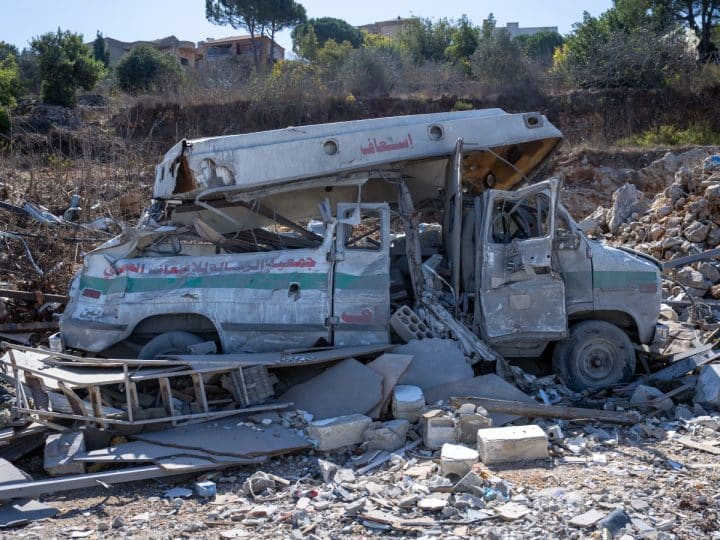

At exactly 9:00 AM on 22 May 2026, a digital ping cut through the frantic static of southern Lebanon’s emergency frequencies. It was a message from Ahmad Hariri – a young man who carried both a camera to bear witness to his homeland’s agony and the uniform of the Al-Risala Civil Defense to soothe it. The text was brief, accompanying a photograph he had just captured from the window of an ambulance: a plume of black smoke rising from the village of Deir Qanoun al-Nahr in the Tyre district.
It was the second strike of a calculated “double-tap” bombardment. Sitting alongside his brothers-in-arms, Ali Abboud and Hussein Kassir, Ahmad sent the image to explain the destruction unfolding ahead of them. Believing the immediate danger had passed, the team pressed the accelerator, rushing toward the burning horizon because they believed it was finally “safe” to save lives. They had no way of knowing that the smoke was a trap, or that high above the clouds, the mechanical hum of a terror drone had already locked onto their white vehicle. Seconds later, a precision missile tore through the ambulance, freezing Ahmad’s final message in time and transforming three young saviors into the very victims they had set out to rescue.
Medicide
This devastating strike was not an isolated tragedy, nor was it a mistake of military coordinates. It was a microcosm of a horrifying broader reality: the systematic, intentional execution of medicide – the deliberate dismantling of Lebanon’s humanitarian framework by targeting the very people who document the war and pull its survivors from the rubble.
The killing of paramedics is not a byproduct of overlapping coordinates, but rather a text-book manifestation of this phenomenon. Under the framework of medicide, the objective transitions from fighting an armed adversary to completely dissolving the healthcare infrastructure that allows human beings to survive on their land.
In stripping a territory of its first-responders, the strategy effectively weaponizes aid-denial, leaving remaining civilians with a catastrophic reality: a landscape where the wounded are left to die beneath the debris, because the hands that would have pulled them out have been systematically eliminated.
A deliberate military strategy
The systematic assault on Lebanon’s healthcare framework has evolved into one of the most lethal campaigns against humanitarians in modern conflict. According to data from the Lebanese Ministry of Public Health and the World Health Organization (WHO), Israeli strikes have killed at least 123 healthcare workers and paramedics, and injured more than 260 others just since Israeli aggression brutally escalated on 2 March 2026.
This targeted violence is defined on the ground by tactical aggression: over 100 ambulances and emergency vehicles have been destroyed, multiple hospitals have been forced to close entirely, and rescue teams have been repeatedly subjected to “double-tap” strikes, or hit more than twice, as happened with the Risala Civil Defense team that Ahmad Hariri accompanied.
By converting highly visible civil defense symbols, their gear, and paramedics into combat targets, this campaign transcends individual casualties; it functions as a deliberate military strategy to dismantle the civilian safety net, paralyzing emergency operations and enforcing mass depopulation.
A psychological ultimatum
In southern Lebanon, paramedics and civil defense volunteers are the glue that allows a community to withstand bombardment. When a military systematically hunts down ambulances and kills the very personnel trained to extract families from the rubble, it issues a stark psychological ultimatum to the remaining population: if you choose to stay, and your home is targeted, no one is coming to save you.
The destruction of the rescue apparatus accelerates mass displacement far more effectively than indiscriminate shelling alone, cleansing strategic geographic zones by intentionally removing the civilian safety net. Moreover, the targeting of paramedics creates a psychological fear of the double-tap that extends beyond the strikes’ immediate casualties. It paralyzes the entire emergency response loop, forcing dispatchers to make agonizing calculations about whether sending an ambulance to a fresh strike site is a rescue mission or a death sentence.
Redefining the battlefield
Ultimately, this weaponized denial of aid redefines the battlefield. By treating the high-visibility vest not as a symbol of legal protection, but as indicators of high-value targets, the military apparatus successfully transforms emergency medical care from a humanitarian right into an impossible act of resistance.
Under Article 24 of the First Geneva Convention, medical personnel and those engaged in the search, collection, and transport of the wounded are granted absolute protection. They are deemed neutral actors on the battlefield. Yet, on the ground, this immunity has been entirely neutralized when it comes to terrorizing a colonial entity such as Israel, which has a long history in violating human rights and international agreements.
No accountability in Gaza has given a green light for Lebanon
How does Israel explain these inhumane acts of terror? Simple:
members of Hezbollah are using the civil defense vehicles and centers for military actions against the state of Israel.
It’s the same line used by IOF spokespersons on multiple occasions, as they have done in Gaza <during the genocide. Since the previous “ceasefire” and until today, however, the IOF makes no such excuses. Instead, they deliberately target the vehicles and centers without hesitation, whether it be for the first time, a double-tap, a triple-tap, or even a quadruple-tap, as the world has seen in the Mayfadoun attack in mid-April.
This strategy, carried out with impunity, is a direct extension of the structural blueprint established during the devastating campaigns in Gaza. For months, the systematic targeting of hospitals, the killing of over 150 journalists, and the routine execution of ambulance drivers were met with diplomatic shielding – particularly from the US, the EU, and the UK – and hollow calls for “internal military investigations” by Israel, proceedings that global watchdogs note are quietly closed or left unresolved in most cases. This calculated lack of accountability sent a green light to the theater of war in Lebanon.
It proved that the rules of global humanitarian law could be bypassed without consequence. When the international community – led by the silence and weapon shipments of Western powers – failed to enforce red lines over the bodies of healthcare workers in Gaza, it fundamentally reshaped the theater of war. By failing to protect the high-visibility vest and the “PRESS” helmet, the international community is complicit in allowing these universal symbols of safety to be transformed into literal targets by its colonial extension in the Middle East.
Old strategies with drone precision
Ultimately, the double-tap strike that took the lives of Ahmad Hariri, Ali Abboud, and Hussein Kassir in Deir Qanoun al-Nahr was its intended output. The strategy is as old as conflict itself, yet modernized with drone precision: blind the world by killing the storyteller, and abandon the wounded by executing the savior.
By targeting individuals who possess the dual courage to both pull victims from the rubble and capture the crimes on film, the military apparatus attempts to enforce absolute monopoly over the narrative and the space of southern Lebanon.
Yet, this campaign of intimidation inherently carries the seeds of its own failure. While Ahmad Hariri’s camera was shattered and his pulse was stopped on the asphalt of Deir Qanoun, the final story he documented was his own. The collective grief and fierce defiance displayed during the funeral processions in Tyre and his hometown stand as proof that a community cannot be easily terrorized into oblivion.
Ahmad’s life and death left behind an unerasable record – an indictment written in fabric and digital memory. The rubble may bury the buildings, and precision missiles may claim the medics, but they cannot erase the truth that Ahmad Hariri died ensuring the world would see what happened to his land.
Featured image via Carl Court/Getty Images



In European football, few achievements define a career like winning the Champions League. It is the pinnacle of club success — yet even football’s most expensive names have failed to swoop the trophy. Talent and wealth, it seems, don’t necessarily guarantee the coveted two-eared cup.
Champions league — the gap among the elite
Despite reaching peak valuations of over €140 million, these 10 international stars have never lifted the Champions League trophy. This exposes a simple paradox — even elite talent does not always bring European success.
Players at the apex
Kylian Mbappé, the Real Madrid striker valued at €200 million, has played 98 Champions League matches for Monaco and Paris Saint-Germain but has yet to win it. Barcelona’s teenage sensation Lamine Yamal is still chasing his first Champions League title, though at under 18, time is firmly on his side. Raheem Sterling reached a €160 million peak in 2019 but never lifted the trophy.
Several other high-value stars have also missed out. Antoine Griezmann, Harry Kane, Pedri, and Bukayo Saka, all valued around €150 million, have yet to win the Champions League. In the €140 million range, Michael Olise, Florian Wirtz, and Alexander Isak are among the promising talents still chasing a first European title.
The paradox of football
These players illustrate that even the most expensive and celebrated stars are not guaranteed continental success. The Champions League rewards more than individual brilliance; it requires the right mix of timing, team cohesion, tactical mastery, and sometimes luck.
Even wealth at the top level cannot buy what the Champions League ultimately demands: a perfect storm of talent, opportunity, and collective achievement.
Featured image via Stu Forster / Getty Images
By Alaa Shamali


The cost of the unprovoked US war on Iran is limiting routine training and maintenance at home. The military’s usual practice flights, training exercises, and the upkeep of equipment have all been affected as the American empire strains under the demands of the failing war. CNN reported:
The Navy’s top officer, Adm. Daryl Caudle, told House Armed Services Committee lawmakers earlier this month that his 2026 budget “didn’t bake in [Operation] Epic Fury” and that the Navy faces impacts on “routine operations” as a result.
That includes having to limit training exercises, flight training hours and training for new recruits, he said.
Caudle said recruitment and basic training has been affected:
My record recruiting is going to be thwarted without additional funding to [move] those individuals from boot camp and to pay enlistment and reenlistment bonuses.
CNN said it had seen evidence that one armoured formation had has nearly $300mn cut from its budget as a result of the war:
The Army’s III Armored Corps, a Texas-based headquarters that oversees roughly 70,000 troops and hundreds of tanks, saw a nearly $292 million cut to its training budget in late April, according to an internal document reviewed by CNN.
Iran: US has costs in the tens of billions
CNN reported that US military medical staff had suffered cuts to “dozens of courses” while funding was entirely “eliminated” some training.
And, sources said in April 2026 that the cost of the war in Iran could be up to $50bn:
when accounting for the costs of rebuilding US military installations and replacing destroyed assets.
US-Israel attacked Iran first on 28 February without provocation. Iran was offering unprecedented concessions in negotiations at the time. The Pentagon has since stated there was no imminent threat from Iran. And the UN’s atomic watchdog, the IAEA, has said there is no evidence Iran was developing a nuclear weapon.
The US has achieved none of its original war aims. Iran predictably closed the Straits of Hormuz, a vital oil channel, once attacked – creating a global energy crisis. Iran has said the war will continue until “the enemy’s inevitable and permanent humiliation, disgrace, regret, and surrender”. Trump came to power on an anti-war ‘America First’ ticket. He now faces worldwide humiliation.
Meanwhile, peace talks are currently underway. Donald Trump recently demanded many Muslim countries recognise Israel as a condition of any deal. Trump’s demands have been bizarre at times – and quite out of step with the reality that the war is failing.
Featured image via Getty/Chip Somedevilla
By Joe Glenton
We’ll be honest with you, readers, if we were in a situation where a lawyer was issuing statements for us, this isn’t what we’d want to hear.

“If my client had been charged, she’d be in prison right now” is a worrying distance short of a vote of confidence in your client’s innocence.
But the statement Aamer Anwar put out for Nicola Sturgeon last night – her FOURTH in 48 hours, despite saying on Monday morning that she’d be making no further comment on the Peter Murrell case – had rather more wrong with it than even that.
Firstly, like the third statement, released earlier the same day, it was a shockingly false description of how the legal system works.


The short version of that is: the police can’t just arrest people on a whim – they need to have some evidence first, before they can question you under caution. If you then clam up for seven hours and give them absolutely nothing (or in Nicola Sturgeon-speak, “co-operate fully”) then there’ll be a lower chance of any charge being successful, especially if, as a purely hypothetical general example, your potential co-accused is protecting you as part of a plea deal.

It might also be speculated that if – again as a purely hypothetical general example – the head of the organisation responsible for deciding whether you should be charged is someone you appointed and who used to be answerable to you as a minister in your government, that might also reduce the chances of charges being laid against you.


So in such circumstances, which might give rise to considerable public suspicion – whether warranted or not – having your own lawyer say “If my client had been charged she’d have been found guilty and banged up” is perhaps not the most helpful of protestations.
It’s particularly curious because Aamer Anwar ought to be an extremely loyal servant to Sturgeon. He’s been an SNP member at least since she became leader in 2015, to the extent that he was nominated as a candidate for that year’s general election.

He’s also a long-time independence activist, speaking at the Believe In Scotland march and rally in Edinburgh two months ago.
His friendship with the top echelons of the SNP has served him well.


Anwar describes himself as a “human rights campaigner” and a “political activist”.


(He’s currently representing Fahir Amaaz and Muhammed Amaad, two Muslim men accused of violently assaulting police officers at Manchester Airport in 2024 in a case which may go to a third trial.)

But despite that he’s never registered as a lobbyist under the Lobbying (Scotland) Act 2016, which activist lawyers are required to do.


(Something which has been noted in the Scottish Parliament.)

Readers may feel – we have no opinion ourselves – that a self-confessed political activist lawyer who refuses to register as one, and who is doubly unlikely to be seen as a neutral disinterested professional on matters relating to the SNP leadership due to his close connections to both the party in general and its senior figures personally, is a slightly reckless choice if you wish your pronouncements about your innocence to be taken seriously.
Then again, more than one prominent figure in the Scottish legal system has privately expressed to Wings the opinion that Anwar’s most recent two statements on Sturgeon’s behalf have been so wildly unhelpful to her that he might be suspected of being a double agent.
Anwar lists one of no fewer than 12 specialist services as “Reputation Management”.

On the evidence of this week so far, it might be an idea to narrow his focus a bit. Personally, we just can’t wait for Statement 5.

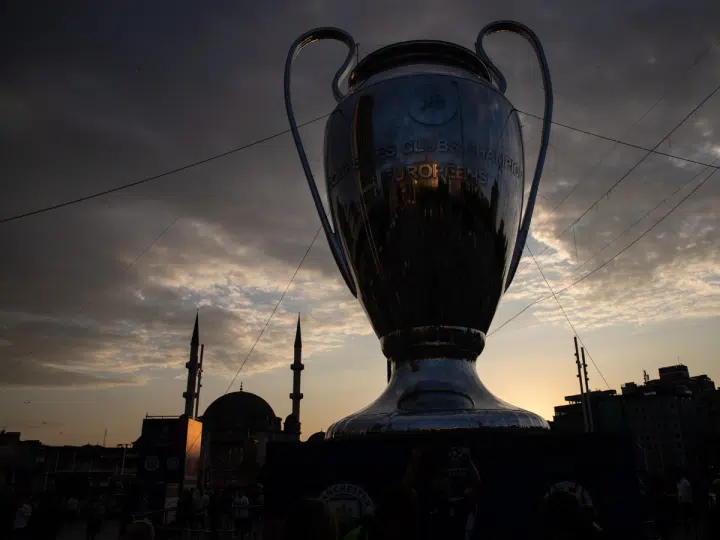

Five Premier League clubs will compete in the Champions League, three in the Europa League, and one in the Conference League. Below is a breakdown of English clubs in Europe for 2026/27:
- Arsenal, Manchester City, Manchester United, Aston Villa, Liverpool (Champions League)
- Bournemouth, Sunderland, Crystal Palace (Europa League)
- Brighton (Conference League)
England’s recent club performances have earned the Premier League an extra Champions League place, allowing five teams to qualify directly instead of the usual four — reshaping domestic priorities and increasing fixture congestion.
Bournemouth secured its first-ever European campaign by finishing sixth, and Sunderland claimed a final-day European place by beating Chelsea. Crystal Palace will also enter the Europa League after their Conference League success.
All three will enter the Europa League league phase, with the draw scheduled for 28 August 2026. Europa League fixtures follow a similar autumn-to-winter rhythm to the Champions League but adhere to UEFA’s competition calendar.
Palace’s Conference League win secured European qualification and influenced England’s allocation and distribution of places. This ensured Palace’s European presence and nudged other qualification routes via domestic cups and league positions. Additionally, the Conference League schedule adds another layer to the European calendar, impacting midweek Premier League planning for participating clubs.
What this means for the Premier League
The immediate consequence is fixture congestion as clubs in Europe will face more midweek matches, more travel, and a greater need for rotation. However, the financial upside of extra Champions League places is substantial. This increases broadcast and matchday revenue and strengthens clubs’ positions in the transfer market.
Tactically, managers will be forced to prioritise and rotate intelligently. Early European results can set the tone for a season. This affects league momentum and injury risk. For fans, the season promises more high‑profile nights and a deeper test of squad construction across the English game.
Key dates
- The Champions League draw: 27 August 2026.
- The Europa League draw: 28 August 2026
- The Champions League matchday one: 8 — 9 September 2026
- The Champions League final 5 June 2027 (Madrid)
The 2026/27 European season raises the stakes on and off the pitch, with clubs needing the right signings to compete at the highest level across five Champions League places, three Europa League entrants, and one Conference League spot.
The calendar from September through to the finals of these competitions at the end of May 2027 and the Champions League final June 5th 2027 will reward depth, planning and early momentum. In addition, the late August draws will map out a season where every midweek result matters.
The key for the new teams going to Europe is to add the right profile of players to be able to compete against the best teams and the best coaches. Furthermore, having nine teams from the Premier League across three competitions is something that further affirms the claim that the English Premier League is the strongest league in the world.
Featured image via Burak Kara / Getty Images
By Faz Ali
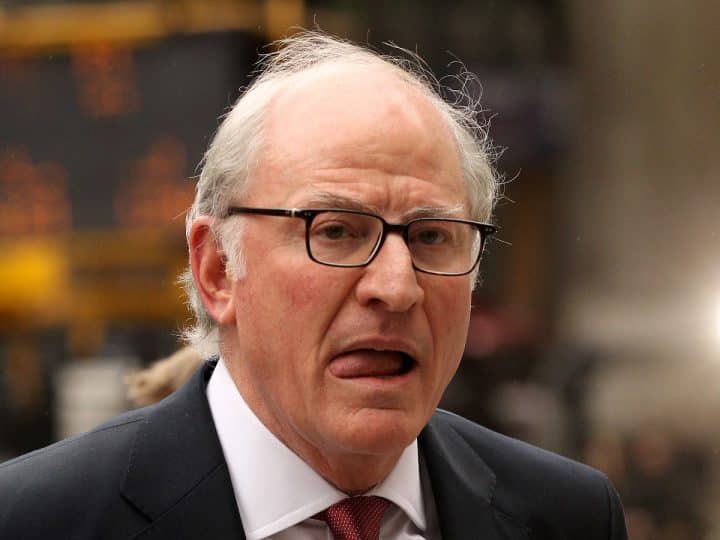

Last week, the European Legal Support Centre (ELSC) and the Public Interest Law Centre (PILC) filed a joint complaint against three patrons of UK Lawyers for Israel (UKLFI) – Lord David Pannick KC, Lord Anthony Grabiner KC, and Stephen Hockman KC – alleging that the senior barristers used their professional seniority in a
pattern of legal intimidation … targeting individuals and organisations engaged in Palestine advocacy.
It is an overdue reckoning for UKLFI, who have been slammed for using a strategy of “lawfare” in mounting a series of complaints against teachers, healthcare workers, and even museum staff. However, many have failed to notice the link between the accused patrons and the upper echelons of Keir Starmer’s Labour.
As I have discovered, the family of one of the accused barristers gave thousands to fund the election campaigns of the party’s parliamentary candidates.
The Grabiner Family
Anthony Grabiner KC, a crossbench peer, is one of the three UK Lawyers for Israel patrons reported to the Bar Standards Board for an alleged misuse of their professional status. The Grabiner family have donated thousands of pounds to two senior Labour MPs: Wes Streeting and Sarah Sackman.
The family foundation, which is known as The Blue Thread and was “established with resources gained over the last 30 years through work in the media and private equity industries”, specifically funds organisations in the UK and Israel.
Companies House lists a whopping 75 appointments for Anthony Grabiner’s cousin Stephen, including previous directorships at UK Israel Business, the Jewish Chronicle, and the Telegraph Media Group. In 2023, he personally donated £6000 to the Finchley and Golders Green branch of the Labour Party.
Sarah Sackman
In July 2024, Sarah Sackman was elected as Labour MP for Finchley and Golders Green. Before the election, she received a total of £11,150 from Joseph, Sarah, Miriam, and Stephen Grabiner. Sackman previously worked as a judicial clerk at the Israeli Supreme Court and still travels to the settler state “on a yearly basis”. One month before her election, Sackman declared her opposition to ICC arrest warrants for Israeli PM Benjamin Netanyahu and Defence Minister Yoav Gallant, saying:
I trust the Israeli people to hold their leaders to account.
Keir Starmer appointed Sarah Sackman first as Solicitor-General and then as Minister for Courts and Legal Services. Last November, she announced proposals to deprive many of their right to a trial by jury, in order to stop them:
coming into court and laughing in the face of the justices.
Wes Streeting
Wes Streeting, Labour’s ex-Health Minister, received a total of £8920 from Daniel, Joseph, Miriam, and Stephen Grabiner for his 2024 election campaign.
Streeting resigned from the cabinet earlier this month and has made his leadership ambitions clear, although his current polling figures of 4% amongst Labour members leave much to be desired. Under Streeting’s leadership, Labour have been predicted to achieve a derisory five seats at the next general election.
This month, Streeting was forced to disown reports that the disgraced ex-Labour peer Peter Mandelson was privately backing his leadership bid, but in the past, the two enjoyed a cosy relationship. Indeed, the now expelled Labour MP Karl Turner told me in March that the pair were “very close friends”.
Streeting’s recent attempts to distance himself from Jeffrey Epstein’s “best pal” included releasing a selection of their WhatsApp communications, which included the following exchange:
Peter M: Are you planning visit to US this year?
Wes Streeting: Hope so! X
Peter M: Need to plan. Lots of tech companies…to talk to.
After the scandals of the Starmer era, the Labour Party are determined to rebrand, but many of the donors and influencers behind the scenes remain.
Featured image via Oli Scarff/Getty Images
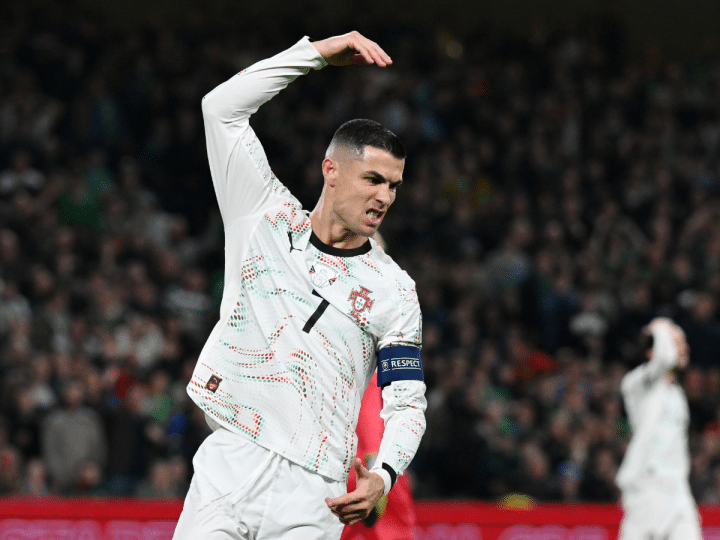

Portuguese star Cristiano Ronaldo is preparing to write a new chapter in World Cup history when he leads Portugal in the 2026 World Cup, at an age of 41 years and 126 days when the tournament kicks off, becoming the fourth oldest player to participate in the history of the World Cup, according to historical figures adopted in the FIFA report.
Despite Ronaldo’s approach to the historic peak, the record is still held by Egyptian goalkeeper Essam El-Hadary, who made history during the 2018 World Cup in Russia as the oldest player to participate in the World Cup at the age of 45 years and 161 days, after he played in the match between Egypt and Saudi Arabia and succeeded in saving a penalty kick.
According to the historical list of the oldest players in the World Cup, El-Hadary tops the list by a comfortable margin, followed by Colombian goalkeeper Faryd Mondragón, who participated in the 2014 World Cup at the age of 43 years and 3 days, and then Cameroonian legend Roger Milla, who played in the 1994 edition at the age of 42 years and 39 days.
Ronaldo making history
If Ronaldo officially participates in the 2026 World Cup, he will surpass prominent historical names such as Northern Irish goalkeeper Pat Jennings, who participated at the age of 41 in the 1986 World Cup, in addition to Englishman Peter Shilton, who participated at the age of 40 years and 292 days in the 1990 World Cup, and Italian goalkeeper Dino Zoff, who participated at the age of 40 years and 133 days in the 1982 World Cup, to advance directly to fourth place in the historical list.
The Portuguese captain, born on February 5, 1985, continues to defy time, having already become the first player to score in five different editions of the World Cup, while the world awaits the possibility of his appearance in a sixth World Cup, an unprecedented achievement in the history of the game that could be shared by the Argentine captain, Lionel Messi.
Thus, the 2026 World Cup could become a new historical milestone in Ronaldo’s career, not only in terms of goal-scoring numbers, but also as one of the most consistent and competitive players across different generations of football.
Featured image via Getty/Charles McQuillan
By Alaa Shamali


The morning cup of coffee has an impact that most consumers are unaware of. A real impact, in terms of carbon and water. New forms of stimulants are also appearing on the shelves and at the checkout in the UK, from caffeine pouches to concentrated shots, and they raise a legitimate question. The figures associated with a cup of coffee are higher than marketing tends to suggest. So how does coffee actually compare to small-format alternatives, per serving, by the kettle?
The hidden weight of your morning brew
Most of coffee’s environmental cost is paid before the beans leave the farm. On the farm, not in the cup. Between 75% and 91% of the total carbon footprint of a cup is generated at the cultivation and on-farm processing stage, led by fertiliser use, land use change and wet-processing emissions, according to Terrascope and CDP.
Deforestation in the coffee-producing regions of Brazil, Vietnam and Colombia accounts for around two million hectares cleared for coffee plantations between 2001 and 2015. Whilst this area is smaller than that devoted to cattle farming, it nevertheless represents a valuable resource for the communities living in coffee-growing regions. As for water consumption, the figures per cup are higher than most consumers imagine.
A growing alternative scene
Small-format stimulants have become noticeably more mainstream over the last few years. Caffeine pouches, concentrated ready-to-drink shots and cold brew on dose are now stocked alongside conventional variety UK retailers. WH Smith recently secured a national listing for one such brand, according to The Grocer. Use is climbing.
The category is still small in absolute terms, amounting to tens of millions of pounds rather than billions. Scale will come later. What matters is what the format does to the footprint per dose when a portion of demand shifts away from brewed cups.
What life-cycle analyses actually show
Available figures point in a consistent direction. One caveat applies: there is no published life-cycle study that makes a head-to-head dose-level comparison between brewed coffee and caffeine pouches, so the differences below are directional rather than exact.
Carbon and water per cup
The headline numbers are useful as a baseline:
- Black coffee: about 0.258 kilograms of carbon dioxide equivalent per cup
- Coffee with milk: about 0.844 kilograms per cup, with dairy carrying most of the difference
- Tea: about 34 litres of virtual water per cup
- Coffee: about 140 litres of virtual water per cup
Same direction, every measure. Most of coffee’s load sits in the bean itself and the dairy that goes with it, not in the brewing.
Mass per dose
Small-format stimulants carry less mass per dose, with a single pouch containing a fraction of a gram of active material against the seven grams of roasted bean that go into a brewed cup. That gap drives lower transport energy, less packaging per serving and a smaller land and water footprint for the same caffeine delivered.
None of this makes one format good and the other bad. The unit of analysis is what matters. Per kilogram of beans is one question. Per dose of caffeine, quite another. Consumer choices live at the dose level.
Coffee isn’t the villain – but it is resource-heavy
A morning cup of coffee is one of the better small pleasures in modern life, and there is no need to frame it as something to apologise for. The figures describe a resource-intensive product, not failing morals. Coffee is, after all, a tropical crop grown by people other than those who drink it.
Pressure is mounting from the other side too. Rising temperatures and erratic rainfall are projected to shrink the land suitable for coffee growing by 48% to 97% in key regions by 2050.
Taken together, the numbers suggest that complementation can be good, rather than replacement. Someone who keeps the home morning ritual and reaches for a pouch during a long commute is not abandoning coffee but spreading the load. That is a different decision to giving up the cup altogether, and one most readers can make without changing much else about their day.
What the choice means at scale
Around 98 million cups of coffee are drunk across the UK each day, according to the British Coffee Association. A figure that large means small individual choices compound into national-scale outcomes. Change one cup in twenty into a lower-footprint format and the country shifts roughly five million cups a day onto a lighter ledger.
This is not an argument directed at any particular brand or product. The important thing is to understand the true cost per dose across a population. Format matters. The data is now reliable enough for consumers, retailers and policymakers to do these calculations themselves. The result is more interesting than what the marketing suggests. It is worth doing the maths.
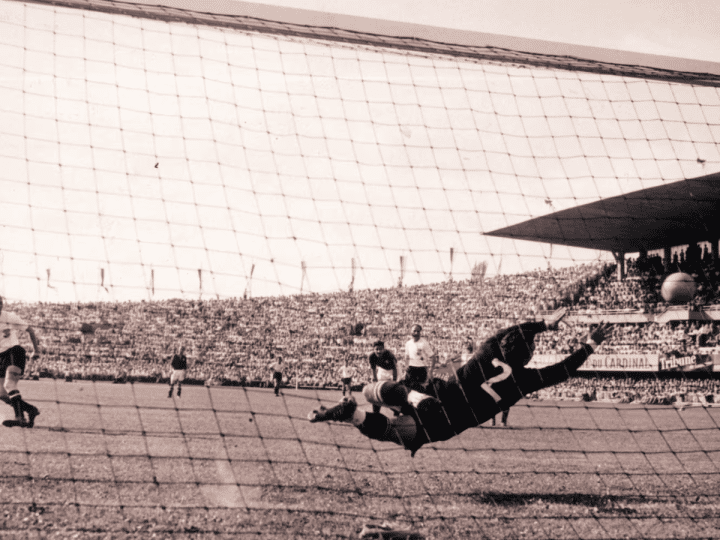

Hat-tricks are among the most celebrated feats in football, and since its inception in 1930, the World Cup has produced some truly remarkable examples. The tournament has seen a range of record-breaking hat-tricks, from fastest to youngest and oldest scorers.
Young legends and veterans
The earliest hat-trick in a World Cup match, in terms of game time, was scored by Austria’s Erich Probst in 1954, who netted three goals in 24 minutes against Czechoslovakia.
Meanwhile, the fastest hat-trick in terms of time between goals can be attributed to Hungary’s László Kiss. During the 1982 World Cup, hosted by Spain, Kiss scored three goals against El Salvador in 7 minutes and 42 seconds.
Some hat-tricks stand out not for speed, but for the age of the players. Brazilian Pelé holds the record as the youngest player to score a World Cup hat-trick, netting three goals against France in the 1958 semi-final when he was just 17 years-old.
At the opposite end of the spectrum, Portuguese forward Cristiano Ronaldo became one of the oldest players to achieve a World Cup hat-trick when he scored three goals in a thrilling 3–3 draw against Spain during the 2018 World Cup in Russia.
The hat-tricks that fell short
While hat-tricks often propel teams to victory, World Cup history shows that individual brilliance does not always secure a win.
- In 1938, Poland’s Ernst Wilimowski scored four goals against Brazil, yet Poland lost 6–5.
- In 1954, Switzerland’s hat-trick advantage could not prevent a 7–5 loss to Austria.
- During the 1986 World Cup, the Soviet Union suffered a 4–3 defeat to Belgium despite a hat-trick from one of their forwards.
- Most recently, in the 2022 World Cup final, Kylian Mbappé scored a hat-trick for France against Argentina, but France ultimately lost the title on penalties after a 3–3 draw.
These examples illustrate that even star performances don’t necessarily translate into team success.
Why hat-tricks matter
World Cup hat-tricks are a testament to skill, composure, and timing. Whether breaking age records, setting speed records, or thrilling fans with late goals, these moments endure in football history. From Pelé’s youthful brilliance to Mbappé’s 2022 heroics, they remind us why the World Cup remains the ultimate stage for unforgettable performances.
Featured image via FIFA
By Alaa Shamali
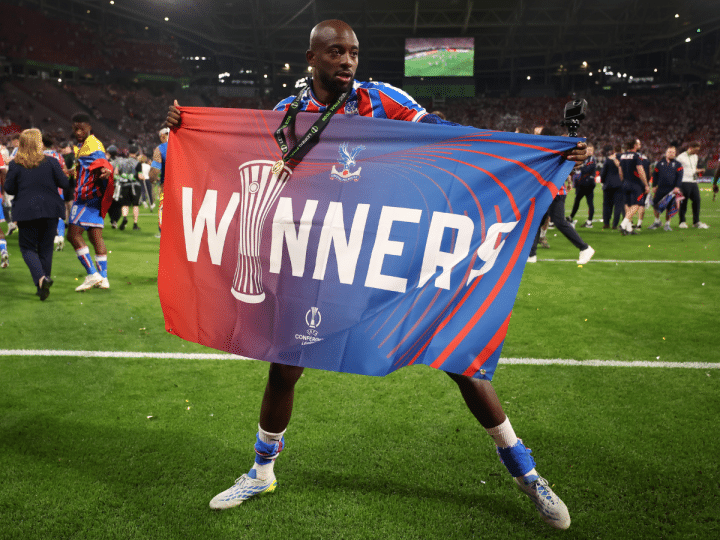

Oliver Glasner’s perfect farewell and Jean-Philippe Mateta’s decisive strike sealed a historic win in Leipzig, giving Crystal Palace their first European trophy after a whirlwind season. The victory capped a year that saw FA Cup glory, a Community Shield triumph, and a dramatic climb from uncertainty to celebration.
Crystal Palace storm to victory
A single goal decided a cagey final, with Mateta converting a rebound after Adam Wharton’s long range effort rattled the Rayo goalkeeper. Chances were scarce before the break, Tyrick Mitchell missing a gilt-edged header, while Rayo controlled possession but failed to create anything dangerous against Dean Henderson.
Palace fans held their breath as the second half started but then erupted when Mateta instinctively pounced on a loose ball to nod home and break the deadlock. The strikers journey this season has been turbulent, publicly linked with moves away in January, yet he stayed, recovered from injury, and delivered.
Rayo responded with urgency, Yeremy Pino testing the woodwork with a spectacular free kick that struck both posts and the Spanish side enjoyed the lions share of possession. Still, they could not fashion a clear chance to beat Henderson, whose calm presence between the sticks proved the key to keeping the slim lead.
Glasnor’s tenure at Selhurst Park will be remembered for transformation. When he arrived the club teetered near relegation, within a year he has overseen three trophy wins. His decision to depart was announced months ago, but he will be recognised as the best Palace have ever had.
Road to Leipzig
The route to Leipzig was not straightforward. Palace were denied Europa League entry last summer by UEFA ownership rules. That decision forced them into the Conference League instead. Rather than diminish resolve, the detour galvanised the squad, who navigated a gruelling schedule and emerged battle ready when it mattered most.
The final was a tactical battle, it took a disciplined performance coupled with clinical timing to snatch the win. Rayo’s technical fluency tested Palace but their inability to convert possession into clear opportunities proved their undoing, while Palace’s counter attacks carried a constant threat.
The celebrations that followed were bittersweet knowing that an amazing chapter is closing, whether they will reach these heights again remains to be seen. For the clubs hierarchy, the task will be to match what has been achieved this past year.
Rayo Vallecano depart with pride, their run to the final confirmed their resilience and tactical identity. Despite this loss they can build on a successful campaign that showcased attacking flare and defensive organisation. For manager Inigo Perez, lessons will be learned and the club will return to LaLiga with renewed purpose.
For Crystal Palace the immediate reward is Europa League football next season, a platform to attract talent, increase revenue, and test the squad against higher calibre opponents.
Fans will be hoping that the club can keep its core intact, as last summer the jewel of their team was sold to Arsenal. This summer will also test the clubs resolve to hold onto their players.
Palace will be looking to add quality in key areas to cope with the demands of continental competition and domestic ambition in seasons to come.
Moving forward
These questions will be addressed in the summer, for now the club, the players, and the coaches will be celebrating a historic achievement. Crystal Palace, champions of Europe.
Oliver Glasner leaves with a legacy; trophies, belief, and a squad forged in diversity. Jean Philippe Mateta’s goal will be inducted into Selhurst lore, a fitting end to transformative era.
Featured image via Getty/Alex Grimm
By Faz Ali
Politics
China Holidays 2026: The Best Travel Itineraries, All-Inclusive Flights And Tour Guides Tested
We hope you love the products we recommend! All of them were independently selected by our editors. Just so you know, HuffPost UK may collect a share of sales or other compensation from the links on this page if you decide to shop from them. Oh, and FYI — prices are accurate and items in stock as of time of publication.
If you’ve ever planned a long haul holiday, you’ll be well aware of the countless things you have to think about before you even get there.
Deciding the time of year you want to visit; finding flights that don’t cost an arm and a leg; figuring out whether you need a visa; I could go on.
Then there’s the limited time you have to see everything, which is especially difficult in a country as culturally rich as China.
Add to that booking accommodation and transport, the language barrier, and avoiding tourist traps when you’re there, and it’s enough to make you not want to go away in the first place. Not to mention the never ending challenges of flying anywhere right now.
Luckily, there is a way to circumvent having to navigate any of that.

For over 30 years, Wendy Wu Tours has specialised in running tours to China that will make you feel like you’re getting an exclusive, behind-the-scenes experience.
With decades of experience, Wendy Wu consults destination specialists to make sure you’ll experience the perfect mix of must-see attractions and local experiences you’d struggle to find yourself.
You know what that means: you’ll be able to avoid the hordes of tourists, which are only increasing to China each year – and it’ll save on hours of tiresome planning.
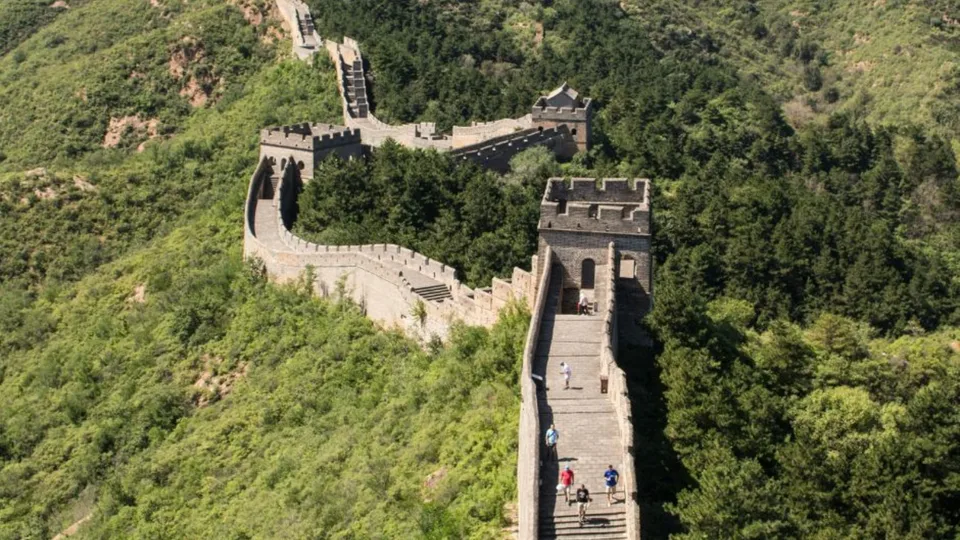
Of course, your trip will include all the best-known attractions, like walking along the Great Wall of China, marvelling at the Terracotta Warriors, sailing along the Yangtze River, and visiting panda conservation centres in Chengdu.
But that’s what the billions (six, to precise) of other tourists to China will be doing, too. Unlike them, though, Wendy Wu will also grant you access to experiences other tourists won’t know about.
Think: sharing lunch with a rural Chinese family, and tours through lesser-known regions so you can understand the full depths and diversity of the ancient country’s history.
And best of all, you won’t have to worry about any of the logistics. Choose from over 70 of Wendy Wu’s private or group tours to China, and the company will do everything for you.
Yes, that really means they’ll book your flights, accommodation, meals, guides, entrance fees, and transport – and it’s all included in your upfront cost.
It even works with trusted airlines so that it can deal with any unexpected changes to your travel, and provide hands-on support the entire time.
If none of the pre-planned trips appeal to you (which seems unlikely) you can also book an appointment to plan your very own trip.
Sound too good to be true? That’s why Wendy Wu has won the Best Specialist Operator at the Globe Travel Award for 16 consecutive years (this is where we’d whistle if we could).
It also has countless five-star reviews from happy customers who have done one of their tours of China.
One five-star review from a customer who did the China Experience tour enjoyed how knowledgeable their guide was.
“The tour guides were very knowledgeable, and it was good to hear their personal perspectives and experiences which shaped things for them and the changes that have advanced in modern China,” they said.
“It gave a very real element to the world beyond the facade of simply seeing what is in front of you.”
Another reviewer who did the Gems of China tour commented on the support Wendy Wu gave from booking through to the tour itself.
“From the first moment of booking we were very satisfied with the attention to detail and level of support we received from the company,” they said.
Others praised the quality of the hotels and transport connections, and not having to organise a trip themselves.
Whether you’ve never visited China before, or you want to deepen your knowledge of its history and culture, here are just a few of Wendy Wu’s pre-planned tours of China to explore now.

Includes:
- Imperial Beijing tour (including Tiananman Square)
- The Great Wall
- Tour of Ancient Xian, the former capital
- Terracotta Warriors
- Cruise through the Yangtze River
- Visit Chongqing Panda House
- Cruise down the Li River
- Visit Yangshuo region
- Explore Shanghai
Length: 16 days

Includes:
- Imperial Beijing tour (including Tiananman Square)
- The Great Wall
- Alleyways of the Muslim Quarter
- Terracotta Warriors
- Fly to Guilin to experience its stalagmites and caves
- Cruise down the Li River
- Yangshuo countryside and Tai Chi
- Chongqing hot springs
- Dazu carvings and drone show
- See the giant pandas at Chongqing Zoo
- Cruise through the Yangtze River
- Cruise through the Three Gorges and visit the dam
- Visit Zhangjiajie, ride on the glass elevator, and walk across the glass bridge
- Cable car to the top of Tianmen Mountain
- Explore Shanghai
Length: 20 days

Includes:
- Explore Shanghai
- Bullet train to Yichang and cruise the Yangtze river
- Explore Chiqikou
- Day at Chengdu Panda Reserve
- Terracotta Warriors
- Explore Beijing
- Great Wall of China
Length: 14 days.


Public Notice Portal adds consultation and archive services

US dealmaking weathers global M&A slowdown
Exchange-Owned OP Stack Chains Made Nearly $500M in Onchain Revenue, OP Labs Says


-

 Crypto World7 days ago
Blockchain.com files with SEC for U.S. IPO
-

 Fashion6 days ago
Holiday Weekend Open Thread – Corporette.com
-

 Politics3 days ago
Bridgerton Season 5: Cast, Release Date And Everything We Know So Far
-

 Crypto World6 days ago
Bitcoin Accumulation Weakens as BTC Realized Losses Hit $600M
-

 Tech3 days ago
Microsoft’s quiet Claude Code retreat and the real cost of enterprise AI
-

 Crypto World5 days ago
Robinhood crypto COO Tanya Denisova exits
-

 Business6 days ago
Dell Technologies DELL Stock Surges 15% on AI Server Momentum and Analyst Upgrades in 2026
-

 Business4 days ago
NYT Strands Answers May 24 2026 Revealed for Puzzle No. 812 Theme Summer Essentials
-

 Business6 days ago
Trump Invests $1M-$5M in Kura Sushi USA Chain With 27 California Locations
-

 Politics6 days ago
Makerfield: a tale of two social-media histories
-

 Crypto World6 days ago
Space X IPO Is ‘Bad News’ for Tech Stocks: But What About Bitcoin?
-

 Business1 day ago
Selena Gomez Reportedly Upset Over Benny Blanco’s Comments on Her ‘Terrible’ Diet
-

 Business3 days ago
BTS Sells Out Four Las Vegas Shows at Allegiant Stadium for ARIRANG World Tour
-

 Crypto World6 days ago
MicroStrategy’s Saylor Says Miners No Longer Set Bitcoin Price, Another Force Has Taken Over
-

 Tech7 days ago
WhatsApp ads could make Irish debut after discussions with DPC
-
Tech1 day ago
The Samsung pay deal is the moment Korean unions changed register
-
 Tech6 days ago
A 0.12% parameter add-on gives AI agents the working memory RAG can’t
-

 Crypto World6 days ago
AI infrastructure race heats up as IREN pitches full-stack strategy, WhiteFiber lands $160M deal
-

 Tech3 days ago
Westone Audio and Etymotic Acquired by Fidelity Collective in Major IEM Market Move
-
 Crypto World3 days ago
Nvidia (NVDA) CEO Calls on Super Micro to Strengthen Export Controls Amid Smuggling Probe
You must be logged in to post a comment Login