
Politics
Polanski Claims He Supports Article 5 Despite Wanting to Abolish NATO

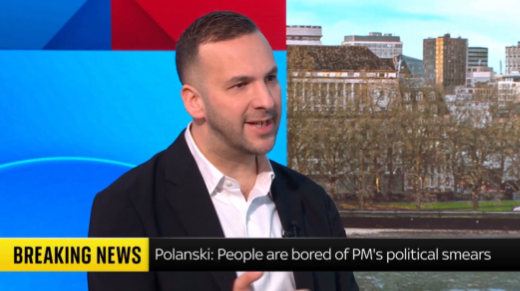
Polanski Claims He Supports Article 5 Despite Wanting to Abolish NATO



President Donald Trump’s primetime address on Iran did little to relieve rising alarm from plugged-in Republicans in key states across the country who see the war as pushing costs higher and their midterm chances ever-lower.
Trump declared Wednesday night that the U.S. offensive in Iran is “nearing completion” but warned that military operations would intensify over the “next two to three weeks.” He attempted to clarify his goals for the war — to destroy Iran’s nuclear capabilities — and insisted it was never about regime change. And he shrugged off the spike in oil and gas prices as a “short-term increase.”
To a number of GOP strategists and local party leaders involved in key congressional and gubernatorial races, the message was too little, too late and too jumbled.
“What the hell did he just say?” one GOP strategist in a battleground state wrote in a text to POLITICO after the president’s address, granted anonymity to speak candidly. “A quick recap and a path forward would’ve been helpful. Instead, it was nonsense left for Sean Hannity to articulate.”
Trump’s decision to attack Iran, and the subsequent spike in oil and gas prices, are the latest sources of heartburn for Republicans who were already feeling queasy about public opinion that has turned against Trump’s domestic agenda. They heard little new information Wednesday night from the president that signaled a course correction.
Conversations with more than half a dozen operatives and party chairs across seven battleground states revealed their anxiety that the prolonged conflict is overshadowing the White House’s affordability message and could hurt their chances of holding onto power this November.
The Republicans who spoke to POLITICO were particularly concerned about Trump’s waving off the financial strain the war has put on day-to-day prices, touting “the strongest economy in history” with “no inflation.” Two different strategists compared the latter comments to President Joe Biden’s repeated insistence that the economy was doing better than they believed.
“Not sure people will buy the strong economy part,” Todd Gillman, a Michigan GOP district chair, said in a message Wednesday night. “Inflation is definitely more under control than it was under Biden, but the prices haven’t come down on a lot of things.”
Without any clear announcements from Trump on an endgame in the region, future markets for U.S. stocks recoiled and average national gas prices topped $4 per gallon. Crude oil prices soared to over $111 per barrel on Thursday morning.
Others were left wanting more specifics from Trump on an exit strategy and the factors that drew the U.S. into the war. “I think it could’ve been a little more specific or expanded on the exact threats that Iran poses to the U.S.,” said one Wisconsin-based GOP strategist. “I don’t know the extent he’s able to get into that stuff based off intelligence, but maybe he could have been a little bit more expansive there.”
Polls have consistently shown a majority of Americans oppose the military operation in Iran by double-digit margins. The conflict is already fracturing the president’s loyal MAGA base, alienating young men who believed in his “America First” message. And Democrats are beginning to go on the attack in campaign ads, accusing vulnerable GOP lawmakers of prioritizing the president’s multibillion dollar offensive over making voters’ lives more affordable.
One GOP operative working on a battleground House race found solace in Trump’s talk of an exit strategy, saying voters would be “relieved to hear that we’re not going to be sticking around.”
“On the other hand, I don’t think anybody has confidence that gas prices will just come down on their own,” said the operative, who was granted anonymity to deliver a candid assessment. “Overall, there’s really nothing in here that helps to sell this to the public.”
Some said the address may have come too late.
“It’s something that probably should have been done at the beginning of the conflict,” said Dennis Lennox, a Michigan-based GOP strategist.
Still, others in the party found that Trump’s address met the moment and lavished praise on the president. Mark Levin, a staunch Trump ally and conservative commentator, said he delivered a “PERFECT SPEECH” in a post on X.
Brent Littlefield, a GOP strategist involved in several races, including in Maine’s battleground 2nd congressional district, lauded Trump’s decision to speak directly to Americans and dismissed concerns that the remarks came too late in the conflict to help him articulate his case to voters.
“It was right for the President to wait to do that until after the conflict began,” Littlefield said. “He did not telegraph the move to the enemy of what the United States was planning to do.”
Samuel Benson contributed to this report.

!function(n){if(!window.cnx){window.cnx={},window.cnx.cmd=[];var t=n.createElement(‘iframe’);t.display=’none’,t.onload=function(){var n=t.contentWindow.document,c=n.createElement(‘script’);c.src=”//cd.connatix.com/connatix.player.js”,c.setAttribute(‘async’,’1′),c.setAttribute(‘type’,’text/javascript’),n.body.appendChild(c)},n.head.appendChild(t)}}(document);(new Image()).src=”https://capi.connatix.com/tr/si?token=19654b65-409c-4b38-90db-80cbdea02cf4″;cnx.cmd.push(function(){cnx({“playerId”:”19654b65-409c-4b38-90db-80cbdea02cf4″,”mediaId”:”f1481145-6761-4fb9-8eee-035ebaa28a2c”}).render(“69ce961fe4b0d214cc7055d1”);});

Following his obscene comments about the Grenfell Tower disaster, Reform has sacked spokesperson Simon Dudley. It comes as Reform has been struggling to hold on to candidates for the local election.
Firings do happen
As the BBC reported, Simon Dudley used to be an executive at Homes England and Ebbsfleet. He joined Reform in February.
Sickeningly, Dudley said the following to Inside Housing:
The practical impact of over-regulation is to stop things. Now, people may feel that we’ve done the right thing through introducing this regulation, but on the other side of that, think about all the human suffering of not having a home, not being able to have children and being stuck in your parents’ home in your childhood bedroom. So there is a balance. You know, we can’t, you know, sadly, you know, everyone dies in the end. It’s just how you go, right?
Following an intense backlash, the party gave him the boot. Politics UK reported on the sacking as follows:
Farage said “he is no longer a spokesman for the party. That’s been dealt with”
“The comments were deeply inappropriate. Richard Tice has dealt with him”
Context: https://t.co/uaUqmOQTAG
— Politics UK (@PolitlcsUK) April 2, 2026
People responded to his sacking online:
Nigel Farage has sacked Simon Dudley as Reform’s housing spokesperson over his vile comments about Grenfell, but he refused to rule out whether Simon Dudley will stand as an MP at the next general election.
— Mukhtar (@I_amMukhtar) April 2, 2026
That’s right; he’s sacked as a spokesperson – not as a member.
Also, it seems like they sacked him because the backlash grew too great; not because they disagreed with his statement:
Simon Dudley was sacked by Nigel Farage just an hour after Reform deputy leader Richard Tice shared Simon Dudley’s ‘apology’ on X. pic.twitter.com/oiaZPWCdcZ
— Kevin Schofield (@KevinASchofield) April 2, 2026
The Tories are criticising Reform too, which is a bit rich considering they were the party in government when Grenfell happened (and also that they dithered on taking action for years):
Simon Dudley’s comments were shocking and ill-informed. It was right he was sacked but shows exactly why Reform isn’t fit to govern.
Nigel Farage runs a one-man band where policy and people decisions are made on the hoof. That’s chaotic. A govt led by him would be no different.…
— Kevin Hollinrake MP (@kevinhollinrake) April 2, 2026
Danger
As Rachel Charlton-Dailey reported for the Canary, Dudley said ‘fires do happen’ in relation to the tragedy.
Calls for Reform housing spokesperson to be sacked after he dismisses Grenfell tragedy and says ‘fires do happen’
By @RachelCDailey_ https://t.co/0Y5NMTE2Tt
— Canary (@TheCanaryUK) April 2, 2026
Dudley also told Inside Housing:
Extracting Grenfell from the statistics, actually people dying in house fires is rare… many, many more people die on the roads driving cars, but we’re not making cars illegal, so why are we stopping houses being built?
The problem with this is that we famously have made vehicles illegal – most recently the Tesla CyberTruck (or, to be more specific, it failed to meet our standards).
If you’re wondering why CyberTrucks don’t meet standards, look no further:
$TSLA cybertruck lawsuit: Tesla cybertruck tried to kill me by driving off bridge 🤡
🤡 Cybertruck Autopilot “suddenly and without warning” tried to drive off overpass
🤡 Drove straight into concrete barrier
🤡 Other companies use LiDAR, Elon uses cheap low res cameras pic.twitter.com/Z1BJVJ7X5h
— Stonk King ((((🌕)))) (@StonkKing4) March 10, 2026
Tesla recalls all 3,878 Cybertrucks over faulty accelerator pedal that could cause an accident. 😳‼️ pic.twitter.com/ghwN6Rouqo
— DramaAlert (@DramaAlert) April 19, 2024
$TSLA cybertruck on FSD
💀 runs straight into guard rail
💀 veers off road
Thankfully driver was paying attention 🙏 pic.twitter.com/AKNzDUhq3v
— Stonk King ((((🌕)))) (@StonkKing4) August 12, 2025
This is a tangent, obviously, but the point is this: when things are dangerous, they should be illegal.
And do you know what’s really, really dangerous?
High rise buildings clad in flammable materials.
We need reform not Reform
Housing is too important to leave in the hands of greedy companies who prioritise profits over people. Grenfell was the most shocking example of why that is, and Reform has now shown it will side with the profiteers.
Featured image via Miles Glendinning (Wikimedia)

As we age, our bodies lose some resilience, which can lead to less movement throughout the day and an increased risk of facing multiple chronic diseases at once (multimorbidity).
This happens partly because senescent cells, sometimes called “zombie” cells, stop dividing and build up. They secrete “proinflammatory molecules that contribute to chronic inflammation and ageing-related diseases”.
A process called senolysis usually clears these away, but as we get older, that cleaning system becomes less efficient.
But scientists from the University of Kyoto think they’ve found a way to slow or stop the production of these “zombie cells”.
How did the researchers stop “zombie cells” from building up?
Though we knew that “zombie cells” seemed to create inflammation that affected nearby cells, scientists weren’t sure about how this went on to affect someone’s body.
These researchers looked closer at the senescent cells themselves and found they heavily relied on glycolysis (using sugar for energy), a process which is also involved in the spreading of cancer cells.
Using bioluminescence to help see what was going on in the cell better, scientists found that two enzymes were crucial to glycolysis in “zombie cells”. Their binding was increased in sensecent cells.
So, when they were able to interrupt that key interaction, researchers could selectively “delete” zombie cells.
In mice, the change was linked to reduced lung fibrosis.
They also found that when this activity was diminished, a protein that triggers cell death was suppressed too.
What might this mean?
The study authors hope this might help to maintain resilience in older age.
That way, it’s hoped, the risk of multimorbidity might go down.
This study’s corresponding author, Hiroshi Kondoh, said: “Our findings in glycolytic regulation suggest that impaired metabolic resilience in ageing is one of the targets for senotherapy, to aid in preservation of resilience in ageing.”

Do you remember Great British Energy? Labour’s 2024 manifesto had six pledges. No. 4 was ‘Set up Great British Energy’, a publicly owned clean power company, to cut bills for good and boost energy security.
If you’ve seen the news or paid a bill recently, you’ll be forgiven for wondering where those lower bills are. Then again, it was always smoke and mirrors. When it was set up in 2024, CEO Jürgen Maier appeared in front of a Select Committee. ‘When can we expect to see bills come down?’ SNP MP Stephen Flynn asked him. That is ‘not the scope of Great British Energy’, answered Maier.
Crunching the numbers
So far as state-owned electricity generation goes, GB Energy has helped solar panels get installed on school and hospital roofs. That’s a good policy. But in total, that’s between 70MW and 100MW of energy generation – it barely makes a dent.
Total UK electricity demand was 127 Terawatt hours last year. If we replace fossil fuel vehicles with electric vehicles, and gas boilers with electric heat pumps, demand will rise to between 500 and 800TWh. The lower figure requires us to insulate homes and expand public transport.
That’s a lot of numbers. But to save you the arithmetic, GB Energy’s solar on public buildings will generate between 0.013% and 0.027% of the extra capacity we need. So only another 3,730 years to reach net zero.
Contracts for Difference
The UK government has awarded contracts for more offshore wind, though. 4GW was agreed in January – a benchmark of 4 gigawatts for all renewable energy-generating projects. That will deliver around 7.9% of what we need, which is a start. Except it’s all privately owned, with contracts agreed by auction. It uses a system called ‘Contract for Difference‘ (CfD). This means the government agrees the ‘strike price’ for the next 15 years, which rises with inflation. So whatever happens to the wholesale price, the company gets paid the same in real terms. That money comes from our electricity bills.
January’s CfD set the strike price at £91.20 per MWh. The actual cost to produce the electricity is £46.40 per MWh, according to the International Renewable Energy Association. That’s technically known as the Levelized Cost of Electricity, and takes into account all the planning, manufacture, installation, operation and maintenance. So privatisation results in a 97% price premium. Who owns the companies that won the contracts? Qatar, Abu Dhabi, and Blackrock are the biggest shareholders. The money is leaving the UK economy.
Financial jargon calls this ‘derisking’. No one will invest £4billion in a wind farm unless they are guaranteed a return, or so goes the argument. Another term would be ‘corporate welfare’. We’re told that capitalists should get profits because they’ve taken a risk. But they’re removing the risk. I never hear these people say that an engineer, teacher or chef should be guaranteed 197% of their living costs for the next fifteen years for taking the risk to become qualified.
Private profits, nationalised losses
The UK electricity system was privatised in 1990. Not for any common-sense reason, but from pure ideology. It was explicitly structured to create ‘competition’. Except it’s a monopoly. Or at least an oligopoly – where a few large firms dominate. In the North East, our transmission grid was sold to an American billionaire, under the company name of Northern Powergrid. Their 2024 accounts show a turnover of £536 million. They paid dividends of £300 million. In other words, 56% of everything we pay goes straight to the owners.
They’re not developing the grid, either. As Mayor I worked with a firm who wanted to expand. The electricity supply to their factory was inadequate. I had to step in with investment to get the supply upgraded. They could then install a new production line, creating good jobs. In fact, every £1 I invested in this way returned over £3 to the public purse in payroll taxes alone. Investment in electrical infrastructure is one of the best things that could happen to British industry. But not when every kWh is milked for profit for overseas investors.
The final piece of the puzzle is the energy retailers. They buy from the grid, and sell to us as consumers. In 2022, loads of them went bust. The system is set up so a generator is not allowed to be a retailer. This meant that, when energy prices spiked and a cap was put on bills, loads of retailers could not meet their costs. Many community energy schemes and cooperatives were wiped out.
The system is regulated so OFGEM becomes the ‘supplier of last resort’. That is, we, the taxpayer, foot the bill for transferring the contracts so people don’t get cut off. It’s the old story of privatise the profits, nationalise the losses.
A new approach to nationalisation
This brings me to the Green Party’s recent conference motion on nationalising energy companies. First, a caveat – I wasn’t there and didn’t hear the arguments. I have spoken to someone who was. It was a bit chaotic, apparently. The Green Party’s membership has quadrupled since last year’s conference, and the systems are creaking. Everyone I speak to in the leadership team knows this. But as a strategic choice, focusing on winning elections has been extremely successful. The Greens are polling above Labour.
The previous Green Party policy was to nationalise the five largest energy supply companies. That clearly needed revisiting. Transmission and generation is where the money is creamed off, not retail. The new motion now explicitly calls for ‘public ownership’ of transmission, but diverse ownership of retail and generation.
‘Nationalisation’ is usually used as shorthand. It is thought of as ending wealth extraction where very, very rich people bribe governments so they can rip us off. But you can’t govern by shorthand. Sooner or later, you need detailed policies and specific legislation. Unless you’re Donald Trump, but that’s not a good example to follow. Co-ops, community ownership, municipal, and public-commons partnerships can all be in the mix.
Co-operatives are private profit-making ventures. As a socialist, I’m all for co-ops in a diverse ownership model. They’re a cornerstone of community wealth-building. And technically, I’m a private electricity generator, as is anyone else who has solar panels on their roof that can feed back into the grid. I don’t want my roof nationalised.
Nationalisation is not a magic bullet, either. RBS, NatWest, Lloyds and others were nationalised in 2008. It didn’t change their operation. The National Coal Board was a nationalised industry throughout the 1984-5 miners strike. The Labour 2017 manifesto did not talk of nationalisation, but the alteration of licenses and a transition to a decentralised energy system.
We need whole-system reform
The whole system needs restructuring. Surplus-making community co-ops and local authority generation are a good thing. OFGEM should require private retailers to have commercial insurance to underwrite their liabilities so that, if they go bust, we don’t pay for it. That would stop the ‘privatise the profits, nationalise the losses’ business model. Still, it’s fair criticism to say the Green Party’s new motion leaves the words ‘effectively regulated’ to cover a lot of gaps.
What is really needed is massive public investment. We have to stop worrying about ‘levering in’ private finance. As a sovereign nation with a central bank, Britain can effectively borrow from itself. Using that to create abundant clean energy would repay the investment many times over. It does for private finance, so it would if we owned it. Manufacturing and hospitality would see costs fall. Householders would have lower bills and more money in our pockets. Poverty would fall, along with pressure on public services. The economy would benefit.
It’s not net-zero putting up your bills, it’s billionaires. And neither Farage nor Starmer is willing to do a thing about it.
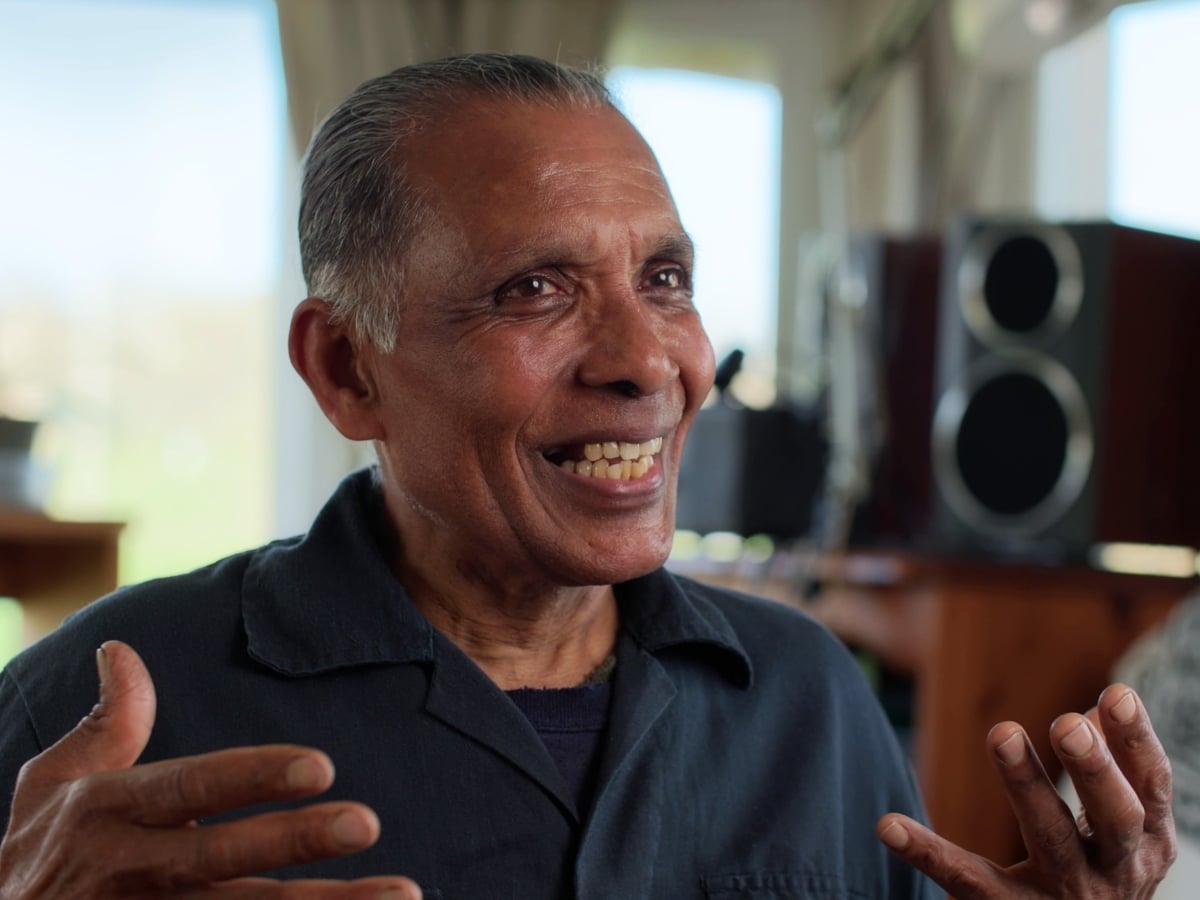
An ex-sheep farmer who once raised animals for slaughter is speaking out ahead of Easter. He’s urging the public to reconsider eating lamb. This comes as new data highlights how demand continues to drive the killing of young animals.
Animal Justice Project is releasing a new video interview with Devon-based farmer Sivalingam “Kumar” Vasanthakumar. He gave up sheep farming and took his entire flock to sanctuary, before transitioning to a plant-based livelihood.
BBC News previously featured Vasanthakumar when he made the decision to leave farming behind. He now grows vegetables on his land and runs a vegan street food business, Kumar’s Dosa Bar, using largely home-grown produce.
Animal Justice Project is releasing a new film, A Change of Heart: From Sheep Farmer to Vegan, over the Easter weekend. It tells Vasanthakumar’s story. He says in the film that he saw his sheep “as individuals”:
Once you see that, you can’t continue as before.
Data reveals demand-led lamb killing – including around Easter
New analysis of 2025 slaughter figures from the Food Standards Agency shows that 11.5 million lambs were killed last year and of those, 893,336 were killed in April, coinciding with Easter demand. This means almost 8% of annual lamb slaughter, or 1 in 13 lambs killed last year, happened in April for the bank holiday weekend.
While this is lower than peak periods later in the year, it remains higher than surrounding months and reflects the continued cultural association between lamb and Easter.
By comparison, June saw 1,106,894 lambs slaughtered, as early-season lambs reach market weight and demand increases. Even higher peaks occur later in the year, driven by large-scale retail demand.
Animal Justice Project says that while Easter does not produce the largest spike, it remains a key moment where consumer choice directly influences the number of animals killed.
Claire Palmer, founder of Animal Justice Project, said:
Easter is often seen as a time of renewal and compassion, yet it’s still associated with eating lambs: animals who are only a few months old when they’re killed.
The data shows that whenever demand rises, more animals are slaughtered. Easter may not be the biggest spike, but it’s one of the most symbolic, because it’s driven by tradition, even though people have a clear choice not to eat animals.
Central London demonstration on Saturday 4 April
To coincide with the Easter weekend, Animal Justice Project will hold a public demonstration in Leicester Square, London. It’ll take place from 12pm to 3pm on Saturday 4 April.
The demonstration will feature a striking visual installation highlighting the reality behind lamb consumption.
A performer portraying a lamb will lie on a table, dressed in a white costume with lamb ears and realistic prosthetic wounds, including a slit throat and severe leg injury. A figure dressed as a butcher will appear to cut into the body. Meanwhile a pile of severed leg props at the end of the table will represent the scale of animals killed.
Alongside the installation, a volunteer will hold a life-size lamb prop, reinforcing the comparison between animals and humans. Other volunteers will hold signs and distribute leaflets encouraging passers-by to “Skip the Lamb”.
Palmer added:
We want people to stop and think. Behind every Easter meal is an animal who wanted to live.
Animal Justice Project is urging the public to choose plant-based alternatives this Easter. And to reconsider the long-standing link between lamb and the holiday. Palmer concluded:
Traditions can change. And when they involve the lives of young animals, they should.
Featured image via Animal Justice Project
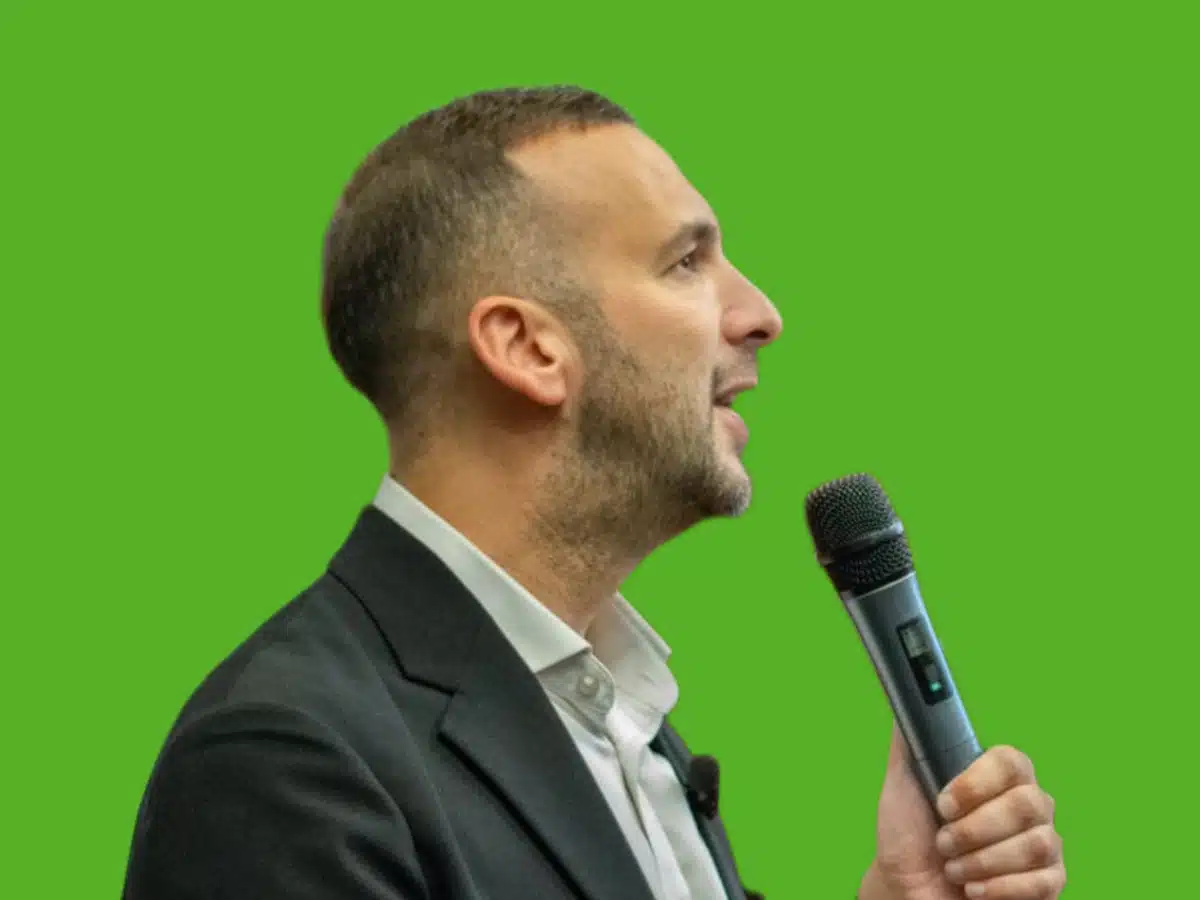
Jeremy Corbyn’s Your Party (YP) and Zack Polanski’s Green Party appear to be making moves towards rehabilitating Zionism. Instead of opposing its colonialist ideology, they seem more inclined to support it.
A recent landmark motion which declared Zionism as a form of racism was railroaded by pro-Israel members at the Green Party’s spring conference. The blatant filibustering on display has devastated the huge proportion of the Green’s membership who rightfully demand an anti-Zionist stance.
However, disappointment for progressives does not end there. Corbyn’s YP appear to have taken heed of the subsequent fallout. Furthermore, an elected member of the Central Executive Committee (CEC) for Wales has suggested the new party entirely abandon its anti-Zionist pledge.
Once again, leaders appear to be choosing to give in to pressure rather than stand firm in recognition of Palestinians inherent and inalienable right to their own sovereign territory. After all, no ideology should afford anyone the right to dispossess, disavow, or displace another. Whether peaceful or violent, Zionism is an existential threat to Palestinians and frankly, anyone who stands in their way.
Host of Palestine Declassified Chris Williamson confronted Polanski’s “catastrophic error” on X:
I’ve been very complimentary about @ZackPolanski‘s stance on the economy, and I still believe an electoral agreement necessary for the next election. But he’s making a catastrophic error in trying to appease Zionists. Jeremy Corbyn made that mistake, yet they still destroyed him.… https://t.co/D2oscA3aAS
— Chris Williamson (@DerbyChrisW) April 2, 2026
Destroying Polanski’s suggestion that this is a ‘nuanced debate’, Williamson wrote:
There is nothing “nuanced” about Zionism, Zack and it’s not “complicated” either. Zionism is a Jewish supremacist ideology. This turbocharged racism normalises apartheid and genocide. It must be confronted and defeated. You cannot dodge this question, Zack. The Zionists are coming for you no matter what you do.
So your only realistic option is to fight them. If you don’t, then you’ve already lost.
We’ve been here before
The 2019 antisemitism crisis in Corbyn’s Labour left socialists across the country demoralised and politically homeless, as the party purged Jewish anti-Zionist members over the contentious claim that their anti-Zionist beliefs were antisemitic.
Polanski himself has spoken about lessons he learned from his own poor behaviour at the time, in which he unquestioningly jumped on the antisemitism bandwagon pushed by the right-wing, pro-Israel, billionaire-owned media.
Yet when push comes to shove, both leaders seem unable to stand up against Zionism. Polanski, in particular, goes to great lengths to sanitise the ideology. He portrays it as though pro-Palestinian activists object only to its violent methods rather than its core principles.
As already mentioned, he isn’t alone in his apparent wilful ignorance. Corbyn, despite the destructive impact of Zionists within Labour, is now being asked by another elected official in Wales, Maria Donnellan, to abandon YP’s anti-Zionist pledge. Time will tell if Corbyn will resist but history suggests that concessions are his default response.
In protest at what they see as a move toward capitulation, members are reminding their leaders that they must confront Zionism at its roots.
Matthew Walker shared Donnellan’s messages following a leak from the YP WhatsApp group:
Shocking leaked Whatsapp messages show Your Party CEC member Maria Donnellan (@Maria4CEC4Cymru) arguing that YP shouldn’t adopt an anti-zionist policy.
She describes zionism as “Jewish peoples movement for self-determination in their historic homeland.”
This is liberal zionism pic.twitter.com/C500Jji99g
— Matthew Walker (@matthewjswalker) March 29, 2026
It’s funny how Palestinians never seem to have an inalienable right to their own homeland, as is afforded to Zionists. This comes regardless of the fact that Palestinians have lived on that land—their land—for generations. Ignoring the mass murder, dispossession, terrorism and oppression they have lived under for nearly 80 years, it seems some seek to rehabilitate ‘softer’ versions of this settler-colonialist ideology.
Cambridge YP’s divisive Kika even deplorably sought to argue that CEC members should be ‘exempt from scrutiny’:
More disgusting zionism from the Your Party whatsapp group today in response to the member petition to recall @Maria4CEC4Cymru from the CEC.
In defense of Maria, Kika claims that jewish people have a right to self-determination on stolen Palestinian land because of the holocaust https://t.co/999UJHCr0b pic.twitter.com/eXhSpEM5Qn
— Matthew Walker (@matthewjswalker) March 31, 2026
Doomed to repeat old failures
Of course, no one wants their racist views unearthed. Still, their hurt feelings do not equate to the sustained suffering and murder of Palestinians due to Zionist policy.
On the other hand, YP and Green members are standing firm and refusing to be deterred. They are demanding stronger leadership. In addition, they insist that Palestinians’ suffering under Zionism cannot be ignored — whether it comes from the political left or the right.
Connections co-founder Anwarul Khan did not mince his words as he expressed his disgust at YP’s direction of travel. He posted on X:
Ffs. Did not take long for zionist poison to infiltrate the party. With what happened in Greens yesterday and this. Its really depressing that this racist ideology is allowed to fester anywhere, let alone YP.
Journalist Paul Holden published “The Fraud” last year. He unearthed the scandal that purged so many socialist members and destroyed Labour’s chances in the 2019 general election.
Writing in the Canary, Holden wrote:
Broadly, the ‘antisemitism crisis’ wove a series of discrete allegations of anti-Jewish rhetoric or discrimination, levelled against individual Labour members as well as the party’s leadership and institutional practices, into a comprehensive indictment: that Corbyn’s Labour Party was deeply antisemitic, and that this antisemitism flowed from the left-wing ideology Corbyn espoused.
Polanski’s stewardship of the Greens appears set on a similarly troubling trajectory. An open letter sent to the party just yesterday details how actors are levelling allegations of antisemitism against anti-Zionist members.
We wrote about the open letter, in which Hamza Egal—chair of Global Majority Greens and elected SOC member—said:
A serious dimension of this pattern has been the repeated use of accusations of antisemitism — deployed not only against me but against many members of this party who oppose Zionism and its racist ideology and practice. For a Black Muslim man raising concerns about racism, governance, and Palestine solidarity, these accusations have taken on a particularly targeted character.
Another antisemitism crisis appears to be brewing
It is clear that Zionists are hard at work in the Greens and YP after recognising the huge support amongst members for the liberation of our Palestinian brothers and sisters. It has long been clear, amidst over 30 national demonstrations opposing Israel and its genocide, that the British public believe in international law and the importance of doing what is right; not what is easy.
After all, authorities have not made speaking up for Palestine easy, repeatedly using lawfare to shut down advocacy for Palestinians’ fundamental rights whilst working to restrict freedom of speech in the UK.
Anti-Zionism is not antisemitism. In fact, many argue that Zionism in itself is antisemitic.
Andrew Feinstein, son of a holocaust survivor who lost her family to Hitler’s true antisemitism, refuses to sit back and watch the continual dilution of antisemitism:
People like Heidi Bachram do more to render antisemitism meaningless by regarding criticism of Israel as antisemitic. To suggest that all Jews are of one mind about Israel or anything else is deeply offensive. To many such as Stephen Kapos or my survivor mother, the lesson of… https://t.co/WvkDntMNxj
— Andrew Feinstein (@andrewfeinstein) March 31, 2026
Featured image via the Canary
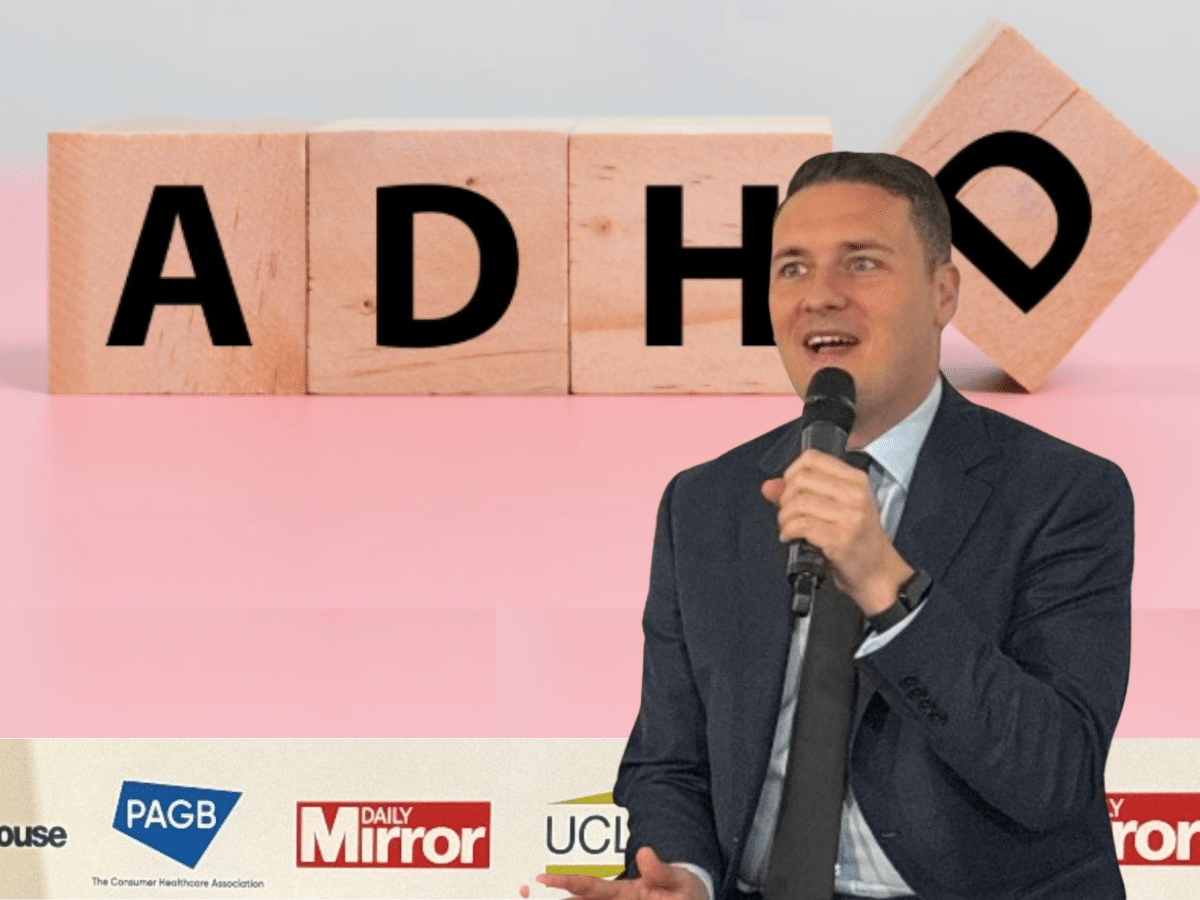
The Telegraph is inciting hatred of disabled kids, again. The right-wing shit rag published a piece suggesting parents are forcing ADHD diagnoses for benefits. Coincidentally, this comes just as the Department of Health and Social Care has published an interim report into their review on whether the condition is overdiagnosed.
Shit rags spreading ADHD hate
The Telegraph ran with the headline:
I’m a GP, and I’m tired of putting children on the ADHD bandwagon
Arguing that:
There are perverse incentives that may be driving some parents towards getting their child a diagnosis
The ‘perverse incentives’ Dr. Katie Musgrave talks about are, of course, SEND support and welfare benefits.
This being the Telegraph, Musgrave thought it was relevant to detail that 276,000 children get Disability Living Allowance for ‘behavioural disorders.’ She then links it to the rising number of people claiming PIP for conditions such as ADHD. This both belittles the condition and vilifies concerned parents.
Instead of highlighting, as a doctor, how dire a state the NHS is in and that this has led to never-ending waiting lists, Musgrave blames this on the number of ADHD referrals. She then accuses parents of going through ‘Right to Choose’ as it’s seen as an easier route to getting a diagnosis.
The good doctor says that, actually, kids just need to get off their iPads and go outside:
Many children in the UK are faced with significant social and developmental challenges, but that does not excuse the current system which classifies an increasing proportion of children as having a disability. Sadly, many of these young people go on to become dependent on state benefits, and face a future of unemployment. The government would be better off investing in sports and social activities for children and young people. All children – but perhaps especially those with additional needs – benefit from getting off screens, becoming more physically active and interacting with others.
She concludes:
Perverse incentives are currently labelling a generation of children as neuro-diverse, while locking many into a dependence on state benefits: which is neither good for the individual, nor the economy. The whole system needs to be made more accessible, pragmatic, and equitable. This is public money we are talking about, after all; and children’s lives.
Just a coincidence, right?
It must be a massive coincidence that the Telegraph has put out this blatant propaganda designed to turn people against disabled people this week. Especially since the Department of Health and Social Care have also released their interim report into the Independent review into mental health conditions, ADHD and autism.
The review will look into the increase in diagnoses and the ‘strain’ that is putting on the NHS. It’s being carried out at the same time as the DWP is changing PIP eligibility. With a spate of hate around the increase in claimants with neurodivergent and mental health conditions, it’s easy to see that this review would give Labour the ammunition to cut benefits.
But as much as the interim report tries to blame things such as TikTok for the increase in the conditions, it has to admit that this is bullshit. Whilst it does try to claim that TikTok is a catalyst, the report then has to contradict itself.
These developments are not solely associated with increased diagnostic demand. Many observers emphasise that online communities, peer networks and advocacy groups have also played an important role in increasing awareness of mental health and neurodevelopmental conditions, reducing stigma and enabling individuals to find explanation and community where their experiences were previously misunderstood or dismissed. For some individuals, such spaces provide validation, a sense of identity, practical advice and a sense of belonging that may not have been available through formal services.
Honestly, the report is just a big example of the review trying to come to its own foregone conclusion, but being headed off at every pass with the facts that ADHD and other conditions aren’t overdiagnosed.
That’s why it’s especially interesting that the press is running with this narrative. Whilst The Telegraph article doesn’t specifically mention the report, the Times reported
Children and young adults are “incentivised” to get diagnosed with ADHD and autism and there has been a “medicalisation of distress”, a government inquiry has concluded.
Firstly, this is untrue because the review hasn’t ‘concluded,’ it’s an interim report. Secondly the report isn’t being run by experts in this particular area. In fact 32 ADHD experts have already disproved that it’s overdiagnosed.
Labour turning the public against disabled people, again
It’s incredible that the press is still running with stories of overdiagnosis for benefits when the report itself struggles to pin the blame on benefits.
Not to suggest that this is a pre-agreed or planted narrative, but the government does have a previous history when it comes to disabled benefits claimants.
While the report might be an 85-page cluster fuck that ties itself in knots trying to blame benefits fakers despite the evidence says otherwise, one thing is clear.
The government will try as much as possible to convince the public that ADHD and other conditions are overdiagnosed, so there won’t be an uproar when they strip vulnerable people of vital benefits.
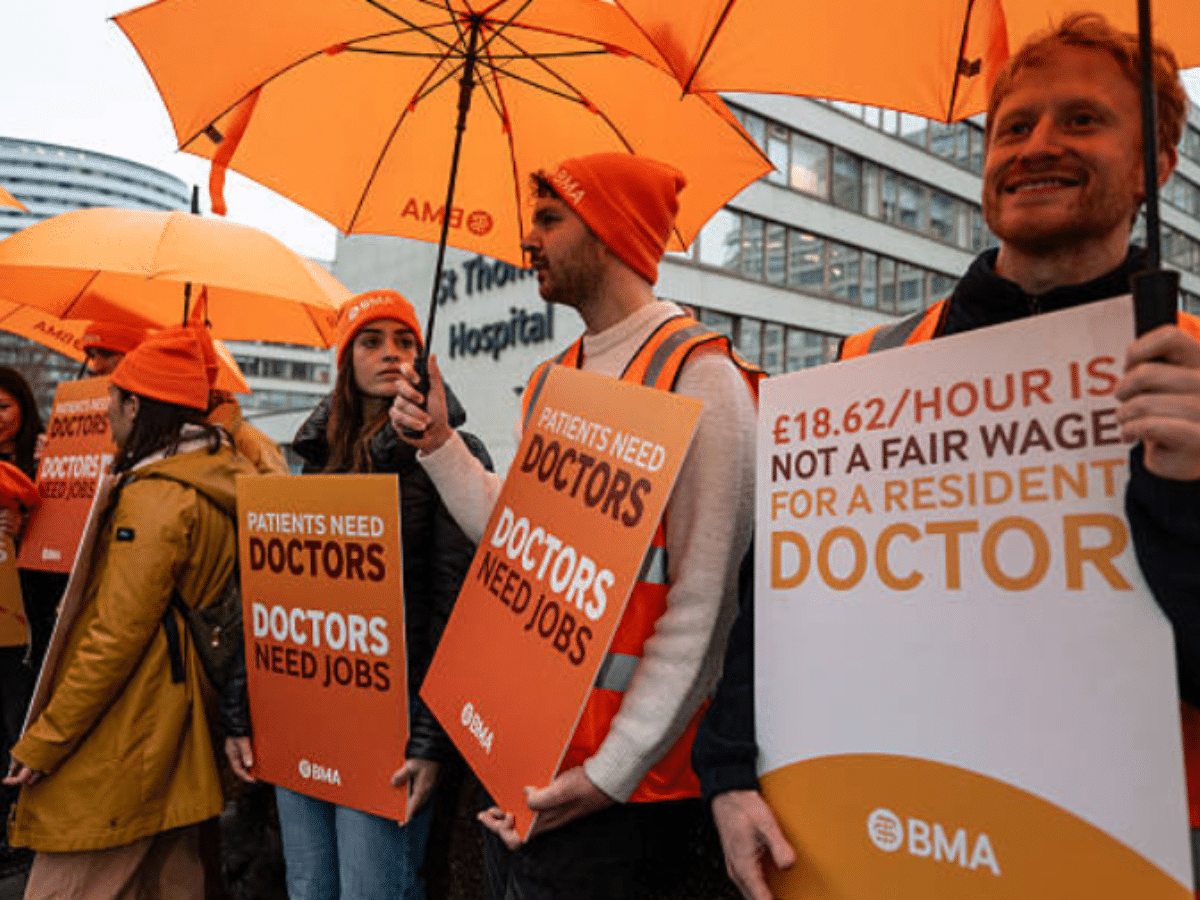
The British Medical Association (BMA) is scheduled to begin six days of industrial action on 7 April 2026. The NHS strike was announced after the government attempted to play resident doctors off against their union. This occurred during a strike of their own.
Now, in response to the further strike action, the government has withdrawn part of its offer to resolve its previous dispute with resident doctors. Meanwhile, the NHS will be directly affected by these ongoing negotiations.
Residents without residency
In 2024, the term ‘resident doctors’ replaced the previous designation of ‘junior doctors’. ‘Junior’ was felt to be demeaning and misleading by members of the BMA. For many, including the general public, the term suggested a lack of training or expertise. On the contrary, resident doctors are fully qualified and are either in postgraduate training toward a particular area of specialised expertise. Alternatively, they may be employed in a non-training post within the NHS.
The idea was to choose a new name that better reflected the skills and responsibilities of resident doctors, but as far as the government is concerned, they may as well have kept their old name. Many are left on low pay, without enrollment in training, or without work all together in the NHS system.
The training undertaken by resident doctors is essential as it enables them to further improve the care they are employed to provide. The Canary‘s Alex/Rose Cocker explained:
To be clear, the BMA wants those training positions, but they’re not a bonus or luxury — it’s training for NHS doctors. Starmer is risking jeopardising the NHS for a fucking bargaining chip.
The government had threatened that it would cancel the 1,000 training posts offered to resident doctors unless the BMA cancelled its strike action. It gave the BMA 48 hours to respond. With the BMA unwilling to back down, the government has now made good on its threat.
‘Genuinely disheartening’
Speaking to the BBC, Dr Jack Fletcher, chair of the resident doctors committee, said:
It is genuinely disheartening to be at this point after what had been constructive talks up until a few weeks ago when the government moved the goalposts.
It is simply wrong that the development of the doctors of the future is being used as a pawn like this.
We have consistently maintained that we are willing to postpone industrial action should a genuinely credible offer be provided.
The announcement from the government follows the resolution with separate disputes with pharmaceutical companies and corporations. These groups already have the NHS and its patients over a barrel. The Canary‘s Jack Wright recently highlighted how there is one rule for capital, and another for workers.
pharmaceutical giants have been demanding that the NHS pay them more, or they will withhold investment. Labour agreed to a 25% increase in payments for essential drugs in December 2025.
Meanwhile, resident doctors are asking for real-terms pay restoration to 2008 levels, at 21%. The government is offering a 7.1% increase … However, it isn’t sufficient for a doctor’s pay.
Strike to go ahead as planned
The doctors’ strike is scheduled to go ahead as planned, beginning at 7:00am on 7 April. Patients have been warned that non-emergency appointments and procedures may be disrupted by the industrial action across the NHS.
Featured image via the Canary

For some people, it’s filtered, airbrushed social media pictures. For others, it’s unrealistic romantic expectations set by movies and TV.
For me, though, my greatest source of insecurity was the r/sourdough forum.
It’s nobody’s fault: if I had created a tall, fluffy masterpiece with a perfect golden crust, I, too, would want to share a shot. If my first-ever loaf looked like it belonged in an ad for artisanal butter, I would indeed want the world to know.
And people share their less successful loaves – a gummy rise, a burnt base – as well.
Still, I couldn’t help it. After a while, I began judging my slightly gummy, slightly deflated loaves a little too harshly. Then, the inevitable turn towards The Product That Solves It All: if I just owned one of these twisty little starter whisks, or a proper starter jar, or a bigger banneton, I’d be (grid) worthy!! I thought.
It sounds silly, because it is. But according to a post shared by u/good-things_ in the group, I’m not alone.
“I don’t use any of the equipment everyone talks about for sourdough. I mix my dough in any bowl available that’s big enough, and I eyeball the rise. Sometimes my bowls are solid and plastic, so I can’t see if there are bubbles,” the poster confessed (mine is metal).
Still, they pointed out, loads of the recommended gear and science-backed rules are relatively new (especially compared to sourdough’s thousands of years of history). Which means my great-great-great-grandma probably didn’t give a hoot about whether the ear of her every loaf curled up like a cowlick.
“I love that people get obsessed and get into the nitty-gritty of how to make a beautiful, perfect loaf. But I also want everyone to know ugly, imperfect loaves are still delicious,” the post continued.
Underneath was a swarm of agreement. “I also admit that my loaves are a bit substandard, but that’s okay with me in the long run. By not stressing about it, I can manage to keep making bread regularly for sandwiches, etc., and not lose enthusiasm,” u/bajajoaquin replied.
“I gave up chasing the perfect loaf with huge holes and a perfect ear, etc. I decided I just wanted to make bread for my own enjoyment… It works for me, and that’s what really matters,” u/dearmax added.
I’ve been through a similar process recently.

For a couple of months, I stopped making bread entirely. It wasn’t just because I felt mine was subpar, but that was part of it: I felt I was spending so long on something so far from perfect that I got frustrated.
But recently, I’ve fallen back in love with the craft. My new starter (Gluton Airport, if you want her government name) doesn’t have a super-strict feeding schedule, and probably would bubble more enthusiastically if she did.
I’m 99% sure I’m leaving my overnight sourdough out to prove for about two hours too long (I don’t go to sleep immediately after mixing it, and I sleep too late to bake it on time).

Probably as a result, my loaves are somewhat limp, a little gummy, and nowhere near as photogenic as I’d like.
Nonetheless, they’re still delicious. I haven’t splashed out on a pricier shop-bought loaf – a lot of which isn’t technically sourdough – since.
It’s a bit like half-assing my workouts. I don’t give 100% every single time, and it’s made me enjoy the hobby so much more.
Now, I’m more in love with making sourdough – meh as it may be – than ever. Most of all, I’m having fun again (and isn’t that the point of a hobby?).

Tottenham: Roberto De Zerbi apologises for Mason Greenwood defence after fan backlash

Delta Air Q1 Earnings Preview: A High Bar To Fly Over, Shares Fairly Valued (NYSE:DAL)

Polymarket traders now price 65% odds WTI hits $120 in 2026


-

 Business7 days ago
Instagram, YouTube Found Responsible for Teen’s Mental Health Struggle in Historic Ruling
-

 NewsBeat6 days ago
The Story hosts event on Durham’s historic registers
-

 Sports6 days ago
Sweet Sixteen Game Thread: Tide vs Michigan
-
Entertainment3 days ago
Fans slam 'heartbreaking' Barbie Dream Fest convention debacle with 'cardboard cutout' experience
-
 Entertainment5 days ago
Lana Del Rey Celebrates Her Husband’s 51st Birthday In New Post
-
Crypto World2 days ago
Dems press CFTC, ethics board on prediction-market insider trades
-

 Crypto World20 hours ago
Gold Price Prediction: Worst Month in 17 Years fo Save Haven Rock
-

 Tech4 days ago
The Pixel 10a doesn’t have a camera bump, and it’s great
-

 Sports2 days ago
Tallest college basketball player ever, standing at 7-foot-9, entering transfer portal
-

 Tech2 days ago
EE TV is using AI to help you find something to watch
-

 Fashion5 days ago
Amazon Sundays: Soft Spring Layers
-

 Tech3 days ago
Apple will hide your email address from apps and websites, but not cops
-

 Politics3 days ago
Should Trump Be Scared Strait?
-

 Tech3 days ago
Flipsnack and the shift toward motion-first business content with living visuals
-

 Tech2 days ago
How to back up your iPhone & iPad to your Mac before something goes wrong
-

 Crypto World3 days ago
U.S. rule change may open trillions in 401(k) funds to crypto
-

 Business6 days ago
Chinese universities with military links bought Super Micro servers with restricted AI chips
-

 Fashion6 days ago
Weekly News Update, 3.27.26 – Corporette.com
-

 Tech4 days ago
Elon Musk’s last co-founder reportedly leaves xAI
-
 Crypto World4 days ago
Bitcoin’s Six-Month Losing Streak: What On-Chain Data Says About the Market’s Next Move
You must be logged in to post a comment Login