
Politics
Politics Home Article | Angela Rayner Joins Fightback Against Government Immigration Reforms

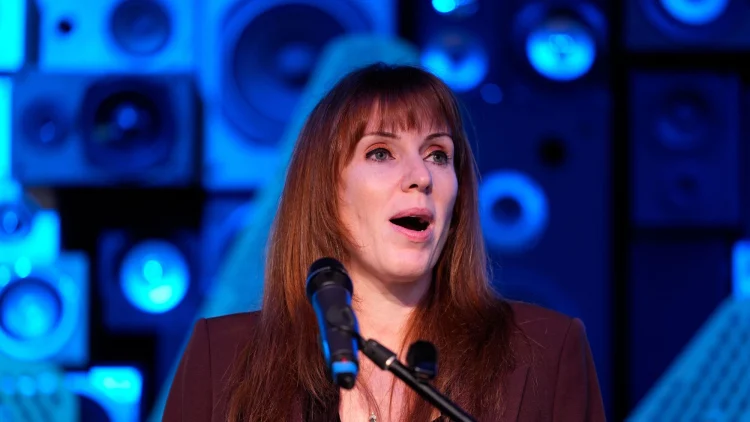

Angela Rayner, February 2026 (Alamy)

4 min read
Former Labour deputy leader Angela Rayner has given her backing to the efforts of a large group of Labour MPs currently lobbying the government against its immigration reforms.
Addressing a reception held by Labour soft left group Mainstream on Tuesday evening, Rayner said voters had been given the impression that Labour has “represented the establishment, not working people” and that “at worst, we became it”.
“The very survival of the Labour Party is at stake,” she warned a packed pub basement in Westminster.
“As a party and movement, we cannot hide. We cannot just go through the motions in the face of decline,” Rayner said.
“There is no safe ground for us, and we’re running out of time. The change that people so desperately wanted to see needs to be seen. It needs to be felt.”
The influential backbencher, widely seen as a potential successor to Keir Starmer, started her speech by telling the crowd: “I have a lot to say. I’ve been waiting a long time for this moment.”
She also joked that she was “really pleased” the reception was being held in a pub that Labour MPs were allowed to enter – “we’ve been banned from a few”, she said.
Rayner went on specifically to criticise Home Secretary Shabana Mahmood’s plan to extend the automatic qualifying period for awarding Indefinite Leave to Remain from five to 10 years retroactively.
The change would “pull the rug” from migrants who have already arrived in the UK, and represent “not just bad policy but a breach of trust”, she said.
“We cannot talk about earning a settlement if we keep moving the goalposts,” she added. “It’s un-British.”
No primary legislation is required to implement the changes being proposed by the government, which means there is no automatic Commons vote on the proposals and no obvious crunch point for a rebellion.
If there are enough rebel MPs, however, there is a possibility they could organise to force a vote, though they acknowledge that this would be difficult.
Tony Vaughan MP, from the 2024 intake, led more than 100 Labour colleagues in signing a private letter to the government urging it to rethink the tightening of immigration rules.
PoliticsHome understands that he is holding a strategy meeting today for Labour MPs concerned about the plans for earned settled status and refugees.
Vaughan also spoke at the Mainstream reception, telling attendees that Mahmood’s reforms were not informed by Labour values of community, solidarity, internationalism and social justice.
“The idea that mere financial contribution is the beginning and end of what we think qualifies somebody to belong in this society is totally wrong,” he said.
“We have to ensure that as a political movement, in every policy debate, we fight not just to win the argument but ultimately to define the terms and the boundaries of the debate before the argument even starts.”
Mayor of Greater Manchester Andy Burnham, another figure on the party’s soft left who is touted as a possible successor to Starmer despite not being an MP, today told the BBC that Labour “would always do well to listen to what Angela has got to say”.
Nick Thomas-Symonds, the Cabinet Office minister, denied in response to Rayner’s comment that the plans for immigration reform were “un-British”.
He told Times Radio: “I don’t think that the changes Shabana Mahmood has announced are un-British. I think what they are doing is trying to strike fairness and a balance between, in the first instance, control of our borders and also people who are here still, of course, having the opportunity then to gain a settled status, but also being fair to everybody.”
The Home Secretary doubled down on the reforms in a speech last week, warning Labour MPs that the current asylum system is “eroding trust” with voters, and arguing that restoring order at the borders is necessary, “not a betrayal” of Labour values.
“Hard-working people across this country engage in the daily struggle to make ends meet.
“They see a state that they pay taxes towards, yet it is unable to stop the flow of dinghies across the channel. They see a state that is paying billions towards hotels. It doesn’t look fair because it’s not fair, and it erodes their trust in government,” she said.
One attendee of the Mainstream event last night said Rayner was “here for nominations”, referring to the 81 MP nominations any leadership challenger or candidate would have to secure.
Another warned PoliticsHome against interpreting Mainstream’s invitation to Rayner as a leadership endorsement by the organisation, which is also seen as close to Burnham.
Rayner resigned from cabinet in September after being found to have breached the ministerial code over unpaid stamp duty.
There is a feeling among Labour MPs that it will be very difficult for her to stand as a leadership candidate as long as the HMRC investigation into her tax affairs is ongoing.

Although he held medical reports, Ministry of Health documentation and even World Health Organization (WHO) approval for evacuation from Gaza, Ibrahim Abu Aram’s requests to leave the Strip for specialised treatment were never granted, despite many months of pleading from his family.
While the Israeli occupation prevented him from leaving Gaza, his health rapidly deteriorated over the past few months and his condition became critical. He sadly died when his life support machine was switched off.
Abu Aram was a husband and father, and a forcibly displaced Palestinian living in the Gaza Strip. He suffered for years from a rare and life-threatening autoimmune disease called Pemphigus vulgaris, a skin disorder which causes painful blistering and severe physical deterioration.
In Gaza, Abu Aram’s story is not unique. Thousands of patients have been unable to receive life-saving treatment abroad because the Israeli occupation has prevented them from leaving the enclave.
Medical evacuations from Gaza take place through the Rafah crossing into Egypt, but in May 2024, the Israeli occupation seized the crossing and closed it. Medical evacuations during this time were banned.
The border crossing was partially reopened on 2 February but between 28 February and 19 March, it was closed again because of the Iran war, the occupation claimed.
Gaza citizens denied access to medical treatment
While many people have medical conditions that are manageable with the correct treatment, many factors have meant that even treatable conditions have become deadly, such as the shortage of medical supplies and equipment, the manufactured state of malnutrition in the Strip and limited access to clean facilities.
Since the beginning of the genocide in Gaza, the Zionist regime has systematically and intentionally targeted and destroyed Gaza’s healthcare system. The Palestinian Ministry of Health reported that more than 1,800 healthcare facilities have been partially or totally destroyed since 7 October 2023. For this reason, it was impossible for Abu Aram to receive treatment inside the Strip.
Since the same date, 72,292 Palestinians in Gaza have been killed, with 716 of those people having lost their life since the start of the so-called ‘ceasefire’ on 11 October last year.
Israeli occupation continues to break ‘ceasefire’ agreement
The continued restrictions on the entry of medical supplies into the Strip has also had severe impacts on patients. Médecins Sans Frontières shared that almost 50% of its essential medications for chronic diseases are in “critically low stock”, and says this shortage will “inevitably lead to preventable deaths”.
There is also a shortage of essential medications, such as antibiotics and anaesthetics, and wound dressings, which are essential to prevent the spread of infection. New medical equipment or spare parts have also been banned from entry by the occupation, so any malfunctioning equipment can have severe consequences for a patient’s recovery.
According to the Gaza ceasefire agreement, 150 patients should be allowed to travel out of the Strip each day for medical treatment, but yet again, the Israeli occupation has not kept its word. Instead, less than 25 patients have crossed the border each day.
Between six and 10 Palestinians like Abu Aram lose their lives each day as a direct result of severe restrictions on medical travel and the continued near-total closure of the Rafah Crossing. A total of 1,400 patients have died since 7 May 2024, when the Rafah border crossing was seized by the Israeli army.
The situation is dire. There are thousands of patients, including those with cancer and children, who if they aren’t evacuated within weeks and their condition worsens, they could become “extremely critical”.
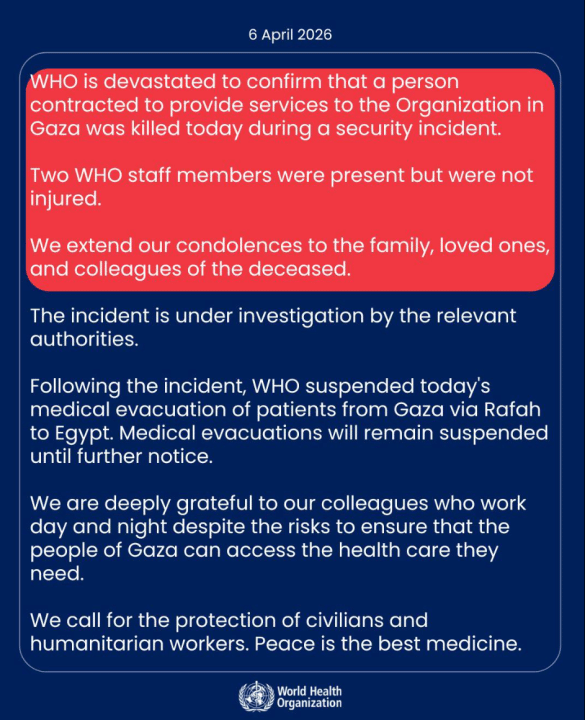
Medical evacuations suspended again after WHO worker, 54, shot in ‘security incident’
On 6 April, the crossing was re-closed after Israeli occupation forces opened fire on a UN vehicle traveling in Gaza.
Gaza’s Ministry of Health said the occupation targeted:
a vehicle rented for the World Health Organization (WHO) which was carrying several of its staff while they were carrying out a routine mission in areas classified as “green” in Khan Younis Governorate. This attack resulted in the killing of the vehicle’s driver.
Majdi Aslan, 54, the vehicle’s driver, was reportedly shot in the head. Following Aslan’s killing, the WHO has suspended medical evacuations of patients from Gaza until further notice. “Israel” then closed the crossing, yet again.

Speaking on the direct and deliberate targeting of health and humanitarian personnel without any justification, Gaza’s health ministry has said it:
reflects the continued policies of the occupation aimed at undermining the work of humanitarian institutions and imposing further restrictions on their operations.
Hamas has called on the international community and the UN to take urgent action. In a statement, it said “flimsy pretexts” were being used for the Rafah crossings closure that is preventing sick and wounded individuals from traveling abroad to receive vital medical treatment.
This action, Hamas claims, “constitutes a new crime against humanity”.
It reflects a fascist approach targeting our people as part of a systematic policy that violates all international humanitarian laws and conventions, in full view of the world.
Featured image via Ibrahim Mohareb

The Zionist regime, which calls itself a Jewish state, showed by attacking this site that it has a problem with all Iranians — it makes no distinction between Jews and Muslims.
These are the words of a Mehr News Agency presenter whilst reporting on the recent US-Israeli occupation missile attack on a Jewish synagogue in central Tehran.
The Rafi Niya synagogue, located in a residential area near Palestine Square, was one of the oldest synagogues in Iran. It was totally destroyed in the targeted attack and nearby buildings were “severely damaged”.
Not even synagogues were spared in US–Israeli attacks: one in central Tehran was leveled to the ground
Iran is home to the second-largest Jewish population in West Asia, where they have lived in peace and harmony — at least until Israel attacked Iran pic.twitter.com/ToLaJfs3yi
— Press TV 🔻 (@PressTV) April 7, 2026
According to Homayoun Sameyeh Najafabadi, the Jewish community’s representative in the Iranian Parliament, the Torah scrolls that were kept in the synagogue have also been destroyed and “remain buried under the rubble”.
Iran synagogue hit during one of the holiest festivals
Talking about the criminal Zionist regime, Najafabadi said it targeted a synagogue belonging to the Iranian Jewish community during the days of Passover “in light of the community’s firm stance in condemning the regime’s actions and its anti-Zionist positions”.
Talking of the total absence of “Israel’s” religious and moral values, he added:
The Zionists merely use Judaism as a pretext to legitimise their actions. All Jews around the world are fully aware of this truth.
Another X user commented:
JUST IN 🇮🇷🇺🇸: U.S. and Israel Strike a Jewish Synagogue in Tehran, Iran
They Destroyed the Synagogue
Iran is home to the second-largest Jewish population in West Asia. Israel wants them to feel unsafe and go to Israel, despite being safe and protected in Iran. https://t.co/tYkBHysyIy pic.twitter.com/QVk36hpoLB
— Ryan Rozbiani (@RyanRozbiani) April 7, 2026
The US and Israeli occupation attacks on Iran have left a trail of destruction that includes not only military targets but also oil depots and infrastructure. The atmosphere in the capital was marked by smoke, blocked roads and widespread panic, with rescue teams scrambling to respond. These events triggered protests among Iranians who see the unlawful aggression against their sovereignty.
Unlawful aggression against Iran’s sovereignty
The attacks violate Article 2(4) of the UN Charter, which prohibits the use of force against the territorial integrity or political independence of another state. Because the attacks were not authorised by the UN Security Council, they are also acts of aggression.
The targeting of oil depots, nuclear facilities and residential areas also raises questions under international humanitarian law, especially when it comes to proportionality and the obligation to distinguish between military and civilian objects. The principle of proportionality prohibits attacks where civilian casualties and damage to civilian property are expected to be excessive in relation to the military advantage anticipated.
Although “Israel” and the US have framed their attacks on Iran as self-defence, they have ulterior motives. They have claimed Iran’s nuclear programme and missile capabilities posed an “existential threat” yet on 28 February — the day Omani mediators announced that Iran had not only agreed to allow International Atomic Energy Agency inspectors full access to its nuclear sites but also dramatically curbed its nuclear programme — their attacks began.
On 2 April, Iran’s president, Masoud Pezeshkian, called on the American people to reconsider their views of his country — one which, in modern history, has “consistently avoided aggression, expansionism, and domination”.
Iran has not started a war in more than two centuries unlike “Israel” or the US, who are the real terrorists.
Featured image via Press TV
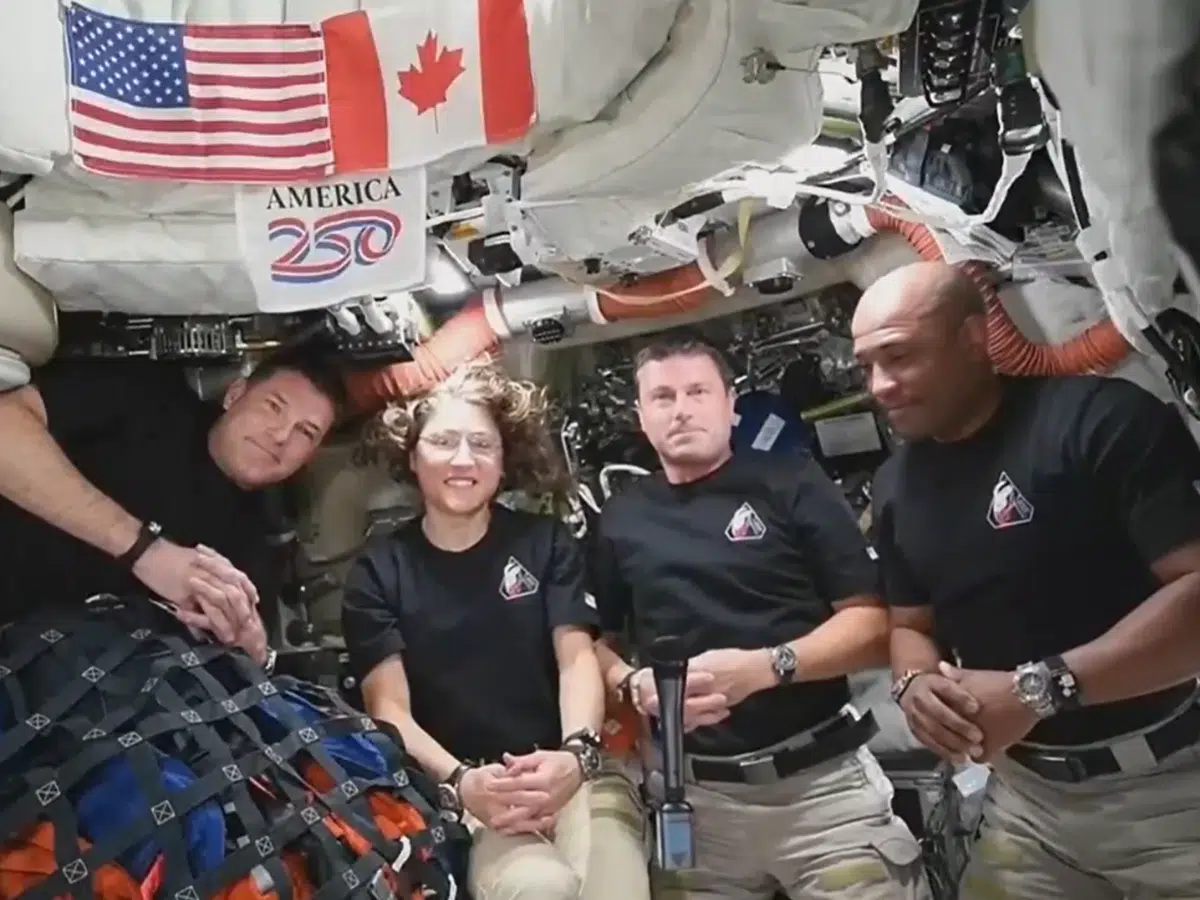
Astronauts aboard Artemis II were seemingly left lost for words after an outpouring of praise from Donald Trump as they embarked on the world’s furthest crewed mission to the Moon.
The entertaining video showed a period of awkward radio silence in which none of the crew, which includes NASA astronauts Reid Wiseman, Victor Glover and Christina Koch, and Canadian Space Agency astronaut Jeremy Hansen, seemed to want to speak to the US president after his run of compliments. (Shocker, right?)
In fact, one of the astronauts then checked that the line was clear with Trump confirming he was still listening, suggesting the American and Canadian crew had precious few words for the world leader.
Awkward scenes aboard Artemis II as Trump stops ranting and none of the astronauts have anything left to say to him, leading to extended dead air pic.twitter.com/4PjfPhfgY8
— Aaron Rupar (@atrupar) April 7, 2026
Artemis II crew get Trump’s typical condescending shite
It has to be said, when Trump gives compliments they have a prolific tendency to be pretty damn condescending to the recipient. This incident in space is no different as Trump focused his attention on Canadian astronaut Hansen.
After months of disgusting vitriol from Trump being directed at Canada and its leaders, it’s no surprise that his typical “I have friends” speech landed like a damp squib with the Artemis II crew.
Referring to Canada’s ice hockey player, Wayne Gretzky, who is largely regarded as the world’s greatest, Trump gushed:
Well, I have to say I spoke to a very special person, Wayne Gretzky, who I think you know, the great one. And I spoke to your prime minister and many other friends I have in Canada. They are so proud of you.
And you have a lot of courage. I’m not sure if they’d want to do that. I’m not even sure if the great one would want to do that to be honest with you, but you have a lot of courage doing what you’re doing, a lot of bravery and a lot of genius.
But they’re very, very proud of you.
Cue hay bales floating in gravity as it seemed the mic became a hot potato no one wanted to take. Instead of responding to Trump’s praise, one of the astronauts then asked NASA for a comms check to “make sure you guys are still on the line”.
Hilariously, like the kid no one wants to play with at a party and had forgotten exists, Trump then responded:
I am. Yes, I am.
Awkward as fuck, but equally, hilarious. We have to take the laughs wherever we can find them, right?
Comedy gold
The video has unsurprisingly inspired many laughs, with one X user commenting:
That microphone suddenly became a hot potato. Everyone’s like, “I’m not picking it up, you pick it up.”
“Nope, I picked it up last time.”
“Well, if I pick it up, can I call him a stupid fuck?”
“Yeah, don’t do that. He might shoot missiles at us upon reentry.”
Another person highlighted the laughter from ground control:
Gold! Especially the comms check and the unbridled laughter from ground control.
#SilenceIsBestResponseToTrump
One X account pointed out the cuts that Trump is imposing on NASA:
Bragging about what he has “done” for nasa yet just released a budget wanting to slash nasa’s budget by 23%. 💀
Others have highlighted how inept Trump truly is.
How does he manage to fuck up even this call? Get on the horn, say some nice words, wish them well, say good night. That’s all he had to do. That’s it. He couldn’t even do that. https://t.co/QpxiwZ2KBk
— Charlotte Clymer 🇺🇦 (@cmclymer) April 7, 2026
In fact, the astronauts’ willingness to let Trump languish in that awkward moment only deepens the respect for this courageous team:
Shouts to the astronauts for being willing to make this weird. No need to dig him out of this hole https://t.co/Dztec2LKqz
— Duncan Smith (@DuncanSmithNBA) April 7, 2026
The pilot Victor Glover’s beautiful unifying comments potentially signal the points of diversion between the far-right president and the astronauts, who appear to choose love over hate.
Yet another generational statement from the Artemis II crew 🗣️
During Artemis II, astronaut Victor Glover shared a view from deep space, seeing Earth as one fragile, unified world. He said space is amazing, but life on Earth is just as special and reminded everyone to appreciate… pic.twitter.com/F7Q5burj9r
— Complex (@Complex) April 5, 2026
A president nobody likes
It’s no surprise a Canadian might have little to say to the Epstein-class US president given the disgusting threats Trump has made to Canada.
Canada’s prime minister, Mark Carney, has responded defiantly to attempts by the US to bully and manipulate them into compliance, pointing to a “rupture” in US-Canada relations at Davos.
A rupture between these neighbouring countries that this radio silence appears to underscore.
If this video is anything to go by, Canadian citizens seem just as uninterested in what the president thinks. Honestly, it’s delicious.
Featured image via the Canary

The post How ‘anti-Zionism’ corrupted the arts appeared first on spiked.
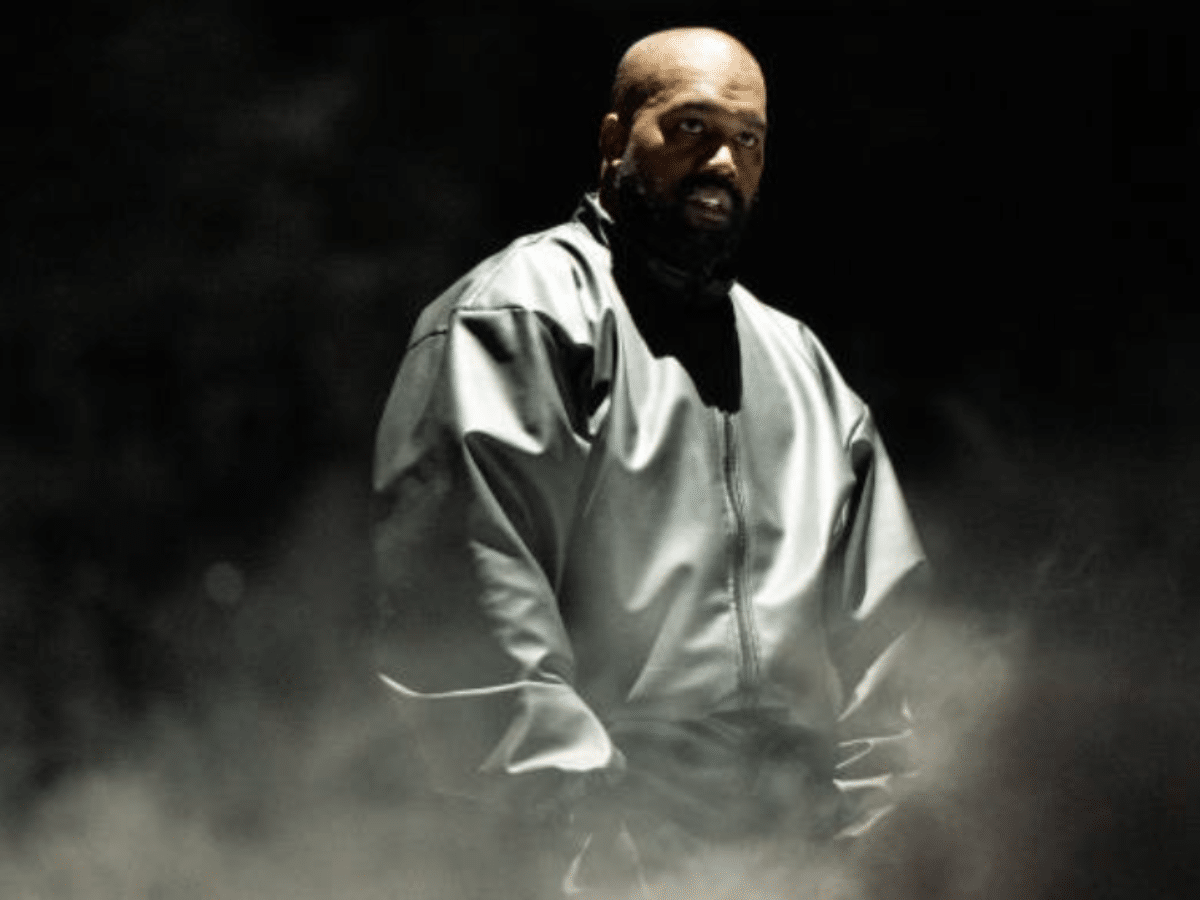
A new wave of controversy surrounds Kanye West as the UK government have blocked the rapper’s visa for a performance at a major festival. A number of sponsors withdrew from the Wireless Festival in response to a scheduled performance from West. This is due to criticism over a history of antisemitic comments.
West released a song called Heil Hitler last year, alongside selling t-shirts adorned with the swastika. West had technically apologised, but, as the Canary reported:
West published his apology as a paid full-page placement in The Wall Street Journal. That choice matters because the paper does not serve community seeking repair. Investors, executives, advertisers and institutional decision-makers make up its core readership. Ultimately, these are the people who determine whether a public figure remains commercially viable.
Kanye ‘apology’ falls flat
Clearly, the time has come where Kanye’s apologies make good business sense. And, he’s had plenty of practice with them. This is a man who said that slavery was a “choice,” who aligned himself with fascist Donald Trump, and displayed breathtaking misogyny.
West made a statement reaching out to “members of the Jewish community in London in person, to listen” insisting that he wants to “present a show of change, bringing unity, peace and love” through his music:
BREAKING: Kanye West has put out a statement responding to the Wireless Festival controversy.
Sky’s @Mollie_Malone1 has more on the story
Read more: https://t.co/400TmEufYm pic.twitter.com/Va8AtjiMF4
— Sky News (@SkyNews) April 7, 2026
Kanye West: “Those I’ve hurt”
This plea from Kanye for an opportunity to repair the harm caused by his prior antisemitic comments follows pressure from the Campaign Against Antisemitism to cancel his performance.
A spokesperson for CAA stated:
Kanye West has dedicated years of his life to trying to incite his followers to hate Jews. He has more followers than there are Jews on Earth, so his incitement has a huge impact.
Pro-Zionist Board of Deputies of British Jews have accused the festival of “profiteering from racism”, suggesting:
We think that would be a very appropriate step were the home secretary to find a way to not allow him into the country.
Needless to say, the optics are pretty ugly: cabinet officials allow genocidal war criminals to enter without objection. Yet they ban a man who’s caused harm with his antisemitic comments, but is not a genocidal war criminal.
Piers Morgan has welcomed the cancellation calls against Kanye West:
Shouldn’t even be a debate.
Kanye’s Hitler-loving, Nazi-slathering, Jew-hating bullsh*t should be disqualifying for appearances at any music festival. https://t.co/XvtRGkR6Cx— Piers Morgan (@piersmorgan) April 6, 2026
And, UK PM Keir Starmer has unsurprisingly jumped on the bandwagon to condemn the festival’s decision to give West the headline slot. He expressed his ‘deep concern’ that:
Kanye West has been booked to perform at Wireless despite his previous antisemitic remarks and celebration of Nazism.
Multiple sponsors have apparently pulled their support for the Wireless Festival, with the BBC reporting:
Rockstar Energy became the latest brand to withdraw its sponsorship of the event on Monday. The energy drink brand is owned by the same parent company as Pepsi, which pulled out on Sunday.
Fellow drinks giant Diageo has removed its support “as it stands”, while PayPal will no longer allow its branding to be used on promotional material for the festival.
British mineral water company Drip has clarified that it is not involved at all with this year’s festival.
Phillipson: “no place for that kind of hatred”
Multiple MPs from Labour and the Conservatives have backed calls to block West’s appearance with Education Secretary Bridget Phillipson saying:
There is no place for that kind of hatred, bigotry or antisemitism from him or from anyone else.
Tory MP Chris Philp is arguing that Mahmood’s stance on antisemitism will be clarified by her position on West’s visa:
Kanye West is guilty of appalling antisemitic and pro Nazi comments
Below I have written to the Home Secretary asking her to use her powers to ban West from travelling to the UK to appear at the Wireless concert
She used this power recently to ban an anti-immigration campaigner… pic.twitter.com/Cso9TYpTht
— Chris Philp MP (@CPhilpOfficial) April 6, 2026
However, Melvin Benn, the managing director of Festival Republic, has resisted public pressure to kick West to the curb. This refusal comes in light of his own experience witnessing “many episodes of despicable behaviour” which have taught him the need for forgiveness.
Benn recalled his lived experience as an anti-fascist and his time on a kibbutz, stating:
I am a deeply committed anti-fascist and have been all my adult life. I lived on a kibbutz for many months in the 1970’s that was attacked on October 7th, am pro Jew and the Jewish state, while being equally committed to a Palestinian state.
Referring to West’s past antisemitic comments in a lengthy statement, Benn said:
What Ye has said in the past about Jews and Hitler is as abhorrent to me as it is to the Jewish community, the Prime Minister and others that have commented and – taking him at his word – to Ye now also.
Forgiveness and giving people a second chance are becoming a lost virtue in this ever-increasing divisive world and I would ask people to reflect on their instant comments of disgust at the likelihood of him performing (as was mine) and offer some forgiveness and hope to him as I have decided to do.
🚨 BREAKING: Wireless Festival will keep Kanye West as its headliner
Melvin Benn, the Managing Director of Festival Republic, said:
“I am a deeply committed anti-fascist and have been all my adult life. I lived on a kibbutz for many months in the 1970’s that was attacked on…
— Politics UK (@PolitlcsUK) April 6, 2026
The Board of Deputies of British Jews has since responded to Kanye’s request to speak to the Jewish community in London.
They welcomed the call to talk but still insisted he be cancelled:
The Board of Deputies of British Jews has responded to Ye’s statement on Wireless, saying they are willing to meet with Ye, but only if he agrees not to perform at the festival this year:
“We are willing to meet Kanye West as part of his journey of healing, but only after he… https://t.co/3j2x3p5Lf8 pic.twitter.com/DGoED41CTp
— Kurrco (@Kurrco) April 7, 2026
Double standards exposed
Banning West’s entry into the UK is not an unprecedented decision – he was already denied entry to Australia last year after releasing “Heil Hitler”. What would be unprecedented though is the UK barring entry to individuals accused of genocidal crimes against Palestinians. These blood-thirsty individuals have outstanding arrest warrants from the International Criminal Court (ICC) but are seen to be welcomed into the UK’s corridors of power.
Therefore, the contrast is hard to ignore. After all, it further reveals a sinister double standard: the UK government appears willing to tolerate Israel’s violent, murderous hate yet draws the line at a singer who has expressed disgusting hatred. Kanye can be condemned, but we can’t miss the fact that Starmer and his cronies are quick to react when it comes to antisemitism – but not to actual war criminals.
Let’s be clear: antisemitism is abhorrent and must always be confronted. We do not condone Kanye’s previous antisemitic and pro-Nazi posts. But the UK’s failure to confront the deadly rise in Islamophobia and racism – fuelled by Israel’s actions against Palestinians – is just as appalling, but comes with the government’s tacit approval.
Thus, this incident highlights a serious issue in British politics: the hierarchy of racism.
Featured image via the Canary
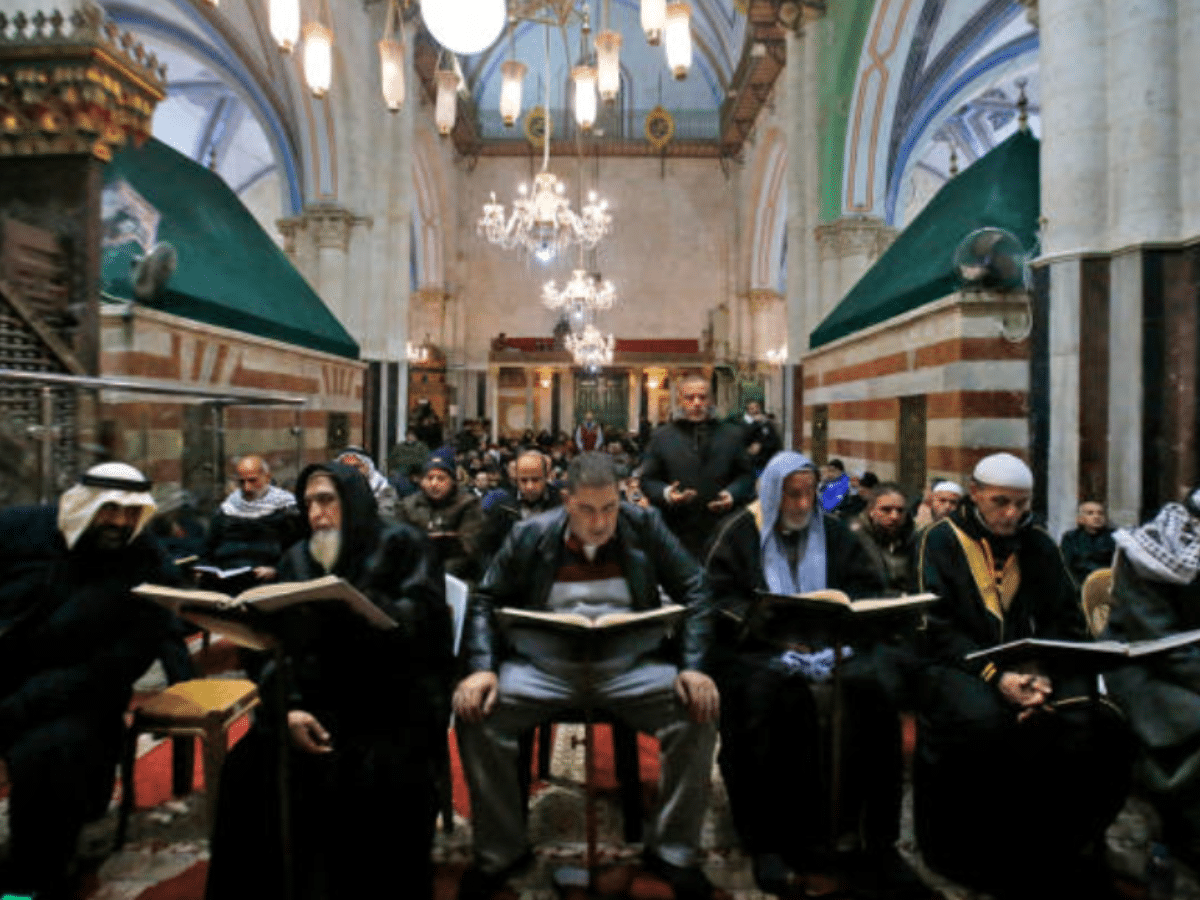
Israel has tightened restrictions on the Ibrahimi mosque in Hebron in the occupied West Bank – claiming the measures are to protect illegal settlers in the town.
The mosque was the scene of extremist settler Baruch Goldstein’s 1994 massacre of 29 Palestinian worshippers. The atrocity was used by the occupation to further restrict local Muslims’ access to the sacred site, one of Islam’s most important. Israel fenced off the mosque but has now closed additional gates and cut off many of the alternative routes to the mosque. This has forced local people to walk kilometres to gain what access they are allowed, replicating measures imposed on the Al-Aqsa mosque in Jerusalem. Israel’s fascist ‘security minister’ Itamar Ben Gvir has praised Goldstein’s mass murder and today, 7 April 2026, raided Al-Aqsa mosque while announcing it would be re-opened to extremist settlers.
Israel harassing worshippers
Local resident Aref Jaber told Al Jazeera:
The difficulty of reaching the mosque is compounded by the procedures at the iron and electronic gates installed at its entrances and in its vicinity. We are subjected to searches, detention, and harassment without any justification, and often young men, boys, and even women are arrested.
The occupation had ordered the removal of mosque director Moataz Abu Sneineh and his staff for more than two weeks in January and has begun preventing the call to prayer “dozens of times a month”. It then used its attacks on Iran as an excuse to close the mosque completely for six days from the end of February and continues to limit the numbers who can attend. The site is considered a major Islamic holy site and a national symbol of Palestine, making it a target for Israel’s ethno-fascist leadership that denies the Palestinian people even exists and claims the site as the ‘Cave of the [Jewish] Patriarchs’.
Award-winning human rights activist Issa Amro, who directs the Youth Against Settlements group, said that the situation at the mosque is even more dangerous than al-Aqsa, adding that:
The Jewish area [of the mosque] has been expanded, and recently, residents around the mosque have been living a difficult life due to soldier violence, settler terrorism, the constant closure of barriers, and restrictions on leaving their homes. They live as prisoners in their own homes in fear of settlers and soldiers, and disturbed by the constant gatherings held by settlers in the mosque.
Israel is an apartheid, terror state.
Featured image via the Canary
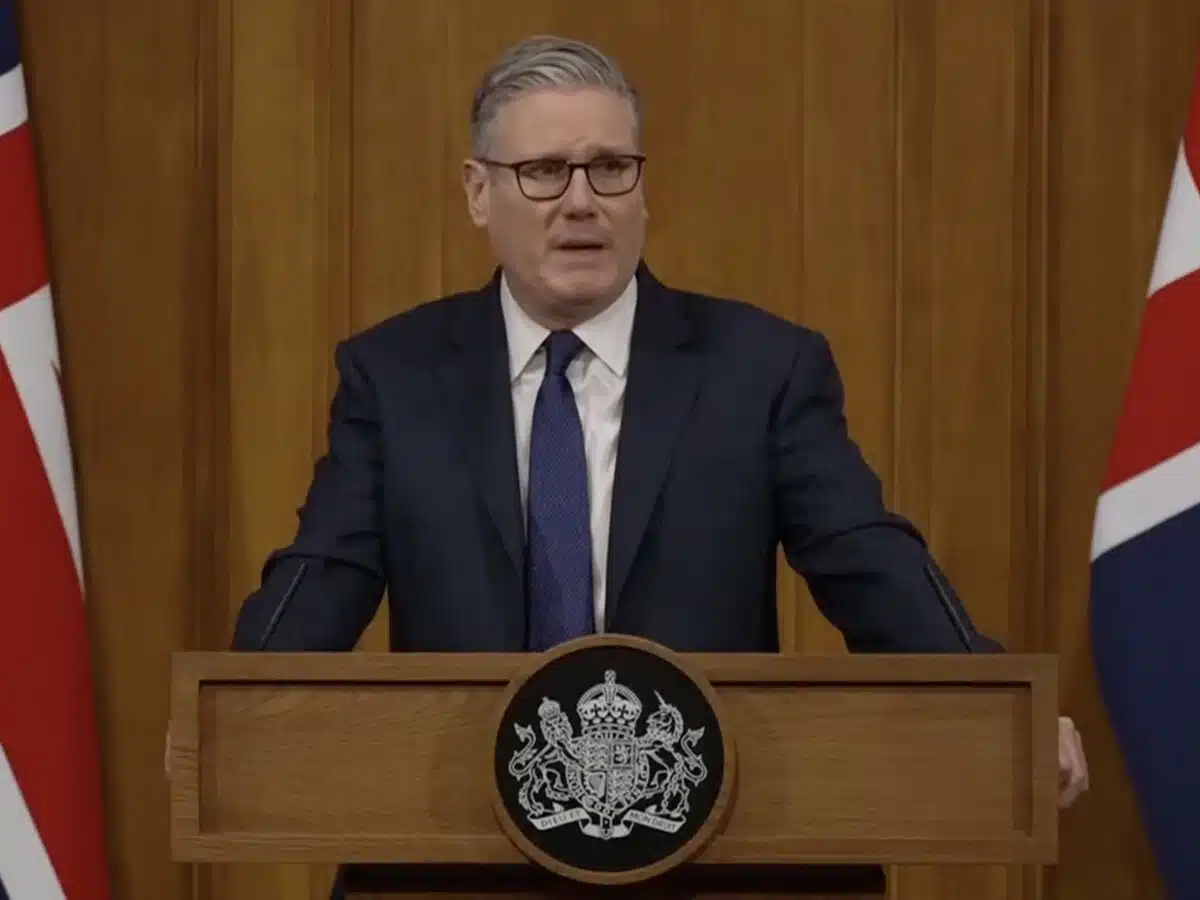
The Ministry of Defence (MOD) has announced that the UK shot down multiple Iranian drones in a ‘high threat area’ overnight on April 4. This is despite Starmer repeatedly claiming that the country will not back up the US and Israel’s illegal attacks on Iran.
Update on UK operations in the Middle East, 5 April 2026. pic.twitter.com/D3wqHH1BDR
— Ministry of Defence 🇬🇧 (@DefenceHQ) April 5, 2026
The announcement also states that:
UK Typhoons and F-35 jets, supported by Voyager and Royal Navy Merlin and Wildcat helicopters, have continued their defensive missions over the Eastern Mediterranean, Jordan, Bahrain and UAE.
Did the MOD finally admit that the UK is backing up Israel and the US? Or is this still Starmer’s idea of ‘not involved’ and ‘defensive actions’?
In this latest post, the UK MOD appear to admit that Britain is now an active participant in the war.
Starmer’s denials notwithstanding. https://t.co/uw1vBD8oUL
— Loose Cannon News (@LooseCannonNews) April 6, 2026
Starmer dragging UK into illegal war
Either way, it seems that Starmer’s words and actions are not quite matching up, which is nothing new. However, his actions are dragging the UK even further into the wrong side of an illegal war.
Starmer will continue to tell us we’re not involved Israel and the US’ illegal war, whilst at the same time getting us further involved.
Actually scandalous. https://t.co/RwZKAD5r15
— Juliet Brown 🇵🇸🍉 (@JulietB270880) April 6, 2026
What is Starmer’s definition of ‘involved’? Someone should throw a dictionary at his head.
If this is what not being involved in Trump and Netanyahu’s war looks like I’d hate to see what being involved looks like. https://t.co/thT9q2bIiX
— Brian Tweedale (@BrianHTweed) April 5, 2026
Government says “the uk isn’t getting involved”
Government proceeds to post updates about where way they’re getting involved!
Labour party are liars and must be removed from Government! https://t.co/j1vB4CskYL
— Loki (@TH3ELECTRODE) April 6, 2026
Make your mind up
Since the middle of March, the US military has been loading large explosives into B-1 Lancer bombers at RAF Fairford in Gloucester. The government has attempted to cover this up – literally, using plastic sheeting and fencing. However, there is no hiding 2,000lb bombs.
Starmer has approved 27 US bombers to land, refuel, arm, and use UK military bases as a launchpad for strikes against Iran …..
Then the RAF fighter planes over the Middle East are shooting down drones and missiles when Iran retaliates!
But we’re not involved!
— Susan Rees 💚💚💚 (@bobbybobbyrees) April 6, 2026
The US is also using RAF Lakenheath and Mildenhall in Suffolk, and Diego Garcia in the Indian Ocean.
Seems a little bit like the UK directly supporting war crimes to me?
To make matters worse, Byline Times then linked the components used in the Tomahawk missiles which hit a girls’ school in Mibab, to two defence companies with a strong presence in the UK – BAE Systems and Raytheon.
The US missiles murdered around 165 school girls on February 28 in a double-tap attack. The second missile killed sheltering survivors, two first responders, and the parent of a murdered child.
Whilst these were provided by private companies, rather than the government, both hold extensive contracts with the UK government for military equipment.
Priorities
As usual, the UK government is spending money on illegal wars that no one supports, instead of funding vital public services.
No money for public services but always to get in wars we say we’re not getting involved in https://t.co/40RbltgyVS
— Sam Smith (@sammmsmith_) April 6, 2026
Dear British MOD – You are participating in an illegal war of aggression without the consent of the British people, there has been no debate in Parliament and my elected representative has had no say. Stop this illegal activity immediately, you have no democratic mandate.
— Enlightened_Citizen@JohnStuartMill (@JS_Mill_Acolyte) April 6, 2026
But Starmer will never stick up to Trump. Imagine putting innocent people in harm’s way for the sake of an orange nonce.
British prime minister putting our troops lives on the line for some yank nonce https://t.co/x4OP3da0Xe
— Labour’s Biggest Hater #FreePalestine🇵🇸 (@aturtleoverseas) April 6, 2026
Starmer uses the same bullshit definition of ‘not being involved’ as Donald Trump does when he talks about the Epstein Files. It’s bullshit. Is it even a case of Starmer needing to make up his mind? Or is it more like Starmer lying to the public and thinking we’re all too thick to notice?
Feature image via Guardian News/ YouTube
New research published by Results UK to mark World Health Day calls on the UK to meet its responsibilities to the countries most affected by child undernutrition. The report found that these countries experience at least $310bn in trade-related illicit financial flows (IFFs). And it says the UK must transform its response.
Trading Hunger: How tackling illicit financial flows can help to overcome child undernutrition argues that the UK is allowing the countries most affected by child undernutrition to be harmed by IFFs.
Not only is the UK government doing far too little to support these countries directly and in global forums, it is failing to take action domestically to end the UK’s status as a hotbed for illicit finance.
Countries lose billions to corruption
The report conservatively estimates that 20 of the countries most affected by child undernutrition experienced at least $309.8 billion in trade-related IFFs in 2024. It further estimates that government revenue losses from trade-related IFFs amount to 86.3% of India’s and 65.1% of Nigeria’s domestically funded public health spending in 2023, respectively.
Tackling these and other IFFs would generate substantial resources for Global South governments, which would enable them to address child undernutrition more effectively.
Domestically, the UK government must strengthen financial transparency to prevent illicit money from undermining the integrity of Global South economies. First and foremost, it should force the British Overseas Territories and Crown Dependencies to establish comprehensive public registers of beneficial ownership.
It should also ensure HM Revenue & Customs publishes data on wealth held by foreign nationals in UK financial institutions that can be used by all foreign authorities to crack down on IFFs.
UK response undermined by cuts
In addition, Global South governments need, and are calling for, direct support to combat IFFs. However, the UK government’s cuts to official development assistance (ODA) mean that its funding for this work is in danger.
One area in which the UK can assist these governments relates to strengthening legislation and regulations targeting IFFs. Although it is vital to protect whistleblowers and civil society.
Another area is increasing the capacity and coordination of customs, tax, financial intelligence and law enforcement authorities in Global South countries. For example by investing in digital technologies and in joint risk assessments.
At the global level, the UK must reverse its current oppositional stance, and support a United Nations (UN) Framework Convention on International Tax Cooperation. The UK should also advocate for a UN coordination and oversight mechanism on IFFs.
The world needs legitimate, effective and accountable governance structures to combat IFFs, rather than the current unequal, unsuccessful and fragmented system.
Child hunger symptoms getting worse
Undernutrition is devastating for affected children and costs trillions of dollars in lost economic productivity. Yet the prevalence of wasting (ie low weight-for-height) has barely changed in recent years while the prevalence of stunting (ie low height-for-age) has actually increased.
The report demonstrates how this is happening despite the existence of extremely cost-effective child nutrition interventions. It is unacceptable that a lack of funding, driven in large measure by damage caused by IFFs, means that real-life nutrition success stories cannot be scaled up or strategically replicated in other contexts.
Sunit Bagree, author of the report for Results UK, said:
The UK lies at the centre of a web of financial secrecy and theft. The UK government must use its ongoing vice-presidency of the Financial Action Task Force, as well as upcoming opportunities starting with the UK-hosted Illicit Finance Summit in June, to fulfil its promise to support Global South governments in increasing their domestic revenues.
Forcing British Overseas Territories and Crown Dependencies to establish comprehensive public registers of beneficial ownership is the best way of stopping them from facilitating illicit financial flows.
Ensuring the Financial Conduct Authority is adequately resourced to meet its new duties for anti-money laundering supervision will crack down on the professional enablers who drive the UK’s £100bn-a-year money laundering problem.
These steps would particularly help the countries worst affected by child undernutrition to generate funds to invest in proven interventions in line with the Sustainable Development Goals.
Rosemary Mburu, executive director at pan-African advocacy organisation WACI Health, said:
We urge the UK to boost its support for the Global South to tackle illicit finance. Building the capacity and coordination of African authorities, in the context of rights-based legal and regulatory frameworks, would help them to detect and punish offences, deter and reduce illicit financial flows, and increase the recovery and repatriation of stolen assets.
It is also hugely important for the UK to now back African efforts to create a fairer global tax system through a UN tax treaty and to advocate for the UN to be at the centre of global decision-making on illicit finance. This will ensure global economic governance becomes far more inclusive, results-orientated and accountable.
Countering illicit financial flows is in the security and economic interests of all countries. Genuine partnerships among nations can see the battle against illicit finance translated into sorely needed investment in child nutrition.
Featured image via the Canary
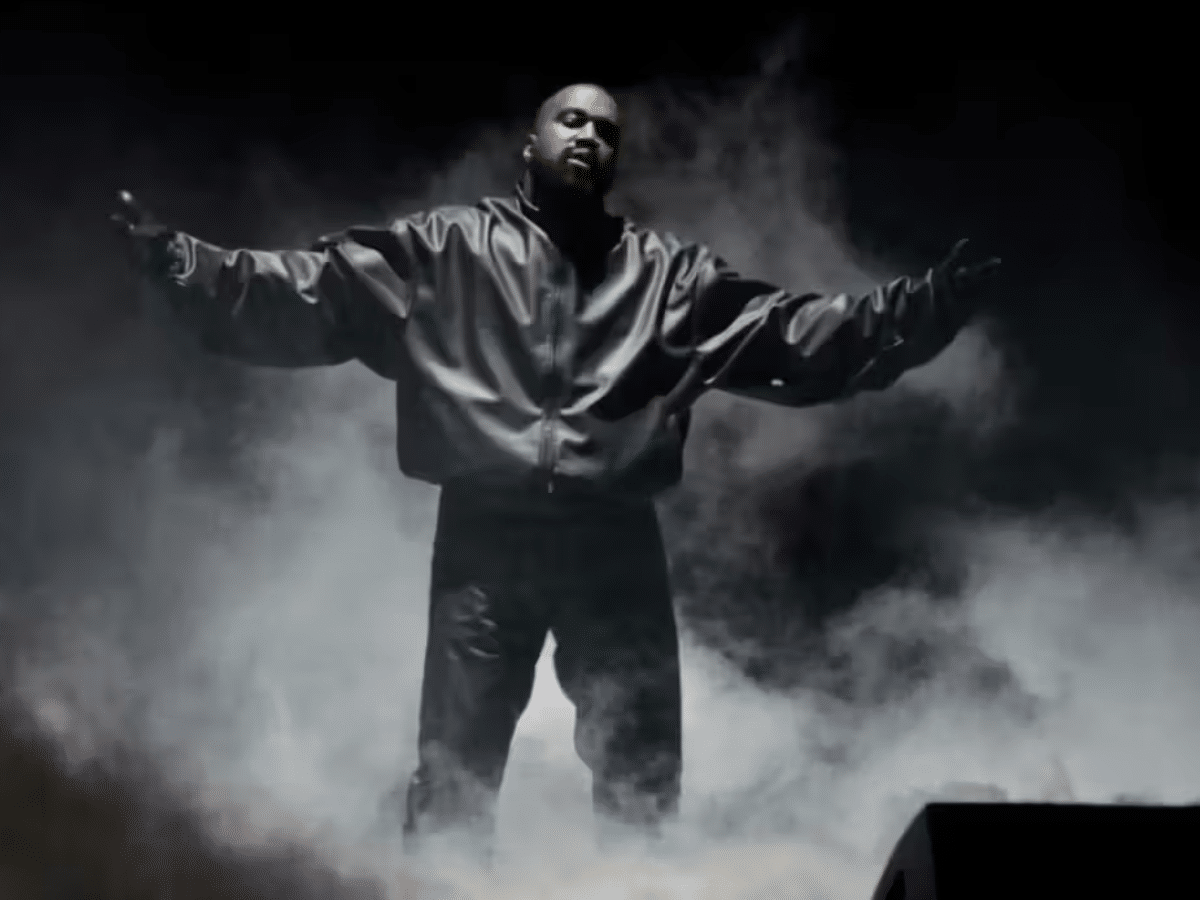
The organiser of the now-cancelled Wireless music festival said that the giant corporate and then-lead sponsor Pepsi had approved Ye, formerly known as Kanye West, as the 2026 festival’s headline act.
Melvin Benn, speaking to BBC Radio 4, said the company later withdrew its sponsorship after Keir Starmer banned Ye from entering the UK in response to demands from Jewish groups.
Kanye was ‘signed off and approved’ by Pepsi
Melvin Benn, the organizer of wireless festival, says Pepsi had initially approved Ye as a headliner before later withdrawing their sponsorship pic.twitter.com/eVyRxU9h2G
— YEEZY MAFIA (@theyeezymafia) April 7, 2026
The groups demanding the ban include Israel front groups like the so-called Campaign Against Antisemitism and the Board of Deputies of British Jews, which has been behind attacks on UK protest rights and freedom of speech.
Ye has an irrefutable record of antisemitic comments and has even sold merchandise with Nazi swastikas. His “apology” in January has been rightly criticised as insincere. However, for the prime minister to arrogate decisions about which musicians can enter the UK or headline a festival is yet another blow to the wider rights to freedom of speech, which has to include the freedom to express views that offend.
Keir Starmer’s Israel-driven race toward an authoritarian police state — which has often targeted anti-genocide Jews — continues. He no doubt considers banning a racist Black musician as an easy win.
Featured image via the Canary
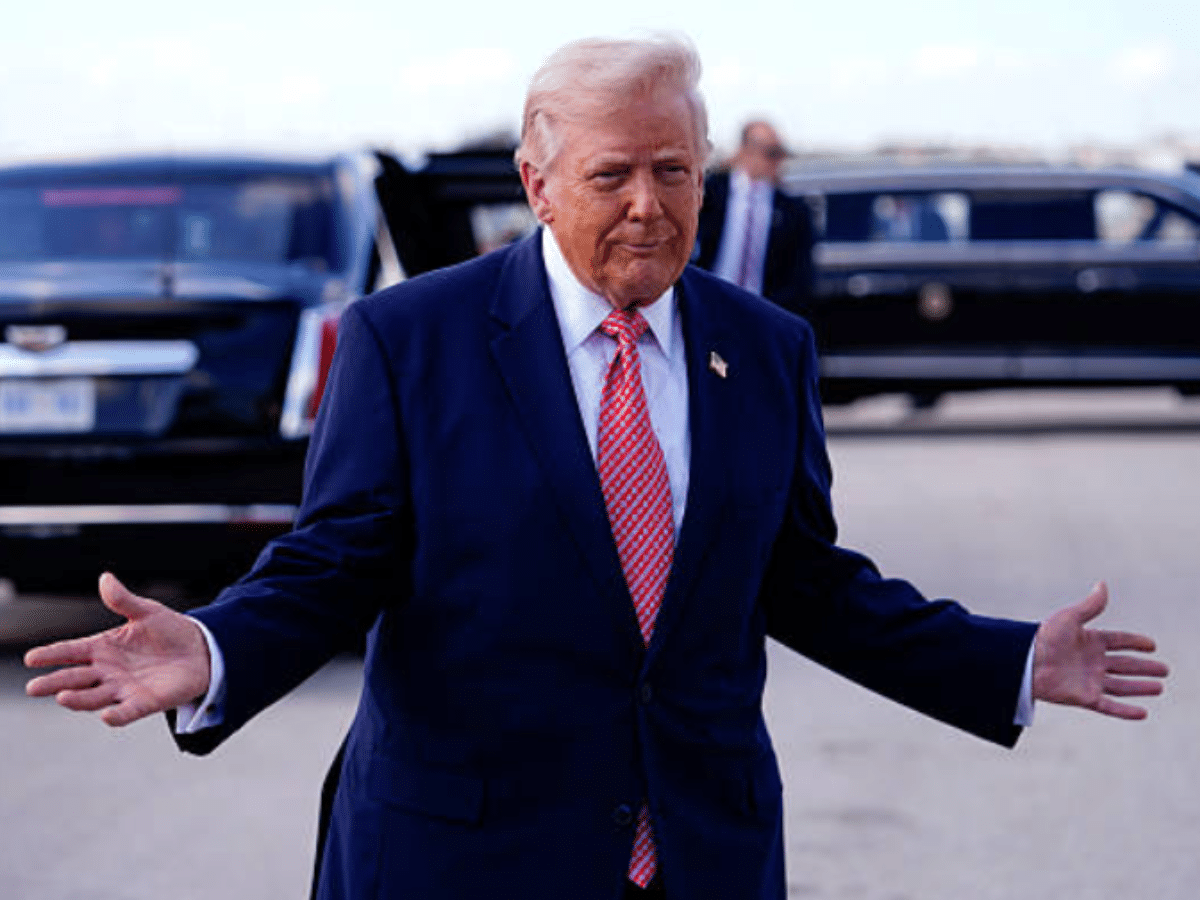
US President Donald Trump has called for the genocide of Iran. In his latest bizarre rant, Trump said he would wipe out the country unless it opened the straits of Hormuz ahead of a deadline he’d set for 8pm on 7 April 2026. Trump said on Truth Social:
A whole civilization will die tonight, never to be brought back again. I don’t want that to happen, but it probably will. However, now that we have Complete and Total Regime Change, where different, smarter, and less radicalized minds prevail, maybe something revolutionarily wonderful can happen, WHO KNOWS?
Adding:
We will find out tonight, one of the most important moments in the long and complex history of the World. 47 years of extortion, corruption, and death, will finally end. God Bless the Great People of Iran!
The stream-of-consciousness post was full of contradictions. Why, if the ‘regime’ has been successfully changed, does an entire civilisation need to “die”?
Why the threat of obliteration and then a nod to the ‘great people of Iran’?
And how does Trump mean to do it? Is it a nuclear threat? Or just his typical bully-boy bluster? Trump is hard to read, as ever. He is a declining man and the head of a declining empire, clearly. But we do know he has developed a taste for war crimes…
Trump’s taste for war crime
Trump’s second term has been full of war criminality. On the one hand he has supported the Israeli genocide in Gaza. And in his current attack on Iran he has said outright he is indifferent to war crimes.
As the Guardian reported:
Donald Trump has said that he was “not at all” concerned about committing possible war crimes as he again threatened to destroy Iran’s bridges and power plants if Tehran does not meet his Tuesday 8pm ET deadline to reopen the strait of Hormuz.
The Guardian’s senior international correspondent said:
In a rambling national address on Wednesday, the US president warned that if Iran did not reach an unspecified deal with him, US forces would “hit each and every one of their electric-generating plants” and “bring [Iran] back to the stone ages – where they belong”.
According to Politico, Trump expanded by arguing:
You know what’s a war crime? Having a nuclear weapon. Allowing a sick country, with demented leadership, [to] have a nuclear weapon — that’s a war crime.
However, the same article suggested the Pentagon were trying to find ways to frame Iranian energy and other infrastructure as dual civilian-military use to escape war crime allegations down the road:
The Pentagon is expanding a list of Iranian energy sites it can target for attacks to include ones that provide fuel and power to both civilians and the military, a likely workaround if the administration is accused of war crimes for striking basic infrastructure.
Trump’s colonial death-world
Trump’s comment reminds us again of the genocidal racism generated to sustain empire. Commenter Nesrine Malik reminded us in relation to Gaza in July 2025:
What does getting used to it [genocide] look like? It looks like accepting that there are certain groups of people who can be killed. That it is, in fact, reasonable and necessary that they should die in order to maintain a political system that is built on the inequality of human life.
This is what the philosopher Achille Mbembe calls “necropolitics” – the exercising of power to dictate how some people live and how others must die.
She goes on:
Necropolitics creates “deathworlds” where there are “new and unique forms of social existence in which vast populations are subjected to living conditions that confer upon them the status of the living dead”.
Adding:
In those deathworlds the killing of others, and the destruction of their habitat through epic military capabilities whose impact is never experienced by the citizens of the countries responsible, confer even more value on the humanity of those in the “civilised” west. They are exempt because they are good, not because they are strong. Palestinians die because they are bad, not because they are weak.
As in Libya, Iraq, Afghanistan, Sudan, Gaza (and countless other places), so it is in Iran, as far as imperialist America is concerned.
Humiliation and decline
Politico also reminded its readers that US defence secretary Pete Hegseth gutted those parts of the Pentagon which were meant to minimise civilian harm after taking office.
US-Israel attacked Iran first on 28 February without provocation. Iran was offering unprecedented concessions in negotiations at the time. The Pentagon has since stated there was no imminent threat from Iran. And the UN’s atomic watchdog, the IAEA, has said there is no evidence Iran was developing a nuclear weapon.
The US has achieved none of its original war aims. Iran predictably closed the Straits of Hormuz, a vital oil channel, once attacked – creating a global energy crisis. Far from being defeated, Iran has said the war will continue until “the enemy’s inevitable and permanent humiliation, disgrace, regret, and surrender”. Trump came to power on an anti-war ‘America First’ ticket. He now faces worldwide humiliation.
One hundred legal experts warned that US actions in Iran could be considered war crimes on 2 April. They also said they were deeply concerned that Trump administration’s rhetoric – as evidenced above – would lead to even greater horrors.
Clearly, the War on Terror has had a corrosive effect on western institutions – like the UN and ICC – built to minimise war crimes and civilian harm after WW2. We can say this while acknowledging that those ‘rules’ were never evenly applied anyway. To the narrow degree they did exist, the meagre protections they once offered are being dismantled before our very eyes.
Featured image via the Canary

I’m a Celebrity South Africa viewers ‘raging’ over major cliffhanger
Workday’s Kazmaier sells $1.2m in shares

Pentagon’s AI hit 1,000 targets


-

 NewsBeat5 days ago
Steven Gerrard disagrees with Gary Neville over ‘shock’ Chelsea and Arsenal claim | Football
-

 Business5 days ago
No Jackpot Winner and $194 Million Prize Rolls Over
-

 Fashion4 days ago
Weekend Open Thread: Spanx – Corporette.com
-

 Crypto World6 days ago
Gold Price Prediction: Worst Month in 17 Years fo Save Haven Rock
-

 Business2 days ago
Three Gulf funds agree to back Paramount’s $81 billion takeover of Warner, WSJ reports
-

 Business4 days ago
Expert Picks for Every Need
-

 Sports3 days ago
India men’s 4x400m and mixed 4x100m relay teams register big progress | Other Sports News
-

 Business6 days ago
Login and Checkout Issues Spark Merchant Frustration
-

 Tech1 hour ago
How Long Can You Drive With Expired Registration? What Florida Law Says
-
Business3 days ago
No Jackpot Winner, Prize to Climb to $231 Million
-
Crypto World7 days ago
Bitcoin stalls below key resistance as technical signals skew bearish
-

 Tech5 days ago
Commonwealth Fusion Systems leans on magnets for near-term revenue
-

 Politics7 days ago
Starmer’s centre has collapsed, and the left was right all along
-

 Crypto World6 days ago
Ripple rolls out enterprise crypto treasury platform for corporates
-

 Fashion1 day ago
Massimo Dutti Offers Inspiration for Your Summer Mood Board
-

 Crypto World6 days ago
Why It’s Partnering, Not Issuing
-
 Tech6 days ago
Drawing Tablet Controls Laser In Real-Time
-

 Business3 days ago
Akebia Therapeutics, Inc. (AKBA) Discusses Pipeline Progress and Strategic Focus on Kidney Disease Treatments at R&D Day – Slideshow
-

 Tech7 days ago
Solo Leveling: Ranking All Sung Jinwoo Shadows by Power
-
Sports6 days ago
Tom Pelissero Drives the Final Nail in the Coffin
You must be logged in to post a comment Login