

Politics
Reeves considers Blair-era PFIs to fund new towns



Rachel Reeves is reportedly considering resorting to yet-more disastrous Blair-era private finance initiatives (PFIs) to fund Labour’s national infrastructure schemes.
The news, published in the Telegraph, comes after the Treasury commissioned the British Infrastructure Taskforce (BIT) to produce a research paper on the potential bonuses of a return to PFI schemes.
The BIT is a grab-bag of private finance interests including Lloyds Banking, HSBC, Blackrock, Santander, Fidelity International and Phoenix Group.
Completely unsurprisingly, the private financiers were huge fans of the idea of UK public services taking huge loans to pay for public services. The BIT heartily recommended the use of public-private partnerships (PPPs) to fund infrastructure development, such as education and defence, which would usually be taxpayer-funded.
Those PPPs are simply private finance initiatives by another name. The rebrand is wise, given that Blair-era PFIs were a well-publicised, unmitigated disaster. The scheme saddled the NHS with an ever-increasing mountain of debt, which trusts are still struggling to repay to this day.
Reeves considers controversial funding methods
In theory, PPPs would see private investors pay the immediate costs of a given public interest project. Then, the return on that new infrastructure would go to paying back the initial loan.
However, in practice, the actual value of the assets generated has often been meagre. Likewise, the interest on the repayments has proven deeply punitive in the past.
A spokesperson for the British Infrastructure Taskforce investors said:
Overall members would support an evolution of the PPP model to be used across wider tax-funded public services such as education, public transport and defence but accept this is outside of the current government policy.
The Treasury insisted that its current policy rules out expanding PPPs in schools and hospitals. However, it’s open to using private investment for building projects.
This distinction, however, is deeply disingenuous, given that the government is already using PPPs to build its neighbourhood health centres. Likewise, Labour also permits the use of the ‘partnerships’ to fund decarbonisation initiatives for public buildings.
Government ‘not bringing back the old PFI model’
However, the BIT now wants the government to expand PPPs to pay the up-front costs of building entire new towns. Labour has voiced its intention to build seven such settlements, mostly on the peripheries of existing cities. The party aims to begin development on three of the settlements by the end of parliament in 2029.
A Treasury spokesperson insisted:
The government is not bringing back the old PFI model. A generation of new towns is an exciting opportunity to create communities at scale, and transform the way that housebuilding is carried out in this country, unlocking economic growth.
We will continue to consider the ways in which private finance can support the delivery of wider infrastructure ambitions including leveraging private finance to help deliver the next generation of new towns.
The investors’ research paper claimed the government could avoid the previous errors of the PFI scheme by focusing on infrastructure with a definitive return on the investment, such as toll roads. (Famously popular building project there, toll roads.)
‘Saddled with £80bn in repayments’
Meanwhile, the Labour MP for Leeds East illustrated exactly how disastrous Blair-era PFIs have turned out to be.
In a letter published on social media, Richard Burgon congratulated newly-minted health secretary, James Murray, on his appointment.
However, he then moved on in short order to urge Murray to:
drop the proposals put forward by the previous health secretary, Wes Streeting, to reintroduce private finance into the NHS to fund new Neighbourhood Health Centres.
He then went on to note:
Under previous PFI deals, NHS trusts received just £13bn in assets while being saddled with £80bn in repayments. In a letter to Wes Streeting last year, Labour MPs highlighted how NHS trusts continued to pay the price for PFI, with 80 trusts then still owing a combined total of £44bn.
The story was also similar across many UK schools. For example, when Transform Stoke Schools Ltd – holder of the country’s largest school PFI contract – went into liquidation last year, half of the 88 institutions under its aegis withheld payments over unfinished building and repair work.
‘A costly mistake’
Burgon added:
The government has rightly acknowledged that PFI was a costly mistake. But truly learning the lessons would mean ruling out such private finance schemes, not dressing them up under a different name.
Those words are all the more true — and the lesson more urgent — given the revelations regarding the chancellor’s turn to PPPs. Beyond that, asking a rogues’ gallery of private capital whether the scheme is a good call is tantamount to asking Shell whether climate change might actually be a good thing.
Private financiers are motivated purely by the returns they hope to gain on their investment: returns which come directly from the public pocket, with interest. Any similar deal, whether it’s labelled PPP, PFI or otherwise, is against the public interest by its very nature.
Likewise, with Tony Blair actively sticking his oar into modern Labour politics as if he has anything worthwhile to contribute, we’d all do well to remember his legacy, both at home and abroad.
Featured image via the Canary

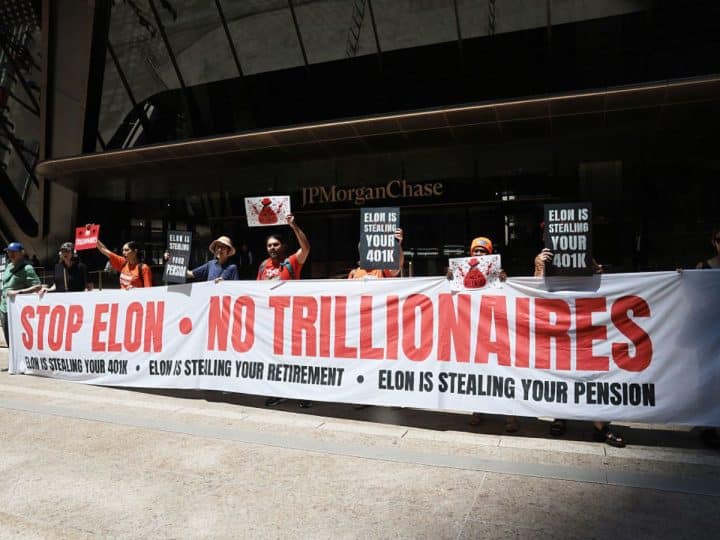
Elon Musk has been all over the headlines today, 12 June, as he tips over the threshold to become the world’s first trillionaire. And inevitably, Musk is a walking, talking argument against the existence of such wealth — which he uses to oppose democracy and amplify the far-right around the world.
The real-life Bond villain (thanks, Financial Times) owes his latest windfall to SpaceX. The company, of which Musk is the majority shareholder, makes its initial public offering at a value of around $1.8tn.
Of course, once any individual’s personal wealth enters the billions — never mind the trillions — it becomes largely hypothetical. We, humanity that is, just aren’t made to comprehend that kind of amount. NBC tried to visualise the total:
A stack of $100 bills worth $1 million stands just over 3 feet tall. Scale that up to $1 billion, and the stack is over half a mile high. At $1 trillion, however, the stack reaches a staggering 679 miles in height, nearly 11 times the distance from Earth’s surface to the edge of outer space.
Elon Musk — Buying up democracy
Personally, we at the Canary still find it difficult to picture that kind of thing. We’re activists and journalists — we work in concepts. Fortunately, there’s a ready example in those terms, too. $1tn will buy you, more or less, one global democracy, or a sizeable chunk of it at the very least.
Back in January, Oxfam released research highlighting that billionaire wealth had reached its highest level in history, breaching $18.3t (trillion) globally. Inevitably, that wealth also brings vast political power. In fact, compared to the average citizen, billionaires are 4,000 times more likely to hold political office.
Elon Musk already tried his hand as a fascist politician — after a buy-in donation of over $250m to the Republican Party in 2024. Under Donald Trump, he became the unelected co-chair of ‘DOGE’ (the Department of Government Efficiency).
Of course, the department did absolutely nothing to alter the USA’s national debt, which actually spiked in 2025. However, Musk’s wild slashes to the USAid budget caused a conservative initial estimate of 750,000 deaths around the world. Likewise, that’s not even mentioning the 300,000 federal employees he left out of a job.
All that in the mere 10 months of DOGE’s tragic existence.
Amplifying the fash on Twitter
However, even outside of direct political office, Musk — seen here sniffing around for a party invite from convicted pedophile Jeffrey Epstein — has still proven himself perfectly capable of buying political influence and stifling democracy.
Actually, scratch that, ‘capable’ is the wrong word — $1tn just makes up for an awful lot of incompetence.
After seemingly accidentally backing himself into a corner and being forced to purchase Twitter for $44bn, Musk gained massive power over (what was once) one of the world’s more popular social media platforms. Over and over again, he’s used that power to amplify far-right voices and talking points.
Since the ill-fated Twitter purchase, far-right accounts have seen a boom on the site. As NBC News found in 2024:
at least 150 paid “Premium” subscriber X accounts and thousands of unpaid accounts have posted or amplified pro-Nazi content on X in recent months, often in apparent violation of X’s rules.
In several cases, the Nazi accounts gained traction because of Musk’s active help. He personally retweeted several prominent ‘race science’ adherents. Mother Jones described him as:
spreading misinformation about racial minorities’ intelligence and physiology to his audience of 176.3 million followers.
Oh, on that note, a quick aside. Musk — pictured here giving a Nazi salute at a far-right political rally — has argued it should be criminal to describe “non-violent” people as Nazis or fascists. Oh, and the same goes for telling people to hate America.
So much for Musk’s famed ‘free speech absolutism‘ (except when he’s defending his AI bot generating child sexual abuse imagery).
Attacks on UK democracy
One of Musk’s favoured pet fascists is Rupert Lowe, founder of the extreme-right Restore UK. Since launching Restore back in February, ten of Lowe’s X posts have received over 10-million views. This, in turn, has caused massive issues for Reform UK, as it faces pressure from the even-further-right.
Another key beneficiary of Musk’s algorithmic patronage is Tommy Robinson, one of the organisers behind the white-supremacist ‘Unite the Kingdom’ (UtK) rally. The white-supremacist agitator/all-round scumbag has openly admitted that Musk previously covered his legal costs.
Likewise, Musk addressed the 2025 UtK rally via video link. He called for “a change of government in Britain” along with a:
dissolution of Parliament and a new vote held.
The Financial Times counted more than 100 of Musk’s social media posts attacking British multiculturalism. More recently, he exploited the tragic murder of Henry Nowak to foment the riots in response. Likewise, he also amplified Robinson’s dogwhistle calls to riot in Belfast earlier this week.
In response, Green Party leader Zack Polanski stated that:
This man is a threat to our democracy. He backs violence and extremism.
Blaming a group of people for the awful actions of an individual leads us to a very dark place.
Musk, Lowe, Farage, Robinson – these men don’t give a shit about this country, they want to rip us apart.
In our deeply broken system, money is power. A billion, let alone a trillion, gives an individual the power to buy things that should never have been for sale. Musk is a living demonstration of the fact that no reasonable society should permit the existence of such obscene wealth.
Featured image via Spencer Platt/Getty Images
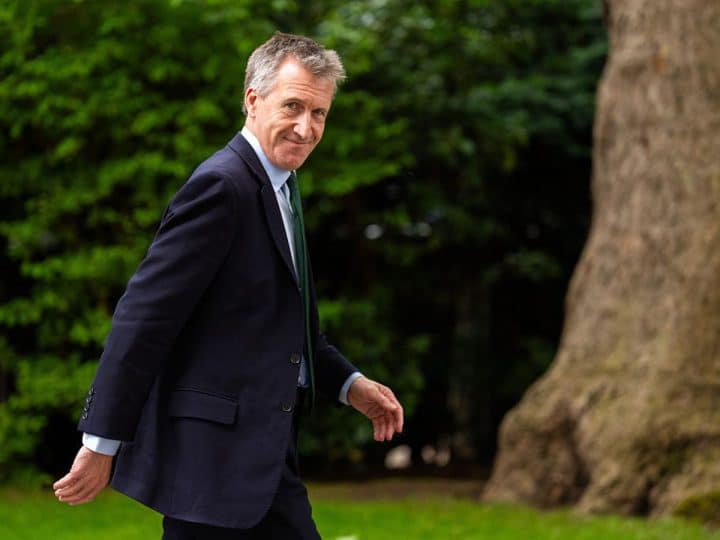
New defence secretary Dan Jarvis has previously received around half a million pounds in donations from corporate lobbyists. So, as mainstream media outlets say the Labour right-winger “once looked like the future” and “is a fine choice“, let’s look into the dark money that’s been fuelling his political career.
Jarvis and his local Labour Party in Barnsley have done such an awful job at countering Tory damage to the town in recent decades that it turned to Reform in the 2026 local elections. And when you look at where Jarvis’s funds come from, you can understand why the people of Barnsley might not exactly be his top political priority.
1 — Labour Together millionaires
One major source of donations to Jarvis has been key Labour Together donor Martin Taylor. Taylor runs a hedge fund that invests in private healthcare.
Fellow Labour Together donor and proud pro-Israel lobbyist Trevor Chinn also gave thousands of pounds to Jarvis. It seems likely that such support was at least in part because Jarvis was a parliamentary supporter of Labour Friends of Israel who even received money from the lobby group.
Labour Together was a prominent vehicle for undermining Jeremy Corbyn’s leadership of the Labour Party and forcing vacuous corporate lackey Keir Starmer onto the country.
Other beneficiaries of money from Labour Together or its donors have included high-profile cronies such as Yvette Cooper, Wes Streeting, David Lammy, Shabana Mahmood, and Rachel Reeves.
2 — The “multimillionaire recruitment tycoon” with interests in private healthcare
EveryDoctor explains that “multimillionaire recruitment tycoon Peter Hearn“:
made his fortune through recruitment firms PSD and Odgers Berndtson
Odgers Group Limited, where he resigned as a director in 2025, has offered:
headhunting services to the NHS as well as the private healthcare sector. The firm has faced criticism for some of the senior executives it has helped recruit to the NHS. Former TalkTalk executive Dido Harding was headhunted by Odgers Berndtson to lead the NHS Test and Trace programme during the pandemic, which was later deemed to be ineffective by MPs.
A fellow director at Odgers was Tory peer Virginia Bottomley.
While Hearn clearly has a massive soft spot for Labour right-wingers Wes Streeting and Yvette Cooper, Dan Jarvis has been the other key recipient of Hearn’s money. They’ve all received money from Hearn’s OPD Group and MPM Connect Ltd. Labour campaign group Momentum once called MPM “dark money“, and Sky reported that:
The company has no staff or website and is registered at an office in Hertfordshire where the secretary says she has never heard of them.
EveryDoctor says Hearn’s OPD Group also “provides services to the NHS“.
With Dan Jarvis, the lobby’s grip on government continues
In 2016, Blairite strategist John McTernan said Jarvis:
so clearly wants to be Leader of the Labour Party.
Many on the right of the party mentioned his name “as a potential challenger to Jeremy Corbyn” early into Corbyn’s time as leader, with some of them even seeing him as “the party’s greatest hope“. Jarvis also reportedly had links to Blue Labour, whose whole argument is basically that Labour should be ‘more conservative‘.
Jarvis has largely remained quiet in the last ten years, just accumulating corporate money and doing little of note for people in his constituency. But his move into the role of defence secretary may be a sign that his star on the Labour right is rising yet again.
Considering that lobbyists’ empty vessel Keir Starmer has pushed Labour far to the right as leader, it’s unsurprising that Dan Jarvis fits neatly into the project.
The question now is, exactly how much will Jarvis’s deep links to the corporate lobby influence Ministry of Defence policy at a time of already increasing military spending?
Featured image via Carl Court/Getty Images
By Ed Sykes
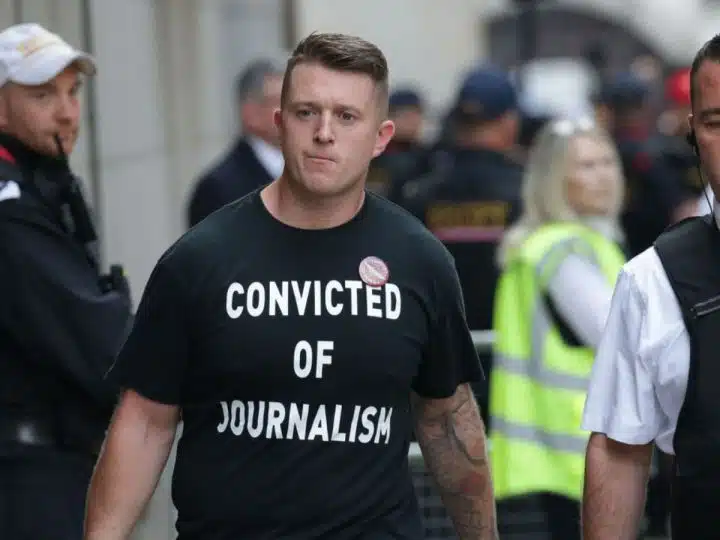
The Canary upsets all the right people. Particularly, it seems, in print. The far-right hate peddler known as ‘Tommy Robinson’ has got a bit upset at being called out on a Canary front page for his part in inciting white-supremacist violence in Belfast. And in his annoyance, he gave the Canary some accidental free advertising:

He doesn’t have a leg to stand on about the ‘smear’, legally speaking. Truth is an absolute defence and libel requires damage to reputation, while his — and no doubt his income — depends on his supporters seeing him inciting. And even in the UK’s corrupt justice system, there’s no way to say evil like this isn’t inciting:
The whole of the United Kingdom is hitting the streets tonight at 7pm following yet another invader attack on our people.
It’s time
pic.twitter.com/tscckc9ceK
— Tommy Robinson
And the Canary is not the only outlet to point out that he was not just inciting, but coordinating, the Belfast white hate riots. Like the i:
And even far-right ‘msm’ rags have taken him down before, just as brutally:
They are far right shithouses. pic.twitter.com/mmrQMALuCy
— Andrew (@AndrewEgan89975) June 13, 2026
Of course, Tommeh’s mates might not be too impressed that he was (again) sucking up to foreign billionaires while he was doing it. But then again, they might not care. Only certain kinds of foreigners are despised, perhaps.
Tommy Robinson — “Cry harder”
And his post didn’t exactly generate much sympathy. Lots of responses encouraged him to get even more upset:
Cry harder!
You only have yourself to blame!

— Duncan
Still Socialist tired of LIES & Anger (@BRUMSTOKIE) June 12, 2026
Others focused on the truth of the headline and the article:
You mean… the truth??

— Ren (@RenLaz17) June 12, 2026

And quite a few added the ‘patriot’s liking for foreign climes (and cash):
You do have ten names though don’t you, protecting British values but changes his name and moves to Spain.
The guy that has been an illegal immigrant, complains about illegal immigration. pic.twitter.com/JZIoJFp3LU
— My Two Pence (@MyTwoPenceUK) June 12, 2026

Oh fuck I HOPE they did. It’s about time your grifting coked up shit stirring little arse got a proper headline.
That’s MARVELLOUS.
Well done @TheCanaryUK
pic.twitter.com/XdD8W887js
— Damian (@D_MQuail) June 12, 2026
Lots pointed out the cash, actually:
Where’s the lie exactly you malformed little racist runt? pic.twitter.com/deFGhG0j7s
— CaptainBird (@CaptainBird5) June 12, 2026
And the foreigners operating him in return for it:
— George (@seeyouinpub) June 12, 2026
Some pointed out the, ahem, inconsistency of Robinson’s ‘political’ positions:
The whole of the United Kingdom is hitting the streets tonight at 7pm following yet another invader attack on our people.
It’s time
— Tommy Robinson
While others just contented themselves with taking the mickey out of him for not realising the obvious:
It’s literally there in front of you, you bleeding imbecile

— RandomHero (@ImMeHooYou) June 12, 2026
Of the many hundreds of responses, only a few were from people willing to reinforce the idea that he doesn’t incite, or is right to. There are far too many good replies to include them in an article, so if you have a spare few minutes, reading the others will be a rewarding way to spend them.
And of course, spare a few to pop out and buy a Canary print edition, Monday to Friday. You can find your nearest stockist here. It really is upsetting all the right (wrong) people.
Featured image via Luke Dray/Getty Images
By Skwawkbox
At around half past 10 on Monday night, 8 June, on a residential street in north Belfast, a man in his thirties allegedly pinned another man to the ground and began stabbing him. He was stopped by three members of the public, one of them carrying a hurling stick, who dragged him clear. The victim, a man in his forties, lost his left eye. His right eye sustained serious damage. He has deep lacerations to his face and back. He remains in serious condition in hospital. A kitchen knife was recovered.
The man now charged on suspicion of attempted murder is Hadi Alodid, 30 years old, of Duncairn Avenue, Belfast. He is also charged with possession of a blade in a public place and with threatening to kill a female NHS radiographer while he was being treated for a hand injury following his arrest. The court heard that while receiving that treatment, he told police: ‘I killed someone, I don’t know if they’re dead.’ Judge Steven Keown refused bail on Wednesday, finding that ‘the risks were far too great and unmanageable with any bail conditions’.
Alodid’s route to Belfast is on the public record. He flew from Sudan to Paris and from there to Dublin. On 10 February 2023, he boarded a bus from Dublin to Belfast, applied for asylum, and was granted leave to remain until 2028. He had no (known) criminal record and appeared on no police database. When Jon Boutcher, Police Service of Northern Ireland (PSNI) chief constable, contacted his counterpart in counter-terrorism, nothing came back. The attack is not, at present, being treated as terrorism. The motive is yet to be established. The investigation continues.
So too does the journey from Paris to Dublin to Belfast, for anyone minded to take it. It is worth understanding why this journey was taken, because understanding is exactly what the governing class is hoping the public will not acquire.
When the UK left the European Union, it lost participation in the Dublin III Regulation, the mechanism that had previously allowed it to return asylum seekers to whichever EU member state through which they had first passed. After Brexit, the UK introduced replacement inadmissibility rules under the Nationality and Borders Act 2022, which allow the state to refuse a claimant’s asylum request if he or she has a connection to a safe third country or passed through one before arriving in the UK. But these rules apply to Great Britain and not to Northern Ireland, where a Belfast High Court ruling in 2024 barred key provisions of the UK’s post-Brexit immigration laws. The Common Travel Area, the arrangement between the UK and the Republic of Ireland that predates both states and was preserved through Brexit as a structural requirement of the Good Friday Agreement, means that a person crossing from the Republic into Northern Ireland faces no passport check, no border control and no immigration officer.
This is not an oversight. It is the consciously constructed legal architecture, known to every government in the chain. And none has dared address the problems it poses, on the grounds that doing so might complicate the arrangements around the peace process.
Democratic Unionist Party MP Carla Lockhart asked in the Commons on Tuesday what action the UK government is taking to prevent abuse of the immigration system via the land border with the Republic. Hilary Benn, the secretary of state for Northern Ireland, confirmed what was already known: that any foreign national who abuses the hospitality of this country to commit crimes should be in no doubt of the government’s determination to deport them, and that net migration is down 82 per cent from its peak under the previous government. That, of course, is an answer to a different question.
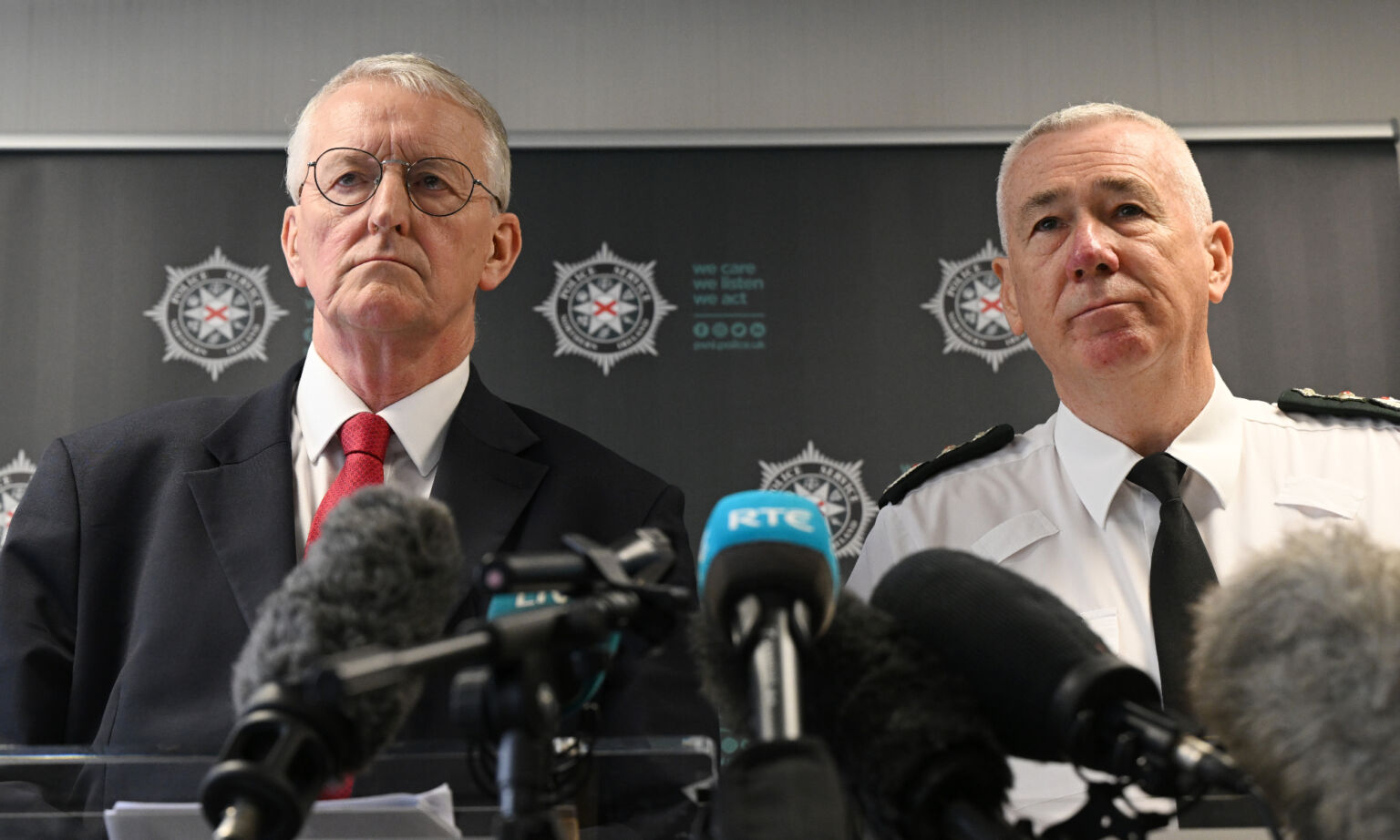
Northern Ireland secretary Hilary Benn, and PSNI chief constable Jon Boutcher attend a press conference in Belfast, 10 June 2026.
Benn subsequently offered, in good faith and apparently without embarrassment, a comment about the prospect of using someone’s history and background to assess future risk:
‘Questioning the suspect, seeking to find out more about him and the circumstances, it doesn’t necessarily follow that someone’s previous history is going to enable you to know if they are going to do something in the future. And therefore it is very hard to operate a system in those circumstances which attempts to anticipate what someone might do.’
This prompts one to reach for an argument of Thomas Sowell. There are no migrants in the abstract, Sowell observed. There are only specific people from specific places with specific histories, specific beliefs and specific characteristics. The generalisation ‘migrants’ is not a policy instrument. It is a rhetorical convenience for avoiding the actual policies that would have to be designed if you were dealing with real people. Benn is not refusing to generalise – he is refusing to particularise. He is arguing that because you cannot know in advance what a specific individual will do, the only defensible conclusion is that prior history, background, ideology and behaviour offer no useful information whatsoever. The system, he implies, simply cannot anticipate anything of note. We are, apparently, operating national border control much like a roulette wheel.
This is not merely wrong. It is the precise negation of what every risk assessment, every parole-board hearing, every terrorism analyst, every child-protection social worker and every insurance actuary does for a living. Risk assessment is the applied science of inferring future probability from prior evidence. The counter-extremism Prevent programme, which the government funds to the tune of tens of millions of pounds annually, is predicated entirely on the premise that prior indicators – ideology, association, behaviour, radicalisation pathway – are meaningful predictors of future violence. Following Benn’s logic, Prevent should be abolished immediately, because its entire operational rationale is the thing he just said is impossible.
The government funds a counter-extremism programme built on the premise that prior behaviour predicts future violence. And yet it sends its secretary of state for Northern Ireland to argue on television that prior behaviour cannot meaningfully predict future violence as a reason for declining to scrutinise how a specific individual came to be in Belfast before allegedly attempting to decapitate someone. One of these positions is true. The Prevent position is closer to the truth, which is why Benn’s broadcast remarks are not a serious argument. They’re a holding measure, a way of filling the airtime between the event and the moment when the news cycle obliges by moving on.
Now consider what happened simultaneously at Wednesday’s press conference. PSNI chief Boutcher, appealing for calm and promising law enforcement against the rioters, said that those involved in the disorder would have their images plastered everywhere. It is a legitimate deterrence instrument, and images of rioters do result in identification and prosecution. The observation that the institution declining to characterise the perpetrator of the original attack is energetically committed to naming and imaging the people who responded badly to it will not, however, have escaped the notice of the people being told to go home and be calm. The asymmetry is visible. And visible things tend to be noticed.
This is not an argument for outing defendants before trial. Sub judice rules are sensible and the presumption of innocence is not negotiable. It is an observation about where the state deploys its energy and its language. The prosecutorial machinery has historically moved with speed and purpose against such rioters, just as it did in 2024 after the Southport attack unrest. Yet it tends to be much more cautious when it comes to the events that have prompted the riots. That’s when the authorities throw out the usual lines: the motive is yet to be established, the investigation continues, please be mindful of what you share online. This pattern, swift action against one form of disorder and studied caution around the other.
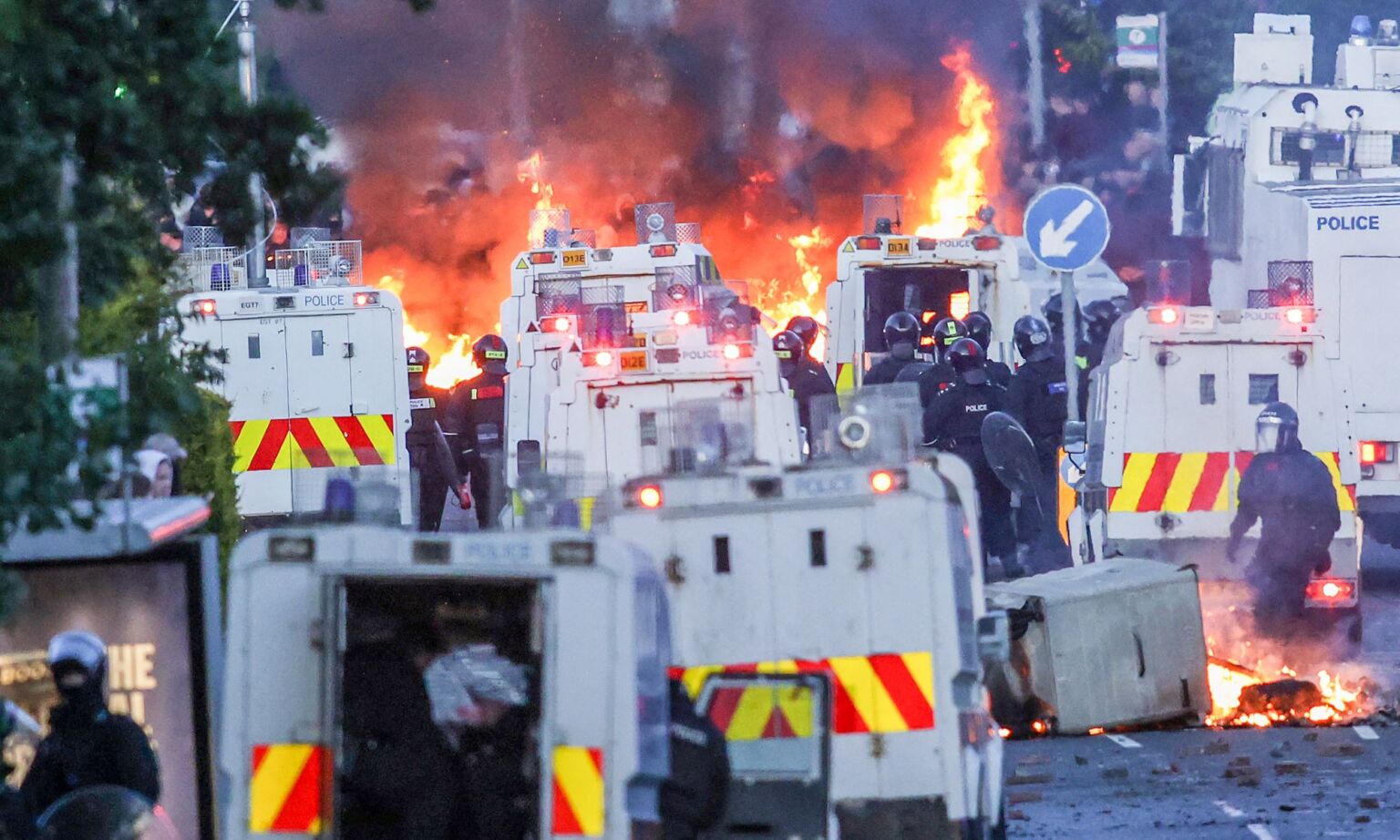
Protesters in stand-off with police in Glengormley, north of Belfast, Northern Ireland, 10 June 2026.
The Prevent dimension deserves attention. Prevent is the British government’s programme for identifying and supporting individuals considered vulnerable to radicalisation. William Shawcross’s 2023 Independent Review of Prevent found multiple issues: that it had drifted from adequately confronting Islamist extremism; that it was characterised by institutional timidity on the subject; and that Islamist terrorism remained the primary domestic terrorist threat. Indeed, Islamist terrorism accounted for approximately two-thirds of attacks since 2018, three-quarters of MI5’s caseload and 64 per cent of those in custody for terrorism-connected offences. The review recommended reorientation toward the primary threat.
The government accepted several of these recommendations. The acceptance was followed, as usual, by a considerable number of further discussions about how the acceptance might be implemented without causing too much disruption to existing arrangements.
Alodid was not, the PSNI chief Boutcher confirmed, known to Prevent. He was not known to any national-security database. He was, in other words, exactly the type of individual that Prevent’s acknowledged gap in non-networked, non-referred coverage is designed to miss. This was a man who had arrived from Sudan, a nation in the grip of an active civil war in which Islamist militias – designated as terrorist organisations by the US State Department as recently as March of this year – were being absorbed into the Sudanese Armed Forces’ fighting ranks. It is entirely reasonable to ask whether he should have been given leave to remain and why he was not properly vetted. Benn’s answer, that previous history doesn’t tell you what someone will do, is rejected daily by his own government’s counter-terrorism strategy.
Then there is the question of what the word ‘refugee’ is being required to carry in this discussion, and it is carrying considerably more than it can bear.
Refugee status is a legal designation, not a moral quality. It is a determination made by a caseworker, on the basis of evidence available at the time of claim, that a person faces a well-founded fear of persecution in their country of origin. It says nothing about ideology. It says nothing about mental health. It says nothing about criminal propensity or the individual’s relationship to political violence. These are orthogonal categories. A person can be a genuine refugee, genuinely fleeing genuine persecution and also pose a serious risk to British citizens. When determining whether someone is a refugee, caseworkers assess the persecution claim. The security and public-protection assessment is a separate exercise, conducted separately, resourced separately, and in the case of an individual arriving via an unmonitored land border under the Common Travel Area, conducted with whatever information the Home Office happens to have – which, in this case, was apparently nothing.
The governing class and its media interlocutors have fused refugee status and individual safety assessment into a single category. To define someone as a refugee is to declare they pose no threat. This is not an honest synthesis. It is a category error with a political function. The function is to ensure that the concrete question – whether this individual was adequately assessed before being granted leave to remain and whether the route through which he arrived constitutes a structural gap in public protection – cannot be posed without triggering the response that you are calling for the abolition of the asylum system. Nobody serious is calling for that. The question is whether the asylum system, as it currently exists, is doing the full job that protection of the public requires. Benn’s claim, that prior history doesn’t tell you what someone will do, is not an answer to that question. It is a device for making the question sound unanswerable so that it need not be answered.
As Sowell taught us, there are no migrants in the abstract. There is no refugee in the abstract. The abstract refugee is a politically useful figure. He is stateless and suffering, the exemplar of everything the liberal conscience requires one to defend. The abstract refugee cannot be scrutinised without implicating the liberal conscience. The concrete individual here, suspect Hadi Alodid, is a specific man, from a specific country, with a specific recent history. He arrived via a specific route that specific legal decisions have left unmonitored. He was granted leave to remain in September 2023 on the basis of a specific assessment by a specific caseworker. His particular case desperately needs to be scrutinised. Scrutiny is not an attack on the abstract refugee. It is how you protect the next person. The governing class prefers the abstract refugee, because the abstract refugee requires only sentiment. The concrete individual requires accountability.
‘Progressive’ journalist Mehdi Hasan’s appearance on BBC’s Newsnight on Tuesday evening deserves credit for its internal consistency. He argued that this is a story of far-right actors exploiting a hideous crime, amplified by Elon Musk and Tommy Robinson. The danger, he continued, is to minority communities, and that anyone drawing wider conclusions from the attack is doing the demagogues’ work.
This is a partial argument presented as a total one. The partial truth is real. On Tuesday evening, homes burned, families were forced to flee and a Turkish barber’s shop in Ballyclare was attacked. These are genuine harms visited on innocent people. All of that is true. But none of it is an argument about whether the system that produced the conditions for the original attack is functioning adequately.
The existence of disreputable or thuggish people who exploit a failure does not determine whether the failure is real. If it did, institutional failure could never be examined, because there is always, in any charged situation, someone willing to exploit the examination for bad purposes. The governing class has understood this and used it consistently in response to incidents similar to the one in Belfast this week. Produce a Musk. Point at the mob. Claim that anyone not pointing at the mob is in league with it. The examination of the actual problem at hand is indefinitely deferred, which is the point.
The history that makes Hasan’s position untenable is not a history he disputes. It is a history he declines to address. The grooming-gangs scandal in Rotherham illustrates the point. The 2015 Jay Report documented over 1,400 victims of organised sexual exploitation in Rotherham between 1997 and 2013. The Casey Review of 2015 found Rotherham council ‘in denial’. Casey’s Rapid Audit of June 2025 found that institutions had, across two decades, avoided discussing perpetrator ethnicity ‘for fear of appearing racist, raising community tensions or causing community cohesion problems’. It found that one local authority had replaced a plan targeting specific perpetrators with a ‘broad commitment’ to tackling exploitation ‘in its varied manifestations across the district’s communities’, and that police were told by councils to avoid publicising convictions ‘due to fear of raising tensions’.
This was a deliberate institutional choice, made in the face of known evidence, to prioritise what officials called ‘community cohesion’ over the protection of children. ‘Community cohesion’ here means the management of political embarrassment at the expense of the people being harmed. It is a bureaucratic alibi, not a social good.
The language around Belfast – that the motive is yet to be established, that prior history doesn’t necessarily tell you what someone will do, that the investigation must be allowed to proceed – is not identical to the Rotherham mechanism. But it runs on the same fuel and it serves the same interest. Hasan is running the same machine under a different brand, and the machine is running fine.
The same PSNI chief constable who will plaster rioters’ images everywhere is the head of a service whose intelligence operations, as disclosed in recent Investigatory Powers Tribunal proceedings, included routine six-monthly trawls of journalists’ phone data. The same secretary of state who told the Commons that those abusing the hospitality of this country will be deported is the minister responsible for an immigration architecture with a functioning open door in it. The same prime minister who found the attack sickening took the knee in 2020 and is now managing a premiership whose departure timetable is a matter of active parliamentary negotiation. The people moving quickly are moving quickly against the people who reacted badly to the failure. The people responsible for the failure are explaining, at measured length, why the failure was in the nature of things. Why previous history cannot tell you what someone will do, and why it is very hard to operate a system in these circumstances.
Many of us, for different reasons, find this less than fully satisfying. The religion of calm has its sacraments and its clergy. Its central liturgy is the substitution of the emotional register for the analytical one. Their emotivist lexicon consists of sickening, harrowing, deeply shocking, deeply concerning. Its founding doctrine is that concern about the immigration system is contamination, that the person asking the structural question stands in proximity to the mob and must prove they are not by not asking it. Its clerisy are the Benns and the Hasans and the Boutchers and the Starmers. All mostly reasonable people, managing unreasonable circumstances they helped to construct. All gesturing toward the next calm that will precede the next event on the next street.
Three brave people with a hurling stick ran toward such an event this week. Yet the governing class continues to look the other way.
Owen Shapell is a PhD researcher in social sciences.
Politics
The House | Reform Councillor George Finch: Nobody Deserves To Be In No 10 More Than Farage



9 min read
He’s in charge of an institution with £1.5bn assets and of services vital to the lives of hundreds of thousands of people – and he’s not yet 20 years old. Nadine Batchelor-Hunt meets Reform UK council leader George Finch
If ever there was a child of his time, it is George Finch.
“My mum was a hairdresser, my dad worked as a carpenter for the council at the time,” says Finch, Reform UK’s leader of both Warwickshire county council and Nuneaton and Bedworth borough council. “Finances were fine, but then they had me in 2006, and then obviously the financial crash happened… It destroyed what we did, and the income wasn’t sustaining a family.”
Growing up in the shadow of the crash and austerity shaped Finch – and arguably makes him perfectly attuned to the politics it has produced.
“Every system was just failing,” he says. “Everything was cut, nothing was working… and this was a kind of carbon-copy of families across Bedworth at the time… The system was completely broken. Families like mine were left and thrown to the curb.”
There were additional strains: both of Finch’s sisters have significant health issues that continue to confront them with the harsh reality of the state of some NHS services. Speaking of one sister with a neurological disorder, he says: “Even when I’ve been in this job, I’ve spent hours and hours and hours in A&E waiting by her side on a ward where there’s kids self-harming, and it’s not right.”
If the council leader is daunted by the weight of the responsibility of his office, he does not show it. Indeed, in his telling, this is light work when compared to his previous gig as a carpenter and plasterer.
“I was working when I was 16, 17 – not on building sites but in doing up homes, carpentry, plastering, all that type of stuff,” says Finch. “I’ve done that type of stuff before, and I know what it’s like to sit in a damp house when it’s dripping, while just eating a sandwich. You don’t get a nice little tea break like you do in offices.”
He [Lee Anderson] was really my type of people… just say how it is.
Despite his tender age, Reform isn’t even Finch’s first party. “I was a young conservative who joined the Conservative Party at 16,” says Finch. “It was more the conservative values, not necessarily the party.” He speaks of his disillusionment with the party and is especially critical of Boris Johnson – describing the former prime minister as a “wet liberal in proper Conservative clothing”.
The catalyst for joining Reform UK, he says, was an encounter with Reform MP Lee Anderson at school. “I was in the politics class, and me and my mate, we love Lee Anderson,” says Finch. “He was really my type of people… just say how it is. You know, like, ‘Oh, have a lovely day, lovely ladies’… Say something like that in Warwick? ‘How dare you call me a lovely lady?!’”
Finch says he asked Anderson a question about education, namely, ‘How will Reform UK resist the wave of wokeism that’s washing across our education establishments?’. “I practiced that, because it’s so important to me,” says Finch. He recalls Anderson “spoke to so many” in the room and behaved like such “a normal chap” that when he approached Finch and asked whether he’d join Reform, he did. “He said: ‘George, you going to join?’ I went: ‘Go on, then – I’ll join tomorrow.’ So, I did. And then helped the general election candidate – we got third place, 9,000-odd votes, great from a standing start. We’re going to win at the next election.”
Asked why he was attracted to politics, he replies: “It goes to my old background: my family, my town.” Finch is sitting next to a stuffed bear clawing a tree, the symbol of the county he presides over. The bear’s name is Wendy, according to The Times, loaned to Finch’s office from a local museum – something Finch reportedly made an early priority upon taking office.
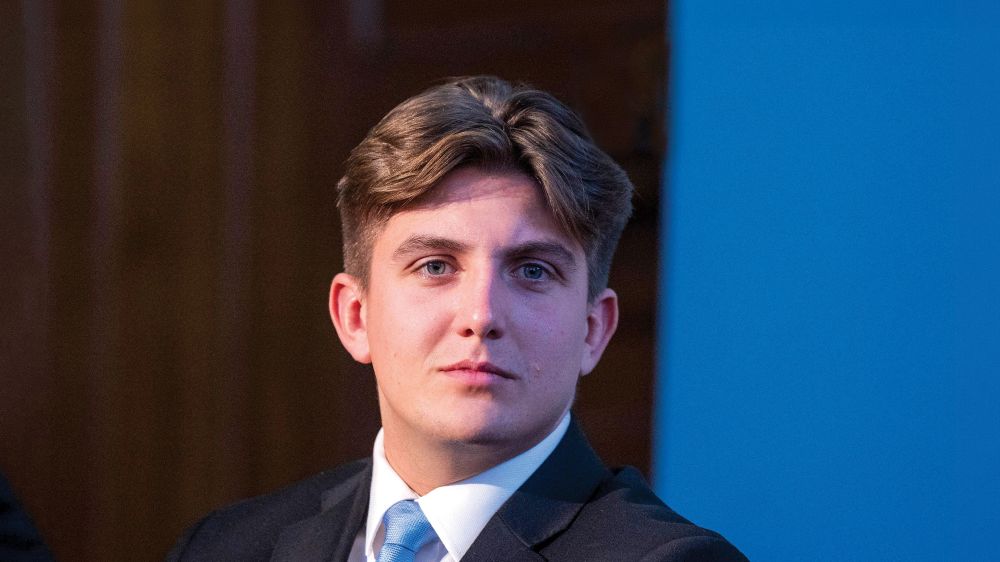
Bedworth, the town he is from, is in the borough of Nuneaton and Bedworth in North Warwickshire. The last coal mine in the town closed in 1982, ending a long history of coal mining dating back centuries; in many ways, it is typical of the area Reform must win to make it to No 10. “It’s been totally forgotten about, even though it is a town that’s got a huge pride in what it does,” says Finch.
In the several years since then, Finch has enjoyed a meteoric rise. He says his priorities locally have been to “change the entire foundation of which the council is built on” – describing running two councils as “phenomenal”. He says highways, crime awareness and prevention and finances are all areas where he’s seeking improvements, as well as home school transport, which he says costs the council £50m a year. The way he speaks about local issues makes it clear he sees Reform’s record in local government as an opportunity to gain the electorate’s confidence, saying it’s “the only chance” the party has to prove itself to the people. “We have to work as hard as we can to get the best value for money for taxpayers, voters,” says Finch. “If we get local champions, we’re winners.”
But it has not been plain sailing; Finch narrowly won a no-confidence motion earlier this year by one vote – something he dismisses as a “farce” that “backfired”. The Green Party tabled the motion concerning Finch’s remarks relating to the rape of a 12-year-old girl in Warwickshire, and a dispute with county council chief executive Monica Fogarty over Pride flags. On the former, Finch had risked contempt of court after sharing details about the suspects and accusing the police of attempting to cover up their immigration status – claims which Warwickshire police rejected.
I haven’t got a problem with young kids and women coming over on boats – if they have got a genuine refugee status and they need genuine help
Finch defends himself, telling The House he “had to fight tooth and nail for transparency”. “They’ll refute that,” says Finch, saying that they argued for the need to preserve community cohesion. He recalls being told, “’You don’t want riots like in Epping’.” He replied: “‘We won’t have riots in Epping if we tell them the truth’… And I put a statement out: no riot.”
There is growing speculation that Rupert Lowe’s breakaway party, Restore Britain, could put pressure on Reform at the next general election, given its standing in the polls for the Makerfield by-election. The race is expected to be tight between Labour’s Manchester mayor Andy Burnham and Reform UK’s Robert Kenyon, meaning any votes lost to Restore may cost Reform the election – something to which Finch is very much alive.
Finch says he is waiting to see the results in Makerfield before passing judgement but likens Restore to the British National Party (BNP) and questions whether its social media presence is “matching up” to votes. “What are their policies?” asks Finch. “What are their people? Look at other political parties in the past, when they stand a load of candidates – parties like BNP and Ukip… you can see their candidates and what they stand for.”
Finch tells The House he believes a Restore government would deport people based on their colour, and believes a lot of Restore voters do not realise this – nor do the two previously Reform Warwickshire councillors who have defected to the party. “[Gurkhas would] be gone… no excuse, no reason; gone, just because of their colour,” claims Finch.
While it’s obvious Finch sees Reform as different to Restore, he describes immigration as “terrible, terrible, terrible” and “a complete failure”, defending Reform’s Zia Yusuf’s remarks on deporting legal immigrants living in social housing.
“Zia is absolutely right, and we’re looking at it on the borough council,” says Finch. “Social housing, council housing, should be there for British nationals – British citizens.”
Finch also says veterans and care leavers should be at the top of housing lists, “not asylum seekers, not illegal immigrants” – though he does express some sympathy for women and children arriving on small boats. “I haven’t got a problem with young kids and women coming over on boats – if they have got a genuine refugee status and they need genuine help,” says Finch. “I haven’t got a problem with that, but I’m not seeing that materialise on the boats.”
The council leader is also dismissive of allegations that Reform’s agenda is racist, saying people “need to understand our policies a bit more”. “Those people that are just ignorant, they go: ‘Oh, you’re all racist’,” says Finch. “Well, if you sit down with me for an hour, I can tell you that I’m not racist.”
Sitting beneath a framed Reform football shirt reading ‘FARAGE’, Finch insists the party is not a “one-man band”, but one of policies, local champions, councillors, council leaders and MPs, as well as its high-profile leader. “I know what it’s like in a head office, I’ve seen it – I’ve seen the way it works,” he says. He adds that no politician alive deserves the keys to No 10 more than Nigel Farage. “He’s changed his country for the better – and he’s not even been elected to British Parliament until recently,” says the 19-year-old. “So, he deserves it.”
Finch also praises the recent policy announcement on tax-free overtime by the party. “The no tax on overtime – great policy… In the town centre, they love that policy,” says Finch. “I think it’s great. We have our own policies, we are our own party, we’ve got fresh-thinking people.”
As the interview winds down, we circle back to whether Finch has ambitions beyond leafy Warwickshire, a question side-stepped earlier on.
“To become a Member of Parliament for North Warwickshire and Bedworth, or the East, or wherever: it’d be a great honour to serve locally, in my home town – but I’m not focused on that at the moment,” he says. “When a general election comes, we’ll see, but I am 100 per cent committed to these two councils. That’s a new line – these two councils – because that’s why people get elected.”


INGLEWOOD, California — FIFA paid tribute to California’s Native American tribes as part of the pregame festivities ahead of Friday’s match at SoFi Stadium, the tournament’s first in the United States.
So-called native land acknowledgments have become common in North America, especially on the West Coast of the United States and across Canada, but have faced criticism and ridicule as the “latest woke ritual,” as one Wall Street Journal commentary put it.
The prerecorded video that played as the stadium filled up with U.S. and Paraguay fans acknowledged the Yuhaaviatam of San Manuel Nation and Gabrieleño Band of Mission Indians, among others, as “the original inhabitants of Los Angeles County.”
FIFA President Gianni Infantino’s campaign-style efforts to win support from local political officials across the United States last year included visits with tribal leaders, POLITICO reported at the time.
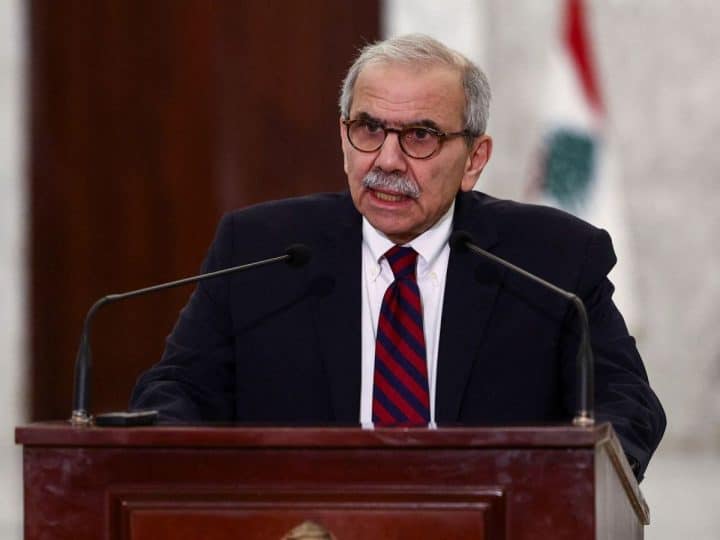
Lebanese PM Nawwaf Salam has condemned Iran for Israel’s war of aggression in southern Lebanon, in a deranged interview with the Murdoch Times.
Nawaaf claimed that Tehran rejected a supposed ‘ceasefire’ ‘deal’ in Israel’s invasion of Lebanon because:
Tehran wanted to say Lebanon is a card in our pocket, that ‘we decide on Lebanon’s behalf … we are the decision-makers’.
The one-sided ‘deal‘ involved Israel being free — its usual modus operandi — to continue attacking and seizing territory in southern Lebanon. By contrast, resistance group Hezbollah would have to cease all operations, lay down its arms and leave the territory, giving the invaders free rein. But Israel would supposedly stop bombing Beirut.
Instead, Iran has continued to refuse any ceasefire in its own war with Israel and the US that does not include Israel leaving all Lebanese territory and ceasing all aggression against Lebanon. And when Israel bombed Beirut this week, on 8 June 2026, Iran struck Israel in retaliation, having warned the occupiers it would do so.
Lebanon’s ‘Vichy’ government
Despite Shia Muslims forming the largest group in Lebanon, Lebanon’s so-called ‘National Pact’ mandates that the country’s president must always be a Maronite Christian and its prime minister a Sunni Muslim — while the speaker of parliament is Shia Muslim.
Salam’s government is widely considered a ‘Vichy‘ regime collaborating with its occupiers. This collaboration has led to accusations of “high treason” and “servile collaboration” with Israel and its US backers despite Israel’s bombing of Beirut. This has triggered renewed street protests against the regime demanding resistance to Israel’s invasion.
Salam clearly isn’t listening, too busy parroting his sponsors’ narrative that absolves Israel of its land theft and murder and blames Iran for daring to resist.
Featured image via DailyNewsEgypt
By Skwawkbox
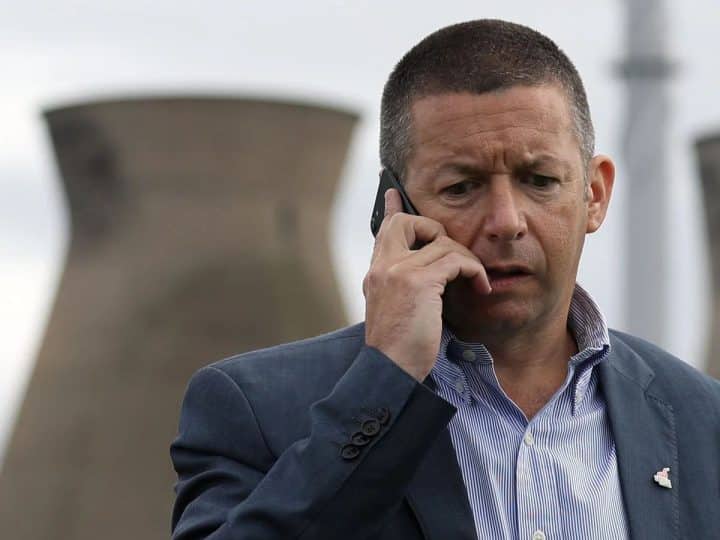
The X account of Howard Beckett, the popular former Unite general secretary candidate, has been taken over by hackers. The culprits may to be aligned with the Israeli occupation, of which Beckett is a staunch opponent. However, they are continuing to put out watered-down versions of Beckett’s usual output in an apparent attempt to fool followers. The account has also posted ‘crypto’ content, a topic in which he has never shown an interest.
Unite — Unauthorised
Complaints about the crypto posts have succeeded in having those removed, but Beckett has still been unable to regain access of his account. Those who follow his account should be aware that any posts are currently not generated by him or anyone authorised to post.
Featured image via the Canary
By Skwawkbox

An 81-year-old German fan died near Azteca Stadium in Mexico City, the Mexican capital, hours before the kickoff of the opening match of the 2026 World Cup between Mexico and South Africa.
According to the Mexican website Publimetro, the fan suffered a heart attack while attempting to enter the stadium through Gate 1, near the “Rampa 2” area, which necessitated immediate intervention from the ambulance and emergency teams deployed around the stadium.
The report added that medical staff performed cardiopulmonary resuscitation (CPR) on the fan at the scene before transferring him to the National Institute of Cardiology in Mexico City, where he passed away due to his health crisis.
The incident occurred before the start of the opening match of the tournament, which ended with the Mexican national team defeating South Africa two goals to nil in Group A competition.
Azteca Stadium holds historical significance in World Cup tournaments, as it became the first stadium to host the opening match of the tournament in three different editions, having hosted the opening ceremonies of the 1970 and 1986 World Cups before hosting the opening of the 2026 edition.
Featured image via Carl Recine/Getty Images
By Alaa Shamali

Former German coach Joachim Löw has voiced clear criticism of FIFA’s decision to expand the 2026 World Cup to 48 teams, arguing that the new format has diminished the tournament’s competitiveness and technical quality.
In an interview with the German channel RTL as part of the series “World Cup Fever: Monica Lierhaus and the National Team Coaches,” Löw—who led Germany to victory in the 2014 World Cup in Brazil—confirmed that he was never in favor of increasing the number of participating teams.
The 66-year-old coach stated that he had always believed the 32-team format was the most suitable for the World Cup, explaining that group stage competition was more intense and exciting when qualification was limited to just two teams per group.
The current edition of the World Cup is being held for the first time with 48 teams across the United States, Canada, and Mexico. Löw considered this an excessive expansion, even while acknowledging the right of smaller teams to dream of participating in the world’s biggest event.
The German coach pointed out that allowing eight teams finishing third in their groups to advance to the knockout stages has reduced the importance of first-round matches, making the group stage less compelling than in previous versions.
He added that the old system forced a genuine struggle within each group to secure the two qualifying spots, whereas the current
version has a wider margin for qualification, which negatively impacts the level of competition and excitement.
Löw believes that maintaining the tournament’s technical quality should be a priority for FIFA, emphasizing that he prefers more selective and competitive tournaments rather than increasing the number of participants.
The German coach concluded his remarks by stressing the need to maintain the high standard of the World Cup, suggesting that reducing opportunities for qualification to the knockout stages would enhance the value of the matches and raise the quality of competition in the tournament.
Featured image via Daniela Porcelli/Getty Images
By Alaa Shamali

Elon Musk is a threat to democracy, and now also a trillionaire (same thing, really)

Hosts USA begin FIFA World Cup with 4-1 win over Paraguay; Balogun shines | FIFA World Cup 2026

Horizon Quantum to build second quantum computer in Dublin

BloFin War of Whales 2026 Grand Prix opens registration for $5M trading championship

Blockchain.com files with SEC for U.S. IPO

Israel says it has killed new Hamas military leader in Gaza City airstrikes

The Death Spiral Has Begun… Bitcoin, Tech, and Stretch All Cracking!

Parkour MONEY HEIST Season 1 l Escape From Police Chase in REAL LIFE (Epic Parkour Escape POV Chase)

Wall Street is SCARING You! XRP Clarity Act & The Great Wealth Transfer
-

 NewsBeat5 days ago
Alexander Zverev wins the French Open to finally earn a 1st Grand Slam title
-
 Entertainment6 days ago
The Best Mystery Series of All Time Is Surging on Streaming 30 Years After It Ended
-

 Crypto World5 days ago
Anatomy of the June crypto crash: Fed, Iran, Saylor
-

 Crypto World2 days ago
Oppenheimer backs SpaceX as $70 billion retail frenzy builds
-

 Crypto World2 days ago
Markets Rally as SpaceX IPO Looms Amid Iran Tensions and Inflation Surge
-
 Crypto World7 days ago
Senator Cynthia Lummis Calls CLARITY Act the Most Consequential Financial Legislation of This Generation
-
 NewsBeat6 days ago
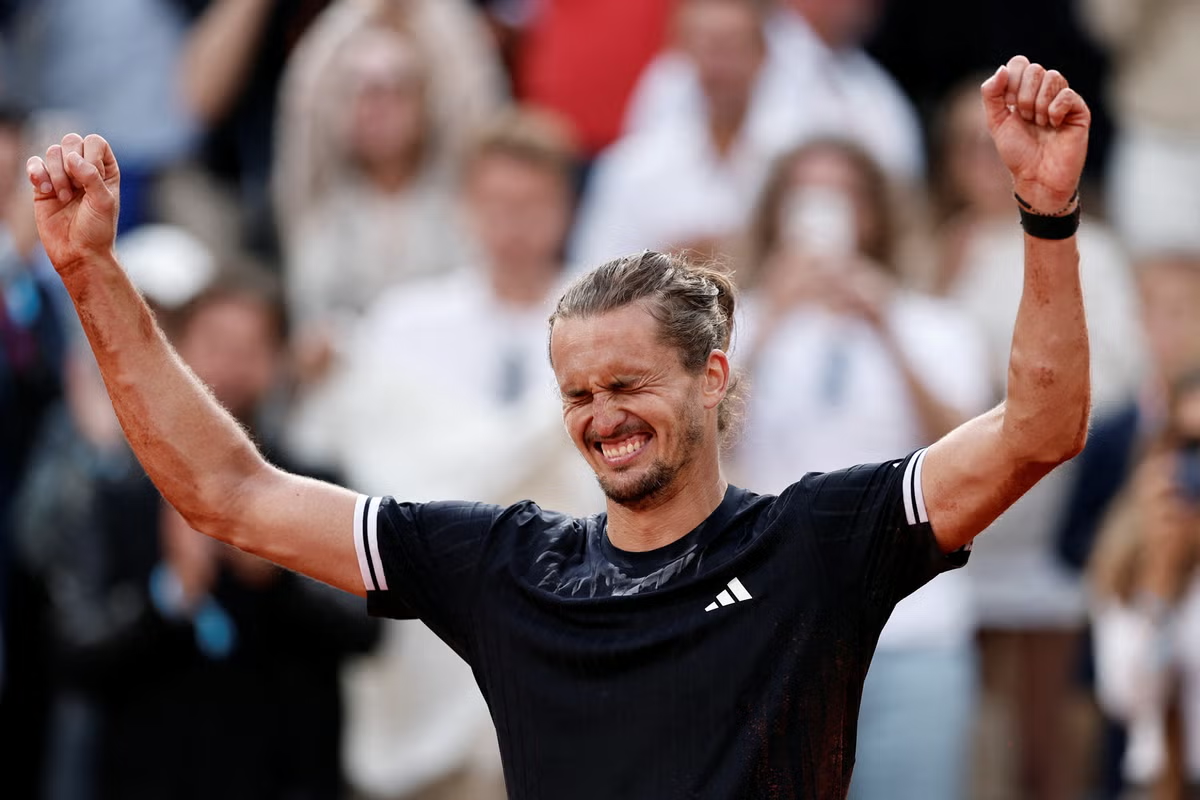
Alexander Zverev conquers demons and outlasts Flavio Cobolli to win French Open for first major title
-

 Tech6 days ago
Microsoft unveils seven homegrown AI models in new bid for ‘long term self-sufficiency’
-

 Business5 days ago
High Stakes for Wembanyama as New York Pushes for 3-0 Lead
-

 Tech5 days ago
Notion restores access to Anthropic after service disruption
-
 Business6 days ago
The Pain Points Taking a Fragile Tech Rally Down a Notch
-
 Crypto World5 days ago
Eli Lilly (LLY) Stock Surges 4% Following Breakthrough Sleep Apnea Trial Results
-
 Business6 days ago
The investment to transform historic St Helen’s ground in Swansea
-

 Crypto World6 days ago
Trump’s AI Ownership Plan Could Benefit Anthropic at OpenAI’s Expense
-
 Sports4 days ago
Bangladesh beat Australia after 20 years in ODIs, register only their second win over six-time world champions | Cricket News
-

 Tech9 hours ago
NanoClaw integrates JFrog registries to secure AI agent downloads
-

 Crypto World4 hours ago
Bitget enters Argentina’s regulated crypto market through PSAV registration
-

 Tech20 hours ago
This Week In Security: Microsoft On Microsoft, Register Your Domains, Linux On ARM, And FreeBSD Joins The File Cache Club
-

 Politics2 days ago
Politics Home | Healey Resignation Is “Colossal Failure Of Government”, Says Former Labour Defence Secretary
-

 Sports2 days ago
First Time Since 1971: Australia Register Historic Low In ODI Cricket
You must be logged in to post a comment Login