
Politics
Reform candidate thanks Putin

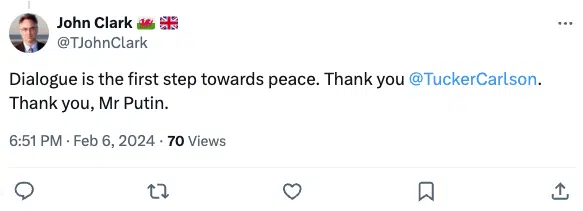
As we’ve covered, Reform have been having a nightmare trying to sign up suitable candidates for the local elections. The problem is that anyone who’s suited to Reform is probably not well matched to broader public opinion, which is why we keep getting candidates like this:
Quite the quote. https://t.co/nDZelXynf1 pic.twitter.com/PHWHcGo9aE
— Reform Party UK Exposed 🇬🇧 (@reformexposed) April 1, 2026
Reform’s Welsh-Russian axis
John Clark is one of Reform’s candidates for the Welsh Senedd. To be absolutely fair to him, he wasn’t thanking Vladimir Putin for invading Ukraine; he was thanking him for engaging in “dialogue”:

There are still a couple of problems, of course. The first is that Putin wasn’t engaging in peace talks; he was chatting with right-wing US political commentator Tucker Carlson. When Putin has engaged in actual peace talks, he hasn’t engaged very meaningfully – hence the war raging on.
The other problem for Clark is that you can’t be thanking politicians for engaging in discussions in the UK. Remember when the media crucified Jeremy Corbyn for five years because he held talks with Hamas and referred to them as “our friends” in an effort to encourage dialogue? The right certainly played that up, so this is the bed they’ve made for themselves.
It doesn’t help that Reform have previous issues with their Welsh politicians being overly favourable to Russia. This was most notable with Nathan Gill (former leader of Reform Wales), who was sentenced to ten and a half years for taking bribes to talk positively about Russia in the European parliament.
Reform Exposed unearthed some more tweets too, including this one:

Look, we didn’t like Rishi Sunak either, but the above phrasing suggests that Clark just wanted to praise Putin. The same can be said of this:

You can’t form your opinions by taking what your opponents say and just thinking the opposite.
Sides
To be completely fair to Clark, he has talked about the war in terms like the below, which is certainly less head-banging than some of the people on either side of the war:
If Ukraine escalates, then Russia will escalate too, and the cycle of violence will continue. Far too many people have died already. It’s time to look for a diplomatic solution.
— John Clark 🏴 🇬🇧 (@TJohnClark) March 23, 2024
Digging deeper, he tweeted the following about Trump in 2024, but doesn’t seem to have said anything about Trump’s catastrophic war against Iran:
Trump is the only President in recent history that did not start any wars. Give peace a chance, Trump 2024.
— John Clark 🏴 🇬🇧 (@TJohnClark) January 16, 2024
Have the neo-cons been reduced to random name-calling? Are you upset that Trump didn’t start any wars?
— John Clark 🏴 🇬🇧 (@TJohnClark) January 16, 2024
Personally, if we’d been taking in by Trump’s ‘peace candidate’ shtick, we would have corrected the record when he started invading other countries, but that’s just us.
Clark also tweeted the following, suggesting his anti-war feelings are really pretty selective, because Trump conducted all sorts of belligerent acts in his first term:
You’re not fit to polish Trump’s boots @campbellclaret. How is that Iraq war going? Remember David Kelly, warmonger?
— John Clark 🏴 🇬🇧 (@TJohnClark) August 25, 2023
Differences
It’s obviously the case that Western nations’ relationship with Russia became unduly strained as a result of the US maintaining reflexive Cold War politics. At the same time, Russia’s invasion of Ukraine was an absolute travesty. As Joe Glenton wrote for the Canary in 2022:
Less than 48 hours into Russia’s invasion of Ukraine, and so much remains unclear. Will Russia occupy? Will NATO respond militarily? What are the risks of nuclear escalation? But one thing should be very apparent. Looking to either NATO or Russia in search of a good guy in all of this is deeply naïve.
On the one side we have the Russian regime. Viciously illiberal and oligarchic, it’s a model of authoritarian capitalism. Determined to reclaim its lost imperial status, it’s as willing to bomb Ukrainian cities as it is to batter its own courageous anti-war protestors off the streets of Moscow.
In NATO, we have an organisation which today functions as a beard for US imperial ambitions. It comes with a bleak history of supporting fascists in Europe and of the kind of brinkmanship which has brought us to where we are today. It’s also played a direct part in the disastrous wars in – to name just two recent examples – Libya and Afghanistan.
Reform politicians keep giving the impression that they like Russia for the same reason they like Donald Trump; because the imperial powers are the bigger kid, pushing the smaller kid around.
And let’s be real; picking on the little guy is Reform’s policy platform in a nutshell.
Featured image via World Economic Forum (Flickr)

Politics
Politics Home | Rail And Bus Fares Should Be Cut To Protect Public From Iran Petrol Spike, Says Ed Davey
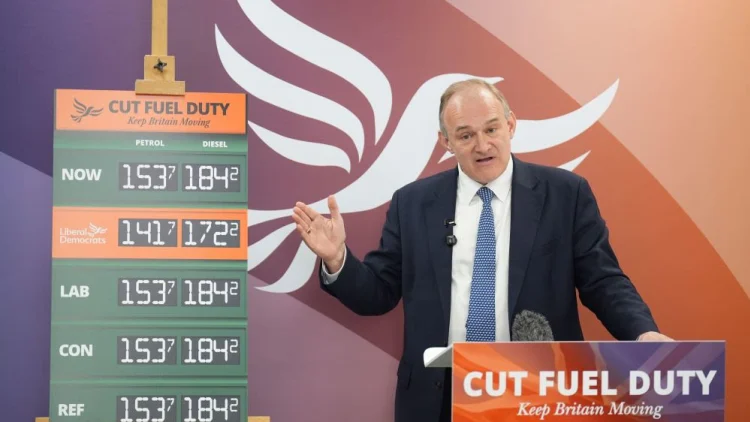

Ed Davey called for emergency 10p fuel duty cut (Alamy)
3 min read
Ed Davey has called for the government to reduce public transport fares to protect people from cost-of-living pressures triggered by the Iran war.
Speaking at a press conference in London on Thursday morning, the Liberal Democrat leader said: “The people of Britain didn’t start this war. They didn’t cheer it on, but they are paying the price for it every single day.”
Davey called for rail fares to be reduced by 10 per cent and the cap on bus fares to be lowered from £3 to £1 in a bid to “keep people moving”.
The ongoing war in Iran is putting major pressure on global energy prices. This is largely down to a sharp fall in traffic through the Strait of Hormuz, one of the world’s most important trading routes, as a result of Iranian threats to attack passing ships. This shipping lane is responsible for a large share of the world’s oil and gas.
The European Commission has this week encouraged people to drive and fly less and work from home, while some states in Australia have made public transport free.
Up to now, however, the UK government has not asked people to change their behaviour.
Davey today called for the Labour government to “look at” what other countries are doing to support the public with rising costs.
“We are looking at other countries; we can’t do exactly what they do. There’s different issues, there’s different situations, but we’re really being bold about encouraging people to use public transport.”
Davey said the reduction in public transport fares urged by his party today would encourage people “if they can, to shift”.
“But of course, in many parts of the country, many people who can’t shift onto public transport, rural areas, for example, they’ve got no alternative. So we’ve got to help those people. They literally have no alternative.”
The Lib Dem leader also called for the Labour government to cut fuel duty by 10p, to help people who are more reliant on cars.
The average price for a litre of unleaded petrol rose by 20p over March, while diesel prices were up 40p.
Davey said: “People who were already struggling with the cost of living already having real problems making ends meet, now they’re having to find even more money, cut back even more, worry about the cost of driving to the shops or the daily commute, or the school run, and all those self employed and small business owners who have to travel to work, whose vans are their offices already hit by higher tax rises and red tape.”
The Lib Dem leader reiterated his party’s strong opposition to the US decision to attack Iran, and criticised the Conservatives and Reform UK over their calls for the UK to join President Donald Trump’s initial strikes on Tehran, referring to the “Trump, Farage, Badenoch tax”.
On Wednesday, several government measures aimed at tackling the cost of living came into force, including increases to the national living wage and the national minimum wage, support for households using heating oil, and money off energy bills.
The government is also expected to announce further support for households most exposed to rising energy prices in the coming weeks.
Foreign Secretary Yvette Cooper will today meet with 35 nations, including France, Germany and Canada, to discuss the reopening of the Strait of Hormuz.
In a Downing Street press conference on Wednesday, Prime Minister Keir Starmer acknowledged that resuming trade through the vital shipping lane would “not be easy”.
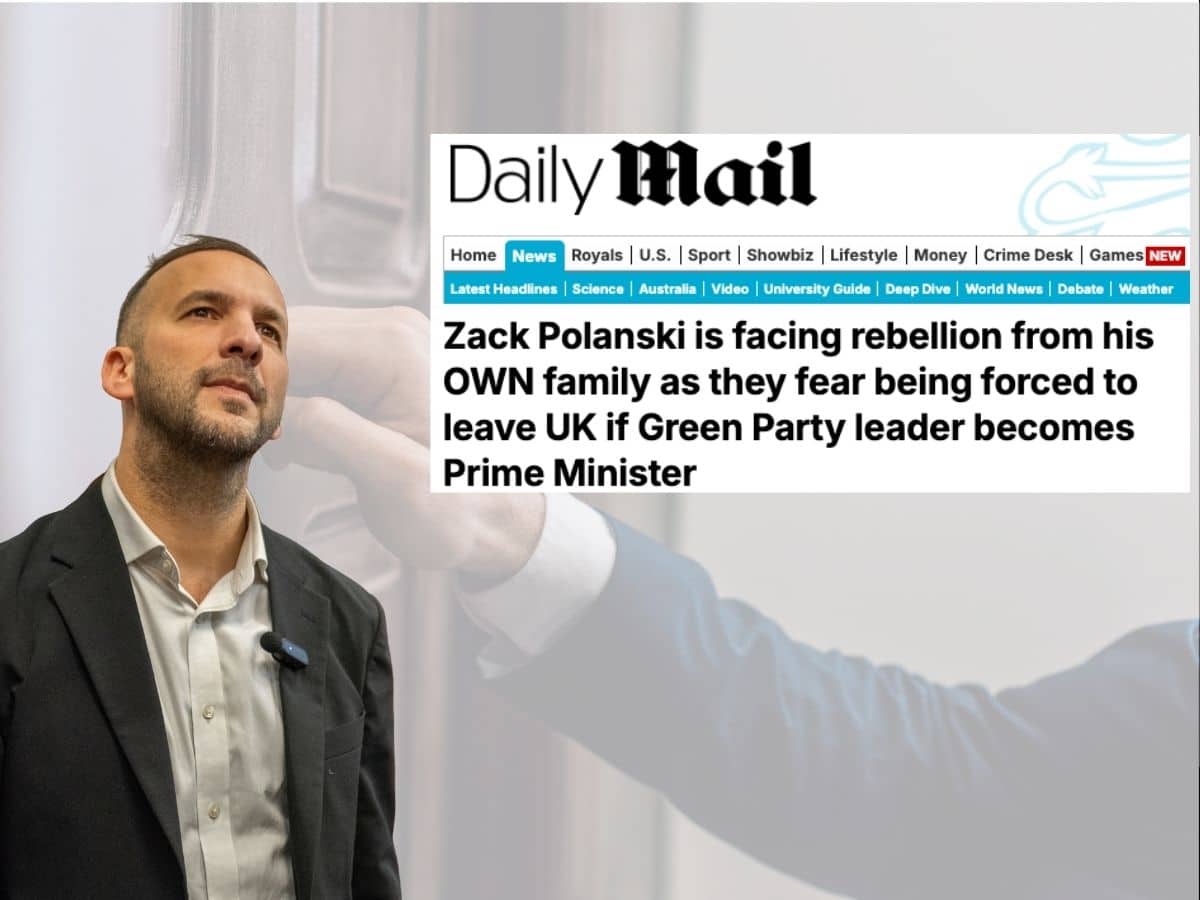
As we reported, freelance journalist Nicole Lampert has been bothering Zack Polanski’s family.
According to her, she’s been doing so as part of her efforts to conduct what she calls ‘journalism’. Defending herself, Lampert claimed that Polanski’s family went to her. Now, it’s claimed that the Green leader’s family have complained to the Independent Press Standards Organisation (IPSO):
Zack Polanski’s mum, dad, brother, and sister have formally complained to IPSO after journalists turned up at their family homes. But I’m confused. I thought the Daily Mail “journalist” said his family approached her.
— Mukhtar (@I_amMukhtar) April 1, 2026
Standards
We first learned that the gutter press were looking into Polanski’s family via this tweet:
This is why Daily Mail journalists are going after my family now.
The right wing propaganda machine will not work on the Green Party.
We’re ready to end Rip Off Britain, end the cost of living crisis and make hope normal again. https://t.co/w9uyGh8mfP
— Zack Polanski (@ZackPolanski) March 28, 2026
We later learned this was being conducted by independent journalist Nicole Lampert on behalf of the Daily Mail. Lampert posted the following online:
I’m a freelance journalist who spoke to your family members who are frightened by the Jew hate in your party. They are frightened by what you have given the green light to.
This is the British media we’re talking about, so the “Jew hate” in question was actually legitimate criticism of the genocidal state of Israel.
The ‘family’ she spoke to ended up being distant relatives. As such, her piece proved nothing besides the fact that everyone has a third cousin or step auntie who’s thick enough to get taken in by the Daily Mail.
Lampert would later say:
I didn’t hound anyone. They came to me.
Since then, the Guido Fawkes blog has reported the following notice which was sent to regulated media organisations:
IPSO has today been contacted by a representative acting on behalf of the immediate family of Zack Polanski.
Mr Polanski’s mother, father, brother, and sister ask that the press do not attend their homes and do not approach them by phone or email, as they do not wish to give comment to the media. For any media enquiries, please contact the Green Party press office at [REDACTED] or on [REDACTED].
We are happy to make editors aware of his request. We note the terms of Clause 2 (Privacy) and 3 (Harassment) of the Editors’ Code.
Notably, this notice doesn’t explicitly confirm that journalists approached members of the Polanski family, nor how.
Polanski has previously claimed they were indeed contacted, though:
Spoke to my family today – all refused to talk to you.
You then started hunting down random “anon” relatives.
People are holding your shit rag accountable.
You’ve not just “touched a nerve.”
You’ve absolutely spurred on a movement ready to take on the Daily Mail. Congrats. https://t.co/95Oq3SUxAf
— Zack Polanski (@ZackPolanski) March 29, 2026
Form
As people have highlighted, this is far from the only accusation of shoddy journalism that Lampert is currently defending against. The following is Independent reporting from March this year:
Former Daily Mail showbiz editor accused of using private investigators ‘who engaged in unlawful acts’
Nicole Lampert was giving evidence in the trial of claims of unlawful information gathering brought by a group of household names against Associated Newspapers Limited (ANL)
As the BBC reported on 3 March:
A former Daily Mail showbusiness editor has denied listening to voicemails between actors Jude Law and Sadie Frost Law and said stories she wrote about their relationship came from an “amazing source”.
Nicole Lampert said the source was close to Frost and that information had been passed to the newspaper through a “trusted freelance journalist”.
Frost spoke about how the stories led to her mistrusting close friends. Now, however, she is convinced her voicemails were hacked.
Speaking about a specific article, the BBC wrote:
One article in October 2004 referred to discussions about a £10m divorce settlement. Law’s solicitors later complained that it was wrong to suggest he had accepted the settlement, and the Daily Mail published an apology.
Sherborne suggested the newspaper had been unable to challenge the complaint because the information had been obtained through phone hacking and the true source could not be revealed. Lampert rejected the claim.
Responding to an article in which the Mail reported on Frost’s sleeping pill prescription, Lampert said:
We wouldn’t ever report that sort of information now, but that was par for the course then.
It makes you wonder what villainous acts are simply “par for the course” today.
Featured image Barold

Italy’s exclusion from a third straight World Cup has shifted from a sporting failure to a national plight. Players born after 1990, many now in their prime, have never performed at football’s grandest stage. This absence is undoubtedly reshaping selection, development, and the public’s connection to the Azzurri.
What went wrong on the field
Italy has not participated in the World Cup since 2014. This decade long gap denies emerging skilled performers global exposure and the pressures that define international careers. After the latest elimination, head coach Gennaro Gattuso captured the mood bluntly:
It hurts, it really hurts… More than hurting me, it hurts to see this group which has really given everything in these months.
In another interview, Gattuso added:
Today the boys didn’t deserve a beating like this… It hurts, because we needed it for us, for all of Italy and for our movement.
Those comments aren’t merely the result of post-match emotion. Gattuso’s words reflect the realty of a federation, so far, unable to translate domestic strengths into consistent success on the international stage.
The wider consequences
Missing consecutive World Cups changes more than rosters. The tournament has been Italy’s showcase, the even which transformed Paolo Rossi, Roberto Baggio and Fabio Cannavaro into global football icons. Without that stage, Italian players are less visible to the world, and young fans without the World Cup memories over which past generations bonded.
Former Italy coach Fabio Capello warned of the scale of the problem, calling recent results:
a sporting tragedy, a shame. It’s one of the worst things that has happened to Italian football in its recent history.
Leadership, development, and identity
FIGC president Gabriele Gravina offered measured support while acknowledging the depth of the crisis:
Let me congratulate the lads… they’ve shown incredible growth. I also want to congratulate Rino Gattuso. He’s a great coach.
That tone—encouraging yet defensive—sums up the federation’s position: protect current personnel while promising review.
Veteran Gianluigi Buffon, part of the national delegation, urged patience and careful assessment:
This is a delicate moment, and we need to take the necessary time to make the right evaluations.
Experts point to systemic issues behind the headlines: gaps in youth coaching and scouting, tactical stagnation at senior levels, and Serie A’s declining pull compared with other European leagues. Capello argued for accountability and grassroots rebuild:
No one resigns here, and that’s the most worrying thing […] We have to sit down as experts, analyse what is happening and start a reconstruction from the base.
What comes next
This is not a short-term slump—it’s a multi-year shift that requires structural fixes. If Italy qualifies for the 2030 World Cup, it will be more than a sporting rebound. It will be a reconnection with fans and a chance to rebuild an international identity for a generation starved of World Cup experience.
Until then the Azzurri remain a major footballing nation without its primary stage. The challenge for coaches, clubs and the FIGC is to convert criticism into a clear, long-term plan that rebuilds pathways from youth academies to the national team.
Featured image via the Italian Football Federation
Reform UK’s new housing chief has sparked outrage after claiming housing regulations have gone too far in the wake of Grenfell. He said that while the disaster was a tragedy, ‘fires happen’ and that ‘everyone dies in the end’, so building new houses shouldn’t be slowed by pesky health and safety.
Reforms Housing spokesperson says ‘fires happen’
Simon Dudley, Reform UK’s new Housing and Infrastructure spokesperson, told Inside Housing that regulations put in place following the Grenfell inquiry are ‘stifling’ the housebuilding sector with ‘over-regulation.
Dudley was asked how to balance housebuilding with the regulations. His reponse was typically vile for Reform:
The practical impact of over-regulation is to stop things. Now, people may feel that we’ve done the right thing through introducing this regulation, but on the other side of that, think about all the human suffering of not having a home, not being able to have children and being stuck in your parents’ home in your childhood bedroom. So there is a balance. You know, we can’t, you know, sadly, you know, everyone dies in the end. It’s just how you go, right?
He continued
Extracting Grenfell from the statistics, actually people dying in house fires is rare… many, many more people die on the roads driving cars, but we’re not making cars illegal, so why are we stopping houses being built?
You can’t stop tragic things from happening. You can try to minimise excesses, but bad things do happen. Fires do happen.
Dudley said that the impact of Grenfell on regulation has meant ‘the pendulum has just swung too far the wrong way.’
He continued:
Frankly, for people who are the architects of things, it’s very difficult for them to put them right. And Reform is not the architect of so many of these failures which our country has now. We will put it right, because we’re not emotionally connected with them. They’re not things that we created. We will fix them.
Dudley was appointed Reform UK’s housing spokesperson last month . The party said he would urgently spearhead a review into “Britain’s building crisis”. He’s previously had many board and non-executive roles in development such as with the government’s Homes England. So in a way, he has been an ‘architect in these failures’.
Grenfell wasn’t because ‘fires happen’
72 people died, many of whom were brown or Black and disabled, because of housing companies that wanted to pull up building as quickly as possible to extract rent from vulnerable people. They didn’t care about the safety of the block, despite many warnings and complaints from residents.
What the aftermath of the Grenfell fire showed was how little deaths mattered if they weren’t rich white people.
A Canary editorial responding to the bullshit Grenfell Inquiry report summed it up best:
Ultimately the Grenfell fire was the culmination of years of institutionalised neglect, racism, classism, and discrimination against the predominantly low-income, Black, brown, and disabled residents of the tower.
Racism and classism were the ultimate cause of the Grenfell Tower fire.
Calls for Dudley to be fired came in quick. Housing Secretary Steve Reed said:
If Nigel Farage has an ounce of decency, he will sack his housing chief immediately.
These disgraceful comments about those who died in the Grenfell Tower fire are beyond the pale and it is completely untenable for Simon Dudley to continue in his position.
But come on, Steve, we all know Farage doesn’t have a single bit of decency in him.
Green MP Sian Berry said:
Reform has sunk to a new low and shown a real disrespect to the victims of Grenfell. Anyone who has any awareness of what Grenfell residents went through, in fact anyone with any empathy or humanity, will find these comments truly abhorrent.
Nigel Farage must sack Simon Dudley for this disgusting outburst.
Reform doesn’t care if poor people die
Of course, instead of apologising, Dudley has doubled down. On LinkedIn, he wrote:
Grenfell was an utter tragedy and quite rightly prompted a wholesale review and tightening of fire regulations. I said it was a tragedy in my interview with Inside Housing and in no shape or form am I belittling that disaster or the huge loss of life. It must never happen again. I reiterate that, and am sorry if it was not sufficiently clear.
Within the last 24 hours, the Berkeley Group, one of Britain’s biggest housebuilders, has paused new land purchases and announced a hiring freeze. They blame ‘an unprecedented surge in costs and regulation.’
These concerns are felt across the industry. The result? The UK’s long running housing crisis is getting worse.To address the national housing crisis, we must ensure that regulation remains safe, sensible and proportionate. My concern is the introduction of numerous measures that do nothing to protect life and are throttling housebuilding.
The classic double down is expected from Reform now. It’s the same tactic we saw from Sarah Pochin when she said ‘It drives me mad seeing adverts full of black and Asian people.’ Pochin wasn’t disciplined, but Black MP Dawn Butler was almost kicked out of the House of Commons for calling her a racist.
Dudley’s comments show once again just how little Reform actually cares about poor people. They wouldn’t be saying ‘fires happen’ if it had happened in a more affluent area.
Reform are relying heavily on working class voters who are sick of being ignored by Labour and the other parties. But this should show that Reform will only make life worse for anyone who isn’t rich. And they don’t care how many poor people die.
Featured image via the Canary
Politics
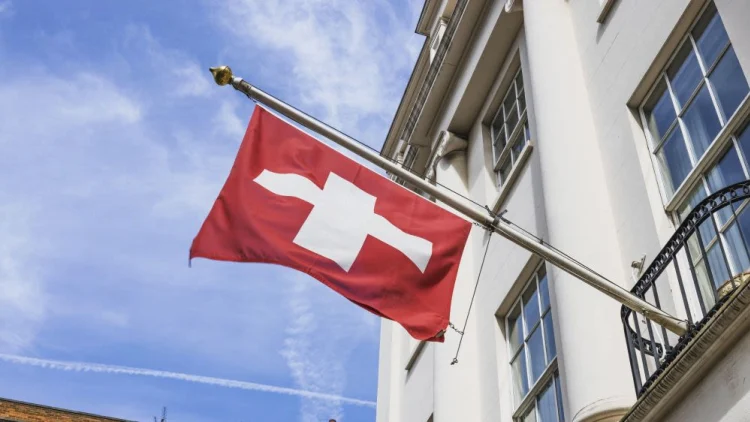
The House | The UK can learn from how Switzerland rebuilt public trust in its asylum system
3 min read
There is no magic bullet for running an asylum system, but the Swiss example demonstrates that a much better way of doing things is possible.
In the UK, much of the recent ‘gains’ made from cutting the backlog of asylum claims have simply transferred the backlog into the appeal system. In 2024, almost 50 per cent of asylum decisions were overturned on appeal in the UK. This not only undermines efforts to cut the backlog, but it also undermines public trust in the workings of the asylum system.
In the same period in Switzerland, despite much faster average processing times for claims, the successful appeal rate was only around 5 per cent. How was this achieved?
In their allocated accommodation centre, each asylum claimant is provided from the outset with on-site access to state-funded legal representation and advice on their claim, including during interviews with state migration officials and when the draft asylum decision on their claim is prepared.
This front-loading of legal support improves both the quality and acceptance of first-instance decisions. Not only are there fewer successful appeals, but fewer appeals need to be heard at all. And the appeals process allows only a single appeal, based on written submission only, and with no additional legal funding available.
The UK, conversely, has moved in the opposite direction, combining haphazard access to legal representation for asylum claimants with extensive and multi-layered opportunities to appeal.
For those whose claims are not accepted, though, Switzerland has a firm, three-pronged returns strategy – promoting voluntary returns, backed up by the threat of enforced returns, supported by return agreements negotiated with other countries.
With legal advice on their claim, the claimant can receive a clear understanding upfront if their claim has little chance of success, and also get independent information and advice on their return options, all while in the initial accommodation centre.
What the Swiss have done in reforming their system is important, but how they did it has been crucial. Seeking to bridge the divides between central and local concerns, and between those sympathetic to asylum seekers’ plight and those with concerns that the system is being taken advantage of. This has shaped the changes but also made them more broadly acceptable and practically implementable, rather than bogged down in endless lawfare.
All interested parties in the reforms understood that there was no magic bullet to the challenge of running an asylum system, that there would always be difficult cases which would take time to resolve, but that material improvements to the system could be made by more swiftly processing the claims of those who clearly need protection, while more swiftly returning those who do not.
The UK seems so far removed from being able to achieve the same. Most recently, we have seen a complete collapse of trust between the key state and non-state actors in the asylum system, and fundamental changes to the system have been introduced with an almost total absence of meaningful engagement.
It does not have to be this way, though. Until relatively recently, the UK did a much better job in this respect. Both sides of the asylum issue, while undoubtedly still in a tense relationship, at least recognised some of the practical possibilities for working together more cooperatively on seeking to identify common ground and to address difficult challenges within the asylum system. And indeed they did so, on returns in particular, engaging in at least some type of compromise and cooperation, similar to those that supported the Swiss asylum reforms in taking shape and helping to rebuild public trust.
It is hard to see even a glimmer of that in the UK any more. While changing this will not be easy, the Swiss experience both reminds us of our recent past, as well as lighting a possible way to a different future.
Jonathan Thomas is a Senior Fellow at the Social Market Foundation
Republicans once saw Georgia as the crown jewel of their Senate pickup opportunities. They’re now blaming each other as the GOP primary unravels into an intraparty brawl that could cost them their chance of defeating Democratic Sen. Jon Ossoff.
The party is grappling with a crowded field, no dominant front-runner, no endorsement from President Donald Trump — and the reality that the May 19 primary will very likely extend into an expensive, bruising mid-June runoff.
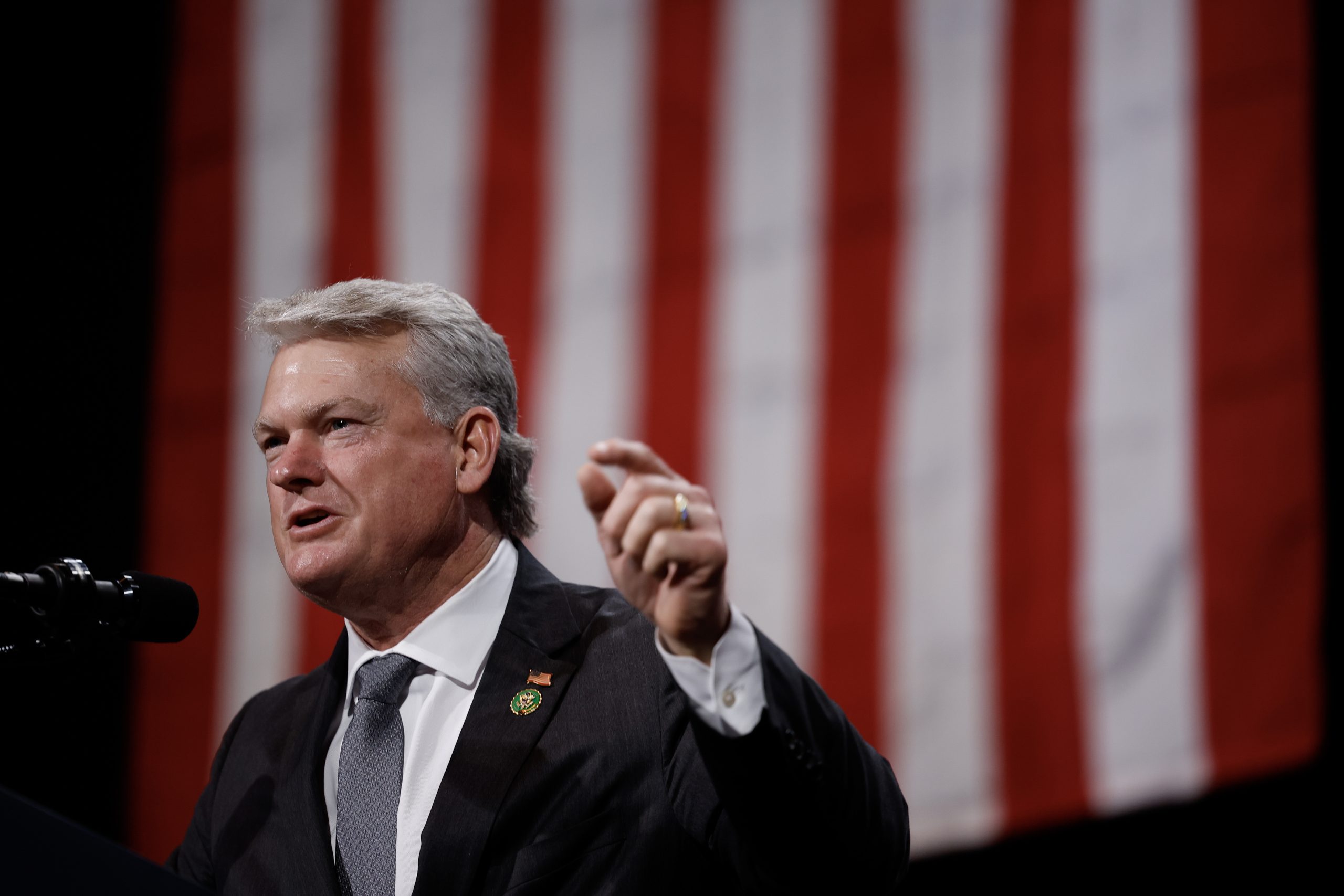
Rep. Mike Collins (R-Ga.), a close Trump ally, leads in public polling, with fellow Rep. Buddy Carter (R-Ga.) and Gov. Brian Kemp-endorsed former football coach Derek Dooley battling for second. But a large share of voters remain undecided, underscoring how fluid the race is. Meanwhile, incumbent Ossoff — who faces no primary challenge of his own — is keeping his powder dry and has amassed a formidable eight-figure campaign war chest ready to deploy in the general election.

“If Ossoff could write a playbook for how he wants this primary to go, this is exactly it,” said a GOP operative, who, like others interviewed for this story, was granted anonymity to speak candidly about the race’s dynamics. They said that Georgia is like a “red-headed stepchild” not getting any attention from Washington.
Republicans point to several unforced errors that got the party to this point. Some say their current challenges were set in motion last year, when they failed to convince the state’s popular outgoing GOP governor, Kemp, to run for Ossoff’s seat. Others point to a lackluster effort by the National Republican Senatorial Committee to recruit a stronger crop of candidates or unify the field. Many also fault Trump and Kemp, who have had a sometimes-testy relationship, for failing to agree on a candidate they both could support to avoid a costly primary.
“It’s not ideal that it looks like it’s going to runoff,” said Cole Muzio, president of the conservative Frontline Policy Council. “There was so much talk about Kemp and Trump getting together and finding a nominee together, landing the plane on one person. I’m not going to try to sort out what happened with that, but a unity nominee would have been ideal.”
The early finger-pointing that has emerged in conversations with a dozen GOP strategists and officials in Georgia reflects their deep frustration with the state of their primary — and their chances of holding onto the Senate majority. The party is fending off competitive Democratic candidates in several red states as voters sour on Trump’s agenda, making flipping Georgia even more of a priority.
“It’s a mess that could have been much less messy if they had figured this out six months ago,” said a second Georgia-based Republican strategist unaffiliated with any campaign. “Everybody’s resigned to this going to May and then a June runoff and then pick up the pieces after that.”
Early general election polling shows Ossoff leading all three potential GOP candidates in a head-to-head matchup. After five years in the Senate, he has built a formidable political operation, churned out razor-thin statewide wins and amassed a sizable fundraising cushion.
“Jon Ossoff has $24 million. Jon Ossoff is on TV all of the time, carefully articulating his positions, grilling Tulsi Gabbard — really being methodical,” said Ryan Mahoney, a GOP strategist unaffiliated in the race. “He has tons of resources — great name ID, a lot of exposure — while the Republicans are fighting against each other, trying to see who can break out and ultimately be the nominee.”
“He’s just in a great position,” Mahoney noted.
Still, several Republicans say they’re confident about their prospects in a state that Trump won in 2024, and they expect money and outside support to dramatically ramp up once their nominee is decided.
“Republicans created this problem. We created this problem and it’s not any one person,” the second GOP strategist said. “I still think a Republican can win, I just think we’re making it way harder.”
With around 40 percent of likely GOP primary voters still undecided, according to recent public polling, the Senate candidates have been jockeying for Trump’s blessing — an endorsement that could be pivotal in deciding the future of the race.
All three candidates have engaged with the White House directly. In an interview with conservative host Clay Travis’ Outkick podcast, Dooley said he met with Trump in the Oval Office last year and had a “very engaging conversation.” Carter, for his part, told POLITICO in a brief interview that his campaign continues “to talk to the administration” about the race. Collins and the president have also met and discussed the race, according to a person familiar with the conversation. In February, Collins appeared onstage with the president during an event in Rome, Georgia, focused on Trump’s economic agenda.

Collins’ campaign recently released a lengthy memo outlining his argument for why the field should coalesce him around the primary. “[Democrats] are watching Republicans turn what should be the best pickup opportunity of the midterms into a needless intraparty squabble that wastes time and resources,” the memo reads. “Instead of spending the majority of 2026 focused on defeating Jon Ossoff, Republicans are on track to not be unified until late June, after a runoff, leaving the Republican nominee only four months to raise money and campaign across the largest state east of the Mississippi to unseat the Democrat.”
Most outside groups have been waiting to line up behind a clear front-runner, though Club for Growth PAC, a major conservative super PAC, has already endorsed Collins’ campaign — an unusual step for a group that usually acts in lockstep with the White House’s political strategy.
The White House did not respond to a request for comment regarding Trump’s thinking about the primary or his conversations with the three candidates.
Then there’s the Kemp factor.
After the governor declined to run, Republicans feared the primary could become a proxy war between himand Trump, who’ve previously clashed over Trump’s insistence that the 2020 election in Georgia was fraudulent. That hasn’t quite played out, with the president staying out of the race so far. But Kemp’s decision to back Dooley, the former football coach, means it’s unlikely they’ll find common ground.
Dooley has no prior experience in politics. State voting records show the former coach did not vote in presidential elections in 2016 and 2020 — attack fodder for his opponents as they seek Trump’s endorsement. (He did vote for Trump in 2024.)
“It’s no secret that the profile of a candidate that President Trump would prefer is much different than the profile of a candidate that Governor Kemp would prefer,” said a third local GOP strategist, who is unaffiliated in the race. “The nexus between those two just made it very hard, if not impossible, to come out with a consensus candidate.”
Garrison Douglas, a spokesperson for Kemp, doubled down on the governor’s support for Dooley in a statement and said he isn’t “wasting time worrying about the complaints of anonymous consultants.” Dooley spokesperson Connor Whitney said he’s confident Georgia voters will “choose the only political outsider in this race — not another stale D.C. politician.”

Carter spokesperson Chris Crawford rejected the criticism of running a messy primary, saying that “only in Washington do consultants think voters choosing their nominee is a problem.”
Collins, in a statement, expressed confidence in his ability to win the primary, and added that his campaign “would welcome any help to ensure we could wrap this up in May and get on to the main event.”
With Georgia in a holding pattern, some local Republicans worry that Washington’s attention is drifting toward Michigan, where former GOP Rep. Mike Rogers has unified the party — and the president — around him in the state’s key battleground Senate race as a trio of Democrats battle it out in their own messy primary.
“There’s offense and defense. I think on offense, [Georgia] is still a top race. I think the only difference is that Michigan is a clear field. Rogers is ready to roll. He’s raising money. Dems have a mess on their side over there,” said one national Republican familiar with the party’s midterm strategy, who was granted anonymity to discuss behind-the-scenes planning.
Still, the person said they believe Georgia remains competitive, particularly if Republicans unify.
In a statement, Nick Puglia, a spokesperson for the NRSC, said Ossoff “is the most vulnerable incumbent on the map” and Georgia “has been and remains a top state for Republicans to expand President Trump’s Senate Majority.”
But Republicans in the Peach State are skeptical.
“I sense from some Republicans a feeling that maybe Michigan is a better opportunity, and of course, one of the reasons … for that is, ‘well, the field’s been cleared,’” said a fourth GOP strategist in Georgia.
“It feels like D.C. is shifting to Michigan because of a problem that they could solve today,” said the second Georgia-based GOP strategist.
Pro-Palestine campaign group Mothers Against Genocide are among those calling on Dublin’s National Concert Hall (NCH) to cancel a charity event which will raise money for Magen David Adom (MDA). MDA are an ambulance charity based in so-called ‘Israel’. Multiple human rights groups have accused the group of failing to provide medical care to wounded Palestinians, resulting in their deaths.
Mothers Against Genocide say:
The National Concert Hall has reinstated a booking for a fundraising event linked to an Israeli ambulance service with a documented record of denying medical care to Palestinians.
This is a clear violation of medical neutrality and basic human rights. It comes in the context of ongoing violence where healthcare workers and emergency responders have been systematically targeted.
A publicly funded Irish institution must not provide a platform for organisations complicit in apartheid and genocide.
They are encouraging people to email the venue and voice their opposition to the event. Here is the link to do that (it will redirect to your email provider). The fundraiser is currently set to go ahead at an undisclosed date.
Genocide supporting politicians intervene to reinstate Zionist fundraiser
The event is being organised by the insufferable Alan Shatter, a staunchly Zionist ex-TD. He is the current chair of Magen David Adom Ireland. The Irish Times reported that the NCH initially booked the event, then:
…revoked the booking on the basis that the national cultural institution was politically neutral.
However, the fundraiser is now back on, seemingly in part due to intervention from senior politicians. At virtually every turn, the current Irish government has sided with the Zionist pseudo-state. The Times report says:
The disputed event is now set to proceed on an unconfirmed date, but only after NCH board talks and discussions with Irish diplomats and the Department of Culture.
Minister for Culture Patrick O’Donovan is understood to be annoyed at the way the matter was handled by the concert hall, which said it “misunderstood” the nature of the charity but has since changed its stance.
Serial abuses of ambulance charity
The Red Cross-affiliated Israeli agency charged under the Geneva Convention with providing emergency medical aid is discriminating against Palestinians…
The Israeli organisation Magen David Adom (MDA)…is giving top priority to the treatment of injured Israelis, while neglecting wounded Palestinians…
It cited cases such as one in which:
Mohammed Ismail Al-Shobaki, 20, attempted to stab an Israeli soldier near the entrance to Al-Fawwar camp in southern Hebron, then was shot and left bleeding on the ground. Euro-Med Monitor has access to a videotape showing the availability of Israeli ambulances in the area, but while Israeli medical staff provided immediate help to the injured Israeli soldier, the calls of help of from Al-Shobaky went unanswered until he died.
Attacking an Israeli Occupation Forces (IOF) soldier is legal under international law, as they are an army illegally occupying Palestine. Medics are bound by law to treat all patients equally.
In a 2016 report, Al Jazeera cited the Zionist entity’s own Physicians for Human Rights in Israel (PHR-I) group, who:
…found that wounded Palestinians had been left untreated for as long as two hours.
PHR-I also:
…accused Israel’s leading medical bodies – the Israeli Medical Association, which lays down ethical codes, and Magen David Adom, which supervises ambulance services – of ignoring the evidence it has collected of such abuses.
In a more recent case, Haaretz reported how MDA ambulance staff:
…refused to transport a Palestinian man from an East Jerusalem clinic on Wednesday despite concerns that he was suffering a cardiac emergency, because paramedics suspected he was in Israel without a permit.
A doctor at the scene said that, with the ambulance at the scene, a paramedic requested an ID card from Musa:
While the patient was in pain. I had never seen anything like it – it was very strange.
Very strange and very illegal. As Euro-Med point out, it is:
…prohibited…under the International Convention on the Elimination of All Forms of Racial Discrimination. Article 5 of the convention obligates all signatories to work to eliminate racial discrimination in all its forms and to guarantee the right of everyone, without distinction as to race, colour, or national or ethnic origin, to equality before the law—including regarding access to medical care.
Media again ignores accusations against Zionists
In another example of the extraordinary deference to Zionism which legacy media continues to exhibit, The Irish Times has no mention of the accusations against MDA. The media outlet instead is happy to parrot the charity’s own propaganda, describing it as:
…a voluntary ambulance service, medical care and treatment for persons irrespective of their nationality, race, religion, ethnic origin, age, disability, sexual orientation or political affiliation.
Even if MDA were doing their job properly, sending them money is still pumping funds into the settler-colony’s economy. The salaries of their 3,500 staff will be taxed by the ‘Israeli’ government, who will then use that money to buy the weaponry used in the mass murder of Palestinians.
The BDS movement calls for non-association with any ‘Israeli’ organisation that is not avowedly anti-Zionist. Strict adherence to this criterion is one of the few ways of holding the rogue entity to account while our ruling classes and media fail to do so.
Featured image via the Canary
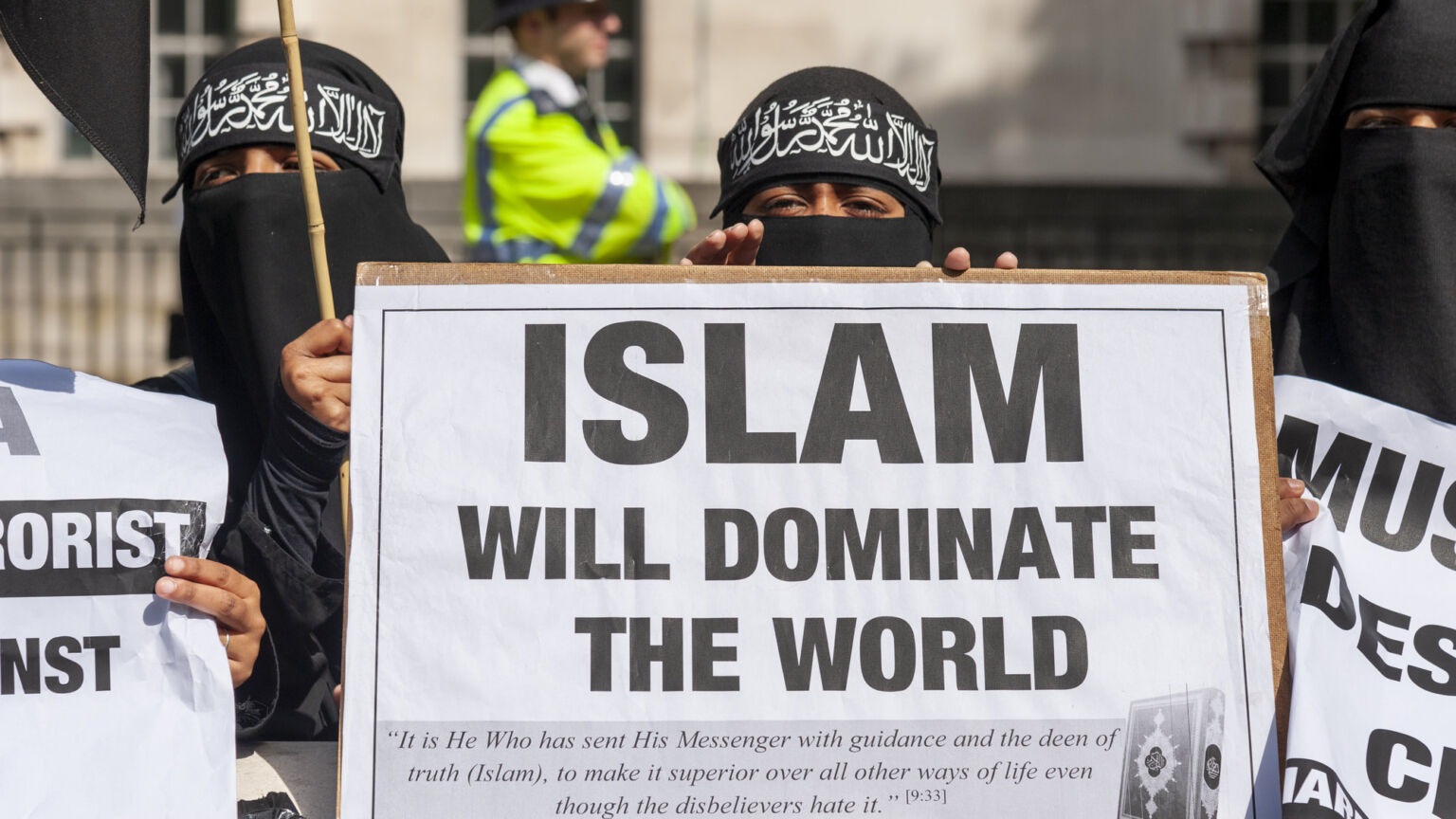
At a time when political language is routinely muddled, there can be few topics more confused than that of Islam and Islamism. The failure to make a clear distinction between the two – an error across the political spectrum – makes it harder to understand the true dynamics of Islamist movements, and particularly their relationship with the left. Indeed, those ‘progressives’ who align themselves with Islamists are often described as ‘useful idiots’ or cowardly ‘appeasers’. But when Islamism is properly understood, it becomes clearer why the left has such an affinity with it.
Although the term is often used in public debate, the precise meaning of Islamism is typically unclear. It is not synonymous with more observant or fundamentalist Muslims. Its true character was well summarised by Bassam Tibi, a Syrian-German political scientist, who said: ‘Islamism is about political order, not faith.’ Nonetheless, it is not mere politics, but religionised politics, that is at its core. Essentially, Islamism is best seen as a form of politics in a religious wrapping.
Islamism first emerged against the backdrop of anti-colonial struggles in the wake of the First World War. But unlike the radical nationalist movements that initially gained power in the Arab world, like that led by Egyptian president Gamal Abdel Nasser, Islamists did not aspire to embrace the benefits of modernity for those living in poorer parts of the world. On the contrary, Islamist movements were implacably hostile to cultural modernity, democracy and liberal values. They were also extremely sceptical of the nation state, if not outright hostile to it. Instead, they aspired to some kind of nizam Islami, or new Islamic order, transcending national boundaries in the name of a shared theocratic vision.
As Tim Black has noted on spiked, the first Islamist movement was the Muslim Brotherhood, founded in Egypt in 1928. Many of today’s Islamist groups, including Hamas, are offshoots of the Muslim Brotherhood. The first Islamist movement in the Indian sub-continent was Jamaat-i-Islami, founded in 1941. It too has many contemporary offshoots, including Islamist organisations in Bangladesh, India and Pakistan. Iran and Turkey both have Islamist governments, and Islamist movements are also prevalent in north Africa. Many of these groups have affiliated networks which operate within Muslim communities in the West, particularly the UK.
Although Islamism is routinely described as ‘medieval’, many key Islamist doctrines were developed in the 20th century, not the 7th. The idea of Sharia as an immutable Islamic legal system is a prime example. Although a concept of Sharia law did develop in the Middle Ages, it was seen at the time as being of human origin, and so open to dispute. In contrast, for Islamists, Sharia is a divinely ordained political order. It cannot, from their perspective, be modified or secularised.
Violent anti-Semitism as a central element of Islamism is also, despite appearances, a modern development. It is true that Islam has often adopted discriminatory practices against Jews. The Ottoman Empire’s branding of Jews and Christians as dhimmis, subjecting them to an inferior legal status and extra taxes, is a well-known example. But modern Islamism goes a lot further. It holds that Jews are a force for Satanic evil, which must be purged from the world.
Hamas’s founding covenant from 1988 makes this all too clear. Its Jew hate is not influenced by the Koran, but by the Protocols of the Elders of Zion, a notorious anti-Semitic forgery originating from Tsarist Russia at the beginning of the 20th century. Among other things, Hamas argues that Jews ‘were behind the First World War, when they were able to destroy the Islamic Caliphate, making financial gains and controlling resources’.
‘They obtained the Balfour Declaration [and] formed the League of Nations through which they could rule the world. They were behind the Second World War, through which they made huge financial gains by trading in armaments, and paved the way for the establishment of their state. It was they who instigated the replacement of the League of Nations with the United Nations and the Security Council to enable them to rule the world through them. There is no war going on anywhere, without having their finger in it.’
Clearly, none of these events or institutions could have been described in the Koran or the Hadith. The ideas in the passage were adopted from the racial thinking embodied in modern European anti-Semitism.
The violent language of Hamas reflects the ascent of a particular strain of Islamism, namely jihad. The jihadis are those Islamists who are openly willing to engage in violence. These people can be distinguished from what are sometimes called institutional or ‘participationist Islamists’ – those who support the use of violence, but do not practise it themselves.
Islamists typically operate covertly, within front organisations, including student organisations and charities. They are hard to identify with certainty as they deliberately try to blend in with broader Muslim communities. Islamists typically see themselves as true Muslims and take a derisive view of any co-religionists who do not share their politics.
Given this, it is hardly a surprise that Islamism and progressivism have such an affinity for one another. They have an awful lot in common: an aversion to modernity, hostility to democracy, cynicism towards the nation state and intolerance towards alternative views. Despite differences on some questions – most notably in relation to gay rights – the overlap is considerable.
There is also a particular affinity between mainstream identity politics and Westernised Muslims. As French political scientist Olivier Roy has noted, many Muslims in the West do not identify with the nations in which they live. For some of them, Islam is not so much a religion but a form of identity, one that precludes any attachment to a secular country. Such individuals are often attracted to Islamist ideas and networks. In effect, they embody a particular variant of the anti-nationhood trend that dominates identity politics in the West.
The progressive indulgence of Islamism is not primarily driven by cowardice or a propensity for appeasement – although that is certainly a factor. Neither is it solely a case of, as the hackneyed phrase goes, ‘turkeys voting for Christmas’. It is because progressives and Islamists agree on so much that they march arm in arm together.
The fundamental problem is not only that an extreme strain of Islam is corrupting an otherwise healthy body politic in the West. It is also that Islamism and progressivism share so much in common. The modern Western left offers fertile ground for Islamism to flourish on.
Daniel Ben-Ami is an author and journalist. He runs Radicalism of Fools, a website dedicated to rethinking anti-Semitism.

The US has denied that it’s planning a ground invasion of Iran. Despite this, there have been signs that the US is preparing for what will undoubtedly be another catastrophic land war. One of the latest is that US troops are telling strippers that deployment is imminent:
AMERICA DECIDES ‘26: Who do you trust when it comes to whether the troops are getting deployed?
OSINT strippers or manifesto-publishing access journos? pic.twitter.com/BBsIw5Z4Po
— ParaPower Mapping (@KlonnyPin_Gosch) March 29, 2026
Iran ground invasion signs
In the video above, influencer Charm Daze says:
So I work at a strip club next to several military bases and something I have noticed lately is all the military guys are coming in and they’re spending all their money… It’s sad. They’re like kind of depressed, and they’re like just coming in like ‘oh yeah, we’re gonna have fun like we’re getting’ – what is it called? Deployed? – ‘like we’re getting deployed next week…
I don’t want to spread misinformation or anything, but it’s just like, a lot of them are really kind. And to see these young guys that look like my pinky toe, they’re so – they’re like fetuses – coming in and then dancing with them and then being like, bye.
It’s actually making me emotional.
It’s fucked up.
In response to the above, a military commenter advised troops not to tell their secrets to their strippers, barbers, etc:
This stripper has singlehandedly caused an OPSEC crisis and panic amongst ex-military careerists.
OSINT strippers, hold the line! Double your Army brass seduction efforts! https://t.co/iA8g88pIFL pic.twitter.com/8jI0OScRDr
— ParaPower Mapping (@KlonnyPin_Gosch) March 30, 2026
The problem, of course, is that many of these troops will feel like their lives are being thrown away for the benefit of oil executives and Jeffrey Epstein associates. As such, why should they care about keeping the empire’s secrets?
Featured image via Charm Daze (Instagram)
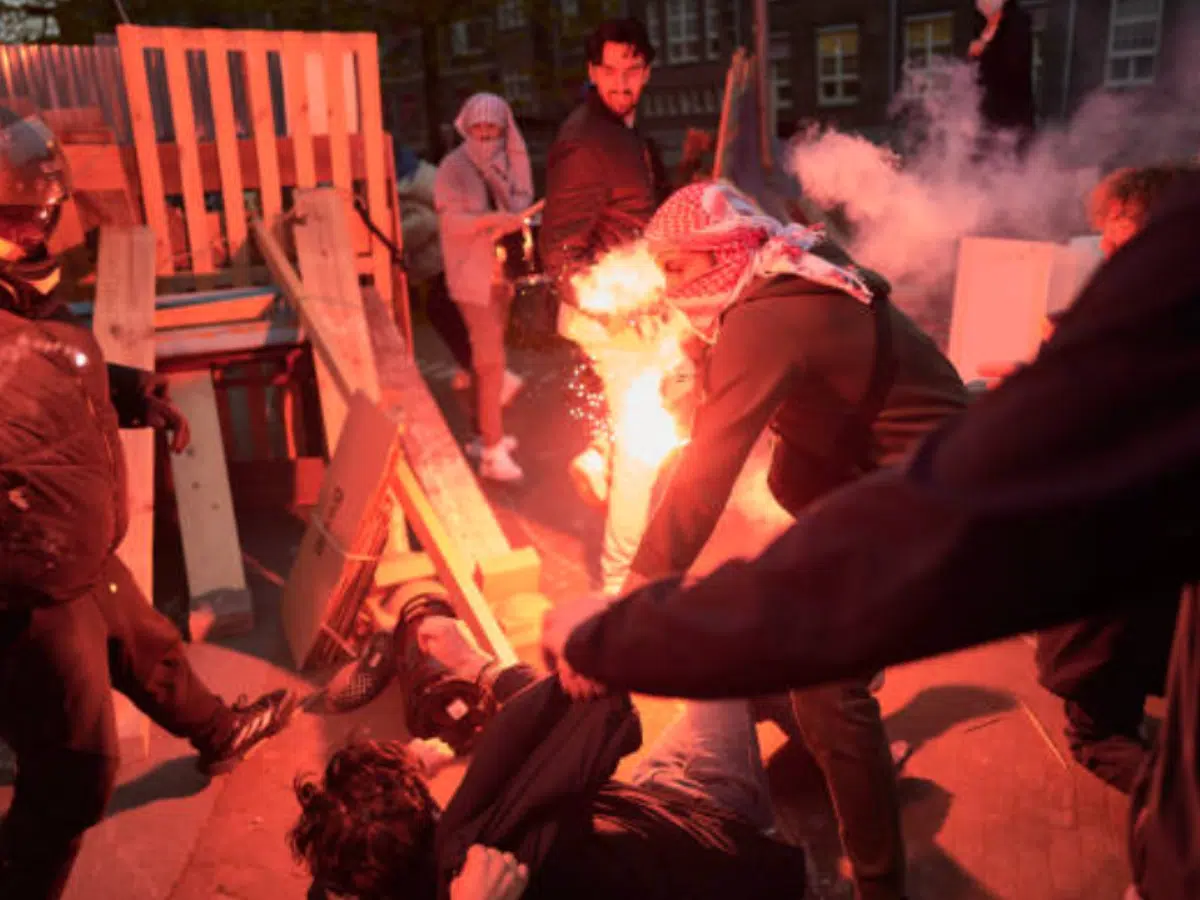
A heroic activist alleged to have been one of three people who spray painted a US military warplane at Ireland’s Shannon airport has said Palestine campaigners need to escalate beyond “marches, speeches and rallies”.
Conan Kavanagh has been charged with:
…criminal damage of the main body of a Boeing 737-700 belonging to the US Navy Reserve at Shannon airport on November 22nd.
Police say he and his comrades crashed through an airport barrier before making their way to the warplane used by the United States military for its global terror campaigns. They are then alleged to have used a “modified fire extinguisher” to douse the offensive object with green spray paint. Showing the extent to which the Irish government will go to protect its US master, Irish soldiers aimed guns at the non-violent activists.
Speaking to Al Jazeera, Cavanagh said:
I took part in the action out of a general frustration with the Irish establishment and society.
He continued:
For a country that prides itself on a shared history of colonialism and resistance, I think we’re incredibly limited in how we express support for the Palestinian people.
A lot of Palestinian activism in Ireland is centred around marches, speeches and rallies, which while good needs to be escalated upon with more actively disruptive protests if we hope to actually force the hands of the state.
Palestine direct action: Shannon hit several times, but more needed
There have been four incursions into the genocide-enabling airport since March 2024, including three in the last year. In the first one on the 30th of that month, three activists got on the runway with a banner which read “US military out of Shannon”. On 1 May 2025, three activists are alleged to have again used a van to breach the airport perimeter, though a trench prevented further progress. 16 days later, another trio got into the facility and spray-painted a US military-contracted Omni Air International Boeing 767 with red paint.
More must be done to match the scale of criminality, however. The airport has for years been a key refuelling point for the US empire. Shannon Watch details this feeble surrender to American militarism, stating that:
Since 2002 close to 3 million US troops have gone through Shannon Airport.
Shannon is also used as a means to ferry munitions across the world. The Irish government has to grant exemptions for overflights or landing at the airport. Shannon Watch show that 1354 of these were issued in 2024. Al Jazeera quote Irish senator Alice Mary Higgins saying:
…it is known that the largest number of exemptions have been sought by Germany and the United States.
The Ditch has reported the Irish government admitting that Shannon has been used to ferry munitions – the tools of genocide – from the US to so-called ‘Israel’. Lately, warplanes have been landing at Shannon before heading on to Germany’s Ramstein Air Base. It is the main US staging post for its illegal assault on Iran.
The Irish government has been unwilling to carry out inspections of planes to see if they are carrying weapons likely to be used to carry out war crimes. This is unsurprising for a government determined to completely end Ireland’s always imperfect position of neutrality. Taoiseach Micheál Martin has been enthusiastically covering for Trump’s mass murder, including during a truly pathetic display at the White House on St Patrick’s Day.
Promising escalation against Collins and GAA
Al Jazeera also spoke to Aine Ni Threinir, who was arrested following the March 2024 action. She agreed with Kavanagh, saying opposition to the US military presence at Shannon:
…should be something that we all mobilise strongly around.
Ni Threinir said people “absolutely could do more”. She acknowledged the risks when the criminal Irish state is determined to invert reality by prosecuting activists attempting to uphold international law.
The South of Ireland has seen increasing use of direct action in the last year. Activists have repeatedly targeted the Cork offices of Collins Aerospace. The company transferred munitions to the Zionist entity via Shannon. On March 30 campaigners from Palestine Action Éire improved the premises’ facade with the use of a hammer and spray paint can. Two activists from the group are alleged to have caused £100,000 of damage during an action on 13 October 2025. In the supposedly more radical North, those backing Palestine are yet to hit equivalent targets such as Aldergrove airport or the companies Act Now named as helping manufacture F35 warplanes.
The effectiveness of direct action was seen again when campaigners took over a Gaelic Athletic Association (GAA) conference at Croke Park. They were opposing the continued use of Allianz as a sponsor, who help insure Zionist land thieves taking Palestinian territory. The pressure resulted in GAA boss Jarlath Burns being provoked into making tone-deaf comments comparing the occupation of the GAA building to the occupation of Palestine.
The sporting organisation’s continued resistance to dropping Allianz suggests direct action will be needed again. Similarly, the Football Association of Ireland must be shown they face a cost if they continue with their plan to play the Nations League match against the genocidal apartheid pseudo-state.
Featured image via the Canary

When Shops Open This Long Weekend

Zcash patches critical bug affecting the Sprout shielded pool

One Star Wars Actor Hated Every Second of His Fan-Favorite Role


-

 Business7 days ago
Instagram, YouTube Found Responsible for Teen’s Mental Health Struggle in Historic Ruling
-

 NewsBeat6 days ago
The Story hosts event on Durham’s historic registers
-
 Tech7 days ago
Intercom’s new post-trained Fin Apex 1.0 beats GPT-5.4 and Claude Sonnet 4.6 at customer service resolutions
-

 Sports6 days ago
Sweet Sixteen Game Thread: Tide vs Michigan
-
Entertainment3 days ago
Fans slam 'heartbreaking' Barbie Dream Fest convention debacle with 'cardboard cutout' experience
-
 Entertainment5 days ago
Lana Del Rey Celebrates Her Husband’s 51st Birthday In New Post
-
Crypto World2 days ago
Dems press CFTC, ethics board on prediction-market insider trades
-

 Crypto World14 hours ago
Gold Price Prediction: Worst Month in 17 Years fo Save Haven Rock
-

 Tech3 days ago
The Pixel 10a doesn’t have a camera bump, and it’s great
-

 Sports2 days ago
Tallest college basketball player ever, standing at 7-foot-9, entering transfer portal
-

 Tech2 days ago
EE TV is using AI to help you find something to watch
-

 Tech3 days ago
Apple will hide your email address from apps and websites, but not cops
-

 Fashion4 days ago
Amazon Sundays: Soft Spring Layers
-

 Tech2 days ago
How to back up your iPhone & iPad to your Mac before something goes wrong
-

 Crypto World2 days ago
U.S. rule change may open trillions in 401(k) funds to crypto
-

 Tech2 days ago
Flipsnack and the shift toward motion-first business content with living visuals
-

 Fashion7 days ago
En Vogue in Brown Leather and Tailored Neutrals by Atelier Savoir, Styled by J Bolin
-

 Politics3 days ago
Should Trump Be Scared Strait?
-

 Fashion7 days ago
What Are Your Favorite T-Shirts for the Weekend?
-

 Fashion6 days ago
Weekly News Update, 3.27.26 – Corporette.com
You must be logged in to post a comment Login