

Politics
Reform suffers self-inflicted Senedd defeat over childcare

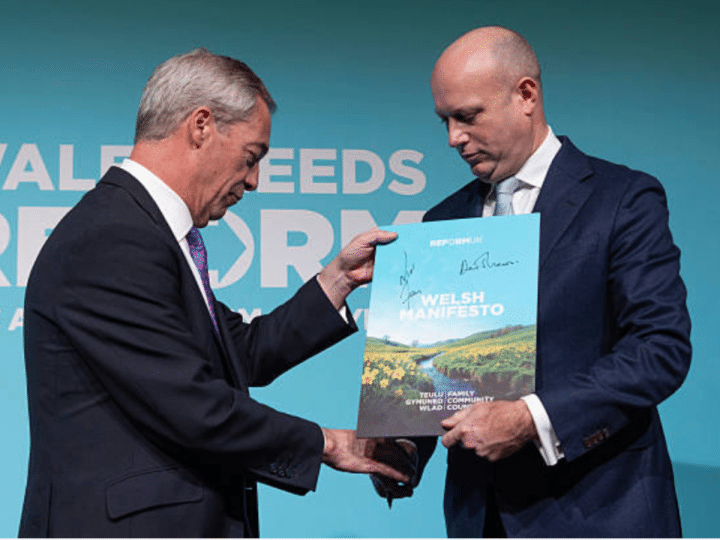
Remarkable things have been occurring in the Senedd — as highlighted by independent journalist Will Hayward, 11 Welsh Reform ministers apparently voted to back an amendment criticising their own party.
The original motion under debate was proposed by Dan Thomas, the leader of Reform’s Senedd branch. It called on the Welsh government:
to publish the full costings and timetable for the introduction of their childcare offer within their first 100 days in government.
Plaid Cymru claim that, once implemented, their plan will see every child aged 9 months to 4 years receive 20 hours of fully funded childcare per week, for 48 weeks a year. The party estimates that this will equate to around £30,000 in care costs per child over their first 4 years.
A little amendment…
Now, we should note here that Plaid have stated that their childcare proposal is already fully costed. However, they haven’t shown any inclination to dance to Reform’s tune by publishing it.
Opening the debate, Thomas made a claim that would come back to bite him fairly sharpish:
I know all parties want the best for children and families, and we may have different ideas about how to achieve that, but the substantive motion that we will be voting on is this Government’s full costings and timetable.
I want to reiterate that Reform supports childcare and we support the current childcare offer, which is already baked into the Government’s budget, as introduced by the then Labour Government.
However, Plaid’s Heledd Fychan and Gwyn Williams had another plan. Their amendment proposed that Reform’s entire motion be deleted and replaced with three points:
1. Notes that Reform UK had no commitments on childcare in its Welsh manifesto.
2. Further notes the clear evidence that improving access to childcare would reduce child poverty in Wales, and that access to universal funded childcare would support parents to return to work or to increase their working hours.
3. Recognises the Welsh Government’s commitment to provide an update on the initial costings and phasing for the expansion of universal childcare before the summer recess, in line with the commitments outlined in the First 100 Days plan.
‘Reform has no plans around childcare’
Hayward had a more succinct description here, calling the situation:
a vote to say that Reform has no plans around childcare.
Unsurprisingly, the amendment to embarrass Reform won in short order. 50 Senedd members voted in favour, compared to 41 against.
What was more surprising, however, was that 11 of those 50 votes in favour came from Reform ministers. Given that the far-right party only has 34 members in the entire Senedd, that’s just shy of a third that voted against their own party. What’s more, without their support, the amendment wouldn’t have passed.
Hayward mused that this begs the question “Why did they do this?”:
You could argue that maybe they’re making a bold statement about what they perceive to be a lack of support from their party to parents in Wales when it comes to childcare. Or it could be that they didn’t really understand how to vote or what they were voting on.
Obviously the Canary’s money is on Reform’s Senedd members being utterly clueless. Just look at the party’s extraordinary incompetence on everything from finance to national security (to finance again) to candidate vetting (and to finance again one more time). Hardly screams ‘safe pair of hands’, does it?
An attack on affordable childcare
However, whilst we always enjoy pointing and laughing at Reform cocking up, it’s worth remembering that this party – when it does get itself together enough to vote – is an active danger to us all. Fortunately, the rest of the Senedd weren’t about to forget that fact.
Plaid’s Sarah Rees reiterated that Reform had “not a single proposal” on childcare. However, she also pointed out that even the party’s tenuously related policies would spell doom for many families:
Reform UK’s proposed tax breaks would do nothing to support parents who’ve already been forced out of the workforce because their childcare bills outweigh their earnings. […]
We’ve also heard Reform representatives, including Dan Thomas, speak to the BBC about improving maternity and paternity rights. Yet this sits in direct contradiction to Reform UK’s own policy of scrapping the Equality Act 2010.
However, it was Plaid’s Keira Marshall – herself a new mother – who really called out Reform’s argument for what it is:
In Cardiff, childcare can cost around £85 a day. That’s what I’ve been quoted. That could be around £1,700 some months. No tax cut will solve that. At that price, it would make more sense for my partner to stop working. And unfortunately for the opposition, that sits directly at odds with the rhetoric we’ve heard from their own candidates about women nurturing and men providing. What we’ve heard today is not really a debate about affordability. It’s a debate about whether Reform believe that childcare should exist in a way that allows both parents to work. And on that question, the public is already hearing their answer loud and clear.
Earlier this week, the Canary reported on the fact that Reform leader Nigel Farage has taken over £80,000 from the US anti-abortion lobby. Likewise, four Reform MPs voted against the decriminalisation of abortion.
Of course, immigrant-bashing is very much front and center in Reform’s policies. But make no mistake — this party is an enemy of women’s rights, and those of anyone they perceive as a woman. Whether it’s fighting to make abortion less accessible or attacking affordable childcare, Reform is a poison for the very ideal of equality itself.
Featured image via Jon Rowley / Getty Images

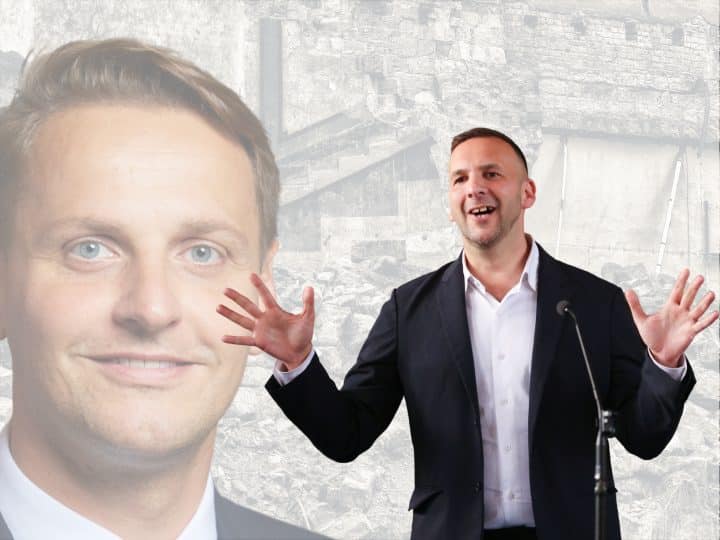
On 15 June, we covered that minister Mike Tapp was gloating about Labour’s latest victory over civil liberties. Specifically, Tapp was celebrating because a court ruled that the decision to brand Palestine Action a terror group can stand. And since then, he’s attempted to goad Zack Polanski into publicly supporting the group:
The fact that your government has made it illegal for me to answer yes is a damning testament to your flagrant disregard for civil liberties.
This may be targeted at those taking action against the genocide, but it sets a very dangerous precedent that puts everyone at risk. https://t.co/KoC3TX2pXL
— Zack Polanski (@ZackPolanski) June 15, 2026
Polanski catches a stray
As a recap, here’s what Tapp tweeted out yesterday:
Supporting Palestine Don’t support terrorists. — Mike Tapp MP (@MikeTappTweets) June 15, 2026

Supporting Palestine Action 
Another government might be able to get away with the above. The reason this murderous Labour regime cannot is because it clearly does not support Palestine. This is obvious in the way it continued to sell arms to Israel during the genocide, and how it refused to even acknowledge a genocide was happening.
Tapp especially doesn’t support Palestine, by the way, and we know that because of his affiliations.
As Skwawkbox reported in November 2024, Labour Friends of Israel made Tapp an honorary vice chair. This group exists to forward Israel’s interests in the UK, which is a problem, because Israel’s interests include:
- Subjecting Palestinians to decades of apartheid.
- Committing genocide.
- Doing everything possible to break the ceasefire between the US and Iran, pushing the world ever closer to a fuel crisis that crashes the global economy.
BREAKING: Israel won't withdraw from land seized in Lebanon, Syria and Gaza, its defense minister says, hours after an interim Iran-U.S. deal was announced. Israel Katz's remarks are the first official Israeli comments since the announcement. https://t.co/KdVpD2iaxq
— The Associated Press (@AP) June 15, 2026
Oppressing Palestinians enjoys widespread support in Israeli society, by the way; as does the disastrous war on Iran. So the next time you’re filling up at the pump and fuel prices have rocketed, remember that Tapp is the honorary vice chair of that.
Back to recent events, Tapp also said this to Polanski:
Tell me, Zack, what should someone who is convicted of a terror related offence look like? I’m intrigued.
— Mike Tapp MP (@MikeTappTweets) June 15, 2026
If we’re going to have terror laws, then a terrorist should look like someone who just committed an act of extreme and targeted violence. The older woman being arrested was carrying a sign with words written on it.
Nineteen Eighty-Bore
Many spoke out about Tapp’s attempt to get Polanski arrested, including Owen Jones of Zeteo UK:
The more I think about this, the more shocking it gets.
A government minister asked a political opponent a question, knowing that if he answered "yes", he would be arrested and potentially imprisoned. That's thanks to his government's unhinged law.
It is so disturbing! https://t.co/iMZ8zbotGT
— Owen Jones (@owenjonesjourno) June 16, 2026
Others spoke out too:
The law criminalises answering this question in the affirmative but it remains perfectly acceptable for Mike Tapp and others to pledge their support for an entity governed by an apartheid regime on trial for genocide. https://t.co/sykZ2hYw8J
— Fahad Ansari
 (Stop the Gaza genocide) (@fahadansari) June 15, 2026
Labour politicians be like “if your opinion is so popular, how come we’ve made it illegal to say it?” https://t.co/xiAgtsbfXM
— Here's What I Reckon: (@angryaboutbikes) June 15, 2026
I don't support genocide. Do you? Seems so. In which case *you're*the one in breach of *your* obligation under the Genocide Convention to *prevent* genocide, not just wring your hands about it after all murdering is done, & demanding eNqUiRiEs when it's politically safe to do so https://t.co/0HQM4Vs0e6
— Mrs Gee

 (@earthygirl011) June 15, 2026
I'm sure Labour rubbing this in people's faces won't come back to bite them at some point, just like all the other acts of left-bashing never have https://t.co/8SVFazEPkp
— Willem Moore (@willem_moore_uk) June 15, 2026
Chilling effect
Green MP Siân Berry had this to say about the decision to maintain the terror designation:
The verdict will have a gigantic chilling effect on our wider rights to protest. I voted against the proscription because I believed it was disproportionate and inappropriate, and today leaves this government as the most draconian I can think of in my lifetime.
With the rise of authoritarian administrations around the world, and a terrifying increase in far-right activity in this country, Labour ministers are taking a horrible risk with freedom in this country. Alongside, mass live facial recognition, digital ID, restriction of jury trials, and taking away trans people’s rights, they are building a toolkit for tyrants.
Add to this that Labour isn’t just cracking down on civil liberties; it’s joking about doing so for social media clout.
This is a sick and depraved party.
And the vileness goes so deep that these politicians are continuing to run with it even as it runs their party into the ground.
Featured image via Jon Rowley (Getty Images)
By Willem Moore
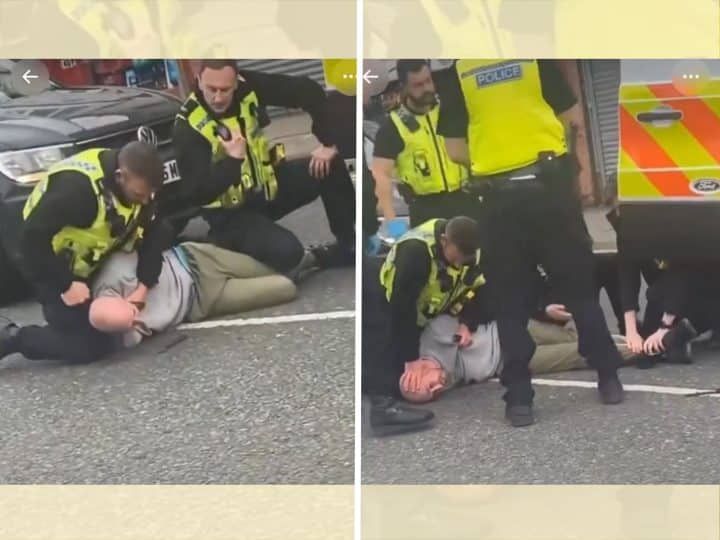
Once again, white riots have erupted across the UK; these supremacist uprisings were fanned by the agitators who glorified police officers kicking a prone man in the head back in April.
Now, however, the shoe is on the other skull:
Was the way to get the right to care about police brutality just showing them when it happens to white people all along? https://t.co/wCpegp6PJm
— JimmyTheGiant (@jimthegiant) June 14, 2026
Police do not protect people
To make something clear up front, we’ve always opposed police brutality, regardless of who the victims are. And this is far from the first time police officers have brutalised white Britons, as we’ve reported:
- A woman tried to protect others from police violence. Today she was sentenced to prison.
- Shocking footage reveals ongoing police violence against protesters – and how they joke about it.
- Woman was ‘terrified’ during arrest at Sarah Everard vigil.
We’ve also reported on instances of police violence against people of colour. A recent example of this was the arrest of Essa Suleiman. As we reported at the time:
On Wednesday 29 April, Essa Suleiman allegedly stabbed three men — two Jewish and one Muslim, in Golders Green. At the time of the attack, Suleiman was living in supported housing, having previously been detained in a secure hospital. Suleiman has a history of mental illness, and was referred to Prevent in the past.
The initial response was to label the incident an ‘antisemitic terror attack’, with the government raising the threat level in response. In light of the above information coming out, however, these moves would later seem to be premature.
At the time, we argued that regardless of the situation, the police shouldn’t have kicked a prone and tasered suspect in the skull:
Training should give police officers the skills and courage they need to detain a suspect without resorting to what could be prosecuted as assault with a deadly weapon. For whatever reason, that training did not take with these officers.
And when we made this argument, the right responded as follows:
The left are already claiming "excessive force" was used on the terrorist.
They can go f*ck themselves.
All of Britain backs the officers. pic.twitter.com/rdcmfZCZmb — Inevitable West (@Inevitablewest) April 29, 2026
The ‘Inevitable West’ account is now retweeting stuff like this:

Truly shameless. And other accounts are making similar arguments in response to separate incidents:
The police threw a protestor so hard into a metal pole that it bent (pictures in the comments). He is now hospitalised.
Surrounded by a dozen or so officers, this is the only way you could detain him?
Police brutality for White working class men only. pic.twitter.com/rlxdmQAfpE
— Landeur
 (@Landeur) June 14, 2026
Belfast police violently arrest local man and woman.
If they were a Somalian knifeman would they have been beaten like this? pic.twitter.com/hQC3wZIgE6
— Turning Point UK
 (@TPointUK) June 9, 2026
One reported death, a 5 year old kid & young boy severely injured/impaled.
The UK Police want you to see how they will treat you for putting a single foot out of line (but only if you’re White that is) — Concerned Citizen (@BGatesIsaPyscho) June 14, 2026
 All these incidents have occurred in recent days.
 …
…
Oblivious
Regardless of your political persuasion, there’s a good reason why you should want police officers to face consequences for using excessive violence. That reason is there’s nothing to stop them committing violence against you once they have the free pass.
As ever, we didn’t have to wait long before the rancid right had this message beaten into them.
Featured image via Twitter
By Willem Moore
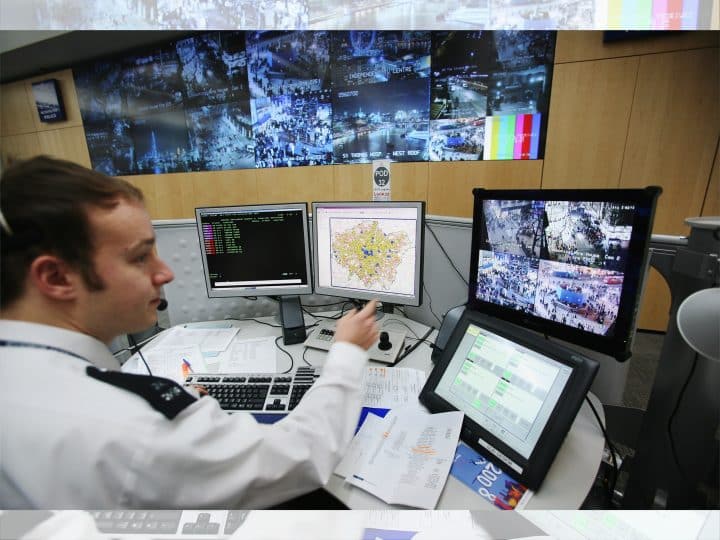
A Derbyshire Police officer is facing a criminal investigation over the allegation that they used Artificial Intelligence (AI) to fabricate evidence.
Police AI use under scrutiny
The unnamed police officer has been removed from frontline duties, according to the BBC. As Derbyshire Police explained:
A criminal investigation has been launched into an allegation of perverting the course of justice after the alleged use of AI systems by an officer to create evidential material in a number of cases.
The force is working closely with the Crown Prosecution Service in relation to any potentially impacted cases, however, the investigation is in its early stages, so no further details are available.
The officer involved has been removed from frontline duties, pending the outcome of the investigation. No arrests have been made.
On 10 June, the government announced ‘PoliceAI’. The announcement declared:
Officers across England and Wales will spend less time behind desks and more time protecting their communities, as the government today launches PoliceAI – a new national centre dedicated to the responsible development, piloting and scaling of artificial intelligence in policing.
The centre, backed by a record £75 million over 3 years, will work across all forces to identify, test and scale AI tools that deliver real results.
Early trials show the scale of what is possible: 800 hours of footage in a kidnapping case reviewed in 3 hours, producing an early guilty plea; and half a million e-books of data translated instantly, leading to the arrest of a serious organised crime gang.
The Derbyshire police officer is accused of purposefully fabricating evidence. AI technology, meanwhile, is notorious for ‘hallucinations’, which are instances in which the technology generates false information and presents it as being factually accurate.
Privacy Researcher T3ch Falcon discussed the announcement of PoliceAI in relation to the case against the Derbyshire officer:
A Derbyshire officer allegedly used AI to fabricate evidential material across multiple cases not one. The Crown Prosecution Service is now reviewing every conviction those cases touched.
Three days ago, the UK government announced PoliceAI.
£140 million. a national AI centre for policing. 40 new facial recognition vans. AI tools for every force in England and Wales by 2027. the official goal: “get responsible AI into the hands of officers.”
Three days later: criminal investigation into an officer for using AI to manufacture evidence.
the interim director of PoliceAI put out a statement today.
“our work is rooted in transparency.”
97% of all criminal investigations in the UK now involve digital evidence. that’s this year’s figure.
AI is already being used to summarise case files, triage evidence, and assist with disclosure.
one officer already used it to manufacture evidence across multiple cases.
nobody noticed until now.
Featured image via Daniel Berehulak (Getty Images)
By Willem Moore
Politics
Politics Home | Policy positions don’t get any easier for government than banning gambling ads


AI generated image

Will Prochaska, Director
| Coalition to End Gambling Ads
Ahead of a House of Lords Liaison Committee session on gambling, Will Prochaska argues that banning gambling advertising, sponsorship and marketing would win votes on left and right, boost the economy, and save the taxpayer money
Gambling harms millions of Britons a year. An estimated 1.4 million people experience problem gambling, including tens of thousands of children, with multiples more harmed indirectly. Families are ruined, debt is accrued, crimes are committed, high streets are ravaged, and lives are taken.
Why would society want something so destructive to be promoted? These facts alone should be enough for a government to end gambling advertising, but we know that economic growth is a defining mission and must be considered.
Fortunately, action on gambling ads is a kind of holy grail for policymakers. Sir Iain Duncan Smith recently said: “It is a rare thing for a policy that will protect people from harm to also help deliver economic growth, cost the government nothing, and have popular public support. Gambling reform is one such policy.”
Numerous studies have shown that if we reduce gambling at the population level we would boost the economy. According to Sheffield University this year, a 10 per cent reduction in gambling spend would lead to a £1.25bn uplift and more than 22,000 new jobs. Imagine what could be achieved if we cut it in half.
The researchers emphasise that these figures are likely an underestimate of the true economic benefit as they don’t account for the massive secondary gains from a healthier workforce, such as reduced sickness and increased productivity. Neither do they allow for the reduction in the multi-billion-pound cost to society of the damage gambling causes.
Evidence in this area is growing all the time. Latest Department of Culture Media and Sport statistics on the Gross Value Add (GVA) of their sectors show that gambling is by far the lowest contributor. What’s more its GVA has fallen by as much as 40 per cent since 2019 despite gambling revenues growing.
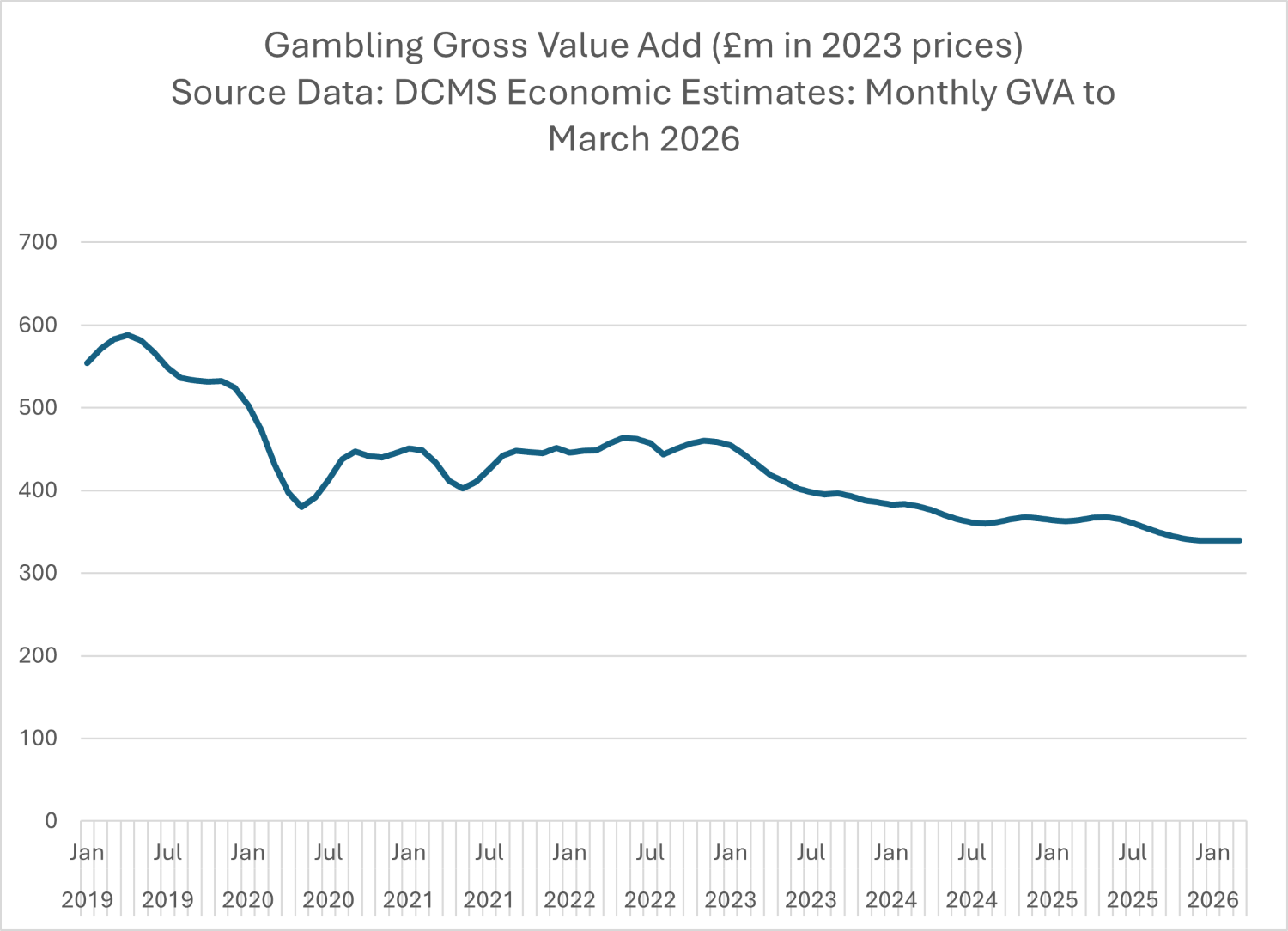
What lies behind this apparent paradox is unclear, but it might be to do with the gambling sector’s move away from labour-intensive forms of gambling (high street bookmakers/land-based casinos) towards data-driven online slots, based overseas in low tax jurisdictions.
That won’t stop the sector crying foul against a ban on gambling ads with siren calls about the need to protect jobs at bookmakers, and sport’s dependence on gambling revenues. But land-based bookmakers were sustainable before ubiquitous gambling advertising was permitted, and sport’s dependence on gambling revenues has been described as “illusory” by the former CEO of the FA and Chairman of Tranmere Rovers, Mark Pallios. You only need to look at how Formula 1 thrived after its cars stopped looking like cigarette packets to get an appropriate parallel.
So what of the sector’s final challenge – the “black market bogeyman”? The argument goes that if we ban gambling advertising then illegal casinos will simply swoop in and take over the market. If this sounds familiar it’s because a similar argument has been deployed by big tobacco for years, but policy makers have become so accustomed to their misinformation that it bounces off.
The unlicensed market for gambling is more complicated, and the sector’s claims are worthy of investigation before being dismissed. The best estimates of the size of the unlicensed sector are that it represents less than 10 per cent of the online gambling market in Great Britain excluding the lottery, and approximately 4 per cent of the total gambling market. Not insubstantial, but not significant enough to dictate policy.
Go a little deeper and the scaremongering becomes more apparent. It turns out that over half the people who use illegal gambling websites are doing so because they’ve excluded themselves from legal sites. In other words, they’ve become addicted to gambling using licensed operators’ products, have tried to stop by self-excluding online, and have then relapsed by being lured back in by unlicensed casinos that don’t abide by the rules.
In this way a liberal licensed market for gambling eventually leads to growth of the illegal market. This is a situation that is currently playing out in America, where states are being lobbied to liberalise gambling as a way to combat illegal gambling, only to end up with an out-of-control licensed sector alongside an out-of-control and growing illegal sector.
The only sensible response is to stop stimulating the market for gambling – full stop. Banning gambling advertising across the board would make it much harder for both illegal and legal sites to advertise, and it would stop normalising gambling, which undoubtedly has been a disaster for Britain. Polling for the Coalition to End Gambling Ads (CEGA) by More in Common shows support across the political spectrum.
The cherry on top of this opportunity for government is that it already has the power to ban gambling ads included in the 2005 Gambling Act. The Labour government that passed that legislation thought they might need a policy handbrake in case their newly liberalised gambling sector got out of control. It’s time for the current Labour government to use it.
Politics
The House | Lord Heseltine: “We Must Not Have Reform Or Restore Anywhere Near The Corridors Of Power”


Photography by Tom Pilston

10 min read
Lord Heseltine speaks to Noah Vickers about regenerating Britain’s cities, the devolution agenda and why Margaret Thatcher ‘would have hated’ Nigel Farage
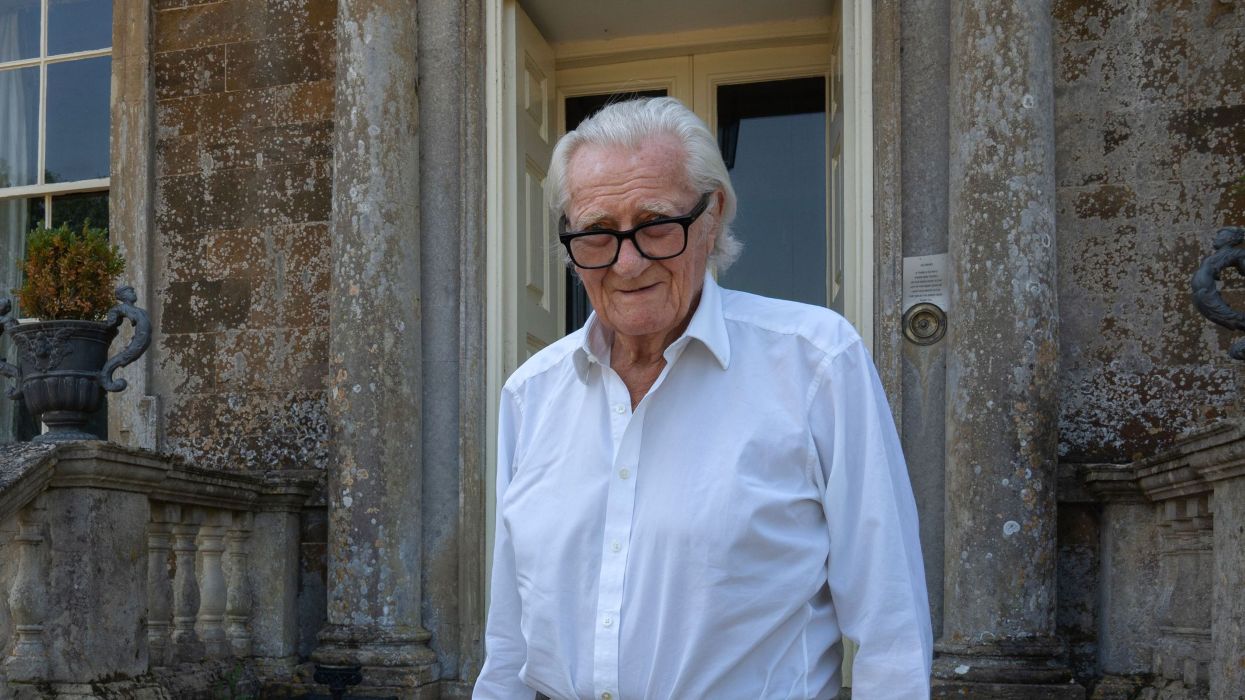
In Lord Heseltine’s sitting room, which offers a view of his estate’s sloping lawns and serpentine lake, a bookcase is lined with Nikolaus Pevsner’s 46-volume series The Buildings of England. The Northamptonshire edition has been bookmarked, possibly on the page describing Heseltine’s 261-year-old Palladian manor, Thenford House, as “decidedly conservative for its date”.
The former deputy prime minister, now aged 93, is perhaps known less for what he conserved, and more for what he tore down and built anew. His most enduring legacy can be found in two of 20th-century Britain’s most significant regeneration projects: the redevelopment of Liverpool and the creation of Canary Wharf. Both were instigated during his time as environment secretary under Margaret Thatcher.
As the Labour government plans to build seven new towns across England, along with potential development corporations to deliver thousands more homes in Oxford and Cambridge, ministers could do worse than look to Heseltine, who overcame significant opposition within Whitehall to get his projects off the ground.
“Turkeys don’t vote for Christmas,” the peer points out. “Every aspect of the British administrative system was opposed to what I was trying to do.
“The Treasury were against because it cost money. Keith Joseph, who was the great intellectual guru of the Thatcher years, was against because it was interventionist. My department was against because it was interfering with local government. The spending departments were against because it was a challenge to their monopolist, functional power structure.
“But I knew enough about government across the world to know that we were a top-heavy, centralised, functionally divided, administrative country – and that is the least effective way to run a country.”
In Liverpool particularly, Heseltine took what now seems a remarkably hands-on approach. Every Thursday for about 18 months, he would meet with a team of secondees from the public and private sectors in the city. They would update him on any political or logistical blockages hindering the scheme – and each Friday, he would ensure they were unblocked.
“For 18 months under Mrs Thatcher, I was [part of] the most interventionist government in British history,” he declares.
Heseltine later set his sights on getting new homes and infrastructure built in the “east Thames corridor” of south Essex and north Kent – a vision never fully realised in the years since. But the peer has not let go of the idea, and in a call for action from ministers, he urges them to resurrect his plan for ‘Hezzaville’, as it was dubbed by the media.
“The biggest potential growth area in Britain is the Thames Estuary,” he says. The problem that governments face there and elsewhere, he believes, is one of political and economic geography. He argues that England’s local government is still far too fractured and should be simplified along the lines recommended in the 1969 Redcliffe-Maud report.
“You need about 60 authorities, with directly elected mayors. Instead of doing a development corporation for a new town in a particular area, you should let the mayor of the county create the necessary structures. The important thing is to have the local person in charge and with resources,” he says.
To get ‘Hezzaville’ off the ground, the peer has a roadmap at the ready: “Essex and Kent should have unitary mayors – full stop. They should then set up a development corporation with roving powers over the estuary. They don’t need to take away the whole power structure – they should simply determine where growth is relevant in the estuary and then work with any development corporation to accelerate that potential.”
Some of the infrastructure need is already being met. The government is pressing ahead with the Lower Thames Crossing, and it is thanks to Heseltine that the High Speed 1 rail route already includes a stop at Ebbsfleet.
The peer was a big supporter of its successor, High Speed 2, and accused Rishi Sunak of committing a “gross act of vandalism” by scrapping the route’s ‘northern’ leg to Manchester in 2023.With an estimated cost now stretching potentially above £100bn, Heseltine laughs when asked what can be done to rescue HS2.
“I have a simple slogan in life: show me a problem, show me the person in charge. It’s not a bad slogan. You need somebody with the skill, tenacity and frankly the determination to make the thing work.”
Comparisons with road and rail projects on the continent, he caveats, are not entirely fair.
“We are a very small, tightly-developed island, so the problems here are quite different to building great motorways on the continent – but it is a national disgrace.”
The scheme will be one of several to watch if Greater Manchester mayor Andy Burnham becomes prime minister. In his campaign to become Makerfield’s MP, Burnham lays the blame for Britain’s ills squarely at Thatcher’s door, as he condemns her government for the “privatisation of life’s essentials”.
Heseltine refuses to get into a sparring match over this. He knows the Labour leadership hopeful “very well” and praises him for having “made a success of the Manchester mayoralty”.
In his 2025 book From Acorns to Oaks, however, Heseltine argued that privatising each public utility “required careful examination to ensure the proposed structure would deliver a wider spread of wealth in a more competitive environment”.
He wrote: “Judged against the above criteria, it can be argued that water privatisation failed both of these tests, for example.”
It is a point he reiterates to The House: “It’s very difficult to see how you have competition with the water industry, so I think there is a legitimate case to ask questions there.”
What he wants, he says, is “the maximum amount of competition and accountability in the management of resources”, while emphasising that the private sector “is an absolutely fundamental bastion of freedom”.
Does he see any case for renationalising the water industry, then? “I would be very reluctant to do that,” he says. “Look, I have not studied the water industry in the last week, month or year or so, so I don’t know what I would do.
“All I know is, whenever I looked at any of these things – and I certainly did privatise more of the state than anybody else ever has, or ever will – I’ve never regretted [it].”
Even if the formal mechanisms for one haven’t yet been triggered, a Labour leadership contest is effectively underway. Would Burnham or Wes Streeting make a better PM than Keir Starmer?
“I actually like Keir Starmer,” the peer replies. “I think he’s a nice guy and a good guy – and he’s got a terrible job.”
Starmer is struggling, he points out, amid problems caused by Donald Trump’s US administration, the war in Ukraine, conflict in the Middle East and the impacts of Brexit.
“Every aspect of the British administrative system was opposed to what I was trying to do”
While the PM is “undoubtedly culpable” for the effects of his government’s tax policies, Heseltine argues there is “very little he can do” about those other four issues, calling it an “absolutely non-win” situation.
“In many ways, any prime minister would be in this present situation, because the underlying malaise affecting this government is the one that always affects governments: living standards are falling and people want change. It’s as simple as that.”
He will not be drawn further on the question of Labour’s leadership, but adds: “My preoccupation with the Makerfield by-election is very simple. We must not have Reform or Restore or anything like it anywhere near the corridors of power in this country. I’ve seen it all before. [Oswald] Mosley in the 30s, Enoch Powell in the 60s.”
He claims that “the Reform and the Restore generation” are making “the most sinister, antisemitic, extremist appeal to a very nasty side of the human character”.
Reform UK leader Nigel Farage has always admired Thatcher, saying after her death that she was a “great inspiration” to him. What might the Iron Lady have made of Farage, had she been alive to see the rise of his political project?
“She’d have hated him,” Heseltine replies without hesitation. “Nigel Farage will assimilate himself with anyone he thinks has got a resonance in public opinion. He is Donald Trump’s vicar in Britain…
“But the origins of ‘Nigel Trump’ are a guy with a beer tankard and a fag. Then the farmers get into trouble, and he turns up looking like a farmer – and this is all a communications process.
Successful, but based on opportunism, based on a degree of prejudices which I find abhorrent. She would have had nothing to do with him.”
If Farage’s party is as dangerous as he claims, should the Tories have stood down in Makerfield and endorsed Burnham?
“I don’t think you can stand aside. I think you attack Reform. You throw everything into the battle.”
So far, the Tories have distanced themselves from Reform on fiscal policy, but have made little attempt to do so on areas like immigration.
“There will come someone,” is all Heseltine says in response to this point, with a slight smirk. Is he saying someone in the Conservative Party will have to start making that case?
“There will come someone, yes,” he repeats. “David Cameron came from not a totally different background.”
What then of the party’s current leader, Kemi Badenoch? Has he been impressed by her performance over the last 18 months?
“Well, I think she is beginning to climb the ladder,” he offers, cryptically.
Has his opinion of her changed at all?
“I had no opinion. I’ve never met her.”
Does he think she’ll win the next general election?
“I think she’s got a very challenging journey, and I’m not going to make any simplistic statements.” Not exactly a ringing endorsement.
At an age when most people would be looking to retire from public life, Heseltine clearly enjoys his status as an elder statesman – and he stands ready with a prescription to deliver Starmer’s elusive “decade of national renewal”.
“I know what this country needs to do,” he says. “First to get rid of its punitive tax policies, secondly to rejoin the European Union and thirdly to go for a devolution agenda.”
Devolution, he argues, has stalled outside England: “What Scotland and Wales did was to replicate Whitehall in Cardiff and Edinburgh.
“I come from South Wales, Swansea. We didn’t think that Cardiff was all that special. Why can’t Swansea be its own self-governing unit? Pembrokeshire, mid-Wales, north Wales [too]. If I was a Conservative in those principalities, that’s what I’d be saying.”
Rejoining the EU, meanwhile, has returned as a serious long-term prospect. If rejoining would be so beneficial for everyone concerned, should Brussels be making a compelling offer to Britain that even Farage would find hard to argue against? For example, one that would give the UK all of the opt-outs it had before?
“If I was the EU, I wouldn’t do that, because I wouldn’t want to look silly. You’ve got to wait until this country has people who are prepared to say, ‘This is what we want to do,’ and carry the public support with them. If I was the EU, I would be waiting for that to happen; I would do everything I could to encourage that to happen. That’s what diplomacy’s about; that’s what private conversations are about.
“If I was a European today, I would know that Britain is an invaluable part of the European power structure. When I see what Donald Trump is saying, it’s a vital part of the defence of Europe.
“But it’s for the young people. It’s for the opportunity to be part of the only credible power structure which can offer us the avenue to research and development on a relevant scale in the modern world.”
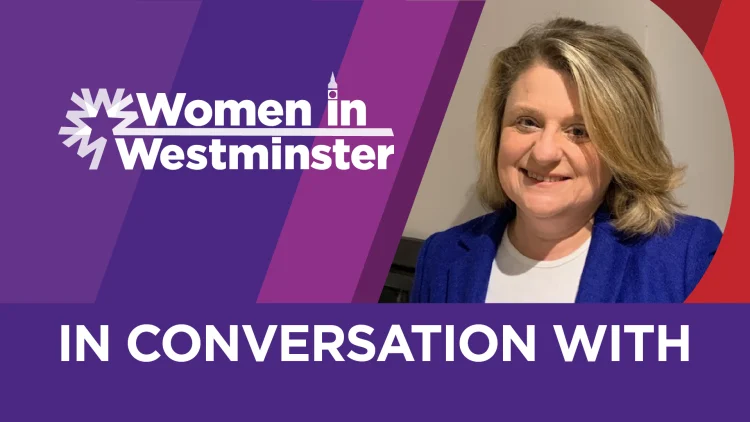
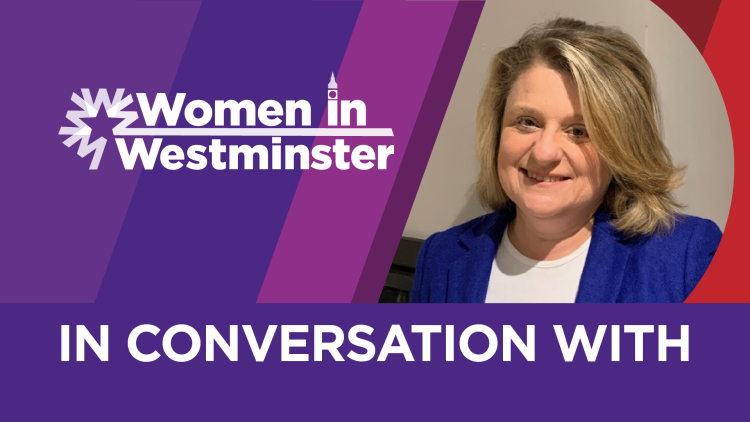

Following her daughter’s murder, Carole Gould OBE found herself navigating a criminal justice system that seemed to care more about the needs of perpetrators than victims. As part of our Women in Westminster series, we sat down with Gould to learn why she believes violence against women is still not taken seriously enough by the courts
In May 2019, Ellie Gould was murdered in her home by an ex-boyfriend. She was 17 years old. Because her killer was also 17, he received a prison sentence much shorter than if he had been older. That injustice motivated Carole Gould, Ellie’s mother, to campaign for changes to the law and catapulted her into the public eye.
“Ellie had such a bright future ahead of her,” her mother tells us. “She would have given so much to society. She was so caring and kind and bright, vivacious, and intelligent. She was an amazing young woman.”
At the start of our sit-down conversation with Gould, I describe what she has experienced as “unimaginable”. As the words come out, I apologise for it being a cliché. But some things are clichés precisely because they are true. Having to deal with the murder of your child is something that few of us can imagine.
But Gould is clear that it was not something that she ever contemplated either. Instead, a single act of violence ripped through the fabric of an entirely ordinary life.
“I just quite enjoyed our little life in Wiltshire,” Gould tells us. “You know, we were happy.”
That life was turned upside down when Ellie was killed. Gould was thrust into a new and entirely unfamiliar world of police liaison officers, courtrooms and barristers. Having to navigate that system felt like stepping inside a hidden world where the voices of victims were often coldly disregarded.
“We understood it that victims were meant to be first and central to the criminal justice system,” she tells us. “Well, they’re really not. It’s all the perpetrators. It’s all about them.”
Gould often felt a huge sense of powerlessness in the face of a legal system that she describes as “cold.” Because Ellie’s killer was 17, he was not sentenced as an adult. Instead, he was handed a life term of twelve-and-a-half years in prison.
“I just remember saying to our barrister, ‘That can’t be right. That’s immoral. That’s unjust. You’ve got to appeal it,’” Gould remembers. “He just said, ‘I’ve told you once, and I’ll tell you again, that is the law. It’s sentenced within the guidelines. The law is cold, and there’s nothing more I can do.’ And off he went. That was it.”
But for Gould, that was certainly not “it”. Fuelled by a sense of injustice, she began to publicly speak out about the inequity of sentencing guidelines that made no distinction between the actions of a 10-year-old and those of a 17-year-old.
“I think it was the injustice, how immoral the outcome was,” she tells us. “Ellie was an amazing young woman. For the state to say, your life is only worth twelve-and-a-half years was just shocking.”
She contacted her local MP and began to raise the issue in the media. Other families who had experienced loss through homicide contacted her. Soon, a new campaign was born. Killed Women was co-founded by Gould and Julie Devey, whose daughter Poppy was murdered in 2018. The campaign has supported families, pressed for sentencing reforms and given a voice to those who felt let down by the legal system.
And as Gould learnt more about the rules around sentencing for domestic homicide, the angrier she became, leading her to campaign for tougher sentences for teenage killers.
“When they introduced Ellie’s Law, they said that the youth sentencing would be a percentage of the adult sentencing. Then I looked into the adult sentencing and thought, how can it be right that if you’re murdered in the home, that’s 10 years less than if you’re murdered in the street? It just felt like you unpick one thing and then you have to unpick another.”
When Ellie’s Law was first announced, Gould spoke out against it because it perversely led to a starting point that would actually have been lower for her own daughter’s murderer. Arguments that it would increase sentences for terrorists, and some other killers missed the central point that the driving force behind the campaign was speaking up for women killed by men.
“Ellie was a victim of male violence, so it felt like a huge insult and that we were used as a poster family to make the government look good,” Gould says. “I think at the time, Sir Robert Buckland [the then Justice Secretary] was horrified that his civil servants had not looked into the detail enough.”
The law was subsequently revised so that a 17-year-old can now receive 90 per cent of an adult sentence. With other campaigners, Gould has also been successful in having a range of new aggravating factors applied to sentencing. It now means that if a woman is murdered because of the end of a relationship, if there is strangulation, overkill, or a history of coercive control, then extra time can be added by a judge.
However, Gould believes that having those factors in the sentencing guidelines is not yet delivering the longer sentences that she and others would like to see.
“Even though it’s written into the sentencing guidelines, they are not adding any extra time for these new statutory aggravating factors,” she explains. “I just think there needs to be a huge cultural shift within judges and the judiciary to start taking crimes against women and girls seriously.”
Coincidentally, the week that we spoke with Gould, the headlines were again dominated by a story about youth sentencing. Three teenage boys had just received non-custodial sentences for the rape of two girls in Hampshire. Ellie’s Law applies only to murder, but Gould told us that the Hampshire case illustrates an ongoing disregard for the seriousness of offences against women and girls.
“I think what it exposes is a judge, a male judge, once again, not taking violence against women and girls seriously,” she told us. “And not understanding the huge impact that it will have on those young girls for the rest of their lives.”
Throughout our conversation, it is clear that Gould remains angry. It would be easy to conclude that this is what motivates her. But that would be a mistake. Above all else, her campaigning is driven not by anger but by love.
“Ellie was worth so much more, and this is what she would have wanted,” she says. “She would have wanted proper justice and accountability. I have to be that voice.”
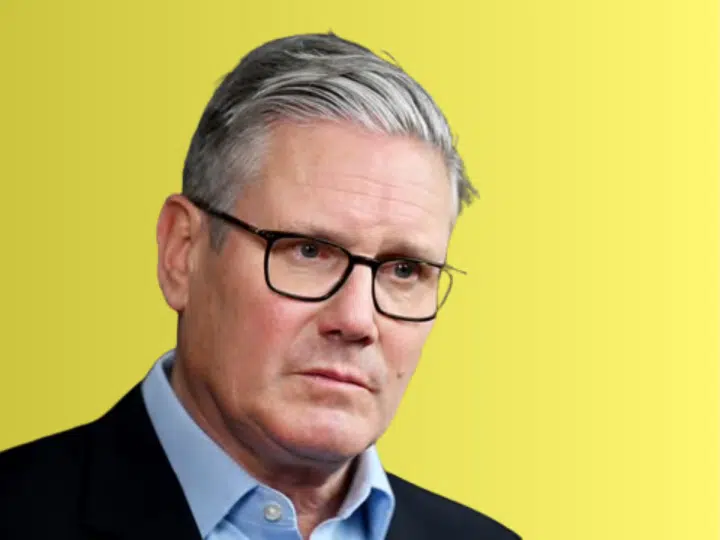

The Masjid-e-Quwwatul Islam mosque in Blackburn was set on fire last weekend. Keir Starmer, his government and the state-corporate media have been deafeningly silent about the arson attack. It was the latest of countless Islamophobic attacks in the UK.
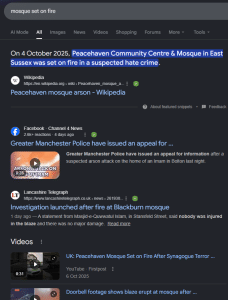
No ‘COBRA’ meeting. No emergency funding. Not even a word of condemnation from Number 10. ‘Mainstream’ media coverage was limited to a mention in the local press. Google’s search results show only a 2025 arson attack and an article about a separate attack on an Imam’s home:
State contempt
The Muslim Social Justice Initiative (MSJI) pointed out the stark difference in the state machinery’s reaction when Muslims are targeted by violence:
Another mosque in the North has been set on fire. Alhamdulillah, no one was injured.
This comes days after the family home of an Imam in Bolton was firebombed while his loved ones were inside.
Where is the urgency?
The state has spent decades surveilling, criminalising and dehumanising Muslims. It has created the conditions our communities are now being asked to survive.
Muslim communities should not have to continue to beg for care or protection while our mosques and families continue to be targeted.
If your politics oppose state violence, war, policing and empire, then anti-Muslim racism must be central to that struggle. We cannot keep stressing the urgency that is missing.
The Starmer regime only cares about even British Jews when they can be used as an excuse to attack those opposing Israel’s crimes. When Jewish people oppose those crimes too, as they prominently do, the state targets them — and it routinely shows its contempt for Muslims, their rights and their safety.
The Starmer government and the machinery of the British state are fundamentally racist and elbow-deep in murder and colonialism.
Featured image via the Canary
By Skwawkbox
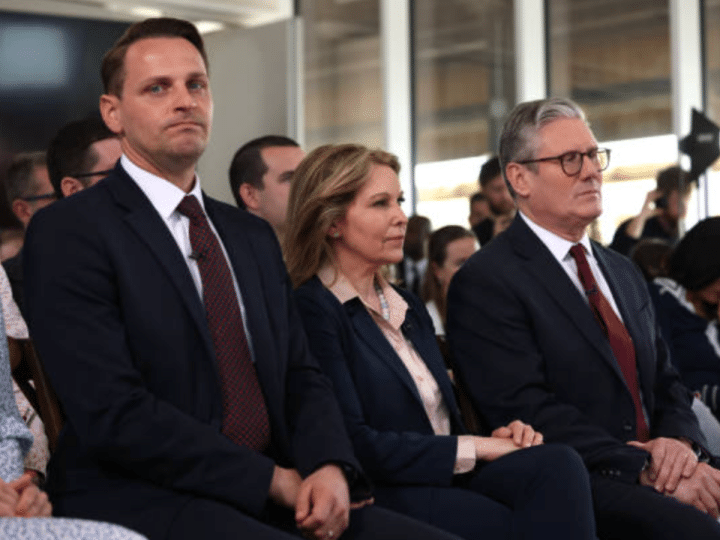
Israel-fanatic and Labour Friends of Israel (LFI) vice-chair Labour MP Mike Tapp isn’t the brightest — or most moral — bulb in the box.
Tapp thinks it’s great for police to beat the crap out of a helpless suspect. So maybe it’s no surprise he didn’t see what a door he was opening when he tried to taunt Green party leader Zack Polanski about the arrest of grannies and vicars opposing genocide. But asking Polanski what a convicted terrorist should look like? Come on.
Who’d ever have guessed?
But that’s exactly what Tapp did. Polanski had rightly pointed to the Starmer regime’s war on freedom of speech and Tapp thought he was being clever:
Tell me, Zack, what should someone who is convicted of a terror related offence look like? I’m intrigued.
— Mike Tapp MP (@MikeTappTweets) June 15, 2026
It wasn’t rocket science. Cue the part of X that has humanity to point out the genocidal terror state that Tapp fanboys:
Oh, you know it, don’t be shy pic.twitter.com/erfVnSj41j
— Malaria Before The Neolithic (@MalariaIn) June 15, 2026
Lots of people had a similar idea. Like pointing to the actual wanted war criminal who runs the terror state:
A bit like this I’d imagine pic.twitter.com/ZPuTDsvlqH
— Solma Ahmed #betterworld
The wanted war criminal who was the target of much toadying by Starmer’s government:
— AddLies (@AvidFan4u) June 15, 2026
And his president, who received a warm welcome from Tapp’s boss Keir Starmer:
— AddLies (@AvidFan4u) June 15, 2026
Or the supposed ‘most moral’ army’s predilection for dressing up in the lingerie of Palestinian women it has murdered or ethnically cleansed:
— Rest in Pissinger
From the River to the Sea. (@Shanksponie) June 15, 2026
Others pointed to the welcome shown by Starmer to the now re-branded Syrian president, Ahmed al-Sharaa, a former member of Hayat Tahrir al-Sham (HTS). The terrorist group was on the UK’s banned list until Keir Starmer removed their name in October 2025, and rolled out the Downing Street red carpet for al-Sharaa:
You should know. Your PM welcomes all sorts of war criminals into his office. pic.twitter.com/lCb2btEcCw
— monaktrix (@monaktrix) June 15, 2026
The double standards that build up the shaky credibility of who the government labels terrorists are clear for all to see:
Well he was one a few months ago according to this government. Apparently according to this government, now he’s not.
You use proscription as a political tool rather than a legal one and apply it where it’s convenient and where geopolitical interests dictate. pic.twitter.com/MtGnct8zMf
— ZK (@xk_machine) June 15, 2026
Others went for Tapp’s own odiousness directly, with unflattering comparisons to genitalia featuring prominently:
Definitely not like that, you sweaty little ball-bag.
It looks more like a UK MP supporting a genocidal regime, currently engaged in terrorism on the Palestinian people.
— MOCHA (@MOCHARTY) June 15, 2026
Fuck off you genocide terrorist supporting cunt
— Liam (@lc02848) June 15, 2026
And for his own eager collusion in Israel’s terror:
Go check the shiny thing above your bathroom sink
— Negative Zero (@KilValmer) June 15, 2026
And that of his whole Quisling parliamentary group:
Like this
pic.twitter.com/4ZYUsgCezC
— Osita Mba (@DrOsitaMba) June 15, 2026
Some arguably got the wrong flag in the background, though:
— Harry (@SomeLargeRats) June 15, 2026
And of course, some simply pointed out whom the Starmer-Tapp axis does consider a terrorist while turning a blind eye to the whole terror state and its racist ideology:
Well this, according to Labour. pic.twitter.com/9qkbLR8VLq
— Nelson

Yes, the average box of Palestinian dates could have seen it coming, but Tapp didn’t. But then, Israel and its supporters are a lot more famous for their arrogance than their brains.
Featured image via Dan Kitwood / Getty Images
By Skwawkbox

Iran and the US are set to sign a new peace deal this Friday. The US has been humiliated on multiple fronts, to say the least. The Oman-brokered deal, as we have often repeated, offered unprecedented concessions, but the US and Israel attacked Iran anyway.
The full terms of the new deal are not yet clear. But we are being told the details are finalised, to be formally signed on 19 June. Here is what the news agency Reuters has reported:
STRAIT OF HORMUZ:
* Iran immediately reopens the Strait of Hormuz to all commercial vessels, while the U.S. lifts its naval blockade on Iranian ports. The lifting of the U.S. blockade would begin immediately after the memorandum is signed and be completed within 30 days.
It is worth noting that Iran has said that there will be a toll charged for navigating the strait. Iranian Foreign Ministry spokesman Esmaeil Baghaei said on 15 June:
Our goal is to pave the way for a secure passage in this waterway. We need a certain period of time to discuss with the other sides this important matter.
It’s full services that will be offered in order to keep and maintain the environment. So many other services will be offered by Iran and Oman, and this will cost money. Accordingly, the fees will be there, and this is clear.
Baghaei also made it clear a ceasefire in Lebanon was integral to any deal for Iran.
Iran, sanctions, and the post-war economy
Here is where the parties are on economic matters, according to Reuters:
FINANCIAL:
* The U.S. agrees not to impose any new sanctions on Iran until a final deal is reached.
* Following a final agreement, all U.S. and U.N. sanctions on Iran would be lifted according to an agreed timetable.
* The U.S. will waive oil sanctions on Iran for a specified period, allowing Tehran to sell oil and receive revenue.
And:
* The U.S. agrees to release $25 billion of Iran’s frozen assets, including via direct cash transfers, cooperation among regional countries, and financial credit lines.
* Washington, in coordination with its regional allies, would prepare a reconstruction and development plan for Iran, to be negotiated and agreed with Iran within 60 days.
The questions of nuclear power and weapons
And this appears to be the agreed position on nuclear issues, a subject of ongoing negotiations for Iran:
NUCLEAR:
* Tehran agrees that it will neither produce nor acquire nuclear weapons.
* Pending a final agreement, Iran would maintain the current status of its nuclear programme, refraining from further uranium enrichment and expansion of nuclear facilities.
* The United States agrees to allow Iran to dilute its stockpile of highly enriched uranium on Iranian soil under a future comprehensive agreement.
* Iran’s nuclear programme, uranium enrichment activities and mechanisms for handling its stockpile of highly enriched uranium would be negotiated within 60 days of the memorandum and addressed in a final agreement.
There is understandable scepticism in Iran about whether the deal is real. The US has repeatedly used talks as a cover to continue its war. Even the legacy media has accepted this.
Here is the Guardian on the day the war began:
In June last year, Israel, with the US later in tow, launched a 10-day attack on Iran just three days before Iran and the US were due to meet for a sixth set of talks.
So this assault, in the middle of a second negotiation process, must torpedo the chances of the Iranian regime ever taking a US offer of talks seriously. They have been stung twice.
Middle East Eye has interviewed Iranians on the ground, and cited a man named Mohammed saying:
Just look at how long it took them to reach this small understanding, which is really more of a ceasefire extension than anything else.
During that time, the United States attacked, Israel attacked and Iran attacked.
All of that makes it difficult for me to be optimistic. People want to believe all their problems are over, but I don’t think Iran and the United States will be able to reach an agreement on difficult issues like the nuclear programme and sanctions relief.
The jig was up a long time ago. US journalist Spencer Ackerman called the US loss as early as 31 March:
So You Lost A War To Iran. And you’re going to try to convince us you… won. Wow. Wow, OK.
He followed up in mid-May with a piece titled:
Not A Stalemate With Iran, An Unambiguous Loss.
Read them both for a clear-eyed view of where the US is, as this war — we hope and pray — finally closes out.
US self-delusion to the last minute
On the US side, vice president JD Vance praised Israel as a “good partner”:
CBS: Is Israel on board with this? It doesn't appear so at this time
JD VANCE: Israel has been a good partner, but we do expect everybody in the region to honor this agreement. There are always bumpy moments with these ceasefires pic.twitter.com/gFl6ayFT5p
— Aaron Rupar (@atrupar) June 15, 2026
He then tried to recast America’s war objectives to excuse Trump’s failure to achieve any:
JD Vance on Iran:
What Trump really wanted to do—not just over the last six weeks, but really over the last year and a half of Iran policy—was get us to a place where we could fundamentally change our relationship with the Iranians and ensure that they never have a nuclear… pic.twitter.com/GfdIptzQmT
— Clash Report (@clashreport) June 15, 2026
Vance also denied the claim by Iran that it’s frozen billions would be restored. He went as far as saying the Iranians need the deal to be palatable to unwitting hardliners — making a glib point about political optics inside iran.
CBS: The Iranians are saying they're gonna get $24 billion in frozen funds if they hit certain benchmarks. Is that true?
JD VANCE: We're open to a lot of things that are on the table but that doesn't appear anywhere in the text pic.twitter.com/lfyOEmGfJm
— Aaron Rupar (@atrupar) June 15, 2026
A Reuters exclusive, published on 13 June, cited four anonymous sources, saying that the UAE had agreed to unlock $10 billion of frozen Iranian funds.
One source described the move as a face-saving backdoor option for the US:
that the agreement would be a way for Iran to obtain the payoff it sought in return for a ceasefire, while allowing the Trump administration to claim it did not pay.
Of these sources, two told Reuters that $3 billion had already been released. The Emirati foreign affairs ministry issued a statement to deny these claims, in characteristic fashion. Anyone reminded of their denial of Netanyahu’s “secret” visit in mid-May…
Meanwhile an anonymous Iranian official told Drop Site News that the government has drafted in psychologists to craft communications with Trump’s erratic tendencies:
We added two senior psychologists to the negotiations’ advisory circle so that we can shape messages intended for President Trump from the perspective of managing what we regard as psychopathic behavior pattern.
[Trump’s] reactions have improved noticeably since we began incorporating the recommendations of these advisers into our messages and written communications.
As Iran and America debate the terms and fine print, one key measure of the deal is whether it is better than the terms offered before Trump and Israel started pummelling Iran on 28 February.
For that, we’ll have to wait until Friday 19 June.
Featured image via Chip Somodevilla / Getty Images
By Joe Glenton

Sweden opened their World Cup campaign with a ruthless performance, easing past Tunisia 5-1 in a match that underlined the attacking depth Graham Potter has built. It was not flawless — but what mattered was control, clarity and a front line that looked sharp from the first whistle.
Gyökeres strikes early
Viktor Gyokeres and Alexander Isak, the two strikers Sweden have long hoped would peak at the same time, delivered exactly what Potter wanted: movement, power, and goals. Between them, they set the tone for a night that rarely drifted from Swedish hands.
Tunisia had their moments, especially early on, but once Sweden settled, the gulf in quality became obvious.
Sweden started with a touch of tension, misplacing passes and allowing Tunisia to press high. But the breakthrough came quickly enough to settle things down.
Gyokeres, drifting into the left channel, burst past his marker and finished low across the keeper. It was a goal that summed up his performance — direct, decisive, without hesitation. Sweden needed that early punch, and he delivered it.
From there, the rhythm changed. Sweden began to play with more patience, more width, and more confidence. Tunisia, who had looked lively in the opening minutes, suddenly found themselves chasing shadows.
Tunisia strike back
If Gyokeres brought the aggression, Isak brought the calm. His goal was Sweden’s second and it came from a move that Potter will have been delighted with. It was quick combinations, midfielders stepping between the lines, and Isak finishing with the kind of composure that makes everything look simple.
He didn’t need power. He didn’t need to force anything. One touch to set himself, one touch to guide the ball into the corner. Sweden were 2-0 up and playing with a freedom that Tunisia struggled to disrupt.
Isak’s influence went beyond the goal. He dropped deep, linked play, and created space for Gyokeres to run into. It was the kind of partnership Sweden have been waiting years to see consistently.
Tunisia pulled one back with a well‑worked move that exposed Sweden’s right side. It was a reminder that Potter’s team is still a work in progress, still learning the defensive demands of tournament football.
But the response was immediate. Sweden didn’t panic, didn’t retreat. They moved the ball with more care, and patiently waited for the next opening. It came through Gyokeres again, a header this time, powered in from close range. Sweden restored their cushion and never looked back.
Midfield balance holds
Much of the conversation will focus on the forwards. However, Sweden’s midfield deserves credit for the way the game unfolded. The balance was right — one sitter, one passer, one runner — and they kept Tunisia from building any sustained pressure.
Potter has spoken often about wanting a team that can adapt within games, and this was a good example. When Tunisia pressed, Sweden played around it. When Tunisia dropped, Sweden pushed their full‑backs higher and stretched the pitch.
In the second half, Sweden didn’t chase the game. They managed the tempo, waited for Tunisia to tire, and struck again. Isak added another, guiding in a low finish after a neat passing move. The fifth came late, a scrappy goal that summed up Tunisia’s frustration as much as Sweden’s persistence. By then, the contest was settled. Sweden had taken charge.
This was the kind of performance that reflects a manager’s influence. Potter spent months trying to blend Sweden’s traditional strengths — organisation, discipline, physicality — with a more fluid attacking style. Against Tunisia, the balance looked right.
The pressing was coordinated. The transitions were sharp. And the team played with a confidence that suggested they believe in the plan. There will be tougher tests ahead, but this was a strong opening marker.
Endgame
A 5-1 victory in a World Cup opener is more than just three points. It gives Sweden momentum, belief, and a platform to build from. It also sends a message to the rest of the group: this is a team with goals in it, a team that can hurt opponents in different ways.
For Tunisia, the scoreline will sting. They competed in spells but couldn’t match Sweden’s efficiency in both boxes. Their tournament is far from over, but they will need a response.
In the end, the story of the night was simple: Sweden’s forwards were too good. Gyokeres brought the force, Isak brought the finesse, and together they gave Sweden exactly the start they wanted.
It wasn’t over‑the‑top or dramatic. It was a well‑executed win for a team with ambitions of going deep into the tournament, which is exactly what matters.
Featured image via David Ramos / Getty Images
By Faz Ali

How Lorong AI is shaping Singapore’s AI ecosystem

Mateus Fernandes makes Man Utd transfer call during talks with West Ham | Football
IG Design Group CEO designate receives share award


-

 Business2 days ago
No Jackpot Winner as $257 Million Prize Rolls Over to $269 Million Monday Draw
-

 Crypto World5 days ago
Oppenheimer backs SpaceX as $70 billion retail frenzy builds
-

 Fashion4 days ago
Weekend Open Thread: Tuckernuck – Corporette.com
-

 Crypto World5 days ago
Markets Rally as SpaceX IPO Looms Amid Iran Tensions and Inflation Surge
-
 Crypto World1 day ago
Zimbabwe Requires Crypto Businesses to Register Annually Under New FIU Regulations
-
 Entertainment7 days ago
The Ryan Gosling True Crime Thriller On Netflix That Gets Even Stranger, Stream It Now
-

 Tech3 days ago
NanoClaw integrates JFrog registries to secure AI agent downloads
-
 Sports7 days ago
Bangladesh beat Australia after 20 years in ODIs, register only their second win over six-time world champions | Cricket News
-

 Crypto World3 days ago
Bitget enters Argentina’s regulated crypto market through PSAV registration
-

 Tech4 days ago
This Week In Security: Microsoft On Microsoft, Register Your Domains, Linux On ARM, And FreeBSD Joins The File Cache Club
-
 Tech5 days ago
Dutton Ranch star claims they ‘didn’t see any disruption’ on set following Chad Feehan’s exit from Yellowstone spinoff fueled by Taylor Sheridan clash rumors
-

 NewsBeat4 days ago
El Nino has formed in the Pacific and could set records, forecasters say
-

 Politics5 days ago
Politics Home | Healey Resignation Is “Colossal Failure Of Government”, Says Former Labour Defence Secretary
-

 Business6 days ago
Thailand Ranks Second Worldwide for AI Adoption Growth, Microsoft Reports
-
 Tech6 days ago
‘This is Seattle’s position on AI’: City Council votes unanimously to pause big new data centers
-
 Entertainment5 days ago
Donnie Wahlberg & More Heat Up Las Vegas at Circa’s Barry’s Downtown Prime
-
 Tech5 days ago
Opendoor Ends India Operations, Fueling a Bigger Conversation About AI and Outsourcing
-

 Sports5 days ago
First Time Since 1971: Australia Register Historic Low In ODI Cricket
-

 Politics5 days ago
Belfast burns, while Met chief points finger at Iran and Russia
-

 NewsBeat4 days ago
FBI searches office of Ohio voter registration group
You must be logged in to post a comment Login