Especially in this era of the Internet, the role of the Internet Archive’s Wayback Machine has become increasingly essential as more and more web content vanishes into the ether or is surreptitiously altered to hide salient details. More recently a new worry has seemingly cropped up in the form of scraping of data for so-called AI systems, or at least that’s part of the excuses being offered for blocking the Wayback Machine’s web crawlers, with [Andrew Deck] and [Hanaa’ Tameez] of [Nieman Lab] detailing the impact and reasons provided.
Some news outlets like The Baltimore Banner insist that they’re only blocking the Wayback Machine crawlers because they are worried that LLM chatbots would otherwise ‘improperly cite’ the source of content, while outlets like The Atlantic have put a blanket anti-scraping policy in place. Meanwhile news outlets are generally happy to let paid commercial news archiving outlets like ProQuest and LexisNexis index their content, showing a potential financial incentive.
Whatever the reasons, the direct effect is that as content is modified or vanishes during for example a system migration, buy-out or bankruptcy, researchers who rely on the Wayback Machine are pretty much forced to rely on paid offerings by ProQuest and kin, without the pure archiving focus and free access to information. It will also leave big holes in what the Wayback Machine can cover in its archives, with news especially becoming very spotty.
Advertisement
Incidentally there’s an ongoing petition over at SaveTheArchive.com which people can sign.
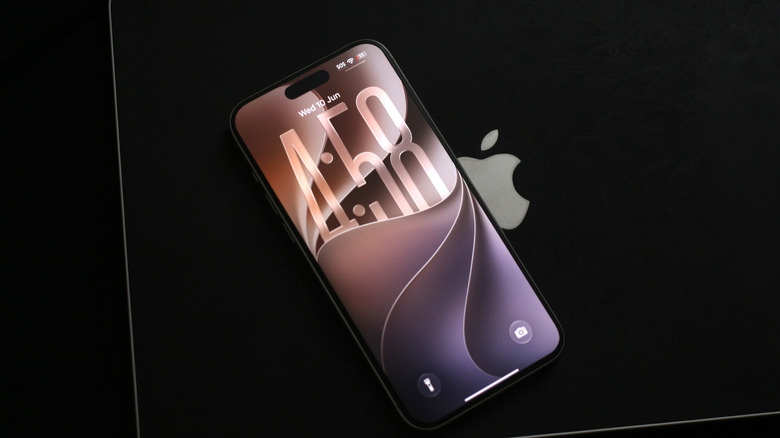
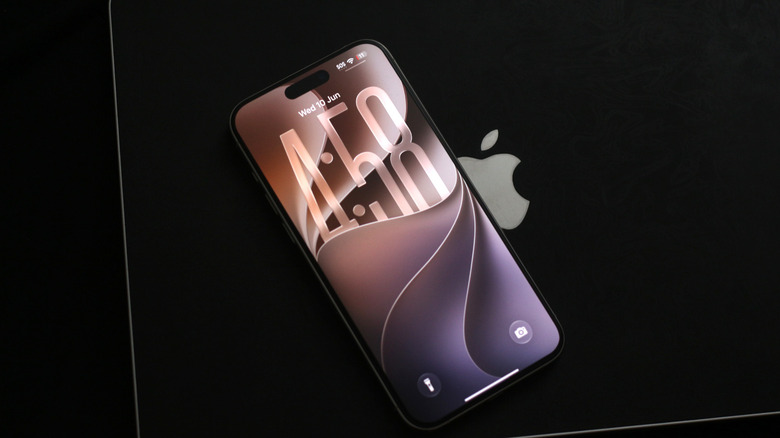
iPhones are often easiest to recommend if you’re looking for a device that just works, with software that’s reliable. That said, iOS 26’s many issues pushed Apple to finally focus on performance and stability with its next big release. At WWDC 2026, the company unveiled iOS 27, which is set to roll out to the masses in September. If you’re keen to try out the new update, however, you can always install the beta build on your iPhone. Public betas are often more stable, while developer beta builds tend to get all the new features earlier.
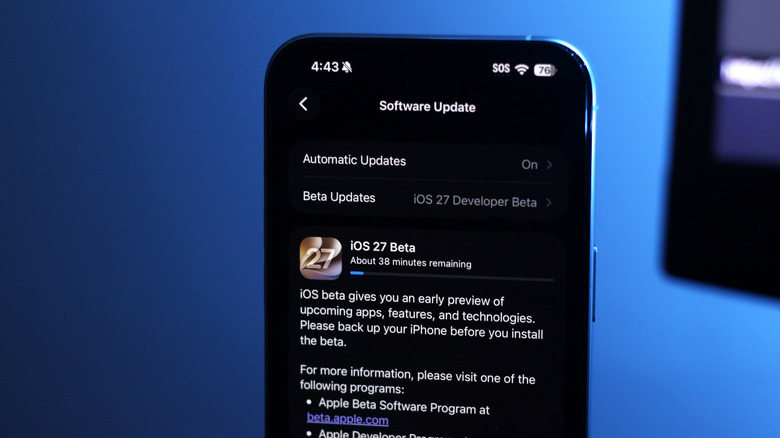
Apple no longer requires you to pay a fee to test its beta builds, as it did a couple of years ago. All you need to do is head to the Apple Beta website and sign in using your Apple ID and password. On the terms and conditions page, click on “Agree.” Restart your iPhone and navigate to Settings > General > Software Update, and you should now be able to see a new “Beta Updates” section. Tap on it and select “iOS 27 Developer Beta.” Give it a quick second, and your iPhone should now let you download and install the newest beta version of iOS.
Depending on your internet connection, the process may take anywhere from a few minutes to an hour or more. While you won’t lose any data, it’s highly recommended you make a backup of your iPhone prior to installing any beta builds.
Advertisement
Pros and cons of installing iOS 27 early
Adnan Ahmed/SlashGear
Apple seldom makes major changes with its products, so when iOS 26 got a facelift with the Liquid Glass design system last year, everyone was excited. It did come at the cost of iOS 26 slowing down iPhones, making iOS 27’s emphasis on performance and stability improvements its biggest saving grace. We’ve been testing the first developer build of iOS 27 and can confirm that it already feels snappier than iOS 26 ever did — but this isn’t a good enough reason for everyone to rush out and install the beta.
Though you get to try out the cool new things, including Siri AI, a developer beta is meant primarily for testing purposes. We do not recommend installing a preview build on your iPhone if it’s your primary device, since there’s a chance that things may break or not function as they’re supposed to. It’s also worth mentioning that the hallmark feature — Siri AI — seems to be rolling out in phases, with many early testers still stuck on a waitlist.
Advertisement
Battery life is also almost always poor with early beta builds, so that’s another thing to keep in mind. It often takes a few developer beta updates to get the noticeable bugs ironed out. Apple usually releases the public beta version by the end of July, which should be considerably more stable if you’re still keen to try iOS 27 out before September.
If you look around your environment, you can probably pick off quite a few things that you’ve made, at least if you’ve been at this a while. You probably aren’t reading this from the bottom of a body of water though, which means you lack the incredible confidence of submarine builder [Hank Pronk]. Not only is he building himself a capable-looking diesel-electric submarine over on YouTube, he’s even DIYing CO2 scrubbers for it! Yeah, that’s a man who believes in himself.
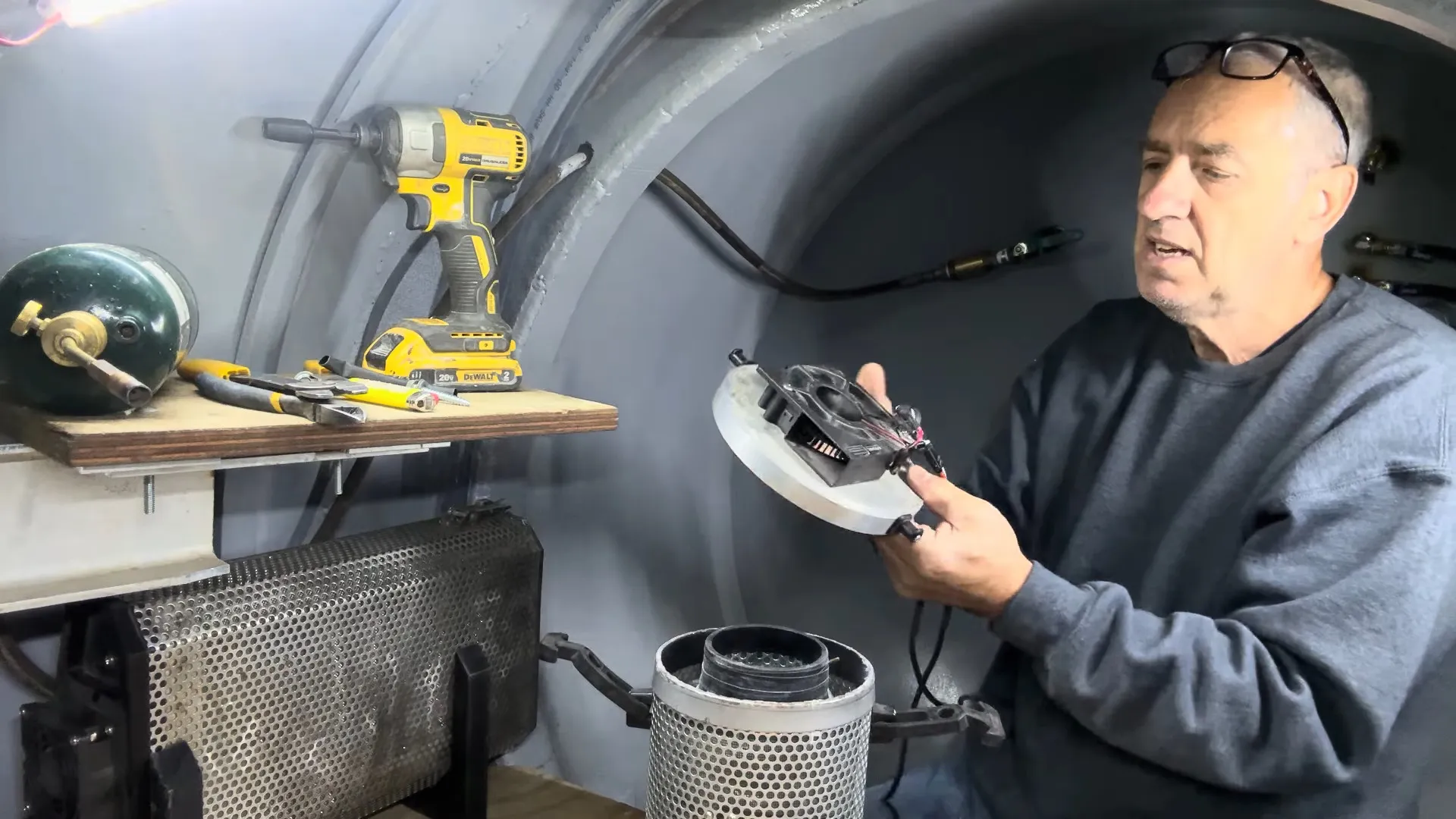
Luckily [Hank] is not anywhere near the Caribbean, so needn’t worry about being misidentified as a narco-sub, but he still has to be concerned about his oxygen supply when tooling around beneath the local lakes. Perhaps more important than the oxygen supply in a sub is the build up of CO2. It doesn’t matter how many oxygen tanks you bring down with you if you can’t scrub CO2 out of the air to make room for it. Just like the Apollo missions, he’s using a chemical adsorbent to take carbon dioxide out of the air — and just like Apollo 13, he’s switching from square to round.
Or, rather, from a rather rectangular commercial model to a DIY little round unit. That’s because he doesn’t need the big scrubber in this sub: being diesel-powered, he expects to spend a lot of time at snorkel depth, where both the pilot and the engines can get clean air through the tube. Dives are expected to be short, and in that use case, too big of a CO2 scrubber is really a waste. If for some reason he gets stuck on the bottom, well, the lake isn’t that deep. He can swim to surface, and has a detailed bailout plan. If he wants to stay under overnight to avoid bailing at night, he’s carrying enough extra adsorbent for that.
Most of us spend more time wearing headphones or earbuds than we realize, and I know I do. Between shuffling playlists during my daily commute, jumping on work calls, listening to podcasts while walking around the neighborhood, and winding down with a late-night binge session, audio has quietly become an essential part of everyday life.
Our listening needs, however, change throughout the day. The over-ear headphones I want for a long workday are not necessarily the same audio wearable I reach for when stepping outside. Yet many audio brands seem determined to convince us that a single expensive product is the ultimate solution.
In an era where new wireless gear launches every other week at eye-watering price tags, finding tech that genuinely balances comfort, performance, and value can feel like a challenge. That is exactly what drew me to JLab. Rather than relying on exclusivity or celebrity endorsements, the brand has built its reputation on creating practical tech designed for real people and real-world routines.
This approach is incredibly refreshing. By delivering high-tier features at an accessible price point, JLab leaves a lasting impression and emerges as a compelling choice for buyers. You don’t have to nuke your wallet to enjoy great sound in your everyday life. That idea has been distilled to the very core of two products in particular — the JBuds Lux ANC Wireless Headphones and the Epic Pods ANC True Wireless Earbuds.
Advertisement
JBuds Lux ANC For the Moments You Need to Lock In
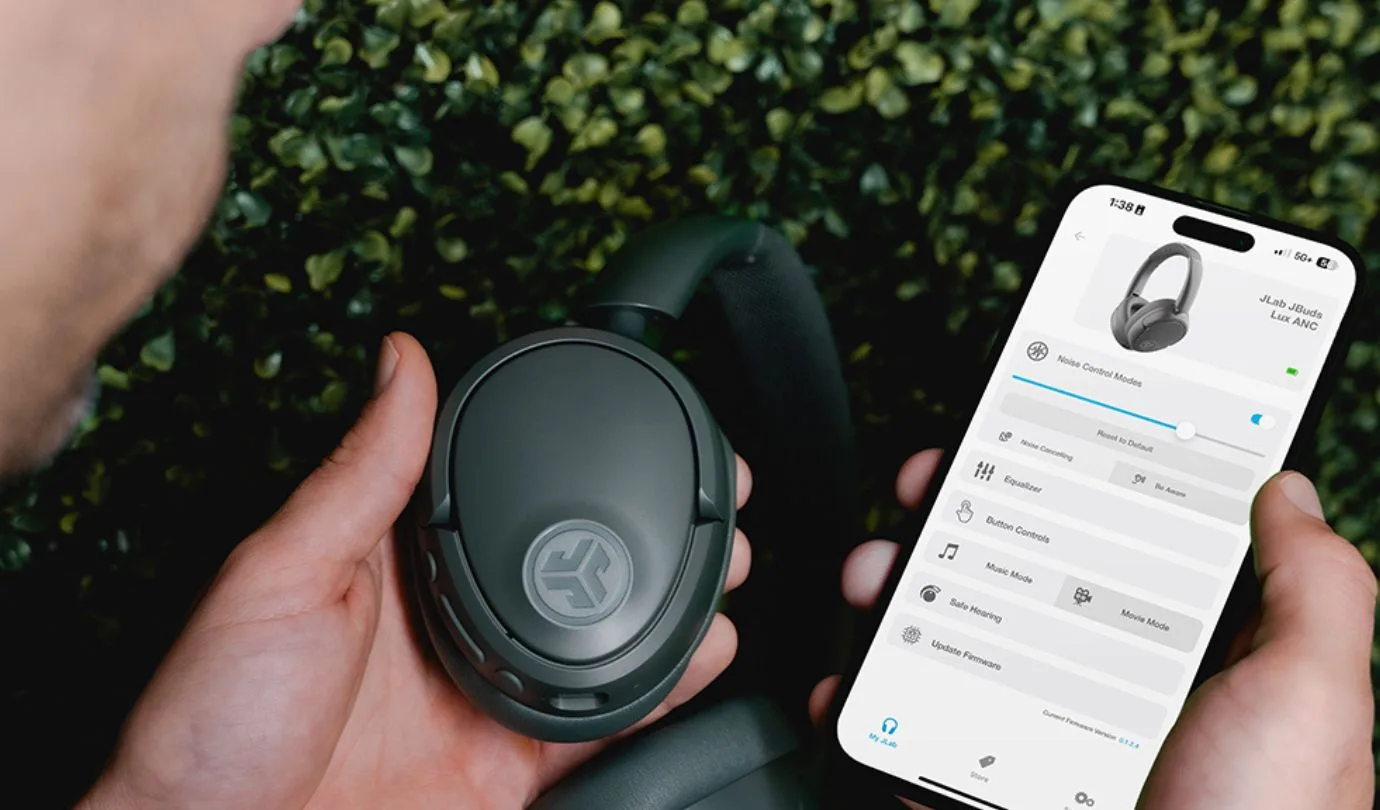
JLab JBuds Lux ANC / JLab
There are times when I want to tune everything else out. Whether I am trying to focus on work in a buzzing cafe, settling into a long flight, or simply listening to a new album without distractions, there are times when noise isolation is as important as the raw depth of tunes blasting into your ear canals. This is where over-ear headphones often come to the rescue, offering a level of immersion that earbuds cannot quite match. The JBuds Lux ANC Wireless Headphones embody that scenario, and they have been accordingly designed to make those moments feel even more effortless.
Featuring Smart Active Noise Cancelling, they help reduce background distractions so you can stay focused on your music, podcasts, movies, or work calls rather than what is happening around you. The convenience extends beyond the bliss of noise cancellation. Bluetooth Multipoint connectivity allows you to stay connected to both your laptop and phone at the same time. You can seamlessly switch from a Zoom call on your computer to a playlist on your phone without ever needing to re-pair your devices.
That same focus on practicality carries over to the per-charge battery mileage, as well. With more than 70 hours of playtime, these headphones are built to keep pace with packed schedules, extended travel, and marathon listening sessions without the need for frequent recharging.
Just as important as battery life is how the headphones feel after hours of use. The over-ear design and Cloud Foam cushions are made for extended wear, making them an easy companion for long workdays, study sessions, and travel. Heading into the JLab App, users can also fine-tune their sound settings to match their listening preferences, helping ensure every playlist, podcast, and movie sounds just the way they like it.
Epic Pods ANC For the Moments You Are On the Move
JLab Epic Pods ANC / JLab
Of course, life does not always happen at a desk. Some days are a constant cycle of commuting, unexpected errands, out-of-schedule workouts, and quick transitions between one activity and the next. Those are the moments when portability becomes just as important as performance.
The Epic Pods ANC True Wireless Earbuds are designed for the aforesaid kind of on-the-go lifestyle. Built for people who are constantly moving, they pack an impressive amount of technology into a compact form factor. Instead of relying on a single driver to do all the work, their hybrid dual-driver system handles audio output with a level of depth and clarity that is hard to find in this segment. A 10mm dynamic driver handles deep bass, while a specialized Knowles Balanced Armature focuses on crisp mids and clear highs. The result is a balanced listening experience where vocals and instruments remain clear without getting overshadowed by the low end.
Advertisement
If great sound matters to you, support for LDAC on Android and AAC on iOS ensures that your music comes through with greater detail, clarity, and depth, especially when streaming high-quality audio. The Epic Pods ANC also feature Adaptive Active Noise Cancelling that goes beyond simply switching on and off. From crowded subway commutes to quieter streets, the earbuds adjust noise cancellation on the fly, helping maintain the right balance between immersion and awareness without you having to tap a button.
But impressive audio performance means little if your earbuds cannot keep up with your active lifestyle. With more than 56 hours of total playtime and a quick charge feature that delivers up to 5 hours of listening from just a 10-minute charge, the earbuds are built to keep up with even the busiest schedules.
The Epic Pods ANC are designed with everyday use in mind. The secure fit design helps keep them comfortably in place during intense workouts, while IP55-tier ingress protection provides added protection against sweat and dust exposure. Bluetooth Multipoint further adds even more convenience by allowing seamless switching between multiple connected devices.
Why Get Personal Tech That Adapts With You
The biggest shift happening in personal audio right now isn’t just about pushing the boundaries for better sound quality, but rather about changing expectations and offering a holistic package that is practically rewarding in more ways than one. Audio wearable enthusiasts no longer want to feel forced into choosing between premium features and a reasonable price tag. Instead, they want gear that fits naturally into our daily routines, solves those annoying everyday frustrations, and delivers genuine value.
Advertisement
This is what makes JLab a compelling choice. Whether you prefer the immersive comfort and endurance of the JBuds Lux ANC Wireless Headphones or the flexibility of the Epic Pods ANC True Wireless Earbuds, both models reflect the very same philosophy. Personal tech should always adapt to your life, not the other way around. And while at it, great audio shouldn’t be reserved for just a few buyers. It should be accessible, practical, and ready for whatever your day has in store.
Brad Smith speaks at a Microsoft Elevate event at Seattle’s Museum of History and Industry in 2025. (GeekWire Photo / Todd Bishop)
The interests of Microsoft and graduates rebelling against AI are actually aligned.
That was one takeaway for Brad Smith, Microsoft president and vice chair, from a recent return to his alma mater, Princeton University, for its reunion weekend. Seniors wore class jackets labeled “100 percent cotton” and “100 percent human,” referencing allegations that an earlier design was created with AI — part of a broader backlash across campuses this spring.
In a blog post this morning, which he started drafting during that visit, Smith writes that graduates booing AI at commencements across the country are “telling us what we need to hear. He points out that Microsoft’s own future depends on people staying employed.
“Workers have been Microsoft’s lifeblood from the start,” he writes in the post. “If the world’s people don’t have jobs, then neither do we. And if we’re not doing our part to help people use technology to pursue better jobs, then we’re not doing the job we were born to do.”
Speaking with GeekWire this week, Smith acknowledged the tension between that message and job cuts across the tech sector, including at Microsoft. He addressed the issue in the post, as well, citing the industry’s desire to offset capital spending on AI, along with factors including geopolitical uncertainty, trade tensions, and a correction from earlier over-hiring.
Advertisement
“Our industry is going through one of the most extraordinary transformations in its history,” Smith said in the interview, while adding that the “expenses of capital expansion make it more difficult to afford the employment bubbles we’ve had, especially since 2020.”
Smith cited the automation of entry-level tasks among the challenges facing graduates, as well.
But he also took a larger view. Computer science jobs are changing, he said, not vanishing. Coding is becoming a smaller part of the work, while the roles around it — including designing software, managing product development, and reviewing code — are expanding.
In the post, Smith places AI in a longer line of technologies that reshaped work without ending it, from the camera to the spreadsheet to email. He calls AI the next “general purpose technology,” akin to electricity, and argues its spread will take decades, not years, because the limit is how fast people and institutions change, not how fast the models improve.
Advertisement
Some jobs go away, he writes, while new ones appear, and many are remade.
Smith’s advice to workers is to treat a job as a bundle of tasks rather than a title, sorting them into what AI can do, what a person can do with AI, and what only a human can do. For this, he takes inspiration from a new book by LinkedIn’s Ryan Roslansky and Aneesh Raman, “Open to Work,” and its list of durable human attributes: curiosity, creativity, compassion, communications, and courage.
The post also offers a clear message for companies, aligning with Microsoft’s own business interests. Smith says organizations need to build their own AI systems on top of frontier models, using their own data and what Microsoft CEO Satya Nadella calls a “hill climbing machine” of evaluations and steady improvement, rather than simply renting intelligence from someone else.
Smith cites intellectual property and data sovereignty as a central concern, arguing that firms must adopt AI without handing their hard-won expertise to a rival’s model.
Advertisement
In the interview, Smith said the blog reflects months of discussion among Microsoft’s senior leaders, including Nadella and Chief People Officer Amy Coleman, and that it’s intended to speak to the company’s own employees as much as to the outside world.
Asked what he would have told new college graduates had he been the speaker at a commencement ceremony this spring, Smith said he would have focused on the resilience of humanity more than advances in technology — urging them to speak up for the values they care about, help contribute to a better world, and go forward with hope and optimism.
“That doesn’t mean these challenges may not be significant,” he said, “but I personally believe that the human spirit is far greater than any artificial intelligence the world is likely to create.”
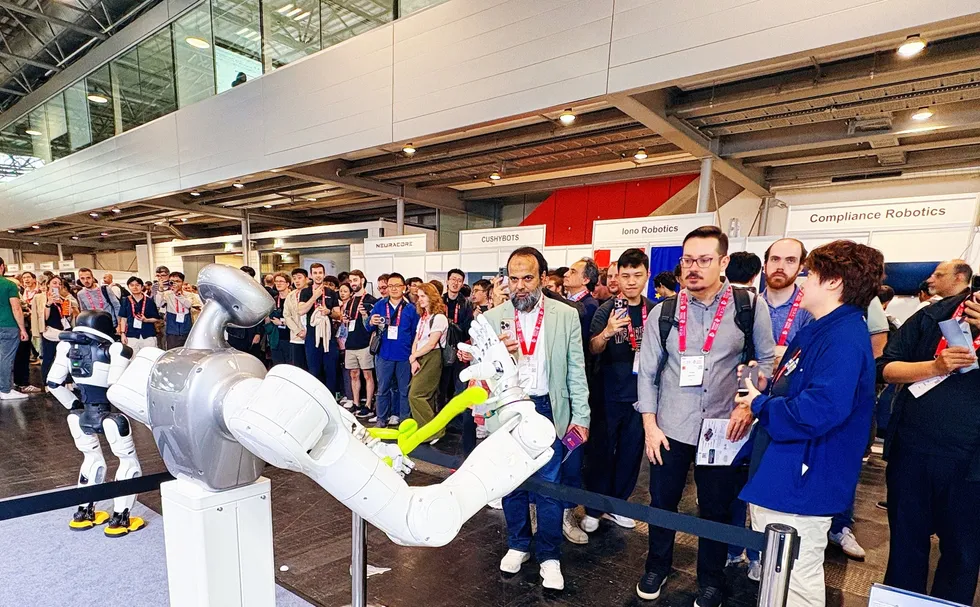
Throughout the exhibition hall at the 2026 IEEE International Conference on Robotics (ICRA), in Vienna, one demonstration seemed to attract a disproportionate amount of attention.
Two robotic hands were making a balloon dog. Slowly and deliberately, the robot twisted a long balloon into loops, bends, and joints without popping it. Visitors stopped, watched, and often returned with colleagues to watch again.
AGILINK’s balloon dog demonstration draws a crowd at ICRA 2026.AGILINK
At first glance, the demonstration appeared almost playful. Among roboticists, however, balloon twisting is widely recognized as an unusually difficult manipulation task.
Advertisement
A balloon is lightweight, highly deformable, slippery, and extremely sensitive to force. Every twist changes its geometry and internal pressure, turning a seemingly simple activity into a continuously changing physical interaction problem.
Humans navigate those changes almost intuitively. While making a balloon animal, people rarely think consciously about force regulation, slip prevention, or contact stability. They simply adjust.
For robots, those adjustments remain remarkably difficult. The challenge is not merely moving fingers to the right positions. The harder part is maintaining stable interaction while the object itself is changing.
Highlights from AGILINK’s ICRA 2026 demonstrations, including visuotactile sensing, in-hand manipulation, balloon-animal shaping, and other contact-rich tasks enabled by the company’s latest OmniHand platform.AGILINK
Advertisement
That distinction helps explain why the balloon dog drew so much attention in Vienna. What appeared to be a dexterity demonstration was, in many ways, a demonstration about contact itself.
As robotic manipulation continues to advance, a growing number of researchers are arriving at a similar conclusion: many of the hardest problems in robotics begin only after contact occurs.
Balloon twisting combines two challenges that robotics has traditionally struggled to solve simultaneously: long-horizon task execution and contact-rich manipulation.
The first concerns motion.
Advertisement
A balloon dog is not created through a single grasp or twist. It emerges through a carefully ordered sequence of manipulations, each setting the conditions for what follows. A small rotational error introduced early may appear insignificant at first, yet several steps later it can prevent the final structure from forming altogether.
In that sense, balloon twisting is a long-horizon task. Success depends not only on performing individual actions correctly, but also on preserving the future feasibility of the entire manipulation process.
To address this challenge, AGILINK began by collecting demonstrations from professional balloon artists. Human actions were mapped onto robotic hands to establish an initial manipulation policy. But successful demonstrations alone were insufficient.
In practice, some of the most valuable learning occurred when execution began to drift toward failure. Whenever instability emerged, human operators intervened and corrected the manipulation in real time. Those interventions were recorded and incorporated into reinforcement-learning cycles, allowing the system to learn not only how successful demonstrations unfold, but also how experienced operators recover when things start to go wrong.
Advertisement
Through this process, the robot gradually acquired the capabilities required for long-horizon task execution—a collection of abilities that AGILINK groups under the term motion intelligence: the ability to generate actions, coordinate bimanual behaviors, and execute extended manipulation sequences under real-world uncertainty.
OmniHand 3 Ultra-M on display at ICRA 2026.AGILINK
Yet motion alone does not explain why balloon twisting remains difficult. The second challenge is contact.
The robot must continuously regulate force, adjust contact locations, and respond to subtle changes in the object’s state. These decisions are difficult to encode through explicit rules. Even skilled human operators often rely on tactile intuition developed through experience rather than consciously articulated strategies.
Analysis of those interventions revealed that many failures did not originate from incorrect action sequences, but from the breakdown of contact itself.
Advertisement
To better capture those interaction dynamics, AGILINK collected contact-centric intervention data and incorporated those interactions into reinforcement-learning training. Rather than learning only which motions to perform, the system also learned how humans maintain stability when contact conditions begin to deteriorate.
AGILINK describes this capability as contact intelligence: the ability to establish, maintain, and adapt physical interaction as force distribution, friction, deformation, and contact geometry continuously evolve.
The distinction between the two capabilities is subtle but important. Motion intelligence determines what the robot intends to do. Contact intelligence determines whether it can continue doing it. For balloon twisting, both are necessary. One provides the sequence of actions. The other keeps those actions physically viable.
YouTuber KhanFlicks follows OmniHand’s motions while learning to fold a balloon dog at the AGILINK booth.AGILINK
Between a balloon slipping away and a balloon bursting lies a narrow region of stability. Successful manipulation depends on finding that region—and remaining within it throughout the task.
Advertisement
Introducing the OmniHand 3 Ultra-M Dexterous Hand
The balloon dog demonstration showcased a manipulation capability. It also revealed a broader question. How much contact intelligence can be achieved through learning alone? A robot can only regulate what it can perceive. It can only respond as quickly as its hardware allows.
As manipulation tasks become increasingly complex, researchers are finding that progress depends not only on better policies, but also on richer sensing and faster physical response.
That realization formed the backdrop for AGILINK’s second major announcement at ICRA 2026. Alongside the balloon dog demonstration, the company introduced the OmniHand 3 Ultra-M.
OmniHand 3 Ultra-M closely matches the size of an adult human hand.AGILINK
The two exhibits represented different stages of the same technological trajectory. If the balloon dog demonstrated what contact intelligence can already accomplish today, Ultra-M was designed to explore what contact intelligence may require next.
Its most distinctive feature is a fully direct-drive architecture. By adopting direct-drive actuation throughout the system, the hand is designed to enable faster and more transparent force regulation and higher force-control bandwidth, enabling faster response as contact conditions change. For contact-rich manipulation, responsiveness can be as important as sensing itself.
By adopting direct-drive actuation throughout the system, the OmniHand 3 Ultra-M is designed to enable faster and more transparent force regulation and higher force-control bandwidth, enabling faster response as contact conditions change.
The platform also incorporates tactile sensing across nearly the entire hand. Each fingertip contains a miniature vision-based tactile sensor, while more than 300 three-dimensional tactile sensing points are distributed throughout the palm. Together, they provide information not only about where contact occurs, but how contact is evolving.
Advertisement
The system is designed to estimate pressure distribution, shear forces, local deformation, slip tendencies, and other interaction dynamics that often remain invisible to conventional position-based control systems.
According to AGILINK’s tests, individual sensors achieve force resolution of approximately 0.005 N—roughly equivalent to detecting the weight of a sheet of paper resting on a fingertip. Spatial resolution reaches approximately 0.04 mm, while sensing density approaches 50,000 sensing points per square centimeter.
OmniHand 3 Ultra-M recognizes feather texture through vision-based tactile sensing.AGILINK
For dexterous robots, contact has traditionally been a largely hidden process. Ultra-M is designed to make that process more observable.
Rather than simply detecting that contact has occurred, the system attempts to resolve where interaction is happening, how forces are distributed, whether instability is beginning to emerge, and how manipulation strategies should adapt in response.
Advertisement
The balloon dog offered a glimpse of what contact intelligence can already accomplish. Ultra-M explores a different question: what capabilities may be required to push contact intelligence further?
The Physical World Remains the Hardest Benchmark
The significance of contact intelligence extends far beyond balloon animals. Many tasks that continue to resist automation involve unstable or deformable interaction: cable insertion, garment handling, flexible packaging, delicate assembly, connector mating, tool use, and household manipulation.
These tasks are difficult not because robots cannot reach the correct location, but because maintaining stable interaction after contact begins remains extraordinarily hard.
For decades, robotics achieved many of its successes by reducing uncertainty. Factories were engineered to make robotic motion predictable, repeatable, and highly structured. The physical world behaves differently.
Advertisement
A growing share of robotics research is shifting toward interaction itself—understanding how robots can establish, maintain, and adapt physical contact within environments that remain fundamentally unpredictable.
Objects shift. Materials deform. Friction changes. Contact evolves. Real environments rarely follow scripts. Seen through that lens, the balloon dog was never really about the balloon dog. What attracted attention at ICRA was not simply a visually impressive demonstration, but what it revealed: intelligence in the physical world is ultimately measured through interaction.
As motion generation continues to mature, a growing share of robotics research is shifting toward interaction itself—understanding how robots can establish, maintain, and adapt physical contact within environments that remain fundamentally unpredictable.
For robots moving beyond structured environments and into less predictable real-world settings, managing contact may become as important as motion itself.
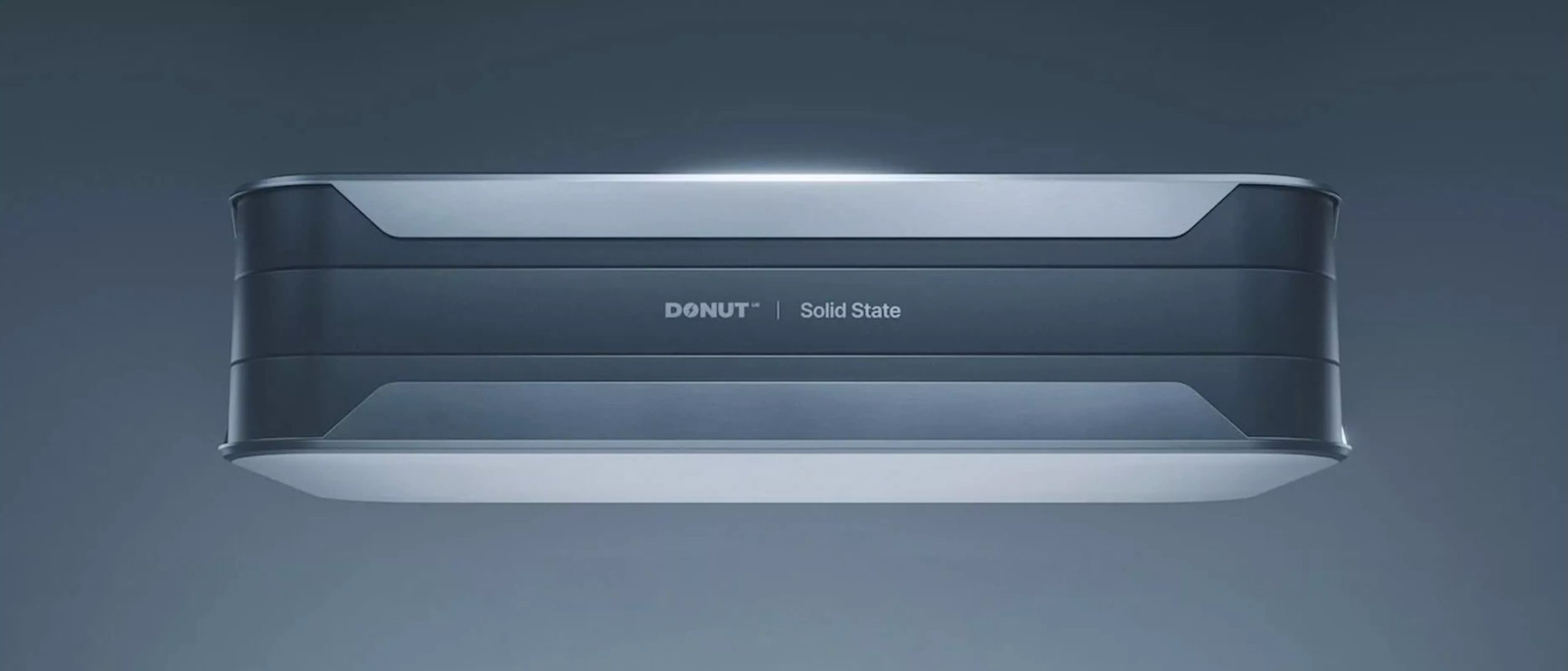
WTF?! Eye-catching battery claims are nothing new, but some deserve closer scrutiny. According to an investigation led by independent researcher Ziroth and supported by more than 20 battery experts, the much-hyped Donut Lab solid-state battery appears to be something far more familiar: a lithium-ion cell.
The conclusion doesn’t rest on speculation or anonymous sources. Instead, it comes down to how the battery behaves under testing. Data from Finland’s VTT, including voltage curves and expansion measurements, consistently points to lithium-ion chemistry rather than the sodium-ion solid-state design the company claimed.
Start with the voltage. At around 50% charge, the tested cell measures between 3.7 and 3.8 volts. That’s typical for lithium-ion batteries, particularly high-nickel NCM chemistries. Sodium-ion cells generally operate at lower voltages and do not reach that range under similar conditions. On its own, that discrepancy raises questions. Combined with the second line of evidence, it becomes much harder to dismiss.
The second clue is the cell’s physical expansion during charging. As ions move into the anode, the material expands in predictable ways. Lithium-ion batteries with graphite anodes exhibit a distinctive “kink” in the expansion curve midway through charging, reflecting how lithium ions arrange themselves within graphite’s layered structure. The Donut Lab cell exhibits the same pattern.
Advertisement
This detail is particularly significant because sodium ions are too large to intercalate into graphite in the same way. In other words, if the expansion curve matches that of a graphite anode, the underlying chemistry is almost certainly lithium-ion. As the investigation puts it, “it’s like we have a slightly noisy fingerprint and a picture of the suspect’s face. And yet again, it’s a match.”
The numbers reinforce that conclusion. Based on the test data, the cell’s energy density is roughly 298 Wh/kg – respectable for a lithium-ion battery, but well short of the 400 Wh/kg figure Donut Lab promoted.
The technical findings also trace the battery’s origins to CT Coatings, a German company described in the report as holding an unusual mix of patents, many of them unrelated to advanced battery technology. CT Coatings was presented as the technology provider, Nordic Nano as the manufacturer, and Donut Lab as the company bringing the product to market. According to the investigation, however, Nordic Nano has yet to manufacture a battery cell.
Advertisement
Some of the experts involved were blunt in their assessments. Julian Zanau of the Fraunhofer Research Institute told Electrek: “The first impression I got was that these people have no idea how a battery actually works. They were talking about no rare earth metals in their batteries and therefore no lithium, and to any chemist lithium has nothing to do with rare earth minerals.”
The report also raises questions about how the technology was vetted. Rather than relying on independent validation, Donut Lab appears to have conducted its own due diligence. That approach drew criticism from former Nordic Nano executive Lauri Peltola, who argued that neither company had the battery expertise needed to independently verify such claims.
Beyond the laboratory, the investigation points to inconsistencies in how the technology was presented publicly. Donut Lab said it had delivered a production vehicle in early 2026. However, internal communications cited in the report indicate that the first motorcycles were intended for Verge’s own fleet to refine manufacturing processes – a stage typically considered pre-production rather than customer delivery.
In later comments to Finnish media, CEO Marko Lehtimäki acknowledged that the cells tested by VTT were not the ones intended for customer vehicles. He also indicated that the headline performance figures had not yet been achieved by the batteries destined for production.
Advertisement
The financial side of the story adds another layer. Donut Lab raised about $25 million from more than 1,300 investors, many of them small shareholders who participated through earlier crowdfunding campaigns tied to Verge Motorcycles. After restructuring around its battery technology, the company’s valuation climbed sharply, reaching $1.25 billion following its CES debut.
Investor communications leaned heavily on the promise of a breakthrough battery, including projections of significant near-term returns. At the same time, internal emails cited in the investigation show the company asking its technology partner to provide evidence that those performance claims could be met.
Finnish authorities are now reportedly looking into the matter. For engineers and industry observers, it serves as a reminder that bold battery claims still have to withstand basic diagnostic testing – and in this case, the evidence points to a far more conventional technology.
It’s been, well, 3.5 years since the last World Cup, but the biggest football tournament returns, spanning three countries as the action takes places across North America from Mexico to the United States and Canada.
The tournament begins in Mexico City on the 11th June, and over the course of five weeks (37 days to be exact), 48 teams will take part in 104 matches, making this the biggest World Cup yet.
And unlike the Champions League Final, the World Cup will be free-to-air, and if you live in the UK, there are two ways that you can the action live.
We can confirm that unlike Euro 2024, this tournament will be viewable in 4K HLG HDR, if you’re catching the action on iPlayer.
Advertisement
How to watch every World Cup 2026 game live for free
The rights to the 2026 World Cup is shared between BBC and ITV, and matches will be broadcast both on linear TV (through an aerial broadcast) and OTT streaming via iPlayer and ITVX.
Fair warning though. With matches kicking off across several time-zones, depending on the team you’re watching, you may be staying up very late (or waking up early) to catch your national team.
Advertisement
Here are the fixtures for the first week of the tournament and which channel/streaming service they’re on.
Advertisement
11th June
Mexico v South Africa, 8pm ITV/ITVX
12th June
South Korea v Czechia, 3am ITV/ITVX
Canada v Bosnia and Herzegovina, 8pm BBC/iPlayer
13th June
Qatar v Switzerland, 8pm ITV/ITVX
Brazil v Morocco, 11pm BBC/iPlayer
USA v Paraguay, 2am BBC/iPlayer
14th June
Haiti v Scotland, 2am BBC/iPlayer
Australia v Türkiye, 5am ITV/ITVX
Germany v Curaçao, 6pm ITV/ITVX
Netherlands v Japan, 9pm ITV/ITVX
15th June
Ivory Coast v Ecuador, 12am BBC/iPlayer
Sweden v Tunisia, 3am ITV/ITVX
Spain v Cabo Verde, 5pm ITV/ITVX
Belgium v Egypt, 8pm BBC/iPlayer
Saudi Arabia v Uruguay, 11pm ITV/ITVX
Advertisement
16th June
Iran v New Zealand, 2am BBC/iPlayer
France v Senegal, 8pm BBC/iPlayer
Iraq v Norway, 11pm BBC/iPlayer
17th June
Argentina v Algeria, 2am ITV/ITVX
Austria v Jordan, 5am BBC/iPlayer
Portugal v DR Congo, 6pm BBC/iPlayer
England v Croatia, 9pm ITV/ITVX
How to watch World Cup 2026 – what do I need?
With the World Cup 2026 being streamed in 4K, to see the action in its very best, you’ll need a 4K HDR HLG capable device or a display.
All 4K TVs sold support HDR, and all are required to support HDR10 and HLG.
BBC’s iPlayer app supports HDR HLG but ITVX does not. If you want to watch the matches in 4K HDR, you’ll need a display or streaming device that supports HLG streaming on iPlayer.
The BBC has a help guide for 4K viewing here, but you can expect TVs and streamer sticks going back years to feature support for HDR at the very least.
Anthropic today launched two new AI models — Claude Fable 5 and Claude Mythos 5 — marking the company’s first broad release of the powerful “Mythos-class” AI capabilities it previously made available only to participating organizations in its restricted cybersecurity program, Project Glasswing, which it announced two months ago.
The company says Fable 5, which is the version most users and developers will get starting today, exceeds every Claude model it has previously made generally available — featuring stronger performance across software engineering, knowledge work, vision, scientific research and long-running tasks.
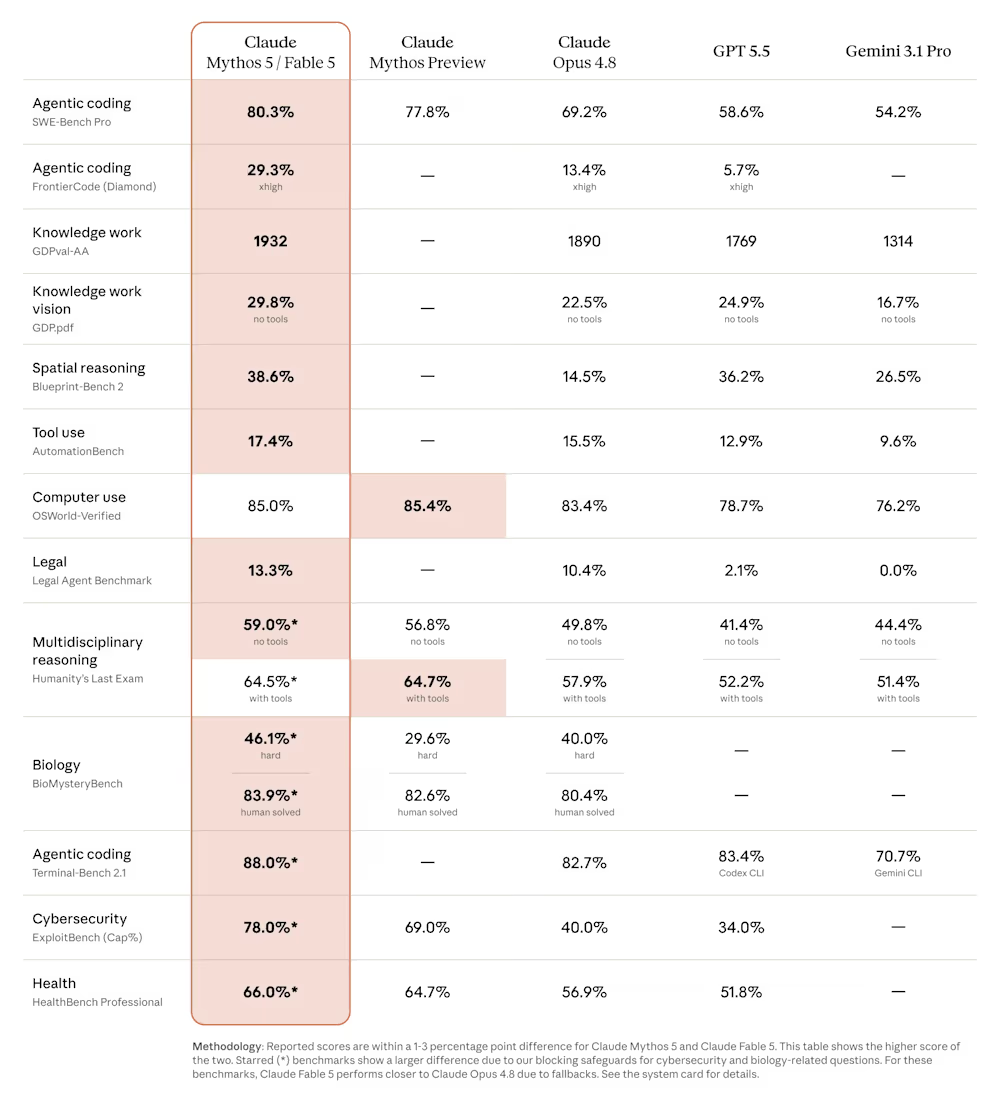
It smashes the existing benchmarks and comes atop on nearly all of them, though the prior Claude Mythos Preview version of the model still takes the top spots on computer use and multidisciplinary reasoning (see benchmark chart below and here).
Claude Fable 5 and Mythos 5 benchmark comparison chart. Credit: Anthropic
Advertisement
The new Claude Mythos 5, by contrast, is less restricted in its capabilities, but more restricted in its availability. It is an upgraded version of the prior, similarly capable but limited release Mythos Preview model. As such, it has certain safeguards lifted — but it’s only officially accessible to Anthropic-approved users, including Anthropic’s cybersecurity partners in its Project Glasswing effort, and select biology researchers.
The key difference is that the general purpose Fable 5 wraps the same underlying Mythos-class capability in new safeguards. Anthropic says requests involving certain high-risk areas — including cybersecurity, biology and chemistry, and model distillation — are automatically routed to Claude Opus 4.8, Anthropic’s previously flagship general model, instead, with users notified when that happens. That is not the case on Mythos 5.
The company says more than 95% of Fable 5 sessions run entirely on Fable 5’s own responses, with no fallback, and that internal and external red-teaming efforts found no “universal jailbreaks” after more than 1,000 hours of testing.
Anthropic says Fable 5 is available to the general public today through its website, apps, and API, but that Mythos 5 will initially only be made available to users who already have access to the older Claude Mythos Preview.
Advertisement
Screenshot of Claude Fable 5 and Mythos 5 API information on Anthropic’s website.
Pricing, access and a tricky rollout
Anthropic is pricing both Fable 5 and Mythos 5 at $10 per million input tokens and $50 per million output tokens. The company says that is less than half the price of Claude Mythos Preview, but still ranks as the most expensive of major AI models available globally.
For developers, Fable 5 is available through the Claude API as claude-fable-5. Anthropic says Fable 5 is fully available today on the Claude API and on consumption-based Enterprise plans.
Advertisement
For subscription users, the rollout is more complicated. Anthropic says Fable 5 will be included on Pro, Max, Team and seat-based Enterprise plans at no extra cost from today through June 22.
On June 23, the company plans to remove Fable 5 from those plans, after which using it will require usage credits. Anthropic says it aims to restore Fable 5 as a standard part of subscription plans as quickly as possible.
The difference between Fable 5 and Mythos 5
Anthropic is not presenting Fable 5 and Mythos 5 as two separate models in the usual “small versus large” sense. Instead, they appear to share the same base capability level. The difference is access control — that is, how easily it will be for users to get their hands on the models, and the guardrails embedded in each.
As previously mentioned Fable 5 includes a new safeguard layer that detects certain high-risk requests — including cybersecurity, biology and chemistry, and attempts to distill the model’s capabilities into other systems — and routes those requests to Claude Opus 4.8.
Advertisement
Mythos 5 lifts some of those restrictions for trusted users working in approved domains.
In practical terms, Mythos 5 is more powerful for sensitive cyber and biology work because it can answer in areas where Fable 5 falls back.
For most ordinary enterprise and developer tasks, however, Anthropic says Fable 5 performs effectively the same as Mythos 5.
The launch also signals how Anthropic plans to bring frontier models with dangerous dual-use capabilities into the market: not by releasing all capabilities to everyone, and not by simply refusing risky questions, but by routing some requests to a less capable model while keeping the stronger model available for the majority of everyday work.
Advertisement
A major improvement in autonomous coding
For enterprise buyers, the most immediate use case is likely software engineering. Anthropic says Fable 5 can work unattended for longer and with more independence than previous Claude models, which is exactly the capability enterprises need if they want AI agents to do more than autocomplete code or answer developer questions.
On SWE-bench Pro, which measures a model’s ability to complete difficult software engineering tasks, Anthropic says Fable 5 and Mythos 5 reach 80.3%, vastly outperforming OpenAI’s latest and greatest general model GPT-5.5, which scored 58.6%.
On Cognition’s FrontierCode Diamond benchmark, which tests high-quality, maintainable agentic coding, the models score 29.3%, compared with 13.4% for Claude Opus 4.8 and 5.7% for GPT-5.5, according to the benchmark table included in Anthropic’s materials.
Anthropic also says Fable 5 scores highest among frontier models on FrontierCode even at medium reasoning effort, suggesting the model may deliver stronger coding results without always needing maximum compute.
Advertisement
The most striking customer example comes from Stripe. Anthropic says Stripe tested Fable 5 in a 50-million-line Ruby codebase and found that the model completed a codebase-wide migration in one day that otherwise would have taken a team more than two months by hand. Stripe said, “Fable 5 compresses months of engineering into days. In our 50-million-line Ruby codebase, it did in a day what would’ve taken us more than two months by hand.”
Other early users describe the model as especially useful for long-horizon development tasks. Cursor said, “Fable 5 is the state of the art model on CursorBench. It’s opened up a class of long-horizon problems that were out of reach for earlier models.” Replit said Fable 5 is the highest-performing model it has tested on ViBench, its end-to-end “vibe-coding” benchmark, and that it builds apps in less time with fewer tokens. Figma said Fable 5 is “a clear step forward on agentic coding and prototyping.”
This is the enterprise shift Anthropic is trying to sell: AI coding systems that can take on larger units of work, not just individual tickets. That could include codebase migrations, app prototyping, pull request review, test generation, debugging across unfamiliar tools, user interface design and multi-step internal software projects.
Base44 said, “Fable 5 is much deeper and better at one-shotting full apps, and its tool calling is excellent.” Genspark said, “Fable 5 came out #1 on our evals, winning head-to-head against every model we tested. It was significantly stronger on the hardest tasks in the set — UI design and game coding.” Rakuten said, “At the highest effort, Fable 5 reflects on and validates its own work. For us, that’s what makes highly autonomous operations possible — the extra thinking pays for itself.”
Advertisement
For CTOs and engineering leaders, that suggests the model’s value may come less from raw code generation and more from sustained execution: understanding an intent, planning steps, calling tools, checking its own work and continuing through a task without constant human steering.
Knowledge work, finance, legal and operations
Anthropic is also positioning Fable 5 as a stronger model for enterprise knowledge work. On GDPval-AA, Anthropic reports a score of 1932 for Fable 5 and Mythos 5, compared with 1890 for Claude Opus 4.8, 1769 for GPT-5.5 and 1314 for Gemini 3.1 Pro.
On GDPpdf, a benchmark focused on visual document reasoning, Fable 5 and Mythos 5 score 29.8% without tools, compared with 22.5% for Opus 4.8, 24.9% for GPT-5.5 and 16.7% for Gemini 3.1 Pro.
That matters for enterprises because much of corporate work still lives in messy documents: PDFs, spreadsheets, charts, reports, contracts, filings, slide decks and screenshots. Anthropic says Fable 5 shows gains in document-based reasoning, chart and table interpretation and complex problem solving.
Advertisement
Hex said, “Fable 5 is the first to break 90% on our core analytics benchmark of complex, long-running analytical tasks — a 10-point jump over Opus. On the hardest questions, it shows strong judgment and attention to nuance.” Hebbia said Fable 5 was the highest-scoring model on its Finance Benchmark for senior-level reasoning, with double-digit gains in document reasoning, chart and table interpretation, and problem solving.
The finance examples are notable because they point to AI agents moving beyond summarization into higher-stakes analytical workflows.
IMC said Fable 5 “aced our trading-analysis evaluations nearly across the board: factual lookup, conceptual reasoning, root-cause analysis, expected-value analysis.” Optiver said the model was stronger than Opus 4.8 on its trading benchmark and “remarkably consistent,” scoring identically across repeated runs. Balyasny Asset Management said Fable 5 was the strongest finance-first model it had tested.
Legal and operations teams may also see immediate impact. Crosby Legal said, “Fable 5 feels materially different. In blind review, our lawyers found its redlines matched or beat our current model every time.” Notion said the model can take work “you’d chip away at all afternoon” and turn messy notes into a functioning project plan. Zapier said Fable 5 is the new leader on AutomationBench and is more autonomous than Opus 4.8: “Where Opus stops to ask, Fable 5 keeps looking.”
Advertisement
For enterprise software vendors, that points toward more capable embedded agents in workflow products: agents that can review a contract, update a project plan, assemble a spreadsheet, inspect a chart, file a ticket, run a query, call an internal API and keep going until the work is complete.
Vision and interface understanding
Anthropic says Fable 5 is also its strongest vision model. In its launch materials, the company says the model can extract precise numbers from detailed scientific figures and complete vision-based tasks such as rebuilding a web app’s source code from screenshots alone.
That has immediate implications for enterprise automation. Many business processes still depend on visual interfaces that are not cleanly exposed through APIs: dashboards, PDFs, forms, legacy apps, screenshots, scans and image-heavy reports. A stronger vision model could help agents operate across those environments with less custom integration work.
Anthropic also says Fable 5 needs less scaffolding than previous Claude models. As an example, the company says earlier Claude models struggled to play Pokémon FireRed even with extra tools, while Fable 5 impressively beat the game using a minimal vision-only harness. Anthropic posted a fast forwarded video of its playthrough to YouTube and in its blog post:
The point is not gaming itself, but the broader agentic skill: reading a visual environment, remembering progress, deciding what to do next and executing over a long horizon.
In another internal test, Anthropic says it had the model play the deck-building game Slay the Spire with access to persistent file-based memory. The company says persistent memory improved Fable 5’s performance three times more than it improved Opus 4.8’s, and that Fable reached the game’s final act three times more often. For enterprise users, this suggests Fable 5 may make better use of notes, logs and stored context during multi-step work.
That could matter for internal agents that operate over days or weeks: sales operations agents that track account research, engineering agents that manage migrations, finance agents that update models, or support agents that remember what they tried across many turns.
Advertisement
From restricted cyber model to general-purpose enterprise AI
The announcement follows Anthropic’s April 2025 rollout of Claude Mythos Preview through Project Glasswing, a restricted program for cyber defenders, critical infrastructure providers and major software maintainers. Anthropic created Glasswing after internal evaluations showed Mythos-class models could find and exploit software vulnerabilities at a level that raised meaningful misuse concerns.
Following the debut of Glasswing and Mythos, U.S. officials and intelligence agencies began weighing how such models could reshape both cyber defense and offensive operations, while Sen. Mark Warner warned that AI-assisted vulnerability discovery should force industry to “accelerate and reprioritize patching.” Financial regulators also took notice: The Guardian reported that Mythos entered discussions among senior banking officials and regulators in the U.S. and U.K. because of fears that AI-accelerated cyberattacks could threaten payment systems and broader financial stability.
The reaction has not been limited to alarm. Governments also want access: Reuters reported that South Korea’s national internet security agency had secured Mythos access through Project Glasswing, reflecting a broader geopolitical race to use frontier AI for national cyber defense. At the same time, Anthropic has faced scrutiny over whether it can safely gate the very capabilities it says are too risky for general release. The Verge reported that unauthorized users accessed Mythos after its limited rollout, calling the incident damaging for a company that has built its brand around responsible AI.
Critics have also questioned whether Anthropic’s warning-heavy framing risks becoming a form of market positioning, since it casts the company as both the source of the new capability and the gatekeeper deciding which governments, companies and researchers get to use it.
Advertisement
With Fable 5, Anthropic is leaning into its gatekeeper role, attempting to separate the general enterprise value of a Mythos-class model from the riskiest parts of its capability profile. The company says Fable 5 can handle software engineering, research, visual reasoning, document analysis and long-running agentic workflows, while classifiers block or reroute requests that could provide what Anthropic calls “uplift” to malicious actors.
Those classifiers cover three main areas.
Cybersecurity, where Anthropic says Mythos-class models can discover and exploit vulnerabilities and perform broader “agentic hacking” tasks such as reconnaissance, discovery and lateral movement.
Biology and chemistry, where the company says the same reasoning that can help researchers design therapies could also help well-resourced malicious actors pursue dangerous biological work.
Model distillation, where Anthropic says users may try to extract Claude’s capabilities to train competing models, including models that could be released without similar safeguards.
When Fable 5’s classifiers detect one of those categories, the response is automatically handled by Claude Opus 4.8. Anthropic says users will be told when this happens. That is a notable product decision: rather than declining those requests outright, Anthropic is trying to keep the user experience functional while reducing access to the most capable version of the model in sensitive areas.
Anthropic says it red-teamed the new classifier system internally and externally. The company says an external bug bounty produced no universal jailbreaks after more than 1,000 hours of testing, and external red-teaming organizations also failed to find a universal jailbreak. One external partner found that Fable 5 complied with zero harmful single-turn cyber requests related to planning cyberattacks, exploit development or defense evasion, even when prompts used any of 30 public jailbreak techniques, according to Anthropic.
Advertisement
The company is still acknowledging tradeoffs. Anthropic says the safeguards are deliberately cautious and may sometimes trigger on benign requests. That could frustrate security professionals, biology researchers and advanced enterprise users whose legitimate work overlaps with the blocked categories. The company says it plans to reduce false positives over time.
Mythos 5 and the restricted frontier
While Fable 5 is the broad commercial launch, Mythos 5 is the model to watch for enterprises operating in security, critical infrastructure and life sciences.
The company says all users with Claude Mythos Preview access can upgrade to Mythos 5 beginning today. It plans to expand access through a trusted access program, in collaboration with the U.S. government.
The distinction is important for sectors where the blocked capabilities are not edge cases but core workflows. A security team may need to reproduce vulnerabilities, test exploitability, analyze lateral movement or simulate attacker behavior in a controlled environment. A biology research team may need to reason through molecular design workflows that would trigger general-use safeguards. Fable 5 is not designed to give every user unrestricted access to those capabilities; Mythos 5 is designed for vetted users who need them.
Advertisement
Anthropic says Mythos 5 has the strongest cybersecurity capabilities of any model in the world. In the company’s benchmark table, the model family scores 78.0% on ExploitBench, compared with 69.0% for Claude Mythos Preview, 40.0% for Opus 4.8 and 34.0% for GPT-5.5. On CyberGym, Anthropic’s chart shows Mythos 5 at 83.8%, slightly ahead of Mythos Preview at 83.1% and far above Opus 4.8 with default safeguards.
The company is making a similar argument in biology. Anthropic says Mythos-class models outperform dedicated protein language models on a task involving adeno-associated viruses, a delivery mechanism used in gene therapies. The company frames that as both promising and risky: the same capability that could help gene therapy research could also be misused in dangerous biological work.
Anthropic says its internal protein design experts used Mythos 5 to accelerate parts of the drug design process by about tenfold. In one example, the company says Mythos 5, using protein design and bioinformatics tools without human assistance, matched or beat skilled human operators by choosing binding sites, selecting and running tools, and recovering from failures. Anthropic says nine of 14 protein targets in the study produced strong candidates for drug design that it is now investigating.
The company also says Mythos 5 produced novel molecular biology hypotheses that Anthropic scientists preferred over Opus-class model hypotheses about 80% of the time in blinded comparisons. Anthropic says several of those ideas have advanced to experimental evaluation, and one hypothesis involving an E. coli protein was later corroborated by an independent lab working on the same problem.
Advertisement
Those claims are potentially significant, but they should be treated carefully until more details are published. Anthropic says it intends to publish additional results in the coming months. For now, the strongest enterprise implication is directional: the company believes its highest-end models can already perform parts of scientific research workflows with less human intervention than prior systems.
New, longer data retention requirement
The company also introduced a new data-retention policy for Mythos-class models. Anthropic says it will require 30-day retention for all traffic on Fable 5, Mythos 5 and future models with similar or higher capability levels, across both first-party and third-party surfaces. The company says it will not use that data to train new Claude models or for non-safety purposes, and says it has added privacy protections including logging human access and deleting the data after 30 days in almost all cases.
That policy may become one of the most important enterprise buying questions around Fable 5. Many businesses want frontier AI capability but also want strict control over data retention, especially in regulated sectors. Anthropic’s position is that stronger monitoring is necessary for models with this level of capability. Enterprise customers will have to decide whether the capability gain justifies the retention requirement.
Enterprise implications
The broader enterprise significance of Fable 5 is that Anthropic is trying to commercialize a more autonomous class of AI model without exposing all of its capabilities to every user. That could become a template for how frontier labs release increasingly powerful systems: one model family, multiple access tiers, and domain-specific restrictions depending on user trust and risk.
Advertisement
If Fable 5 performs as Anthropic and early customers describe, developers may hand off larger tasks: code migrations, refactors, UI builds, test writing, bug fixing, documentation, internal tooling and multi-step app creation.
For knowledge-work-heavy enterprises, Fable 5 could make AI more useful in workflows where earlier models were too brittle: finance research, spreadsheet analysis, legal redlines, procurement review, board materials, market research, sales operations and project planning. The main gain is not just better answers; it is fewer turns, fewer corrections and more ability to keep working through ambiguity.
For security teams, the launch is more complicated. Most organizations will get Fable 5, not unrestricted Mythos 5. That means they may see stronger general coding and analysis, but not full access to the cyber capabilities Anthropic considers risky. Trusted defenders inside Project Glasswing will get Mythos 5, giving them a more direct way to use the model for vulnerability discovery and defensive testing.
For life sciences companies, the pattern is similar. Fable 5 may help with general research, literature analysis, data interpretation and scientific reasoning, but the more sensitive biological capabilities will be restricted. Anthropic is effectively creating a separate access path for vetted researchers whose work requires capabilities that could be dangerous in the wrong hands.
Advertisement
The launch also raises competitive pressure across the AI industry. Anthropic is claiming state-of-the-art results across agentic coding, knowledge work, vision, cybersecurity, legal reasoning, spatial reasoning and health benchmarks. But the more strategically important claim may be that it has found a workable release mechanism for models above its Opus class. If Fable 5’s safeguards hold up under real-world use, Anthropic will argue it can bring more powerful models to market sooner without fully opening the riskiest capabilities.
That is still a large “if.” The enterprise market will test not only Fable 5’s benchmark performance, but also its reliability, false-positive rate, data-retention tradeoffs and cost at scale. A model that can complete more work autonomously can also burn more tokens, trigger more governance questions and create new review burdens for teams that must verify its output.
Still, today’s launch marks a clear shift in the Claude lineup. Opus is no longer Anthropic’s top commercial capability tier. Mythos-class models now sit above it. Fable 5 is the first version of that tier for general users; Mythos 5 is the restricted version for trusted high-risk work. Together, they show how Anthropic plans to push frontier AI deeper into enterprise workflows while trying to keep the most dangerous capabilities gated.
The Unlimited Day Pass could be a good option for weekends away or tourists.
Smith Collection/gado/Getty Images
If you’ve ever needed iPad data for a day or two without signing a contract or paying for an entire month, AT&T has a new option. The company’s Unlimited Day Pass offers 24 hours of unlimited wireless data to eligible iPad users for a flat $3 rate, without a contract, subscription or credit check. “AT&T is the first and only major U.S. wireless provider to give eligible iPad users (with eSIM capabilities) the freedom to buy on-demand connectivity when they need it,” the carrier said in a press release.
The plan is available to anyone (including non-AT&T customers), so it could be a good option for camping, weekends aways, or tourists. AT&T also notes that many folks with eSIM iPads have no cellular plan, so it could be a way to give your kid internet access when they’re using an iPad to study for exams. There’s no automatic renewal, so you’ll have no ongoing commitment or need to cancel.
If you sign up, the first day pass is complimentary, limited to one iPad per customer, then available at a flat daily rate via credit or debit card. To use it with any Wi-Fi + cellular iPad model, simply activate the plan from your iOS device settings, with no app or Wi-Fi connection needed. “Open the Settings app, tap Cellular Data [and] add AT&T Unlimited Day Pass,” AT&T explains. The 24-hour data activation will start shortly after purchase.
Advertisement
The new service is available for any eSIM equipped iPad dating back to 2019, including iPad, iPad Mini, iPad Air and iPad Pro models. Android and other tablets are not yet eligible. AT&T said it plans to expand the service to include “multi-day options such as weekend and week-long passes” in the future. The company notes that it may slow data speeds if the network is busy.
The numbers are in! Given the same amount of time in use, with data spanning more than a decade, Intel Macs come in for service at twice the rate that Apple Silicon Macs have.
When it comes to device longevity, Apple’s products tend to last quite a long time, if cared for properly. While this has been a consistent feature of Apple’s hardware, it seems that the chip being used plays a factor.
According to a June report from UK Apple refurbisher Hoxton Macs, it has found that Intel Macs it has sold is returned for a hardware fault at twice the rate of Apple Silicon models.
In its figures, it says that there was a 0.9% hardware fault rate for Apple Silicon Macs sold across 2025. This refers to the share repaired or replaced under warranty in the first year after sales.
Advertisement
However, an Intel Mac sold under the same circumstances doubles this rate. Crucially, this covers Intel Macs that are of the same age as the equivalent Apple Silicon model. For example, the data counts failures from a 2016 MacBook Pro through 2018, the same as it counts a M1 MacBook Air from 2020’s failures through 2022.
In the last three years, the company’s blended warranty-return rate for all Mac models it sells has more than halved. In 2023, there was a 2.9% return rate for faults, but by 2025, it was 1.1%
“Matched for age, an Intel Mac comes back for a hardware fault about twice as often as an Apple silicon one,” the company says. “The faults that matter most — logic-board and battery failures — run at roughly double the rate on Intel.”
This overall failure rate from Intel machines is consistent with what our own data from a few Apple Stores across the East Coast showed through the 2010-2020 period. The industry as a whole is skewing towards more failures, not less, like Apple’s trending.
Advertisement
Fewer long-term problems
When it comes to why there are fewer Apple Silicon-related fault issues, the retailer insists it’s because the chip switch changed what could go wrong.
During the Intel era, it is reported that batteries wore out faster due to the requirements of the chip. Batteries were replaced more frequently because they were more easily drained.
By contrast, the batteries in an Apple Silicon MacBooks use less power, reducing the cycle count and minimizing the need for replacement.
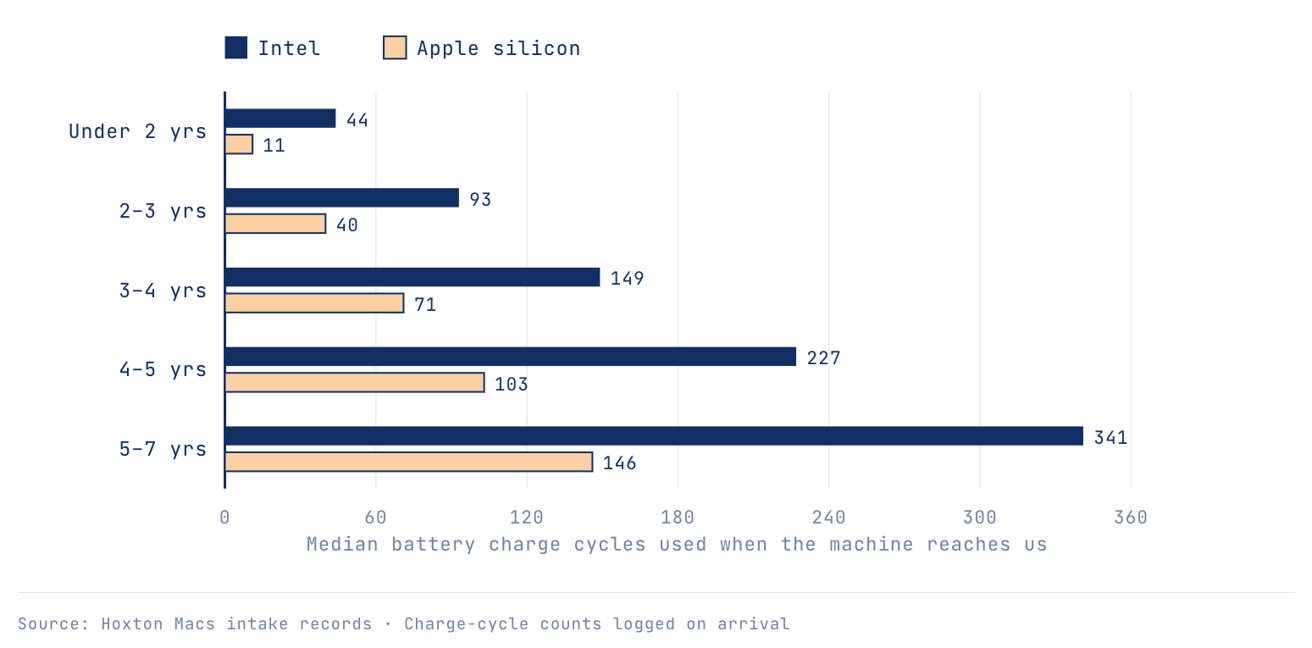
Battery cycle counts based on used Mac intake, based on device age. Image credit: Hoxton Macs
Advertisement
At all Mac ages, the Apple Silicon versions have less battery wear compared to their similar-aged Intel counterparts. A three-to-four-year-old Apple Silicon MacBook has about half the cycles of the Intel equivalent when it reaches the company’s restoration team.
There were also more reported issues with the USB Type-C ports on Intel Mac units, which also failed at a higher rate than on Apple Silicon machines.
The lack of a fan on the Apple Silicon MacBook Air is also helpful, unlike the fan-equipped Intel versions.
A fan moves air to cool the Mac’s components, providing a way for dust to be pulled inside. That dust then builds up and eventually clogs the airflow, preventing the thermal management system from working.
Advertisement
Since the Apple Silicon MacBook Air doesn’t use a fan for cooling at all, there are no blockage problems.
One theory is that the Apple Silicon design used fewer heat-generative components and has a cooler-running chip. Intel Mac faults clustered around the areas with high heat generation, including the separate graphics chip in some models.
Built a better MacBook reputation
The refurbishment repair report continues a trend for Apple, in being a very reliable manufacturer of computer hardware. It’s a reputation that it had for a long time, but it has seemingly improved further with the Apple Silicon era.
This is especially evident in annual surveys from the ACSI into customer satisfaction. In the September 2025 edition, Apple dropped from a score of 85 to 82, putting it narrowly in second place, behind HP.
Advertisement
With Intel hardware support finally dropped in macOS 27 Golden Gate, there’s now more of a reason for people still using Intel Macs to upgrade to Apple Silicon.
If they switch, it’ll be for a more hardy notebook than they’ve been using before.









 AGILINK’s balloon dog demonstration draws a crowd at ICRA 2026.AGILINK
 OmniHand 3 Ultra-M on display at ICRA 2026.AGILINK
 YouTuber KhanFlicks follows OmniHand’s motions while learning to fold a balloon dog at the AGILINK booth.AGILINK
 OmniHand 3 Ultra-M closely matches the size of an adult human hand.AGILINK
 OmniHand 3 Ultra-M recognizes feather texture through vision-based tactile sensing.AGILINK










































You must be logged in to post a comment Login