

Politics
Some Maine Democrats are wavering on Graham Platner

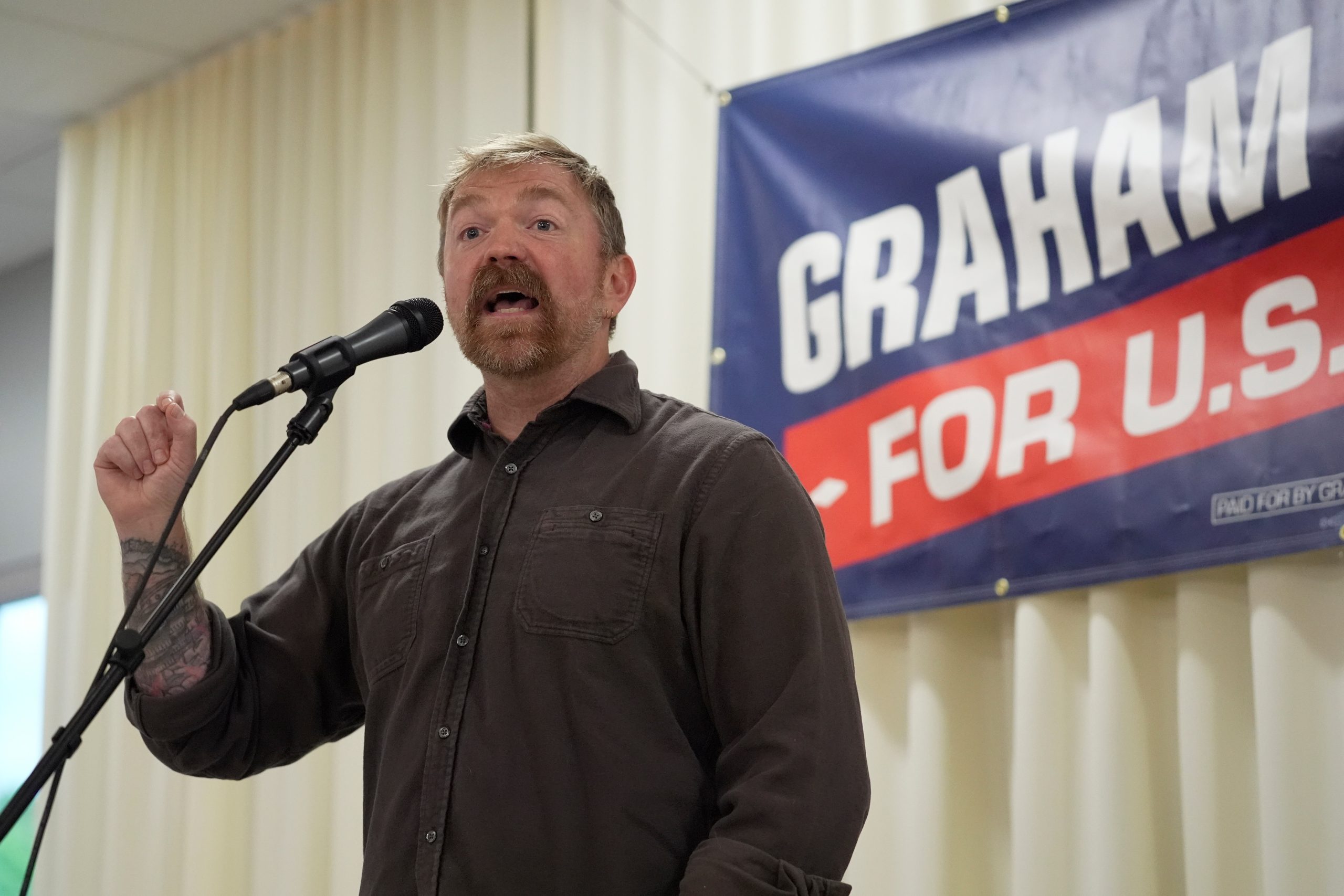

PORTLAND, Maine — Darcy Halvorsen, 59, had already cast her ballot early for Graham Platner in Maine’s Democratic U.S. Senate primary when she read news of sexual text messages the oysterman had sent while married to a woman who wasn’t his wife.
Halvorsen, who described herself as a Platner skeptic-turned-fan, is back to being a skeptic. As she attended a town hall of his at the Elks Lodge in Portland on Sunday — at least her eighth Platner event since last fall — she was regretting the vote.
“I’m feeling very let down, disappointed,” she said. “Because I don’t think it was handled well. I don’t think he took responsibility for it.”
Platner’s continued drumbeat of scandals has divided both Democratic Party leaders and voters as they stare down the must-win Senate race. Defeating Republican Sen. Susan Collins in November is crucial to the party’s plans to take back control of the upper chamber and provide a check on President Donald Trump. But even as Platner’s staunch supporters stick with him, his political baggage is threatening to sink him with some Democratic and independent voters heading into the general election, according to interviews with nearly two dozen Maine voters.
Several Democratic voters were hesitant to weigh in on the Senate race, saying they felt Platner’s candidacy was all but certain at this point and sharing their opinion on him was likely to be met with backlash. Others who were planning to vote Democratic in November are now toying with backing Collins or sitting out the Senate race entirely — a challenge for the likely nominee and his party.
Peter and Kelly Dufour were manning the grill at a Get-Out-the-Vote event for gubernatorial candidate Hannah Pingree in Portland on Saturday and excited about the former Democratic state House speaker’s candidacy for governor. Asked about the Senate race, Kelly put her head in her hands.
The pair were looking to learn more about David Costello, who was Democratic Senate nominee in 2024 and is running in the primary again this year — the only Democrat candidate on the ballot besides Platner and Gov. Janet Mills, who suspended her campaign in April.
Peter said he was “disappointed” by Collins’ votes in the past few years, particularly to confirm judges, but he’s “torn” over giving up her prime seat on the Senate Appropriations Committee for Platner.
“I want someone of good moral character to be my senator,” he said, describing himself as 50-50 on the race right now.
Kelly said she wasn’t sure if she was 50-50 anymore in light of the latest Platner news.
With Platner, she said, “it just seems like one thing after another.”
Platner and his allies have attributed his past poor conduct to his struggles with post-traumatic stress disorder and alcohol use after leaving the military. He has said he found community after moving back to Maine and asked voters to judge him on who he is now. But some Maine voters are still skeptical of his story of redemption.
Kathy Bonk, a Brooksville resident and president of the Maine chapter of the National Organization of Women, plans to vote for Mills in Tuesday’s primary, though she expects Platner to prevail.
“There’s been a lot of press coverage about, ‘Well, we’ll let Maine voters decide.’ The Maine Democratic voters are going to decide the primary, but then you put that question to all Maine voters in the general,” she said. “I just think there’s a number of people that after everything that’s come out on Platner just can’t bring themselves to vote for Platner.”
Some Democrats are hoping that a poor showing from Platner in Tuesday’s primary would help them convince him to step aside and allow the state party to replace him with another candidate. But the idea seemed fairly ludicrous to most voters in Maine, given not only Platner’s record of surviving scandals but also his strong base of supporters — many of whom see his controversies as outside attacks on his movement that have only hardened their resolve for him.
“Mainers don’t want to see one of their own cut down at the knees,” said Constantine Dixon, a 36-year-old from Portland who attended the Sunday town hall for Platner.
Platner has inspired many Maine voters in a way few other candidates have in the state’s recent political history, drawing massive crowds like few in the state have seen and going from an unknown oysterman to consistently leading the sitting governor in primary polls. Many of his backers brush off his recent controversies as less important than the issues he is running on: universal health care, getting money out of politics, and making the state affordable for working people.
He has maintained support from lawmakers like Sens. Bernie Sanders (I-Vt.) and Elizabeth Warren (D-Mass.). Rep. Ro Khanna (D-Calif.) rallied with him in Bar Harbor on Friday, and Sen. Brian Schatz (D-Hawaii), in his first public display of support, hosted a virtual fundraiser for him on Sunday.
“Since this campaign launched, we have been and remain deeply humbled by the support and loyalty of this movement,” Ben Chin, Platner’s campaign manager, said in a statement. “Mainers know Graham, they understand what he stands for, and they believe in what this campaign is fighting for. Lifting people up and fighting for working Mainers has been and always will be our priority.”
Days after reports of the extramarital sexting, the New York Times published accounts of several of Platner’s ex-girlfriends who recalled disturbing patterns of behavior. One woman alleged that he had grabbed her in ways that left marks and once locked her in a room.
Platner’s campaign acknowledged he sent sexual text messages to other women while married, but had already addressed the issue with his wife. He admitted to being a “bad boyfriend” in past relationships but said he had never been violent.
At the town hall in Portland on Sunday, Platner was received enthusiastically by hundreds of supporters. Some attendees said they showed up specifically to indicate their support for him after a difficult week.
Charlotte Brown, an unenrolled voter, said she had supported Collins until the senator’s vote to confirm Supreme Court Justice Brett Kavanaugh. In Platner, she finally found a politician who “represented us.”
“We wanted to come to stand up for him with all the attacks,” she said. “We wanted him to know that we have his back.”
Platner’s supporters, which include many older women who make up the core of the Democratic Party in Maine, largely don’t condone his past behavior — but they believe in his personal growth.
“What happened in his personal life was a long time ago,” said Janet Miles, an Air Force veteran attending an event for Pingree over the weekend. “People change. Do I approve of the things he did? Definitely not. If he did all those things a week ago, that would be different.”
“I was really upset when I heard his comments about women drinking and rape,” said Cathy Walter, a retiree from Gorham, Maine, referencing Platner’s Reddit history that was uncovered last fall. In posts more than a decade ago, Platner had written that sexual assault victims should take responsibility and avoid alcohol so as not to end up in a “compromising situation.”
But Walter appreciated how Platner owned up to his past conduct and said what happened “does not disqualify him.” She’s taking cues from national leaders on whether he can still beat Collins in November.
“I’m watching, what is Bernie Sanders saying? What is Elizabeth Warren saying?” Walter said. “They would be pulling their support if he couldn’t get elected.”
Platner’s political rise has captivated the state since his campaign launch last August. News reports about his old social media posts and a tattoo that resembled a Nazi symbol did not meaningfully slow his momentum. Mills, who was recruited for the race by Senate Minority Leader Chuck Schumer, ended up suspending her campaign at the end of April, as Platner continued to lead her in fundraising and public polls.
Mills has not endorsed Platner, and some of his skeptics are planning to vote for her in the primary. The governor hasn’t publicly remarked on the race other than reminding a Maine Trust for Local News columnist a week ago that she remains on the ballot.
Mills campaign signs still dotted Portland neighborhoods this weekend. In Portland’s Back Bay, one sign was improvisationally stapled to a wooden post. Written by hand in blue marker was a reminder for passersby: “She’s still in! Vote!”
National Republicans have been gearing up for a general election battle against Platner for months, with the pro-Collins super PAC Pine Tree Results launching ads last month that focused on Platner’s Reddit comments and tattoo. In the aftermath of the recent controversies, Collins told reporters in Maine on Friday that Platner had “a lot of questions to answer.”
Halvorsen, the former Platner fan who was frustrated with his recent scandals, said she could not remember seeing Maine Democrats so at odds over something — and she recalled many contested primaries in the state. On social media, she said, she’d faced attacks for being a Platner skeptic, attacks for being a fan, and now attacks for being ambivalent about him.
“Trump wants us to be divided,” she said. “And that’s what’s happening in Maine.”


The clinical psychologist slammed her relative in the latest edition of her Substack newsletter while responding to Sen. Ted Cruz’s (Republican, Texas) questioning of the masculinity of Texas US Senate candidate James Talarico.
“Apparently we are supposed to believe Ted Cruz is now the nation’s foremost authority on masculinity,” she wrote. “Personally, I do not care. It seems like an odd qualification for public office. What are they going to do? Arm wrestle? Challenge each other to duels?”
“Fight in a cage match on the White House lawn?” she added, a sarcastic nod to the controversial UFC fight card that the president hosted on his 80th birthday on Sunday.
“But if we are defining masculinity, I would have thought one basic requirement would be defending your spouse when another man publicly attacks her,” Mary Trump continued, a nod to her uncle’s personal attacks on Cruz’s wife, Heidi, during the 2016 presidential election and the senator’s subsequent endorsement of his onetime rival.
She then delivered a pointed swipe at the president.
“What do I know?” wrote Mary Trump, a fierce critic of the president. “I grew up in a family with Donald Trump, who knows absolutely nothing about being a real man.”
Subscribe to Commons People, the podcast that makes politics easy. Every week, Kevin Schofield and Kate Nicholson unpack the week’s biggest stories to keep you informed. Join us for straightforward analysis of what’s going on at Westminster.
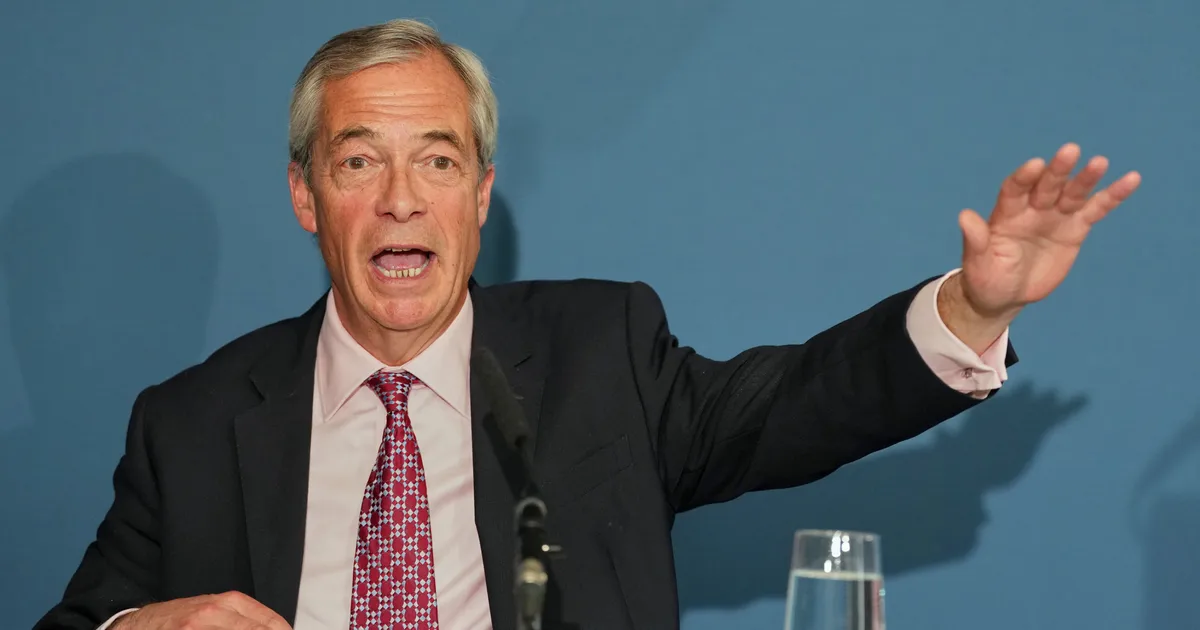
Nigel Farage has been dubbed “the Enoch Powell of the social media age” after he said that Britain was now a “two tier state against white people”.
The Reform UK leader made the incendiary claim in the first of a series of essays he plans to publish on Substack.
He said he had decided to start using the platform because “the mainstream media constantly distorts what I say”.
In the essay, published on Sunday morning, said the “British state is no longer working for everyone in this country”.
That was in reference to the murder of Henry Nowak, who was arrested and handcuffed by police as he lay dying after being wrongly accused of racism by his killer, Vickrum Digwa.
“There is nothing fair about the way white people have been treated by their governments,” he said.
Housing, healthcare, education, policing, the military and the workplace are all listed as being adversely affected by what he describes as “deeply anti-white racism”.
“Anything which is seen to disadvantage a minority group is cracked down on,” he said.
“Anything which benefits a minority and damages the White British is likely to be left alone.”
On housing, he said that during the last century, “rules which gave priority to local people and ties to the area were stripped away”.
Farage said that under a Reform government, foreign nationals living in social housing would be given a three-month grace period to relocate to private rented accommodation, or face deportation.
But Lib Dem leader Ed Davey accused the Reform leader of “pushing the politics of grievance and division”.
He said: “Nigel Farage has turned into the Enoch Powell of the social media age.
“He’s trying to excuse racist disorder and violence against police officers. He’s pushing the politics of grievance and division that goes totally against our fundamental British values of tolerance and decency.
“Farage is desperate to turn our United Kingdom into his version of Trump’s America. We can’t let him.”
Enooch Powell was a Tory minister who sparked outrage with his infamous 1968 speech warning of “rivers of blood” due to mass immigration.
Former defence minister Al Carns, who resigned in protest at the government’s spending plans for the armed forces, said Farage was “a race-baiter in a Barbour jacket”.
Culture secretary Lisa Nandy told Sky News that Farage “should take his nasty hate and anger and division somewhere else”.
“I think people want hope,” she said. “They don’t want more anger, they don’t want more division, they don’t want more hate, and I wish he’d just take it somewhere else.”
Posting on X, Tory MP Ben Obese-Jecty also rejected Farage’s claims.
“Trying to whip up the politics of grievance will be a genie that’s difficult to put back into the bottle,” he said. “Nigel Farage isn’t stupid. He knows that.”
Subscribe to Commons People, the podcast that makes politics easy. Every week, Kevin Schofield and Kate Nicholson unpack the week’s biggest stories to keep you informed. Join us for straightforward analysis of what’s going on at Westminster.

Sunday scaries – or feelings of dread and anxiety that build before the working week – are believed to affect as many as 67% of UK workers.
Psychologist Kia-Rai Prewitt told Cleveland Clinic it’s an “anticipatory anxiety”, meaning it has to do with your expectations of coming stress in the work week.
We’ve written before at HuffPost UK about signs your Sunday scaries may be more than normal work dread. And new research from travel agent SpaSeekers has sought to find the jobs that make us stress the most before Monday even hits.
Workers are losing days of their lives to Sunday scaries
The SpaSeekers study, which polled 1,000 UK workers, found that people spend an average of 2.5 hours a week worrying about their work on the weekend. That amounts to 200 days over a lifetime (woah).
Just over a quarter (26%) of employed adults surveyed said that the Sunday scaries make them lose sleep, while 21% shared it means they can’t enjoy the last day of the weekend at all.
Work stress and busyness are the most common sources of anxiety (29%), while a heavy workload affects 23% of employees.
“Imposter syndrome”, or feelings that you’re not good enough, and worries about being asked to come into the office more often, affected 11% of respondents each.
Which jobs are the worst for Sunday scaries?
Per this survey, the worst jobs for Sunday scaries were revealed as being:
1) Finance
The Sunday scaries were found to regularly affect 95% of those in this category.
2) Human resources (HR)
Affects: 91%
3) Manufacturing
Affects: 87%
5) IT and telecoms
Affects: 84%
8) Healthcare
Affects: 83%
9) Arts and culture
Affects: 82%
10) Building and construction
Affects: 76%.
Don’t ignore your Sunday scaries
Kerry Sutcliffe, a corporate and individual coach at Kerry Sutcliffe Coaching, said: “The Sunday Scaries could be described as a physical alarm bell, telling you that something is not right. It’s a sign, a flashing red light and something you should listen to, pay attention to, and take action on.”
That might include planning your week ahead of Sunday, she added. “I recommend doing this on a Friday afternoon… Once done, you can close the laptop and enjoy your weekend, knowing you’re all set for Monday morning,” she advised.
“Get all of those unhelpful thoughts out of your head and down on paper!”
The NHS suggests you should see a GP about anxiety if you’re struggling to cope with fear and panic, and/or if lifestyle changes like getting enough sleep and exercising don’t help.

The UK government’s decision to ban under-16s from major social media platforms is a significant moment.
It reflects what many parents already know: the online world is exposing children to content and experiences they simply are not equipped to deal with.
But we should be careful not to mistake a step forward for a complete solution.
A social media ban is a bit like putting a lock on the front door while leaving the back door wide open. It will help some children. It will certainly make access more difficult.
But it does not address the wider reality of how young people use technology.
Children are not only spending their time on Instagram, TikTok and Snapchat. They are on WhatsApp. They are on gaming platforms. They are using AI tools. They are communicating through dozens of apps and services that fall outside of the traditional definition of social media.
Harmful content does not magically disappear because one category of app is restricted.
The other uncomfortable truth is that bans tend to work best on children who are already willing to follow the rules. The children most at risk are often the ones most likely to find workarounds, borrow devices, create alternative accounts or simply move to less regulated platforms.
I am not making an argument against action. I am making an argument for the action to go further.
For years, parents have been told that many of the protections they want are technically impossible. We have been told that harmful content cannot be identified. That explicit images cannot be blocked. That meaningful parental controls are unrealistic. The reality is very different.
The technology already exists. At the startup I co-founded, we have built systems that can block explicit content, prevent the sharing of nude images, and give parents meaningful oversight of a child’s digital experience across their entire device, not just one or two apps.
If a startup can build these protections, it is difficult to accept that some of the largest technology companies in the world cannot.
The biggest risk today is not that the government has gone too far. It is that parents are given the impression that the problem has now been solved.
It has not. Legislation will take time. Enforcement will take time. Legal challenges will take time. Meanwhile, millions of children will continue using smartphones every day. Parents need help now, not several years from now.
A social media ban may be part of the answer. But the long-term solution is technology that is designed to protect children from harm wherever that harm appears, not just on a list of banned apps.
The good news is that we do not need to invent that technology. We simply need to use it.
George Bevis is the co-founder of online child safety app Safetymode.com and founder of Tide.

Donald Trump has accused Benjamin Netanyahu of having “no fucking judgment” as he launched another foul-mouthed attack on the Israeli prime minister.
The US president said an Israel’s attack on Beirut on Sunday had “pissed me off very much”.
He was speaking amid fears that the Israeli strikes could scupper a deal to end the Iran war at the last minute.
Speaking to Axios, Trump insisted the bombing had only delayed the agreement “by a few hours” and that it was still due to be signed on Sunday.
Trump said: “Why did Bibi have to do a fucking attack? I was so pissed off. I let him know. He has no fucking judgement. I let him know that.”
Lebanese officials said three people had been killed in Sunday’s attack, which Israel said was on a command centre run by the Iran-backed terror group Hezbollah.
The Israel Defense Forces (IDF) said it was in retaliation for “Hezbollah’s launch of aerial targets toward Israeli territory” earlier on Sunday.
The latest Trump-Netanyahu spat comes less than a fortnight after the president reportedly called the Israeli leader “fucking crazy” in a phone call.
It came after Israel resumed its aerial bombardment of Lebanon.
A source told Axios that Trump told Netanyahu: “You’re fucking crazy. You’d be in prison if it weren’t for me. I’m saving your ass. Everybody hates you now. Everybody hates Israel because of this.”
Another source said Trump was “pissed” on the phone call and at one point shouted at Netanyahu: “What the fuck are you doing?”
Subscribe to Commons People, the podcast that makes politics easy. Every week, Kevin Schofield and Kate Nicholson unpack the week’s biggest stories to keep you informed. Join us for straightforward analysis of what’s going on at Westminster.

The Italian beach of Punta Molentis in Villasimìus has introduced a controversial new ban on beach umbrellas for some.
The sandy spot, located on Sardinia’s South-East coast, costs €10 (£8.64, as of the time of writing) to enter.
Once you’re in, only people older than 65 or with a child under 10 can pitch a beach umbrella at the site – and there’s a max limit of one per eligible person or group, The Guardian reports.
Why was the rule introduced?
It comes alongside a slew of other changes which are designed to protect the area’s ecosystem.
In 2025, the site faced wildfires that left cars burnt out and forced beachgoers to flee by boat, per the BBC.
“The ecosystem of Punta Molentis is among the most precious in our territory, but also among the most fragile,” the council explained.
“The fires of 2025 and exceptional marine weather events have reduced the capacity of the sandy shore and put habitat and biodiversity to a severe test.
“Because of this, it is necessary to limit human impact and ensure the protection of this heritage for future generations.”
As a result of the disaster and the risk for future fires, authorities have decided to limit the number of beach visitors to 150 at a time (pre-booking is needed to secure a spot). You can’t park more than 70 cars a day nearby, either.
Opening hours run from 8am-9pm, and you aren’t allowed to leave towels, umbrellas, tents, or chairs overnight.
The official notice also asks people to check the beach’s fire risk level before visiting, too.
Italians have *thoughts* about the change
Under the governing body’s Facebook post addressing these changes, one person wrote: “I advise the mayor and the entire council that voted for this outrage to visit a dermatologist to learn about the risks of skin cancer to which they are exposing us to profit from those who want to enjoy the sea at Punta Molentis”.
Another commented, “If [we] pay 20 euros for entry and parking, who are you to ban umbrellas?”
And on a separate post on the same page, yet another site user said: “To protect the beach, the only solution is to close it and make it inaccessible for a few years, to allow flora and fauna to reclaim their place. This is just a sneaky way to hand it over to the rich”.
They joked, “Do we need a black market to rent out children and the elderly?”
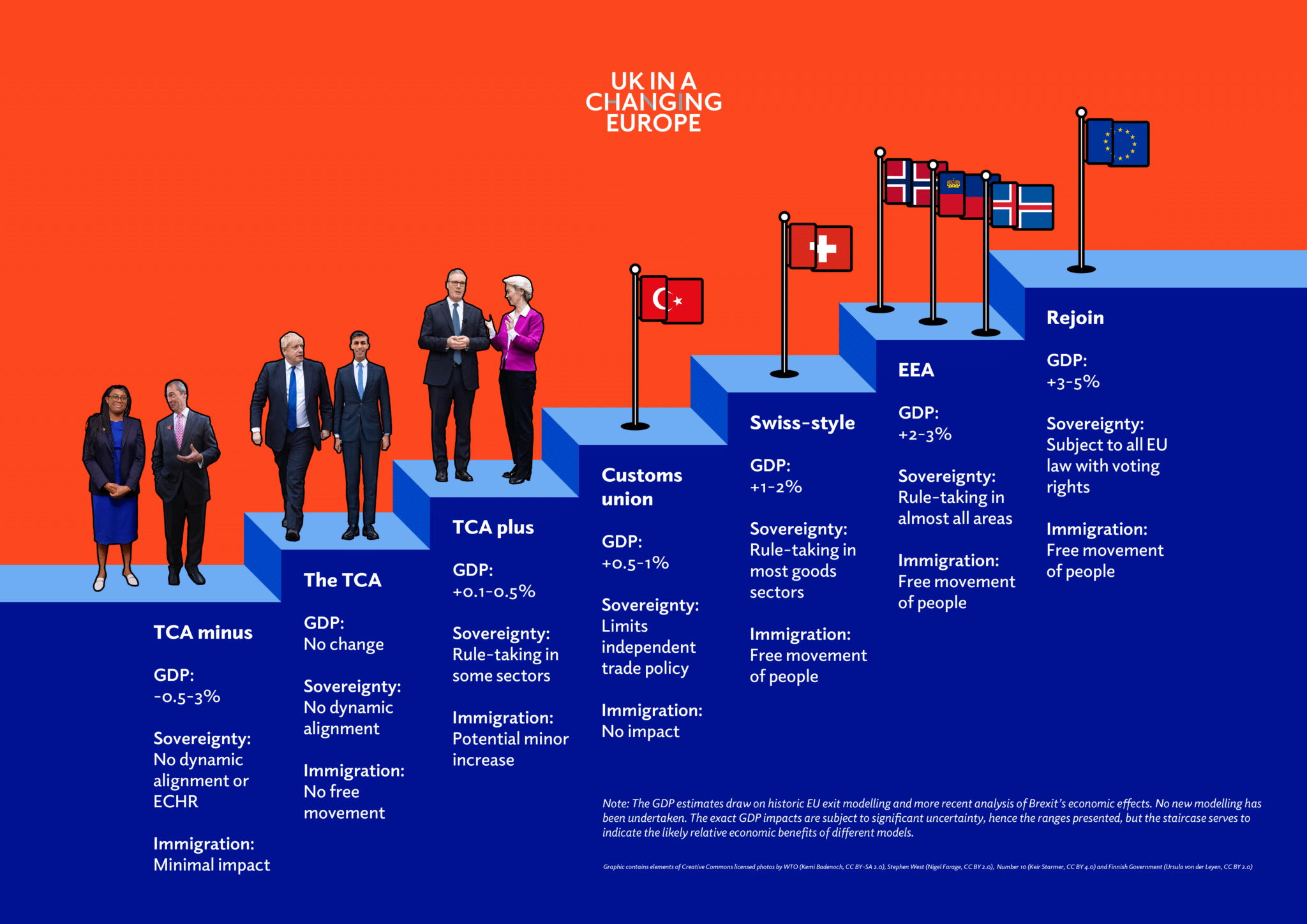
Joël Reland explains the new ‘UKICE staircase’, which outlines the options available to the UK should it seek a different form of relationship with the EU, and the trade-offs they imply.
Ten years after the referendum that David Cameron promised would settle the EU question “once and for all”, we’re still talking about Brexit. And by ‘we’, I don’t just mean the team here at UKICE towers.
Across the political spectrum, few seem satisfied with the status quo. Keir Starmer and Rachel Reeves want more ‘alignment’. The Lib Dems want a customs union. Many backbench Labour MPs want to be like Switzerland. Wes Streeting wants to rejoin “one day”. Meanwhile, Nigel Farage and Kemi Badenoch both say they would rip up Keir Starmer’s EU ‘reset’ and leave the ECHR.
How to make sense of it all? To help, we have just published a new report, replete with a brand-new staircase (a modern, improved version of the Barnier original). It sets out the viable options for the UK should it seek a different model of EU relationship, and the trade-offs they imply. The staircase rests on a clear internal logic: each ‘step’ necessitates greater alignment with EU law (and other obligations) and, in return, is likely to lead to greater economic dividends. Let’s walk you through it.
The TCA
We are currently placed on the ‘TCA’ step. The Trade and Cooperation Agreement (TCA) which Boris Johnson negotiated provides for tariff-free trade with the EU at the cost of paperwork to prove goods qualify and other frictions like customs checks and regulatory compliance costs. It has ended free movement of people with the EU and gives the UK (except for Northern Ireland) the freedom to set its own regulations in most areas. The consensus is that the TCA has reduced UK GDP by 2-6%: broadly in line with pre-Brexit forecasts.
TCA plus
The government is seeking to add a handful of supplementary agreements onto the TCA, deepening economic, security and cultural cooperation (as set out in last year’s ‘Common Understanding’). Almost all of these agreements are still subject to negotiation but, if completed, could add up to half a percent to UK GDP by 2040. The economic agreements entail UK ‘dynamic alignment’ with EU law (meaning being subject to EU rules, as they evolve, with no formal say over them) in the areas of animal and plant health, carbon pricing and electricity. There would be no return to free movement but there could be some increase in EU migration to the UK from a ‘youth experience’ scheme.
TCA minus
Both Nigel Farage and Kemi Badenoch say they will reverse the Common Understanding and take the UK out of the European Convention on Human Rights (ECHR). The former would undo the potential ‘TCA plus’ economic gains. The latter would likely lead the EU to suspend the TCA, putting the UK-EU trading relationship onto ‘no deal’ terms which pre-Brexit forecasts suggest could reduce UK GDP by a further 3%. Reform and the Conservatives argue that leaving the ECHR will enable the UK to ‘secure our borders’ and ‘stop the boats’ by stopping migrants from appealing deportation decisions. But in practice very few extradition decisions are successfully challenged in this way, and exiting the ECHR would make it harder to cooperate with EU countries on small boat crossings.
Customs union
Both the Lib Dems and Greens support a UK-EU customs union. This would see the UK and EU set common tariffs on goods imports and, in return, UK-EU trade would always be tariff-free, with traders no longer needing to complete complex paperwork to prove the national origin of goods. This would remove a significant source of trade friction, and could boost UK GDP by 0.5-1%, with manufacturing sectors feeling the biggest benefits. But the UK would lose a large degree of control over trade policy – it could not offer countries lower tariff rates than the EU and, if the EU imposed major tariffs on others, the UK would have to do likewise. An EU Commissioner suggests the EU is “open-minded” and “ready to engage” about the idea of a customs union.
Swiss model
Some in the Labour Party have suggested that the UK could seek a ‘Swiss-style’ deal with the EU. Switzerland is integrated into the single market in a range of, mostly, goods sectors – and has to ‘dynamically align’ with relevant EU law for the privilege. It also has free movement of people and pays into the EU budget (around £330m/year for 2030-2036). This deeper integration brings bigger economic gains (an estimated 1-2% GDP boost) while maintaining autonomy in services sectors like financial services and AI. It is not certain that the EU would want to engage in talks on a Swiss-style deal: as they have historically found it difficult to manage and it risks derailing the ratification process for the updated EU-Swiss agreement. A senior EU figures has said a Swiss deal is “possible, but it takes time”.
EEA (single market)
Joining the European Economic Area (EEA) would mean full participation in the EU single market. That brings greater economic gains (an estimated 2-3% GDP boost) but requires greater dynamic alignment and budget contributions than the Swiss deal, while also accepting free movement. There are still some barriers to trade because the EEA agreement does not include a customs union. Joining the EEA would be complex: the UK would most likely first have to join EFTA, which the member states (Iceland, Liechtenstein, Norway and Switzerland) might not welcome, and then seek to negotiate an EEA accession treaty. Maintaining widespread dynamic alignment also takes a lot of administrative work. EU officials have suggested EEA membership as a plausible model of UK association.
Rejoin
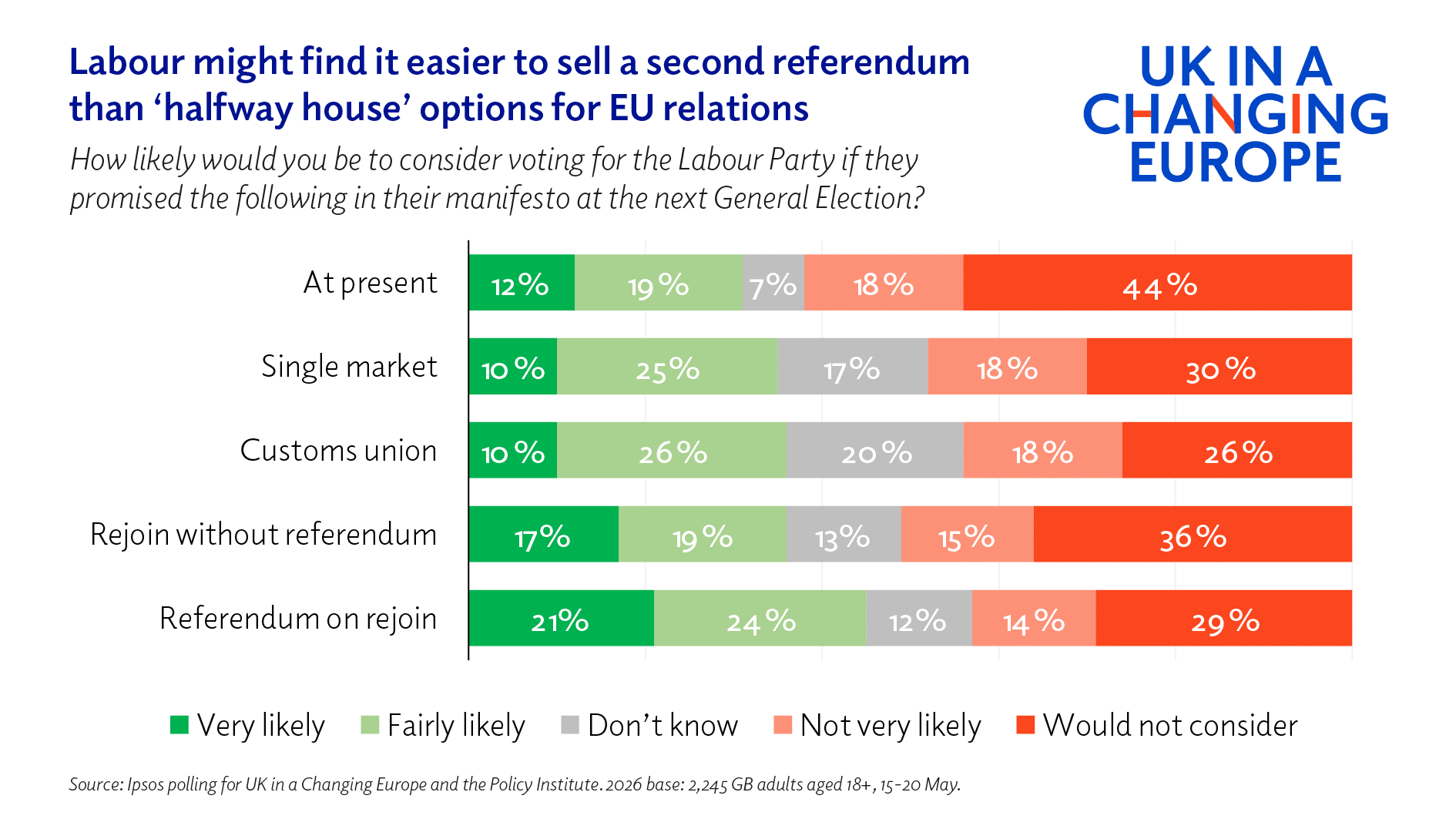
The UK could apply to become an EU member state again. It is reasonable to think this would reverse most of the economic damage Brexit has done. A successful application would mean being bound by all EU treaties and the UK would, likely, have to do without the rebate on its budget contribution which it used to enjoy and make an at least rhetorical commitment to join the euro. Unlike with the Swiss and EEA deals, the UK would have much greater decision-making powers over the EU law to which it is subject, including full voting rights, and the EU would be obliged to consider a UK application according to pre-set criteria. Among voters, rejoining (with a referendum) is the most popular of all options for the future relationship.
By Joël Reland, Senior Researcher, UK in a Changing Europe.

Apologies in advance, but there’s a pretty gross reason our pillowcases turn yellow.
The colour change is usually due to a buildup of our sweat, skin oils, hair oils, and drool – and parts of these deposits, like proteins and fats, yellow with age. (Rarely, clear sweat changes hue after contact with bacteria in a process called pseudochromhidrosis.)
Depending on how discoloured your pillowcase has become, a regular wash might not cut through this residue.
Luckily, though, some experts say there’s a two-ingredient solution to the problem.
Baking soda and water could help
Panda London said that a “mixture of baking soda and water” can help to banish stubborn stains.
They reccomend turning it into a paste and applying it to your case before washing. Begin with a small patch to test whether it works on your material.
Southern Living recommended a similar method.
Baking soda, they explained, can help to lift stains and boost the effectiveness of your detergent later on.
Spot-treat affected areas with a baking soda and water paste, they suggest, before rubbing off the mixture before washing.
When you do chuck the offending item in your machine, make sure to add 110-135g of baking soda in your drum alongside your usual detergents.
The Spruce said you should wait until your paste is completely dry before removing it and putting it in the wash.
They also point out that baking soda “softens clothes and boosts the detergent’s power,” and can even help to keep your washing machine drum clean.
Lastly, speaking to Ideal Homes, Petya Holevich, a cleaning expert at Fantastic Services, said it could help to improve the smell of your pillowcase, too: “Baking soda acts as a natural deodoriser and mild pillow stain remover”.
What if I have really severe yellow stains on my pillowcase?
For more severe stains, oxygen bleach may be needed.
This is a “safer alternative to chlorine bleach for whitening,” Holevitch said.
Soak your clothes in a mixture containing the product for at least an hour before washing.
However, there are exceptions: silk, wool, and fabric with leather strips or wooden buttons can suffer in the solution.
Make sure you check the care label on your pillowcase first.

Keir Starmer will announce that under-16s will be banned from accessing the biggest social media platforms as part of plans to “keep children safe online”.
The prime minister, who had previously been opposed to such a ban, will use a Downing Street press conference on Monday morning to unveil the plans.
He is expected to say that the UK will follow Australia’s example in raising the minimum age to 16 for sites including TikTok, Instagram, Threads, Facebook, X, YouTube, Snapchat and Reddit.
More than 90% of parents backed the move in a government consultation.
Starmer said: “How we keep kids safe online is one of the biggest debates of our time. As a dad, I know every parent wants their child to grow up safe and happy.
“This is a choice about whose side we’re on: families across the country, or a status quo that isn’t working.
“People rightly expect action, and this government will always stand up for parents and put children first.
“That’s why we will call time on a system that’s failing our kids and take bold action to give every child the best possible start in life.”
But the father of a teenager who took her own life after viewing harmful content online accused the prime minister of “playing politics” by rushing the announcement amid speculation about his future.
Ian Russell, whose daughter Molly died in 2017 aged just 14, said the PM’s behaviour was “deplorable”.
Speaking to the BBC’s Sunday with Laura Kuenssberg programme, he said: “In opposition, Keir Starmer promised to tighten up the online safety world by regulating better.
“Early last year, father to father, I met with him briefly and he was very concerned – and he promised me he would look into effective solutions to deal with this problem.
“But as we sit here on the verge of this announcement, it seems that he’s not kept either of those promises.”
He said the prime minister had “promised a group of bereaved parents” an announcement could be expected by the summer recess, which falls in mid-July, “so he’s rushed that forward for some reason”.
“I can’t think of a reason other than a political reason… if he’s playing politics, what he’s doing is gambling with young people’s lives – and I find that deplorable,” he said.
Starmer is also expected to announce a social media curfew for 16 and 17-year-olds after 8.30pm.
Critics pointed out that Labour also want to lower the voting age to 16.
Liberal Democrat education, children and families spokesperson Munira Wilson said: “The government appears to have cobbled together a hodgepodge of social media restrictions which don’t keep children safe, nor hold big tech’s feet to the fire.
“The government must heed the lessons from Australia and stand up to big tech with a credible set of measures that genuinely protects our children, rather than rushing through a half-baked policy just to secure a political legacy.”
Tory shadow education secretary Laura Trott said: “It’s shameful that it’s taken the Prime Minister’s job to be on the line for the government to finally U-turn and ban social media for under 16s.
“Three times Labour voted against a ban, failing to stand up to Big Tech and protect children from the extreme content they are exposed to every day.”
Subscribe to Commons People, the podcast that makes politics easy. Every week, Kevin Schofield and Kate Nicholson unpack the week’s biggest stories to keep you informed. Join us for straightforward analysis of what’s going on at Westminster.
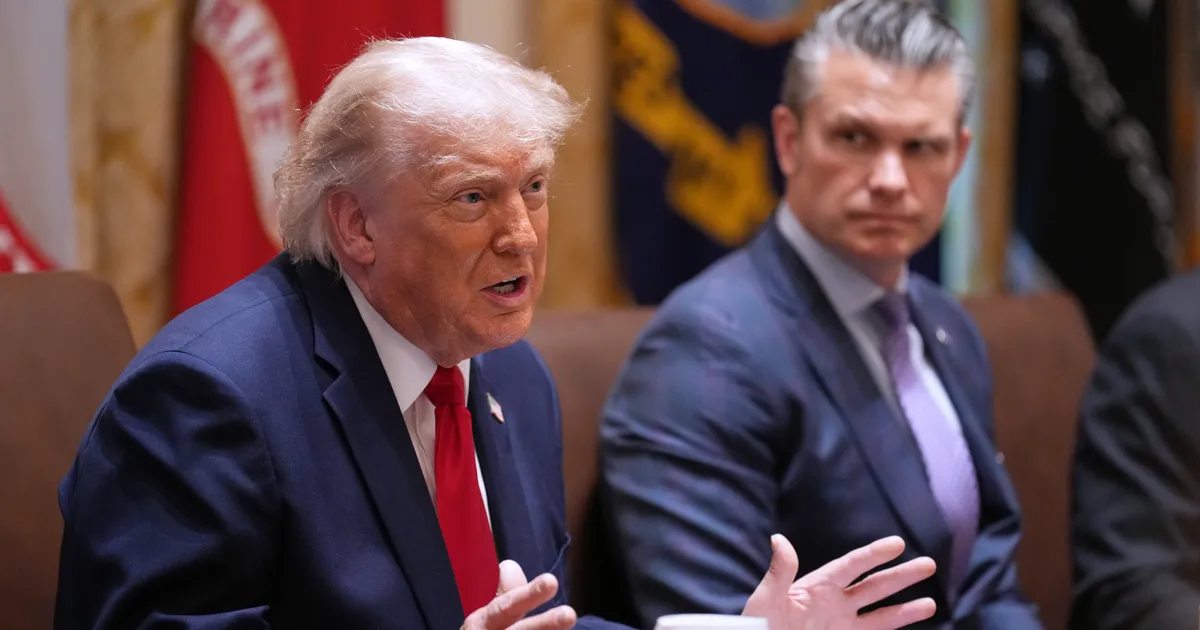
President Donald Trump announced on Sunday that his administration has reached a peace deal with Iran more than three months after the US and Israel launched a disastrous war that has put intense strain on the world’s energy supply, and left the Iranian regime strengthened and emboldened.
The agreement constitutes the most notable diplomatic development since the strikes on Iran began on February 28.
American and Israeli forces decapitated the Iranian government by reportedly acting on information that many of the country’s top leaders would be in the same place at the same time.
The Iranian regime, however, has managed to sustain its grip on power, even in the wake of mass protests that were put down with ruthless violence earlier this year.
After some initial confusion among Trump’s own Republican Party as to what the US military action was ultimately meant to accomplish, the president began repeating that Iran could not be permitted to develop a nuclear weapon, and that the Strait of Hormuz needed to be reopened to commercial shipping, as it was before the war began.
He has also said that Iran’s nuclear “dust” — or the remnants of nuclear materials that were targeted in US airstrikes last summer — must also be destroyed. The issue of how the country will dispose of its highly enriched uranium has long been a point of contention.
Fully reopening the Strait of Hormuz is expected to alleviate some of the pressure on global fuel markets, which have seen major spikes in oil and gas prices due to the closure of the waterway.
Prior to the Iran war, 20% of the global oil and gas supply moved through the Strait.
Iran effectively shut it down by threatening to attack ships that attempted to cross, leaving some crews stranded on ships waiting for the conflict to resolve.
Casualty estimates from the war vary, with the Israel Defense Forces estimating some 6,000 Iranians have been killed. The US officially counts 13 deaths on its side.
News of a previous possible deal between the US and Iran drew pushback in May from some Senate Republicans, who favored a harsher approach toward Iran.
Trump had signalled he would not be rushed into an agreement. He repeatedly pushed back on the idea that the upcoming midterms were putting political pressure on him, due to rising prices that could be directly tied back to his decision to launch the war.
“I don’t care about the midterms,” Trump said bluntly at one point. At another, when asked whether he shared Americans’ concerns over the high cost of living, he was even more abrasive.
“The only thing that matters when I’m talking about Iran — they can’t have a nuclear weapon. I don’t think about Americans’ financial situation. I don’t think about anybody. I think about one thing — we cannot let Iran have a nuclear weapon. That’s all,” he said.
He doubled down on that sentiment last week, saying, “I love the inflation.”

Mary Trump Flips The ‘Masculinity’ Script On Her Uncle Donald Trump

Hamzah Sheeraz called out for ‘war’ on Anthony Joshua undercard by ‘devastating puncher’

Apple could charge for Siri AI from 2027


-

 Business18 hours ago
No Jackpot Winner as $257 Million Prize Rolls Over to $269 Million Monday Draw
-

 Crypto World4 days ago
Oppenheimer backs SpaceX as $70 billion retail frenzy builds
-

 Crypto World4 days ago
Markets Rally as SpaceX IPO Looms Amid Iran Tensions and Inflation Surge
-

 Fashion3 days ago
Weekend Open Thread: Tuckernuck – Corporette.com
-

 Sports7 days ago
FIFA WC 2026 Group C: Morocco, Scotland challenge Brazil’s hunt for glory | FIFA World Cup 2022
-
 Crypto World7 days ago
Eli Lilly (LLY) Stock Surges 4% Following Breakthrough Sleep Apnea Trial Results
-
 Crypto World10 hours ago
Zimbabwe Requires Crypto Businesses to Register Annually Under New FIU Regulations
-
 Entertainment6 days ago
The Ryan Gosling True Crime Thriller On Netflix That Gets Even Stranger, Stream It Now
-
 Sports6 days ago
Bangladesh beat Australia after 20 years in ODIs, register only their second win over six-time world champions | Cricket News
-

 Tech3 days ago
This Week In Security: Microsoft On Microsoft, Register Your Domains, Linux On ARM, And FreeBSD Joins The File Cache Club
-

 Tech2 days ago
NanoClaw integrates JFrog registries to secure AI agent downloads
-

 Crypto World2 days ago
Bitget enters Argentina’s regulated crypto market through PSAV registration
-

 Politics4 days ago
Politics Home | Healey Resignation Is “Colossal Failure Of Government”, Says Former Labour Defence Secretary
-

 Tech5 days ago
‘This is Seattle’s position on AI’: City Council votes unanimously to pause big new data centers
-
 Tech4 days ago
Dutton Ranch star claims they ‘didn’t see any disruption’ on set following Chad Feehan’s exit from Yellowstone spinoff fueled by Taylor Sheridan clash rumors
-

 NewsBeat3 days ago
El Nino has formed in the Pacific and could set records, forecasters say
-
 Entertainment4 days ago
Donnie Wahlberg & More Heat Up Las Vegas at Circa’s Barry’s Downtown Prime
-

 Sports4 days ago
First Time Since 1971: Australia Register Historic Low In ODI Cricket
-
 Tech4 days ago
Opendoor Ends India Operations, Fueling a Bigger Conversation About AI and Outsourcing
-

 Tech7 days ago
Nvidia and Hyundai deepen their robotics push around Atlas
You must be logged in to post a comment Login