
Politics
‘Sudden Adult Death Syndrome’: Meaning, Cause, And Symptoms


Until last week, I’d never heard of sudden arrhythmic death syndrome (SADS), sometimes called sudden adult death syndrome.
But the NHS suggests it’s the most common cause of death of under-35s in the UK. It’s believed to affect about 500 people annually in England, Scotland, Wales, and Northern Ireland.
The fatal condition leads to an “unexpected” and “sudden” death.
Here, HuffPost UK spoke to Dr Dominic Greenyer, private GP at The Health Suite, about what SADS is, why it might happen, and some possible warning signs.
What is SADS?
Despite its (less accurate, Dr Greenyer said) nickname, SADS is not confined to adults. It can affect children and young people too, the doctor explained.
The term is used when “someone dies suddenly and unexpectedly following a cardiac arrest, but a detailed post-mortem and toxicology investigation cannot identify a clear cause”.
“The heart may appear structurally normal, which can make these deaths particularly difficult for families to understand,” he added.
What causes SADS?
Dr Greenyer told us that the problem can lie in the electrical action of the heart, rather than a structural issue (like a blood clot during a heart attack).
“An abnormal electrical rhythm can cause the heart to beat dangerously fast or erratically, preventing it from pumping blood effectively and resulting in cardiac arrest,” he said.
Genes may be a factor here, too.
“Sometimes, [SADS] is linked to an undiagnosed inherited condition, such as long QT syndrome, Brugada syndrome or catecholaminergic polymorphic ventricular tachycardia, known as CPVT. These conditions can be very difficult to detect because a person may look healthy, exercise regularly and have no known heart disease,” he shared.
“The most important risk factor is a family history of sudden, unexplained death, particularly at a young age. People should also seek medical advice if a close relative has been diagnosed with an inherited heart rhythm disorder or cardiomyopathy.”
Are there any warning signs of SADS?
The NHS writes that “fatal arrhythmia may be the first presentation” of the condition. In other words, tragically, it might prove deadly before it shows any other signs.
But Dr Greenyer said there are some symptoms that you should get checked out if you experience them.
“Possible warning signs can include unexplained fainting, especially during exercise or emotional stress; recurrent palpitations; unusual dizziness or seizure-like episodes with no clear explanation,” he said, though the GP stressed that “most people experiencing occasional palpitations or dizziness will not have a dangerous inherited condition”.
Additionally, if you faint during exercise, develop chest pain or severe breathlessness while you’re active, or you have palpitations accompanied by fainting, you should be medically assessed by a doctor who can work out whether further scans and tests are needed.
“It is also important not to create the impression that exercise itself causes SADS,” said Dr Greenyer. “Regular physical activity is overwhelmingly beneficial for the heart. In a small number of people with an undiagnosed electrical condition, intense exercise or stress may act as a trigger, but the underlying condition is the real risk.”
People whose family members have died from SADS may be offered specialist cardiac and genetic assessment, which allows them to receive monitoring and treatment if needed, he ended.
“SADS is frightening precisely because it can affect someone who appears fit and well. However, awareness of family history and taking unexplained symptoms seriously can help doctors identify some of those at increased risk before a catastrophic event occurs.”


Ben Wallace has hit back at Zia Yusuf after the Reform home affairs spokesperson called the ex-defence secretary a “traitor to Britain”.
Their social media row began when Wallace, who stood down as a Conservative MP in 2024, criticised Reform UK’s plan to fix the shortage of prison spaces by sending foreign criminals abroad.
The right-wing party has proposed deporting those with non-custodial sentences to their country of origin if they ever get into government.
Those with custodial sentences would either be forced to go home or to a third country, like El Salvador.
But Wallace, a former Tory cabinet minister, tore into the proposal while also accusing Yusuf of “making policy and facts up”.
He wrote on X: “If memory serves me right the top foreign nationalities in UK prisons are Irish, Polish, Romanian, Albanian and Baltics. Total number of foreign offenders always hovered around 10-11k.
“ Reform have to answer a.) how they will force those countries to take these offenders. For decades they have refused to.
“b.) If they won’t and then deport them but they are released how will that sit with their victims? And the Irish offenders will find it easy to return.”
Yusuf soon hit back by calling Wallace, who headed up the defence department for four years, a “moron”.
He wrote on X: “Incredible that this moron was defence secretary.
“Our policy today is in direct response to your government’s failures.
“If their home countries won’t take back, their citizens that are languishing in our jails, we are renting spaces in countries like El Salvador to put them.
“They will serve their full jail terms there, and will be banned from ever coming back to Britain.
“They may well include some of the thousands of Afghans you imported, including those who had not been vetted properly and including Taliban fighters (!).
“You know, the ones you took a super injunction out to keep secret from the British people? That’s why I call you a traitor to Britain. You fit the dictionary definition.”
But Wallace hit back: “Oh look a lesson from a man who never put a uniform on…just worked at bank.
“A man who is literally making policy and facts up.
“A man who cant even get his own party to pick him as an MP ( tell us why please?).
“When Reform stop taking £5m bungs and start being honest with people then people might take you seriously.
“No one is saying don’t send prisoners back when you can but don’t lie to the public you can do it with a magic wand. You guys are getting desperate. After all you recruited Suella!”
Suella Braverman worked in the Tory cabinet at the same time as Wallace but defected to Reform earlier this year.
Listen to Commons People, the podcast that makes politics easy. Every week, Kevin Schofield and Kate Nicholson unpack the week’s biggest stories to keep you informed. Join us for straightforward analysis of what’s going on at Westminster.

This article contains major spoilers for the latest episode of House Of The Dragon.
House Of The Dragon showrunner Ryan Condal has opened up about the decision to deviate from the show’s source material in its latest season finale.
Monday’s instalment of the Game Of Thrones prequel saw Emma D’Arcy’s Rhaenyra Targaryen not just delivering a rousing speech to the masses of King’s Landing, but also revealing the Prince That Was Promised prophecy (and how it relates to her) out in the open.
None of this featured in author George R R Martin’s books, on which House Of The Dragon was based, which Condal spoke about at a press conference coinciding with the finale.
“It’s not in the book and it’s not in the history,” he explained (as reported by IGN). “But there is a bunch of talk about how Rhaenyra became very despotic and became a tyrant at the end and was very unpopular with the people.
“So we saw it as ‘this could just be something that happened and there was disagreement over exactly what it was’, so it didn’t make the historical record.”
He quipped: “But my glib sort of toss-off from the historians is, ‘Oh, well, Targaryens say crazy shit all the time’.”
Condal continued: “So much of [the Targaryens’ existence] is this self-aggrandisement. And for the stone masons standing there in the crowd just looking up at this, it could just sound like somebody trying to make something of themselves because they have no idea of all the ‘real history’ that went into Rhaenyra making that speech.
“But we wanted something that felt like a real seismic change, a sea change in Rhaenyra’s relationship to her people. She’s seen the death of their religious leader. She’s standing outside of the church of the faith of most of the people standing there, as a member of a totally different faith.
“This old Valyrian faith of dragons and fire gods and blood magic, and pronouncing herself the chosen one, the leader that is going to take them through the fire and out of the darkness.”
“And so tremendously, virtuosically performed by the great Emma D’Arcy,” he enthused.
Back in January, US broadcaster HBO confirmed that the upcoming fourth season of House Of The Dragon will be the show’s last.
Condal, according to Variety, told the press conference that he’d been “taking time off” from the fantasy world of Westeros while season three was airing, as he “needed to step away from all of this”.
However, he noted that he’s already handed a first draft of a new episode in to HBO, insisting: “We have an incredible season coming. As crazy and big as season three was, I think season four is going to be even bigger.”
All three seasons of House Of The Dragon are now streaming on Now, Sky and HBO Max in the UK.

FIFA president Gianni Infantino is facing a new crisis that could lead to a fresh investigation into his conduct during the 16 years he spent at UEFA, amid allegations concerning an alleged relationship with a former employee, who received a six-figure financial settlement.
The Telegraph has revealed how prominent figures within UEFA want to know whether the alleged relationship influenced decisions relating to the employee or others during Infantino’s tenure as general secretary.
UEFA circa Infantino: A brief history
Infantino joined UEFA in 2000 and rose through the ranks before taking up the post of general secretary. He stayed at UEFA until 2016, when he became FIFA president, succeeding Joseph Blatter.
When at UEFA, it was reported that a female employee started out in an entry-level role before quickly moving into a more lucrative managerial position. She allegedly received a pay rise of about 30%, which caused discontent within the organisation, according to sources quoted by the Telegraph.
Apparently, Infantino was not supposed to approve the staff member’s severance package due to an alleged conflict of interest.
Meanwhile, sources indicated that Michel Platini, who was head of UEFA at the time, confronted Infantino over the alleged relationship, before an agreement was reached about the staff member’s departure and financial compensation.
The information also revealed that once the employee left, UEFA financially supported her Master’s degree in business administration.
Platini declined to comment to the Telegraph.
UEFA defends itself, FIFA denies allegations
For its part, UEFA confirmed that the sum received by the employee was “in line with the regulations in force” at the time, noting that the organisation had subsequently tightened its rules regarding staff and remuneration policies, in line with modern standards for international organisations.
However, FIFA described the allegations levelled at its president, calling them “categorically untrue” and said any suggestion of inappropriate behaviour or a breach of regulations constitutes defamation. The football body also confirmed it had not received any complaints from staff at UEFA or FIFA regarding Infantino’s conduct.
FIFA emphasised that all measures relating to staff, including severance packages and compensation, had been approved by the relevant officials in accordance with the regulations in force at the time.
In a further escalation, FIFA has accused certain parties of launching a “coordinated and sustained effort” aimed at undermining the organisation and Infantino.
Things keep getting worse for Gianni
This issue comes at an extremely sensitive time for Infantino. He is facing one of his biggest political crises since taking over as FIFA president, against the backdrop of an escalating dispute with UEFA over a proposed plan to finance the World Cup, which would have granted a group of investors extensive influence over the tournament’s commercial interests.
UEFA had announced that it lost confidence in Infantino, while the European football associations voted unanimously to boycott the upcoming World Cup, pending assurances that the controversial funding plan had been definitively scrapped.
This crisis coincided with other controversies surrounding Infantino’s presidency, including the row over the high ticket prices for World Cup matches, as well as the infamous U-turn of US striker Fularin Balogun’s suspension, following intervention from President Donald Trump.
However, despite mounting pressure, Infantino remains determined to stand in the FIFA presidential election scheduled for next March, in a bid to secure a fourth and final term.
In North and Central America and the Caribbean, the CONCACAF federations have joined UEFA in criticising the funding plan, whilst Mexico has broken ranks with the majority and announced its support for Infantino — a move that has raised questions, particularly as the country is bidding to host the Club World Cup in 2029.
Featured image via the Canary
By Alaa Shamali

Carherine Barnard considers three legal issues which have arisen as a result of the mass border crossing from Morocco to the Spanish territory of Ceuta in July.
Spain and the EU were caught off guard when, on 30 July 2026, tens of thousands of people crossed the border between Morocco and the Spanish territory of Ceuta. Migrants came on foot or they swam. Over 100 migrants died in the attempt. Government responses were instant – and nationalistic. Spain, facing an incursion into its territory, sent in police and military reinforcements. Within 48 hours the vast majority of migrants had returned to Morocco. Nevertheless, Italy said that Spain should be removed from Schengen, the borderless travel area in the EU, and when that proved not possible, it imposed travel restrictions on those coming from Spain. Denmark and Finland threatened to do the same.
The aim of this blog is to focus on three legal issues which have arisen as a result of this mass border crossing.
First, the immediate Italian response. Under the Schengen rules, it’s not possible to remove another state from the Schengen zone. All states can do in times of crisis is to impose temporary measures. For example, under Article 25 of the Schengen Borders Code (SBC), where ‘there is a serious threat to public policy or internal security in a Member State’, that state may ‘exceptionally reintroduce border control’ for a limited period of up to 30 days, possibly longer, depending on the foreseeable duration of the serious threat. Further, the reintroduction of border control must be proportionate (i.e. it shall ‘not exceed what is strictly necessary to respond to the serious threat’) and must be ‘a last resort’. There are also various procedural requirements to be satisfied, including notification to the other member states and the Commission. It is not clear that any of the Article 25 criteria have been satisfied.
Moreover, those who entered Ceuta did not enter the Schengen borderless travel zone. Article 41 of the SBC makes specific – and unique – provision for Ceuta and Melilla (another Spanish territory in north Africa). As the Spanish government explains, ‘Schengen checks are carried out on exit by sea or air, the only two routes available. Therefore, no one can travel from Ceuta or Melilla to mainland Spain without being identified by the National Police at the port or the airport.’
Nevertheless, Italy has continued to impose border controls against Spain and now Spain has retaliated by introducing reciprocal controls on arrivals from Italy, again with little evidence of the terms of Article 25 being respected. Where is the European Commission, the guardian of the treaties, in all of this? The response ‘it’s August’ does not suggest a Commission fulfilling its legal duties.
Second, the attitude of Italy, Finland and Denmark to the Ceuta situation and the Spanish response raises a further issue: EU solidarity – or rather lack of it – in the face of a crisis. The principle of solidarity between the EU and member states runs through the EU treaties like writing through a stick of rock (see e.g. Article 24(2) of the Treaty on European Union: ‘the Union shall conduct, define and implement a common foreign and security policy, based on the development of mutual political solidarity among Member States … and the achievement of an ever-increasing degree of convergence of Member States’ actions’).
Yet the initial response from the Commission, condemning as ‘unacceptable’ the images coming from Ceuta, offered little signs of solidarity with Spain. Meanwhile, a letter, initiated by Italy and Denmark but signed by 22 member states, blamed Spain for the crisis due to its amnesty policy. Spain has recently offered amnesty to over 500,000 illegal residents. This gives them the right to reside, but not citizenship, but they had to have arrived in Spain before 1 January 2026.
Spain responded robustly, lamenting the lack of EU solidarity. An emergency meeting of interior and justice ministers hosted by the Commission and the Irish Presidency on 4 August tried to restore some degree of unity. The current spat between Spain and Italy over the SBC and the lack of Commission response suggests the continued lack of solidarity.
Third, there was another dog that didn’t bark: the new EU migration pact, in force on 1 July 2026, described as an ‘Effective system of solidarity and responsibility for managing asylum and migration in the EU’. The Pact contains a new Crisis and force majeure Regulation which ‘addresses situations of crisis, including instrumentalisation, and force majeure, and provides for derogations and solidarity measures for Member States’. This Regulation was introduced following the instrumentalisation of migration by Belarus against Poland, Lithuania and Latvia in 2021 when it sent thousands of mainly Iraqis to the Polish border with the ‘false promise of easy entry to the EU’. Some argue that the recent incursion into Ceuta was prompted by the Moroccan government using migration as a way of putting pressure on Spain after Pedro Sanchez, the Spanish Prime Minister, following a thawing of Spanish-Algerian relations.
Yet Spain does not appear to have made, as the new Regulation allows for, ‘a reasoned request to the Commission, in order to benefit from solidarity measures allowing for the proper management of that situation’. Nor does the Commission appear to have considered the application of the regulation. As Alberto Alemanno suggests, because Spain needs the cooperation of Morocco for managing its border, pulling the trigger of the regulation may have been too politically toxic. But this undermines the utility of a key pillar of the EU’s flagship migration programme.
All of this continues to be highly relevant. There are rumours that people smugglers are going to try another attempt on the Morocco/Ceuta border on 15 August. Spain has already lamented how smugglers have used social media to take advantage of (and provide misinformation about), Spain’s relatively liberal immigration laws, including a ruling of the Supreme Court which prohibited ‘hot returns’ to Morocco (ie returns without legal process) for those arriving in Ceuta by swimming (they can still be returned after due process).
Spain’s border with Morocco thus looks set to remain a sensitive issue. The divided response by the EU and the member states helps those trying gain access to the EU illegally and strengthens the hand of those wishing to instrumentalise migration.
By Professor Catherine Barnard, Senior Fellow, UK in a Changing Europe & Professor of EU Law and Employment Law, University of Cambridge

Maybe it’s part of the current 2016 nostalgia, but I’ve been seeing a lot more sweet potato content recently.
There’s the classic orange fare, this time caramelised to crispy perfection – but in 2026, Japanese sweet potatoes (perfect for dessert) are all over my feed as well.
So, too, is the increasingly popular ube, a yam key to Filipino cuisine. It’s also sometimes called a “purple yam”, “water yam”, or “violet yam”.
But what’s the difference between a sweet potato and a yam to begin with?
Sweet potatoes vs yams: differences explained
1) They’re from different families
Sweet potatoes – which aren’t actually that closely related to “normal” spuds – are from the Convolvulaceae family, while yams belong to the Dioscoreaceae family.
Yams are quite closely related to lilies and grasses.
2) They’re different parts of their respective plants
Yams are tubers, while sweet potatoes are technically roots.
3) They can look very different
Sweet potatoes usually have thin, papery skin and a yellow or orange-ish inside. Sometimes they can have purple flesh too.
Yams have tougher, more “scaly” skin and can weigh as much as 45kg in extreme cases. They’re more cylindrical and sometimes have protrusions called “toes”.
4) They’re often grown in different places
Yams are common in parts of Africa and Asia, with about 95% of the plants being grown in Africa. It can be hard to find true yams in mainstream Western supermarkets.
Sweet potatoes are predominantly grown in China, India, and some African countries. They’re native to Central and South America and are more common in Western stores.
5) They taste different
Yams are starchier and “not nearly as sweet as sweet potatoes,” America’s Test Kitchen said.
Sweet potatoes’ flesh is softer and fluffier when cooked, meanwhile, and can be creamier and more moist than yams.
6) They’re nutritionally different
Sweet potatoes have ever so slightly more protein than yams, while yams are considerably higher in carbohydrates.
Yams have slightly more vitamin C, potassium, vitamin B6, and iron, while sweet potatoes are higher in sugars, fat (though neither has much at all), beta-carotene, and calcium.
But, Healthline notes, both are rich in nutrients, fibre, and vitamins.
7) They’re cooked differently
Usually, yams are boiled, roasted, or fried.
Sweet potatoes are often baked, roasted, fried, pureed, or mashed.
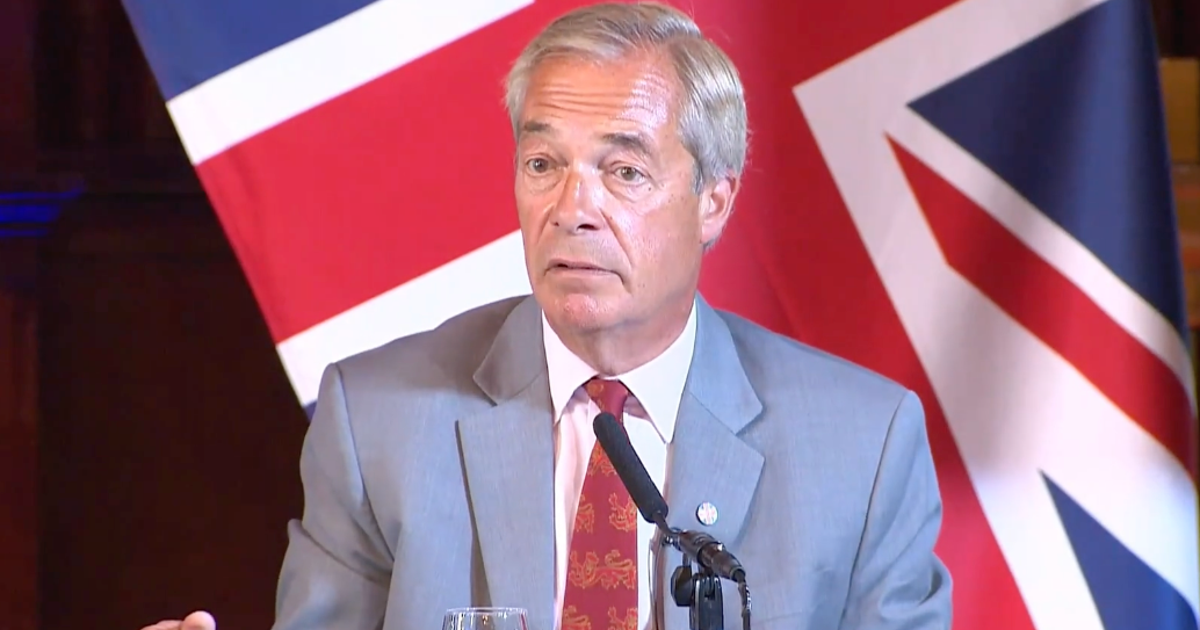
Nigel Farage has admitted that the number of small boats coming across the English Channel is falling – but still insisted the migrant crisis is “completely out of control”.
The Reform UK leader vowed last week to use the British Royal Navy to return small boats to France if his party ever got into power.
This proposal triggered a row with the French authorities who called it a breach of international and maritime law.
The number of crossings has fallen this year overall, but the controversial topic resurfaced this week after a record 230 people arrived in the UK on just one large dinghy.
Farage said Britain is evidently heading towards the kind of migrant crisis seen in the Mediterranean during a press conference on Monday.
But, Sky News reporter Rob Powell hit back: “Yes this is the largest number of people arriving in one boat but overall numbers are down quite significantly, 42% down on last year.”
He asked if Farage would acknowledge numbers are falling, adding: “Are you being straight with the British public when you suggest this is an issue that is getting worse?”
The Reform leader replied insisting he “always” thought the boats would get bigger.
“The overall numbers are down,” he admitted. “But they’re still horrendous.”
“Whether we have fewer bad people thus far than last year, the situation is desperate, it should be declared a national security emergency,” Farage said.
“Yes, we have managed to stop some of the dinghies.
“But it doesn’t stop the problem. It doesn’t go away. It is completely out of control.”
He added: “The idea that we should be celebrating that numbers are not as extreme as they were is for the birds.”
Responding to concerns over the mega-dingy, prime minister’s spokesperson told reporters on Monday: “We’ve seen today some appalling images of young babies being put into these unseaworthy craft, and they’re shocking images, and they show the reality behind the ruthless smuggling gangs that are prepared to risk human lives for profit.
“That’s exactly why the government has signed a new payment-by-results deal with the French to prevent these perilous journeys from happening in the first place.”
He said the government was “not complacent” and noted how joint action with the French since the general election had prevented 47,000 crossings.
Listen to Commons People, the podcast that makes politics easy. Every week, Kevin Schofield and Kate Nicholson unpack the week’s biggest stories to keep you informed. Join us for straightforward analysis of what’s going on at Westminster.

A “dead bedroom” sounds final. Case closed – or in this case, the bedroom door closed to a cold bed. For many couples, a prolonged period without sex can feel like the beginning of the end.
“A difficult sexual phase can expose things a couple has avoided: resentment, loneliness, fear of rejection, body insecurity, different needs or the sheer impact of everyday life,” said Lisa Opel, the in-house sex educator at JOYclub. “That can be painful, but being able to see the problem also creates the possibility of responding to it.”
Opel, who once navigated a dead bedroom in her own marriage, said rebuilding a sex life does not necessarily mean returning to the way things were before.
“Bodies change, people change and relationships change. The goal may be to create a new form of intimacy that is more honest and better suited to who you are now,” she said.

skynesher via Getty Images
Kiki Maree, a queer-inclusive somatic sexologist and intimacy educator, doesn’t use the phrase “dead bedroom” in her work because “I think it can feel quite hopeless and often misses what’s actually happening underneath. I prefer to think about it as a period of sexual disconnection.”
Maree has also experienced sexual disconnection with her partner, “but the relationship itself was never ‘dead.’”
“There was still love, care and commitment,” Maree said. “What had become difficult was the pathway back to intimacy.”
Both experts say finding their way back wasn’t about forcing desire or chasing a perfect solution. Instead, it required understanding what had created the distance in the first place, and learning how to reconnect with their partners without blame, pressure or expectations.
They stopped pretending nothing was wrong.
For Opel, one of the biggest obstacles wasn’t a lack of sex – it was the lack of talking about sex.
“One of our biggest mistakes was pretending everything was fine for far too long,” she said. “I think I was scared that saying, ‘I don’t really want sex anymore’ might break something, so instead I said nothing and hoped the problem would sort itself out.”
Instead, the silence gave hurt, confusion and feelings of rejection more room to grow until the lack of intimacy became “a large, silent third person in the relationship,” she said.
What helped was finally talking about it.
“Then, once we finally started talking, we made the very human mistake of hoping there might be one conversation, one technique or one gloriously sexy breakthrough that would fix the whole thing. There wasn’t,” Opel said.
“Rebuilding intimacy was much less cinematic: lots of talking, trying something, realizing it did not work, talking again and slowly becoming more honest.”
They realised neither partner was the problem.
Both experts say one of the biggest mindset shifts was moving away from blame and toward curiosity. For Maree, that meant recognising that both partners were often suffering in different ways.
“One partner often feels rejected, lonely or undesirable, while the other often feels pressure, guilt or like they’re constantly letting the relationship down,” she said. “Once we stopped seeing each other as the problem and started seeing the dynamic as the problem, everything became much more collaborative.”
Opel says couples often get stuck when they treat low desire as one person’s failure, asking questions like, “What’s wrong with you?” or “Why don’t you want me?”
“Being treated as the faulty part of the relationship is rarely an aphrodisiac,” she said.
Instead, both experts say couples need to look beyond the lack of sex itself and understand what is happening underneath it.
“Low desire is often a symptom rather than the problem itself,” Maree said. “Stress, exhaustion, resentment, body image concerns, parenting, medical issues, performance anxiety, mismatched desire styles or years of pressure can all contribute. Understanding the function of the disconnection is usually far more productive than simply trying to increase frequency [of sex].”
Opel added: “The bedroom is often just where the consequences appear.”
Taking sex off the table helped bring intimacy back.
Perhaps the most surprising strategy both experts recommend is temporarily removing the expectation of sex altogether.
“We actually banned sex for a while,” Opel said. “Which sounds like a slightly ridiculous solution to not having enough sex, but it helped enormously.”
Before that decision, she’d started avoiding even innocent affection because she worried every intimate interaction would eventually lead to sex she wasn’t ready for.
“I had started to avoid kisses and cuddles because I worried they would lead somewhere and I would eventually have to say no,” she said. “Once sex was officially off the table, I could relax into touch again. We could kiss, lie together or stroke each other without silently wondering what was expected next. It made affection feel like affection again instead of the first stage of a test I might fail.”
Maree often suggests something similar to the couples she works with.
“I usually suggest taking penetrative sex off the table temporarily – not because sex is bad, but because removing the expectation can dramatically reduce pressure.”
Rather than having couples try to manufacture desire, she encourages them to rebuild positive physical experiences through cuddling, massage, kissing, showering together or simply holding each other, instead of them trying to manufacture desire.
“Small, consistently positive experiences often rebuild trust more effectively than trying to engineer one perfect sexual encounter,” she said.

They expanded what intimacy could look like.
Both experts say reconnecting required letting go of the idea that intimacy had to lead to sex, or that rebuilding a sex life simply meant having more sex.
Opel encourages couples to create what she calls an “intimacy menu,” which might include kissing, massage, lying naked together, sharing fantasies, reading something erotic or simply spending uninterrupted time together.
Maree and her partner created something similar: a “pleasure menu” they could use to choose forms of intimacy based on how they were feeling in the moment.
“We also had to let go of the idea that fixing our sex life meant simply having more sex,” Maree said. “Instead, we became curious about what had made sex feel difficult in the first place and focused on creating experiences that felt emotionally and physically safe enough for desire to return naturally.”
She says the menu helped them reconnect without pressure.
“We used it to see what each of us were feeling like in our shared intimacy,” she said. “It included activities ranging from cuddling to mutual masturbation.”
By creating more ways to be physically close, both experts say couples can reduce the stress around sex and make affection feel enjoyable again rather than like an expectation.
There was hope because they never stopped caring.
Neither Opel nor Maree believes a prolonged period without sex automatically means a relationship is beyond saving.
For Opel, one of the clearest signs that her marriage could recover was that she and her husband still wanted a future together, even when they were questioning whether they could fix their intimacy.
“We did talk about divorce, but neither of us was calmly saying, ‘This relationship is over,’” she said. “We still laughed, parented well together and cared how the other person felt. We were upset because we missed each other, not because we had stopped caring.”
Maree says that’s often what gives her hope when working with couples experiencing sexual disconnection.
“I’ve worked with many couples who believed they would never reconnect sexually and later described their relationship as stronger than it had ever been,” she said. “Not because they found a magic technique, but because they stopped seeing each other as opponents and began working as teammates against the problem itself.”
Opel added: “Not every relationship should continue, and nobody should remain in a situation involving fear, coercion or persistent disrespect. But a quiet bedroom is not automatically a doomed relationship. Sometimes it is a signal that two people need to stop measuring what is missing and start listening to what has been neglected.”

Dr Pepsi’s name isn’t just catchy: originally called Brad’s Drink, the newer name reportedly “derived from dyspepsia (ie. indigestion), which the beverage was supposed to assuage”.
A 1907 ad describes the drink as “an absolutely pure combination of pepsin – for the ingestion – acid phosphate and the juices of fresh fruits”.
And yes, digestive biscuits were originally meant to aid digestion too (seems our modern gut health obsession is nothing new).
But marshmallows, which were apparently eaten by the Ancient Egyptians many moons ago, “originated as a versatile medicinal syrup and ointment,” Britannica explained.
We don’t know for sure that Ancient Egyptians definitely used them for health reasons, though they appeared to have been reserved for nobility.
It does seem, however, that Ancient Greeks were using marshmallows for everything from wound-healing to sore throats by the 9th Century BCE.
There is some evidence to suggest the original versions may actually have helped with everything from coughs to skin irritation, too.
Marshmallows used to contain, well, marsh mallow
“Marsh mallow” is a herbaceous plant from eastern Europe and northern Africa. The root of this plant was used to make medicinal “marshmallows” in the past.
According to the National Confectioners’ Association (NCA), Ancient Egyptians “squeezed sap from the mallow plant and mixed it with nuts and honey”.
We don’t know what this tasted like, but we do know that in the 19th century, the plant was introduced to France.
At this point, “owners of small candy stores whipped sap from the mallow root into a fluffy candy mould,” the NCA said.
This was a very long and labour-intensive process, and confectioners struggled to keep up with demand.
It took until later in the century for marshmallow makers to substitute marshmallow root for gelatin, which is still a standard ingredient in the no-longer-medicinal modern versions.
So… what did original marshmallows taste like?
You can still get marsh mallow root tea, which contains the old-school sweet’s star ingredient. Its flavour is described as “earthy”, but obviously, that’s before it’s mixed with other ingredients.
Creator Phoenix Ross, who makes difficult, rarely spotlighted, and unlikely foods (including a giant potato smiley and fizzy grapes) by hand, recently tried an old-school marshmallow recipe, which included the root.
Noting the “snotty” texture it created when soaked (which was responsible for traditional marshmallows’ signature spring), he said the flavour was mostly “swamp”.
He added, “I think there’s a reason we’ve moved on from this”. I’ll take his word for it.

As heatwaves become a regular part of UK summers, young people, psychologists, and environmental campaigners have opened up about “climate grief”.
It isn’t just about feeling uncomfortable in a heatwave: it’s an existential mourning for the summers and winters we grew up with, which are increasingly less likely to come back.
Alongside climate grief, some people are experiencing ‘heatwave anxiety’. Here, environmentalist Dr Ruth Valerio, the author of How to Survive a World in Crisis, breaks down what that is – and how to tackle it.
What is heatwave anxiety?
Dr Valerio said that, for most of us, our feelings about soaring temperatures have changed in recent years.
“Gone are the days when a heatwave was seen as something positive to be enjoyed: now it is a worrying feature of our warming world that we are having to learn to cope with, both physically and psychologically,” she said.
The weather phenomenon has been linked with sleep deprivation, increased disease risk, and even death. Mental health admissions rise, too.
The environmentalist added that for her, heatwave anxiety is partly “due to the physical impact of not sleeping so well and that extreme heat has on the body, which causes the brain to focus on keeping the body cool”.
“This additional stress leaves us less physiologically capable of functioning in other areas, hence why we can become irritable and lethargic, and why our anxiety levels increase particularly for those already struggling with mental health conditions,” she explained.
But there’s another element to heatwave anxiety, too. This “arises from the recognition that, as a global society, we have not tackled the problem of climate change as we should have done over recent decades and we are now seeing the consequences of that,” said the author.
“We are facing the reality of a climate crisis – something of course that people in other countries have been facing for a lot longer already – and that is a genuinely scary prospect.”
What should I do if I have heatwave anxiety?
Firstly, Dr Valerio said, it can help to pay attention to your body: “If you feel yourself struggling with the heat, for example, feeling more irritable or anxious, it’s good to remember this is partly a natural physiological response to high temperatures and it will pass when the temperature reduces.”
For those seeking to remain calm when it’s hot out, she recommended:
- Staying hydrated. ”Dehydration spikes the stress hormone cortisol, which increase anxiety,” the author explained. Drinking enough water can help with your blood flow, too. Try drinking before you feel thirsty in a heatwave.
- Applying a cold flannel to your face and/or neck. “This is a great tip to soothe anxiety during a heatwave. Exposure to cold water stimulates your vagus nerve, which automatically calms your nervous system by forcing your heart rate to slow down, and… the sudden cold temperature signals to your brain to release endorphins, which are natural mood elevators,” Dr Valerio stated.
- Putting your feet in cold water. ”Your feet contain dense networks of blood vessels, and cooling these areas forces the blood vessels to constrict, lowering your core temperature,” she added. “As air moves over wet feet, it increases heat loss through evaporation and convection, allowing your body to easily dissipate the trapped heat that may be increasing the anxiety, and signal to your brain that there is no danger.”
It’s important to consult a medical professional if you experience anxiety or confusion along with other heat exhaustion symptoms, like dizziness, confusion, and cramps in your arms and/or legs.
Dr Valerio stated, “you should always consult a medical professional [before trying home cooling/calming techniques] especially if you have underlying health conditions”.
As for broader anxiety about heatwaves, it’s “important to acknowledge it”.
“We are right to be feeling those things, and the challenge for all of us is how to take those emotions and channel them into something positive,” she said.
“What we do still matters and it is possible to take constructive action, recognising what is and is not in our power to change and learning how we can stay resilient.
“For example, you could swap out a couple of meals to include more plant- and grain-based options, write a short email to your MP and explain that tackling climate change is a voter issue for you, switch to a renewable energy company, and remember that AI is energy-hungry, so only use it when you really need to.”

Yet another heatwave is on the way for parts of England this week, with the UK Health Security Agency (UKHSA) issuing an amber heat-health alert for multiple areas of the country.
Amber heat health alerts have been issued for the East Midlands, East of England, Yorkshire and the Humber, London, North West, South East, South West, and West Midlands, while a yellow heat health alert has been issued for the North East, from Tuesday, August 11 at 9am until Friday, August 14 at 9pm.
Dr Agostinho Sousa, Head of Extreme Events and Health Protection at UKHSA, said: “Sustained periods of warm weather can result in serious negative health outcomes across the population, so it is important that everyone takes sensible precautions while enjoying the sun.
“Based on the current forecast, we don’t currently expect the health impacts to be as high as the heatwave we saw at the end of June but older adults and those with pre-existing conditions are still at risk.”
With heat health alerts becoming a more common occurrence during the British summer, we looked into exactly how such high temperatures can impact the body – and why it’s so important to try and stay cool.
The heart
When it’s hot for an extended period of time, the body’s internal temperature may rise, making your heart rate increase and vessels expand to bring more blood to the outer layers of skin, where the heat is then released.
If this heat isn’t released fast enough or the surrounding air is warmer than the body, your sweat glands will try to cool you down.
This is all well and good, but Dr Luke Powles, associate clinical director of Health Clinics Bupa Global and UK, told HuffPost UK sweating means a loss of fluid.
“This can lead to a drop in blood pressure,” he explained, “causing the heart to beat more rapidly, making the heart work harder to maintain a cooler body.”
“People with heart conditions and other underlying medical problems, and those on certain medications, can be particularly sensitive to increasing temperatures and therefore at a higher risk of becoming unwell in a heatwave,” he said.
This is why it’s imperative to stay hydrated, and keep cool where possible.

diego_cervo via Getty Images
The brain
Part of the brain called the hypothalamus controls our core body temperature and is also responsible for sending signals to the skin to start sweating.
However when it becomes too hot, these signals may not get through properly.
While we shouldn’t see this from the forecast temperatures, Dr Powles explained that “in extreme cases where your body temperature goes over 40°C, this can stop nerve fibres from working properly, which means the messages may not get through to and from the brain”.
When the body temperature goes higher than normal it can lead to dizziness, feeling weak and tired, poor co-ordination, and even problems with balance or thinking, said Dr Powles. “Your skin can also turn pale, cold and dry with loss of sweating, if it stops receiving messages from the brain.”
Dr Kenny Livingstone, a registered GP and founder of ZoomDoc, said at a cellular level; membranes, mitochondria and DNA can become damaged in extreme heat which raises the risk of stroke and swelling in the brain.
“If high internal core body temperatures are sustained – it can ultimately prove fatal,” he added.
The lungs
Another symptom of heat-related illness is breathing more quickly. Dr Powles said the hot weather can put more strain on the lungs, especially if you already suffer from conditions such as COPD or asthma.
The summer months also mean there are higher levels of pollen and, in some cities, air pollution, which can also impact your breathing.
“If you feel the heat is negatively impacting your breathing, try staying indoors more often, in well-ventilated areas,” Dr Powles advised.
Liver
The hot weather can also be “dangerous” for the liver, which is another thermosensitive organ. “Serious conditions such as heatstroke can damage liver cells, reflected by increased levels of liver enzymes in the blood,” Dr Powles explained.
Heatstroke is when the core body temperature rises above 40°C and the body’s internal systems begin shutting down. This can impact the nervous system and, if left untreated, can harm specific organs too.
“At its worst, this can lead to overall liver damage, although liver injury is often self-limiting,” said Dr Powles. “If you are suffering from any symptoms of heatstroke, it’s vital to get treatment immediately.”
Kidneys
Studies have linked heatwaves to an increased likelihood of kidney disease for those increasingly exposed to heat.
“As well as dehydration and a drop in blood pressure, both of which can harm the kidneys, in hot weather the body’s energy requirements can exceed its ability to produce energy, causing muscle cells to break down and release a protein called myoglobin and other products into the bloodstream,” Dr Powles explained.
“Some of these breakdown products (including myoglobin) can be toxic to the kidneys and can directly damage them.”
He added that while illnesses such as heatstroke can eventually be a cause of kidney failure, it’s important to know that this would result from a combination of events and, if treated, can be managed properly before it reaches this stage.
“Rehydrating the body will be essential in treating and protecting the kidneys from heatstroke,” he said.
UKHSA health advice for the hotter weather
- Keep your home cool by closing windows and curtains in rooms that face the sun.
- Look out for those who may struggle to keep themselves cool and hydrated – older people, those with underlying conditions and those who live alone are particularly at risk.
- Drink plenty of fluids and avoid excess alcohol.
- Never leave anyone in a closed, parked vehicle, especially infants, young children or animals.
- Check that fridges, freezers and fans are working properly.
- Try to avoid direct sunlight, especially between 11am and 3pm – if you do go outside, cover up with suitable clothing, such as an appropriate hat and sunglasses, and seek shade and apply sunscreen regularly.
- Avoid physical exertion in the hottest parts of the day.
- Make sure you take water with you if you are travelling.
- Take care and make sure to follow local safety advice if you are going into the water to cool down
- Check medicines can be stored according to the instructions on the packaging.
- If you are going to do a physical activity (for example, exercising or walking the dog), plan to do these during times of the day when it is cooler, such as the morning or evening.

Ex-Defence Secretary Fires Back After Zia Yusuf Dubs Former Tory MP ‘A Traitor To Britain’

Every NFC team’s non-quarterback MVP for the 2026 NFL season

Mach heute keinen Bitcoin-Trade, bevor du DAS gesehen hast!


-

 Fashion3 days ago
Weekend Open Thread: Mattifying Sunscreen
-

 Fashion3 days ago
Frugal Friday’s Workwear Report: Cap-Sleeve Pointelle Crewneck Sweater
-

 Sports5 days ago
Jordan Coyle & Cordiamo take Laya Arena Stakes at RDS
-

 News Videos2 days ago
Can Astrology Help Find Gold and Silver Trends? A Financial Astrology Guide
-
 Business5 days ago
US stocks: Dow closes at record on Mideast optimism; SpaceX, AMD drag Nasdaq
-

 Crypto World7 days ago
US Tech Stocks See Largest 5-Week Inflow in History: Can Nasdaq Break Its Downtrend?
-

 Politics4 days ago
Reform UK And Greens Sink To Lowest Favourability Ratings To Date
-

 Business6 days ago
Nvidia Stock Climbs 2.5% as Chip Sector Rally Builds Ahead of AMD Earnings, Nvidia’s Own Report Looms
-

 Crypto World6 days ago
Polymarket targets $20 billion valuation as competition heats up in prediction market sector
-

 Tech6 days ago
OpenAI, Anthropic AI agents targeted real people and systems in cyber tests
-

 Business5 days ago
Supply chain issues impact Ingredion
-
 Crypto World6 days ago
CLARITY Act Senate Vote Locked In, But 60-Vote Hurdle Looms Large
-

 Tech3 days ago
Rinn Pharma & Biopharma to join NordicPharmaTrain network
-

 Crypto World7 days ago
The Senate has one week: CLARITY’s last August window
-

 Crypto World6 days ago
Dow and S&P 500 Hit Records on AI Earnings: When Will the Bubble Burst?
-
 Crypto World7 days ago
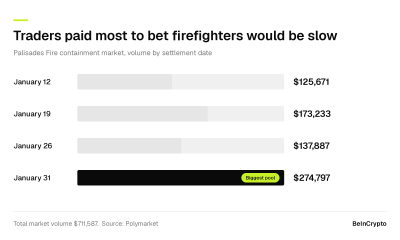
California Wildfire Bets Expose Polymarket’s Dark Side
-

 Business1 day ago
How to Start a Cleaning Business: A Step-by-Step Guide
-

 Business1 day ago
Datadog: Best Of Breed For Multiple Reasons
-

 Business7 days ago
CNH Industrial Shares Jump Over 15% After Beating Estimates and Raising Full-Year Earnings Guidance
-
 Crypto World6 days ago
Dollar Index Trapped at 100 as Hawkish Fed Meets Official Selling
You must be logged in to post a comment Login