Connect with us

Politics

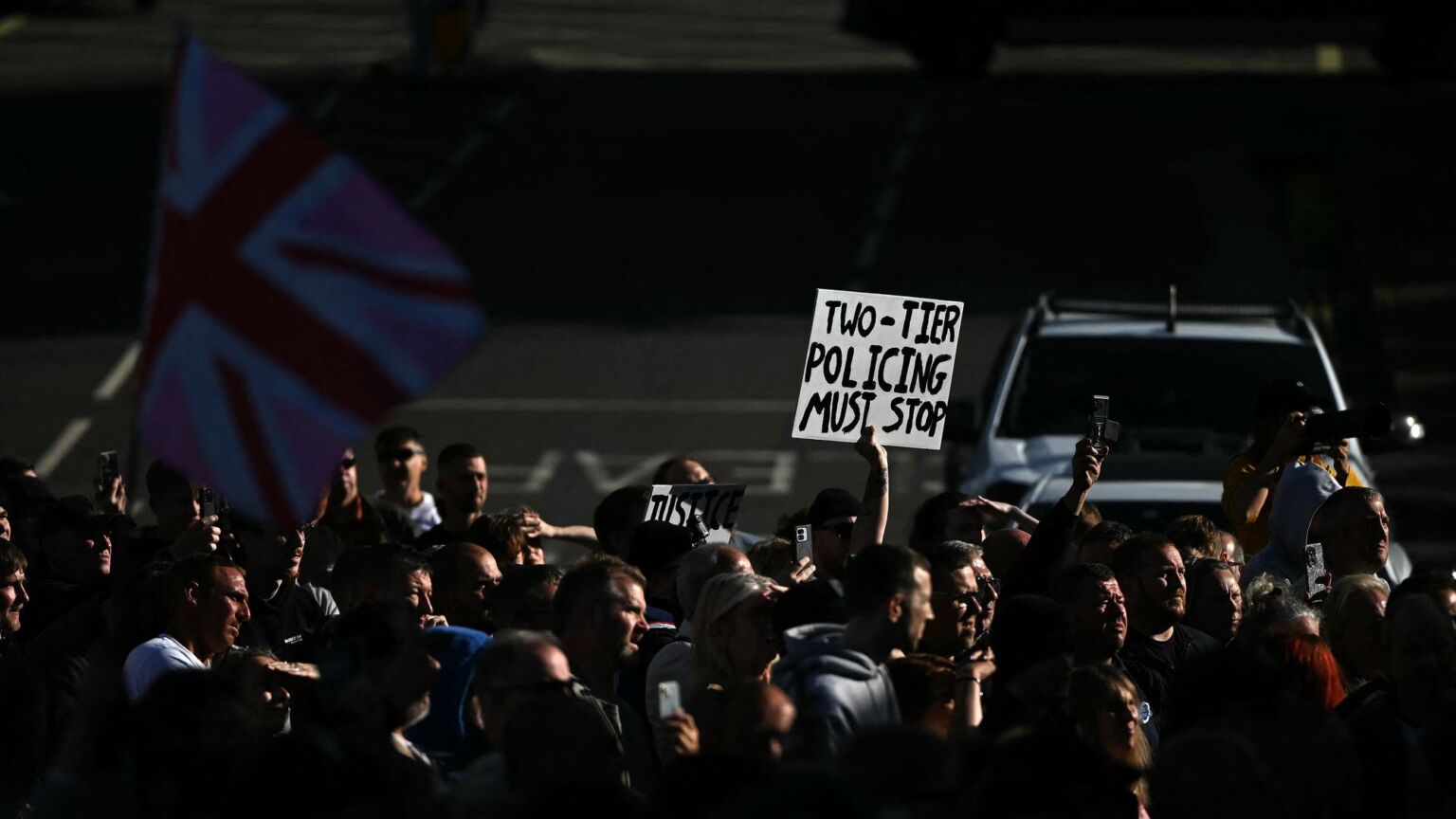
The ‘anti-racist’ rot at the heart of Britain’s police

Published

on

The ‘anti-racist’ rot at the heart of Britain’s police

At 9.31 on the morning of Yom Kippur last year, a man named Jihad Al-Shamie drove his Kia Picanto into the security gates of the Heaton Park Hebrew Congregation Synagogue in Crumpsall, Manchester. He then got out and resumed the attack with a knife. He was wearing what looked to everyone present like a suicide belt. The first 999 call came from witnesses at the scene; it was only after firearms officers were already making their way to the synagogue that Al-Shamie himself rang emergency services to claim responsibility and pledge allegiance to Islamic State – a gesture that resolved any ambiguity about his motivation with an efficiency the subsequent police communications would struggle to match. Armed officers shot him dead within seven minutes. Melvin Cravitz, aged 66, and Adrian Daulby, 53, were killed; Daulby, it later emerged, by a round from one of the responding officers, a tragedy Greater Manchester Police handled with considerably more transparency than they managed with their characterisation of the attack itself.

Al-Shamie, we were subsequently told, was not known to Counter Terrorism Policing. He had never been referred to Prevent, the government’s counter-radicalisation programme. He was, in the preferred official formulation, ‘not on our radar’. He was, it later transpired, on bail for rape. The name Jihad, meaning ‘holy war’, had not apparently exercised the relevant agencies, and one accepts that the bar for a counter-terrorism referral cannot rest on nominative determinism alone. Still, here was a man on bail for rape, living two miles from a synagogue, with a forename whose sole denotative content is religiously motivated violence. And? Nothing. The radar, it seems, is calibrated for certain frequencies and not for others. Assistant chief constable Rob Potts told a press conference his force was ‘more confident’ that Al-Shamie had been influenced by ‘extreme Islamist ideology’, and added that ‘there may be further drivers and motivations identified’. One wonders what further drivers might complicate the picture of a man who rammed a car into a synagogue on the holiest day of the Jewish year, wearing a fake bomb, while telephoning police to pledge allegiance to a terrorist organisation.

Advertisement

Now enter, stage left, the Bradford Hate Crime Scrutiny Panel. The panel had been convened, in the aftermath of Al-Shamie’s attack, for West Yorkshire Police to discuss their response. A neighbouring force, sharing geography, personnel pipelines and, as it turns out, certain institutional reflexes. Among those attending via Teams was a retired academic in her sixties named Elaine. She had served on the panel since 2022 and had, the previous December, finally been confirmed as its chair. Yet, having won the vote, Elaine spent months in administrative purgatory while the incumbent, a Muslim man, remained in post and nobody thought to mention that the vote had happened. Her understanding was that Bradford’s was the only hate-crime scrutiny panel in West Yorkshire not chaired by a Muslim man.

This was not the first time Elaine had given the force cause to resent her. Six months before the Manchester attack, the panel had reviewed the case of a man charged with a hate crime after ringing a police helpline and telling the Muslim call handler that the Prophet Muhammad was a paedophile. Citing the historical accounts, disputed but ancient and widely recorded, of Muhammad’s marriage to Aisha and its consummation when she was nine. Elaine argued that however disagreeable the caller’s manner, the statement did not constitute a criminal offence – one does not commit a crime by making a historical claim about a religious figure, however crudely expressed. A panel of lawyers agreed. The case was downgraded to a non-crime hate incident. West Yorkshire Police, upon receiving this news, began calling for her removal.

Advertisement

She had won. The lawyers had sided with her. The law was on her side. And the consequence was a campaign for her dismissal. Which tells you rather more about the force’s governing priorities, than any official statement could. What she had demonstrated was not merely that one man had not committed a crime. She had also revealed that the force’s instinct, to treat criticism of Islamic doctrine as functionally equivalent to incitement against Muslims, had no legal foundation. Blasphemy law was abolished as a criminal offence in England and Wales in 2008. Its ghost, it turned out, had taken up quiet residence in the hate-crime framework, sustained by institutional habit rather than legal warrant. The ghost’s custodians did not forgive her.


Enjoying spiked?

Why not make an instant, one-off donation?

Advertisement

We are funded by you. Thank you!


Advertisement

Please wait…

Advertisement

The Teams meeting, she later told the Telegraph, was chaired by a white female inspector who ran it fairly and with some firmness, and who was under what Elaine describes as constant pressure from the Muslim men participating. The meeting’s governing concern, within hours of two Jews being murdered at their synagogue by an Islamist, was the potential threat to mosques. The inspector repeated, several times, that there was no intelligence of danger to any Islamic place of worship. One is not sure quite what to say about the decision to frame an emergency meeting about an attempted Yom Kippur massacre around the anxieties of the community whose ideology had produced it. Except that, when Elaine finally said something, the response was instructive. She told the meeting they had to address the elephant in the room:

Advertisement

‘We know who the attacker is and what community he comes from. We’ve got to be able to address this openly, and if we can’t do it here, there’s no hope.’

The chair immediately talked over her. The following morning the meeting reconvened, the female inspector replaced, without explanation, by a Muslim male inspector.

Shortly after, Bradford District Commander Richard Padwell wrote to inform Elaine of her removal. Her comments had been ‘divisive and inflammatory’; legal advice supported the view that she had failed to demonstrate the impartiality required of a chair. The letter also noted, and this is the detail that repays the most careful attention, that her comments were not being recorded as a hate crime, and that he would not be providing her personal details to the community members who had expressed concerns about what she had said.

Advertisement

She described the letter as sounding like a threat. She does not, she noted, frighten easily, having spent a career navigating the biosecurity structures of the UN, the Ministry of Defence and the US State Department, in rooms where the consequences of error were considerably graver than a Bradford advisory meeting. But she was frightened by Padwell’s letter. It would seem the letter was designed to frighten her. Not legally. No charge was ever brought, nor could have been. But through the inquisitor’s technique, ensuring the accused understands that the machinery of accusation has been set in motion. You have not committed a hate crime. Your personal details have been sought by your accusers. The apparatus of hate-crime law, created to protect the vulnerable from persecution, had been deployed to persecute the person charged with scrutinising the police.

West Yorkshire Police did not produce this situation in isolation. They are the concentrated expression of a doctrine that has spread through British policing like damp through plaster over the course of three decades: not dramatic, not conspiratorial, but pervasive and progressive. What has been absorbed is not quite an ideology and not quite a religion, though it has the fervour of both. The institutional belief is that an allegation of racial animus, once made, supersedes all competing evidence and all other moral claims, and that the primary function of police in a culturally complex situation is to ensure that no accusation of Islamophobia or racism attaches to the force. Everything else: truth, safety, justice, the obligations of a constabulary to the public it polices, is secondary to the management of that risk.

The record in West Yorkshire alone is long enough to constitute a pattern. The systematic sexual exploitation of predominantly white working-class girls, by networks of men predominantly of Pakistani heritage, has unfolded for decades across Bradford, Keighley, Huddersfield and Dewsbury, while the force collected intelligence it did not act on and recorded data it was careful not to examine too closely. Baroness Casey’s 2025 national audit found that ethnicity data was not recorded for two-thirds of grooming-gang perpetrators across the relevant force areas. She described this as the product of organisations ‘avoiding the topic altogether for fear’ of its racial dimension. She confirmed on Sky News that she had personally seen the word ‘Pakistani’ Tippexed out of one child’s case file. In West Yorkshire specifically, a quarter of suspects had no ethnicity recorded at all.

Advertisement

A former detective, John Piekos, who worked for an anti-trafficking charity in 2010, surveilled a Bradford children’s home for three months, watching the exploitation take place. He took his evidence to a West Yorkshire officer he had previously dealt with, and was told: ‘Don’t you see how much effort we’ve put in to build racial harmony in this city and the problems we’ve gone through? Your actions are likely to cause it all to burn to the ground.’ He was told to go away and leave them alone. It was the shadow home secretary, Chris Philp, who eventually reported the officer to the National Crime Agency, armed with Piekos’s evidence and the officer’s name.

Advertisement

A Conservative MP’s dossier claims at least 7,975 children in the Bradford district alone were at risk between 1996 and 2025. Bradford has largely escaped the scrutiny that fell on Rotherham, whose inquiry found officers had arrested the fathers of abused girls trying to remove their daughters from the houses where they were being raped, and had attended a derelict property, found an intoxicated child surrounded by her abusers, and arrested the child. Bradford, some investigators believe, may yet prove to have been worse.

The governing principle, in the case of the Manchester synagogue attack and the grooming-gangs scandal, is identical: the comfort of one community constitutes a policing problem; the rights and safety of everyone else constitute someone else’s. And it operates with equal consistency at the level of the catastrophic, in this instance thousands of children, and at the level of the mundane. In 2021, a teacher at Batley Grammar School showed a class a cartoon of the Prophet Muhammad during a lesson on blasphemy and free expression. He received threats. West Yorkshire Police provided protection, and when the protection ended the teacher simply disappeared into hiding, where he remains today: his career destroyed, his name unusable, his liberty permanently curtailed for the commission of an entirely legal act. The force protected his body and surrendered the principle. Every teacher in the country read the message. The police will not protect your basic freedoms.

Nor is the pathology confined to policing. Valdo Calocane, who murdered three people in Nottingham in 2023, was free to do so in part because psychiatric professionals had been reluctant to detain him, conscious of the ‘over-representation of young black males in detention’. Axel Rudakubana, who in 2024 stabbed three young girls to death at a Taylor Swift dance class in Southport, had been reported by his headteacher to mental-health services for his sinister behaviour with knives. She was subsequently accused of racial profiling. ‘I was told my attitude towards risk was because I perceived him to be a black boy with a knife’, she told the subsequent inquiry. The machinery doesn’t only fail the victim of the racism accusation. It fails everyone, including, ultimately, the communities it claims to protect, too.

Advertisement

The doctrine’s most recent product can be stated in a sentence. On the third of December 2025, an 18-year-old Southampton student named Henry Nowak bled to death in handcuffs on a pavement, having told the attending officers he had been stabbed. They told him that he had not been stabbed, while the man who had in fact stabbed him, and who, through his brother, had telephoned in a false accusation of racism before the police arrived, stood unrestrained nearby. For the present purpose it is enough to note that the officers who handcuffed the dying boy were not rogues. They were trained, in a force that had spent close to a million pounds ensuring they would respond to a racism accusation exactly as they did.

The doctrine that produced all of this is not anti-racism. To call it anti-racism is to misidentify it. Anti-racism, properly understood, is the application of consistent standards. The same evidentiary threshold, the same presumption of innocence, the same obligation to see what is in front of one’s nose. This is to be applied without discrimination to all parties regardless of their community of origin. What has been installed in British institutional life over the past 30 years, is something categorically different. Call it, if you want a precise name, a theocracy of grievance: a system in which the claim of victimhood by a designated community functions as revelation. Self-authenticating, requiring no verification, and overriding all competing moral claims, including the testimony of a dying boy about the state of his own body.

Advertisement

Every theocracy requires its clergy, the class of interpreters authorised to explain doctrine to the laity, to identify heresy and to redirect the faithful when they risk asking the wrong questions. British policing has produced some of its own. Dal Babu is a former chief superintendent of the Metropolitan Police, one of the most senior Muslim officers the force has ever produced, and the former chairman of the National Association of Muslim Police. A regular presence on Sky News, he told Talk TV in August 2024, while grooming-gang inquiries were still active and the Batley teacher remained in hiding, that two-tier policing was ‘a phrase that’s become very common but I’ve not seen any evidence of it’. After Nowak’s murderer was sentenced, he appeared again to offer his analysis. What we are seeing, he explained, is ‘some people trying to cause division and hatred from this incident. It’s the exact opposite of what Henry’s family have said.’

There it is. A human statement of grief, made in the aftermath of a conviction, and saying nothing whatever about whether the institutional failures that produced that death should be examined. And yet in Dal Babu’s hands, and in the hands of a Labour MP deploying identical words on the floor of the Commons, the statement became an instrument of foreclosure. Disagree with me about the institutional culture, and you are doing the exact opposite of what Henry’s family asked. You are causing division. You should stop.

Advertisement

Christopher Hitchens identified this technique. The deployment of sacred authority to shut down secular inquiry is the defining characteristic of clerical thinking in all its forms, religious and secular alike. In Letters to a Young Contrarian he described it as the wish to have a last word – the desire not to win an argument but to end it. By establishing a category of statement so morally charged that its introduction silences rather than persuades. The racism accusation, in the culture this doctrine has built, is exactly that category. It does not need to be true. It does not need to be investigated. It needs only to be made.

Not everyone who operates the instrument is a villain. Speaking in late May, Martin Gallagher, a former police superintendent, said what the institutions will not:

‘We’ve conditioned our officers not to be wise and not to be circumspect. They prioritise certain behaviours above others, probably to the detriment of the public. Decision-making has been grossly affected by the constant messaging of the police being racist.’

Advertisement

This is not a right-wing formulation. It is the description of a conditioning process by a man who watched it happen from inside.

Who guards the guards has a long history in liberal political philosophy, from Juvenal’s original complaint onward. The answer is supposed to be: accountability, transparency, independent scrutiny, the press, bodies like the Bradford Hate Crime Scrutiny Panel. Elaine was the Bradford Hate Crime Scrutiny Panel. She was sacked, by letter, for asking a question.

Orwell observed that one does not need to be a genius to see what is directly in front of one’s nose, but that there are powerful social pressures against seeing it and saying so. What is in front of every nose in this country, arranged in a sequence of cases spanning 30 years, is a system that has learned to treat the accusation of racism as a fact requiring no verification, and whose victims are the collateral of that learning: the raped girls, the vanished teacher, the sacked panel chair, the boy dying on a Southampton pavement. The system has its theologians, its clergy, its instruments of foreclosure. It also has a roadside sign in Shipley, of the kind usually reserved for speed limits and accident warnings, which asks the commuters of West Yorkshire whether they have been the victim of a hate crime. The answer, across 30 years and several thousand cases, is yes. The institution that poses the question knows this, and has known it for a very long time.

Advertisement

Owen Shapell is a PhD researcher in social sciences.

Source link

Advertisement
Continue Reading
Click to comment

You must be logged in to post a comment Login

Leave a Reply

Politics

Snack Lovers Are Learning The Sweet Meaning Behind Snickers’ Name

Published

on

Snack Lovers Are Learning The Sweet Meaning Behind Snickers' Name

We’ve written before at HuffPost UK about how Hobnobs’ name actually has a meaning ― the “hob” refers to their homemade look, while the “nob” part (ooer missus) has to do with its knobbly texture.

Even Twix has a surprisingly clever name.

So you’d expect Snickers to have a similarly self-referential or witty brand, right? Maybe the “snick” is like “sneak”, because of the hidden peanut layer?

Advertisement

No. It was named after a horse.

What?

Yep! According to none other than Mars, the owner of Snickers, “The very first SNICKERS Bar, named after the family horse, was manufactured in Chicago, US, and sold for five cents.”

And per Mars Equestrian (yep, they’re the same Mars ― seems they really like horses), “Frank C. and Ethel V. Mars’ Milky Way Farm in Tennessee was well known for producing Thoroughbred racing champions, including the 1940 Kentucky Derby Winner, Gallahadion.”

Advertisement

The Mars family still breed thoroughbred horses and even has an equestrian sponsorship across multiple disciplines.

And you might not have known this ― I didn’t ― but Mars is actually a huge pet food manufacturer and owns brands like Pedigree and Whiskas.

What about the specific Snickers horse?

Per The Equine Chronicle, the family had good reason to appreciate Snickers the animal ― he was a winning racehorse.

Advertisement

Unfortunately, Snickers passed away “less than a month” before the launch of the bar in 1930. Hence the family named the iconic bar after their recently-departed horse (aww).

Well, sad as that is, I’m struggling to think of a better legacy…

Source link

Advertisement
Continue Reading

Politics

Animal Experts Reveal Stark Reason Why You Should Be Friendly To Crows

Published

on

Animal Experts Reveal Stark Reason Why You Should Be Friendly To Crows

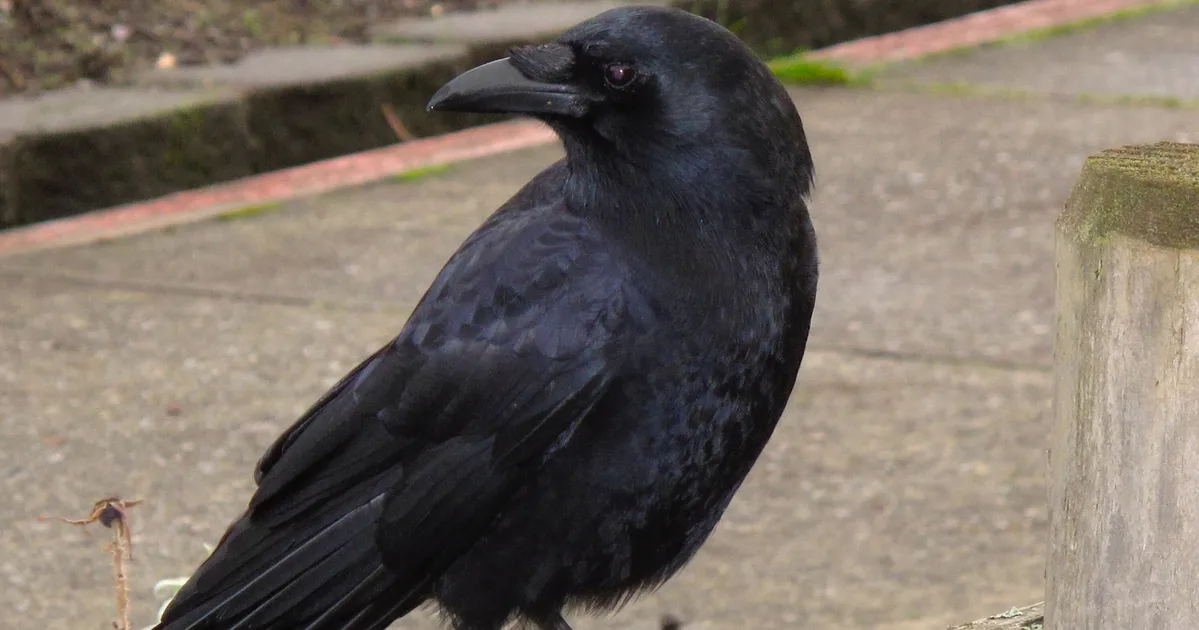
According to National Geographic, crows are some of the most intelligent birds in the world. They have also always been held in incredibly high esteem and are considered to be symbols of prophecy, transformation, change, and freedom.

However, as majestic and revered as these birds are, they are also not to be messed with.

According to Science World: “Crows are incredibly territorial during May and June. They are known to dive and strike humans not just once, but repetitively until the human in question has moved a good distance away from the nest.”

In fact… you may actually want to be a little more friendly with crows and even befriend one. Yes, really.

Advertisement

Why you should befriend a crow

So, maybe you don’t need to specifically befriend a crow but you definitely need to stay on their good side.

This is because a five-year study by scientists at the University of Washington has found they possess an unusually good memory for human faces linked to a stressful event.

Not only do crows remember the faces of humans for five years, but these clever corvids can also warn their friends and family about you, too. I don’t know about you but being the target of a murder of local crows sounds bloody terrifying.

Advertisement

However, if you do choose to buddy up with a crow, they’ll actually bring you gifts. They may be fiercely protective and hold a hell of a grudge but they are generous souls, too!

John Marzluff, conservation ecologist at the University of Washington said that crows take part in “gifting” by leaving behind keys, lost earrings, bones, or rocks, for the people who feed them.

How to befriend a crow

According to Pet Helpful, following these steps can help you to become friends with a crow:

Advertisement
  • Find food that the crows seem to like and keep it in stock. Crows tend to like nuts and seeds
  • Establish a regular feeding schedule so they know when to expect you and can create a rhythm with them
  • Don’t overdo it — you don’t need to feed them meals, just enough for them to know that you care and want to befriend them
  • Don’t overdo it. Don’t feed them so much or so often that they become dependent—just a handful of something to show you care.
  • Don’t just throw the food out there and walk away. Stay at a respectful distance to watch them eat. You may see them eat it on the spot, or they might choose carefully and fly off to cache it for later
  • Don’t get too close to them as they prefer to be standoffish and may feel threatened

Brb, off to invest in some nuts and seeds.

Source link

Continue Reading

Politics

8 Film And TV Adaptations Their Authors Hated

Published

on

Charlotte's Web

If you love both reading and watching films, 2026 offers rich rewards – this year will see everything from new Pride and Prejudice and Sense and Sensibility adaptations to yet another instalment in the Dune franchise.

Project Hail Mary, The Odyssey, H is For Hawk, and Wuthering Heights are already out, meanwhile.

Generally, hitting the big or small screen spells good news for book sales. People can’t stop buying copies of the Homeric text after Nolan’s blockbuster; Wuthering Heights sales skyrocketed after Emerald Fennell’s controversial interpretation.

But that doesn’t mean every author is a fan of their works’ film or telly counterparts.

Advertisement

Here, we rounded up eight authors who criticised adaptations of their books:

1) E.B. White wasn’t delighted with 1973’s Charlotte’s Web

Charlotte's Web

E.B. White, who wrote the 1952 children’s book, had been in negotiations with the production team John and Faith Hubley.

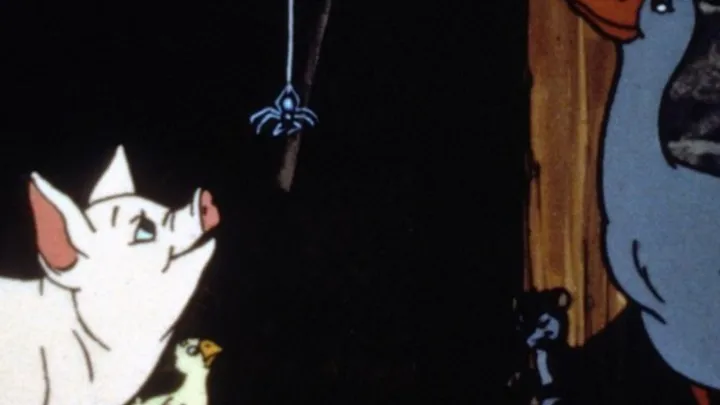
Eventually, Hanna-Barbera got the rights instead. After their animated 1973 movie came out, White wrote: “The movie of Charlotte’s Web is about what I expected it to be. The story is interrupted every few minutes so that somebody can sing a jolly song. I don’t care much for jolly songs. The Blue Hill Fair, which I tried to report faithfully in the book, has become a Disney World, with 76 trombones.”

His wife, meanwhile, told would-be director of the abandoned original adaptation, Gene Dietch, “We have never ceased to regret that your version of Charlotte’s Web never got made. The Hanna-Barbera version has never pleased either of us.”

Advertisement

2) Truman Capote didn’t love 1961’s Breakfast at Tiffany’s

Author Truman Capote spent many years disparaging the movie based on his 1958 novel, calling it the “most miscast” movie (he’d wanted Marilyn Monroe for the part Audrey Hepburn got).

When asked what he didn’t like about the adaptation, he replied, “Oh god, just everything” – the book’s narrator role changes, as does the book’s ending.

3) Stephen King had issues with 1980’s The Shining

Advertisement
The Shining

Speaking to The Paris Review about Kubrick’s version of his story, King said he thought the movie was “Too cold. No sense of emotional investment in the family whatsoever on his part”.

He added that Shelley Duvall as Wendy was “insulting to women. She’s basically a scream machine…

“And Kubrick didn’t seem to have any idea that Jack Nicholson was playing the same motorcycle psycho that he played in all those biker films he did… The guy is crazy. So where is the tragedy if the guy shows up for his job interview and he’s already bonkers? No, I hated what Kubrick did with that.”

The writer had penned his own version of the script, which Kubrick didn’t use.

4) Rick Riordan disavowed the 2010 Percy Jackson and The Lightning Thief flick

Advertisement

Author Rick Riordan let his feelings about the adaptation be known on X, where he likened the movie to “my life’s work going through a meat grinder when I pleaded with [the studio] not to do it.”

He also posted, “I still have not seen the movies, and don’t plan on ever doing so… I judge them from having read the scripts because I care most about the story. I certainly have nothing against the very talented actors. Not their fault. I’m just sorry they got dragged into that mess.”

Still, the writer hinted he was “gonna fix” this with Disney+’s 2023 series, Percy Jackson and the Olympians, for which he had more oversight.

5) Michael Ende called 1984’s The Neverending Story “revolting”

Advertisement

Going so far as to remove his name from the movie’s credits, Ende publicly described the movie as “revolting” and claimed, “the makers of the film simply did not understand the book at all”.

The author even reportedly tried (and failed) to sue in order to stop the movie from going out, saying his “moral and artistic existence is at stake in this film”.

6) PL Travers had such a contentious relationship with Disney due to Mary Poppins, there’s a whole film about it

The film, which won a remarkable five Oscars, had a very different nanny to the one in PL Travers’ books (she “never wastes time being nice”) – Travers also disliked the fact that Disney made Mrs Banks a Suffragette.

Advertisement

So contentious was her relationship with Walt Disney that the movie Saving Mr Banks was made to chronicle the making of the film.

7) Alan Moore, the mind behind V for Vendetta’s comics, called the 2005 movie’s writing “rubbish”

V For Vendetta

When asked to weigh in on the adaptation, Moore said: “I’ve read the screenplay. It’s rubbish”.

He also told the New York Times that for a lot of the DC projects that had become movies, “I don’t want anything more to do with these works because they were stolen from me – knowingly stolen from me.”

8) Moore also slammed the Watchmen film

Advertisement

The writer, who claimed the studio was using his brother’s serious illness to pressure him, said of the movie: “curse this wretched film and everything connected with it”.

Speaking to GQ, meanwhile, he said: “I would be the last person to want to sit through any adaptations of my work.

“From what I’ve heard of them, it would be enormously punishing. It would be torturous, and for no very good reason… It seemed to me that what people were taking away from works like Watchmen or V For Vendetta wasn’t the storytelling techniques, which to me seemed to be the most important part of it. It was instead this greater leeway with violence and with sexual references. Tits and innards.”

Advertisement

Source link

Continue Reading

Politics

I Shop For A Living, This Is The Fashion I’m Buying This July Payday

Published

on

I Shop For A Living, This Is The Fashion I'm Buying This July Payday

We hope you love the products we recommend! All of them were independently selected by our editors. Just so you know, HuffPost UK may collect a share of sales or other compensation from the links on this page if you decide to shop from them. Oh, and FYI — prices are accurate and items in stock as of time of publication.

I’ve said it before, and I’ll say it again: the more I shop, the more I want. That is the plight of a shopping writer.

While I’m lucky enough to test probably close to a thousand products a year, I can’t help but build a wishlist of more fashion, beauty, jewellery, and wellness bits and bobs I want along the way.

And while I’ve already rounded up all of the products I loved in July, if you’re looking for shopping inspiration, I thought I’d be generous and share what’s on my wishlist this payday. Just don’t sell it out before I have a chance to buy it too!

Advertisement

Source link

Continue Reading

Politics

Parliament probes Richard Tice over undeclared Israel link

Published

on

Richard Tice of Reform UK shaking the hand of an official in the Israeli government for the photo op while in Israel in September 2025

Richard Tice of Reform UK shaking the hand of an official in the Israeli government for the photo op while in Israel in September 2025

The parliamentary standards watchdog has opened an investigation into Reform UK deputy Richard Tice. The allegation focuses on Tice failing to declare an interest that related to a Commons debate on Israeli influence.

Tice himself has disputed media reporting, although the following claim is in part at odds with what the Parliamentary Commissioner for Standards stated.

Richard Tice claims probe is over antisemitism stance

In full, Tice said:

Contrary to garbage in media:

I am being investigated for standing against antisemitism. You could not make it up.

Advertisement

Standards Commissioner is considering complaint by anti semitic anti Israel lobby group over whether I should have referenced my register of interests at start of a debate on UK democracy and Israeli influence.

The same anti Israel group failed to notify Commissioner that Ayoub Khan MP did not declare his substantial donation received from a pro Palestine group.

Funny that…..

Adding further context, the BBC reported:

Advertisement

Reform said Tice did not mention in his 22 June speech that he had been on a trip to Israel last September, funded by a pro-Israel lobbying group.

The trip has been listed in Tice’s Declaration of Members’ Interests.

Here is what the Parliamentary Standards Commissioner published regarding the ongoing investigation:

Therefore, it is not the case that the commissioner is investigating Tice for “standing against antisemitism”, as he suggested.

The ‘Rule 6’ stipulates:

Advertisement

Members must always be open and frank in declaring any relevant interest in any proceeding of the House or its committees, and in any communications with ministers, members, public officials or public office holders.

Additional guidance states that MPs can refer to register of interests entries but:

Such a reference will not suffice on its own, as the declaration must provide sufficient information to convey the nature of the interest without the listener or the reader having to have recourse to the Register or other publication.

Israeli influence

The debate in question happened as a result of a Parliament petition passing 100,000 signatures. The petition read:

We are concerned about reported Israeli state-linked and pro-Israel lobbying activity in UK politics. We believe it is important to determine the scope and impact of any such influence campaigns.

We feel that the horrific devastation in Gaza, the ongoing suppression of Palestinians in the West Bank, and the UK’s political response underline the urgent need to scrutinise how pro-Israel organisations, networks, and lobbying efforts may shape government decisions, party policy, and public debate.

Featured image via Office of the President of Israel/ X

Advertisement

By Willem Moore

Source link

Continue Reading

Politics

BBC Documentary RevealsDolphins Taunt Pufferfish For This One Hilarious Reason

Published

on

BBC Documentary RevealsDolphins Taunt Pufferfish For This One Hilarious Reason

Our family bathrooms may not be dedicated to them the way that they were in the ’90s, but dolphins are still a really popular mammal. I mean, of course they are, look at their wee faces!

One thing we have been learning over time, however, is that they are a lot more mischevious than we first thought. For example, did you know that dolphins like to swim through self-made bubbles and surf in waves? Adorable!

However, I just learned something about these scamps of the ocean that is both horrifying and, to be honest, absolutely hilarious.

The reason why dolphins taunt pufferfish

Advertisement

In a BBC series called Spy In The Pod, a documentary that used hidden cameras disguised as tuna and squid, to go into the heart of the dolphin’s world and get up close with their everyday lives.

One part of the footage revealed that dolphins appear to get high off pufferfish defence chemicals.

According to The Smithsonian, pufferfish produce a potent defensive chemical, which they eject when threatened. In small enough doses, however, the toxin seems to induce “a trance-like state” in dolphins that come into contact with it.

In the documentary, the dolphins gently played with the pufferfish, passing it between one another (puff, puff, pass, anyone?) which was in direct contradiction to what they did with other fish, which they immediately tore apart.

Advertisement

In a hilarious development, the dolphins were also filmed floating just underneath the water’s surface, mesmerised by their own reflections. Just like we do in club toilets at 2am!

Researchers believe this was not a one-off

Speaking to the Daily Mail, series producer Rob Pilley said that he didn’t believe this was a one-off encounter, saying: “The dolphins were specifically going for the puffers and deliberately handling them with care.”

Advertisement

Source link

Continue Reading

Politics

Jeremy Clarkson shares weird idea to punish benefit claimants

Published

on

Jeremy Clarkson head shot

Jeremy Clarkson head shot

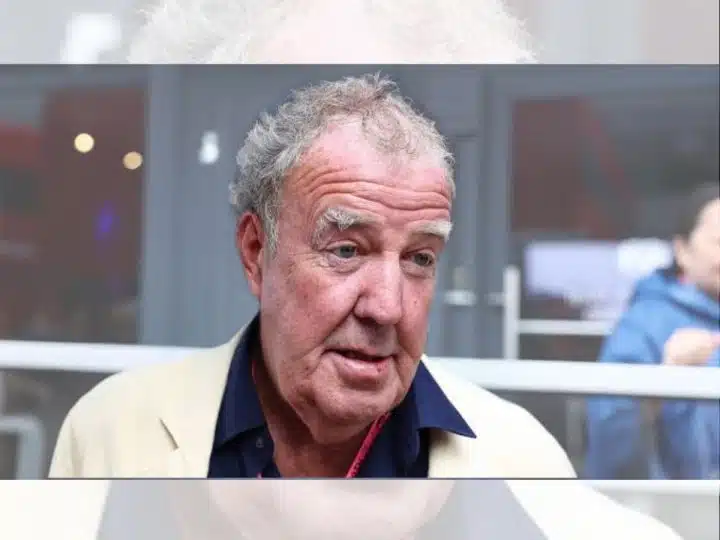
There are many miserable people in Great Britain who love to spread their misery around. One such person is  Jeremy Clarkson, who seemingly spends his free time devising new ways to belittle benefit claimants.

As many have pointed out, Clarkson himself is a beneficiary of government money. In other words, expect a thank you letter from him sometime soon.

Jeremy Clarkson, the meat w*nker

In his latest piece for the Times, Clarkson compares welfare recipients to dogs. As if that wasn’t bad enough, the broadcaster suggested that welfare recipients are actually worse than animals, because “at least dogs are grateful”.

Speaking of gratitude, now is a good time to remind you Clarkson once punched a man because the platter of meat he brought was cold — not hot, as Jeremy would have preferred. Is this the famous ‘gratitude’ he’s speaking of?

Advertisement

Clarkson’s piece begins:

As I’m sure you’ve heard, there are now more than a million young people in this country who are not working. They’re not even looking for work. They’re just sitting at home all day, gormlessly watching shortform nonsense on their massive vulgarsonic televisions.

Nearly a million young people being out of work is true. The idea that none of them are “even looking for work” is some shite he made up. Also, we’re not sure he should be criticising people for “gormlessly watching nonsense on television” given that he was the host of Top Gear.

If you live in the world, you’re no doubt unsurprised to learn that a significant number of young people are out of work. The high streets are run down, many jobs have been lost to automation, and people can’t afford to go out, which means fewer jobs in hospitality. These are all areas in which young people traditionally worked, so of course fewer of them are in work.

Plus, the rise in national minimum wage has reduced the jobs available for youngsters.

Advertisement

While he’s coming at it from the wrong angle, Clarkson isn’t wrong to suggest social media is having an impact. Because of phones, we’re never more than a swipe away from seeing how the other half lives. You don’t think that will instill a sense of hopelessness in young people who can’t even get an interview in retail?

Clarkson clueless about PIP

Like everyone on the right, Clarkson doesn’t understand how Personal Independence Payments (PIP) work. Clarkson suggests they’re given to people for not working, but Rachel Charlton-Dailey explained:

PIP isn’t an out-of-work benefit and has nothing to do with employment.

Here’s what Clarkson said:

And what makes this especially dispiriting is that if they’ve got ants in their pants, or ADHD as it’s now called, or some other head-based issue with an acronym, the state will give them up to £194 a week. Which is £100 more than they’d get if they got off their arses and did some kind of part-time work in the local shop.

Charlton-Dailey reported that about four in 10 claimants with ADHD receive the top rate of £194. As this is PIP, many will be in work because that’s how PIP functions.

Advertisement

Misery loves company

Clarkson’s piece contains a long section about his dogs, in which he admits that they sometimes shit in his house (training issue). He then gets to his idea to belittle benefit claimants:

It’s very simple. Every week, when the benefits are paid, the recipient is given the email address of a randomly selected person who is getting up and going to work every day. And they are told that unless a proper and genuine email is sent, thanking the working person for their generosity, the benefits will stop. And I’m not talking about a cursory “thanks mate”. I want fulsomeness. I want to hear what they’ve done with the £194 I gave them that week. And I want effusiveness as well. I want to feel their gratitude.

“It is SO kind of you to go to work every day so that I don’t have to. Thanks to you I was able to buy an even bigger television this week”

This way, the communists in the Labour party would be happy because the benefits are still being paid. And the taxpayer will feel a bit better too because they’re at least being thanked.

This might not need pointing out, but this is blatant right-wing propaganda. We have a benefits system to ensure:

Advertisement
  • Those who become unemployed can survive between jobs
  • Sick and disabled people don’t become homeless
  • People of retirement age are able to retire

The benefits system was designed to benefit everyone besides the ultra-wealthy — the people who will never require government support for themselves or their loved ones. The reason they’ll never require it isn’t because they’re inherently better than us; it’s because they and their ancestors benefitted from the fruits of other people’s labour.

Jeremy Clarkson benefits from govt handouts

These ultra-wealthy people use their position of influence to highlight the small numbers of people who are, admittedly, taking the piss, to tarnish the reputation of the entire benefits system. For what? So they can get away with paying less tax?

Advertisement

Clarkson has an estimated net worth of £50 million by the way. Despite this, he’s accepted the following government and EU subsidies:

  • Environmental Stewardship scheme (£116,352)
  • Basic Payment Scheme (£133,733)

The government subsidises things like farming because crops — much like people — are needed to ensure society remains functional. The right-wing press doesn’t criticise farming subsidies because the land barons who benefit from them are often right-wing themselves. Funny how that works, isn’t it?

Advertisement

This aside, there is a method for people to make money without working, and that method is to be born wealthy.

If a person has a million pounds, they can pay a second person to turn that fortune into more money through investing and asset hoarding. Over time, this has led to a situation in which global wealth is concentrated in the hands of fewer and fewer people. And wouldn’t you know it, this has also coincided with there being fewer opportunities for ordinary working people.

To be fair to Jeremy Clarkson, he does seem like someone who works hard. The problem is, he works hard at being a f*cking knucklehead.

The longer we allow the rich to seize all the wealth, the worse things will get. The worse things get, the more that the rich will blame us for the problems they created.

Advertisement

Featured image via Acub Porzycki/ Getty Images

By Willem Moore

Source link

Advertisement
Continue Reading

Politics

Trump’s Wacky Weekend Slop Spree Ends With Bizarre New AI Image

Published

on

Trump's Wacky Weekend Slop Spree Ends With Bizarre New AI Image

It depicted himself seated at a table with Presidents George Washington and Abraham Lincoln. Trump in the image is wearing clothing almost identical to Lincoln’s, and the three are shown signing an upside-down U.S. map:

Some of Trump’s other weekend images included him gazing at a younger version of himself in the uniform he wore during his time in a private military academy as a teen, as well as one of himself as some kind of Revolutionary War hero.

Trump, however, never actually served in the military.

Trump was of draft age during the Vietnam War, but received four deferments for college and one for bone spurs in his heels.

Advertisement

He later infamously told radio host Howard Stern that avoiding sexually transmitted diseases was “my personal Vietnam.”

Trump’s critics slammed him for obsessively posting AI slop images of himself instead of focusing on the war in Iran, affordability or any other issue far more important to the American people:

Source link

Advertisement
Continue Reading

Politics

Iran Playing Trump Like A Fiddle Says Andrew Neil

Published

on

Iran Playing Trump Like A Fiddle Says Andrew Neil

Iran is “playing Donald Trump like a fiddle” as the US president struggles to strike a peace deal with the Tehran regime, Andrew Neil has said.

In a brutal takedown, the veteran broadcaster said there are now “no good options” for America, despite the US president’s repeated claims to have won the war.

His comments on Times Radio came after Iran denied it was planning to hold peace talks with America to end the conflict, which began when the US and Israel launched attacks at the end of February.

That came after Trump claimed to have called off “massive” strikes on Iran so that negotiations could resume.

Advertisement

Neil said Iran was stringing Trump along until the US midterm elections in November, when his Republican Party is expected to suffer a heavy defeat.

He said: “The truth is there are no good options [for Trump].

“You escalate this war, as he has threatened to do many times, Iran will escalate right back and create a mess among the Gulf states.

“You don’t do that, basically Iran has the upper hand and in the end you have to scuttle away.

Advertisement

“There is no deal in the offing. Iran is playing Trump like a fiddle on this. This is a very evil regime in Tehran, but it’s not a stupid regime.

“They know what’s happening in America. They follow the midterms as closely as we do. They know this is a deeply unpopular war.

“The impact on the American economy has been very unpopular, his handling of the economy now has an approval rating of 30% [and] 78% of Americans want the war to end now.

“They are just going to drag this out through the summer months, until Trump gets a kicking in the midterm elections.”

Advertisement

He added: “It’s a terrible time for America with no good options, and none of this rhetoric coming from Trump – we waste our time even analysing it because it’s either meaningless or he U-turns on it within 24 hours.”

Listen to Commons People, the podcast that makes politics easy. Every week, Kevin Schofield and Kate Nicholson unpack the week’s biggest stories to keep you informed. Join us for straightforward analysis of what’s going on at Westminster.

Advertisement

Source link

Continue Reading

Politics

Hackers expose details of 100k police staff on dark web

Published

on

Two uniformed police officers walking with their back to the camera. Hackers have infilrated the national police system.

Two uniformed police officers walking with their back to the camera. Hackers have infilrated the national police system.

The cyber-criminal group ExfilSquad has leaked the names and contact details of more than 100,000 police staff on the dark web.

The news follows threats from the same group last week to leak more data unless public institutions met their demands for payment. ExfilSquad posted on X:


Check your emails! We warned most of you before posting these public warnings!!

Once your company’s data is posted here, it’s NEVER leaving the public eye and it will be passed around the internet FOREVER.

The payment we request of you is simply a rounding error compared to the litigation costs of your data leaking. Be smart and just pay.

Advertisement

Hackers put multiple organisations under threat

Last week, the Canary reported that the same hackers had posted data stolen from the Department for Education (DfE) and the Police National Legal Database (PNLD). A source explained that a majority of the 145,550 full-time police officers employed in England and Wales have used the PNLD as part of their daily work.

Whilst ExfilSquad stated that they targeted 14 institutions in total, the identities of the others were not public knowledge. However, the most recent reporting from the Telegraph has revealed that the wide-scale hack targeted the Crown Prosecution Service, Home Office, Ministry of Defence and the National Crime Agency.

Likewise, the cyber criminals also breached Newcastle University — the only non-state body named so far. ExfilSquad reportedly stole data including the names, addresses and phone numbers of both staff and students.

The university has already begun an investigation into the exact nature of the attack and the vulnerability of its systems.

Advertisement

Cybersecurity adviser Jake Moore, of European infosec giant Eset, explained:

The information put on the dark web should not be underestimated. More experienced threat actors see it as highly valuable because it enables them to personalise follow-up attacks, such as phishing or social engineering, which puts even more data at risk.

***

These attacks are becoming more common as criminals increasingly automate their tactics with ease and exploit the development using AI. The knock-on effect means organisations are facing a far higher volume of attacks, often with far less effort required from the attacker.

‘Officers at serious risk’

The Times reported that a government spokesperson declined to comment on the security breach, stating:

Advertisement

We have dedicated capabilities to respond to cyber incidents, and it would be inappropriate to comment on a live investigation.

However, a staff member from one of the targeted law enforcement organisations said

I have worked in serious organised crime and put high-level criminals behind bars. For private information to be leaked about me is very disconcerting and puts officers at serious risk.

In the past I have been forced to move into safe houses and sell cars due to my job. Now I will have to keep my wits about me online and look out for anyone trying to get more serious information. It is not a good look.

Featured image via Ethan Wilkinson/ Unsplash

By Grace

Advertisement

Source link

Continue Reading

Trending

Copyright © 2025