

Politics
The House Article | The Much-Vaunted Soft Power Council Is Drifting Towards Oblivion

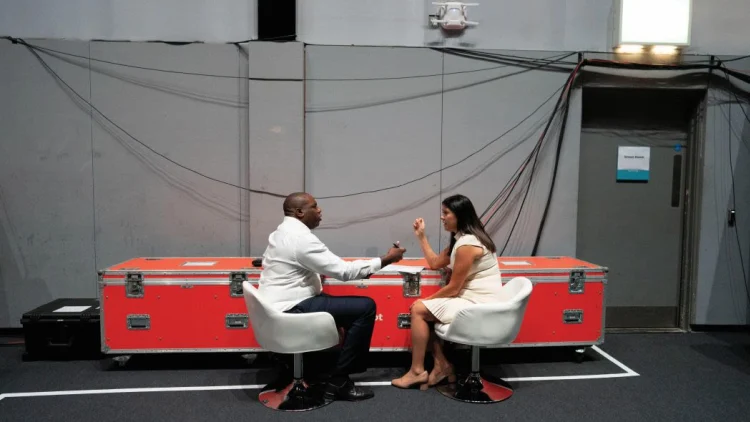

Foreign Secretary David Lammy and Culture Secretary Lisa Nandy ahead of the Labour Party Conference in 2023 (PA Images / Alamy)
6 min read
Launched with fanfare but sinking without trace, the Soft Power Council appears to be an object lesson in how the UK fails to leverage its cultural, sporting and educational assets, reports Ben Gartside
At a launch in central London at the start of last year, Lisa Nandy outlined her mission to create jobs and spread influence globally. Rather than cite the work of the Foreign Office or the use of international aid, she instead championed Peaky Blinders and Adele.
Joining her at the launch was the then-foreign secretary David Lammy – a true believer in the power of soft power, brought in to reinvigorate and reinvent the work of the Foreign Office – and 26 leaders in the arts, culture and sports sector.
It wasn’t quite ‘Cool Britannia’ but it seemed to those involved that this was a moment – like the early years of the Blair government – where the country’s leadership in those fields might be fully leveraged to national advantage.
But less than 18 months later, the so-called Soft Power Council is drifting towards oblivion, having not met in full for at least seven months and with many members believing it is doomed.
Why did it fail? Reshuffles both at ministerial and official level and spending cuts are part of the answer.
At its launch, Lammy outlined a manifesto to take advantage of the UK’s huge cultural pull, and the potential power of using it for Britain’s national interest.
“Soft power is fundamental to the UK’s impact and reputation around the world,” he said. “I am often struck by the enormous love and respect which our music, sport… and institutions generate on every continent. But we have not taken a sufficiently strategic approach to these huge assets as a country. Harnessing soft power effectively can help to build relationships, deepen trust, enhance our security and drive economic growth.”
To many, Lammy’s remarks were a signal for welcome change in the department. Allies of Lammy had continually voiced frustration in years previously about the quality of government work on soft power. Under the previous government, too often it was cobbled together at the last minute, or treated as an afterthought.
One founding member says: “I thought the council was a great idea. There was an urgency about it and a sense that the government gets that it is a new era. While the UK needs to build up its hard power, we also still need to make best use of everything we have.”
However, early cuts to international aid and funding trouble at the British Council meant that some believed that the goals were being undermined.
Baroness Chapman, a Foreign Office minister and supporter of soft power work, was simultaneously having to champion its promotion while also being the face of controversial international aid cuts.
Despite the rocky start, council members were still optimistic about the work. Lord Mendoza – the Conservative peer and former Boris Johnson appointee behind the controversial ‘retain and explain’ guidance for contentious statues, monuments and artefacts following the toppling of the Colston statue in 2020 – was very supportive upon the council’s creation.
A council member tells The House that the creation of the body was genuinely groundbreaking: “It is the first time we see a government properly co-ordinating expertise across a broad range of key sectors, like culture, creative, sports, education and science and technology to steer and advise on policy and action.”
Insiders point to the reshuffle of September 2025, and the move of Lammy to justice as the inflection point, which saw the council tip into inactivity.
Another council member says: “It was clearly an initiative that Lisa Nandy and David Lammy worked on, thought of and launched. Their personalities were very prominent at the start of the Soft Power Council; we haven’t had the same rhythm of meeting and engagement since the reshuffle.”
Foreign Secretary Yvette Cooper was scheduled to attend the latest meeting in Belfast in October but dropped out just before and was replaced by DCMS minister Ian Murray. Another meeting was organised but abruptly cancelled, meaning the full Soft Power Council has not met in seven months.
“We’re still waiting for a signal that they think this is worthwhile. We’ve had some great ministerial meetings but we haven’t had the same one twice – we’re showing up and we’d like the government to.”
It’s clearly a low priority
Another member says the council has been “neglected” since Cooper took over, and was “clearly a low priority for her”.
“There’s been a hell of a lot to deal with and it’s not at the top of [Cooper’s] priority list, but it would be good to retain the soft power we have.”
Shortly after the reshuffle, the senior civil servant responsible for soft power left the Civil Service, further robbing momentum from the initiative.
An outside contractor was also brought in to assess the success of a soft power strategy altogether. In the meantime, almost all work has ceased.
One member tells The House: “Where we are at is that it currently feels on hold.”
Much of the ire among council members is directed at Cooper. One council member says: “We would like the current Foreign Secretary to take more of an interest. If you’re involved in this field of work you can see a future where we are marginal.”
Another agrees: “I think [Cooper] hasn’t made a decision, but it’s clearly a low priority”.
While Cooper’s arrival has triggered criticism, Nandy’s inaction since its launch has caused some previously supportive members of the council to turn on her.
“She’s been a complete disappointment. She seems to have no interest in culture whatsoever.”
A government spokesman did not deny the senior departures from the FCDO, or the lack of meetings for over half a year, but claimed the group did contribute to recent cultural visits to China and India.
They said: “The soft power they deliver is creating growth and strengthening our reputation at home and abroad. We are committed to doing all we can to further their reach, as well as promoting the English language overseas.”
With the government on the rocks and political capital quickly waning, the likelihood of a reinvigoration for the council seems low – especially when discussions around hard power and the Defence Investment Plan have become so terse.
“It’s one of the few effective things created by this government,” one of the council members mused. “Which means they’ll probably kill it.”
An irony of the pause is that while the government has gone cold on the Soft Power Council, foreign nations are taking an increased interest. Members have met and worked with representatives of Saudi Arabia, Ukraine and Oman in recent months, all of whom have taken an interest in the work of the council and replicating it in their own nations.
Meanwhile, some members thought the work of the council could aid the government in one of the problems which led to its freeze: domestic politics.
Council member Vivienne Stern believes that its work should expand into the UK, rather than retract internationally: “This country is in a national funk – you look at the polls… people feel pessimistic. What the Soft Power Council does is bring together a list of reasons to be optimistic. We should lean on it domestically more.”



Officially, Andy Burnham is running to be the MP for Makerfield. Unofficially, he’s running to replace Keir Starmer as the prime minister.
The problem is we don’t have a good idea of how Burnham will govern in office; the other problem is the signs are pointing towards him being Starmer 2.0.
As a result of this, some of Labour’s left-leaning MPs are talking up the idea of a challenge. As we’ll get into, however, Burnham probably doesn’t have much to worry about.
Vanishing Manchesterism
The Times‘ assistant political editor Geri Scott has reported:
Left-wing MPs are considering standing a candidate against Andy Burnham in a future Labour leadership contest because of concerns the Greater Manchester mayor could abandon progressive positions to broaden his appeal.
We’ll be honest, it’s a bit late to be saying “could abandon” at this point. As we’ve reported:
- Burnham ‘to support’ Mahmood’s racist immigration changes;
- Burnham is silent on wealth taxes – not a promising sign from potential PM;
- Andy Burnham’s role with Iain Duncan Smith’s think tank just shows he’s more of the same;
- Burnham WON’T back proportional representation this parliament;
- Shapeshifting Burnham ditches trans rights to panic-grab Reform votes.
Scott added:
The Times has been told they do not want Burnham to be treated as the automatic standard-bearer for the left of the party.
Some MPs on the hard left have complained that Burnham has fallen in behind immigration reforms proposed by Shabana Mahmood, the home secretary, and backed government guidance on single-sex spaces.
‘Hard left’ is full-on Communism, and there aren’t any Communists in the Labour Party. That aside, here’s what one of these anonymous politicians said:
A lot of us are increasingly frustrated that he’s being portrayed as the saviour of the left when he’s nothing of the sort. There have been discussions about whether we put up a candidate to try to force him into more progressive positions.
Another noted:
It will be difficult for the supposed supporters of Andy to back him for leader if he keeps offering something on a Monday then changing his mind on Tuesday. His immigration stance and the possible inclusion of Wes [Streeting] as his chancellor will be a problem.
These points are fair enough, but the Labour left does have a reputation for backing down. If they weren’t willing to compromise their beliefs, they wouldn’t be in the Labour Party.
There’s also this to consider:
Find this odd really. If the candidate is from the SCG wing of the party they simply wouldn’t have the numbers…?
No one from the soft left would stand against him so I don’t know why it’s being floated or why it’s being given air time? https://t.co/vVliPTpgW5 — Matthew (@MatthewTorbitt) May 25, 2026
I wrote about this a couple of weeks ago (before Burnham had got a seat) for @NewStatesman. From my conversations the SCG was always planning to run a candidate – as they did in dep leadership – in order to push the main contenders from the left. But think there’s a clear… https://t.co/x93lIO19cr
— megan kenyon (@meganekenyon) May 25, 2026
Mainstream
The Times reported that “mooted” candidates include:
Richard Burgon, the MP for Leeds East and a former Corbynite frontbencher. Other names include Bell Ribeiro-Addy, Olivia Blake and Clive Lewis.
As the outlet notes, however, none of these people have expressed any intention of standing. Another source said Labour MPs will actively repel any of the above, noting that the issue is:
not that someone like Burgon wins, it’s that the whole debate shifts on to his territory. If Andy is forced to spend six weeks talking about Gaza, then he comes out of it weaker and the party looks like it has learnt nothing.
Labour would only look like it’s learned nothing if it does in fact learn nothing. The solution to this is to learn from Keir Starmer’s mistakes, and to support a free and independent Palestine.
members of Mainstream, the group seen as an incubator for Burnham’s Westminster ambitions, have become irritated with Tribune, the soft-left group whose members are part of Burnham’s campaign team. Some allies of Burnham have accused Tribune figures of “taking over” his campaign.
Clive Lewis is a member of Mainstream, and he’s previously served as one of Burnham’s biggest cheerleaders. Speaking in September 2025, Lewis said:
In this hollowing-out of govt, we face the danger of a politics so cowed by vested interests that it cannot stand up to them. And when that happens, it is the authoritarian right who reap the rewards.
People aren’t fooled. They can feel the country is being run for “them” not “us.” And unless Labour changes course – embracing pluralism, democracy and genuine debate – it will deliver power straight into Farage and Trump’s waiting hands.
Perhaps we’re in need of a bit of ‘Manchesterism’ – a different way of doing govt and one not afraid of giving control of public services to the very people that use and run them; Us!
On 23 May, however, he reposted the following:
This is a very small sample but it's a very scary level of support for the far right and much closer than I was expecting. I would say this, obviously, but I really don't think Burnham's 'Oh, no, I didn't mean nationalisation – why would you think THAT?' is helping anything. https://t.co/6BZZCunPOx
— Jeremy Gilbert (@jemgilbert) May 23, 2026
If Lewis is making his thoughts clear online, it seems likely that Burnham isn’t listening to him offline.
Little opposition
According to Scott, another anonymous Labour insider said:
A candidate like that wouldn’t reach the threshold for nominations. Quite a lot of their colleagues have been out on the campaign trail over the weekend and seem very excited about the prospect of Andy.
If there is going to be serious opposition to Burnham’s flip-flopping, it’s not going to come from the Labour Party. We’re also not seeing much from the Greens. Let’s hope that changes with the announcement of their new candidate:
She is a charity director and a Manchester City Councillor pic.twitter.com/PAEJGniwoM
— Politics UK (@PolitlcsUK) May 26, 2026
 NEW: Sarah Wakefield is the Green Party candidate in the Makerfield by-election
Featured image via Ian Forsyth (Getty Images) / Leon Neal (Getty Images) / Peter Summers (Getty Images)
By Willem Moore


Teaching assistants, residential workers, and other support staff at Ash Field Academy, a Leicester SEND school, completed their third day of strike action on Thursday 14 May. They’re demanding that Discovery Schools Academy Trust (DSAT), which runs the school, reinstates their trade union rep, Tom Barker.
DSAT suspended Barker from Ash Field on 30 October 2025. This was just four working days after the closure of a ballot in which UNISON members voted for strike action over staffing cuts. DSAT linked the suspension to unspecified conduct concerns.
Almost seven months on, DSAT has still produced no evidence to support any allegations against Barker. He remains suspended. Barker had led a successful campaign against DSAT’s attempt to cut around 10% of support staff.
Having completed three strike days, UNISON members have now decided to escalate their industrial action campaign. The union has given notice of further strike dates on (all dates inclusive):
- 3-5 June.
- 15-19 June.
- 6-9 July.
The reinstatement campaign, led by UNISON Leicester City, has received widespread support, including from Zarah Sultana MP and Andrea Egan, UNISON’s general secretary. Campaigners have initiated a TUC petition to demand Tom’s reinstatement.
On 30 April, the first day of strike action, Leicester South MP Shockat Adam attended the picket line. Adam said:
Workers’ rights don’t exist without action to defend them. I stand with those on strike against union busting and was proud to join the picket line in solidarity.
Louise Lewis, a teacher and a member of the national executive of the National Education Union, visited the picket line on Thursday 14 May. Speaking in a personal capacity, Lewis said:
Underfunding and privatisation – including the academy model for schools – have been extremely destructive for school staff, as well as our students, families, and our communities.
Strong trade unions are the most effective defence against attacks on public services. The picket lines I visited at Ash Field were extremely strong. I was proud to have attended.
UNISON members are rightly going to escalate the fight to stand against attacks on their right to organise. Some workers might be afraid of standing up to union-busting employers. This is understandable, but I want to send a message to these workers: you have nothing to lose and everything to gain by joining the pickets.
Like Tom, while serving as a rep in my previous school, I was suspended after standing up for members and challenging management.
What I remember most is the solidarity. NEU members stood together, took strike action in my defence, and closed the school in support. That collective action forced governors to reinstate me, and although I was later dismissed, members continued to stand with me throughout a successful tribunal case.
Only by standing together against injustice can we challenge union-busting employers.
Liz Robinson, UNISON East Midlands regional organiser, said:
Based on the information we have available to us, and the discussions regional officers have had with the trust, we are increasingly certain that this investigation, and Tom’s suspension is related to his Trade Union role.
We understand that the school denies this. If they were to admit that this was motivated by Tom’s Trade Union activities they would be admitting to breaching employment law.
Andrea Egan, UNISON’s general secretary, said:
I stand in full support of Tom Barker who was wrongly suspended by Ash Field Academy in October 2025 following a successful industrial action ballot in opposition to cuts, which Tom played an instrumental role in securing.
If Tom is not reinstated we will have no hesitation in escalating this dispute.
Featured image via the Canary
By The Canary


Global Sumud Flotilla activists are returning home. Many suffered IOF torture, beatings and sexual violence. The Canary spoke with British flotilla activist, Alice Chapman, who was abducted by Zionist Navy forces.
I joined the flotilla in Sicily, in Augusta, and from there we were sailing for about four days before we were intercepted — I think on night five. We were still in international waters, fairly close to Greek waters.
We’d had a warning that day. At that same geographic point, the previous flotilla in September had encountered boats carrying explosives.
From Barcelona to Italy, there’d been a lot of surveillance drones — presumably Israeli, though you can’t really tell. When we reached that position, a message came through:
Watch out — from here on, drones are unlikely to be surveillance drones anymore.
Everyone needed to be really alert on night watches. Then it was far worse than we’d anticipated.
Messages weren’t coming in about drones dropping explosives — they were coming in from people saying the IOF were boarding boats. We had Signal, radio, and livestream cameras on our vessels.
The livestreams went first, then the radios. After that, Signal was all we had.
Flotilla volunteers victim to Israel’s illegal interception
Our boat received warnings for about an hour and a half before we were intercepted. It was around midnight when they came aboard. They told us they would shoot if we didn’t comply. It wasn’t quite guns to heads but actions to that effect.
We were ordered to the front of the boat and to kneel with our hands up. Then we were brought back to the cockpit one by one, where we sat in two rows of three facing each other. They pulled the sail down between us so we couldn’t see one another, then took a knife and began slashing through it.
At that point, honestly, my mind went to the worst places. I thought I was going to be killed or that something horrific was happening to my crew on the other side of that sail. Thankfully, it didn’t.
We were then ordered — shoved, really, hands forced behind our backs — on to a speedboat. From the speedboat we were transferred to a massive warship.
Captive on an IOF warship
On the warship we were made to kneel with our hands behind our backs for around 20 minutes, then ordered to remove our extra layers until we were in t-shirts.
What followed was a series of random processes — dragged from one position to another, made to kneel, moved again. We were body searched. It became aggressive. Some people were beaten.
Then we were placed, one by one, into a kind of makeshift prison constructed from shipping containers on the deck.
We stayed there for two days with no food or water. They would pour water on us while we were trying to sleep — which, in some ways, felt more disturbing than outright violence. It was so deliberate, so psychological.
They conducted head counts where we were all made to kneel while they fired rounds — rubber bullets, but rubber bullets can kill. Stun grenades were thrown constantly.
I was woken on the second day to soldiers simply walking in and throwing grenades around the space. They also took people out individually to beat them inside the containers. We couldn’t see it, but we could hear everything. Then those people simply didn’t come back.
View this post on Instagram
Calling at ‘complicit’ Crete
On day two they told us we were arriving at Crete and would be getting off. We refused until we had proof of life for individuals who had been taken into solitary confinement — six in total, including Saif and Thiago.
The soldiers said they were already on land, and fine. We said we didn’t believe them, and we weren’t leaving until we saw them. Eventually, we held a group discussion among the 180 of us: anyone who wanted to leave could go, anyone who wanted to stay in solidarity with Saif and Thiago could stay. About half left.
Then soldiers told us: “This is your last chance. If you don’t leave now, you come with us to Israel”. We said, fine. That seemed to confuse them, and then the violence began again.
We sat peacefully — we weren’t being violent in any way — [but] they dragged people out one by one, beating them in the containers as they went.
I was the last person, or second to last, remaining. I was too frightened to lift my head to check if anyone was behind me. I thought, if there’s no one left in this room, these soldiers can do absolutely anything and there is no one to bear witness.
They came at me and told me to get up or they’d use force. I didn’t move. They said they would be very violent. I didn’t move. One said he would break my wrist. I still didn’t move. He picked me up and dragged me out, and in the container he punched me a few times. I was okay.
Aftermath of Zionist violence
We were then taken out and made to lie on the floor again. Many people were being beaten. I saw several whose trousers had been pulled down.
Then we were transferred to a Greek coast guard vessel and taken to Crete — dumped on a scrubland on the coast with no idea where we were. When we arrived, we realised Saïf and Thiago weren’t there.
Everyone just went to pieces. It was like a zombie apocalypse. People were covered in blood, starving, severely dehydrated, standing on this strange scrubland with no infrastructure. No phones, no money, no food, no water, and barely any clothes. What clothes we had were soaking wet.
Three buses eventually arrived: one medical, the others for us. We waited four or five hours before any left — even the medical bus, despite the fact that people had broken ribs, broken necks, and fractured skulls.
The Greek [authorities] spent all their time on bureaucracy, rather than treating it as the emergency it was. It became clear they were entirely complicit [and] following Israeli orders. Collecting us without question.
We spent about a week in Crete after that. It was a strange week — a lot of trauma, a lot to process. The local Palestine solidarity community was incredible. We were all staying in a squat in Heraklion and I felt such a sense of belonging. People came together and were so kind. It was exactly where I needed to be.
Focus on Palestinians’ suffering
At the end of the day, this is about the Palestinian people. What’s happened in the last couple of weeks has really highlighted the West’s double standards.
The way they respond when Palestinian people are abused, as opposed to when people from their own countries are abused. Not that there has been a massive response from Western governments — they’ve done next to nothing — but people are finally paying attention because Western people have been subject to Israeli torture.
This is what Palestinians have been going through for decades, but they do not have another country to go to. They do not have families to go back to. They do not have a passport to get them out of those situations. They do not have another government to, supposedly, hold to account.
They are stuck there for their whole lives, with absolutely nothing to fall back on. That is what needs to be changed. That is what needs support. The world needs to wake up to the fact that this is happening every single day to thousands of people no different from you or I.
Featured image via Global Sumud Flotilla
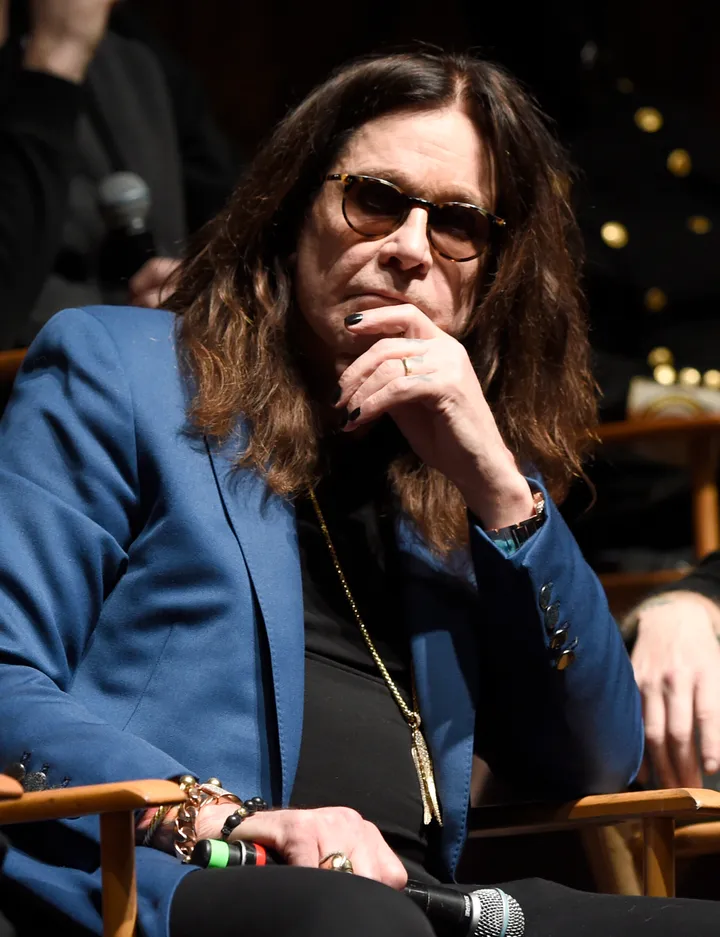
Jack Osbourne has jumped to the defence of a new project recreating his later father Ozzy’s likeness using AI.
Last week, Jack and the rest of the Osbourne family announced plans to create a digital avatar based on the Black Sabbath frontman’s image in collaboration with tech companies Hyperreal and Proto Hologram.
Appearing at the advertising industry event Licensing Expo alongside his mum Sharon and sister Kelly, he enthused: “It’s kind of scary how it’s really very accurate. He will exist digitally as himself for as long as we have computers.”
Jack continued: “Technology has come such a long way to where it’s almost drag and drop. You could shoot a template for a commercial [and] literally prompt what you want Digital Ozzy to do in that commercial and you just drop it in. It’s that simple now.”
Sharon also noted that the family plan to take the digital avatar “all around the world”, allowing fans to have the opportunity to “talk to him and he will talk back”.
Meanwhile, Hyperreal also told Billboard last week these avatars would be popping up on interactive, life-size touchscreen devices at venues across both sides of the Atlantic.

However, with AI being such a contentious issue across creative industries, these announcements were met with criticism from some, which Jack addressed in a YouTube live-stream.
“It’s going to be so tasteful what we’re doing,” the former I’m A Celebrity campmate insisted (as reported by The Guardian). “It’s not gonna be fucking lame.”
He added: “This isn’t just like hooking up an image of my dad to ChatGPT. This is some high-level technology that we’re gonna be working with, and it’s gonna feel very real, and it’s kind of wild how it will be utilised.”
This isn’t the first time that digital recreations of Ozzy’s likeness have ruffled feathers, though.
Shortly after Ozzy’s death last year, Sir Rod Stewart raised eyebrows when he made use of an AI video in one of his live shows, depicting the rocker in heaven meeting Michael Jackson, Prince, Whitney Houston, Amy Winehouse, Tupac Shakur, Freddie Mercury and Tina Turner, among others.

We hope you love the products we recommend! All of them were independently selected by our editors. Just so you know, HuffPost UK may collect a share of sales or other compensation from the links on this page if you decide to shop from them. Oh, and FYI — prices are accurate and items in stock as of time of publication.
Is there anything worse than a pan whose non-stick fails you after a few short years? Or buying a brand new pan and realising it’s not compatible with your hob?
As someone who’s experienced both, let me tell you: it’s not a situation you want to find yourself in.
As a kitchen essential, a great frying pan can make the difference between food that you want to feast on with your eyes as much as your mouth, and an undercooked, soggy mess.
Too many times have I spent upwards of £100 on a new frying pan only for it to get scratched by the whisper of a utensil.
And I’m sick of it! If you’re anything like me, you’ll want a pan that is not only efficient to cook with, but enhances the flavour of your food, and is easy to wipe clean or chuck in the dishwasher.
Whether you’re looking to upgrade your culinary prowess, or simply want a new pan to add to your collection, I’ve found the best frying pans available on the market right now.
What to consider when buying a frying pan
- Hob: Not all pans are compatible with induction hobs, so you’ll need to check before buying
- Material: Different materials cook, well, differently. Stainless steel pans heat up more evenly than ceramic or non-stick, and can reach higher temperatures, making them more suitable for searing. But, similar to cast iron pans, require treating to make sure they’re non-stick.
Ceramic pans are non-stick, which makes them great for cooking eggs. - Size: You might want to buy a mixture of sizes for every purpose.
- Dishwasher-friendly: Some pans can be cleaned in the dishwasher, but most must be cleaned by hand. Make sure you check this before you buy a pan if you have a preference, and also before you chuck it in the machine.
Difference between non-stick, ceramic, stainless steel, and cast iron pans
Traditional non-stick
- Very easy to use, releases food
- Versatile
- Often cheaper than ceramic, stainless steel or cast iron pans
- Some brands use toxic chemicals in the coating, which when damaged can seep into your food. Research each brand before buying to avoid
- Scratched with metal utensils.
Ceramic
- Easy to clean
- Fewer chemicals than traditional non-stick
- Can use on high heats, heats up quickly
- Versatile
- Eco-friendly
- Hand wash only
- Might not be as durable as stainless steel pans.
Stainless steel
- Don’t contain chemicals like traditional non-stick
- Heats up quickly and evenly
- Durable, they often last for life
- Can be non-stick (but require treating)
- Lighter than cast iron
- Dishwasher-safe
- Takes work to figure out how much heat and fat is needed to make it non-stick.
Cast iron
- Retains heat well
- Non-stick when seasoned
- Heavy
- Needs to be seasoned to prevent rust and make it non-stick
How I chose the best frying pans

As someone who cooks every day, I’m always thinking about how well my frying pan is performing. I tested several of the frying pans on this list, thinking about what they were best for cooking, how much maintenance they required, how non-stick they were compared with what they claimed to be, their size, whether they were dishwasher friendly and whether they were induction hub friendly.
Those I didn’t test myself, I crowdsourced from friends, family, and colleagues. I also read through thousands of reviews to see which were the best rated against the above criteria.
The best frying pans to buy in 2026

Best ceramic coated stainless steel pan
For the best of both worlds, Hexclad pans blend stainless steel with ceramic coating for pans that can be used on a high heat and don’t require treating. Designed in collab with Gordon Ramsay himself, this frying pan can just as easily sear as it can be wiped down. As if by magic, its handle won’t heat up, while the body can withstand up to 480 degrees in the oven. Even better, it can be popped in the dishwasher when you’re done, and you won’t even need to treat it!
Type: Stainless steel pan with ceramic coating
Size: 30cm
Induction friendly: Yes
Dishwasher friendly: Yes

Best for every day use
If you’re anything like me, you’ll be suspicious of anything that comes across your Instagram feed. And I’ll admit, this all singing, all dancing pan does sound too good to be true, but after two years of using it I can confirm it’s my go-to for everyday cooking. Thanks to the ceramic coating, it’s supremely non-stick. After a couple of years there’s a slight decrease in it’s non-stickiness, but nothing that means I can’t cook eggs. As well as coming in a range of gorgeous colours, it has a ton of practical accessories like a lid, a spatula that slots onto that little nub on the handle, and a steaming basket for everything from pasta to making a set custard.
Type: Aluminium pan with non-stick ceramic coating
Size: 26.7cm
Induction friendly: Yes
Dishwasher friendly: No

Best budget non-stick
My grandma swears by Tefal for cooking on the hob, and every time I’ve ever wanted a pan she’s bought me this one. It comes in at just £10, and is as non-stick as they come. While it scratches more easily than my Our Place one, the fact it’s such a budget option means I’ll always come back to it when I need a replacement.
Type: Teflon non-stick
Size: 24.8cm
Induction friendly: Yes
Dishwasher friendly: No

Best enamel-coated cast iron
If you’ve ever held a Le Creuset pot, you’ll have an idea of how study this pan is. Designed for sautéing, the cast iron base doesn’t require much heat to get things going, and it’ll sear everything from a hunk of protein to delicate greens perfectly. Although it has an enamel coating, it still needs to be seasoned, but eventually it will build up a non-stick resistance. That wooden handle will also make your life much easier by not burning your hands while you toss away.
Type: Enamel-coated cast iron
Size: 28cm
Induction friendly: Yes
Dishwasher friendly: No

With over 1,000 five-star reviews, it’s clear why this pan is such a fan favourite. It’s forged, which means the base is intended to be extremely scratch-resistant, and will last longer than other pans. You’ll even get a 25-year guarantee to prove it. It can go in oven up to 260 degrees, making it ideal for broiling or grilling, but is also induction hob and dishwasher-friendly. Check all our boxes, why don’t you?
Type: Non-stick
Size: 22cm
Induction friendly: Yes
Dishwasher friendly: Yes

Best titanium pan
By some miracle, Our Place has found a way to make a titanium pan non-stick without toxic chemicals. Its NoCo nonstick interior is free from lead, PFAS, PFTE, and PFOA, and its titanium surface is 300 times more durable than stainless steel. Not only is it suitable for every kind of hob, but it can hold its own in up to 535 degree heat. To prove its excellence, Our Place is offering a lifetime guarantee on this pan. Yep, even after you put it in the dishwasher.
Type: Non-stick
Size: 31.6cm
Induction friendly: Yes
Dishwasher friendly: Yes

Best small non-stick pan
When you’re cooking for one, it seems pointless to dirty a whole pan. When it’s dishwasher-safe, though, it’s another matter entirely. Perfectly sized for eggs or meals for one, this pan promises to be flake-free and five times more durable than regular non-stick pans. Thanks to the forged aluminium base, it heats up quickly and evenly, and it’s so non-stick you don’t need much oil or butter to start a meal off. Even more impressive is the fact it comes with a lifetime warranty, especially when it costs just £30 to begin with.
Type: Non-stick
Size: 20cm
Induction friendly: Yes
Dishwasher friendly: Yes

As we humans struggle to fall asleep and wrestle with withering lawns in the heatwave, it’s important to remember that our animals are struggling in the same blistering temperatures.
Sometimes, the RSPCA said, overheating can lead to potentially “fatal” heatstroke in dogs, whose risk of heatstroke rises at temperatures over 20°C.
Some of the symptoms of overheating and heatstroke can show up in your dog’s mouth first, they added.
Signs of heatstroke that can show in your dog’s mouth
1) Panting
Dogs pant more often the hotter they are, as that’s their primary cooling mechanism.
Dogs Trust said that heavy panting and/or changes to your dog’s breathing can be a sign of heatstroke.
2) Red, pink, or purple gums
Yes, sometimes, this is a dental issue. But the RSPCA added that if it’s “coupled with panting and heavy breathing, red gums can occur when a dog is overheating”.
And the Blue Cross listed “purple gums or red skin” in their list of heatstroke symptoms for dogs.
Dogs Trust, meanwhile, said you should look out for bright pink or red gums or lips.
3) Sticky, heavy drooling and/or dribbling
Per the RSPCA, a dog that’s drooling more than usual and/or has thicker and stickier drool than you’re used to, this can be another sign of heatstroke.
The Blue Cross also said a dog with heatstroke may start dribbling.
4) Vomiting
The Blue Cross, RSPCA, and Dogs Trust all list this as a symptom of overheating and possible heatstroke.
The RSPCA added that heatstroke can also cause diarrhoea; if this is bloody, that can be a sign that heatstroke is more severe.
5) Noisy breathing
Dogs that begin breathing more quickly or heavily than usual could be facing heatstroke, the RSPCA said. Noisy breathing can also be a sign, especially among flat-faced breeds like pugs and French bulldogs.
What are the other symptoms of heatstroke in dogs?
- A dry nose,
- Infrequent urination,
- A higher than usual heart rate,
- Shaking and shivering due to muscle spasms,
- Seizures, especially in epileptic dogs,
- Collapse,
- Confusion or disorientation,
- Tiredness,
- Sunken eyes,
- Weakness,
- Red skin,
- Being wobbly on their feet.
What if I think my dog might have heatstroke?
The RSPCA stressed that owners should “cool first, transport second”. In other words, it’s important to get your dog’s temperature down before you take them to a vet.
Remove them from their hot environment and stop any exercise, the charity added. Move them into existing shade, or create some temporary shade if none is available.
Pour water on their body but not their head, focusing on their stomach, neck, and thighs. “Submerge their body in cool water if available (such as a paddling pool or stream, as long as the water temperature is cooler than the dog),” the RSPCA added, but don’t do this with an unconscious, sick, or older dog.
Take them to the vet once they’ve cooled down, ensuring the vehicle you’re bringing them in is cool, well-ventilated, and has easy access to water. Open your windows and/or use the air conditioning.
Stay calm, the RSPCA continued, and ring ahead to let the vet know about the urgency of the situation.

By 2024, Alzheimer’s Society said that they expect the number of people with dementia in the UK to rise to 1.4 million.
We still don’t fully understand how conditions like Alzheimer’s develop. But researchers think that up to 45% of dementia cases are “potentially preventable” by addressing 14 lifestyle factors.
These include more obvious choices, like not smoking and staying active. And a new paper published in the Journal of Epidemiology & Community Health had suggested that another, simpler step – cooking, even as little as once a week – could significantly reduce dementia risk, too.
Cooking once a week appeared to reduce risk by as much as 67%
In this research, which involved 10,978 over-65s, the study authors compared people’s self-reported cooking rates and skill levels to their dementia incidence over time.
They tracked them for six years.
Compared to cooking less than once a week, cooking once a week was linked to a 23% lower dementia risk among men and 27% for women.
For those who weren’t experienced cooks, making a homemade meal once a week was associated with a 67% lower likelihood.
People who cooked at least five times a week saw the best results, however. And those who were highly competent in the kitchen also saw benefits, though these didn’t seem to rise with cooking frequency.
These findings seemed to hold true after accounting for other factors we know can affect dementia risk, like income level and education.
“Creating an environment where people can cook meals when they are older may be important for the prevention of dementia,” the study authors concluded.
Expertise might lower dementia risk
A birdwatching study found that those who were really, really skilled at the hobby saw lower dementia risk than less-skilled peers. “High-level expertise in a complex hobby can provide a protective ‘cognitive reserve’ as we age,” the authors wrote.
However, speaking to the Science Media Centre, Dr Susan Kohlhaas, an Executive Director of Research and Partnerships at Alzheimer’s Research UK, stressed that this was an observational study that couldn’t prove causation.
She added, “People who cook regularly may also have healthier diets, be more physically active, and be in better overall health, all of which are linked to better brain health. It’s also possible the reverse is true: people with early memory and thinking problems might lose the ability or motivation to cook, leading them to cook less often”.
She also noted that though the study lasted six years, participants only reported their cooking habits once.
She continued that while this study may not be conclusive, “there is good evidence that keeping active, eating well, and staying socially connected can help support brain health”.
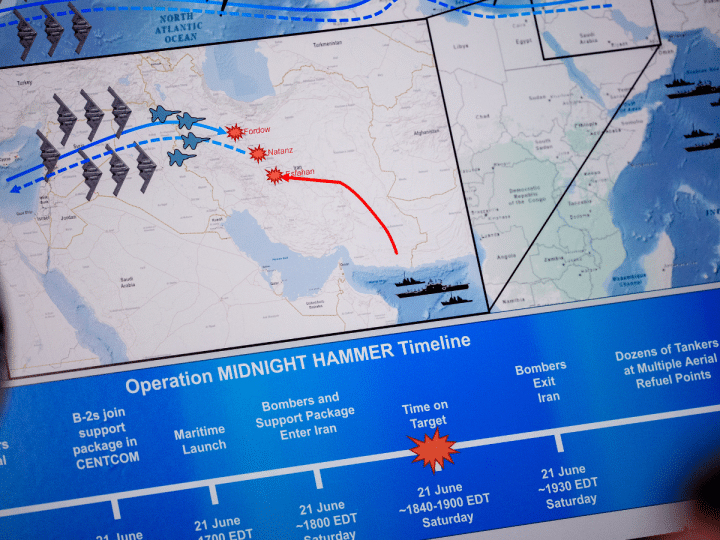

Iran has slammed a new wave of US strikes in the besieged nation’s south. Meanwhile Donald Trump has demanded various countries normalise relations with Israel as a condition of ending his failed war. Yet several expert voices have said that the US has already lost the war, with Trump in no position to make demands.
Middle East Eye reported:
Iran’s foreign ministry accused the US of violating ceasefire agreement after Washington carried out strikes south of the country.
The ministry said:
Undoubtedly, the Islamic Republic of Iran will not leave any act of mischief unanswered and will not hesitate in defending the country’s integrity.
Drop Site News reported that Iranian sailors and fishermen were killed:
IRGC-linked Fars News reported explosions in Bandar Abbas and similar sounds near Sirik and Jask a few hours… https://t.co/gUl45sMQrh pic.twitter.com/b8yMO4IDEF
— Drop Site (@DropSiteNews) May 26, 2026
 NEW: Iranian sailors and fishermen were killed today after U.S. forces struck vessels near Bandar Abbas, according to reports and images circulating on social media.
US-Israel attacked Iran first on 28 February without provocation. Iran was offering unprecedented concessions in negotiations at the time. The Pentagon has since stated there was no imminent threat from Iran. And the UN’s atomic watchdog, the IAEA, has said there is no evidence Iran was developing a nuclear weapon.
The US has achieved none of its original war aims. Iran predictably closed the Strait of Hormuz, a vital oil channel, once attacked – creating a global energy crisis. Far from being defeated, Iran has said the war will continue until “the enemy’s inevitable and permanent humiliation, disgrace, regret, and surrender”. Trump came to power on an anti-war ‘America First’ ticket. He now faces worldwide humiliation.
It is widely felt that Trump is groping for an off-ramp from his own war. Drop Site‘s Murtaza Hussein posted on X:
If Trump continues the war he will have to deal with an escalating global economic crisis with no clear victory or exit strategy. If he ends it however he will have to deal with backlash from the ruthless Israel Lobby that will continue inflicting political harm on him for the…
— Murtaza Hussain (@MazMHussain) May 26, 2026
Iran holds the cards amid Trump’s desperation
Meanwhile, Middle East Eye editor David Hearst wrote that Iran “holds all the cards”:
however tortuous the path, and even if this deal fails and Trump decides to attack Iran for a third time, it is brutally clear that the US has just lost another war in the Middle East – its sixth in 25 years.
Iran has all the cards, chiefly the Strait of Hormuz, but also the deterrence its drones and missiles have achieved over its Gulf neighbours – and other cards still it has yet to play, like the closure of the Bab el-Mandeb Strait at the mouth of the Red Sea. Trump has none.
Yet Trump has continued to make improbable demands more suited to a man who is winning. For example, he has insisted that a number of Middle East states sign the Abraham Accords. The Accords bind signatories into normalising relations with Israel.
Trump said:
After all the work done by the United States to try and pull this very complex puzzle together, it should be mandatory that all of these Countries, at a minimum, simultaneously, sign onto the Abraham Accords.
Those Countries discussed are Saudi Arabia, The United Arab Emirates (already a Member!), Qatar, Pakistan, Turkiye, Egypt, Jordan, and Bahrain (already a Member!).
Pakistan, which is acting as peace broker between the US and Iran, has rejected the idea entirely. Defence Minister Khawaja Asif said, referring to Israel:
How will you sit down with those people whose word cannot be trusted.
We have a very clear stance that this is not acceptable to us.
Trump seems to be oscillating between desperation and brazen posturing. The self-proclaimed ‘master of the deal’ seems to be completely incapable of finding such a thing. That is one thing on a reality TV boardroom. It is quite another when it is the lives of Iranian civilians are reduced to bargaining chips in Trump’s failed imperial adventure.
Featured image via Getty/Andrew Harnik
By Joe Glenton
Politics
Former UK cyber-security chief slams Farage’s ‘Russian hacker’ claim as “entirely without merit”
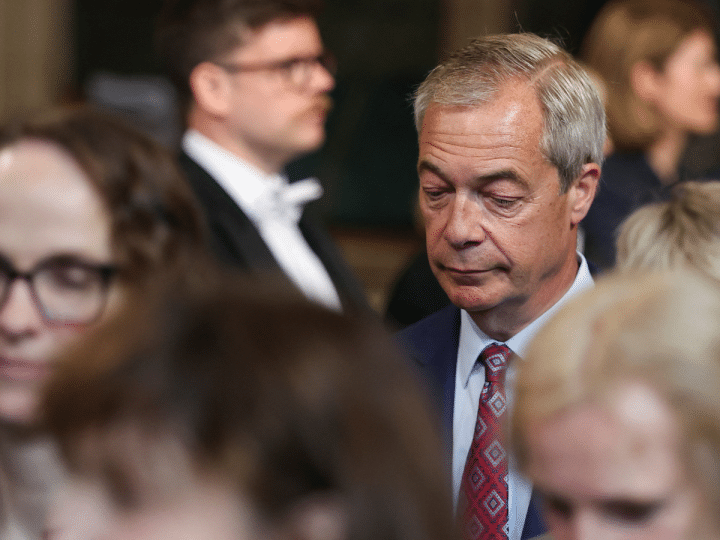

Nigel Farage’s desperate claim that a Russian hacker leaked his financial records to the Guardian is “without any merit”, according to Ciaran Martin, the founding chief executive of the National Cyber Security Centre (NCSC).
Over the weekend of 23 May, Farage told the Mail that Reform-employed ‘counter-espionage experts’ found “sophisticated hallmarks” of “hostile state actors” behind the alleged data-security breach.
Farage is begging us not to look at the donation
The ‘Russian hack’ gambit was the Reform leader’s latest attempt at a distraction from his undeclared £5m ‘gift’ from crypto billionaire Christopher Harborne. Farage originally claimed the gift was for ‘security’ before changing his tune, calling the money a ‘reward’ for his hard work campaigning for Brexit.
Whatever the purpose, Farage purchased, in cash, a £1.4m house mere months after Harborne’s kind gesture. In the same month he also put in applications to redevelop another Kent property. Likewise, later that year, Farage’s partner Laure Ferrari splashed £885,000 up front on a Clacton property.
Apparently, this was too much corruption even for the UK political establishment. The parliamentary standards commissioner has confirmed that they’re investigating Farage for a potential breach of the members’ code of conduct. Fingers crossed, this could even end up triggering a by-election in Clacton-on-Sea.
Understandably, given the potentially massive ramifications, Reform’s usually limelight-loving leader has been ducking interviews left, right, and centre. And then, of course, there’s his claim that he only started talking about the dodgy £5m because of a Russian hack.
‘The sophisticated hallmarks of a nation state actor’
On 23 May, Farage stated that counter-espionage experts in the employ of his party had uncovered signs that Moscow-linked hackers used spear phishing techniques to access his bank accounts, phone, and email. In the Mail, a Reform source claimed the alleged incident:
bore all the sophisticated hallmarks of a nation state actor using destabilisation techniques in the run-up to this month’s local elections.
You heard it straight from the horse’s mouth, folks. The Russians are using every tool at their disposal to stop Reform from taking control of Barnsley Metropolitan Borough Council. If only Putin had known that he could just wait for the far-right party to take itself out.
According to Farage, just four people were even aware of the £5m gift. However, as the Canary’s Willem Moore reported, no one actually cares how the financial records leaked. Instead, people are very concerned with the fact that the far-right stooge has failed to provide any evidence for this alleged hack.
‘He’s not produced a shred of evidence’
Now, ex-NCSC chief Ciaran Martin has come forward to state that Farage’s wild claims would have massive repercussions for the UK’s policies regarding Russia. If, that is, any of the story were actually true. Martin explained that:
An aspiring prime minister has essentially claimed that Russia has launched an unprecedentedly aggressive intervention – a malicious intervention – in British politics, and he’s not produced a shred of evidence to support that claim.
He’s made a serious foreign policy and national security allegation which if true would have massive implications for British policy towards Russia.
It is a very, very serious thing to allege. It would be a national security issue. If it is true, the government should be in emergency session in COBR [Cabinet Office Briefing Rooms] right now considering their response to the most serious Russian intervention in internal British affairs for years.
On the contrary, the Guardian reported its understanding that Farage hasn’t even bothered to ask for the NCSC’s help with his scary (and definitely 100% real) Russian hacker yet.
Russians ‘don’t leave a little flag’
Martin was also quick to call out the outlandish nature of Reform’s claim to have employed ‘counter-espionage experts’. Likewise, he also questioned how exactly they arrived at the conclusion that ‘Moscow did it’. Martin explained that the Russians “don’t leave a little flag on a device”:
To take one phone and say my phone, email and bank account has been hacked, and it’s got the imprint of the Russian state, that’s a hell of a technical leap to do that on the basis of a single device analysis. […]
You need detailed technical evidence, some of which is sometimes not even available to the private sector. That is why for an accusation of this magnitude the only right port of call is the British security services, and in this case, specifically the National Cyber Security Centre in GCHQ [Government Communications Headquarters].
Martin didn’t want to rule out the possibility of a hack completely. That’s probably fair, given that (like the rest of the country) he hasn’t seen any of Reform’s evidence yet. However, he was unequivocal on the point that Farage – if he is telling the truth – is making a pig’s ear of the incident:
What he has described would not just be hacking by Russia, but what we call a hack-and-leak operation, which is a different thing.
It is way more serious because it violates international norms, and it’s a direct intervention aimed at destabilising our democracy and our politics in a way that spying isn’t. […]
An aspiring prime minister should treat it with the utmost seriousness and cooperate fully with the National Cyber Security Centre and any other relevant authority; otherwise you should not make these accusations, because they’re way too serious to just be bandied around.
Lying, incompetent, or both?
So, let’s run through things, just to sum it up. Farage claimed that Russian agents hacked his accounts to leak his financial details to the Guardian. His party’s supposed counter-espionage experts, if they exist, are apparently working at a level beyond the private sector’s actual capabilities.
In spite of public pressure, the Reform leader has provided no evidence to back up his story. It’s a massive allegation against Russia, which could have lasting effects on UK foreign policy towards the Putin administration.
However, Farage is utterly failing to treat the incident with the magnitude it deserves – he hasn’t even gone to the government agency specifically set up to handle matters of national cyber-security.
That leaves us with a simple question: is Farage lying, incompetent, or both? Personally, the Canary’s money is on ‘both’. And this is the tosser who wants to be the next prime minister? You’re having a laugh.
Featured image via Getty/Toby Melville

Peter Murrell, the ex-husband of former Scottish first minister Nicola Sturgeon, is set to spend a long time in prison. The former Scottish National Party chief executive (between 2001 and 2023) has pleaded guilty to embezzling over £400,000 from SNP campaign funds.
Concerns had first been raised about the SNP’s finances in October 2020 by pro-independence blogger Stuart Campbell. He had noticed that nearly £670,000 raised between 2017 and 2019 to campaign for a second independence referendum (IndyRef2) did not seem to be showing up in the SNP’s public accounts. It hadn’t been used to push for IndyRef2, so where had it gone?
In March 2021, in what is perhaps the most shameful and telling episode of the whole affair, SNP higher-ups denied three SNP officials on the party’s finance and audit committee in-depth access to the party’s accounts – an aversion to scrutiny all too typical of the SNP’s senior figures. The trio promptly resigned as a matter of principle. At a National Executive Committee meeting at the time, Sturgeon claimed that the party’s finances had never been healthier. She warned that anyone thinking of going public with concerns would be damaging the SNP.
An official complaint was then made to Police Scotland, which launched an investigation in 2021. Five years on, we now have an answer to the mystery of the missing funds. The first minister’s hubby had, to borrow Boris Johnson’s famous words, spaffed it up the wall.
It really does take a heart of stone to read Police Scotland’s 126-page indictment without laughing. We learn that Murrell wasn’t driven to nicking from the Nats by gambling debts or a drugs-and-hookers habit. No, it seems he just really liked high-end shopping. He is Imelda Marcos in tartan trews.
The big-ticket items include a Jaguar SUV for £81,000 and a luxury Niemann and Bischoff Smove 7.4e campervan, which set Murrell back £124,550. Even he seemingly realised the campervan looked a bit suspicious so, despite claiming it was to be used for campaigning, he stored it at his mother’s house in Fife. As you do.
Armed with a John Lewis catalogue and various SNP credit cards, Murrell also spent £3,232 on a Jura Giga 5 Cromo coffee machine, £2,618 on two Feuilles pepper and salt grinders, £1,990 on eight umbrellas, £1,475 on a Beatles special-edition fountain pen and rollerball, £550 on a 1:30-scale model of an Airbus helicopter… the list goes on and on. Such was the ostentatious nature of Murrell’s spending, his and Sturgeon’s famously ‘modest’ home in Glasgow must have looked like the interior of Harrods. There’s probably an exotic species or two hidden away in Nicola’s loft.
Questions (and eyebrows) are now being raised as to how Sturgeon could have been unaware that something was amiss. Her house would have been brimful with designer goods, a brand new Jag was parked outside, and a top-of-range campervan sat on her mother-in-law’s driveway. One might reasonably ask Sturgeon how she thought Murrell was funding such an outlay? Fortnum and Mason loyalty points? Scratch cards? Or perhaps it involved the never-spent campaign pot that independence campaigners and SNP members had been concerned about since 2020?
Sturgeon, who was cleared of wrongdoing by the police in 2024, has insisted this week that she had been ‘misled just as others were’. She has pointed to her husband’s £107,000 salary as her reason for thinking his spending was normal. It’s true Murrell’s earnings might explain away the two-and-a-half-grand salt-and-pepper cellars and the Helly Hanson vest sets, but a £81,000 Jag and a £125,000 campervan? As others have noted, she is guilty at the very least of being remarkably incurious.
As are other members of the SNP’s ruling clique. This includes current first minister John Swinney, a trusted adviser to Sturgeon and one of Murrell’s closest friends. Indeed, it was Swinney, during his first stint as SNP leader in 2001, who made Murrell the SNP’s chief executive. Like Sturgeon, Swinney has spoken of his shock and sense of betrayal. And, of course, he says he suspected nothing.
The whiff coming off the SNP leadership right now wouldn’t be quite so strong if this were an isolated scandal. If it could be limited to the actions of Sturgeon’s sneaky shopaholic husband. But the rot goes deeper. Since it won power in 2007 and then a Holyrood majority in 2011, the SNP has turned Scotland into what feels like a one-party state. It has governed – first under the late Alex Salmond (2007-2014) and then especially Nicola Sturgeon (2014-2023) – as a small, arrogant clique of technocrats, aided and abetted by a state-funded NGO-cracy and a civil service so pliant and submissive, it might as well have been integrated into the SNP itself.
Little wonder that SNP leadership has increasingly acted as a law unto itself, hiding and shielding itself from public accountability. We saw this during the Alex Salmond scandal a few years ago. The former SNP leader was investigated by Sturgeon’s government in 2018, following allegations of sexual assault against him. From the start, he claimed it was a politically motivated conspiracy to remove him as a threat to Sturgeon’s leadership. While these claims were unsubstantiated, a subsequent judicial review in 2019 ruled that the investigation was ‘unlawful’, ‘procedurally unfair’ and ‘tainted with apparent bias’ – the investigating officer had even had prior contact with Salmond’s accusers. Salmond was acquitted of all charges at a 2020 criminal trial.
In some ways, it was what happened afterwards that was most damning of the SNP. During a Holyrood inquiry into the Salmond affair, the government refused to hand over all the documentation related to the case, redacted Salmond’s evidence to the inquiry, and restricted what Sturgeon could be questioned about by MSPs. As then Scottish Labour leader Jackie Baillie put it at the time, ‘We are seeing that there is something rotten at the heart of the SNP, and it is poisoning our democratic institutions’.
The Salmond scandal exposed the malign traits of the SNP leadership. Its aversion to scrutiny, its defiance of accountability, and its overweening commitment to its own self-preservation. These were on show once more during Scotland’s public inquiry into the SNP’s handling of the Covid pandemic. It emerged that Sturgeon and others systematically deleted their WhatsApp messages as part of a concerted, civil service-backed effort seemingly to avoid being held to account at any future inquiry. In a telling moment, senior civil servant Ken Thomson warned his colleagues that their chat ‘is discoverable under [freedom of information]’ and wanted them to ‘know where the “clear chat” button is’. He boasted to colleagues that ‘plausible deniability are my middle names’.
The Murrell embezzlement scandal might only involve one member of the SNP, albeit an incredibly powerful one. But it’s difficult not to think of it as part of the same increasingly rotten SNP culture – of ‘plausible deniability’, accountability-dodging and an almost pathological lack of curiosity when it comes to the failings of its own. A party that has long been more committed to maintaining its grip on power and furthering its own leading individuals’ interests than in representing the interests of Scottish citizens.
Peter Murrell may no longer be able to spend campaigners’ hard-earned on designer bread bins and manicure sets, but there is still a powerful stench emanating from this decadent party. The reckoning the SNP deserves cannot come soon enough.
Tim Black is associate editor of spiked.
The Clarity Act won’t lead to adoption without crypto tax reform

‘Reacher’ Drops Official Update on Long-Awaited Prime Video Spin-Off

$300 Billion Frozen: The Cold Financial War Against Russia


-

 Crypto World5 days ago
Blockchain.com files with SEC for U.S. IPO
-

 Fashion4 days ago
Holiday Weekend Open Thread – Corporette.com
-

 Business4 days ago
Dell Technologies DELL Stock Surges 15% on AI Server Momentum and Analyst Upgrades in 2026
-

 Crypto World4 days ago
Bitcoin Accumulation Weakens as BTC Realized Losses Hit $600M
-

 Crypto World4 days ago
Space X IPO Is ‘Bad News’ for Tech Stocks: But What About Bitcoin?
-

 Politics4 days ago
Makerfield: a tale of two social-media histories
-

 Crypto World3 days ago
Robinhood crypto COO Tanya Denisova exits
-

 Business2 days ago
NYT Strands Answers May 24 2026 Revealed for Puzzle No. 812 Theme Summer Essentials
-

 Crypto World5 days ago
MicroStrategy’s Saylor Says Miners No Longer Set Bitcoin Price, Another Force Has Taken Over
-

 Tech5 days ago
WhatsApp ads could make Irish debut after discussions with DPC
-

 Crypto World4 days ago
AI infrastructure race heats up as IREN pitches full-stack strategy, WhiteFiber lands $160M deal
-
 Tech4 days ago
A 0.12% parameter add-on gives AI agents the working memory RAG can’t
-

 Tech5 days ago
You Can Now Add ChatGPT To PowerPoint
-
 NewsBeat5 days ago
Charity run by Reform leader Malcolm Offord accused of ‘law breaking’ over Scottish registration
-

 Business4 days ago
Trump Invests $1M-$5M in Kura Sushi USA Chain With 27 California Locations
-

 Tech1 day ago
Microsoft’s quiet Claude Code retreat and the real cost of enterprise AI
-

 Sports5 days ago
2026 CJ Cup Byron Nelson leaderboard: Brooks Koepka finds putting stroke in Round 1
-

 Crypto World6 days ago
Exa Labs raises $250 million in funding led by a16z
-
Business4 days ago
Goldman Sachs reinstates Ageas stock coverage with neutral rating
-
 Crypto World4 days ago
Verus Bridge Hacker Returns $8.5M ETH, Keeps $2.8M as Bounty
You must be logged in to post a comment Login