
Politics
The Jason Arday farce is an embarrassment to black Britain

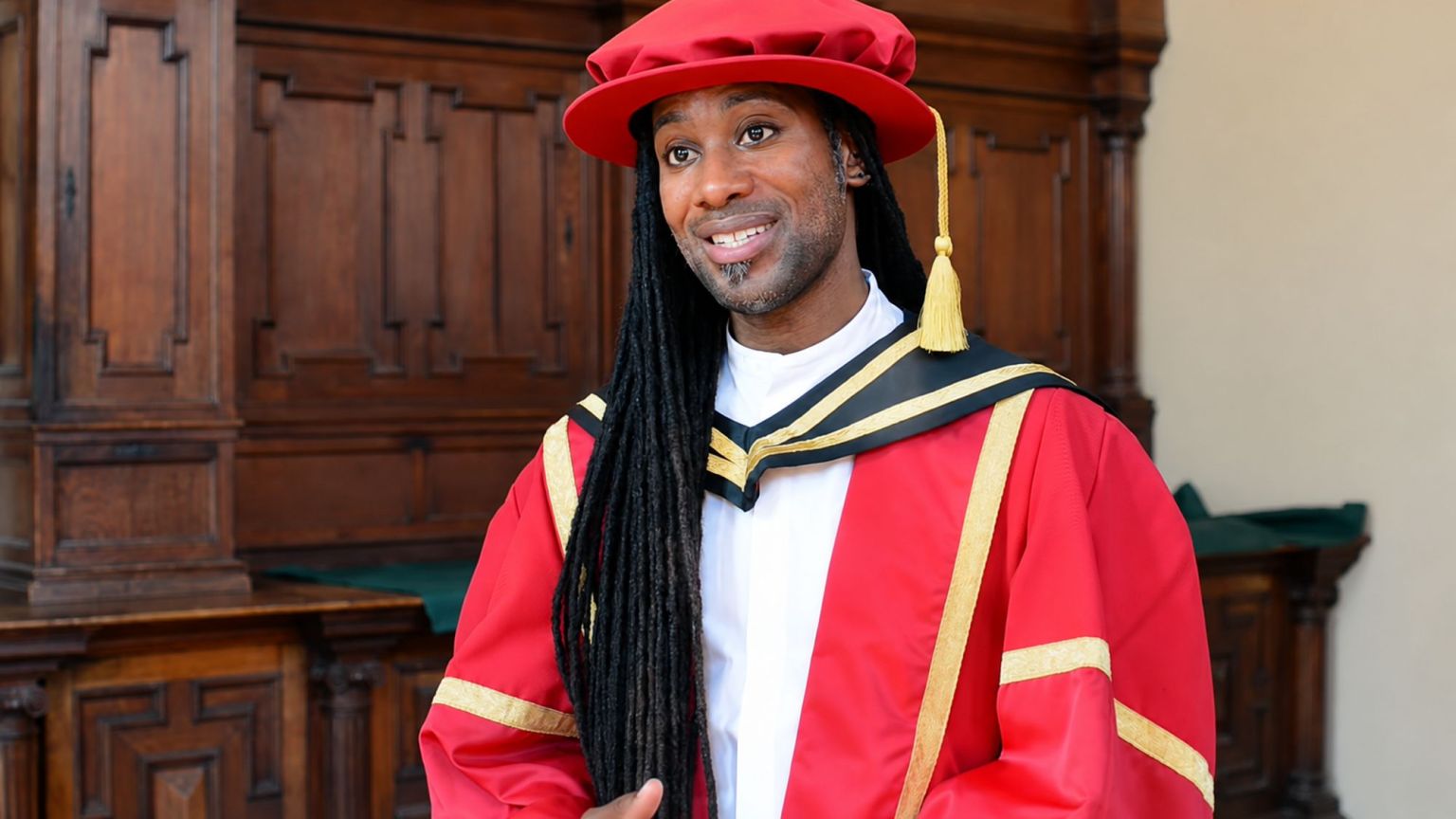
I’ll admit it: initially, I pulled my punches. I feel pity for Jason Arday. It must be awful to have every detail of your life picked apart by the media class during ‘silly season’ because there is nothing else to write about. For me to have to add to the commentary is a matter of profound regret.
However, sympathy cannot become an excuse for waving away allegations of plagiarism and dishonesty. When the story broke, Britain’s progressive establishment instinctively circled the wagons. I watched friends and prominent figures rush to defend him, and I even considered adding my name to a high-profile open letter. As a black voice who has faced attacks from both left and right, I understand that reflex. Yet the Arday affair has exposed something darker than a culture-war skirmish: an identity politics that compels intelligent people to subordinate the pursuit of truth to tribal loyalty.
It now seems the black establishment is quietly abandoning Jason Arday. By chance, I was attending a launch party of a prominent black Briton’s book on Saturday – the very day the Guardian published its devastating piece on the affair. Moving through the room, I listened to hushed, furious exchanges among well-heeled black Britons. I spoke with people who had signed that open letter. Some had defended Arday on the airwaves (some as recently as that very morning). Others had penned pieces suggesting he was the victim of a conservative hit job. Almost to a person, they were mortified. As smartphones flashed with links to the story, one attendee put it with cold clarity: ‘Arday has lost the Guardian!’ The reflexive instinct toward racial solidarity had collapsed into acute embarrassment.
Look at the roll call of Arday’s initial supporters: Oxbridge college heads like Professor Dame Ijeoma Uchegbu (who has now removed her name from the open letter), Lord Simon Woolley and Sonita Alleyne, alongside political and media figures like Lord Paul Boateng, John McDonnell, Zack Polanski, Bell Ribeiro-Addy, Nels Abbey, Professor Kehinde Andrews and Dr Shola Mos-Shogbamimu. I count many of Arday’s supporters as personal friends, and I know them to be people of profound decency, kindness and integrity. They saw a man under fire, an underdog. Their generous impulse to protect him has been weaponised.
The tragedy is that Arday didn’t need to make any of the claims that are now coming under scrutiny. Appointed professor of sociology of education at Cambridge at just 37, he was the university’s youngest black professor. He was also celebrated for overcoming severe developmental challenges, learning to read only in adulthood before reaching an Oxbridge chair. If these elements of his biography are true, then this alone is an extraordinary human achievement.
In an analysis of his 2015 PhD thesis, the Telegraph alleged last month that dozens of passages had been lifted almost word for word from another scholar’s dissertation. It also found text and interview quotes that seemed to match previously published studies. Then came a cascade of questions surrounding Arday’s seemingly tall tales: millions raised for charity with few verified records and extreme athletic feats normally only seen among professional athletes. There were also the blood-curdling threats he supposedly faced, including a knife-wielding intruder in his faculty building and a pig’s head sent in the post to his parents’ home. Although Arday claimed the police had investigated the pig incident, the Met told the Guardian that this was ‘categorically’ incorrect and no investigation had taken place. When pressed by the Guardian on why he presented such claims to the world, Arday offered a telling response: ‘To be honest with you, I thought you’d just believe me.’
If the allegations against Arday are true, this would place him in the same hall of mirrors as Belle Gibson, Rachel Dolezal or Anna Delvey – figures who exploited an establishment so desperate to endorse a trendy narrative that asking for proof was treated as poor etiquette. Of course, bad-faith actors have rushed to exploit the wreckage. Nathan Cofnas, whose Substack post brought the plagiarism allegations to global attention, no doubt believes the Arday case confirms his view that, under a true meritocracy, black people would ‘disappear from almost all high-profile positions outside of sports and entertainment’.
But the existence of bad-faith agitators can’t excuse us from confronting the rot: the patronising assumption is that standards and truth are optional when evaluating a black professional. This is a slap in the face to the 160 or so black professors in Britain today who earned their chairs through gruelling intellectual labour, original research and the unglamorous grind of academia.
It’s also an insult to the civil-rights titans who forged the path before us. Pioneers like Doreen Lawrence, whose unyielding pursuit of justice transformed British policing; Dr Harold Moody, who founded the League of Coloured Peoples in 1931; Sir Geoff Palmer, Scotland’s first black professor; and visionary educator Dame Jocelyn Barrow. These giants didn’t demand to be recognised based on sentiment. They forced a hostile establishment to respect them because their work was bulletproof.
The ultimate casualty of the Arday scandal isn’t one man’s career, nor the bruised egos of those who rushed to his defence. The tragic reality is that Jason Arday has potentially done far more damage to black Britons than any racist agitator ever could. External critics and bad-faith actors can only ever attack from the outside – their prejudices are expected, discounted and easily identified. But Arday’s unchallenged rise, if the allegations turn out to be true, has handed our harshest detractors the ultimate weapon. It provides a silver bullet to anyone looking to roll back equality legislation or widening-participation schemes, or to question every rightful appointment and call professionals like me ‘diversity hires’. No external opponent could ever inflict as much damage as this case potentially has.
I think of my own sister, an Oxford graduate who earned her place through raw intellectual horsepower. I think of the thousands of brilliant black students pushing through Russell Group universities and successful careers right now – people who hold themselves to exacting standards and ask for no free passes. Those lining up in Arday’s defence send the patronising message that black achievement cannot survive the harsh light of objective scrutiny.
Even so, perspective matters. It is worth remembering that Jason Arday hasn’t killed anyone, a point he made himself recently. I have pre-ordered Arday’s book, Great and Unfortunate Things, and look forward to reading it – even though I’ll now treat it more like a fantasy than a non-fiction.
Albie Amankona is a broadcaster and financial analyst, best known for his work on Channel 5, BBC, ITV and Times Radio. Follow him on X: @albieamankona.

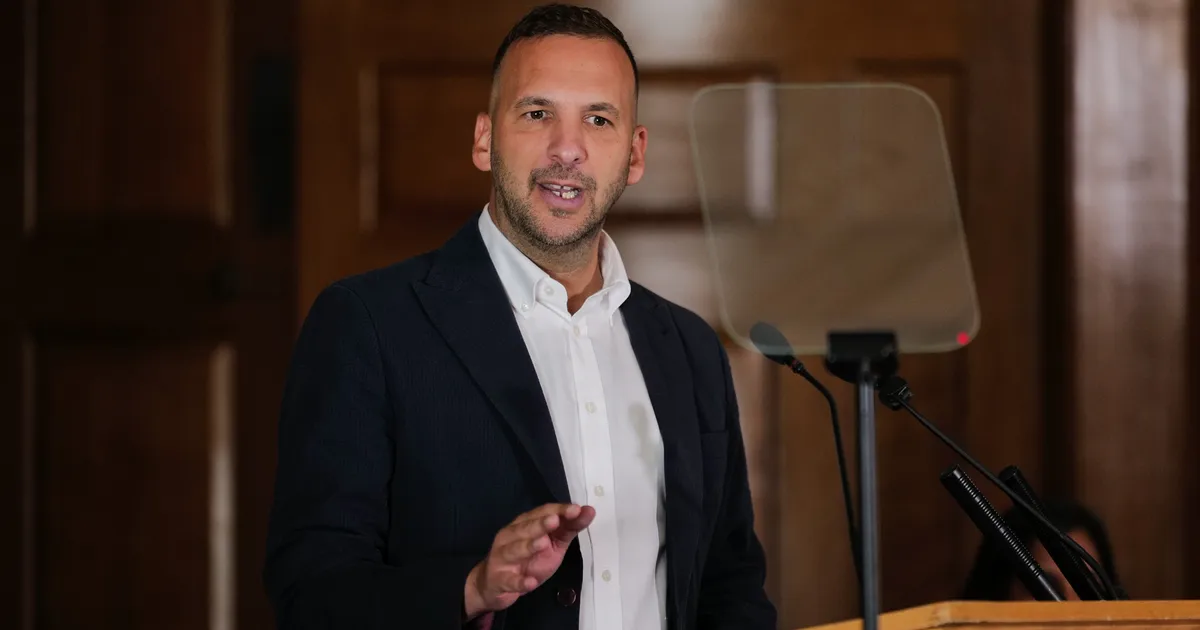
Zack Polanski has claimed he and the Green Party helped “topple” Keir Starmer as prime minister.
Speaking at a press conference focused on the climate crisis, he alleged that his party’s success at the Gorton and Denton by-election in February this year accelerated Starmer’s downfall.
He said: “I think one of my biggest achievements in my coming up through the Green party was toppling a very popular prime minister.
“I am in no doubt that if we had not won Gorton and Denton, Keir Starmer would not have had the leadership crisis he had.”
The Greens’ Hannah Spencer took the Manchester seat from Labour in a surprise win five months ago as the party shot up in the polls.
Starmer and Labour’s executive body blocked then-Greater Manchester mayor Andy Burnham from running in the by-election.
The PM’s net favourability was at -47 at the time, and voters appeared to be flocking to the Greens.
But it was not until after the party’s shockingly poor performance in the May elections across England, Wales and Scotland that Labour MPs publicly called on Starmer to quit.
Makerfield MP Josh Simons then announced that he was vacating his seat so Burnham could return to parliament.
Burnham won the Makerfield by-election on June 18 and Starmer announced he was resigning just days later.
Burnham then ran uncontested to be the next prime minister and was sworn into office on July 20.
But Polanski told the media on Wednesday that the Greens’ victory in Gorton and Denton helped create the “version” of Burnham who criticises neoliberalism.
He added: “And obviously I very much agree with that and that’s something I’ve been talking about all year, and something the Green Party has been talking about for decades.”
The Greens peaked in popularity back in March, when pollsters found the party had leapfrogged Labour and secured second place behind Reform UK.
A YouGov survey for Sky News and The Times put the party on 21% after their support surged by four points with Reform on 23% and Labour trailing at 16%.
But the latest YouGov voting intention poll put Reform at 23%, Labour 22%, the Conservatives on 19% and the Greens far behind in fourth place, on 13%.
Listen to Commons People, the podcast that makes politics easy. Every week, Kevin Schofield and Kate Nicholson unpack the week’s biggest stories to keep you informed. Join us for straightforward analysis of what’s going on at Westminster.

In May of this year, astronomer Bill Gray said on his site, Project Pluto, that a large section of SpaceX rocket Falcon 9 was set to crash into the moon on August 5.
He couched his prediction a little, saying: “I can be sure it will impact near the time and place I’ve predicted, but those varying forces mean that the actual impact will be at least a little off from that time and place”.
But scientists, including those from the Paranal Observatory in Chile, seem to have spotted the crash on its predicted date this morning. Nasa expected the incident to have taken place at 7:35am BST.
The space agency added that the collision will probably leave an 18-metre-wide, 14-metre-deep crater on the moon’s surface.
It could take days or weeks to confirm images of the suspected impact, however.
Will this pose a danger to us on Earth?
Speaking to the BBC, NASA spokesperson Jimi Russell said there’s no risk to us here on Earth as a result of the crash.
And Dr Matt Bothwell, public astronomer at the University of Cambridge, also told the broadcaster: “It’s something really huge smashing into the moon. It’s not remotely dangerous; we can just watch the show”.
We’ve even sent items to crash into the moon on purpose before.
Why did the collision happen?
Per ScienceAlert, the Falcon 9 is a partially reusable rocket, which means “its first, larger stage returns to Earth and alights on a barge so it can be refilled and re-flown, while the second stage remains in orbit”.
The part believed to have hit the moon is that second bit – the “upper stage” of the rocket, which carries the payload of the vessel.
Usually, companies leave this part of a rocket in orbit. They’re often designed to detach.
The section some believe may have hit the moon has been orbiting the Earth for about a year. It was the 10th rocket launched by the company, whose CEO is Elon Musk, in 2025.
On Monday, Julianna Scheiman, SpaceX’s director of NASA science and Dragon programmes, told reporters: “What has happened is essentially a mixture of solar activity and gravity forces have put [the rocket segment] on a path toward the moon.”
Leftover parts like these form a phenomenon Gray calls “space junk”.
How come we knew this would happen?
Usually, debris left in space is guided by the gravity of celestial bodies around it, like the Earth and moon. That can help to make tracking and predicting their movements easier, and formed most of the basis of astronomers’ predictions.
But these objects are also moved around by sunlight. This is a very slight force, but it adds up over time. As the object moves around, it’s hard to say exactly how much sun will hit it.
Despite this variable, however, scientists seem to have been pretty accurate in their guesses here.
Can I see the crash from Earth?
That’s highly unlikely without special equipment, BBC Sky At Night suggests.
And even with great telescopes, amateur and pro astronomers alike might struggle to spot the expected dust plume a crash may kick up as it’s likely to have happened near the visible edges of the moon.

We hope you love the products we recommend! All of them were independently selected by our editors. Just so you know, HuffPost UK may collect a share of sales or other compensation from the links on this page if you decide to shop from them. Oh, and FYI — prices are accurate and items in stock as of time of publication.
It’s the plight of modern life: you buy more things to make your life easier, only to make it harder by giving yourself something else to clutter your space.
Over the last few years, there have been several new ‘must-have’ appliances to add to your collection.
And while we’re all for levelling up your space with an air fryer, or even a water purifier, your kitchen counter can end up taken over pretty quickly.
If you’re tight on cooking space already, the last thing you want is a big black slow cooker taking up half of it.
Should your countertop clutter bring you utter misery though, we’ve found it: an appliance garage.
“Appliance garages help people keep everyday essentials within easy reach while maintaining the streamlined, peaceful aesthetic many are now striving for in modern kitchens,” explains the kitchen expert at B&Q, Jodie Spray.
Okay, we know what you’re thinking – isn’t adding something else into your kitchen kind of missing the point? Don’t worry, though, an appliance garage is designed to hide the mess, rather than add to it.
“An appliance garage is a dedicated storage space built into your kitchen,
usually a pantry-style cabinet,” says Spray.
“It’s designed to keep everyday appliances such as kettles, toasters and coffee machines tucked away but still easy to access when you need them.
“The goal isn’t to make your kitchen look empty, it’s to make it feel calmer and more intentional without sacrificing practicality.”
How do you install an appliance garage?
“The way you install an appliance garage will depend on your kitchen layout,
but there are options for both new kitchens and existing spaces,” explains Spray.
“Some are built into cabinetry as part of a renovation, while others can be created by repurposing a section of worktop.”
Just as there’s not one kitchen table for every space, you’ll need to think about what your space needs before buying or building an appliance garage.
“Before installing one, it’s worth thinking about which appliances you use most
often,” Spray adds.
“Good appliance garages prioritise convenience as much as appearance, so the aim should be to make appliances easier to put away and retrieve, not create an extra obstacle in your daily routine.”
Best appliance garages to shop now
Depending on what you already have in your kitchen (and your DIY abilities) you can either buy a cabinet to hide your appliances away in, or build your own using a cabinet, door, handles, and hinges.
To eliminate kitchen eyesores, we’ve rounded up the best of both types to shop now, from as little as £30.




‘Billy Budd’, Glyndebourne Festival 2026. L-r: Mr Flint, Sailing Master (William Thomas), Captain Vere (Allan Clayton) and Mr Redburn, first lieutenant (Dingle Yandell) | Image: © Glyndebourne Productions Ltd / photo: Tristram Kenton

4 min read
Powerfully sung and beautifully performed, Glyndebourne has mounted a moving production of Britten’s theatrical and musical masterpiece, Billy Budd
As this year marks the 50th anniversary of the death of Benjamin Britten, it is fitting that Glyndebourne has mounted a stunning revival of his theatrical and musical masterpiece, Billy Budd, in a production first performed at the festival in 2010 (directed then by Michael Grandage) and now reprised by Ian Rutherford.
Throughout his life Britten hated violence and distrusted power. His visit to Belsen in 1945 marked him for life. Written in 1951, and commissioned for the Festival of Britain, Billy Budd took him even deeper than his 1945 opera Peter Grimes into the darkest chambers of the human heart. Inspired by Herman Melville’s novella, it is a morality tale about power, repressed desire and luminous grace. The astonishing virtuosity of the score (the sea, ever present in its rise and fall) is brilliantly captured by the London Philharmonic Orchestra, conducted by Nicholas Carter – matched in genius by the precision and poetry of the libretto, (a unique partnership with EM Forster together with Eric Crozier). The end result is a breathtaking fusion of music and narrative.

Image: © Glyndebourne Productions Ltd / photo: Tristram Kenton
Transporting the audience to the vicious reality of the 18th century British navy, at war with France, the opera opens onto a claustrophobic scene inside the three-decked belly of the man-of-war The Indomitable. We see its pathetic crew – largely pressganged, homesick, bullied and brutalised, but still trusting in the seamanship and fairness of their captain, Starry Vere. British tenor Allan Clayton, in glorious voice as Vere, brings a magnetic stillness and agony to this most conflicted role.
This floating world is a place of violence and despair – conveyed marvellously by the male chorus – liberated in their exultation – “This is our moment” as The Indomitable finally comes within sight of the “Frenchies”. The tension rises with the martial orchestration, as the crew gear up for the fight they have been aching for –to be bitterly frustrated when the mist denies them victory.
The astonishing virtuosity of the score is brilliantly captured by the London Philharmonic Orchestra, conducted by Nicholas Carter
But when Billy Budd (the baritone Thomas Mole, inhabiting the role beautifully as he moves from lyric joy to bewildered despair) is pressganged into their midst, the crew recover their own humanity. Billy’s startling beauty, sweetness, his innocent delight as top foreman (“aloft with the birds”) are an immediate torment to the master-at-arms, Claggart – a menacing, hate filled presence (sung powerfully by bass-baritone Sam Carl) who sublimates his own desires into brutality. Billy, in his innocence, sees good in everyone. He brings hope to a wretched universe. In turn the crew look out for him knowing that under stress, his stammer will silence him.
Claggart, forces the ‘novice’ (Laurence Kilby’s expressive tenor), whom he has already broken, to accuse Billy of mutiny – playing into the paranoia driven by previous mutinies in Spithead. In a chilling aria, he confronts us with his belief that, while Billy lives, there will be no room in the world for his malignance. He must destroy Billy or be destroyed by him.
And this is the heart of the matter.

Faced by Claggart’s lies in front of an agonised Vere, who knows he is innocent, Billy is struck dumb and, in his frustration, strikes out, killing Claggart. Vere, conflicted by his own feelings for him, yet bound by the Articles of War, refuses to speak up for him. A drumhead court condemns Billy to hang. Vere, by failing to make the humane and moral choice, has been, like Billy, hopelessly undone. Words are now useless. Only music will do. Offstage, as Vere tells Billy that he will hang, the appalling pain of the moment resonates through a series of lingering and enigmatic chords.
As his noose is being prepared, it is Billy who redeems Vere. Alone on the stage, as he waits for “oozy, weedy depths” to claim him, in his final aria he forgives the captain. The crew is less forgiving – surging forward with broken and wordless cries of rage. Vere’s retrospective epilogue makes it clear too that he has never forgiven himself. Yet the creed by which Britten lived, triumphs: love conquers hate and lives on in his music.
Baroness Andrews is a Labour peer
Billy Budd
Composer: Benjamin Britten
Venue: Glyndebourne


Progressives didn’t get the earthquake they expected. Moderates are relishing in their stronger than expected showing.
In the early hours of Wednesday morning, with Michigan’s marquee Democratic Senate primary still in limbo, one of Democrats’ key questions of the midterms remains unresolved: Can the party’s most progressive faction successfully compete — and go on to win — in a battleground state?
The razor-thin margin between progressive Abdul El-Sayed and moderate Rep. Haley Stevens will leave Democrats arguing about the answer regardless of who ultimately prevails.
The finger-pointing within the party has already begun.
“These guys are unbelievably cocky,” said a Democratic operative granted anonymity to speak candidly. The person was frustrated over El-Sayed’s decision to attend a pool party with progressive streamer Hasan Piker on Monday, hours before polls opened.
El-Sayed led by three points by the time both candidates addressed their supporters around 1 a.m. Wednesday, with thousands of votes yet to be counted. He performed best in the state’s wealthiest and most highly-educated places, while Stevens outperformed him in areas with lower average incomes and where fewer voters have college degrees.
But that marginal lead was a far cry from what El-Sayed and his allies had expected.
Public polling in the campaign’s closing stretch showed El-Sayed ahead of Stevens by double digits. And his campaign projected confidence they would deliver a decisive win that would cement the strength of the progressive movement in Michigan, a state crucial to the Democratic Party’s prospects of retaking the Senate in November and, eventually, the White House in 2028.
The progressive wave never materialized on Tuesday night, igniting fresh questions about the potency of the movement. Progressive candidates have notched a series of wins throughout the spring primary season in safe and competitive districts, from California to Maine. Michigan, however, was widely viewed as their biggest test yet.
“The Democratic Party is a coalition that spans everything from center to socialist,” Democratic strategist Tré Easton wrote on social media Wednesday morning in response to Tuesday’s results. “Each part needs the other.”
El-Sayed has maintained a steady lead after the polls closed, and could very well still pull off a win for his progressive coalition and advance to the general election — but instead of kicking off the next phase of his campaign with a victory lap, he’ll emerge limping out of a closer-than-foretold primary.
Even beyond the Senate race, the results were mixed: Progressive Sunrise Movement co-founder William Lawrence won his primary for Michigan’s 7th District, but largely because two more moderate candidates had split the vote. Democratic socialist Donavan McKinney is still locked in a tight race with incumbent Rep. Shri Thanedar for Michigan’s 13th District. And over in Missouri, progressive Cori Bush’s comeback bid fell apart.
“Bottom line is if [El-Sayed] wins, the DSA brand beyond major urban areas is not popular,” a national Democratic operative granted anonymity to speak candidly said early Wednesday morning. “Certainly puts a dent in the movement especially with Cori Bush’s loss.”
Stevens sent her own supporters home on an optimistic note Wednesday morning: “I’m feeling good about this race.”
El-Sayed, for his part, quickly recast his narrow lead as a victory against the barrage of spending against him from pro-Stevens groups — despite projecting enough confidence to declare he would beat Rogers “by seven” percentage points in the general election earlier on Tuesday.
“I wish I could tell you that I was declaring victory right about now. Turns out it takes a long time to count some votes in Michigan,” El-Sayed told supporters at his election night party in Detroit.
For some El-Sayed allies a win is a win, even if the final margins are close. “Any win is good, as long as it’s called tonight,” Bhaskar Sunkara, a 2020 Bernie Sanders surrogate and former DSA vice chair, told POLITICO.
Regardless of the final outcome, the race’s narrow margin ensures that the winner will have significant work to do to unify the party after an acrimonious primary riddled with personal attacks from both sides — a reality both candidates appeared to acknowledge in remarks to supporters.
“To all of our supporters here tonight, watching on TV, tomorrow we begin to mend fences,” El-Sayed said. “If your instinct is to be like, ‘I told you.’ Nope. Let’s come together to build a movement that’s even bigger, that’s even stronger, that’s even more powerful, that reaches into the very depths of this state, that reminds us the best of who we are and who we can be.”
Democrats across the state had already set their focus on uniting their deeply fractured party ahead of another likely bruising contest in the general election.
“It’s no secret that this has at once been a contentious and bruising primary, but Democrats through it all have shown resilience towards coming together following primaries,” said Chris Herweyer, an organizing director for the Kent County Democratic Party.
Michigan State Sen. Mallory McMorrow, who ran for Senate before suspending her campaign a month before the primary, endorsed El-Sayed early Wednesday as he maintained a narrow advantage over Rep. Haley Stevens — another sign of swift efforts to reconcile, even as the race remained in limbo.
Republicans, meanwhile, are still hoping for an El-Sayed win. Rogers’ primary proved a bright spot for Republicans on the Senate map, where the party successfully avoided a costly and heated primary of their own and could focus early on the general election.
“El-Sayed is the preferred candidate” for Republicans, Jason Roe, a longtime Republican operative in Michigan, said in a text message. “El-Sayed is not doing very well outstate and I think that’s what a lot of Republicans are banking on. It will be very difficult for him to beat Rogers with those rural counties.”
Andrew Howard and Will Steakin contributed to this report.

In every generation, the United Kingdom has had to relearn a simple truth: peace is protected by strength, and strength requires investment.
Today, that truth is impossible to ignore. War has returned to Europe, authoritarian states are testing the resolve of democracies, our adversaries are investing in missiles, drones, cyber warfare, and the means to threaten the maritime routes on which our economy depends. In this new era, defence cannot be treated as a discretionary extra; it is the first duty of government.
But for those of us who believe in the Union, defence spending carries an even deeper significance. It is one of the clearest, most practical expressions of what the United Kingdom is and what it can do. The Armed Forces defend every part of our country. The defence industrial base draws on skills from every part of our country. And the benefits of serious, sustained defence investment should be felt in every part of our country.
That is why the Defence Investment Plan matters so much. It must not be a document of warm words, delayed decisions and distant aspirations. It must be a serious plan for capability, resilience and industrial renewal – and it must recognise the role that Northern Ireland can and should play in strengthening the United Kingdom’s defence.

MDU warns Chancellor clinical negligence system ‘not fit for purpose’

Northern Ireland RE curriculum is ‘indoctrination’ – Supreme Court
Nowhere is that more evident than in my constituency of East Belfast.
For more than 160 years, the shipyard at Queen’s Island has been part of the industrial story of these islands. Harland & Wolff is known across the world, but in Belfast it is not simply a name from history. It is a highly capable workforce, a base of engineering skill, and a strategic asset for the whole United Kingdom.
Following Navantia UK’s acquisition of Harland & Wolff in January 2025 and the £157 million in investment since, this shipyard is now one of the most capable and modern anywhere in Europe. The Belfast yard now has the scale, the workforce potential and the industrial heritage to contribute meaningfully to the UK’s shipbuilding and defence needs.
I have long argued that defence investment should not be concentrated in only one or two regions. If the United Kingdom is serious about resilience, then it must build resilience across the United Kingdom. That means investment in Belfast as well as Barrow, Rosyth, Govan, Portsmouth and Plymouth. It means recognising that Northern Ireland is not peripheral to UK defence – it is integral to it.
There is a Union case for defence investment, an economic case and a security case.
The Union case is straightforward. People in Northern Ireland serve with distinction in our Armed Forces. Families here understand service and sacrifice. Our businesses contribute to national capability. Yet too often, Northern Ireland is treated as an afterthought in UK-wide strategies. That must change.
After all, the Union is strengthened not only by constitutional argument, but by shared endeavour. When people see that the United Kingdom is investing in their community, valuing their skills and trusting them with work of national importance, the Union becomes tangible. It becomes a job, an apprenticeship, a future.
The economic case is equally clear. Defence contracts support highly skilled, well-paid employment. They sustain apprenticeships, engineering pathways and supply chains. They give young people a reason to build their future at home.
The military case is perhaps the most urgent. The UK is a maritime nation. We rely on secure sea lanes for trade and energy. We need the capacity to build, maintain, repair and support vessels at pace. We need yards with the ability to scale up. We need industrial partners who can deliver. And we need a government that understands that defence procurement is not simply about buying equipment, but about sustaining the capability to defend our country when needed.
The war in Ukraine has shown that industrial capacity is itself a form of deterrence. A nation that cannot build is a nation whose security is fragile.
That is why the defence investment plan must take a long-term view. Stop-start procurement is bad for the taxpayer, bad for workers and bad for national security. Industry needs certainty, workers need confidence, and young people considering an apprenticeship need to know that there will be a career at the end of it.
For Navantia UK and its Harland & Wolff yard in East Belfast and other companies operating in Northern Ireland, that certainty is essential. The yard has a future if it is given the chance to compete, deliver and grow. It can be part of a stronger UK shipbuilding sector. It can help ensure that sovereign capability is not merely a slogan but a reality. And it can show in practical terms how Northern Ireland contributes to the defence of the nation.
So, my message to the Government is clear. Northern Ireland stands ready to play its part. Harland & Wolff stands ready to play its part. Now the Government must play its part too.
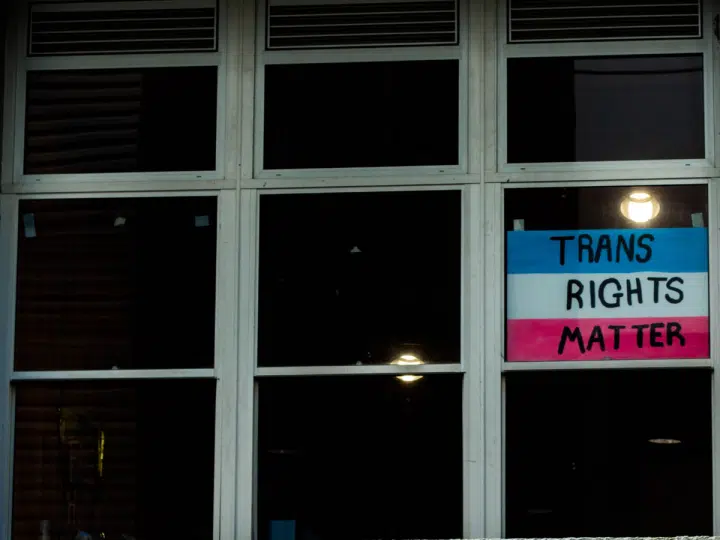

The Equality and Human Rights Commission’s (EHRC) transphobic code of practice — which recommends organisations that offer ‘single-sex’ spaces and services should exclude trans people — takes effect today.
The Canary has already highlighted the problems with the code at length. It’s utterly opaque, non-functional, and a blank cheque to harass trans, intersex and gender non-conforming individuals.
This article isn’t about the contents of the code. It’s not even about how this sorry shithole of a queer-bashing country got to this point.
Rather, this article expresses a heartfelt wish: that this code haunts its architects within Labour and outside of, in just the same way that Section 28 haunts the Tories to this day.
EHRC code: ‘Why are the government pushing ahead with this?’
MP Nadia Whittome’s early day motion calling on Parliament to disapprove the code received a record 167 signatures. Labour, Lib Dem, SNP, Green, Plaid Cymru, SDLP, Your Party and independent MPs lent their support. Nevertheless, it has now passed its 40 days of ‘scrutiny’ without so much as a vote.
The new code erases the vast majority of steps forward in trans inclusion since the Gender Recognition Act. The government originally passed the 2004 legislation after the European Court of Human Rights ruled that the UK had failed in its human rights obligations by failing to recognise trans people’s genders.
Apparently, the UK is now ignoring that fact.
For that matter, the Gender Recognition Act itself states:
Where a full gender recognition certificate is issued to a person, the person’s gender becomes for all purposes the acquired gender.
That law hasn’t gone anywhere. However, it suddenly grants a “certified sex” rather than a “biological sex”, giving question to what “all purposes” was worth in the first place.
During a June parliamentary debate on the EHRC’s code, Whittome asked and pointed out:
Why are the government pushing ahead with this? Why not instead withdraw the guidance, and legislate to clarify that the Equality Act 2010 was always intended to be trans inclusive? For goodness’ sake, it was passed after the last Labour government passed the Gender Recognition Act in 2004.
‘A legitimate aim’, the EHRC says
The government knows perfectly well its intention to be trans inclusive at the time the Equality Act was written. In fact, it included specific exceptions detailing when (and only when) trans people could be excluded. That is, the exclusion has to be a “proportionate means of achieving a legitimate aim”.
However, limiting or modifying access to, or excluding a trans person from, the separate or single-sex service of the gender in which they present will be unlawful if you cannot show such action is a proportionate means of achieving a legitimate aim. This applies whether or not the person has a Gender Recognition Certificate.
That explanation was from the EHRC’s own website. The same wording remains in the Equality Act. However, the government is now treating the exclusion of trans people as a legitimate aim in and of itself.
If our public institutions hadn’t been captured by transphobic voices, that “legitimate aim” would be decried as the rank discrimination it is. Our left-wing politicians recognised that once, even if their memories have now become conveniently short.
Snivelling cowards
Just four years ago, when he was leader of the opposition in 2022, ex-prime minister Keir Starmer told the Times:
…a woman is a female adult, and in addition to that transwomen are women, and that is not just my view – that is actually the law.
After the Supreme Court ruled the Equality Act didn’t recognise trans people as their lived genders, Starmer then had a lackey state the opposite on his behalf. Asked if the then-PM agreed that trans women were women, they said:
No, the Supreme Court judgment has made clear that when looking at the Equality Act, a woman is a biological woman.
The job of overseeing the EHRC’s code as it comes into force now falls on Andy Burnham. Like his predecessor, he once ridiculed ‘single-sex’ restrictions on bathrooms. Then, when he wanted to grub for Reform-leaning votes in Makerfield, he suddenly became a supporter of the transphobic code.
Likewise, Women and Equalities Minister Bridget Phillipson once supported trans inclusive spaces. Now, she’s presiding over the wholesale destruction of those spaces. She’s one of the few cabinet members whom Burnham retained in her old role whilst also promoting her to Labour Party chair.
May it f*cking haunt you
This sudden and complete reversal in a nominally left-wing party’s attitude to any minorities rights — this naked political opportunism — should scare anyone. The fact that laws can suddenly be reinterpreted to justify the blanket removal of a minority’s rights is not a sign of a functioning legal system.
Rather, these are signs that none of us are safe, and none of us can trust our society. Trans people once had guarantees that this exact situation could not happen. The Gender Recognition Act and the Equality Act safeguarded them. However, the government has demonstrated that it’s happy to ignore those guarantees.
This is a demonstration of what they’ll do to any minority group, if they can get away with it; if they think it will win them a few dirty votes.
If, by some remote miracle, British society ever becomes trans inclusive again, I hope that the stain of this code never leaves Starmer, Burnham, Phillipson, and all the other ‘left-wing’ MPs who rushed headlong to strip a small, queer minority group of their rights in pursuit of a clap of the back from the transphobic media.
I hope this is what they’re remembered for. This bonfire of trans rights — alongside asylum seekers’ and migrants’ rights, protest rights and others — should obscure any good they may ever think they did. May their names be a byword for hatred, bigotry and spineless cowardice.
In a just world, this would be their legacy. May it f*cking haunt them.
And I’m still going to piss wherever I damn well like.
Featured image via Chantelle Whitehead/ Pexels
By Grace

It’s a tale as old as time – when Britain’s economy tanks, politicians look for a villain to blame.
On this occasion, new chancellor John Healey has chosen supermarkets and petrol stations. Writing in the Sunday Telegraph, Healey warned retailers against taking customers ‘for a ride’ as the conflict in the Middle East drives up energy prices. State regulators, he reminded us, stand ready to clamp down on any ‘price gouging’ at the till or the pump.
Healey is not the first politician to jump on this bandwagon. His predecessor, Rachel Reeves, did exactly the same back in May, when she called for supermarkets to cap their prices.
In this latest anti-supermarket wheeze, Healey admits there is no evidence that this is even actually happening. ‘There has been no significant evidence of so-called price gouging’, he writes, before proceeding to warn companies against doing precisely that.
This is a revealing contradiction. ‘Price gouging’ has become a popular phrase on the left as it pits company against consumer: the former exploiting national crises to the detriment of the latter.
Supermarkets have become one of Britain’s favourite corporate villains. Tesco has made several billion pounds in annual profit in recent years. This would appear to be a large sum, but only if you ignore the fact that Tesco also turns over about £70 billion a year. The British public has become remarkably bad at distinguishing the difference between large numbers and large margins. When I pointed this out on X back in May, there was instant outrage.
Britain’s largest supermarkets typically operate on net profits of between two and four per cent. According to Oxford Economics, on a basket of everyday essentials costing a little more than £20, the entire food supply chain – farmers, processors, manufacturers, distributors and supermarkets combined – makes only around 29p profit.
Food retail is, economically speaking, a rather odd industry to accuse of profiteering. It is famously one of the most competitive sectors in the British economy, with different chains offering various deals and offers to tempt customers away from rivals. Aldi and Lidl have spent the past decade forcing incumbents into ever more aggressive price competition, allowing consumers to compare and contrast price differentiation with a few taps on a smartphone screen. If there was real gangster capitalism in Britain’s supermarkets, the grocery sector would look vastly different than it does today.
Petrol stations also face constraints. Local BP and Shell garages do not purchase oil directly from the Strait of Hormuz. The operating companies of forecourts buy refined fuel whose wholesale price fluctuates daily on international markets. When conflicts around the world erupt, this can disrupt supply and wreak havoc with prices.
It is also important to recognise that half of what is paid when filling your car up goes directly into the government’s coffers. Fuel duty remains 52.95p per litre (including the 5p freeze) and then a 20 per cent VAT rate is applied on the final price. If the government truly wanted to reduce the price of petrol and diesel, it would look at ways of reducing the very taxes that make the commodity expensive in the first place.
What’s more, rising prices have their uses. They can encourage consumers to economise and suppliers to bring additional supply to market. The allocation of scarce resources is something that politicians frequently believe they can do better than the market. During previous energy shocks, if there had been an attempt to suppress fuel prices, consumers would have likely experienced long queues or, worse, closed forecourts.
Today, spending on food amounts to barely 11 per cent of household expenditure. This has fallen from about a quarter since the late 1970s. Decades of innovation and intense price competition have enabled food to be far more affordable, dramatically reducing the costs of feeding the nation.
Businesses, of course, should not be immune from scrutiny. Regulators should have the right to intervene if companies collude or deliberately mislead consumers. But existing competition law already provides regulators with the tools to do so.
Politicians understandably dislike telling voters that everyday items are becoming more expensive. They do not wish to mention the high levels of tax or minimum-wage rates that companies face. It is far easier to claim that businesses are making exorbitant profits at their expense. In reality, keeping shelves stocked and pumps full through global disruptions is evidence of an extraordinarily efficient market working almost exactly as it should.
Matthew Bowles is a senior policy researcher at the Prosperity Institute.

Pete Buttigieg shares his theory for how Democrats can win over cherry ice cream
 lead image


The Irish government has chosen not to purchase an ‘Israeli’ Elbit Systems navigation component for its new jet, leading various media outlets to speculate the plane may now struggle to land in foggy conditions. It is not actually clear there is in fact any loss of function on the plane.
Even if there was, however, the main points here should be that Micheál Martin’s government have for once done the right thing in relation to the genocidal settler-colony, and that sometimes boycotting requires sacrifice.
For its part, the Irish Department of Defence has responded to media claims that the jet is lacking without the Elbit component:
While it would not be appropriate to provide further comments on the specification of the aircraft it can be confirmed that there are no current limits on the operational capability of the aircraft.
Ireland rejected tech from Elbit Systems, key contributor to the Gaza holocaust
The matter relates to the government’s purchase of a “€53m Dassault Falcon 6X aircraft”. According to the Journal, the aircraft can:
…carry out a range of operations, including long distance air ambulance missions, but is generally used for transport of ministers and the Taoiseach.
The technology in question is the FalconEye system, which the French Dassault Aviation say was “developed in partnership with Elbit Systems”. According to the Boycott, Divestment and Sanctions (BDS) campaign, which calls for economic action against the apartheid entity squatting on historic Palestine, Elbit:
…provides 80% of the weapons and equipment for Israel’s land forces and 85% of the combat drones used by the airforce.
They have therefore been absolutely integral to the Gaza holocaust. It is hard to think of a worse company on Earth one could give money to.
The marketing guff from Dassault claims that the FalconEye tech provides an:
…unprecedented level of situational awareness for flight crews.
They say it enables pilots to navigate smoothly in various “severe weather conditions”. What they don’t say is whether this sort of tech is useful for dropping bombs on Palestinian children in similar inclement weather. They — and the media — also don’t mention that similar tech is made by a range of other companies. That means there is no necessity to purchase from Elbit.
It must be said that many of these other companies, such as Thales and BAE Systems, have also participated in the attempted extermination of the Palestinian people. This reveals the staggering level of assistance so-called ‘Israel’ has received from Western nations.
Even Dassault, the makers of the jet, have a long-standing economic relationship with the Zionist entity. A subsidiary of the Dassault Group, Dassault Systèmes, operates offices in ‘Israel’. Last year, the Irish government bought four helicopters containing ‘Israeli’ technology. Boycotting Elbit is a start, but long-term the Irish government must start detaching itself entirely from companies aiding the ‘Israeli’ apartheid and genocide economy.
All ‘Israeli’ tech is a grave risk
Extraordinarily, the Journal article makes no reference to Elbit’s crimes. Instead, they appear more concerned with the Taoiseach occasionally navigating some cloud than they do about funding the continued slaughter of children. Aside from the obscenity of pumping money into Elbit and the ‘Israeli’ government’s coffers, there are additional concerns about use of any tech from the illegitimate pseudo-state.
Firstly, the Zionist entity is notorious for spying on even its allies. One famous case is Jonathan Pollard, a US Navy intelligence analyst who stole info from the US military and passed it to ‘Israelis’. Additionally, the Guardian reported in 2025 that:
Israeli operatives are conducting widespread surveillance of US forces and allies stationed at a new US base in [‘Israel’s’] south, according to sources briefed on disputes about open and covert recordings of meetings and discussions.
Given the land thieves of Tel Aviv view Ireland with hostility due to its few tentative steps against the criminal regime, there is every reason to believe they would view tech attached to a government jet as an ideal surveillance opportunity. In the worst case scenario, it’s not impossible to imagine them using FalconEye as a proxy to sabotage the jet entirely.
If the Irish government did sacrifice some functionality when scrapping the Elbit tech, they still made the right decision. The same small sacrifices are necessary from all of us if we want to do our bit to cripple the ‘Israeli’ economy, as part of the same sort of boycott campaign that did in apartheid South Africa.
That means never buying ‘Israeli’ fruit and veg, and avoiding companies listed by the BDS movement. A small inconvenience for us, but cumulatively, it can contribute hugely to the demise of the genocidal land theft project of so-called ‘Israel’.
Featured image via the Canary

The 2 Most Misunderstood 10%+ Yielding Income Investments In The Market Today

Latest Yorkshire BUSINESSiQ magazine features best of region

Green Leader Zack Polanski Says He Helped ‘Topple’ Keir Starmer

Renter of Home in Anne Heche Crash Denies Settlement With Son

No Jackpot Winner as $257 Million Prize Rolls Over to $269 Million Monday Draw

Weekend Open Thread: Staud – Corporette.com

The world’s financial system is entering its final days, mirroring 1923 Germany’s hyperinflation

FINAL WARNING to ALL Crypto Holders!! (I will delete this in 24 hours)

Why Everything Is So Expensive – Financial Expert Patrick Boyle Explains
-

 Business7 days ago
Why Trees Belong on the Risk Register
-

 Fashion5 days ago
Weekend Open Thread: Wit & Wisdom
-

 Politics5 days ago
Meta enters AI-training agreement with far-right ‘propaganda rag’ Newsmax
-

 Politics7 days ago
Reform UK betrays West Mids residents by running from party pledges
-

 Politics3 days ago
Zack Polanski: an incitement to murder Nigel Farage?
-

 Crypto World4 days ago
MicroStrategy Post-Earnings CLARITY Act Push Could Add New Catalyst for Its Stock
-

 Crypto World4 days ago
XRP Ledger v3.3.0 brings five institutional features
-

 News Videos6 days ago
Bitcoin Enters the 3rd Stage of the Bear Market
-

 Politics6 days ago
Luke Littler’s dominance sparks GOAT debate
-

 Sports6 days ago
Seema Kaliramna Wins Discus Throw Bronze, Takes India’s CWG Medals Tally To 17
-

 Crypto World5 days ago
New York sues Kalshi over prediction market gambling
-

 Crypto World3 days ago
Crypto PAC spending tops $2M in Michigan House race
-

 Business5 days ago
Trump Announces Hamas Disarmament Agreement as Iran Strikes Kuwait Air Base and US Attacks Pause Overnight
-

 Tech3 days ago
ESET tracks rise in malicious AI skills and adaptable malware
-

 Business2 days ago
DTCR: Deleveraging And A Hedge Fund Collapse Point To A Possible AI Bottom
-

 Tech5 days ago
Gemini Spark can now use Chrome logins and saved passwords to run errands on your behalf
-

 Tech5 days ago
Building A Reproduction PlayStation Motherboard
-
 Crypto World5 days ago
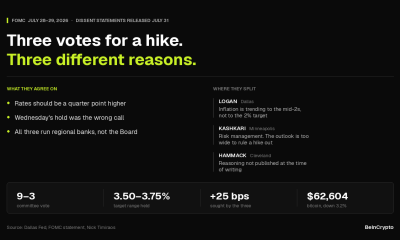
3 Fed Officials Just Explained Their Rate Hike Vote: Is Inflation Winning?
-

 NewsBeat6 days ago
Four people die trying to cross Channel in small boats
-

 Sports4 days ago
France Cricket implodes: letters hidden in a drawer and a board at war
You must be logged in to post a comment Login