
Politics
The myth of supermarket ‘price gouging’


It’s a tale as old as time – when Britain’s economy tanks, politicians look for a villain to blame.
On this occasion, new chancellor John Healey has chosen supermarkets and petrol stations. Writing in the Sunday Telegraph, Healey warned retailers against taking customers ‘for a ride’ as the conflict in the Middle East drives up energy prices. State regulators, he reminded us, stand ready to clamp down on any ‘price gouging’ at the till or the pump.
Healey is not the first politician to jump on this bandwagon. His predecessor, Rachel Reeves, did exactly the same back in May, when she called for supermarkets to cap their prices.
In this latest anti-supermarket wheeze, Healey admits there is no evidence that this is even actually happening. ‘There has been no significant evidence of so-called price gouging’, he writes, before proceeding to warn companies against doing precisely that.
This is a revealing contradiction. ‘Price gouging’ has become a popular phrase on the left as it pits company against consumer: the former exploiting national crises to the detriment of the latter.
Supermarkets have become one of Britain’s favourite corporate villains. Tesco has made several billion pounds in annual profit in recent years. This would appear to be a large sum, but only if you ignore the fact that Tesco also turns over about £70 billion a year. The British public has become remarkably bad at distinguishing the difference between large numbers and large margins. When I pointed this out on X back in May, there was instant outrage.
Britain’s largest supermarkets typically operate on net profits of between two and four per cent. According to Oxford Economics, on a basket of everyday essentials costing a little more than £20, the entire food supply chain – farmers, processors, manufacturers, distributors and supermarkets combined – makes only around 29p profit.
Food retail is, economically speaking, a rather odd industry to accuse of profiteering. It is famously one of the most competitive sectors in the British economy, with different chains offering various deals and offers to tempt customers away from rivals. Aldi and Lidl have spent the past decade forcing incumbents into ever more aggressive price competition, allowing consumers to compare and contrast price differentiation with a few taps on a smartphone screen. If there was real gangster capitalism in Britain’s supermarkets, the grocery sector would look vastly different than it does today.
Petrol stations also face constraints. Local BP and Shell garages do not purchase oil directly from the Strait of Hormuz. The operating companies of forecourts buy refined fuel whose wholesale price fluctuates daily on international markets. When conflicts around the world erupt, this can disrupt supply and wreak havoc with prices.
It is also important to recognise that half of what is paid when filling your car up goes directly into the government’s coffers. Fuel duty remains 52.95p per litre (including the 5p freeze) and then a 20 per cent VAT rate is applied on the final price. If the government truly wanted to reduce the price of petrol and diesel, it would look at ways of reducing the very taxes that make the commodity expensive in the first place.
What’s more, rising prices have their uses. They can encourage consumers to economise and suppliers to bring additional supply to market. The allocation of scarce resources is something that politicians frequently believe they can do better than the market. During previous energy shocks, if there had been an attempt to suppress fuel prices, consumers would have likely experienced long queues or, worse, closed forecourts.
Today, spending on food amounts to barely 11 per cent of household expenditure. This has fallen from about a quarter since the late 1970s. Decades of innovation and intense price competition have enabled food to be far more affordable, dramatically reducing the costs of feeding the nation.
Businesses, of course, should not be immune from scrutiny. Regulators should have the right to intervene if companies collude or deliberately mislead consumers. But existing competition law already provides regulators with the tools to do so.
Politicians understandably dislike telling voters that everyday items are becoming more expensive. They do not wish to mention the high levels of tax or minimum-wage rates that companies face. It is far easier to claim that businesses are making exorbitant profits at their expense. In reality, keeping shelves stocked and pumps full through global disruptions is evidence of an extraordinarily efficient market working almost exactly as it should.
Matthew Bowles is a senior policy researcher at the Prosperity Institute.

Continue Reading

Pete Buttigieg shares his theory for how Democrats can win over cherry ice cream
 lead image


The Irish government has chosen not to purchase an ‘Israeli’ Elbit Systems navigation component for its new jet, leading various media outlets to speculate the plane may now struggle to land in foggy conditions. It is not actually clear there is in fact any loss of function on the plane.
Even if there was, however, the main points here should be that Micheál Martin’s government have for once done the right thing in relation to the genocidal settler-colony, and that sometimes boycotting requires sacrifice.
For its part, the Irish Department of Defence has responded to media claims that the jet is lacking without the Elbit component:
While it would not be appropriate to provide further comments on the specification of the aircraft it can be confirmed that there are no current limits on the operational capability of the aircraft.
Ireland rejected tech from Elbit Systems, key contributor to the Gaza holocaust
The matter relates to the government’s purchase of a “€53m Dassault Falcon 6X aircraft”. According to the Journal, the aircraft can:
…carry out a range of operations, including long distance air ambulance missions, but is generally used for transport of ministers and the Taoiseach.
The technology in question is the FalconEye system, which the French Dassault Aviation say was “developed in partnership with Elbit Systems”. According to the Boycott, Divestment and Sanctions (BDS) campaign, which calls for economic action against the apartheid entity squatting on historic Palestine, Elbit:
…provides 80% of the weapons and equipment for Israel’s land forces and 85% of the combat drones used by the airforce.
They have therefore been absolutely integral to the Gaza holocaust. It is hard to think of a worse company on Earth one could give money to.
The marketing guff from Dassault claims that the FalconEye tech provides an:
…unprecedented level of situational awareness for flight crews.
They say it enables pilots to navigate smoothly in various “severe weather conditions”. What they don’t say is whether this sort of tech is useful for dropping bombs on Palestinian children in similar inclement weather. They — and the media — also don’t mention that similar tech is made by a range of other companies. That means there is no necessity to purchase from Elbit.
It must be said that many of these other companies, such as Thales and BAE Systems, have also participated in the attempted extermination of the Palestinian people. This reveals the staggering level of assistance so-called ‘Israel’ has received from Western nations.
Even Dassault, the makers of the jet, have a long-standing economic relationship with the Zionist entity. A subsidiary of the Dassault Group, Dassault Systèmes, operates offices in ‘Israel’. Last year, the Irish government bought four helicopters containing ‘Israeli’ technology. Boycotting Elbit is a start, but long-term the Irish government must start detaching itself entirely from companies aiding the ‘Israeli’ apartheid and genocide economy.
All ‘Israeli’ tech is a grave risk
Extraordinarily, the Journal article makes no reference to Elbit’s crimes. Instead, they appear more concerned with the Taoiseach occasionally navigating some cloud than they do about funding the continued slaughter of children. Aside from the obscenity of pumping money into Elbit and the ‘Israeli’ government’s coffers, there are additional concerns about use of any tech from the illegitimate pseudo-state.
Firstly, the Zionist entity is notorious for spying on even its allies. One famous case is Jonathan Pollard, a US Navy intelligence analyst who stole info from the US military and passed it to ‘Israelis’. Additionally, the Guardian reported in 2025 that:
Israeli operatives are conducting widespread surveillance of US forces and allies stationed at a new US base in [‘Israel’s’] south, according to sources briefed on disputes about open and covert recordings of meetings and discussions.
Given the land thieves of Tel Aviv view Ireland with hostility due to its few tentative steps against the criminal regime, there is every reason to believe they would view tech attached to a government jet as an ideal surveillance opportunity. In the worst case scenario, it’s not impossible to imagine them using FalconEye as a proxy to sabotage the jet entirely.
If the Irish government did sacrifice some functionality when scrapping the Elbit tech, they still made the right decision. The same small sacrifices are necessary from all of us if we want to do our bit to cripple the ‘Israeli’ economy, as part of the same sort of boycott campaign that did in apartheid South Africa.
That means never buying ‘Israeli’ fruit and veg, and avoiding companies listed by the BDS movement. A small inconvenience for us, but cumulatively, it can contribute hugely to the demise of the genocidal land theft project of so-called ‘Israel’.
Featured image via the Canary
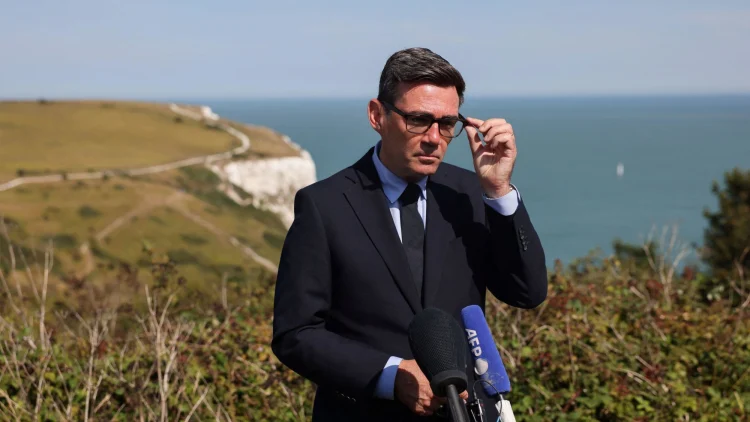

Prime Minister Andy Burnham speaking to the media, August 2, 2026 (PA Images / Alamy)

4 min read
The tone of a new administration is set early.
In a meeting in the 10 Downing Street pillared room just days into the Boris Johnson administration, his new chief of staff Dominic Cummings struck fear into the heart of the new cohort of newly appointed special advisers like me, summoning us for a meeting at precisely 7.55am that Monday morning.
“If you leak, you will be marched from your desk by the head of security at your department, your pass will be taken off you and you will be sacked,” thundered Cummings. “You have no rights.” The leaked words duly appeared in The Times the next day.
With perhaps a tad less directness than we spads became used to from Cummings, the Burnham administration has made clear it wants a “collaborative” government, free from leaks and hostile briefings. But similar consequences will ensue should the rules be broken, as set out in a letter to senior civil servants and ministers jointly authored by First Secretary of State Louise Haigh and Cabinet Secretary Dame Antonia Romeo.
Elements of this letter are both ridiculous and completely unworkable. Most impractically, special advisers, unless media-facing, are banned from speaking to journalists. This belies the entire way that Westminster works and cuts off a very useful source of information flow in both directions. It also indicates Burnham lacks faith in his policy spads.
As a journalist-turned-spad-turned-journalist again, I have been on both sides of the divide. As a media spad, I trusted the policy spads I worked with to speak to journalists responsibly and speak with one voice from our department, and indeed government.
Brilliant policy spads I worked with such as Liam Booth-Smith, who later went on to be Rishi Sunak’s chief of staff, would freely speak to the media, brief them on policies and talk about stories. He would always tell me what he had said, who he had spoken to and why. I trusted him, he trusted me and our Secretary of State trusted us both. He also had far more detailed policy knowledge than I did. I would occasionally ask Jonathan Caine at the Northern Ireland Office, an expert on the relevant policy for decades, to help me brief a journalist, many of whom he had known far longer than I had.
The Burnham policy also fails to acknowledge the day-to-day reality of Westminster. Take Will Straw, the new chief of staff at the Treasury. He was actually an HMT press officer at the start of his career, has run large organisations such as the Remain campaign and The King’s Trust and knows dozens of journalists personally through a two-decades career in public life. Is he simply going to ignore Laura Kuennsberg when he next sees her at a drinks event at the Institute for Engineers?
Getting information conducive to helping the political process is something both media and policy spads have done since the role was set up in the 1960s. There are leaks and there are leaks. Some can be very helpful to an administration. Reinventing the wheel now will not work; it will cause resentment and it undermines the role of policy and parliamentary handling spads. Spads also carry out many briefings that are not known to Cabinet ministers and nor should they be.
When things get tougher down the line for the Burnham administration, leaks and hostile briefings will undoubtedly occur. Their brutality and consequence will be far greater once spads have decided they have nothing to lose.
Trust is fundamental to how a government operates. If you don’t trust the spad, get rid of them. Attempting to gag spads on day one will not work. With trust internally, an administration can at least have a chance of being successful.
Peter Cardwell is a presenter on Talk and the author of The Secret Life of Special Advisers, which is about his career in the May and Johnson administrations working in four departments for four Secretaries of State. His second book, Political Animals, is out in paperback on 1 September


A hard-right think tank and a former military general with links to arms firms have released a report lobbying for nuclear weapons funding.
The report, fronted by former top general Richard Dannatt, was published by the 878 Institute. The ‘think tank’ subscribes to the same bizarre ‘civilisational’ ideology loved by AI billionaires. Its ‘head of defence’ is a former soldier linked to another reactionary ‘think tank’ — The Henry Jackson Society (HJS).
The 878 Institute published a new report on 1 August titled ‘Britain’s Military Deterrence Gaps’. Among other things, it warns that the UK’s nuclear weapons programme is being ‘hollowed out’.
The foreword was written by former chief of the UK military, General Sir Richard Dannatt. Dannatt was caught lobbying against the proscribed group Palestine Action on behalf of the arms firm Teledyne in 2025.
Weird far-right ideology
878 is motivated by the same civilisational ideology which war firms like Palantir and Helsing have adopted. Here’s what they say on their ‘About’ page:
Our name – from the pivotal year of 878 AD – conveys the urgency of our own era. Britain and its closest allies are facing peril. But through the rediscovery of our culture, making the right choices, and finding the will to face down our philosophical and military adversaries, our shared civilisation will survive and thrive.
Now more than ever, it is incumbent on us all to rediscover and nurture the roots of our shared English-speaking civilisation in order to defend it.
In 878 AD, a key battle took place between Anglo-Saxons and Vikings. The name of the organisation appears to be a reference to those events.
The ‘About’ page continues:
At 878, we are renewing our Judeo-Christian culture and civilisational mission. Future leaders in Britain and America will need to appreciate the deepest roots of our political life and our freedoms.
The organisation says Israel is a vital source of “rejuvenating” knowledge:
Working with scholars in Israel and other closely allied nations, we are rejuvenating knowledge of the origins of our constitutional tradition. We build friendships with our closest civilisational allies to restore both the fabric of our countries and the resolve of our future leadership.
878’s (military) leadership
878’s work on defence appears to be overseen and led by Robert Clark, a former soldier linked to the far-right Henry Jackson Society. In 2024, Clark appeared on GB News, arguing that the British military had gone ‘woke’ on recruiting:
As a white male, I am well aware that the Army no longer actively tries to recruit men like me.
A 2025 government report states over 96% of officers and over 86% of non-commissioned ranks in the UK military are white.
Clark’s Linkedin account says he has worked for various US and UK think tanks. The site lists him as a former “defence fellow” and “research assistant” at HJS. You also can read our work on HJS’s link to Israel, the US far-right and the Nigel Farage-led Reform UK party.
The think tank names ex-Tory MP Jacob Rees-Mogg as a senior leadership figure.
Far from being a normal think tank trying to shape policy for public good, 878 Institute seems to be part of a hawkish and reactionary international network closely linked to arms firms, Trumpism and the settler-colonial state of Israel.
Featured image via the Canary
By Joe Glenton


A ‘rival’ World Cup could become the latest weapon against Gianni Infantino. UEFA and its allies are reportedly considering the idea as part of a wider challenge to FIFA’s leadership and direction.
According to the Times, UEFA, the Asian Football Confederation and CONCACAF are weighing a series of measures to pressure FIFA. These include reviving the “World Nations League” concept as leverage in their dispute with Infantino.
The proposal wouldn’t immediately create a rival to FIFA’s flagship tournament. Moreover, there is no indication that a launch decision has been made. But its revival shows how far opposition to Infantino has escalated. Critics are now willing to challenge FIFA’s control over the world of football.
Challenging FIFA’s World Cup dominance
The “World Nations League” was first proposed in 2017 as a new competition featuring leading national teams. According to The Times, the idea could be revisited if efforts to change FIFA’s leadership fail.
A competing tournament would strike at the centre of FIFA’s power. The World Cup is not only the organisation’s most prestigious event, but also the foundation of its commercial strength and global influence.
The possibility of a rival competition shows that the dispute has moved beyond individual decisions. In fact, it has become a wider battle over who controls the future of international football.
Inside FIFA, Infantino rivals close in
The threat of a rival tournament is not the only pressure facing Infantino.
According to the Times, critics within FIFA are discussing boycotting Council and committee meetings and refusing to approve decisions. These moves could create political deadlock inside the organisation.
Such action would intensify pressure on Infantino ahead of the 2027 presidential election. It would also deepen the divide between FIFA’s leadership and some of football’s most powerful governing bodies.
UEFA, the Asian Football Confederation and CONCACAF represent major centres of football’s sporting and commercial influence, giving their opposition significant weight.
The dispute that sparked the showdown
The current confrontation began with FIFA Forward Enterprises (FFE), a proposal to sell a stake in the World Cup’s commercial rights to private investors.
The plan triggered opposition from national and continental federations, forcing Infantino to abandon it. However, the fallout has since grown into a broader dispute over FIFA’s direction and decision-making.
According to the Times, Infantino has secured only 15 declarations of support from FIFA’s 211 member associations. With the 2027 election approaching, the fight is no longer only about one commercial proposal. Instead, it is about whether FIFA can maintain control over the future of world football.
Featured image via the Canary
By Alaa Shamali
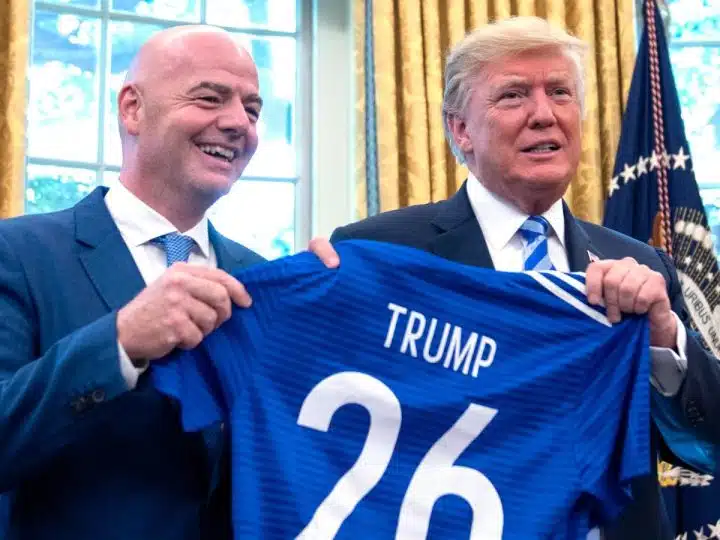

Gianni Infantino’s FIFA presidency is facing perhaps its most serious challenge since he took charge in 2016. Federations are turning against him, with former allies withdrawing support, UEFA openly challenging his decisions and critics questioning the way he runs FIFA.
The immediate trigger has been the fallout over plans to privatise part of the World Cup’s commercial rights. What began as a dispute over a business proposal has grown into a wider challenge to Infantino’s authority and his bid to secure a fourth term as FIFA president.
Until recently, Infantino’s path to another term appeared secure. However, the alliances that sustained his power are now beginning to unravel.
European support begins to collapse
The first major setback came from the Football Association of Wales, which withdrew its support for Infantino’s candidacy, citing:
recent failures in good governance, processes, leadership, values, stakeholder management, communications and sound judgement have led us to a position where Mr Infantino has lost the confidence of the FAW to remain at the helm of world football.
The association said it no longer had confidence in Infantino’s ability to lead world football.
Wales’ decision could have wider consequences. The Times reported that the English Football Association is also preparing to withdraw its letter of support for Infantino, a move that could encourage other federations to reconsider their backing.
UEFA has emerged as one of Infantino’s strongest critics, rejecting the proposed commercial plan and threatening legal action to secure the release of documents relating to the project. The dispute has now moved beyond a disagreement over FIFA’s finances and become a broader confrontation over how the organisation is run.
CONCACAF has also criticised FIFA’s approach, arguing that the reversal of the plan exposed deeper problems in the federation’s decision-making process.
Infantino’s Trump-card
The struggle over FIFA’s future has also taken on a political dimension.
French President Emmanuel Macron has intervened in support of UEFA’s opposition to the commercial plan, while reports suggest Infantino has sought support from US President Donald Trump’s administration as he attempts to contain the fallout.
The developments highlight the wider influence attached to the FIFA presidency. The role extends far beyond football, with the World Cup tied to major commercial interests, investment opportunities and international political relationships.
Rumbles of dissent inside FIFA
The pressure on Infantino is not limited to external opposition. Discontent has also grown within FIFA itself.
According to current and former officials, dissatisfaction has increased over Infantino’s management of the organisation. One executive said many staff members feel increasingly removed from decision-making, with their role reduced to implementing decisions made at the top.
Some employees believe FIFA’s culture has changed significantly, with commercial priorities taking precedence over the wider interests of football. The use of private jets and the lifestyle of senior officials have also drawn internal criticism over the image FIFA presents to supporters.
The unrest has coincided with the departure of several senior figures, including Infantino’s chief adviser Carlos Cordero and Chief Operating Officer Kevin Lamour. Their resignations have added to concerns about instability within FIFA’s leadership.
Infantino’s World Cup commercialisation push hits a brick wall
Germany joins the critics
Germany has become the latest major football nation to raise concerns over Infantino’s leadership.
Andreas Rittig, managing director of the German Football Association, said relations with FIFA had reached an “impasse” and described the situation as an “insurmountable loss of trust”.
Rittig criticised FIFA’s decision-making process, saying key decisions were being made behind “closed doors” and without sufficient transparency. He also warned against the growing influence of financiers and business figures around Infantino, arguing that commercial interests should not become the main driver of world football’s future.
Could this be the end for Infantino?
Infantino’s fourth-term bid, which appeared almost inevitable only months ago, is now facing its biggest challenge.
With federations withdrawing support, UEFA challenging his decisions and criticism growing within FIFA, the contest for the organisation’s future has already begun.
The next FIFA presidential election will not take place until March 2027 in Rabat, but the coming months will determine whether Infantino can rebuild his support base — or whether the opposition gathering around him becomes a decisive challenge to his leadership.
Featured image via the Canary
By Alaa Shamali


Illegal Israeli settlers have intensified their campaign of harassment, intimidation and terror across the occupied West Bank. Recent episodes mark a significant ratcheting up of attacks against Palestinian civilians. Supported and protected by Israeli occupation forces (IOF), settlers have been assaulting residents, seizing land, and vandalising or torching property.
Settlers desecrate Palestinian cemetery
In Tal, southwest of Nablus, armed settlers returned a week after the deadly shooting that killed four Palestinians and two “Israelis”. They raided the village and its surroundings several times.
They were accompanied by IOF soldiers who arrested several residents. In the same week, settlers vandalised a Palestinian cemetery in al Juneid, while the military fired live ammunition and tear gas at the unarmed residents. A 32-year-old man was evacuated to hospital after being shot in the abdomen.
Settlers terrorise village, open fire on children
In al Mughayyir village, 10-year-old Salim Abu Rahmah was shot in the shoulder by a settler inside his home. After the shooting, the military raided the village and fired repeated volleys of tear gas.
One day later, settlers attacked the passengers in a car travelling between Abu Falah and al Mughayyir. They assaulted the three occupants with clubs and pepper spray before ramming the vehicle with a government-supplied all-terrain vehicle.
There are now 10 outposts surrounding the village, some situated only a few hundred metres from the homes of Palestinians.
Settlers ramp up land grabs
In Beitillu, Northwest of Ramallah, settlers assaulted Mahmoud Radwan and his wife Nahil Yousef, as they worked on their land.
In the Eastern edge of the village of Idhna, West of Hebron, settlers armed with clubs, handguns and rifles descended from a nearby outpost, and attacked a Palestinian home. The settlers targeted the occupants, and targeted a car parked in the driveway. Soldiers arrived at the scene, and fired tear gas at residents who had arrived to help the family.
Destroying Palestinian livelihoods
Just two months before the olive harvest, settlers have been setting fire to olive groves in Burin, South of Nablus. They have then obstructed Palestinian Civil Defense crews attempting to reach the burning trees. The flames devoured olive groves tended by families for generations. Cultivated for thousands of years, the Palestinian olive tree has become a symbol of resilience and a vital source of income for generations of families.
In Bethlehem, settlers assaulted Yahya ‘Elian in the Abu Njei area southeast of the city, when he was working on his land. He was severely beaten and had pepper spray directed into his face, causing breathing difficulties. Residents in this area have been repeatedly attacked, and their vehicles and property vandalised.
These are just a few of the settler attacks which have taken place recently against Palestinians. Every day, across the West Bank and East Jerusalem illegal settlers, accompanied by the IOF, use intimidation and violence against Palestinians. Due to the current climate of impunity, attacks are increasing in frequency and violence.
Commenting on the situation, the UN reported in July 2026 that:
Fatalities linked to settler attacks in 2026 have already surpassed the total recorded during all of 2025, with 18 Palestinians killed as of 20 July compared with 17 throughout 2025.
The escalation in the West Bank is part of a wider assault on Palestinians across the occupied territories. In Gaza, where a so-called ceasefire is supposedly in place, 152 Palestinians were killed in July alone, according to the Ministry of Health — the highest monthly death toll so far in 2026.
But Palestinians remain rooted in their land. After every attack, every displacement and every attempt to drive them away, they remain.
The occupation has failed.
Featured image via the Canary
By Charlie Jaay
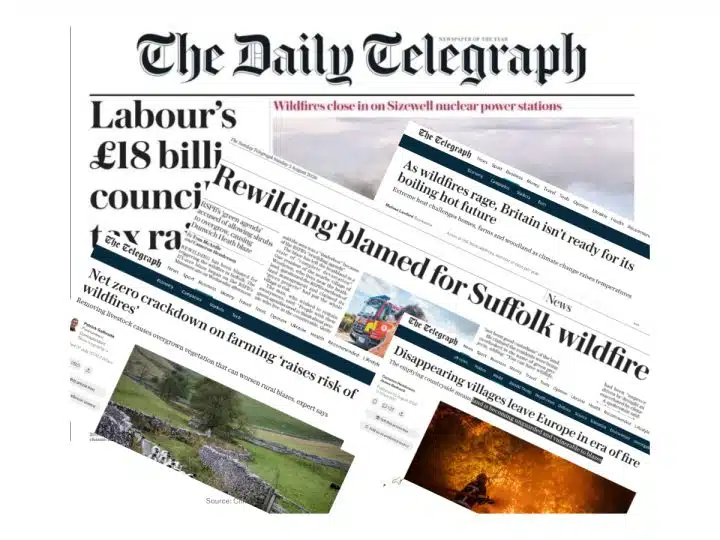

Right-wing newspapers are blaming Europe’s blazing wildfires on anything but climate change and its human-made causes. As almost every scientist (>99%) agrees, fossil fuels primarily cause climate change.
But that doesn’t stop the likes of the Wall Street Journal (WSJ), Times, Telegraph, or Daily Mail from deflecting beyond parody. (As a reminder, Rupert Murdoch’s News Corp owns the first two of these.)
Europe is burning, badly
As wildfires spread across Europe, hundreds of thousands are evacuating homes. We’re on track to see 500,000 hectares burned within weeks. The fires have killed at least 32 people, but the heat is the real killer.
In Britain, some 2,700 died early from excess heat. The heat has also created drought conditions, dry forests and critical pre-fire vegetation loss. This will likely see some over 20 million tonnes of CO2 pumped into the atmosphere. It’s been called the “worst wildfire year on record” for the EU, but not by the Murdoch press.
Climate change missing from most UK media reports on June heatwave
Murdoch press shifts the blame on climate change
Dr Simon Evans at Carbon Brief won the Press Gazette‘s Energy and Environment Journalist of the Year award in 2022. His work exposes the corporate press’s role in facilitating climate breakdown. More recently, he has highlighted how right-wing media are shifting attention and blame away from fossil fuels.
Evans highlights how the WSJ ran a dramatic front-page recently, depicting the horrific scenes in Europe. Meanwhile, however, its six-figure-salaried editorial board ran a psy-op around the same time, titled:
How green policies fuel fires in Europe
Its reasoning for the latter article? Simply that:
Burned areas are disproportionately nature-protected lands.
Their answer to nature-destroying wildfires, apparently, is to rail against protecting nature in the first place. As if that’s somehow better. How are we to make sense of such an absurd position?
Evans highlights the Times as another example, with a recent front page reporting on a wildfire in Suffolk near a nuclear plant. This was joined by a comment article arguing, bizarrely:
Wildfires suggest rewilding needs a rethink … Green enthusiasm for ignoring the old-fashioned thinning and clearing of land does create habitats – and kindling.
Except that we know how grouse moors – playgrounds for the hunting elite – dry and drain peat bogs, which ought to be wet moorland.
Right-wing media will kill us all
Evans continues his analysis with the Daily Telegraph. It ran this front-page story, same as the Times:
Wildfires close in on Sizewell [nuclear plant]
Also in the paper was this article, accurately titled:
As wildfires rage, Britain isn’t ready for its boiling hot future
But the same publication also ran a recent string of fossil fuel agitprop pieces:
Rewilding blamed for Suffolk wildfire …
Net-zero crackdown on farming ‘raises risk of wildfires’ …
Disappearing villages leave Europe in era of fire – The emptying countryside means land is unguarded and becoming vulnerable to blazes
None of these articles takes aim at the root of the problem: human-made climate change and global heating. Nor, of course, do they articulate the cause of that: overwhelmingly, fossil fuel combustion. Instead, they try to paint the solutions to climate change – regrowing nature and cutting emissions – as the problem.
We truly live in a topsy-turvy era, spoon-fed to us by these destructive right-wing rags.
Reality inversion
Next comes the Daily Mail – without which no corporate reality-inversion would be complete. The Mail ran this double-page spread, dramatically (if somewhat goofily) titled:
Evacuate! ‘Out of control’ wildfire triggers holidaymaker exodus amid fears for Sizewell
In typical Mail fashion, the paper also hosted this op-ed in its lead comment slot:
Why the flames of Britain’s wildfires have been fanned by the Green agenda as much as the weather
This was authored by none other than Matt Ridley, described by Global Energy Monitor as a
a coal baron, science writer and AGW denier (lukewarmer variety) on the Academic Advisory Council of the denialist Global Warming Policy Foundation.
Ridley is a landed aristocrat who earns an estimated £4.1 million each year from opencast coal mines on his Blagdon Estate with income guaranteed until 2020.
Polanski slams climate inaction as heatwaves cost us billions
Corporate media vs actual science
Matt ‘King Coal’ Ridley isn’t alone in possessing blatant, conflict-of-interest links to the fossil fuel industry. In fact, almost the entire corporate media world is up to its neck in filthy oil.
Murdoch himself was labelled a “climate villain” for using his mass-media empire to sow climate division and doubts over decades. Naturally, he has investment ties to Genie Energy, which produces oil and shale gas. His Talk Radio aired anti-climate attacks a whopping six times in a day in 2025.
Likewise, GB News owner and bankroller Paul Marshall co-founded a hedge fund firm, Marshall Wace, which has investments in fossil fuel industries. His show frequently hosts climate sceptic voices and has panels led by fossil fuel lobbyists like Jacob Rees-Mogg and Nigel Farage. The former has fossil investments through his Somerset Capital Management; the latter’s Reform PLC is bankrolled by the industry.
Meanwhile, on the other side of the right-wing media bullshit, is hard scientific data. Simon Stiell, the UN’s climate chief, has made clear what science tells us about the actual causes of wildfires:
The science on the cause is unequivocal: global heating, driven by humanity burning colossal amounts of coal, oil and gas, is making protracted heatwaves, severe floods and violent mega-storms more frequent, more intense and more costly.
The awful costs of this climate crisis – both human and economic – are now reaching national emergency levels. What needs to be done is equally clear: leave coal, oil and gas behind faster, scale up renewables and protect people where the impacts are already hitting hardest.
Polanski backs Fire Union as climate-stoked wildfires ravage UK
Featured image via @drsimevans
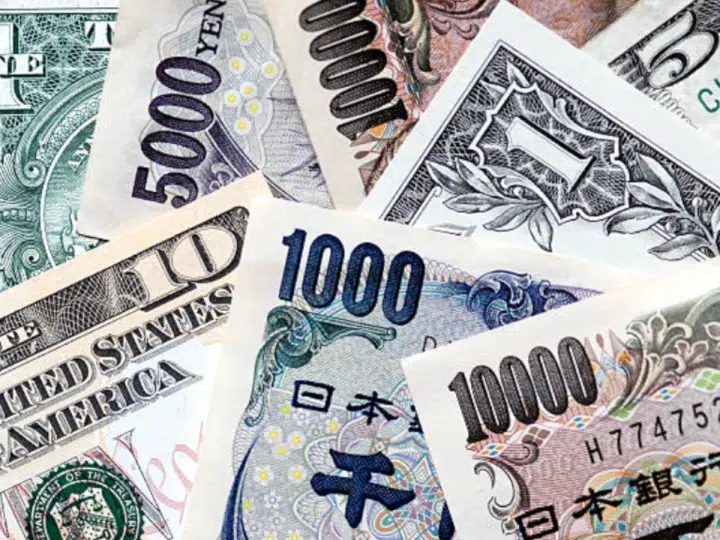

Japan is the largest foreign holder of US Treasuries, and its currency – the yen – is in trouble. The yen recently hit a 40-year low against the US dollar.
The US Treasury had joined Japan’s finance authorities in an intervention last week to prop up the yen.
Japanese investors collectively own about $1 trillion in Treasuries – so preserving them means preserving the world’s biggest buyer of U.S. debt. Because if Tokyo dumps U.S. debt, the U.S.’s $40 trillion borrowing problem just got a whole lot more expensive.
So, the US is basically just avoiding a sell-off in US Treasuries by its vassal state – Japan. Some of this Treasury sell-off has already happened, though.
Japan tied to US
As the Canary reported central banks now hold 27% of their reserve assets in gold, surpassing US dollar Treasuries at 22%, and just a year ago this was 20% gold versus 25% Treasuries, according to the latest report by the European Central Bank.
The Hill said:
The Iran war’s impact on the yen could threaten the stability of the yen-carry trade investment strategy where traders borrow Japanese yen at low interest rates to buy higher-yielding foreign assets, risking sharp market liquidations when the yen strengthens.
Another fallout of the immoral war on Iran that Trump is raging.
Yen – a weak link
Philip Pilkington took to X to write an 11-point post on the U.S. buying of yen, saying Japan is the weakest link in the global dollar system. The Treasury’s intervention, complete with a conveniently “leaked” memo, is just fighting gravity, he said:
1/ It is becoming increasingly clear that the weakest link in the global dollar system is Japan and that the meltdown of the Japanese financial system might cause the unwinding of the whole system.
pic.twitter.com/Yon5co3i1a
— Philip Pilkington (@philippilk) August 3, 2026
He said that, however, Japan can’t raise rates without triggering zombie defaults, which would force Tokyo to dump its $1 trillion in Treasuries and send American borrowing costs soaring to levels that could spell endgame for the dollar system.
3/ Bessent really is fighting gravity here. The markets are convinced that the yen has entered a doom spiral and are heavily short. pic.twitter.com/fRSwwadmfr
— Philip Pilkington (@philippilk) August 3, 2026
The critical minerals angle
In early July, Reuters reported that a shortage of critical minerals was starting to affect the broader Japanese economy. It said:
Since Takaichi enraged Beijing with comments about defending Taiwan in November, Beijing has choked off shipments of certain key minerals to Japan.Japan’s economy took a hit in 2010 during a previous bout of trade restrictions by China, but the effect could be worse this time around now that rare earths have grown in importance in a variety of supply chains, said Takeshi Higashifukasawa, senior economist at Mizuho Research Institute.
China’s primacy in critical minerals and rare earths gives it the ability to deter US bombs and threats. It has used export controls and restrictions to this end – as the Canary reported:
China has created a deterrence against US bombs by building an industrial base and dominate critical minerals. However, US is using coercive economic actions against other states as it tries to counter China. pic.twitter.com/l9CB2FlKQ9
— Canary (@TheCanaryUK) May 28, 2026
Broken promises
Reuters said that the US bond market has:
long had a dark cloud hanging over it: the threat that one of America’s biggest creditors, most likely China or Japan, might liquidate some of their enormous Treasuries holdings, driving up borrowing costs and triggering an economic and market crash.
That cloud just got a little darker.
The sweet irony is that Trump’s campaign promises have been about reducing debt. The con man, of course, didn’t keep his promise.
According to Fortune, in 2016, Trump said he would eliminate the country’s debt, which at the time stood at $19 trillion, “over a period of eight years.” It has more than doubled instead. Last year, he supported the idea of using 20% of the savings from the Elon Musk–led budget-slashing initiative DOGE to pay down the debt. Oh well, Trump lied – must be a day ending in “day.”
Featured image via the Canary
By Nandita Lal


Ecocidal oil companies are raking in so much money that even the most corrupt American president in history – Donald Trump – has to make a public show of disapproval at least.
US-based Chevron reported its largest quarterly net profit ever, at $12.1 billion; ExxonMobil’s $14.5 billion second-quarter income and Shell’s $10.8 billion in net earnings represented their most profitable quarters spince 2022, when they previously benefited from the Russia-Ukraine war.
Trump pipes up
Trump told reporters on Monday:
I don’t like it. Chevron, too much money. ExxonMobil, too much. Too much money.
 Big Oil did spend a lot on getting Trump re-elected. Fossil fuel interests poured $96 million into Donald Trump’s re-election campaign and affiliated political action committees.
You going to stop taking their money then, Trump? Of course not!
Redistribution for the worse
The war on Iran has had a redistributive effect for the worse, according to Isabella Weber, author of the book Anti-Fascist Economics.
Weber’s research has shown that 50% of fossil fuel profits went to the richest 1% of Americans. Meanwhile, the bottom 50% received 1%, while absorbing the full shock of every price hike. And that was only the U.S. The Global South had simply been priced out, locked out, cut off from energy altogether:
The Iran war is a redistribution machine: Big oil profits have shot up to historic highs. Our research shows that 50% of fossil fuel profits go to the richest 1% in the U.S. The rich are the ultimate beneficiaries of the war windfalls. The bottom 50% claim a mere 1% of profits… pic.twitter.com/lh1XJVtEY4
— Isabella M Weber (@IsabellaMWeber) August 1, 2026
She also lashed out at JP Morgan CEO Jamie Dimon’s record quarter and for him saying the banking environment was ‘close to as good as it gets.’
War kills.
War makes life unaffordable for the many.
But war is great for profits.
“Profits accounted for 13.9% of US economic output in the first quarter, the highest share recorded.”
JPMorgan CEO Dimon said the environment was “getting close to as good as it gets”. pic.twitter.com/MT4phbFB9J
— Isabella M Weber (@IsabellaMWeber) August 3, 2026
The banking environment sure is great, isn’t it, Dimon? Never mind the genocide and ecocide that paved the way.
Corporate America’s profit frenzy
The Financial Times reported that US companies are off to a “blistering start in second-quarter earnings season, reporting double-digit profit growth despite higher energy costs, elevated interest rates and cautious spending by consumers.”
America’s biggest companies report ‘rock solid’ profits as consumers face higher costs https://t.co/2GPbec4Z3F
— Financial Times (@FT) August 2, 2026
S&P 500 earnings are on track for 47.4% year-on-year growth, their strongest quarter in five years.
Defence companies and tech companies are also cashing in, the FT said. Lockheed, General Dynamics, and Raytheon are all reporting higher profits as the US shifts to a “war footing.”
Google’s net income quadrupled to $112 billion, thanks to a little help from its SpaceX investment, just casual billions. Amazon’s profits more than tripled.
As Weber said:
War kills. War makes life unaffordable for the many. But war is great for profits.
Featured image via the Canary
By The Canary

NewsBeat3 minutes ago
Perez Hilton rushed to hospital after police swarm his Miami home over distressing knife livestream pulled from TikTok

Business4 minutes ago
Buc-ee’s sues Ohio mini mart over beaver logo trademark infringement claims

Crypto World4 minutes ago
Bitcoin may gain if AI bubble bursts, Hayes says


-

 Business6 days ago
Why Trees Belong on the Risk Register
-

 Fashion4 days ago
Weekend Open Thread: Wit & Wisdom
-

 Politics4 days ago
Meta enters AI-training agreement with far-right ‘propaganda rag’ Newsmax
-

 Politics7 days ago
Reform UK betrays West Mids residents by running from party pledges
-

 Crypto World4 days ago
MicroStrategy Post-Earnings CLARITY Act Push Could Add New Catalyst for Its Stock
-

 Politics2 days ago
Zack Polanski: an incitement to murder Nigel Farage?
-

 Business7 days ago
Major shareholder moves on Canyon
-

 Crypto World4 days ago
XRP Ledger v3.3.0 brings five institutional features
-

 News Videos6 days ago
Bitcoin Enters the 3rd Stage of the Bear Market
-

 Politics5 days ago
Luke Littler’s dominance sparks GOAT debate
-

 Sports5 days ago
Seema Kaliramna Wins Discus Throw Bronze, Takes India’s CWG Medals Tally To 17
-

 Crypto World4 days ago
New York sues Kalshi over prediction market gambling
-

 Crypto World3 days ago
Crypto PAC spending tops $2M in Michigan House race
-

 Business5 days ago
Trump Announces Hamas Disarmament Agreement as Iran Strikes Kuwait Air Base and US Attacks Pause Overnight
-

 Tech7 days ago
Gemini can now summarize the messiest comment threads in Google Docs
-

 Tech3 days ago
ESET tracks rise in malicious AI skills and adaptable malware
-

 Business2 days ago
DTCR: Deleveraging And A Hedge Fund Collapse Point To A Possible AI Bottom
-

 Tech5 days ago
Building A Reproduction PlayStation Motherboard
-

 NewsBeat6 days ago
Four people die trying to cross Channel in small boats
-

 Tech5 days ago
Gemini Spark can now use Chrome logins and saved passwords to run errands on your behalf
You must be logged in to post a comment Login