
Politics
Trump’s Arab American allies in Michigan are jumping ship. Mike Rogers could pay the price.



Four days before the 2024 election, Donald Trump declared in Dearborn, Michigan that “the Muslim population” is “liking Trump.” On Election Day, the state’s Arab Americans helped deliver Trump a victory.
Now, they want nothing to do with him — and are souring on the GOP overall.
Many Detroit-area Arab Americans, who swung hard to Trump over the war in Gaza and cost-of-living issues, are now saying they’re fed up with the ongoing war in Iran and slow peace process in Gaza. It’s a shift that could have direct consequences on the battle for Senate control, with former Michigan Rep. Mike Rogers fighting to hold onto Trump’s 2024 gains against Democrat Abdul El-Sayed, a Muslim whose parents are Egyptian immigrants.
Trump’s perceived broken promises — exacerbated by GOP attacks against El-Sayed that some see as Islamophobic and racist — are pushing these voters out of reach for Rogers.
“[Trump] promised to make America great again,” said Albert Abbas, who presented a peace prize to Trump during his 2024 Dearborn visit. “Did he do that? Did he put American interests first? It’s the complete opposite.”
A dip in support from Arab American former Trump voters could hurt Rogers’ path to election in what’s shaping up to be a tough year nationally for the GOP. And it could offset gains he makes in other communities — including with some Jewish voters who are wary of El-Sayed for his harsh criticism of Israel and comments from him and his allies that some see as antisemitic. Both communities matter significantly in close elections, and Michigan has the largest proportion of Arab Americans in the country, with nearly 400,000 living in the state, as well as more than 100,000 Jews.
Michigan Republicans — who, just two years ago, dreamed of building sustainable support among the state’s Arab American population — now see community leaders shifting ranks.
“Once the administration got into the White House, everything we were told kind of flip-flopped,” said Hassan Nehme, who served as the Michigan Republican Party’s vice chair during the 2024 cycle and helped lead outreach to the Arab American community. “We lost all traction. Republicans are kind of dead in the water in the area right now.”
Dearborn-based Imam Husham Al-Husainy backed Trump in 2024 and was slated to offer a benediction at the inauguration but was removed from the program after complaints from pro-Israel conservatives. He said he now backs El-Sayed because Trump recanted on his promise for “no new wars.”
Amer Ghalib, a former Democratic mayor of Muslim-majority Hamtramck, backed Trump in 2024, and was later nominated by Trump to serve as ambassador to Kuwait, though he didn’t get confirmed in the face of bipartisan concerns about a history of allegedly antisemitic remarks. He said Republicans “should be more concerned about losing the long-term trust of the Arab American community than about losing the gains they made in 2024.”
“There is a tremendous work that needs to be done … to address people’s concerns and regain their trust,” Ghalib said.
And Faye Nemer, who leads the Dearborn-based Middle Eastern and North African American Chamber of Commerce, said the midterms will mark a “change in sentiment” in her community toward Republicans.
“Many voters, including myself, are now asking whether the policy promises we received bear any resemblance to the reality that we’re seeing on the ground,” said Nemer.
Rogers has not shied away from branding his opponent as a Muslim extremist. He’s hammered El-Sayed for campaigning with Hasan Piker, a prominent and controversial left-wing influencer who’s drawn accusations of antisemitism, as well as slamming El-Sayed for responding to an attack on a Michigan synagogue earlier this year by condemning it but saying “hurt people hurt people” because members of the attacker’s family had been killed by the Israeli military in Lebanon.
El-Sayed has condemned antisemitism throughout his campaign; in a statement distancing himself from Piker last week, he said “Antisemitism is a scourge, and we need to address it in all its forms”) On Saturday he apologized for his remarks after the synagogue attack,telling a group of Jewish Democrats that he’d “made a mistake” and that “nobody deserves to have their pain trampled on.”
Rogers’ allies have also circulated reports from conservative outlets that seek to link El-Sayed’s father-in-law to the Muslim Brotherhood.
“El-Sayed wants to represent Palestine,” Rogers said at the Michigan GOP convention last week. “I want to represent Michigan.”
Trump has weighed in, too: The week El-Sayed won the Democratic primary, the president told reporters in the Oval Office that the country is seeing “jihadists being elected all over the place.”
The National Republican Senatorial Committee’s first ad of the general election called the Democratic nominee by his full name, Abdulrahman Mohamed El-Sayed.
The NRSC ad will “alienate and distance” potential Arab American supporters, said Nemer.
“I most certainly will not support a candidate that is alienating and vilifying my community,” said Nemer, who met Trump during his 2024 visit to Dearborn. “I was fully prepared to support Mr. Rogers. … But after seeing the direction that he chose to proceed in, that’s given me a lot of pause.”
Nehme, the former state GOP vice chair, said many Arab Americans are drawn to El-Sayed because of his background, even though many are far more socially conservative than the Democratic nominee. “They’re not even really looking at politics anymore,” Nehme said.
During Rogers’ unsuccessful 2024 Senate bid, he acknowledged that his outspoken support for Israel caused some consternation for Muslim voters. That cycle, Trump won Dearborn, a Detroit suburb that is the only Arab-majority city in the U.S., by six points; Rogers ran behind him, losing in the city by two points. It was a significant improvement over 2020, when President Joe Biden and Democratic Sen. Gary Peters each won the city by around 40 points.
Monica Yatooma, who helped the Trump campaign’s outreach to Muslim and Arab American voters in 2024 before launching a failed bid for secretary of state this cycle, said she doubts Republicans can match Trump’s gains in Arab-majority areas in the current environment.
“The only reason [Arab Americans] voted for Trump is because they were voting against [Vice President] Kamala [Harris],” she said. “They weren’t voting for Trump, so they’re not really conservative voters, and there’s no value there for them with Mike Rogers that aligns with their values.”
It is unclear what, if anything, Rogers is doing to reach out to the community. Yatooma and Nehme, both Republicans, said they have seen little outreach from Rogers’ campaign.
“I’m hoping that they pull through and they come out and at least try to address the community,” Nehme said. “But in all actuality, I’m not sure how much good it’s going to do.”
Rogers’ campaign, when asked several questions about his outreach to the Arab American community, said “the Chaldean community has been a strong ally,” referring to a Christian ethnic group with Iraqi heritage whose largest community outside the Middle East resides in the Detroit area. Yatooma, who is Chaldean, said her ethnic community has historically voted for Republicans.
“Mike Rogers welcomes all Michiganders, regardless of faith, socioeconomic status, or background, to our campaign to Get Michigan Working Again,” said Alyssa Brouillet, spokesperson for the Rogers campaign, in a statement. “The same can’t be said about Abdul El-Sayed, who continues to fan the flames of antisemitism, sympathizes with the terrorist attacker who tried to mass murder 140 kids in a Michigan synagogue, and refuses to disavow Hasan Piker, who calls Jews ‘inbred.’”El-Sayed campaign spokesperson Cole Wozniak called attacks invoking El-Sayed’s faith and identity “cheap.”
“Mike Rogers is resorting to cheap attacks to distract from his deep record as a corrupt career politician who has taken millions from Big Pharma,” Wozniak said in a statement. “Michiganders see right through it, and they’re not going to let Mike Rogers distract from the fact he’s spent thirty years in Washington making himself and his billionaire donors richer while selling out working families.”
Without hearing directly from the Rogers campaign or state party leaders, Arab American voters say their community is likely to swing back to the left this election.
Could Rogers “go into Dearborn and have those conversations and fix that?” asked Yatooma. “I think yeah, absolutely. I just don’t know if he’s doing it.”

Now if Ann Widdecombe were still with us, I could expect an email missive from her later on tonight, which would go along the lines of… “I enjoy your Sunday Newsletter but I do NOT want to read about football. Honestly. Spare us!”. Anyway, here goes.
Now admittedly, I was one of the ringleaders in the West Ham campaign to oust Sam Allardyce back in 2015, but I’m not a great fan of calling for a manager to be sacked so early in the season. However, I’ll make an exception for West Ham’s Nuno Espirito Santo.
It’s not unusual for relegated teams to struggle in the first few games, and West Ham have been no exception. They lie in 19th place with only two points from their first three games. The 4-1 victory over Southampton in the Carabao Cup looked as if it would spark our season, but the manager then made eight changes for the match yesterday against Watford. He left out Luis Orford, who has had an outstanding start to the season, to the perplexity of all. Josh Ajaja, a 19-year-old striker who has come up through the youth system and who scored two goals at Southampton, remained an unused substitute at Watford. Unfathomable, in a team which only had three shots all match. He didn’t even get on for a last five minute cameo.
It’s not just the team selection, that is a problem. Just listen or watch his pre-match or post-match interviews. He mutters complete inanities, and it’s the same every time. No wonder he can’t seem to motivate most of the players. He also has a verbal tic, in that whenever he’s interviewed and under pressure he repeats most of his sentences. “We must all work harder. We must all work harder.” “We must concentrate. We must concentrate.” Kill me now.
Players know when a manager is on his way out. He won’t be sacked this week or next, although if we lose our next two home matches against Wolves and Derby, I suppose it’s possible. But unless things change, and change quickly, I can’t believe he will still be there at the end of October.
West Ham has had its problems for years. We had thought when David Sullivan stood aside, that Daniel Kretinsky would take full control and things would be different. Initially they were. He got rid of some of the old senior admin staff and appointed come good new people, but things were then upended by Amanda Staveley trying to buy into the club. This has totally disrupted the summer. We gained £200 million in player sales, yet have only spent £28 million. The rest is being used to stabilise the finances of the club and pay off debt. Good. But the boardroom situation needs to be sorted out before it starts really affecting the rest of the club.
On the bright side, we have a tremendous crop of youth team players coming through. I’ve already mentioned Lewis Orford, but we have left backs Oliver Scarles and Ezra Mayers, centre backs Airidas Olambeckis and Kaelen Casey, as well as attackers Josh Ajala, Preston Fearon and Josh Landers. They all have a bright future.
Returning to the position of the manager, of course, the grass is not always greener on the other side, as we found out when Graham Potter succeeded Julen Lopetegui but Eddie Howe or Kieran McKenna couldn’t be worse. Could they? Come on You Irons!
‘You never get a second chance to make a first impression.’
‘Better to be overdressed than under.’
‘Clothes maketh the man.’
These phrases often cross my mind when putting an outfit together, probably because I heard them so often from my mother. She, like me, believes that clothes matter. Making an effort with your outfit, showing you’ve given some thought to what you’re wearing, how you’ve put it together, what matches, and what doesn’t, shows a level of respect for a situation. And, more importantly, for yourself.
I do wish some of these well-worn phrases would cross the mind of our scruff-in-chief, Andy Burnham. Not only are some of the prime minister’s clothing choices frankly hideous, what’s worse is that it appears to be a deliberate decision. A decision so important that he chose to announce it days before he was due to become prime minister. Far from discussing the myriad of problems Britain faces, Burnham chose to share with the nation that he plans on ditching his suit and tie for the vast majority of his work.
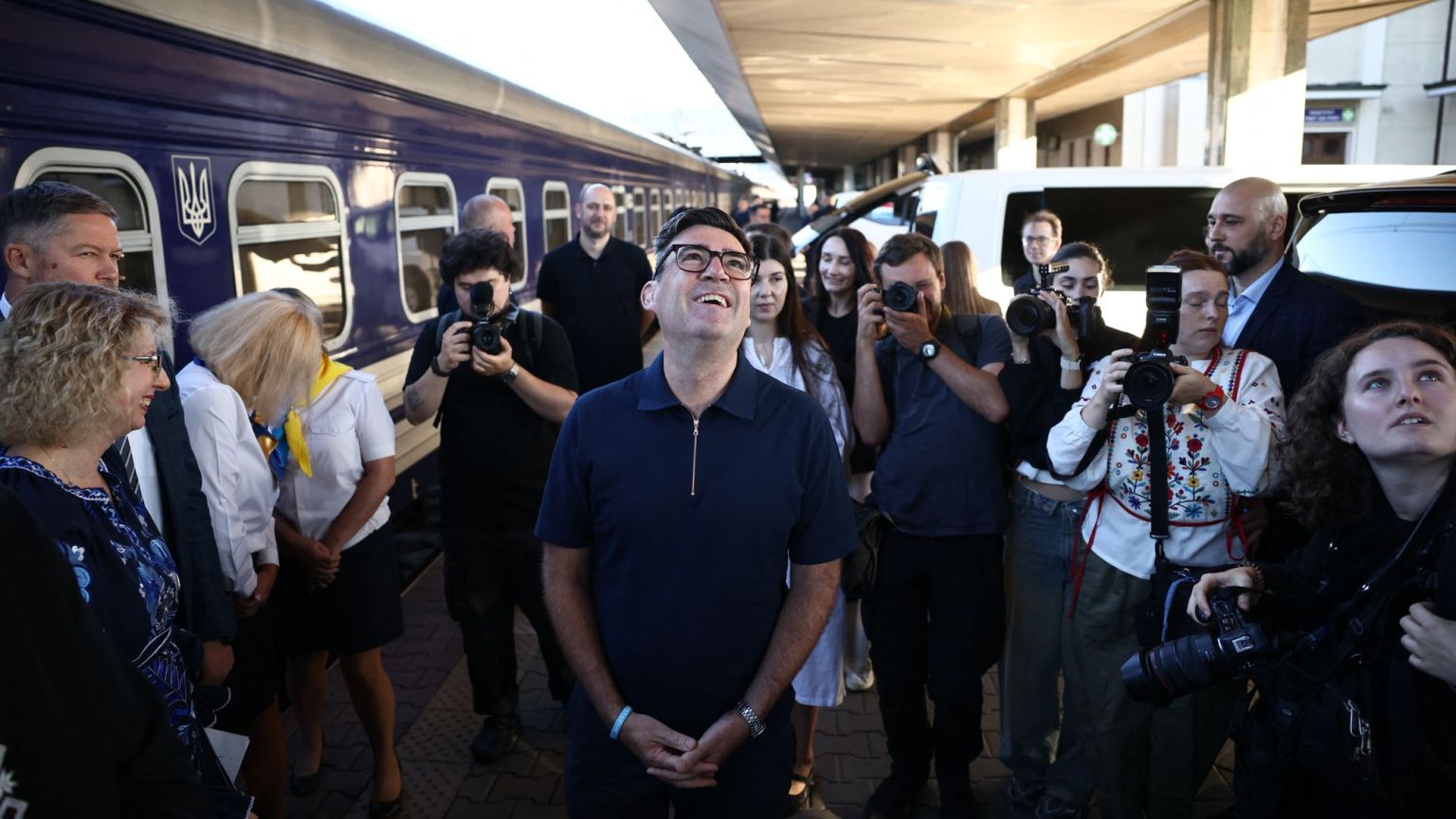
Burnham’s recent arrival in Ukraine showed that his lax dress code has gone too far. Earlier this week, His Majesty’s prime minister disembarked the train in Kyiv wearing a zip-up polo shirt better suited to a night in Wetherspoons than his first introduction to a nation – and an ally – at war. He may have been travelling, but would it have killed him to stick on a shirt and a smart jacket?
Maybe I’ve been radicalised. I often used to broadcast in a smart suit jacket with a shirt and pocket square, without a tie, thinking this was sufficient. But the combination of a partner who refuses to put the bins out without his hair being styled, and a TV colleague who once took me aside and asked why I don’t wear a tie on air, made me realise I was demeaning my job. And, more importantly, myself.
So I now broadcast in a tie. Every time. Why? Because sartorial standards matter. They matter for those on TV. They matter for those in important jobs. And they certainly matter for the man who has one of, if not the, most important jobs in the country.
Does Burnham think he’s cool not to think this way? Does he believe it’ll make him more ‘down’ with the ‘yoof’ vote? Labour believes 16-year-olds deserve the right to vote, so maybe it makes sense that their leader dresses like one?
Burnham isn’t alone in his poor style. Who can forget the hideous sight of Tony Blair in high-waisted jeans in a ‘casual’ meeting with former US president George W Bush?
Or the worst-dressed prime minister – in fact, the worst-dressed man in history – Boris Johnson? In a stained and ill-fitting suit, un-ironed shirt, unkempt hair, Boris often resembled having been dragged through a hedge backwards, forwards and then being beaten by it.
When did our leaders lose their sense of style? Remember Margaret Thatcher? She used to have Marks & Spencer open early to buy her power suits. The only time you ever saw her in anything other than a coordinated shirt and jacket with matching court shoes was when she was in the back of a tank. Which is exactly how it should be.
In your wildest imagination, could you picture her meeting a foreign dignitary in a t-shirt? She’d beat you with her matching handbag at the mere suggestion, and she’d be right to do so.
Even Keir Starmer made the effort with a suit and tie. Okay, it was Lord Alli who appears to have both chosen and purchased them, but at least Starmer’s clothing was more successful than his tenure as prime minister.
Burnham actually looks quite good in a suit, when he bothers. Can he not just bother a little more often?
Because I do judge people by how they dress. Not by the cost of their clothes – a wardrobe doesn’t need to be expensive to be suitable. I judge the effort made, against the occasion that requires it.
And I expect to be similarly judged. I want people to know I’ve put some thought into it. Yes, it’s a hassle to have an ironed shirt every day. To think whether my jacket and tie work together, or whether my pocket square is the right colour (I’m a fan of a slightly clashing pocket square). The shoes also have to work. Even the socks.
It’s about respect. As prime minister, you’re literally making decisions about people’s livelihoods, about their taxes, their social care, their health care, wars, infrastructure, the economy. You’re meeting other world leaders. You’re leading a huge team, many of whom look up to you.
Doing so in casual sportswear just doesn’t cut it. It shows a lack of respect for the people around you. More importantly, it shows a lack of respect for the office you hold.
And that’s much more important than any spin or focus group that might say younger voters don’t care about how you dress. Our prime minister should be showing younger voters why it matters, and why standards are important.
Andy Burnham is often accused of having much more style over substance. When it comes to his clothing choices, I really wish he did.
Cristo Foufas is a TV and radio presenter.

3 min read
The government’s plan to stop foreign money influencing our politics is welcome but must go further.
While Nigel Farage may have triumphed over a bin and an assortment of monster raving loonies, the farcical by-election that cost the taxpayer £250,000 won’t allow him to escape questions over his decision to accept £5m from a crypto billionaire living in Thailand.
This donation scandal also leaves me wondering why it is that a businessman, who prefers to live in a tax haven on the other side of the world, would be so interested in becoming a political donor. I am sure it has nothing to do with Reform’s pro-crypto policies, and everything to do with the businessman’s interest in making sure our NHS, our schools, our roads are all the best they can be. But why, then, does that businessman not choose to live here? If he cares so much, why does he not pay his taxes here? Why does he not support our public services?
I am not a dinosaur; I am just a democrat
Following a different Reform politician’s conviction for accepting thousands of pounds in foreign money to make pro-Russian statements, former prime minister Keir Starmer launched the long-needed independent review into countering foreign financial influence and interference in our politics. Thanks to Philip Rycroft’s work, which I was proud to contribute to, the government is introducing two amendments to the Representation of the People Bill when it returns to the Commons this week.
The first amendment would introduce a moratorium on cryptocurrency donations. I have spent some time investigating the attractions of this currency and why people would want to use it instead of good old-fashioned cash. Overwhelmingly, the reason is that its ultimate source can be hidden. So why, then, would we even contemplate opening our democracy to crypto? So long as I can be reassured this “moratorium” will never be lifted, then fine. But I think we should just ban it. I am not a dinosaur; I am just a democrat.
The second amendment would introduce a £100,000 cap on overseas donations annually. But I don’t believe this goes far enough. We must be much bolder and much clearer. Quite simply, if you are not prepared to pay your taxes here, not willing to contribute to our health service and our children’s education, you shouldn’t be able to bankroll political parties using funds you’ve saved up by living in tax havens far away. That’s why I am proposing New Clause 85 to the Bill, which would ban overseas donations altogether.
And if certain billionaires choose to come back to the UK to get around these restrictions, that’s great; we will welcome you back with open arms. But we will also be making sure you are fully contributing.
The Foreign Income and Gains (FIG) regime, designed to help ease the transition back to the UK, allows returning tax residents to claim tax relief on their foreign earnings during their first four years of UK residence. My other amendment, New Clause 86, would prevent individuals benefiting from this scheme from donating to political parties. My view is that, for as long as you choose to reduce the amount you contribute to our public services, you reduce the contribution you make as a whole to our country and our democracy. It should flow from that that you shouldn’t be able to make political donations.
Trust in politics is at an all-time low. Too many are in it for the wrong reason, leaving the public understandably thinking we are all the same. We can start to rebuild that trust by getting dodgy foreign cash out of our politics once and for all. It really is about time.
Emily Thornberry is the Labour MP for Islington South and Finsbury and chair of the Foreign Affairs Select Committee
 lead image

The night after verbally sparring with Abdul El-Sayed on primetime television, Fox News host Jesse Watters had kind words for the progressive Michigan Senate nominee.
“I like him,” Watters remarked Tuesday to his co-hosts on “The Five,” albeit right after saying he doesn’t trust him. “I don’t want to like him, but I like him.”
Less than 24 hours prior, the two had engaged in an adversarial, wide-ranging interview in which Watters pressed El-Sayed to explain his stance on transgender women in sports and his support for the Green New Deal. For his part, El-Sayed tried to spin Watters’ pointed questions into opportunities to recite his core campaign slogan and call his Republican opponent, former Rep. Mike Rogers, a “beta” male.
Who exactly won the interaction is less relevant than the fact that El-Sayed, a progressive, went on one of the nation’s top conservative-leaning cable news shows to spar with one of Fox News’ stars.
His performance, in which El-Sayed gave little ground to Watters — regularly talking over him to finish a point and negging him for the pointed nature of his questions — presents a new model for how some progressives, hot off a string of primary victories, are looking to market themselves to a wider range of voters while also showing they can withstand scrutiny, or even fight back, on America’s marquee conservative network.
“Even if you only get 30 seconds, that’s the length of a political campaign ad, and they’re basically handing you air time to speak to a couple million people, potentially,” said Nathan J. Robinson, editor-in-chief of progressive magazine Current Affairs and occasional guest on the network.
Those appearances, however, are fraught with risk. Every second-too-long pause, jumbled response or nodding agreement on live television can be instantaneously clipped and become fodder to delegitimize their platform. It’s already happened a handful of times this cycle.
“When you don’t do well is when you go on and hand them exactly what they want, by appearing to not know what you’re talking about,” Robinson said.
Democrats have long appeared on Fox News as a way to reach conservative audiences who otherwise might prove unreachable.
But those trudging to Fox News’ green rooms had, in the past, broadly been more centrist Democrats trying to make a general election case than progressives gearing up for a brawl, particularly with the network’s primetime lineup of conservative opinion hosts.
Potential 2028 Democratic presidential candidate Pete Buttigieg, considered one of the party’s strongest communicators and a self-described moderate, has been a regular on the network dating back to his 2020 run — a strategy he cast in 2024, at least, as an effort to argue on behalf of Democrats for viewers who don’t usually hear their side of an issue.
Progressives now say they see a similar value proposition. Conservative media has spent much of the ongoing election cycle scrutinizing progressives and, specifically, the Democratic Socialists of America — who have endorsed multiple candidates running in November. Going on Fox News, some argue, simultaneously gives the left an opportunity to vouch for itself while also giving the movement more visibility.
“It’s very exciting for us as leftists to finally have to think about these things,” Robinson said. “They didn’t used to invite us on cable news shows.”
When reached for comment, Fox News spokesperson Jessica Ketner pointed to viewership data from Nielsen indicating its spot as the most viewed cable network in the U.S., with an average of 2.5 million viewers during primetime.
A host of progressive candidates and figureheads accepted interviews with the network’s hosts this summer. Democratic socialists like Pennsylvania House nominee Chris Rabb and Wisconsin state Rep. Francesca Hong, then in the closing days of a tightly contested gubernatorial primary, both appeared on the network, as did Gustavo Gordillo, a co-chair of the New York City chapter of the DSA— which endorsed several primary winners in the city’s cobalt blue districts.
Rep. Ro Khanna (D-Calif.), another occasional guest on Fox, said in a text message to POLITICO that, rather than going on to try to show up the host, he wants the network’s audience “thinking that I deeply love our country, have ideas about how to build the future economy for every American and am a decent guy worth having a meal with.”
The purpose of those interviews, he continued, “is to try to find some common ground in our toxic political culture.”
Monday’s interview with Watters marked El-Sayed’s third interview on the network, and first since winning his primary in early August.
In a statement, El-Sayed campaign spokesperson Cole Wozniak said that “while Mike Rogers refuses to debate and ducks requests from media outlets, Abdul isn’t afraid of a fight.” He added that El-Sayed has been “showing up, taking tough questions and making his case directly to voters” throughout the campaign.
But progressives have also had their fair share of stumbles on the network.
DSA co-chair Megan Romer was widely criticized for an August interview in which she provided one-word affirmations to Fox host Shannon Bream’s inquiry into the group’s platform — which soon provided ammunition to conservatives looking to paint the organization as dangerously extreme.
“Replace the presidency and Supreme Court as we now know them?” Bream asked.
“Yep,” Romer responded.
Such misfires, Democratic consultant Mark Longabaugh said, can partially be attributed to the relative inexperience of some progressives who haven’t taken interviews with similarly adversarial outlets.
“You just may not be aware of the way that interview’s gonna unfold and how tough it’s gonna be,” said Longabaugh, who advised Sen. Bernie Sanders’ (I-Vt.) 2016 presidential campaign.
The DSA didn’t make Romer available for an interview, but the group’s spokesperson, Priscilla Yeverino, said in an interview that “we see the feedback, and we see the blowback.”
“The co-chairs absolutely take that responsibility, and they take it in stride,” Yeverino added. “That’s what they use to continue to improve and fine tune our messaging and to try to broaden our audience.”
Still, progressives say the reward outweighs the risk — as long as the candidates come prepared. Corbin Trent, a Democratic consultant who cofounded Justice Democrats and a former communications director for Rep. Alexandria Ocasio-Cortez (D-N.Y.), said that a candidate greatly benefits from having time to develop a cohesive worldview that makes answering off-speed questions easier.
Trent, who has appeared on the network multiple times, added that the short nature of the TV hit gives little time to debate the nuances of political ideology — making every second count.
“You can’t go into there and have a conversation about what they want to have a conversation about,” he said. “You have to talk about the things that you think are important in your platform.”
Reform UK’s pledge to prioritise British-born workers for social housing has proven predictably provocative. Announced this week, Reform has said that it would look to move working people under 35 and married couples with children up the social-housing queue. This comes hot on the heels of a previously announced policy to exclude foreign nationals from social housing altogether.
Reform appears to have crossed a significant new line. Britain may already discriminate between ‘British citizen by descent’ and otherwise. But up to now, no major party has mooted creating two kinds of citizens – British-born and foreign-born – for the purpose of allocating public services.
Reform’s potential creation of ‘two tiers’ of citizenship could have drastic implications across the British state. After all, once a distinction is made for social housing, why stop there? Perhaps other rights, entitlements or welfare policies could be similarly affected. Even voting could be, in principle, restricted.
The unintended consequences could be just as impactful. The category of ‘foreign-born’ casts a wide net. It could apply to those who arrived as small children who consider themselves, and would be considered by others, totally British. It could even apply to children of British citizens who happened to be out of the country when their child was born. Both in theory and in practice, this policy proposal needs proper scrutiny.
But the underlying impetus behind Reform’s proposal is clear. It is a part of an attempt to undo the tremendous damage that has been done to the social contract in this country by the total devaluation of the concept of citizenship.
This devaluation has been carried out by successive governments, each deeply suspicious of, and often hostile to, patriotic and national sentiments – the very things that give meaning to a nation. Anything connected to the peculiarly British national experience – from the Magna Carta to the British Empire – has either been downplayed or denigrated. As a result, citizenship has been hollowed out, reduced to a legal, administrative category – open to anyone and not conferring any special rights or obligations. Just about the only special privilege open to citizens is the right to vote (and even this is extended to Irish and Commonwealth citizens who are in the UK legally).
At the same time, the state has actively devalued British citizenship by engaging in a de facto open-borders experiment. This has made a mockery of one of the most fundamental features of citizenship – the right to share in the decision as to who enters your territory. And it has practically undermined citizenship by making it available to increasingly large numbers of people.
Indeed, Britain has recently been handing out citizenship on an unprecedented scale. In 2024 alone, 269,621 people became British citizens – the highest number since the Home Office began collecting data in 2005. In 2025, 236,512 people became British citizens. Those numbers will likely rise further should any government set about reforming ‘indefinite leave to remain’ – a permanent resident status currently given to anyone who has lived here for five years or more.
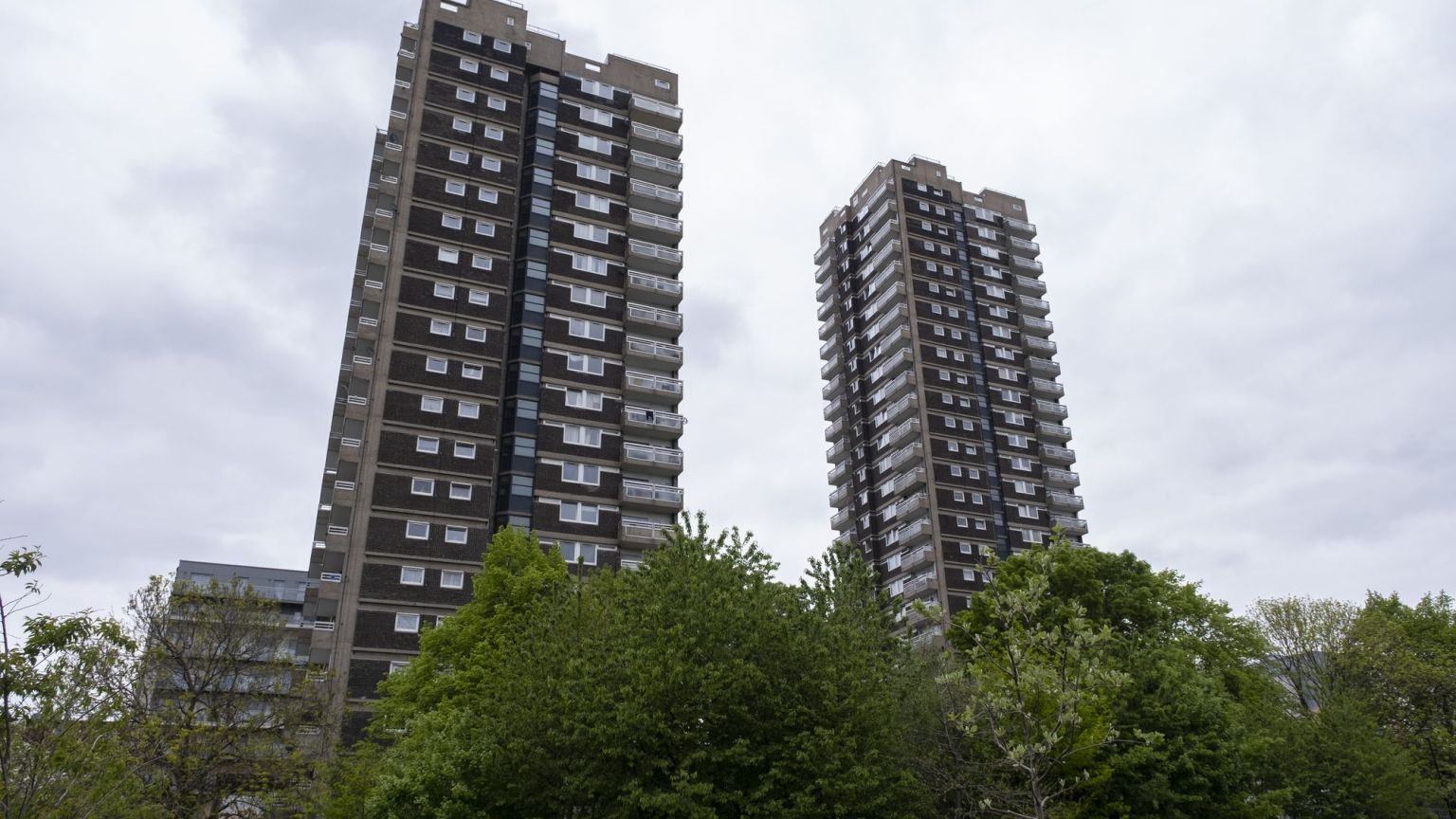
Many British people now intuit that this mass devaluation of citizenship has changed the rules of the game – that being a British citizen ain’t what it used to be. They feel that newcomers are able to game the system. The stats substantiate this feeling. According to the 2021 Census, 48 per cent of household heads in social housing in London, and 19 per cent nationwide, were born outside the UK. That over half of these household heads are British passport holders and have lived in the UK for a long time does not diminish the sense of unfairness felt by many members of the general public.
It certainly doesn’t seem right that we have a social-housing system, especially in London, that seems to prioritise the interests of new or recent arrivals over those of citizens with deep historical ties to this country.
Indeed, local councils seem to be prioritising ever newer groups of arrivals for social housing. A regeneration project in Tower Hamlets is aimed almost exclusively at Bangladeshis. Even more incredibly, it is not just a regeneration project that happens to benefit people who happen to be Bangladeshi – the planning application is shot through with references to the supposed specific needs of the Bangladeshi community and has been ‘specifically arranged for Bangladeshi families’.
Britain is now in the position of trying to operate a national welfare state while becoming increasingly reluctant to say that the national community itself has any distinctive claim on it. That contradiction could perhaps be ignored when immigration was limited and ‘naturalisation’ was rare. It is much harder to ignore after an era of mass migration and historically high levels of citizenship grants.
It is in the context of the hollowing out of citizenship that Reform’s creation of a potential two-tier citizenship needs to be understood. We are facing a near-unprecedented challenge. Our political elites, by opening Britain’s borders and devaluing citizenship, have caused enormous damage. Undoing it is going to require us to think creatively, and we are going to sometimes need to step outside the straitjacket of recent policy.
Of course, we need to be very careful. The implications of such a policy, if handled badly, could be dire. But at the very least, Reform’s proposal should be the start of a widespread conversation about what British citizenship means and whether the policies of the past decades have cheapened or strengthened it. One thing is certain: the status quo cannot continue.
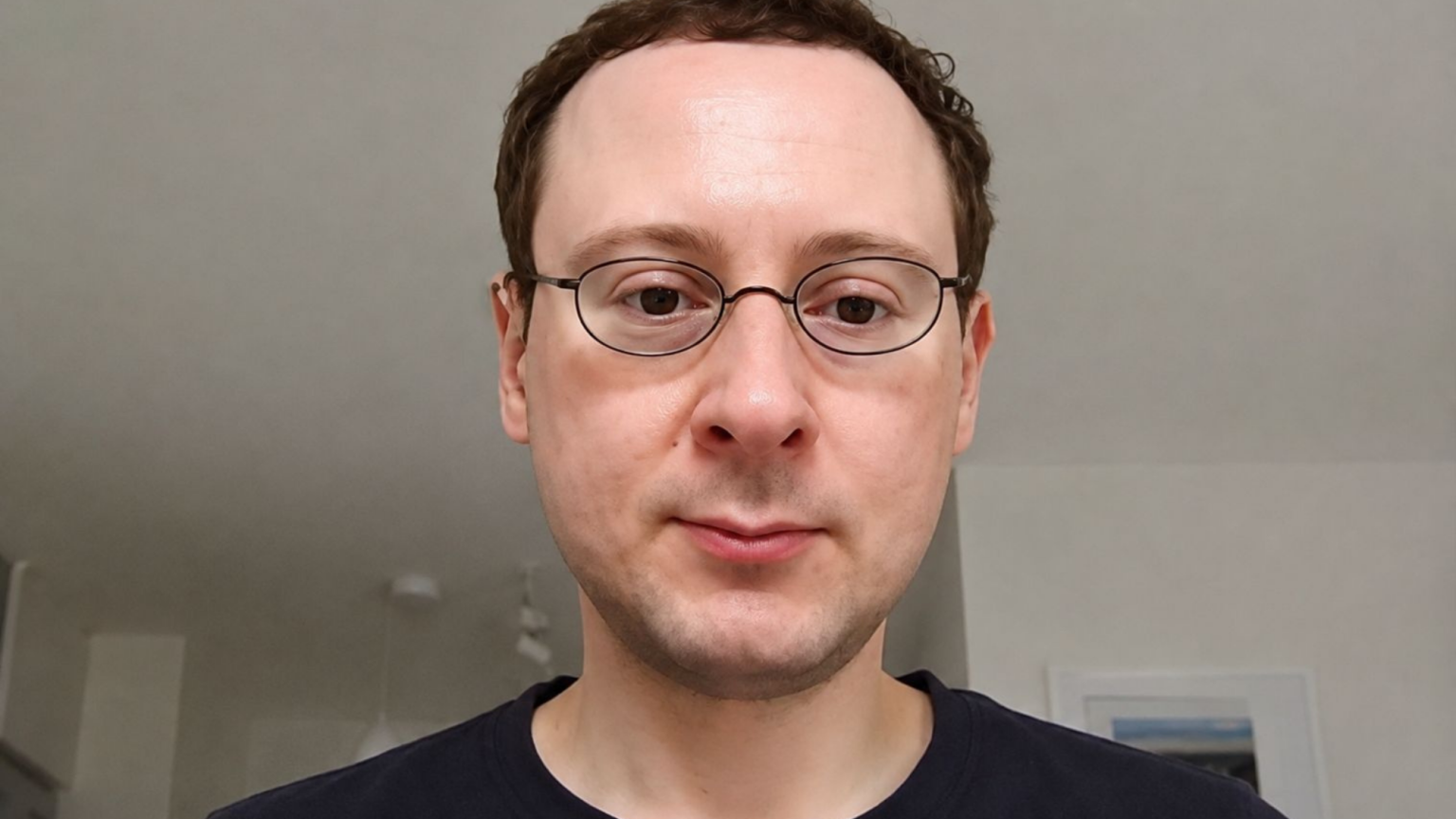
The Jason Arday saga unfolded like a fable: the allegations of plagiarism, staged racist attacks and fabricated achievements captivated the world before his tragic and premature death. In the weeks since, one thing has bothered me: the media’s relative lack of curiosity about the man who helped spearhead the crusade against him, Nathan Cofnas.
Cofnas is a postdoctoral researcher at Ghent University and a former fellow at Cambridge. His trajectory has been extraordinary. The Jewish-American academic built his early reputation dismantling Kevin MacDonald’s pseudoscientific anti-Semitic theories, arguing that sweeping evolutionary claims about Jewish power were methodologically dubious, heavily cherry-picked and fundamentally incapable of proving causation.
He then went on to establish his own biological explanation for Jewish exceptionalism, based on a hereditary, above-average IQ in Jewish populations. Intentionally or not, this move flattered his own ancestry while edging close to granting scientific legitimacy to one of anti-Semitism’s oldest tropes.
Cofnas has since deployed theories of ‘race realism’ against black populations. In a display of pure hubris, he compares his banal ideas in ‘A Guide for the Hereditarian Revolution’ – which advocates rolling back 20th-century civil-rights advances – to Charles Darwin’s On the Origin of Species, a claim as absurd as Jason Arday’s wildest myths.
Across both mainstream and alternative media, interviewers have proved completely incapable of challenging Cofnas. On LBC, Nick Ferrari pressed him on his assertion that, in a meritocracy, ‘blacks would disappear from almost all high-profile positions outside of sports and entertainment’. Yet Ferrari flinched when Cofnas laundered the claim through a Harvard study on undergraduate admissions, which projected black enrolment dropping to 0.7 per cent under strict academic criteria and without a DEI leg up. This let Cofnas falsely attribute his own sweeping generalisations about race to Harvard itself.
Even within the national context of the United States, Cofnas’s defence collapses. Extrapolating the 0.7 per cent figure, referring to graduates at one elite Ivy League institution, to claim there would be no high-profile, high-achieving black people in a nation of 330million people is statistically unsound.
I do not deny the heritability of individual human traits. While studying education and economic development at the London School of Economics, I examined Nordic adoption studies showing that some children’s educational outcomes align more closely with their biological parents than their adoptive ones. Individual heritability is a documented scientific reality.
However, it is absurd to extrapolate narrow, localised datasets into sweeping pronouncements about billions of people based on race, especially when two populations in sub-Saharan Africa can share as much genetic distance as an African and a European – a point argued by Angela Saini in Superior: The Return of Race Science. What’s more, working in finance has taught me a fundamental truth: statistics are easily massaged, whether to cover up a bad balance sheet or to promote abject nonsense. Asserting an intrinsic biological hierarchy across entire continents based on sparse data from developing regions or a single Ivy League admissions projection is lazy at best and farcical at worst.
Crucially, the assumption that IQ tests measure raw intelligence independent of environment is fundamentally flawed, as Joseph Henrich has demonstrated. If we accept Cofnas’s rigid hereditarian logic, how do we account for the birth-order effect, where older siblings consistently score higher on IQ tests than younger siblings born to the exact same parents? Furthermore, the 20th-century surge in global IQ scores – the Flynn effect – was largely driven by expanded schooling, public health and cognitive enrichment, not by rapid genetic selection. To isolate a true biological racial IQ gap, one would need to control for every conceivable cultural, socioeconomic and environmental variable, a task that remains virtually impossible.
Indeed, every metric Cofnas uses to infer black cognitive inferiority – including lower test scores and higher crime rates – is routinely documented among white working-class populations in post-industrial Britain and America. If group-level disparities proved biological unfitness, Cofnas would be forced to conclude that the white working class is genetically unsuited for modern society.
White British pupils rank among the lowest-performing demographics in the UK, trailing almost every ethnic minority group. In fact, low-income ethnic minority students on free school meals regularly outperform white British children who are not economically disadvantaged. Some of the top-performing state schools in England educate a disproportionate number of black students, such as Katherine Birbalsingh’s Michaela Community School, Brampton Manor Academy and St Olave’s, to name a few. Across the Atlantic, historical precedents tell a similar story. Under Jim Crow segregation, black schools like Dunbar High School, in Washington, DC, regularly outperformed white schools despite receiving significantly less funding and facing systemic discrimination.
Do conservatives who uncritically endorse Cofnas’s claims about black capability also accept the logical conclusion of his framework, that white working-class families are also ‘biologically hardwired’ for failure? I should hope not.
Let’s be frank, there is nothing ‘real’ about Cofnas’s so-called race realism. If I’d submitted an essay with methodology this porous, my tutors would have picked it apart line by line. He has relied on flawed methodologies to construct a rigid racial hierarchy, one that conveniently places people of his own Jewish ancestry near the top and people of my black ancestry near the bottom. I worry about the broader ramifications of such appalling scholarship gaining mainstream currency – for Jews, for black people and for everyone else.
If our media class cannot dismantle arguments this banal and structurally unsound, we are leaving the door wide open for more batty ideas to permeate through society unchallenged.
Something extraordinary happened yesterday. Very briefly, we absolutely genuinely thought someone in a position of some influence in the SNP had taken a meaningful step towards being serious about independence.
We are not being sarcastic. Look: here it is.
Dave Doogan is the SNP’s leader at Westminster. And let’s be clear: that is EXACTLY what the SNP’s stance ought to be. Its only purpose is supposed to be the securing of Scottish independence, and no peaceful democratic means of achieving that ought to be off the table.
The SNP was not formed with the purpose of denying England/the UK the government it voted for, it was formed to completely sever the governance of Scotland and England from each other as a matter of permanent principle, nothing to do with the prevailing political climate at any given point.
If England wants Nigel Farage as Prime Minister, that’s England’s business. The point of independence is that Scotland doesn’t have to get him too. No more, no less.
So obviously, the hapless Doogan’s brave and bright new dawn was brutally slapped down within a matter of hours.
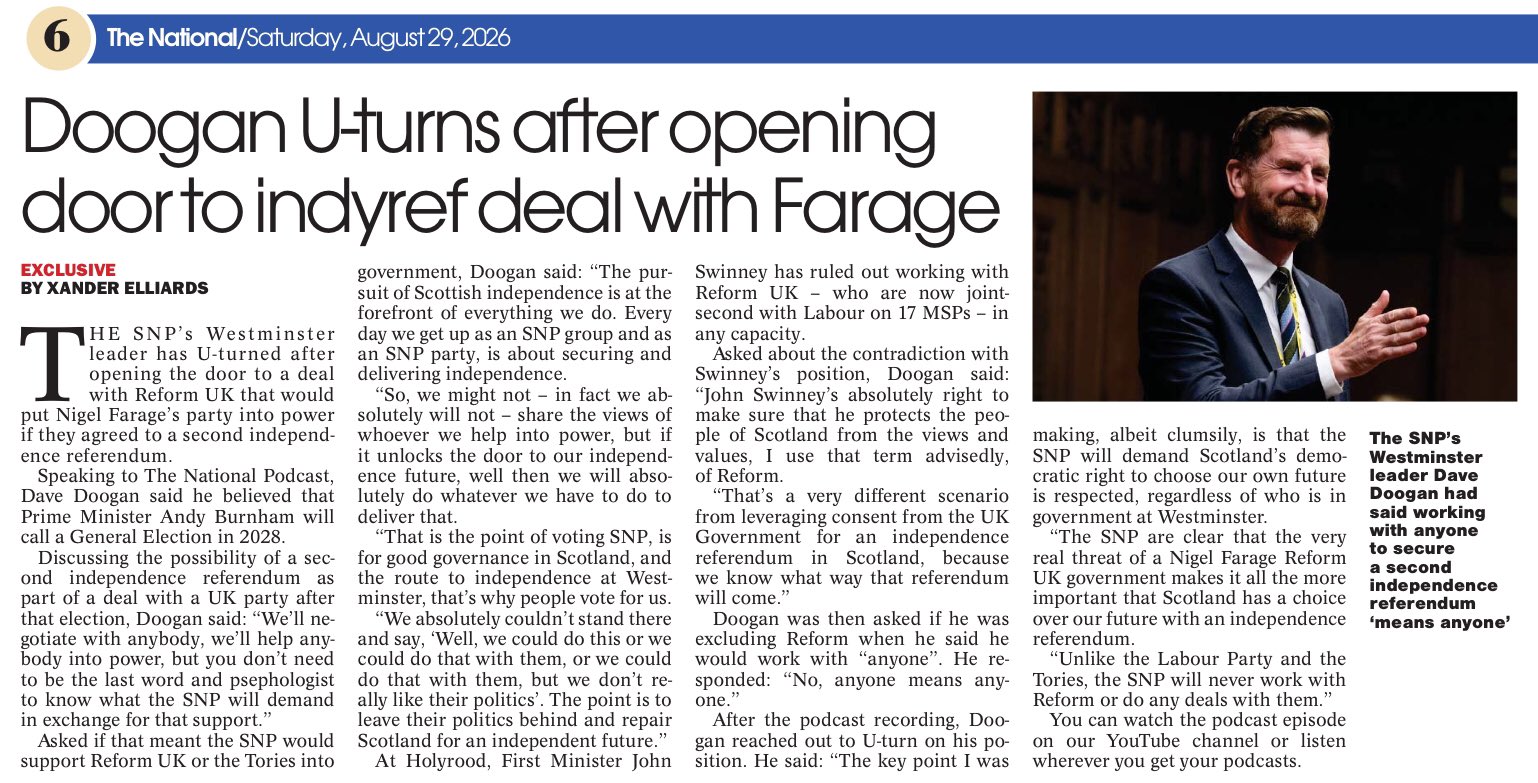
His original comments had been spectacularly clear. He’d been pressed on the matter of working specifically with Reform by a gawping National hack. (Yes, not only was an SNP politician being serious about independence, a National reporter was actually performing conscientious journalism. What a day!)
And he was absolutely explicit – really couldn’t possibly have answered the question any more fully, directly or definitively, with the sort of blunt plain speaking that people yearn for in politicians but almost never get – that “anyone means anyone”.
But then, in a move which was clearly completely spontaneous, all his own idea and definitely NOT the result of a furious phone call from someone who wants to stay First Minister for the next decade, he explained that what he’d meant was the exact and polar opposite of what he’d repeatedly, carefully and unambiguously said.
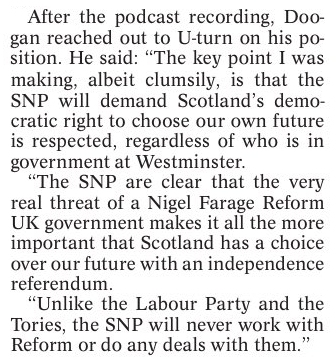
You know how it is, folks. We’ve all been there.
“Would you like tea or coffee?”
“Tea, please. Milk and two sugars.”
“You’re sure?”
“Yes. Tea.”
“Definitely tea?”
“Yup. Tea is the best. I love tea. Mmmm, tea. Way better than coffee.”
“So just to be clear, you’d like a cup of tea.”
“100%. It’s tea for me.”
“Not coffee?”
“Tea means tea.”
“Here’s your tea.”
“Ah, sorry, I phrased my answer clumsily. I meant to say coffee. Black coffee. I would never ever drink tea under any circumstances. Awful stuff. I hate it with every fibre of my being. Honestly, I’m such a scatterbrain!”
We truly believe the leadership of the SNP is engaging in some sort of game of political Buckaroo with the party’s remaining supporters at this stage, readers – daring each other to make their total opposition to independence more and more blatantly, undeniably obvious and laughing themselves right out of their chairs as hopelessly gullible mouth-breathers in loyal blogs and newspaper comments sections contort themselves into hilarious logic knots to explain it away.
John Swinney’s already upped the stakes by standing in front of a Glasgow crowd in his shortbread-tin outfit and lustily belting out “God Save The Queen”.
So it can only be a matter of time before he gives Ian Murray a call and asks if he can borrow his Union Jack suit. Maybe for this year’s conference.

The last time independence looked like it might have found itself in a propitious set of circumstances – after the Brexit vote, as the UK government blundered from pillar to post like a punch-drunk boxer, stepping on rakes at every turn – the SNP suddenly switched its focus to trying to undemocratically deny England and Wales what THEY’D voted for, rather than using the situation as leverage to get Scotland out of the UK once and for all.

We’re told endlessly that the UK’s woes – whether it’s Brexit or COVID or Boris Johnson or the rise of Reform – will lead to a landslide in support for independence, yet the SNP bends over backwards to stop those things from happening.
And every time support does creep up a tiny bit, the SNP moves the goalposts further away. What used to be a threshold of 50%+1 becomes 60%, then 65%, and – this week, according to Brendan O’Hara – 75% or 80%.


All that matters is that the goal is always just out of reach, like the carrot on a stick dangled in front of a donkey. In the very same article, O’Hara gives the game away:

Alert arithmetic enthusiasts will have noticed that you cannot possibly achieve 75% or 80% if there are 30% who will NEVER vote for something no matter what. The target that would trigger the SNP into action is always designed by the SNP to be impossible.
Because when push comes to shove, the party always reacts the same way to any actual prospect of achieving independence – panic. They know it would end their reign in Scotland, and they really really like life on the gravy bus.

We’re not sure if it’s the gravy bus or the Brexit bus that Dave Doogan just got shoved under, but we suspect it was driven over him heavily enough to make sure he keeps his mouth shut for the forseeable future. Nobody’s going to let him talk to the media again for quite some time, and in fact we’ll honestly be surprised if he’s still the Westminster leader this time next year.
Because in the modern SNP – as Angus MacNeil, Fergus Ewing, Kate Forbes, Ash Regan, Chris McEleny and scores of others will readily attest – doing or saying anything that suggests you might want to bring independence even an inch closer to reality is the most unforgivable crime of all.


4 min read
The Prime Minister may eventually call a snap election. But the case for doing so soon is weak.
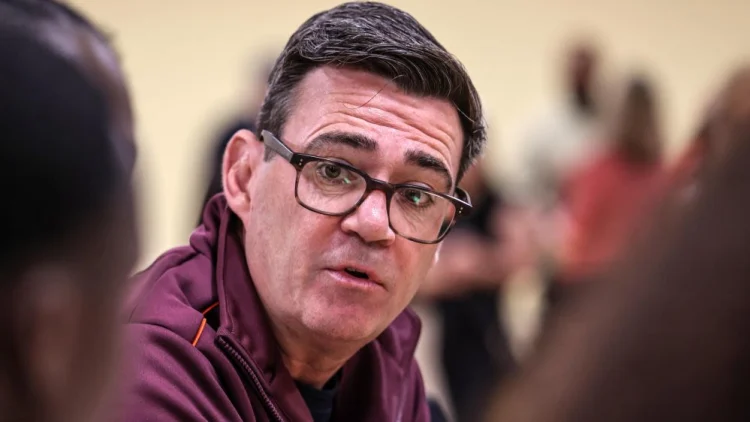
“I am not going to call an election”, Andy Burnham told ITV News this week, “I am ruling it out right in front of you.” The new Prime Minister has made many such statements, but they have done little to quell speculation which grows with every upwards tick in Labour’s polling.
There are three arguments against a snap poll: the gains are small, the risks are large, and the case is weak. Burnham has a huge House of Commons majority and three years left to govern. The claim that as an “unelected” Prime Minister he needs a personal mandate is constitutionally unfounded and historically unsupported. No PM is directly elected, and the lack of a mandate proved little obstacle to earlier leaders who took over mid-term with Commons majorities.
Manifesto commitments offer a stronger argument. A new leader does not want to be bound by the promises of their predecessor, but breaking such pledges brings criticism and legislative resistance. Burnham is already struggling with the fiscal straitjacket created for Labour by Keir Starmer and Rachel Reeves’ tax pledges, which he has said he will honour. An early election offers a shot at greater freedom.
But while a personal mandate is gratifying, and a new manifesto liberating, the risks are huge. Labour’s massive majority is built on sand, the product of electoral efficiency and political good fortune. The best-case scenario for Burnham would be a smaller, more fractious majority. Some losses are certain, while even victory can bring costs: an electoral near-death experience can weaken backbench loyalties.
While the new PM has hinted at radical plans in areas such as devolution, social care and electoral reform, there is no obvious barrier to getting these done with his current massive majority
Worse outcomes are possible. Labour’s polls have rebounded under Burnham, but only from dire to poor. Current projections still suggest Labour would do well to emerge as the largest party, let alone win a majority. Then there is the ground game. The Labour Party is running low on money and members. Party members in Burnham’s North West region, who have pounded pavements five times in the last year, won’t welcome being called out again.
A short campaign mobilising grievances against a disappointing government could benefit opposition parties more than the incumbent, particularly if shocks from abroad weaken the economy and push up prices, hardly an implausible scenario with Donald Trump in the White House and the Straits of Hormuz still closed.
Snap polls have gone wrong before. Theresa May tried to bank a twenty-point poll lead, which then evaporated overnight. Rishi Sunak tried to get the jump on his opponents but instead wrong-footed his own MPs and activists.
Only Boris Johnson has recently turned an early election to his advantage. His example is instructive. Johnson pushed for an election from the moment he took office, arguing that only an election could break the deadlock in Parliament and “get Brexit done.” When Johnson finally got his early contest, he had to repeatedly underline what he wanted to do and why an election was needed to do it. A united and mobilised Leave electorate did the rest.
Burnham, like Johnson, would need a strong argument to convince sceptical voters and anxious colleagues. Yet while the new PM has hinted at radical plans in areas such as devolution, social care and electoral reform, there is no obvious barrier to getting these done with his current massive majority. A manifesto-breaking shift on tax and spending throws up more obstacles, but “elect me so I can raise your taxes” isn’t an appealing pitch to voters.
The main reason an early election looks unlikely is therefore simple: there is no need. That may change – current Budget plans price in eye-watering cuts in the final years of this Parliament, cuts Burnham may struggle to avert without breaking Starmer’s tax pledges. The temptation to seek a new mandate will therefore grow as this Parliament ages, particularly if Labour’s poll leads hold up, or opposition disarray intensifies. Burnham may well go earlier than he must. But I doubt he goes soon.
Rob Ford is an elections analyst and Professor of Political Science at the University of Manchester
spiked is funded by readers like you. Only 0.1% of regular readers currently support us. If just 1% did, we could grow our team and step up the fight for free speech and democracy.
Become a spiked supporter and enjoy unlimited, ad-free access, bonus content and exclusive events – while helping to keep independent journalism alive.

Chinese star Ruoning Yin wins FM Championship at TPC Boston

Anthropic warns infostealer malware is hijacking Claude sessions to drain usage

Joe Root: England captain calm on form, saying ‘I’ve got 14,000 runs for a reason’





-

 Crypto World5 days ago
SpaceX stock could rise 75% to $240, JPMorgan says
-

 Fashion2 days ago
Weekend Open Thread: Maeve – Corporette.com
-

 Crypto World3 days ago
Bitcoin’s 22% rally now needs real demand to outlast Treasury liquidity boost
-

 Crypto World4 days ago
Warsh Jackson Hole keynote puts financial innovation first
-

 Crypto World6 days ago
A $30 Billion AI Fund Implodes, Now the SEC Is Investigating Wall Street’s Role
-

 Business3 days ago
Salesforce Stock Soars 19% as Blowout Earnings and Agentforce AI Growth Silence Software Skeptics
-

 Crypto World5 days ago
Did Trump Just Move SpaceX Stock With One Truth Social Post?
-

 Crypto World4 days ago
Elon Musk Grok Bot Promise: We Will Make You Whole if AI Loses Your Money
-

 Business4 days ago
Walmart takes aim at younger shoppers with new fashion brand
-
 NewsBeat4 days ago
Lindsay Clancy jury braces for closing arguments as judge tells court: ‘You’ve heard all the evidence’ – Live updates
-

 Business3 days ago
Apple Confirms September 9 Keynote and Reveals Its Full Pre-Order Schedule
-

 Crypto World2 days ago
Bitcoin price tests $82K resistance as Brandt stays long
-

 Crypto World4 days ago
NVIDIA revenue hits $96.2B as AI demand doubles
-

 Business6 days ago
Moderna CEO warns China is pouring state money into mRNA technology
-

 Business5 days ago
Thailand’s Eastern Economic Corridor Capital City (EECiti): Key Developments and Investment Opportunities
-

 Business2 days ago
iPhone 18 Pro Pre-Orders Could Shift to Saturday as Apple Reportedly Avoids September 11 Anniversary
-

 Business6 days ago
NVIDIA Stock Drops Nearly 2 Percent to $210 on Seventh Losing Day Ahead of Critical AI Earnings
-
 Crypto World7 days ago
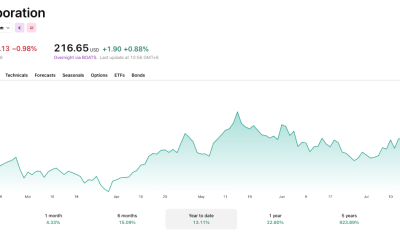
$92 Billion Nvidia Earnings Could Make or Break the AI Trade
-

 Business2 days ago
Onto Innovation Stock: AI’s Next Bottleneck Is Yield (NYSE:ONTO)
-

 NewsBeat5 days ago
Trump’s trade truce with China faces test with Iran effort
You must be logged in to post a comment Login