
Politics
Watch: Israeli propagandist boasts of 60k-strong pro-genocide hasbara operation



Former Israeli intelligence officer Ella Kenan’s boast to a pro-Israel conference has exposed the occupation’s massive digital propaganda operation. Kenan’s 60,000-strong ‘army’ is focused entirely on undermining global support for the Palestinian people.
Israeli arrogance
With typical Israeli arrogance, she claims that her organisation’s reach is ‘completely organic’. Then, in the next sentence, she boasts that its propaganda goes ‘viral’ because of coordinated ‘communities’ of 60,000 – and the help of ‘non-Jewish influencers’ that ‘collaborate’.
‘Organic’ is doing some heavy lifting in Kenan’s brain.
Kenan then boasts of whitewashing Israel’s genocide and apartheid and of making up slogans that reach the speeches of US presidents. And she adds that her ‘communities’ run ‘take-down’ campaigns to remove news they don’t like from social media platforms.
But all ‘completely organic’, of course:
Every accusation is a confession
Her unironic claim of coming up with ‘Hamas is Isis’ is, as usual, a case of ‘every accusation is a confession’. The ISIS-linked organisation in Gaza works for Israel. As author Susan Abulhawa rightly pointed out:
Actually, Israel is ISIS, but 10x worse.
Kenan has also boasted of ‘beating Greta Thunberg’ after Thunberg called for the freedom of Gaza as Israel began its genocide there.
Israel is a terror state that is allowed to throw huge resources at spreading the lies it tells to excuse its crimes. And its professional propagandists are not even shy about admitting it.
Featured image via the Canary
By Skwawkbox



A new report predicts Labour will lose overall control of Enfield Council, largely due to the hard work of Enfield Community Independents (ECI). The prediction is that ECI could win seven seats, cementing its place as the main opposition to the local Labour-Tory axis. And ECI thinks it could even win more.
BREAKING
New election forecast predicts Your Party affiliate, Enfield Community Independents winning 7 seats and moving the council to No Overall Control.
Your vote will matter! On 7 May, Vote ECI and let's remove Labour from Enfield Council@thisisyourparty @EnfieldAction pic.twitter.com/45B2wN6esM
— Khalid Sadur (@KHALID4EWH) April 21, 2026
ECI as a ‘decisive disruptive force’ in Enfield
The report, from an independent researcher who once served as a local councillor, said:
The 2026 Enfield election marks a transition from a two-party system to a fragmented, multi-system political environment. The most robust conclusion is that the council will move to No Overall Control, with Labour remaining the largest party but unable to maintain a governing majority.
It added that:
The community and independent candidates are the decisive disruptive force in the eastern wards of the borough. Their presence is concentrated in Labour-held areas, where they directly target Labour’s core vote and are likely to secure representation in multi-member wards.
The eastern wards of the borough are more diverse and have higher levels of deprivation.
The Canary has been following Enfield’s anti-war, anti-austerity independents since 2024. They have worked hard in the last two years to provide “a real socialist alternative” locally. And they recently received the endorsement of Your Party.
Now, ECI candidates say the new forecast reflects what they’ve been hearing from local residents on the ground: more and more people want change, and they’re ready to vote for it.
Enfield has ‘no love for Labour or the Tories’, and is increasingly backing community candidates
ECI leader Khalid Sadur is standing as a candidate in the Upper Edmonton Ward. And speaking to the Canary, he said the new report is a boost to the group’s campaigning momentum. But he added that:
On the doorstep, we are seeing an even more encouraging picture, with no love for Labour or the Tories and a recognition that ECI represents the best chance of removing Labour from Enfield Council.
Residents of Enfield are telling us we need real change within our borough and appreciate our willingness to engage and listen to their problems. With candidates from the community looking to represent their neighbours within the community, ECI is definitely doing politics differently in Enfield.
Fellow Upper Edmonton Ward candidate Toby Osmond, meanwhile, told us:
I got involved in ECI because I believe that fascism, nationalism and racism, highlighted by the rise of Reform, is a very real threat that needs to be fought right now. Labour have pandered to this politics of division.
He also asserted that:
Edmonton is a rich multicultural area which has been economically deprived by previous Conservative national governments and the local Labour party who consistently cut and sell off local services while wasting huge sums on mismanaged projects.
Explaining that “the numbers and the conversations and the voting intentions” all suggest people locally are increasingly seeing ECI as the main group capable of challenging the dominant Labour-Tory axis in Enfield, he insisted:
We will hold Enfield Council to account for its pension investing in the Israeli war machine, and it cutting investment in the people of Edmonton.
Dealing a big blow to Labour, and possibly even to its council leader
ECI also revealed on Facebook that:
Massive ECI canvassing in Edmonton has shown we can do a lot better than 7 seats and there is a real desire to remove the Enfield Council leader from his own ward in Edmonton Green.
Labour council leader Ergin Erbil has previously faced criticism for ignoring a strong local campaign for Enfield to divest from companies complicit in Israel’s genocide in Gaza. And ECI candidates Sevda Kaygili, Katreece Roberts, and Ersoy Halil are now running to defeat Erbil and his Labour colleagues in Edmonton Green.
In a recent press release, ECI called Edmonton Green “the primary battleground of this election“, saying:
For too long, Labour have ignored the state of our housing and streets. ECI are here to remove the leader and to restore a voice for the community.
And Kaygili has echoed that message of serving and listening to the community, insisting:
We are not driven by money or personal gain. We believe in equality, and that equality should apply to everyone, not just a specific group or section of the community. We stand with anyone who feels unheard, overlooked, or unable to speak up.
ECI has cooperated with other socialists locally, endorsing a number of TUSC candidates in Enfield. It has also been in communications with the Greens. For now, the Green Party has decided to stand in every ward. But ECI hopes there can be cooperation with them in the future.
According to the new report, Labour could lose two seats to the Greens in Palmers Green and Bowes. Palmers Green is less diverse and has lower levels of deprivation than other parts of Enfield. Bowes is similar, though to a lesser extent.
You can see the full forecast of Enfield’s results here: Enfield Council Local Elections 2026 Forecast Report (April 2026). And you can see a list of all ECI’s candidates here.
Featured image via the Canary
By Ed Sykes


2 min read
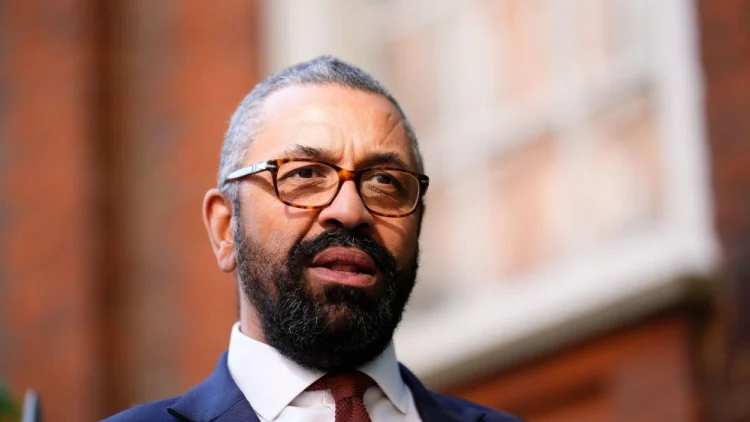
Shadow Housing Secretary James Cleverly has confirmed he is mulling a run to be Mayor of London, arguing that Labour’s Sadiq Khan could be more vulnerable to defeat than ever before.
Cleverly, a former London Assembly member, said last year he would be “stupid not to think about” standing for mayor. Now, with only two years until City Hall elections, he told The House he was considering the option.
“Of course I think about it,” he said. “The more you get involved with local government-related stuff, the more you get involved with housing, the more Labour’s failures at a national level and in London are right in my face.”
The former foreign and home secretary said that while Khan had previously tried to pin any shortcomings on the last government, the mayor now has “no one else to blame”. Khan has not yet confirmed whether he will run again.
Cleverly stressed that he was currently focused on his role in the shadow cabinet and as MP for Braintree, while working to maximise Conservative victories in 7 May’s local elections.
“That’s the immediate job,” he said, “and I’m not in the mood for being distracted by very flattering speculation about what I might do next”.
If Cleverly does run, his bid will divide opinion among the party’s London members, as some would prefer a candidate who did not serve in the last government.
“James is a great guy and very popular in the party,” said one London Tory councillor. “He certainly has a lot of the characteristics we would want in a mayor.
“However, he is also known as both an Essex MP and one of those that carry responsibility for some of the failings of the previous government.
“To be honest, I think a lot of London members feel very 50/50 about his potential run, and need to see more commitment to London and a London-centric agenda.”
Another Conservative said Cleverly’s name recognition would prove advantageous. The Tories have not fielded an MP for mayor since Zac Goldsmith in 2016.
“We Conservatives need ‘a name’ – someone Londoners have heard of,” said Westminster councillor Tony Devenish. “James and Seb Coe are the two names being talked about. I’d be very happy with either.”


A statue of Jesus, which the Israeli Occupation Forces (IOF) destroyed in Southern Lebanon, has received far more sympathy than the thousands of Black and Brown people whom Israel has murdered.
Destruction of Jesus statue should serve as moral wake-up call for IDF, Israel https://t.co/WEBKWclH6I
— The Times of Israel (@TimesofIsrael) April 20, 2026
A picture emerged on social media of an IOF soldier destroying the statue with a sledgehammer in the Christian village of Debel. As a result, Israel has jailed two soldiers for 30 days and removed them from combat duty.
However, there would be no international uproar or condemnation if it were a real person, rather than a statue.
Lol the Israelis have massacred 1000s of Christians but yes, jail these two losers for destroying a statue. https://t.co/wYJYw8uRWn
— Kristiana Bruneau (@GumptionAndCo) April 21, 2026
Systematic annihilation
Israel has systematically murdered, tortured and ethnically cleansed thousands of Black and Brown people in Gaza and now Lebanon. Yet the majority of the world has stayed silent. Now the world is acting like the IOF destroying a statue is the biggest war crime of all.
Not the raping of prisoners, the killing of babies, not the ethnic cleansing, destruction of mosques, war graves, hospitals, universities, homes, lives …. It’s the statue that has broken them. What moral degeneracy https://t.co/TNkFR9LEtX
— Jackie Walker – HRH, MP, MBE, ABC (@Jackiew80333500) April 21, 2026
An article in the Times of Israel describes the statue’s destruction as a ‘moral wake-up call’ for the IOF.
Isn’t [it a] bit late to talk about [the] moral wake up call for the Israeli army after destroying a Jesus statue in Lebanon? The same Israeli army has destroyed 1109 mosques and 3 churches in Gaza in the last 30 months. https://t.co/HsbxaocOBo
— Ashok Swain (@ashoswai) April 20, 2026
Meanwhile, the same army has destroyed more than 1,000 mosques and three churches in Gaza. Where’s the morality there?
the moral rot in Israeli society is sometimes unfathomable
you commit wanton genocide, rape humans with dogs, torture babies, run over people with tanks & bulldozers, but destroying a jesus statue is the wake up call??
you are disgusting vermin! https://t.co/OV0qafBFwa
— maria ☭
(@resistancestan) April 20, 2026
The ‘moral wake-up call’ is purely bad publicity because Christian Zionists are upset. Let’s not make the mistake of thinking Israel has a conscience or any semblance of morals.
But true Christians should be far more appalled at the murder of civilians than the destruction of a statue which was rebuilt within a few days.
Doing genocide and running torture-rape camps is apparently fine but upsetting US Christian Zionists is a “moral wake-up call”. Absolute degeneracy. https://t.co/9DH5ZObXUQ
— Jason Hickel (@jasonhickel) April 22, 2026
Israel is not sorry that its soldiers destroyed the statue. It’s sorry it went viral and upset white Christian Zionists.
But not for shooting unarmed civilians. Torturing Palestinians in prison, so many atrocities. https://t.co/ktPUZRkaNv
— strawberry fields
(@forever2021may) April 22, 2026

The destruction of a statue is worth more than the countless Palestinian children they have murdered and that says everything about the IOF https://t.co/MNjLnJWtQo
— theboywizard (@theboywizard_) April 21, 2026
The real issue, of course, is that the West places more value on the lives of white Christians than it does on Black and Brown people, whether Christian or Muslim.
A Jesus statue vandalized by Israeli soldiers has been treated with more solemnity and contrition than any IDF massacre of real human beings over the past three years.
This is happening because Israel knows its American support base of Christian Zionists will care more about the… https://t.co/867shebtIG
— Caitlin Johnstone (@caitoz) April 21, 2026
Not forgetting that Jesus was a Brown Palestinian, but that’s a conversation that Western Zionists are not ready for.
So apparently it’s worse to damage a statue than to blow up hospitals full or people, starve families, torture & rape prisoners & shoot kids in the head.
Glad we’ve cleared that up.
Fuck everything. https://t.co/a8vGtlpjXO— Corrie
(@Corrie_R_D) April 21, 2026
The West collectively shies away from the murder of people in West Asia. Meanwhile, the world lets Israel kill indiscriminately and get away with it. Yet when the IOF destroys a statue, Western media, Israeli media, and White Zionists across the world dig out their faux moral outrage.
Featured image via BBC News
By HG
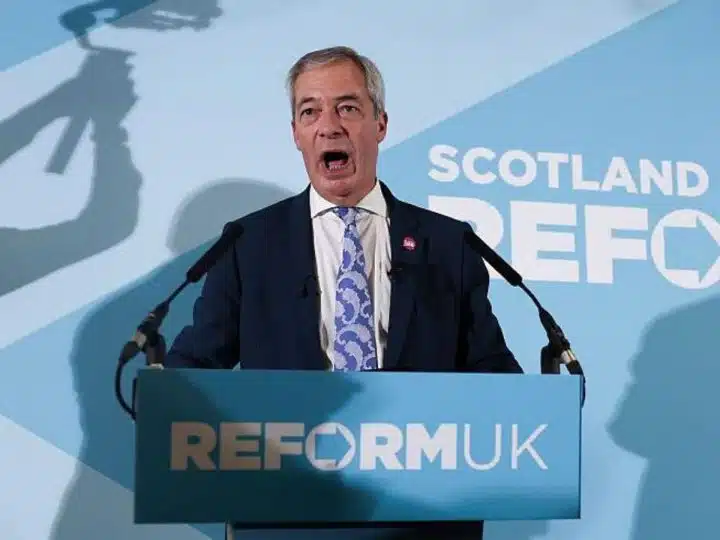

Reform UK’s manifesto for Wales vows that the far-right party will dictate how museums present history, should it win control of the Senedd.
This includes threatening to “review funding” to ensure “political neutrality”, along with ordering museums not to present “narrow and exclusionary narratives”.
Whilst the manifesto uses vague language, Reform politicians themselves have pointed to decolonisation efforts and portrayals of the UK’s controlling role in the Atlantic slave trade as examples of what they’re railing against.
The Museums Association, the professional membership organisation representing heritage professionals, said:
We are concerned that Reform UK’s Manifesto for Wales appears to suggest that, if elected, they would seek to control how museums interpret history.
It is vital that curatorial decisions are independent from government influence.
Instead, museums should encourage active public participation in decision-making, including through co-producing exhibitions with communities.
‘Clarity about cause and consequence’
Three pledges in Reform’s 2026 Welsh manifesto relate directly to museums. The first is a vow to “Restore evidence-led history”:
Publicly funded museums, heritage bodies and interpretation sites will present history chronologically and in context, with clarity about cause and consequence.
What on earth is “clarity about cause and consequence” meant to mean? Plenty of major museums have been guilty of obscuring the legacy of Britain’s colonialism, but somehow I doubt that Reform will be pushing for an unblinking look at the transatlantic slave trade.
Beyond that, the demand to “present history chronologically” is just… ridiculous. It’s a child’s idea of what a museum looks like. ‘History starts at cavemen and then ends at WW2’. ‘It goes through the Crusades, the Tudors and the Victorians in the middle’.
Why does Reform feel justified in telling trained professionals how to present history?
That was rhetorical; I know why… You know what – I’m going to go there. This is a Nazi policy; it is a propaganda tool used by Nazis.
Speaking to the National, leading historian Professor Tom Devine drew a direct parallel between Reform’s proposals and Hitler’s control over the presentation of German history in museums:
By coincidence, over the last few days, I have been reading about the state’s attempts to control art and museum displays in Germany during the 1930s in order to project Nazi propaganda. Some might argue that, superficially at least, there is some similarity between those dark days and the reported pledge of the Reform Party in Wales to interfere with the independence of museums in the highly sensitive matter of how history, and especially national history, is represented in them.
‘Narrow or exclusionary narratives’
Reform’s second pledge is to ensure that museums and other cultural institutions are “fit for the future”:
Wales’ museums and cultural institutions must preserve the past while engaging new audiences. Reform will support modernisation, wider access, and financial sustainability, ensuring that publicly funded institutions reflect the full breadth of Welsh history and culture rather than narrow or exclusionary narratives.
God, they almost had me there. Wider access and financial sustainability? They’re getting dangerously close to ‘inclusion’. Then we get to “rather than narrow or exclusionary narratives”. Gee, I wonder what they might mean by that.
Fortunately, a Reform spokesperson couldn’t help but say the quiet part out loud:
Too often some public spaces are presenting divisive views of history that are designed to make people feel guilty.
For example, the former Museums Wales chief’s ‘decolonisation strategy’ was one of the organisation’s top priorities.
We think there is much in British and Welsh history to be proud of – those things should be celebrated.
For context, Museums Wales’ decolonisation charter holds that:
decolonising the collection means giving clear and explicit information to audiences on the history of objects and how they were collected.
The museum also acknowledged that its collections are “rooted in colonialism”. This is a fact. That it makes people feel guilty about being from Britain is a logical consequence of the fact that we committed countless atrocities across a globe-spanning empire.
‘Review funding’
The final relevant pledge is a proposal to review the funding of government culture arms to make them “equitable to all parties”:
Reform will review funding for government-supported cultural bodies to ensure it is fair, transparent, and politically neutral. It’s common sense that taxpayer-funded organisations must serve the whole public and command confidence across communities and political traditions.
Given that Reform’s Lee Anderson has repeatedly called GB News the “only truly impartial” media outlet in the country, I dread to think what the party’s idea of “politically neutral” looks like.
BBC Wales asked Welsh Reform leader Dan Thomas if his party would stop funding museums over their presentation of history. Thomas replied that:
I don’t think we’ll get to that stage.
We’ll have a chat with them and see.
The manifesto clearly states that Reform plans to review funding for government culture arms to ensure political neutrality. If that this isn’t a threat to remove funding to punish non-compliance, it’s difficult to see what else it could be.
The ‘whole picture’ isn’t pretty
Thomas also ranted to BBC Wales that some museums take a “very niche view” of Britain’s role in the slave trade. However, he said that the “whole picture” includes the point that the:
British empire was the first to abolish slavery, and that other countries have done it for, you know, millennia.
The first point is false. In a late-modern context, the First Republic of France (unsuccessfully) abolished slavery in 1794, and Haiti successfully banned slavery in 1804. Britain, by comparison, made the slave trade illegal in 1807.
However, slave-owning only became illegal across the full British Empire in around 1936, with Nigeria and Bahrain being the last territories to join in abolition.
These are facts. They don’t care about Thomas’ feelings, to borrow a phrase from the far right.
History is not a statement of a series of events. It is a narrative, and narratives are subject to bias, subversion, and interpretation. Reform will never be able to eliminate this, but I doubt severely that they want to – rather, the far right does as the far right does, and seeks to bend historical narratives to its own end.
The Nazis tried to do the same thing. It sounds lazy and clichéd to point that out, but it too is a fact.
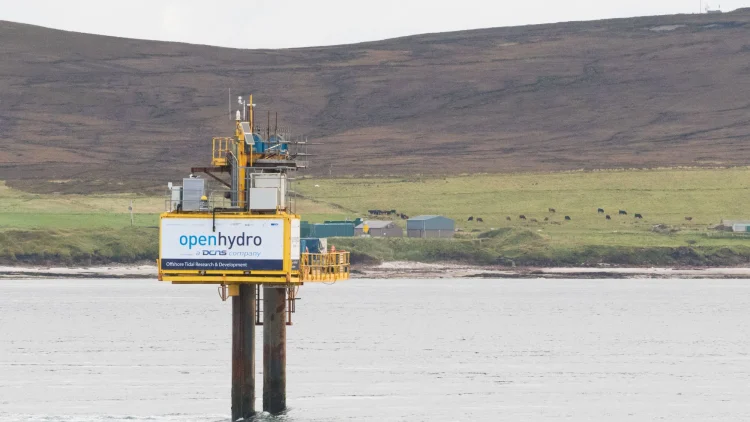

Testing tidal power turbines in real sea conditions, Orkney, Scotland (Alamy)

5 min read
Does this government want to lead the world in green energy innovation? On at least one front, the jury is still out.
The government’s recent renewable energy auctions contracted the lowest amount of tidal stream energy since 2022, adding just one additional turbine to Scottish tidal capacity. At a moment when the UK should be ramping up our deployment of cutting-edge energy technology, we appear instead to be slowing down.
The introduction of a ringfence for tidal stream in Allocation Round 4 (AR4) was a genuine gamechanger for the energy sector. It, and successive auction rounds, took tidal stream from 10MW of deployment to a pipeline of 140MW to be delivered by 2029.
Recent results, however, suggest that the momentum built in those early rounds is beginning to slip. Over the last four auctions, the contracted capacity has been 41MW, 53MW, 28MW, and most recently 21MW. The reason is straightforward: the level of support offered by the government has fallen.
As chair of the All-Party Parliamentary Group for Marine Energy, it is difficult not to be concerned that a technology so clearly aligned with the government’s own clean energy superpower ambitions now appears to be slipping down the list of priorities.
The UK could lead the world in developing, deploying and exporting tidal stream technologies – which offer a predictability that most other renewables cannot match. Tidal stream is a reliable renewable resource that has already provided more than 80GWh of electricity to the UK grid. As we transition to Clean Power 2030, and an energy system dominated by intermittent renewables, this predictability helps reduce system cost. It provides security for the moments when the wind does not blow and the sun does not shine.
Just as importantly, the economic benefits are already being felt here at home. Tidal stream projects are being deployed with more than 80 per cent UK supply-chain content, supporting jobs in coastal communities like my own and far beyond.
Orbital Marine Power’s O2 turbine, deployed in my constituency at the European Marine Energy Centre, is a good illustration of what that looks like in practice. The turbine was designed in Orkney and Edinburgh, and built in Dundee using steel from Motherwell, blades from the Solent, anchors from Anglesey and hydraulics from the Midlands. This is not just an energy story but a British industrial story.
There is also a growing export opportunity. Last year Proteus Marine Renewables deployed the first 1.1MW tidal stream turbine in Japan, designed in and exported from Scotland.
Despite our natural advantages, this is a race that the UK is at risk of losing if the route to market for tidal energy is not combined with the conditions for delivery.
The French government has announced plans to leapfrog the UK by contracting 250MW of tidal stream capacity by 2030, with a further 250MW expected shortly afterwards. Canada is preparing to deploy its first tidal stream array in the Bay of Fundy. In Asia, countries such as Indonesia, Japan and China are expanding their own programmes.
We have seen this story play out before. In the 1980s Denmark invested early in its wind energy industry, supporting domestic deployment with strong local supply chains. That early commitment gave Denmark a first-mover advantage which it still enjoys today. The Danish wind sector now generates more than £7bn annually in export revenue alone. The UK, by contrast, generates far more wind power but exports less than £2.4bn annually, and remains a net importer of wind technology, much of it from Denmark. We must not repeat that mistake.
In recent months several strategies on energy have been published, including from GB Energy and the National Wealth Fund. Disappointingly, tidal stream barely features and there is still little clarity about how these new bodies will support early-stage investment in the sector.
Despite its strong UK supply-chain content, tidal stream currently falls outside initiatives such as the Clean Industries Bonus, the Supply Chain Accelerator and the Industrial Growth Fund. That matters, because the 140MW of tidal capacity already contracted will only be delivered if the right conditions exist to gather in further investment.
There is still time to change course. The government’s decision to establish a Marine Energy Taskforce in June 2025, charged with developing a roadmap for the UK’s tidal stream potential, was a welcome step – but a roadmap on its own will not deliver turbines in the water. What is required now is practical action.
That is why I support the industry’s call for three clear steps: a clear route for funding for CfD-backed tidal stream projects from GB Energy and the National Wealth Fund; increased funding for tidal stream in CfD Allocation Round 8; and a commitment for the UK and devolved governments to implement the recommendations of the Marine Energy Taskforce.
Tidal stream is no longer an experimental technology. It is proven, predictable and ready to scale. If the UK is serious about becoming a clean energy superpower, it cannot afford to turn its back on the power in our tides.
Alistair Carmichael is the Liberal Democrat MP for Orkney and Shetland, and chair of the APPG for Marine Energy


This week we learned that Keir Starmer pressured the Foreign Office to give Matthew Doyle a job, which looks very bad for Starmer because Doyle notoriously maintained a friendship with a convicted sex offender.
As you’d expect, most Labour politicians had the sense to not defend the prime minister. The exception to this was Baroness Margaret Hodge, who said “there’s nothing wrong with friends saying, ‘Are there any jobs around?’”
"There's nothing wrong with friends saying 'are there any jobs around?'"
Labour peer Baroness Hodge responds to reports that Downing Street considered giving a diplomatic role to the prime minister's then-director of communications Matthew Doyle.#Newsnight pic.twitter.com/KEPlgR6nCV — BBC Newsnight (@BBCNewsnight) April 21, 2026
Starmer and Hodge have more in common than we’d like
Hodge’s intervention is unsurprising given she’s linked to a historic paedophile scandal herself.
Here's an old ITV News report about how Margaret Hodge ignored reports of child sexual abuse when she was leader of Islington Council.
But despite this, Tony Blair made her Children's Minister.
It’s always jobs for their mates, no matter how dodgy they are. Nothing changes. pic.twitter.com/UppO8aHPZB
— Wokerati Marty (@WokeratiMarty) April 22, 2026
Labour links
Regarding Doyle, Skwawkbox reported the following for the Canary this week:
Keir Starmer’s pressure on the Foreign Office to ignore Israel-supporting paedophiles’ pals is not limited to Peter Mandelson. He did the same with ‘Labour’ peer Matthew Doyle, who has since been suspended for his support for convicted child sex offender Sean Morton.
Starmer knew about Doyle’s links to Morton when he appointed him. Which means he also knew when he pressured the Foreign Office to give Doyle a job.
Starmer put pressure on the FCDO to give Matthew Doyle a job and not tell the Foreign Secretary. Another person suspended because he was close to a paedophile. — David Maddox (@DavidPBMaddox) April 21, 2026
That is stunning.
Labour’s unseemly links to the worst imaginable criminals don’t end with Doyle and Mandelson either as we’ve reported:
- Starmer’s other paedo problem: silence on links of new Zionist peer
- Yet another Labour figure charged with sexual offence
- Liron Velleman pleads guilty: another Labour Friend of Israel paedophile
- Zionist former Labour MP Conor McGinn charged with sexual offence
- Labour deselects 3 councillors for wanting inquiry into paedophile
- LBC has paedo-sting Labour freak on to discuss Burnham
Anti-corruption champion? Oh please.
Back to Hodge, Victoria Derbyshire asked:
Can I ask you then, Margaret Hodge, as the anti-corruption champion, what you make of this Sir Olly Robbins revelation regarding Matthew Doyle
Oh yeah, we forgot to mention that she’s the anti-corruption champion.
Margaret Hodge is the Prime Minister's Anti-Corruption Champion.
Starmer made her a peer in 2024.
Amazing stuff. https://t.co/Yzb5vZz2LZ
— Owen Jones (@owenjonesjourno) April 22, 2026
As the ‘champion’, you’d expect her to take a hardline stance against any hint of impropriety, right?
Sadly, this is how she actually responded:
Well, let me say, the first thing is Matthew Doyle has said clearly to me, and I hope he has to you, that he didn’t know it was happening, he didn’t want a career in the department.
That’s great, but the scandal is Starmer trying to get him the job, not whether Doyle knew about it. This is what’s known as a ‘strawman argument’, in which someone presents an easier-to-argue point that sounds relevant but isn’t.
Hodge continued:
What I make of it… Matthew Doyle was about to lose his job. If somebody you’re working with is about to lose your job, there’s nothing wrong, I think, in saying, are there any other jobs available?
We’re sorry, Margaret, but we’re pretty sure we wouldn’t do this if our friend got sacked for continuing his dealings with a sex offender. We especially wouldn’t do it if we were the literal prime minister.
Next, Derbyshire noted:
He had no experience in foreign affairs.
Hodge hit back:
Well, it doesn’t matter.
Call us old fashioned but we think people working in government should have some understanding of the matters they’re governing. When that doesn’t happen, you end up with anti-corruption champions who publicly condone corruption.
https://t.co/EspLZhLtYG pic.twitter.com/CE7tyC2kVO
— Zarah Sultana MP (@zarahsultana) April 22, 2026
Cronyism
Derbyshire later asked:
Margaret Hodge, is that not cronyism?
For reference, this is the Cambridge dictionary definition of ‘cronyism’:
The situation in which someone important gives jobs to friends rather than to independent people who have the necessary skills and experience.
So yes, it’s the textbook definition of cronyism.
Hodge’s waffling response went on:
Just think about it in your own life. Think about it here at the BBC. If people lose their jobs in the BBC, you may say, have you thought of looking there for a job? Have you thought of looking there?
In other words, Hodge thinks it’s fine because she’d do the same thing. Good grief.
At this point, it seems corruption is so normalised in Labour Party politics that they don’t comprehend how bad they’ll sound when they open their mouths.
Featured image via BBC
By Willem Moore


A former British commando and veteran of several wars has told Declassified UK that he’d never seen anything as bad as Gaza. Ex-marine David MacIntosh worked in a militarised aid distribution point for the Gaza Humanitarian Foundation (GHF). He explained how a child was gunned down by Israeli forces in September 2025.
He told Declassified in an interview published on 22 April:
I’ve been to Afghanistan, I’ve been Libya, I’ve been everywhere. I’ve been in active war zones. I’ve never heard as much gunfire and ordinance being dropped as I’ve seen over there. It’s non-stop.
MacIntosh worked for GHF in 2025. He explained how a ‘green light, red light’ system was set-up to hand out aid. The Afghanistan veteran made the comparison with the TV show ‘Squid Games’, where massed contestants/prisoners are shot if they make an error:
There’s no time to wait around. You have that green light and you have the red light. And that’s why people have compared it to the Squid Games, that thing. And it makes sense because literally it’s a living reality of that.
Adding:
It really is sick, how it’s been done.
The first GHF whistleblower, former US soldier Anthony Aguilar, described how GHF sites were also extensions of Israeli military operations. Aguilar said Israel even collected biometric data for military use from the sites.
Israel gunned down a child
Many Palestinians were killed and wounded around the aid points. The sites were officially dismantled in November 2025, Drop Site News reported on 19 November:
For the four and half months that GHF operated in Gaza, more than 2,600 Palestinians seeking food were killed and over 19,000 wounded by Israeli forces or security contractors at or near aid distribution sites.
UG Solutions, the private military firm responsible for recruiting mercenaries for the project, is still active. UG even recruited members of a far-right biker gang to crew the sites.
MacIntosh told Declassified that when aid seekers running for food stepped outside a ‘safe zone’:
They’ll [the Israelis] fire, whether they’ll fire at them… fire over the head, fire at the feet. This is where a lot of the deaths happen.
Gaza is an apocalypse
The former Royal Marine described the scenes in Gaza as apocalyptic:
It’s heavy, heavy activity, heavy bombing from the IDF. And we drive in through all this… You can see it’s like a Terminator 2: Judgment [Day] movie. It’s apocalyptic.
Adding:
The whole of Gaza is flattened. A few stand-up buildings, but those stand-up buildings have still been smashed.
Israeli forces shot dead a child in an incident MacIntosh called “straight-up murder”. The child was on a berm – a raised bank of earth often formed by bulldozers as a fortification:
What happened was… young lad had been on the berm probably 20 meters outside of camp…. I’ll just paint the picture… 12 years old.
MacIntosh described the steps in GHF’s rules of engagement. Personnel in the site started with a warning:
So, they throw a smoke grenade next to him. Obviously, it’s not lethal. Smoke grenade just to say, “Hey, come on. Let’s go.”
Mackintosh said an Israeli sniper then shot the child:
Then moments later they’ve shot him. 762 [7.62mm round/bullet] to his shoulder… You’re not surviving that, especially [a] 12 year old. He drops to the floor.
The child staggered to a nearby bridge and fell again:
It’s insane what was done. It was [a] straight-up war crime. It’s – and you’ll see the report – it’s straight-up murder.
MacIntosh told Declassified he came forward because war crimes and atrocities were still happening in Gaza. You can watch the full interview here.
GHF has now officially ended operations in Gaza. However, UG Solutions has had talks about working with US president Donald Trump’s colonialist Board of Peace.
Featured image via Netflix
By Joe Glenton



4 min read
Last month, I made my first visit to Mongolia as Minister for the Indo-Pacific.
Our UK-Mongolia relationship is based on shared democratic values, with our governments, civil society, Parliamentarians and media working side by side to build a more secure and prosperous future for our nations and our people.
The world we face now is increasingly volatile, with global events shaping our lives – wherever we are. We must continue to build partnerships around the world to face our shared challenges together.
That’s why my visit was about translating partnership into practical results: securing opportunities for British business, strengthening economic security, and backing a partnership that has purpose and ambition for today and for tomorrow.
The UK was the first Western nation to establish diplomatic relations with Mongolia over sixty years ago, and that relationship has become ever more important in recent years. Mongolia’s economy is growing by 5–6 per cent a year, and the country is rich in the critical minerals on which the global economy increasingly depends.
At the heart of my visit was the annual UK–Mongolia Political Dialogue, which I co‑chaired with Mongolia’s Deputy Foreign Minister. In Ulaanbaatar, this partnership is taking shape beneath the city streets. I discussed plans for the city’s first metro system – a transformative project that would cut congestion, reduce pollution and improve daily life for millions. British engineering expertise from projects like London’s Elizabeth Line is supporting those plans, backed by a strong UK Export Finance offer. If this project proceeds, it could generate significant export opportunities for the UK, supporting skilled jobs across our rail, engineering, and professional services sectors.
 The benefits of partnership were also clear during my visit to the Gobi Desert, where I visited the Oyu Tolgoi copper mine, one of the largest in the world and operated by Rio Tinto, a British‑Australian company. With an ore body the size of Manhattan, the copper and other critical minerals extracted here are essential for everything from electric vehicles and renewable energy to data centres and the technologies that underpin modern life. At Oyu Tolgoi, UK linked investment is supporting communities and strengthening secure, sustainable supply chains the world depends on.
But our partnership is not only about minerals and megaprojects. Long‑term prosperity depends on people, skills, and opportunity. Working with UNICEF and Mongolia’s Ministry of Education, the UK is supporting Mongolia’s decision to make English its official second language through the provision of English‑language teaching, including in remote and nomadic communities. This partnership has already reached more than 147,000 young people, opening doors for the next generation of Mongolians. As one student said to me at our event with UNICEF, learning English “didn’t just teach her a language, it opened up a world of opportunity.”
Alongside this, the UK’s Chevening programme continues to support talented Mongolians to study in the UK, many of whom will go on to shape politics, business and civil society back in their own country in the years ahead. These alumni links are a powerful investment in future prosperity – strengthening long‑term ties that benefit both our nations.
On my visit I also saw the importance of women’s leadership and civil society to economic success. I met female parliamentarians, business leaders and journalists, and supported UK‑backed work examining the barriers women face in public life. Inclusive economies are stronger economies. Women own two thirds of small and medium sized businesses in Mongolia and are represented at senior levels across heavy industry sectors too. Our tour of the Oyu Tolgoi mine was led by women engineers, and the driver of the “road train” – the long underground lorry, was a young woman.
Maintaining traditional sectors is important alongside new development. In the South Gobi, I also met with a herder family and saw first-hand Mongolia’s nomadic traditions. The family we met owned 100 camels and hundreds of livestock, while their sons have taken up opportunities as engineers at the mine and continue to support their parents as they can. It was a reminder that sustainable growth must work for communities as well as markets – and that responsible investment is essential to long‑term stability.
Together the UK and Mongolia are investing in the future – in the next generation, in shared opportunity and in a partnership that will deliver in the decades to come.
Politics
Politics Home | Private Sector Offered To Lend Government Experts To Help Design Energy Bill Support


4 min read
The government turned down private sector experts being seconded to Whitehall to help create a new targeted energy bill support scheme.
PoliticsHome understands that departments were in talks with the energy sector about data analysts being seconded to the civil service to help design a scheme in response to the Iran war, but decided against it.
The revelation comes amid questions over whether the government has the data it needs to build a scheme that ensures financial support reaches households who need it most amid the global energy crisis triggered by the Middle East conflict, without spending huge amounts of public money.
Ministers have said that any new support for household energy bills will be targeted and not a repeat of the universal scheme rolled out by the then-Conservative government in 2022, when Russia’s invasion of Ukraine put extreme pressure on global energy supplies.
Earlier this month, Chancellor Rachel Reeves told the BBC: “I want to learn the lessons of the past because when Russia invaded Ukraine, the richest, the best-off third of households got more than a third of the support. That makes no sense at all.”
Speaking to MPs last month, Prime Minister Keir Starmer said he was “acutely aware” of how much that policy cost the taxpayer and “acutely aware of the state of the public finances”. The 2022 energy bill package is estimated to have cost the Treasury around £50bn.
The government has already announced support for households reliant on heating oil, and has said it will set out a wider package of help for energy bills in the months ahead.
The Ofgem price cap, which determines the maximum amount that suppliers can charge people for household energy, is expected to rise significantly in July as a result of the pressure put on global supplies of gas and oil by the ongoing war in Iran. Consultancy Cornwall Insight currently forecasts that it will rise 19 per cent from £1,641 to £1,929.
PoliticsHome understands that in recent weeks, parts of the energy industry have offered to assist officials by providing fully-funded staff on secondment to help develop targeted energy bill support. However, despite initially being open to the proposal, the government turned it down, concluding that the additional support is unnecessary.
As the government comes under pressure to set out details about how further support will work, there is growing doubt about whether the mechanism it needs to effectively deliver targeted support currently exists in Whitehall.
Adam Bell, a former government energy special adviser and director of policy at Stonehaven Consultancy, told PoliticsHome it was “just obscene” that a mechanism to target energy bill support had not already been created following the 2022 energy crisis.
“The crisis was four years ago. We have failed to act in time for the next crisis, which is just obscene,” said Bell. “It’s not like they weren’t told over and over again.”
He also said it was “depressing” that the offer of staff had been rejected, stating that a lot of data work to target energy bill support “has already been done” by the private sector, while the government remains “slow and unable” to do the same.
Simon Francis, co-ordinator at the End Fuel Poverty coalition, said it was “disappointing” that the government had rejected the offer of external support as it “clearly” does need it.
“It’s something certainly ministers have realised, if they hadn’t already realised it in the last couple of months, that there needs to be a lot more work done at speed to get those systems in place,” he told PoliticsHome.
He said that basing support on means-tested benefits is an inadequate approach, as it will result in other people who need protection from rising energy bills being excluded.
“Energy firms themselves understand and know who is struggling. They know their customer base, they know who’s on priority service registers,” Francis said, adding that the government should be looking to “break down those blocks between sharing of information”.
A government spokesperson told PoliticsHome: “We are working at pace to explore options to deliver targeted energy bill support and are in regular contact with the energy sector.
“Internal government resource was found to begin this work quickly, and we will continue to work with both public sector bodies and industry to draw on the right expertise as needed.”


Israel has violated the ceasefire in Lebanon 220 times in less than three days, murdering three people and wounding seven, including four paramedics.
220 Ceasefire Violations by Israel in Lebanon in 3 days
Since the ceasefire went into effect on 17 April until 19 April (noon), Israel has committed 220 violations in Lebanon, according to the Lebanese National Center for Scientific Research and National Center for Natural… pic.twitter.com/rTjdwouoMV
— Legal Agenda (@Legal_Agenda) April 21, 2026
Since the ceasefire came into effect at midnight on 16 April until midday on 19 April, Israel performed 50 illegal mining and bombing operations, 52 artillery shelling operations, seven raids and airstrikes, 30 aerial violations, and four phosphorus or sonic flares. All of these were in direct contravention of the ceasefire.
Israeli occupation forces carry out detonations in several villages in South Lebanon, breaching the ceasefire agreement. pic.twitter.com/0C4MP5xfUp
— PALESTINE ONLINE
Just two hours after the ceasefire came into effect, Israel bombed Nabatieh, the al-Abbassiya intersection north of Tyre, Haris, and the city of Tyre itself several times.
JUST IN
: Israel Breaks Ceasefire in Lebanon in Less Than 2 Hours
More than 7 violations recorded in under an hour. Airstrikes hit Nabatieh, the al-Abbassiya intersection north of Tyre, Haris, and Tyre itself MULTIPLE times.
Israel also warned the Lebanese military and… https://t.co/L7N5cvJDqT pic.twitter.com/OdVv3vBxvO
— Ryan Rozbiani (@RyanRozbiani) April 16, 2026

The violations have continued with Israel blowing up civilian areas in Deir Siryan and Houla.
Israel Continues Carry Out Massive Detonations & Air Strikes In South Lebanon
One of the latest ceasefire violations occurred in the Deir Siryan area. pic.twitter.com/gWCoLxTe5x
— MintPress News (@MintPressNews) April 20, 2026
Israeli attack on the town of Houla. pic.twitter.com/GwabTmmtD6
— courtneybonneauimages (@cbonneauimages) April 22, 2026
What happened to international law?
Even without the ceasefire, all of these attacks are direct contraventions of international humanitarian law. Lebanon is a sovereign nation and Israel’s illegal attacks are nothing short of ethnic cleansing.
Israel may claim to be ‘defeating terrorists’ and ‘disarming Hezbollah’, but as the Canary has reported multiple times, Hezbollah would not actually exist if Israel had not invaded Lebanon in 1982.
Additionally, armed resistance is not illegal under international law. A United Nations General Assembly resolution states:
The General Assembly,
Reaffirms the legitimacy of the struggle of peoples for independence, territorial integrity, national unity and liberation from colonial domination, apartheid and foreign occupation by all available means, including armed struggle;
In December last year, the Canary’s Mohamad Kleit wrote:
I saw nothing but rubble. Destroyed houses, lost dreams, and graffiti in Hebrew promising an Israeli return to take over the border towns. This statement on the wall was accompanied by other racist, colonial slurs against Lebanon, drawn on what remained of houses and shops, by the Israeli occupation forces during the 2024 war.
What this makes abundantly clear is that the attacks on Lebanon are not some new attempt to disarm Hezbollah. They are part of a prolonged and systematic colonial attempt to invade the land.
Israel has a track record of ignoring ceasefires
Since October 2025 alone, Israel has committed 2,492 violations of the Gaza ceasefire, which equates to an average of 13 violations per day.
Israel has murdered 775 Palestinians, including 207 children, 86 women, and 21 elderly people. It has also wounded 2,171 people, more than half of whom were children, women or elderly.
Additionally, Israel is still holding about 34 square-kilometres beyond the agreed withdrawal lines. It has also blocked repairs to electricity, water and sewage infrastructure.
According to Drop Site News, only 228 aid trucks per day are entering Gaza, compared to the 600 that were agreed. Gaza is then receiving only 38% of the agreed humanitarian aid. Similarly, it is receiving only 14.8% of the required fuel deliveries.
Where’s the media coverage?
Of course, the majority of the Western media are ignoring Israel’s ceasefire violations in both Gaza and Lebanon.
Under the cover of a “ceasefire,” Israel continues daily attacks on Lebanese towns and cities with deadly consequences for civilians. https://t.co/afw9CTqnLW
— Occupation Movie (@OccupationMovie) April 21, 2026
Similarly, and unsurprisingly, the US is also ignoring Israel’s violations.
Israel, like it’s sugar daddy, the United States, basically just ignores the international rule of law. They make a million promises and they break a million promises. They are a criminal rogue state. https://t.co/HwjTa9miSj
— Walter J. Black (@captain_stavros) April 21, 2026
Therefore, Israel will continue to get away with murdering innocent people and destroying civilian infrastructure.
A ceasefire by Israel is not a real ceasefire. Israel still keeps bombing and killing innocents.
The world needs to take actions to demand that Israel stop. This is a violation. This are war crimes. https://t.co/fpbvIs7m7s
— #ProRakyatFreePalestine
(@reviewstuffs) April 22, 2026
When Hezbollah launches rockets towards Israel, Western media parrot IOF lines, calling it a “blatant violation of the ceasefire”. Of course, Hezbollah was aiming at Israeli soldiers while the IOF blows up homes, schools, and hospitals.
Meanwhile, the whole world turns the other way while Israel — a rogue terrorist state — repeatedly violates every ceasefire it has ever signed, murdering innocent innocent people in the process.
Feature image via NBC News/ YouTube
By The Canary

PARKOUR VS MONEY HEIST! 6

Work underway on new sixth form centre at Pocklington School

Beyond Market Cap: A Nearly 19-Year Case For Dividend-Driven Emerging Markets

Manchester United reach agreement with Casemiro over contract clause amid transfer speculation

Steven Gerrard disagrees with Gary Neville over ‘shock’ Chelsea and Arsenal claim | Football

US brings back mandatory military draft registration


-

 Fashion5 days ago
Weekend Open Thread: Theodora Dress
-

 Sports5 days ago
NWFL Suspends Two Players Over Post-Match Clash in Ado-Ekiti
-

 Politics5 days ago
Palestine barred from entering Canada for FIFA Congress
-
Entertainment3 days ago
NBA Analyst Charles Barkley Chimes in on Ice Spice McDonald’s Fiasco
-

 Business3 days ago
Powerball Result April 18, 2026: No Jackpot Winner in Powerball Draw: $75 Million Rolls Over
-

 Politics3 days ago
Zack Polanski demands ‘council homes not luxury flats for foreign investors’
-

 Crypto World5 days ago
Russia Pushes Bill to Criminalize Unregistered Crypto Services
-

 Tech4 days ago
Auto Enthusiast Scores Running Tesla Model 3 for Two Grand and Turns It Into Bare-Bones Go-Kart
-

 Politics2 days ago
Gary Stevenson delivers timely reminder to register to vote as deadline TODAY
-

 Tech7 days ago
‘Avatar: Aang, The Last Airbender’ Leaked Online. Some Fans Say Paramount Deserves the Fallout
-
 Business6 days ago
Creo Medical agree sale of its manufacturing operation
-

 Business7 hours ago
Rolls-Royce Voted UK’s Most Iconic Trade Mark as IPO Register Hits 150
-

 Crypto World5 days ago
Russia Introduces Bill To Criminalize Unregistered Crypto Services
-
 Crypto World4 days ago
Kelp DAO rsETH Bridge Hack Drains $292M as DeFi Losses Top $600M in Two Weeks
-

 Sports7 days ago
British climbers complete new route in Swiss Alps
-

 Tech7 days ago
Ford EV and tech chief leaving automaker
-

 Sports6 days ago
“Felt Much Better Today”: Josh Hazlewood Opens Up On His Recovery Win Over LSG
-

 Entertainment7 days ago
Ruby Rose Accuses Katy Perry Of Sexual Assault, Police React
-

 Business6 days ago
Cheaper Doritos and Lays helps PepsiCo win back struggling snackers
-
 Entertainment6 days ago
Clavicular Says Streaming May Not Work Without Substances
You must be logged in to post a comment Login