


Related: This ‘Slimming’ Amazon Maxi Dress ‘Glides Over’ the Midsection
Advertisement



Animation gets talked about too politely. People discuss it like a category, a medium, a craft tradition, a family-movie lane, a technical achievement. All true. Still too polite. The greatest animated films are not only impressive for cartoons but actually happen to be life-moving, with profound life lessons. They are soul-level movies. They enter you early and stay there. Sometimes they stay as comfort. Sometimes as grief. Sometimes as one image you saw at nine years old and never actually recovered from.
And that is why the best animated film of all time is such a vicious argument. You are not only ranking beauty. You are ranking first wounds, first wonders, first tears, first moments when movement and music and color and voice stopped feeling like entertainment and started feeling like life translated into another language. Any of these ten could win depending on what you believe animation is here to do.

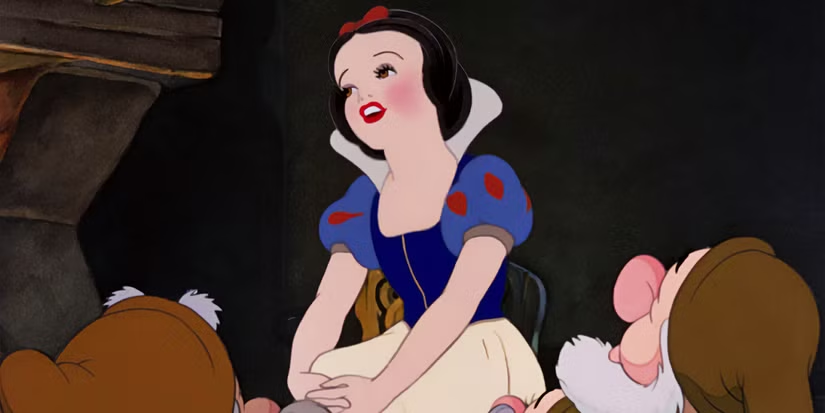
Part of the argument for Snow White and the Seven Dwarfs is simply this: the mountain had to be climbed before anybody else got to build cathedrals on top of it. But I do not want to praise it only like an artifact, because that flattens what still makes it moving. Snow White (Adriana Caselotti) is eerie. It is sweeter than modern animation often allows itself to be, yes, though it is also genuinely haunted. The forest sequence still feels like childhood fear rendered as pure visual panic, branches turning into claws, the world itself suddenly deciding that innocence is no protection. Then the film pivots and becomes almost absurdly tender, a house in the woods, little rituals of labor and domesticity, singing as survival.
That tonal swing is part of what makes it so foundational and so rewatchable. The Evil Queen (Lucille La Verne) is one great early animated villain. She is not just mean but vanity going necrotic. Snow White, meanwhile, works less as a psychological character in the modern sense and more as the center of a fairy-tale moral atmosphere. The film’s greatness comes from how unapologetically it believes in enchantment and terror sharing the same frame. Animation did not begin here, of course, but the idea that a feature-length animated world could carry dread, comedy, beauty, music, and death inside one sustained spell absolutely did.

This is one of the best cases for the best animated film ever if your standard is not emotional devastation or mythic scale, but precision of personality. Wes Anderson’s Fantastic Mr. Fox is exquisitely made, every texture, every twitch, every corduroy and leaf and twitching whisker part of a complete tactile world. But the film stays with me because it understands the humiliating, funny pain of being a restless person trapped inside a life that should already be enough. Mr. Fox (George Clooney) is charming because he is a disaster. He wants domestic fulfillment and outlaw exhilaration at the same time, and the wanting makes him lie to everyone, including himself.
That is what gives the movie such emotional mileage on rewatch. Underneath the caper structure and all the perfect deadpan phrasing is a film about fathers embarrassing themselves in front of their sons, husbands mistaking appetite for vitality, and whole families improvising new forms of love while the world tries to dig them out and shoot them. Ash (Jason Schwartzman) gets sadder every time I see it. Kylie (Wallace Wolodarsky) gets funnier. Mrs. Fox (Meryl Streep) gets stronger. And the ending, with all that survival and dancing and fake-smooth style holding off real uncertainty by half an inch, feels almost miraculous. It is a movie about coolness, losing to need and becoming human in the process.

This movie has one of the strongest emotional cases on the list because it understands the exact second childhood wonder turns into moral feeling. The Iron Giant finding Hogarth Hughes (Eli Marienthal) is thrilling at first in the best giant-robot-fairy-tale way. A boy in the 1950s discovers this impossible metal being in the woods and the movie gives you all the initial pleasures, scale, secrecy, friendship, comic clumsiness, junkyard appetite, that beautiful sensation that the world just got bigger and nobody else knows yet. But then the film keeps deepening. The Giant (Vin Diesel) is not merely a machine. He is a consciousness deciding what kind of being he wants to become in a world already eager to define him as weapon.
And that is why the film keeps ruining people, because “You are who you choose to be” is not just a nice line here. It is the whole moral architecture. The Cold War paranoia matters because it turns fear into policy and policy into violence almost instantly. Dean McCoppin (Harry Connick Jr.) matters because he offers a different model of masculinity than the military panic machine. And Hogarth matters because children in great animated films are often the first people to believe that power and gentleness do not have to cancel each other out. The ending remains one of animation’s cleanest emotional detonations because the movie has made sacrificial heroism feel both cosmic and heartbreakingly personal.

I know this is not the entry everyone expects to see this high in the argument, which is part of why I want to defend it emotionally rather than academically. Spirit: Stallion of the Cimarron works because it is all nerve. It has one of the boldest choices an American animated film of its era could make: center an animal, keep him unanthropomorphized in speech, and trust movement, music, and framing to carry almost everything that matters. That decision gives the film an unusual purity. Spirit (Matt Damon) is not delivering cute dialogue or winking one-liners to keep the audience comfortable. He is feeling through force, fear, resistance, and the aching instinct to remain himself while men keep trying to turn him into property.
That gives the movie a very different emotional texture from most studio animation. The train sequence, the taming attempts, the mountain spaces, the relationship with Rain, the bond with Little Creek (Daniel Studi), all of it plays like an ongoing war between freedom and possession. The film’s politics are not subtle, and good. They should not be. Colonization in Spirit feels like violation of land, animal life, and human dignity all at once. The score and songs, by Bryan Adams, may be unabashedly huge, though that hugeness is exactly what makes the movie land for people who love it. It does not hide its heart. It runs with it.

The argument for Toy Story is not just that it changed animation forever, though it obviously did. The stronger argument is that it changed the emotional possibilities of modern animation by making existential panic funny. Woody (Tom Hanks) is not just jealous of Buzz (Tim Allen). He is facing obsolescence. That is a very adult terror hidden inside a perfect children’s premise. Your worth has been tied to being loved in a certain role, then one day something shinier arrives and suddenly the entire structure that told you who you were starts wobbling. It’s an identity crisis in the toy world.
And what makes the film such a permanent rewatch is how sharply each toy embodies a different relationship to purpose. Buzz lives inside delusion until delusion breaks and leaves him with emptiness. Woody lives inside function until function is threatened and leaves him crueler than he wants to be. Their friendship matters because it is built through humiliation. They become friends by surviving the collapse of the stories they were telling about themselves. That is incredibly rich material for a movie this brisk and funny. And yes, the technical leap is historic. But the reason it lasts in the bloodstream is that it makes being a toy feel like being alive.

This one belongs in the fight because it did something animation almost never does at this scale, and certainly didn’t in the last few years — making innovation feel emotional instead of ornamental. The first time you see Spider-Man: Into the Spider-Verse, part of the thrill is pure sensation. The frame rate changes, the halftone textures, the comic-book ruptures, the color explosions, the way the image seems to be inventing itself scene by scene. But the movie would not still matter this much if that were all it had. What gives it a claim to best ever is that the visual language is tied to becoming. Miles Morales (Shameik Moore) does not yet move like himself because he does not yet know how to be himself. The form is unstable because he is.
That is such a beautiful use of animation. The multiverse stuff is fun, and the Spider-variants are delicious, and the movie has one of the best ensemble energy mixes in modern studio animation, but the real charge is Miles. He is scared in a very recognizable teenage way, scared of disappointing everyone, scared of not becoming enough, scared that the version of himself others are waiting for may not actually arrive on schedule. Then the leap happens. Not just the literal one, the emotional one. And the film earns that leap so completely that it stops being hype and becomes release.

This has one of the strongest best animated film ever claims. Everybody knows the skeleton, lost prince, murdered father, exile, guilt, return, but the reason The Lion King stays so powerful is that it does not feel like plot first. It feels like emotional weather. Mufasa (James Earl Jones)’s authority, Simba (Jonathan Taylor Thomas / Matthew Broderick)’s adoration, Scar (Jeremy Irons)’s bitterness, the whole opening sweep of the Pride Lands, everything is calibrated to make the eventual break feel like the world itself being morally disordered. That is why children carry the film so intensely. It is not just sad. It is cosmically wrong in a way they can feel before they can explain it.
And then adulthood changes the film again. Simba’s avoidance gets more painful. Timon and Pumbaa’s philosophy gets funnier and sadder. Nala (Moira Kelly) becomes more than a return-of-duty device. Scar grows richer as a character because his cruelty is so bound up with humiliation and grievance. And the animation itself remains extraordinary, not merely beautiful in the broad Disney sense, but emotionally legible. Fire. dust. moonlight. stampede. sunrise. ghostly cloud-presence. The movie keeps giving its themes elemental bodies. It is one of the clearest examples of animation turning archetype into lived feeling.

If your definition of “best animated film of all time” is the film that most completely proves animation can carry unbearable human truth without softening it, Grave of the Fireflies might be your answer. It is not “great for an animated movie.” That phrase should be buried forever. It is one of the greatest anti-war films ever made, one of the greatest films about sibling love, and one of the most devastating works about social collapse and private pride ever created in any medium.
Seita (Tsutomu Tatsumi) and Setsuko (Ayano Shiraishi) are children trying to continue being children for one more day while the adult world breaks every structure that should protect them. The first time, the hunger and loss overwhelm you. Later, Seita becomes more complicated. His love for Setsuko becomes even more moving, but his pride, shame, and inability to bend before humiliation become part of the tragedy too. Society itself becomes the villain more clearly each time, not in some abstract ideological way, but through ordinary indifference, through people deciding someone else’s suffering is not their emergency. That is where the film destroys you. It makes catastrophe intimate and then refuses to let intimacy save anyone.

There is a very serious case that Pinocchio is the greatest animated film ever made because it still feels like animation discovering how dark moral storytelling could become once you let drawings dream properly. This movie is terrifying. Not in a side-scene, “that part scared me as a kid” way. In its actual structure. Pinocchio (Dickie Jones) moves through one predatory adult system after another, exploitation, fraud, temptation, trafficking, transformation, and the movie never truly lies about what is at stake. If he keeps drifting toward appetite without conscience, he will lose himself. That is a brutal story engine for a children’s film, which is one reason it feels so eternal.
And then there is the craftsmanship, which can still make you angry with admiration. The underwater work, the lighting, the dimensionality of the spaces, the texture of Stromboli’s theater and Pleasure Island and Monstro’s violence, it all still feels alive. Jiminy Cricket (Cliff Edwards) matters too much to reduce him to mascot charm. He is the film’s fragile moral witness, constantly outmatched by how seductive irresponsibility can look in the moment. That is why the movie remains so rich. It understands that becoming “real” is not cute. It is painful. It requires choosing integrity repeatedly while the world keeps marketing you easier selves.

This is my number one because it feels like the medium remembering everything it can do at once. It can terrify. It can console. It can bewilder. It can make labor sacred. It can turn greed into a monster and loneliness into a train ride and childhood fear into a whole spirit economy. Spirited Away is not just imaginative. Plenty of animated films are imaginative. It feels spiritually complete. Chihiro (Rumi Hiiragi) entering the bathhouse world is one of the greatest passages in cinema because the movie immediately understands that the strange world is not there only to entertain her. It is there to reshape her.
That is what makes it the greatest. Chihiro begins frightened, sulky, overwhelmed, still soft in the way a child can be before responsibility has found its proper shape inside her. The spirit world does not reward specialness. It demands work, memory, courage, patience, and the ability to see beings beyond the role they appear to fill in front of you. Haku (Miyu Irino), No-Face (Akio Nakamura), Yubaba (Mari Natsuki), Zeniba, Kamaji (Bunta Sugawara), Lin (Yumi Tamai), the stink spirit, they all matter because the film is so alive to transformation. Nothing is fixed. Appetite changes people. Love changes them. Naming changes them. Forgetting changes them. Spirited Away feels endless because it is a movie about crossing through fear and coming back with a fuller soul. Animation has produced many masterpieces. This is the one that, for me, feels like the medium in full bloom.

Editor’s note: The below contains spoilers for House of the Dragon Season 3’s premiere.
Long waits for new seasons of hit shows are common, especially ones as ambitious and large-scale as House of the Dragon, but it’s rare that lengthy delays like this cause such division and controversy. Much of this stems from the creative schism between series creator Ryan Condal and Game of Thrones franchise creator George R.R. Martin, the latter of whom has practically disowned the show for its creative deviations from the source material. Couple that with the release of another Game of Thrones spin-off, A Knight of the Seven Kingdoms, and the third and penultimate season of House of the Dragon faces an uphill battle.
“Battle” is the perfect term to use, as Season 3 of Game of Thrones‘ first-ever prequel series is full of them. Season 2 left off with Aemond Targaryen (Ewan Mitchell) making the most headway in a daring play for the throne as Prince Regent, having severely injured his brother, King Aegon II (Tom Glynn-Carney), and killing Princess Rhaenys (Eve Best) in one fell swoop. Still grieving the death of her son, Lucerys (Elliot Grihault), Rhaenyra Targaryen (Emma D’Arcy) has grown obsessed with killing Aegon, and, with the help of Daemon’s (Matt Smith) newfound army, the Sea Snake’s (Steve Toussaint) naval fleet, and a newly recruited squadron of bastards with Targaryen dragon blood, she seeks to wage an all out war in a bid to reclaim the Iron Throne — which may be easier to claim than expected, as Season 2 ended with Rhaenyra conspiring with Alicent (Olivia Cooke) to take King’s Landing once and for all. Season 3 picks up right where Season 2 left off, and in spectacular fashion at that.
Though there has been a shift in trust between Rhaenyra and her childhood friend, the displaced queen seems to believe that Alicent’s desire to sacrifice Aegon for the good of the kingdom is genuine. Someone who does not agree with that assessment is Rhaenyra’s eldest heir, Jacaerys (Harry Collett), who firmly believes that the current Queen of Westeros is leading his mother into a trap. Rhaenrya refuses to heed the counsel of her firstborn child, as she once again proves she will do whatever it takes to kill both of her half-brothers.

HBO Officially Confirms a Super-Sized Premiere for Its Biggest Fantasy Series of 2026
Fire. Blood. Battles.
Elsewhere, Rhaenyra’s allies have made significant progress in their campaigns to gain footholds throughout Westeros before an all-but-inevitable invasion of King’s Landing. Rhaena Targaryen (Phoebe Campbell), desperate for a dragon of her own, is attempting to tame the wild (and decently ugly) beast named Sheepstealer in the Vale. Meanwhile, Rhaena’s father, Daemon, is leading a campaign against the affluent Lannisters before he makes contact with House Stark, forming an alliance that proves the Lannister and Stark rivalry predates the events of Game of Thrones by many decades. Also in the mix are the newly recruited band of bastard dragonriders that Rhaenyra has recruited, who are growing impatient waiting for their queen to join them in their planned ambush of Aemond, especially when they have a run-in with a mysterious antlered creature. Finally, Corlys is preparing his fleet for battle, which is arriving sooner than he thinks.

Although the Blacks have their sights set on an all-but-assured victory, the same can’t be said for the Greens, who are practically falling apart at the seams. For starters, the current king of Westeros is in the process of fleeing King’s Landing with Lord Larys Strong (Matthew Needham). Not only that, but when they are stopped by Rhaenyra’s footsoldiers, Larys completely surrenders himself and Aegon into captivity, seemingly implying that they will surrender to Rhaenyra just as the tide starts to turn in her favor.
Back in King’s Landing, Aemond has practically named himself king in the absence of his brother, and while Alicent regards her son with fear in her eyes, Aemond is also clearly shaken by the current state of the war. He knows well that the more progress the Blacks make, the higher the likelihood he’ll need to confront Daemon — the uncle he once revered — and even a dragon as large as his undefeated Vhagar would be genuinely challenged. Despite this, Alicent still encourages her son to face Daemon in battle, which Aemond responds to by proving that Targaryens still have a penchant for incest when he kisses his own mother on the lips.
Things may not be looking good for the Greens, but initially, there seems to be a silver lining with their new alliance with the Triarchy. Unfortunately, Sharako Lohar (Abigail Thorn) has a personal score to settle with her enemy, the Sea Snake, and is willing to abandon her position as the flagship to pursue her mission of revenge. Her decision plays into the infamous Battle of the Gullet, perhaps the greatest naval war ever showcased in the Game of Thrones universe. Rhaenyra is ready to take her dragon into battle, but a bold move from a worried Jacaerys leads to him locking his mother in her chambers while he and Baela (Bethany Antonia) leave to turn the tide themselves with their own dragons.
Back on the front lines, the Sea Snake’s forces have clashed with Lohar’s, but Corlys knows that his old enemy will do anything to catch up to him. After leading Lohar through a narrow strait, causing her to sacrifice her Lannister allies, a final battle between the seafarers results in Corlys being thrown overboard, with his fate ultimately left unknown. On the other hand, Lohar meets her end at the hand of Corlys’ recently reclaimed son, Alyn of Hull (Abubakar Salim).
With the Triarchy’s naval commander defeated, victory for the Sea Snake’s allies should be guaranteed, but things aren’t over yet. A wildcard enters the picture when Rhaena brings a semi-tamed Sheepstealer to the battle, which starts as helpful but soon turns disastrous when the wild dragon starts attacking friendlies. Jacaerys and Baela try to stop the violent beast, but upon realizing their kin is riding the monster, Jacaerys has to maneuver to get out of the way, sending Vermax to the depths in the process. Just when it looks like Jacaerys might make it out alive, a slew of arrows from a nearby ship kills him in an instant, taking yet another of Rhaenyra’s children and setting the stage for an explosive penultimate season.
House of the Dragon Season 3’s premiere episode is streaming on HBO Max now.

August 21, 2022
HBO
George R.R. Martin
Clare Kilner, Geeta Patel
Gabe Fonseca


Fabien Frankel
Ser Criston Cole

Bunnie Xo is not letting her divorce from country music star, Jelly Roll, dim her light, as she recently unleashed her curves for a girls’ night out.
The media personality and her estranged husband shocked many when it was revealed that they were ending their marriage.
However, things still seem amicable between Jelly Roll and Bunnie Xo, as they’ve made efforts to keep talks about their separation as civil and friendly as possible.
Bunnie Xo took to social media to flaunt videos and images from her night out, as she rocked a daring plunging top, which showed off her abs and curves.
She also had on high-waisted plaid pants, while accessorizing the entire look with silver jewelry and keeping her blonde hair in loose waves.
Bunnie seemed to be having a great time at the bar she was at with her gal pals, as some videos shared showed her laughing and dancing, sometimes with a cocktail in hand.
In the caption of the Instagram post, she wrote, “So in love w/ these women,” adding a heart and bandage emoji, seemingly hinting at her ongoing divorce from her husband of almost 10 years, Jelly Roll.

In the comment section of her post, fans of Bunnie had nothing but kind words for the podcaster, with some even taking subtle jabs at Jelly Roll.
One person wrote, “I hope you can feel the support of the world, Bunnie! You are a beautiful person, keep loving on YOU.”
“Lady, you are like some superhero. We love you, hope you know that and feel it,” another individual commented.
Someone else said, “You are ONE of a kind PERFECT in every way—don’t ever stop being you with your beautiful, gorgeous heart! You are IRREPLACEABLE 100000%.”
A fan blasted her estranged husband, writing, “J is gonna regret losing you, and he will try to circle the block for sure.”
“Jelly roll will never be able to replace you,” another said.

Jelly Roll was the one who made the move to legally end their marriage in May, citing “irreconcilable differences.”
Court documents obtained by Us Weekly showed that the singer further stated that he and Bunnie were “unable to live together successfully as Husband and Wife.”
Insiders have since shed more light on the reason behind their split, revealing that Jelly Roll and Bunnie’s lifestyles began to clash.
The former lovebirds, who initially bonded over their similar pasts being riddled with struggles, grew apart, especially with the singer prioritizing a “faith-centered lifestyle.”
Speaking to Page Six, a source noted, “Some people around them felt there was growing tension as Jelly embraced a more faith-centered lifestyle while Bunnie continued building the outspoken and provocative brand that had always been authentic to her.”
“Whether that’s fair or not, it became increasingly difficult to reconcile those two worlds,” they added.
The source further explained how multiple marital issues strained Jelly Roll and Bunnie’s marriage, especially the singer’s increased focus on faith amid his weight loss journey.
“A lot of people want to point to one thing, but it was really a combination of issues that had been building for years,” the insider said. “They came from similar worlds when they met and bonded over surviving difficult circumstances, but over time their lives started moving in different directions.”
They added, “Jelly has changed tremendously over the last few years. His focus shifted to his health, faith, family, and the long-term legacy he wants to leave behind.”
Regarding their assets, Jelly Roll noted in the divorce documents: “The Husband anticipates that the parties will execute and enter into a Marital Dissolution Agreement that provides for the division of the parties’ marital assets and debts. Plaintiff asks that the Court approve any Marital Dissolution Agreement entered into by the parties upon the expiration of the statutory waiting period.”

Despite their divorce, the former couple still plans to have a child, with Bunnie Xo sharing the details on her “Dumb Blonde” podcast.
We’re going to co-parent together,” Bunnie stated. “J is my best friend. Like, this isn’t what you guys think this is. Nobody cheated on the other person. We just served our purpose for each other.”
Back in February, the pair shared the exciting news that they had finally found a surrogate following a long battle with infertility.
Bunnie had been open about her struggles, once revealing details about the challenges she was facing while slamming fans speculating about her marriage to Jelly Roll.
“Someone said the other day, ‘They used to always be together, and now you never see them together,’” she recalled. “I’m like, ‘Do you guys not know that for the past six months [that] I’ve been trying to make a baby?”
With the pair confirming that a baby is still underway, it means child support is bound to come into play in their ongoing, and presently amicable divorce.
In the world of television, there are very few creators who can outmatch Taylor Sheridan. Thanks to the success of Yellowstone, Sheridan’s built a veritable empire of TV shows for Paramount. He’s also wrangled a collection of talented actors to star in them, including Kevin Costner, Sylvester Stallone, and Harrison Ford. Long before he climbed to the top of the Paramount mountain, Sheridan racked up a collection of supporting roles on various television shows. One of those series was on a popular 2000’s-era neo-noir series, and it features Sheridan playing a character that’s the complete opposite of the rugged, salt-of-the-earth cowboy types he often writes about or portrays in his current shows.
That series is none other than Veronica Mars. The Rob Thomas-created series stars Kristen Bell as the titular private eye, who juggles solving crimes in her hometown of Neptune with completing high school. Equal parts dark and witty, Veronica Mars was a major success during its original run, outlasting the end of its parent network, UPN, and even returning for both a movie and a revival series. It also saw a number of iconic guest stars during that run, including Tessa Thompson and Amanda Seyfried. That raises the question:What exactly is Taylor Sheridan’s role in Veronica Mars?

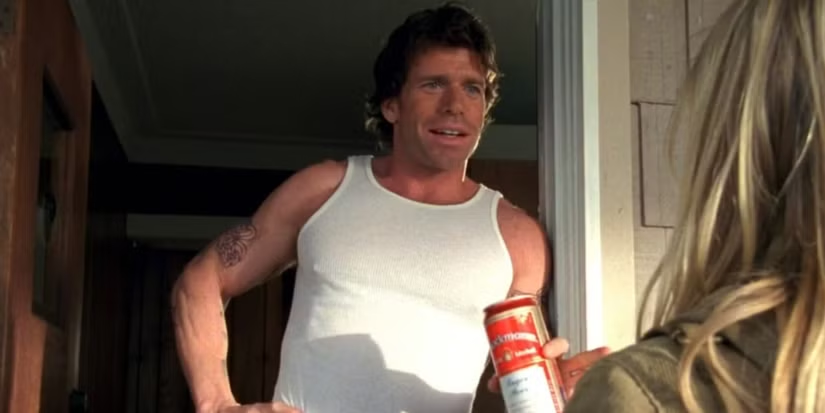
Taylor Sheridan makes his first appearance in Veronica Mars during the Season 2 episode “Ahoy Mateys” as Danny Boyd, the cousin of criminal Liam Fitzpatrick (Rodney Rowland). Veronica first encounters Danny when she’s investigating a mystery involving a school bus that plunged into the Pacific Ocean. Danny isn’t the sharpest tool in the shed, as he unwittingly shows Veronica around his cousin’s headquarters and winds up being taken down by her signature taser shortly after. It’s a far cry from Sheridan’s clean-cut role as David Hale in Sons of Anarchy, but it showcases that the man has some serious range.
Danny would wind up playing a key role in Season 2 of Veronica Mars, since he has a connection to a plastic surgeon whom Veronica suspects is involved in the bus crash. Said surgeon almost put Veronica’s on-again, off-again boyfriend Logan Echolls (Jason Dohring) behind bars, making Danny’s help all the more necessary. Sheridan would reprise his role in two more episodes of Season 3, though his last appearance in the episode “Debasement Tapes” was overshadowed by none other than Paul Rudd. Despite a brief run, Sheridan managed to be one of Veronica Mars’ most memorable guest stars.
Shortly after his stint on Veronica Mars, Taylor Sheridan would board Sons of Anarchy. However, he quit after that show’s third season to pursue writing, as he felt he wasn’t paid enough for his roles. Sheridan further elaborated on his decision during a 2021 interview with Deadline, saying he knew the time was right to shift gears to writing and creating his own shows.
“It wasn’t so much over money. It was so much more than that’s how the business saw me… And I decided right there that I didn’t want to be 11 on the call sheet for the rest of my life.”
True to his word, Sheridan immediately pivoted to writing scripts for movies and television, beginning with the crime thriller Sicario and then launching the Yellowstone universe, which continues to this day with the spin-offs Y: Marshals and Dutton Ranch. He’s still managed to play key roles in those series, particularly in Yellowstone as horse trainer Travis Wheatley. Travis is the complete opposite of Danny Boyd, as he’s muscular, confident, and impresses every woman he comes into contact with. Some Yellowstone fans tend to see Travis as little more than Sheridan’s self-insert, since the series’ penultimate episode, which features him prominently, is the lowest-rated episode of Yellowstone‘s run.
Taylor Sheridan is about to undergo another seismic career shift, as he’s departing Paramount for a robust deal at Universal Pictures. Fans of his work should remember that his short-lived stint on Veronica Mars helped pave the path to his current superstardom.

March 14, 2014
107 minutes

Us Weekly has affiliate partnerships. We receive compensation when you click on a link and make a purchase. Learn more!
When temperatures climb, the last thing anyone wants is an outfit that feels heavy, clingy or uncomfortable. Sound familiar? Plenty of Amazon shoppers feel the same, which is why so many are adding the R.Vivimos Flowy Maxi Dress to their carts as fast as they can. Made from 100% cotton, the breezy style was made to keep you cool while making getting dressed feel almost effortless, all for just $36.
Part of what makes this dress such a standout is how versatile it is. It’s the kind of easy, laid-back piece you can throw on in seconds and somehow manage to look miraculously put together, whether you’re off to the farmer’s market, packing for vacation or meeting friends for lunch. Better still, its relaxed silhouette keeps you comfortable even on the hottest summer days.
Get the R.Vivimos Flowy Maxi Dress for $36 at Amazon! Please note, prices are accurate as of the publishing date but are subject to change.
The lightweight cotton fabric delivers an airy, effortless feel that’s hard to find, especially at such an affordable price point. Its flowy shape moves beautifully, while the otherwise simple design makes it easy to dress up with a kitten heel and jewelry or keep casual with flats and a straw tote.

Wardrobe panic is real — but add in warmer temps and the pressure to find something that makes you feel cool, calm and confident can be even more of a struggle. You want something feminine and pretty for vacation or Saturday morning farmer’s markets, but the thought of squeezing into something tight in 90-degree heat […]
It’s also the type of wardrobe staple you’ll find yourself reaching for again and again. Comfortable enough for everyday wear but polished enough for vacations, brunches and backyard gatherings, it solves one summer’s biggest style dilemmas: looking chic without overheating.
Many shoppers say the dress quickly became their go-to warm-weather outfit. “I basically live in these dresses,” shared one five-star reviewer. “I have multiple colors and cycle through them. Literally the most comfy piece of clothing I own, and they are super cute too!”
“The 100% cotton material is soft, breathable, and feels wonderful against the skin—especially in the summer heat,” wrote another five-star reviewer. “I’ve looked at similar high-end cotton and linen dresses that cost over $150, and this one is just as stylish and well-made for a fraction of the price.”
If your summer wardrobe is missing that one easy dress you’ll want to wear on repeat, this shopper-loved maxi is well worth considering. Lightweight, breathable and endlessly versatile, it’s easy to understand why so many shoppers are calling it one of Amazon’s best.
Get the R.Vivimos Flowy Maxi Dress for $36 at Amazon! Please note, prices are accurate as of the publishing date but are subject to change.
Looking for something else? Explore more maxi dresses here and don’t forget to check out all of Amazon’s Daily Deals for more great finds!

By Chris Snellgrove
| Published

Growing up, I always respected Don Bluth, whose animated films felt like the weirder, scruffier alternative to the squeaky-clean movies of Walt Disney. Some of these were moving and inspirational, like An American Tail. Others were almost horrifying in their own way, like The Secrets of NIMH and All Dogs Go To Heaven. In a weird way, that was part of the charm: while you generally know what to expect from a Disney movie, you never know what you’ll get from Don Bluth. That’s especially true of his forgotten, turn-of-the-millennium sci-fi classic: Titan A.E.
To put it mildly, Titan A.E. is a movie that shouldn’t work. The plot is filled with warmed-over sci-fi cliches, the 2D and 3D animation clash, and the voice cast is beyond eclectic. However, all of these bizarre elements add up to a strange brew that is surprisingly tasty. The movie has also aged surprisingly well, especially now that Star Trek and Star Wars have started circling the drain. If you want a genuinely fresh view of the future, then you need to take a trip to the past. Fortunately, it’s just a click away: Titan A.E. is currently streaming for free on Tubi.

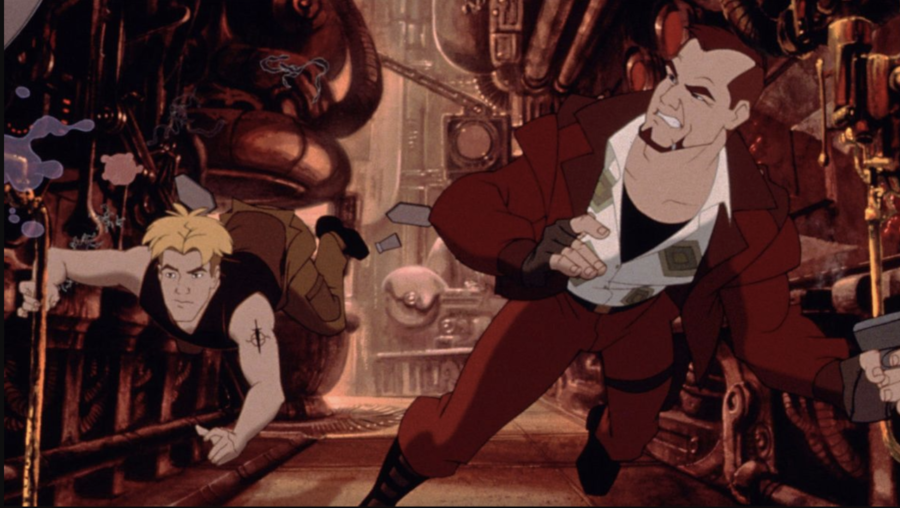
The plot of Titan A.E. is that after Earth is attacked by evil aliens, humans must wander the galaxy, each trying to cobble together a living. One such human is Cale, whose father was working on an ambitious project that caught the aliens’ attention. As a young man, he joins a ragtag crew who need his help (and the holographic map in his ring) to track down his father’s old ship. According to dear old dad, that ship may hold the key to saving what’s left of humanity. But unless our hero can outwit an alien army and find allies he can truly trust, the human race may be completely doomed.
The most striking thing about Titan A.E. is its animation style. The film came out a few years after Toy Story normalized CGI animation. As such, this movie has a mixture of styles: most of it is animated in gloriously beautiful 2D animation, but some of the action (basically, anything involving aliens or spaceships) is animated with CGI. This ends up effectively being a double-edged sword for Titan A.E. On the one hand, the animation styles visually clash, and some of the computer-generated imagery has aged particularly poorly. On the other hand, this mixture of styles gives Titan A.E. a very distinct style, which is only fitting for a movie that, to this day, is like no other cartoon that you’ve seen.

While Titan A.E. will appeal to many audiences (including animation fiends and sci-fi nerds), it will particularly resonate with fans of shows like Buffy the Vampire Slayer and Firefly. That’s because Joss Whedon is one of the film’s writers, and he does a great job bringing these quirky characters to life. Also, while saying this may get me staked by crazed fans, the writing in Titan A.E. arguably represents Whedon at his peak: the dialogue is funny and memorable without feeling like it’s trying too hard. Personally, I’ll take dialogue like this any day over Whedon’s attempts at humor in The Avengers, a movie where a quarter of Tony Stark’s lines are dumb puns and outdated references.
Of course, the dialogue in Titan A.E. is that much more memorable thanks to the movie’s weirdly stacked cast. Lion King alumnus Nathan Lane provides great comic relief as a cutesy alien, while Bill Pullman is all grizzled charisma as a gruff space captain. Janeane Garofalo lends her comedic talents to a kind of stern, den mother of an alien, and Drew Barrymore is all sexy confidence as a pilot turned love interest. At the heart of it all is Matt Damon, whose rich performance helps protagonist Cale stand out as one of the freshest and funniest main characters in sci-fi history.

Beyond the unique animation, great writing, and immersive voice cast, Titan A.E. has one more secret weapon in its arsenal: a killer alt-rock soundtrack. We get fun needle drops from millennial-friendly bands like Lit, Jamiroquai, and Powerman 5000, making this the perfect movie for anyone who went to high school in the ‘90s. Heck, this is a film that prominently included Creed’s “Higher” in its trailer, cementing this movie as an artifact of a simpler time. Will the soundtrack make aging nerds want to stand up and shake their groove thing? Yes. Will you probably need a little pain medicine after you do it? Also yes.
All of this adds up to a movie greater than the sum of its parts. The story is a mishmash of various sci-fi cliches, but it remixes them well enough that the resulting film feels surprisingly fresh. The animation styles clash at times, but the combination of 2D and 3D looks better than almost any modern cartoon. Plus, while the needle drops from yesteryear seriously date the film, that’s not necessarily a bad thing; rather, they serve as a bass-shaking reminder that Titan A.E. hails from the waning twilight of the golden age of animation.
Want to reexperience that golden age for yourself? Don’t worry: you won’t have to form a ragtag band to find answers on the far side of the galaxy. All you need to do is check out Titan A.E., which is currently streaming for free on Tubi. This film is Star Wars meets Firefly, and it will appeal to anyone who has ever obnoxiously quoted the works of Joss Whedon. Throw in a rollicking soundtrack and a pitch-perfect celebrity cast, and you have a forgotten epic that’s worth sharing with the entire galaxy.

For decades, Dragon Ball fans have wondered how Goku’s story will ultimately end. Will the legendary Saiyan unlock one final transformation? Will he ascend to an even greater level of power? Or could his final form be something much simpler?
An obscure piece of artwork from 1989 is now reigniting that discussion.
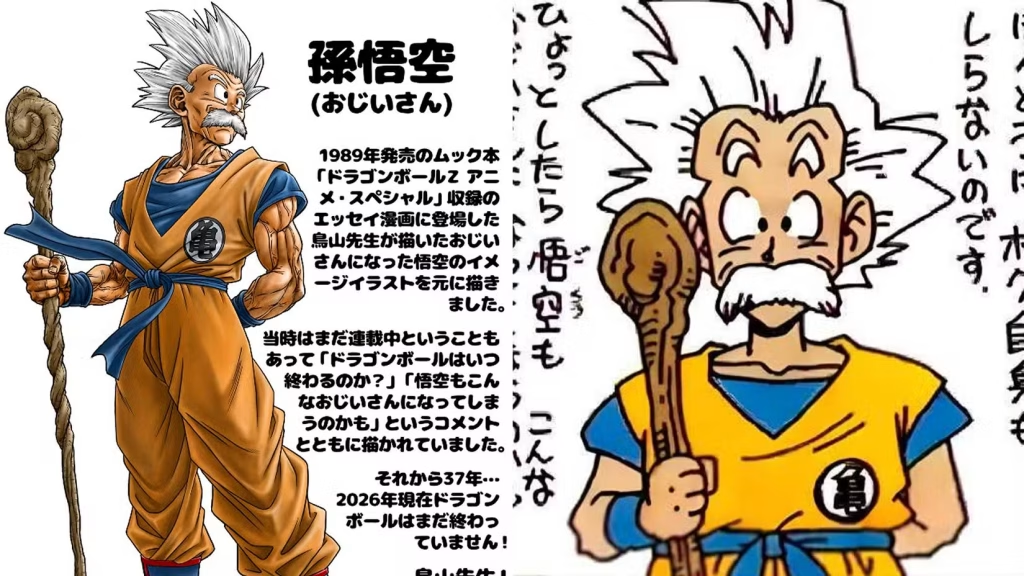
The illustration, created by Dragon Ball creator Akira Toriyama for the Dragon Ball Z Anime Special book, depicts an elderly Goku many years into the future. While the image was originally created as a joke, fans are now revisiting it as a fascinating glimpse at what Goku’s final years could look like.
What makes the drawing even more interesting is its origin. This version of Goku was not created out of nowhere. It is based on an old sketch Akira Toriyama drew back in 1989 for the Dragon Ball Z Anime Special book. At the time, Toriyama jokingly imagined what Goku might look like as an old man after fans repeatedly asked him when the story would finally end and how Goku would look in it.
The sketch presents a much older version of the beloved hero, a stark contrast to the youthful and energetic fighter fans have followed for decades. Rather than sporting a new transformation or overwhelming aura, this Goku appears aged by time, offering a rare vision of a future that has never been explored in the manga or anime.

Goku [credit: Akira Toriyama 1989]
Since the illustration came from an obscure publication released long before the internet era, many fans had never even seen it before. Now that it has resurfaced, the image is sparking fresh conversations throughout the Dragon Ballcommunity. Some see it simply as a humorous drawing from Toriyama’s past, while others view it as an intriguing possibility for where Goku’s journey could one day end.
Of course, Dragon Ball has changed dramatically since 1989. Goku has gone on to achieve forms that Toriyama himself may never have envisioned when he first drew the sketch. From Super Saiyan to Ultra Instinct, the Saiyan warrior has repeatedly surpassed expectations and rewritten his limits.
Still, there is something compelling about seeing Goku not as an unstoppable fighter chasing greater power, but as an old man who has lived a long and extraordinary life. It is a reminder that even legends grow older, and perhaps the greatest ending for Goku is not one defined by power, but by peace.
Whether Toriyama ever intended the drawing to represent Goku’s true final appearance may never be known. But more than 35 years later, fans are once again asking the question:
Could this sketch from 1989 be our first glimpse at Goku’s final form?
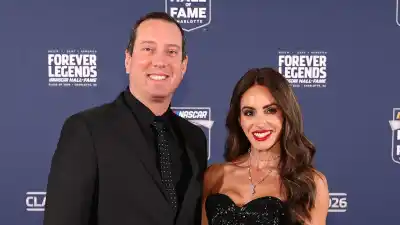
Kyle Busch’s wife, Samantha Busch, is honoring the late NASCAR legend after his death on a day the racer should be spending time with his children.
“This still doesn’t feel real at all. I was up all night thinking about what today should have looked like for Kyle and the kids. The Father’s Day cards that were already made, sitting in a drawer with no one to give them to. Trying to figure out how to navigate a day that should be filled with so much joy for them,” Samantha wrote via Instagram on Sunday, June 21. “He was the dad who never missed a chance to be silly, race the kids around the neighborhood, wrap them in his arms, or stay up a little longer for one more book, one more question, one more moment.”
She continued, “Nothing made him prouder than being Brexton and Lennix’s dad.Watching these memories hurts more than I can explain, but they also remind me how lucky we were to have him.”
Samantha concluded her post with a message for Kyle, sharing that their family — which includes son Brexton, 11, and daughter Lennix, 4 — “[misses] you every second of every day.”

Samantha Busch (née Sarcinella) was brought to tears ahead of a moment of silence at the Indy 500 that honored her late husband, NASCAR driver Kyle Busch. Clutching the shoulder of son Brexton, Samantha, 39, was overcome with emotion while one of the event’s announcers paid tribute to the Busch family at the Indianapolis Motor […]
“Our hearts ache for you, but it’s more than that. Your absence is something we physically feel. Our bodies hurt from missing you, from reaching for someone who isn’t there, from loving someone we can’t hold anymore,” Samantha wrote. “I will keep telling your stories, sharing your laughs, and making sure Brexton and Lennix always know just how deeply they were loved by their dad. Happy Father’s Day. We love you and miss you more than words can say.”
Alongside the message, Samantha shared several clips of Kyle with their children through the years. In one video, the family embraced in a sweet hug while standing on a race track.
News broke in May that Kyle unexpectedly died at age 41. One day prior to his death, the racer was hospitalized after he was found unresponsive in a race simulator in North Carolina. A death certificate obtained by Us Weekly showed that Kyle had pneumonia for “days or weeks” before his death, which progressed into sepsis, a life-threatening blood infection that can cause multi-organ failure.
Samantha addressed Kyle’s death the following month, sharing a statement signed by her, Brexton and Lennix.

Samantha Busch, the widow of late NASCAR icon Kyle Busch, gave some emotional insight into their final moments together before his shocking death last month. “In the hospital, I made Kyle a promise,” Samantha, 40, shared via Instagram on Wednesday, June 10. “I promised him that I would do everything I could to help our […]
“As a family, we wanted to take a moment to say thank you,” she wrote via Instagram. “The prayers, messages, flowers, meals, hugs, and countless acts of kindness have carried us through the most heartbreaking days of our lives. While our hearts are absolutely shattered, we have felt God’s presence and arms wrapped tightly around us through each and every one of you.”


She continued, “The love that has surrounded our family during this unimaginable time has brought comfort in the middle of so much pain. Knowing the impact Kyle had on others and seeing how they are honoring him through each unique act of generosity is a true testament to how special Kyle is to so many people. There are moments when the weight of this loss feels impossible to carry, yet time and time again God, through you all, has shown us we are not alone.”
Samantha concluded by sharing “family and friends to fans and complete strangers” for “showing up for us.”
“Thank you for loving our family so well,” she wrote. “Thank you for loving Kyle. Thank you for honoring him. We may never find the words to fully express what your support has meant to us, but please know that we are deeply grateful.”
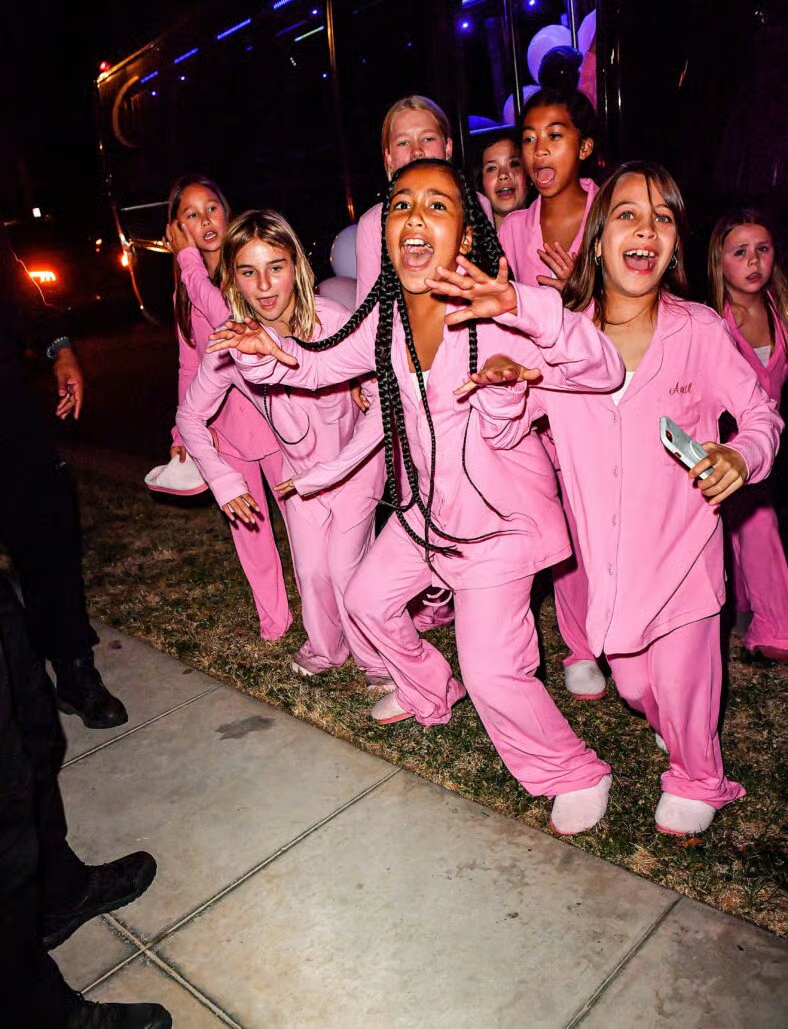
North West reportedly has a first concert tour in the works following the release of her debut EP, “N0RTH4EVR,” in May.
According to reports, the tour will consist of 14 shows across cities in the United States and is expected to kick off in early August.
Joining the daughter of Kanye West and Kim Kardashian on the road will be Molly Santana, with whom she recently shared the stage at Rolling Loud 2026 and Lyrical Lemonade’s Summer Smash.

After largely making brief stage appearances at other artists’ shows, North West is now set to headline concerts of her own as part of her upcoming debut tour.
Tickets for the concerts went on sale Friday, while the tour itself is scheduled to begin on August 5 and conclude on August 27.
The average ticket price is around $78.46, although some seats are available for as little as $32. Premium seats and VIP packages are expected to cost more than $500.
North will perform exclusively in major U.S. cities, including Dallas, where the tour kicks off, and Los Angeles, which will host the final show. In total, the tour consists of 14 dates, with each show scheduled to begin at or after 7 p.m.
For each of the tour dates, North will be joined by rapper and singer Molly Santana, who first emerged on the music scene in 2021 with the release of her debut EP, “Molly’s World.”
Santana has gained greater recognition in recent years, including through her feature on the track “Ran to Atlanta” from Drake’s album “Iceman.”
The tour will not be the first time Santana and North have performed together in public. They most recently shared the stage at Lyrical Lemonade’s Summer Smash in Chicago just a week ago, which featured artists such as Lil Baby, Playboi Carti, and Lil Uzi Vert.
The pair also appeared together at Rolling Loud 2026 in Orlando, where their appearance was billed as a surprise performance.
Going on tour follows North’s debut EP, “N0RTH4EVR,” which she released early last month on streaming services through Gamma, per Billboard.
The EP features six tracks, including “H0w Sh0uld ! F33l,” “Th!s t!m3,” “Aishite,” and “#N0rth4evr.”
Across the project, North blends elements of punk rock and intense rage rap in a way that moves fluidly across the sonic styles of her generation. It also incorporates elements of emo and Jersey club.
She self-produced and wrote all the tracks on the project and, interestingly, did not feature any collaborators, seemingly to keep the project solely her own. However, she did sample a couple of songs, including Meg & Dia’s “Monster” and Social Repose’s rock-based cover of Mumford & Sons’ “Little Lion Man.”

North’s EP release appears to have been met with enthusiastic support from her family. Instagram Story posts from Rob Kardashian, Khloé Kardashian, and Kris Jenner showed them streaming and listening to the project, tagging North and sharing emojis to express their pride.
At home, her mother, Kim Kardashian, went the extra mile by decorating the house with inflatable balloons spelling out the album title. North later shared a clip of the scene on her Instagram Story, which also included a snippet of “Aishite” playing in the background.
In addition to the family promotion, North hosted a two-day pop-up event at Complex’s Fairfax store in Los Angeles. At the venue, fans could listen to the EP, purchase exclusive merchandise, and meet her.
Supporting her at the event were her father, Kanye, and his wife, Bianca Censori, who attended on the first night, and Kim, who appeared on the second night.

A few days ago, North officially became a teenager and received heartfelt messages from her parents to mark the milestone.
“Happy Birthday my Northiiiiiieeeeeeeee (Uzi voice!!!).” Kim wrote on Instagram. “I can’t believe you are officially a teenager!!!!! There’s no one like you my baby girl! I love being your mom and watching you grow. I love you to the aliens galaxies you would speak of as a kid and beyond.”
Meanwhile, Kanye kept his message brief, writing, “Happy Bday Twin,” alongside a picture of the teenager.
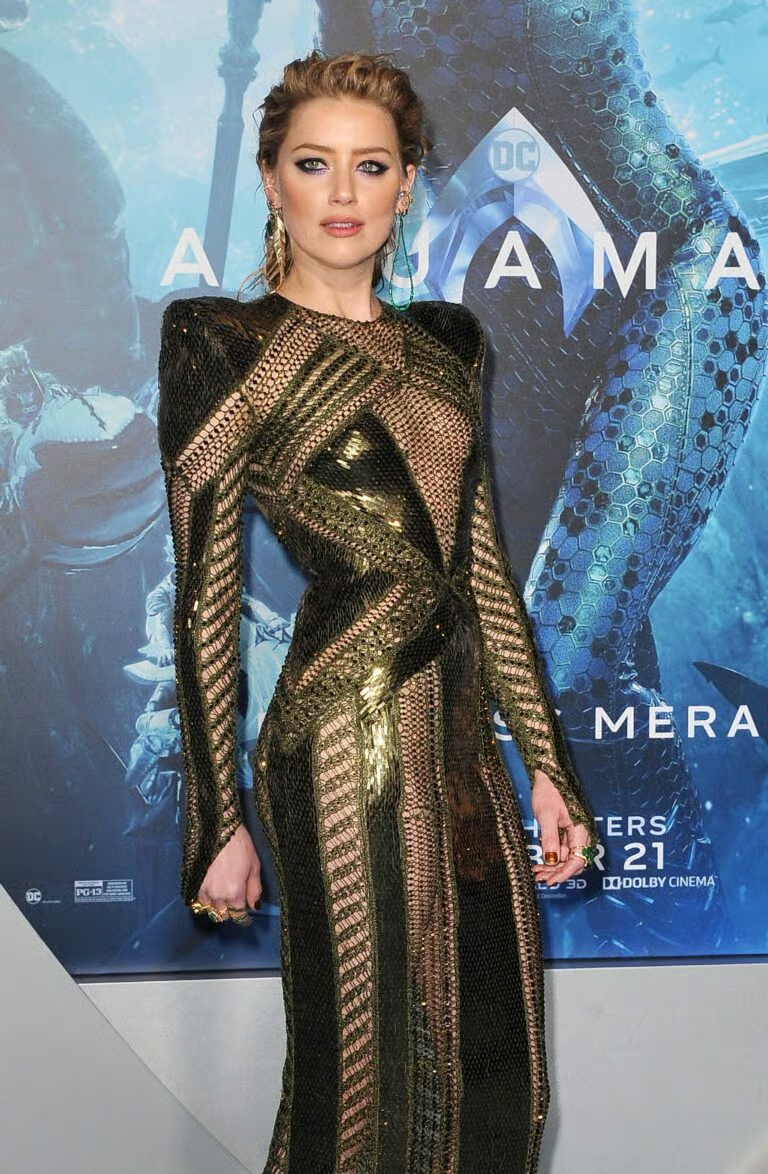
Amber Heard is giving fans a rare look at her life far from Hollywood. The rare social media update comes as the actress continues to live a largely private life overseas following her highly publicized legal battle with ex-husband Johnny Depp.

The actress took to Instagram on Sunday to celebrate a personal milestone after completing the KLM Norte Sur 10K race in Madrid, sharing a series of photos that highlighted both the accomplishment and her life as a mother of three.
“First race glow,” Heard captioned a smiling post-race photo of herself dressed in a pink sports bra and matching jogging shorts.
In addition to her Instagram post, Heard shared several moments from race day on her Instagram Stories. One image showed the actress smiling into the camera after completing the event, while another featured a sweet moment with her eldest daughter, Oonagh.
The actress could be seen cradling the 5-year-old after crossing the finish line. “Nothing beats this feeling,” Heard wrote across the photo.
Heard is also the mother of 12-month-old twins, Agnes and Ocean, whom she has largely kept out of the public eye.

The actress has previously spoken about her love of running and the role it plays in maintaining both her physical and mental well-being. “I like running because it’s a way for me to alleviate stress, clear my mind, and refocus,” Heard told SHAPE magazine in 2018. “Plus I can do it anywhere. I travel so much that it’s invaluable to me to have something that keeps me healthy and feeling good no matter where I am.”
Heard has often been photographed jogging through Madrid since relocating to Spain and appears to have made fitness a regular part of her routine. While discussing fitness, Heard previously explained that she no longer believes in chasing unrealistic standards at the expense of happiness.
“If you’re not going to enjoy life, there’s no point in eating a certain way and working out and doing all the things actors do to manipulate how we look, and how the world looks at us,” she said, adding that she prefers to make exercise a natural part of her daily life rather than treating it as an obligation.

Heard has largely remained out of the spotlight since the conclusion of her highly publicized defamation trial against Johnny Depp in 2022.
The former couple’s defamation trial took place in Virginia after Depp sued Heard over a 2018 Washington Post op-ed in which she described herself as a public figure representing domestic abuse. Although Heard did not name Depp in the article, he argued that the piece damaged his reputation and career.
The televised trial lasted six weeks and featured explosive testimony from both actors. Heard accused Depp of physically, emotionally, and sexually abusing her throughout their relationship. Among her claims were allegations that Depp struck her during arguments, threw objects, damaged property during heated confrontations, and assaulted her during a trip to Australia in 2015.
Depp denied the allegations and argued that he was never physically abusive toward Heard. His legal team instead claimed that he was the victim of abuse during the relationship, pointing to audio recordings, witness testimony, and incidents in which Depp alleged Heard became physically violent.
One of the most heavily discussed pieces of evidence during the trial was a 2016 video showing Depp slamming kitchen cabinets while appearing visibly upset. Jurors also heard audio recordings of arguments between the former spouses and testimony from friends, employees, medical professionals, and family members who offered differing accounts of the relationship.

After the verdict, the actress spent time living in Mallorca before eventually settling permanently in Madrid, where she has focused on raising her children away from Hollywood.
In a 2023 TikTok video, Heard spoke with local reporters in Spanish and expressed her appreciation for her new home. She said she “loves living” in Spain and indicated that she planned to remain there long-term.
Since then, public appearances have been relatively rare, making her latest race-day update a notable glimpse into her life abroad.
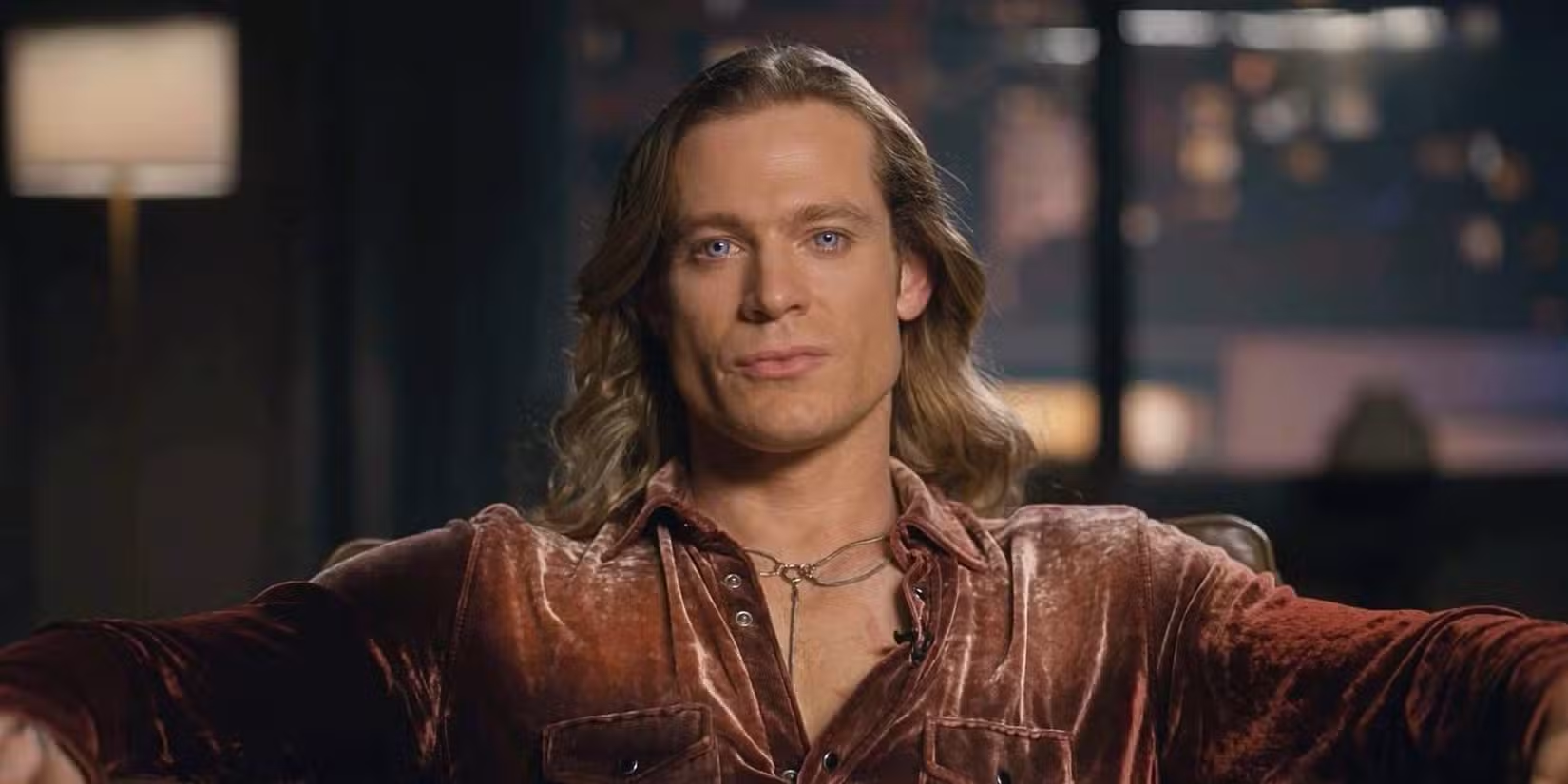
Editor’s note: The below contains spoilers for The Vampire Lestat Episode 3 and mentions rape.
Well, The Vampire Lestat definitely dials up the pain this week. Writer Anusree Roy and director Claudia Llosa‘s show-stopping “Toronto” drags Lestat de Lioncourt’s (Sam Reid) and Louis de Pointe du Lac’s (Jacob Anderson) unhealed trauma to the surface in the devastating but magnificently artistic way Interview with the Vampire has perfected. If Louis’ grief-driven pursuit follows a linear path, then Lestat’s tendency to leap between timelines and distort past events (when he doesn’t skip them altogether) makes unearthing his history even more of a labyrinthine undertaking.
Episode 3 opens with Lestat and Gabriella (Jennifer Ehle) savoring their latest kill. Daniel Molloy (Eric Bogosian) calls Lestat and unleashes some one-sided yelling, since the subject of Daniel’s documentary happens to be very late for his official talking-head interview. As the de Lioncourts arrive at a makeshift studio space, Lestat’s voiceover muses over Daniel’s foundational experiences — a nurturing mother or lack thereof, his journalism career, Armand (Assad Zaman) turning him without his consent — and calls Daniel’s vampire life “brief” and “incidental.” He even harbors “regrets about Dan.” (Red herring or future heartbreak? My anxiety has skyrocketed.)
At last, Lestat sits down for the camera. He introduces himself by listing off everything that might or might not kill him (lines lifted straight from Anne Rice‘s The Vampire Lestat novel): fire, the sun, fellow vampires with a grudge, and, for cheeky kicks and giggles, the band Jefferson Starship. Daniel interrogates Lestat as ruthlessly as expected. For his opening salvo, he eviscerates the less-than-poetic lyrics of “Long Face” and the sexual innuendo pervading “Black Licorice.” Ever the thespian, Lestat insists that every lyric holds meaning. They’re reflections on his life, a commentary on society’s existential crisis, or an amplification of his “performative vampire” persona.
Daniel refuses to let go of the childhood stutter question. Lounging nearby, the composed, in-control Gabriella looks mildly unsettled. Lestat’s irritation and repressed vulnerability escalate the more unrelenting Daniel becomes; the Pulitzer Prize winner is on the hunt for the secret truth he smells. Do Lestat’s excessive displays of “pure expression” double as an elaborate funeral? The Brat Prince either pretends to break — teary-eyed, wailing about how “no one cares” that he’s poured his soul into 40 concerts, then mocking Daniel for believing his impromptu performance — or uses his trusty armor to conceal legitimate hurt.
Once he’s danced around the subject enough to exhaust an Olympic athlete, Lestat does discuss his stammer as well as his “wolfkiller” infamy. He can’t help but cover the confessions in self-effacing sarcasm, of course, blaming both situations for his damaged psyche. There’s also the horrifying time his nine-year-old self watched teenage girls be burnt to death for supposed witchcraft. As for the events of his twenty-ninth year, those transformative moments warrant multiple flashbacks. Lestat, using a different surname and sporting a cloak lined with wolf fur, escapes his abusive family’s controlling grasp long enough to visit Paris. The glory that captivates his Auvergne heart isn’t the city’s wonders, but a gifted violinist named Nicolas “Nicky” de Lenfent (Joseph Potter).
The two childhood acquaintances reconnect in a tavern. Although Lestat’s “first love” and the subject of last week’s ballad, “Why Do I Have to Feel?,” is following his passion for music, he’s penniless, unappreciated, and insecure about his abilities. The present-day Lestat skips over their love affair’s intimate details, although he doesn’t deny Daniel’s claim that he mourned Nicky by burying himself “in the ground for a century.” He does, however, correct his interviewer on one detail: he keeps a music box not as a loving memento, but as a self-loathing reminder about his culpability in Nicky’s demise.

What about Lestat’s demise? For that, Daniel turns to “Your Biggest Fan,” a song written from the perspective of Lestat’s maker, Magnus (Damien Atkins). Lestat refuses to call Magnus abusive, so the rock ballad’s first half unfolds with a bone-chilling cognitive dissonance. The series casts the most horrifying moment of Lestat’s life as a playful satire about obsessively adoring fans, right down to Magnus gazing at Lestat from afar and lip-syncing the lyrics music video-style. The moment Lestat’s memories veer too close to the truth — Magnus dragging the courageous wolf-killer from his bed by the throat, dumping him into a room filled with corpses that resemble Lestat, psychologically tormenting him for a month before feeding from his crumpled form — abrupt silence takes over.

‘Interview With the Vampire’ Producer Confirms AMC’s Spin-Off Plans [Exclusive]
The crossover potential is still limitless.
Lestat jumps ahead to his and Nicky’s post-Magnus reunion. As much as Lestat savors Daniel’s flabbergasted reaction when he drops the bombshell that he turned his mother (who then followed her son to Paris), Lestat claims Gabriella didn’t survive past her “toddler” years. Suspicious, Daniel studies the woman who calls herself Sofia. He follows her telepathic suggestion and asks about the Great Conversion. Lestat turns up his nose at the idea of a vampire-dominated world. Instead, he circles back to Nicky. Lestat turns his first love at the other man’s distraught request, and against Gabriella’s warning. Nicky might have begged to spend eternity with his lover, but immortality means he’ll never escape his wounded sensitivity.
Nicky’s violin skills blossom. He joins the Théâtre des Vampires‘ orchestra, but Armand disdains his frequent outbursts: his mind scattered, his heart overwhelmed by perfectionist self-hatred. The tragedy reaches its terrible conclusion once Nicky cuts off his own hand. Even though Lestat tries to make Nicky’s death as kind and comfortable as possible, he can’t strike the final blow. Armand holds Nicky down in the fireplace until he disintegrates into “nothingness.”
Finally, the Lestat of the 21st century reaches his breaking point. A bloody tear falls; he barely staves off a panic attack. Off-camera, he acknowledges how poorly the tour has sold and the battering his ego’s taken. He drives away, leaving even Gabriella behind. Daniel reviews the footage, and his ecstasy about this long-awaited breakthrough curdles into rage. None of the crew heard a word about Nicky because Lestat had telepathically communicated with Daniel. He’d bared an agonized part of his soul, but no recorded proof exists — just minutes of Lestat sitting in awkward silence.

As for Mr. de Pointe du Lac, there are zero tears in sight. He arrives at the Detroit coven’s lair and decapitates a vampire named Vester (Taylor Wint) in their front yard. Vester’s severed head expires before he can reveal Bruce’s (Damon Daunno) location. No matter — Louis strolls through the house and casually, effortlessly eliminates everyone who isn’t his target. Later that night, Bruce carries Baby Jenks (Ella Ballentine) over the threshold. The newlyweds find Louis waiting downstairs, smoking a cigarette and stripped down to a blood-stained white undershirt. He tears several bones out of Bruce’s spine to prevent his escape. Then, Louis reads aloud from Claudia’s (Bailey Bass) diary.
As Claudia’s graphic description of Bruce’s assault reaches his uncaring ears, the scene cuts back-and-forth between Louis’ revenge and Lestat hallucinating Magnus in his car. He can’t suppress the memory of his own abduction any longer; the torturous truth thunders free like water from a shattered dam. Lestat recites the same desperate, terrified prayer he did in the 18th century, when he was helpless against his merciless abuser. Deliverance never arrives for himself or his surrogate daughter. Claudia’s words describe her agonized despair from beyond the grave; Magnus pins Lestat to the floor and forces the screaming boy to consume his blood. Overwhelmed, the modern Lestat wrecks his car; Louis sets Claudia’s diary page and Bruce, by extension, on fire.
Louis visits that one specific diner to soak in the sight of Regina (Delainey Hayles), the waitress who resembles Claudia. And despite totaling his vehicle, Lestat still arrives at the concert venue. His music is reopening countless wounds, but confronting his muses might provide some cathartic healing. A vision of Nicky cheers him on from the audience while Magnus, and the real Gabriella, walk away. Elsewhere, Baby Jenks grieves Bruce, Daniel devours a victim in an alleyway, and Alex (Seamus Patterson) attends the same substance abuse recovery meeting as Arun — otherwise known as Armand.

June 7, 2026
AMC
Jonathan Ceniceroz, Ryan Kattner, Anusree Roy, Hannah Moscovitch, Kevin Hanna, Rolin Jones

Jacob Anderson
Louis de Pointe du Lac



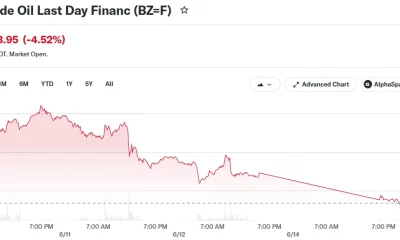

Crude Oil Plunges Over 4% as US-Iran Agreement Reopens Hormuz Strait


Weekend Open Thread: Miami – Corporette.com


The Adder At The Heart Of Intel’s 8087 FPU

Wall Street Week Ahead: Investors see Micron earnings as pulse check of AI rally momentum


HIVE shares jump as $220M AI deal speeds Bitcoin mining pivot


FIFA World Cup 2026: Canada beat 9-men Qatar 6-0 to register first ever win | FIFA World Cup 2026


MHP SE 2026 Q1 – Results – Earnings Call Presentation (OTCMKTS:MHPSY) 2026-06-20


Jake Chervinsky accuses CME of protecting derivatives monopoly


Brexit cost 6% of UK economy, Bank of England company data suggests


Anthropic’s Dario Amodei Urged AI Unity at G7, Even as US Banned His Models


Soccer-U.S. defends Iran World Cup travel restrictions, says discussions ongoing

Can Charles Hoskinson Really Rescue Cardano?


Weeks Of In-The-Field Testing And A Verdict


Adobe adds its AI assistant to Premiere, Illustrator and InDesign


Renter of Home in Anne Heche Crash Denies Settlement With Son


Andy Burnham and the meaning of Makerfield

Iren (IREN) Stock Surges on Jefferies Buy Rating: AI Infrastructure Play Gains Momentum


Instagram Now Lets You Add A Unique Caption To Each Carousel Slide


BBC Reporter Discusses Cross Party Criticism Of Trumps Iran Deal


Nightcore – MONEY ON THE DASH (Soft Rock Version) (Lyrics)


You must be logged in to post a comment Login