In early December, when I arrived in Carlsbad, California — home to (most) of the best golf club manufacturers in the world — it felt a bit like those first few days of college.
My future was spelled out — a week bopping around Southern California, from company to company, getting “Fully Fit” for new golf clubs at each spot. And I was as froshy as 7-handicaps get — anxiously interested in being there, in much the same way my 18-year-old self was anxiously interested in going to the University of Wisconsin. I understood my game upon arrival, but I also knew this experience would be very good for me. I knew I would learn a ton, would have a bunch of people looking after me, and that I’d probably make some friends along the way. These collegial vibes made sense, I would soon learn, because like many things in golf, an equipment journey can feel a lot like college. There are entry-level classes, courses mandatory for a major, and 700-level things like Spin Loft waiting to trip you up.
You can be lazy about it and not care, electing for the bliss of ignorance. Someone else may pay for your equipment, just as many parents pay for their children’s schooling. You can declare your intentions for a major just like you can declare your commitment to one manufacturer. Maybe your friend declared the same way, and you wanted to be like them. That can be a costly decision when you suddenly change things up years later.
Of course, another option is … leaning all the way in to an equipment education, seizing on the opportunity and coming out on the other side feeling like a graduate. (Knowing, of course, that there’s always a deeper version of golfy graduate school if you want to press on.) This stuff is costly, too! Just like higher ed. You want to get it right. That’s why I was there. I wanted to get it right.
Advertisement
To keep this analogy going, we’ll say I had dropped out of my equipment education years ago. Cobra gave me a great opportunity in 2016, asking me to claim whatever set of sticks I wanted. I didn’t know what I didn’t know, so I asked for a set of forged blades — the ones Rickie Fowler used to win the 2015 Players Championship — and told myself, You’ll learn how to hit them.
This sent me down a bad path, in part because I did learn. My ball-striking improved from sheer practice alone, and my handicap improved alongside it. But was I ever meant to play those blades? I ditched the Cobras for a set of unforgiving Mizunos a few years later, obsessed with how they looked, and then played a set of Titleist blades after that.
It was probably never meant to be that way. Between my action, my commitment to the game and my age, it has become clear that playing a set of butterknife irons — besides boosting my ego — led to gapping issues and extreme inconsistency toward the long end of the bag. And what my trip to California validated, day after day, was that there’s a promised land somewhere just outside of Bladesville.
Advertisement
TDay 1 was at TaylorMade’s Kingdom, where the difference between P770s, PTWs, P790s and P7CBs finally registered for me — much more than the letters and numbers in those names ever did before. My TaylorMade fitter waffled between putting me into Project X 6.5 (extra-stiff) and 6.0 (stiff) shafts, to match my Tour-average swing speed.
“Why are you swinging a telephone pole?” he asked. My eyes wide, my mind racing, I hoped he was joking. “That’s what Rory McIlroy uses,” he continued, chuckling. “You don’t swing like Rory McIlroy.”
And he was right. But as the fitting went on, I warmed up and felt comfort in those 6.5-stiffness shafts because, well, I had grooved a swing to match them over the years, and that swing wasn’t producing horrible results. So we actually stuck with them.
The author learned a ton about his golf equipment.
Adam Christensen/GOLF
Advertisement
A day later, at Titleist, we learned even more. The gamers I arrived with were Titleist T100s, made for the very consistent ball-striker who has no problem hitting trajectory heights consistently. I can groove a nice, high flight with everything from 7-iron through pitching wedge, which made those clubs a fine fit. But it was 4i, 5i and 6i that were always a bit fickle. Any of my strikes toward the heel or toe always failed to fly the distance I needed, and often spun a lot more, too. But as we worked through different iron heads, we found something:
T150s and their extra forgiveness just outside the sweet spot — right in my typical strike zone — had a much tighter dispersion and carry distance. In simple terms, they were predictable. And when it came to getting those long irons off the ground, a higher-launching T250 5-iron was going to reach that 80-foot peak height a lot more often.
Advertisement
Titleist 2025 T150 Custom Irons
T150 Irons are crafted for added distance with unwavering accuracy. Forged into a player’s shape with progressive blade lengths, T150 offers a precise blend of speed, stability, and consistency—providing the confidence to hit and hold greens from anywhere.
Confidence-Inspiring Forged Design
Forged into a player’s shape with a slightly larger head size for pure feel with extra stability.
Elevated Ball Speed
1° stronger lofts (vs. T100) combine with an improved muscle channel through 7-iron and lower long-iron CG to help improve speed, launch, and carry.
Superior Flight and Stability
Split high-density tungsten produces optimal CG with remarkable stability for precise shotmaking.
Consistent Speed & Spin
New VFT technology and progressive groove design provide consistent spin and speed across the face in variable conditions.
On the third day, at Cobra, the knowledge of three consecutive fittings was washing over me like the second semester of a foreign language. Was I fully fluent? Not quite. But I could understand what others in class were saying. I understood what it meant when my fitters kept adjusting my irons two degrees upright, and I could really start to communicate what I was feeling. After some time, it wasn’t so daunting to speak up in class. It helped that my coworkers — many of whom could qualify as teaching assistants — stepped in and interrupted my fittings, pressing the teachers for more info specific to ME. (That may not help you, the amateur at home, who will likely go through fittings alone. But it is a reminder to study up on some club terminology before you get baptized in a hitting bay.)
My final two fittings tended to blend together, but not in a bad way. They featured a bunch of time spent just beyond the irons. In that zone between 3-wood and 5-iron, where you should still be able to see 10- to 15-yard gaps between clubs. My gapping had mostly been flattened to something almost nonexistent. Everything seemed to go roughly 220 yards.
At Callaway, I had my first experience with a 7-wood — their Quantum Max — which very nearly went into my bag (and still might, the more I experiment with it).
Advertisement
At Srixon, I hit more 5-woods than I probably have at any other time in my life. The ball just … went … in a way 4-irons never seemed to. That, more than anything, was the biggest learning of my week in equipment academia. The aspects of my experience, my action, my strength, my skills, my hand-eye coordination, my brain — it all makes a helluva lot more sense with fairway woods than it does with cute, tiny, aesthetically pleasing long irons.
The clubs we went with — built from comfort, performance and appearance — are all listed below, including a driver and 3-wood that I just can’t quit. What I need to do now — metaphorically moving the tassel of my ball cap from one side to the other — is apply all the lessons of the equipment degree I earned to the real world, as they say. You know, on the golf course.
The Professional Basketball Writers Association (PBWA) announced Thursday that Paige Bueckers won the 2025 PBWA Tamika Catchings Award.
The award, which is named after the Indiana Fever legend, honors the best player who “combines excellence on the court with cooperation and dignity in dealing with the media and public.”
Advertisement
Several fans on social media reacted to Bueckers’ latest accolade, with many saying that the 6-foot star deserved the award.
“Media darling,” a fan tweeted.
@DallasWings Media Darling
“This really is the GOAT,” a fan commented on Instagram.
Fan comments on the Dallas Wings’ Instagram post (Credits: IG/@dallaswings)
Here are other fan reactions:
Ngl I never noticed this award before but she deserved it imo she’s very outspoken about the right things
According to the PBWA, other nominees for this year’s award were Washington Mystics’ Alysha Clark, Phoenix Mercury’s Satou Sabally, Atlanta Dream’s Shatori Walker-Kimbrough and New York Liberty’s Sabrina Ionescu.
Advertisement
Paige Bueckers averaged 19.2 points and 5.4 assists on 47.7% shooting in her rookie campaign. She was named an All-Star and won the Rookie of the Year award. She was also selected to the All-WNBA Second Team and the All-Rookie Team.
Paige Bueckers comments on latest accolade
The PBWA lauded Paige Bueckers’ consistent cooperation with the media throughout the 2025 WNBA season. In a recorded statement published by PBWA on Thursday, the Dallas Wings star acknowledged the role that the media plays in the sport.
“First of all, very grateful,” Bueckers said, per PBWA. “I know how much the media does for the game of basketball and how much it pushes the narratives and gets us out there, nationally and globally, and so I really appreciate it.
“As much as us players sometimes don’t want to do it after, win or loss, we’ve got to take it on the chin. It’s a part of basketball and it’s part of growing the game. So I’m very grateful for everybody in the media and everybody who helps push this game.”
Bueckers is currently participating in the 2026 FIBA Women’s World Cup Qualifying Tournament with Team USA. She made her debut for the senior national team on Wednesday, contributing nine points and four rebounds off the bench in a 110-46 win over Senegal.
Team USA will next face the tournament hosts, Puerto Rico, on Thursday. After that, they will battle Italy on Saturday, New Zealand on Sunday and Spain on Tuesday.
Nov 12, 2023; Glendale, Arizona, USA; Arizona Cardinals quarterback Kyler Murray (1) throws a pass against the Atlanta Falcons during the second half at State Farm Stadium. Mandatory Credit: Joe Camporeale-USA TODAY Sports
The Minnesota Vikings have checked the biggest offseason box. Longtime Arizona Cardinals starting quarterback Kyler Murray joined the club for the 2026 campaign, signing a one-year contract with the organization.
That deal is cheap, as expected, but it comes with one asterisk that could come into play next offseason.
According to various reports, Murray’s contract includes a no-tag clause.
Advertisement
Jordan Schultz reported on social media, “BREAKING: 2x Pro Bowl QB Kyler Murray is signing with the #Vikings, per sources. One big detail: I’m told Murray’s agent, Erik Burkhardt of RocNationSport, negotiated a no-tag clause in the deal — which will allow Murray to become a free agent again next year no matter what.”
Murray will cost the Vikings the veteran minimum, $1.3 million to be exact. They benefit from Arizona paying about $35 million in 2026. In today’s NFL, where starting quarterbacks get north of $40 million, that’s one of the best bargain deals in all of football.
Dec 31, 2023; Philadelphia, Pennsylvania, USA; Arizona Cardinals quarterback Kyler Murray (1) in a game against the Philadelphia Eagles at Lincoln Financial Field. Mandatory Credit: Bill Streicher-USA TODAY Sports
The no-tag clause is smart business from Murray’s agent. If he’s balling out in the upcoming season, he wants to secure a long-term deal, not a franchise tag with just one year of security. The Indianapolis Colts just used the transition tag on Daniel Jones. Perhaps even a better comparison would be Sam Darnold.
If Murray scores 35 touchdowns en route to a Pro Bowl season, a player with his track record and talent would undeniably cash in next offseason. The Vikings could use the franchise tag to prevent him from ever reaching free agency. Well, that idea is kaput.
Advertisement
No-tag clauses are rare but not unheard of in short-term quarterback deals. They provide leverage for players who view a contract as a bridge opportunity rather than a long-term commitment. In Murray’s case, the clause effectively guarantees he will control his next move in 2027 if his season in Minnesota goes well. For the Vikings, it represents a calculated risk — but one that becomes easier to accept given the extremely low financial commitment. They can still give him a contract extension.
Nov 26, 2023; Glendale, Arizona, USA; Detailed view of the jersey of Arizona Cardinals quarterback Kyler Murray (1) against the Los Angeles Rams at State Farm Stadium. Mandatory Credit: Mark J. Rebilas-USA TODAY Sports
The very minimal baseline for “good results” should be improved quarterback play compared to the 2025 season. J.J. McCarthy struggled all year with injuries and inconsistent play, and neither Carson Wentz nor Max Brosmer delivered inspiring play when given the chances.
Murray represents an immediate upgrade with two Pro Bowls on his résumé. Injuries have slowed him down in recent years, but the level of play is undoubtedly there.
Our own Dustin Baker commented on Murray’s track record:
“The Vikings are not onboarding an honest-to-goodness reclamation story in Murray; he’s different than the aforementioned Darnold, who had accomplished virtually nothing until he arrived in Minnesota for the 2024 season.”
Advertisement
Indeed, Murray has already been viewed as a franchise quarterback, which is why the Cardinals handed him a sweet contract in 2022. Darnold’s Minnesota chapter was the fourth stop in his career.
“Murray,” Baker continued, “has started 74% of all eligible games in his career, a percentage that would be closer to 80% had the Cardinals not “softly benched” him in 2025. He has the above-listed two Pro Bowls to his name, 4.38 speed coming out of the draft in 2019, can throw the football 65-70 yards, and is the fifth-most accurate quarterback in NFL history.”
“The 28-year-old also has a 0.090 career EPA+CPOE, ranking better than Baker Mayfield, Trevor Lawrence, Daniel Jones, and C.J. Stroud, to name a few. His career EPA+CPOE closely mirrors Justin Herbert’s from the 2025 campaign.”
Nov 17, 2024; Nashville, Tennessee, USA; Minnesota Vikings wide receiver Justin Jefferson (18) celebrates with wide receiver Jordan Addison (3) after his touchdown against the Tennessee Titans during the first half at Nissan Stadium. Mandatory Credit: Steve Roberts-Imagn Images.
Murray enters a wonderful situation from a quarterback’s perspective, with Justin Jefferson and Jordan Addison running routes for him and a head coach, Kevin O’Connell, who has been touted as a QB whisperer for a while.
The Vikings also have a strong foundation in front of him with two excellent offensive tackles, a promising first-round guard entering his second season and an expensive guard with more familiarity this time. Only the center position is a mystery.
Advertisement
Murray has the talent to thrive in the Twin Cities and he might be in a position to cash in next year. The Vikings won’t have the franchise tag bullet in the chamber, but if that’s even in play, the franchise is likely coming off a good season.
Rory McIlroy recovered sufficiently from a back injury to begin his defence of the Players Championship but he ended round one seven shots off the pace.
The world number two only arrived at TPC Sawgrass on the eve of the PGA Tour’s flagship tournament, having opted to stay at home for treatment on the injury that forced him to pull out of last week’s Arnold Palmer Invitational at Bay Hill.
He showed no obvious signs of discomfort in crushing his opening drive 329 yards down the middle of the fairway, but he took 73 more shots for a two-over par total, with birdie putts on the 16th and 17th holes grazing the edge of the cup.
“It was fine,” he said when asked how his back felt during the round.
Advertisement
“The most discomfort was when the ball was below my feet or with chipping.
“But it’s weird. I played on Friday; it’s not as if I’ve taken a ton of time off, I just felt unbelievably rusty out there.”
McIlroy’s Ryder Cup team-mate Sepp Straka is alongside three Americans setting the clubhouse pace on five under.
Austrian Straka chipped in for an eagle three on the par-five 16th in his bogey-free 67 to join Maverick McNealy, Lee Hodges and Sahith Theegala atop the leaderboard.
Advertisement
“We were fortunate to play in the afternoon with hardly any wind and the greens a lot softer,” said Straka, referring to the heavy rain that doused the course earlier in the day.
England’s Tommy Fleetwood was among those playing in the worst of the weather. He briefly reached five under, after a run of eagle-birdie-birdie on Sawgrass’ notoriously difficult 16th, 17th and 18th holes. He called it a “complete bonus of a stretch” of holes.
Having started on the 10th, the world number three then birdied the second but a torrential downpour that halted play for around 25 minutes checked his momentum, and successive bogeys on the fourth and fifth holes dropped him back into the pack.
He is in good company on three under, with Sweden’s Ludvig Aberg, Norwegian Viktor Hovland and American Xander Schauffele also enjoying solid starts.
Advertisement
The rain delay meant four players were unable to finish their opening rounds as the sun set and darkness fell. Among them is unheralded American Austin Smotherman, who will return on Friday morning to face a 15-foot birdie putt on the ninth hole – his 18th – to take the first-round lead.
In rapidly fading light, Smotherman hit his third shot on the par-five hole into the heart of the green, but while his playing partners opted to finish the hole, he decided to mark his ball and wait for the morning light.
Aug 7, 2025; El Segundo, CA, USA; Los Angeles Chargers linebacker Denzel Perryman (6) during training camp at The Bolt. Mandatory Credit: Kirby Lee-Imagn Images
The Los Angeles Chargers are set to re-sign linebacker Denzel Perryman to a one-year deal, NFL Network reported Thursday.
Financial terms were not reported.
Perryman, 33, started his career with the Chargers in 2015 when the team still played in San Diego. He made the move to Los Angeles and was with the franchise through the 2020 season before two seasons with the Las Vegas Raiders and one with the Houston Texans.
Perryman returned to the Chargers in 2024 and has played in 21 games (all starts) over the past two seasons. He was limited to 10 games last season because of injury and a suspension and also played in the team’s 16-3 playoff loss to the New England Patriots.
Advertisement
In 11 career seasons, Perryman has 764 tackles, 21 tackles for loss and 7.5 sacks with four forced fumbles, three fumble recoveries and five interceptions in 129 games (109 starts) since he was a second-round draft pick out of Miami. He was named to the Pro Bowl in 2021.
The NASCAR driver market is already drawing attention around Legacy Motor Club’s planned expansion. Team owner Jimmie Johnson confirmed a third full-time entry in the 2027 Cup Series, adding a new seat alongside current drivers Erik Jones (No. 42) and John Hunter Nemechek (No. 43). With several driver contracts ending this year, the upcoming silly season will shape who finally lands the seat.
Legacy Motor Club operates two charters and is set to expand after securing a third charter, currently connected to Rick Ware Racing and leased to RFK Racing. Once that charter returns to the team for the 2027 season, Johnson and the organization will need to identify a driver who fits the long-term plan and aligns with Toyota’s development structure.
Thanks for the submission!
Advertisement
The broader silly season picture also involves several young drivers in development programs. Prospects such as Taylor Gray, Giovanni Ruggiero, and William Sawalich are building experience in the NASCAR O’Reilly Auto Parts Series, while Cup drivers like Josh Berry remain under contract. That makes the third Legacy seat an intriguing storyline that requires a Toyota-aligned free agent.
Advertisement
3 NASCAR drivers who could drive for Legacy Motor Club’s third car in 2027
#3 Jesse Love
Jesse Love and Austin Dillon – 2025 NASCAR Xfinity Series. Source: Imagn
One of the names frequently linked to the possible seat is Jesse Love, a rising prospect within Richard Childress Racing. The reigning O’Reilly Auto Parts Series champion has been competing full-time in the No. 2 car and continues to build experience at NASCAR’s second-tier level while also making limited Cup Series starts in the No. 33 car.
Love is entering his third full-time O’Reilly season in 2026, and many within the garage see him as ready for a full-time Cup opportunity soon. However, his immediate future will depend on decisions within RCR’s Cup lineup, where Austin Dillon drives the No. 3 car, and Kyle Busch occupies the No. 8 entry.
With Busch’s contract up at the end of 2026, and the veteran being winless in almost three years, RCR may choose to promote its top prospect. If Love receives an in-house opportunity, Legacy would likely need to look elsewhere. If Busch continues, Love might look at Legacy Motor Club.
#2 Harrison Burton
Another name gaining traction in the rumor mill is Harrison Burton. The second-generation driver previously competed in the Cup Series with Wood Brothers Racing in 2024 and qualified for the playoffs after winning the 2024 summer Daytona race. Burton has since stepped back to the O’Reilly Auto Parts Series.
Burton also has existing ties to Legacy Motor Club. He currently serves as a reserve driver for the organization and has returned to the Toyota camp by racing with Sam Hunt Racing. That alignment with Toyota’s development system and familiarity with the Legacy make him an obvious internal option.
Advertisement
#1 Riley Herbst
Riley Herbst is another driver who could emerge as a candidate depending on how the 2026 NASCAR Cup Series season unfolds. He competes for 23XI Racing, joining as a rookie in 2025. His first season showed promise, including a P9 at Talladega, but consistency has been an issue.
The larger factor affecting Herbst’s future could be the rise of Toyota prospect Corey Heim. The reigning Truck Series champion is widely viewed as one of the most Cup-ready drivers in Toyota’s pipeline and is set to make 12 appearances this year. With Bubba Wallace and Tyler Reddick firmly established, Herbst’s seat could become vulnerable if Heim receives a full-time promotion.
In that scenario, moving to another Toyota-aligned team like Legacy Motor Club would provide Herbst with a realistic path to remain in the NASCAR Cup Series while continuing his development.
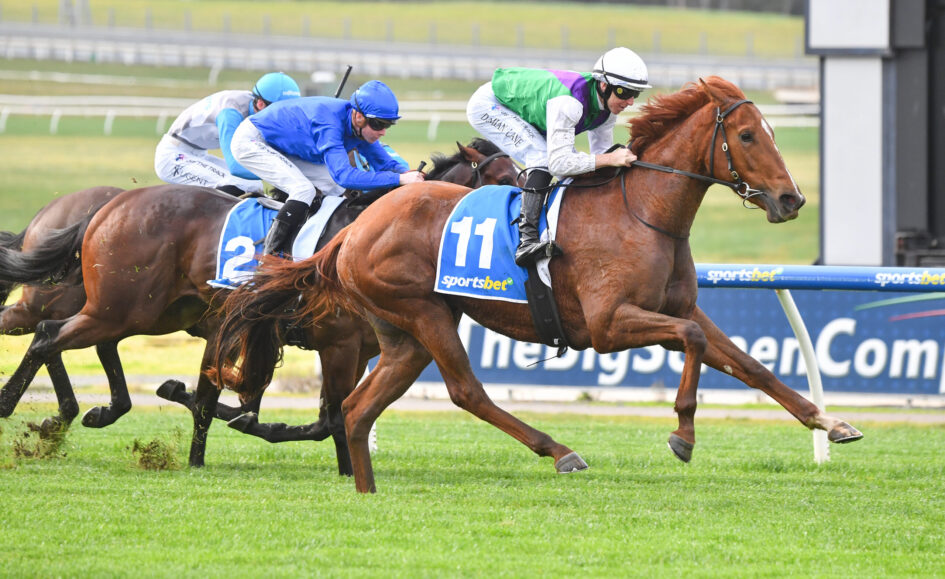
Heart Wood (9/2), runner-up to Fact To File in 2025, won the Grade 1 Ryanair Chase on St Patrick’s Thursday at Cheltenham.
His task was made easier pre-race with the new that Fact To File was withdrawn due to concerns about the ground. With Gordon Elliott’s Croke Park also a non-runner the field was reduced to seven for the two-and-a-half mile contest.
JPR One (18/1), in the hands of Brendan Powell, set the pace for the majority of the race but would eventually fade to fourth place.
Jonbon (2/1 favourite), in the same ownership of J.P. McManus as the earlier withdrawn Fact To File, looked set to claim another Grade 1 victory.
Advertisement
Darragh O’Keeffe and Heart Wood in behind him look comfortable, and then O’Keeffe asked the Henry de Bromhead-prepared eight-year-old for his effort, Jonbon could not respond.
The French-bred son of Choeur du Nord jumped the final two fences with precision and ran out an easy 10-length winner.
Jonbon retained his career record of never finishing outside the top-two on the racecourse when taking the runner-up spot in the hands of Nico de Boinville.
Advertisement
Banbridge (3/1), trained by Joseph O’Brien, was third, two lengths behind the Nicky Henderson-trained 10-year-old Jonbon.
It was a first Cheltenham Festival winner this year for Waterford trainer Henry de Bromhead, who said:
“It was brilliant, Darragh [O’Keeffe, winning jockey] was brilliant on him. He jumped amazing, it’s just lovely to get it. Delighted. He ran a blinder last year and we probably rode him to sort of be placed last year, whereas this year we said that we would go out and give it a real go. They went some gallop, to my eye. He just winged fences. Darragh was brilliant on him. It was just one of those dream runs.”
At its ribbon cutting in 1980, TPC Sawgrass represented something new in golf.
Carved from Florida swampland and built as the permanent home of The Players Championship, it was modern in ambition and unapologetic in temperament. Its architect, Pete Dye, was already known as a creative sadist, an artist with a knack for meting out abuse.
At Sawgrass, he produced a sun-splashed torture chamber. The world’s best players didn’t hide their pain.
Ben Crenshaw likened the layout to “Star Wars golf,” designed “by Darth Vader.” J. C. Snead did some literal sh-t talking. The course, he said, was “10 percent luck and 90 percent horse manure.”
Advertisement
Such griping did not go unheard. Over time, some of the layout’s sharpest features were softened. Dye himself made adjustments. Greens were toned down to suit the era of slick putting speeds. The look grew cleaner, less imposing.
Bit by bit, the Dye faded.
Davis Love III has been hired to bring it back.
Love, a two-time Players champion who has become a noted course architect himself, has spent the past few years helping the Tour tweak Sawgrass. His guiding principle is plain enough.
Advertisement
“What I want to see is Pete Dye back in the golf course,” Love said this week. “The greens have gotten flat. Some of the features have gone away.”
The flatter greens have created a secondary problem: Without enough slope to shed water, the putting surfaces can be harder to firm up after it rains.
Under Love’s direction, some lost elements have already been revived.
Tees have been pushed back on several par-5s. New mounding has sprouted on the stout par-4 14th. Last year, on the 6th hole, Love oversaw perhaps the most talked-about change thus far: the replanting of a tree that once overhung the fairway. Videos of that project set the internet aflame.
Advertisement
Not all the work has been so dramatic.
“We’re doing very boring stuff, like making the driving range longer,” Love said.
But even the mundane tasks tend to touch on the same theme. Extending the range requires digging a lake and shifting large amounts of dirt across the property. As that happens, Love and his collaborators can’t help wrestling with other questions.
“While we’re digging the lake on 4 and moving dirt, you have to ask what the long-term goal is for that bunker,” Love said. “Is it supposed to look like the 1982 picture or the 1989 picture?”
Advertisement
That question has become central to the project. Love and PGA Tour officials have combed through archival photos, searching for the moment when Dye’s vision was most fully realized. For Love, the answer keeps coming back to 1989.
By then, the course had already absorbed some early player feedback. A few of the most severe features had been tempered. But the layout still carried much of the visual intimidation and quirky contouring that made Dye’s work so distinctive.
Love recalled asking Dye about the scattershot bunkering at Whistling Straits, another of the architect’s celebrated designs.
“He told me, ‘Oh, they’re just there to intimidate you,’” Love said. “If you actually look at the fairway, it’s pretty wide.”
Advertisement
The same philosophy shaped Sawgrass. Dye liked to clutter the edges of a hole with nerve-racking distractions— mounds, waste areas, pot bunkers — so that players felt squeezed even when they weren’t.
“I just want to see the old look and the intimidating look back in the golf course,” Love said.
Love’s work is ongoing; it’s not slated for completion until 2028. And there’s a limit to what he can do. Today’s realities make a full rewind impossible. Today’s Players Championship requires infrastructure that didn’t exist when the course opened. Galleries are larger. Television towers and camera platforms need room to operate.
“That tee box needs to look like that because it’s a major championship. You need room for that camera,” Love said. “But once you get out in the fairway, especially around the greens, you can have the quirky stuff.”
Advertisement
For a man known across the game as one of its genuine good guys, Love now finds himself in the unusual role of restoring a dash of architectural cruelty.
Then again, at a Pete Dye course, simply being nice was never the point.
Nigeria’s women’s national basketball team lost 77–60 to South Korea women’s national basketball team in their latest game at the FIBA Women’s Basketball World Cup Qualifiers in France.
The defeat ended D’Tigress’ six-game winning run and was their first loss in the qualifying tournament.
Nigeria went into the match with confidence after a strong victory over Colombia women’s national basketball team earlier in the week. However, the African champions struggled to deal with the fast and accurate shooting of the Korean team, who are ranked below them in the world rankings.
Advertisement
The Nigerian side, coached by Rena Wakama, failed to win any of the four quarters of the match. They lost three quarters while the second quarter ended level.
Victoria Macaulay was Nigeria’s top scorer with 22 points and six rebounds. Ezinne Kalu also played an important role with six assists, while Murjanatu Musa added 10 points.
D’Tigress started the game well and controlled much of the first quarter. But South Korea finished strongly, scoring eight quick points while Nigeria managed just one, allowing the Asian side to take the quarter 20–16.
Advertisement
The second quarter was closely contested as both teams showed strong defence and energy. However, South Korea slowly gained control of the match, making good use of long-range shooting and finishing the game with 14 successful three-point shots.
The Korean team sealed the victory in the fourth quarter with a strong 14–2 run, while Nigeria struggled to score and managed only nine points in the final period.
The loss is Nigeria’s first defeat to South Korea in three meetings and brings an end to D’Tigress’ six-game winning streak.
Nigeria will now aim to bounce back when they face the Philippines women’s national basketball team in their next group match on Saturday.
Mar 12, 2026; Charlotte, NC, USA; Miami (FL) Hurricanes forward Malik Reneau (5) goes to the basket against Louisville Cardinals forward Vangelis Zougris (53) uring the first half at Spectrum Center. Mandatory Credit: Jim Dedmon-Imagn Images
CHARLOTTE — Malik Reneau poured in 24 points and made key plays in the second half as Miami knocked off No. 24 Louisville 78-73 in the Atlantic Coast Conference tournament quarterfinals Thursday afternoon.
Tru Washington came off the Miami bench for 17 points and Tre Donaldson provided 14 points and six assists for the third-seeded Hurricanes, who avenged a loss from the weekend as the teams met for the second time in six days.
Miami (25-7) will face second-seeded and No. 10 Virginia, an 81-74 winner earlier against North Carolina State, in Friday night’s first semifinal.
Ryan Conwell scored 22 points for sixth-seeded Louisville (23-10), but his 1-for-10 mark on 3-pointers contributed to the team’s 25% accuracy (6-for-24) from beyond the arc. J’Vonne Hadley racked up 19 points and reserve Khani Rooths had 11 points, but the Cardinals couldn’t repeat their success from a day earlier against SMU.
This latest tournament result reversed Louisville’s 92-89 road victory in Saturday’s regular-season finale. That outcome knocked Miami out of the Top 25.
Advertisement
On Thursday, Louisville pulled within 69-68 before Reneau scored in the lane with a minute to play. Washington’s steal on the inbounds play and two ensuing free throws gave the Hurricanes four points in a matter of one second of game time.
Reneau later sank two free throws to help the Hurricanes seal the outcome. Washington finished one point shy of his season high.
Louisville was hurt by 13 turnovers compared to eight for Miami.
Advertisement
The Cardinals shot 56.0% in the first half, but led only 38-37 at the break.
Back-to-back baskets from Washington pushed Miami to a 53-44 edge with less than 14 minutes remaining. Conwell had seven points during Louisville’s 10-2 spurt that drew the Cardinals to within 63-62.
Louisville has held out injured freshman standout Mikel Brown Jr. for four games this month in hopes he’ll be healed enough to participate in the NCAA Tournament. The Cardinals went 3-1 in those games.
INDIAN WELLS, Calif. (AP) — Aryna Sabalenka held off Victoria Mboko, 7-6 (0), 6-4, in the quarterfinals of the BNP Paribas Open on Thursday, keeping the top-ranked player in women’s tennis in the running for her first title at Indian Wells.
After winning every point in the first-set tiebreaker, Sabalenka got the one break she needed to win the second set and move on to the semifinals against 14th seed Linda Noskova of Czechia, a 6-2, 4-6, 6-2 winner over unseeded Australian Talia Gibson.
Advertisement
In the men’s draw, second-seeded Jannik Sinner of Italy defeated 25th-seeded American Learner Tien, 6-1, 6-2, ending the run of the youngest American — at age 20 — to play in a quarterfinal at Indian Wells since his coach, Michael Chang, won the tournament in 1992.
Advertisement
Sinner, who served 10 aces and double-faulted only once, will play his semifinal match on Saturday against German Alexander Zverev, a 6-2, 6-3 winner over France’s Arthur Fils.
Sabalenka hasn’t lost a set in the tournament, but was pushed by the 10th-seeded Mboko, a 19-year-old Canadian who won the 2025 Canadian Open.
Sabalenka put 94% of her first serves in play and was not broken, but did fight off five break points.
“I was focused on my game plan. I was just playing point by point,” Sabalenka said. “I’m pretty happy with the way I’m serving so far.”