The Michigan Wolverines are finally national champions once more in men’s basketball, taking down the UConn Huskies, 69-63, to finish a thrilling NCAA Tournament in style at Lucas Oil Stadium on Monday night.
This is the first time Michigan has won since 1989, and just the second time in program history they’ve called themselves champions.
Meanwhile, the Huskies were looking to win their third title in the last four tournaments, but their shooting failed them in the end.
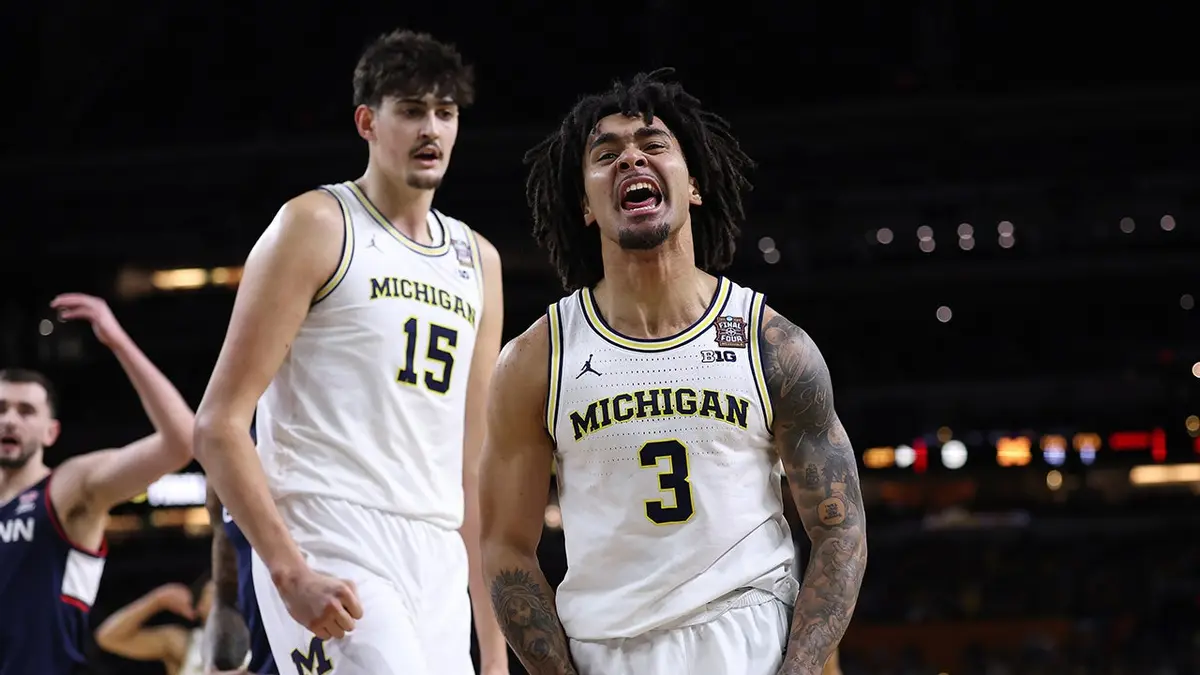
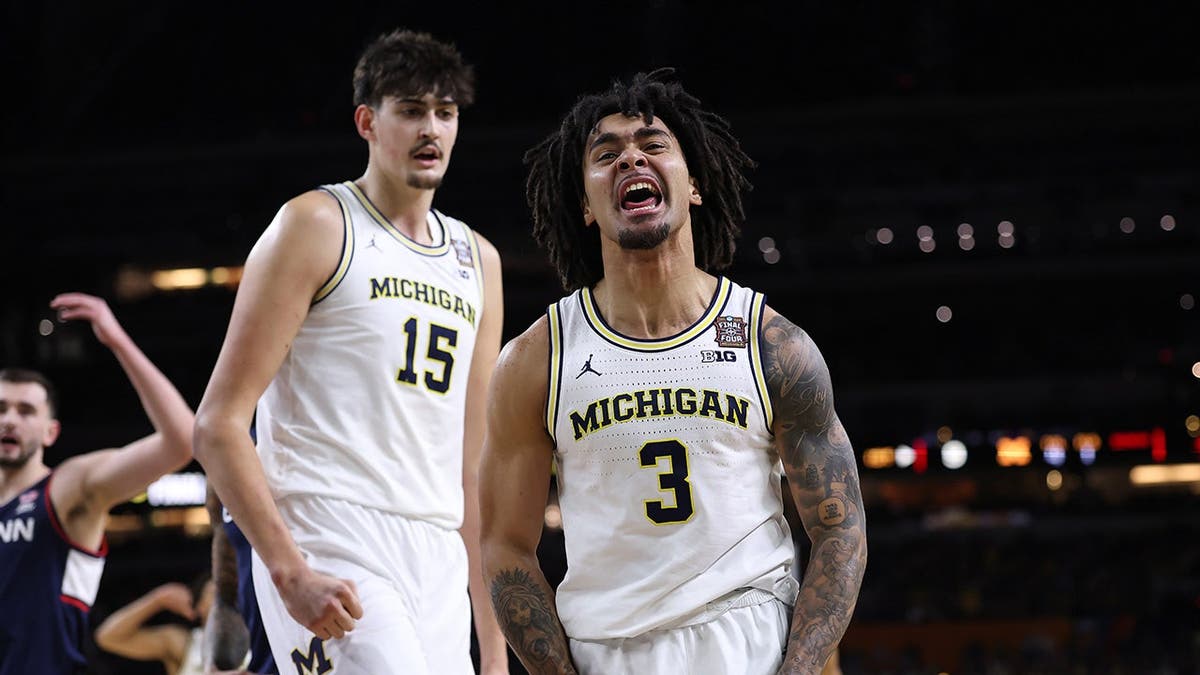
Elliot Cadeau celebrates during the first half of the 2026 NCAA men’s basketball national championship game against UConn at Lucas Oil Stadium in Indianapolis, Indiana, on April 6, 2026.(Michael Reaves/Getty Images)
While both team’s offenses came into this game working like a machine, it was a low-scoring affair to kick off this game. Michigan only owned a 33-29 first-half lead by the buzzer, but it wasn’t Yaxel Lendeborg leading the way in the points department for the Wolverines.
The Michigan star, who is playing on a sprained left MCL and left ankle, which came during the win over Arizona in the Final Four, was just 1-of-5 shooting for four points in the first half. It was Morez Johnson Jr. (10 points) and Elliot Cadeau (seven points) finding some rhythm for the Wolverines.
But it didn’t help that Michigan was scoreless from beyond the arc and shooting just 37% from the field. Meanwhile, UConn wasn’t doing themselves any favors either.
The Huskies shot just 33% in the first half, with Alex Karaban hitting two of his five three-point attempts. Solo Ball, who was spotted in a walking boot entering the game with “some type of foot sprain,” according to head coach Dan Hurley, had eight points on 3-of-4 from the field.
While they were down, UConn was certainly playing the type of game they wanted against Michigan – a rugged battle, especially on the glass. Michigan has shown its prowess of taking momentum and sprinting with it offensively, dominating opponents all year long, including this NCAA Tournament.
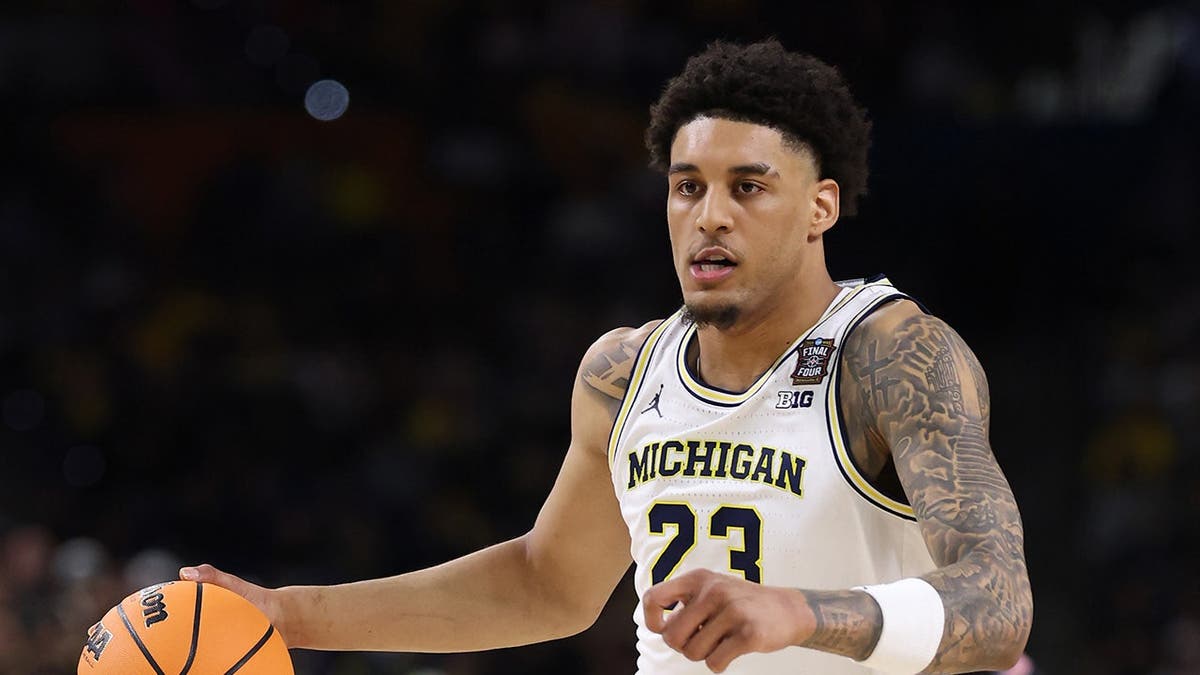
Yaxel Lendeborg of the Michigan Wolverines dribbles during the first half against the UConn Huskies in the National Championship of the 2026 NCAA men’s basketball tournament at Lucas Oil Stadium in Indianapolis, Ind., on April 6, 2026.(Michael Reaves/Getty Images)
However, the Huskies know their scratching and clawing abilities for 40 minutes allows them to never let an opponent feel comfortable. Just ask the Duke Blue Devils what happened in the Final Four.
Advertisement
The Huskies had that same demeanor in the second half, though it didn’t help they took a page out of the Wolverines’ first-half playbook – they couldn’t find the stroke from range. UConn was desperate to hit a three-pointer, but despite open looks, they couldn’t get one to fall as the Michigan lead eventually got to 11 points after Cadeau finally broke the seal for his squad on the opposite end, burying a three-pointer to get to a double-digit lead.
But Hurley was firing up the crowd as the Huskies never quit, cutting the lead to five with less than nine minutes to play in the game. Lendeborg, though, after shaking his head on the bench as he wasn’t having the game he hoped in the national championship, stepped up when he checked back in.
Lendeborg saw a sweet pass from Cadeau in transition and got the lead back to 11 with a tough layup, making it 56-45 with less than six minutes to play. He would also come in clutch with another two points following a Braylon Mullins three-pointer.
Once again, the Huskies wouldn’t quit, as Mullins finally found his shot beyond the arc, knocking that Michigan lead back to single digits with a follow-up three-pointer again to Lendeborg’s layups. But, just as gritty as the Huskies played, the Wolverines seemed to always have the answer in this hard-fought contest.
Advertisement
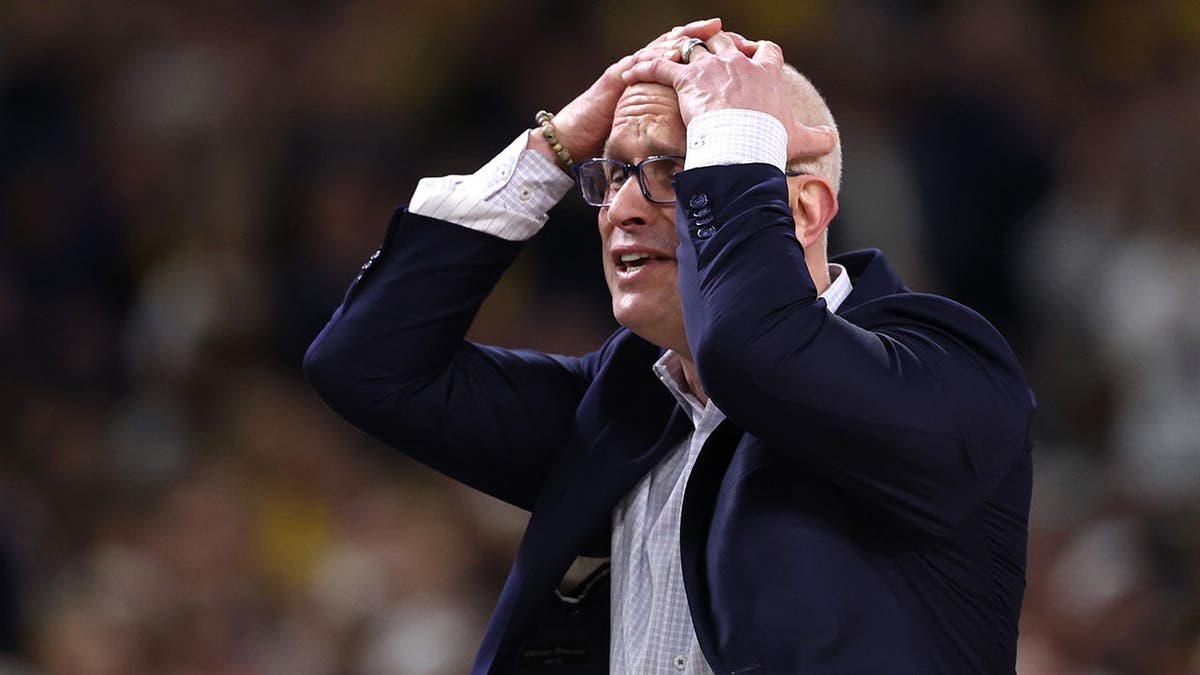
Head coach Dan Hurley of the UConn Huskies reacts during the first half of the NCAA men’s basketball national championship game against the Michigan Wolverines at Lucas Oil Stadium in Indianapolis, Ind., on April 6, 2026.(Michael Reaves/Getty Images)
A key example of that was, after Karaban buried a three-pointer to cut the Michigan lead to six, Trey McKenney stepped back and drilled a 26-footer with 1:49 left in the game to get the lead back to nine points. The Wolverines faithful in the crowd went ballistic, knowing how much that basket meant considering what UConn has been able to do in this tournament.
With 37 seconds left in the game, Ball got some help from the backboard, making a three-pointer to cut the lead to 67-63 for the Wolverines. Roddy Gayle Jr. made things more interesting in this game, as he couldn’t knock down his two free throw attempts for Michigan. But Karaban didn’t have another clutch three-pointer in him, coming up short with 13 seconds left.
That was it for UConn’s desperation attempt, and Michigan celebrated their win.
In the box score, Cadeau led all scorers with 19 points on 5-of-11 shooting and 8-of-9 from the free throw line. Lendeborg was just 4-of-13, though he still had 13 points. Johnson had a double-double with 12 points and 10 rebounds for the Wolverines as well.
Advertisement
Cadeau was named the Most Outstanding Player of the Final Four.
Michigan was just 2-of-15 from the three-point line, and head coach Dusty May even noted after the game getting dominated on the glass, as they were out-rebounded by UConn, 46-39.
The Huskies, though, couldn’t find it offensively. Karaban finished with 17 points and 11 rebounds, but shot just 4-of-14 and 3-of-10 from three-point territory. Tarris Reed Jr. had a double-double as well with 13 points and 14 rebounds, while Mullins, the hero against Duke with his half court shot, was only 4-of-17 for 11 points.
Oct 11, 2025; Los Angeles, California, USA; USC Trojans wide receiver Makai Lemon (6) takes the ball on a kickoff return in the second half against the Michigan Wolverines at United Airlines Field at the Los Angeles Memorial Coliseum. Mandatory Credit: Jayne Kamin-Oncea-Imagn Images.
Minnesota Vikings interim general manager hinted last week that his team will draft the “best player available” at pick No. 18 later this month, a popular mindset for most NFL teams. But what does that really mean? Let’s take a peek.
Minnesota may follow the board, though some positions clearly carry more traction than others in Round 1.
Remember: picking the best player available disregards roster need, almost altogether. This analysis does not consider offensive tackles because the Vikings have Christian Darrisaw and Brian O’Neill in the budget at a pretty penny, but in theory, Minnesota could select one of those, too.
Advertisement
The No. 18 Pick Feels More Like a Targeted Shortlist with BPA Involved
The BPAs for the Vikings at No. 18.
Dillon Thieneman reacts with energy following a statement road win, celebrating alongside teammates after Oregon’s defense helped seal the outcome in a hostile environment. The moment came on Sep 27, 2025; University Park, Pennsylvania, USA; as the Ducks defeated Penn State at Beaver Stadium, underscoring Thieneman’s presence in a high-profile Big Ten showdown. Mandatory Credit: James Lang-Imagn Images
5. Dillon Thieneman | S, Oregon
Thieneman lives at No. 17 on the Pro Football NetworkIndustry Big Board and at No. 18 on the Consensus Big Board. His stock has soared since his dazzling performance at the NFL Combine.
Meanwhile, roughly 90% of all NFL mock drafts feature Thieneman to Minnesota; the general public believes it’s happening. The reasoning is clear: the Vikings need a safety, especially if Harrison Smith retires, and Thieneman marries the BPA mindset near No. 18.
Advertisement
Thieneman was not the Vikings’ best-player-available option two months ago, but the Combine changed that.
4. Kenyon Sadiq | TE, Oregon
Sadiq is the only tight end tentatively scheduled to go off the board in Round 1, unless a team feels frisky enough to draft Vanderbilt’s Eli Stowers around Pick No. 32.
At 6’3″ and 245 pounds, Sadiq boasts 42 games of experience at Oregon, where he recorded 80 receptions for 892 yards and 11 touchdowns. Highlighting his rare athleticism, the Ducks even used him on kick returns in 2023 and 2024.
Advertisement
The versatility has generated Round 1 buzz. Sadiq not only handles a significant receiving workload but also excels as a blocker in both the run and pass game. This combination is uncommon for tight ends his age, and teams tend to invest early in that kind of potential.
Meanwhile, the Vikings TE1, T.J. Hockenson, is scheduled to hit free agency in 2026. Picking Sadiq would plan for 2027.
3. Jermod McCoy | CB, Tennessee
The Vikings are projected to start Byron Murphy Jr., Isaiah Rodgers, and James Pierre at cornerback through 2026. While Murphy Jr. played well in 2024, his performance declined slightly last season. Rodgers has impressive speed and agility, but his tackling consistency remains a concern. The team still seeks a definitive, young CB1, a role McCoy could potentially fill.
Advertisement
Jermod McCoy secures a loose ball and reacts after gaining possession, flipping momentum during a key defensive sequence in conference play. The play occurred on Nov. 30, 2024; Nashville, Tennessee, USA; at FirstBank Stadium, where Tennessee capitalized on the turnover, highlighting McCoy’s awareness and timing in a pivotal second-quarter moment. Mandatory Credit: Stephanie Amador-Imagn Images
Perhaps more concerning is the Vikings’ historical struggle to find a long-term cornerback solution, a search that has lasted nearly a decade. Trae Waynes, drafted in 2015, came closest to meeting expectations, but ultimately fell short. Since Waynes, a series of unsuccessful picks — including Mike Hughes, Jeff Gladney, and Andrew Booth — have failed to establish themselves with the team.
McCoy blends BPA and team need.
2. Jordyn Tyson | WR, Arizona State
Minnesota obviously has Justin Jefferson and Jordan Addison to headline the passing offense; most draft pundits expect Tyson to become a WR1, not a WR3.
Tyson played at Colorado in 2022 and Arizona State from 2023 to 2025, amassing 158 receptions for 2,282 yards and 23 touchdowns. He also handled some return duties early in his career at Colorado, showcasing his movement skills. Projected to run in the mid-4.5 range, his speed will be confirmed at the combine.
Advertisement
His appeal lies in his ability to separate from defenders, run clean routes, and demonstrate reliable hands. However, durability is a concern, as he suffered a knee injury in 2022 and a collarbone fracture in 2024. Teams will likely scrutinize his medical records before finalizing his evaluation.
Tyson is a BPA idea for the Vikings if they wish to get incredibly deep at wide receiver after Jalen Nailor’s departure.
1. Makai Lemon | WR, USC
Speaking of Nailor, who held the WR3 role in Minnesota for two seasons, he’s a Raider. Tai Felton is next in line. However, Felton’s potential impact remains largely unknown, as he saw minimal offensive snaps as a rookie.
Advertisement
Adding to the uncertainty is Addison’s legal situation, casting a shadow over the team’s plans. With his behavior always in question, Minnesota must always be on high alert.
Makai Lemon tracks the ball into his hands before crossing the goal line, finishing a scoring play that sparked momentum for Southern California’s offense. The sequence unfolded on Nov 22, 2025; Eugene, Oregon, USA; during a matchup with Oregon at Autzen Stadium, showcasing Lemon’s playmaking ability in a high-tempo offensive performance. Mandatory Credit: Troy Wayrynen-Imagn Images
Zooming out, the team’s direction becomes clear: they released Nailor, are prioritizing the draft, and may target a receiver early if the right prospect is available. Lemon could be a strong fit if he’s still on the board. Given the organization’s history of drafting wide receiver talent, coupled with Kevin O’Connell’s offensive acumen, further investment in the position would not be overly surprising.
Lemon’s hands are fantastic, and his separation is elite. He ran a 4.5 forty, which is not dream speed, and he’s undersized at 5’11.” Usually, for smaller receivers, they have speed to rely on. Lemon’s speed is average for a receiver.
Honorable Mention
For offensive tackles, Minnesota could explore Georgia’s Monroe Freeling or Utah’s Spencer Fano. At guard, it’s Olaivavega Ioane from Penn State.
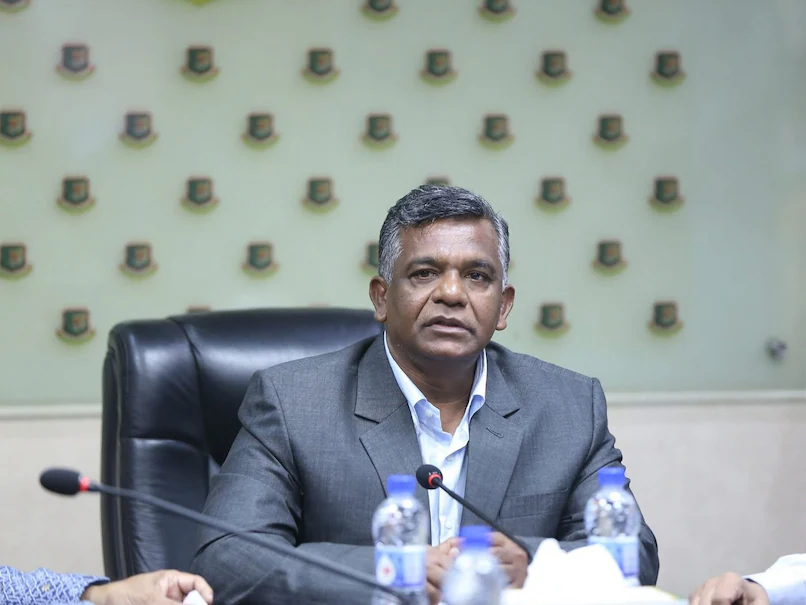
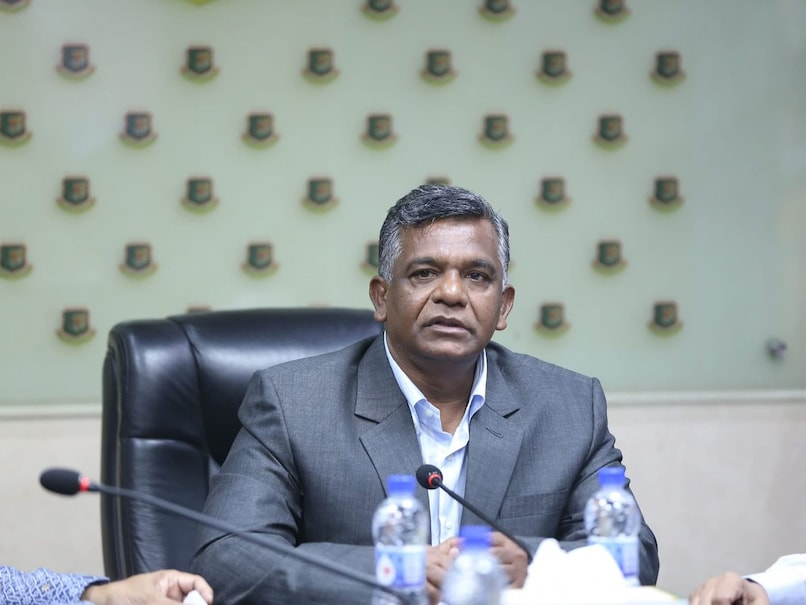
Days after Bangladesh Cricket Board reached out to BCCI requesting the revival of bilateral ties, former skipper and current president of BCB Aminul Islam Bulbul was on Tuesday removed by the country’s National Sports Council (NSC), which formed an ad-hoc committee to run the day-to-day affairs till fresh elections are held. According to sources in the BCB, Bulbul was removed primarily due to the fiasco during the T20 World Cup where erstwhile interim government advisor Asif Nazrul literally held the former skipper hostage and didn’t allow the national team to visit India for the global event.
Anti-India hardliner Nazrul’s stand was to shift Bangladesh’s games from Kolkata and Mumbai to Sri Lanka as a mark of protest for removal of Mustafizur Rahaman from the IPL.
During the whole issue, Bulbul was a mere bystander and over the past few days, six directors of the BCB resigned because of him.
Advertisement
Former Bangladesh skipper and country’s greatest opener Tamim Iqbal has been named as head of the 11-member ad-hoc committee, whose duty would be to hold the cricket board’s election in the next 90 days.
According to NSC Director Aminul Ehsan, the decision to dissolve the current BCB board and put forth an ad-hoc committee has been intimated to the International Cricket Council (ICC).
While the ICC charter doesn’t allow government or external interference in board matters, it is unlikely that the global body will ban the Bangladesh board as a timeline to hold the elections has already been announced by the NSC.
The 11 member ad-hoc committee comprise Tamim Iqbal (president), Athar Ali Khan, Rashna Imam, Mirza Yasir Abbas, Syed Ibrahim Ahmed, Minhazul Abedin Nannu, Ishrafil Khusroo, Tanzim Choudhury, Salman Ispahani, Rafiqul Islam, Fahim Sinha.
Advertisement
(Except for the headline, this story has not been edited by NDTV staff and is published from a syndicated feed.)
Featured Video Of The Day
IPL 2026 News | RCB Outplay CSK For 2nd Win On Trot, Ruturaj Gaikwad & Co Suffer 3rd Loss
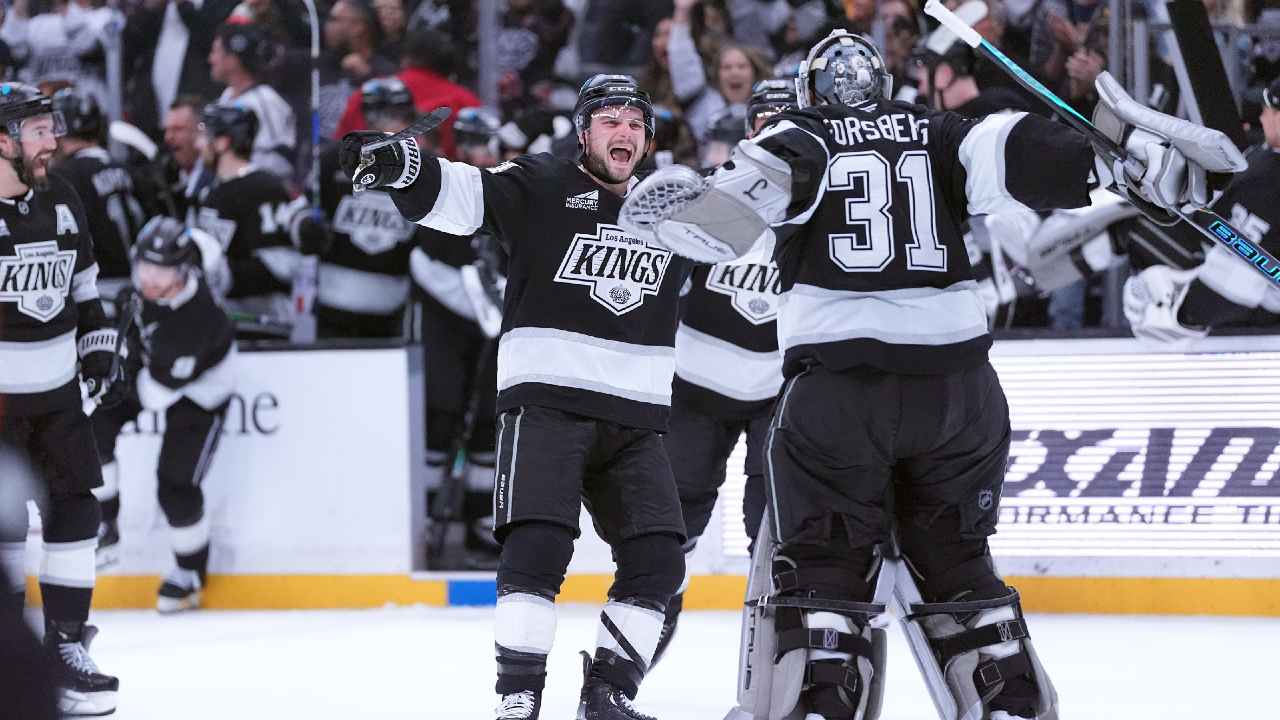
LOS ANGELES — Adrian Kempe scored the only goal of the shootout in the second round, and the Los Angeles Kings tightened the Western Conference playoff race with a 3-2 win over the Nashville Predators on Monday night.
Los Angeles has played extra time in seven of its last 10 games — and 32 this season.
Joel Armia opened the scoring for the Kings and Scott Laughton made it a 2-1 lead in the second period. Jared Wright has an assist in a career-best three straight games.
Steven Stamkos tied it at 1-all for the Predators and Roman Josi knotted it at 2 early in the third.
Advertisement
Anton Forsberg made 29 saves in the win for the Kings. Saros made 26 saves for the Predators.
SAN JOSE, Calif. — Will Smith earned his 100th NHL point with a third-period goal, and the San Jose Sharks beat the Chicago Blackhawks 3-2 on Tuesday night.
Smith scored the winning goal on a wrist shot 3:28 into the third, assisted by Collin Graf and Macklin Celebrini, putting the Sharks on top 3-1.
William Eklund had a goal and assist and Kiefer Sherwood also scored for the Sharks.
Advertisement
Ryan Donato and Frank Nazar each scored for the Blackhawks.
Connor Bedard earned his 200th career point with an assist on Donato’s first-period goal. Bedard has four assists in his last three games.
Alex Nedeljkovic stopped 27 shots in the win for the Sharks. Spencer Knight had 20 saves for the Blackhawks.
BUFFALO, N.Y. — Jason Zucker tipped in Bowen Byram’s shot for the go-ahead goal 7:38 into the second period, and the Buffalo Sabres beat the Tampa Bay Lightning 4-2 on Monday night, further tightening the race for the Atlantic Division title.
Advertisement
Jack Quinn, with an assist from goalie Ukko-Pekka Luukkonen, sealed the win by scoring into an empty net with 1:54 left. Josh Norris and Alex Tuch also scored. Buffalo snapped a minor 2-3-2 slump to tie the Lightning atop the division with 102 points, and two ahead of idle Montreal entering the final 10 days of the season.
Luukkonen stopped 23 shots to improve to 10-2-1 in his past 14 appearances and strengthen his hold on the starting job.
Jake Guentzel, with a goal and assist, and Nikita Kucherov also scored, and the Lightning lost in regulation for just the third time in 14 games (9-3-2). Kucherov became the NHL’s eighth Russian-born and second Lightning player to score 400 goals, and also tied Connor McDavid for the points lead with 126.
WINNIPEG, Manitoba — Kyle Connor scored twice, and Jonathan Toews and Gabriel Vilardi had a goal and an assist each to lead Winnipeg to a victory over Seattle.
Advertisement
Brad Lambert and Vladislav Namestnikov, into an empty net, also scored for the Jets, who have collected points in seven of their last nine games.
Mark Scheifele registered three assists, while Josh Morrissey provided a pair. Connor Hellebuyck made 22 saves for the win.
Jordan Eberle and Jared McCann scored for the Kraken, who extended their losing streak to five games and have lost nine of their last 10.
AUGUSTA, Ga. — As our gaze returns to Augusta National this week, it’s easy to believe the most famous golf club in the world is rigid. That its traditions are intractable. That everything it owns behind the gates of 2604 Washington Road is unchanging.
The reality is “everything Augusta National owns” changes basically every month, and has been changing, quietly but significantly, for the last 25 years. In total, Augusta National-owned property has aggregated into a roughly $500 million empire thanks to more than $280 million in property acquisitions. But importantly — and perhaps unsurprisingly from such an exclusive and private club — these purchases are made under the veil of real estate secrecy, via obscurely named LLCs, which GOLF.com tracked and assembled, both in this map and in the video below.
It started a lot like most things Augusta National does, through a goal made with Masters patrons in mind:
Free parking.
Advertisement
The Masters has offered free parking as a patron perk for decades, but throughout the 80s and 90s, that parking space was limited. The lot would reach capacity early on its first-come, first-served basis, forcing those who arrived late to look for spots n the neighborhoods across Washington Road.
At the turn of the 21st century, the majority of patron parking was on what was then the northwest corner of the property — which you can see below — where the driving range and media center now exist. It’s impossible to know when the club decided it needed more parking, but an inflection point seemed to arrive around then. On July 3, 2001, an LLC named “Berckman Residential Properties” was formed, according to state corporation documents, and has been amassing parcels in the proximity of Augusta National ever since.
Masters parking circa 2004.
Google Earth
The same plot in 2025.
Google Earth
To the Augusta National newbie, Berckman Residential might be a curious name, but not to Masters regulars. In the late 1800s and early 1900s, the Berckman family owned the land that Augusta National now sits on, operating a horticultural nursery on these hills, introducing many species to the American South, some that serve as the floral inspiration to the most famous golf tournament in the world. Berckmans Place is the luxe hospitality hangout for Masters VIPs, in the southwest corner of the club. And Berckmans Road is the the street that was rerouted along the club’s western flank, around which new parking would manifest in the 2010s.
Advertisement
Berckman Residential Properties bought many homes and land plots west of the club, rezoning them for commercial use and repurposing them — with permission from city leaders — for Masters parking. The other 51 weeks of the year, the land sits largely vacant. The grass gets mowed, the edges stay trimmed. But until the aggregation of land was officially parked upon, it wasn’t always clear that Augusta National was the buyer, because the club never put its name on the purchases.
Only its address.
Buried in the property sale records of the vast majority of the parcels purchased near the club are near-constant references to the land’s true owner. In most cases, the owner’s address is listed as “2604 Washington Road,” the official address of Augusta National. In other cases, it’s P.O. Box 2086, the commercial P.O. Box of Augusta National.
Over the years, many obscurely named LLCs have used those addresses in official records filed in the Georgia Corporations Division. As the years have passed — allowing for dust to settle on certain purchases — those LLCs have been merged into Berckman Residential Properties before becoming something new from Augusta National.
Advertisement
Take “Big Tree LLC” and “The Greens on Washington Road Ventures LLC,” which combined to spend more than $16 million to displace what was an IHOP and a strip mall to build the Masters’ palatial global broadcast compound and content center. It’s impressive and industry-leading. It also was just the start.
One of those tracts of land was bought in 2000, just as the club started making moves on parking expansion along its opposite border. Most of the housing plots west of the course were purchased in the last 15 years, often in the $300,000 to $500,000 price range, according to hundreds of sale records reviewed by GOLF.com. While the sale prices often are two to three times the appraised values, a handful of properties have fetched a much steeper rate, like one holdout plot across the street from Berckmans Place. In 2012, the lot was privately owned, as its neighbors were being purchased and leveled. In 2013, the land sold for $3.56 million. In 2015, a new road had been paved right through the lot’s backyard, where a swimming pool once existed.
Land west of Augusta National circa 2008.
Richmond County Board of Assessors
Land used for parking west of Augusta National circa 2025.
Richmond County Board of Assessors
One homeowner famously refused to sell to Berckman Residential. The house at 1112 Stanley Road has seen almost all of its neighboring homes be razed to make way for Masters parking. The house is still there because its long-time and now late owners, Herman and Elizabeth Thacker, declined all of Augusta National’s advances.
Advertisement
“Where are we going to go?” Herman, who died in 2019, told GOLF.com in a 2017 interview. “This is home. We love it here.”
Still, there’s a Father Time element to ANGC’s real estate pursuits: the golf club will be here long after any of its neighbors.
Elizabeth owned the house until she died last summer. It is unclear to whom the Thackers passed down the land and home, or what will come of it. But many of the homes in the area are transferred into a trust or an estate and often are sold in the years that follow an original owner’s death. Some agreements are made to transfer the homes to Augusta National immediately upon their passing. As of the 2026 Masters, only a handful of properties southwest of the course remain unowned by Berckman Residential.
GOLF.com spoke with one of the holdouts: George Ransom, who lives on nearby Margate Drive. Ransom has seen the meaning of the Masters change to those in the area over the years. It was once a “giant party,” he said. Now, it feels like a “giant attraction, like Disneyland,” he said. While that shift has cost the club a pretty penny, Ransom said ANGC has been “very reasonable [neighbors] in every respect.”
Advertisement
But he also teased something important.
“They’ve got a 50-year plan,” Ransom said, “which we are a very small part of.”
Ah yes, The Plan.
In general terms, one could describe Augusta National’s reported “plan” as building outward, as Golf Digest writer Joel Beall extensively reported in 2024. Beall spoke with various club members and former employees to understand what the club and its crown jewel tournament could look like on a 30- or 40-year horizon. In essence, that will require accumulating even more property in every direction.
Advertisement
The club bought a public park in 2024 along its eastern border, and nearly every other parcel adjacent to it. Through WSQ, LLC, the club acquired the National Hills Shopping Center across Washington Road, turning one corner of the building into a new corporate hospitality named “Map and Flag.” Down Washington Road, WSQ, LLC also purchased the land that currently houses a Publix, next to where rideshare apps like Uber and Lyft drop off patrons. ANGC hasn’t pushed out Publix yet, but the bottom line is obvious. Club operations follow directly along these property purchases, even if just one week a year.
There used to be a Hooters on Washington Road, on land owned by WSQ, LLC. That was until Hooters in America filed for bankruptcy in early 2025 and decided to downsize its national footprint. Eight months later, the Hooters was leveled and graveled over. If nothing replaces it, no one will blink. If something does, it’ll be decided by Augusta National. That is how most things go in the area around the most famous club in the world. Tracking it all takes near-constant attention. And a calculator. One line in particular from that Golf Digest report rings most true. In regards to the money spent, one member said, “Whatever you want to guess, it’s going to be wrong.”
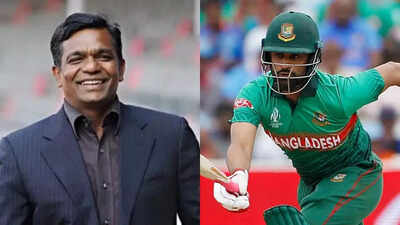
NEW DELHI: The Bangladesh government on Tuesday appointed former cricketer Tamim Iqbal as the president of the Bangladesh Cricket Board (BCB), and dissolved the current board of directors of the country’s cricketing body.The current president of BCB, Aminul Islam Bulbul, has been removed by the country’s National Sports Council (NSC), which formed an ad-hoc committee to run the day-to-day affairs till fresh elections are held.This development comes days after the BCB reached out to BCCI requesting the revival of bilateral ties.Tamim, 37, is the youngest BCB chief and will lead an 11-member ad-hoc committee that includes former Bangladesh captain Minhajul Abedin and former cricketer and TV commentator Athar Ali Khan.As per a report by news agency PTI, Bulbul was removed primarily due to the fiasco during the T20 World Cup where erstwhile interim government advisor Asif Nazrul didn’t allow the national team to visit India for the global event.Nazrul’s stand was to shift Bangladesh’s games from Kolkata and Mumbai to Sri Lanka as a mark of protest for removal of Mustafizur Rahaman from the IPL.During the whole issue, Bulbul was a mere bystander and over the past few days, six directors of the BCB resigned because of him.Former Bangladesh skipper and country’s greatest opener Tamim Iqbal has been named as head of the 11-member ad-hoc committee, whose duty would be to hold the cricket board’s election in the next 90 days (three months).According to NSC Director Aminul Ehsan, the decision to dissolve the current BCB board and put forth an ad-hoc committee has been informed to the International Cricket Council (ICC).While the ICC charter doesn’t allow government or external interference in board matters, it is unlikely that the global body will ban the Bangladesh board as a timeline to hold the elections has already been announced by the NSC.The 11 member ad-hoc committee comprise Tamim Iqbal (president), Athar Ali Khan, Rashna Imam, Mirza Yasir Abbas, Syed Ibrahim Ahmed, Minhazul Abedin Nannu, Ishrafil Khusroo, Tanzim Choudhury, Salman Ispahani, Rafiqul Islam, Fahim Sinha.
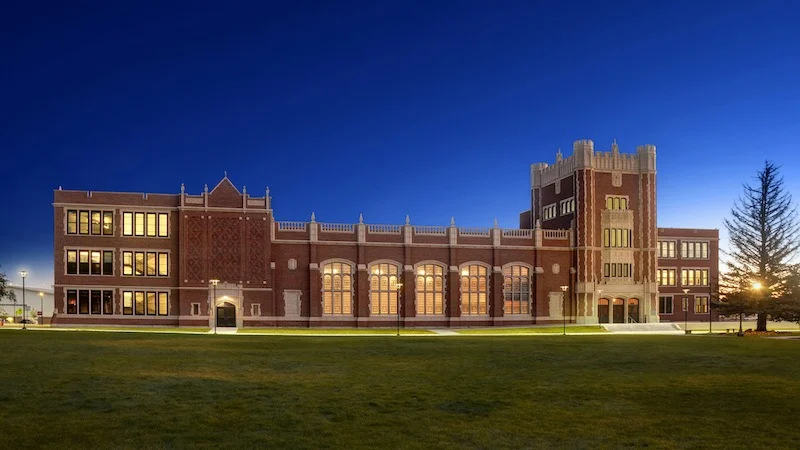
Here’s an up-to-date list of all NFL Players from Natrona County High School, Casper, Wyoming.
The list includes only those players who have played in a regular-season NFL game. Consequently, players taken in the upcoming draft will not be included until they have seen the field.
The League does not officially recognize players who appeared only in preseason exhibition games.
Natrona County High School is ranked as the No. 4 pro football player-producing high school in the state.
Advertisement
Wyoming has produced a total of 31 NFL players from 21 schools, with 4 pros currently active.
See where all the other schools in the Cowboy state rank here, with links to their respective players.
Hello, friends. And welcome to another edition of random Masters facts, tidbits of trivia that you can toss out at a watch party, apropos of nothing. They’re guaranteed to impress (or annoy) your friends.
Fun, right? Let’s play away.
1. Jack Nicklaus, who holds the record for most Masters wins (6), also shares the record for most Masters runner-ups: 4. Those close calls put him in good company. Ben Hogan and Tom Weiskopf were also four-time bridesmaids in the event.
2. The first Masters was held in 1934. But it wasn’t called the Masters. At its birth, it was known as the Augusta National Invitation Tournament.
Advertisement
3. In 1997, the year of his first Masters win, Tiger Woods opened with a 40 on the front side, then turned on the afterburners with a 30 coming in. Along the way, he played the par-5 15th with a driver and a wedge, stuffing his approach to six feet to set up eagle. Efforts to “Tiger-proof” the course weren’t far away.
4. In that same tournament, Woods played the back nine in a cumulative 16 under, one of 27 Masters records he set or tied that year.
5. Eagle roars sound different than other cheers. We hear them every at the Masters. But never were there more on a single hole in a single week than in 2015, when the 13th hole yielded 20 eagles, a championship record that still stands.
6. There have been four double eagles in Masters history, one on each of the par 5s. The first was by Gene Sarazen in 1935, with a 4-wood from 235 yards on the 15th hole. The most recent was Louis Oosthuizen in 2012, with a 4-iron from 253 yards on the 2nd hole.
Advertisement
7. After carding his deuce, Oosthuizen tossed his ball into the gallery, where it was caught by Wayne Mitchell of Pennsylvania, who didn’t hang on to the souvenir for long. At the request of then-Augusta National Chairman Billy Payne, Mitchell donated the ball to the club, and was reportedly given two lifetime badges to the tournament and a round at Augusta in return.
8. The record for most birdies in a single round is held by Anthony Kim, who bagged 11 on Friday in 2009. He also made two bogeys and a double for a seven-under 65.
9. In 1931, Augusta National co-founders Bobby Jones and Clifford Roberts purchased the original 365-acre property for $70,000. In 2025, Shane Lowry received $77,700 for finishing T42 in the event.
10. The highest score ever recorded on a single hole in the Masters? Unlucky 13. Three players lay claim to that dubious achievement. The first was Tommy Nakajima, who made a hash of the 13th hole in 1978, followed by Tom Weiskopf on the 12th hole in 1980. Then came Sergio Garcia in 2018. The Spaniard made his trece on the 15th hole.
Advertisement
11. A green jacket goes to the winner. Everybody knows that. But it wasn’t always so. That tradition didn’t start until 1949, the year Sam Snead collected the first of his three Masters titles, earning a colorful piece of apparel along the way.
12. Every year, the reigning champion hosts a dinner for all past champs. Everybody knows that. But it wasn’t always so. That tradition didn’t start until 1952, at Ben Hogan’s suggestion. The main dish that year: steak.
13. The single-round Masters scoring record, shared by Greg Norman and Nick Price, is 63, two more than the original number of Magnolia trees along Magnolia Lane.
Advertisement
14. Speaking of Magnolia Lane, the famed entrance road leading to the clubhouse measures 330 yards, just 20 yards shorter than the par-4 3rd hole.
15. The Masters begins with ceremonial tee shots. Everybody knows that. But it wasn’t always so. Honorary starters made their debut at the 1963 Masters, when Jock Hutchinson and Fred McLeod struck the opening salvos. The formal ceremony, though, had informal origins more than two decades prior. In 1941, the amateur great Francis Ouimet, fulfilling a request by Bobby Jones, served as the unofficial honorary starter. It was Ouimet’s only appearance at the Masters.
16. Jordan Spieth holds the record for most birdies in a single Masters (28). Nicklaus holds the record for most career birdies in the event (506).
17. In 2005, a 74-year-old Billy Casper shot a 34-over 106 in the opening round of the Masters, a score that would be a record-setting worst if it had in fact ever been recorded. Casper did not turn in his scorecard and withdrew from the event before his second round. So that 106 never became official. Neither did the 14 he carded on the par-3 16th hole.
Advertisement
18. They say the Masters doesn’t start until the back nine on Sunday. But at the inaugural Masters, in 1934, the back nine was the front nine and the other way around. In that first addition, today’s 10th hole served as the first hole. The nines were flipped the following year.
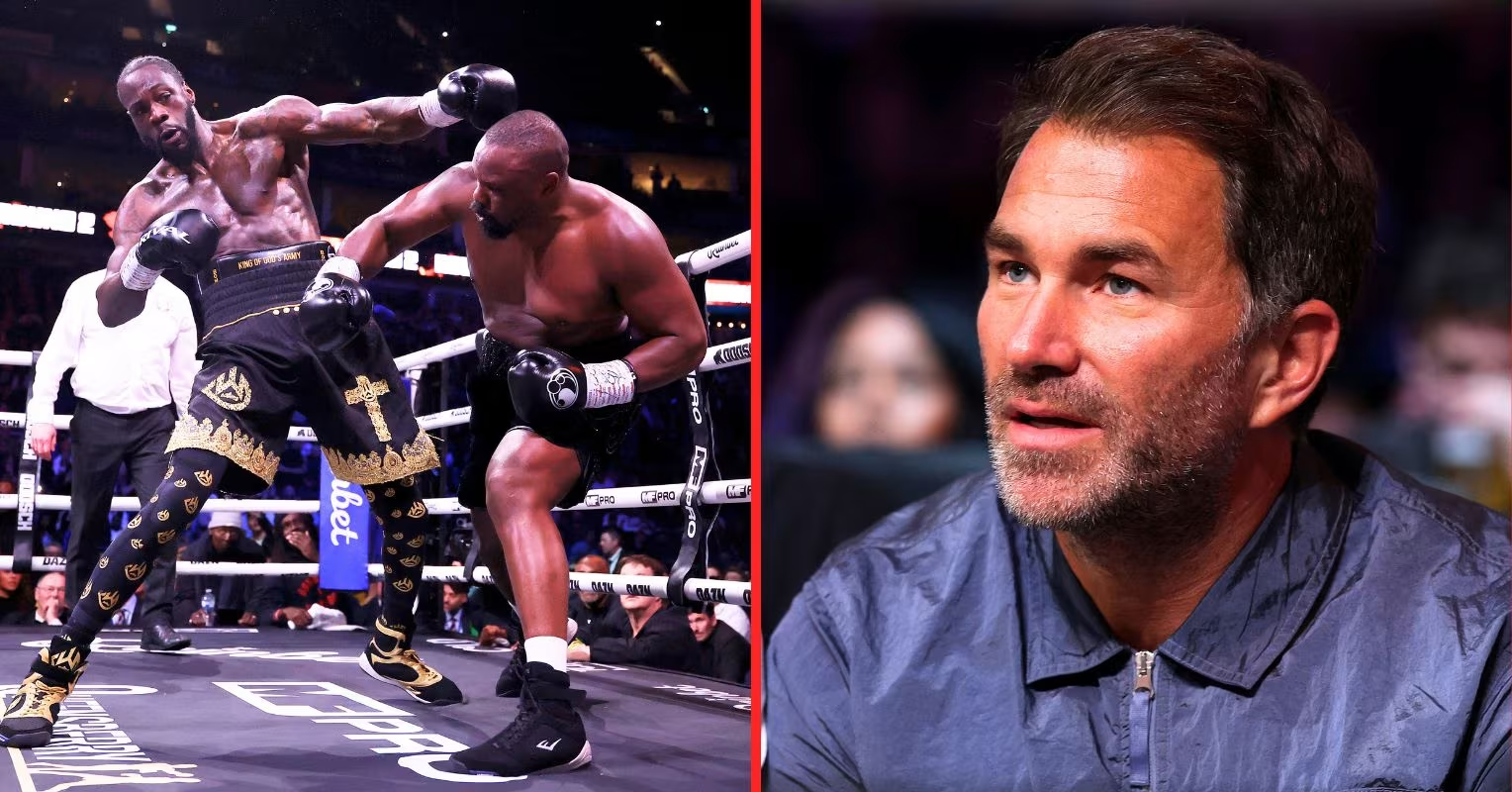
In what he has promised would be his farewell fight, Derek Chisora was trumped via split-decision on home turf by Deontay Wilder. Eddie Hearn, who promoted Chisora for some of the second half of his career, has revealed how he scored the bout.
In a drama-filled clash, it was 42-year-old Chisora who twice dropped to the canvas, with those two knockdowns ultimately costing ‘Del Boy’ the fight – although he could have been disqualified earlier on when his cornerman entered the ring.
Still, the bout seems to be a fitting end to the near two-decade long career of Britain’s cult hero heavyweight, but his retirement is yet to be formally confirmed, possibly due to the belief that he could have got the decision on Saturday night.
Advertisement
Speaking to Boxing King Media, Hearn admitted that he felt as though ‘The Bronze Bomber’ did enough to win the contest by two or three rounds.
“[It was] entertaining. I thought Wilder won by two or three rounds but it was a good fight, a competitive fight.”
In an interview with The Stomping Ground, Hearn expanded further on his verdict, disagreeing with the view of judge Phil Edwards, who scored the bout 115-112 in Chisora’s favour.
“It was tough for Del, I thought the right man won. Close fight, Del was amazing and I thought Wilder boxed well to be fair. He was under a lot of pressure, took some good shots and I thought he started to get his confidence a little bit, because his confidence has been lacking.
“I didn’t think that Del Boy won it by three rounds, what was it 115-112? I thought that he closed well and won the last round.”
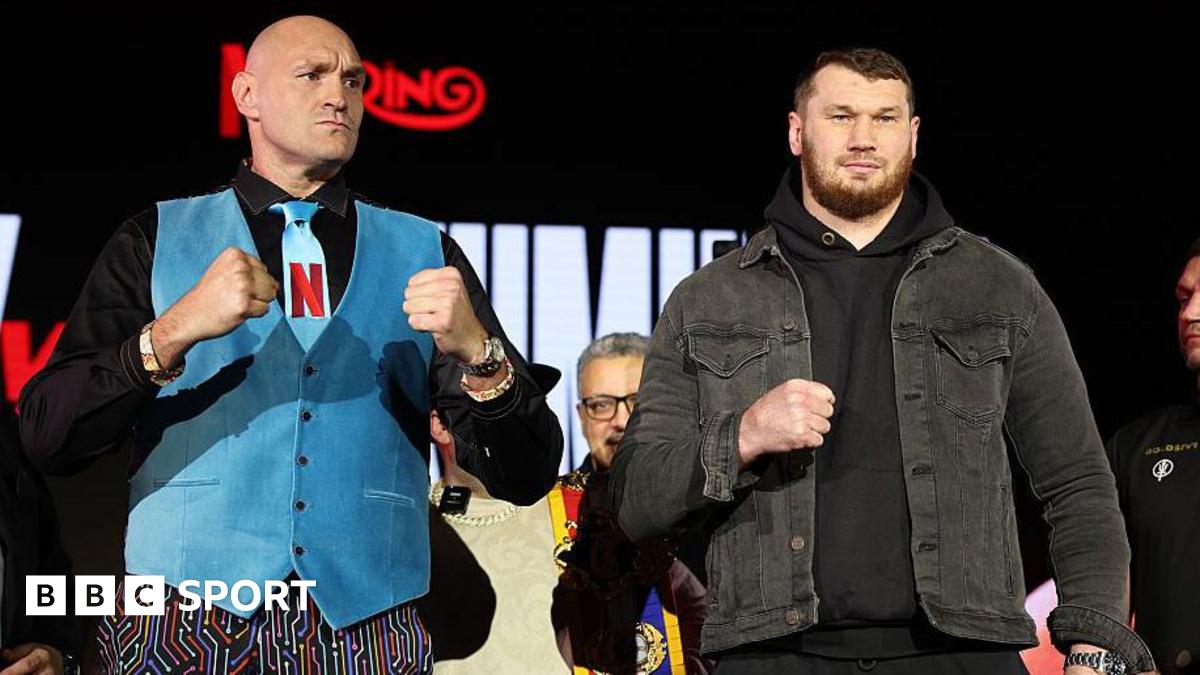
Despite only being a year apart in age, Fury and Makhmudov’s careers have followed very different paths.
Fury claimed the unified heavyweight title in 2015 by beating Wladimir Klitschko and then the WBC world title in 2020 when he beat Deontay Wilder.
The Briton has the better names on his record, having fought Usyk (twice), Derek Chisora (three times) and Dillian Whyte.
Makhmudov has a win over Dave Allen and Carlos Takam but has two losses in his career, to Guido Vianello and Agit Kabayel.
Advertisement
The Russian has stumbled when asked to step up to genuine contender level and was in truth a surprise opponent for Fury considering his lack of star quality and pedigree.
But he does have one advantage and that is activity. While Fury has sat on the sidelines for 15 months, Makhmudov fought twice in 2025 and 2024 and three times in 2023.
Fury is fighting in his 38th contest, while Makhmudov is in his 24th. There are a lot fewer miles on the clock for the away fighter, who has fought 69 rounds compared with Fury’s 254.
While he has fought far less impressive opponents, Makhmudov’s knockout rate is excellent at 90% while Fury’s is 71%.





;)
;)
;)
;)
;)



































You must be logged in to post a comment Login