Tech & AI
Cloud Seeding Drones Promise Rain on Demand — But at What Cost?

Thousands of residents in Homer, Alaska had no idea the clouds above their homes were being seeded this past August. A San Francisco start-up called Rainmaker had quietly sent cloud seeding drones into the sky, dispersing a silver compound meant to trigger precipitation, and claims the three-hour operation produced 19 million US gallons of water. Most locals only found out after the fact.
The episode has become a flashpoint in a debate that is unfolding across more than 50 countries now experimenting with weather modification: can technology meaningfully ease water shortages, and should companies be allowed to alter the sky over people’s homes without clearly telling them first?
How Cloud Seeding Drones Work
Cloud seeding itself is not new. The technique dates back to 1946, when scientists at General Electric’s research laboratory first used dry ice to coax rain from clouds. Silver iodide followed a year later and proved far more effective, since dry ice evaporates into gas too quickly to be useful. The chemistry speeds up a natural process: compounds dispersed into a cloud form ice crystals, which grow heavy enough to fall as rain or snow once gravity takes hold.
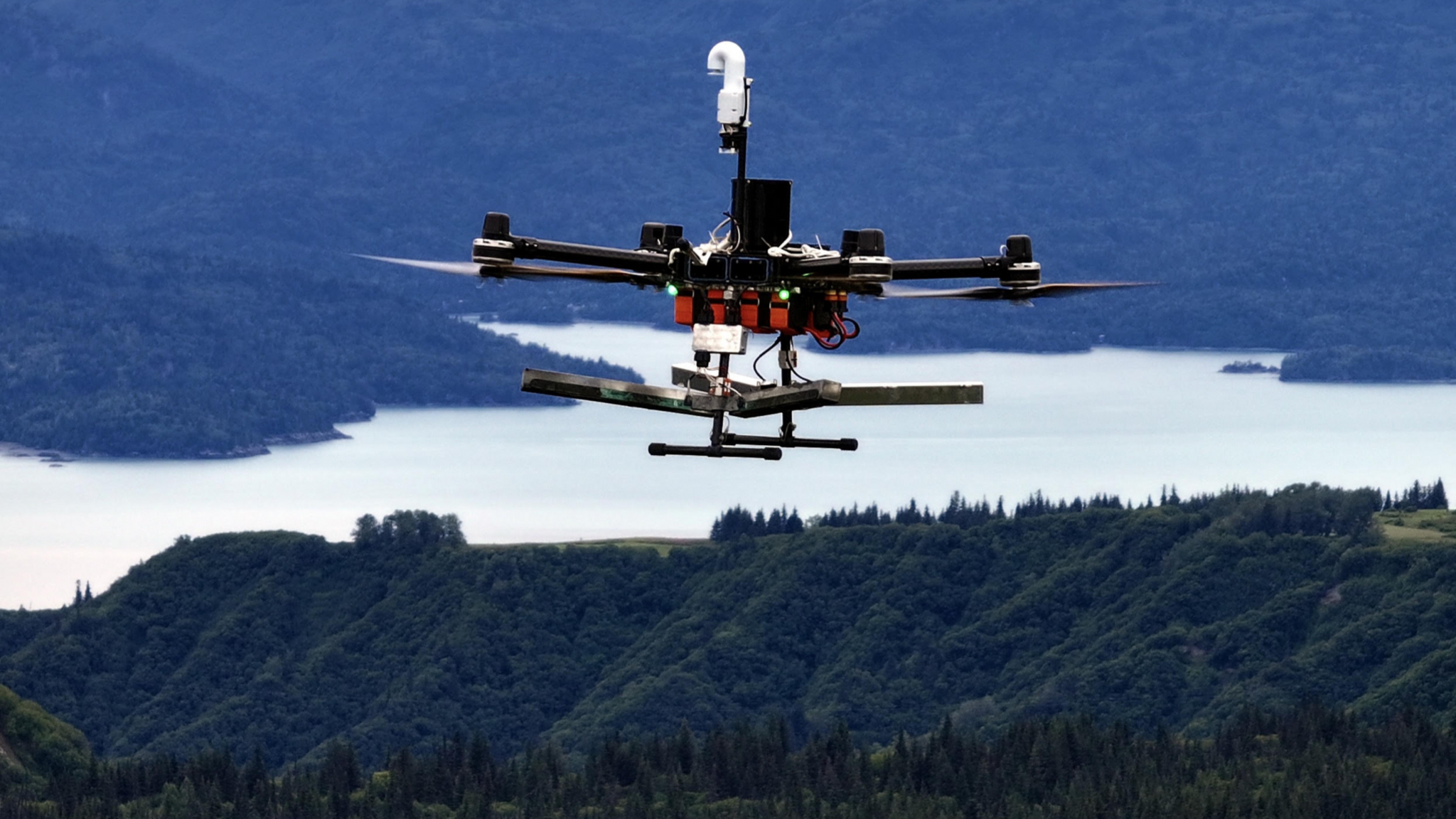

What has changed is the delivery method. Instead of relying solely on piloted aircraft, companies like Rainmaker now use autonomous cloud seeding drones to fly directly into storm systems, releasing silver iodide flares that burn and atomize water particles so they stay suspended in freezing air long enough to form crystals. Rainmaker founder and CEO Augustus Doricko says each flight releases just 20 grams of silver, spread across thousands of square kilometres, resulting in ground concentrations he describes as “parts per quadrillion” — far below thresholds set by the US Food and Drug Administration.
The drones give operators a more surgical approach than older methods. “They offer a more targeted nature to these clouds we hope will be responsive,” says Jon Meyer, an assistant state climatologist at the Utah Climate Center, who has watched the technology evolve from a niche academic curiosity into a growing commercial sector. Rainmaker already operates across Idaho, Utah, Colorado and parts of the Middle East, including Jordan, where Doricko says chronic water scarcity leaves residents with utility water only a few hours a week.
Modest Gains, Bigger Questions
Even enthusiasts concede that cloud seeding drones are no silver bullet. Meyer notes that under ideal conditions, seeding might squeeze out an extra 5 to 10 percent of precipitation — a meaningful boost in drought-stricken regions, but nowhere near enough to manufacture a downpour from clear skies. Rainmaker’s own Alaska results illustrate the limits: 19 million gallons sounds dramatic, but spread across 100 square miles it amounts to roughly 0.01 inch of rain.
A 2017 study using radar and precipitation gauges offered some of the first solid evidence that silver iodide seeding behaves as scientists predicted, lending credibility to a field that had long struggled to prove its effectiveness. That research, combined with advances in drone technology, has helped fuel a wave of new start-ups chasing contracts from governments and utilities desperate for more reliable water supplies.
But not everyone is convinced the benefits outweigh the risks. Cooper Freeman, Alaska director of the Center for Biological Diversity, says he’s troubled that Homer residents were not clearly warned before the Rainmaker operation, and he questions whether anyone tracked what happened to the silver iodide after it fell. “It doesn’t appear that there was any downstream monitoring to verify that this silver iodide didn’t impact the environment,” he says. He also worries that pouring money into cloud seeding drones distracts from the harder, less glamorous work of conserving water in the first place. “Having a company come in to do this seeding isn’t going to solve our water woes,” Freeman argues.
A Thirsty Planet, A Growing Industry
The stakes behind this debate are considerable. United Nations Secretary-General António Guterres warned in July that the world is using freshwater faster than it can be replenished, and separate research has found the past five years to be the driest stretch for global rivers in more than three decades. Against that backdrop, it’s little surprise that governments from the American West to the Middle East are willing to experiment with any technology that might coax a bit more rain from the sky.
Some companies are even rethinking the chemistry involved. Recast Systems, another San Francisco venture, is testing a protein-based alternative to silver iodide, hoping to sidestep environmental concerns altogether while still triggering ice formation inside clouds.
Whether cloud seeding drones ultimately become a serious tool against water scarcity or remain a marginal, controversial experiment likely depends on two things: whether the modest rainfall gains prove worth the cost and regulatory headache, and whether companies can convince both scientists and the public that what they’re spraying into the sky is genuinely safe. For now, residents like those in Homer are left asking a more basic question — not whether the technology works, but whether anyone plans to tell them before it’s used over their heads again.
Explore more on this topic with Vexel Search.
You must be logged in to post a comment Login