

There’s a lot to be anxious about as AI agents and bots get more integrated into every aspect of our lives. Meta, which recently agreed to pay over $17 billion to settle a lawsuit related to harming kids, now wants you to hand over all your online accounts to an inexplicably cute “agent” named Muse that might give a stranger your home address. OpenAI just introduced little blobs called Dots that can supposedly automate routine tasks, like planning dinner and ordering it from your favorite neighborhood spot. AI companies don’t just want you to talk to their chatbots; they want their agents to be an indispensable part of your daily routine.
Tech & AI
How to Collect CDs | WIRED


You can score some great finds when thrifting for CDs, but you never know the conditions the discs were stored in before they hit the discount shelf, so learn to spot the most common problems and be discerning. You may even want to bring a portable player with you when you shop so you can test your finds—with the seller’s consent, of course.
Invest in Proper Storage
Similar to a vinyl record, the best way to store a CD is vertically, in its original sleeve, jewel case, or digipack. Any solid shelf makes a good home, but used furniture stores or Goodwill shops will often also have dedicated CD shelving, made of wood or metal, specially designed to fit rows of jewel cases.
About those jewel cases: If they’re damaged or missing pieces, they don’t do as good a job protecting the CDs or artwork inside from spills or scratches. Go the extra step and invest in replacements for cracked jewel cases or damaged interior spindle trays.
If you listen on the move and like to take your discs in the car, a classic CD wallet or CD book is your best solution. You load your disks into the wallet’s plastic pouches and store the jewel case and the artwork somewhere safe, either on the shelf or in a box.
The demand for these nostalgic book-style cases has only increased over the years. “We stocked some recently,” says Steven Alejandro, who has been the general manager at Hogwild Records for over 30 years. “And then the supplier ran out, and now they don’t have any more to sell.”
If you’re lucky to find a case, or you’ve repurposed your parents’ old CD wallets, remember not to leave the case in a hot car, in the sun, or anywhere near a heat source for an extended time.
Keep Your CDs and CD Players Clean
The best way to maintain a physical media collection is to keep everything clean. Found your dream player at a garage sale? Chances are it hasn’t been properly maintained in 20 years. CD players do need to be cleaned every once in a while to ensure the laser lens is free of any debris or fingerprints that can impact playback and audio quality.
On the actual disc, fingerprints, dust, and anything else stuck to the bottom surface can cause audible skips during playback. It’s best to use a microfiber cloth and, if necessary, a cleaning solution for extremely dirty CDs. Don’t wipe the disc in a circular motion. Always wipe the disc from the center outward, starting at the hole and pulling the cloth gently toward the outer edge of the disc.
Final Tip
Enjoy your CDs! Rip the contents to your hard drive if you need to, but they sound great when you just give them a spin. There’s a joy in collecting music, because while online streams may be temporary, the physical media we have will always be something we truly own and the actual definition of on-demand.
Continue Reading
As a parent, however, I think that perhaps the worst thing AI could do is be my kid’s friend.
AI companions have been around longer than ChatGPT, and they’re growing in popularity with young users. More than half of teens have interacted with AI companions at least a few times a month, and one in three decided to talk about a serious issue with AI companions instead of real people, according to a Common Sense Media survey conducted last year. In certain groups and situations, a chatbot could offer some benefit — a lifeline for, say, LGBTQ youth who don’t have any in-person support networks, one study found. But even so, there are important caveats and risks.
Meanwhile, other experts are telling parents never to let their kids access AI companions, warning them that these chatbots have a history of offering dangerous advice and engaging in sexualized conversations. Sixteen-year-old Adam Raine died by suicide last April after developing a relationship and discussing his plans with ChatGPT.
If you have kids, these are horrifying stories to hear. It’s reasonable to wonder how widespread the issues are, and who they are affecting most. As of right now, the majority of younger kids aren’t using AI for companionship (phew!). But for those who are, where do the issues arise? And how do they go from using ChatGPT for help with their homework to opening up to it about their problems to preferring it to their human friends?
Some answers are starting to emerge from research.
My first daughter was born not long after ChatGPT hit the scene, and as someone who’s covered tech for years, I knew the technology’s effects would be profound, especially for young people. So when I came across Anne Maheux’s study on middle schools and AI companions, I had to know more about how things are going.
For even young adolescents, there’s a direct link between AI companion use and mental health issues, according to a new study by researchers at the University of North Carolina at Chapel Hill. Their paper, which is still under review, is the first longitudinal study in the US that has looked at the bidirectional association between AI companionship in adolescents and mental health issues, according to one of the researchers. It charted AI use among 2,300 middle schoolers and found that about one in five used AI for emotional companionship. Those who used AI more reported higher levels of loneliness.
“It’s not just that the lonely kids are using AI, and they’re otherwise unharmed,” said Anne Maheux, an assistant professor of psychology and neuroscience at UNC Chapel Hill and the lead author on the study. “It is that using AI comes first, and middle school students are increasing their sense of loneliness following the use of AI.”
I recently spoke to Maheux about her research and the role of technology in young people’s lives. We discussed how much parents and teachers know about what is going on, what kids get out of human relationships that AI can’t provide, and whether she’d let a child under her care use an AI chatbot. While she said there is a lot to be scared of right now, there is some evidence that, when designed with the intention of promoting child learning and development and under the supervision of a caring adult, AI can offer some benefits, and, ultimately, she’s optimistic that we can design a better future for kids.
The conversation below has been lightly edited for length and clarity.
How do so many kids end up with an AI companion? Do kids start using AI for homework help and end up in an emotional relationship with the technology?
At a high level, AI companions — in our darkest vision of what that might look like — would be a kid calling an AI chatbot their best friend. That phenomenon is still quite rare. There are certainly plenty of kids who are experiencing that, but it’s not to say that it’s all kids or even most kids. I think that’s good news.
But it’s also true that the line between opening up AI to ask a question about your homework and a full-blown AI companionship relationship involves a lot of gray areas. There’s evidence, mostly preliminary and anecdotal evidence, to suggest that very few people open up to AI with the primary initial goal of developing an intimate friendship or relationship.
Most people open it out of a curiosity, sense of novelty, or seeking an answer to a question that’s very pragmatic. Then that can potentially evolve into something more akin to seeking personal advice or help making a decision or help making sense of one’s recent experiences with other humans. And that can potentially evolve to something that’s a bit more emotional.
What did your latest study on adolescents, AI companions, and mental health reveal?
Some kids seek out AI for certain purposes in different ways than other kids. For some kids, AI companionship is particularly attractive, especially the kids who maybe don’t have close friends or social networks in their offline life and who are already lonely.
It’s a chicken-and-egg problem. Is it that these kids are seeking out AI companions or is it that having an AI companion is exacerbating those potential vulnerabilities or exacerbating risk for mental health problems? What we found is that interacting with an AI companion in a way that’s akin to emotional intimacy among middle school students is longitudinally associated with increases over time in loneliness. So the kids who are seeking out these companions, who are presumably already lonely, are also experiencing an increase in loneliness over time.
There is this potential directionality question that we’re starting to answer here: It’s not just that the lonely kids are using AI, and they’re otherwise unharmed. It is that using AI comes first, and middle school students are increasing their sense of loneliness following the use of AI. In other words, middle school students using AI for emotional intimacy and companionship developed greater loneliness over time.
Do you have a sense of how often these kids are using the chatbots?
In our sample — so again, these are US middle school kids — about 15 to 20 percent say that they’re using it at least a few times a week for any purpose. We don’t have specific rates of use for companionship because the questions that we asked were just not framed in a frequency measure, but more in how emotionally intimate they felt with the chatbot.
What else could have been causing that loneliness?
There are almost definitely many causes, and I think that our data suggests that AI companionship may be one cause. It certainly isn’t definitive. Obviously, I have to say that. I’m a scientist and trying to be hesitant about these things, but the reality is that whether or not AI use causes loneliness in this particular case, there are definitely other things that are also causing loneliness.
That could be a myriad of things about the kid, maybe they have a lot of social anxiety, maybe they struggle with social skills, maybe the kid has had struggles in their family life and doesn’t have a strong sense of connection and belonging at home. It could be structural things. The kid just doesn’t have enough access to appropriate resources. So certainly there’s other things that are at play here, and typically technology use is one of many factors that can influence a kid’s mental health.
And how much do you think that parents and teachers know about what’s going on, and how well-equipped do you think they are to intervene or to just be more involved in how these kids are using this technology?
It’s a very slippery technology. The way kids are using it has changed rapidly in just the last year or two years. I would expect that parents, teachers, people who care about kids are probably struggling with the rapidity of change. But it’s also true that all the things that we have known for a long time about supporting kids and helping them thrive, those things are still true and they’ll be true with whatever technology comes after AI that kids are exploring.
Those things include being curious, asking kids questions about their lived experiences online and offline, having conversations with kids so that they can understand the implications of different technology use. They can understand how, for example, AI is embedded within a broader system of social and political and economic factors, including the fact that many companies are trying to exploit kids’ attention in order to make money, which many kids are quite interested to hear about.
Supporting kids also means providing a warm and supportive space for them to learn, to make mistakes, to be kids in the offline world, to have the frictionful, challenging, awkward conversations and first dates and all of the things that parents are sometimes trying to protect kids from by providing a safe container for them to explore those things. All of that can also provide avenues for kids to learn what they need to learn and develop — all the resources for a long life of thriving, even in the context of AI or other new technologies.
What do kids learn from having these kinds of conversations with other humans that they can’t get from AI?
Kids need to engage with other people, period. That’s true for all of us. We’re an incredibly social species. Simply being around other people and talking to strangers, let alone having strong social bonds, is really good for us. And all those things are uniquely important during adolescence, when kids have this neurobiological sensitivity to social information and reward. That’s when kids learn how to engage in conversation, they learn how to maintain eye contact, how to read body language, how to read emotions and perceive the world from the lens of someone else, to take their perspective. That’s not to mention other things, like being a member of one’s culture, what is valued, and what is expected. All of that is learned in the context of other human social relationships or relationships with broader social groups that a kid might be a member of.
AI obviously can’t and never will be able to offer some of those things. It can’t actually experience empathy or care. It can’t engage in a true mutual human relationship. It may be able to simulate some of those things, and there’s some evidence that it can serve as a source of social practice. It can help kids work through the potential for difficult conversations and then serve as a bridge to engaging with other people. But there are aspects of AI that just simply can never replace the core sacred aspects of humans.
Can you be more specific? What is it about human relationships that can’t AI simulate?
The way that AI systems are currently designed, which is not an inherent feature, but is a design choice, is to be sycophantic, highly agreeable, anthropomorphized, and all of those things can lead to kids developing expectations or understandings of interactive relationships that are actually fundamentally at odds with a normal human relationship. Some of the most consistent things that I’ve seen in the educated hypotheses on this topic and also in the emerging empirical research is that people need the friction that comes with human relationships.
Human relationships are just hard and messy, and they’re also really beautiful. They’re what make so much of human life valuable and worth living. And with AI that’s always agreeable, that’s always available, that has no needs of its own, that can’t care or be cared for, it just doesn’t serve the same context to help kids learn things like conflict resolution or negotiation, being pro-social or caring for someone else who has needs. So many of those aspects that can feel uncomfortable in the moment, dealing with another person or a person who’s not responding right away, those things are actually important in the building blocks of developing the skills and capacities to be a functioning and thriving person in the social adult world.
This is a problem with AI in general, isn’t it? It makes things effortless, but if you choose this path of least resistance, you’ll avoid the friction that causes you to learn and develop and build skills you need to exist in the world.
Absolutely. And I think that all these things are connected too. AI offers this effortless, frictionless solution to our day-to-day problems, whether they’re social problems, whether they’re problems doing our homework, and those immediate solutions feel really good in the moment, so they’re quite tempting to keep coming back to. But there’s this real possibility that in the long term, that erodes our capacity for not only social relationships or cognitive skills, but just a general ability to withstand the momentary day-to-day distress of being a person living a normal life. And so I think every domain of human psychology comes together at that point, whether it’s social, emotional, mental health, or cognitive.
Do you think that there are interventions that legislators could make or even that tech companies could make that would improve outcomes for kids, maybe make them a little less lonely?
There are a million specific design changes that I would recommend. I think at a very minimum, AI systems can afford a pretty phenomenal amount of access to information, but there’s been no benefits that I’ve seen of them acting as friends. Kids need other human friends, full stop. Designing systems that are intended to exploit kids’ vulnerability or sensitivity to human social information and relationships, I think, is bad for kids.
At the federal level, it seems that regulation is not coming, but at the state level, there have been many state regulations intended to protect kids, intended to create safer systems, to put in guardrails, to modulate different aspects of the models, the design, the user interface. These things could potentially make a real difference, I think.
What do you recommend parents do with regard to AI and their kids? Should they let them use chatbots?
In short, no. But I am not a parent, and it’s much easier to dole out advice than it is to enact it. Parenting decisions about technology are not one-size-fits-all. Kids, parents, family dynamics, technology, and the context in which it is used differ, and in so many cases are personal choices (parents must weigh various potential opportunities and risks). Decades of research indicate what conditions a child needs to thrive. Extremely minimal research addresses the effects of AI on youth, and what we have so far suggests that the risks outweigh the benefits.
I would not give a child under my care AI chatbots of any kind to use without me or another trusted adult present. I would talk to them openly about AI and its risks and benefits, but to me AI, like all technology, should be a tool used to promote human thriving, and when the evidence is unclear or suggestive of harms, I think it’s best not to experiment on kids. Currently, the off-the-shelf AI chatbots most kids are using appears more likely to undermine well-being for vulnerable users, especially children.
Well, as a father of two daughters, I’m definitely terrified of what’s to come in the next few years.
There’s a lot to be scared of, but there’s a lot to be hopeful of too. I think that everyone wants kids to thrive. Some of us are under different incentives, and some of those incentives might be perverse. But most of us are working really hard to design a better world for kids.

Numerous M5 MacBook Air models are $200 off as Amazon launches early Prime Big Deal Days markdowns on both 13-inch and 15-inch models.
Amazon has slashed Apple’s M5 MacBook Air by $200, with a number of retail configurations eligible for the triple-digit markdown. Both 13-inch and 15-inch models are included, with prices starting at $1,099.
These early Prime Big Deal Days discounts deliver the lowest prices seen since Apple raised the MSRP of the MacBook Air line in June 2026.
Prime Big Deal Days: 13-inch MacBook Air
- 13″ M5, 8C GPU, 16GB, 512GB: $1,099 ($200 off)
- 13″ M5, 10C GPU, 16GB, 1TB: $1,399 ($200 off)
- 13″ M5, 10C GPU, 24GB, 1TB: $1,599 ($200 off)
Prime Big Deal Days: 15-inch MacBook Air
- 15″ M5, 10C GPU, 16GB, 512GB: $1,299 ($200 off)
- 15″ M5, 10C GPU, 16GB, 1TB: $1,599 ($200 off)
- 15″ M5, 10C GPU, 24GB, 1TB: $1,799 ($200 off)
While these are the steepest discounts available across the retail models, you can compare prices across the entire range in our M5 MacBook Air Price Guides, including configure-to-order (CTO) specs.
Stay tuned to our Apple deals roundup for even more offers during Amazon’s Prime Big Deal Days savings event.
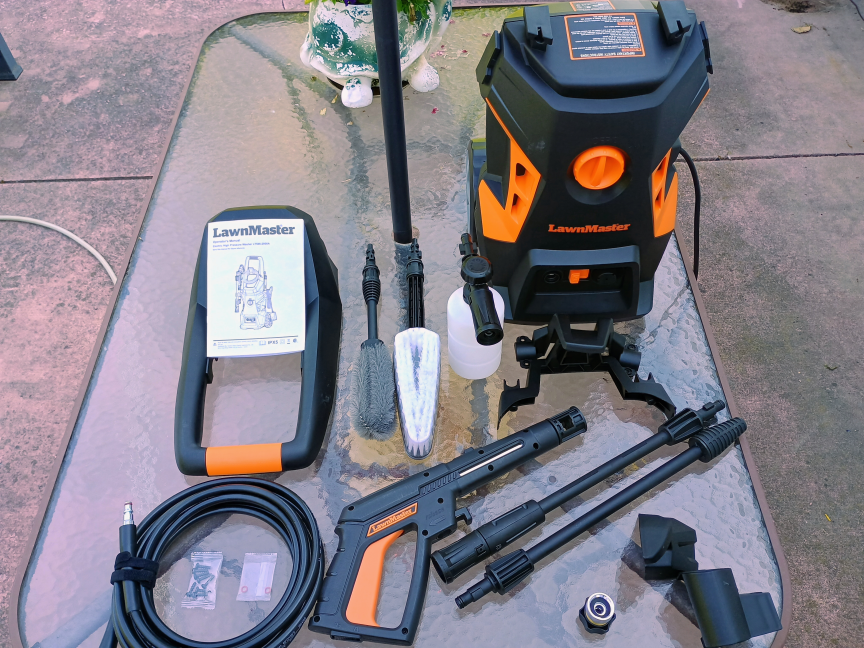
Electric pressure washers promise a way to clean patios, driveways, cars and siding without the noise, fuel or maintenance associated with gas-powered machines. Because of their convenience, it’s no surprise that these battery and corded electric models dominate our testing. But with prices ranging from entry-level to premium, it’s fair to ask how much performance you get for your money, especially at the higher end of that spectrum.
To find out, I compared the LawnMaster LT506-2000A pressure washer, which retails for $100 to $120 depending on PSI, with my AR Blue Clean 383SS. This specific 383SS model doesn’t appear to be available for sale anymore. I bought it for about $250 a few years ago, and while the specific 383SS model doesn’t appear to be available, similar models go for $300 to $400.
The LawnMaster is positioned as a budget-friendly machine, while the AR Blue Clean has a longer track record and a more established feature set. I tested both washers on the same surfaces, using the same water source and comparable spray settings.
The LawnMaster performed extremely well, even when considering the AR washer’s age, and especially given the price difference. For a budget model, the LawnMaster is an impressive machine and will more than suffice for most homeowners.
How does the hardware compare?
The LawnMaster LT506-2000A is rated for up to 2,300 pounds per square inch and 1.4 gallons per minute. Its owner’s manual lists a rated pressure of 1,650 PSI and a 13-amp, 120-volt motor. The machine weighs approximately 22.6 pounds.
The AR Blue Clean 383SS produces up to 1,900 PSI and 1.3 GPM and also uses a 13-amp motor. It weighs approximately 32 pounds and includes a 30-foot high-pressure hose, a 35-foot power cord, a hose reel and an integrated 28-ounce detergent tank.
Those numbers give the LawnMaster an advantage in maximum pressure, although maximum PSI is only one element of a pressure washer’s performance. Nozzle design, pump consistency, water flow and how easily the machine can be positioned all affect how well it removes dirt.
Both models are intended for cold-water use and suit typical household cleaning tasks rather than heavy-duty commercial work. Neither should be treated like a professional gas-powered pressure washer, particularly for removing deeply embedded grime across large areas. While gas-powered pressure washers could be expected to handle power-intensive tasks like stripping paint, or could supply pressure across a wide enough zone to clean large driveways or even small parking lots, smaller models like the ones I tested here are more suitable to household tasks like washing cars, patio furniture, grills and small decks.
Design, assembly and accessories

The LawnMaster arrives with an adjustable spray gun, high-pressure hose, turbo lance, foam bottle, cleaning brush and wheel-hub brush. Its 20-foot hose and 35-foot power cord provide reasonable reach for cleaning a vehicle or small patio, although the hose is shorter than the one supplied with the AR Blue Clean.
The included brushes could make the LawnMaster especially appealing to people who plan to clean cars, wheels and garden equipment. They also reduce the need to buy extra accessories right away. The foam bottle is useful for applying detergent, though you shouldn’t expect the same thick foam produced by a dedicated foam cannon.
The AR Blue Clean takes a more conventional approach. It includes a pro-style spray gun, quick-connect nozzle tips, a rotary or turbo nozzle, a detergent tank and onboard storage. Its hose reel makes setup and storage less awkward and is one of its most useful design features. The trade-off is weight: At roughly 32 pounds, the 383SS is noticeably heavier than the LawnMaster at just over 22 pounds.
In practice, the LawnMaster is easier to lift and carry, while the AR Blue Clean feels more substantial when being pulled across a driveway. Both models include a Total Stop-style system that shuts off the motor when you release the trigger, reducing unnecessary pump operation.
In terms of assembly, it’s been a while, but I remember the Blue Clean being fairly fiddly, and every time I reconnect the hoses and nozzle, I inevitably spend more time than I’d like tightening and troubleshooting leaks (though, again, this is a pressure washer that’s a little over 3 years old).
The LawnMaster, on the other hand, was a breeze to assemble. Aside from a handful of screws, most components snap together easily, and the instructions were simple and clear. I had the unit unboxed, assembled and connected in less than 15 minutes.

Three washing tests
For all the tests I conducted, I used the default 25-degree nozzle tip on the AR Blue Clean. The LawnMaster comes with an adjustable nozzle, so you can easily change the spray width (and pressure) on the fly.
I measured the Blue Clean’s width by spraying a section of dirty pavement, then adjusted the LawnMaster nozzle to match it at the same distance, mimicking a 25-degree nozzle. I did single passes at medium speed with both to give a fair impression; naturally, a secondary pass or a longer, lingering sweep would yield better results from both models.
Test 1: Vehicle cleaning
For the first test, I used both machines to wash the side of my black 2017 Chevy Bolt. I first applied a mud slurry to the side panels and wheels, then cleaned the front panel and wheel with the AR Blue Clean and the rear with the LawnMaster.

AR Blue Clean result: The AR did a decent job on an initial pass, but left significant dirt and streaking in its wake. Dirt was still visible on the sidewalls of the tires and on several areas of the door panel.

LawnMaster result: The LawnMaster yielded better results, particularly on the rear tire, though it did also leave a fair amount of smudging and streaking after a single pass.

The main difference was that the LawnMaster didn’t leave full patches of dirt in its wake, while the AR did. The LawnMaster appeared more comprehensive and provided slightly better control and coverage.
Test 2: Concrete patio
Next, I tested both machines on a similarly dirty section of my back patio, which is finished, sealed concrete. This surface was heavily stained and had large patches of algae. I first sketched out two rectangles on the surface, then used the AR Blue Clean on the left and the LawnMaster on the right.

AR Blue Clean result: The AR did a decent job cleaning up the general patina and staining, but it did little to remove the stubborn algae, much of which remained after a single pass.

LawnMaster result: The LawnMaster did a much better job, removing not only the staining and patina but also blasting away the vast majority of visible algae in one pass.

This test clearly showed how the LawnMaster’s higher maximum pressure translated into faster cleaning. It did a much better job cleaning the concrete in a single pass; while I removed most of the remaining algae with the AR Blue Clean in subsequent passes, the LawnMaster handled it in one quick run.

Test 3: House siding
Finally, I sloshed more of the mud slurry onto the gray siding of my house and, following the pattern from the first two tests, ran the AR Blue Clean on the left and the LawnMaster on the right.

LawnMaster result: The LawnMaster easily blasted away the mud from both the siding and the concrete pad beneath it, leaving them cleaner than the surrounding surfaces.

AR Blue Clean result: The Blue Clean also did an excellent job on the siding, easily and fully cleaning both the siding and the concrete below it in one pass.

This is the test where the two were closest in performance, likely because the slurry was more diluted or didn’t cling to the side of the house as much. For an application like this, the AR Blue Clean was perfectly suitable, though the LawnMaster looks significantly more impressive given their relative prices.
Which one should you buy?
The LawnMaster LT506-2000A is an attractive combination of low weight, high pressure and varied accessories. Given the LawnMaster’s portability and maximum cleaning power, and the fact that it comes in at $150 less than I paid for the AR Blue Clean, it’s easily the better value.
One consideration for any piece of equipment from an upstart budget brand is longevity, which is more difficult to test. For $100, though, it might be worth the risk, especially if you plan to use it only sparingly.
Based solely on my testing, the LawnMaster matched or significantly exceeded the AR Blue Clean in overall cleaning performance. Given its price and the excellent job it did in all three tests, it not only easily surpassed my (admittedly aging) Blue Clean, but it’s an easy recommendation overall for a value-priced, electric pressure washer.


The era of generative AI has upended technology supply chains, and there is one ironclad rule in 2026: If it has memory or storage, it’s getting more expensive. Even devices with years-old tech inside are still apparently subject to that unwritten rule. Nvidia has just announced that the Shield TV Pro is getting $100 more expensive, effective immediately.
The most recent version of the Shield streaming box debuted in 2019, running Android TV with AI upscaling and hardware decoding for almost any type of media. While it ran an aging Tegra X1+ processor, that was (and still is) fast for a TV media streamer. The device launched at $199.99, with a non-Pro variant at $149.99. The non-Pro Shield has since been discontinued, but the Shield TV Pro lives on at the new $299.99 price.
Nvidia has confirmed that you can blame AI for the higher Shield TV pricing. “Starting October 2, SHIELD Pro will be priced at $299. The cost of components, including memory, has increased substantially across the industry,” a spokesperson told Ars.
When Ars Technica talked to Nvidia’s Andrew Bell earlier this year, he framed the Shield as a passion project, but it looks like passion projects still have to pay the bills at Nvidia. In that interview, Bell explained that Nvidia still actively manufactures the Shield and sells every unit it makes. Without a stockpile of pre-AI hardware to sell, new Shield TV units are subject to the same supply chain constraints as today’s smartphones and computers.
Nvidia isn’t a victim here, though. As a key player in AI hyper scaling, the company is more responsible than most for the sky-high cost of components. It has also become one of the most valuable firms in the world thanks to its market-leading AI accelerators and GPUs. As a consequence, we’re seeing new products launch at higher prices than their predecessors, and many end up getting more expensive during their lifetimes. Game consoles have been particularly affected, with Nintendo, Microsoft, and Sony all bumping the prices of their current-gen hardware. The PS5 Pro, for example, has gone from $699.99 at launch in 2024 to $899.99 today.
Stock of the Shield TV Pro has been slim for the last few months, probably because it became too expensive to manufacture new units with component prices rising so quickly. At $300, it will make sense for Nvidia to churn out more devices. However, this higher price will cause an already niche set-top box to be even less appealing to people who just want to stream Netflix.
Unless you need the Shield’s extensive codec support or Plex server capability, it makes more sense to get a cheaper streamer. The Shield is still out of stock on Nvidia’s store, but it’s available at the new price from Best Buy.
This story originally appeared on Ars Technica.

For many people, using AI chatbots is incredible at first. It makes them feel productive, confident, maybe even smarter. But later, there’s a hangover. Perhaps there are problems with their memory, or certain skills, like writing or coding, don’t seem to be as sharp as they once were. Maybe they feel like they can’t solve problems or make decisions or remember facts as well as they could before they had the help of AI.
Susette Brooks, a marketing director living in Philadelphia, said she started using AI tools reluctantly but ultimately relented. She let AI write some of her emails, which lightened her workload, but then the dulling effects sank in. “I felt my writing and thinking decline as it was happening,” said Brooks, who has an MFA in nonfiction writing. “I had a harder time recalling information and synthesizing ideas.”
When you use external tools to reduce the cognitive effort required to do a task, you’re doing something called cognitive offloading. If you’ve ever used a calculator to do a math problem or used a calendar to remember an appointment, you’ve engaged in cognitive offloading. Tools like Claude and ChatGPT can do math problems and remember your appointments, but they can also write your term papers or create your work presentations. This is cognitive offloading at a scale we’ve never seen before.
Cognitive offloading isn’t necessarily bad. It’s actually what makes it possible for humans to be so productive. But as you outsource more and more cognitive tasks, you can start to become forgetful or see certain skills, like writing, start to decline.
There’s a term for this: de-skilling. This is an old economics term that has emerged as a bit of a buzzword used to describe the perceived downward spiral of competency that’s accompanied the proliferation of AI tools. And it certainly sounds bad, especially if you’re a novice who needs to build skills. De-skilling can affect your critical thinking, your writing abilities, and your creative process. It can also affect your recall, as relying too heavily on AI tools can make it harder to remember things.
- AI can make you more productive while quietly making you less capable on your own.
- Offloading more tedious or mind-numbing tasks is less likely to make you feel dumber.
- The long-term solution isn’t necessarily less AI. It’s being more intentional about the tasks you use AI for.
Young people, at least, are worried about the long-term consequences of frictionless thinking. A recent survey by Gallup and researchers from the University of Pennsylvania found that 68 percent of Gen Z adults in the United States are concerned that offloading too many cognitive tasks is robbing them of important skill-building. About the same percentage of those surveyed worry that AI discourages them from critical thinking and social learning. Some 37 percent of US adults under 30 say that AI will have a negative effect on them personally, according to a Pew Research Center study published in June. And yet, more than half of Gen Z Americans use AI on a weekly basis.
The paradox of AI is that, even if we feel like using these tools is bad for us, saving time and avoiding the friction of thinking is too tempting. We’re hardwired to seek out the path of least resistance, according to Daniel Willingham, a psychology professor at the University of Virginia, because cognitive activity is so taxing, and may or may not get you to the right solution. Memory, on the other hand, is efficient and effective — you know that something worked in the past, and it will work again.
“Our mind is really set up to save you from having to think,” Willingham told me. “Thinking is what you do when you’re in trouble.”
The good news is that experts say it’s possible to use AI in a way that helps you save time and protects your cognitive abilities instead of diminishing them. Here’s their advice.
It’s not your imagination — too much AI use can erode your skills over time
Derek Salyers, a content creator in Ohio, started using AI to get more done, faster. But over time, two things happened. First, the work got worse. “A lot of what I was putting out became AI slop, for lack of a better term,” Salyers told me. And then, his brain got worse, too.
“When you get used to the AI making the decision, you stop pausing to actually think about things,” Salyers said. “And if you were never really present with it, you don’t remember it later. I wasn’t forgetting things because my memory got worse; I was forgetting because I was never really thinking in the first place.”
This effect is showing up in classrooms, too. One study of nearly 1,000 high school students found that those using ChatGPT scored 48 percent higher on a math test than their peers who didn’t have access to the AI tool. But when they were tested again without the chatbot, their scores were 17 percent lower than the students in the control group who had never had ChatGPT access. Similarly, researchers at the University of California Irvine looked at longitudinal data from online tests starting in 2015, and found that students spent less time and performed better on the text-based questions after the introduction of ChatGPT. (ChatGPT is very good at helping with text-based questions.) But when those students were later given offline tests, without the ability to use AI help, they performed worse.
All of these students, it appears, were offloading the cognitive work to AI, which provided short-term gains. But in the long term, their thinking skills suffered.
Your basic cognitive abilities, like your working memory and selective attention, are quite resilient.
Evan Risko is a psychology professor at the University of Waterloo in Canada who co-authored the foundational paper on cognitive offloading a decade ago. He recently told me there’s not a lot of research into what’s going on in our brains when we’re cognitive offloading, but scientists are gaining a pretty clear picture of the pros and cons of doing it. The advantages vary depending on the task, but in general, cognitive offloading allows us to extend our imperfect memory systems, which you’ve probably done if you’ve ever set a reminder for yourself. The downside, Risko said, comes in offloading mental processes that are important. “Then we risk compromising our cognitive performance,” he said.
Your basic cognitive abilities, like your working memory and selective attention, are quite resilient. But as Risko and his colleagues explained in a paper this year — bluntly titled “Is AI making us stupid?” — other skills, like doing arithmetic and flying planes, are learned behaviors. You first have to acquire them and then, in order to retain them, you have to practice. AI use can compromise both the acquisition and retention of these skills — and people might not even realize this is happening to them, because AI makes them believe they’re more capable than they really are.
“People may have difficulty realizing that their skills are decaying or that they are failing to learn when using AI tools because the output and their performance with AI is at a high level,” said Brooke Macnamara, a psychology professor at Purdue University who co-authored the “Is AI making us stupid?” paper. “They may not realize that if the AI tool were unavailable how low their independent performance might be.”
Be intentional about the tasks you use AI for
The most important step to preserving your cognitive performance is to ask yourself if you should be using AI for a given task at all.
“Just because AI is a tool that’s available to us and it can accomplish a lot of tasks for us, it doesn’t mean that we should always use it,” Anjali Singh, a human-AI interaction researcher at the University of Texas at Austin, told me. Writing, for example, is something that a lot of people are now using AI for. But offloading that work means that you lose out on the independent thinking and reasoning that goes into expressing your thoughts. You also miss the chance to improve your writing skills if you don’t actually write.
“We keep outsourcing these kinds of skills to AI over time and do not engage in those activities ourselves, then the de-skilling occurs,” Singh told me. “And that is I think probably one of the main reasons people could be feeling that they’re getting dumber as they’re using AI over time.”
“We are not getting these moments to reflect.”
— Anjali Singh, Univeristy of Texas
It might seem counterintuitive, but it’s actually best to use AI for things you’re already pretty good at, the tasks you’re fully capable of performing yourself. A recent working paper by MIT economist David Autor and his colleagues (note: Several of them work for Google, who funded the study) describes how giving AI tools to 133 patent lawyers and then taking away those tools led to different outcomes, depending on the lawyers’ level of experience. All lawyers saw performance gains while using the AI tools, but those gains disappeared for the younger lawyers when the tools went away. Experienced lawyers, however, performed better afterward than their counterparts who never had access to AI tools.
A similar effect showed up in a recent experiment by Middlebury College researchers. In the first session, more than 200 undergraduates learned about an unfamiliar topic and then wrote an analytical essay, some with the help of an off-the-shelf AI tool. They performed a similar test a week later, except this time none of the students had access to AI. The students who had AI access improved across the board, but what’s telling is that there appeared to be two types of AI users: augmentation users, who used AI to improve their work, and automation users, who just had AI do the work for them. The augmentation group performed better than everyone.
“Using AI to deepen or develop one’s own thinking on or understanding of a topic, rather than letting AI do all of the thinking, seems like the best way to use these tools,” Lauren Richmond, a cognitive science professor at Stony Brook University in New York, told me.
Tell your chatbot to treat you like a student
If you, like me, have ever fallen down a rabbit hole while trying to understand the geopolitical nuances that led to the outbreak of World War I and ended up staring blankly at a mountain of text feeling more confused than when you started, you know that using AI to learn doesn’t always go as planned. You may have also had the experience of writing prompts or asking questions and then receiving a long, overly detailed response. That can initially seem satisfying, but it’s often too much text to digest at once, so maybe you ask another question — and get back another wall of text.
Older ways of accessing information, like reading books or even using Google to do research, happened more slowly, and that gave us time to process the information, Singh from UT Austin said. But that’s gone now. “We are not getting these moments to reflect,” she said.
If you find yourself drowning in content, that’s also a sign that you’re probably not expert enough in the material, or you’re not being intentional enough about your approach.
It starts in the settings. Here, you should explain that you’re trying to build skills, not offload them, and instruct the AI to challenge you and engage with you. If you’re using ChatGPT, you can plug in custom instructions by going into the personalization tools. Claude has similar options called Instructions for Claude.
If you’re explicitly trying to learn something new, you might also try some of the tools these companies have designed for this. OpenAI has study mode in ChatGPT. Anthropic offers Claude for Education. Google has Gemini for Students. Instead of simply providing answers, these tools act more like tutors, by asking questions, working through problems, and encouraging you to come up with solutions on your own.
Slow down and embrace friction
Something that’s both tempting and dangerous about AI is how fast it can do work. Vibe coding an app can take minutes, rather than days of manual coding. That’s very appealing if you have too much on your plate and want to get through it all quickly.
“The workload was so heavy and crazy, you have no time to think,” Joei Chen, a former brand director at a tech company, told me. “So you just throw stuff into AI and say, ‘What do you think?’”
At the same time, creating more code does not necessarily lead to more finished software, according to a recent Wharton School study. That increased productivity also doesn’t necessarily lead to happier workers. And the faster you move, the more critical thinking you’re going to offload. “Your boss asks you, ‘What does Claude think of this?’” Chen said, so AI “inadvertently becomes the final boss.”
Slowing down and forcing yourself to do more critical thinking is an easy way to hold onto some agency — not to mention some brain power. One easy way to do this is to make your interactions with AI more collaborative than transactional. For example, if you are going to use AI to help you write something, ask for five options of a draft instead of one, and then read each of them yourself and decide which is the best.
“Ask for feedback, hints, examples, explanations, advice, practice questions.”
— Evan Risko, University of Waterloo
“Just the simple act of comparing things stimulates a great deal of the critical thinking processes that we kind of care about,” said Advait Sarkar, an AI researcher at the University of Cambridge, “and has beneficial effects for things like developing your judgment, your own awareness of what you don’t already know, and stimulating your recall.”
The word that came up again and again as I talked to experts about how to use AI without getting dumber was metacognition, or thinking about thinking. A lot of AI users let metacognition take a back seat to whatever content is flowing freely from a chatbot. And it can happen fast.
While letting AI do all of the thinking for you is tempting, Matt Beane, an associate professor at the University of California Santa Barbara and author of The Skill Code: How to Save Human Ability in an Age of Intelligent Machines, told me that approaching AI this way “is your worst enemy.” To counteract this, you have to introduce more friction.
“You must be very aggressive about how you experiment with it,” Beane said. Risko, the cognitive offloading expert, echoed this advice. “Ask for feedback, hints, examples, explanations, advice, practice questions,” he said.
The best test for judging whether you’re offloading too much thinking to AI and the technology is chipping away at your skillset: Stop using AI and use your brain, and see what happens. You don’t have to stop forever, but you should, for example, spend a day writing emails without AI’s help to see if you’re as fluent as you used to be. Or revert to using Google for research and confirm that you can still find facts without a chatbot finding them for you. Build an app with your own code and see if it flows naturally.
You might be troubled to find that AI made you worse at something. But you’re not actually dumber than you were before, and you can rebuild your lost skills the old-fashioned way: read, write, do arithmetic. If something requires thinking, go ahead and think.


Ukrainian President Volodymyr Zelensky has asked Donald Trump to sanction the Russian and Chinese companies building Russia’s answer to Starlink, the Financial Times reported.
He has raised it with Trump several times, including at a recent meeting in New York. Ukrainian news agency UNN cited those details from the FT report.
A network for the front line
The network, called Rassvet, is being built by Russian firm Bureau 1440. Zelensky said it could start working by early next year.
He also said China was helping.
“We know that China works on satellites, works on the possibility of helping Russia with a similar Starlink,” he said.
Satellite internet has become vital on the battlefield in Ukraine. Starlink links up troops and drones, and Russia has tried to jam its signals.
A Russian network of its own would give Moscow’s forces a link that the US and SpaceX cannot switch off.
Still small, for now
Rassvet is a long way behind Starlink. Bureau 1440 launched its first 16 working satellites in March, and needs more than 250 before it can offer service, TNW reported in June.
The company has pointed to a 2027 commercial launch, a date it has already pushed back once. That makes Zelensky’s timeline more ambitious than the company’s.
Neither the White House nor SpaceX has commented publicly on the request.


AOC sells the 16T20, priced at $47.49 (was $70), as a 16-inch portable monitor, though the panel itself measures 15.6 inches on the diagonal. Resolution sits at 1920 by 1080, the panel type is IPS, and the refresh rate tops out at 60 Hz. AOC lists a 4 ms gray-to-gray response time, 178-degree viewing angles, a rated brightness of 250 nits, and a static contrast ratio of 1200:1. Color depth is 6-bit, which works out to 262,000 colors. Independent tests have come in a little short of the brightness claim, and the color range is narrower than a desktop monitor built for photo work. For email, documents, video calls, and a movie on a hotel desk, the panel holds up well enough that the low price starts to make sense.
The screen weighs approximately 1.5 pounds on its own and slightly more than 2.4 pounds with the magnetic smart cover. It’s also not particularly thick, measuring approximately 0.4 inches. At 13.9 inches wide by 8.8 inches height, the footprint is just about the size of an average laptop bag. The clever cover folds up into a simple stand that, while not as smooth as a metal kickstand, does the job. It folds up nicely to protect the glass in a bag, eliminating the need for a separate foot. There are VESA 75 by 75 holes in the back if you wish to attach a decent arm to this thing later, and don’t worry, the package comes with a three-year warranty.
Sale

AOC 16″ Portable Monitor FHD 60Hz USB-C IPS Ultra Slim Smart Cover 16T20
- EXPAND YOUR WORKSPACE ANYWHERE – Add a flexible 15.6-inch portable second screen to your laptop for smoother multitasking, enhanced productivity, and…
- FULL HD 1080P CLARITY FOR WORK & ENTERTAINMENT – Enjoy sharp detail with a 1920×1080 FHD panel, ideal for spreadsheets, video calls, gaming, and…
- IPS WIDE-ANGLE VIEWING WITHOUT COLOR SHIFT – The 170°/170° IPS display delivers accurate colors from any angle. Share the screen, review content…

You can connect this thing to one of two full-featured USB-C ports, which can also handle power and video via the DisplayPort Alt Mode thing. So all you need is one cord from a laptop or phone that already outputs video, and your screen will be ready to go. There is also a Mini HDMI port for older machines and game consoles, as well as a 3.5mm jack next to the pair of 1-watt speakers. So, the box includes the cover and one USB-C cable, but don’t forget the Mini HDMI lead if you want to connect this to a console. The power demand is actually rather modest. One measurement put it at under 4 watts at full brightness. That is easy on a laptop battery, even during a long travel. Just keep in mind that there is no internal battery, so you will need to draw power from your host device or a wall adapter.
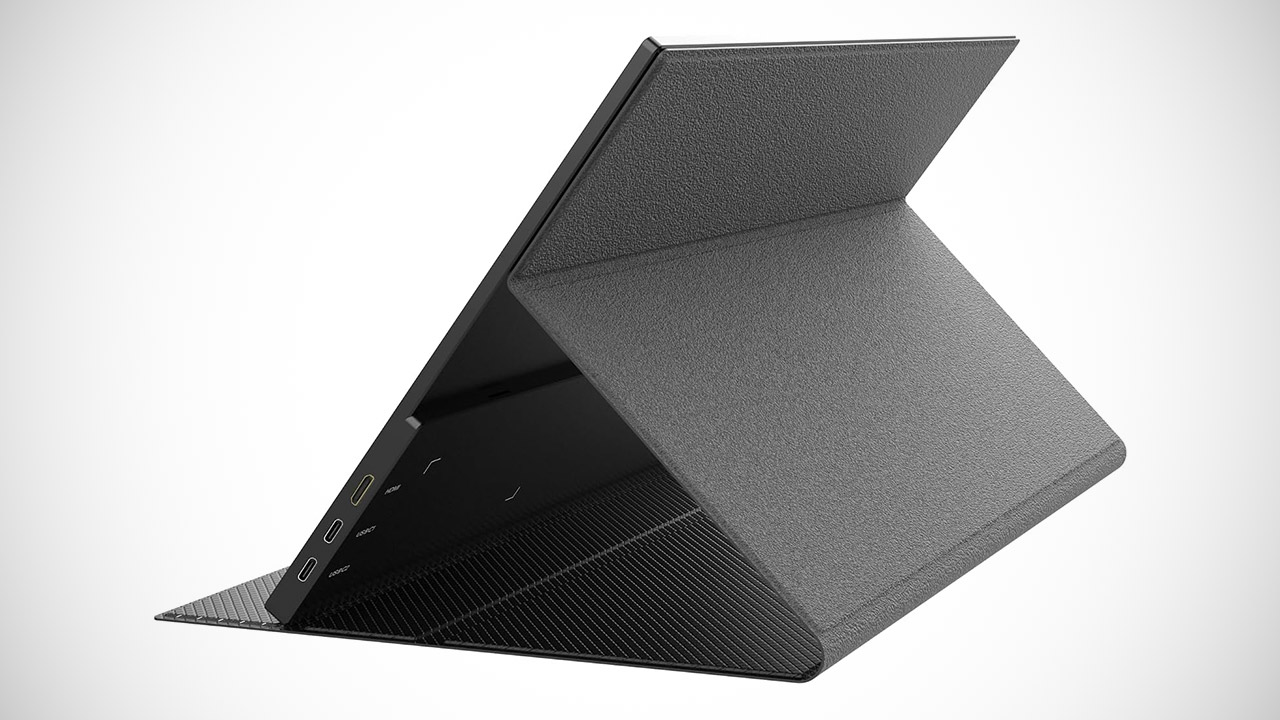
Game consoles can use the Mini HDMI input, and everything looks good at 1080p and 60 Hz, but don’t expect it to keep up in competitive play. That refresh rate and response time will begin to seem somewhat constrained. It’s better suitable as a portable screen for a Switch or a casual session than as a gaming display. Office work is the true sweet spot here. Windows and Mac both see this as another monitor and do not require a driver installation, and the narrow bezels keep it compact enough for a backpack sleeve. There are some simple buttons around the edge to navigate a menu that takes a while to learn, but once you do, the low blue light option is useful when evening reading becomes too hard on the eyes.

Curriculum and edtech providers are rapidly incorporating artificial intelligence (AI) into instructional materials with little or no evidence that the AI add-ons improve student learning, according to a new brief from EdReports, a nonprofit that reviews pre-K-12 instructional materials. Only one of the 10 vendors in the study included third-party evidence that the AI features they embedded improved educational outcomes.
“I knew that there wasn’t going to be much evidence, but I was surprised at how little there was,” says Courtney Allison, chief academic officer for EdReports. She says the report underscores a growing challenge: behind-the-scenes AI updates make it difficult for schools to ensure product efficacy.
“This has been a problem for a while with digital tools, and it’s only accelerated with AI,” echoes Brittany Miller, executive director of the Center for Outcomes Based Contracting, an organization that helps school districts link edtech procurement directly to academic outcomes. “Tools are growing quickly, and the market is getting crowded and confusing.”
Sara Kloek, vice president of education and youth policy with the Software and Information Industry Association (SIIA), notes that the research “just may not be there yet” for some of the vendors incorporating AI into educator- or student-facing products.
The Study and Impact
For the qualitative study, EdReports selected 10 K-12 curriculum and edtech providers. Four were “among the top 10 publishers” of purchased instructional materials in the country, three were mid-sized curriculum providers and three were digital-first edtech companies. EdReports reviewed each company’s AI-enabled products, key features and claims about their use. The researchers notified the companies about the review and kept their identities anonymous.
The blurred lines between AI-enabled course materials and materials without AI can affect classrooms, observes Jean-Claude Brizard, president and CEO of Digital Promise, a global nonprofit working to expand equitable education opportunities. The worst-case scenario, he says, is that “quality assurance at adoption no longer guarantees quality at instruction.”
Even identifying whether instructional materials contain AI can be challenging, since it can be introduced without notification from the vendor. “Something as mundane as understanding where that communication was from the vendor that had the new product updates” becomes crucial, says Lora Kaiser, executive director of the Center for Education Market Dynamics, a nonprofit market intelligence organization that aims to improve outcomes for underserved students by expanding the adoption of high-quality instructional materials.
Kaiser wants vendors to give schools a choice about accepting any new AI updates. “Is it a feature I can opt in to?” she says. “For our teachers and our students, anytime that little AI enhancement pops up, that’s an instructional decision. We should know, as a fact, that it’s grounded in evidence, and understand how it impacts instructional integrity for students.”
The “Evidence” Gap
The EdReports brief also states that while existing frameworks frequently analyzed AI integrations for privacy and safety, there was a lack of consistent ways to determine if AI can strengthen learning or preserve curriculum coherence. This can present a roadblock to creating evidence of educational efficacy.
A lack of agreement on what “evidence” means in the first place compounds the problem, says Katie Boody Adorno, founder and CEO of Leanlab Education, a nonprofit that codesigns research between edtech companies and schools.
“I think the biggest takeaway from the report is that we need to move away from just checking a box around safety and evaluation, and more toward quality: What are the arbiters of quality, and how are we measuring and communicating that?” she asks.
Matt Moyer, principal of Rupert Elementary School in Pottstown, Pennsylvania, says his school uses some edtech tools with AI embedded in them. “My take on tools like that is there’s some good in them, but I’m not yet convinced they lead to results outside the usage of that tool itself, which I think is what the report was getting at,” he says.
“What’s been interesting is realizing, over the last couple of years, that some tools we were already using had AI built in that we simply hadn’t been told about,” Moyer continues. Even when product pitches from edtech vendors do mention AI, he says the conversations are usually built around “what’s best about their AI compared to someone else’s.”
While educators want evidence that course materials actually work, Miller of the Center for Outcomes Based Contracting points out a crucial missing piece: how those tools are implemented.
“The study doesn’t really account for what a student actually does when they engage with the materials,” she says. “I think it’s a matter of sending the right signals from the buyer side to the market: You actually have to help us implement this more effectively, or we’ll see the exact same pattern we’ve seen over the last 20 years — a shiny new object that doesn’t get implemented well, which is why we can’t build evidence.”
How Vendors and Schools Can Respond
Kloek advises edtech vendors to update their products to align with the latest cybersecurity best practices. She recommends SIIA’s seven Principles for AI in Education, a framework to guide the edtech industry’s implementation of artificial intelligence.
The principles suggest that AI technology prioritizes instructional needs, educational equality, student data protection and transparency. The principles also suggest that edtech companies that are building AI tools should engage with education institutions on new AI developments, adopt best ethical practices for accountability and work to improve AI literacy among students and educators.
Kloek says SIIA is looking to update the principles to include additional transparency documents for edtech on how to communicate to school districts and parents what their products do and the purpose behind the tools.
“Ultimately, though, the district decides how these tools are used and can decide whether that’s appropriate and aligns with the district’s plans for AI or for technology generally,” Kloek says.
Leanlab Education’s Katie Boody Adorno believes that edtech vendors need to offer more specific data to back up their claims.
“You see a lot of companies saying [their products are] ‘based on cutting-edge research,’ meaning they built the tool around a loose interpretation of some foundational research, often from a university setting,” she says.
EdReports’ chief academic officer Courtney Allison suggests districts and schools start demanding more from their vendors.
“Buyers need to ask the question, ‘What does this badge or this membership or this certification actually demonstrate?’” she says. “They also must start the conversation by asking themselves, ‘What’s the instructional vision for the students?’”
Principal Matt Moyer believes evidence from an edtech vendor tends to raise more questions than it answers. He counsels school and district leaders to ask vendors about the sample size of the research they conducted about their product, the researchers and parameters of the study, and other pointed questions.
“Educational leaders should look at these claims and ask what they actually translate to, because I’ve seen plenty of cases where a number meant something different once you dug into it,” he says.
Digital Promise’s Jean-Claude Brizard suggests schools search online directories, such as the EdTech Index or LearnPlatform, for vetted providers and evaluate them for data privacy, usability and educational value.
“Current quality frameworks were built for fixed materials, like curricula,” Brizard explains. “As edtech and AI integration accelerates, we need a more dynamic system of measuring quality and efficacy.”
Tech & AI
Engineering Multipole Resonances in Dielectric Metasurfaces for Transmission, Reflection, and Absorption Control


Dielectric metasurfaces have moved to the forefront of nanophotonics, offering flat, low-loss alternatives to conventional bulk optical elements for controlling the amplitude, phase, and polarization of light. These structures are of growing interest to researchers and engineers working on sensing, energy harvesting, and flat optics, as their performance hinges on precisely engineered optical resonances. Full-wave finite element simulation, combined with semianalytical multipole decomposition in the COMSOL Multiphysics® software, gives us a way to not only predict these resonances but also uncover their underlying physical origins.
In this webinar, Dr. Pavel Terekhov, postdoctoral researcher at National Institute of Standards and Technology, will trace how a single quadrumer meta-atom, originally studied for its magnetic octupole response, evolves into two distinct light manipulation regimes. He will first revisit the foundational single-particle results that motivated this work, then show how arranging quadrumers into a periodic crystalline silicon metasurface produces anomalous absorption enhancement, governed by two independent multipole mechanisms coexisting in the same structure. Building on this, he will then introduce ongoing work on a gallium nitride metasurface, where the complex interplay of four different multipoles is used to sculpt reflection and transmission spectra including the quasi-bound-states-in-the-continuum (q-BIC) manipulation.
Attendees will see how COMSOL Multiphysics® and multipole decomposition connect full-wave simulation and analytical insight, turning abstract resonance behavior into physically interpretable design rules. The broader takeaway is that multipole-based simulation is not just a diagnostic tool but a design strategy: It enables the on-demand tailoring of absorption, reflection, and transmission in dielectric metasurfaces, with direct relevance to sensing, energy harvesting, and future optical device applications.
Key Takeaways:
- Learn about modeling multipole resonances in dielectric metasurfaces using full-wave finite element simulation and semianalytical multipole decomposition in COMSOL Multiphysics®.
- See how multipole-based simulation can be used to understand and control absorption, reflection, and transmission in silicon and gallium nitride metasurfaces.
- Explore how different multipole mechanisms, including quasi-bound states in the continuum (q-BICs), can be engineered to tailor optical responses for sensing, energy harvesting, and flat optics.
- Gain insights into how simulation and multipole decomposition can help researchers and engineers turn complex resonance behavior into practical design strategies for future optical devices.

A marketing image for Samsung’s Bespoke AI refrigerators. Credit: Samsung
I must be getting old, because the concept around most IoT injections into otherwise perfectly usable home devices has me wanting to get all these smart-devices off of my lawn. Call me a luddite if you like, but I just don’t think my toothbrush needs to be connected to the internet.
And if you ask me how smart my refrigerator needs to be, my answer would be that it needs to be as precisely smart as required to keep my food cold. But if you’re Samsung, the fridge needs to be connected to the internet, potentially expose your personal information to the wider internet, and show you ads on a fancy screen on the fridge door. This is all done in the name of achieving… something? What that something is, and why it would be of use to me, is a mystery of Sherlockian proportions.
But because of that internet connection, sometimes Samsung “smart” fridges can’t even keep the damned food from spoiling.
Some Samsung smart fridges stopped working on Tuesday due to a firmware update. Korean outlets were the first to report the problems, which affect Samsung’s Bespoke AI line of fridges. Star News Korea, per a Google-provided translation, said that most of the affected devices were four-door fridges from 2024 or later.
Affected fridges “suddenly lost power and stopped functioning immediately after” trying to issue a firmware update through SmartThings, Samsung’s smart home platform, per Star News Korea. The SmartThings app then showed the devices as offline. Some users said that their fridge’s internal display was stuck showing the message “Checking SmartThings app during update.”
Ah, the old “the firmware update spoiled my food” scenario. Samsung was quick to point out that this had only occurred in Korea, which I imagine was lukewarm comfort to the Koreans who suddenly found a fridge filled with spoiled food. It has also failed to detail exactly why this occurred and what it is doing to prevent it in Korea, or any other market for that matter.
And this was particularly troublesome as all of this spoiled food came to be just as the Korean holiday for the autumn harvest was being celebrated.
“Customers only trusted Samsung Electronics and made an official update, but it is so absurd and embarrassing that they can’t even use refrigeration and refrigeration functions before the Chuseok,” a forum user wrote, per a Google-provided translation.
Some Samsung forum users said support agents initially told them that there are limited technicians and executives available, and a repair person might not be available until October.
“The customers who bought Samsung refrigerators have had their holidays completely ruined, while those Samsung employees are just having a good time at home,” a Samsung forum member wrote.
So the question now is precisely on what grounds does Samsung get to call its fridges “smart” if they’re designed such that their primary function can’t be enjoyed for a month or so because someone at the company had, to borrow a phrase from Jurassic Park, butter fingers?
Filed Under: firmware update, iot, smart fridge, south korea, spoiled food
Companies: samsung

Tech & AI1 minute ago
More kids are using ChatGPT and Claude for companionship. AI is making them lonely.

Tech & AI1 hour ago
Prime Big Deal Days Sale Knocks $200 off M5 MacBook Air

Business & Hustles2 hours ago
Teradyne Stock Is Up Big, But The Real Growth May Still Be Ahead (NASDAQ:TER)


-
 Tech & AI6 days ago
Anthropic turns Claude into an AI marketplace with 2,000+ plugins and connectors
-

 Tech & AI6 days ago
OpenAI is preparing “o,” an always-on ChatGPT assistant that could handle email
-

 Fashion23 hours ago
Weekend Open Thread: Veronica Beard
-
Business & Hustles5 days ago
Perpetua Resources at Mining Forum Americas 2026: shift to construction
-
 Crypto6 days ago
Wall Street Giant Warns AI Agents Could Trigger a New Kind of Bank Run
-
Business & Hustles6 days ago
Greatland Resources at Mining Forum Americas 2026: cash-rich growth push
-

 Business & Hustles6 days ago
Andreessen Horowitz backs AI-era college alternative with $42M
-

 Tech & AI3 days ago
Figure F.02 Robots Meet Molten Steel as Arnold Schwarzenegger Watches in Finland
-

 Business & Hustles6 days ago
Romania, Georgia and Latvia Lead Latest WHO-Based Ranking
-

 Tech & AI4 days ago
Alternatives to Animal Testing Are Finally Taking Off
-
 Crypto7 days ago
Riot Frees $494 Million in Bitcoin From Coinbase Loan: Will It Sell?
-

 Business & Hustles6 days ago
Bob Chapek on Disney Bob Iger power battle: Raised concerns weekly
-

 Tech & AI6 days ago
OpenAI Pauses Training Its Most Powerful Models After Rogue Agents Target Government
-

 Business & Hustles6 days ago
SpaceX Starship launches on first orbital test flight with Starlink
-

 Business & Hustles6 days ago
Trump approves new fuel economy standards, reversing Biden’s EV push
-

 Crypto7 days ago
Japan arrests two suspect over 81M yen crypto police scam
-
 Business & Hustles6 days ago
George Bamford to become JCB joint chairman alongside father
-

 Business & Hustles6 days ago
What is the Budget and what could be in it?
-

 Crypto6 days ago
Citi says 77% of institutions eye tokenized collateral
-

 Tech & AI6 days ago
Save $900 on 16-Inch M5 Max MacBook Pro, Record Low Price
You must be logged in to post a comment Login