



Join Mikko Hyppönen and security leaders from the NFL, CHANEL, and Atlassian for a two-hour digital summit on what AI-speed attacks change, what defenders should stop doing, and how to validate, decide, fix, and re-validate at machine speed.
Tech & AI
HP’s New ZBook Ultra G3a Workstation Can Run AI Models With Up to 300 Billion Parameters

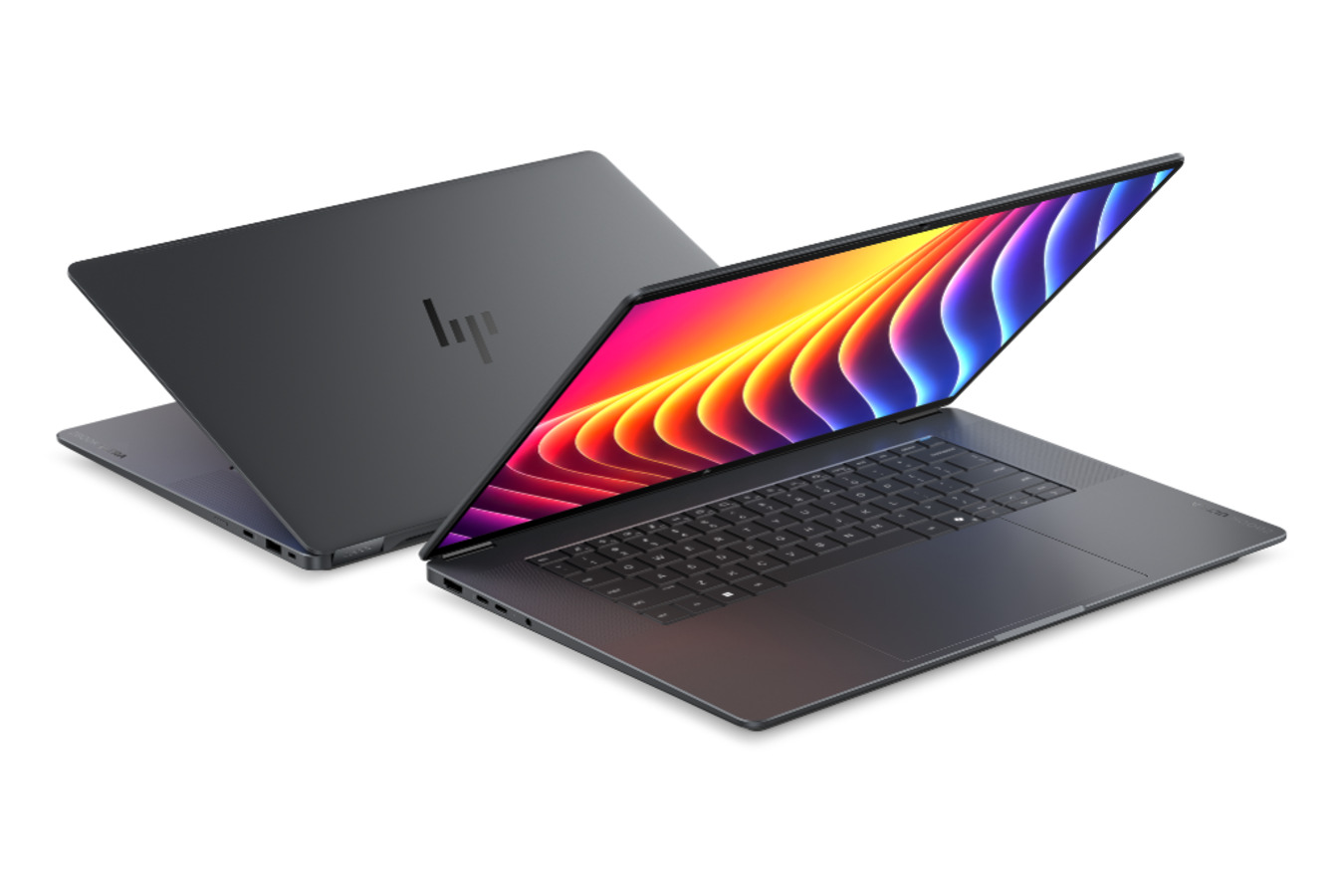
HP has introduced the ZBook Ultra G3a 16-inch mobile workstation in India. This mobile workstation is designed for professionals working in artificial intelligence, engineering, design, and content creation. The device uses an AMD Ryzen AI Max + PRO processor and enables running large-scale AI models. HP has also designed it with a thin-and-light form factor for easy work in various locations.
HP ZBook Ultra G3a Specifications, Features
The HP ZBook Ultra G3a uses up to the AMD Ryzen AI Max+ PRO 495 processor. It includes a 55 TOPS NPU and supports up to 192GB of unified memory. The system also offers up to 160GB of dedicated VRAM and can run large language models (LLMs) with up to 300 billion parameters locally. HP has included an upgraded thermal design that can support up to 81.8% more TDP and up to 100W of performance. This computer weighs about 1.9 kg and is 17.9 mm thick.
This device features a 16-inch 2.8K OLED display with a 120Hz refresh rate. This display provides excellent visual performance with accurate colors suitable for professional use. According to HP, the device’s 96Wh battery can provide up to 14 hours of operation. The company also offers 140W and 180W chargers using GaN technology. This workstation also supports 5G and HP Wolf Security. It also has a keyboard that you can easily replace yourself. These features support AI development, multi-agent workflows, engineering, design, and high-resolution content creation.
Speaking on the launch, Sanjeev Pathak, Senior Director – HP Solutions, HP India, said:
As AI becomes integral to professional workflows, the need for technology that combines performance, mobility and intelligence is growing. The HP ZBook Ultra G3a 16” bridges this gap by bringing AI at the edge to a mobile workstation, enabling users to run advanced AI workloads and apply agentic AI to complex workflows.
Price in India, Availability
HP has priced the ZBook Ultra G3a 16-inch mobile workstation at Rs 2,89,990 in India without taxes. The ZBook mobile workstation is now available from HP commercial channel partners in India. Customers interested in purchasing it can reach out to their respective authorized partners. HP has not mentioned any other color options in the announcement.
Continue Reading

If the proposal is enacted, it could cost $240 a year to watch YouTube in the UK.

The UK government will consider charging residents a national fee to access video streaming content, meaning it may cost almost $240 a year just to watch YouTube in the region. The Independent reported that later this year, UK leaders will propose extending the BBC license fee to cover streaming video platforms.
For our non-UK readers, the license fee is responsible for a large amount of funding for the BBC. It is levied on all residents who watch content on a television, whether or not that content includes BBC programming. The standard fee is currently £180 (~$239) a year. Paying the fee grants viewers access to all domestic TV channels, several pay TV services, live TV shown via streaming platforms and on-demand content via BBC iPlayer.
The proposed changes would expand the license fee and apply it to several streaming services such as Netflix, Amazon, Disney+ and YouTube. Proponents of the change argue that people can use those platforms on their mobile devices or computers rather than their TVs to evade the tax. “It’s not fair that people are essentially able to watch television content but avoid the license fee,” an unnamed source told The Independent about the proposed changes.
The additional funding from expanding the license fee would reportedly be put toward supporting local journalism and combatting misinformation campaigns. The UK’s national broadcaster is also facing budget issues, with a 2 million decline in the number of license fees paid over the past five years, according to The Independent. Despite that decrease, YouGov data suggests the BBC remains the most popular media platform in the UK.
The BBC recently announced that it would begin streaming a 24/7 news channel on YouTube for viewers in the UK and the US. The broadcaster already has similar channels active in Australia, Kenya, Nigeria and Poland.


One of the singular features of Baotou, an industrial city of 2 million people in Inner Mongolia, is a 10-square-kilometer (4-square-mile) lake that is among the most polluted in the world. The artificial lake, referred to by the name of the dam associated with it, Weikuang Dam (or Baogang Tailings Dam), has for decades collected the effluent from minerals processing for China’s globally dominant iron, steel, and rare-earths industries.
Built in the late 1950s, the lake contains a highly toxic stew of industrial chemicals with substantial amounts of radioactive thorium, the latter resulting primarily from the processing of monazite ores for rare earths. China has since greatly tightened its environmental regulations and restrictions on mining and minerals processing. For example, largely because of the environmental disaster that is Weikuang Dam, the country doesn’t permit the development or operation of stand-alone monazite mines—that is, mines where nothing is mined except monazite ore.
Now, with industrialized nations in North America, Asia, and Europe spending billions to shore up their rare-earths supply chains, and counting on monazite to help them do it, China’s history and experiences with monazite offer important lessons.
Monazite ore is a pillar of China’s rare-earths industry because it is a prime source of some less common but extremely important rare-earth elements, notably dysprosium, terbium, yttrium, and erbium. The country mines and processes vast quantities of monazite ore; it also imports huge amounts of monazite ore for processing.
Most of the domestically mined monazite ore comes from a single mine: the mammoth Bayan Obo complex, 150 kilometers north of Baotou in Inner Mongolia. Bayan Obo, which is primarily an iron-ore mine, also happens to contain the largest known rare-earth deposit in the world. It’s the source of nearly half of all the rare-earth ore mined on the planet in a typical year. Most of the rare-earth ore mined at Bayan Obo is a type called bastnaesite; it’s the mining of that bastnaesite that makes it legal to mine monazite ore at Bayan Obo as well.
All told, ore from Bayan Obo was used to produce 170,000 tonnes of rare-earth metal last year, according to David Merriman, research director at the minerals intelligence firm Project Blue. Roughly 30 to 40 percent of the rare-earth ore mined at Bayan Obo is monazite. That amount alone would be enough to make China the world’s largest processor of monazite for rare earths.
China’s 2025 Monazite Imports Topped 70,000 Tonnes
But a more detailed picture of China’s interest in monazite emerges when you consider the country’s imports of the ore. Last year they amounted to more than 70,000 tonnes, says Thomas Kruemmer, a Singapore-based consultant on minerals and metals. That figure becomes more impressive when you consider the unique challenges of shipping monazite by sea. Because of its radioactivity, concentrated monazite ore is classified as Class 7 dangerous cargo under the International Maritime Dangerous Goods Code. That means, Kruemmer notes, that the ore can be imported through only four ports in China.
In addition, importation of some kinds of monazite into China is supposed to go through a joint venture consisting of the China National Nuclear Corp. and Shenghe Resources, which are at least partly state-owned. But lots of imported monazite doesn’t go through those organizations, notes Merriman. That’s because heavy mineral sands, which may contain roughly 2 or 3 percent monazite by weight, are not subject to the same import controls as concentrated monazite ore. So companies import the heavy mineral sands; separate out various profitable concentrates, including the monazite mineral concentrate; and then process the monazite concentrate to recover the rare earths.
China has lately stepped up its efforts to secure rare-earth ore around the world. One reason, says Kruemmer, is simply to make up for recently lost supplies. In 2025, the U.S. government invested US $400 million in MP Materials, which operates the Mountain Pass mine and processing facility in California. The deal put an end to longstanding contracts under which MP Materials had been selling tens of thousands of tonnes of rare-earth concentrate annually to a trading affiliate of Shenghe Resources.
But other Westerners speculate that China has strategic reasons for stepping up its efforts to acquire heavy mineral sands or other rare-earth assets abroad. By locking down rights to deposits or projects abroad, Chinese organizations are making them unavailable to non-Chinese developers, according to this reasoning.
Merriman points out that your view of these activities largely depends on where you sit. The U.S. government recently made a conditional loan commitment of up to $725 million to U.S. monazite processor Energy Fuels, which has been aggressively securing substantial monazite supplies in Australia, Brazil, and Madagascar. To a Chinese observer, those moves probably look rather strategic.
China, meanwhile, is doing what it has been doing for decades. “China’s playing its game,” says Merriman.
From Your Site Articles
Related Articles Around the Web
Your next funding round. Your next hire. Your next big product decision. Building a startup means making choices that can shape the business for years. Taking time to question your approach could be one of the most valuable investments you make.
Savings of up to $200 end October 16 for TechCrunch Founder Summit. These savings for Founder and Investor Passes vanish after Friday. Join 1,000 founders and investors on November 4 at Boston’s SoWa Power Station. Bring your toughest questions and make the day count for your business.
Put your next business decision on the agenda
Where should you focus before raising capital? How do you know you’re ready to scale? Which hire would make the biggest difference? The Founder Summit agenda covers fundraising, hiring, product-market fit, and building an AI native company, with practical guidance to inform your next move.
Speakers include Kent Bennett of Bessemer Venture Partners, Lior Div of 7AI, and Vineet Edupuganti of Cogent Security. Come with a decision you’re working through. Consider which assumptions you need to test, where your plans need strengthening, and what you want to do differently when you return to work.
Make room for the conversations that matter
Founder Summit brings together founders across different stages with investors and experienced entrepreneurs. It’s an opportunity to broaden the circle of people you can learn from. Use that time purposefully. Compare challenges with another founder. Ask for a perspective you haven’t considered. Start a conversation you can continue after Boston.
Book before the October 16 deadline
Founder Passes are currently $199, and Investor Passes are $399. Both include deep-dive roundtables, breakout sessions, and 1:1 and small-group networking. If Founder Summit is on your calendar, now is the time to secure your pass. Book by Friday, October 16, before these savings disappear.
Get your TechCrunch Founder Summit pass
When you purchase through links in our articles, we may earn a small commission. This doesn’t affect our editorial independence.

Amazon has unveiled two new Bee “personal AI” devices designed to continuously record, transcribe, and analyze conversations: the $75 wearable Bee Frontier and the $100 phone-mounted Bee Eclipse. Amazon says the devices can generate conversation summaries, surface recurring themes, and recommend actions or purchases, while claiming audio itself is never stored and users can delete transcripts and summaries. CNBC reports: The Bee Frontier is an upgraded version of Amazon’s existing wearable that can either be worn on a wrist or clipped to clothing. Similar to earlier generations, the Bee Frontier has up to seven days of battery life, but it’s also more expensive, costing $75 compared with its $50 predecessor.
Amazon acquired Bee, a San Francisco startup known for its always-listening bracelet, in July 2025 for an undisclosed amount. Bee bracelets are equipped with artificial intelligence and microphones that can record, transcribe and analyze conversations. The dual mics on the Bee Frontier have upgraded noise filtering, “so it can take note of what matters and ignore what doesn’t, even in noisy environments like a crowded restaurant or open office,” Amazon said in a blog post.
Amazon also debuted the $100 Bee Eclipse, which functions like other Bee devices, but instead of being worn, the credit card-sized gadget magnetically snaps on to the back of a smartphone. The Bee Frontier is available Thursday, while the Bee Eclipse “will be available soon,” the company said.


Read more of this story at Slashdot.
Microsoft announced that Windows Server 2022 has reached the end of mainstream support and will remain in extended support until October 2031.
Microsoft unveiled Windows Server 2022 in March 2021 and made it generally available in September 2021 as a Long-Term Servicing Channel (LTSC) release with 10 years of support.
“As of October 13, 2026, Windows Server 2022 has reached end of mainstream support and transitioned to extended support. The October 2026 security update is the last mainstream support update available for this version,” it said.
“Extended support includes security updates at no additional cost, and Windows Server 2022 will continue to receive monthly security updates through October 14, 2031.”
Microsoft has also extended Windows Server 2022 hotpatching until October 2027, one year after the mainstream end date of October 2026, for systems running the Datacenter: Azure Edition.
Before Windows Server 2022 reaches the end of support, Microsoft advised IT admins to upgrade to Windows Server 2025, which began rolling out to Windows Insiders in January 2024 and reached general availability in November 2024.
“Windows Server 2025 is the latest Long-Term Servicing Channel (LTSC) release for Windows Server. To help keep your environment protected and supported, plan your upgrade path to Windows Server 2025 for full mainstream support,” the company added.
According to Microsoft’s lifecycle platform, Windows Server 2025 will reach its end of mainstream support in November 2029, with an additional five years of extended support until November 14, 2034.
Those who want to test it before deployment can use the free 180-day Windows Server 2025 trial available via the Microsoft Evaluation Center. You can find more information about Windows servicing dates on the Windows Lifecycle FAQ page or using the Lifecycle Policy search tool.
On Tuesday, Microsoft also announced that devices running Windows 11 24H2 Home and Pro editions no longer receive security and non-security preview updates and advised customers to upgrade to Windows 11 26H2 (the latest Windows 11 version, also known as the Windows 11 2026 Update).
Last week, it also warned users to upgrade devices running unsupported versions of Windows because they will stop receiving security updates after next year’s Windows Update certificate rotation.



With the rise of AI pentesting, a lot of people are wondering if it’s as good as a human. Having started as a pentester twelve years ago, and having moved through similar roles to working on Intruder’s AI pentester,
I’ve come to understand the advantages and disadvantages of both. Here’s how they compare.
The strict methodology was never the good bit
You may expect AI pentesters to follow strict methodologies in the way that many human pentests do.
At Intruder, we experimented with this approach early on – structured systems where each agent had a specific vulnerability type to look for. What we found was that agents would miss things outside their remit entirely, or miscategorize what they did find as the one thing they’d been told to look for, causing confusing reports.
A complete lack of structure also failed to produce good results, as completely free agents without any guidance couldn’t break down and manage large applications properly. They could find interesting things, but at the cost of missing a load of other vulnerabilities in our targets.
We’ve put a lot of testing into finding the balance between these approaches, and settled on giving agents freedom with broadly defined roles to help them approach and manage large applications, and stricter guardrails to stop them causing damage.
This does mean that our AI pentester doesn’t tick off the parts of a methodology document that you’d typically see in a human pentest. That may make some people uncomfortable – a strict methodology gives people assurance that someone has gone through your application and tested everything on the list. An unauthenticated SQL injection needs to be found, and a checklist is there to make sure it does.
The methodology gives a lot of people the idea that a human pentest is a perfectly repeatable product, as any tester will be able to follow the methodology, and everything important will get found. The reality is a lot more nuanced than that though, as pentesting is a skilled job, and many of the most impactful findings on a pentest will come from the tester being experienced in noticing weird behaviours and following up on them.
For our AI pentester, we ended up with much more interesting and impactful results by not trying to guide our agents through specific vulnerability types. A good example is a complex authentication bypass the agents found that had been sitting in a codebase through five years of pentests without any human testers picking it up.
The mechanics of that issue mean that you’d never think to write a testing guide that could be strictly followed to identify it, and if we’d tried to limit our AI pentester too much it never would have found it either.
You could say that only finding the common things would still be pretty good, but there’s such an array of vulnerabilities that aren’t common that you find during a pentest. And just because they’re not common, it doesn’t mean that an attacker can’t find them too, especially now AI is being used to enable attacks more.
A strict methodology being carried out by a competent tester only ever provided a low baseline of reliability, and it didn’t even do that perfectly. What makes a pentest good is the part that a skilled tester does outside the checklist, and that’s where AI thrives – following its nose through your application and finding the things that were never going to make a list.
Intruder’s AI pentesting agents deliver the depth of a manual engagement on-demand: no lead time, no scoping calls, a fraction of the cost.
Test with every release, close your window of exposure, and get an audit-ready report in hours.
What they know, and what they can’t ask
Our AI pentests take a white box approach, which means the agents get the source code. They work through the entire codebase and build a picture of not just what every page is, but how the application is meant to function and what requests can be made. Doing this to the level of detail that the AI is able to isn’t feasible for a human pentester during a typical time window for a pentest.
The AI pentester also builds up a sense of what the application is for, and a good example of this is access control – it doesn’t need to be told that low privileged users shouldn’t be able to reach admin functionality, or that a particular bit of data is sensitive.
You can give them extra information as well, just like a human tester. For example, people often specify that they’re worried about their customers being able to access each others’ data, and the pentester has done a great job of focusing on these issues and identifying a lot of them.
What the agents can’t do is ask you for anything you didn’t already give or tell them. If I don’t understand what a part of an application does while I’m doing a pentest, I can ask my contact, and those conversations can be very useful for testing the application properly, and assessing risk in the final report.
I can also clarify the scope with my contact if needed, or ask for permission to verify something when I’m unsure if there’s a risk of disruption.
We’ve had to deliberately make our AI pentesting agents cautious on this front to avoid going out of scope.
Neither finds everything
The freedom that lets AI pentesting agents find something like a complex auth bypass is the same thing that makes them less predictable. They decide where to dig, and that won’t be identical every time.
But pentest results have always varied with the person doing them. It’s why many consultancies will rotate your tester each year – different people find different things on the same application.
This comes down to people’s experience, specialisms, and incidental knowledge.
I’ve found issues because of a blog post or specification I happened to read years earlier and was left sitting in the back of my head. And even the things on a checklist get missed sometimes. People are fallible, and covering an entire application methodically over multiple days can be hard.
Consistent coverage is something we’re actively working to improve, but it’s not something that was ever offered perfectly from anyone. It’s why every human pentest report comes with a disclaimer saying as much, even though most people read it as a formality.
The remediation I couldn’t have written
Every pentester has strong opinions about what makes a good report. I’ve built up many of my own over the years, as have the rest of the current and former pentesters at Intruder. These opinions are what we built our report around.
The executive summary is the hardest page of a report to get right. For a lot of people it’s their entire experience of your work, and at a good consultancy a lot of effort goes into it. We’ve worked to get to the point where the agents are now writing genuinely good ones, and I often read them first on our own reports to get a good overview before diving into detail.
Where they’re still off is scoring risk. They rate things higher than I would, partly because they can’t have the conversations with you that would bring a rating down, and partly because LLMs err towards caution when you start talking about cybersecurity.
That’s the right direction to be wrong in, but it does mean you’ll see things flagged as more serious than they are, and it’s something we’re working on.
Remediation guidance is where the agents excel. After a long week on a pentest it’s tempting for a human to write generic advice, and you catch yourself and try to do better. Unfortunately, you’re usually limited by time and usually by not having the source code.
The agents don’t have either problem, so they’ll tell you the line of code to change, and what to change it to on every issue. They also write about mitigating controls that can help reduce the impact of the issue, or provide a temporary fix.
We’re seeing that speed up how quickly people actually fix things. We had a customer with 78 issues who fixed all of them within a few days, which as a human pentester I have never seen happen. I couldn’t have written the level of detail that made those fixes possible in the time I’d have had.
So is AI pentesting as good as a human?
AI pentesting and human pentesting are different, and once you stop trying to rank them the comparison gets a lot more useful.
The agents are finding serious issues in applications that human testers have already been through multiple times. They’ll read a whole codebase, work through every path in it, and write up every instance of what they find with the fix down to the line of code.
And you can run one whenever you want. For what a single human engagement costs you can run four AI pentests, which means you can do deep testing on a regular basis rather than once a year.
That’s a key thing that is missed by human pentesting, and often applications have undergone a lot of untested changes in between pentests.
See what Intruder’s AI pentester finds in your application. Learn more.
Author
Written by Daniel Thatcher, Security Research Engineer, Intruder
Daniel is a security researcher at Intruder with a background in penetration testing, and a focus on exploiting web applications in black-box scenarios.
Sponsored and written by Intruder.
Tech & AI
Fast RF Device Testing with Analog Sources: A Practical Guide to Amplifier and Receiver Characterization


More Information
RF and microwave systems increasingly depend on amplifiers and receivers that perform reliably across wide frequency ranges and demanding signal conditions. Confirming this performance calls for signal sources with wide output power range, low phase noise, and fast switching speed. Amplifier characterization relies on accurately measuring gain, compression, and intermodulation distortion, while receiver verification often involves simulating blockers, calibrating power accuracy, and substituting for local oscillator and clock circuitry during early design stages. This guide walks through these test applications step by step, showing how engineers and technicians can validate RF and microwave hardware across research, development, and manufacturing environments.
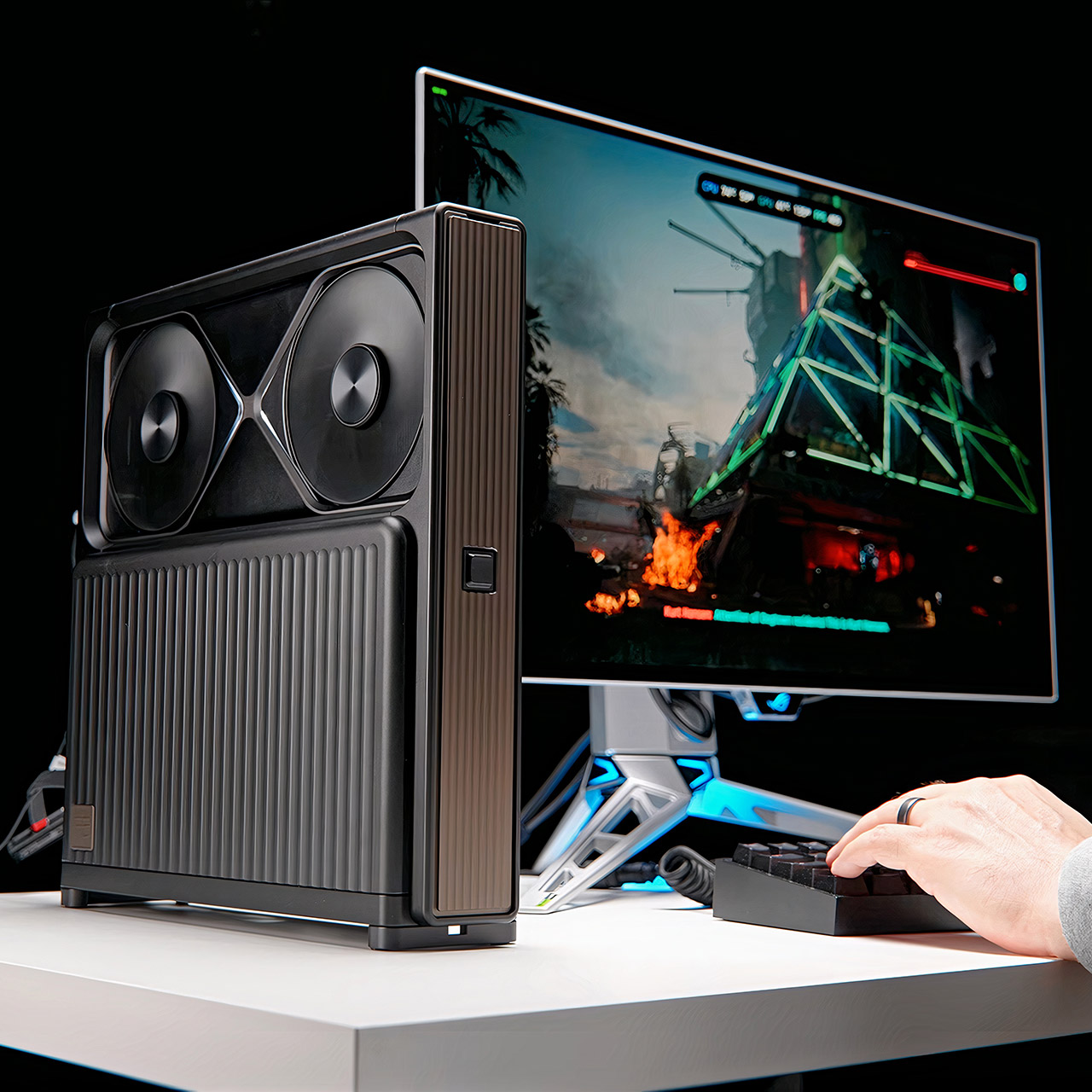
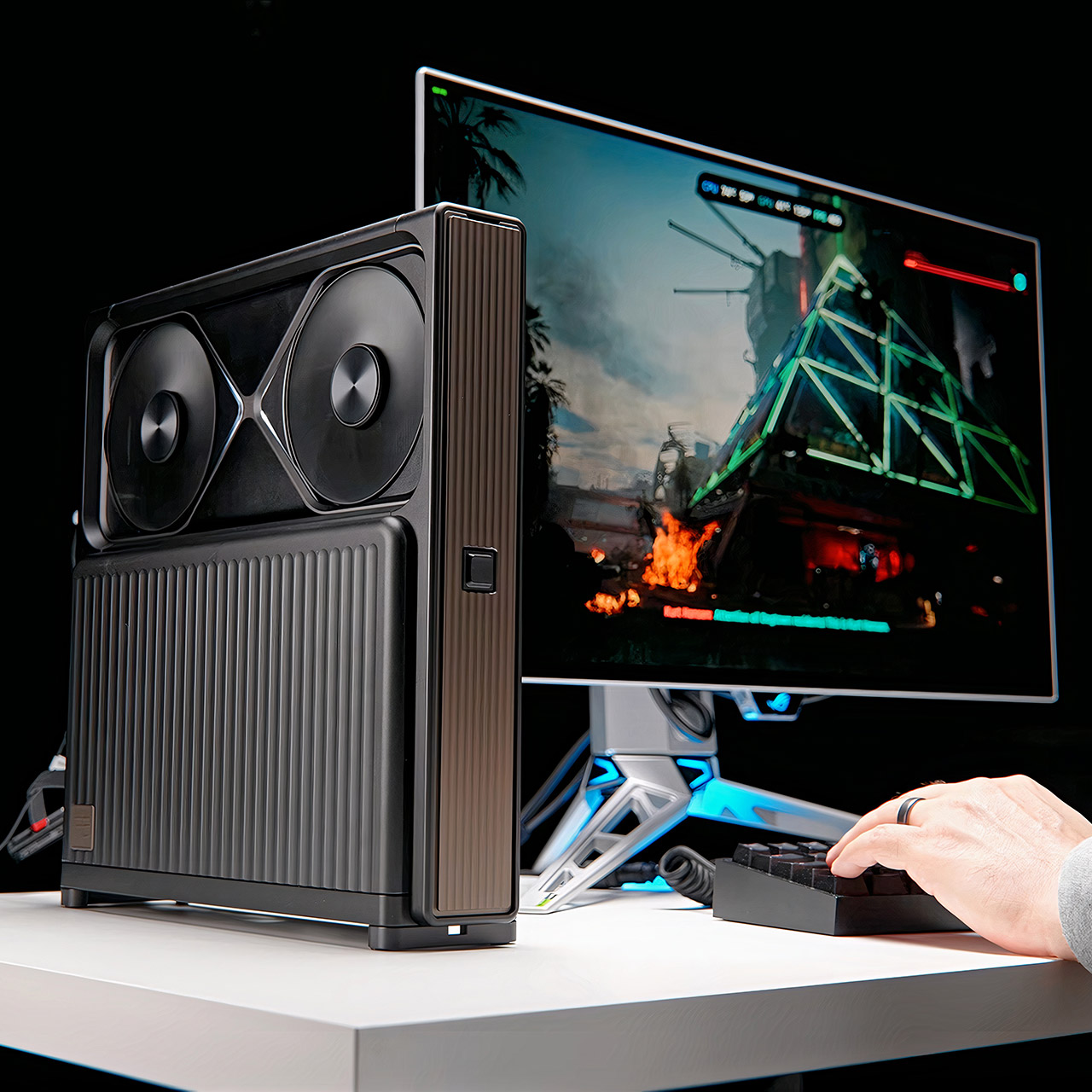
Devyn Johnston has spent years chasing smaller and smaller gaming machines, and this latest effort pushes that habit into territory that feels almost stubborn. Inside the ZCOOI Mugitya FE9, an RTX 5090 Founders Edition sits in a chassis that measures only 56 mm thick across the top and 79 mm at the base, all while still packing a full desktop processor and a 1000-watt power supply. The case arrives as a set of thick CNC-machined aluminum pieces, each finished in black or silver anodizing with a few gray-gold accents on the nameplate and front panel, and the whole collection ships inside its own aluminum carrying case.
Assembly begins by removing the back panel, front cover, and bottom portion, which are all held together with run-of-the-mill screws, so you can just put in the mini-ITX motherboard. Johnston chose an ASUS ROG Strix X870I for this build, which included Wi-Fi 7, a 2.5 gigabit Ethernet port, and a couple of USB 4 ports. He then topped it off with a 64GB of DDR5-6000 RAM, split evenly between the two memory slots, and paired a 2TB Samsung 990 Pro with a second 2TB 980 Pro for a total storage space of 4TB. The power supply is the Corsair SF1000, which is stealthily installed on the bottom panel, and every single cable has been cut to a custom length to ensure that nothing takes up room inside the box.

Acer Nitro V 16S AI Gaming Laptop | AMD Ryzen 7 260 Processor | NVIDIA GeForce RTX 5060 Laptop GPU…
- AI-Powered Performance: The AMD Ryzen 7 260 CPU powers the Nitro V 16S, offering up to 38 AI Overall TOPS to deliver cutting-edge performance for…
- Game Changer: Powered by NVIDIA Blackwell architecture, GeForce RTX 5060 Laptop GPU unlocks the game changing realism of full ray tracing. Equipped…
- Supreme Speed. Superior Visuals. Powered by AI: DLSS is a revolutionary suite of neural rendering technologies that uses AI to boost FPS, reduce…

A Thermalright AXP90-X47 low-profile all copper unit provides cooling and stands only 47 mm tall, comfortably fitting within the 49mm clearance on AMD boards. Johnston liked the orange fan so much that he replaced it with a black Noctua model, which allows you to see the blur of the fan spinning from the side panel without detracting from the overall beauty of the build. The graphics card is attached using a solid PCI-E riser rather than a fragile cable, and to get it to fit properly, Johnston removed the original bracket and bolted it directly to the chassis, allowing the coolers to rest behind matching holes in the panels.
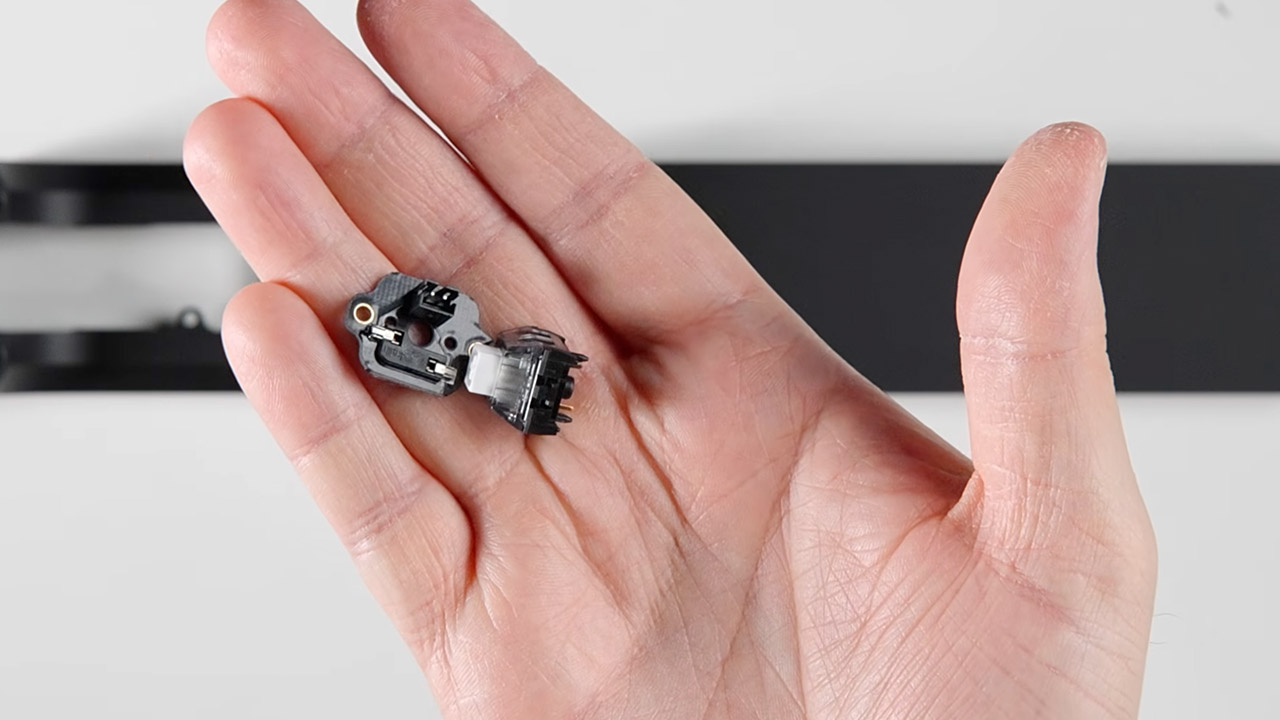
One minor detail turned out to be the standout. The power button is based on a conventional keyboard key, and the case has four removable keycaps in black, white, transparent, and semi-transparent finishes, allowing you to customize it to suit your mood. Once everything is in place, the chassis weighs 6.5 kg and is supported by one of two available foot types, a narrow bar or a broader set for added stability. Magnets hold the side panels and coverings in place, allowing you to open the item with little more than the included aluminum screwdriver.

He put the finished machine through its paces, running The Witcher 3 Remastered at a smooth 120 frames per second on extreme with ray tracing and DLSS Quality turned on. The graphics card maintained a consistent 230-240 watts while staying cool at 54 °C, but the 7800X3D drew 53 to 60 watts and peaked at 70°C. Resident Evil Requiem drove the GPU to around 500 watts and 71-74 °C, but it still managed to maintain frame rates around 130. Cyberpunk at a resolution of 5120 by 2160 with strong ray tracing pushed the GPU to roughly 500 watts and 71-72 °C in the middle of the action, while the CPU reached nearly 80 °C under load. Downsizing to 1440p resulted in the GPU maintaining a very respectable 430-450 watts and 67 °C. The only issue occurred during the initial shader compilation, when the CPU soared beyond 95 °C, but as the game stabilized, the temperature remained within the range of what a low-profile cooler can tolerate.

When the system is up and operating, noise levels average around 43 decibels, with an occasional electrical hum from the power source that refuses to go away completely. The design does not allow for additional case fans to be installed, allowing the graphics card’s own cooler and copper heatsink to handle the work. He also has to consider that this case was designed specifically to house the Founders Edition 5090 (as well as the 5080 FE or PRO 6000), so swapping out the graphics card later for something new would necessitate tearing everything down and rebuilding, or ditching the case entirely. Johnston appears to consider this setup as a beautiful piece of technology to admire rather than a tool to be used on a daily basis. Yes, it achieves high frame rates while taking up less area than a typical tower.

A complete system would cost roughly $465 for just the case, before you add in all of the additional components, and the issue is, every component must fit perfectly or the entire thing will not close. When everything is fully put together and the last panel is clicked into place, you have a slab of aluminum that houses a full 5090 and an 8 core processor, all held together by magnetic panels and requiring only one keyboard key to boot up the system.

Besides running controllers with outdated firmware, the affected stores likely also failed to put the devices behind a VPN and create a restricted list of IP addresses allowed to log in. These protections are standard but often not followed. In this case, that failure enabled a mass hack that likely cost tens or hundreds of millions of euros. Spain, Portugal, Poland, Germany, and Belgium were also reportedly affected.
“Two things would have changed the outcome,” researchers at Pen Test Partners said Wednesday. “Cyber hygiene would have prevented the access: take the controller off the public internet, put remote access behind a VPN and an IP allowlist, bring third-party kit onto the network in a controlled, owned and documented way rather than leaving it on a contractor’s own connection, change known and default credentials, and patch to a current release.”
Researchers from security firm Claroty warned of the threat of ignoring these common-sense steps last October. The US Cybersecurity and Infrastructure Security Agency did the same in February.
In an email, Copeland acknowledged a vulnerability “identified in a discontinued, end-of-life generation of controllers” and said the company is working with customers to prevent similar incidents in the future. Danfoss representatives didn’t immediately respond to questions. CNN said the company also cited discontinued models.
So far, the party behind the attack has remained silent. That raises the possibility that the motive was vandalism on a mass scale. Another possibility is a nation-state or other international actor aiming to create a continent-wide disruption.
The incident underscores the tension between the financial and security departments in most businesses. Some companies are loath to spend large sums of money on new equipment when there are no tangible benefits or savings. Only after a devastating hack do they realize why the investment was worthwhile. Executives at affected supermarket chains will likely learn the hard lessons. Less clear is whether the cautionary tale will sway other businesses.


Enterprise investment in artificial intelligence has, understandably, been concentrated on compute. Access to GPUs, model performance and the cost of inference have become central considerations as organizations move AI workloads from experimentation towards production.
Vice President of Cloud Strategy at Wasabi.
However, an increasing proportion of the economic and operational challenge sits elsewhere in the infrastructure stack. AI depends on data at every stage of its lifecycle: datasets must be collected and prepared, training data must be made available to compute, checkpoints and model artefacts must be retained and information may need to move between infrastructure providers as workloads and commercial priorities change.
As these workloads scale, the storage layer is becoming a strategic component of AI infrastructure with significant implications for the economics of enterprise AI.
Latest Videos FromTechRadar
AI is changing the role of storage
Traditional storage strategies have generally been built around considerations such as capacity, availability, performance and retention. AI introduces another dimension: the relationship between storage and the changing requirements of the wider infrastructure environment.
Different stages of an AI workflow have different storage requirements. Data being actively processed may require high-performance infrastructure, while historical datasets, checkpoints and model artefacts may place greater emphasis on durability, security, accessibility and cost. Applying the same storage approach across the entire lifecycle can therefore result in inefficient infrastructure utilization.
The challenge is particularly significant because AI data volumes can be substantial and continue to expand as organizations generate additional training data, model versions and associated artefacts.
The objective should not be to minimize storage expenditure in isolation. It should be to ensure that data is held on infrastructure appropriate to its role, while maintaining the performance, security and accessibility required by the business.
This is the foundation of what can be described as AI storagemaxxing: the systematic optimization of storage across the AI lifecycle to ensure that infrastructure investment is aligned with business and workload requirements.
Data mobility is becoming an infrastructure requirement
Organizations are adopting a broader range of infrastructure providers, including hyperscalers, specialized GPU providers and emerging cloud platforms known as neoclouds. The economics and availability of these environments can change rapidly, creating incentives to move workloads between providers. Compute can be relatively straightforward to reallocate. The associated data is considerably less mobile.
Large training datasets and model artefacts can be expensive and operationally complex to transfer. Where significant charges are associated with moving or retrieving data, organizations may find themselves constrained by infrastructure decisions that were made at an earlier stage of their AI program, creating a form of unintended dependency.
The ability to move data should therefore be considered when designing AI infrastructure, rather than treated as a contingency for a future migration. Open standards and interoperable storage can provide an important degree of separation between data and compute, allowing organizations to adapt their infrastructure strategy as market conditions change.
For technology leaders, this creates a broader consideration than simply assessing the cost of storage capacity. The relevant question is the total economic and strategic cost of retaining data within a particular environment.
Storage optimization must include security
Training datasets, proprietary information and model artefacts can represent significant commercial value. At the same time, the number of applications and automated systems interacting with enterprise data is increasing. Storage resilience must therefore form part of the AI security strategy.
Immutable copies, appropriate access controls and robust recovery processes can help organizations protect critical data from ransomware, accidental deletion and unauthorized modification. These capabilities are particularly important for datasets that would be difficult or expensive to recreate.
Security should consequently be considered alongside performance and cost when determining where AI data resides. A storage environment that reduces expenditure but creates unacceptable recovery or security risks does not represent effective optimization.
Predictable economics will become increasingly important
Storage costs can include capacity, access, retrieval and data transfer. Where these costs are difficult to predict, they can complicate infrastructure planning and influence architectural decisions. This becomes particularly problematic when organizations need to move large datasets between storage and compute environments.
Predictable storage economics allow organizations to make infrastructure decisions based on workload requirements rather than uncertainty over the cost of accessing or moving their data. This distinction will become increasingly important as AI workloads mature. During experimentation, infrastructure decisions can be relatively temporary.
Production workloads, by contrast, may persist for years and generate substantial quantities of associated data, so the storage strategy needs to account for the full lifecycle of that data, rather than the requirements of a single workload or infrastructure deployment.
The strategic role of the data layer
The next phase of enterprise AI adoption will require organisations to look beyond compute optimisation. GPUs will remain critical. Model efficiency will remain important. However, neither can be optimized effectively without considering the data on which AI workloads depend.
AI storagemaxxing provides a useful framework for applying the principle: storage should be treated as part of the AI operating model. Assess storage according to several strategic criteria: whether it is appropriate for the workload, does it provide adequate protection and recovery, are the economics predictable, and could data be moved without friction as infrastructure requirements evolve.
We’ve featured the best AI tool.
This article was produced as part of TechRadar Pro Perspectives, our channel to feature the best and brightest minds in the technology industry today.
The views expressed here are those of the author and are not necessarily those of TechRadarPro or Future plc. If you are interested in contributing find out more here: https://www.techradar.com/pro/perspectives-how-to-submit

Business & Hustles29 minutes ago
LARRY KUDLOW: Don’t count the GOP out yet

Tech & AI54 minutes ago
The UK May Expand The BBC License Fee, Charging Residents To Watch Streaming Services

Crypto59 minutes ago
Harvard’s endowment jumps 27% in fiscal 2026, lifted by SpaceX as top holding


-

 Fashion5 days ago
Weekend Open Thread: Quince – Corporette.com
-

 Business & Hustles5 days ago
PwC: Supply-Chain Diversification, AI and Energy Transition Open New Growth Paths for Thailand
-

 Sports7 days ago
Multiple Power Four programs face College Sports Commission investigations over alleged NIL cap evasion
-

 Crypto4 days ago
XRP Ledger Defends Emergency Patch Amid Criticism
-

 Crypto3 days ago
Rep. Omar Says She Will ‘Not Be Silenced’ After Federal Agents Raid Her Home
-
 Crypto6 days ago
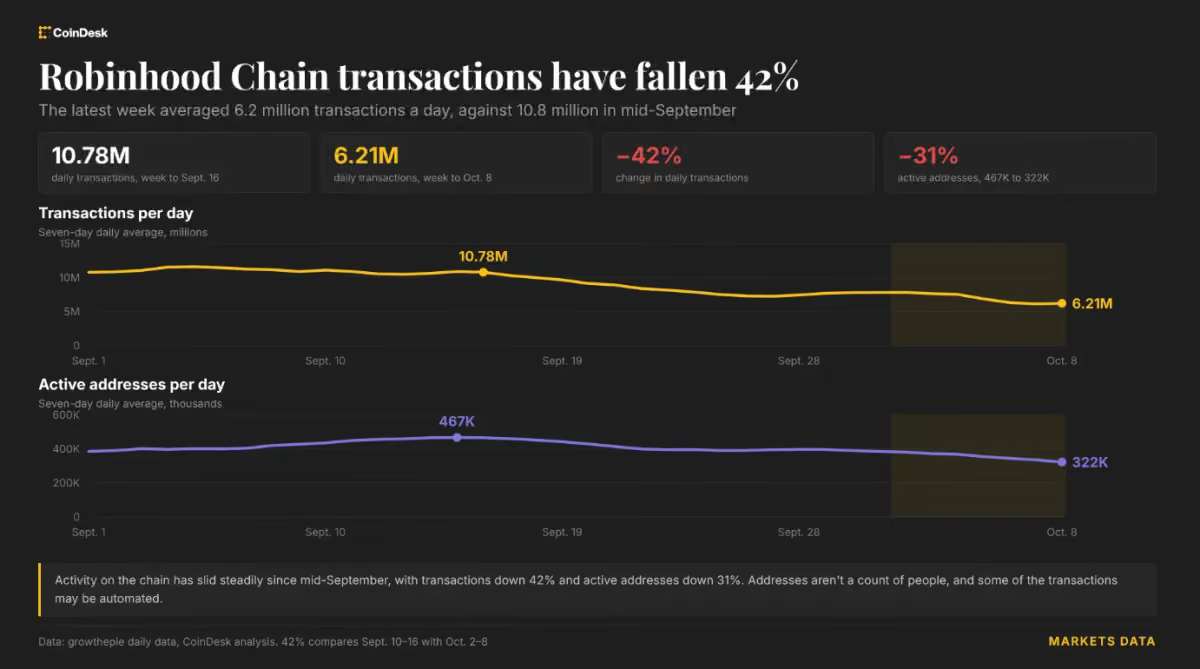
Robinhood Chain slowdown spreads from fees to trading as transactions fall 40%
-

 Sports6 days ago
College Football Week 6 Bets: Three Picks for Saturday’s Biggest Games
-

 Sports4 days ago
Duke receives encouraging update regarding top prospect from class of 2028
-

 Crypto3 days ago
KuCoin unveils 5.0 upgrade with AI tools and unified trading account – CoinJournal
-

 Crypto4 days ago
Saylor Signals Next Bitcoin Buying Plan After September STRC Buybacks
-

 Tech & AI7 days ago
ICE Emails Discuss Using Palantir-Supported Tool to Investigate Voter Fraud
-

 Crypto6 days ago
Mashinsky Accepts Lifetime Industry Ban and Up to $35 Million in Conditional Payments | The Defiant
-

 Sports6 days ago
Morocco and Senegal await AFCON final verdict after arbitration hearing – Sports
-

 Sports6 days ago
Saudi oil crisis affects Neom project, 2034 World Cup plans
-

 Sports3 days ago
Work on Trump’s D.C. muni enrages judge: ‘You did your absolute worst’ | News
-

 Crypto4 days ago
October 11 Crash: What Wiped Out 1.65M Traders
-
Crypto3 days ago
ZEC and NEAR Plummet Hard, BTC Recovers From Rollercoaster Ride: Market Watch
-

 Crypto5 days ago
Justin Sun says Tron post-quantum plan on testnet
-
 Sports3 days ago
Tax evasion to Portugal fallout: Controversies that rocked Ronaldo’s career | Football News
-
 Crypto4 days ago
Ledger halts CryptoBilis after $86M wallet drain
You must be logged in to post a comment Login