Connect with us
DAPA Banner
DAPA Coin
DAPA
COIN PAYMENT ASSET
PRIVACY · BLOCKDAG · HOMOMORPHIC ENCRYPTION · RUST
ElGamal Encrypted MINE DAPA
🚫 GENESIS SOLD OUT
DAPAPAY COMING

Tech

A Swimmer Broke a World Record at the Enhanced Games

Published

on

“Now I’m being taught how to do it the right way,” Ryan says. “And I’m being paid to do it.”

Ryan hopes Enhanced can pave the way for a separation of truly “clean” events and transparently juiced competitions. He even calls on events like the Olympics to increase testing strictness.

“What we’re doing is completely separate,” Ryan said during Friday’s media availability. “It’s marketing, it’s show business. And it should be separate.”

The financial argument and the idea of helping aging athletes prolong their careers make up the most compelling case I hear for Enhanced on its face—at least in terms of athletes’ motivations. But it’s the business side of the organization where some conflicts of interest become tougher to ignore.

Advertisement
Large screens on the Resorts World display advertisement for the Enhanced Games ahead of the event in Las Vegas Nevada...

Photograph: Etienne Laurent/Getty Images

Head to the products page of the Enhanced website and you’ll find what appears to be the organization’s spinoff of telehealth company Hims, but for PEDs. Products like copper peptides, sermorelin and testosterone injections are available alongside GLP-1s, semaglutide, and tadalafil.

Martin is open about the mission: To bring these products to the masses. He talks up required medical intake forms and regular check-ins with certified company doctors to avoid risks of mis- or over-use.

But if the Enhanced mission is successful, and PEDs become a bigger and more financially appealing part of sports, assuming these products will only be sought after and used in responsible ways is just as naïve as pretending doping hasn’t happened in the past at supposedly “clean” events. If anything, athletes in particularly disadvantaged financial situations might prioritize doping even more.

That’s where the dystopian feel bubbling below the surface becomes more palpable. There’s a distinctly MAHA undertone here, from investors like Thiel and Donald Trump Jr. to Enhanced Games founder Aron D’Souza describing RFK Jr. as “pro–human enhancement.”

Advertisement

While organizers wouldn’t give me any specifics on how much of Enhanced’s future will rely on product sales to fund prize pools and operations, it’s probably safe to assume investors like these will expect returns to remain involved.

It’s fair to wonder whether this is truly an attempt to remove stigmas and change sport. The overconfidence on display prior to the actual contests only drove home the feeling that this was more an elaborate money-making scheme than anything else.

So will the Enhanced Games usher in a new era of athletic capability and prowess? Maybe—at least if you can afford it.

Source link

Advertisement
Continue Reading
Click to comment

You must be logged in to post a comment Login

Leave a Reply

Tech

The Boys finale tried too hard with real-world symbolism and totally forgot fans like me

Published

on

Here is my problem with The Boys finale. After five seasons of buildup, watching Homelander laser people in half for looking at him wrong and Butcher destroying himself for one shot at revenge – I wanted a bloodbath. And somehow, the memes that came out of the finale were more satisfying than the episode itself.

The Boys season 5 finale, titled “Blood and Bone,” is not the worst finale ever made, but it is one of the most frustrating ones to sit through. The show threw out every method the Boys had spent seasons chasing to kill Homelander, botched the execution of what remained, and delivered an ending that felt like the writers suddenly remembered they had a show to wrap up.

The Boys finale traded chaos for commentary and lost the plot doing it

The writers wanted Homelander’s final moments to mirror the fall of every real-world tyrant who spent years terrifying people, only to crumble into a sniveling, pathetic mess. He is stripped of everything he thought made him God, and dies as a depowered man with a crowbar in his skull.

People watching this show have spent years watching real leaders abuse power with zero consequences. The symbolism of a tyrant losing everything and begging for his life in the end is not lost on me. I understand why a lot of viewers found it satisfying on that level, but when you spend five seasons building a monster and then quietly defang him to make the ending work, the symbolism stops feeling earned.

Let’s talk about the scorched earth promise that Homelander and Butcher made back in The Boys season 3. The pact was to raise the stakes until one of them was left standing in the rubble of everything they burned down together. The posters leaned into it hard, showing Homelander lording over a burning Earth. Key visuals had Butcher walking over the ruins of Vought Tower. I was ready for absolute apocalyptic chaos.

Advertisement

When the hyped showdown finally arrived, it took place entirely inside the Oval Office, a far cry from the scorched earth apocalypse we were promised. Showrunner Eric Kripke has since confirmed that a post-apocalyptic wasteland was never going to happen and that he always wanted something more intimate and character-driven. While that is a valid creative choice, you cannot spend seasons building up the hype and then hand fans a crowbar fight in a government office.

The show forgot its own rules

There is also the sheer logic collapse of how Butcher and his team even got there. The show spent episodes establishing that Vought Tower was impenetrable due to its heavy security and supe presence. Yet somehow, walking into the actual Oval Office with a sitting president-god on the premises was apparently no problem at all.

Homelander knew they were coming and assigned what felt like a handful of Secret Service agents to hold them off. Where was his supe army? Where was the manic, overwhelming response you would expect from a man who had literally just declared himself god on live television?

The wasted characters hurt more than the weak fight did

Starlight was the face of the entire resistance against Homelander, but nothing says “final battle” like benching your most powerful resistance symbol on a beach to fight a fish man while the actual showdown happens without her. Deep had already been rejected by the ocean itself, but Starlight had no way of knowing that. So why would she fly him to a beach where she is surrounded by water, which is his element, and far from any electricity source that fuels her own powers? It made no tactical sense either.

Speaking of people who deserved more, Sister Sage had real potential because of her superintelligence. I thought the show was setting her up as the real puppet master, a villain smarter than Homelander in every way that actually mattered, pulling strings nobody else could even see. Instead, she spirals into depression, gets depowered by Kimiko, and ends up going to Harry Potter World in Florida, completely at peace with herself. What a waste of a perfectly good character!

Gen V getting cancelled before its third season, and then having its surviving characters shoved to the sidelines in the very season that needed them most, is a separate tragedy. Marie Moreau is described in the show’s own logic as Homelander-level powerful. She had blood-bending abilities that could have changed everything about that final fight. Instead, she got a few lines and a bus out of town. So I don’t understand why the writers built a trump card and refused to play it.

And then there is Soldier Boy. Why would an arrogant, deeply resentful man who does not even like Homelander hand over a vial of V1 to him, just because it is apparently “what Clara would have wanted”? However, the show never explains it. Maybe Vought Rising, the upcoming Boys prequel, will give us more context on the Clara Vought angle. Nevertheless, that scene has already spawned a flood of memes online, and I will be honest, I enjoyed those memes considerably more than I enjoyed the finale itself.

Advertisement

Mother’s Milk got the rawest deal of all when it comes to unresolved arcs. For context, MM’s entire reason for being on this team can be traced back to Soldier Boy. As a child, he watched Soldier Boy hurl a car into his family home, killing his grandfather and other family members. So when Soldier Boy ends up frozen back in Vought Tower at the end of all this, still very much alive, you would expect MM to do something about it. The revenge arc was right there, but the writers ghosted it completely. On top of that, MM takes in Ryan despite the two barely interacting this season.

The Boys deserved a better send-off than this

The Boys was never just a gory superhero show. It was supposed to be a cultural mirror that made people uncomfortable in the best possible way. Instead of going out as that show, the finale fumbled so badly it became the joke rather than the one telling it.

Fans are not quoting the finale’s emotional beats or its political symbolism online. They are making memes and comparing the finale to Game of Thrones and Stranger Things in the same breath, and not as a compliment. It is truly disappointing that after five seasons of holding a mirror up to the world, the finale could not even hold itself together.

Advertisement

Source link

Continue Reading

Tech

Through-Glass Vias And The Long Road To Glass Substrates

Published

on

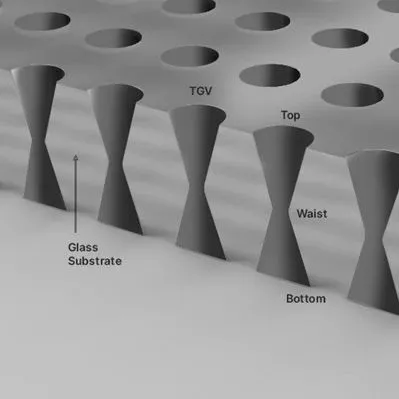
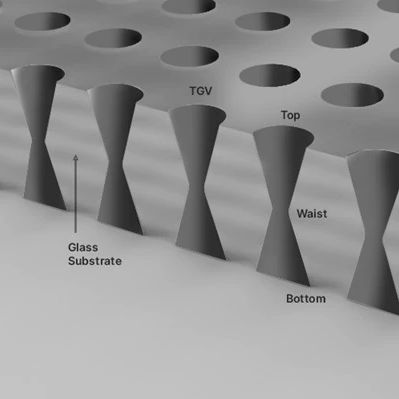
Credit: Keith Best, Semiengineering.

Glass-based substrates are slowly beginning to push out organic substrates commonly used in PCBs due to often superior material properties. One area where glass substrates have however struggled is with through-hole vias and providing the conductive copper path through them. A 2024 article by [Keith Best] gives a good overview of the topic, with recent news showing how much companies like Intel are pushing for glass substrates, specifically for the packaging of dies.

One major advantage with vias in glass substrates is that they can be much smaller, enabling smaller than 0.1 mm diameter holes with far finer pitch. The challenge here is to make perfect holes with a laser that are defect-free, as well as have the intended diameter.

After that this through-glass via (TGV) has to be coated or filled with copper, much like their organic equivalent. Said TGV can be fully filled with copper, or use plating and add dielectric filler. Detecting flaws in such a finished TGV is important.

In a 2025 review article of glass substrate technologies by [Pratik Nimbalkar] et al. published in Chips the state of the art at the time was covered. The need for ever higher-density integration options with ASICs is highlight here, especially now that many chips today consist of multiple interconnected dies inside a single package.

The complications of creating TGVs with femtosecond laser pulses in Borofloat 33 glass are highlighted by [Daniel Franz] et al. in a 2025 research article, with microcracks and backside ablation observed without proper precautions, something which previously was often resolved by an etching step following said laser drilling. The main issue here is the post-drilling residual stress from the thermal shock, which the authors demonstrate can be largely prevented with careful tweaking of the laser drilling parameters.

Advertisement

As pointed out in a 2024 review article by [Chen Yu] et al. glass substrates are useful for far more than just high-density chip packaging. Glass substrates are also chemically resistant, have a higher heat resistance, are largely transparent to RF and can be hermetically sealed against outside influences. This makes them great for various advanced sensors and communication devices.

Meanwhile, if you wanted to do some metal-depositing on glass at home, we covered this recently.

Source link

Advertisement
Continue Reading

Tech

Sony isn’t making another PSP, but Zara just revived the handheld as a crossbody bag

Published

on

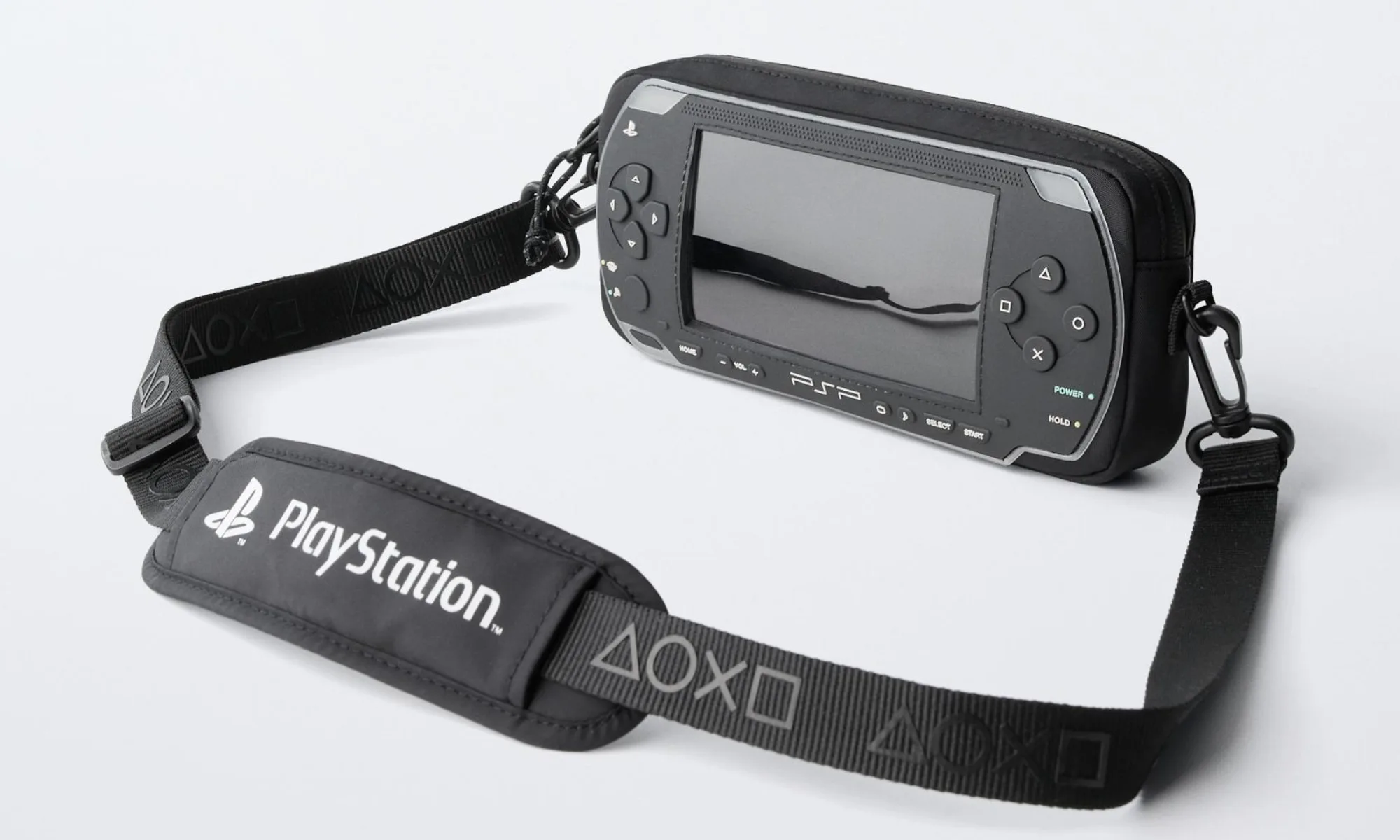
The PlayStation Portable, or the PSP, was discontinued over a decade ago, but its cultural presence never fully faded. Most recently, the fast-fashion brand Zara gave it a second life in the most unexpected form: the company has dropped a crossbody bag modelled after the PSP 1000. 

The Zara PSP Crossbody Bag is exactly as delightful and absurd as the name sounds. The shadow drop came without an announcements or media campaigns, but the retro gaming community has already taken notice of it. 

What does the bag actually look like?

It is actually a relatively small crossbody bag whose front face is a silicone recreation of the PSP 1000, in convincing detail. The bag comes with embossed buttons, logos (on the front and the back), an analogue nub, and a vinyl panel standing in for the iconic 4.3-inch widescreen display. 

The adjustable shoulder strap also carries a PSP branding, along with the classic triangle, circle, cross, and square shapes. Clearly, Zara doesn’t want the product to look like a cheap knockoff, and the result shows. 

The bag measures 4.3 x 7.9 x 2 inches, has a main zipper compartment, and is made from polyurethane thermoplastic on the front face with a silicone overlay and a polyester shell and lining.

Advertisement

How much does it cost, and where can you get it?

For now, the Zara PSP Crossbody Bag is available at $35.90 in the United States and £19.99 in the United Kingdom, available directly via the company’s official website and in stores. The bag is only available in one color, black.

I also see the trademark symbol on the website, implying that this is some sort of licensed deal between Zara and Sony, rather than an unofficial product, even though neither company has confirmed the arrangement. 

At $35.90, it could be among the most affordable pieces of PSP memorabilia you might ever own, but only if the PSP mattered to you. 

Source link

Advertisement
Continue Reading

Tech

Wind and Solar Generated More Power Than Gas Globally in April

Published

on

Last month saw a world first, reports Electrek. Wind and solar generated more power globally than gas:

According to new analysis from independent energy think tank Ember, wind and solar produced 22% of the world’s electricity in April 2026, compared to 20% from gas. Together, the two renewable sources generated a record 531 terawatt-hours (TWh) of electricity during the month, 54 TWh more than gas plants generated globally, at 477 TWh…

Five years ago, in April 2021, gas generation was almost identical to today’s level at 476 TWh. But back then, wind and solar combined generated just 245 TWh — less than half of what they produced this April…

Wind and solar generation increased across nearly every major market reporting April data… April tends to be the strongest month for this kind of milestone because spring weather in the Northern Hemisphere usually brings a combination of strong wind generation, rising solar output, and lower electricity demand between heating and cooling seasons. Still, the broader trend is clear. Ember’s recent Global Electricity Review found that wind and solar met all global electricity demand growth in 2025.
“Governments around the world are also ramping up renewable energy targets to reduce dependence on volatile fossil fuel imports…”

Advertisement

Source link

Continue Reading

Tech

Memorial Day Tech Deals: Sony, Apple, Anker, and More

Published

on

When you think of Memorial Day sales, you probably think of mattresses and other home goods. And while those items are definitely discounted, now is also a good time to purchase tech. Personally, I’m not buying anything right now unless it’s discounted—and fortunately many of our top picks are. Whether you’re shopping for a power bank, a new pair of headphones, or some other gadget, I’ve rounded up the best Memorial Day deals for your perusal. Most of these deals end at the end of the day.

Check out our buying guides for more recommendations, including the best headphones, the best laptops, and the best cheap phones. You might also want to check out our additional Memorial Day deals coverage.

Updated Monday, May 25: We’ve checked prices, removed expired deals, added 6 new deals, and ensured accuracy throughout.

WIRED Featured Deals:

Advertisement

Sony WH-1000XM5 for $248 ($152 off)

Sony WH-1000MX5 headphones

The Sony WH-1000XM5 have a very frustrating name, but they’re the predecessor to our favorite wireless headphones, and they’re still an excellent pick if you don’t want to shell out for the new WH-1000XM6. They go on sale frequently, but rarely drop this low in price, which comes within $5 of their all-time low. If you’re in the market for over-ear headphones, they’re hard to beat. They’re comfortable, portable, lightweight, and stylish, and they’ll make your music sound great no matter what you like to listen to.

Source link

Continue Reading

Tech

Disney’s ‘Star Wars: The Mandalorian and Grogu’ Opens to ‘Mixed’ Box Office Results

Published

on

It’s “the first time in seven years that a new Star Wars film has launched on the big screen,” writes CNBC. And Variety notes it’s expected to earn $102 million through Monday:

[B]ox office analysts are mixed on the results. On one hand, it’s significant for any film to debut above $100 million in post-pandemic times. On the other, “Star Wars” is one of Hollywood’s preeminent film properties, so there’s an expectation of a certain level of box office. And this start is the worst for “Star Wars” since Disney bought the franchise in 2012.

CNBC cites reports 41% of tickets were sold for more expensive large-format screenings like IMAX and DolbyCinema.

So how’s the movie? Rotten Tomatoes shows an 89% positive rating from moviegoers on its “popcornmeter” and a 62% average score from professional movie critics. And Ars Technica writes that “The plot is predictable, the fight scenes are meh, but you can’t beat the charm of that little green Grogu.” So while there’s “a paint-by-numbers plot,” they add that “the little green puppet pretty much carries the entire film.”

Advertisement

The new film is … fine. It’s an average Star Wars outing, and it will give families a solid Memorial Day Weekend entertainment option. It’s just not the spectacular home run that might have helped launch the flagging franchise into an exciting new era, and diehard Star Wars fans hoping for more are probably going to be disappointed.
Of course, not everyone agrees. “How many nails can we realistically drive into Star Wars’s coffin before it’s time to give up hope of resuscitation?” writes Clarisse Loughrey for The Independent, calling it “the dullest and most inconsequential ‘Star Wars’ ever made.” (She argues that the movie “stitches together what is clearly three episodes of the previously planned fourth season of The Mandalorian and calls it a day. There’s not a whiff of effort here.”)

And a reviewer at RogerEbert.com gave it one-and-a-half stars, complaining that “There’s no reason for anything in this movie except the wish to make even more money….”

I’m on record as despising the word “content,” which was pushed by early tech moguls to devalue art as interchangeable goo in a virtual pipeline, but this washed-out, video-game-looking movie, with its murky night scenes and lack of visual depth, deserves the word. You’ve seen everything in it before, from the equipment, spacecraft, armor, and tactical maneuvers to the species and various types of terrain (earthlike, but cartoony)…

Even Grogu taxes our patience. Some of his cute bits could’ve ended with him facing the camera and doing jazz hands.

Advertisement

Source link

Continue Reading

Tech

Star Citizen crosses $1 billion in crowdfunding as Chris Roberts eyes version 1.0

Published

on


Just one year after reaching $800 million in its unrelenting funding spree, Star Citizen has now crossed yet another significant milestone. The overly ambitious space trading and combat simulator, developed by Cloud Imperium Games, has officially raised more than $1 billion from enthusiasts and early backers. Game director Chris Roberts,…
Read Entire Article
Source link

Continue Reading

Tech

Teacher-founded AI edtech Diotima spins out from Trinity

Published

on

Diotima received €500,000 under Enterprise Ireland’s Commercialisation Fund last year.

AI edtech start-up Diotima, founded by former secondary school teacher Siobhan Ryan, has spun out from Trinity College Dublin (TCD).

The platform aims to enable educators to use AI to create assessments and individualised feedback to improve learning outcomes and lighten burdens on teachers.

The spin-out will be led by edtech commercialisation specialist Jonathan Dempsey as CEO, with Ryan, also a biochemist and environmental scientist, becoming chief product officer and learning lead.

Advertisement

Development engineer Daniel Fernandez and AI engineer Dr Long Mai, who have both worked on the Diotima project, will also join the inaugural team.

Dr Eoin Lane, an AI regulatory compliance expert who was formerly the global head of AI and data science at the Bank of New York Mellon, is a governance consultant to the Diotima project.

“This all started when I was working as a teacher and I had a vision for how AI could enhance teaching and learning even before any of the models like ChatGPT launched,” said Ryan.

“I then worked with Tom Pollock and Learnovate to develop this vision into a real-world project.”

Advertisement

Diotima began its partnership with Learnovate in February 2025 and received €500,000 in funding under Enterprise Ireland’s Commercialisation Fund, which supports third-level researchers in translating their research into commercially viable solutions.

The idea was to develop an AI-enabled edtech platform to help teachers and other educators create assessments, as well as provide feedback to learners, all in compliance with European and Irish legislation.

Specifically, the platform meets requirements under the EU AI Act, which has strict regulations around the usage of AI in high-risk sectors such as education.

“We aim to position Diotima as a leader in responsible AI for education,” Ryan said. Diotima will continue to engage with prospective customers and stakeholders for a go-to-market strategy while also seeking new investment.

Advertisement

“Using responsible AI, Diotima promises to develop into a revolutionary platform for learners in secondary schools and professional education organisations, delivering formative feedback and better outcomes overall,” said Pollock, Learnovate’s impact, licensing and commercialisation manager.

Learnovate launched its ‘Responsible AI for Learning’ initiative earlier this year to enable AI implementers and practitioners involved in teaching and learning to share knowledge, interpret guidelines and comply with AI regulations.

The initiative is made up of professionals from all four education domains – schools, higher education, vocational education and training, and professional education – as well as representatives from the Department of Education, teaching unions and other sectors.

Don’t miss out on the knowledge you need to succeed. Sign up for the Daily Brief, Silicon Republic’s digest of need-to-know sci-tech news.

Advertisement

Source link

Continue Reading

Tech

Hackers are ditching stolen passwords as AI-powered software attacks rip through global corporate networks faster than ever

Published

on


  • AI-powered hackers now exploit software flaws faster than companies can patch systems
  • Mobile phishing scams now outperform traditional email attacks across corporate environments worldwide
  • Unauthorized AI tools are quietly leaking sensitive company information across global workplaces

For the first time in nearly two decades, exploiting software vulnerabilities has overtaken stolen passwords as the primary way hackers breach corporate networks.

Verizon’s 2026 Data Breach Investigations Report claims the exploitation of vulnerabilities now accounts for 31% of all confirmed data breaches.

Source link

Continue Reading

Tech

Why prompt debt, retrieval debt, and evaluation debt are quietly reshaping enterprise AI risk

Published

on

Over the past two decades, technical debt meant outdated architecture, messy code, and poorly maintained documentation. That definition is no longer sufficient in the AI era, where failure modes are more subtle and often non-linear. AI systems are introducing new layers of technical debt that live across prompts, models, and data dependencies — making these layers less visible, harder to measure, and often more dangerous than traditional debt.

A crisis hiding in plain sight

The complexities of AI systems and their associated failures have been well documented. A 2025 MIT study found that 95% of AI projects fail to reach production or deliver value. A similar study by S&P Global Market Intelligence found that 42% of businesses scrapped multiple AI initiatives in 2025 — a sharp increase from 17% the previous year. Various reasons are cited for these failures, but most of them point to poorly designed and implemented systems that are complex to manage and have multiple hard-to-monitor failure points, leading to a rapid accumulation of AI debt. 

Traditional technical debt was localized to the codebase, and bugs were usually easily reproducible. Consequently, bugs could be easily identified during tests and fixed through rearchitecting the codebase. However, AI debt is much more distributed, manifesting across prompts, models, data pipelines, and all associated infrastructure. It is also more intermittent: Due to the probabilistic nature of AI, systems do not always respond the same way, leading to intermittent failures. This makes it much more challenging to identify risks during testing, and also creates a need for more continuous monitoring even post-deployment to prevent gradual drift and worsening performance.

The new forms of AI debt

AI debt typically manifests across four new forms, each of which comes with its own set of risks.

Advertisement

Prompt debt is the most visible of these. A modern version of ‘spaghetti code,’ this can include undocumented prompt tweaks, accumulated ‘quick-fix’ prompts that lead to inconsistencies, neglected version control of prompts, and ‘prompt stuffing’ (the cramming of extraneous data or context directly into AI prompts). All these combine to make prompts a form of untyped, untested code without any version control, leading to increased brittleness and vulnerabilities.

Model dependency debt is another increasingly common form of AI debt. Most enterprises now depend on a mixture of external models developed by leading foundation model providers; applications and agents are built on top of API calls to these models. Consequently, application logic now depends on models that are external to the core system, and that cannot be clearly controlled. As models update, performance varies and reproducibility is lost — prompts tuned for one model may fail or perform poorly when switched to another model, whether an update from the same provider or from another provider.

Most enterprise AI deployments today use retrieval-augmented generation (RAG), which pulls in additional context from enterprise data repositories. Retrieval debt is a consequence of these repositories having messy data, duplicated documents, and outdated information. This causes AI to return technically correct answers that are outdated and no longer relevant, causing downstream failures. Unlike hallucinations, these are harder to detect because they were correct, perhaps even until recently, and hence look correct to any tester. 

Evaluation debt reflects the lack of standardization in testing and monitoring for AI models and applications. While AI benchmarks exist, they tend to focus on narrow tests and reflect point-in-time results. Most enterprises lack consistent testing standards, ground truth datasets, and real-time monitoring of deployments; there is no equivalent yet of continuous integration /continuous delivery (CI/CD) for prompts. As a consequence, CIOs and CTOs do not have clear visibility into model performance and cannot track improvements or worsening of models. 

Advertisement

All of these are in addition to traditional forms of technical debt, which still manifest across the tools and systems that AI applications and agents interact with, read from, or write to. A rapid increase in the adoption of AI-generated code (often deployed without inadequate testing) is further aggravating inconsistencies within, and poor maintainability of traditional codebases. 

The new forms of AI debt combine with these earlier forms of technical debt to compound rapidly and create large-scale risks that can cause catastrophic failure of entire enterprise deployments. Solving for these risks is made even more challenging by the distributed nature of AI ownership – most systems span engineering, product, data, and business teams, leading to unclear accountability when an error is identified. 

As a result, these risks manifest in the form of escalating compute costs, inaccuracies in AI outputs, and increasing exceptions that need to be handled by humans — leading to projects often stalling and failing due to unclear return-on-investment stories and a lack of trust from users. 

How enterprises can prevent AI debt

AI debt will not be solved by ‘better’ models — failure rates remain high despite models already having high accuracy. The solution to AI debt requires better system design, integration, controls, and changes in organizational culture. 

Advertisement

First, prompts need to be treated as code. This involves careful version control, documentation, and rigorous testing both pre- and post-deployment for all possible prompt configurations. Best practices from the traditional world of coding — such as the use of smaller prompt blocks instead of large prompt-stuffed walls, or reducing the use of hard-coded parameters — can also help mitigate AI debt. 

Second, evaluation needs to be built into the entire AI infrastructure stack. Continuous evaluation pipelines need to be established and must reflect a wide variety of metrics measuring both technical and business-aligned metrics. In addition, AI observability systems should be integrated to monitor output quality, failure rates, model drift, and data drift.

Third, explainability should be included by default in all AI results to make up for limited reproducibility. Data lineage, models used, and the steps followed should be clearly traceable so as to allow auditability of results and correction in case of any systemic errors. 

This requires explicit AI debt reduction programs and associated budgets, similar to earlier waves of investment in security or in cloud modernization. These need to be driven at a CXO level by key leaders to prevent costly rework later.

Advertisement

Conclusion: A stitch in time

Enterprise AI deployments are not just static code; they are living systems that interact with the entire enterprise stack. As a result, the defining challenge in an agentic enterprise will not be building or deploying intelligent systems, it will be maintaining these systems to ensure continued reliability during real-world operation.

Enterprises that seek to proactively identify and mitigate AI debt from the design phase itself are the likeliest to build sustainable AI platforms that deliver significant long-term productivity boosts across the organization. 

Vikram is a principal at Cota Capital, where he invests in early-stage enterprise tech and deep tech companies.

Welcome to the VentureBeat community!

Advertisement

Our guest posting program is where technical experts share insights and provide neutral, non-vested deep dives on AI, data infrastructure, cybersecurity and other cutting-edge technologies shaping the future of enterprise.

Read more from our guest post program — and check out our guidelines if you’re interested in contributing an article of your own!

Source link

Advertisement
Continue Reading

Trending

Copyright © 2025