





Connect with us

Tech

AI slop stories are spoiling the childhood

Published

on

AI slop, the colloquial term for low-effort AI-generated content, has emerged as a huge problem across different industries. Music labels are fighting streaming services to put an AI label on such tra/cks. Publishing houses are wary of AI-written drafts. Research journals are buried under a deluge of AI-generated papers. The software industry is reeling under the pressure of vibe-coded apps brimming with security flaws. Even Apple is struggling against a tide of bug reports created using AI. Of course, the disdain against AI is pretty obvious, but there’s now a new dimension to it.

Boomers are gifting AI-generated books to their grandkids.

“She is creating these storylines based on experiences with my kid and modeling her characters to have similar attributes as my kid, and us[ing] our family’s first names so that they represent us and my kid will ‘see her family reflected,’” an individual wrote on Reddit, detailing how their mother was using AI to make stories for their grandkids, influenced by real-life events.

Multiple parents told WIRED that their kids have received AI-generated story books from grand parents or other senior family members, labelling the trend as “morally reprehensible.” The trend is horrific. I have seen numerous AI-generated books targeted at kids selling on online marketplaces, and even advertisements for tools that use AI to write notes and tributes for real humans.

Advertisement

The whole well is polluted

Ironically, the support for such behaviour comes from AI giants that also own the world’s biggest channels for distrubuting digital content in all shapes and forms. One such source is Amazon, which also runs Kindle as one of the world’s largest digital books platforms.

As far back as 2024, it was reported that Amazon’s store has an AI slop book problem. Poor, AI-written copies of popular books have flooded the ecommerce platform. In the most recent incident that got plenty of coverage in online circles just three weeks ago, Kashmir Hill, a technology journalist at The New York Times, wrote an account of how someone used AI to write her biography and put it for sale on Amazon.

Here is the fun part. You would think that Amazon must be drafting harsh anti-AI policies by now. Well, Amazon is actually adding more fuel to the fire. All the way back in 2022, Amazon released an AI feature called “Create with Alexa,” which lets users create bedtime stories for kids, complete with visuals and animations. In 2026, Amazon rolled out a similar feature that lets you create podcasts on any topic using the Alexa AI assistant.

Platforms like YouTube are also seeing a tsunami of AI-generated brainrot content targeted at kids. It’s pretty odd (and disheartening) to see that the biggest platforms for digital content in varied forms are also owned by companies that are doing cutting-edge work and pushing AI into our lives from every direction.

Amazon should be the guardian of books (on Kindle and its eponymous store for physical books), films and TV shows (through Prime Video) and songs (via Amazon Music). Google and Meta are in a similar position, but once again, they are likely not going to take these AI problems hitting close to home as responsibly as they should.

Advertisement

Source link

Continue Reading
Click to comment

You must be logged in to post a comment Login

Leave a Reply

Tech

BGMI 4.5 Update Brings Three New Druvaen X-Suits to Players

Published

on

KRAFTON India has introduced the new Druvaen X-Suit Collection for BATTLEGROUNDS MOBILE INDIA (BGMI) as part of the 4.5 season. The update introduces three new 7-Star X-Suits, including Verdant Druvaen, Pyre Druvaen, and Frost Druvaen. Despite their unique themes, all three belong to the same Druvaen bloodline.

New Upgrade System Lets Players Earn Progress

Druvaen_X-Suits

The latest BGMI update introduces a new way to upgrade X-Suits. Players now earn a special upgrade material by playing matches instead of buying it. This material cannot be purchased, traded, or obtained anywhere else in the game. The new system rewards players for spending more time in matches.

Players who unlock a single X-Suit automatically enter the new upgrade path with that suit. Those who unlock two or all three X-Suits must choose one suit for gameplay-based progression. This choice is permanent and cannot be changed later. Gamers can always upgrade the rest of the X-Suits from the BGMI X-Suit Upgrade Program.

The new set also includes the Naturespirit Growth ACE32, which is an upgradable Level 7 weapon skin. The weapon skin has the same design concept as the X-Suits and allows the user to match both the suit and the weapon in battle.

Availability of Three New Druvaen X-Suits

Players will get access to the whole Druvaen X-Suit Collection between August 1 and September 30, 2026. The new X-Suits can be unlocked, and players will have the chance to try out the gameplay-upgrade feature as well as receive the Naturespirit Growth ACE32. These changes will be announced by BGMI through YouTube, Instagram, and Facebook channels.

Advertisement

Source link

Continue Reading

Tech

Should You Get An Oil Change Before Or After A Long Road Trip?

Published

on


Getting your car’s oil changed on time is important, though actually getting to a garage for service can be tricky, depending on how busy you are. That’s especially true when you’re on a long car trip, but there’s nothing special about a road trip that specifically dictates the timing of an oil change. If your trip will interfere with your next oil change whether it’s based on time or mileage, then you should take your vehicle in for service before heading out. That way, you won’t need this necessary maintenance while you’re on the road.

Getting the oil change done beforehand can also save you some time later. That’s because you may not know where you’ll be when the oil change is due, and you could have a hard time finding a garage where you’re traveling. Plus, if you like to do your homework on a service location such as reading customer reviews first, then that could take more time than expected.

However, if you expect to be back home from your trip before the oil change is due, then you can just wait and take your car in at your convenience. Additionally, it’s important to remember that while you want to be aware of your vehicle’s oil change schedule, you should always follow manufacturer recommendations for your specific make and model. That way, you’re in a better position to make the right decision about when your oil change should be done.

Advertisement

Important maintenance checks before a long road trip

Before heading out on a long trip, it’s a good idea to visually inspect your vehicle’s fluids. Begin with the oil level first and if you need to add some fresh oil before you leave, you can. Don’t forget to check other important fluids, including engine coolant, brake fluid, power steering fluid, and transmission fluid. Be sure that all fluids are at the proper level, per your vehicle manufacturer’s specifications.

You should also check the tires, confirming that each one is filled to the manufacturer’s recommended air pressure. You can typically find this number in your owner’s manual or on the sticker inside the driver’s doorjamb. Visually inspect your tires as well, paying close attention to any warning signs that your tires need to be replaced, like bulges, cracks, cuts, or uneven wear. If you see any signs of a problem or if the treads are worn down, have the tires checked by a technician before you leave.

Advertisement

It’s a good idea to check your vehicle’s exterior lights as well, including the headlights, brake lights, and turn signals. Look under the hood for any signs of problems with belts or hoses, like visible damage or extreme wear. While you’re there, make sure the battery is in good condition and have it inspected by a professional if it’s showing any signs of weakness. Checking these items off the list ahead of a trip can help you find any issues before they can stop you down the road.


Advertisement

Source link

Continue Reading

Tech

NYT Connections hints and answers for Monday, August 3 (game #1149)

Published

on

Looking for a different day?

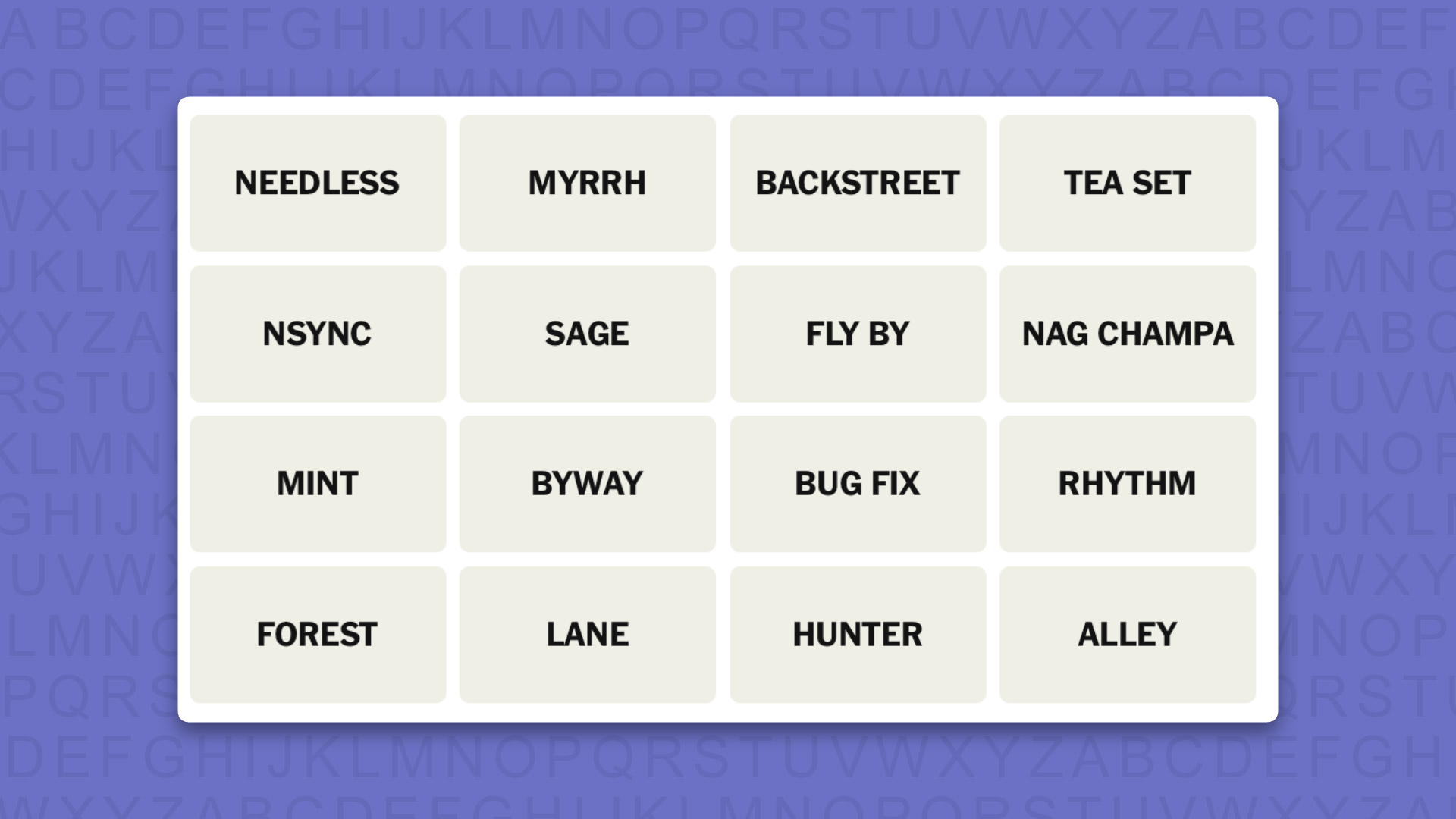
A new NYT Connections puzzle appears at midnight each day for your time zone – which means that some people are always playing ‘today’s game’ while others are playing ‘yesterday’s’. If you’re looking for Sunday’s puzzle instead then click here: NYT Connections hints and answers for Sunday, August 2 (game #1148).

Good morning! Let’s play Connections, the NYT’s clever word game that challenges you to group answers in various categories. It can be tough, so read on if you need Connections hints.

What should you do once you’ve finished? Why, play some more word games of course. I’ve also got daily Strands hints and answers and Quordle hints and answers articles if you need help for those too, while Marc’s Wordle today page covers the original viral word game.

Advertisement

Source link

Advertisement
Continue Reading

Tech

Meta straps on a ‘Kick Me’ sign by mistakenly taking down video by India’s prime minister

Published

on

public sector

PLUS: DeepSeek to double peak hour prices for new model; Australia hikes fines for Big Tech; Japan’s next moonshot to ride local rocket; and more!

ASIA IN BRIEF Meta last week briefly took down an unremarkable video posted by India’s prime minister Narendra Modi, earning itself days of criticism and regulatory trouble.

The video featured Modi announcing a new task force that will reform the exams required to secure places in many Indian universities. Those exams have become a major factor in the sudden development of a major youth protest movement in India, after the cancellation of one test amid claims that questions had leaked.

Advertisement

As part of his attempts to quell protests, Modi posted his first-ever selfie-style Instagram reel last week and followed it up with others –including the one Meta took down and replaced with a placeholder saying the vid was the subject of a legal complaint.

The social networking giant said that was a mistake, apologized, and restored the video.

That error gave India’s government the chance to beat up Meta in public.

S. Krishnan, the secretary of India’s Ministry of Electronics and Information Technology (MeitY), said he asked Meta “to come in at the highest level and explain what is happening and why.”

Advertisement

“They have agreed to come – well, they have to – and explain what the situation is,” Krishnan said. “We want to have both a policy level understanding and a technical understanding of the issues, and also adaptation to the kind of concerns India has.”

Krishnan said Meta has written to India’s government to express regret over the incident and established new protocols governing moderation of accounts run by prominent people to avoid future messes of this sort.

India has a complex relationship with Big Tech companies, sometimes celebrating their role in assisting the nation’s development, but often also lamenting their monopolistic tendencies and role in spreading content the Modi government would rather netizens don’t see.

DeepSeek teases ‘peak/valley’ pricing for new models which hit beta last week

Chinese AI upstart DeepSeek last week released a beta API for its next model, deepseek-v4-flash, and revealed a new pricing policy for its APIs.

Advertisement

The company says the new policy will apply “soon” and will see the cost of its services double between 09:00 and 12:00, then again from 14:00 to 18:00 – in China’s single official timezone UTC+8.

DeepSeek startled the AI market last year by releasing models that it claimed to have trained without vast fleets of Nvidia accelerators. Those claims didn’t stand up to close scrutiny, but the company is considered a significant challenger to western AI outfits such as OpenAI and Anthropic.

deepseek-v4-flash is likely to reach general availability within weeks. DeepSeek already claims it outperforms its last model, V4-Pro.

Australia proposes new tax on Big Tech – and a new out

Australia’s government has tweaked its plans to tax Big Tech companies unless they pay local media for the right to share links to their work.

Advertisement

The Land Down Under previously threatened tech companies with a 2.25 percent tax if they don’t fund local media. On Monday, that plan changed to a 2.5 percent levy on advertising revenue only and expanded incentives to fund small and regional publications.

Meta has previously slammed the idea as “A discriminatory tax built on a false premise.”

Also in Australia, regulators last week decided to sue Telegram after it failed to take down violent and terrorism-related content.

Kioxia profits jump by billions, as you’d expect from a memory-maker

Japanese memory-maker Kioxia last week announced [PDF] its quarterly revenue grew 451 percent year over year to reach $11.1 billion, plus profit of $5.3 billion – a massive turnaround from the $287,000 loss for the same quarter last year.

Advertisement

According to Japanese outlet Nikkei, CFO Yoshihiko Kawamura said the company expects even better days ahead because he believes demand for NAND storage is “still in the early stages.”

Japan’s next moonshot to ride local rocket

Japanese space startup iSpace last week announced its next mission will ride a Japanese rocket to the moon.

iSpace has launched two moon lander missions, but both failed. The company’s plan for its third mission involves new lander design called ULTRA that is capable of carrying payloads weighing several hundred kilograms to Luna.

This time around, iSpace plans to use the H3 rocket built by Mitsubishi Heavy Industries, instead of the SpaceX Falcon 9 that carried its first two missions. ®

Advertisement


Source link

Advertisement
Continue Reading

Tech

K2 Space raises $500M to boost its drive to build big, powerful satellites

Published

on

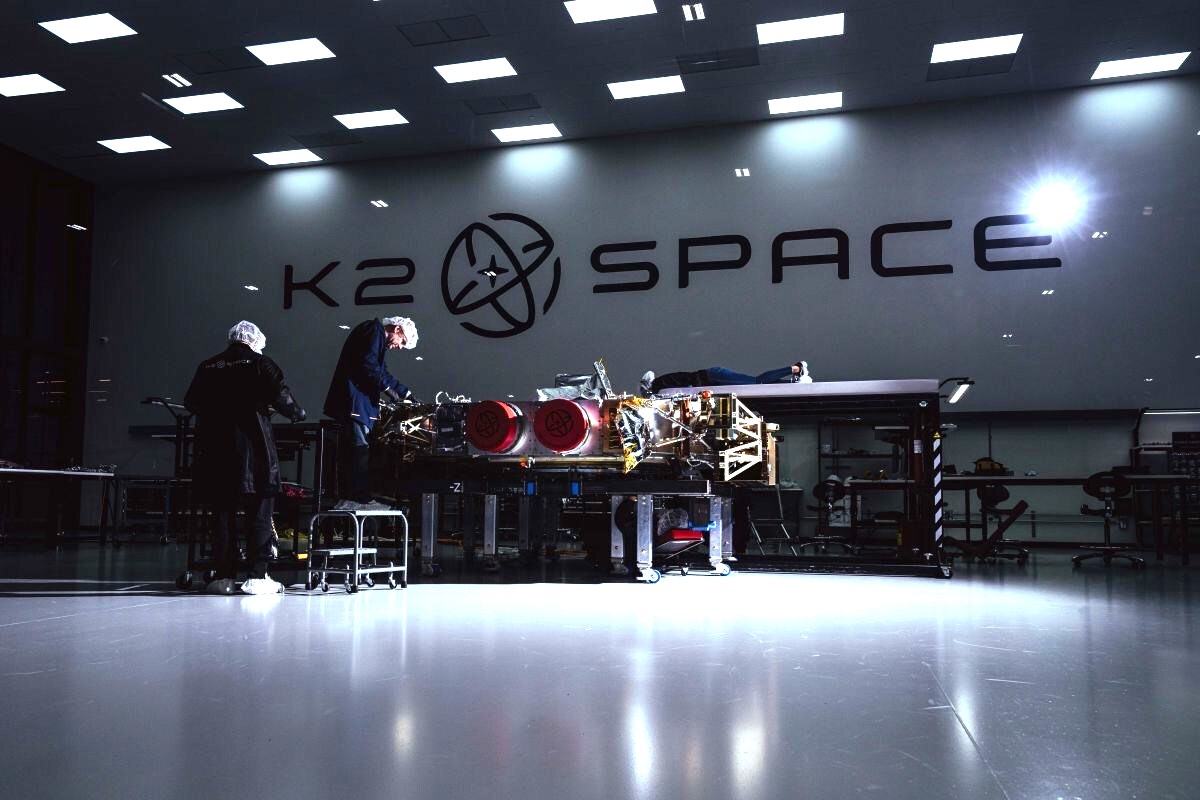
K2 Space’s Gravitas satellite, shown here during final integration, was launched in March. (K2 Space Photo via PRNewswire)

K2 Space, a California-based satellite company that recently set up an engineering hub in Seattle, has announced a $500 million funding round at a $6.8 billion valuation.

The Series D round was led by Kleiner Perkins and ICONIQ, with participation from CapitalG, Lightspeed, Altimeter, Spark Capital, Sands Capital, ARK Invest, T. Rowe Price Associates and other existing investors.

Since its founding in 2022, K2 Space has raised more than $1 billion in capital and secured an equivalent amount in contracts.

@media (max-width: 600px) {
aside.callout { float:none !important; max-width:100% !important; margin-left:0 !important; margin-right:0 !important; }
aside.callout .callout-img { display:none !important; }
}

While many satellite companies focus on miniaturization, K2 Space is going big on satellite mass and power. K2 had its first “mega-class” satellite, dubbed Gravitas, launched into orbit on a SpaceX Falcon 9 rocket in March. The two-ton, 20-kilowatt satellite carried a dozen undisclosed payload modules for multiple customers, including the Department of Defense.

Advertisement

K2 is working with commercial satellite provider SES on spacecraft for its “meoSphere” network; with Anduril Industries on satellites for the Golden Dome missile defense system; and with the U.S. Space Force on its Protected Tactical Satcom-Global program.

Karan Kunjur, co-founder and CEO of K2 Space, said the new capital validates the company’s core strategy.

“When my brother Neel and I started K2 four years ago, we took a contrarian bet that building bigger would be the future for exploring and developing space,” Kunjur said today in a news release. “This latest round validates that thesis and gives us the capital to accelerate scaling as we prepare to build up to 100 large satellites per year.”

Source link

Advertisement
Continue Reading

Tech

Can A Beverage Cooler Be Used As A Refrigerator?

Published

on


We may receive a commission on purchases made from links.

A beverage cooler is a good solution for people who either want to save space in their refrigerator or need a way to keep cold drinks in a room other than the kitchen. But while these devices can be a convenient method for chilling soft drinks and other beverages, they can only be used to hold food under certain conditions. The reason for that has to do with temperature settings, as well as food safety guidelines.

Advertisement

Perishable food storage should follow the FDA’s 40-degree rule for refrigerators. Since the temperature on some beverage coolers can be adjusted to meet this guideline, they technically become a viable storage option. However, if a beverage cooler’s temperature cannot be adjusted to 40 degrees or below, then it should not be used for perishable food. Additionally, a beverage cooler is not designed to replace a full-size refrigerator, as many coolers lack proper storage space and humidity controls. So, you should not use a beverage cooler to store perishable food over the long term.

The reason food should be kept under the 40-degree threshold is because bacteria can grow quickly at higher temperatures. This is why the FDA designated the range of 40 to 140 degrees Fahrenheit as the “Danger Zone.” A refrigerator operating at proper temperatures can help slow bacterial growth and thus reduce the risk of food becoming unsafe to eat.

Advertisement

Exploring different types of cooling solutions

A beverage cooler typically isn’t designed for everyday food storage. But if you’re looking for a compact solution that is, a mini fridge might be a better option. Mini refrigerators, much like their larger counterparts, are typically built with adjustable shelves, door bins, and other storage areas. Some mini fridges may also have freezer compartments, which gives them additional functionality.

Another cooling option is an electric cooler, which offers some of the convenience of a mini fridge, but can be easily carried from one space to another. Electric coolers use a powered cooling system to maintain a set temperature, with some models allowing users to adjust that temperature through a smartphone app. Because of its design, an electric cooler is a useful option for camping, tailgating, or on road trips. Depending on the model, you can either plug an electric cooler into a standard outlet or use the built-in battery for power.

Then there are traditional coolers which don’t need power and instead rely on ice. These coolers come in several different types, including soft-sided, which use lightweight foam insulation. Hard-sided coolers typically have thicker insulation that helps the ice last longer, while backpack coolers offer hands-free carrying. Each type of cooler is portable, with the biggest drawback being that you either have to add more ice, or replace the ice, as needed.

Advertisement


Source link

Advertisement
Continue Reading

Tech

NYT Strands hints and answers for Monday, August 3 (game #883)

Published

on

Looking for a different day?

A new NYT Strands puzzle appears at midnight each day for your time zone – which means that some people are always playing ‘today’s game’ while others are playing ‘yesterday’s’. If you’re looking for Sunday’s puzzle instead then click here: NYT Strands hints and answers for Sunday, August 2 (game #882).

Strands is the NYT’s latest word game after the likes of Wordle, Spelling Bee and Connections – and it’s great fun. It can be difficult, though, so read on for my Strands hints.

Want more word-based fun? Then check out my NYT Connections today and Quordle today pages for hints and answers for those games, and Marc’s Wordle today page for the original viral word game.

Advertisement

Source link

Advertisement
Continue Reading

Tech

Easy Theremin Uses ESP32 | Hackaday

Published

on

The Theremin is that classic electronic musical instrument that makes those weeee-ohhhhh noises which were so popular in mid-century science fiction movies. Mid-last-century, that is, because this century is just beginning. In any case, you could build one with old-school analog electronics, or you could go a more modern route, as [ericCycles] did.

The build relies almost entirely on an ESP32 microcontroller with minimal supporting circuitry. Like any other Theremin, pitch and volume are controlled by moving hands closer or farther away from two antenna. In this case, the ESP32 uses its capacitive touch circuitry to detect effectively detect hand proximity to the two antenna in question, and uses those values to control the pitch and volume of a synthesized waveform. That waveform is then pumped out over the onboard digital-to-analog converter for playback on external speakers.

If you want to build a simple Theremin-like instrument quickly and easily, it’s hard to beat the simplicity on offer here. We’ve featured some other fun variants over the years, too, like this version that uses time-of-flight sensors for the human interface.

Advertisement


Advertisement

Source link

Continue Reading

Tech

Salesforce hires ex-Microsoft exec to lead Agentforce engineering amid string of departures

Published

on

Krishna Kumar Parthasarathy. (LinkedIn Photo)

After nearly three decades at Microsoft, cybersecurity executive Krishna Kumar Parthasarathy has announced he is joining Salesforce as executive vice president of engineering.

Parthasarathy is part of a wave of senior Microsoft security leaders who have departed this summer for executive roles at major tech competitors, including Amazon Web Services (AWS), ServiceNow and Salesforce.

In his new role, Parthasarathy will oversee engineering teams for core Salesforce products and features, including Agentforce, Agentforce Voice, Digital Channels, and Service Cloud.

“Salesforce sits at the exact center of enterprise trust and customer context. In an agentic world, that foundation is everything,” he said on LinkedIn.

Other high-profile departures in recent months from Microsoft’s security division include:

Advertisement

@media (max-width: 600px) {
aside.callout { float:none !important; max-width:100% !important; margin-left:0 !important; margin-right:0 !important; }
aside.callout .callout-img { display:none !important; }
}

  • Rohan Kumar, former corporate vice president of Microsoft Security, who joined Salesforce as president and chief platform officer.
  • Rudra “Rudy” Mitra, who spent more than 27 years at Microsoft — most recently leading its Purview data-security business — and joined AWS as vice president of security services.
  • Rahul Prakash, former head of product for Microsoft Security Copilot, who joined ServiceNow as vice president of product management in identity security.
  • Vasu Jakkal, former corporate vice president of security, compliance, identity, management and privacy, who stepped down after six years and has not yet announced her next move.
  • Joy Chik, former president of identity and network access, who announced her retirement in April.

The leadership shifts follow a broader organizational shakeup within Microsoft’s security business under Hayete Gallot, who returned to the company from Google in February to run the group. Naseem Tuffaha also returned to Microsoft last month to take over the corporate VP role vacated by Rohan Kumar.

Source link

Continue Reading

Tech

AMD’s new Zen 6 chips will have a low-power core built from five different generations of Zen

Published

on

What we know so far: AMD is taking a different approach with its upcoming Zen 6 processors, introducing a new type of low-power core built from pieces of several earlier Zen designs rather than a single architecture. The change surfaced in a recent Linux kernel patch, which shows how the system identifies and manages these cores. The patch makes clear that the low-power cores are distinct enough to warrant their own classification, rather than being grouped with AMD’s existing compact “C” cores.

Patch notes that the system needs a way to properly identify these low-power cores in user space, since they currently show up as “unknown” in the CPU topology.

It also specifies that on supported AMD and Hygon chips, these cores should scale performance using amd_get_highest_perf() instead of the fixed CPPC_HIGHEST_PERF_PERFORMANCE limit, aligning them with how existing efficiency cores are managed.

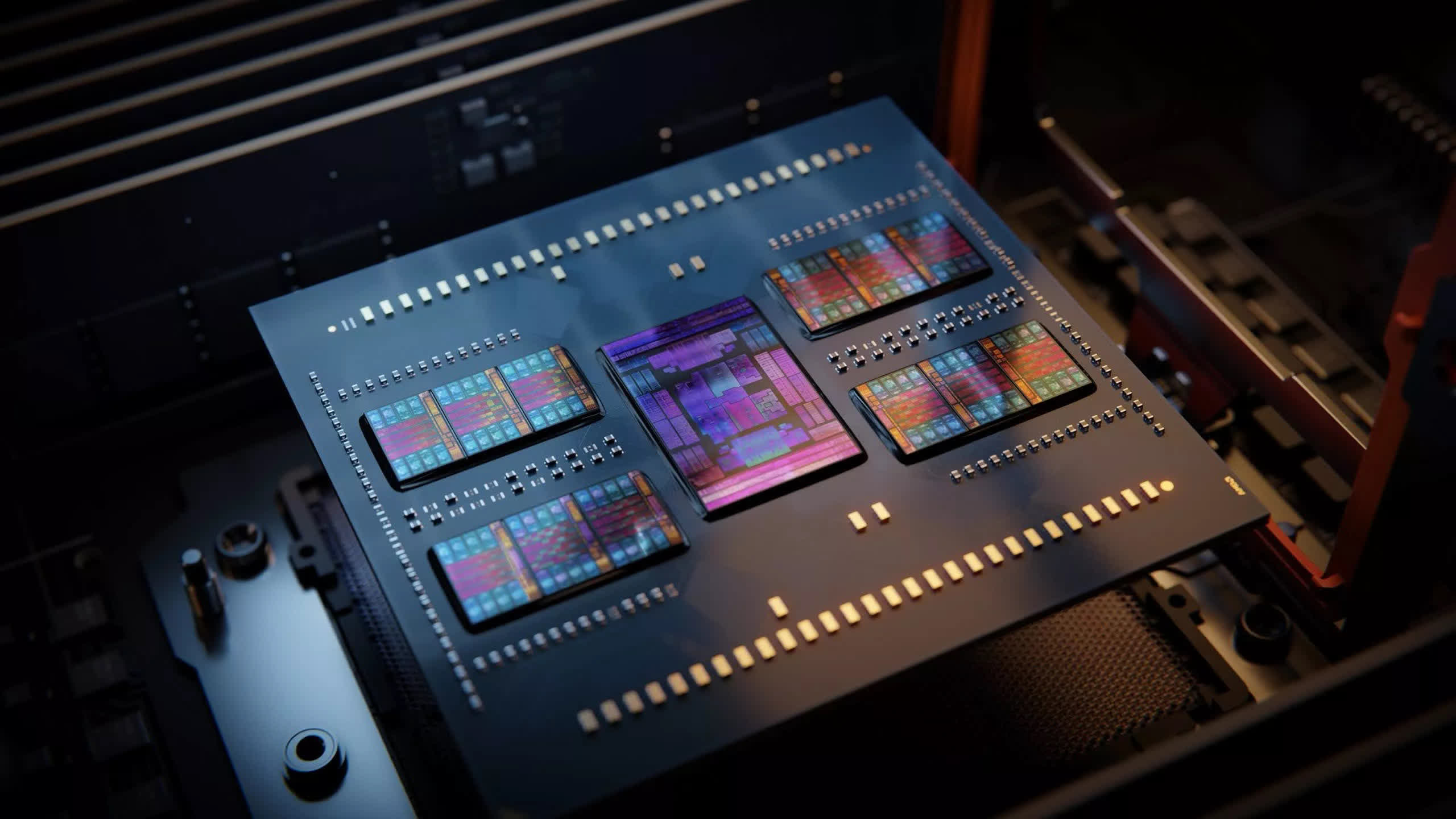
What stands out is how these cores are built. Analysis from leaker InstLatX64 points to a hybrid design that combines multiple generations of Zen. The reported setup includes a Zen 6 instruction set, Zen 5 microarchitecture, Zen 4 floating-point unit, Zen 3 L2 cache, and Zen 2 L3 cache.

Advertisement

Instead of designing a low-power core from scratch, AMD appears to be reusing and combining existing components. That mix-and-match approach suggests the company is trying to improve efficiency while keeping development time and complexity in check.

These low-power cores would sit alongside AMD’s current Performance and Efficiency cores, creating a three-tier setup. Performance cores handle high-clock workloads, while Efficiency cores are smaller and tuned for lower power use. The new low-power cores go a step further, targeting very light workloads where minimizing power draw is the priority. In that sense, they’re closer in purpose to Intel’s low-power efficiency cores, though AMD’s design is structured differently.

The potential benefit is clearer in mobile devices. Laptops and gaming handhelds could offload lighter tasks to these low-power cores, reducing overall power consumption. That could help extend battery life and let systems run certain processes at just a few watts. How much of a difference that makes will depend heavily on how well software can manage and assign workloads across the different core types.

There are still gaps in what’s known. AMD hasn’t shared performance or efficiency data for these cores, and it’s not yet clear how well this blended architecture will scale under real workloads. The design is unconventional, and its success will likely hinge on how smoothly the hardware and software layers work together.

Advertisement

This development comes as AMD is rolling out its Zen 6 server chips, with desktop versions expected later this year. But the broader market may complicate things. PC shipments have been trending down, and higher memory prices, driven in part by AI demand, are pushing up system costs.

That matters more in laptops and handhelds, where upgrading the CPU usually means replacing the entire device. Even if AMD delivers better efficiency, adoption could be limited if buyers hold off on new hardware.

Still, the idea of building a core from a mix of proven parts marks a notable change in direction. Rather than stretching one architecture across every use case, AMD is carving out more specialized roles for different core types. If it works, it could give the company more flexibility in how it designs chips for power-sensitive devices.

Advertisement

Source link

Continue Reading

Trending

Copyright © 2025