The AI industry has fully entered the “agent era,” a paradigm where AI models do far more than generate text — they now actively plan, execute, and course-correct complex tasks over days rather than seconds.
Thus, it’s perhaps unsurprising to see Chinese e-commerce giant Alibaba’s famed Qwen Team of AI researchers release a model capable of performing autonomous agentic AI work over multiple days: that model has arrived in the form of Qwen3.7-Max which the company reports in a blog post achieved “~35 hours of continuous autonomous execution” — albeit, in a proprietary, not open source format, as prior Qwen Team releases were.
This is also to be expected — it’s what many analysts and industry experts feared in the wake of the departure of several key Qwen Team leaders earlier this year. But it makes sense for Alibaba financially, at least in the short term: training AI models, especially ones as powerful as Qwen3.7-Max, is expensive, and giving them away essentially for free, as open source models are, does not immediately help recoup any costs.
In that sense, Alibaba is simply aligning its efforts with American AI giants like OpenAI and Google by offering the latest and greatest models only through paid APIs and subscription or paid web plan bundles, and slightly less performant ones through open source.
Advertisement
Still, the arrival of Qwen3.7-Max offers further optionality to enterprises and individual users, and more competition for American AI labs — rarely a bad thing for consumers at all budget levels. Yet, the fact that the model is only accessible from Chinese-based endpoints means it may be limited in its appeal to American and European enterprises seeking to maximize compliance and security posturing when fulfilling government contracts, or even just attempting to comply with all relevant state, local, and national data sovereignty regulations.
The marathon AI era
To understand why Qwen3.7-Max is a departure from previous models, one must look at how it was trained and how it operates in practice.
Language models typically degrade when forced to maintain a single train of thought over thousands of conversational turns; they forget instructions, hallucinate variables, or simply get stuck in logical loops. Qwen3.7-Max was specifically designed as a “versatile agent foundation” capable of “long-horizon reasoning” to overcome this exact bottleneck.
The starkest demonstration of this capability is an autonomous engineering task detailed by the Qwen team. The model was given access to an isolated server equipped with a T-Head ZW-M890 PPU—a hardware architecture the model had never encountered during its training. Its task was to optimize an attention kernel.
Advertisement
Over the course of 35 straight hours, Qwen3.7-Max operated entirely autonomously. It executed 1,158 distinct tool calls, performed 432 kernel evaluations, diagnosed compilation failures, and iteratively improved the code to achieve a 10.0x geometric mean speedup.
By comparison, Chinese competitor models like z.ai’s GLM-5.1 and Moonshot’s Kimi K2.6 capped out at 7.3x and 5.0x speedups respectively, often voluntarily terminating their sessions when they failed to make progress. However, both are available open source.
This endurance is achieved through what Alibaba calls “environment scaling”. Just as early LLMs grew smarter by ingesting more diverse text, Qwen3.7-Max was trained across a vast, scaled array of dynamic agentic environments.
It is capable of simulating a one-year lifecycle of a startup in the “YC-Bench” evaluation, navigating hundreds of decision-making rounds encompassing personnel management and contract screening. In this simulation, the model managed to generate $2.08 million in virtual revenue, nearly doubling the performance of the prior generation, Qwen3.6-Plus.
Advertisement
Furthermore, the model has built-in reward-hacking self-monitoring, autonomously detecting when it attempts to cheat a training environment and adding heuristic rules to correct its own behavior.
A brain for any scaffold
From a product perspective, Qwen3.7-Max is designed to be the cognitive engine for modern software development and enterprise automation.
The model offers a massive 1-million-token context window and a 64K maximum output limit, providing immense overhead for processing sprawling codebases or lengthy technical documents.
Advertisement
One of its most compelling features is “cross-harness generalization”. Rather than being hardcoded to work best within a specific proprietary interface, Qwen3.7-Max is built to act as a drop-in intelligence layer for diverse agent frameworks. It supports the Anthropic API protocol natively, allowing developers to plug it directly into existing tools like Claude Code or OpenClaw.
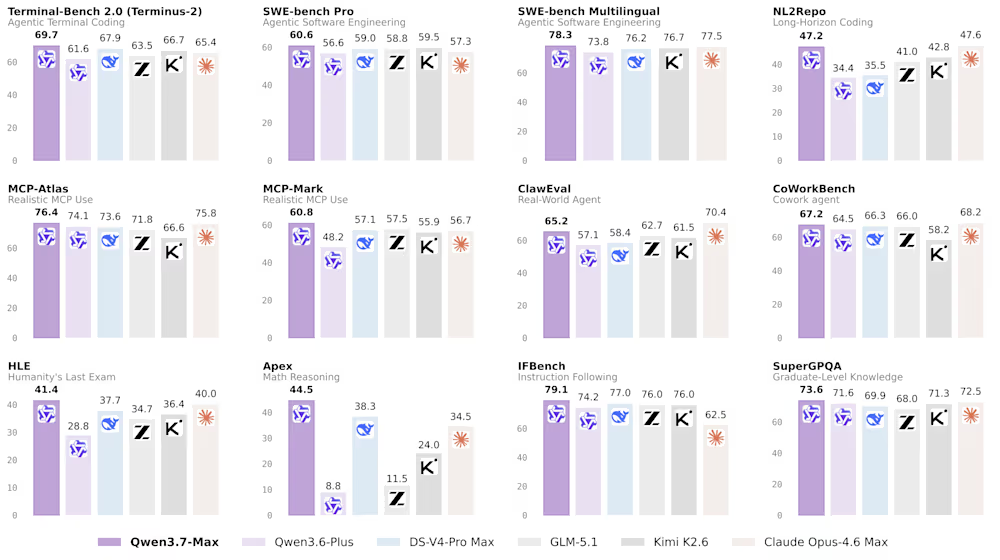
The benchmark data provided by Alibaba indicates that this generalized approach has paid massive dividends.
On the Apex Math Reasoning benchmark, Qwen3.7-Max scored 44.5, eclipsing Claude Opus-4.6 Max’s score of 34.5 and DeepSeek V4-Pro Max’s 38.3. It also posted dominant scores on Humanity’s Last Exam (41.4) and the realistic coding agent benchmark MCP-Atlas (76.4).
This translates into tangible utility for end-users. Through open source Model Context Protocol (MCP) integrations, the model can operate as an autonomous office assistant, capable of reading university formatting specs and automatically reformatting a messy Word document via command-line tools without human intervention.
Running this level of intelligence comes at a distinct cost. Developers accessing the API via Alibaba Cloud Model Studio will pay $2.50 per 1 million input tokens and $7.50 per 1 million output tokens. The platform also features explicit cache creation and read pricing, as well as a $10 fee per 1,000 calls for integrated web searches, though code interpreter tools remain free for a limited time.
Qwen3.7-Max occupies a strategic middle ground in the current API economy. While it demands a notable premium over aggressively priced domestic rivals—costing nearly double DeepSeek V4 Pro ($5.22) and Z.ai’s GLM-5.1 ($5.80)—it drastically undercuts the Western frontier giants it routinely matches on benchmarks.
For context, running heavy agentic workflows through OpenAI’s GPT-5.4 or Anthropic’s Claude Opus 4.7 will run developers $17.50 and $30.00 per million tokens, respectively. See VentureBeat’s pricing chart below:
By positioning Qwen3.7-Max just below Google’s Gemini 3.5 Flash ($10.50) but well above budget-tier models, Alibaba is signaling that this isn’t a commodity release; it’s a flagship reasoning engine priced to lure enterprise workloads away from Silicon Valley’s most expensive offerings.
Advertisement
Licensing remains proprietary for now
For all its technical brilliance, the most controversial aspect of Qwen3.7-Max is how it is distributed. Qwen is billing the release as a “proprietary model”. It is strictly API-only.
Historically, Alibaba’s Qwen has been a hero to the open-source and local LLM communities. Previous iterations, like Qwen 2.5 and Qwen 3.6, released their weights publicly. Open weights allow developers, researchers, and enterprises to download the model, run it on their own hardware, and fine-tune it for highly specific or data-sensitive use cases without sending proprietary information to a third-party server.
By locking Qwen3.7-Max behind an API, Alibaba is pivoting to the standard commercial playbook utilized by OpenAI (with GPT-4) and Anthropic (with Claude). For enterprise users, this means utilizing Qwen3.7-Max requires trusting Alibaba Cloud with their data streams and relying entirely on internet connectivity to run their agentic workflows. For the open-source community, it means losing access to what is currently one of the most capable models on the planet.
Community reactions split between awe and disappointment
The reaction from the developer community has been swift, characterized by a mix of profound respect for the engineering achievement and frustration over the licensing model.
Advertisement
Prominent AI commentator Sudo su (@sudoingX) captured the prevailing sentiment on X (formerly Twitter). “qwen is unreal,” they wrote. “they just dropped 3.7 max and it is beating opus 4.6 max on most of the benchmarks they ran”.
The technical metrics, particularly the model’s endurance, have left many in the field stunned. “the apex math number, 44.5 against opus 34.5, that is not a small gap,” Sudo su noted. “the 35 hours straight on a kernel optimization task with 1000+ tool calls is the part i keep rereading. that is the agent era thing actually happening, not a slide”.
The speed of Alibaba’s iteration is also drawing notice. With Qwen 3.6 released just last month, the leap to 3.7-Max highlights a relentless development cadence. As Sudo su observed, “nobody else is moving like this”.
Yet, the praise is heavily caveated by the shift to a closed ecosystem. The loss of the model weights is seen as a blow to the localized AI movement, which relies on state-of-the-art open models to push the boundaries of what can be done on consumer hardware or private enterprise clusters.
Advertisement
“one thing though, please open source this one too,” Sudo su pleaded in their post. “3.6 dense made the entire local llm ecosystem better. the max tier going api only would close a door we have been keeping open. give us the weights eventually”.
Qwen3.7-Max proves that the autonomous agent era is no longer a theoretical projection; it is a present reality capable of executing complex engineering feats while humans sleep. The only question now is whether this new frontier of AI will be a democratized resource you can download to your laptop, or an intelligence utility rented strictly from the cloud. For now, with Qwen3.7-Max, it is undeniably the latter.
Xbox controllers will no longer come with a proprietary expansion port — known as the Chatpad port to many players — if all three of the recent signs are to be believed.
First, reports are rolling in on social media that the new Forza Horizon 6 gamepad doesn’t include a connection point for Xbox accessories, and the space where the port used to be is visible but plugged up. Second, last week’s leaked images of the coming Xbox Elite Controller Series 3 show no signs of an expansion port. And third, a small line of text was added to the Xbox Wireless Controller store page in April that says, “Not all versions of this controller include an expansion port.” This note was not in the Internet Archive’s cache of the page dated March 31, 2026.
In case you’re not one for signs, we’ve also contacted Xbox for clarification on the change.
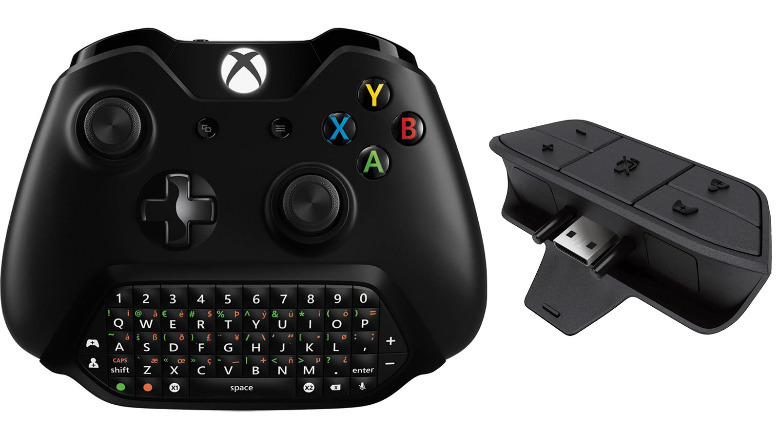
The apparent discontinuation isn’t a complete surprise, considering Xbox hasn’t produced a meaningful accessory for the expansion port since the dawn of the current console generation. The port’s major claim to fame was the Chatpad, which landed with the Xbox 360 but was most beloved in the Xbox One era as online console gaming found its footing, and players were itching for quick ways to communicate with teammates and adjust settings on the fly. On top of its duties as a quick-access keyboard with programmable buttons, the Chatpad fit snugly in the nook of the Xbox Wireless Controller and added a satisfying weightiness to its bottom half. Plenty of users came to prefer the feel of the controller with the Chatpad, even.
Advertisement
Microsoft
This single accessory became a unique selling point for Xbox One gamepads in particular, helping to solidify Microsoft as the leader of the controller market in the 2010s. The company also produced the Stereo Headset Adapter for the Xbox One, which had some useful shortcut keys, and toyed around with charging accessories that made use of its proprietary connection point.
And then, Microsoft stopped paying attention to the expansion port. By 2019, it was clear that the Chatpad had been quietly discontinued, though Xbox never made an official announcement. Its latest living room hardware, the Xbox Series X and Series S, landed in November 2020 alongside a line of freshly designed controllers, all with built-in expansion ports on their bottoms. Xbox didn’t dwell on the port (or even mention it) in marketing materials, and there’s been no whisper of revamped keyboards, headset adapters, chargers or other accessories this generation.
It’s a surprising miss not only because Xbox had a winning accessory on its hands with the Chatpad, but also because Microsoft doesn’t mind messing around with weird and cutting-edge consumer hardware. These are the folks who forced video game fans to interact with the Kinect (twice!), and today Xbox is a leader in accessibility hardware with the extremely rad Adaptive Controller and its ever-growing suite of accessories, courtesy of Microsoft’s Inclusive Tech Lab.
From one perspective, the Xbox controller has simply and naturally outgrown the expansion port. The inclusion of a 3.5mm jack for stereo headsets negates the need for a standalone adapter, and there’s a keyboard function in the Xbox app that lets players type live in-game. From another angle, Xbox is letting a point of innovation die at a time when it’s losing the broader hardware game. As companies like Nintendo have demonstrated — and Microsoft certainly understands well — there’s money to be made in selling offbeat, exclusive gaming accessories at lowkey-ridiculous prices. With the expansion port, Xbox had the foundation to add usability and whimsy to an already-successful gamepad empire, but with today’s news of closed expansion ports, that pipeline may be sealed for good.
Open-ear earbuds have grown quite popular in recent years, and Samsung has finally decided it wants a piece of the market. The Korean outlet ETNews, citing industry sources, claims that the company is gearing up to launch the Galaxy Buds Able.
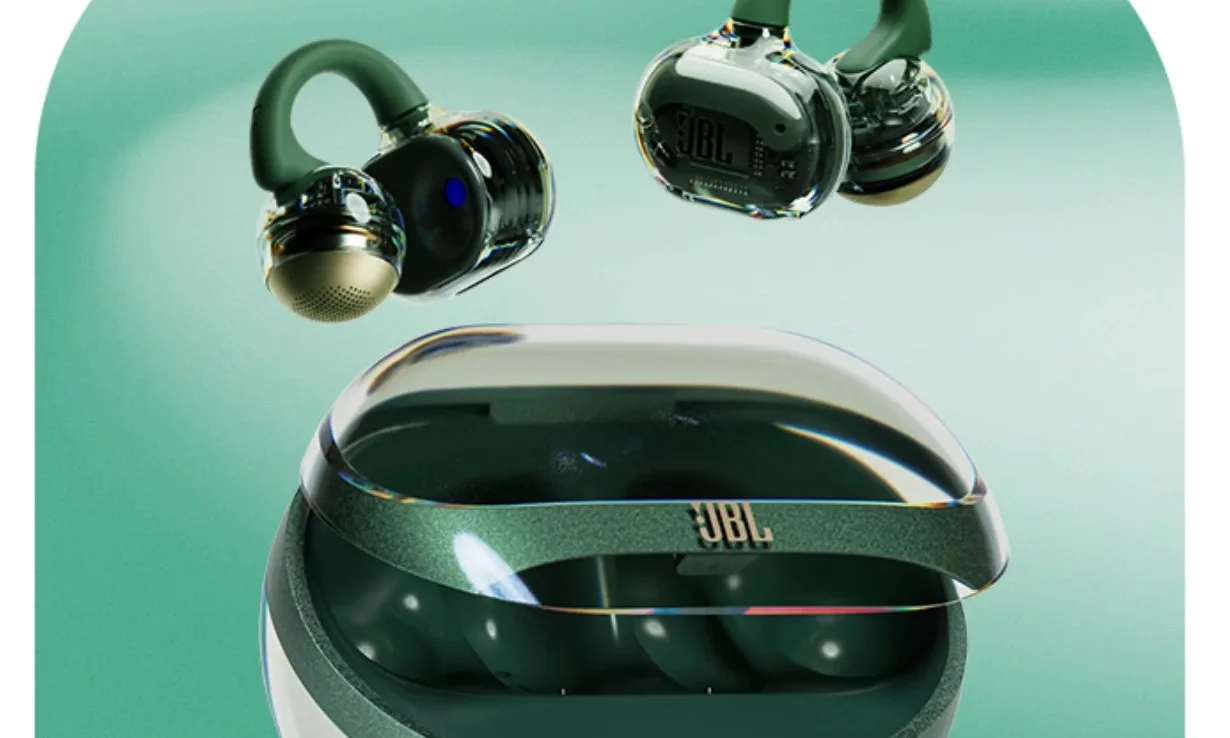
They are believed to be clip-type, open-ear earbuds that hook onto the ear without blocking the canal, and I genuinely believe they could be one of the most interesting audio launches of the year.
JBL Soundgear Clip open-ear earbudsJBL
How are the Galaxy Buds Able different?
Samsung’s existing earbuds sit in your ears, sealing the ear canal for effective sound isolation. The Buds Able flips that approach entirely. The clip hooks onto the outer ear, while the canal stays open, and you hear both your podcast and the traffic around you. They should also appeal directly to buyers who aren’t comfortable wearing in-ear earbuds.
These earbuds are specifically designed for situational awareness. You can use them while running, cycling, commuting, or basically anything where you want to be aware of your surroundings. Instead of bone-conduction, Samsung is going after the more advanced air-conduction route for sidestepping the vibration and sound quality issues.
The market for such earbuds is growing rapidly. The global open-type headphone and earphone segment is projected to climb from around $3.8 billion last year to about $4.2 billion this year, a $400 million jump that explains why Samsung is on the move.
Along with Samsung, Xiaomi is also moving in that direction. The company has already released official images of its first clip-type earbuds, which feature a satin gold design with a high-gloss unibody, and a transparent spherical speaker section.
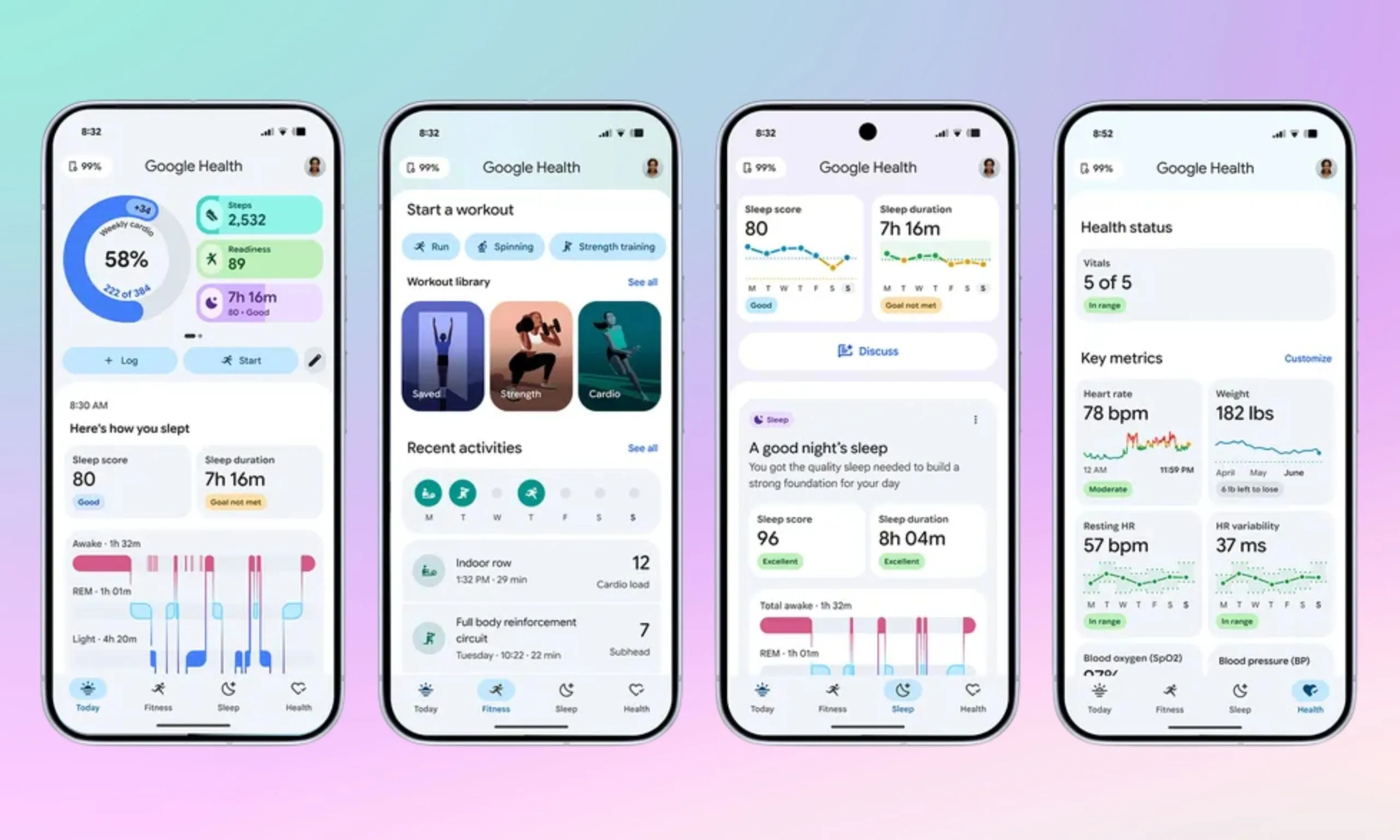
The new Fitbit Air, Google’s most direct competitor to the Whoop fitness tracking band, launches next week, and, if you haven’t already guessed it, Health 5.0 is required to set it up.
It’s happening! The #GoogleHealth app has started rolling out to Fitbit users. Look for the app on Android and iOS between now and May 26 ✨
Until now, the Fitbit home screen widget was a single, circular steps counter. The new Quick Access widget replaces it with something that could prove more useful. At its largest, the widget expands to a 5×3 grid, letting you check up to six fitness metrics at the same time.
You can set the grid to showcase the most important stats: steps, distance, sleep, hydration, weight, readiness, or whichever stats you’ve configured. At its smallest, the widget collapses to show just one stat.
To access full stats, you can simply tap on a tile. Then there’s a heart icon in the top-left that opens Google Health, a refresh button on the right, and the last update time sits in the centre, so you always know how fresh or stale the data is.
The Quick Access widget mirrors exactly what you’ve set in the Today tab, which means the widget and the app stay in sync.
According to Lifehacker’s hands-on review, the Gemini-powered Health Coach, the feature Google is promoting aggressively, has a hallucination problem.
While the Health Coach congratulated a tester for achieving a sleep score of 99, the actual score was 85. The coach also referenced irrelevant Reddit threads as sources, at least one of which had an answer copied from ChatGPT.
Beyond the AI hallucination issues, several popular Fitbit features aren’t a part of the update, including sleep animals, the Community Feed, Groups, direct messaging between users, food plans with calorie targets, and stress-check graphs.
Finally, features that were available for free during the Public Preview, including chat with the Health Coach and personalized fitness plans now require a Google Health Premium membership, which costs $9.99 a month or $99.99 a year.
The Google Health 5.0 rollout began May 19 and should reach full availability by May 26, 2026.
Only 15% of workers in Singapore feel safe from job cuts
Singapore workers rank among the least confident in the world about their job security—and the numbers are stark. Just 15% of employees feel their role is safe from elimination, according to ADP Research’s latest People at Work report.
Only four other markets rank lower than Singapore. In Europe, only 12% of workers in the Czech Republic feel secure in their jobs, while the remaining three are all in APAC—Taiwan (11%), South Korea (9%), and Japan, dead last at just 5%.
Rank
Country
%
1
Nigeria
38
2
Egypt
32
3
India
30
4
Saudi Arabia
29
5
Turkey
29
6
South Africa
28
7
United States
28
8
Chile
27
9
Mexico
27
10
Austria
27
11
France
26
12
United Kingdom
25
13
Australia
25
14
Thailand
24
15
Spain
24
16
Germany
24
17
Canada
24
18
Brazil
23
19
Philippines
23
20
United Arab Emirates
22
21
Argentina
22
22
Poland
21
23
China
20
24
Indonesia
20
25
Switzerland
20
26
Italy
20
27
Peru
20
28
Netherlands
19
29
New Zealand
19
30
Vietnam
18
31
Sweden
18
32
Singapore
15
33
Czech Republic
12
34
Taiwan
11
35
South Korea
9
36
Japan
5
Markets ranked by share of workers who strongly agree their job is safe from being eliminated./ Source: ADP People of Work
While Singapore ranked low, the broader region fared only slightly better, with just 18% of respondents across APAC saying they believed their jobs were safe from elimination. Globally, the figure stood at 22%.
This comes despite worldwide unemployment remaining at its lowest level in decades.
Advertisement
Jessica Zhang, Senior Vice President of APAC at ADP, said the results point to a disconnect between current labour market conditions and employees’ perceptions of their long-term job security.
“In Singapore, employees are not thinking about whether they have a job today, but also whether their roles will remain relevant tomorrow. This growing uncertainty is becoming a defining feature of today’s workforce,” she said in a statement.
The executive stressed the importance of clearer communication and continued upskilling efforts as concerns over job security grow.
Zhang said employers should be more transparent about how roles are changing, what those shifts mean for employees, and invest in ongoing training to help workers stay employable while boosting productivity and efficiency.
Advertisement
Long hours, low engagement
Singapore workers also reported high levels of unpaid overtime.
Overall, 45% of workers in Singapore said they clocked more than five unpaid hours a week, with 35% saying they put in between six and 15 unpaid hours each week, while another 10% said they worked 16 or more unpaid hours weekly.
The proportion of workers doing six to 15 unpaid hours exceeded the APAC average of 30%, while the share working 16 or more unpaid hours was in line with the regional average of 10%.
At the same time, Singapore recorded relatively high levels of generative AI adoption. Around 23% of workers said they used AI almost every day, while just 8% said they had never tried the technology.
Advertisement
Despite this, employee engagement levels in Singapore remained relatively low. Fully engaged workers accounted for 12% of the workforce in both 2024 and 2025, below the APAC average of 15%.
ADP Research’s People at Work report gathered responses from more than 39,000 adult workers in 36 markets between Jul 21 and Aug 4, 2025.
In APAC, the survey covered 13,136 respondents across multiple markets, including Singapore, Australia, China, India, Indonesia, Japan, New Zealand, the Philippines, South Korea, Taiwan, Thailand, and Vietnam.
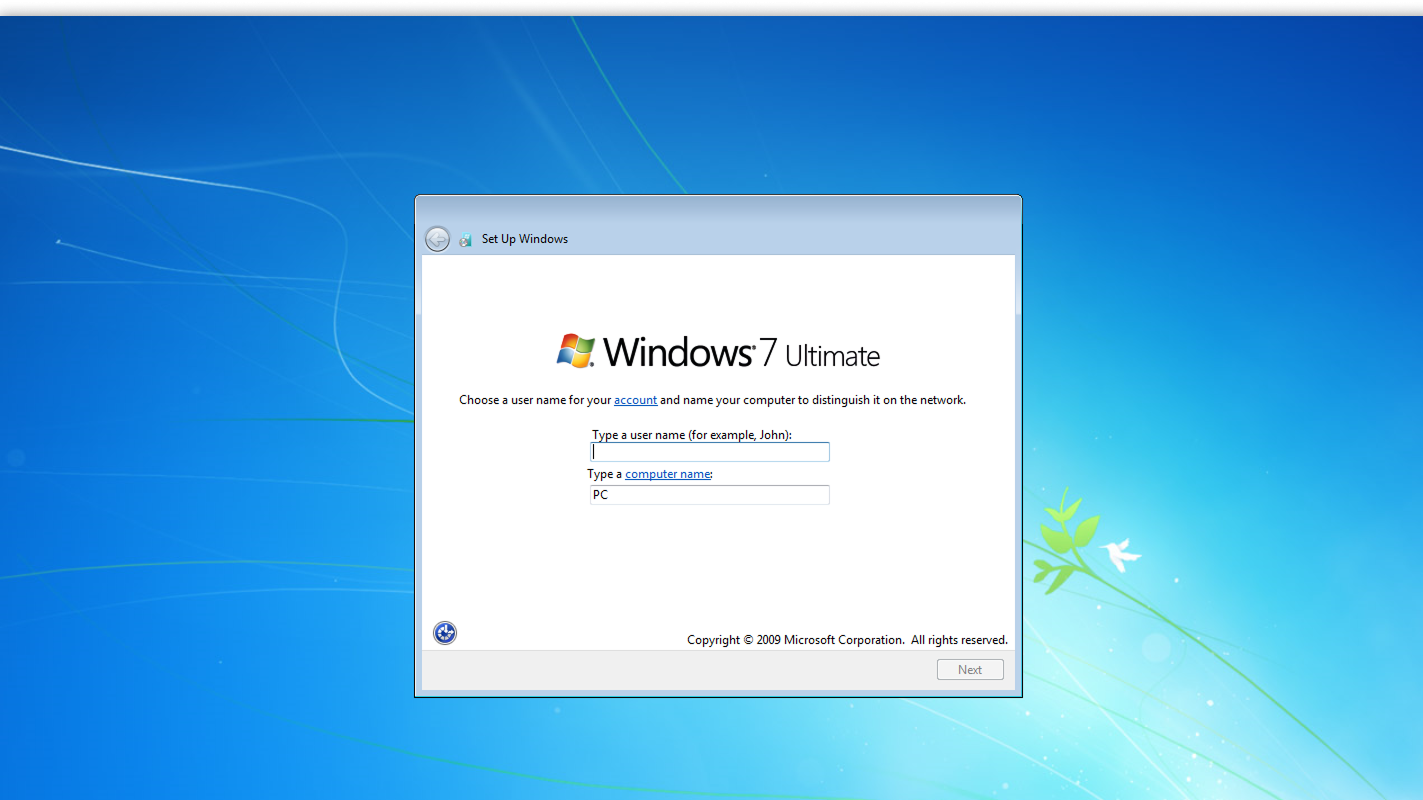
Do you want to go back to an era when Windows was… simpler? Back when things worked, before the AI and the bloat took over your hard drive and RAM space in equal measure? You might like to give Classic 7 a spin (via The Register).
From the drop, we should state that Classic 7 is not Windows 7 at all. Instead, it’s a reskin of Windows 10, specifically, the IoT Enterprise LTSC version. This is a particularly attractive version of Windows 10, as Microsoft has promised long-term support in terms of security updates until 2032. It also strips out annoying consumer-focused bloat like the Xbox gaming overlay and Cortana, and it eliminates forced feature updates that have become the norm in modern Windows installs. Combine all those niceties with the clean and simple feel of the recreated Windows 7 interface, and you have a beautiful operating system that has everything you need and nothing you don’t.
There are, of course, some hurdles to jump over; you’d need to find an appropriate license for this version of Windows and all that jazz. But if you long for the days before Microsoft so cruelly eviscerated the Start Menu and started making everything worse, you might find that Classic 7 is for you.
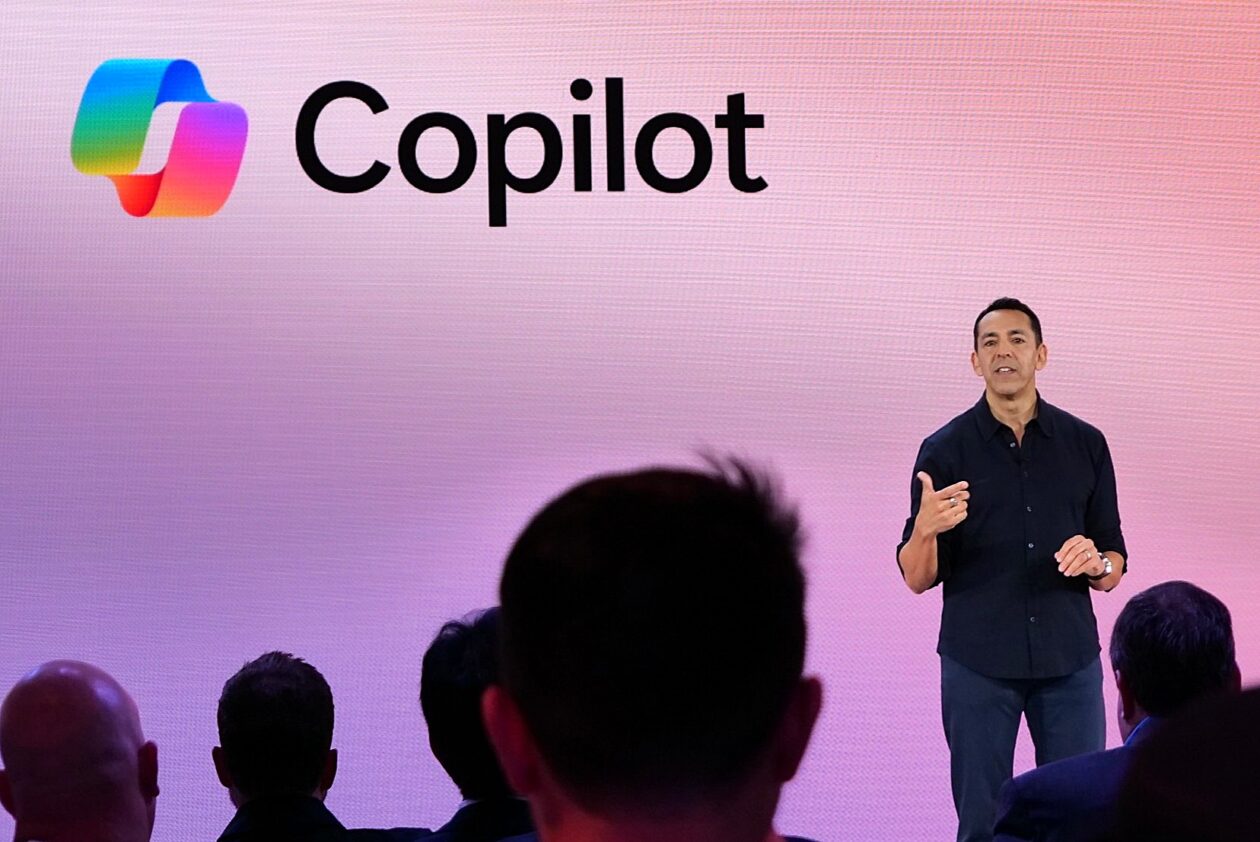
Yusuf Mehdi speaks at Microsoft’s Copilot+ PC event in May 2024. (GeekWire Photo / Todd Bishop)
Yusuf Mehdi, one of Microsoft’s best-known and longest-serving business leaders, whose tenure has spanned 35 years from Windows 3.1 to Copilot, plans to leave the company after one more year — his “final season,” as he called it in an interview.
Mehdi, 59, is Microsoft’s EVP and consumer chief marketing officer, overseeing product marketing for Windows, Surface, Copilot, Microsoft 365 consumer, Edge, and Bing search engine. He announced his plan Thursday, saying he intends to work at full intensity through the next fiscal year, ensuring succession plans are in place, before stepping away from the company that has been, as he put it, “the canvas of my life’s work.”
He compared it to picking a ship date for a product, something he’s had a lot of experience with during his time at the company. You put it on the calendar, and you work toward it.
“There will be time later to reflect and celebrate, but for now, it’s full speed ahead on our mission,” Mehdi wrote in an internal email to his team on Thursday afternoon.
After that? He’s not sure, but he’s not calling it retirement. He said he still feels young and energetic, and he has some ideas in mind, but he emphasized that he hasn’t made any plans.
Advertisement
Mehdi said he has been working closely with Microsoft CEO Satya Nadella and Chief Marketing Officer Takeshi Numoto on the transition plan. Microsoft has not named a successor, and he said it’s too early to determine what the leadership structure will look like after his departure.
His priorities over the next year will include positioning Windows for the agentic era, unifying Microsoft Copilot as a seamless experience across work and personal lives, and scaling the Microsoft 365 consumer business as it approaches 100 million subscriptions.
His work on Windows, in particular, is “a little poetic,” he said, since that’s where he started.
Mehdi’s career at Microsoft has touched nearly every major consumer product the company has shipped. He started as an intern in 1991, in his mid-20s, after a two-year stint at Reuters, where he worked on computer-based products for the foreign exchange trading business.
Advertisement
He joined Microsoft full-time in 1992 after earning his MBA from the University of Washington, adding to a bachelor’s degree in economics from Princeton.
After his early work on the launch of Windows 3.1 and Windows 95, Mehdi went on to help launch and market Internet Explorer during the browser wars. He spent more than a decade running Microsoft’s online services and search businesses, helping build Bing and playing a central role in the company’s search and advertising partnership with Yahoo.
That same year, he was promoted to his current role on Microsoft’s senior leadership team, becoming the public face of the company’s consumer AI push, from the launch of the AI-powered Bing search engine to the marketing of Microsoft Copilot.
Advertisement
Mehdi plans to stay through the end of Microsoft’s next fiscal year, June 30, 2027.
‘Budgets are moral documents,’ Rep. Delia Ramirez said
Democratic lawmakers on Thursday blasted President Trump’s spending priorities – specifically a proposed $1 billion White House security and ballroom project and a nearly $1.8 billion “slush fund” for Trump allies tied to the January 6 Capitol riot – as his administration pushes deep cuts to cybersecurity funding.
US Representative Delia Ramirez (D-IL) decried the president’s priorities as Congress weighs reauthorization of the State and Local Cybersecurity Grant Program (SLCGP), a funding effort that began in 2022 and earmarked $1 billion to state and local governments over the next four years to help mitigate cyber risks.
Advertisement
“Budgets are moral documents, and spending a billion dollars on a ballroom, which is what the president wants, or $1.7 billion to incentivize insurrectionists while we still are waiting for the reauthorization of this critical grant program, says a lot about where priorities are right now with this administration,” she said during a House Homeland Security subcommittee hearing on state and local cybersecurity.
Another Democrat on the committee, Rep. James Walkinshaw (D-VA), noted the US Cybersecurity and Infrastructure Security Agency (CISA) also eliminated federal support for the Multi-State Information Sharing and Analysis Center (MS-ISAC), which used to provide free and low-cost threat detection and response services to state and local governments.
The MS-ISAC has since shifted to a fee-based model to support the state threat sharing program.
This means, as expert witness Samir Jain, VP of policy for the Center for Democracy and Technology, testified, “jurisdictions that most need the help are least likely to be able to afford it. Smaller jurisdictions, because if they don’t have the resources and the money to join the ISAC, they probably also don’t have the resources and the money to buy equipment, to buy network monitoring tools, to have cybersecurity staff. It’s the ones who need it the most are the least likely to be able to get it as a result.”
Advertisement
Walkinshaw also pointed out that CISA’s 2025 budget was about $3 billion. President Trump proposed slashing the cyber-defense agency’s spending by $707 million in 2027, to just over $2 billion.
This is on top of the $135 million in cuts to CISA, along with about a third of its workforce (close to 1,000 people) since Trump returned to office.
“So we are looking at a one-third cut in federal funding for cybersecurity,” Walkinshaw said. “If President Trump gets his way, we’d be spending a billion dollars for the ballroom and $1.8 billion for the January 6 slush fund – $2.8 billion just on those two items, $800 million more than his total commitment to cybersecurity.”
Cybersecurity is the silent partner of democracy.
Advertisement
Meanwhile, other expert witnesses who testified before the committee, all IT and security chiefs from Tennessee, New York, and Florida, implored the lawmakers to spend more – not less – on state and local infosec.
“State and local governments operate critical systems that citizens rely on every day, including emergency services, schools, utilities, courts, and public infrastructure,” Tennessee CIO Kristin Darby told lawmakers.
“Those systems are increasingly targeted by criminal organizations and nation-state actors,” she said, adding that “demand for cybersecurity support far exceeds the current funding levels.”
As AI-enabled attacks, ransomware infections, and cloud-based system intrusions accelerate across Tennessee, “many local governments across our state have little or no dedicated cybersecurity staff,” Darby continued. “This creates a dangerous imbalance between highly sophisticated attackers and severely resource-constrained defenders.”
Advertisement
New York state director of security and intelligence Colin Ahern urged lawmakers to “reauthorize and fully fund the state and local cybersecurity grant program, which is the single most consequential investment in the cyber protection of state and local governments in this country.”
He also advocated for frontier-model AI access for state and local governments, which are tasked with protecting the power grid, drinking water supply, public health systems, and other critical operations.
“We cannot do that while frontier defensive AI capabilities are restricted to federal partners and a handful of large enterprises,” Ahern said.
“Cybersecurity is the silent partner of democracy,” he continued. “When the utilities, school districts, and state and local governments that constitute the operational fabric of American life are hollowed out by cyber attacks, the institutions that support our democratic life are hollowed out with them.” ®
Xiaomi CEO Lei Jun had a straightforward reason for why the YU7 wasn’t outselling the Tesla Model Y in China: the base model wasn’t cheap enough.
At just 10,000 yuan ($1,450) less than Tesla’s Model Y, the price gap simply wasn’t compelling enough. On the evening of May 21, at Xiaomi’s “Human x Car x Home” launch event, Lei did something about it (via CarNewsChina).
CarNewsChina / Xiaomi
Introducing the Xiaomi YU7 Standard Edition
The new True Standard Edition is priced at 233,500 yuan, about $34,300, which makes it 30,000 yuan ($4,350) cheaper than the standard rear-wheel-drive Model Y.
While that price gap should be enough, the more interesting number is the range figure. The YU7 lasts up to 399 miles on a single charge, compared to 368 miles for the equivalent Model Y variant.
To put it simply, Xiaomi is offering more range for substantially less money, which, in China’s super-competitive EV market, is as direct a challenge as a company can issue.
Advertisement
“Destroy Tesla” is what the internet loves to demand from Xiaomi. At the event, Lei Jun pulled out the YU7’s sales numbers from launch up to April. As he put it, taking on the Model Y and walking away with a “two wins, eight losses” outcome is honestly impressive for a brand new… pic.twitter.com/yGThJ8OyAg
The YU7 True Standard Edition sports a rear-wheel-drive single-motor setup that produces 235kW, with a CATL-supplied lithium iron phosphate battery.
Dimensionally it maintains the YU7’s mid-to-large SUV proportions at five meters long. However, it comes in 253 pounds lighter than the previous standard version at 4,850 pounds.
As for why Xiaomi is doing this right now, the company wants to regain lost sales momentum. The YU7 arrived on June 18, 2025 at prices below $48,500 and secured over 200,000 orders within three minutes, creating a waitlist that stretched nearly a year.
Advertisement
That backlog has since cleared, and with it, the sales momentum. The company sold fewer than 10,000 units last month, a significant drop from the launch frenzy, and, as a result, the company has launched the new Standard Edition.
Most users can start generating slides with AI today.
arda savasciogullari/Shutterstock
OpenAI is now letting you give your presentations the AI treatment. The company announced that ChatGPT is available in Microsoft PowerPoint. The chatbot can create new presentation slides, as well as editing and updating existing ones. As with many of ChatGPT’s capabilities, it takes action based on natural language prompts or by pulling material from connected services like Gmail, Outlook or Sharepoint. The PowerPoint feature is in beta, but most OpenAI users can get to work with it now, including those on the free access tier and subscribers through the corporate-focused ChatGPT Business.
This is a feature rival Anthropic has offered with its Claude chatbot since September. (Google’s Gemini, of course, integrates nicely with the company’s Slides platform.) With OpenAI potentially gearing up for what’s sure to be an obscenely valued IPO, it makes sense that the company is mirroring as many of its competitors’ capabilities as possible. PowerPoint was a bit of an outlier, since ChatGPT is already up and rolling in several other enterprise tools such as Microsoft Excel and Google Sheets.
In this week’s roundup of the latest news in online speech, content moderation and internet regulation, In this week’s roundup of the latest news in online speech, content moderation and internet regulation, Mike is joined by civil liberties lawyer Jennifer Granick. Together they discuss:
Advertisement
Support the podcast by joining our Patreon, with special founder membership available until May 28th.





















































You must be logged in to post a comment Login