Amazon confirmed Wednesday that it laid off an unspecified number of employees in its artificial general intelligence (AGI) organization, the division working on the company’s advanced AI models.
The move, first reported by Reuters, comes as the company invests heavily in programs to help businesses implement AI effectively, including a $1 billion initiative to embed AWS engineers with customers building agentic AI systems.
It’s part of a larger shift in the industry as tech giants and AI frontier labs look to make sure the enormous sums they’re spending on AI pay off in tools businesses actually use.
In a statement, an Amazon spokesperson said building large AI models remains “one of the most important things we’re working on,” but said the company is also “sharpening our focus on the initiatives that matter most for customers, so we can move faster on what counts.”
“That focus means some difficult decisions, including eliminating some roles within parts of our AGI organization, even as we continue to invest in the areas most important to our customers’ future,” the spokesperson said.
Advertisement
It’s the latest in a series of changes in Amazon’s AGI group, which despite its name has always been focused more on frontier models than on what the industry considers AGI, the still-theoretical systems that would match or surpass human intelligence.
Rohit Prasad, the senior executive who oversaw Amazon’s AGI work, left the company late last year, and AGI Lab head David Luan departed in February. In December, Amazon folded the AGI group into a larger organization led by senior vice president Peter DeSantis that also includes chip development and quantum computing.
The cuts are the latest in a series of smaller reductions since January, when Amazon eliminated 16,000 jobs across the company. Amazon said U.S. employees whose jobs are cut will receive 90 days of pay and benefits, outplacement support and transitional health coverage, along with eligibility for severance.
You can now gift games without a Steam account and sort your wishlist into categories.
Ian Carlos Campbell for Engadget
Valve has pushed updates to Steam’s gifting and wishlist features to — surprise, surprise — make it even easier to buy games. Among the improvements, it’s now possible to use a guest account to purchase games, instead of just gift cards and Steam hardware. And if you’re interested in organizing your wishlist, the company has made it possible to sort saved games into categories.
Making guest accounts more useful goes a long way towards streamlining the game purchasing process on Steam, but Valve is also expanding how games can be gifted. As part of this update, you can now send games directly over email. Previously, you needed to know the recipient’s Steam account to send a game, but now you can message them a link to claim a game even if their email address isn’t associated with their account. The only limitations are that you need to be in the same country as the recipient, and if they don’t accept the game after 30 days, it’s automatically refunded. To send a game to someone in a different country, you’ll still need to be friends with them on Steam, but Valve says it will now automatically calculate the cost of a game in your friend’s region at checkout. All three of these changes should make it easier for the less gaming-inclined to buy PC games for their loved ones.
Steam’s new wishlist improvements make organizing it easier while also acknowledging the feature is for more than just saving games you want to buy later. Categories are best thought of as a folder or tag system for your games. You can name categories whatever you like and easily add games to a category from their store page or your existing wishlist. Selecting the category from the top of Steam’s wishlist page filters your wishlist to only the games in that category. Notifications you receive about wishlist items going on sale can be enabled or disabled for specific categories rather than your entire list. Those big changes are being paired with some smaller tweaks, too: You can now generate a shareable link to your wishlist or a specific category, see whether saved games have demos and play trailers for games on your wishlist when you hover over them.
Yet the Chocolate Factory is also buying more third-party compute capacity to handle demand for the G-Cloud
Google’s parent company Alphabet is managing its fleet of AI accelerators to prioritize research on artificial general intelligence, rather than renting them all to customers.
CEO Sundar Pichai revealed the company’s priorities during its second quarter earnings call, during which the company confirmed it has delivered on its plan to sell its tensor processing units (TPUs) to some customers. In response to news of those sales, Goldman Sachs analyst Eric Sheridan asked how Alphabet balances demand from customers who want to buy its TPUs and the web giant’s own need for processing power.
Advertisement
“In terms of allocating our TPUs … our first priority is making sure we are allocating what we need to compete at the frontier in terms of AGI development,” Pichai replied, referring to Artificial General Intelligence –AIs that possesses human-like intelligence.
“That is the foundation for everything we do,” Pichai added.
Another analyst, Mark Shmulik of Bernstein, revisited the matter by asking how Google allocates processing capacity among its search business, cloud operation, and model training efforts.
“On allocation, I think the baseline with which we start is what it takes to continue AGI development at the frontier,” Pichai responded. The CEO said Alphabet is also “prioritizing our core product areas like Search, YouTube, et cetera, as well as Cloud.” And in the G-Cloud, Google is “prioritizing the compute to make sure we can serve our models in the context of Vertex and Gemini Enterprise, and our core solutions, be it data analytics and cybersecurity.”
Advertisement
“Our core services for our core products across consumers and enterprises is where the compute is primarily going, and that’s how we think about it,” the CEO added.
Google’s core services are going gangbusters.
Google Cloud revenue leapt 82 percent year over year, to $24.75 billion for the quarter, and delivered an $8.8 billion profit which represented 214 percent growth. The Big G said that growth came from “strong demand for AI infrastructure and AI solutions.” There’s probably more to come as the G-Cloud now has $514 billion of cloudy backlog on the books, meaning customers have signed up for services they’re yet to consume.
When generative AI came along some pundits suggested it could threaten Google’s search ads biz. That was not a good take because Pichai said the company’s AI Mode for search is “driving an incremental increase in Search queries overall.”
AI search needs specialist hardware that is expensive to buy and run. Pichai said Google is on top of that. “Thanks to our engineering and hardware optimizations, this quarter we reduced the cost of AI Mode responses to its lowest level since launch, even as we’ve brought more advanced AI capabilities.”
Google continues to spend megabucks on AI infrastructure – CFO Anat Ashkenazi said the company now plans to spend between $195 billion and $205 billion this financial year, up from a previous estimate of $180 billion to 190 billion.
Ashkenazi said Google can’t get all the kit it needs due to what she described as “the supply-constrained environment.” Google therefore plans to “expand the use of third-party capacity in Q3 as a bridging strategy while we build out more internal capacity.”
Advertisement
Pichai said buying bridging capacity will help Google to land monster cloud clients.
“There are very, very large customers of ours on Cloud who we are trying to support them through this extraordinary moment,” the CEO said. “The incremental opportunities they are bringing to us, while a short-term cost over a few months may be very high, in the lifetime of the deal, as we bring more capacity on, is highly ROI positive.”
“Those are factors we are taking into account. Are you willing to take upfront six-month deal to be able to serve that customer in what is a multi-year opportunity, where the margins and the returns are very, very attractive over that multi-year horizon?”
Alphabet’s quarterly revenue landed at $119.8 billion, up 24 percent year over year. Operating income hit $40.8 billion, up 34 percent.
Advertisement
Yet even those torrents of money couldn’t stop Google’s free cash flow landing at -$5.9 billion – the first time the company hasn’t had spare cash to splash since 2004. Investors seem not to like that and sent the price of the company’s shares down by four percent in after hours trading. ®
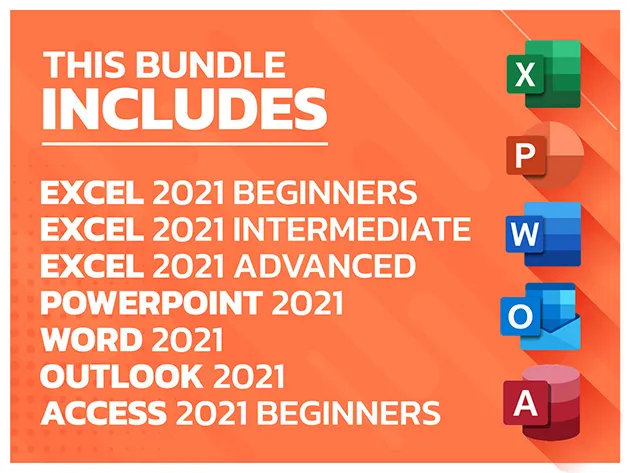
StreamSkill has combined seven of their best Office 2021/365 courses to create this awesome Ultimate Microsoft Office 2021/365 Bundle. Whether you’re a student, an office professional, a business owner, a freelancer, or just someone who wants to get started with the most widely used Microsoft programs, this course bundle is for you. Join now and gain a thorough understanding of Microsoft Office 2021/365. It’s on sale for $40.
Note: The Techdirt Deals Store is powered and curated by StackSocial. A portion of all sales from Techdirt Deals helps support Techdirt. The products featured do not reflect endorsements by our editorial team.
There are a ton of fantastic games available on the Playdate (with more on the way), but devs keep finding increasingly creative ways to push the little yellow machine to the max. Today, we spotted a neat demo that showcases some tech the game platform wasn’t expected to be capable of.
Game developer Cristina Ramos posted a video on social media of a work in progress that takes the Playdate into 3D. The slice of gameplay begins with platforming upwards through an interior space and then emerging onto a rooftop for some Mirror’s Edge style jumping around under the open sky.
I was told you couldn’t do 3D on the Playdate, so I did it.
Then I was told there was no way I could create exterior levels like those in Mirror’s Edge, so I proved them wrong again.
It’s a great showcase of why we’re such big fans of the Playdate. Working within limitations is one of the best ways to really flex your imagination, and Playdate comes with plenty of them. With enough ingenuity, Ramos and other enterprising devs can make it do the seemingly impossible. We recently learned that the Playdate is even being used to help Big Ben ring on time, which is pretty rad.
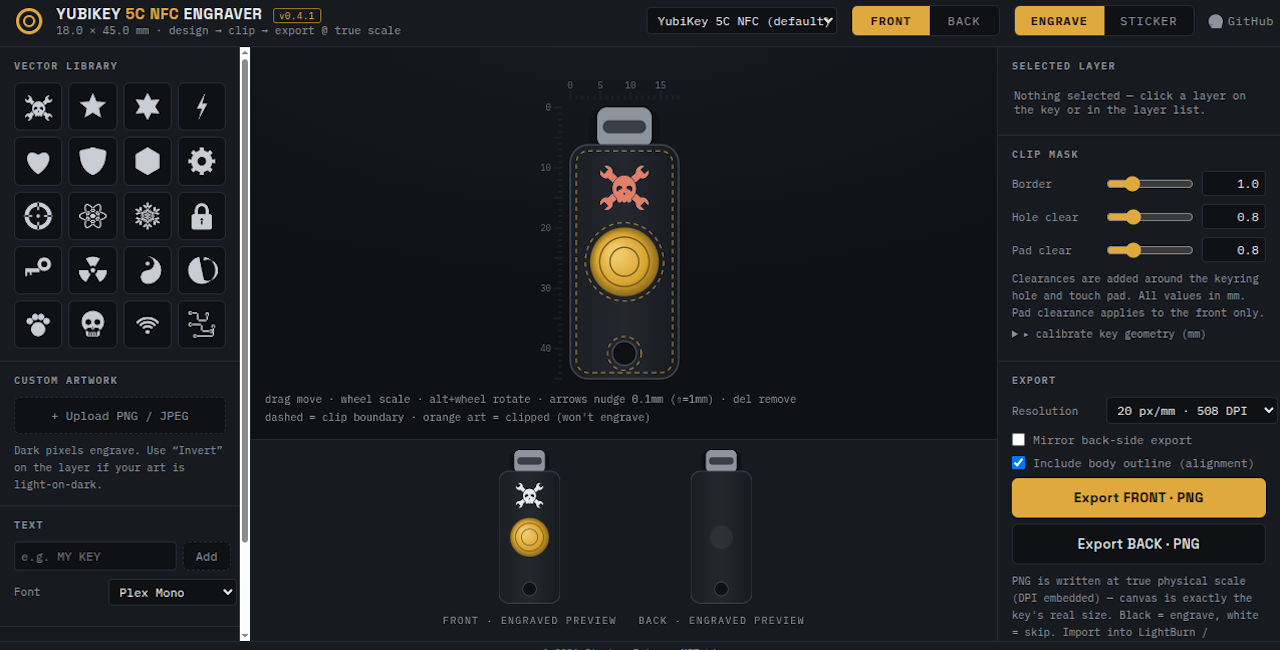
The combination of hardware required to make use of this project is specific enough that we imagine only a relatively limited number of readers will actually be able to try it out. But if you do happen to own a YubiKey and either a laser engraver capable of marking it or a fancy UV printer, [madeinoz67] has put together an awesome tool for adding some visual flair to your two-factor authentication device.
Running it is as simple as opening a web page, because that’s exactly how it’s implemented. You can either host it yourself or just launch it right from the GitHub repository. After opening the HTML file, you’re presented with a fairly intuitive user interface that lets you draw on top of a 2D outline of the YubiKey itself so you can get a better idea of what the final product will look like.
You can pick from an array of vector icons, upload your own images, and add custom text. There’s a pull-down at the top that lets you pick which specific YubiKey you want to work with, and there are different views depending on whether you plan on blasting your handiwork onto the device with a laser, doing a full-color UV print, or cutting it out of vinyl with something like a Cricut.
Even if you don’t have a YubiKey that’s begging for some custom artwork, we think there’s a lot to learn from this project. Obviously there are some very valid reasons to be concerned about how much of our modern software can only be accessed through a browser. If you’re going to use web technologies to create a piece of software, the least you could do is make it offline and self-contained like [madeinoz67] has.
Amazon Music has never lacked catalog depth or audio quality; the harder problem has been giving listeners a reason to choose it over Spotify, Apple Music or YouTube Music once the trial period ends and the monthly charge starts feeling less hypothetical.
Alexa+ is Amazon’s latest attempt to close that gap. The company has expanded the feature inside the Amazon Music mobile app to all U.S. customers, including listeners on free and paid tiers, with support on both iOS and Android at no additional charge.
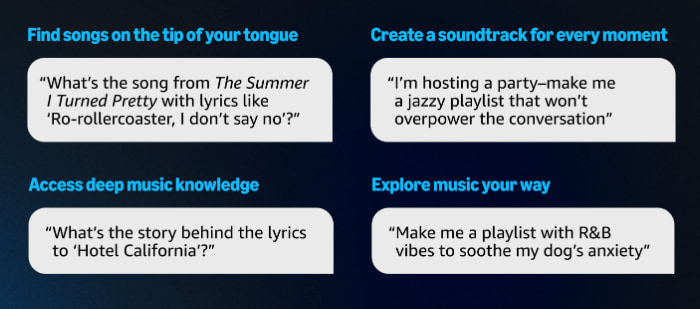
Users can type or speak conversational requests, identify songs from partial clues, ask questions about artists and recordings, create playlists, refine them through follow-up instructions and save the results directly to their libraries. Amazon is not merely improving search; it is trying to replace it with a music assistant that can understand what listeners mean when they remember everything about a song except the title, artist and half the lyrics.
Advertisement
Alexa+ Is More Than an AI Playlist Generator
Creating a playlist from a text prompt is no longer particularly novel. Spotify, Apple Music, YouTube Music, and Deezer already offer some variation of that feature.
Amazon is trying to make Alexa+ broader.
Listeners can ask it to identify a song from remembered lyrics, an artist, a film or television appearance, or some other incomplete clue. Amazon’s examples include finding the track used during the opening credits of The Sopranos or identifying a song from a partial lyric.
Alexa+ can also answer follow-up questions about:
Advertisement
Genres and regional music scenes
Artist influences and discographies
Song meanings
Samples and their origins
Album and release history
Chart performance
Band membership changes
Festival lineups
Relationships between artists and musical styles
A listener could begin by requesting contemporary electronic music, ask for more information about one of the recommended artists, remove slower tracks, increase the tempo, and then save the finished selection.
That moves the feature closer to a conversational music guide than a conventional recommendation engine. Whether it is a knowledgeable guide or the person at the record store who confidently invents an answer rather than admitting they do not know will depend on accuracy.
Amazon has not published an accuracy rate for Alexa+ music responses, so claims about samples, credits, chart history, release dates, and song meanings should still be treated as useful starting points rather than digital liner notes carved into stone.
Alexa+ Can Build and Edit Playlists
Alexa+ can create playlists from specific combinations of mood, era, genre, geography, tempo, language, and activity.
Advertisement. Scroll to continue reading.
Advertisement
Amazon suggests prompts such as:
Music for driving along the Pacific Coast Highway at sunset
French-language songs that sound appropriate for a Parisian café
Ambient electronic music combined with light classical piano and no lyrics
Contemporary jazz that will not overpower a dinner party
1990s pop featuring Madonna but excluding boy bands
The resulting playlists can be renamed, saved to an Amazon Music library, shared, and edited later by asking Alexa+ to add or remove specific tracks.
That last part is useful. Many generative playlist tools produce a list and then leave the listener to repair it manually when the algorithm decides that “quiet Sunday morning” requires Imagine Dragons.
Alexa+ allows the user to continue the conversation and adjust the result rather than starting again.
Available Across Every Amazon Music Tier
The most important competitive distinction is availability.
Advertisement
Amazon says Alexa+ is available to all U.S.-based Amazon Music customers across every subscription tier, at no additional cost, through the iOS and Android apps.
That does not mean Alexa+ erases the differences between Amazon Music plans.
The underlying subscription still determines which songs can be played on demand, whether advertising is included, how skipping works, and which audio-quality formats are available. Amazon Music’s paid Unlimited and Standard plans provide access to HD, Ultra HD, Dolby Atmos, and Sony 360 Reality Audio where available; adding Alexa+ to a free account does not quietly turn it into a lossless subscription.
Amazon has also not announced when the Amazon Music integration will expand beyond the United States or reach desktop and web versions of the music service.
Advertisement
How Amazon Music Alexa+ Compares
Music Service
AI Music Feature
Current Availability
What It Does
Main Limitation
Amazon Music
Alexa+
All U.S. Amazon Music tiers on iOS and Android
Conversational search, song identification, music questions, playlist creation, follow-up editing, playback and library actions
U.S. mobile rollout only; plan restrictions still apply
Spotify
Talk to Spotify
Gradual beta for eligible Premium users aged 18 and older in the U.S., Ireland, and Sweden
Typed or spoken conversation, playback control, music context, listening-history questions, podcast and audiobook discovery
Premium only and limited beta availability
Apple Music
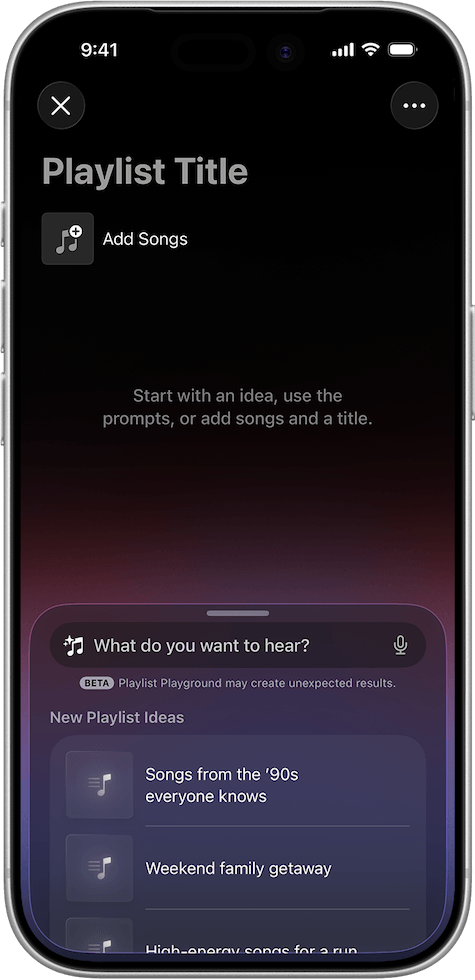
Playlist Playground
Beta for U.S. Apple Music subscribers aged 13 and older, in English
Creates and refines playlists from moods, genres, activities, and eras
Primarily a playlist tool rather than a broad music assistant
YouTube Music
Ask Music
YouTube Music Premium and YouTube Premium subscribers in select countries
Generates personalized radio stations and playlists; now includes podcast recommendations
Paid subscribers only and limited regional availability
Deezer
Playlist with AI and Flow Tuner
Playlist with AI began as a beta for 5% of paying subscribers; Flow Tuner is more broadly available
Text-generated playlists and direct control over genres used by the recommendation system
The conversational playlist beta has not been confirmed as a universal rollout
TIDAL
My Mix
Available to subscribers after sufficient listening history
Produces up to six algorithmic mixes based on recent listening and saved music
No comparable prompt-based conversational music assistant is publicly documented
Qobuz
Discover and personalized mixes
Available through Qobuz apps
Combines DailyQ, WeeklyQ, personalized radio, recommendations, and extensive human editorial curation
No conversational playlist assistant; Qobuz deliberately emphasizes human curation
Spotify Offers the Closest Direct Rival
Spotify’s new Talk to Spotify feature is the closest comparison to Alexa+.
Eligible Premium users can type or speak to Spotify from the Home and Now Playing screens, request unfamiliar artists, adjust the mood or tempo, add music to the queue, save tracks, follow artists, and ask questions about songs, albums, genres, podcasts, and audiobooks. Spotify can also answer questions about the user’s listening history, including when they first heard a song or which genres they have explored recently.
It is a deeper listener-history tool than Amazon has described so far, particularly because Spotify can examine years of personal playback behavior.
Advertisement
Advertisement. Scroll to continue reading.
The limitation is availability. Talk to Spotify is rolling out gradually in English to selected Premium users aged 18 and older in the United States, Ireland, and Sweden. Amazon is offering its music assistant to every U.S. customer, including people who are not paying for Amazon Music.
Spotify also warns that the beta remains a work in progress and that responses will not always be correct. That is unusually honest language from a technology company introducing AI and should probably be printed on the front of every device containing a microphone.
Apple Music Keeps Its AI Focus Narrower
Apple Music’s Playlist Playground creates playlists from text requests involving moods, genres, activities, and musical eras. Users can refine the results, rearrange songs, accept suggested additions, rename the playlist, and save it to their libraries.
Advertisement
It is available in beta to Apple Music subscribers aged 13 and older in the United States and currently works only in English.
Playlist Playground competes directly with Alexa+ for playlist generation, but Apple does not currently describe it as a broader conversational music expert. It is designed to build playlists rather than explain musical relationships, identify tracks through extended dialogue, or answer detailed questions about what is playing.
Apple’s approach is cleaner and more focused. Amazon’s is more ambitious.
Ambition is useful, provided Alexa+ does not explain that John Coltrane joined Black Sabbath in 1973.
YouTube Music Uses AI for Radio and Podcast Discovery
YouTube Music’s Ask Music allows paid YouTube Music Premium and YouTube Premium subscribers in selected countries to describe what they want to hear and generate a personalized radio station or playlist.
Advertisement
Google has expanded the feature to include podcast recommendations based on mood, genre, or programs the listener already enjoys.
YouTube Music has an enormous advantage when a request involves live performances, remixes, covers, rare recordings, and material that may not exist in a conventional streaming catalog.
Alexa+ appears to provide a more extensive conversational layer and more direct playlist editing, while Ask Music remains primarily focused on generating something to play.
Advertisement
Deezer Gives Listeners More Control Over the Algorithm
Deezer began testing Playlist with AI globally in 2024, allowing selected paying subscribers to create playlists through text prompts involving activities, decades, genres, and moods. The initial test was limited to 5% of Deezer’s paying audience.
Advertisement. Scroll to continue reading.
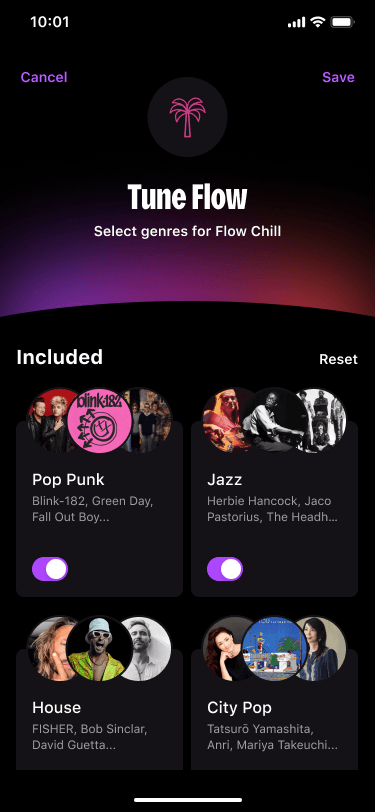
More recently, Deezer introduced Flow Tuner, which allows users to activate, deactivate, or add genres and subgenres that influence the service’s recommendation algorithm. Deezer also excludes identified AI-generated recordings from Flow recommendations.
Flow Tuner may be less theatrical than asking a chatbot to build “music for driving through New Jersey while wondering why the Garden State Parkway is not moving,” but direct control over the recommendation engine is arguably more useful over time.
TIDAL and Qobuz Are Taking Different Paths
TIDAL continues to rely on My Mix, which creates as many as six personalized mixes from recent listening behavior and saved music. Those mixes change gradually as the service learns more about the listener.
Advertisement
TIDAL does not currently document a consumer-facing conversational playlist assistant comparable to Alexa+, Spotify’s new chat feature, or Apple’s Playlist Playground.
Qobuz has moved even further in the opposite direction. Its redesigned Discover section combines personalized mixes, radio stations, listening history, and recommendations with extensive human editorial content, including reviews, interviews, Essential Discography selections, and curated playlists.
Qobuz uses technology to personalize discovery but continues to make human curation part of its identity. In a market racing to replace the record-store employee with a language model, Qobuz is betting that some listeners still want advice from people who have actually heard the album.
What Makes Amazon Music Alexa+ Different?
Alexa+ combines four capabilities that competitors usually separate:
Advertisement
Natural-language music search
Contextual questions about artists and recordings
Dynamic playlist generation and editing
Direct playback and library control
The feature is also available across all U.S. subscription tiers rather than being reserved for paying customers or a small test group.
Amazon reports that Alexa+ users explore music three times as often as users of the original Alexa, while customers who request recommendations listen to almost 70% more music. Those are Amazon’s internal engagement figures, and the company has not disclosed the sample size, time period, or methodology behind them.
The numbers still explain why every major streaming company is investing heavily in conversational discovery. More questions lead to more recommendations, which lead to more listening, more data, and a lower chance that a subscriber remembers they are paying for four music services.
Who Is It For?
Alexa+ will be most useful for listeners who know what they want emotionally or stylistically but cannot express it through artist names and conventional search terms.
It should also appeal to people who frequently use Amazon Music through Echo products and already think of Alexa as the front door to their music library. The mobile integration allows those users to continue the same kind of interaction without standing within shouting distance of a smart speaker.
Advertisement
Advertisement. Scroll to continue reading.
It is less compelling for listeners who prefer choosing complete albums, already maintain carefully organized libraries, or view algorithmic playlists as the musical equivalent of allowing a supermarket to plan dinner.
Audiophiles should also understand that Alexa+ is a discovery and control feature, not an audio upgrade. It does not improve the mastering, increase the bit depth, repair a poor recording, or stop the Amazon Music app from occasionally making basic navigation feel like filing a tax return.
The Bottom Line
Amazon Music Alexa+ is one of the more complete AI music assistants currently available because it goes beyond generating playlists. It can search conversationally, identify partially remembered songs, explain artists and recordings, refine selections through follow-up requests, and make direct changes to playback and the user’s library.
Making it available to every U.S. Amazon Music customer gives Amazon a wider launch audience than Spotify, Apple, YouTube Music, or Deezer currently offer for their closest comparable tools.
Advertisement
That does not automatically make Alexa+ the best music-discovery system. Spotify knows more about the listening history of many users, YouTube Music has access to a wider universe of rare and unofficial material, Apple’s implementation is more focused, and Qobuz still understands that human editorial judgment has value.
The larger shift is impossible to miss. Music streaming services no longer want listeners to browse catalogs or build playlists by hand. They want us to describe a mood, surrender the queue, and keep listening while the assistant learns enough about our habits to become increasingly difficult to leave.
Convenient? Absolutely.
A little unsettling? Alexa already knows what is in the shopping cart. It may as well know which album we play while regretting the purchase.
from the this-time-we-could-wait-for-discovery dept
We’ve written in the past that people online often get way too excited about theoretical pending “discovery” in frivolous lawsuits filed by bad actors. Because while there are certainly a few cases where (1) a frivolous case even reaches discovery and (2) some elements of that discovery are revealed to the public, in the vast majority of cases, that doesn’t happen. The legal strategy for most defendants is to get a case thrown out before it reaches discovery because discovery is incredibly expensive. And, even then, most often what is handed over in discovery never goes public.
But… hey, sometimes, “can’t wait for discovery” turns out to be an accurate sentiment.
Last year we noted that Donald Trump had filed an obviously frivolous lawsuit against the BBC, asking for $10 billion. At issue was an edit in the documentary he didn’t like which might be considered mildly misleading (though Donald Trump repeatedly falsely claimed that the BBC used AI to fabricate quotes, the reality was they edited two separate parts of the same speech to sound like they were said together, when they were really many minutes apart). That’s not defamation, though.
Either way, the case has not been going well for Trump. Because he argued that this documentary (which was only shown once in the UK and not in the US) harmed Trump’s business interests in Florida (where he sued), the BBC asked for Trump’s financial records as part of their discovery requests. Given that Donald Trump made more money last year (around $2 billion) than ever before, even as he remains the President of the United States, it seems like a reasonable request.
Advertisement
Trump and his (not very bright) lawyers tried to wriggle out of this by dropping some of the initial claims that were about how much harm the documentary did to his business, saying instead that it just harmed his reputation. The BBC said it still needed his financial records anyway. And now, Magistrate Judge Enjoliqué Lett has agreed, noting in court that the financial records would be relevant to the claims of reputational harm as well.
“All of President Trump’s brand, properties and businesses are impugned or said to have been impugned. Reputational, economic damages, all of that is now at issue in this case,” Lett said at the conclusion of a three-hour hearing.
Of course, Trump’s lawyers can (and almost certainly will) ask the Article III Judge (Roy Altman, who is a Trump appointee) to overrule the magistrate, but it might not work. After all, earlier in the case, Trump’s lawyers had sought to remove Lett from the case, claiming that she was biased against him, because before she became a Magistrate Judge, she had represented a client in a case against Trump. Judge Altman rejected that claim back in May, siding with his colleague, Magistrate Judge Lett:
The Plaintiff asks us to withdraw our referral of discovery matters from Magistrate Judge Lett and reassign them to a different Magistrate Judge. … He advances two arguments in support of this request: First, he cites our unrelated referral of discovery matters in Donald J. Trump Revocable Trust et al. v. Capital One…. Second, he argues that “Magistrate Judge Lett had appeared as counsel of record on behalf of a party directly adverse to President Trump in active federal litigation: Trump v. Clinton… The Plaintiff’s first argument is unavailing. “Effective April 19, 2026,” Magistrate Judge Hernandez replaced Magistrate Judge Lett as our “paired” Magistrate Judge for Miami-based cases…. We reassigned discovery in Capital One the next day based on case workload and the parties’ compressed discovery period…. Nothing about that decision mandates a withdrawal of the referral in the different circumstances of this case. The Plaintiff next argues that Magistrate Judge Lett previously “represent[ed] [a] defendant directly adverse to President Trump.” … Despite his claim to the contrary, the Plaintiff effectively seeks Magistrate Judge Lett’s recusal. … But 28 U.S.C. § 455 is clear that: “Any justice, judge, or magistrate judge of the United States shall disqualify himself in any proceeding in which his impartiality might reasonably be questioned.” Accordingly, we’ll leave any decision regarding Magistrate Judge Lett’s recusal to her sound judgment. Signed by Judge Roy K. Altman on 5/19/2026.
So, at this point, Judge Altman seems willing to trust Magistrate Judge Lett’s judgment on the recusal question — and that deference may well carry over to the financial-records dispute too.
Of course, even if discovery does move forward, Trump could still file for a protective order to keep most of the records secret, outside of whatever has to be used in court. Alternatively, he could try to dismiss the case to get out of having to provide discovery.
Advertisement
Either way, this was a stupid, vexatious, obvious SLAPP suit designed to punish the BBC and waste its time and money. So it’s quite nice to see that backfiring on the censorial bully that is the President of the United States.
Drivers who’ve been blinded by the lights, it’s not just your imagination. There are cars on the road with headlights that are so bright they’re illegal.
Two years after Tesla informed the National Highway Traffic Safety Administration that low-beam headlights on some Tesla EVs exceed brightness limits, the company’s move to make those headlights street-legal has failed. The NHTSA denied Tesla’s petition to avoid a recall, meaning the company will need to issue a fix for nearly 20,000 Model 3 and Model Y vehicles from 2017 to 2023 for a problem the company called “inconsequential.”
A representative for Tesla didn’t immediately respond to a request for comment.
Tesla argued in its petition that because the bright lighting in question falls outside of the field of vision of oncoming drivers, “noncompliance is inconsequential as it relates to motor vehicle safety.”
Advertisement
In its response, NHTSA associate administrator for enforcement Eileen Sullivan wrote, “NHTSA disagrees with Tesla’s conclusion that there is no increased risk of glare for surrounding traffic or the driver of the subject vehicle in any driving conditions.”
The agency argued, citing public comment, that the headlights can still produce glare that could affect other drivers.
The group referenced a similar decision it made in 2022 involving GM Terrain vehicles.
For Tesla owners, the NHTSA ruling means the company must provide a free fix for the affected cars.
Advertisement
Additional steps are possible
The NHTSA isn’t commenting on pending legislation, including its denial of Tesla’s petition, but in an email to CNET, a spokesperson said that the organization is assessing studies about LED-headlamp glare and may take additional steps based on what it finds.
“Some issues may arise from the inappropriate use of high beams, illegal aftermarket lamps, improperly maintained lamps or misaligned lamps,” the spokesperson wrote.
Extra-bright headlights are illegal, and devices that don’t comply can be outlawed from sale on platforms like Amazon, while drivers using overbright headlights can face escalating fines, the suspension of their driver’s license or civil liability.
“Although headlight technology has changed over the years, NHTSA’s lighting standard has remained constant in limiting the amount of glaring light directed toward traffic both coming and going,” the spokesperson said.
Advertisement
SUVs, which sit taller on the road than sedans, have become the most popular vehicles in the US. That, combined with LEDs taking over as the prime technology for headlights, has led more people to notice that high-intensity low beams seem brighter and harder to avoid.
Some modern cars have benefited from adaptive lighting technologies that can adjust brightness, direction or lighting pattern as driving conditions change, but many cars on the road aren’t equipped with these systems.
Headlights in the congressional spotlight
Earlier this year, the US House of Representatives joined the discussion about bright headlights with the introduction of a bill from Rep. Marie Gluesenkamp Perez, a Democrat from Washington state.
The LIGHT Safety Act would set maximum allowable brightness limits for low-beam headlamps on vehicles in the US. So far, the proposal has only been sent to committee, meaning it’s been assigned to a House panel for initial review, with no further action taken on it since March.
Advertisement
The bill seeks to revise existing federal standards by establishing a maximum allowable brightness for low beams.
U.S. Treasury secretary Scott Bessent doubled down on his warnings to Chinese AI companies on Wednesday, saying that sanctions remain on the table after a White House official accused Moonshot of improperly distilling Anthropic’s Fable model.
Model distillation is a common AI training technique in which a smaller model learns from the outputs of a larger one. While this process can infringe on intellectual property rights, it’s also widely used as a legitimate optimization method.
“Open source is not open season on American IP,” Bessent posted on X. “When [Chinese] firms conduct covert, industrial-scale distillation attacks that cross the line into IP theft, sanctions and Entity List designations will be on the table.”
Earlier this week, Bessent stated that the U.S. government would examine open source models from China for signs of intellectual property theft and impose sanctions if found.
Advertisement
Bessent’s latest remarks come hours after the White House’s science and technology policy chief Michael Kratsios accused the China-based Moonshot of conducting large-scale distillation against U.S. models. He alleged that Moonshot had acquired Nvidia’s “GB300-equipped servers and has accessed GB300s in Thailand, likely to train its AI models,” raising questions about whether the firm violated U.S. export-control rules.
The GB300 servers are part of Nvidia’s Blackwell generation, which are banned from being sold to Chinese companies.
Some experts dispute the idea that Kimi K3 could have been developed primarily through distillation from Fable, which has only been publicly available since July 1. Moonshot released K3 last week as an open-weight model, and its advanced capabilities have called into question the underlying business models of leading U.S. AI labs, casting doubt on whether they can continue to justify the enormous capital requirements underpinning the frontier AI race.
The episode has also intensified a broader debate in Washington over the influx of Chinese open models. Some, including former White House AI adviser and current OpenAI Head of Strategic Futures, Dean Ball, have argued that the U.S. should restrict or effectively ban the use of Chinese open-weight models to preserve America’s technological advantage and mitigate potential national security risks.
Advertisement
TechCrunch has reached out to Moonshot and the Treasury for comment.
When you purchase through links in our articles, we may earn a small commission. This doesn’t affect our editorial independence.
Toyota is the latest automaker accused of invading drivers’ privacy — and then selling personal information. The popular Japanese carmaker is facing a class action lawsuit filed in Los Angeles County Superior Court over “trap and trace” claims, a kind of privacy breach that’s becoming far more common. According to lead plaintiff Brittany Conner, Toyota is secretly tracking and selling personal information it gets on its official website, all without consent.
When consumers head to Toyota’s website, they will see a consent banner where they can choose to “accept” or “decline” tracking cookies. Conner found that Toyota installed tracking technology on her device without her knowledge — despite her declining — allowing the company to collect her online activity and then send her marketing and advertising it believes are related to her interests and the websites she visited. This isn’t the first time that Toyota has been sued for collecting and selling driver data: In January 2026, a man claimed Toyota sold his driving data to insurance companies.
Advertisement
Websites keep getting sued for trap-and-trace data collection
amgun/Shutterstock
Website tracking has become a hot legal topic as of late, with more than 800 claims filed under the California Invasion of Privacy Act (CIPA) in 2025. This law includes a section on “trap and trace” tactics, stating that it’s illegal to install a trap-and-trace device — which captures information without someone’s knowledge — without first obtaining a court order. This originally referred to wiretaps and hidden recording equipment when it was written in 1967, but it’s since been used for website tracking in recent years. And it has worked.
In 2025, Google had to pay over $425 million for collecting users’ phone data despite them opting out of the tracking. This lawsuit included 98 million Google accounts. But even those who didn’t use Google-branded apps or devices found they were getting tracked by Google’s software. In March 2026, the Los Angeles Times paid $3.85 million after violating California’s privacy laws by tracking users’ data without their knowledge. The lawsuit claimed the media outlet was using three website trackers. Forbes followed in May 2026, agreeing to a $10 million settlement after being accused of tracking, collecting, and selling private data from people who visited any websites owned by Forbes — without consent, of course.





















































You must be logged in to post a comment Login