Connect with us
DAPA Banner
DAPA Coin
DAPA
COIN PAYMENT ASSET
PRIVACY · BLOCKDAG · HOMOMORPHIC ENCRYPTION · RUST
ElGamal Encrypted MINE DAPA
🚫 GENESIS SOLD OUT
DAPAPAY COMING

Tech

Amazon Leo’s leaders provide an inside look at the satellite broadband network’s past and future

Published

on

Rajeev Badyal, vice president of Amazon Leo, discusses Amazon’s plans for satellite broadband services while Chris Weber, Amazon Leo’s vice president of business and product, looks on during the Technology Alliance’s State of Technology Luncheon in Seattle. (GeekWire Photo / Brian M. Westbrook)

Amazon Leo is still months away from the commercial launch of its satellite broadband network, but there’s already at least one satisfied user: Rajeev Badyal, who heads up the Amazon Leo team.

“I was in a remote location last week,” Badyal said today at the Technology Alliance’s annual State of Technology Luncheon in downtown Seattle. “I had the terminal with me. … I was in a place surrounded by mountains. I go, ‘There’s no way that we can make it here.’ The team said, ‘Just go put it there, we’ll take care of the rest.’ And they did it. It worked flawlessly.”

Badyal said he and his wife even streamed a movie in an isolated location where their phones couldn’t pick up a signal. “We were both like two kids who had never seen the internet before, discovering the internet for the first time,” he recalled.

For now, Badyal and other insiders are the only ones trying out Amazon Leo’s satellite service on a beta-testing basis, but it won’t be long before the first customers will be able to sign up.

Badyal, who leads the effort as vice president of Amazon Leo, can hardly wait. “That, to me, is the ultimate milestone,” he said. “That’s why all of us have been working on this — to get it out there, get it in the hands of the customers.”

Advertisement

Amazon Leo won’t be entering virgin territory. For years, SpaceX’s Starlink network has enjoyed the dominant position in the market for satellite broadband services via low Earth orbit. Starlink currently has more than 10,000 satellites in orbit, serving more than 10 million customers around the world.

Amazon Leo currently has a little more than 300 satellites in orbit, one year after its launch campaign began in earnest. Over the next year, the team expects the pace to pick up dramatically. “Just a little over a year ago, we used to make one satellite a month, and that was 24/7,” Badyal said. “Now we can do tens of satellites a week at our factory in Kirkland.”

By mid-2029, Amazon is due to have more than 3,200 satellites launched on rockets provided by United Launch Alliance, Blue Origin, Arianespace and even SpaceX, under the terms of its license from the Federal Communications Commission. And it’s already received the FCC’s preliminary go-ahead to add another 4,500 second-generation satellites to the network.

Advertisement

Pieces of the puzzle are coming together on the consumer side as well: Although Amazon Leo hasn’t yet announced plans for pricing and availability, it has released information about three levels of service, offering downlink speeds that range from 100 megabits per second to 1 gigabit per second. This week, the FCC released information about Amazon Leo’s Wi-Fi routers.

During today’s luncheon presentation, Badyal and Chris Weber, Amazon Leo’s vice president for business and product, shared a few inside stories about the network’s development.

How it all began

Before joining Amazon, Badyal worked at Starlink’s satellite development operation in Redmond, Wash., and was famously fired by SpaceX CEO Elon Musk in June 2018. Not long afterward, Badyal met with Amazon founder Jeff Bezos, who he said was “extremely passionate and bullish” about creating a satellite broadband network.

“The next thing you knew, I said, ‘OK, I will come and help you build this constellation and make this vision come true,’” Badyal recalled. “And we joined in October.”

Advertisement

Badyal and five other engineers worked out the design for the satellite constellation in an office that was blocked off with curtains. “These were black curtains, and it basically said, ‘Keep Out,’” Badyal said. The engineers wrote up a vision document that ran longer than Amazon’s traditional six pages. “It was harder to write the document than it was to design the constellation,” Badyal joked.

“In January of 2019, we were in front of Jeff. He had just come back from an earnings announcement, and he had the 40-page document in his hand,” Badyal said. “He puts it on the table, and then he goes, ‘I love this stuff.’ I’ll never forget those words: ‘I love this stuff.’”

How Project Kuiper became Amazon Leo

In the beginning, the network was called Project Kuiper. That was an inside-baseball reference to the icy Kuiper Belt that surrounds the planets of the solar system, in a way that’s similar to the belts of satellites that surround Earth.

Amazon Leo’s Chris Weber says the purplish shade that’s used for branding purposes is not actually purple, but “krypton.” It’s meant to match the color of the plasma generated by the krypton thrusters on Amazon Leo’s satellites.

“Project Kuiper was a project name, so we knew at some point we’d have to evolve that from a project name to an official brand name,” Weber said. “A couple of things went into it: One is, we had to have a name that resonated globally. Number two, it had to be easy to say.”

“Kuiper” just didn’t cut it. Weber recalled an internal video in which an assortment of influencers pronounced the word as “Ky-per, Kweeper, Cooper, etc.”

Advertisement

“Leo,” on the other hand, resonated. For one thing, it’s easy to pronounce. “Leo obviously gives a nod to ‘low Earth orbit,’ so we like that as well,” Weber said. And putting “Amazon” at the front of the name “really means a lot, around trust and credibility,” he said.

Technological turning points

Badyal said the hardest challenge to solve didn’t have anything to do with the satellites themselves, but with building low-cost customer terminals.

“The challenge for us was, can you integrate what you call a receive antenna and a transmit antenna into a single panel that’s small enough and that’s cost-effective?” he said. “We proved that out in 2020. That was the key pivotal point in the program, where you can say the floodgates were open.”

Another breakthrough came with the development of the optical laser links that transfer data between Amazon Leo’s satellites. Badyal said the first test of the satellite-to-satellite connection didn’t work because the satellites weren’t configured correctly. “It’s always the config file that’s the problem,” he said. After the configuration was corrected, the satellites successfully transferred data at the target rate of 100 gigabits per second.

Advertisement

“I couldn’t believe it,” Badyal said. “I had to call the team that night and just tell them what an incredible job they’d done. For me personally, it was emotional. I had to actually sit down for a little bit, just to collect myself. And I was screaming, by the way, and my wife goes, ‘What went wrong?’”

How satellite broadband will change the world

Weber said learning about potential use cases for high-speed connectivity via satellites is “one of the coolest things in my job.”

“I was in Argentina, and we visited a school where the students have a single cellphone that everyone has to share with a connection that’s less than 3G speed. So essentially it’s almost completely unusable,” he said. “What satellite connectivity will bring to those classrooms there is game-changing, not only for that school [but for] that entire community.”

On the business front, Weber said satellite connectivity will also provide greater resilience for enterprises and manufacturing facilities in case terrestrial coverage goes down. And he said there are “tons of use cases” for government services, including connectivity for first responders in remote locations.

Advertisement

“Everyone in Amazon Leo, they come to this not because it’s a job. It’s because it’s this mission of delivering connectivity to underserved and unserved communities across consumers, government and business,” Weber said. “That’s the thing that we wake up to every day.”

Source link

Continue Reading
Click to comment

You must be logged in to post a comment Login

Leave a Reply

Tech

Garmin Partners With MyKrida to Support Grassroots Athletes in India

Published

on

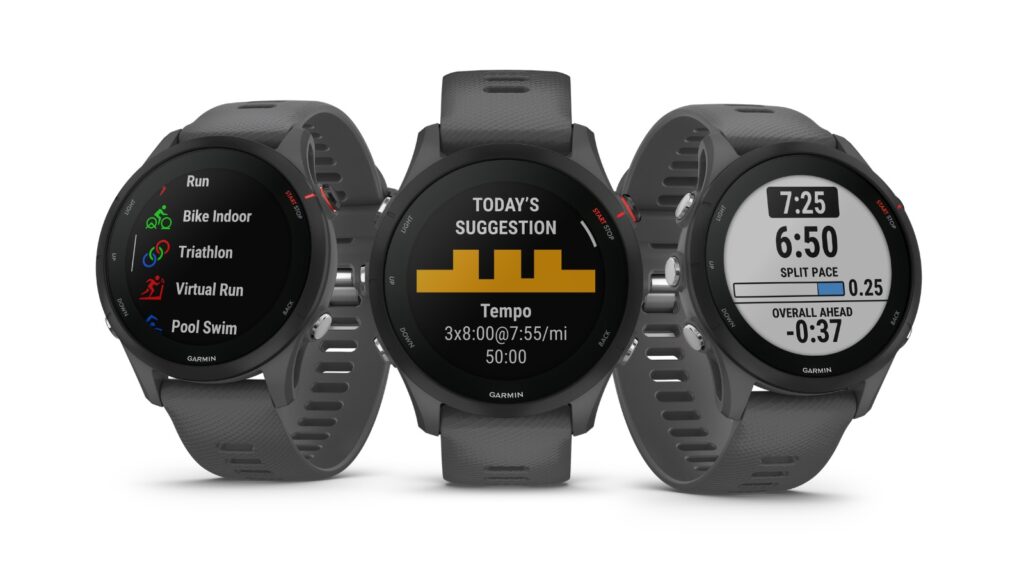
Fitness wearables today are usually marketed toward marathon runners, cyclists, and people already deep into the fitness ecosystem. But for many talented athletes in India, especially those from remote or underrepresented regions, access to proper training tools remains a major challenge. That’s something Garmin now wants to help address through a new initiative in partnership with MyKrida. The company has equipped seven emerging athletes from tribal regions across India with Garmin Forerunner smartwatches to help them access structured performance tracking and training insights.

Garmin Wants to Bring Data-Driven Training to More Athletes

Garmin Forerunner 255

The idea behind the initiative is fairly straightforward. Garmin’s Forerunner smartwatches can track metrics like heart rate, pace, distance, recovery, sleep quality, and training load. For professional athletes, this kind of data is already standard. But for many young athletes in smaller regions, access to these tools can genuinely change how they train. Garmin says the watches are meant to help athletes train smarter and improve consistency through better recovery and performance monitoring rather than simply increasing training intensity.

According to Deepak Raina, Director at AMIT GPS & Navigation LLP:

India has immense untapped athletic potential, particularly in regions where access to structured training tools remains limited. At Garmin, our focus is on enabling athletes with reliable, performance-led technology that brings clarity to how they train, recover, and improve. Through this initiative, we aim to support long-term athletic development and help these athletes compete with greater confidence and consistency.

The on-ground implementation is being managed by MyKrida, which works across grassroots and elite sports development programs in India. The platform focuses heavily on identifying athletes early and connecting them with structured support systems. According to MyKrida founder Shubham Sharma, the collaboration with Garmin helps bring “world-class performance technology directly to these athletes.”

Source link

Advertisement
Continue Reading

Tech

RemotePass raises $17.4m Series B from EBRD as global employment meets fintech

Published

on

The Dubai-founded global employment and payroll platform reached profitability in early 2025 before taking the round. EBRD Venture Capital led; 500 Global is the new strategic name alongside.\


RemotePass, the global employment, payroll, and spend platform co-founded by Kamal Reggad and Karim Nadi, has raised $17.4m in Series B funding led by EBRD Venture Capital, the company said on Tuesday. 500 Global joins the round as a new strategic investor, alongside returning backers Oraseya Capital, 212 VC, Access Bridge Ventures, and Khwarizmi Ventures.

The round comes 14 months after the company’s $5.5m Series A in March 2024 led by 212 VC, and takes total funding to roughly $23m on the company’s accounting of prior rounds.

The structural detail in the announcement is the profitability claim. RemotePass reached profitability in early 2025 and reinvested the operating-leverage runway in expansion rather than banking it.

Advertisement

Profitable HR-and-payroll-tech companies are unusual in the current vintage; the category is dominated by venture-scale platforms (Deel, Remote, Rippling, Velocity Global) operating on negative unit economics underwritten by repeated late-stage rounds. RemotePass is positioning itself as the discipline-led entrant.

What RemotePass sells is a category that has narrowed in the past two years. The platform handles Employer of Record (EOR) services, contractor management, cross-border payroll and compliance across more than 150 countries, with a fintech layer giving workers USD accounts, global cards and health insurance on top.

The company’s own published numbers put it at 35,000-plus workers across the platform and $800m-plus in cross-border payroll facilitated to date. Named customers include Logitech, Tata Group, InDrive, and Careem.

The product expansion, accelerating the company’s growth, is the fintech layer. In late 2025, RemotePass launched SpendCards, embedding corporate expense cards into the same platform that runs payroll. Expense management has been the operational layer cross-border HR incumbents have struggled with the most; finance teams running distributed workforces have historically had to stitch together payroll providers, expense-card issuers and reimbursement systems. RemotePass’s bet is that the integration of those three is itself the product differentiation.

Advertisement

Chief executive Kamal Reggad framed the round in operational terms: ‘We have the product, the traction, and now the partners to expand properly. Hiring is just the entry point. What companies actually need is a platform that supports their teams end-to-end, including the financial services that make distributed work function.’

The framing is positioning a category convergence as much as a product release. Global employment and embedded fintech, on Reggad’s read, are now the same business; RemotePass is structuring the round around that thesis.

EBRD Venture Capital is the venture arm of the European Bank for Reconstruction and Development, with a mandate across Central and Eastern Europe, the Caucasus, Central Asia and the southern and eastern Mediterranean.

Principal Amine Chabane framed RemotePass as ‘building a leading platform from an emerging market, with the product depth and commercial momentum to compete in Europe and the US’. 500 Global managing partner Amjad Ahmad added that ‘the emerging market depth, embedded fintech layer, and early AI investment create structural advantages that are hard to replicate’.

Advertisement

Deel, RemotePass’s largest competitor, was last reported to be managing in-house payroll teams in over 130 countries and serving 35,000-plus customers. RemotePass’s claim is that the incumbents have underserved cross-border employment cases involving emerging-market entities, banking infrastructure, and compliance complexity.

The MENA-anchored framing is consistent with the wider regional fintech cycle. Dubai has become an increasingly defended fintech hub over the past three years, with the UAE hosting the majority of the region’s most-funded startups and the city itself positioning as a launchpad for emerging-market-founded businesses scaling globally. RemotePass is the workforce-and-fintech variant of that thesis.

The broader labour-market context is tightening. Standard Chartered told investors on Tuesday that the bank would cut more than 15% of its back-office roles by 2030, in part by replacing what its CEO called ‘lower-value human capital’ with AI.

Multiverse’s $70m round earlier this month was framed around the upskilling-versus-replacing trade. RemotePass’s pitch is that it sits inside that intersection.

Advertisement

The company has not disclosed post-money valuation, run-rate revenue, or the geographic split of planned commercial expansion. The next twelve months of new-customer logo announcements will determine whether the Europe-US push lands at scale or whether the company remains an MENA-anchored player with international optionality.

Source link

Advertisement
Continue Reading

Tech

2027 Volvo EX60 first drive: An ultra-smooth SUV for around $60k

Published

on

Volvo's latest EV is its best yet, and best value too, but still comes up a bit short to the competition.

Source link

Continue Reading

Tech

TerraByte raises the curtain on its campaign to use AI to unleash the power of geospatial data

Published

on

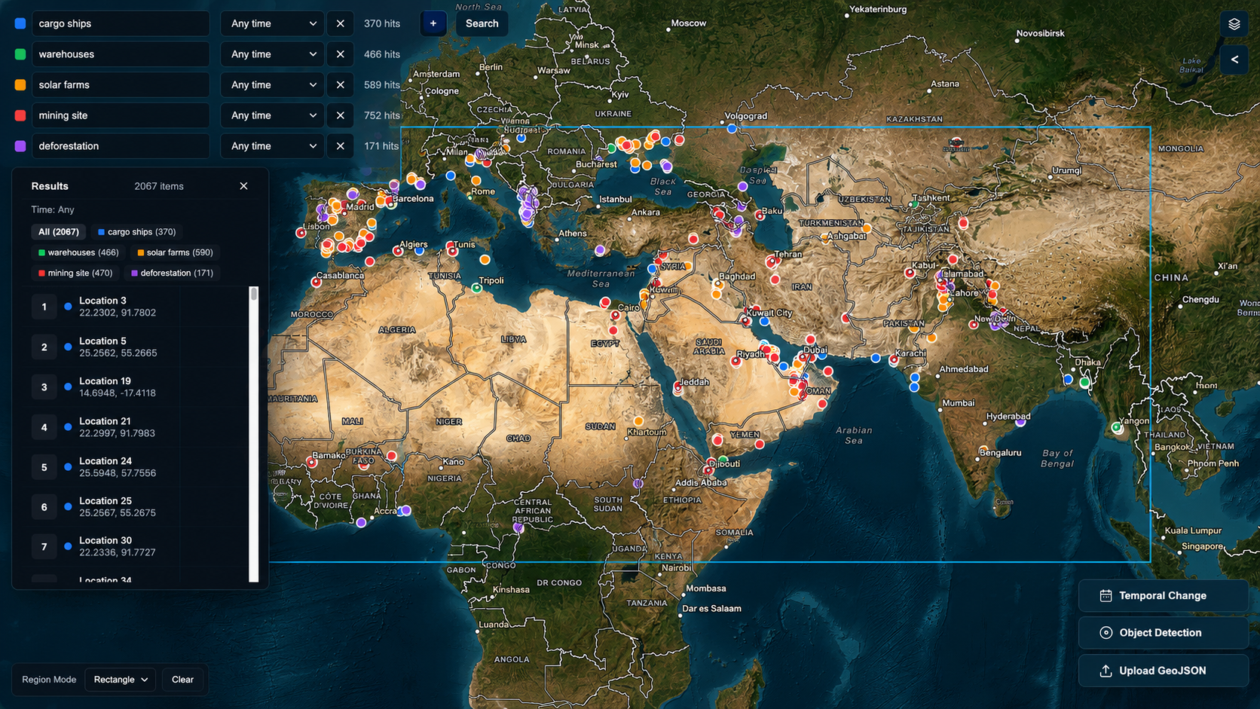
A screenshot of TerraByte’s software platform pinpoints cargo ships, warehouses, solar farms, mining sites and areas of deforestation. One complex query generated more than 2,000 results that can be further filtered. Click on the image for a larger version. (Credit: TerraByte AI)

A stealthy Seattle startup called TerraByte AI is unveiling a software platform that uses artificial intelligence to sift through real-time satellite data for geospatial gems.

TerraByte’s “Earth Search Engine” analyzes streams of satellite imagery, recognizes features of interest and connects the dots through natural-language queries. The platform’s key advantage is that its data set doesn’t have to go through the laborious, expensive process of manual annotation.

“We’re just using self-supervised learning techniques to essentially understand the pixels without having to manually annotate it,” CEO and co-founder Rishi Madhok told GeekWire.

“There are many applications that you can do, like identifying power-line segments, finding parking lots near highways without EV charging stalls, watching container ships entering port,” he explained. “If you want to monitor the Strait of Hormuz, you can use our models to do that. Deforestation areas, open-pit mining in Arizona — all of these are very different concepts, but our model is able to understand them because it’s a foundational model.”

TerraByte is laying out its approach this week in Huntsville, Ala., at an ESA-NASA workshop on AI models for Earth observation. A hands-on session is scheduled on Wednesday, and the company’s co-founder and chief technology officer, Fuxun Yu, is due to make an oral presentation on Thursday.

Advertisement

Madhok and Yu founded TerraByte last year, with operations split between Seattle and San Francisco. Madhok previously led geospatial AI initiatives at Microsoft Planetary Computer, while Yu worked as a principal research manager at Microsoft and led the company’s Geospatial Foundational Model project.

TerraByte AI’s co-founders, Rishi Madhok and Fuxun Yu, are both Microsoft veterans. (TerraByte AI Photos)

On the financial front, Madhok said the venture has received pre-seed funding from Ascend, PSL Ventures and angel investors, though he declined to specify the size of the investment.

Kirby Winfield, founding general partner of Ascend, said in an emailed statement that TerraByte “is building the foundation model layer for satellite intelligence. … They’re creating the foundational API and AI infrastructure that will power the next generation of location intelligence applications.”

Vivek Ladsariya, managing director at Pioneer Square Labs and general partner of PSL Ventures, said his fund invested in TerraByte “because geospatial data is one of the most consequential and underserved categories in enterprise tech.”

“The volume of geospatial data is growing exponentially, yet most organizations still can’t access or act on it effectively,” Ladsariya said via email. “Rishi and Fuxun are rare operators — they’ve lived this problem firsthand and know exactly what it takes to build the infrastructure layer that unlocks it. TerraByte is that layer, and we think it becomes foundational.”

Advertisement

While single-sensor foundation models already exist to analyze the wide spectrum of sensor data captured by satellite companies, Madhok noted that “TerraByte is the first model layer to natively fuse optical, synthetic aperture radar, thermal and hyperspectral in one foundation model.” That multi-sensor approach could support a rapid response to fast-changing situations such as natural disasters.

“For example, we can work with utility companies or even with first responders, and when there’s a wildfire, they can ask for things like, ‘Show me neighborhoods and power-line segments within one mile of an active wildfire in California or Washington,’” Madhok said. “Because when catastrophes happen, you need to be able to monitor them instantly in real time, and there aren’t a lot of technologies out there which can actually give them the insights.”

Risk assessment is another potential application — for example, addressing the challenges that insurance companies face in evaluating wildfire risk. “If they’re able to characterize the risk well by understanding if there are high-risk things like vegetation encroachment, you’re able to have better pricing on some of those things,” he said.

Madhok said the software could also be installed on orbiting satellites to filter data before it’s downlinked. That could minimize the time delay and costs that might otherwise be associated with downlinking massive amounts of data from an Earth observation satellite or an orbital data center.

Advertisement

“Our goal is to build a model which not only works on the ground station, but also works on the edge, so that it helps all these time-sensitive applications to monitor things,” Madhok said. He said the company is already working on arrangements for an on-orbit demonstration.

While TerraByte is still refining its commercial strategy, the immediate focus is on enterprise clients. “Our business startup use case is more focused on B2B, so we’re working with large enterprise licenses, but eventually it will be subscription-based,” Madhok said.

TerraByte isn’t the only company offering geospatial data analysis. Other players in the market include Google Earth Engine and BlackSky Spectra. Still more companies, such as Starcloud and Sophia Space, are working on plans to put computing power on the edge in space. Will TerraByte be able to compete?

“I see Sophia Space and a lot of similar companies who have compute up in space as partners,” Madhok said. “A lot of the companies out there, whether they’re building satellites or collecting imagery, are really good at doing what they do — which is building satellites or sending computers up into space. Our DNA is to build the best geospatial models out there, and that’s what our goal is.”

Advertisement

Source link

Continue Reading

Tech

Android 17 is finally getting Apple’s Handoff feature, and it’s about time

Published

on

Recently, I wrote about how Apple’s Continuity features keep me locked into the Apple ecosystem because Android and Windows have no answer to Apple’s incredible cross-device seamless integration.

It seems that Android is finally getting started to compete with Apple in this domain. The upcoming Android 17 is bringing a feature that makes switching between your Android devices feel natural. It’s called Continue On, and it lets you start work on one device and seamlessly pick it up on another Android device. 

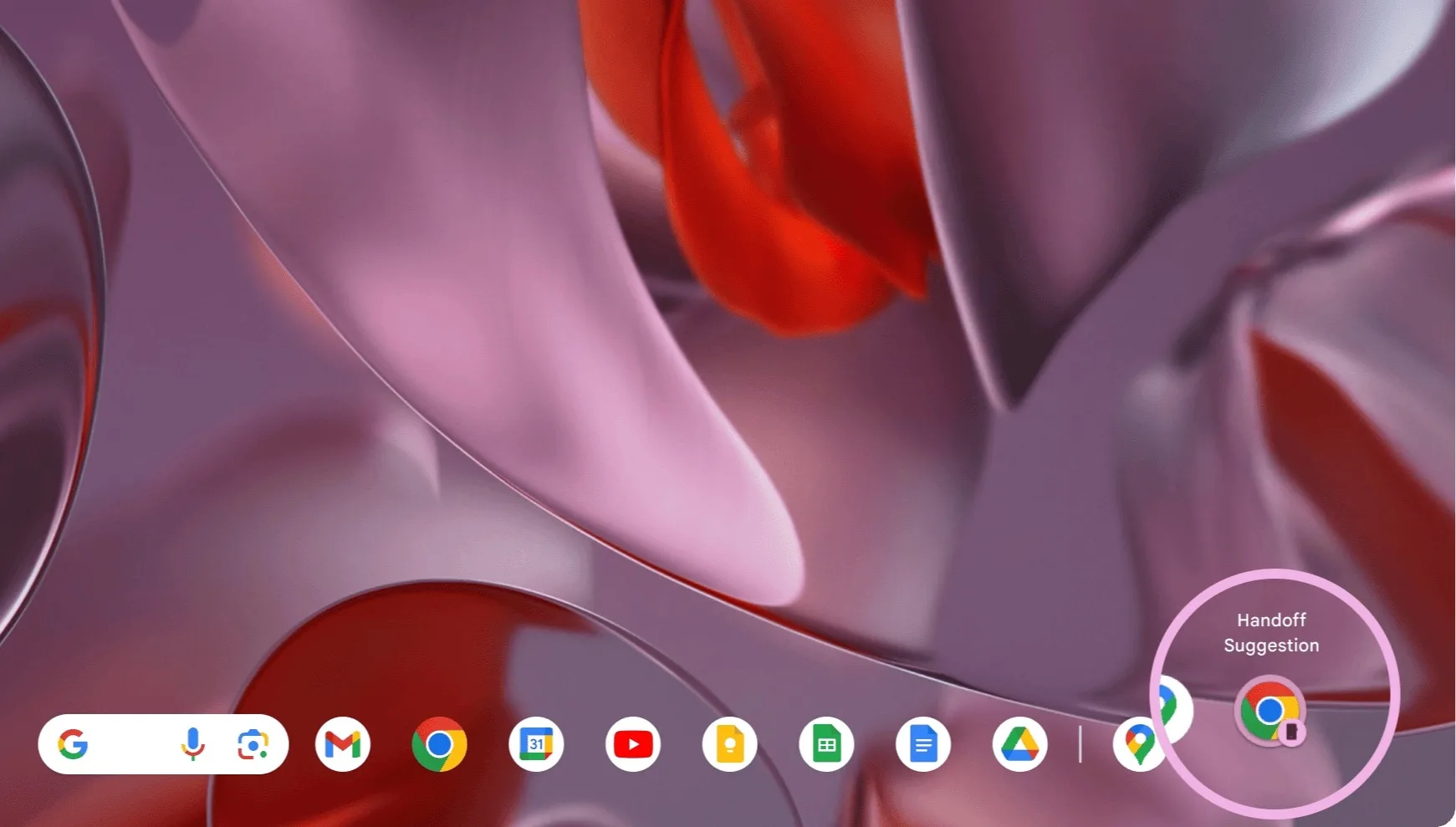
At launch, the feature focuses on mobile-to-tablet transitions. When you open your tablet, you will see a suggestion in the taskbar for the most recently opened app from your phone. One tap, and you are right back where you started. It’s similar to how Apple’s Handoff feature works. 

How does it work?

Google calls the device you start on the sender and the one you switch to the receiver. The handoff, which is the transition, happens in the background, so you don’t have to do anything complicated. The app just picks up where you left off.

Advertisement

There are a couple of ways this can go, depending on how the developer builds the app. If the app is installed on your tablet, it will deep-link you directly to the activity you were in. Think of opening a Google Docs tab on your phone and having the same document open on your tablet.

What if the app isn’t on your tablet?

If the app is not installed on the tablet, developers can set up a web fallback. So even if the app isn’t installed on the receiving device, it will open the equivalent web experience in your browser instead. Gmail, for example, can hand off from the Android app on your phone to the full Gmail web experience on your tablet, opening the same email thread.

Developers also have the option to skip the app entirely and send users straight to the web version if that is the better experience for a larger screen. Continue On is available in Android 17, and developers can start building support for it now.

It’s highly likely that Google will also add this feature to its upcoming Googlebook laptops, finally providing users with a competitive ecosystem to Apple’s offerings. It’s still early days, but it’s a step in the right direction.

Advertisement

Source link

Continue Reading

Tech

Nintendo brings WarioWare-style gameplay to iPhone with ‘Pictonico!’

Published

on

Nintendo plans on getting real weird with it, bringing a new WarioWare-style collection of microgames to mobile platforms just as summer starts.

If you’re a fan of Nintendo’s IP, chances are you’re aware of their propensity for what the publisher calls “microgames.” Mario Party is one famous example, as are games in the WarioWare series.

Microgames are exactly what they sound like.

They’re very, very short games; I’d argue that calling them “minigames” is fairly inaccurate. Each game is designed to be played in mere seconds and is often reaction-time based.

Advertisement

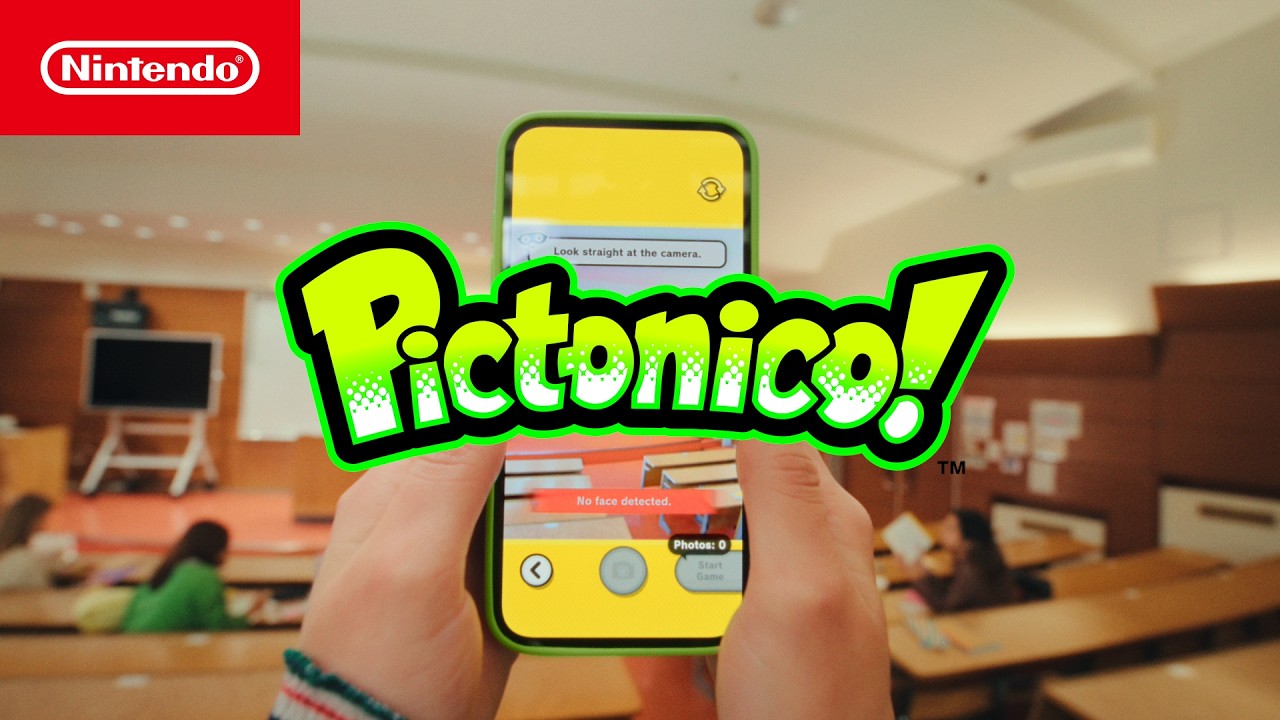
In late May, Nintendo is bringing a new microgame collection to iPhone, iPad, and Android. Dubbed Pictonico!, players use photos they’ve taken for a personalized spin on the genre.

According to Nintendo, you’ll be able to do all the weird things you’d expect. Pluck nose hairs, walk the red carpet, feed your family and friends, strike body building poses, and more.

Nintendo says the game is “free to start,” which means you’ll be able to demo a handful of the games for free. Additional games, of which Nintendo says there are 80, are available as in-app purchases.

If you want to play Pictonico, you can preorder it now ahead of the May 28 launch date. According to the App Store page, your photos are not sent to Nintendo.

In memoriam

We’re not entirely sure how long Pictonico! will last on the App Store. Nintendo has an interesting habit of killing off many of its mobile titles a few years into their lifespan.

Advertisement

Miitomo, Nintendo’s social networking game, made its debut in 2015 and shuttered in very early 2018.

Dr. Mario World suffered a similar fate, launching in 2019 only to be unceremoniously discontinued in 2021.

Perhaps the title with the shortest lifespan of all was Pokemon Rumble Rush, which barely made it past its first birthday before Nintendo pulled the plug.

Of course, sometimes Nintendo doesn’t fully kill off its titles, either.

Advertisement

Mario Kart Tour, for example, launched in 2019. While the game is still available, no major additions have been unveiled since 2023.

Nintendo released Animal Crossing Pocket Camp in 2017, a free-to-play social game for mobile platforms. Seven years after that, the company decided to end its run.

However, instead of simply letting the game go dark, Nintendo created an offline-only version, which is still available.

Advertisement

Source link

Continue Reading

Tech

Using 3D Printers To Make Circuit Boards

Published

on

Custom printed circuit boards have become more and more accessible to the average hobbyist over the last decade. But one problem still remains: your circuits will take at least a couple days to make. But what if you needed some really rapid prototypes? [The Raccoon Lab] shows us how to do it with a 3D printer.

You start with the usual hobby PCB pipeline: take your idea, make a schematic, and then lay it out in KiCad. That’s where the changes start: to keep traces strong, they are made very thick. The PCB is then exported and opened in 3D CAD software, where the traces are extruded to be 2 mm tall. Off to the printer! The newly printed “circuit board” is made conductive by applying copper tape to it, and traces are cut out along their raised edges.

The result is a very quick and dirty PCB. Sure, it isn’t exactly production-ready, but for just about any simple microcontroller project it’ll do just fine, and it’s a whole lot more accessible than milling one using a CNC! We’ve seen a few variations on this approach recently, including some custom software designed to help along the process.

Advertisement

Source link

Advertisement
Continue Reading

Tech

5 Samsung TV Features You Need to Turn On Today

Published

on

Samsung televisions offer various intelligent features and image enhancements, but some settings should be adjusted before use. Enabling the correct settings can improve the brightness, speed, and performance of your television.

1. Update Your TV Software First

samsung software-update-tv

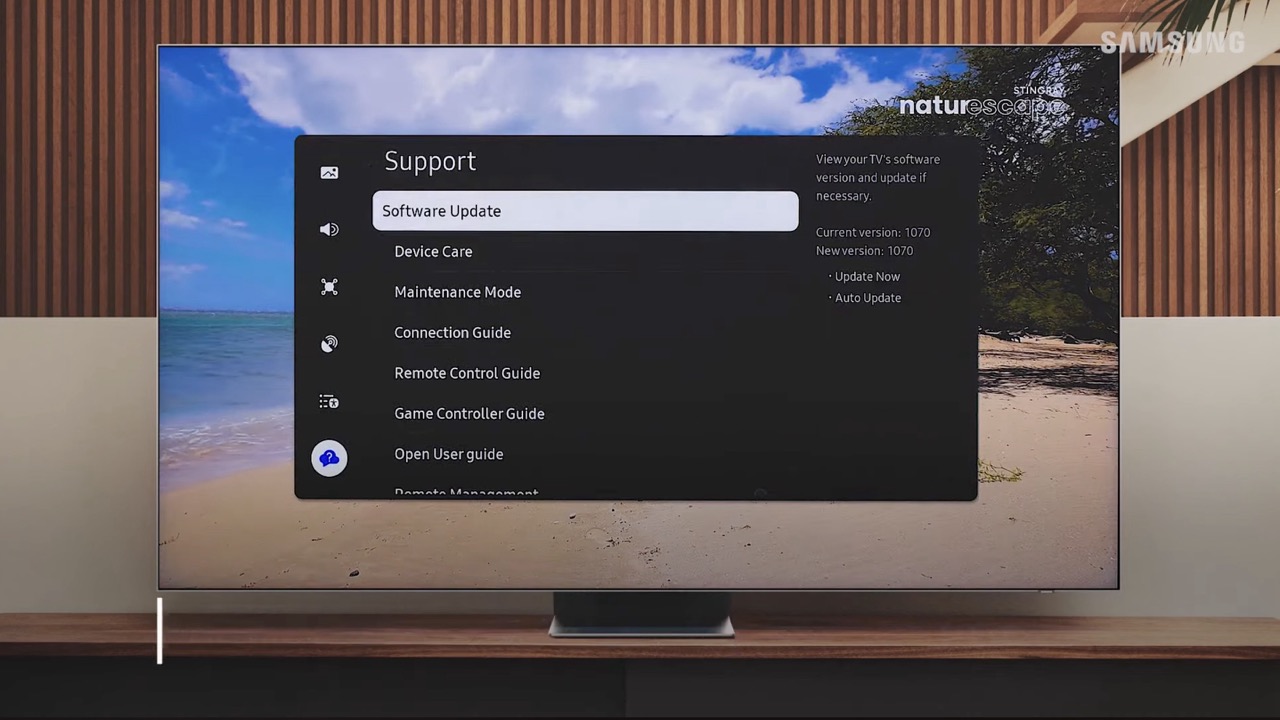
The Samsung Smart TV runs the Tizen operating system, which controls the apps, menu, and other features of your TV. It is recommended that you always have the latest version of the software installed on your device before streaming any movie or installing an app.

The best way to manually search for updates is to go to Settings > Support > Software Update. Some users disable Wi-Fi after the update is complete, since advertisements, suggestions, and applications can interfere with menu navigation. However, you can still connect the TV to Wi-Fi periodically to install other software updates. Other gadgets, such as Roku, Fire TV, and gaming consoles, can be used as alternatives for app downloads.

2. Turn Off Eco Mode for Better Brightness

Samsung TV energy savings

If your Samsung TV appears dimmer than you expect due to its energy-saving feature. The Samsung model offers several features, including the Eco Sensor and Brightness Optimization modes, which can be enabled. These modes operate based on environmental lighting information.

To enhance visual quality, the user can disable settings such as Eco Sensor, Brightness Optimizer, and Energy Saving Solution. The features can be found under Settings > General & Privacy > Power and Energy Saving. This is done so the TV can maintain a consistent brightness level, which will improve image quality.

This feature will come in especially handy when watching movies, playing games, or watching sports, since higher brightness is essential for clarity. Users who would like to enhance their HDR settings can navigate to Picture > Expert Settings and select High under Peak Brightness.

Advertisement

3. Enable Intelligent Mode for Automatic Picture Adjustments

Samsung TV intelligent mode

Intelligent Mode is one of the Intelligent Features on the Samsung TV, enabling it to regulate itself. The TV uses Artificial Intelligence, which allows it to adjust brightness, color, and sound based on room illumination and users’ personal preferences.

Furthermore, the Adaptive Picture and AI Customization options are available in Samsung’s Intelligent mode. They allow the television to adjust the image settings differently depending on the content – whether movies, sports, gaming, or regular TV shows. The learning process occurs as the user regularly uses the television, gaining more experience.

This feature is especially useful for users who do not want to spend time manually tweaking multiple picture settings. Intelligent Mode becomes more efficient as the television gets used to users’ viewing habits. The option can be enabled under All Settings > General > Intelligent Mode and may be turned off at any time.

4. Disable Auto Motion Plus for Movies

Picture quality settings

Samsung also includes an Auto Motion Plus feature that creates smoother motion on the TV screen. The feature inserts artificial frames between scenes to reduce motion blur. While this may improve motion clarity, it often creates the “soap opera effect.”

The soap opera effect gives films and TV series a look that’s too natural and unrealistic. Rather than achieving the desired cinematographic style, the scenes begin to take on a daytime television or live-broadcast feel. Many viewers feel this removes the original film-like appearance from movies and streaming content.

This setting can be turned off by navigating to Picture > Expert Settings > Auto Motion Plus. Turning off this setting makes the picture look more natural for video streaming and films. However, when it comes to gaming, a bit of motion smoothing could still make a difference.

Advertisement

5. Customize Audio Settings for Better Sound

Samsung Adaptive sound feature

Samsung TVs have built-in features that enhance sound quality without requiring any additional equipment. Modern TVs are quite thin, which can hamper speaker performance. For this reason, Samsung offers various sound modes and enhancements in the Sound tab.

Among the many attributes, the one that stands out is the Adaptive Sound feature, which automatically adjusts audio settings according to the environment and the media being played. Presets such as Standard, Optimized, and Amplify are provided by Samsung TVs to help users choose the sound profile that suits their needs. Furthermore, there are multiple EQ settings available for bands.

For customers using Samsung sound bars that support Q-Symphony technology, there is no need to turn off the television speakers, as Q-Symphony ensures the two speakers work synergistically to deliver high-quality sound.

Source link

Advertisement
Continue Reading

Tech

AWS nabs white hot gen AI media creation startup fal, becoming its preferred cloud provider

Published

on

Generative AI’s rapid transition from text-based chatbots to high-fidelity media—spanning images, video, spatial 3D, and audio—has exposed a glaring bottleneck in the modern tech stack: infrastructure. Rendering pixels in real-time requires a staggering amount of compute, and developers are increasingly struggling to manage fragmented GPU clusters just to keep their applications online.

Enter fal, a generative media creation platform that has quietly become the connective tissue for 2.5 million developers across the globe, offering literally hundreds of leading AI image, video, and audio creation and editing models — from proprietary ones like OpenAI’s ChatGPT-Images-2.0 and Google’s Nano Banana Pro 2 to open source rivals — all through its unified interface and APIs.

Today, the San Francisco-based startup, recently valued at a massive $4.5 billion following a $300 million Series D round led by Sequoia Capital, announced it has selected Amazon Web Services (AWS) as its preferred cloud provider.

While the financial terms of the deal weren’t made public, the move signals a maturation in the generative media space, shifting the focus from simply building foundational models to effectively scaling them for mass, commercial consumption.

Advertisement

“AWS has been there for distribution and monetization, and for the use of AI in creative pursuits — helping designers, developers, and the creative community think through how they can use AI responsibly, scalably, and at global scale,” said Samira Panah Bakhtiar, General Manager for Media, Entertainment, Games, and Sports at AWS, in an exclusive interview with VentureBeat.

A one-stop-shop for Gen AI media allowing enterprises to plug in and choose the best model for their needs

At its core, fal operates as a unified gateway to the rapidly expanding generative AI ecosystem. Rather than forcing developers to provision their own servers, deal with latency issues, or string together disparate open-source model weights, fal provides a single, unified API. Through this API, users gain instant access to over 1,000 production-ready AI models.

Think of it as the Stripe or Plaid of generative media: abstracting away the devastatingly complex back-end plumbing so developers can focus solely on the user experience.

It is a “plug-and-play” solution that has already attracted independent creators and enterprise giants alike, powering generative workflows for enterprises including Canva, Adobe, and Amazon MGM Studios.

Advertisement

“Generative media workloads demand a fundamentally different infrastructure layer, one that can handle massive parallel inference, rapid model iteration, and production-grade reliability at scale,” said Gorkem Yurtseven, CTO and Co-founder of fal, in a statement provided to VentureBeat.

Neither AWS nor fal specified what other cloud or GPU providers the latter was using prior to their deal together. Asked who fal had been using before AWS, Bakhtiar did not name a prior cloud or GPU provider, saying instead that fal is now using AWS services.

In a blog post, fal’s Head of Compute Partnerships Emir Lise described AWS as providing the “global scale and reliability layer” for its existing serverless generative-media infrastructure — framing the partnership around elasticity, reliability and enterprise scale rather than a replacement of a named incumbent.

A public search turned up Tigris as a storage provider for fal — with Tigris saying fal runs a “global fleet of GPUs across many clouds” — and an announcement from fal in Septemeber 2025 that it was available through Google Cloud Marketplace, allowing customers to buy fal through Google Cloud billing and governance, but that listing does not state that Google Cloud powered fal’s GPU infrastructure.

Advertisement

99.99% guaranteed uptime?

By partnering with AWS, fail aims to merge its highly optimized inference engine with Amazon’s global reach to handle millions of daily API calls with 99.99% guaranteed uptime.

In addition, Bakhtiar said fal users can expect to see “faster inference and performance, greater efficiency, more scalability, and more seamless service continuity — all things you would expect as a result of partnering with the world’s largest, broadly adopted cloud.”

Therefore, the primary benefit for fal users is better performance and reliability without changing how they work: faster inference, more scalability, smoother continuity, and access to production-ready AI models without managing their own infrastructure.

For fal, the partnership makes its platform stronger for creators, studios, and enterprise customers by backing it with AWS’s security, global scale, and cloud infrastructure.

Advertisement

For AWS, it helps push cloud and AI deeper into creative production, not just distribution or monetization. It positions AWS as a key infrastructure partner for studios, media companies, developers, and individual creators building AI-powered content workflows.

Offloading the GPU burden

The partnership with AWS is designed to address the sheer physics and cost of rendering generative media. By migrating its operations to AWS, fal will be able to leverage Amazon’s broad suite of AI services, including the Bedrock platform, alongside custom-built silicon like Trainium and Graviton processors.

“You don’t have to manage like a GPU fleet to use the AI for creative pursuits,” Bakhtiar explained.

This is a critical pain point for larger-scale media generation demands in 2026. Securing high-performance GPUs for parallel inference is both expensive and technically demanding.

Advertisement

By shifting that burden to AWS, fal ensures that creatives can focus on their workflows, without needing a dedicated DevOps team.

Bakhtiar also noted the powerful “network effect” of building on AWS. Because major studios and creative platforms (like Adobe and Canva) are already deeply entrenched in the AWS ecosystem, integrating fal’s API into their existing pipelines becomes a frictionless endeavor.

Enterprise-grade security and compliance with gen AI creative speed

For IT leaders and developers, fal’s architecture offers a distinct advantage regarding licensing, security, and deployment.

Historically, utilizing frontier generative models meant either accepting strict vendor lock-in from a single provider or attempting to host open-source models locally.

Advertisement

The latter requires significant overhead and forces enterprises to navigate a minefield of disparate open-source licenses (such as MIT, Apache 2.0, or restrictive non-commercial licenses).

fal bypasses this friction by offering commercial API access to a curated ecosystem of models. Developers simply pay for the inference they consume.

Furthermore, the platform is SOC 2 compliant and explicitly built for “enterprise scale,” meaning it meets the stringent data privacy and security benchmarks required by heavily regulated industries and massive consumer platforms.

For large media conglomerates, this managed service approach allows them to experiment with the latest state-of-the-art tools securely, without the risk of exposing proprietary data or intellectual property.

Advertisement

Empowering devs and vibe coders

The true impact of fal’s platform, however, is best observed at the developer level. By democratizing access to high-end infrastructure, fal is enabling a new class of builders—often referred to as “vibe coders”—to create complex, multimodal applications without traditional computer science backgrounds.

As Bakhtiar pointed out, access to these tools fundamentally “levels the playing field”. Whether it is an individual developer or hobbyist vibe coding a side project, or a fully-funded editor or director rendering a blockbuster film, the underlying technology is now identical, infinitely scalable, and ready for production.

“More creatives — whether they’re full-fledged studios, indie brands, or individual content creators — are now going to be able to access these tools, and they’re going to be able to punch way above their weight as a result,” Bakhtiar said, casting the partnership as a way to serve even more users through fal thanks to the reliability of AWS’s servers and custom Trainium, Graviton and Inferentia chips.

The rollout of enhanced AWS capabilities for fal customers will occur in phases throughout 2026.

Advertisement

Source link

Continue Reading

Tech

What Is Lowe’s MrBeast Workshop For Kids & How Much Does It Cost?

Published

on


Lowe’s is teaming up with YouTuber Jimmy “MrBeast” Donaldson for the MyLowe’s Rewards Kids Club, which will host workshops with toy kits related to his Swarm line. These workshops are meant to provide a bonding experience for Generation Alpha kids and their parents (with no technology involved), offering hands-on activities throughout the summer. “I’m psyched about the Kids Club partnership with Lowe’s because we’re giving kids more access to being creative and seeing their own projects come to life,” MrBeast said in a press release

To take part in the MrBeast workshops, you’ll need a MyLowe’s Rewards membership, a free loyalty program, which is one of the free perks anyone can get at the big box store. Just create a profile for your child to enroll them in the free Kids Club. You can then register for the workshop, which is also free — but space is limited. The only cost is the Swarm kit itself, which is $14.98 plus tax. Each kit includes a wooden builder toy, instructions, exclusive badge, and a Swarm. Some parents have mentioned frustration at being charged for the kit, likely because MrBeast is known for his massive giveaways and philanthropy projects — including giving away multiple cars

Advertisement

MrBeast x Lowe’s workshop schedule

There are currently three MrBeast workshops scheduled for the summer, and registration is currently open for the whole series. The first is on May 30th, featuring the Swarm Launcher. Your child will make a mini cannonball launcher to see how far their Swarm can go. The second is June 27th, which has them building the Swarm Spinner, a Ferris wheel that can be decorated before Swarm figures take a ride. The final is on July 25th, which has your Swarm riding the Swarm Jet after its built and painted. 

Advertisement

These are the first three workshops, with future workshops dates being announced later on. These workshops are open to children of all ages, but it’s recommended for those over eight years old. There are workshops at every Lowe’s store around the country, but you can check workshop and program locations and times on the Kids Club site. If you’re not into MrBeast, there is also a soccer trophy workshop, a mini toybox workshop, a haunted house workshop, and plenty of others for families to check out.


Advertisement

Source link

Continue Reading

Trending

Copyright © 2025