69% of Americans oppose AI data centers near their communities, a national poll finds
Public support for nearby AI data centers has fallen sharply since 2025
Only 4% strongly support new data centers in their communities today
American resistance to AI data centers has intensified sharply over the past year, several national surveys released in 2026 have found.
A new Decision Desk poll conducted by SurveyMonkey found that over two-thirds (69%) of respondents oppose construction of these facilities near their homes.
Nearly half of those surveyed (45%) said they would strongly oppose a data center built anywhere close to their own neighborhood.
Latest Videos FromTechRadar
Advertisement
Data centers do not have widespread American public support
Separate research from Heatmap Pro, carried out by Embold Research in mid-August 2026, points to an even sharper decline in public backing, as its poll of 2,045 registered voters found 75% opposed building a facility near their community.
Only 4% of respondents said they would strongly support a proposed data center in their area, a drop from 13% recorded a year earlier.
Resistance now cuts across age, income, party affiliation, and the split between rural and urban communities nationwide.
Republicans remain 43 percentage points net negative on the issue, independents sit at 65 points negative, and Democrats register 75 points negative.
Sign up to the TechRadar Pro newsletter to get all the top news, opinion, features and guidance your business needs to succeed!
Rural voters, a group that has trended Republican in recent years, are 63 points net negative as well.
Advertisement
Officials across the political spectrum have taken notice. New York Governor Kathy Hochul ordered a one year pause on new facilities, and Texas Governor Greg Abbott froze several pending projects pending a required audit.
Heatmap Pro figures reveal that over 530 counties and municipalities have restricted or banned data center construction.
Advertisement
Political and economic fault lines
President Trump has pushed back publicly against the trend, framing local opposition as economically self-defeating.
“The only reason that communities throughout the U.S.A. should not want Data Centers is if they want to end up being backwards and poor,” Trump wrote on Truth Social.
“If they want to be successful and rich, with far lower taxes and jobs all over the place, let Data Reign.”
However, Republican supervisor Dawn Vogel backed a local moratorium earlier this year, putting her at odds with Trump’s national agenda.
Advertisement
“I don’t think this is a Republican or Democratic issue…It’s an issue of what’s the best use for the land, what’s the best use for our natural resources,” Vogel said.
“You can have all the data you want to in the world, but if you don’t have water to drink, you don’t have humans to use the data.”
Lawmakers who once championed data centers as economic development tools are now revising their positions under mounting public pressure.
Ohio Senator Jon Husted, an early advocate, introduced legislation this year requiring data center operators to cover added electricity and water costs.
Advertisement
The gap between economic promises and local resource concerns appears to be driving much of the shift.
However, labor unions have generally taken a more favorable stance, citing steady construction jobs and strong wages tied to the facilities.
We may receive a commission on purchases made from links.
When you think of boomboxes, you probably aren’t imagining exactly what you might call modern technology. Whether your main association is crowding around one with your arms full of CDs, sitting next to one while you fix your cassette tape with some clever pencil action, or standing out in the rain holding one over your head, the once-commonplace audio device doesn’t really scream “modernity.” But, despite its retro reputation, the humble boombox is actually joining the ranks of other retro gadgets making high-tech comebacks, along with flip phones, portable music players, and Game Boy-styled handheld game consoles.
The boombox resurgence isn’t being driven purely by one or two brands or novelty gadget lines, either. There’s actually a surprising number of modern boomboxes on the market now, produced by smaller boutique brands and bigger household names alike. Moreover, picking up a new boombox isn’t quite the same as grabbing an old, pre-loved one from a thrift store, yard sale, or eBay. Instead, these boomboxes have been updated with new features that help keep the tech feeling fresh and useful.
Advertisement
Exactly how these companies have revitalized boomboxes varies a little both from brand to brand and from product to product, but there are a few common features shared across most modern boomboxes available on the market today. For example, for the most part, they tend to offer Bluetooth compatibility, alongside a couple of other input options like USB or microSD. But they still all hang onto that original boombox feel, based on how they look and what older features their manufacturers choose to include.
Advertisement
Roxel
At first blush, Roxel’s retro boombox is almost indistinguishable from those of the 1980s and 1990s. However, the Camden Retro Boombox isn’t going to be among the old electronics you might find in your attic. It’s a full, modern, all-in-one audio system with Bluetooth 5.3 connectivity, DAB+/FM radio functionality, and an assortment of playback options including CD, USB, and microSD.
Clearly, the Camden captures the retro look you might still want even from a nouveau boombox, alongside several features that were part and parcel with yesteryear’s audio gear. Namely, it comes with both a CD player and a tape deck, plus all of the knobs, buttons, and sliders you could want to get your hands on. On either side of the player’s crisp LCD display sit a 5.25-inch woofer and a 1.2-inch tweeter, with a total output of 20W RMS and 40W peak power.
Alternatively, if you’re less into turning it up to 11 and prefer to tuck yourself away with a set of headphones, you can do that instead. It comes with a 3.5mm headphone jack, making it easy to listen privately and quietly — assuming you’re a part of the wired headphone renaissance, that is. Admittedly, that isn’t all that useful if you’re using the player’s Bluetooth integration or its other more up-to-date connection options like USB or microSD. After all, those could be better accessed through your computer or phone. Still, the headphone jack is a fun way of privately plugging into your CD or cassette collection.
Advertisement
We Are Rewind
We Are Rewind is a French company that aims to reinvigorate older audio tech for modern sensibilities. Its offerings focus mostly on tangible, tactile physical media experiences, with the vast majority of the products revolving around tapes – a focus that’s perhaps no surprise, considering the recent resurgence of cassette tapes. Notable examples include handheld players à la Panasonic’s 1990s-era models, sleek acrylic tape racks, and of course, a revived boombox.
Don’t be deceived by the boombox’s vintage stylings, though. Although We Are Rewind’s Blaster GB-001 retains a classic tape deck, it also comes with Bluetooth 5.4 functionality, catapulting the gadget comfortably into the modern era. Needless to say, that’s a solid option if you want to enjoy a little nostalgia by taking your boombox on the move, but don’t want to go so far down the retro rabbit hole that you wind up clanking around with a big bag of tapes just to do so. In addition to the box’s Bluetooth, it packs in four speakers, consisting of two tweeters for treble and two woofers to keep your basslines thick, alongside customizable sound controls.
Advertisement
Something fun about the GB-001 is that it doubles up as an amplifier and recording device, meaning you can run an instrument or mic through it. Admittedly, at 104 watts of power, you won’t exactly be able to tear the house down with it, but it could prove to be a fun party trick for smaller spaces, or double up as a reasonable practice amp for use at home. Plus, you can still use it to record directly to any blank Type I or Type II tapes you still have lying around, if you’re feeling a little lo-fi.
Advertisement
Bumpboxx
Bumpboxx has more than its fair share of modernized boomboxes and fun gadgets available, ranging from updated takes on pagers to stylized battery packs and themed Bluetooth speakers. The company is also behind several types of boomboxes, including the BB-777, Retroboom, and Freestyle Pro, alongside the Microboom: a tiny Bluetooth speaker cleverly disguised as a doll-sized boombox. Perhaps the most impressive of the company’s boombox-related products is the BB-777, which, as you may have guessed from the name, is a reimagining of the classic Sharp GF-777.
The BB-777 raised a whopping $7,133,869 during its Kickstarter campaign from keen and curious backers, and it isn’t all that difficult to see why. Besides the fact that it provides a relatively cheaper alternative to an original GF-777, which can now sell for four figures, it essentially offers the best of both worlds when it comes to newer and older technology. The BB-777 is designed to balance modern features, like True Wireless Stereo (TWS), Bluetooth, and versatile playback options, inside of a charming 1980s-styled chassis. Plus, it still holds onto a handful of physical media-oriented playback options, like a suction-load CD deck and a dual cassette deck, so the past doesn’t have to feel too far away.
Although these aren’t necessarily futuristic additions that completely reinvent the boombox, the BB-777 has a few other interesting features. The box includes six speakers: two 6.25-inch coaxial loudspeakers, two horn tweeters, and a pair of 6.25-inch super woofers with independent channel gain controls for loud, clearly defined audio, in addition to a fan-cooled amplifier and a suite of controls for fine-tuning your master volume, treble, bass, and balance.
Advertisement
Aiwa
On an aesthetic level, Aiwa’s boomboxes definitely look just like the kind of retro tech you might expect to only be able to find on a particularly lucky day at a garage sale. Don’t take how they look too much at face value, though; these portable stereos hide modern functionality underneath that nostalgic exterior. The Backtrack and Backtrack Junior models can both handle Bluetooth, AM and FM radio via analog tuning, and USB and SD card playback, while still including a classic cassette player and some direct recording options. You won’t find any DAB options here, so they might not be the best option if you find yourself tuning into digital radio regularly, but both types of Backtrack still offer a refreshing take on boomboxes for the modern day.
The full-sized Aiwa Backtrack also comes with the addition of a clear CD player, next to the boombox’s tape deck, allowing you to watch through the window as your selected album or single spins. You won’t find that functionality in the smaller Backtrack Junior, which instead shifts the focus to cassette, radio, and Bluetooth streaming. Similarly, the smaller model has a lower output, at 30W compared to the full Backtrack’s 40W. But that’s a trade-off you might be willing to take if you’re planning on taking your boombox out with you, since the Junior is also almost half the weight of its larger companion, with a weight of around 8.5 pounds.
Advertisement
Philips
Philips is no stranger to the boombox game; the company was responsible for all kinds of now-retro portable playback devices that you may or may not remember from the recent past. Not every one of Philips’ boomboxes is like the bulky Super Tandems of the 1980s, though. Some of them offer newer features, like Bluetooth 6 streaming, DAB+ radio tuning, and even sleep timers.
Advertisement
The CD Soundmachine range is a nostalgic sight if your main association with boomboxes is portable but cumbersome CD players from Y2K. They don’t look dissimilar at all — but thankfully, they do offer a few more options when it comes to deciding how to listen to your music than they did back in the day. That includes the previously mentioned Bluetooth and DAB support, as well as multi-source CD players, USB options, audio-in ports, and built-in cassette players. Besides the wide assortment of inputs, models like the AZB798T/12 come with built-in digital sound control presets, dynamic bass boost, and a bass reflex speaker system designed to harness low frequencies to minimize distortion while amplifying your music’s bass.
Much like the AZB798T/12, other recent Philips boomboxes like the TAZ2500/10 also come with Bluetooth and a selection of playback options like a top-loading CD player, front-loading cassette player, radio, and Type-A USB inputs. In terms of its radio capabilities, it offers both FM and DAB, with a digital tuner, smart scan, and up to 40 programmable presets: 20 for FM, 20 for DAB. Admittedly, it’s not the most powerful stereo you’ll ever find — it runs on two 2.5-inch speakers with a maximum output of 6W of power — but it does walk the line between retro boomboxes and modern audio needs nicely.
Advertisement
How we chose which brands to highlight
Alessandro Biascioli/Getty Images
We were careful not to just pick any old new boomboxes, so to speak. Instead, we made sure to look carefully for brands making boomboxes that integrated newer features and functionality in one way or another, rather than any companies that just appeared to continue manufacturing more old-school or simplistic boomboxes. To be more specific, that means we focused on devices that offered features like Bluetooth, USB connectivity, or other options along those lines. We didn’t want to include any boomboxes that just rehashed older models and functions without putting a modern twist on them.
Traditionally, boomboxes tended to be portable sound systems with at least two built-in speakers and an integrated cassette deck, CD player, radio, or some combination of the three. With that in mind, we wanted to make sure we highlighted devices that kept some of those features alongside any modern additions, so you could retain that retro feeling by enjoying your physical media collection through your device. That way, we could make sure we weren’t just picking out Bluetooth speakers. That’s why we didn’t include JBL’s Boombox line or Soundcore’s Boom line, for instance, since both effectively work as portable Bluetooth speakers without other playback options.
While this is perhaps a given, we also made sure that any brands highlighted had boomboxes that were currently for sale, without having to turn to the secondhand market to buy them. If the product had been discontinued, we didn’t include it. And we also made sure to look out for boomboxes with generally positive ratings either among users or in professional reviews.
Hadi Partovi, left and Becca Oystila during their wedding in a recreated/historic Viking village in Sweden. (Tommy Agriodimas Photo)
Maybe Hadi Partovi could use his sword or hammer to slay AI slop.
The co-founder of CodeAI, the computer science education platform that rebranded from Code.org earlier this year, is sharing video and images from his summer wedding, and it’s “100% real, no AI,” he says in a LinkedIn post.
It’s a smart disclaimer to add on social media, because the Viking-themed wedding to Becca Oystila appears unbelievable enough to be considered AI-generated — especially in an age where every other thing we scroll past is presumably touched by the tech.
Partovi told GeekWire it’s a statement about both AI’s advances and the work of Booka, the marketplace of beauty and events professionals started by Oystila.
“AI has gotten so good that people can hardly tell the difference from reality,” Partovi said via email. “And meanwhile, the Booka team delivers cinema-quality looks, which is why they have been chosen by Billboard, Soho House, and the Gold Gala as the beauty partner of choice for events.”
Advertisement
To build out the July nuptials in Oystila’s native Sweden, the couple transformed the historic island of Birka — home to the remains of an authentic Viking settlement — into a fully functioning village, circa 826 A.D., according to The Information.
Partovi said the setup featured 200 “villagers” acting as merchants, armorers, goat herders, and a blacksmith, alongside Swedish Viking experts and actors from Netflix’s “The Last Kingdom.” Guests were given custom hand-aged gold and silver coins — which Partovi personally aged himself — to spend on period attire, weapons, or jewelry throughout the island.
“Becca deserves the credit for suggesting a Viking theme,” Partovi said. “And once she said that, the rest of the story wrote itself. Of course the longships and the battle were my idea.”
To keep the immersive experience intact, the couple enforced a strict no-phones policy once guests stepped onto the island, which is a UNESCO World Heritage Site.
Advertisement
“Our goal was to make it the most authentic / immersive Viking experience created in history, and so the reason we had a phone library is because the Vikings didn’t have phones,” Partovi said. “We requested guests leave behind anything modern other than prescription glasses.”
Guests who didn’t dress authentically were provided alternate clothes. Professionals booked through Booka provided appropriate hair-braiding and face-painting. Some behind-the-scenes footage made this Instagram video.
When guests handed their phone in at the phone library, they received a Viking horn for drinking and a pouch of currency for use in the village. Partovi said even the few cameras on site were disguised for the sake of authenticity.
The guest list included prominent tech founders, executives, and venture capitalists, including Partovi’s twin brother and Neo CEO Ali Partovi; Rover co-founder Aaron Easterly; Sequoia Capital’s Alfred Lin; investor and former Snapchat executive Emily White; and Uber CEO Dara Khosrowshahi (Partovi’s cousin).
Advertisement
Hadi Partovi and Becca Oystila during their traditional Persian wedding ceremony in Stockholm, Sweden. (Tommy Agriodimas Photo)
Partovi and Oystila started dating in April 2024 and got engaged in August 2025.
Oystila is founder and CEO of Booka, a Los Angeles-based beauty platform that connects clients with vetted, top beauty professionals and provides them with tools to manage and grow their businesses. Oystila said the 2-year-old startup is now launching nationwide and bringing its events concept and corporate events to the public across the country.
The Viking wedding wasn’t the only event that weekend in July. A second, traditional Persian ceremony was held in the Hall of Mirrors at the Stockholm Grand Hotel.
“That ceremony was followed by a reception in the large Winter Garden decorated in the style of the ancient Persian capital of Persepolis, transitioning to the architecture from Isfahan and Shiraz, mixed with peacocks, fountains, and fires to celebrate Hadi’s Persian culture,” Oystila wrote on Instagram.
Partovi, who lives in Bellevue, Wash., founded Code.org in 2013 alongside his brother. Its mission is to expand computer science education to K-12 students, and in June the Seattle-based nonprofit announced its name change and that AI was replacing coding as the primary focus. Partovi is also CEO of Payam Music, a Bothell, Wash.-based piano school that he planned to expand nationally.
Advertisement
Asked whether he was considering keeping the braided mohawk hairstyle from his Viking look, which also included a skull “tattoo,” Partovi laughed and said no.
“My blue contact lenses and mohawk were for the day only,” he said. “I grew my beard out for six months for this!”
‘It’s not unlike what they’re using at their own house for video games’: US Army budgets $465 million for Group 3 Killer anti-drone laser which uses Xbox controller
The LOCUST X3 laser is developed by AeroVironment, Inc.
It is designed as a “group 3 killer” – meaning it is intended to tackle particularly dangerous drones
The Xbox controller makes the LOCUST X3 laser simpler to target
A new US Army contract worth around $465 million has been awarded to AeroVironment, Inc. for its LOCUST X3 anti-drone weapon, a 30-kilowatt laser that can be mounted on military vehicles.
Designed to take down mid-sized attack drones, the LOCUST X3 can specifically handle what the Department of Defense refers to as “Group 3” – unmanned aerial vehicles weighing 1,350 pounds and capable of lifting 125 pound payloads over a distance of 8 miles.
Interestingly, AeroVironment, Inc. has designed the LOCUST X3 to be relatively easy to control. Operators (which may be soldiers, sailors, airmen, or even Space Force guardians) can target the anti-drone laser using an Xbox controller.
Latest Videos FromTechRadar
Advertisement
“The apex predator”
Incredibly, this is the first high energy laser weapon to be awarded a production contract in US history, following several years in development, which included military testing.
Wahid Nawabi, Chairman, President, and Chief Executive Officer at AV said: “The transition of directed energy from experimentation to an enduring, fielded capability reflects years of collaboration, innovation, and operational success alongside the U.S. Army.”
Aaron Westman, senior director for business development at AeroVironment, Inc., outlined how the LOCUST X3’s role is viewed by the company. “It can really kill a lot of threats. Its job is to really, let’s say, thin the herd to be able to kill high volumes of threats.”
John Garrity, vice president of directed energy systems at AeroVironment, Inc, expanded on the use of an Xbox controller for targeting the anti-drone system.
Sign up to the TechRadar Pro newsletter to get all the top news, opinion, features and guidance your business needs to succeed!
“To a young soldier, sailor, airman, guardian that’s using these systems, it’s not unlike what they’re using at their own house for video games,” he noted.
Advertisement
“Group 3 killer”
The purpose of the LOCUST X3 is to dispatch attacking drones relatively efficiently. But what does “Group 3” actually mean?
Garrity told reporters that “LOCUST X3 is intended to be the Group 3 killer. When we talk about Group 3, that’s just one of the more prevalent threats that you see in warfare today, seen in conflicts in Iran and in Ukraine with Shahed drones.” The LOCUST X3 is intended to be a one part of the US Army’s response to done attacks, with other weapons contributing to the multi-layered defense against Group 1-3 UAV threats.
The one-way Shahed-136 drones have been used against US troops in the Middle East. The LOCUST X3 is positioned as a solution to this, and not just due to its portability. It also has longer range than many similar countermeasures.
Advertisement
US interceptor missiles are believed to be largely depleted thanks to the conflict with Iran. Anti-drone weapons like the LOCUST X3 are viewed as a forward-thinking alternative.
Ukrainian drones forced American soldiers to rethink movement, concealment, and battlefield survival
Blackhawk troops changed their tactics after persistent aerial surveillance exposed their movements
American armored vehicles suffered losses despite attempts to conceal them from drones
A 10-day US Army combat training exercise in Germany has drawn attention after reports claimed Ukrainian drones overwhelmed an American mechanized company during the drill.
At the center of it is Blackhawk Company, part of the 2nd Battalion, 7th Cavalry Regiment, which spent the ten days training at a range in Hohenfels.
The company commander, Capt. Allan Watson, disputes that account, insisting the report failed to capture what his soldiers actually accomplished over those days.
Latest Videos FromTechRadar
Advertisement
Entering a battlefield dominated by drones
Blackhawk Company entered a 14-by-27-kilometer range where Ukrainian personnel from the 412th Regiment supported opposing forces during initial operations.
The Ukrainian elite formation, called Nemesis, had battlefield experience and used aerial systems to observe American movements across the range.
The American unit claims to lack the counter-drone equipment its soldiers would have preferred throughout the event.
Rather than relying on unavailable equipment, soldiers altered how they occupied positions, moved vehicles, and concealed personnel from aerial observation.
Sign up to the TechRadar Pro newsletter to get all the top news, opinion, features and guidance your business needs to succeed!
Bradley vehicles moved beneath dense vegetation, while troops used steep ground and difficult routes to reduce their exposure from above.
Advertisement
The company also studied its movements from an aerial perspective, changing routines that might have made detection easier for enemy operators.
Despite those changes, American vehicles were destroyed during simulated combat, including Bradley vehicles plus tanks, while some crews were also counted as losses.
Watson, however, rejected the idea that these losses proved heavy armor had become unsuitable for modern combat environments.
Advertisement
He said armored vehicles remained useful because they provided mobility and protection while allowing soldiers to move through difficult terrain during operations.
Adapting tactics changed the exercise
The commander said drones could locate American forces, but exploiting that information still required personnel operating at ground level.
That distinction became important as the exercise progressed, because Ukrainian aerial surveillance did not remove the need for conventional reconnaissance.
Advertisement
On the sixth day, Blackhawk Company shifted from defensive tasks toward offensive operations, while the Ukrainian formation later operated alongside American troops.
Watson said the soldiers became increasingly confident as they adjusted to conditions that challenged assumptions formed through earlier training.
The Ukrainian participants also shared methods for operating inexpensive drones over long distances and linking battlefield observation with rapid engagement.
“They put on a masterclass in sensor-to-shooter kill chain management and speed,” said Capt. Allan Watson, Blackhawk Company commander.
Advertisement
Watson also said the experience showed that technology alone does not determine battlefield outcomes, because human decisions remain essential during combat.
For Watson, the principal lesson was not that drones had replaced armored formations, but that units must adjust tactics when aerial surveillance becomes persistent.
Google DeepMind opened AlphaGenome Atlas on September 8, 2026, as a free lookup table of predicted effects for every possible single-letter swap in human DNA. That catalog covers about nine billion single-nucleotide variants, plus more than one hundred million short insertions and deletions already seen in people. Anyone doing academic research can type a variant into a website and read the forecasts without writing code or running the original model.
Human DNA is 3 billion letters long, with just 2% of those characters actually coding for proteins, while the remaining 98% functions as a control center, determining when and where genes come to life. The control center contains the majority of variations associated with characteristics and diseases. Unfortunately, testing all conceivable one-letter alterations in a lab is simply impossible. Fortunately, Atlas has already done the tough job and crunched the statistics for us, saving the results in a database that is more than 30 times larger than the AlphaFold protein database, with a one petabyte collection that is just enormous in size.
LITTLE DO-IT-ALL — Mac mini packs pure power into a small, five-by-five-inch desktop as the M6 chip delivers next-level AI capabilities. Mac mini…
M6 CHIP — Everything you do on Mac mini feels more responsive with the M6 chip and its next-generation CPU. Fly through AI workflows with up to 4.8x…
CONNECT IT ALL — Features three Thunderbolt 4 ports, an HDMI port, and a 2.5Gb Ethernet port in the back, and two USB-C ports and a headphone jack…
AlphaGenome, the AI model that powers that catalog, made its debut in June 2025, and DeepMind has since aimed it at every single location in the genome to obtain its outputs. Atlas delivers thousands of comprehensive molecular projections for each variant across hundreds of human and animal cells and tissues, including gene activity, chromatin accessibility, RNA splicing, and all other processes. These detailed forecasts are then condensed into one all-important AVI score, a single ranking that measures how much of an impact you can expect, and this score is so good that it even outperforms the AlphaMissense protein-altering changes, and it’s not limited to just coding DNA; it also works well with non-coding DNA. The AVI score now outperforms the competitors in terms of pathogenicity and rare-disease benchmarks.
What’s truly intriguing is that feature attributions break down the AVI score into bite-sized parts, allowing researchers to determine whether the outcome was driven by splicing, conservation, or DNA accessibility. If you’re inquisitive about what’s going on behind the scenes, you can search through a database of over 2,500 short DNA sequences known as motifs, which are the regulatory components that really get things moving.
Advertisement
Recently, some Broad Institute researchers used the AVI scores to find a DNM1 variant that was a prime suspect in a severe form of epilepsy. Atlas predicted that the letter change would create a false splice site that would stretch the protein, and experimental screens later confirmed the prediction. If that wasn’t impressive enough, they discovered that grouping rare variants by predicted molecular effect yielded 22% more non-coding associations than previous methods, with these links including regulatory changes that affect PLA2G7, a protein associated with aging, and EGLN1, a sensor used by cells to detect oxygen. If you focus only on the top 1% of non-coding variants that have the most impact, you can identify 19 genomic areas that are all associated with body mass index.
When working on non-commercial projects, researchers can use Atlas via a web portal and an API; commercial use is planned for Google Cloud; however, keep in mind that Atlas is a research tool, not a diagnostic tool, and has received no clinical approval. This implies that any predictions you make will need to be validated in the laboratory. Even then, Atlas has some limitations because it only looks at around a million letters around each variant, so distant regulatory switches may be missed, and many disorders require multiple variants operating together rather than just one letter change. Nonetheless, the catalog allows rare-disease teams to rate candidates more quickly, as well as population geneticists to group faint signals that were previously missed in the noise. [Source]
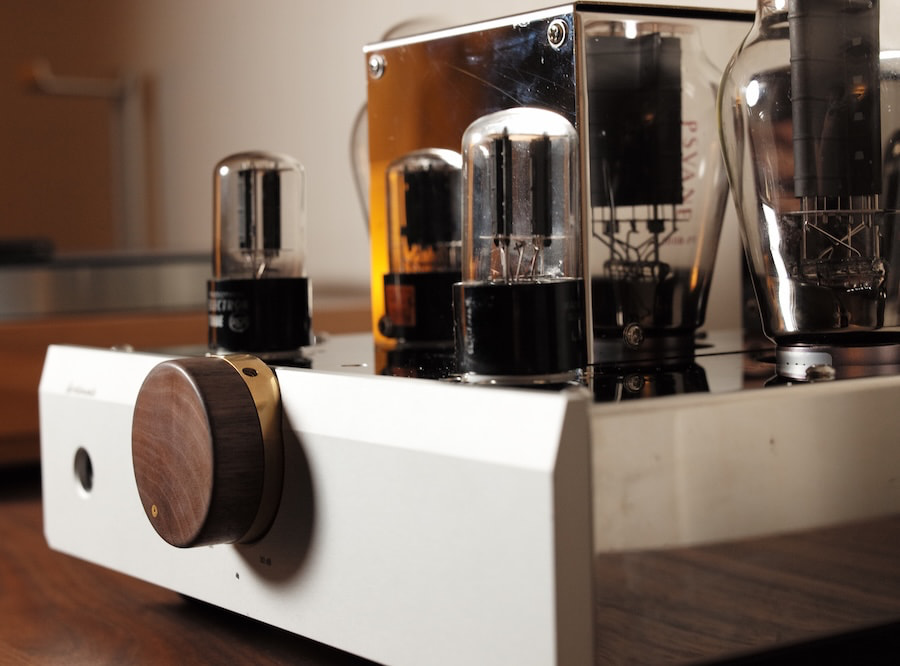
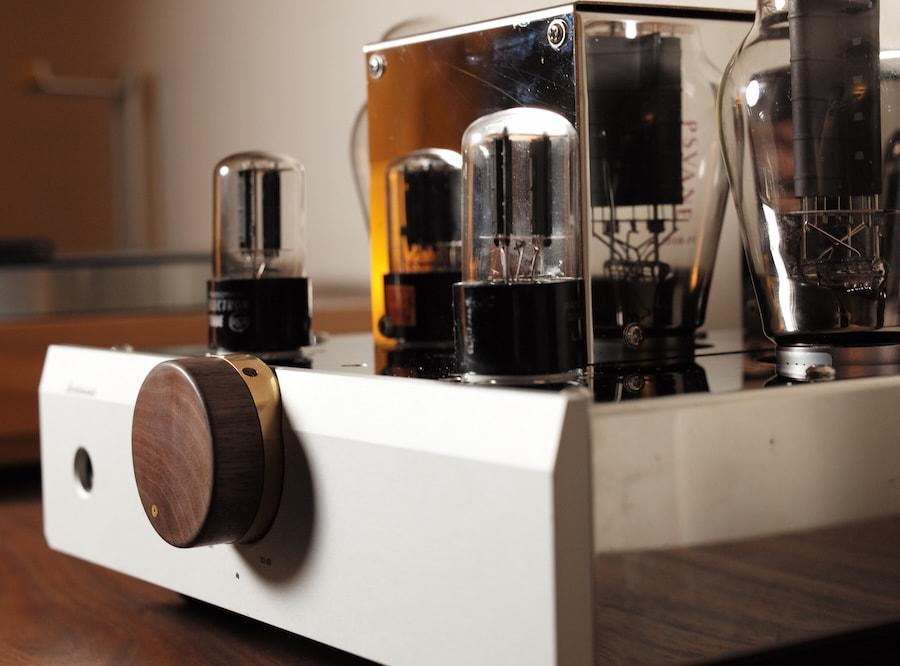
A 300B amplifier delivering single-digit or low double-digit power is hardly unusual. Doing it for $1,499 while also providing a transformer-coupled headphone output, 4- and 8-ohm speaker taps, custom transformers and Cardas internal wiring is a much more interesting proposition.
That is what makes the Layer Audio Design GEN-300Bworth a closer look after CanJam SoCal 2026. It is a single-ended Class A integrated amplifier designed to serve both headphone listeners and owners of suitably efficient loudspeakers, without wandering into the five-figure territory that has become increasingly common for ambitious 300B designs.
Who Is Layer Audio Design?
Layer Audio Design is a small direct-sales audio company with a very compact product catalog. Its current lineup includes the GEN-300B, a GEN-2A3 integrated amplifier, the Henry Audio DA256 DAC and several accessories, while the company describes its design philosophy as a combination of measurement, materials research, vibration control and extended listening.
There is not a long corporate history or decades-deep back catalog to lean on here, which matters when comparing Layer with established tube-amplifier manufacturers. The GEN-300B therefore has to make its case almost entirely on engineering, features and price, and that is where things become more interesting.
Advertisement
What Is the GEN-300B?
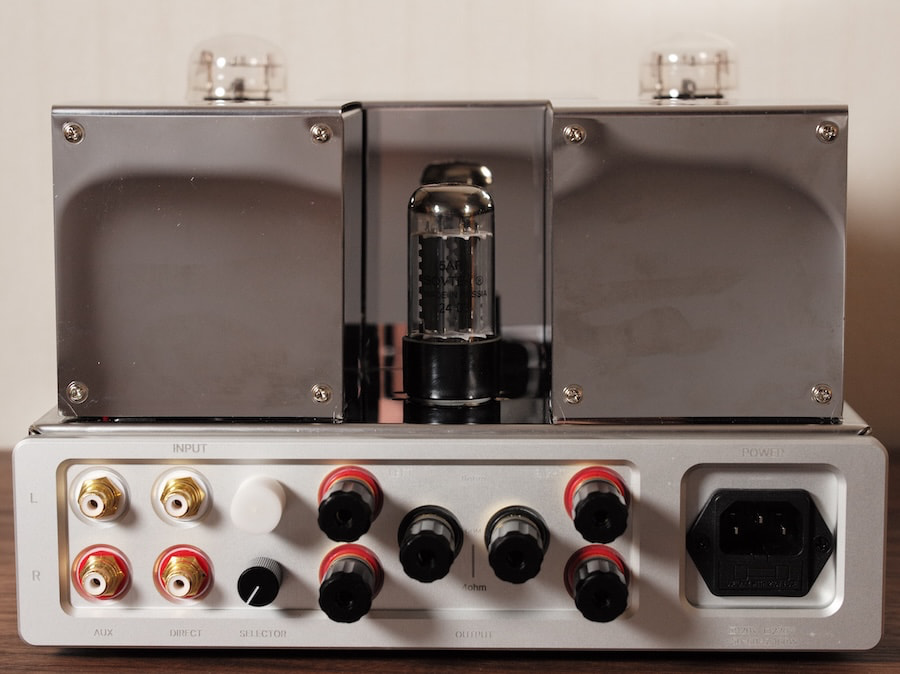
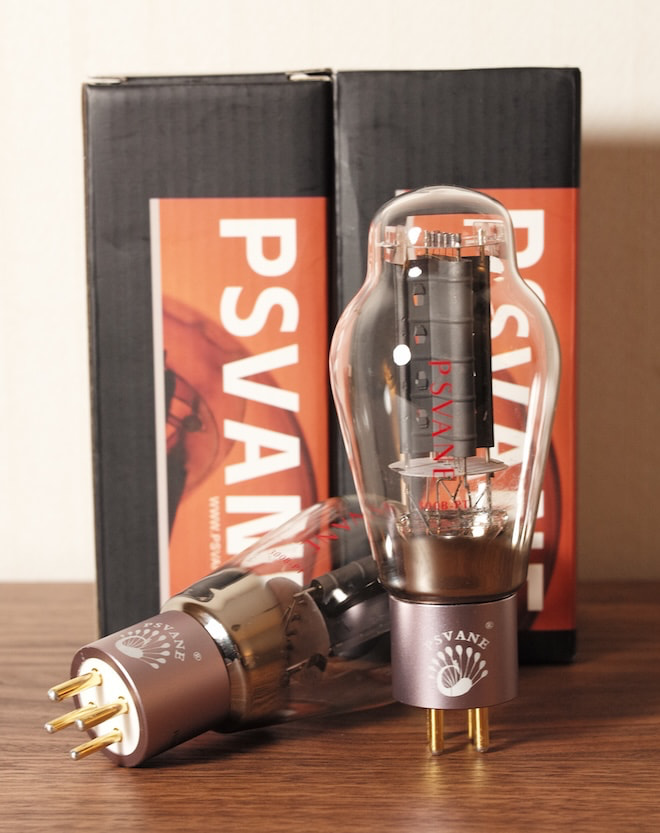
The GEN-300B uses a fully discrete, all-tube signal path built around two 6N8P driver tubes, two 300B output tubes and one 5AR4 rectifier. Layer operates the output stage single-ended in pure Class A and rates the amplifier at 10 watts per channel into 8 ohms, with separate 4- and 8-ohm speaker connections.
Ten watts clearly places some limits on speaker choice. The GEN-300B is intended for high-efficiency loudspeakers rather than insensitive floorstanders with difficult impedance curves, but that is hardly unusual for a single-ended 300B design. The more distinctive part of the package is what Layer has done for headphone users.
Rather than installing a separate solid-state headphone stage, the front headphone output is tube-driven and transformer-coupled from the main amplifier circuit. In other words, headphone listeners are not buying a 300B speaker amplifier with an unrelated headphone circuit tacked onto the front panel.
Inside the GEN-300B
Layer specifies custom-wound Japanese transformers, Amtrans film capacitors and Cardas internal wiring through the signal and power paths. The company notes that the Amtrans capacitors come from the same component series used in Audio-Technica’s NARUKAMI amplifier, although sharing a capacitor family obviously does not make the two amplifiers equivalent designs.
Advertisement
Connectivity remains deliberately simple. The amplifier provides an RCA line-level input and a direct power-amplifier input for use with an external preamplifier, while Bluetooth is available as an option with Layer stating that the wireless module is electrically isolated from the analog circuitry. There is no built-in DAC or network streaming platform, so this remains an analog integrated amplifier first.
Layer Audio Design GEN-300B Specifications
Specification
GEN-300B
Amplifier topology
Single-ended pure Class A
Output power
10W/channel into 8 ohms
Output tubes
2 x 300B
Driver tubes
2 x 6N8P
Rectifier
1 x 5AR4
Inputs
RCA line level, direct power amp
Optional input
Bluetooth
Speaker outputs
4 ohms / 8 ohms
Headphone output
Tube driven, transformer coupled
Internal wiring
Cardas
Dimensions
13.19 x 8.27 x 10.43 inches
Weight
36 lbs / 16 kg
There are still some meaningful gaps in the published specifications. Layer does not currently list frequency response, THD, signal-to-noise ratio, headphone output power, headphone output impedance or input sensitivity, all of which would be useful when matching the GEN-300B to a broader range of headphones.
There is also a small inconsistency in Layer’s own documentation. The September production page lists the amplifier at 40 pounds, while the December preorder page lists 36 pounds with the same chassis dimensions, so I would wait for Layer to clarify the final weight before treating either figure as definitive.
Advertisement. Scroll to continue reading.
Advertisement
What About Difficult Headphones?
Layer says the standard front-panel headphone output was designed around safe operation and broad compatibility rather than maximum output into the most demanding planar-magnetic headphones. The company subsequently developed the COPULA, a speaker-tap-to-4-pin-XLR adapter that connects directly to the GEN-300B’s binding posts and provides access to considerably more of the amplifier’s available output.
That solution is aimed at unusually inefficient headphones rather than conventional models or IEMs. Layer specifically warns against treating the speaker taps as a universal headphone output, which is sensible advice when the source on the other end is capable of delivering several watts.
Why Is It Unique?
None of the individual ingredients are revolutionary. Single-ended 300B amplifiers have existed for decades, transformer-coupled headphone outputs are well established, and 8 to 10 watts per channel is familiar territory for this topology.
What is unusual is getting all of those elements in one chassis for $1,499. Once custom output transformers, tube rectification, speaker taps and a serious headphone implementation enter the equation, 300B amplifiers usually become expensive rather quickly.
Layer’s relatively low pricing makes the established alternatives particularly revealing. For example, Woo Audio’s WA5 (2nd gen) is priced considerably higher at $6,499, while Feliks Audio Eos reaches nearly $14,000.
Advertisement
Price & Availability
Layer Audio Design’s website lists pricing from $1,499 to $1,939. Bluetooth, finishes, headphone-output configuration and optional Cuprum isolation feet can alter the final price depending on the chosen configuration. However, a BATCHDEC26 coupon code currently takes $150 off the regular price.
Ultimately, pricing is likely to be the GEN-300B’s biggest advantage and its biggest question mark. Custom transformers, tube rectification, Cardas wiring and a transformer-coupled headphone output are not the ingredients one normally associates with a 300B amplifier at its price point. So long-term reliability, consistency between production batches and support will matter every bit as much as the parts list.
The Bottom Line
The Layer Audio Design GEN-300B is not interesting because it changes what a 300B amplifier can do. It is interesting because Layer is offering a legitimate single-ended Class A design with 10 watts per channel, speaker outputs and a proper tube-driven headphone connection at a price well below most established alternatives.
There are still technical questions that need answers, particularly around headphone output, distortion and the conflicting published weight figures. Layer also lacks the long track record of Woo Audio, Cayin or Feliks Audio, which is something buyers should consider before treating an aggressive introductory price as the only criterion.
Advertisement
But as one of the more unexpected products to emerge from CanJam SoCal 2026, the GEN-300B has a very clear reason to exist. At $1,499, it makes the economics of serious 300B amplification considerably harder to ignore.
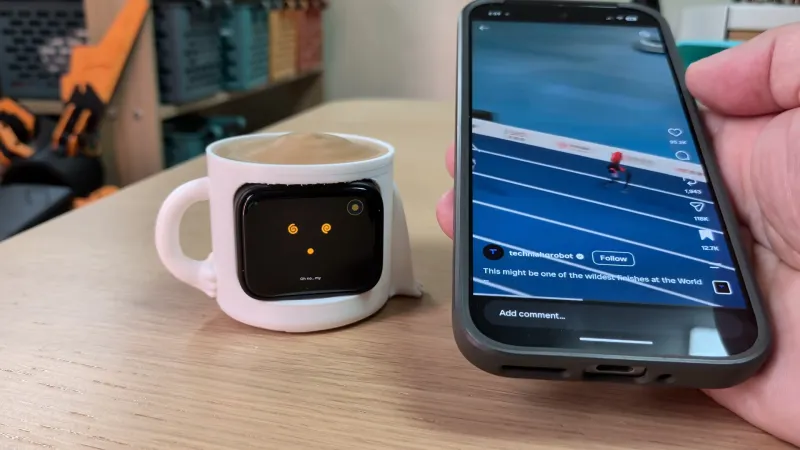
The odds are, you have a device deliberately designed to be addictive in your pocket or on the table next to you if you aren’t staring at it right now– your smartphone. We’ve seen a number of projects that try and help people control or moderate their phone usage using a variety of techniques; this vitual pet by [brenpoly] does it by weaponizing human empathy, and our bizzare ability to pack-bond with literally anything.
The virtual pet itself is based on an ESP32 in a cutesy 3D-printed case, and we think it would probably work well enough if it just had hard-coded behaviors based on hooks in what you’re doing on your phone– the “my little buddy is sick because I’m doomscrolling” should be effective enough on its own, and that part is hardcoded on the ESP32 along with the regular virtual pet behaviour–but this is the year of our Llama 2026, so there has to be an LLM in there somewhere, right?
Some people would leave this part out, but we think [brenpoly]’s use of a local LLM on the phone does improve the project. The local agent doesn’t just have access to his screen time, but his notifications, too, and runs a whisper model linked to a microphone in the virtual pet via bluetooth. So you can get the contents or a summary of your notifications without looking at your phone, or just ask the little guy to tell you a joke. Giving the pet a voice with a the local piper model is also more effective at getting you to put your phone down when you hit the limits.
They’ve put the whole thing up on GitHub if you want to make your own– and if we can keep one person from strapping themselves to a shock collar, then this project is doing good in the world. If helps [brenpoly] or any of his fans do less scrolling and more hacking, that’s even better. Of course there’s a whole spectrum between “electrocute yourself” and “lovable virtual pet” when it comes to controlling your phone use, a spectrum that includes phone stands or even smart vaults for your device.
Thanks to [brenpoly] for the tip! Remember, all of your doomscrolling is justified if you find something to send to our tipsline.
Helion Energy’s new Seattle office. (Helion Photo)
Helion Energy, in its hard-charging pursuit of fusion energy, has opened an office in downtown Seattle as its headcount swells to 800 employees.
The company already occupies five buildings in Everett, Wash., where it’s headquartered, plus operations in the central Washington town of Malaga, where Helion is building what it hopes could be the world’s first commercial fusion plant.
“Who would have thought it when we founded the company in 2013 with only five of us,” said CEO and co-founder David Kirtley in a GeekWire interview, marveling at the growth.
In June, Helion announced $465 million in new funding, bringing its total capital raised to more than $1.5 billion and its valuation to 10 times that figure.
The company is racing to master fusion, which produces energy by smashing together light atoms — essentially replicating the process that powers the sun and stars. No one has been able to create a commercially viable amount of energy from fusion here on Earth, though notable progress is being made by research institutions and private companies.
Advertisement
The planet is increasingly hungry for abundant, clean power as data centers gobble energy and transportation, buildings and industrial processes shift toward electrification.
That has helped spike interest in fusion, and the sector globally has raised $14.24 billion since 2021, according to the Fusion Industry Association, with multiple companies predicting they’ll succeed in producing sufficient energy in the next five to 10 years. Helion has one of the most ambitious targets, aiming to reach that mark in two years.
The company is No. 1 on the GeekWire 200, a ranked index of the Pacific Northwest’s top startups.
Inside Helion’s new Seattle offices. (Helion Photo)
The company’s Seattle office is 15,631 square feet in the 8th + Olive building, in a space formerly occupied by Airbnb. The move comes as Seattle pushes to bring businesses back into its core: The city’s urban neighborhoods had an office vacancy rate of 28.2% in the second quarter of this year, with downtown alone at 34.9%, according to Kidder Mathews research.
Kirtley said they’re hiring and the goal is to have 100 employees downtown working on business and operations, recruiting and finance.
Back in Everett, teams are running tests on the company’s prototype fusion device, named Polaris, and working to get a smaller fusion machine called Tiny Merge online. The startup is also ramping up a facility for assembly work where employees and automated systems will manufacture energy-carrying capacitors, semiconductor modules and other hardware. The facility is currently producing initial test pieces.
The Malaga site will be home to the Orion facility and will include three buildings: an office building, already complete and in use; a building for final assembly of components shipped from Everett, also finished; and the generator building, which will house the 50-megawatt Orion generator and associated power electronics. So far the beams are up for the last building, with the goal of getting it “weather tight” before winter, Kirtley said.
Helion is charging ahead with Orion and building its manufacturing capabilities while continuing to tackle the physics challenges of producing energy from fusion.
The plant must be operational in two years to meet Helion’s contract with Microsoft to provide energy for a nearby data center.
The internet is increasingly awash with videos generated by artificial intelligence aimed directly at preschoolers and kindergartners. With literally hundreds of thousands of AI-generated videos to watch and plenty of lights and action to grab the attention of children under age 5, critics say the videos usually have little if any substance. They also have a name for these videos: “baby slop.”
“It’s easy to make an eight-second AI video, and we wind up with these very quick, colorful, fun things that don’t really have any meaning,” says Allison Bacon, coordinator of instructional technology at the Ossining Union Free School District in New York.
More than mere distraction, some critics worry AI-generated content on YouTube and YouTube Kids may cause actual harm. But there are ways early childhood educators can help children navigate these videos.
Inaccurate and Biased Content
Problematic AI-generated videos come in many forms. Some are just seconds in length but include inappropriate content. In one video about counting and colors, for example, a school bus inexplicably bursts into flames at the 13-second mark. In other videos, inaccurate information or visuals are hallucinated by low-grade AI. Sometimes, it’s just the sheer volume of unvetted AI videos populating feeds that can be concerning. One YouTube channel, Bright Tunes, has existed for less than a year but has nearly 5,500 AI-generated videos. In effect, one person can prompt AI to generate thousands of videos that young children can watch in an endless loop — none of which are educational. While some creators have good intentions, they often just want views (cue cute AI animals diving into pools).
Advertisement
“Some of the content may look educational and engaging,” says Jennifer Chen, a professor of early childhood education at Kean University in Union, New Jersey. “You might not realize it unless you really look at it closely.”
When the words aren’t quite right or when the images don’t reflect reality, “that cognitive disparity is causing children to learn inaccurately,” explains Keri Ewart, an associate professor of education at Wilfrid Laurier University in Waterloo, Ontario. “It is having detrimental effects on children being able to understand the difference between real and fake.”
Repeated viewing may also damage kids’ attention spans and lead to cognitive overload. With preschool and kindergarten learners, “they’re still building neurological processes. They’re learning how to experience the world,” instructional technology coordinator Allison Bacon says. “Entertainment generated through AI to mindlessly babysit small people is inherently problematic.”
Navigating the Content
Teachers can address the problem by becoming ad hoc media critics, vetting everything their young students watch in the classroom. Beyond previewing videos, teachers should research the creator to gain more context. One sure sign that a YouTube channel is populated with AI-generated content is if it has a recent launch date and an outsize number of videos. Another telltale sign of AI slop: jumbled text and misspelled words.
Advertisement
Relying on trusted resources like Common Sense Media can help educators vet content. Also, the American Academy of Pediatrics recently released a guide for parents with a “Stop, Wait, Go” framework that can be adapted to the classroom.
If students do encounter suspect content, in ads for example, “conversation needs to follow,” Bacon explains. “What did we see? What did we think? The human connection and conversation should be the main focus.”
Even with very young kids, teachers can build decoding skills to recognize AI-generated content. “Really push the fact that we have to be thinkers and we have to be looking with that critical lens. Ask kids, ‘What did we notice? What’s good? What’s different?’” Bacon says.
“Be the person who helps them understand what they are seeing,” Bacon adds. “If they see an AI-generated giraffe, show them pictures of a real giraffe and ask them to describe the differences.”
Advertisement
Finally, even if one video is educationally sound or age appropriate, the algorithms may bring up more videos that could be inappropriate. “Never rely on autoplay, which can be easy to do, especially if you’re in the class and you’re already playing something that’s educational,” Bacon cautions.
Supporting Parents’ Efforts
As a preschool language teacher at the Park School in the Ossining Union Free School District and as a parent herself, Josefa Martinez understands that parents need guidance, too.
She sends home weekly and monthly communications to families with best practices. “I try to find websites and resources they can use at home, videos that I have personally watched and that are interactive, engaging,” she says. “These sites are not just promoting a child to sit and just mindlessly watch. It’s something that I can vouch for.”
Beyond video suggestions, Martinez provides parents with follow-up questions for their kids. If the child is watching a video about a firefighter, parents can ask, “How can a firefighter support our community?” or “What are other community helpers who have similar roles to a firefighter?” If the child is watching a video about numbers, on a channel like Numberblocks, parents may ask, “How do you know that five is bigger than two? Can you show me by using some of your toys?” or “How many ways can we make the number five?”
Advertisement
“These questions make sure the child is actually engaged and not just sitting there mindlessly watching,” Martinez says. “It all pertains to the content that I’m teaching either that week or that month.”
Some school leaders are stepping up as well, convening parents for frank discussions about AI-generated videos. “More schools are starting to have social media nights and AI evenings where they’re inviting parents to really learn how to vet these videos,” education professor Keri Ewart explains.
“This is all fairly recent for everyone,” Ewart adds. “If we’re expecting our children to have digital fluency and digital literacy, particularly in the age of AI, we’re going to have to expect teachers and parents to be digitally literate too.”
Plenty of people remain spooked by autonomous vehicles, or AVs. Some experts and policymakers have cautioned that AVs won’t necessarily make roads safer. When it comes to partial or full autonomy, the picture isn’t entirely clear, in part because there aren’t enough self-driving cars to make meaningful apples-to-apples comparisons.
Yet mounting research suggests that self-driving cars crash significantly less often than people, and with far fewer injuries. Evidence also shows that advanced driver assistance systems (ADAS) and other building blocks of autonomy—some of which are already mandated on every new car—are also reducing occupant and pedestrian injuries and deaths, along with insurance claims.
On the ADAS front, the Insurance Institute for Highway Safety found that automatic emergency braking (AEB) systems that recognize people in front of the car cut pedestrian crashes by 27 percent. Those AEB systems are mandated for all light vehicles in the U.S. by 2029, and more than 90 percent of new models already comply under a voluntary automakers’ agreement.A separate IIHS study found that automated braking greatly reduced rear-end crashes, by 50 percent, and their injuries by 56 percent. The Highway Loss Data Institute found that cars with AEB alone showed a 13 percent drop in property-damage claims. Cars that bundled ADAS features, including automatic braking for pedestrians, adaptive cruise control, and lane-departure warnings, saw claims reductions up to 39 percent.
Advertisement
Move to Level 4 autonomy, and Waymo says its robotaxis have now given 20 million paid rides over 220 million miles, the equivalent of 250 lifetimes of driving. In March, Waymo’s independent study showed 92 percent fewer fatal or serious-injury crashes, a 13-fold reduction versus human drivers in comparable city environments. That included 92 percent fewer pedestrian injuries, 83 percent fewer crashes with airbag deployments, and 82 percent fewer crashes with any injuries whatsoever. That included a 96 percent reduction in injury-causing crashes at intersections, among the deadliest environments for any automobile.
How Does Limited Fair-Weather Data Compare to Traditional Crash Statistics?
A key question is whether Waymo’s robotaxis, currently limited to fair-weather operation in a handful of cities in the U.S., are directly comparable to humans driving a wider variety of roads in much more variable conditions.
The IIHS is looking to dig deeper by cleaning up often-incomplete data. Researchers estimate roughly half of human crashes go unreported, and up to one-third of injury accidents, because drivers hope to avoid insurance price hikes. That potentially skews safety numbers in favor of human drivers. And while Waymo leads the industry in transparency, and robotaxi operators are required to report even the tiniest scrape to the National Highway Traffic Safety Administration (NHTSA), not every company voluntarily reports their total miles driven.
The IIHS’s latest July study flatly stated that automated cars crash less often than people. But it also sought clarity by creating a more-reliable category of “police-reportable crashes.” It then compared crash rates of human-driven cars against Waymo taxis in San Francisco, Phoenix, Los Angeles, and Austin. Waymo’s Jaguar I-Pace taxis traveled about 50 million driverless miles over the study period, versus 222 billion human miles in the same cities.
In a potential boost for public trust, the study generally supported Waymo’s own findings. Waymo taxis were involved in 68 percent fewer crashes overall than human drivers: 76 percent lower in Phoenix, 71 percent in LA, and 35 percent in San Francisco. A 4 percent higher Waymo rate in Austin may reflect an extremely small sample size. Significantly, Waymo’s injury crashes were still 81 percent lower on a per-mile basis.
The industry and its supporters continue to press the safety advantages of autonomous vehicles that never get drunk, drowsy, or distracted. Yet for this fledgling AV industry, there are still no national performance or safety standards. A crazy quilt of state or local regulations can allow or prohibit their deployment. That balkanized approach makes it harder to compare crash rates, according to the IIHS, which is calling for better federal reporting standards.
A posting on the IIHS website quotes the institute’s director of statistical services, Eric Teoh: “Those are encouraging signs for the future of driverless vehicles.” Teoh, who was also the lead author of the institute’s study, added that “Now we need to get the data-collection system right, so that we can ensure that level of safety continues as these technologies become more prevalent.”
On July 30, in a move seen as fast-tracking the tech’s deployment, NHTSA granted Zoox, a subsidiary of Amazon, the first-ever exemption from certain motor-vehicle safety standards. That will allow commercial operation of Zoox’s toaster-shaped robotaxis, which have no steering wheel or pedals aboard. The agency determined that Zoox’s purpose-built robotaxi “would provide an equivalent level of safety” as a compliant vehicle, thereby satisfying the standard for an exemption.
On that final day of the SAE’s Automated Transportation Symposium, NHTSA also announced a partnership with SAE Industry Technologies to develop the nation’s first performance and competency standards for AVs, via a three-year, $5 million “A2SCEND” consortium.
Some doctors and health professionals are arguing that policymakers need to stop viewing self-driving cars as a tech moonshot but rather as a critical public-health intervention. Jonathan Slotkin, a neurosurgeon, makes a powerful case for the medical and societal benefits of AVs. Researchers at the Johns HopkinsBloomberg School of Public Health say that highlighting the social value of AVs is critical to driving public trust and adoption.
Consider that roughly 40,000 people in the U.S., including more than 7,000 pedestrians, are killed each year in roadway accidents. About 1.16 million people die in roadway crashes around the world, making them the leading cause of death for children and young adults between the ages of 5 and 29. Cutting that by even 50 percent—let alone the 90 percent reductions suggested by some studies—would save 580,000 lives a year. That social and economic gain would dwarf that of seat-belt adoption or anti–drunk driving campaigns.



















































You must be logged in to post a comment Login